MOROCCO: Forbes 50 Over 50 Spotlights Moroccan Scientist Rajaa Cherkaoui El Moursli

Rajaa Cherkaoui El Moursli was part of the research team that made the groundbreaking discovery of the Higgs Boson particle.

Moroccan prominent nuclear physicist Rajaa Cherkaoui El Moursli was featured this year on the list of Forbes 50 Over 50 for the Middle East and Africa (MENA) in recognition of her outstanding scientific contributions.

El Moursli’s research has helped prove the existence of the Higgs Boson, which is the particle responsible for the creation of mass. 

“While her almost 30-year-long career in science has been filled with achievements, it’s a career that would not have existed had she not convinced her father to let her seek out a graduate degree in France in the early 1980s,” Forbes wrote. This was a time when Moroccan women were “expected to leave home to marry and not pursue a vocation.” 

After earning her Ph.D in Nuclear Physics from the University of Joseph Fourier in Grenoble, France, El Moursli returned to Morocco in 1982.  There, she joined the Faculty of Sciences at the University Mohammed V in Rabat. 

Early in her career, she took the helm as the head of the Laboratory of Nuclear Physics in Rabat.  El Moursli’s research focuses on the applications of nuclear physics, medical physics, and high-energy physics. 

A pivotal moment in her career occurred in 1996 when she became an integral part of Morocco’s participation in the international ATLAS collaboration at the European Organization for Nuclear Research (CERN). The event marked her entry into one of the world’s most prestigious scientific research centers, located in Geneva.

El Moursli’s contributions have extended beyond the laboratory giving her membership with international organizations such ATLAS, KM3NET, and ANTARES. 

Within these roles, she has been vital in creating and implementing master’s degree programs at her university, notably creating Morocco’s first master’s program in medical physics. Currently, over thirty graduates from her program hold crucial positions as radio physicists in Moroccan hospitals.

Throughout her career, she has supervised numerous doctoral and master’s students and has played a crucial role in building and strengthening academic programs.

In 2015, she became the first Moroccan to receive the L’Oreal-UNESCO award for Women in Science, representing Africa and the Arab States. 

El Moursli served as VP of Research, Innovation, Cooperation, and Partnership at Mohammed V University.  She also chaired the competition program “My Thesis in 180 Seconds.” 

Her accolades include being a fellow of the World Academy of Sciences (TWAS) and serving on the “For Women in Science” international jury. 

In 2017, she was honored by the Organization of Islamic Cooperation for her outstanding contributions to science and technology in the Islamic world.

Now in 2024, El Moursli continues to play a pivotal role in shaping the global scientific landscape and showcasing Moroccan achievements to the world. 

source/content: moroccoworldnews.com (headline edited)

_________
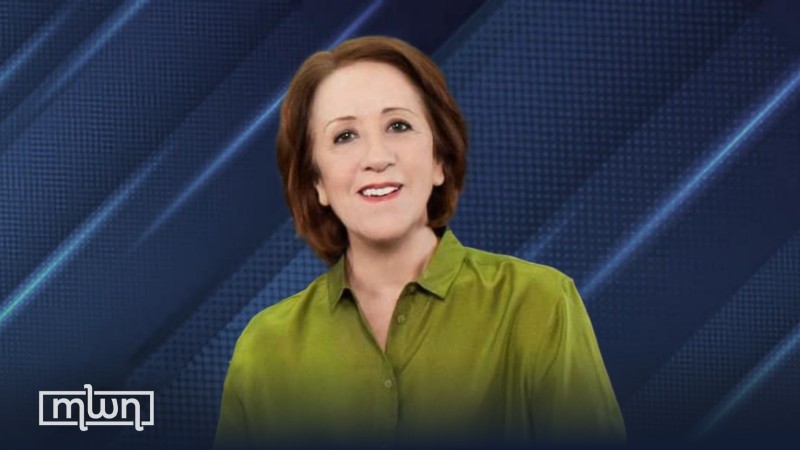
Moroccan nuclear physicist Rajaa Cherkaoui El Moursli

_____________

MOROCCO
SAUDI ARABIA: AI will help find high-potential Mining targets in World’s First ‘Geoscience Data Analytics Center’

Saudi Arabia is set for a groundbreaking technological venture in the mining sector with the launch of the Geoscience Data Analytics Center. 

Commissioned by the Saudi government, the facility is expected to commence operations later this year. 

Speaking to Arab News at the Future Minerals Forum, Commissioner Rob Wood emphasized the interdisciplinary nature of the center and the significance of developing new programs to train professionals with hybrid skills. 

Wood said: “It will be the very first of its kind globally. It will become operational probably in late 2024.” 

Saudi Arabia boasts 31 critical minerals and strategic resources, ranging from gold, and silver to nickel and cobalt. 

The Kingdom is poised to establish a third industrial pillar centered on mining, with potential reserves estimated at $2.5 trillion, as Wood also highlighted the significance of the Kingdom’s commitment to diversify its economy. 

He emphasized that the Geoscience Data Analytics Center would play a pivotal role in utilizing AI to uncover potential mining deposits. 

The $2.5 trillion estimate, Wood clarified, is extrapolated from the known data available, emphasizing that extensive land exploration and data collection support this estimation. 

“The amount of land that we’ve actually explored and done data collection for. So, we know that there is a significant amount of opportunity left within the Kingdom that we haven’t explored yet,” he noted. 

Wood explained that there is a need to establish new interdisciplinary programs, where geologists will be trained in computer science. 

He highlighted novel aspects of the center, such as state-of-the-art robotic labs for core scanning and cumulative effects research.

“Literally, nobody on the planet is doing what we’re talking about,” he claimed, adding: “The intent is that the Kingdom will, in fact, have complete control and will be running the center for decades to come.” 

Wood elaborated on the ongoing data collection efforts, stating that the gathered information will be fed into a new artificial intelligence platform capable of conducting analytics to identify high-potential mining targets. 

The commissioner emphasized the use of AI in modeling mineral deposits, stating, “We’re using machine learning to uncover these high-potential deposits very early in the process.” 

He acknowledged the formidable challenge in the mining sector, particularly the difficulty in identifying new targets, referred to as “greenfields,” which he termed as a highly risky endeavor. 

“So frequently, they can go out and do a full drilling program and come back with nothing, and you spend literally hundreds of millions of dollars for potentially no result whatsoever.” 

To address this challenge, Wood unveiled the ambitious plan to use advanced artificial intelligence to de-risk the costs associated with finding new targets. 

“What we’re looking to do is, in fact, de-risk those costs on the mining companies by using advanced artificial intelligence to, in fact, actually find these new targets,” he explained. 

The commissioner emphasized the significance of addressing environmental and social impacts in the mining sector, stating: “One of the things the center is going to be doing is actually complex environmental and social impact research.” 

In conclusion, Wood highlighted the uniqueness of Saudi Arabia’s position in undertaking this venture, stating: “The discovery of oil is substantially easier than the discovery of minerals. Minerals require sophisticated analytics to find these new deposits.” 

As the Kingdom embarks on this groundbreaking initiative, Wood expressed his optimism, stating, “It’s an exciting time to be in Saudi Arabia.” 

source/content: arabnews.com (headline edited)

_________

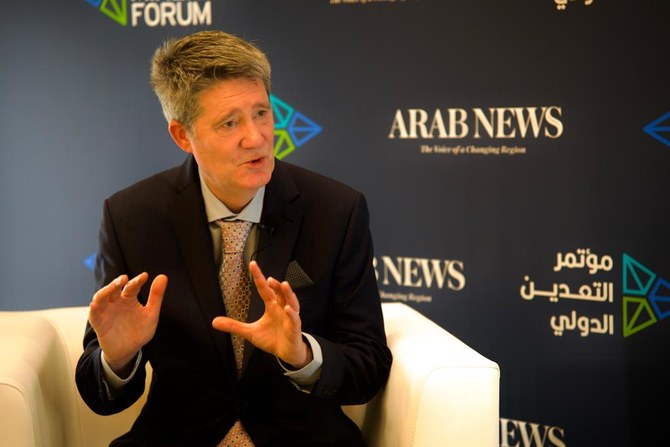
Rob Wood, commissioner of the Geoscience Data Analytics Center, speaking to Arab News.

_________________

SAUDI ARABIA

PALESTINIAN-BRAZILIAN Dr Jamal Suleiman – Leading Doctor gets Prestigious Parliamentary Award

The State Parliamentary Council of Communities of Roots and Foreign Cultures (CONSECRE) announced last week that a Palestinian Brazilian citizen has been given a prerstigious award “Honouring Community Personalities” in the State of Sao Paulo, which is home to thousands of Palestinians in exile.

Dr Jamal Suleiman was given the award at an official ceremony in the Legislative Assembly of the State of Sao Paulo, for his work in preserving the memory and cultural identity of the Palestinian people and their original country.

Palestinian Brazilians are respected for their contributions to the socioeconomic development of Sao Paulo and Brazil. Suleiman is the second member of the Palestinian community honoured in this way since the CONSECRE was created in 2001.

“This award is a great honour! I received the news with great joy and pride as a Palestinian,” Dr Jamal told me. “I understand how important this award is for our Palestinian community who started to come to Brazil at least 130 years ago. Now we all experience the pain of exile and have done ever since the 1948 Nakba.”

He pointed out that one of the most prominent characteristics of the Palestinian community in Brazil is the ability to integrate into society and accept others without forgetting their origin, heritage, culture and motherland.

Jamal Suleiman is a well-known Palestinian Brazilian specialist in infectious diseases. He is from a Palestinian family from Silwad, a town to the north-east of Ramallah. His father was living in Haifa when he was expelled during the 1948 ethnic cleansing by Zionist terror gangs. He ended up in Brazil, where his son Jamal was born in 1959 in the State of Sao Paulo. The doctor graduated from the faculty of medicine in 1983.

Suleiman´s story is similar to that of millions of Palestinians living in exile from the land that their families had farmed for generations. It illustrates the fact that Palestinian refugees are living examples of patience and, in many cases, success in the diaspora. Neither the trauma of exile nor the pain of their loss has broken their spirit. On the contrary, their collective experiences have made them stronger.

Dr Suleiman has had an outstanding medical career since the 1980s. He works as a doctor and researcher at the Emilio Ribas Institute, one of the oldest and most important health institutions in Brazil. He rose to prominence within the wider Brazilian community during the Covid-19 pandemic as one of the most sought-after experts due to his direct work in the fight against the disease. He is currently active in training undergraduate medical students.

“I work in Emilio Ribas Hospital that is considered as a reference point for infectious diseases by the World Health Organisation. In addition, I am a focus for Arab patients in the hospital because I speak Arabic. I know the issues related to our Palestinian culture and how we should reveal it in the wider Brazilian community,” he explained.

As an active member of the Palestinian community in Brazil, Suleiman has worked for years to raise awareness about the situation in Palestine. “I know what it means to be a refugee from 1948; I know the pain and suffering of the people who were torn from their roots by force. Unfortunately, this bad situation continues to this day through the continuous violations of the Israeli occupation of Palestine.”

In addition to his work in public health sector, Dr Suleiman has followed his passion to make food products from peppers. “Pimento do Jamal” is now a gourmet brand in Brazil. It has been active since 2010 with dozens of products, ranging from pepper jellies and sauces to peppers with an original Palestinian taste.

He now dedicates some of his time to make the brand represent Palestinian culture and identity. He believes that food can spread knowledge and preserve this valuable asset, while making guests talk about typical Palestinian food. Suleiman has appeared on popular TV programmes to promote Palestinian dishes, including the well-known Makluba.

“One of my hobbies is cooking and making Palestinian traditional dishes, which I think is very important because I can present Palestinian culture through serving food. I find that there is great interaction by the wider Brazilian society towards our culture; they taste our food and they want to know more about us.”

He sees this as both a humanitarian mission and a national duty. “I have Palestinian families living here and there in Palestine. We will never give up. We are all together and we will not leave anything behind. My heart and mind are with the Palestinians in that part of the world.”

source/content: middleeastmonitor.com (MEMO) (headline edited)

____________

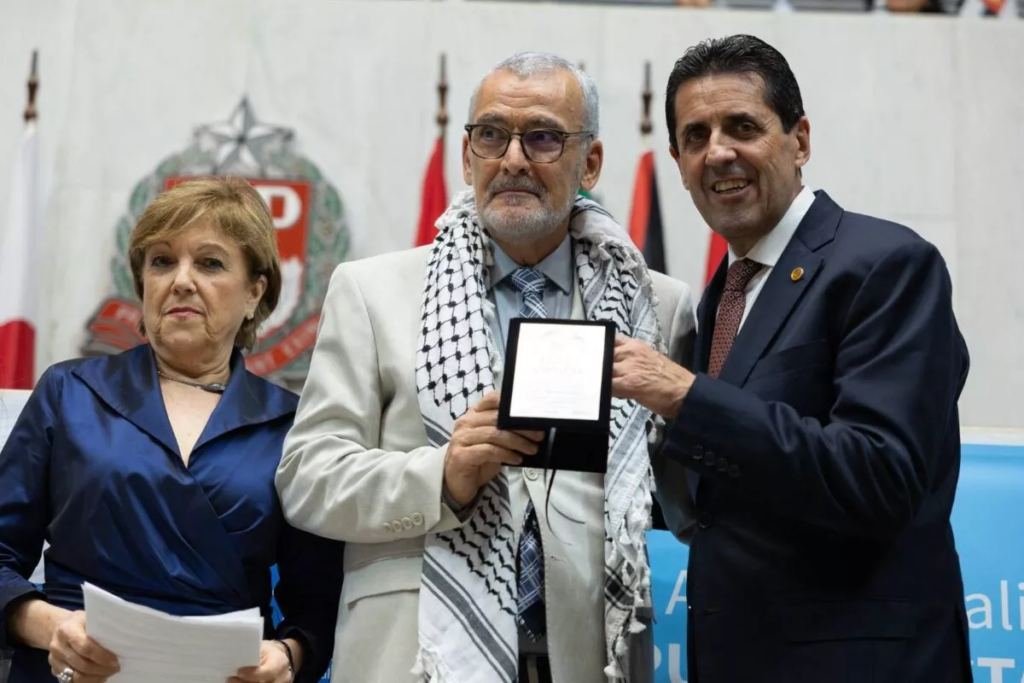
Dr Jamal Suleiman receiving the CONSECRE award in Brazil, September 2023 [FEPAL]

______________________

BRAZIL / PALESTINE

MOROCCO: First “Made in Morocco” car brand NEO’s ‘NamX’ presented to King Mohammed VI

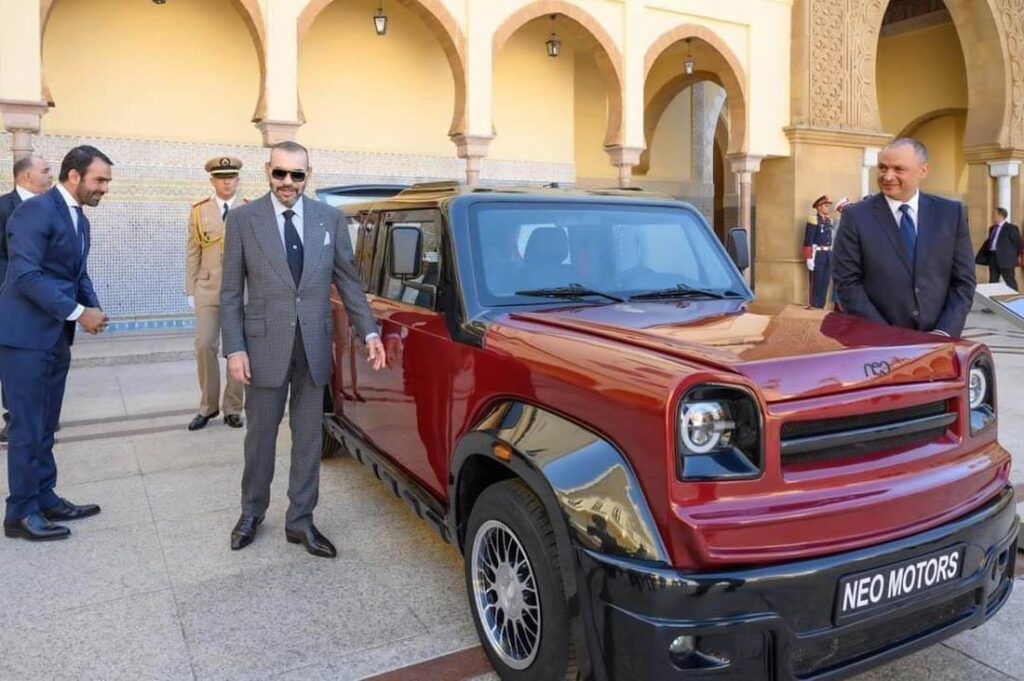
Morocco’s King Mohammed VI presides at the Royal Palace in Rabat the presentation ceremony of the model of the first Moroccan car manufacturer “Neo Motors” and the prototype of a hydrogen vehicle “NamX” developed by a Moroccan.

Morocco’s King Mohammed VI presided, on Monday at the Royal Palace in Rabat the presentation ceremony of the model of the first Moroccan car manufacturer and the prototype of a hydrogen vehicle developed by a Moroccan, two innovative projects that will strengthen the promotion of the “Made In Morocco” label and consolidate the Kingdom’s position as a competitive automotive production platform.

The presentation to the King of the car of “Neo Motors”, a company owned by Moroccan capital, and of the prototype of a hydrogen vehicle of the company NamX, named HUV (Hydrogen Utility Vehicle), underlines the Sovereign’s willingness to encourage and promote the pioneering national entrepreneurial initiatives and the creative capacities, particularly of the Moroccan youth, that these projects embody.

These two industrial initiatives are in line with the High Royal Directions aiming at directing the private sector towards productive investment, in particular in the advanced and future sectors and at stimulating the emergence of a new generation of companies in the Kingdom.

They also confirm the King’s far-sighted vision in terms of sustainable development and the promotion of renewable energies, particularly the emerging field of green hydrogen.

Neo Motors company has set up an industrial unit in Ain Aouda (Rabat-Salé-Kenitra Region), to manufacture motor vehicles for the local market and for export, with a projected annual capacity of 27,000 units and a local integration rate of 65%.

The total projected investment for this project amounts to 156 million dirhams ($15.6 million) and will eventually create 580 jobs.

The final approval of the first vehicle was issued by the National Agency for Road Safety in February 2023. The company has launched the pre-production and plans to inaugurate the industrial unit during the month of June 2023 and to launch the marketing.

This project, which gives birth to the first Moroccan consumer car brand, is carried by national skills. It relies mainly on the ecosystem of local automotive suppliers developed by the Kingdom.

As for the prototype of the hydrogen vehicle of NamX, it was designed in collaboration with the Italian design office and coachbuilder of reference Pininfarina. The interior design of the vehicle has been realized by Moroccan talents.

Indeed, the HUV model will be supplied with hydrogen by a central tank that will be completed by six removable capsules, guaranteeing a significant autonomy and facilitating the hydrogen recharge in a few minutes.

This pilot project places Morocco firmly in the ongoing worldwide momentum to develop new forms of transport that combine efficiency and respect for the environment.

The monarch awarded the Wissam Al Kafaa Al Fikria to Nassim Belkhayat, founder and CEO of Neo Motors company, and Faouzi Annajah, President and founder of NamX company.

source/content: middle-east-online.com (meo) / headline edited

________

The two industrial initiatives are in line with the High Royal Directions aiming at directing the private sector towards productive investment

_____________

MOROCCO

EGYPT’s Dr Hamada Elkady , The Desert Shrimp Farming Pioneer of Delta Farms, Wadi El Natrun

Dr Hamada Elkady, executive director of Delta Farm, believes that the Egyptian desert has the potential to be a successful shrimp producing region.

Dr Elkady has been the executive director of Delta Farm – a tilapia and shrimp farm in Wadi El Natrun – since 2019.

Can you briefly describe your aquaculture career?

I obtained a doctorate and a master’s degree in aquaculture, but upon graduation, I worked as the production manager of the Al-Amana Feed Factory until 2013. Then I worked in tilapia farms for my family in Kafr El-Sheikh. I have been the director of Delta tilapia and shrimp farm in Wadi El Natrun since 2019.

What inspired you to become a shrimp farmer?

We were looking for an alternative to tilapia culture, and shrimp was the ideal solution. What helped us were the factors available at our Wadi El Natrun farm, such as the salinity of the water and the appropriate climate for vannamei shrimp culture.

What were the main challenges to overcome when you set the farm up?

The first aquaculture season there in 2019 was dedicated to Nile tilapia culture. We started trialling vannamei shrimp farming in 2021 in ​​two ponds and the success of the trial was an incentive for us to convert more of the farm to shrimp production, and perhaps move purely to shrimp in the future.

A key challenge was to search for a place with a water source with a suitable salinity for aquaculture, which was also close to the markets. After that, the design of the farm itself, in order to save energy, adjust production intensity, improve feed conversion ratios and ensure the best waste disposal methods.

Can you provide as many details as possible about the scale, design and operation of the farm?

The total land area is 70 acres and includes nine 70 by 70 metre ponds lined with polyethylene, in addition to four 40 by 40 metre ponds used for rearing and nursery. The ponds are fed by groundwater from wells and we use the waste water in a hydroponic component, which produces crops that tolerate salt, such as alfalfa (Medicago sativa) and the Barhi date palm (Phoenix dactylifera ‘Barhi’) in the parts of the farm with no ponds.

How many tonnes does the farm currently produce per year?

Our production is mixed between tilapia and shrimp. There are three shrimp ponds with a production average of 2.6 tonnes of shrimp, with production sizes ranging from 30 to 40 shrimp per kilogram. There are also four nursery tanks each holding 100,000 shrimp larvae. The current year’s production consisted of one cycle of shrimp because we are still developing a plan to produce more than one cycle.

Meanwhile, we produce around 135 tonnes of tilapia from six ponds, selling them at sizes ranging from 250 to 350 grams.

What does a typical day’s work consist of on the farm?

Most of the day is split between the disposal of organic waste from the ponds, which we do three times, and feeding, which takes place four times. We also take samples to ensure that the water conditions are good.

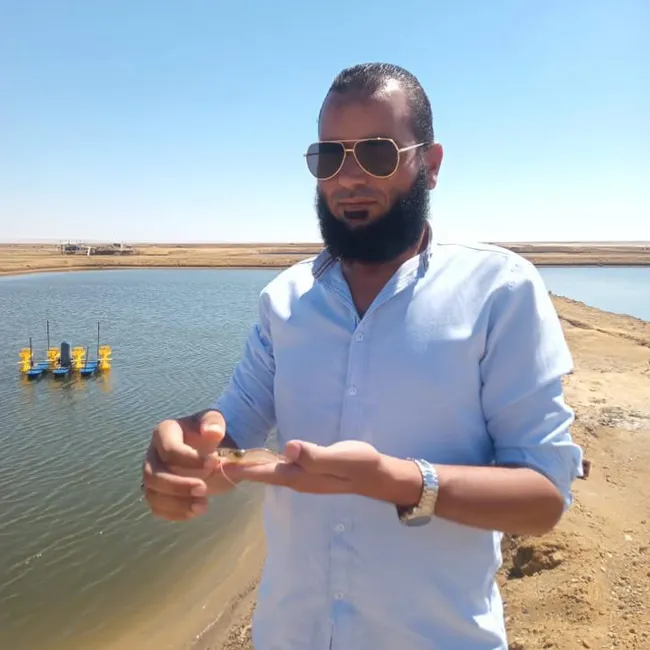
Dr Elkady next to one of the shrimp ponds at Delta Farm 

The farm has three shrimp ponds with a production average of 2.6 tonnes of shrimp, while six additional ponds produce around 135 tonnes of tilapia

What was the project’s original goal and what has been achieved so far?

The original goal was to produce high-quality fish in an area far from all sources of pollution and with the highest production rates. Next season, we aim to produce 10 tonnes of shrimp per acre, and then ramp this up until we reach optimal global production rates.

What are the most important factors for ensuring efficient shrimp production in a desert environment?

  • The salinity level of the water source needs to be reasonable for shrimp culture, and the level of 20-30 ppt has the advantage of high feed conversion rates and low disease incidence.
  • A sandy loam soil which retains water can save the cost of lining the ponds with polyethylene
  • A reliable source of electricity to operate the aerators and pumps from the wells – solar energy can reduce costs.
  • Trained workers and experience are required because aquaculture in the desert differs greatly from other climates.

What impact has the rising costs of inputs such as feeds had on you?

The rise in feed prices represents a major challenge but the price of shrimp is still high enough to make profits. However, it is harder to make profits from tilapia.

What regions and production systems have the most scope for shrimp farming growth in the coming years?

Promising production systems depend mainly on the type of surrounding environment and the availability of water, but in desert lands, intensive and semi-intensive systems – including biofloc and recirculation aquaculture systems (RAS) – are among the best options.

One of the most promising areas for aquaculture in Egypt is the Al Maghrah area in Matrouh Governorate, which is characterised by good soil, a suitable climate and a water source with suitable salinity.

How would you like your farm to develop in the coming years?

The most important part of our development plan is installing alternative energy sources, such as solar panels, and developing the nursery unit so that we can do more than one cycle of shrimp per season. We are also looking to cover the ponds with polytunnels.

source/content: thefishsite.com (headline edited)

__________

________

EGYPT

QATAR: 3D Printed – Longest Independent Concrete Structure Built using 3D Printing Technology enters Guinness World Records

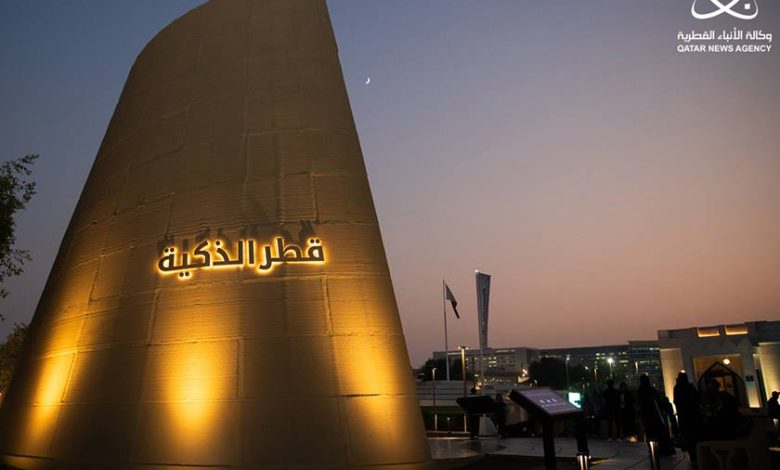
The pavilion of the Ministry of Communications and Information Technology (MCIT) TASMU (SMART Qatar) recorded the longest independent concrete structure built using 3D printing technology.

According to the Qatari News Agency (QNA), the pavilion of the Ministry of Communications and Information Technology (MCIT) TASMU (SMART Qatar) has entered the Guinness World Records Book as the longest independent concrete structure built using 3D printing technology.

On this occasion, HE Minister of Communications and Information Technology Mohammed bin Ali bin Mohammed Al Mannai stated that the Guinness World Record is not only a symbol of innovation and achievement, but also a testimony to the State of Qatar’s commitment to transcending all boundaries in the field of technology – promoting fruitful cooperation and providing innovations that improve peoples lives. The MCIT pavilion is tangible evidence of the technological progress witnessed by the State of Qatar, where traditional values are in harmony with advanced technology to meet global challenges.

The Ministry’s pavilion was built on an area of 170 square meters with a height of 12.4 meters, and was designed in the form of a tower consisting of ten levels with seven bricks in each row. It was built from 75 individually 3D printed pieces, as “an ideal example of fruitful cooperation between different talents and experiences, and a living example of transforming ambitious visions into tangible reality,” according to the QNA.

MCIT is actively contributing to Expo 2023 Doha as an event that is in line with Qatar National Vision 2030 and focuses on sustainability and innovation. The Ministry’s pavilion represents its commitment to providing technology-based solutions and enhancing efforts made in support of sustainability endeavors that are in the interest of residents, citizens, companies, and visitors in the State of Qatar.

Recently, Qatari students – Mohammad Fadhel Annan and Lujain Al Mansoori – were awarded 25,000 QAR from a Qatar Development Bank (QDB) competition for their 3D printed vegetable development, in which they used a custom-made 3D printer and a combination of artificially grown vegetable cells and UV-sensitive 3D printer ink.

source/content: voxelmatters.com

__________

Source: Qatari News Agency (QNA).

__________

QATAR

EGYPT Opens World’s Largest Wastewater Treatment Plant. Bahr El Baqar Plant Holds 3 Guinness World Records.

The Bahr El-Baqar wastewater treatment plant is a joint venture between the Arab Contractors Company and Orascom Construction.

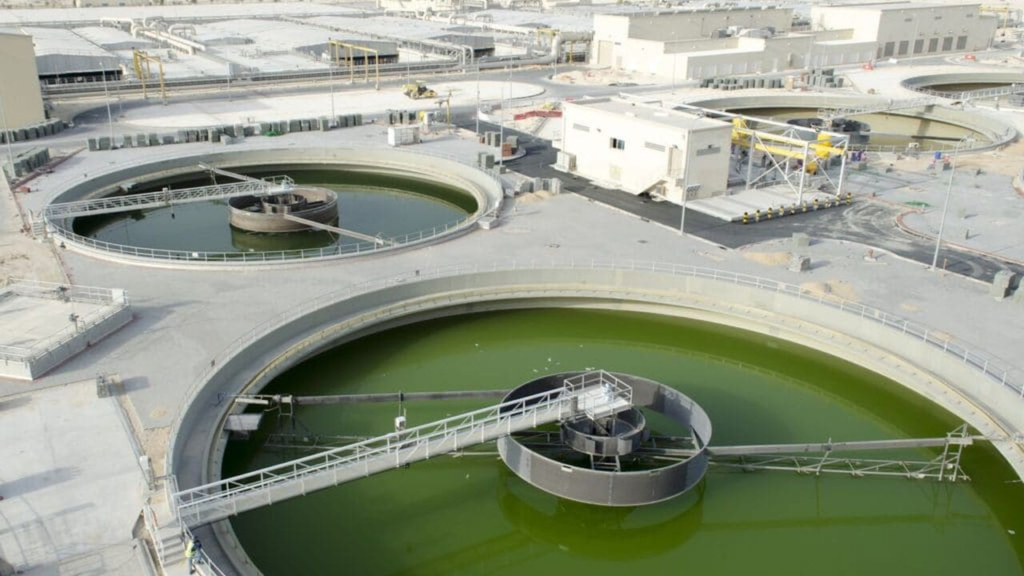
The Bahr El Baqar wastewater treatment plant, located in the northern governorate of Port Said, was recently inaugurated by President Abdel Fattah El-Sisi. A joint venture between the Arab Contractors Company and Orascom Construction it is the largest of its kind worldwide with a daily production capacity of 5.6 million cubic meters.

It is equipped with advanced operating systems for pumping raw water, flocculation, decantation, filtration and disinfection. The plant will recover the wastewater that flows along the Bahr Al-Baqar drain. The triple-treated water will be transferred to North Sinai in order to contribute to the reclamation of agricultural land within the framework of the national project for the development of Sinai and to support making the best use of the state’s water resources.

The Bahr El Baqar wastewater treatment plant holds three Guinness World Records: It’s the world’s largest water treatment facility, the largest sludge treatment plant and the largest single-operator ozone generating plant.

source/content: waste-management-world.com (headline edited)

____________

© The republic of Egypt presidency

________

EGYPT

EGYPTIAN-AMERICAN Economist Dr. Mohamed El-Erian Announced as the Winner of the First ‘Great Arab Minds Economics Award 2023

His Highness Sheikh Mohammed bin Rashid Al Maktoum, Vice President, Prime Minister and Ruler of Dubai, has announced Dr. Mohamed El-Erian, President of Queens’ College at Cambridge University, as the winner of the first Great Arab Minds (GAM) award in the economics category, in recognition of his incredible contributions to the field of economics and his perceptive analysis of changes in economic and financial systems.

Announcing this in a tweet on his official X (formerly Twitter) account, Sheikh Mohammed stated that economics has always been the foundation for stability and growth and the catalyst for innovative and developmental efforts that benefit both individuals and communities.

He noted that creativity in the field of economics is a driver of intellectual progress, prosperity and international cooperation, with ambitious economic visions serving as the main pillar in driving development, building the future of nations and boosting fruitful cultural and civilisational exchange.

An economist with an undergraduate degree from Queens’ and a DPhil from Oxford, Mohamed El-Erian previously served as chief executive officer and co-chief investment officer of Pimco, Deputy Director at the International Monetary Fund, Chair of President Obama’s Global Development Council and President of Harvard Management Company.

Throughout his career, Dr. El-Erian has been involved with universities and think tanks around the world, including his roles at the University of Pennsylvania as the Rene M. Kern Professor of Practice at the Wharton School of and Senior Global Fellow at the Lauder Institute.

After years of dedicated learning and professional experience, he emerged as an outstanding consultant providing services to prestigious financial institutions such as Allianz and Gramercy Funds Management. Additionally, he has been an active contributor to several non-profit organizations, including the National Bureau of Economic Research.

Dr. Mohamed El-Erian’s impact on the field of economics extends beyond his corporate and institutional work. His written works and research have yielded a wealth of advice, insights, and economic concepts, establishing them as key references in economics, finance, and business. Among his well-known books are ‘When Markets Collide’ (2008), ‘The Only Game in Town’ (2016), and his latest collaborative work, ‘Permacrisis: A Plan to Fix a Fractured World’ co-authored with esteemed economic experts. Furthermore, Dr. Mohamed El-Erian is recognized as a prominent contributor and editor for Financial Times and Bloomberg.

Owing to his intellectual prowess, he has been named one of the ‘Top 100 Global Thinkers’ for four consecutive years by ‘Foreign Policy’ magazine.

In addition to presenting innovative theories on global economic matters, Dr. El-Erian is widely acknowledged as a leading expert in the realm of global capital markets. He is notably credited with introducing the concept of the “new normal”, a term characterising the state of the global economy post the global financial crisis.

source/content: wam.ae (headline edited)

____________

Mohamed A. el Erian, Managing Director, Co-Chief Information, Officer, Pacific IINvestment Management Company, USA, at the Summit on the Global Agenda, 07 November – 09 November 2008. Copyright World Economic Forum (www.weforum.org)/Photo by Norbert Schiller / wikipedia.com

__________________________

AMERICAN / EGYPTIAN

MOROCCAN Oncology Institute Named IAEA Collaborating Center in Cancer Control

The news follows a memorandum of understanding signed in July 2022 between the Ministry of Health and Social Protection and the IAEA.

Morocco and the International Atomic Energy Agency (IAEA) have signed an agreement for the Rabat-based Sidi Mohammed Ben Abdellah National Oncology Institute, which is affiliated with the Ibn Sina University Hospital, to become a collaborating center for the IAEA.

IAEA made the announcement was made on Friday. The Moroccan institution was elected as an IAEA collaborating center during the 67th regular session of the IAEA General Conference held in Vienna from September 25 to 29. 

The news constitutes a recognition of Morocco’s commitment to advancing nuclear sciences in Africa, improving access to cancer treatments, and combating animal-transmitted diseases across the continent.

Khalid Ait Taleb, the Minister of Health and Social Protection, presided over the official announcement ceremony, emphasizing that the IAEA’s accreditation is an acknowledgment of the institute’s prolonged dedication to battling cancer. 

He praised the institute’s exceptional staff and expertise having elevated its standards to a commendable level of quality.

Maintaining the prestigious accreditation in the upcoming years is now a primary challenge, Minister Ait Taleb stressed. He underscored the institute’s pivotal role in combating cancer and nurturing medical expertise in the field, both nationally and continentally.

For his part, Director-General Raouf Mohsine of the Ibn Sina University Hospital in Rabat emphasized the profound significance of this election within Morocco and across the continent. 

This recognition is a source of immense pride for Morocco amid ongoing reforms in the national healthcare system, he said. The milestone follows a memorandum of understanding signed in July 2022 between the Ministry of Health and Social Protection and the IAEA, through which the two institutions committed to reinforcing collaboration in the fight against cancer and zoonotic diseases.

source/content: moroccoworldnews.com (edited)

_____________

Morocco and the International Atomic Energy Agency (IAEA)

_____________

MOROCCO

SAUDI ARABIA: NEOMs ENOWA to Develop World’s First High-Voltage Smart Grid

NEOM’s water and electricity subsidiary ENOWA has developed a blueprint for the world’s first renewable, high-voltage smart grid, Peter Terium, the company’s CEO, told Arab News.

In an interview on the sidelines of the 2023 UN Climate Change Conference, Terium said that the “grid of microgrids” will allow ENOWA to supply the NEOM region with sizable, 100 percent renewable electricity that simultaneously provides a 50 percent reduction of the corridor footprint.

According to the CEO, the principle of smart grids is simple, as they are traditionally used on a small scale in buildings. However, the sheer size of the development and the scope of coverage needed for the nine to 10 million individuals who will be residing in NEOM adds to the difficulty of the undertaking.

“That’s a huge achievement given it’s the size that makes it complex. You know, one windmill, a refrigerator, and a television are all 100 percent renewable. But a NEOM within the Kingdom that eventually is going to have nine to 10 million inhabitants. That’s very sizable,” Terium said.

In order to ensure minimum disturbance to the natural terrain and minimize visual disruption, the CEO noted that this would require limiting the number of corridors and implementing part of the grid to operate underground.

To achieve 100 percent renewable electricity in NEOM, Terium emphasized the crucial role of an efficient grid, highlighting that individuals often underestimate that all solar and wind farms require connectivity to “bring the electrons to the customer.”

Another key element, the CEO underscored, is storage. In order to ensure the stabilization, backup, and security of its renewable supply, the giga-project is implementing a portfolio of storage solutions.

The development is investing “billions and billions of Saudi riyals” to ensure that its first customers have access to green electricity, sustainable water, and reliable quality electricity through its grid and storage.

“One example is already for sure and we are expanding into the market with that, which is the world’s largest closed-loop pump, hydro storage, and it combines the traditional form of water-based hydro storage, so a small upper lake and a lower lake,” Terium said.

“That has two effects. First of all, it reduces the evaporation of the water. So that’s an economic effect. But the second effect is that it is a great attractor for birds. Birds and wildlife. So we have a major positive solution for storage that is pretty sizable, the largest in the world,” he added.

Considering the challenges ahead, the CEO highlighted that the development isn’t exclusively centered on creating new technologies. Instead, their key focus is to ensure that the electricity supplied to the NEOM region is renewable, dependable, and affordable.

While not entirely cheap, mature large-scale solar and wind technologies remain affordable, underscored Terium, and will thus be primarily implemented into the framework of connectivity used by the futuristic city.

“The NEOM region has a combination of very intensive solar irradiation and very abundant wind profiling — the solar during the day and the wind mainly in the evening. That makes it a perfect combination to take these two cheapest renewable technologies and get as much as possible out of them,” he outlined.

While the existing infrastructure for electricity amounted to half a gigawatt to 1 GW, the company has “ramped that up” to 3 GW with the aim of 5-6 GW in the near future.

According to Terium, the first tenders of solar and wind power plants have already been established, and the large green hydrogen plant being built will amount to 5-6 GW of installed capacity for power generation by the year 2026.

Due to the size of the NEOM development, the executive underscored that ENOWA is currently at about 5 percent completion of its infrastructure, with the goal of accelerating to 10 percent in the coming 12 to 18 months.

He said: “NEOM is going to be a large undertaking. And what we do is build the infrastructure in line with the growth of NEOM. So that’s why the percentage of 5 or 10 percent sounds low, but it is connected to the size, eventually, of NEOM. And then again, five or 10 eventually of a massive undertaking is already a huge project.”

The company is working with the Kingdom’s Ministry of Energy and collaborating with entities like the King Abdullah University of Science and Technology in its energy-centric ventures. Alongside KAUST, ENOWA will be installing the first carbon capture capacity into a gas-fired plant in the Kingdom. The executive said: “That is one example, but there are many other ones and all the institutions that are there in the Kingdom we work with, but also outside of the Kingdom.”

Through collaboration, it hopes to bring some of its ideas on how to scale renewable energy to the region through its renewable energy approaches and Saudi Arabia’s green hydrogen strategy, a part of which is the NEOM green hydrogen plant.

Terium said: “The Kingdom has now embarked upon a hydrogen strategy and a renewable energy strategy, but it may take advantage of some of the lessons learned that we had in the early stage. And we can bring in some of our ideas of how you can do that bigger and at a larger scale.”

What is important, according to the CEO, is that hydrogen needs to reach its customers, and there are more cost-effective solutions than shipping it in the form of ammonia.

Thus the decision to build a pipeline corridor infrastructure to Europe is something “that only a country like Saudi Arabia can do because that’s a job and a size which is even way too big for even NEOM.”

source/content: arabnews.com (headline edited)

____________

ENOWA to develop world’s first high-voltage smart grid | Arab News – YouTube

_________________

SAUDI ARABIA