Arabs & Arabian Records Aggregator. Chronicler. Milestones of the 25 Countries of the Arabic Speaking World (official / co-official). AGCC. MENA. Global. Ist's to Top 10's. Records. Read & Enjoy./ www.arabianrecords.org
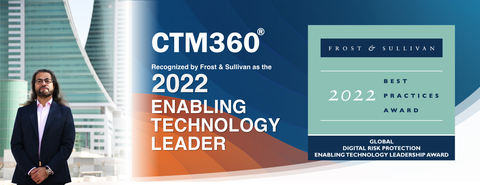
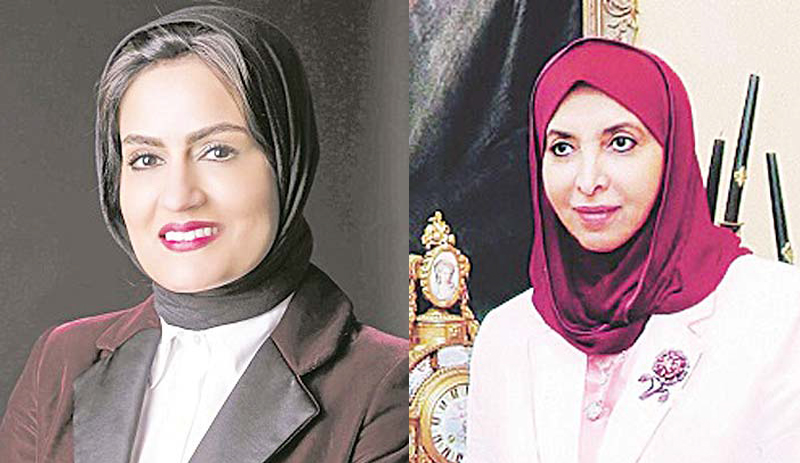
In yet another historic achievement for the Kingdom of Bahrain, Bahrain-based cybersecurity technology provider, CTM360, received Frost & Sullivan’s Best Practices Award for Enabling Technology Leadership in the global Digital Risk Protection (DRP) industry.
Frost & Sullivan Best Practices Awards recognized CTM360 for commercialization success, application diversity, commitment to creativity and customer service experience.
As a leading research and consulting firm, Frost & Sullivan has conducted extensive industry research and analysis to highlight the top companies excelling in Digital Risk Protection (DRP), as well as analysis on companies that combine comprehensive Cyber Threat Intelligence (CTI), Digital Risk Protection (DRP), and External Attack Surface Management (EASM) capabilities into a centralized External Risk Mitigation and Management (ERMM) system. Bahrain-based CTM360 is among the few that originated an integrated approach to consolidate these three technology verticals, now collectively termed ERMM.
Commenting on Frost & Sullivan’s award recognizing CTM360’s leadership in cybersecurity, Mirza Asrar Baig, Chief Executive Officer of CTM360 stated “We are proud to receive Frost & Sullivan’s award which acknowledges our commitment to a consolidated DRP strategy, making CTM360 the first company in the Arab World to be recognized at a global level.
“This Award reflects the efforts and devotion of CTM360’s team in creating and building a world class technology focusing on high data quality and relevance. Making this global mark is a testament to their remarkable design thinking, dedication and agility.” He added.
Mirza lauded Bahrain’s innovation-driven economy founded on Bahrain’s Economic Vision 2030, and the unparalleled extensive focus of the Government of Bahrain on developing and advancing the technology sector, with cyber security as one of the pillars of the Business Friendly Bahrain strategy.
He also commended the tremendous support extended by Bahrain’s various public entities and government agencies, underscoring that “CTM360 has become a technology leader through its consolidated technology platform that allows organizations to do more within one centralized environment and in an extremely cost-effective manner”
Martin Naydenov, Senior Industry Analyst at Frost & Sullivan, observed, “CTM360 empowers organizations to focus on what they do best: their business. With CTM360’s fully managed services and unlimited takedowns, organizations can save significant time and cost by automating the detection and takedowns of fraudulent sites; this is an advantage that few cybersecurity vendors can replicate.”
Frost & Sullivan Best Practices awards recognize companies in various regional and global markets for demonstrating outstanding achievement and superior performance in leadership, technological innovation, customer service, and strategic product development. Industry analysts compare market participants and measure performance through in-depth interviews, analyses, and extensive secondary research to identify best practices in the industry.
CTM360 is a unified external security platform that integrates External Attack Surface Management, Digital Risk Protection, Cyber Threat Intelligence, Brand Protection & Anti-phishing, Surface, Deep & Dark Web Monitoring, Security Ratings, Third Party Risk Management and Unlimited Takedowns. Seamless and turn-key, CTM360 requires no configurations, installations or inputs from the end-user, with all data pre-populated and specific to your organization. All aspects are managed by CTM360.
Miniature loads and rideshare missions on rockets have made space affordable.
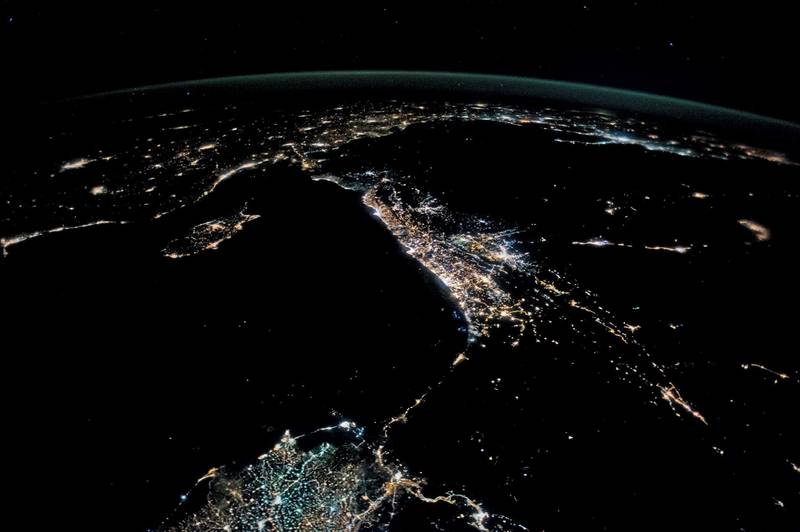
It has been nearly 40 years since the first Arab satellite, ArabSat-1, was launched into space by a Saudi organisation.
The UAE and Egypt sent satellites — mainly communication ones such as Thuraya-1 and NileSat-101 — in the following years.
But other countries in the region carried out little space activity after that.
Rideshare missions, such as the ones SpaceX offers, and the increasing use of nanosatellites are now giving smaller Arab countries easier access to space.
In the past five years, countries like Bahrain, Kuwait and Jordan have launched satellites and Oman also built its first satellite but was destroyed during a Virgin Orbit launch attempt on Tuesday.
Nanosatellites are miniature satellites developed quickly and at a low cost compared to standard ones.
Rideshare missions allow for multiple nanosatellites to launch on one rocket, bringing down launch costs significantly.
Miniature satellites cost less than Dh2 million to develop and launch, while standard ones can be hundreds of millions of dirhams.
The nanosatellites these Arab countries have launched have mostly been CubeSats — modular satellites that can range from one to multiple units.
Bahrain
Bahrain’s first satellite was a joint project with the UAE Space Agency.
The Light-1nanosatellite was launched on a SpaceX rocket on December 21, 2021, to study charged particles, known as terrestrial gamma ray flashes.
Students at New York University Abu Dhabi and Khalifa University built the nanosatellite. The team included nine Bahrainis and 14 Emiratis.
“Light-1 marks a milestone in our history as a successful step forward for our kingdom’s space efforts and paving the way for Bahrain’s space ambitions,” said Sheikh Nasser bin Hamad, commander of Bahrain’s Royal Guard and secretary general of the Supreme Defence Council, at the time of the launch.
Kuwait
Kuwait’s first satellite, a miniature one called QMR-KWT, was launched on June 30, 2021 on a SpaceX rocket to help students test software code.
It is unclear whether the nanosatellite, built by the OrbitalSpace company, is still operational.
KuwaitSat-1 was the second Kuwaiti satellite in space and was launched on January 4 on SpaceX Falcon 9.
It was built by students at Kuwait University to test if the on-board camera can be used for attitude determination and control.
Kuwait news agency Kuna said there are plans to develop KuwaitSat-2 for launch in three years.
Oman
Oman’s first satellite, the Aman CubeSat, was destroyed on a Virgin Orbit flight on Tuesday — the first orbital launch from UK soil.
The rocket failed to reach orbit after a take-off from an airport in Cornwall.
The Earth observation nanosatellite would have helped engineers test the possibility of a future satellite constellation.
Oman has ambitious space plans, including building a space research centre for simulation missions and science experiments.
Jordan
In 2018, Jordanian students also built and launched a CubeSat on a SpaceX rocket.
The JY1-Sat was Jordan’s first satellite and carried a video system on board.
However, it is unclear whether the technology is still operational.
UAE
Thuraya-1 was the first satellite launched by the UAE. It was a commercial satellite built by mobile satellite company Thuraya and developed by Boeing.
It was also the Middle East’s first telecoms satellite.
DubaiSat-1 was the first remote sensing satellite built by engineers at the Mohammed bin Rashid Space Centre and in South Korea in 2009.
The first locally-built satellite, however, did not launch until 2018.
Called KhalifaSat, the observation satellite was against built by space centre engineers.
It is a standard, small size satellite that has been sending back high-resolution images of the UAE and other parts of the world.
MBZ-Sat, an 800kg satellite, will be launched by the UAE later this year and is expected to be the region’s most powerful imaging satellite.
Striking image captured by the KhalifaSat satellite — in pictures
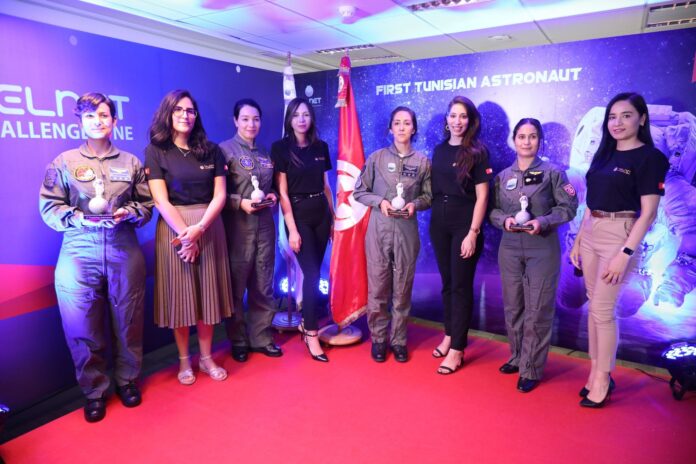
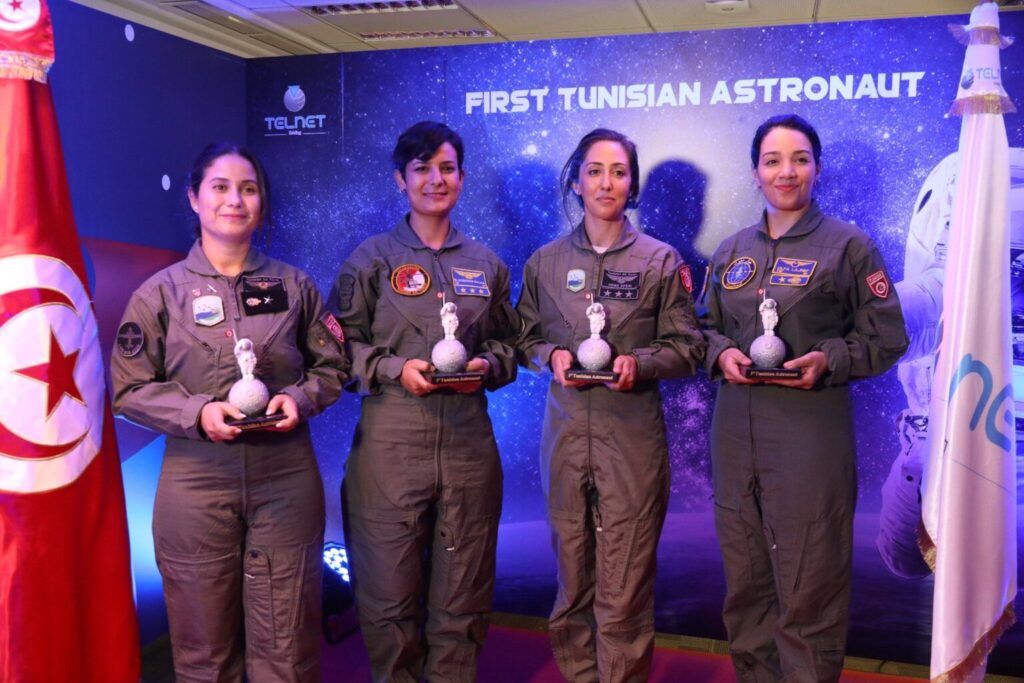
Eight Tunisian women have been selected as candidates for the first Tunisian and African female astronaut project. This selection came at Telnet’s Headquarters as Tunisia celebrated Women’s day. It is as a result of a partnership in August 2021 between Tunisia and Roscosmos to launch a Tunisian female citizen to the International Space Station (ISS) in the foreseeable future. As a result, according to Telnet’s Director-General, the ISS mission will be in 2024.
All the selected women are fighter pilots who graduated from the Borj Al-Amri Aviation School. Furthermore, they are Tunisian Air Force Corps members and have extensive experience in several challenging missions as a result. This is because the selection process requires strict conditions in terms of scientific, physiological and physical demands.
Among those names are: Hala Awassa, Ibtihal Youssef, Wafa El-Baldi-El-Yomna Dalali, Olfa Lajnef, Rahma Trabelsi, Hind Safferi and Malika Mabrouk.
During the unveiling, the current occupants of the ISS sent a message to the Tunisian candidates, expressing their support for the project and their expectations to welcome the first Tunisian astronaut in her upcoming mission. The female candidates also expressed their willingness to take up this historic challenge, raise the Tunisian national flag on the ISS and contribute to scientific advances in the service of humanity.
The candidates will subsequently undergo extensive physical and medical tests in Tunisia and abroad, from which two of the candidates will further travel to Russia. The candidates who travel to Russia will then undergo specific space-related training at one of the Russian Space agency’s training centres. This training will last for a year, after which will come the mission to the International Space Station.
Mohamed Frikha noted that all the candidates are the pride of the Tunisian woman and represent her in the best way. He added that their candidacy for this mission is a testament to their courage and willingness to honour the country and make history in a field as complicated as Space. Frikha also added that the astronauts will handle a scientific mission in Physics and Medicine and that the mission will contribute to the service of humanity. Finally, Frikha stated that the project received the support and encouragement of Tunisia at the highest level.
Tunisia is a party to and has ratified the Agreement on the Rescue of Astronauts, the Return of Astronauts and the Return of Objects Launched into Outer Space (Rescue and Return Agreement). The country is also a party to the Outer Space Treaty and the Liability Convention.
A small ring around the main artery may cure patients with leaking heart valves. Researchers have documented its effect on animals and they hope they will make it possible to use the technology on humans.
A leaking heart valve – or in technical terms, aortic insufficiency – is a condition in which the valve between the left ventricle of the heart and the main artery cannot close completely. The disease can have varying levels of severity and can be caused by congenital malformations or calcification, among other things.
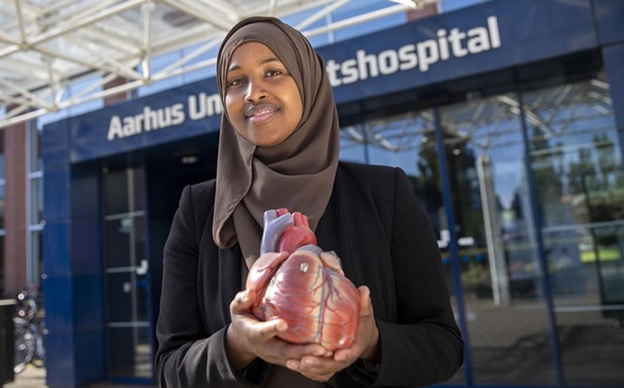
Mariam Noor has developed a small ring that seems to be able to cure leaking heart valves. This can change the way we do cardiovascular surgery. Photo: Lars Kruse, AU Foto.
When the aortic valve leaks, some of the blood returns to the heart, which means the heart has to work harder. In the worst cases, this can lead to heart failure, and this is why it’s important to treat the condition. Doctors usually treat the condition by repairing the diseased heart valve or replacing it with an artificial valve.
Both involve a risk of complications, and therefore engineers from Aarhus University have been working for several years to develop new surgical technology for heart patients.
“A prosthetic heart valve is an effective form of treatment, but it’s also a relatively complicated surgical procedure that brings with it a number of risks and complications in the long term. Now we have found a solution that can make it easier to treat patiens,” says Mariam Noor, a PhD student at the Department of Electrical and Computer Engineering at Aarhus University and the Department of Cardiothoracic and Vascular Surgery at Aarhus University Hospital.
Ring prevents blood from returning to the heart
Mariam Noor has spent the last three years designing and developing a ring that can give patients with aortic insufficiency good treatment results, and she has invented something that may have impact on the world of surgery.
“Instead of replacing the defective valve, my treatment concept is to enclose it in the main artery so it prevents blood from returning to the heart. I’ve developed a new type of ring that tightens around the aortic root to prevent this,” she says.
In fact, for several years now, cardiologists have been using a type of ring to stabilise the function of the heart valves, but this has not been without its disadvantages.
The traditional ring is round and relatively rigid, and this limits its operation. Furthermore, placing the ring in the body is a challenge because surgeons have to cut the aorta and remove the coronary arteries.
The new ring developed by Mariam Noor is made of an elastic material that can mould itself to the body’s tissue. It also has an opening, which makes it easy to place it correctly.
“The surgical procedure is significantly less invasive, and with the help of diagnostic imaging and 3D printing, we can adjust the ring’s rigidity and strength to the individual patient’s anatomy. This gives us some fantastic options, and the technology has been promising during animal trials,” says Mariam Noor.
Lots of physics in the main artery
Mariam Noor has especially focused on the material properties and design of the ring in order to better retain the dynamics in the cardiovascular system.
“I look at surgical issues through the lens of an engineer, because there’s a lot of physics and mathematics in our cardiovascular system. My approach has been to understand how the aorta works and then transfer this knowledge to design a ring that can recreate normal anatomical conditions in patients,” she says.
The ring consists of a silicone core surrounded by suture-like material. In order to document the effect, in collaboration with her colleagues, Mariam Noor has, carried out her experiments in a heart simulator, whereby it is possible to control the pump function, temperature and flow.
“We can simulate the action of the heart in a very precise environment that closely resembles the human body. This means we can closely study what happens with the ring in the frequency area of every, single heartbeat. It’s been interesting, and we have obtained an incredibly detailed knowledge base to continue working with,” she says.
The researchers have subsequently carried out a costly study to see how the ring expands in the body when the heart pumps, and Mariam Noor was positively surprised.
“We looked at the geometric pattern of the main artery in a pig with a ring and in a pig without it, and we could see that we can actually preserve the natural dynamics. These results look really promising,” she says.
She emphasises that there are a few years’ of clinical approval procedures ahead before the heart ring can benefit patients. (source: Aarhus University)
Mariam Noor has developed a small ring that seems to be able to cure leaking heart valves. This can change the way we do cardiovascular surgery. Photo: Lars Kruse, AU Foto.
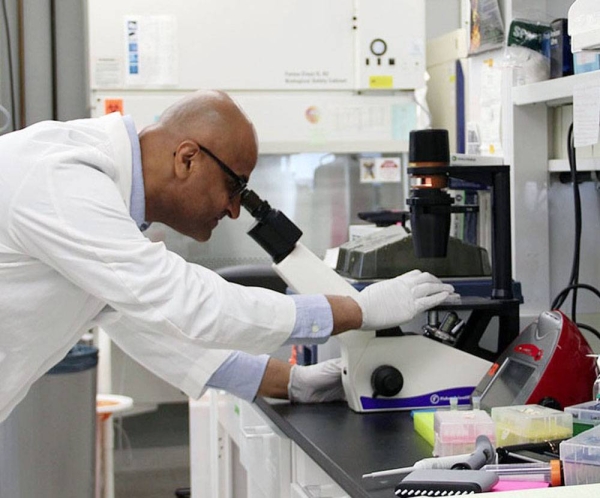
Michigan State University (MSU) faculty member Dr. Yasser Aldhamen created a pioneering cancer immunotherapy strategy that can shrink tumors and increase therapeutic resistance against some types of cancer.
This came during a research he recently published in “Molecular Therapy” Journal, which is classified as one of the best scientific journals specialized in genetic and cellular therapy in the world.
Professor Aldhamen’s research project took about two years, completing 41 scientific papers published in prestigious international journals, as well as 3 previous patents registered with the US Food and Drug Administration.
In a statement to the Saudi Press Agency (SPA), Dr. Aldhamen said, “The whole idea is to treat patients without drugs to eliminate cancer.”
“Based on my previous work, a method was devised to harness the naturally active immune system to control tumor growth by activating the action of specific immune system cells, such as NK cells, and innate immune cells, such as macrophages and dendritic cells, within tumors.”
Dr. Aldhamen occupies, in addition to his duties, the position of Deputy Director of Research in the Faculty of Medicine at Michigan State University, and has supervised 5 students in the doctoral stage, two students in the master’s stage, and more than 15 students in the bachelor’s stage.
He also receives some trainees for 8 weeks from the secondary stage, by virtue of his interest in training future researchers in the laboratory, motivating them that making the world takes a long time.
He also participated in 15 conferences around the world, and membership in a number of advisory committees at the university working on developing research and exchanging experiences with researchers in countries such as Egypt and Peru. — SPA
A team from the King Abdullah University of Science and Technology and Al-Hasa-based Palms and Dates Center has been awarded the 2022 International Date Palm Innovative Technology Excellence Prize.
Presented by the National Center for Palm and Dates, the award was made in recognition of the team’s fiber-optic distributed acoustic sensor, which is used in the early detection of red palm weevils in date palm trees.
Tackling infestations of red palm weevils has been a long-standing problem across the Middle East, Southeast Asia, Europe and other parts of the world.
The winning team comprised Dr. Islam Ashry, Dr. Chun Hong Kang and Prof. Boon S. Ooi from the KAUST Photonics Laboratory and Dr. Yousef Alfehaid and Eng. Abdulmonem Alshawaf from the PDC, which operates under the Ministry of Environment, Water and Agriculture.
HIGHLIGHTS
• Infestations of red palm weevils a major problem across the Middle East.
• Researchers from KAUST-PDC collect $53,000 in prize money.
As well as the prestige, the team collected SR200,000 ($53,000) in prize money. The award was announced at the 3rd International Dates Conference and Exhibition, which ran from Dec. 7-10 in Riyadh. Their design beat off the challenge of 65 other submissions for the prize.
Ashry said the team was honored to have won such a prestigious award and paid tribute to his colleagues at the Photonics Laboratory and the PDC who helped in the development, testing and deployment of the technology.
“This recognition motivates us to continue improving, optimizing and advancing this technology to a new level,” he said.
According to the NCPD, the event provided “a unique combination of scientific research and commercial strategy to exchange scientific knowledge and innovative technologies to enhance the safe production and commercialization of these extraordinary super-fruits.”
The Kingdom is home to some 33 million date palm trees, producing about 1 million tons of dates a year, or 20 percent of global production. In the Middle East region alone about $8 million is spent every year fighting infestations of weevils.
“Our RPW-detecting technology uses a fiber-optic distributed acoustic sensor,” Ashry said. “It is the first of its kind and offers a more scalable approach (than) other detection methods, such as microphone probe, computer-based tomography and visual inspection.”
Kang said the team’s system used fiber-optic cables wound around individual tree trunks.
“Acoustic signals generated by the weevil larvae inside a trunk can be picked up by the cable and transmitted back to an interrogator system,” he said.
“The collected signals are then analyzed and processed through a machine learning algorithm to identify each tree’s infestation status.”
Ashry and Kang are now working with various organizations within the Kingdom, including the PDC, MEWA, NEOM, the Royal Commission for AlUla and the Tabuk Agricultural Development Co., on the deployment of their technology.
These test applications will help to improve the sensitivity of the sensor systems so they can be used on large-scale farms.
“Our research efforts align well with … Saudi Vision 2030 in terms of diversifying the economy, especially for the date palm sector,” Ashry said.
Ooi said: “Our technology offers a unique and low-cost solution to protect the large number of date palm trees in the country through early infestation detection.”
source/content: arabnews.com (headline edited)
____________
(L to R): KAUST Research Scientist Dr. Islam Ashry and Prof. Boon S. Ooi receive the 2022 International Date Palm Innovative Technology Excellence Prize from the NCPD on behalf of their team. (Supplied)
The official names for the new minerals are elaliite and elkinstantonite.
Canadian researchers said the rock was found in rural Somalia two years ago, but locals believe it is much older.
They call the stone Nightfall, and say it is documented in poems, songs and dances that stretch back five generations. It is used today to sharpen knives.
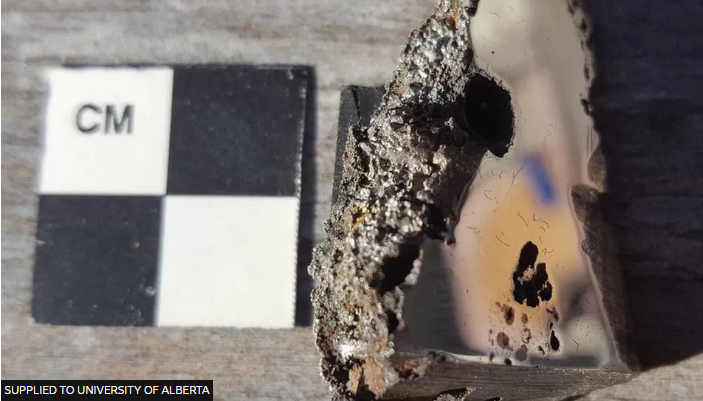
A huge meteorite that fell to Earth contains two minerals never seen before on our planet, scientists say.
Canadian researchers said the rock was found in rural Somalia two years ago, but locals believe it is much older.
They call the stone Nightfall, and say it is documented in poems, songs and dances that stretch back five generations. It is used today to sharpen knives.
The official names for the new minerals are elaliite and elkinstantonite.
They were identified by scientists at the University of Alberta who looked at a 70g fragment from the 15-tonne meteorite, which is said to be the ninth-biggest to reach our planet and is about 90% iron and nickel.
The name “elaliite” honours the fact that the meteorite was unearthed in the district of El Ali in Somalia, and “elkinstantonite” is named after Nasa expert Lindy Elkins-Tanton.
“Lindy has done a lot of work on how the cores of planets form, how these iron nickel cores form, and the closest analogue we have are iron meteorites. So it made sense to name a mineral after her and recognise her contributions to science,” said Prof Chris Herd who curates the University of Alberta’s meteorite collection.
A third, as-yet unidentified mineral, is being analysed by the university’s researchers who now hope to get their hands on more of the meteorite – not only to see what else they might discover, but also how it could be used on Earth.
“Whenever there’s a new material that’s known, material scientists are interested too because of the potential uses in a wide range of things in society,” Prof Herd said of the “exciting” research.
source/content: the-star.co.ke (Star) / BBC News, Africa (headline edited)
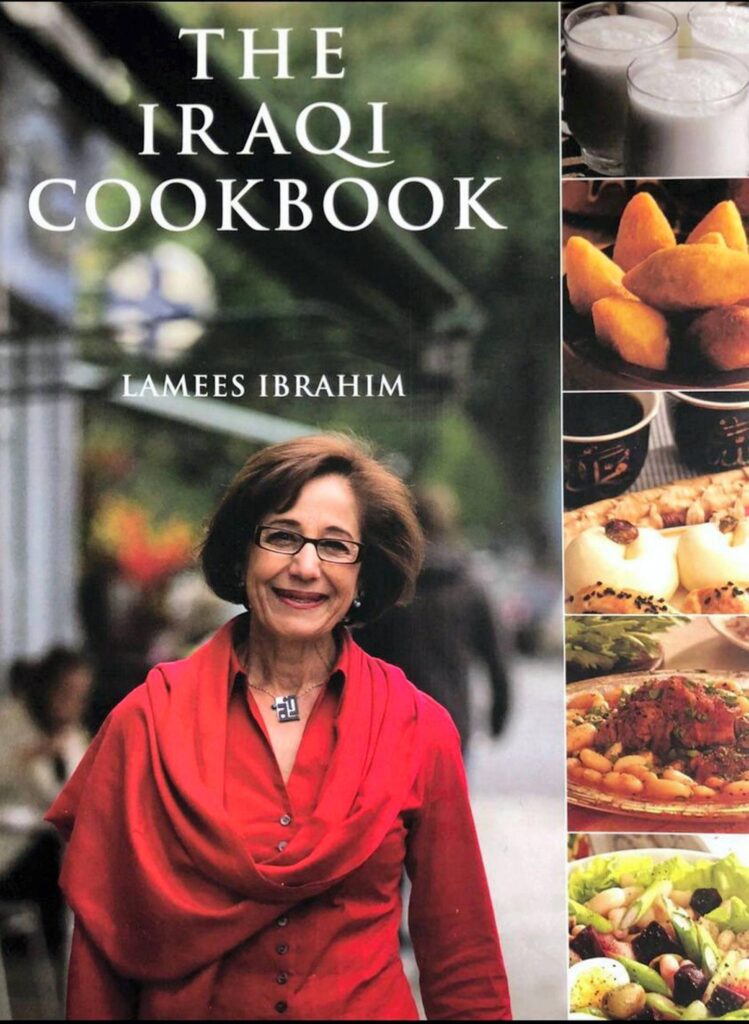
In our continuing series on inspiring life stories across continents, we learn what made her leave a career in medical science for a ‘cuisine lab called the kitchen’.
When Lamees Ibrahim left Baghdad in the 1970s, certain parts of the city, not least the riverside strip of fish restaurants along Abu Nawas, became a fixed ideal in her memory.
After an interval of three decades, a return to the flat bank of the Tigris in 2004 was an unexpected low point in a thoroughly disturbing homecoming.
The street once the “pomegranate of Baghdad” was no longer filled with diners being entertained by poets and musicians, engulfed in the aroma of arguably Iraq’s national dish, masgouf.
Instead, Dr Ibrahim stood shaken as she took in a rubble-strewn wasteland populated by a handful of struggling fish sellers.
Yet one sense was still powerfully triggered by the fresh carp grilling over the charred wood.
“It was not in very good shape,” she tells The National. “There were only bits of its old self left, but the smell was still amazing. There are certain scents that you smell and you think, ‘Wow, this is Baghdad.’ It is very, very specific. If you enjoy samak masgouf once, you will never forget it.”
Dr Ibrahim had made a long, hazardous journey from her home in London, where she moved decades earlier: marrying, earning a PhD in Pathology, raising four children.
Her husband was with her as she set out from Jordan in a car just after Fajr prayers that day, to “feel” her land, see her extended family, and show her eldest child, Maysa, her ancestral roots.
But the Baghdad conjured up by the smell of the barbecued fish was gone; the deserted, bombed-out streets were not at all familiar to her. They did, however, bring back one particularly strong recollection from childhood.
Sometimes in the summer months, the young Lamees would gather with her three siblings around their father to be regaled by stories about Iraq.
“I remember one day when he said: ‘Look, we built this country, the Iraqis, and we have to keep doing that. If every one of us contributed their own brick then the wall would go up and up, and we should keep on building.’ I never forgot that,” Dr Ibrahim said, “and I felt that we had to add our little brick to the wall. We had to make Iraq keep going.”
She returned to London on a mission to help rebuild Iraq in some way for the younger generations that would never have a chance to experience what it had been in the golden years.
The need to describe the country’s rich history and accomplishments was urgent, but whatever she put down on paper seemed inextricably tied to cooking. So it was that she came to realise it would be through food that she could preserve connections to things past.
“I wanted to write something, I needed to write, I had to write,” she says. “So I started. Eventually, it became a cookbook with a bit of history and anecdotes about culture, about civilisation.
“My background has nothing to do with cooking. It’s not cuisines of any kind, but I have a passion for Iraq. It’s my motherland, my country.”
When the 21-year-old Lamees had come to London in the early 1970s, it was to pursue a postgraduate medical degree at King’s College and then head back to her beloved Baghdad. Soon after arriving, she married and her life, she says, became busy but limited as she immersed herself in studying and research projects.
“You go to college, you study, you attend lectures, you come home, you open the books, read, read, read, have some dinner, and go back to college,” she says.
“I didn’t know that I was homesick until one day during Ramadan I saw an elderly woman going into King’s College Hospital with her black abaya and veil. I said to her ‘marhaba hajji’ and she was shocked. She hugged me, and I went home, crying all the way.
“I cried because I had a goal. I wanted to get a degree, and the sooner I got it, the sooner I could go back home. Unfortunately, that didn’t happen.”
She was haunted by her homeland, by such memories as the heady perfume of jasmine and the days in her youth when the children would pick the flowers and turn them into long necklaces.
But the months turned into years, and years into decades. At first, returning to Baghdad was difficult as the academic successes mounted and her family grew. It became impossible when Saddam Hussein came to power, with Dr Ibrahim fearing that she would be detained were she to attempt a visit, and never see her three daughters and son again.
Her father died and then, on news of the death of her mother, Dr Ibrahim made the fateful trip when she found a country that was “not what I was expecting, of course. It was demolished, devastated.”
The resulting homage, The Iraqi Cookbook, was published in 2009, a labour of love with the name of each dish painstakingly recorded in Arabic. Samak masgouf, of course, features, and Dr Ibrahim advises in the foreword that all visitors to Iraq should try it in one of the cafes and restaurants on the bank of the Tigris.
“I came back to London with one idea in mind, which is something that as a girl I grew up to learn,” she says. “I must do something for my country. I need to tell my children what my country is like, our history, our culture, our ability to do what we did in the old days.”
She is speaking by Zoom from her home in Richmond-Upon-Thames, her voice at times faltering and cracking with emotion as she talks about dedicating herself to bringing Iraq to the diaspora.
“Iraq to me is very important, very important,” Dr Ibrahim says. “It is in my blood. It’s in my genes. It’s my history.”
The book sold out in the UK and the US, and was reprinted by popular demand. Bit by bit, the time-consuming process of writing and re-writing, working with publishers and photographers, the press interviews had taken Dr Ibrahim away from her career in pathology.
“And I never went back,” she says. “I’m still very interested. I read a lot about Covid. I follow the research, but I’m not going back to that lab. I have a cuisine lab called the kitchen.”
With the emergence of the pandemic, Dr Ibrahim revisited experiments that she had begun as a teenager when she would try to make her mother’s recipes without meat. Sometimes it was successful, she acknowledges, sometimes not.
As a child, though, she had never been as fond of lamb as her siblings were. The family cat adored her, loitering under the table at lunchtimes for the morsels of the daily stew that Lamees would sneak down to her.
During lockdown, her own children became “guinea pigs” for her avant-garde creations as Dr Ibrahim collected together an array of vegan offerings that would appeal to a young audience interested in preserving the planet.
“Dishes don’t need to have meat to have the taste and flavour, for it to smell like an Iraqi dish,” she says. “Iraqi cooking can be vegan, as well as meat and fish-centric.
“If you can preserve the taste of the flavour of the dish, go for it. Many Iraqi dishes are, in fact, vegan but we ate them before ever knowing the word ‘vegan’.”
When one of Dr Ibrahim’s friends called to see how she was faring with the tight coronavirus restrictions in the capital, she told him she had been busily cooking all the recipes to be photographed for The Iraqi Vegan Cookbook. Curious, he wanted to know whether she was including any kubba, knowing that Dr Ibrahim had devoted an entire chapter to its many meaty variants in her first book.
On learning that the new book would contain Kubbet Jeriesh, Kubbet Halab and another recipe that Dr Ibrahim made from lentils, he answered: “Only three?”
His grandmother, he said, had never enjoyed meat in her kubba so the family reinvented the dish to suit her preferences, stuffing the shells with pine nuts, onion, spices and parsley.
“If all these years ago we had vegan Iraqis, we have plenty today,” Dr Ibrahim says, smiling.
The Iraqi Vegan Cookbook had been due out on December 31, but the release has been delayed not least because of the queues of hauliers that built up in Calais and Dover as a result of Brexit and the French shutdown of the border when the new strain of the coronavirus emerged in the UK.
Rescheduled for release at the end of January, Dr Ibrahim hopes that sharing more of the oldest cuisine in the world will counter some of the negative perceptions that persist about Iraq today.
“Iraq is positive,” she says. “Iraq is full of history, full of culture. This is the cradle of civilisation. I don’t like to talk about what’s going on now. I would like to talk about the positivity of all of our achievements.
“I feel nowadays, if I add that little brick, then I have added something which I would be proud of as an Iraqi living in the West. Living in Iraq, we can build from within. We are living in the West – all my children are also living in the West, but we add our bricks from our side, from outside the country.”
Dr Ibrahim is modest about her contribution to the wall that her father told her about all those years ago, hesitating to use the word achievement. If her writing can be described as such, she says, she wants to make clear that it was never about her. It was always for Iraq.
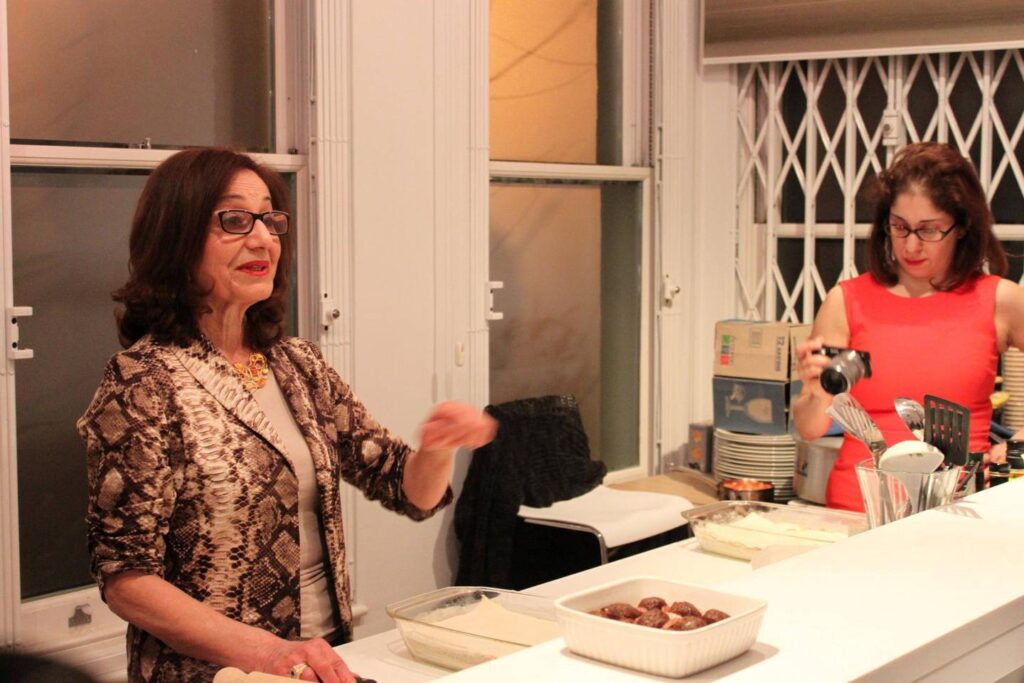
Dr Lamees Ibrahim has dedicated herself to bringing the country of her birth to the diaspora: ‘Iraq is very important to me. It is in my blood. It is in my genes. It is my history,’ she says. Courtesy of The Mosaic RoomsThe homage to Dr Ibrahim’s homeland, ‘The Iraqi Cookbook’, was published in 2009, a labour of love with the name of each dish painstakingly recorded in Arabic. Courtesy Lamees Ibrahim
The Kuwaitis continued to make many distinguished achievements and achieved results in various fields and at the various local, regional and international levels, which were recorded for their work and creativity, reports Al-Rai daily. The following are the most prominent of these achievements during the year 2022.
February 10: Dr. Hind Al-Qadri, a researcher at the Dasman Diabetes Institute of the Kuwait Foundation for the Advancement of Sciences, won the 2021 L’Oréal UNESCO Prize for Women in Science within the Middle East Regional Program for Emerging Female Researchers. (see picture below)
February 24: Kuwaiti parachutist Ibrahim Al-Rubaian recorded an unprecedented feat by jumping from a height of 13,000 feet with the biggest fl ag in the sky of Kuwait, with an area of 800 square meters, under the slogan “I raised glory and soared with pride,” coinciding with the national holidays.
February 26: The State of Kuwait entered the Guinness Book of Records by hoisting the country’s largest flag measuring 2,742 square meters and installing it on a mountain peak in the Sultanate of Oman (Jabal Shams), at an altitude of 3,028 meters above sea level, in conjunction with national holidays.
March 21: The Arab Organization for Education, Culture and Science (ALECSO) honored Sheikha Dr. Suad Al-Sabah, in recognition of her brilliant contributions in the literary and cultural fields, at its eighth session of the “Arab Poetry Day” in the Tunisian capital.
April 23: The International Professional Diving Instructors Organization awarded the Kuwait Scientific Club Center for Swimming and Diving a Certificate of Excellence for its contribution to the development of the diving industry inside and outside Kuwait.
June 12: Kuwaiti researchers Dr. Nasser Al-Sayegh and Dr. Ammar Bahman obtained a patent from the US Patent Office, for their invention of a device capable of characterizing the physical state of nanosuspensions dispersed in nanofluids during the dynamic fl ow process.
June 29: Kuwait University announces that Assistant Professor of the Department of Surgical Sciences at the College of Dentistry, Dr. Muhammad Kamal, and the Consultant of Nose and Throat at the Ministry of Health, Dr. Abdul Mohsen Al-Turki, obtained a patent from the United States of America for an alternative medical splint to the nose wicks.
July 2: The International Pharmaceutical Federation selected Dr. Dalal Al-Taweel, Assistant Dean for Student and Academic Affairs at the College of Pharmacy, among 20 rising stars in the field of pharmaceutical research and pharmaceutical education.
August 11: The League of Arab States honors the Kuwaiti youth, Abdullah Al- Shammari, who won the third place for the “Excellence Award for Arab Youth 2022” in the field of “voluntary work” granted by the Council of Arab Ministers of Youth and Sports. The award came about the “Al-Amal Electronic Newspaper” project, which is concerned with the affairs of people with disabilities.
October 2: Plastic artist Munira Al-Qadiri won the prize of the 15th session of the German “Trina Fellbach” exhibition for small sculptures.
October 3: Dr. Badr Al-Enezi, from the Department of Environmental Technology Management at the College of Life Sciences at Kuwait University, obtained a patent on “improving water and solving the problem of environmental pollution in a scientific way” from the United States Patent and Intellectual Property Office.
October 9: Kuwaiti photographer Muhammad Murad won first place in the prestigious international “Mont Photo” competition for photography in the natural world in Spain.
October 12: The European Union of Medical Specialties selected Dr. MuhammadKamal, a Kuwaiti academic, as the first examiner from outside the continent for the Board of Oral, Maxillofacial, and Head and Neck Surgery. The selection was made during the last session held in the Spanish capital, Madrid.
October 12: Lama Fahad Al-Ariman received the “Rising Space Leaders” award presented by the International Astronautical Federation as the representative of the State of Kuwait in this international competition.
October 30: Kuwaiti photographer Muhammad Murad won the top honorary prize in the African “Benjamin Mkapa” competition for developing African wildlife and the American “Nature Best” competition.
The celebrated pharmaceutical chemist, nano engineer and inventor reveals why she has spent a career focusing her mind over matter.
When the Berlin Wall came down, Adah Almutairi watched the event unfold on a television screen 5,000 kilometres away in the family living room in Jeddah.
Too young at the time to fully understand the implications, 12-year-old Adah could nonetheless tell that the moment was significant, by the reaction of her parents.
Years later, at a conference to mark the 25th anniversary of the reunification of Germany, Ms Almutairi was on a stage in Berlin talking about her ground-breaking achievements in knocking down walls in science.
Back then, public speaking made her nervous. The knowledge that Chancellor Angela Merkel, a fellow chemist revered by Ms Almutairi, was among the 700 top international scientists and guests taking part merely compounded the feeling.
She broke the ice with a quote from the 1967 romantic comedy drama The Graduate, which earned her a laugh from the audience: “I just have one word to say,” she told them. “Just one word. Are you listening? Are you listening? Plastics.”
Ms Almutairi went on to describe herself as a plastics chemist, but she is much more besides. Her wide-ranging work combining materials chemistry with nanotechnology as well as developing tools for the future of biology and medicine makes her in great demand at conferences in the US, Europe, the Middle East and China.
The Saudi-American pharmaceutical chemist and nanomedicine engineer has won all manner of honours and recognition, including the prestigious and lucrative National Institutes of Health director’s new innovator award.
At the Falling Walls event, she gave an engaging, if sometimes faltering, presentation of her life-changing nanoparticle discovery feted in the US Congress as one of the four most important US technology breakthroughs of 2012.
“I used to be a nervous wreck before I gave a talk and would practise for two weeks beforehand,” she tells The National. “Plus, Angela Merkel is such an amazing woman, so meeting her was really special.
“She got elected just as I got my degree in chemistry and the way she spoke at that conference, and later welcomed so many Syrians into Germany, made me really respect her views on being kind citizens.”
With practice, Ms Almutairi, now 45, is much more comfortable as a public speaker. “Preparation,” she says, “is key.”
It was a lesson she learnt as a schoolgirl after a fluffed first gymnastics performance before a crowd left her sobbing on a bench. Determined never to repeat the same mistake, she rose to become the top gymnast on the team as well as the fastest 1,500-metre runner.
Preparedness forms the backbone of her professional life as she puts known scientific truths into practice while always remaining open to unexpected outcomes.
Discoveries and their effects, she and Ms Merkel wholeheartedly agree, can often surprise the scientists and engineers themselves.
“If you decide there is going to be a challenge down the road and that is going to deter you, nothing will happen,” she says. “If you go down that road anyway, you’ll solve the problem when you get there.”
No amount of planning, though, could have readied her for a year when the rug was pulled out from beneath her feet. In 2015, her beloved father died at the age of 65 and her 20-year marriage to a banker she met at university fell apart.
It was, she says, a painful time – not least because Mutlaq bin Abdul Rahman Almutairi, born into a traditional Saudi family, was his daughter’s greatest ambassador, enabling her to break free from what could have all too easily been a restrictive mould.
He was just five years old and still mourning his mother’s death when his own father packed up their goat-hair tent, strapped their few possessions to the back of a camel and made the arduous 100km journey from the Bedouin desert enclave of Al Harra to seek work and a new life in Jeddah.
Desperately poor, the family squatted on land and, when old enough, the enterprising Mutlaq enrolled himself and his younger sister in school.
His conservative father, who could not read or write, was furious and sent his daughter home. Mutlaq stood his ground and continued with his education – a moment that shaped the course of his own future and subsequently that of his five children.
“Sometimes in life, one decision changes everything,” Ms Almutairi says.
Mutlaq’s offspring have flourished in their respective fields of science and medicine. Khalid, 46, a plastic surgeon, Heba, 38, a professor in radiology, and Ahmed, 37, a dentist, still live in Saudi Arabia while Amer, 41, a professor in family medicine, is based in Houston.
Ms Almutairi was named recently on the Forbes list of the world’s Top 10 Influential Female Engineers, and often thinks of the debt owed to a father who championed her right to education.
The stance made him something of an anomaly among the Almutair tribe, whose roots can be traced back to the Quran.
“It still makes me emotional,” she says. “He was enlightened from God.
“No one around him was educated. He was the first in his entire family to learn how to read and write and go to college.
“My father and grandfather got into a lot of fights because my grandfather did not believe women should be educated.”
While she inherited drive and motivation from her father, a love of learning was instilled at a young age by her mother Najat, who, aptly enough, was a teacher.
“My family on my mother’s side were extremely well educated and my mother is very well read,” she says.
Indeed, her parents met because Mutlaq had become besotted with Ms Almutairi’s great-aunt Hilal, an intellectual who was one of the first dentists in Saudi Arabia.
Despite the 20-year age gap, he approached the family to ask for her hand in marriage but was advised instead to wed the daughter of Hilal’s brother, with whom he would build a strong bond.
“My father appreciated a smart woman,” Ms Almutairi says. “He didn’t go after the young, pretty girl. He initially went for the older woman he enjoyed talking to.
“Now when I think back, I realise how special and unique he was, and how much respect he had for women.”
Mutlaq studied criminology and justice administration in Portland, Oregon, where Adah Almutairi was born, before returning to his homeland to become a police investigator.
The young Adah attended international schools in Jeddah and Riyadh, excelling not only at sport but in maths and science.
On leaving school at 16, she was at a loss as to what to do next. Her mother was applying for teaching posts so, on a whim, Ms Almutairi submitted an application to Najd National School in Riyadh – and surprised everyone, including herself, by landing a job teaching English.
“I didn’t have a degree, and when the headmistress realized how young I was, she said: ‘Don’t tell anyone, just put some lipstick on.’
“It was the best job ever. I loved every minute of it. I had such a connection with the girls. I used to take in copies of my mother’s Reader’s Digests and make up writing exercises around them.”
A year later, she began applying to universities. King Abdulaziz University in Jeddah turned her down but she secured a sports scholarship to Occidental College in Los Angeles, Barack Obama’s alma mater.
The opportunity once again put her father at loggerheads with her grandfather and members of the Almutairi clan, who did not think a young woman should travel overseas alone. Unperturbed, Mutlaq sent her anyway, even though he and Najat had doubts about her choice of subject.
The couple wanted her to be a doctor but Ms Almutairi chose maths as her major before switching to chemistry in her second year.
The lightbulb moment came when her tutor, the widely loved chemistry professor Tetsuo Otsuki, told her she was “a diamond in the dirt”.
“He made me feel smart and capable, and worth being taught,” she says.
“I have twice been told the phrase: ‘You remind me of myself’. It is one of the nicest things you can say to a young person if they look up to you. It really sat in my heart.”
Chemistry appealed because it was based on “concepts where once I wrapped my head around them, I could use them in so many ways”.
A scholarship to continue her studies at the University of California, Riverside, led her to create lightweight plastic polymers, or molecules, capable of conducting electrons that had uses in everything from robotics to space research.
“Around that time,” she says, “Hideki Shirakawa was winning the Nobel chemistry prize for his work with conductive polymers, and both Nasa and Walt Disney were funding and supporting that work.”
She may not have become a doctor of medicine as her parents had wished, but Ms Almutairi did turn her attention to the field during postdoctoral studies at the University of California, Berkeley, where she worked with Jean Frechet, a chemist innovating in the area of in-vivo imaging to diagnose disease.
After being turned down for jobs in Saudi Arabia, she took up a post at the University of California, San Diego, going on to lead an interdisciplinary research group at the Centre for Excellence in Nanomedicine and Engineering.
Perhaps one of Ms Almutairi’s proudest moments was collaborating with an ophthalmologist for a decade to come up with a way to regenerate failing retinas and prevent blindness.
“That particular innovation is now commercialised and makes me feel really good about myself,” she says. “I enjoy all sorts of application materials but medicine is especially rewarding. I like to solve problems and have a positive impact on the world.”
Her work with lanthanides – popularly classed as rare earth elements but actually, she says, abundant – involves a chemical reaction that could be applied to the delivery of drugs and diagnostics in medicine but also solar energy harvesting.
She has more than 100 patents registered, including one with her brother Khalid to use gold molecules in liposuction.
“My work is very rewarding,” Ms Almutairi says, “and my father was very proud of me. When I became well known in the US, it was a big moment because the people who were criticising him for sending his daughter away were the same people congratulating him.”
A strong proponent of the “health is wealth” philosophy, she may no longer run, but she does lift weights regularly and spends time in the garden with her 10-year-old son cultivating avocados, figs, and citrus trees, and growing aubergines, tomatoes and cucumbers.
She has visited Saudi Arabia many times to see her family and speak at conferences. One in particular that has stayed with her was a graduation speech at Princess Nourah bint Abdulrahman University in Riyadh.
There was no film quote for these graduates of the largest women’s university in the world. In a clear voice, without a hint of nerves, she instead passed on the words of that staunch defender of her own access to education.
Remain forever curious about the world, she told the audience, and live a meaningful life with impact.
It was clear that the woman of substance standing before them had been shaped by her father’s advice. She didn’t need to ask if they were listening.
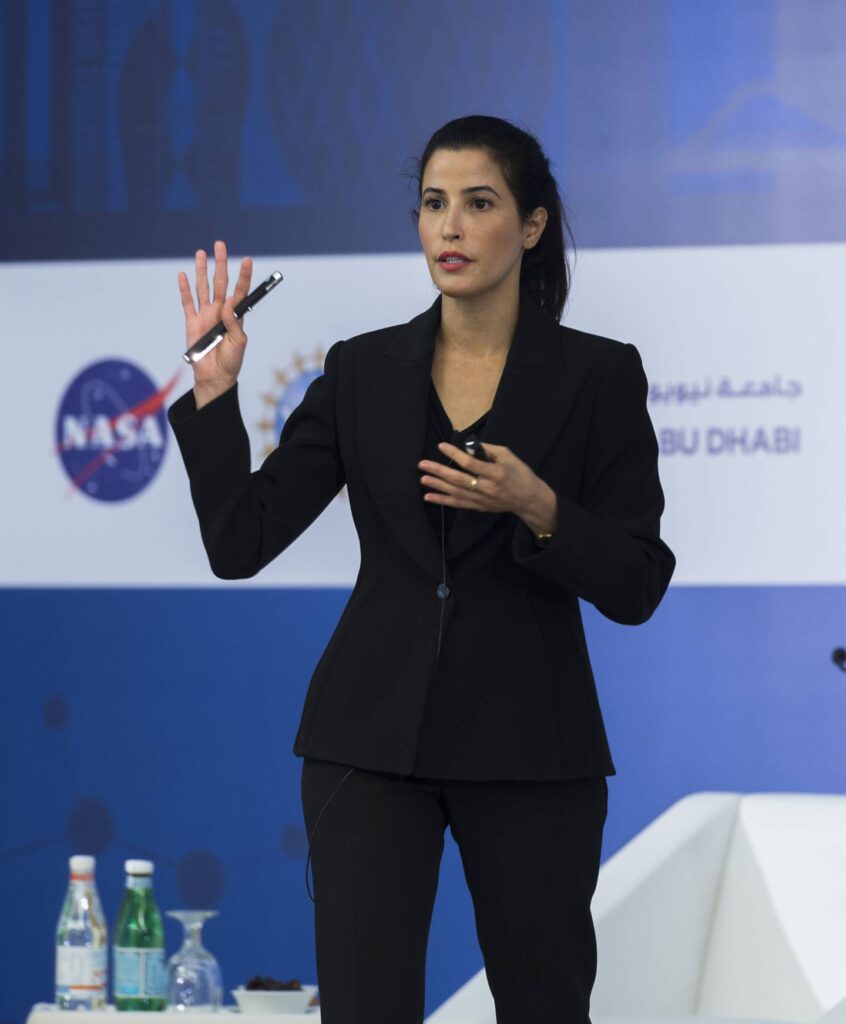
The Saudi Arabian-American pharmaceutical chemist and nanomedicine engineer is in great demand at conferences in the US, Europe, the Middle East and China. Photo: Adah Almutairi