SAUDI ARABIA : A Look into the World’s Largest BESS Project in Saudi Arabia

 Saudi Arabia is making advances in its BESS projects as it launches one of Middle East’s largest BESS deployments, a 4GWh BESS project. The nation’s battery storage drive comes as HiTHIUM is commissioned with a 4 GWh BESS project in a joint venture between the Saudi Electricity Company and Alfanar.

The systems, to be installed in Tabuk and Hail, will deploy HiTHIUM’s 1175 Ah long-duration technology in climate-resilient containerized units, being commissioned in 2026. This follows on the back of the earlier commissioning of the 500 MW / 2 GWh Bisha BESS, the globe’s largest single-phase grid-tied project, and a record 12.5 GWh transaction with BYD, which puts Saudi Arabia at the center of the world’s biggest in-development grid-scale storage pipeline.

By the year’s end, the Kingdom should surpass 11 GWh of operational storage and place itself among the top five utility-scale BESS leaders as it targets Vision 2030 renewable ambitions. The impact and influence of BESS projects around the world cannot be overstated, with Saudi Arabia taking the lead. Other countries such as Finland are determined to catch up as they launched the world’s largest sand battery , a monumental achievement.

The Middle East is making effort in various energy projects other than the world’s largest BESS project in Saudi Arabia. The UAE has broken ground on the world’s largest solar and BESS project,  first of its kind. Moreover, it will be capable of delivering round-the-clock baseload renewable energy. Masdar in collaboration with EWEC (Emirates Water and Electricity Company) is developing the $6 billion project. Moreover, it will deliver up to 1 gigawatt (GW) of baseload power 24 hours a day, seven days a week. The ceremony was witnessed by Sheikh Theyab bin Mohamed bin Zayed Al Nahyan, Deputy Chairman of the Presidential Court for Development and Fallen Heroes’ Affairs.

August 11, 2024: The implementation of the world’s largest battery energy system (BESS) project progresses as Saudi Arabia begins qualification tenders. A Saudi Arabian entity that has been tasked with procuring electricity generation projects has commenced the process. Saudi Power Procurement Company (SPPC) is licensed as the sole buyer of electrical energy. The government is soliciting bids to develop four battery energy storage system (BESS) projects. Furthermore, it is expected that each will have a 500MW output and 2,000MWh in storage capacity. The contract, which entails 15-year terms, will be awarded on a build-own-operate (BOO) model. It also entails the aspect of bidders holding 100% equity in special purpose vehicle (SPV) companies set up for the development and operation of projects. The SPPC, administered by the Saudi Ministry of Energy, aligns with the National Renewable Energy Program (NREP). Once completed, the BESS project is expected to be the world’s largest.

Project Factsheet

Location: Saudi Arabia

Capacity: 8GWh of storage capacity

Significance: World’s largest BESS Project

Main Company Involved: Saudi Power Procurement Company

Project duration: 15 years

Prequalified Bidders

The Saudi Power Procurement Company (SPPC) has released a list of 33 prequalified bidders for its 8GWh BESS project. The tender, structured as a build-own-operate model, attracted significant energy companies, both local and international. These include Masdar, ACWA Power, EDF, TotalEnergies, and Jinko Power, among others. The list also included prominent companies from nations such as South Korea, Japan, and China. Leading the pack were Samsung, the China Energy Overseas Investment Company, China Power Engineering, and China Southern Power Grid International. Of the 33 prequalified bidders, 21 applied, aiming to provide management and technological services. The remaining 12 applied solely for asset management roles for the BESS project.

The projects mark the first phase of Saudi Arabia’s ambitious battery storage program. It is designed to support its 50% renewable energy goal by 2030. Each 500 MW facility will operate for four hours, providing 2,000 MWh of total power capacity, said the SPPC. In early November, the state-owned limited liability company called for qualification for battery storage procurement. The company has so far contracted several gigawatts of solar PV and wind in competitive solicitation over the past years. Other technologies, such as Combined Cycle Gas Turbine (CCGT) and Water Infrastructure, have also had deals inked. Successful candidates will be granted 15-year Storage Service contracts with SPPC for respective projects they develop, featuring an output and storage capacity of 500 MW/2,000 MWh at various locations in the country. In addition, the bidders will have 100% equity in projects developed by SPV companies.

The State of Affairs Regarding the World’s Largest BESS Project in Saudi Arabia

The world’s largest BESS project in Saudi Arabia is one that has received accolades from the state government. Under Saudi Arabia’s Vision 2030 policy roadmap, the country aims to have a 50% share of renewable energy in its grid. According to energy minister, Prince Abulaziz bin Abdullah Al Saud, the government is prepared to incur the needed costs. Speaking in 2021, the Saudi government expects to spend $293 billion on power and energy projects by then. The biggest share of this revenue is expected to be spent on transmission upgrades and renewable energy.

Furthermore, investment is expected to be placed in the distribution network. SPPC noted earlier this week that the newly launched BESS procurement project will help the nation reach its 50% goal. The company also noted that the current tenders represent the first batches of solicitations. The locations of the four BESS facilities have already been decided. Two will be in Makkah province, one in Qassim province, and the other in Hail province. They have also been termed as independent storage projects (ISPs) by SPPC. Qualified bidders have been issued until midday, 25 November 2024, to submit their proposals for the BESS project.

source/content: constructionreviewonline.com (headline edited)

_______________
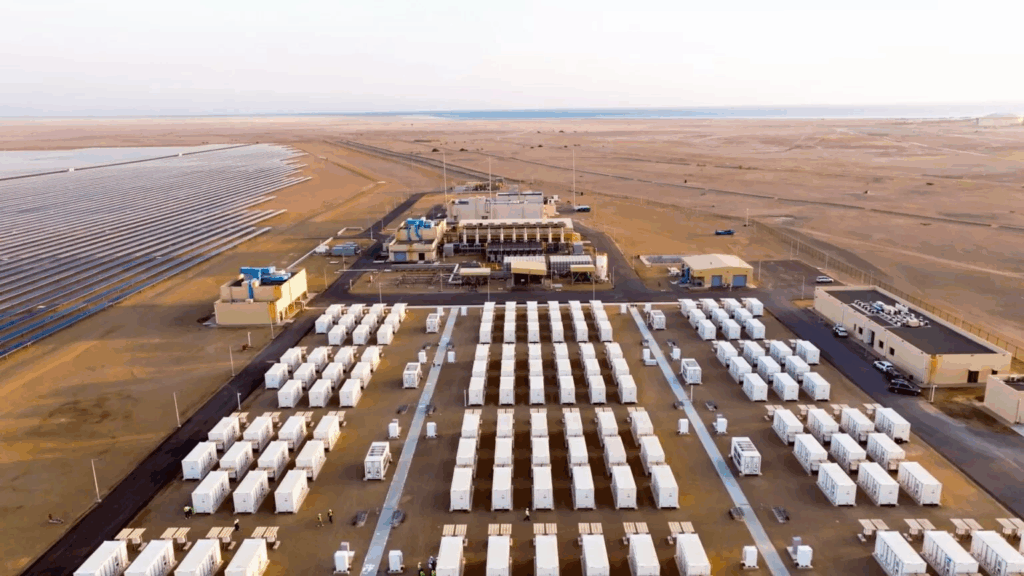
The Saudi Power Procurement Company (SPPC) has released a list of 33 prequalified bidders for its 8GWh BESS project.

_________________

SAUDI ARABIA

SAUDI ARABIA : Lighting up Arab skies: Saudi innovator Reyam Alahmadi launches Astrophile to bring space science home

Astrophile magazine reimagines how science could speak to readers across the Arab world

It reminds young Saudis and Arabs that science is not foreign, but is part of their own story

Saudi science communicator Reyam Alahmadi is bringing the cosmos closer to home. At just 25, the Madinah-born innovator has launched Astrophile, the Kingdom’s first Arabic astronomy magazine, to make space science accessible, accurate, and part of everyday conversation across the Arab world. 

“What began as a personal fascination with the cosmos evolved into a full-fledged movement to revive Arab contributions to astronomy, and to give today’s generation the tools and language to rediscover them,” she told Arab News.

“The Arab world truly needed something like Astrophile. There wasn’t a single comprehensive Arabic astronomy platform, which left a huge gap in accurate knowledge. That gap led to misconceptions about space, and that’s what we wanted to fix.”

When Astrophile launched, the magazine did not simply translate international astronomy news, but also reimagined how science could speak to readers across the Arab world. 

Through storytelling, visual design, and educational offerings, Alahmadi built a brand that feels both modern and deeply cultural. Every article blends cosmic wonder with accessible language, transforming scientific terms into relatable concepts. 

“I believe the wonder of space belongs to everyone,” she said. “So I share what I learn in the simplest way possible, not with overwhelming numbers or formulas, but through storytelling and curiosity. My goal is to make readers feel the beauty of the universe, not the heaviness of its equations.”

In a region where complex STEM subjects often feel distant, Alahmadi’s approach bridges the emotional and intellectual, transforming astronomy into a shared cultural experience. 

For Alahmadi, Astrophile is more than a publication, it is a revival. She sees it as part of a wider effort to reclaim the Arab world’s historic leadership in astronomy, from scholars who once mapped the stars to modern-day dreamers shaping the space economy. 

“Astronomy, chemistry, and physics, many of these sciences were born from Arab minds,” she said. “Reviving that heritage isn’t nostalgia; it’s responsibility. We’re continuing what our ancestors began, adapting their legacy to today’s society.” 

By publishing in both Arabic and English, Astrophile bridges global and regional audiences. It reminds young Saudis and Arabs that science is not foreign, but is part of their own story.

Her vision, she said, is to “restore curiosity as a national habit.”

Behind Astrophile’s elegant visuals and clean scientific precision lies a deeper challenge: language itself. 

“One of the hardest parts is translation,” Alahmadi said. “Some technical terms, especially about rockets or engineering, simply don’t exist in Arabic. It can be frustrating, but also exciting; it gives us space to innovate linguistically.”

As well as science writing, each issue of the magazine also involves linguistic invention, as her team refines and localizes terminology to suit Arabic readers without losing scientific accuracy. 

“In a way, it feels like exploration on two fronts,” she said. “We explore space, and at the same time, we explore our language.”

That approach has given Astrophile a distinctive voice: poetic, informed, and proudly Saudi, blending design aesthetics with factual clarity. 

In just a few years, Astrophile has evolved from a passion project into a respected reference point for young science enthusiasts, teachers, and even regional media outlets seeking verified space updates in Arabic.

Under Alahmadi’s leadership, the magazine has tackled global milestones such as the James Webb Space Telescope, the Artemis lunar missions, and Saudi Arabia’s astronaut program, translating these topics into stories that resonate with Arab identity and vision.

Her message is consistent: Science is not distant, it is personal. 

“My vision is for Astrophile to become the leading reference for every Arabic-speaking space enthusiast,” she said. “I want it to inspire a generation who see space as part of their world, not beyond it.” 

Alahmadi’s blend of scientific precision and cultural sensitivity has positioned her as a voice for both innovation and inclusion, proving that women in Saudi Arabia are not only joining, but also shaping global scientific conversations. 

Her journey also reflects a broader transformation within the Kingdom, where young women are leading initiatives that merge research, creativity, and public engagement. 

As part of the new wave of Saudi science communicators, Alahmadi represents the next phase of Vision 2030’s knowledge economy, where education and innovation converge to build cultural and intellectual self-reliance. 

“Vision 2030 gave people like me permission to dream bigger,” she said. “It showed us that the Saudi youth can lead global conversations, not just follow them.”

Through her work, Alahmadi has made the cosmos feel closer, in both words and ownership. She believes every child who reads Astrophile could become the next scientist, engineer, or astronaut to carry Saudi Arabia’s ambitions beyond Earth. 

Looking ahead, she plans to expand Astrophile into a regional science communication hub, combining digital platforms, educational workshops, and multimedia storytelling.

Her long-term goal is simple, yet profound: to make Arabic the language of discovery again.

“Science belongs to everyone,” she said. “But when we tell it in our own language, we don’t just understand it, we own it.” 

As the night sky continues to inspire humankind, young innovators such as Alahmadi are proving that Saudi Arabia’s brightest stars are not just above, but right here, building the future.

source/content: arabnews.com (headline edited)

______________

_________________

SAUDI ARABIA
SAUDI ARABIA : King Faisal Specialist Hospital performs world’s first robotic intracranial tumor resection surgery

Achievement reflects ‘our growing role in shaping the future of global medicine,’ CEO Dr. Majid Al-Fayyad says

Procedure involved removing a 4.5-centimeter brain tumor with robotic arms from a 68-year-old man who had been experiencing severe headaches

In a historic leap for robotic medicine, the King Faisal Specialist Hospital and Research Centre in Riyadh has performed the world’s first robotic intracranial tumor resection.

This groundbreaking achievement sets a new global standard in neurosurgical precision and recovery.

The procedure involved removing a 4.5-centimeter brain tumor with robotic arms from a 68-year-old man who had been experiencing severe headaches and loss of concentration.

Remarkably, the patient was discharged fully conscious within 24 hours — a recovery time nearly four times faster than that of traditional brain surgeries.

Dr. Homoud Al-Dahash, KFSHRC consultant for skull base tumors and lead surgeon, stated that the robotic system provided exceptional precision and control, which enabled surgeons to navigate critical neurovascular structures with a high level of safety.

“The patient’s same-day discharge, fully conscious and without complications, represents a new benchmark for neurosurgical innovation,” he added.

Guided by a 3D optical system, the one-hour surgery enabled surgeons to operate with a clear, magnified view of the brain.

Advanced image-guided navigation technology ensured precise tumor removal while protecting vital areas of the brain.

KFSHRC CEO Dr. Majid Al-Fayyadh linked the milestone to the hospital’s ongoing transformation journey.

“This achievement reflects KFSHRC’s growing role in shaping the future of global medicine,” he said.

“It aligns perfectly with our vision, where innovation and patient-centered care define the future of healthcare.”

Before the advent of robotic neurosurgery, similar procedures required manual removal under a surgical microscope, where precision depended heavily on human steadiness and visual clarity.

Robotic systems now provide enhanced instrument stability, tremor elimination, and superior visualization — redefining global standards of safety and precision in neurosurgical care.

This landmark procedure adds to KFSHRC’s expanding portfolio of robotic surgical breakthroughs.

The institution previously performed the world’s first robotic heart transplant and robotic liver transplant, earning international acclaim and solidifying its standing among the world’s leading centers for robotic and minimally invasive surgery.

KFSHRC has been ranked first in the Middle East and North Africa and 15th globally among the world’s top 250 academic medical centers for 2025.

It was also recognized as the most valuable healthcare brand in the Middle East by Brand Finance 2024 and listed among Newsweek’s World’s Best Hospitals 2025, Best Smart Hospitals 2025, and Best Specialized Hospitals 2026.

These accolades reaffirm its position as a global leader in innovation-driven patient care.

source/content: arabnews.com (headline edited)

___________

King Faisal Specialist Hospital and Research Centre in Riyadh has performed the world’s first robotic intracranial tumor resection. (SPA

__________________

SAUDI ARABIA
EGYPTIAN scientists pioneer low-cost COVID-19 treatment: Study

Amid the global race to find effective COVID-19 treatments, an Egyptian research team has achieved a breakthrough that could reshape how middle- and low-income countries combat the virus.

The study, titled EVERST, was published on 20 October in Scientific Reports, a leading international journal under the Nature group.

According to the study, Egyptian scientists reported promising results in treating moderate COVID-19 pneumonia with safe, locally available, and affordable drugs.

The research, led by Professor Dr Mohamed Abdelsalam El-Gohary, brought together a multidisciplinary team of doctors and scientists from Egyptian and international institutions.

Over two years, the team evaluated the safety and effectiveness of four treatment regimens combining repurposed antiviral drugs — Sofosbuvir/Daclatasvir, Sofosbuvir/Ledipasvir, Ivermectin, and Hydroxychloroquine — in 310 Egyptian patients with moderate COVID-19 infections.

“Our goal was to find a practical, homegrown solution that saves lives without overburdening healthcare systems,” Professor El-Gohary told Ahram Online. “Egypt produces these medications locally, which means they are accessible and affordable for millions.”

The findings showed that two specific combinations —Sofosbuvir/Daclatasvir with Ivermectin and Sofosbuvir/Ledipasvir with Hydroxychloroquine —helped patients recover faster, shortened hospital stays, and provided remarkable protection of lung tissues on CT scans.

Patients treated with these regimens returned home significantly earlier than those who received standard care.


“This reduction in hospitalization time has major implications,” El-Gohary explained. “It not only improves patient recovery but also reduces pressure on hospitals and public health budgets, a critical factor during pandemics.”

The new combination regimen also showed improved CT scan results for pneumonia, a crucial step in preventing post-COVID complications, a growing concern worldwide.

Equally important, the study confirmed that the new treatment combinations were safe and well tolerated, with no major side effects compared with existing protocols. The only factor linked to higher mortality was advanced age.

The EVERST study, which underwent extensive international peer review before publication, reinforces Egypt’s growing role in global medical research and innovation. It also highlights the potential of repurposing affordable antiviral drugs to address emerging diseases.

source/content: english.ahram.org.eg (headline edited)

__________________

Dr Mohamed Abdelsalam El Gohary

__________

EGYPT

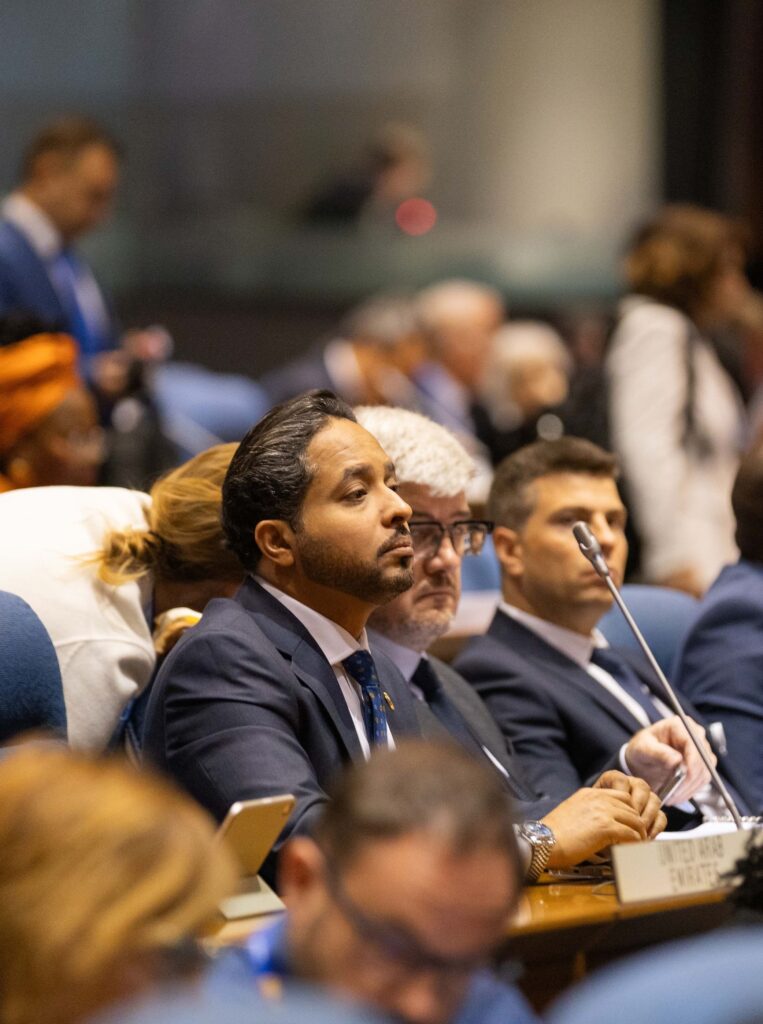
The UAE’s Permanent Representative Engineer Saeed Mohammed Al Suwaidi to ICAO is appointed Vice-President of the Council, October 2025

 The Council of the International Civil Aviation Organization (ICAO) elected Engineer Saeed Mohammed Al Suwaidi, the UAE’s Permanent Representative to the ICAO, as Vice-President of the Council.


A press release issued today by the General Civil Aviation Authority (GCAA) stated that the election of the UAE’s representative confirms the UAE’s leading position in the international civil aviation sector and reflects the great confidence it enjoys from member states on the ICAO Council, as well as the appreciation for its prominent role in supporting ICAO’s efforts aimed at enhancing the safety, security, and sustainability of the global aviation sector.


His Excellency Saif Mohammed Al Suwaidi, Director General of the GCAA, said that the election of the UAE’s representative to this high-profile position reflects the international appreciation of the country’s contributions to the development of civil aviation policies. It also underscores the UAE’s commitment to enhancing its active participation within the ICAO Council and contributing more strongly to the formulation of decisions affecting the global aviation sector, reflecting its ambitious vision for international cooperation and leadership in this field.


For his part, Engineer Saeed Mohammed Al Suwaidi, the UAE’s representative to ICAO, expressed his pride in this international assignment, stressing that his election represents a significant responsibility and an opportunity to continue strengthening the UAE’s presence within the organization and support international efforts aimed at developing the civil aviation sector according to the highest standards of efficiency and sustainability.

source/content: wam.ae (headline edited)

_______________

___________________________________

UNITED ARAB EMIRATES (U.A.E)

ARAB : The Arab World’s Greatest Modern Achievements

The Golden Age never really ended

Arabs are known for having had numerous contributions to civilizations—notably in the fields of Mathematics (Arabs invented Algebra), Astronomy (Al-Biruni discussed the earth’s rotation centuries before it was confirmed by Galileo), and Medicine (Al Razi was one of the first to diagnose diseases like smallpox and measles).  

But Arab achievements didn’t end in the Golden Age and have continuously evolved to modern fields, so we’re here to round up some of the lesser-known greatest modern achievements by Arabs..

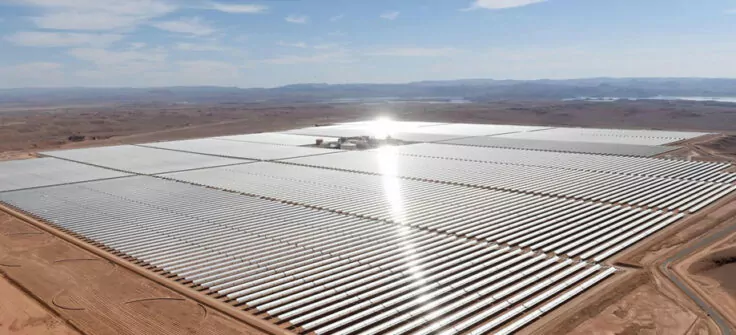
Noor Ouarzazte

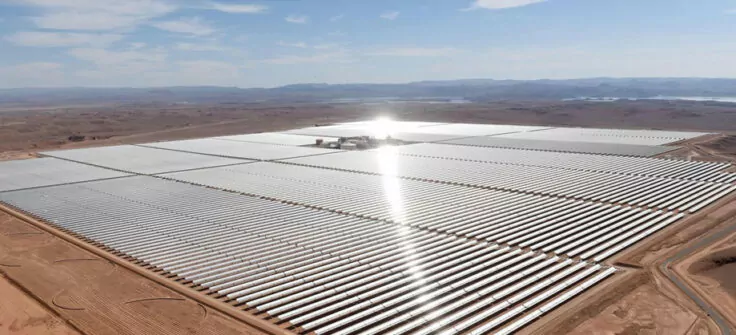
Morocco is turning the Sahara Desert into the largest concentrated power complex in the world. The project is currently in progress, due to be complete before the end of 2018.

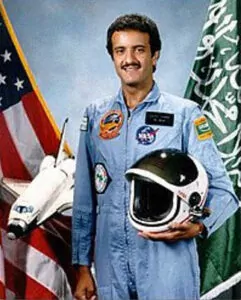
Arabs in Space

Sultan bin Salman Al Saud became the first Arab in space in 1985 – he was also the first royal astronaut ever. Syrian-born Mohammed Ahmed Faris followed in Al Saud’s footsteps in 1987.

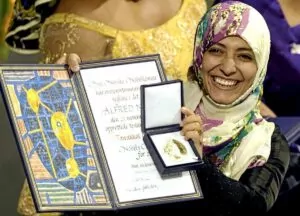
Nobel Peace Prize Winners

Photo credit ODD ANDERSEN/AFP/Getty Images

The Tunisian national dialogue quartet was awarded the Nobel Peace Prize in 2015 for their role in building a democratic state in Tunisia following the Arab Spring.

Yemeni journalist and activist Tawakkol Abdel-Salam Karman preceded the Tunisian National Dialogue Quartet in 2011 as Nobel laureate—she became the first ever Yemini and Arab Woman to win the Peace Prize, as well as the second youngest ever.

The ‘Father of Femtochemistry”

Femtochemistry is probably something too difficult for most of us to understand—but according to Wikipedia it’s “an area of chemistry that studies chemical reactions on extremely short timescales”. Ahmed Hassan Zewail, and Egyptian-American scientist, is known for pioneering a laser technique that allowed for easier analysis of chemical reactions. He even won a Nobel prize for his work in 1999.

Pritzker Architecture Prize Winners

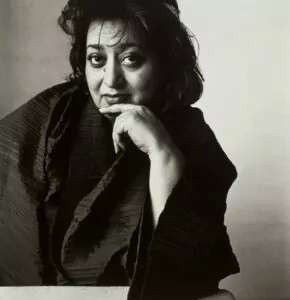
The late Iraqi-British architect Zaha Hadid was an internationally-acclaimed architect, renowned for her sci-fi creations. Having built some of the world’s most innovative spaces. In 2004, she became the first ever woman to win the prestigious Pritzker Architecture Prize—the most prestigious award in architecture.

source/content: mille.com (headline edited) / Olfa Farha

______________

__________

ARABS

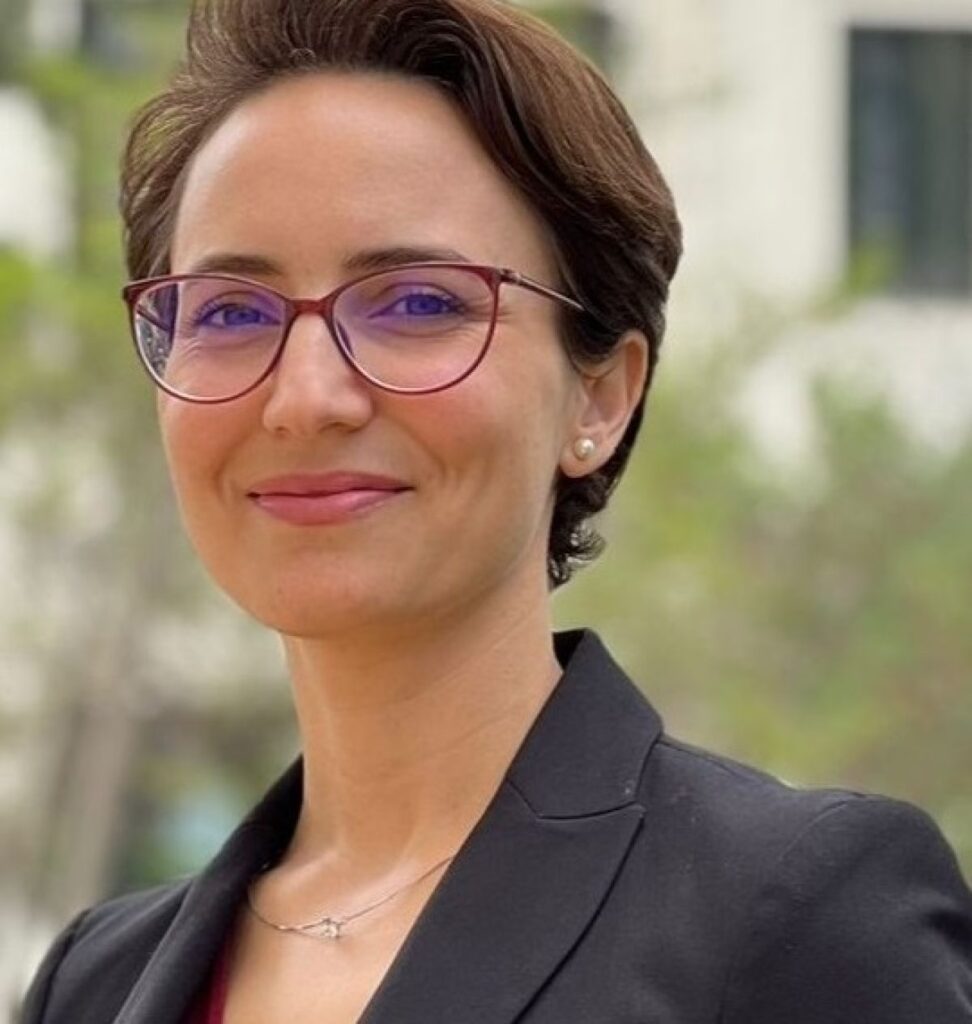
TUNISIA : IDRC-supported Tunisian scientist Emna Harigua wins top award for AI innovation in health

Tunisian scientist Emna Harigua receives national recognition for her AI-powered drug discovery platform.

Tunisian researcher Emna Harigua has been honoured with Tunisia’s 2025 Best Female Scientific Achievement Prize for her innovative drug discovery work powered by artificial intelligence (AI).

In recognition of women’s essential contributions to science and innovation, Harigua, who holds a doctorate in biomathematics, bioinformatics and computational biology, was awarded the prestigious prize by Tunisia’s Ministry of Family, Women, Children and Seniors as part of the celebrations for the country’s National Women’s Day, observed on August 13. Her achievements include leading research in AI-powered drug discovery through a national node in the Global South AI for Pandemic and Epidemic Preparedness and Response Network, a global initiative supported by IDRC and the United Kingdom’s Foreign, Commonwealth and Development Office. 

Harigua, a scientist at the Institut Pasteur de Tunis, Tunisia, and principal investigator of the BIND project (Bioinformatics and Artificial Intelligence for Infectious Diseases), is leading an AI-powered platform that accelerates research against some of the world’s most persistent infectious agents that pose health risks. 

Her research targets neglected tropical diseases such as leishmaniasis and malaria, combining bioinformatics, AI and experimental validation to shorten the drug discovery timeline and reduce costs. The BIND project has already identified nine novel anti-Leishmania drug candidates, with three now in pre-clinical validation. In addition, the team launched CidalsDB, an open-access AI platform for drug identification, marking a step forward in global efforts toward open science and collaborative health research.   

“This award is not just a personal milestone — it’s a recognition of the potential of African-led science to tackle global health challenges,” said Harigua. 

Beyond her lab, Harigua is a strong advocate for building Africa’s capacity in computer-aided drug discovery and ensuring that cutting-edge technologies serve the health needs of African communities. Her work — presented recently at the International Science Council during a workshop held in Nairobi, Kenya, on the impact of emerging technologies on science systems — underscores a vision where innovation, collaboration and inclusion drive the future of medical research. 

source/contents; idrc.crdi.ca (Intl Develop Research Centre, Canada) – (headline edited)

_______________

Fourat Thamine, Institut Pasteur Tunisia./

_______________

TUNISIA

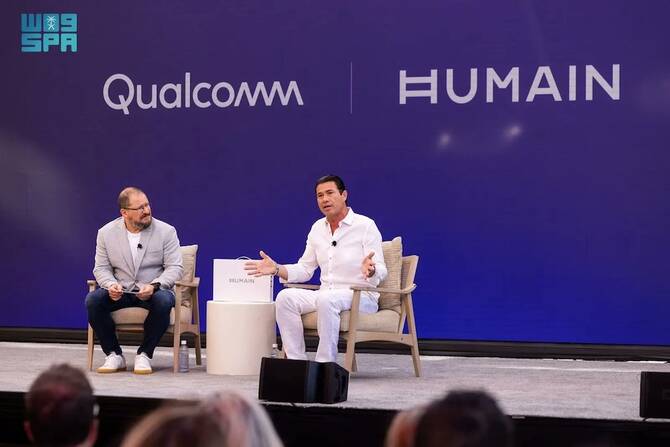
SAUDI ARABIA : HUMAIN launches ‘groundbreaking’ laptop built around agentic AI

HUMAIN, a Public Investment Fund company has announced the launch of its Horizon Pro PC, billed as “a groundbreaking laptop designed to revolutionize agentic artificial intelligence personal computing.” Agentic AI systems can act independently and with initiative with limited, or no, human oversight.

The launch was announced by HUMAIN CEO Tareq Amin during the Snapdragon Summit in Maui, Hawaii.

According to a press release, the Snapdragon processor family at the core of the HUMAIN Horizon Pro deliver “leading AI performance and a powerful CPU so that the PC can operate up to 100 times faster than human thought.”

It added that the company’s upcoming proprietary HUMAIN ONE operating system “enables users to manage enterprise workflows, communications, and AI applications from a unified, adaptive interface designed to anticipate needs and accelerate decision-making.” It added that the new PC “offers zero-latency wake time, over 18 hours of battery life, a 40-percent reduction in power consumption compared to competing systems, and advanced thermal architecture for sustained, high-performance use across demanding environments.”

HUMAIN’s AI integrates the Arabic-first large language model “ALLaM” and “operates locally for maximum speed and data privacy, with the flexibility of hybrid AI to tap into the cloud when complex processing or broader insights are required, offering enterprise users the ideal blend of performance, control, and scale,” according to the company.

Amin said: “The HUMAIN Horizon Pro represents a paradigm shift in agentic AI personal computing, especially for enterprise environments where AI actively collaborates with users, both locally and in the cloud, to boost productivity.”

Amin also announced that HUMAIN will give away 500 of its PCs to students as part of its launch initiative to “help unlock new potential for learning, creativity, and future leadership in AI-driven fields.”

source/content: arabnews.com (headline edited)

_____________

HUMAIN launched its Horizon Pro PC, a groundbreaking laptop designed to revolutionize agentic AI personal computing. The announcement was made by HUMAIN CEO Tareq Amin during the Snapdragon Summit in Maui, Hawaii. (SPA)

_________________

SAUDI ARABIA
MOROCCAN Students Win Gold in US Innovation Contest With Life-Saving Drone

The Safety Wings drone can detect individuals in distress in water, swiftly navigate to their location, and drop inflatable life buoys.

 Three Moroccan students from the Faculty of Sciences and Technologies (FST) in Settat have won a gold medal at the Innovation Week (IWA 2025) for their groundbreaking project, Safety Wings.

A drone that saves lives at sea

The winning project introduces a drone designed to revolutionize aquatic rescue operations. 

The Safety Wings drone can detect individuals in distress in water, rapidly fly to their position, and deploy inflatable life buoys.

In contrast to existing buoys that sell for around $300 and are typically disposable, the Moroccan designers developed a reusable model that costs under $20. The only recurring expense is replacing compressed air cartridges.

Through the combination of reusability and affordability, the project provides an essential loophole in global rescue missions. The project is an affordable and scalable solution for impoverished communities with fewer resources but frequent aquatic emergency cases.

From Morocco to the world stage

Salah Bouhlal, Moad Es-Sraoui, Mohamed Kerroum, and Aziz Hraiba (supervisor) developed Safety Wings during their days as FST Settat students.

Their success at IWA 2025 places Morocco on the international innovation map and also shows how youthful scientists can convert pressing humanitarian needs into practical technological solutions.

OFEED, the organizer of the Innovation Week, describes the event as both a premier platform for showcasing and fostering cost-effective innovation and a “global community that believes ideas can become impact when courage meets collaboration.” 

Innovation with human impact

Safety Wings is one component of a greater movement toward harnessing new technology for the public good. With their provision of life-saving gear, the Moroccan students seek to leave a positive impact on global standards of safety in aquatic environments, from seaside public beaches to remote fishing villages.

In addition to the Safety Wings team, other Moroccan innovators also figured among the winners of IWA 2025. Their projects spanned diverse fields. This collective achievement reinforced Morocco’s reputation as a hub of creativity and problem-solving on the international stage.

source/content: moroccoworldnews.com (headline edited)

________________

______________

MOROCCO

COMOROS : Inspiring Women in Ocean Science: Andilyat Mohamed

Dr. Andilyat Mohamed is a dedicated Comorian scientist who has been actively engaged in plant ecology, specifically in phytogeography, since 2007, accumulating 16 years of experience in Comorian plant formations. She expanded her focus to marine and coastal ecosystems in 2012, concentrating on mangrove algae and seagrass. As a university professor, she delivers lectures and practical work in applied plant ecology and general botany, using special mangrove field trips to demonstrate the theory and practice of different types and their roles to students at the Faculty of Science.

In 2010, Dr. Mohamed established the National Herbarium at the University of the Comoros, where 98% of the staff are women. She also initiated the Comoros mangrove house in partnership with a local village women’s association called “JEUNE FILLE DE DOMOIBOINI .” As the national focal point for the Comoros in the WIOMN network on mangroves in WIOMSA, she authored the first publication of the 23 localities hosting mangroves on the island of Ngazidja as part of her doctoral thesis.

Currently, Andilyat is concentrating on the restoration and assessment of blue carbon in the mangroves of the Comoros, searching for a specific algorithm corresponding to the particular characteristics of amphibious Comorian ecosystems dominated by a recent lava flow substrate as part of her Habilitation to Supervise Research (HDR).

Tell us, what led you to pursue a career in marine/ocean science?

What pushed me to pursue a marine career was the fact that I read the bibliography of an official document printed in 2002 that said there were 5 mangrove sites on the island of Ngazidja. However, when I supervised a master’s student in 2012, we worked on 7 sites, and I knew that there were others. In 2016, I used remote sensing to find out for the first time that the island has mangroves in 23 localities and that the ecosystems had been reduced and divided into several sites by lava flows. Since then, I’ve been working closely with the islands’ conservationists.

As a marine/ocean professional, what critical lessons have you learned? Share your insights and experience with others who aspire to become experts in this field.

Mangroves are more capricious than humans, they are mute but shout loudly in the silence by releasing CO2 when under anthropic pressure or by trapping carbon when conserving and protecting the site.

In celebration of International Women’s Day theme “Invest in Women, accelerate progress”, what progress do you envision for women in the Western Indian Ocean region?

Comorian women are fortunate to be among the few countries where inheritance is matrimonial. This gives them authority and independence in social activities. It is with this vision that I am working with my team to ensure the survival of the mangroves of the Comoros.  I started by joining forces with the Jeune Fille Association.

source/content: wims.wiomsa.org (headline edited)

_____________

______________

COMOROS