SAUDI ARABIA: WORLD RECORD: Breaking Barriers: 23-year old Reem Al Aboud and Formula E Set an FIA Single-Seater Benchmark breaking World Record

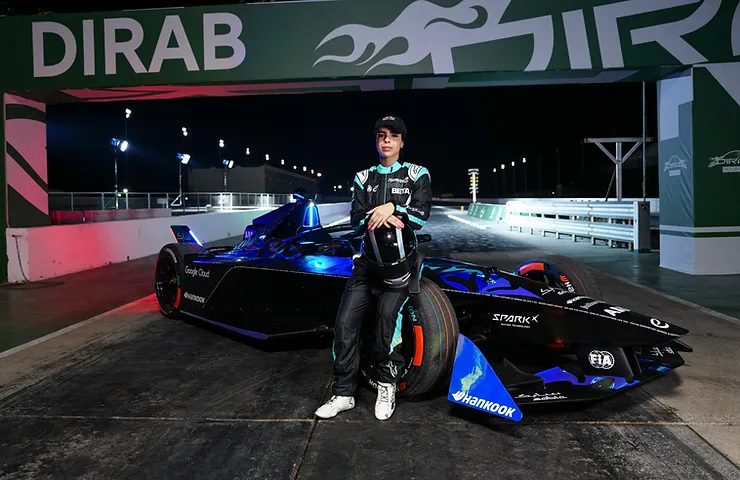
This January, Saudi racer Reem Al Aboud set a new acceleration benchmark for an FIA single-seater by reaching 0-60mph in 2.49 seconds in an ABB FIA Formula E GENBETA car. Ahead of International Women’s Day, we reflect on the implications of this achievement for motorsport.

Every Federation Internationale de l’Automobile-sanctioned single-seater championship race begins with a standing start. The lights at the starting line flash on, and flash off. Idle cars roar to life, accelerating through the straight and into the waiting corner. 

How quickly these cars can accelerate depends on the series. F1 Academy goes from zero to 60mph in approximately 3.6 seconds. Formula 3 and Formula 2 manage in 3.1 and 2.9, respectively. Formula E’s GEN3 car takes 2.8. The current Formula 1 car takes 2.64. 

But F1’s 2.64 seconds is no longer the benchmark. Now, Formula E’s newly developed GENBETA car holds the title — and with a woman in the cockpit.

Last July, Formula E unveiled its GENBETA prototype at the ExCeL London. While testing the car, World Champion Jake Hughes clinched a top speed of 218.71km/h, smashing the Guinness World Record for fastest speed indoors by more than 50km/h. 

Having designated GENBETA as its development platform, Formula E sought to explore the model’s potential and performance further. The series set its sights on setting a second benchmark: the time an FIA single-seater takes to reach 0-60mph. 

Yet in chasing after the F1 benchmark, Formula E was not content with breaking only technological and physical barriers. So, to honour its founding commitment to social progress, it added motorsport’s longstanding gender barrier as yet another to break.

Accordingly, Formula E tapped 23-year-old Saudi female racer Reem Al Aboud to take the GENBETA’s driver seat. The 2023 Saudi Toyota Ladies Cup Champion has partnered with the series since 2018, when she became the first Saudi woman to test a Formula E car. 

Experienced in driving GEN2 and GEN3 cars  — plus breaking barriers across karting, hillclimbing and autocross series — Reem was Formula E’s choice for a 2024 FIA Girls on Track Ambassador. Naturally, she was their choice for the GENBETA test as well. 

And that choice certainly paid off. This January at Dirab Motor Park, Reem’s GENBETA car achieved 0-60mph in 2.49 seconds — besting F1’s by 0.15 seconds. 

Of course, the technological aspect of the January test is remarkable. Behind GENBETA’s new benchmark is its front powertrain kit, which previous Formula E models (and other road electric vehicles) only use for energy harvesting. However, GENBETA also turns on this kit for greater traction during acceleration, using it to produce 536 horsepower that will launch the car into action. Instant torque allows for instant acceleration and thus a 2.49-second 0-60mph time.

What’s also remarkable is that a woman is the face of this test. 

After all, motorsport’s gender barrier is cyclical. Doubt that female drivers can perform on par with their male counterparts dominates the sport. Doubtful investors shy away from funding young female drivers. Underfunded female drivers can’t enter, remain and progress through racing series. Series sorely lack female representation — when representation is what validates the reality that women can indeed perform. That lack of validation perpetuates the doubt about female drivers. And so, the cycle continues.  

But Reem’s benchmark throws a wrench into this cycle by tackling the doubt head-on. She reaffirms that when women are given the time on track they are so often denied, they can excel. That when women are included in the conversation, they can contribute to the technological developments that push this sport forward. That when this sport values women, women can bring equal — if not more — value to the sport in turn. 

As the face of this test, Reem represents the generations of women who have been denied from motorsport on the basis of their gender. Of women who challenge prejudice in cockpits, paddocks and audiences. Of girls who see Reem on their screens and wonder if they, too, can wrestle state-of-the-art cars at inhuman speeds. 

Reem breaks the cycle by showing them that they can, and that they should. 

In doing so, she and Formula E bring motorsport a step closer to a new era. One where women are no longer the exception, but the standard. 

source/content: femalesinmotorsport.com (headline edited)

__________
_________________

SAUDI ARABIA
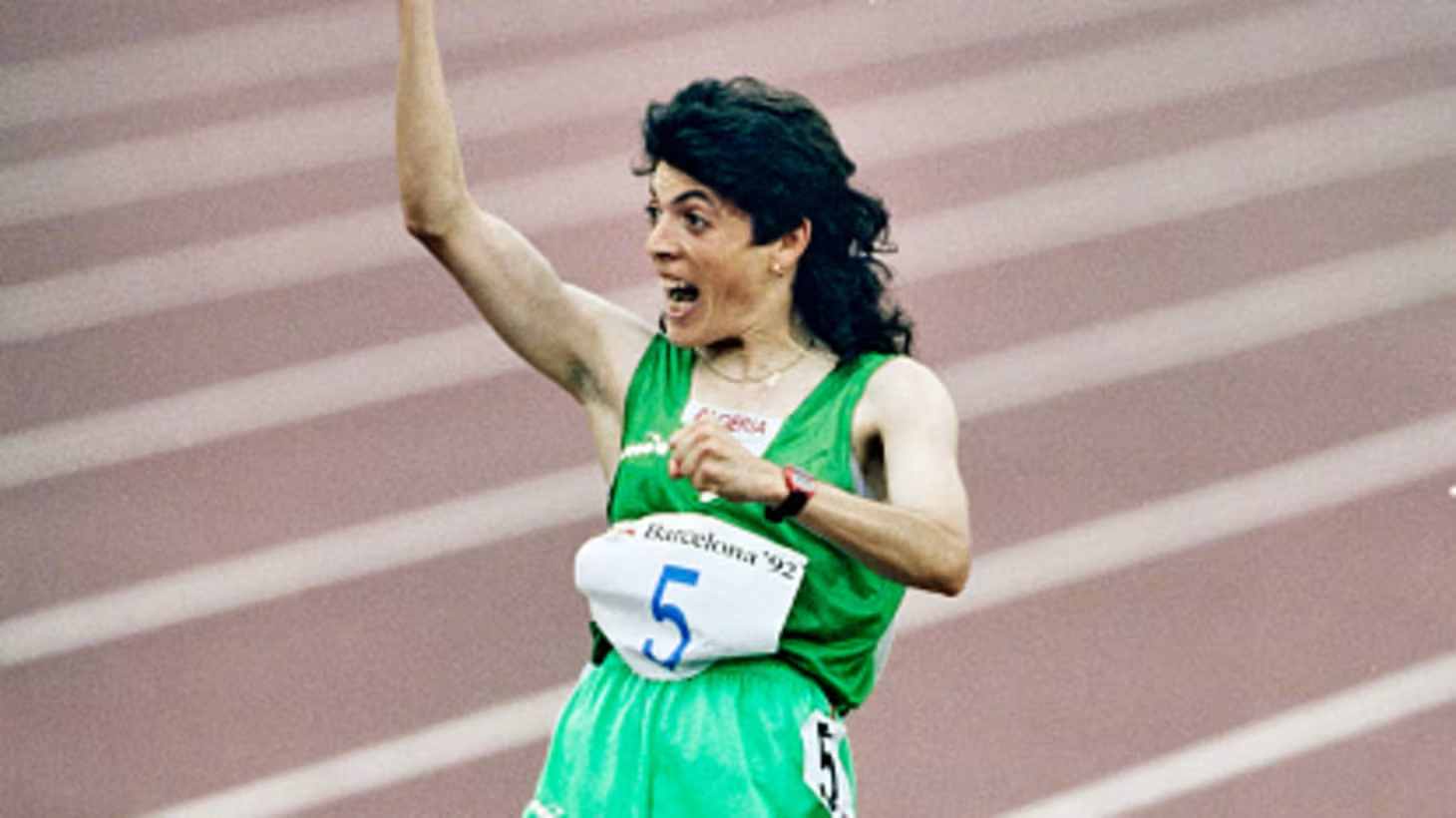
ALGERIA: Hassiba Boulmerka: The trailblazing Algerian star who defied death threats to win Olympic gold

The former Algerian middle-distance runner won her country’s first-ever Olympic gold medal. She navigated a deadly and divisive political crisis within her nation to emerge as “a symbol of victory and defiance”.

Hassiba Boulmerka and her family received death threats, and she was even denounced as anti-Islam at her local mosque.

However, in her home country of Algeria, there was no safe space for her to run.

The world 1500m world champion feared that radical Islamist militants would kill her, and the surrounding atmosphere was equally terrifying.

But despite the risks, the ‘Constantine Gazelle’ continued to train, running even faster and defying the threats to her life.

A year after clinching the first of her two world titles, she made history at the Barcelona Olympics in 1992, winning the first Olympic gold for Algeria .

Hassiba Boulmerka: Africa’s first world track champion

Running had been Boulmerka’s way of life since the age of 10.

Growing up in Constantine, in the east of Algeria, she gained recognition for her speed and stamina, which led her to claim four African gold medals in the 800m and 1500m.

Two years after her double triumph at the continental championships, she stunned the field, sprinting to the lead in the homestretch of the 1500m race to clinch the gold.

It was a glorious moment for Boulmerka, as she became the first African woman to earn a World Championships title.

“I screamed for joy and for shock, and for much more,” she said. “I was screaming for Algeria’s pride and Algeria’s history, and still more.”

Her triumph was significant, symbolising progress for Algerian sport and Arab women.

Despite the heroic reception that awaited her and her teammates upon their return from the 1991 World Championships, her running didn’t quite resonate with everyone.

Her sporting endeavours continued to be frowned upon.

Training and competing meant exposing her arms and legs, which was perceived as not adhering to Islam’s code of modesty.

Hassiba Boulmerka was labelled ‘anti-Muslim’ for choosing to run

Boulmerka pressed ahead, enduring the criticism.

She faced hostility, being spat on and having to dodge stones thrown at her while training on Algerian roads.

In a matter of months, her hopes and dreams of participating in the Olympics started to fade as her country was plunged into civil unrest, resulting in over 150,000 lives lost.

Training became not only impossible but also dangerous during the crisis, with Islamist militants seeking to impose oppressive rule.

She was forced to relocate to Berlin to train ahead of the 1992 Olympic Games.

“I remember it well,” she recalled in an interview with the BBC. “It was Friday prayers at our local mosque, and the imam said that I was not a Muslim, because I had run in shorts, shown my arms and my legs. He said I was anti-Muslim.”

When she arrived in Barcelona just before her event, Boulmerka was accompanied by armed escorts into the stadium, highlighting the unprecedented security measures.

“There were police everywhere. In the stadium, in the changing rooms – they even came with me to the bathroom!” she said.

Despite these challenges, the ‘Constantine Gazelle’, as she was affectionately dubbed for her agile and graceful running style, defied the odds and her performance at the Estádio Olímpico was remarkable.

Hassiba Boulmerka: A heroine for women in sport

The Unified Team’s Lyudmila Rogacheva set the pace for most of the 1500m race before the Algerian powered past her with half a lap to go, securing her greatest career victory. Her time of three minutes, 55.30 seconds earned her the Olympic gold medal, marking the second time second time an Arab woman had stood atop the Games podium (after Morocco’s Nawal El-Moutawakel at Los Angeles 1984).

It was a beautiful ending after months of navigating political challenges – an example of ‘courage in defying taboos and pursuing passion’.

“As I crossed the line, I thrust a fist into the air. It was a symbol of victory, of defiance. It was to say: ‘I did it! I won! And now, if you kill me, it’ll be too late. I’ve made history!'”

As Boulmerka stood on the podium, feeling the weight of the medal around her neck, she was overwhelmed by emotions.

“I tried to hold myself together, to be brave…but the tears just started to fall. They were tears of sacrifice, for all the people I loved that I had abandoned for this race.

“It was a triumph for women all over the world to stand up to their enemies. That’s what made me really proud.”

There was no fanfare when the two-time Olympian returned home to reunite with her family.

Algeria was still far away from the end of its dark period, prompting he exile in Cuba before she returned to Algeria after recapturing the gold medal at the 1995 World Championships.

Her medals stand as a testament to her courage, and Hassiba Boulmerka continues to serve as a beacon of inspiration for women in sport.

source/content: olympics.com (headline edited)

___________

(Getty Images)

____________

ALGERIA

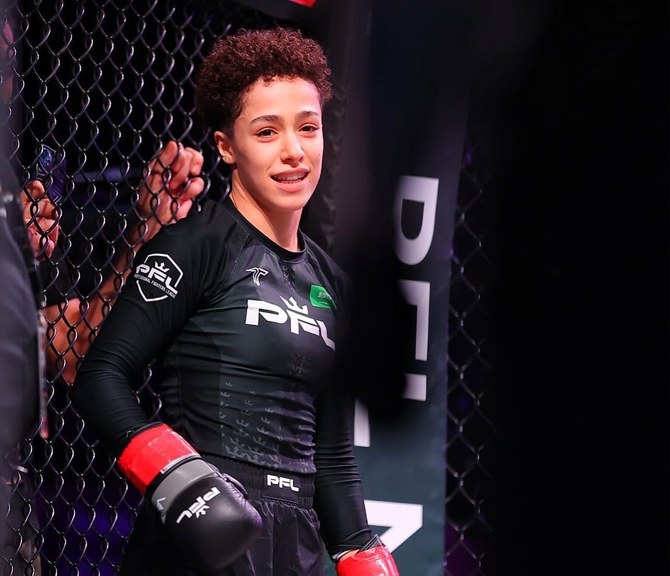
SAUDI ARABIA: FIRST: ‘I was born a fighter’ — the making of Saudi’s First MMA Female Fighter Hattan Alsaif

The pioneering Riyadh resident knocked out Egypt’s Nada Faheem at the inaugural edition of PFL MENA in Riyadh last week.

As her opponent lay defeated on the floor, the Saudi mixed martial arts fighter marked a landmark victory by waving an imaginary sword in the air.

The celebration was appropriate— Hattan Alsaif’s family name translates directly as “the sword.”

Overnight, Saudi had a new sporting superstar.

On May 10, the 22-year-old made headlines around the world after she knocked out Egypt’s Nada Faheem, delivering a head kick in the second round of their bout at the inaugural Professional Fighters League Middle East and North Africa edition in Riyadh.

Her win, she says, was also a message of love and commitment to her friends, family and fans.

“It [the win] was something I was so proud of,” Alsaif told Arab News. “To make them see how far I reached, and I was doing my best to show them that I will never let them down.”

The future of Saudi women in MMA has been brewing for some time. In February, Alsaif made history when she became the first female from the Kingdom to sign a contract with a major MMA promoter – the PFL, now backed by Saudi’s public investment fund.

Her performance at the Green Halls last week has raised her profile beyond her hometown or even the region. Alsaif is now an international contender.

She said representing Saudi Arabia “meant everything” to her: “I do love my country so much, and I wanted to represent my country in the best way I can.”

But behind the win were three months of relentless training — mental and physical — and even cage-like fights in her gym.

Alsaif is a relative newcomer to the sport. When she first began training in 2021, it was never part of the plan to turn professional.

“First five days I began boxing, I jumped in a championship, and I lost the game,” she said.

Alsaif took the loss as a wake-up call to shift her perspective.

“You have to work hard, you have to work more, so you can have what you want. So I got that point on my mind and I worked on it,” she said.

Alsaif’s appetite for risk and adrenaline rushes dates back to her school days when, she recalls, her late parents received numerous complaints about her behavior.

“They (the school) were always calling my parents. ‘Your kid is jumping from the classes and jumping from the roof and jumping everywhere’,” Alsaif said.

“I was (also) in love with hiking and I was so in love with the desert bikes.”

A fighting spirit feels almost inherited, considering the Kingdom’s own rich history.

“I was born in Saudi Arabia and Saudi Arabia is my country. Saudi Arabia is in my blood,” she told Arab News.

“If I’m a girl from this city (Riyadh), that means I was born a fighter. I’m ready to sacrifice whatever it is for my country and for my people.”  

For Alsaif, sports such as Muay Thai are more than physical battles against an opponent. She feels there is a psychological fight between the inner critic in her mind and the fighter in her heart.

“Your mind will tell you ‘It’s all right. You’re bleeding now. No one will blame you if you quit…just quit’,” she said. “If your mind says that, then your body is going to move as much as your mind told you. If you moved with your heart, courageous heart, then you win it.”

Alsaif’s Islamic faith and spirituality has carried her through life’s hardships, which included losing her parents as a child.

“But I always believe that God is with me, and that I’m never alone,” Alsaif said.

After religion, it’s mixed martial arts that provides solace, resilience and a feeling of belonging for Alsaif.

In the last three years, she has spent months in Muay Thai training camps in Ko Samui and Phuket, relishing even the hardest moments of tears, cuts and bruises.

“It was so amazing visiting Thailand and having a camp (there). That was one of my dreams,” she said.

The sports scene in Saudi Arabia has transformed so rapidly in recent years that a new generation of homegrown stars like Alsaif no longer needs to look beyond their borders or regions for role models.

Her inspiration is Saudi MMA fighter Abdullah Al-Qahtani, with whom she shares a coach.

“I can see how much discipline, motivation he has […] and how much hard work he does,” she said.

Their coach, Feras Sadaa, is “the best,” she said, adding that she frequently reminds herself she has his complete backing: “I always trust him.”

Alsaif’s routine is simple but rigorously disciplined and follows the vital components of sports development and recovery — train, eat, sleep and repeat.

Alsaif says she is focused on taking any opportunity that arrives in her path and hopes to see more Saudis competing in MMA.

“I know my people and I know that my people are good enough to enter that cage and to show us a good fight,” she said.

source/content: arabnews.com (headline edited)

____________

The 22-year-old Hattan Alsaifi made headlines around the world after she knocked out Egypt’s Nada Faheem. (Instagram: @hattanalsaif24)

_________________

SAUDI ARABIA
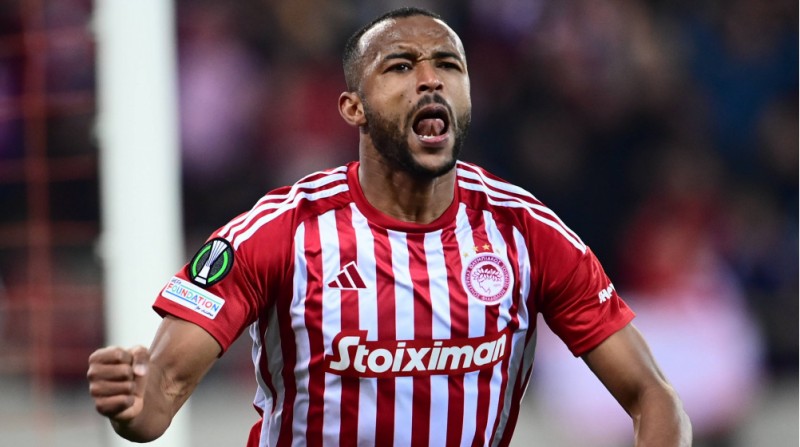
MOROCCO: Impressive Ayoub El Kaabi Etches Name in African Football History Books

After a few anonymous years in the Chinese Super League, El Kaabi’s 2023 transfer to Olympiacos is quickly proving to be a game-changer.

Rabat-Olympiacos’s prolific Moroccan striker Ayoub El Kaabi has made history in the 2023-24 UEFA Europa Conference League season. 

At 30 years old, the Moroccan has become the first African player to score an impressive 15 goals in a single European campaign, far surpassing legends like Didier Drogba, Samuel Eto’o, and Mohamed Salah.

The Atlas Lion’s journey to this remarkable achievement is a tale of inspiration and dedication. Born in Casablanca in 1993, he began his football career in the Moroccan amateur league, showcasing his talent with clubs such as Racing AC, RS Berkane, and Wydad AC.

His standout performances domestically earned him a spot in the Moroccan national team, where he excelled, winning the African Nations Championship (CHAN) in 2018 and 2020 while clinching the titles of top scorer and best player in both tournaments.

After a few anonymous years in the Chinese Super League, El Kaabi’s 2023 transfer to Olympiacos is quickly proving to be a game-changer. His impact has been immediate and decisive for the Greek club, with his bagful of goals playing a pivotal role in guiding the team to the final of the UEFA Europa Conference League. 

Notably, he scored five crucial goals in the two legs against Aston Villa in the semi-finals, showcasing his clinical finishing and ability to shine on the grandest stages.

Ayoub’s achievement stands out even more when compared to the performances of other African football stars in European competitions. 

Surpassing the likes of Didier Drogba and Sebastien Haller, as well as outshining Sadio Mane and Mohamed Salah, the Moroccan striker’s 15-goal tally in a single European campaign is a testament to his exceptional skills and prowess as a striker.

This historic campaign has solidified El Kaabi’s position as one of the most prominent strikers in Moroccan and African football. His journey from grassroots football to the pinnacle of European competition exemplifies his unwavering determination, hard work, and natural talent.

As he leads Olympiacos into the Europa Conference League final against Fiorentina, El Kaabi has the opportunity to script another chapter in his extraordinary story, inspiring a new generation of Moroccan and African footballers with his remarkable achievements on the pitch.

source/content: moroccoworldnews.com (headline edited)

_____________

Olympiacos Moroccan striker Ayoub El Kaabi

_____________

MOROCCO

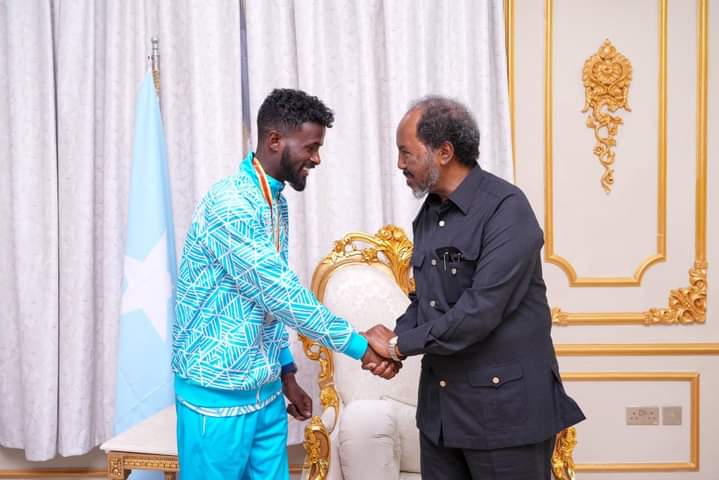
SOMALI President Commends Runner Abdillahi Jama Mohamed for Historic Silver Medal Victory at ‘African Nations General Games’ 2024

In a proud moment for Somalia, President Hassan Sheikh Mohamud welcomed Abdullahi Jama Mohamed at the National Presidency. The young athlete clinched the silver medal in the 5000m race at the African Nations General Games, marking a significant achievement for the nation on the continental stage.

President Mohamud lauded Abdullahi’s performance, celebrating it as a historic victory that not only brings honor to Somalia but also serves as a beacon of inspiration for the country’s athletes and the youth. The President’s acknowledgment of Abdullahi’s dedication and success underscores the importance of sports as a unifying and uplifting force in Somalia.

Abdullahi’s triumph is seen as a testament to the potential and spirit of Somali sports, encouraging young athletes to aspire to greatness and compete on the global arena. This event is a reminder of the power of perseverance and the impact of representing one’s country with pride and excellence.

source/content: sonna.so (headline edited)

_________

____________

SOMALIA

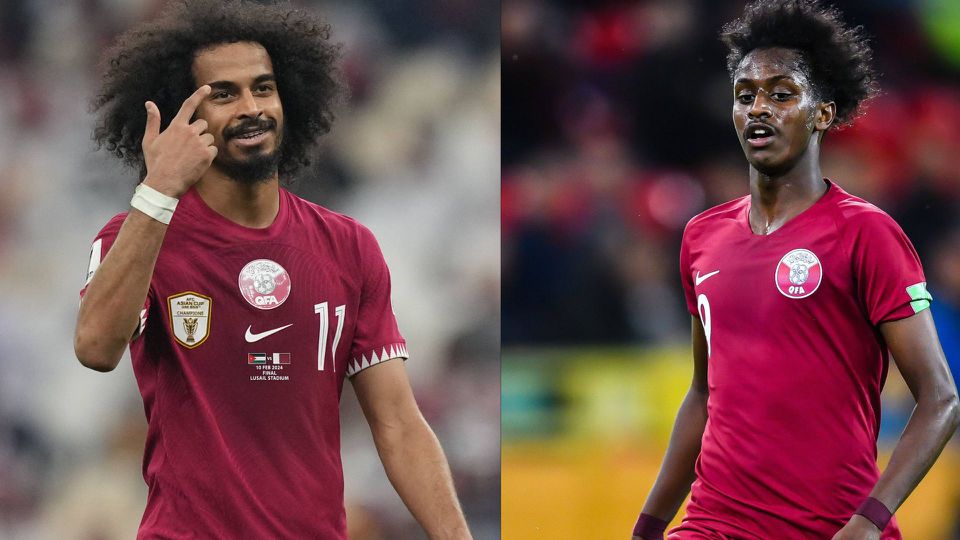
SOMALIA’s Akram Afif and Yusuf Abdirisaq propelled Qatar to Asian Cup success

Somali-origin players Afif and Abdirisaq play pivotal roles in leading Qatar to victory in the AFC Asian Cup.

On Saturday, February 11, 2024, the football world turned its eyes towards a historic clash that would etch the names of Akram Hassan Afif and Yusuf Abdirisaq into the records of the AFC Asian Cup lore.

In a match that was anything but ordinary, Qatar’s national team, buoyed by the exceptional talent of its Somali-origin stars clinched their second successive victory in the tournament by overcoming Jordan with a decisive 3-1 win.

Qatar’s triumph was heralded by the remarkable performances of Akram Afif and Yusuf Abdirisaq, whose origins trace back to Somalia, showcasing the diverse and rich talent pool contributing to Qatar’s footballing success.

Akram Hassan Afif emerged as the tournament’s top scorer, remarkably netting three penalty goals in the final match. 

His prowess on the field and his unique celebration, holding up a letter ‘S’ in honor of his Kuwaiti wife watching from the stands, captured the hearts of fans and ignited discussions across social media platforms. 

Afif’s journey from the streets of Doha to becoming a footballing icon is a narrative of determination, skill, and the love for the game.

Yusuf Abdirisaq, on the other hand, fortified Qatar’s defense with his agility and keen sense of play. 

Born in Hargeisa, Yusuf’s path to footballing stardom is a tale of resilience and adaptation. Representing Qatar on the international stage, Yusuf’s performance in the Asian Cup final was a clear demonstration of his defensive prowess and his significant role in the team’s success.

The match itself was a rollercoaster of emotions as three penalties were awarded, leading Qatar to victory. 

Despite the debates, the focus remained on the skillful play and strategic acumen displayed by the Qatari team, particularly its Somali stars.

The Arab media and international press were lavish in their praise for Qatar’s achievement, with special emphasis on Afif’s scoring feat and Abdirisaq’s defensive mastery. 

Their stories of personal and professional triumph resonated well beyond the football pitch, inspiring many young athletes around the world.

Off the field, both players have faced their share of challenges and controversies, such as Abdirisaq’s alleged racial abuse incident, which he and the Qatar Football Association strongly refuted. 

Akram Afif, the son of a former Somali national team player, has football in his blood. His journey from Qatar’s youth leagues to becoming a key player for Al Sadd, and on loan from Villarreal, is a beacon of hope and inspiration for many aspiring footballers in the Arab world and beyond.

Yusuf Abdirisaq’s story is equally compelling, showcasing the potential for football to change lives and transcend borders. From his early days at Al Sadd SC to his loan at Al-Arabi SC and back, Yusuf’s career trajectory highlights the opportunities and challenges faced by players of diverse backgrounds in the world of professional football.

As Qatar celebrates its second consecutive AFC Asian Cup victory, the contributions of Akram Afif and Yusuf Abdirisaq will be remembered as pivotal to this historic achievement. 

Their talent, perseverance, and dedication have not only led their team to glory but have also served as a powerful reminder of the unifying power of sport.

source/content: pulsesports.co.ke (headline edited)

_________

_____________

SOMALIA

YEMEN / EGYPT: Amir El Masry to Star in Biopic of British Yemeni Boxer Prince Naseem aka Naz aka Naseem Hamed

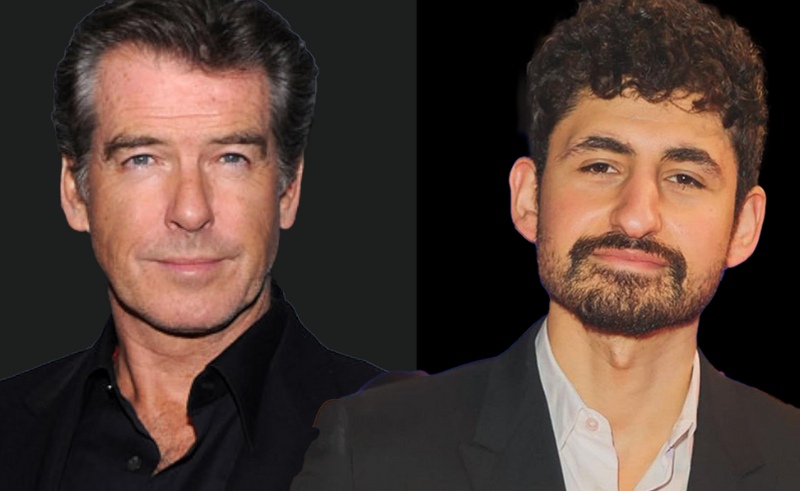
The ‘Limbo’ star will be acting alongside Pierce Brosnan as they follow the story of famed boxer Prince Naseem.

Egyptian actor Amir El Masry is set to star in a biopic of legendary British Yemeni boxer Naseem Hamed, titled ‘Giant’. The movie will tell the story of Hamed’s humble beginnings in the English city of Sheffield, and his meteoric rise to becoming a world champion. Throughout his career, he is coached by former steel worker Brendan Ingle, who is played by Irish actor and ‘James Bond’ star Pierce Brosnan.

Also known as Prince Naseem or ‘Naz’, Hamed also became an icon of showmanship, with his inimitable southpaw boxing style and quick feet, his high rate of knock-out victories, and his elaborate ring entries, arriving on a ‘flying carpet’ suspended from the ceiling and often somersaulting over the ropes.

The casting of El Masry to play Hamed marks his first starring role in a major film production, though he has already landed several major parts in acclaimed series such as ‘The Night Manager’, BAFTA-nominated ‘The State’, and the fifth season of ‘The Crown’, in which he played a young Mohamed Al Fayed. He is also known for his award-winning role in ‘Limbo’, as well as his appearances in ‘Star Wars: The Rise of Skywalker’ and Egyptian series ‘El-Brinseesa Beesa’.

source/content: cairoscene.com (headline edited)

_____________

__________________

EGYPT / YEMEN

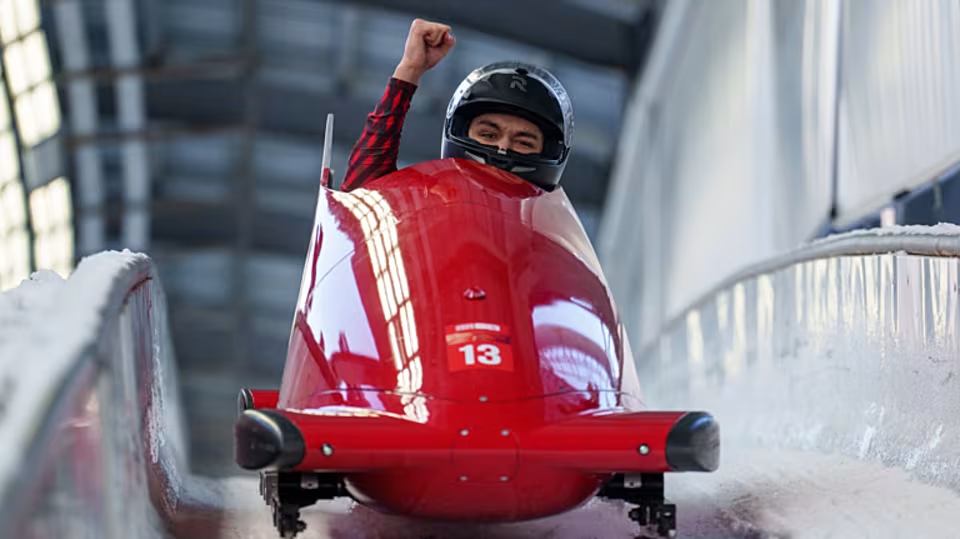
TUNISIA : Jonathan Lourimi on historic Bobsleigh Medal run for Tunisia: “I never thought this was possible”- Gangwon 2024

Final event of bobsleigh competition at 2024 Youth Olympic Games (YOG) sees slider from North African nation pick up silver.

The smile on Jonathan Lourimi’s face said it all.

“It’s history, my friend,” the Tunisian said to Olympics.com after winning men’s monobob silver at the Gangwon 2024 Winter Youth Olympic Games (YOG)  on Tuesday (23 January). It is his country’s first ever medal at the winter edition of the Youth Olympics.

“I never thought this was possible when I started with this sport one year ago. And now I’m here with a silver medal. It’s crazy. And yeah, I’m just going to enjoy the moment,” he added.

Tunisia had never sent athletes to a Winter Youth Olympics previously, and their small band of fans and officials in the Republic of Korea certainly seemed to be enjoying themselves when his second place finish was confirmed at the Alpensia Sliding Centre,

“It never happened before, so they are very happy. I’m very happy and yeah, just unbelievable.”

Lourimi finished 1.33 seconds behind winner So Kaehwan from the host nation, with Chi Xiangyu (People’s Republic of China) taking bronze.

“Today, just the race, I just didn’t focus on any medals or any times. I just wanted to enjoy the time, as I have been doing in training. Enjoy the runs,” Lourimi told us. “I’ve really had fun. Of course, I’ve been focusing a lot on this race, but meeting a lot of new people from different countries and [got the chance to] enjoy with them.”

The historic first medal for Tunisia came a day after Thailand also made history in the women’s race, with Agnese Campeol taking silver for the Asian nation.

For Tunisia’s Lourimi, the next step in his career is clear: “My goal is to be in the real Olympics, so I’m going to work hard for that, now just enjoy the moment, some weeks, and then keep on the hard work and yeah, hopefully I’m there in the real Olympics.”

source/content: olympics.com (headline edited)

_________

(Handout image supplied by OIS/IOC. Olympic Information Services OIS.)

___________

TUNISIA

QATAR: Bader Mubarak Al Marri, the Qatari Sportsman reviving the ancient tradition of Horseback Archery

SCENES shines a spotlight on youth around the world who are breaking down barriers and creating change. The character-driven short films will inspire and amaze, as these young change-makers tell their remarkable stories.

Horseback archery stands out among the many equestrian disciplines that combine modern riding techniques and ancient tradition. The sport combines the skill of riding with the precision of archery, and it holds a special place in Arabian heritage.

Archery is difficult enough when stationary, but try doing it while riding a horse travelling more than 30 miles per hour. Qatari horseback archery gold medalist, Bader Mubarak Al Marri, is well accustomed to this.

A life-altering call

Bader took six lessons of horseback riding before giving it up. “What kept me from horseback riding in 2018 was a lack of time, an unfavourable atmosphere and the scarcity of people in the field,” Bader explains.

Bader’s surprising journey to becoming a champion began when he received a surprise call from Fuad Almudahka, the founder of the Equestrian Sport Centre in Qatar.

The life-changing phone call happened in 2020, during the height of the COVID-19 pandemic. Bader found himself at home with a lot of spare time on his hands at this time, so he decided to take up Fuad’s offer.

“Coach Fuad contacted me saying, ‘Bader, I have workshops in horseback archery. If you’d like to take part, we welcome you at the Horseback Archery Equestrian Centre,'” Bader recalls.

Not good enough

After completing Fuad’s workshop, Bader wanted to enter Qatar’s ‘Al Nashab’ crossbow event. Coach Fuad was against it and advised him to develop his riding skills first.

Undeterred, Bader converted Fuad’s feedback into inspiration and vowed to do his best to improve his skills. “Let me train these two months,” he said to Fuad. “I’ll enter the contest if I improve my horseback riding skills. If I can’t, I won’t,” Bader promised Fuad.

Man on a mission

Bader was a man on a mission. He spent the next two months at AlSamriya Riding School , training in archery once a week and horseback riding for the rest of the week.

With so much training Bader found he had the speed, and precision needed for target archery, also known as Qabak archery. According to the World Horseback Archery Federation , Qabak is a category where the competitor rides the horse at speed and fires an arrow at a circular target at the top of a poll.

Despite being prepared for the tournament, Bader was surprised to have won first place after three rounds. “No way, that’s impossible,” Bader said to himself. “There are more experienced and skilled players in the sport than myself,” he said.

Local to international gold

Bader travelled to Turkey for his first international competition. He didn’t win that time around, but his confidence grew. He aimed to get acquainted with other international archers and gain skills.

“Bader returned to Qatar motivated, and he worked hard for the World Cup qualifiers in South Africa,” recalls Azeez Al Qahtani, a fellow rider and mentor.

Undeterred, Bader used that experience in Turkey to his advantage at the horse archery World Championship qualifiers. “On January 20, 2023, I got first place in the Qabak track held in South Africa,” Bader tells SCENES about his most significant accomplishment to date.

“The gold medal he got was well deserved,” AbdelAzeez says. “Bader winning that medal really makes people wonder, ‘What is this sport?’ Practice makes everything perfect, and Bader is a demonstration of that,” he adds.

‘Arabs were particularly skilled at it’

Various cultures around the world have practised horseback archery for centuries. In Arab history, its roots run deep, and many wish to preserve a connection to an exciting bygone era.

“Previously, it wasn’t a sport. It was for hunting and battle. Arabs were particularly skilled at it,” explains Abdel Aziz. “Today, all the international players who made the sport alive again go back to a specific old Arabic book called ‘Arab Archery’,” he adds.

Even though it has a long history, horseback archery is now considered a modern sport. And Bader hopes his recent success will lead to more riders emerging from Qatar.

source/content: euronews.com / euronews.culture (headline edited)

_________

__________

QATAR

ALGERIA: Kaylia Nemour, the 17-year-old Algerian World Champion Gymnast

Who is Kaylia Nemour, the 17-year-old Algerian world champion gymnast?

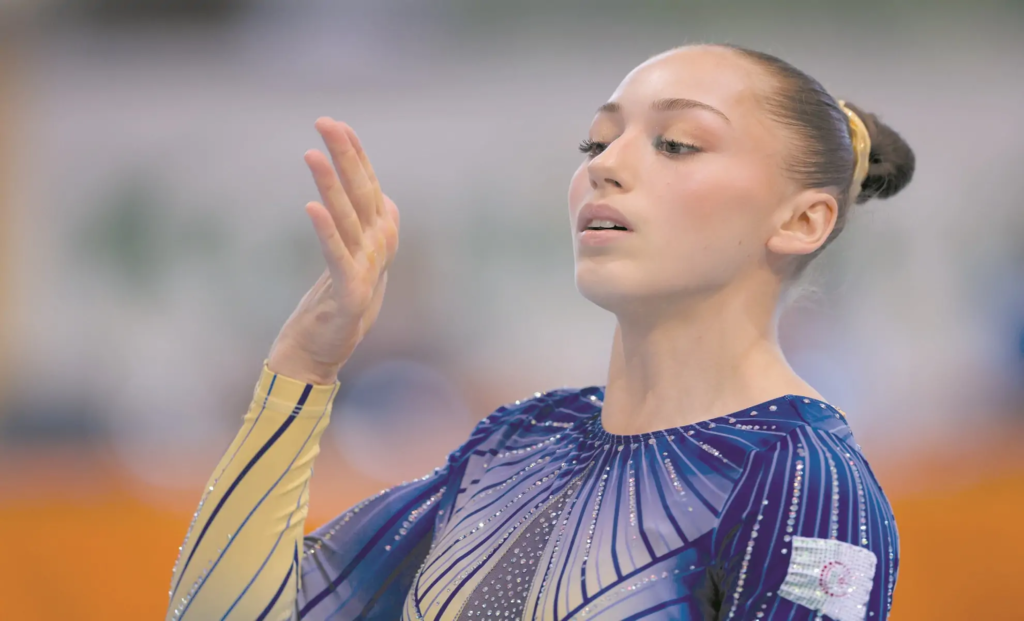
Kaylia Nemour, the 17-year-old Algerian gymnast, won gold on the women’s uneven bars at the World Cup in Cottbus, Germany, marking a milestone in her career.


Evolving within the Avoine-Beaumont club, the Algerian gymnast has established herself as a promising star in the discipline and aims to maintain her status at the upcoming Paris 2024 Olympic Games. Nemour’s participation towards the Paris 2024 Olympics was secured on October 2, 2023, when she earned her place at the 2023 World Championships in Antwerp, Belgium, with a silver medal on the uneven bars.

Arriving at the World Cup Final in Germany 2024 as the favorite, Nemour lived up to expectations by scoring 15.433 on the uneven bars, mirroring her qualifying score. Her performance on Saturday not only secured her first place on the podium, but also highlighted her formidable competitiveness on her favorite apparatus.

“Qualifying was particularly successful. One of her best performances ever, a cut above the World or African Championships. She’s matured and grown, which makes the movement even prettier and more pleasing to watch,” explained her coach Marc Chirilcenco to La Nouvelle République.

More competitions to come


In addition to her uneven bars triumph, Nemour is also preparing for upcoming competitions, including the World Cup stops in Baku, Azerbaijan March 7-10, and Doha, Qatar, April 17-20, followed by the African Championships in Marrakech, Morocco April 30-May 7.

source/content: kawa-news.com (headline edited)

___________

_____________

ALGERIA