Arabs & Arabian Records Aggregator. Chronicler. Milestones of the 25 Countries of the Arabic Speaking World (official / co-official). AGCC. MENA. Global. Ist's to Top 10's. Records. Read & Enjoy./ www.arabianrecords.org
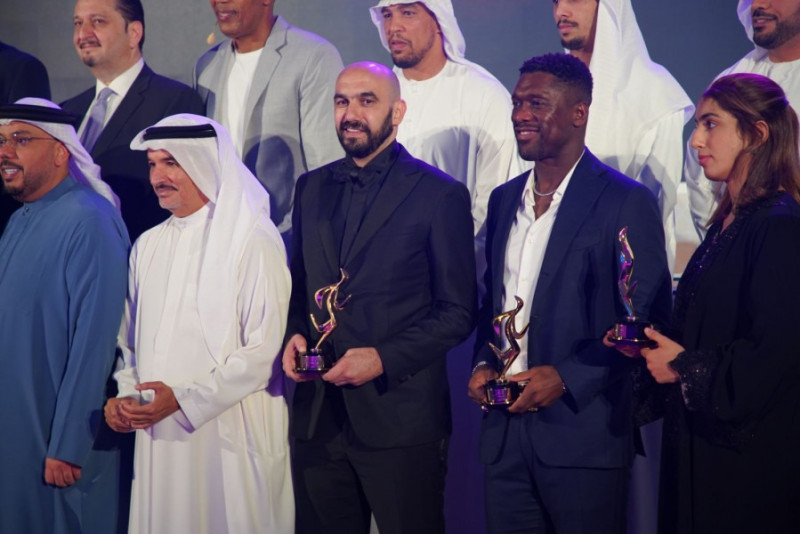
Regragui received the award in recognition of the Moroccan national team’s historic achievements under his leadership.
Morocco’s Head Coach Walid Regragui was named the “Best Arab and International Manager” during an award ceremony organized by Sky News Arabia on Sunday.
Regragui received the trophy at the “Legends Night 2023,” the Ramadan evening during which the Abu Dhabi-based news channel hosts and honors renowned sports legends.
Speaking at the ceremony, Wydad AC’s former coach Regragui extended his thanks to Muslims, Arab, and African people for their unconditional and consistent support for Morocco throughout the 2022 Qatar World Cup.
He stressed that his mission was to prove to the world that an African or Middle Eastern team can win the World Cup. “With your trust and support, we will achieve this,” he stressed.
“Next time inshallah we do it,” Regragui said, reiterating that the Atlas Lions are capable of becoming the first African and Arab team to win the global tournament.
In addition, he extended his thanks to King Mohammed VI for supporting the national team throughout their journey in Qatar.
Under the leadership of Regragui, the Moroccan squad managed to defy all odds and achieve the unexpected, becoming the first Arab and African team to reach the World Cup’s semi-finals in 2022.
After not having qualified for the round of 16 since 1986, Morocco not only broke the 36-year-long curse, but also managed to beat and send home some of the world’s top football giants, including Belgium, Spain, and Portugal.
Morocco eventually finished fourth after losing to Croatia in the third place play-off. However, the Moroccan national team’s heroics were widely celebrated among football fans from across the world, with many attributing their success to Regragui’s great leadership and tactics.
The widely-celebrated coach has become a national icon and the pride of millions of Moroccans across the world, having led the team to unprecedented success after only a few months in the position.
Besides Regragui, the award ceremony also honored the Moroccan Royal Football Federation (FRMF), naming it the Best Arab Federation in recognition of its achievements at both team and club levels.
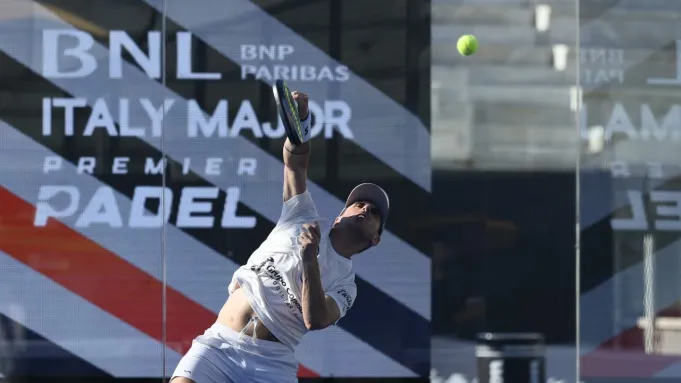
Qatar Sports Investments (QSI) has reached a deal to acquire the World Padel Tour (WPT), the oldest global professional padel tour, from Spanish brewing powerhouse Damm’s Setpoint Events.
Under this agreement, the WPT will be combined with the QSI-owned Premier Padel to form a single global professional padel tour. The tour, which will be called Premier Padel, will be governed by the International Padel Federation (FIP). Financial terms of the agreement were not released.
“This is a historic moment for the sport of padel,” Nasser Al-Khelaïfi, the chairman of QSI and Premier Padel, said in a statement. “As the fastest-growing sport globally, QSI is proud to be at the heart of driving the development of padel professionally worldwide, always placing the players at the center of our mission to grow the sport everywhere.”
The new tour will kick off in 2024. Until the end of 2023, the separate WPT and Premier Padel tours will be played as scheduled.
QSI, which also owns Ligue 1’s Paris Saint Germain, launched Premier Padel in 2022. Within its first year, over 500 players worldwide competed in tournaments in five cities. The tour was expanded to eight cities in 2023. According to the organizers, the inaugural 2022 tour has broadcast agreements that cover over 180 countries and attracted 22.7 million views on YouTube.
World Padel Tour (WPT) started in 2013 and has been the prominent padel circuit, featuring over 26 men’s and women’s tournaments across six countries. A total of 510 men and 317 women compete in the circuit, which is broadcast in more than 150 countries.
While WPT has a total prize fund of $121,000, Premier Padel has $568,000.
There have been disputes between the two leagues. When players signed with WPT, their contracted barred them from playing in other leagues.
According to Politico , last year, the world’s top padel players and FIP jointly submitted a competition complaint to the European Commission, accusing Damm’s Setpoint Events—which runs WPT—of breaking EU law by distorting competition. WPT responded by suing players that joined Premier Padel and taking legal action against FIP, the Professional Players Association (PPA) and QSI, arguing that QSI is trying to exclude them from the market. The WPT also had filed a lawsuit in Madrid against the FIP, claiming it was deviating from its role as an impartial, non-profit regulatory body.
The global padel industry is valued at over $2 billion and is forecast to surpass $4 billion by 2026, according to a recent report from Deloitte .
There are currently 25 million people playing Padel in 110 countries, compared to 16 million two years ago.
source/content: sportico.com (headline edited)
____________
Starting in 2024, the World Padel Tour and Premier Padel will combine to operate as a single tour.PHOTO BY DOMENICO CIPPITELLI/NURPHOTO VIA GETTY IMAGES
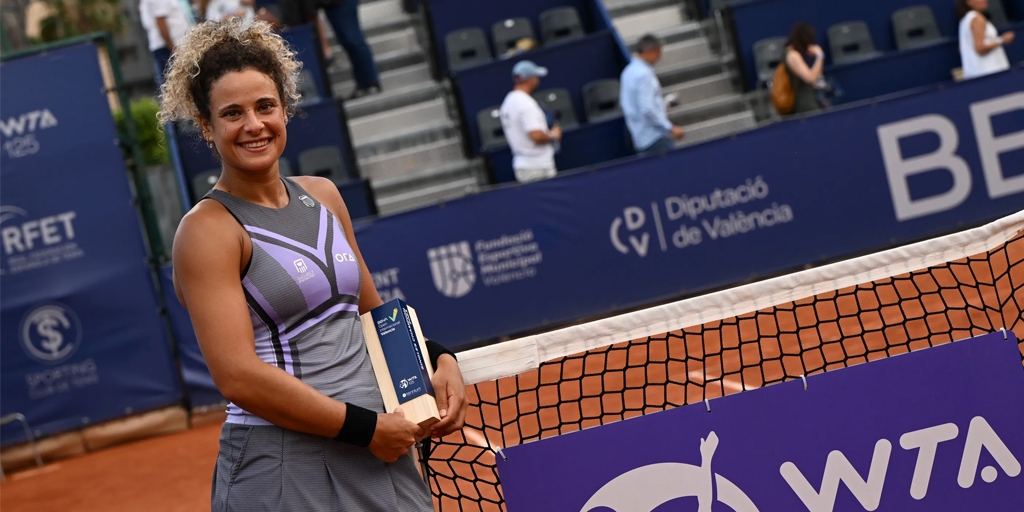
Egypt’s Mayar Sherif continued her dominant rise in the tennis world at the BBVA Open Internacional de Valencia in Spain, winning the Women’s Tennis Association (WTA) 125 title and leaping into the Top 35 world singles ranking for the first time.
This is also the tennis champion’s second consecutive WTA 125 title, having clinched the WTA 125 Makarska Open trophy in Croatia on 11 June.
Sherif enjoyed a winning streak throughout the tournament, eventually defeating Spain’s Marina Bassols Ribera 6-3, 6-3. With this victory, Sherif, now ranked 31st in the world, maintained her remarkable record in WTA 125 finals, extending it to 6-0.
“I came into this tournament with great momentum from Makarska, and I wanted to capitalize on it,” expressed Sherif after her dominant display. “Right from the beginning of the tournament, I felt very comfortable, and I believe that reflected in my straight-set victories throughout.”
With an astounding 9-place leap to 31st place in the singles world ranking, Sherif is now the highest-ranked Egyptian tennis player in history – surpassing the legendary Ismail El Shafei’s career-high of 34th place.
Al-Nahdi has been accredited as the first Saudi international referee in the history of basketball in the Kingdom
FIBA also accredited three other Saudi international basketball referees
For most teens, picking a sport to play in school relies on passion and love for a particular game; for others, choosing is a tough decision. For Lamya Al-Nahdi, opting to play basketball was not something she knew she wanted, as she had played a few different sports, but basketball resonated with her the most.
“I have been playing basketball since I was 13 years old; it is one of the unique sports that relies on speed, intelligence and teamwork. Those three elements combined really got my attention in this beautiful sport,” Al-Nahdi said.
“Basketball is not only about being healthy and sporty and all of that, it gives you so many values when it comes to teamwork, when it comes to the decision-making phase in the court, it is so much more than just a sport,” she said.
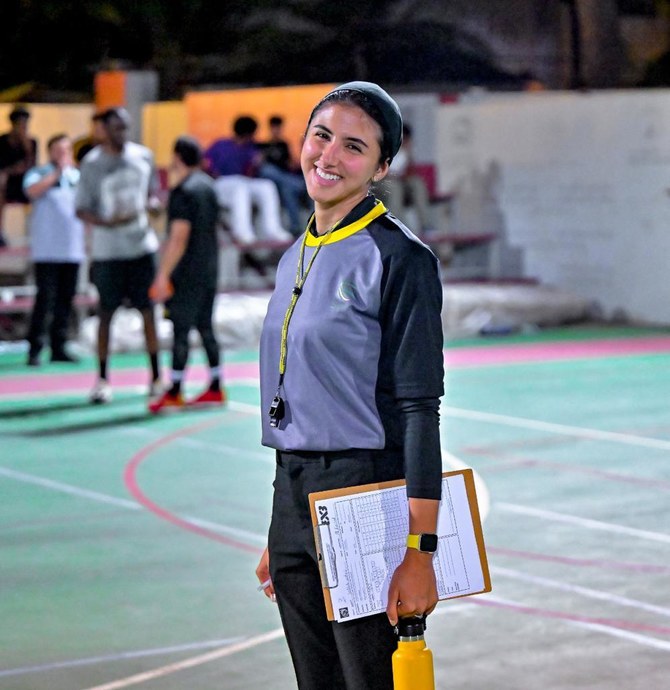
After more than ten years of devotion to the sport, Al-Nahdi has been accredited as the first Saudi international referee in the history of basketball in the Kingdom, having passed the test for becoming an international basketball referee set by the international basketball federation FIBA.
FIBA also accredited three other Saudi international basketball referees: Ahmed Hassan Al-Khamis, Abdullah Marzouq Al-Hujaili and Razen Ahmed Al-Awfi. The accreditation of the three Saudi referees follows them successfully passing the FIBA theoretical and practical exams.
“I had to go through a lot of preparation and training in basketball in the field, and also with the legislation and laws,” Al-Nahdi said.
Al-Nahdi said that becoming the first Saudi international basketball referee was both an honor and a huge responsibility.
“I am not only representing myself but also representing a beautiful sport that I grew up playing for more than ten years, so it represents the love and passion for that sport,” she said.
“And it also represents my country, religion and lots of values that I took along with me.”
While playing basketball, Al-Nahdi graduated from Dar Al-Hekma University with a human resources management degree. After graduating, Al-Nahdi worked in human resources for five years before joining her family business as a business development manager of Blooming, a female clothing brand founded by Saudi women.
Al-Nahdi being accredited as the first Saudi International referee in basketball follows the efforts made by the Saudi Sport Federation to empower Saudi women in the sport sector, particularly Saudi female referees, and to support Saudi women locally and internationally.
“Now is the time for anything, particularly in the Saudi sports industry, with the support system we have,” Al-Nahdi said.
“I am loving the focus on females playing sports, specifically basketball,” she said. “I do believe it is the number one sport when it comes to female sport, gaining much attention among Saudi females compared to other sports.”
Encouraging women to take up sport and providing job opportunities in several sports fields, including football and basketball, has allowed Saudi women to excel in professional and recreational sports.
“In my early years of playing basketball, we actually used to do it not secretly, but no one knew about us back then, compared to the attention, support and the number of basketball coaches available to train Saudi women,” Al-Nahdi said.
“Now is the time. The support structure is there, all you need to do is to believe in yourself and work hard toward your goal.”
Al-Nahdi said that believing in yourself was the first and most important step in achieving anything, the second was surrounding yourself with supportive people to help you along the way.
Her elevation as the first Saudi international referee for basketball has been welcomed enthusiastically.
The Saudi Embassy in the US tweeted: “The @FIBA has approved Lamia Fawzi Al-Nahdi as the first Saudi international referee in the history of Saudi basketball. This is the result of the efforts of the @sbfksa to empower Saudi female referees and support them locally and internationally.”
Saudi Arabia’s first female international referee for football was appointed by the FIFA in January this year, when Anoud Al-Asmari was awarded the international badge, less than a year after the Kingdom’s national women’s team made their debut.
source/content: arabnews.com (headline edited)
____________
Lamya Al Nahdi, is the first Saudi international referee in the history of basketball in the Kingdom
Saudi football, not to mention Middle Eastern and Asian teams in general, will be seismic in the years ahead
Global interest in the league has skyrocketed, with broadcasters DAZN, Canal Goat and LA7 jumping on board
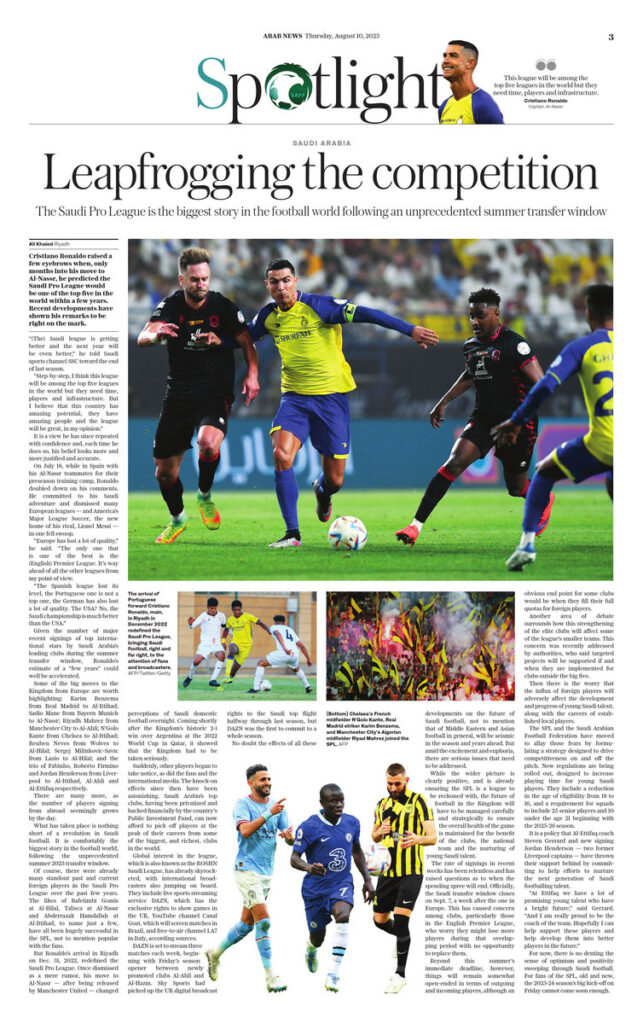
Cristiano Ronaldo raised a few eyebrows when, only months into his move to Al-Nassr, he predicted the Saudi Pro League would be one of the top five in the world within a few years. Recent developments have shown his remarks to be right on the mark.
“(The) Saudi league is getting better and the next year will be even better,” he told Saudi sports channel SSC toward the end of last season.
“Step-by-step, I think this league will be among the top five leagues in the world but they need time, players and infrastructure. But I believe that this country has amazing potential, they have amazing people and the league will be great, in my opinion.”
It is a view he has since repeated with confidence and, each time he does so, his belief looks more and more justified and accurate.
On July 18, while in Spain with his Al-Nassr teammates for their preseason training camp, Ronaldo doubled down on his comments. He committed to his Saudi adventure and dismissed many European leagues — and America’s Major League Soccer, the new home of his rival, Lionel Messi — in one fell swoop.
“Europe has lost a lot of quality,” he said. “The only one that is one of the best is the (English) Premier League. It’s way ahead of all the other leagues from my point of view.
“The Spanish league lost its level, the Portuguese one is not a top one, the German has also lost a lot of quality. The USA? No, the Saudi championship is much better than the USA.”
Given the number of major recent signings of top international stars by Saudi Arabia’s leading clubs during the summer transfer window, Ronaldo’s estimate of a “few years” could well be accelerated.
Some of the big moves to the Kingdom from Europe are worth highlighting: Karim Benzema from Real Madrid to Al-Ittihad; Sadio Mane from Bayern Munich to Al-Nassr; Riyadh Mahrez from Manchester City to Al-Ahli; N’Golo Kante from Chelsea to Al-Ittihad; Reuben Neves from Wolves to Al-Hilal; Sergej Milinkovic-Savic from Lazio to Al-Hilal; and the trio of Fabinho, Roberto Firmino and Jordan Henderson from Liverpool to Al-Ittihad, Al-Ahli and Al-Ettifaq respectively.
There are many more, as the number of players signing from abroad seemingly grows by the day.
What has taken place is nothing short of a revolution in Saudi football. It is comfortably the biggest story in the football world, following the unprecedented summer 2023 transfer window.
Of course, there were already many standout past and current foreign players in the Saudi Pro League over the past few years. The likes of Bafetimbi Gomis at Al-Hilal, Talisca at Al-Nassr and Abderrazak Hamdallah at Al-Ittihad, to name just a few, have all been hugely successful in the SPL, not to mention popular with the fans.
But Ronaldo’s arrival in Riyadh on Dec. 31, 2022, redefined the Saudi Pro League. Once dismissed as a mere rumor, his move to Al-Nassr — after being released by Manchester United — changed perceptions of Saudi domestic football overnight. Coming shortly after the Kingdom’s historic 2-1 win over Argentina at the 2022 World Cup in Qatar, it showed that the Kingdom had to be taken seriously.
Suddenly, other players began to take notice, as did the fans and the international media. The knock-on effects since then have been astonishing. Saudi Arabia’s top clubs, having been privatized and backed financially by the country’s Public Investment Fund, can now afford to pick off players at the peak of their careers from some of the biggest, and richest, clubs in the world.
Global interest in the league, which is also known as the Roshn Saudi League, has already skyrocketed, with international broadcasters also jumping on board. They include live sports streaming service DAZN, which has the exclusive rights to show games in the UK, YouTube channel Canal Goat, which will screen matches in Brazil, and free-to-air channel LA7 in Italy, according sources.
DAZN is set to stream three matches each week, beginning with Friday’s season opener between newly promoted clubs Al-Ahli and Al-Hazm. Sky Sports had picked up the UK digital broadcast rights to the Saudi top flight halfway through last season, but DAZN was the first to commit to a whole season.
No doubt the effects of all these developments on the future of Saudi football, not to mention that of Middle Eastern and Asian football in general, will be seismic in the season and years ahead. But amid the excitement and euphoria, there are serious issues that need to be addressed.
While the wider picture is clearly positive, and is already ensuring the SPL is a league to be reckoned with, the future of football in the Kingdom will have to be managed carefully and strategically to ensure the overall health of the game is maintained for the benefit of the clubs, the national team and the nurturing of young Saudi talent.
The rate of signings in recent weeks has been relentless and has raised questions as to when the spending spree will end. Officially, the Saudi transfer window closes on Sept. 7, a week after the one in Europe. This has caused concern among clubs, particularly those in the English Premier League, who worry they might lose more players during that overlapping period with no opportunity to replace them.
Beyond this summer’s immediate deadline, however, things will remain somewhat open-ended in terms of outgoing and incoming players, although an obvious end point for some clubs would be when they fill their full quotas for foreign players.
Another area of debate surrounds how this strengthening of the elite clubs will affect some of the league’s smaller teams. This concern was recently addressed by authorities, who said targeted projects will be supported if and when they are implemented for clubs outside the big five.
Then there is the worry that the influx of foreign players will adversely affect the development and progress of young Saudi talent, along with the careers of established local players.
The SPL and the Saudi Arabian Football Federation have moved to allay those fears by formulating a strategy designed to drive competitiveness on and off the pitch. New regulations are being rolled out, designed to increase playing time for young Saudi players. They include a reduction in the age of eligibility from 18 to 16, and a requirement for squads to include 25 senior players and 10 under the age 21 beginning with the 2025-26 season.
It is a policy that Al-Ettifaq coach Steven Gerrard and new signing Jordan Henderson — two former Liverpool captains — have thrown their support behind by committing to help efforts to nurture the next generation of Saudi footballing talent.
“At Ettifaq we have a lot of promising young talent who have a bright future,” said Gerrard. “And I am really proud to be the coach of the team. Hopefully I can help support these players and help develop them into better players in the future.”
For now, there is no denting the sense of optimism and positivity sweeping through Saudi football. For fans of the SPL, old and new, the 2023-24 season’s big kick-off on Friday cannot come soon enough.
Morocco currently ranks first totaling a number of 38 medals, with 13 gold, 11 silver, and 14 bronze.
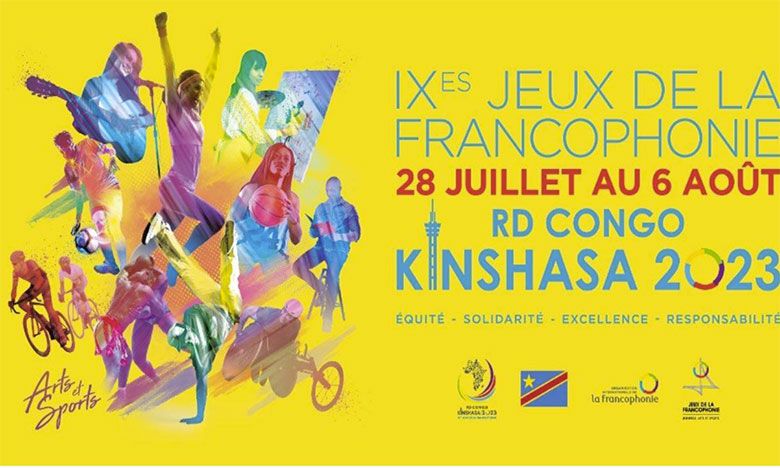
On August 3, Moroccan athletes bagged 6 medals in athletics and 4 in judo on a single day, confirming the Kingdom’s leading position at this ninth edition of the Francophone Games taking place in Kinshasa, the capital of the Democratic Republic of Congo.
In athletics and para-athletics, the women’s 5,000-meter discipline representing the Kingdom conquered the podium with a trio comprising Rahma Tahiri, who claimed the gold medal and set a new competition record with a time of 15 minutes 56 seconds 71 milliseconds.
In second place came Kaoutar Farkoussi with a time of 15 minutes 57 seconds 91 milliseconds, while Soukaina Atanane took bronze with a time of 16 minutes 05 seconds 34 milliseconds.
In the men’s 1,500 meters, the runners Hicham Akankam and Hafid Rizqy won gold and silver recording 3 minutes 41 seconds 08 milliseconds and 3 minutes 41 seconds 89 milliseconds respectively.
In para-athletics, Abdelkbir Jaddi won bronze in the long jump with a leap of 6.30 meters.
In judo, Hassan Doukkali won gold in the under-73 kilograms category, while Chaimae Taibi, Hamza Kabdani, and Ziane Wissal took bronze in the under-63 kilograms, under-81 kilograms and under-57 kilograms categories respectively.
In the same competition event on Tuesday, Morocco claimed three simultaneous medals in the women’s 1,500-meter event.
The three Moroccan athletes who stood on the podium were Wafa Zaroual, Soukaina Hajji, and Rababe Arafi.
Morocco currently has a total of 38 medals, with 13 gold, 11 silver, and 14 bronze, well ahead of second-placed Romania with 25 medals.
This year’s Francophone Games, which runs until August 6, brings together 2,500 young people aged 18 to 35 representing 88 countries, including Morocco, to take part in the various sporting disciplines and cultural activities scheduled for this event.
Born in Yemen, raised in Saudi, Almarwai takes on ONE Championship flyweight submission grappling champion Mikey Musumeci in Colorado.
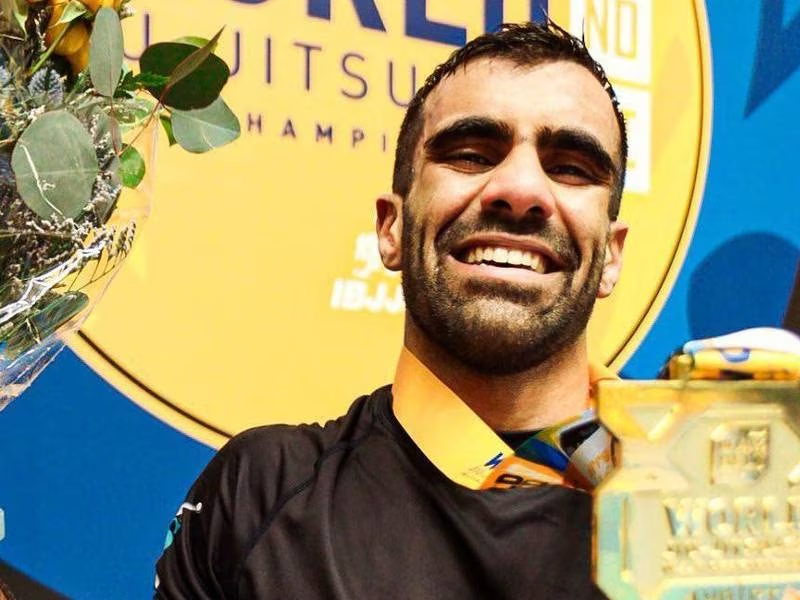
Osamah Almarwai says he is ready to make history on Friday by becoming the first Arab to win the ONE Championship flyweight submission grappling title when he takes on champion Mikey Musumeci in Colorado.
The Musumeci-Almarwai title contest is one of the two main co-events of the 11-fight card headlined by the ONE Fight Night 10 MMA flyweight world championship bout between Demetrious Johnson and Adriano Moraes.
Born in Yemen and raised in Saudi Arabia, Almarwai carries the weight of the Arab world on his shoulders against an opponent widely regarded as one of the pound-for-pound best grapplers in the sport.
Almarwai, 31, says the messages of support he has received has “turned me to be in my best ever shape” and that his American opponent will see his best version when they lock horns at 1stBank Center, Denver.
“It’s an honour for me to represent the Arab World and I assure everybody that I’m in my best shape ever and ready, and hopefully, be the first Arab to win this flyweight title,” Almarwai told The National.
“I continue to receive lots of messages and love from so many people from different countries. It’s really an honour for me to represent the region. I’m grateful for this opportunity and I assure them I’ll be in the best version of myself. I would like to thank for their support. I appreciate their love.”
He added: “Representing the Arab World puts a lot of pressure on me but this pressure will give me the strength to win.”
Almarwai earned his passage for the title meeting with 26-year-old Musumeci after a string of victories including winning the No-Gi Pan American and the IBJJF No-Gi World Championship titles.
He has been preparing for the biggest match of his career for more than three months under the training of Andre Galvao, the co-founder and head coach of Atos Jiu Jitsu in San Diego, California.
“My preparation has been going very well. I have studied Mikey. He is one of the best but I train with some of the best in the world, and that’s why I want to fight him,” he said.
“I have completed my preparation and now I’m just focused on the mental preparation. I feel ready, I fee sharp, and hopefully, come out with a win. I will create history again on Friday, Insha Allah.”
Musumeci, who boasts a 19-3 win-loss record, makes the second title defence of his ONE flyweight submission grappling belt against Almarwai having beaten Gantumur Bayanduuren via unanimous decision in January.
The contest is scheduled for 10 minutes and Almarwai says, though he respects Musumeci, he is determined to take the challenge to the champion.
“As the challenger my approach for Mikey will be aggressive. It’s only 10 minutes, so there is no time to waste. I have studied his game and I have seen his flaws and seen his strengths. I have prepared both mentally and physically for this match.
“I have been watching and following him. It’s an honour to be competing against Mikey. He’s my biggest challenger and I’ll be testing my skills against him,” he said.
Almarwai claims his speed and his mental preparation to be his biggest asset while representing the Arab World motivates him to bring his best to the table.
Almarwai’s jiu-jitsu journey began when he followed his older brother, Mohammed, to the gym as a boy in Saudi Arabia and he continued to train after completing high school.
He then moved to the United States to study English in Orlando, Florida where the university he attended offered free jiu-jitsu classes.
Almarwai received his brown belt when he returned to Saudi Arabia, where his father was employed, before returning to the US again to complete his Masters in Engineering Management.
“I spent my free time training jiu-jitsu during my college time, I would train hard but it wasn’t serious. I started competing and then I started to focus more seriously and professionally,” Almarwai adds.
“I thought I had the talent and the potential because I was training with some of the best in the world when I came to the US. I thought ‘why not become a professional?’
“In the late stage of my brown belt, when I won my first world title as a professional, I took it up more seriously. Tthat’s the time I wanted to be one of the best and represent the Middle East because I was able to beat some of the biggest names in the sport.
“Hopefully on May 5, I’ll make history again by becoming the first Middle Eastern flyweight world champion.”
Rise of national team matched by that of country’s female referees.
When the Moroccan national women’s football team next takes to the pitch, their feat will be recorded for ever in the history books.
The Atlas Lionesses play Germany in Australia on July 24, becoming the first Arab nation to play in the Fifa Women’s World Cup.
But it is not just the players who are changing the future of the sport.
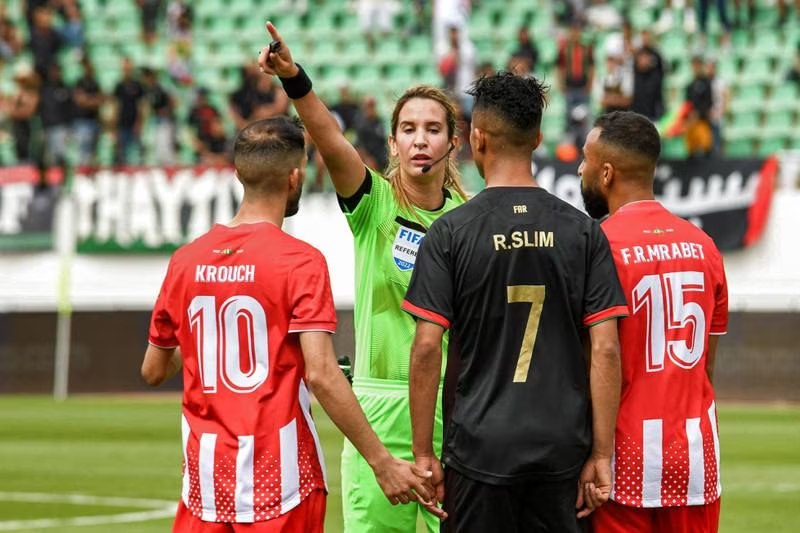
The rise of the Moroccan women’s team goes hand in hand with the successes of the country’s female referees, who have made huge strides in breaking the long male monopoly on football officiating.
Three female Moroccan football referees, Bouchra Karboubi, Fatiha Jermoumi and Soukaina Hamdi, have been appointed by Fifa, the sport’s world governing body, to referee at the Women’s World Cup, which kicks off on Thursday in Australia and New Zealand.
Aside from Palestinian Heba Saadieh, the women are the only female Arab football officials at the tournament.
“Morocco’s female football teams have witnessed a significant growth in recent years, in terms of numbers, age categories and locations, which [created the need for] qualifying female referees to officiate their games, and hence creating opportunities for those with great potential in that field,” said Brahim Chokhmane, sports editor at Tunisian newspaper Le Matin.
Mr Chokhmane pointed to a growing trend in the region to try to close the gender gap in sports — and in football in particular.
He said the Royal Moroccan Football Federation (RMFF) has begun to follow the trend.
In June, the Confederation of African Football (CAF) said clubs wanting to participate in the 2023-2024 Champions League and Confederation Cup competitions must have women’s professional teams.
Last year’s African Cup of Nations was the first time the tournament put out an all-female line-up of match officials – among them Morocco’s Jermoumi and Karboubi.
Women refereeing men’s matches
Women in Morocco have never been closer to equality with their male counterparts on the football pitch.
In March 2023, the federation appointed the first female coach in North Africa to train a men’s football team.
Last year, it appointed Karboubi to be the first woman in the Arab world to officiate a final of a men’s professional competition. Jermoumi was a first assistant at the country’s most prestigious football tournament, the Moroccan Throne Cup.
In 2020, the RMFF launched several football tournaments for women footballers and set a target of 90,000 amateur female players.
The moves have inspired more women to play – and referee – football.
Zakia El Grini, 33, who earned her Fifa badge as a football referee in 2022, said: “More Moroccan women feel confident nowadays to train, and work, as football referees, thanks to those who pioneered in the field and paved the way for others, and to the increasing number of female footballers.”
Less than two decades ago, there were fewer than 15 locally accredited Moroccan female football referees.
There are now eight internationally accredited female referees and more than 120 locally licensed ones.
Hafsa Ayab, 15, a student at the refereeing school for the Chaouia Doukkala Regional Football League, in the west of Morocco, told The National that she sees Karboubi as a role model and dreams of reaching the same success.
“I was not a fan of football itself as a game, but have found my passion in refereeing,” she said. “I am lucky to be able to pursue this dream.”
As the number of Moroccan players increase significantly, Moroccan referee Soukaina Hdia, 32, said more women will be encouraged to take part.
“And it will continue to increase, especially as more Moroccan women partake in global events,” she said. “It will encourage more females to do the same. I recall how, in 2009, I was the only female football referee in the Chaouia Doukkala region, but now there are dozens”.
‘Bullying doesn’t stop’
The pursuit of a refereeing career for women is not an easy one, Hdia said.
“I have been in this profession since 2009, and the bullying doesn’t stop, especially during interviews, or from the audience. I did grow immune to negative comments, though.”
Karboubi too has been the target of harassment and bullying.
After officiating Morocco’s Throne Cup’s final last year, images of the referee side by side with pictures of a kitchen went viral on social media, as some football fans took umbrage at Karboubi’s decision to show a yellow card to one player.
Ranked 136 of 146 countries in the World Economic Forum’s Gender Gap Index, Morocco’s women live lives strongly determined by deeply ingrained gender roles.
“The bullying is sometimes worse against female referees with headscarves, like what happened to me,” said El Grini, who officiated the kingdom’s Throne Cup this year.
“But the main obstacle preventing many Moroccan women from pursuing football refereeing as a career is the family. Many still view refereeing as meant only for men, but the truth of the matter is that sports and refereeing are open to all,” she said.
This story is published in collaboration with Egab.
A report by the Financial Times has said that the country’s sovereign wealth fund, Qatar Investment Authority (QIA), has taken a stake in the owner of Washington’s professional basketball and hockey teams in US sport.
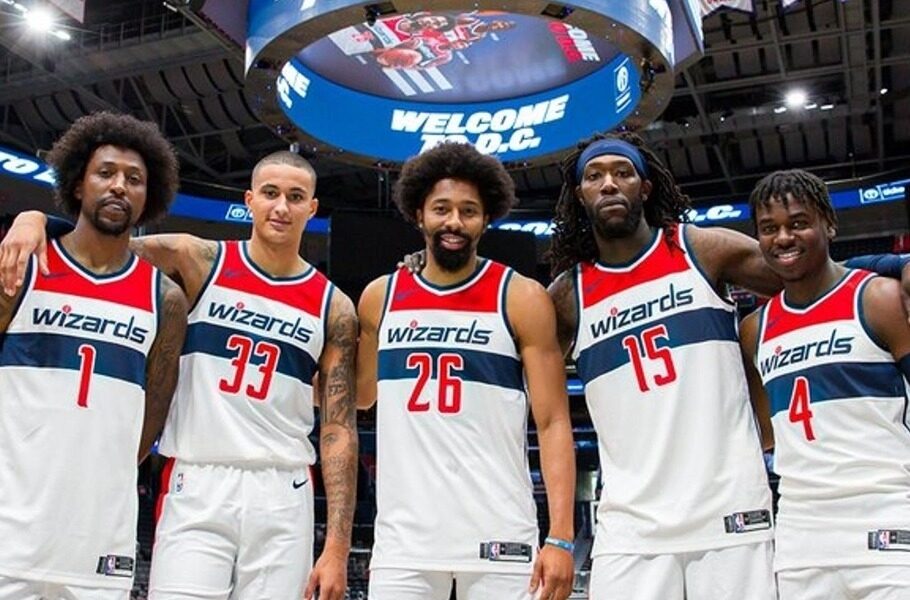
As per the report, the fund is paying $200mn for a 5% stake in Monumental Sports and Entertainment (MSE) in a deal that values the owner of the National Basketball Association’s Washington Wizards, the Women’s National Basketball Association’s Washington Mystics and the National Hockey League’s Washington Capitals at $4.05bn.
The report also mentions that the investment from QIA, at an estimated $450bn in assets, comes less than a year after the NBA amended its bylaws to allow sovereign wealth funds to invest in clubs.
The QIA said, “As one of the largest integrated sports and entertainment companies in the country, MSE’s platform provides unique opportunities and scalability for growth and partnerships”.
As per the report, people familiar with the Monumental deal said that the QIA was taking a stake in the group as a financial transaction to gain exposure to a company with a diverse range of assets. As per reports, QIA will not gain board representation as part of the transaction.