Arabs & Arabian Records Aggregator. Chronicler. Milestones of the 25 Countries of the Arabic Speaking World (official / co-official). AGCC. MENA. Global. Ist's to Top 10's. Records. Read & Enjoy./ www.arabianrecords.org
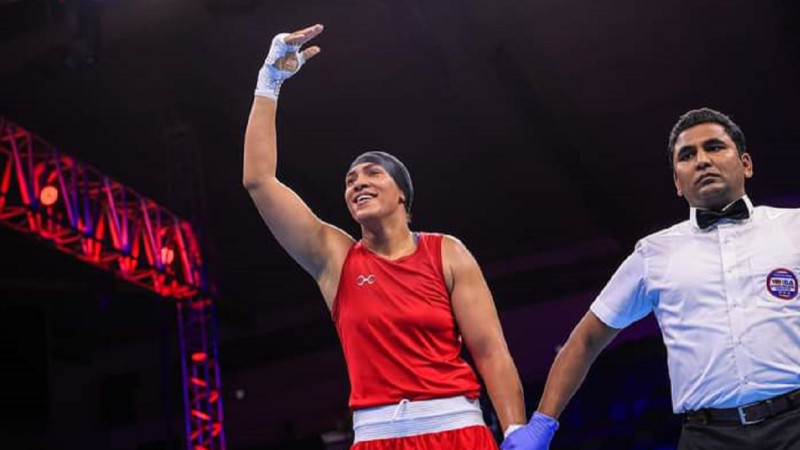
Moroccan boxer Khadija El Mardi won the gold medal on Sunday in New Delhi, India, during the Women’s World Amateur Boxing Championships.
The national champion El Mardi, who competed in the heavyweight division (Over 81kgs), won the women’s world boxing championship by defeating the Kazakh Kungeibayeva Lazzat.
El Mardi has achieved a number of victories over the years, including the title of African champion in 2022, a victory at the African Games in Rabat in 2019, a silver medal at the World Championships in 2022, and this year’s Mohammed VI Trophy gold medal.
Born in Casablanca in 1991, El Mardi’s everlasting commitment and heroic efforts to achieve success have made her name stand out.
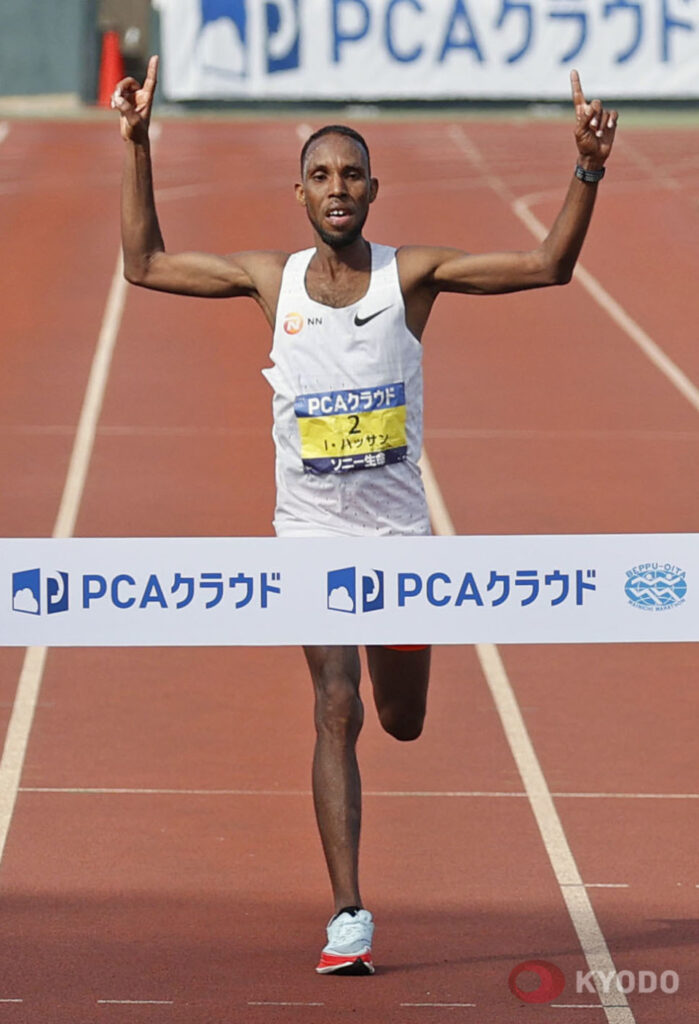
Ibrahim Hassan of Djibouti won the Beppu-Oita Mainichi Marathon in Oita, southwestern Japan, with a meet record of 2 hours, 6 minutes and 43 seconds Sunday.
Kenya’s Daniel Kipchumba crossed the finish line five seconds later for second place, and Japan’s Tsubasa Ichiyama placed third in 2:07:44.
The 71st edition of the race started in front of the Umitamago aquarium and finished at J-Lease Stadium.
“With the win and course record, I’m very, very happy,” the 26-year-old Hassan said. “The course was very good.”
Aoyama Gakuin University’s Shungo Yokota came in fourth in 2:07:47, setting the marathon record for a Japanese student runner.
Ibrahim Hassan of Djibouti crosses the finish line at J-Lease Stadium to win the Beppu-Oita Mainichi Marathon in Oita, southwestern Japan, on Feb. 5, 2023. (Kyodo)
Saudi Arabia Football Federation president will be part of powerful arm of world football’s governing body.
Saudi Arabia on Wednesday returned to the powerful Fifa Council with their federation head Yasser Al Misehal getting elected at the AFC Congress held in Bahrain.
Who is Yasser Al Misehal?
Al Misehal is the president of the Saudi Arabian Football Federation (SAFF), and has presided over a period of unprecedented change and progress in Saudi football, under the patronage of Saudi Crown Prince Mohammed bin Salman.
The men’s national team pulled off one of the biggest shocks in tournament history when they beat tournament favourites Argentina at the World Cup in Qatar late last year, a feat Al Misehal described in a December interview with The National as “one of the most historical moments for the Saudi nation “.
A member of both Fifa’s and the Asian Football Confederation’s Disciplinary Committees, Al Misehal also served as chairman of the Saudi Pro League from June 2016 to October 2017.
According to his LinkedIn page, Al Misehal studied Sport Management at Sorbonne University Abu Dhabi from 2014 to 2015 and has a Bachelor’s degree in finance from King Fahad University of Petroleum and Minerals.
An avid sports fan since childhood, Al Misehal is an honorary member of Al Ettifaq Football Club.
How has he changed Saudi football?
Under Al Misehal’s patronage Saudi football has undergone major changes. Saudi age-group sides have enjoyed recent success, with the Under-23s clinching the Asian Cup in Uzbekistan in June, and the U20s triumphing at the Arab Cup on home soil in August.
According to the SAFF, the organisation is responsible for the development and up-skilling of more than 3,000 national coaches – more than at any time in the country’s history – and 1,700 referees across the kingdom.
In the past three years, Saudi Arabia has invested heavily in women’s football as both grass-roots player development and the establishment in 2021 of a first women’s national team. The kingdom has also introduced an inaugural women’s football league and girls’ school league.
Latest figures show there are now 520 registered players across 25 clubs in the league, and almost 50,000 girls in the inaugural schools’ league.
Meanwhile, the Saudi Pro League is able to attract superstars like Cristiano Ronaldo, who in December joined Riyadh-based Al Nassr on what is believed to be the most lucrative contract in world football.
What is the Fifa Council?
The Fifa Council is the main decision-making body of the organisation, outside the Fifa Congress. The council is a supervisory body that sets the vision for the organisation and for global football.
It has members from six confederations, with the AFC getting seven spots in the 37-member council.
Al Misehal’s elevation to the Fifa Council restores Saudi Arabia’s presence in the decision-making position at world football’s governing body after an absence of 21 years. Al Misehal will automatically become a member of the Asian Executive Office, too.
What next for Saudi Arabia?
Saudi Arabia has grand plans for football. On Wednesday, the country won the hosting rights for the 2027 AFC Asian Cup. Saudi Arabia was the only country left in the race after India withdrew their candidature as potential hosts .
The 2023 Asian Cup will be hosted by Qatar. It was previously set to be held in China but the country withdrew because of its Covid-19 guidelines. Qatar won the tournament’s last edition, in 2019, which was hosted by the UAE.
Saudi Arabia is also looking host the 2026 women’s Asian Cup, which will be another milestone in the journey of women’s sports in the kingdom.
However, the biggest target is said to be a bid for the hosting rights of the 2030 Fifa World Cup, with Saudi Arabia reported to be considering a joint proposal with Egypt and Greece.
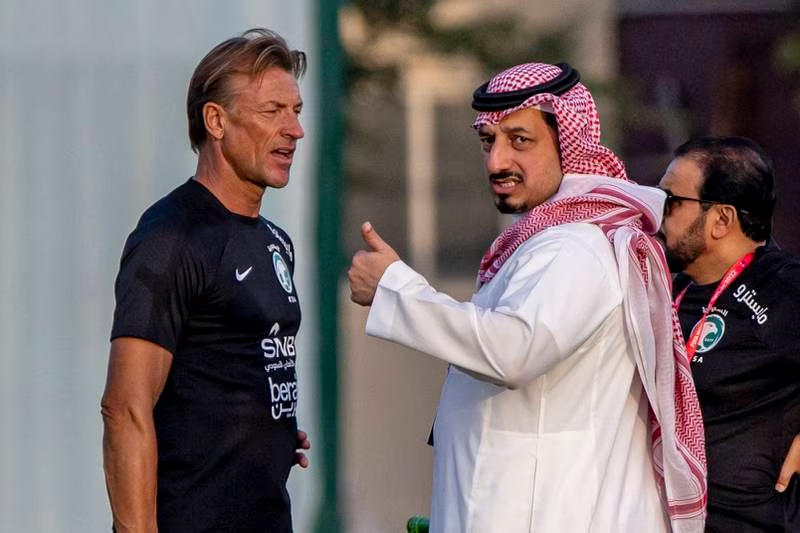
Yasser Al Misehal, right, president of the Saudi Arabian Football Federation, with national team coach Herve Renard during a training session ahead of the 2022 Fifa World Cup in Qatar. EPA
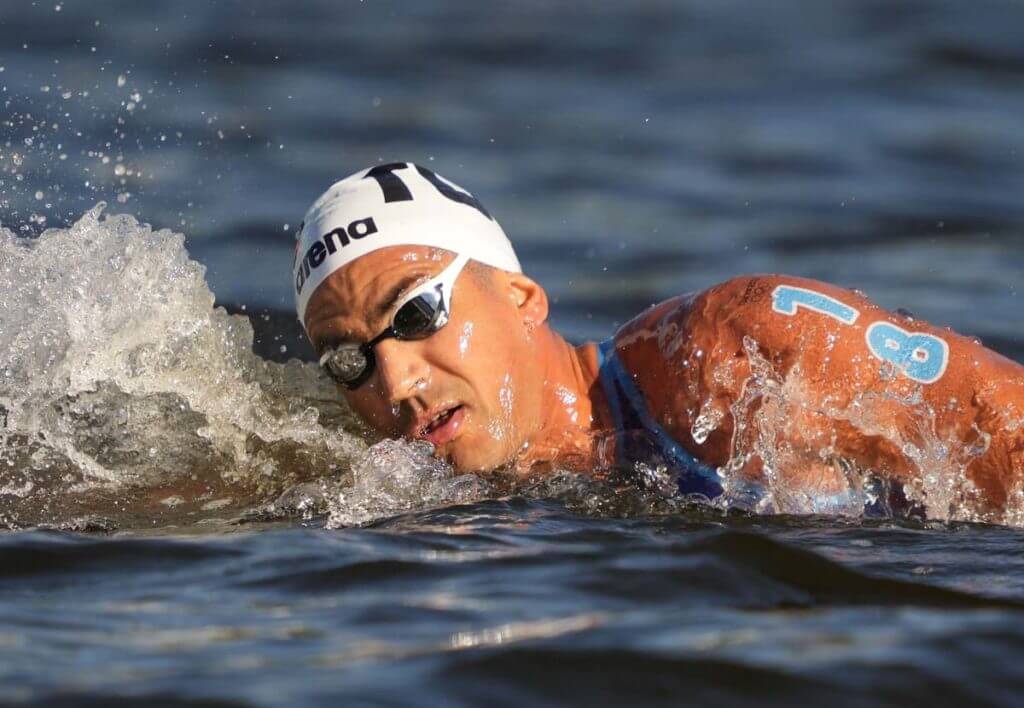
Oussama Mellouli became only the fourth swimmer to compete at six Olympic Games when he dived off the pontoon at Odaiba Marine Park on Thursday and then set his sights on Paris 2024 when he will be 40.
The Tunisian made his Olympic debut at Sydney 2000 and has now competed at five subsequent editions to join Therese Alshammar and Lars Frolander – both of Sweden – and Derya Buyukuncu of Turkey in an exclusive club.
The 37-year-old won gold in the 1500 free at Beijing 2008 followed four years later by bronze in the longest event in the pool as well as the open water title at London 2012.
He was 20th at Odaiba Marine Park on Thursday almost eight minutes behind winner Florian Wellbrock who delivered a masterclass in open water swimming.
Mellouli almost didn’t make it to Tokyo at all because of an ongoing dispute with the Tunisian Swimming Federation which saw him announce his retirement last month.
Days later, however, he confirmed he would race in Japan after Tunisian Olympic Committee president Mehrez Boussainpledged to mediate between Mellouli and the federation.
Mellouli though said the dispute had affected his training and subsequent performance, saying:
“I think I could have done a better job. Considering the last five weeks since Setubal (the FINA qualifying race), I’m a bit disappointed about (not being) a bit more in the fight.
“I think I wasn’t in the race for the first three loops and then I was below average in the last four loops.
“I think the poor situation that I’ve been in after my qualifier, I think a lot of extra stuff that’s been happening in my preparation didn’t get me in top form and top condition.
“After the qualifier I was hoping the situation could have been better so I could be in a better condition.”
It seems that Mellouli doesn’t want to end his career on such a note and when asked if he intended to compete in France, Mellouli said:
“I honestly hope so. I think I have more to prove.”
Should he do so, the eight-time world medallist would become the first swimmer to compete in seven Olympics after Alshammar attempted to qualify for the Sweden team in the women’s 4×100 free this year although her bid came to an end at the Sette Colli meet in June.
Thursday’s race saw Wellbrock win by more than 25 seconds ahead of Kristof Rasovszky and European champion Gregorio Paltrinieri and add to his bronze in the 1500m freestyle.
The German now holds the Olympic and world titles and Mellouli said:
“He did an amazing job, congratulations to the German team.
“Florian is a superstar. He has shown tremendous skills in the pool and today dominated the 10k so congrats.”
The first morning of swimming finals at the Tokyo Aquatics Centre featured Mellouli’s fellow Tunisian Ahmed Hafnaoui who won the 400 free from lane eight, prompting an outburst of emotion and unconfined joy.
Hafnaoui described Mellouli as a “legend” and said he aspired to be like him, a legacy of the older man’s success in the pool since he claimed his first global medal with 400IM bronze at the 2013 World Championships in Barcelona.
“I hope so,” said Mellouli.
“I’m very proud of him, words can’t describe how proud I am of him. I know the 400 freestyle is a very tough event, I think my best finish was fifth.
“He is a mature athlete at a young age.”
He added:
“That was great for Tunisian swimming, for Arab swimming, for north African swimming.
“I’m very proud of the kid. He shook the world and did an amazing job, an inspirational job.”
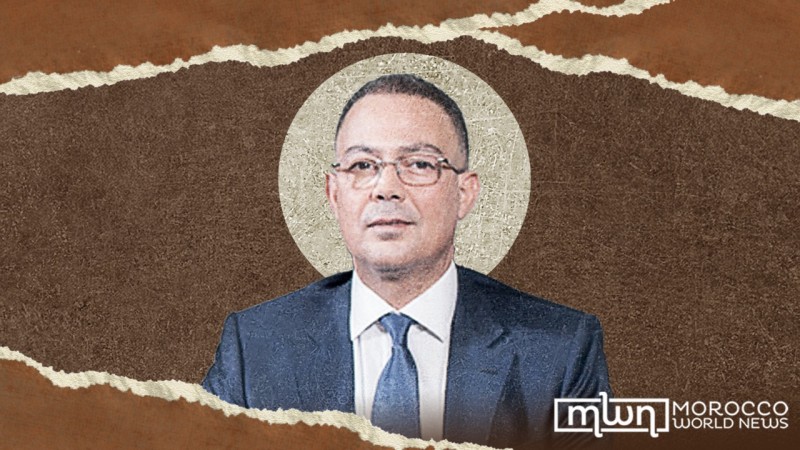
Lekjaa was instrumental in Morocco’s 2022 footballing triumphs, but he continues to look to the future.
When Morocco’s football team defied all odds by topping their group at the Qatar World Cup and qualifying to the round of 16, the president of the Royal Moroccan Football Federation (FRMF) appeared simultaneously happy and unsatisfied.
As most football watchers — and even Moroccan fans and analysts — seemed to say that the Moroccan team’s group performance was a welcome surprise, Fouzi Lekjaa begged to slightly differ.
Yes, the performance was welcome, but there was nothing surprising or shocking about it, the FRMF chief suggested. Others believed — or hoped — that Morocco could do well in the knockout stage, but Lekjaa knew the team could and should do much better. With many pundits favoring Spain to beat Morocco in the round of 16, Lekjaa beamed in an interview that the Atlas Lions have “the potential to compete with anyone.”
Over the team’s next few games, Lekjaa’s words would prove true. The team defeated Spain on penalty kicks after a 120-minute grueling and edgy match, progressing to the quarter-finals for the first time in its history. With a star-suffused Portuguese team waiting in the quarter-finals, the FRMF remained adamant that Morocco could stun their European opponents. And that, ultimately, this being Morocco’s moment to lift Africa’s quarter-final curse, he was confident Morocco would seize it.
And while Morocco’s campaign may have been ended by France in the semi-finals, and while the Atlas Lions may have failed to snatch the bronze medal during their third-place game with Croatia, they have largely achieved what has long been Lekjaa’s goal: put Moroccan football in the global spotlight and earn African football the world’s respect.
Of course, credit for the Atlas Lions’ triumphs cannot be given to one person. Head coach Walid Regragui, players like Yassine Bounou and Sofyan Amrabat, and the team’s technical and medical staff all helped throughout the historic run.
But Lekjaa, who has also been member of FIFA’s executive council since 2021, has been duly celebrated as the orchestrator of the advancement of Moroccan football and the plaudits and respect it has earned of late. While talents on the pitch and the coaching staff’s vision and tactical nous were instrumental in Morocco’s exploits, many have argued, the Atlas Lions’ success story would not have been possible without the reforms the Moroccan federation has witnessed under Lekjaa.
With his team’s sustained quest for Moroccan talents in the diaspora, the recent colossal investments in the national football league and in sporting infrastructure such world-class stadiums and a well-respected football academy, Lekjaa’s leadership has made Moroccan football a leader in Africa and a force to reckon with on the world stage.
It is thus in recognition of his revolutionary leadership at the helm of the FRMF, especially the last-minute, well-timed decision to appoint an inspired coach ahead of the World Cup, that Morocco World News is choosing Lekjaa as one of this year’s most important personalities.
Education and career
Lekjaa was born in Berkane in 1970, where he finished his education before leaving for Rabat to join the Hassan II Agronomic and Veterinary Institute, where he obtained a degree as an agricultural engineer.
He then studied at the National School of Administration in Casablanca and worked at the Ministry of Finance as well as the Ministry of Agriculture. He has been described as the youngest to ever hold the position of budget director in the Finance ministry’s history.
In October 2021, Lekjaa was named as Minister Delegate to the Minister of Finance, responsible for the Budget, as part of Aziz Akhannouch’s government, currently in power.
Career in football
While he has occupied numerous high-profile posts in Morocco’s government, Lekjaa is perhaps best known for his transformative contributions to the country’s football scene.
Having grown up a supporter of his local club, Renaissance Sportive de Berkane (RSB), Lekjaa was appointed president of the club in 2009, while he held another job as a civil servant.
In 2012, RS Berkane rejoined the Moroccan top-flight league for the first time since the 80s, and reached the Throne Cup’s final in 2014, for the first time since 1986.
Since then, the club has been crowned champions of the Throne Cup two times, in 2018 and 2022.
They have also achieved unprecedented continental success, reaching the final of the CAF Confederation Cup three times, winning the title in 2020 and 2022. They also won the most recent CAF Super Cup in 2022, after defeating their fellow Moroccans in Wydad Casablanca.
In 2014, Lekjaa succeeded Ali Fassi Fihri as President of the FRMF, the position he continues to hold today. During his time, Moroccan clubs have achieved success on the continental stage, winning three CAF Super Cup titles, two Champions’ League titles, and reaching five finals.
In 2022, the Super Cup title was contested by two Moroccan teams — with Wydad AC winning the continent’s Champions League while RS Berkane took home the Confederations Cup.
Morocco’s national football team also qualified for the 2018 Russia World Cup under Lekjaa’s presidency, although they could not make it past the group stage despite strong performances against Spain and Portugal.
In 2022, following trouble with players and disapproval from Morocco’s football fans, Bosnian manager Vahid Halilodzic was dismissed by FRMF only a few months before Morocco was set to participate in the World Cup finals.
In his place came Moroccan coach Walid Regragui, who went on to lead Morocco’s squad through a historic run that saw them reach the World Cup’s semi-finals. The decision to hire Regragui has been hailed by many as a step in the right direction of putting more trust in local talents.
Looking to the future
Morocco’s 2022 World Cup triumphs have been declared as just the beginning by some, and it certainly seems that Lekjaa is looking to the future as well.
Despite its World Cup bids being rejected before, Morocco will most likely bid again to host the 2030 World Cup. With Lekjaa joining FIFA’s Executive Council last year, this bid could see a better fate than the past ones.
If successful, Morocco would be the second African and Arab country to host the global competition. Lekjaa told the Associated Press earlier this month that Morocco is considering a joint bid with Spain and Portugal to show the world that the relationship between Morocco and its European neighbors is one “in which civilizations can meet and cultures meet.”
The Moroccan team’s performances at the 2022 tournament have only strengthened Morocco’s international reputation as a footballing nation with a history and passion for the sport, which should also serve well to strengthen its bid.
Many of the stars that led Morocco to the semi-finals in 2022 should still be playing in four years when the US, Canada, and Mexico host the competition, leading to hopes that they can maintain the same level or improve upon it in the future.
Regragui has already made it clear his aspirations are for the next World Cup, asserting that because the Atlas Lions have shown they can compete with the world’s best, Morocco lifting the trophy in 2026 is not a quixotic goal.
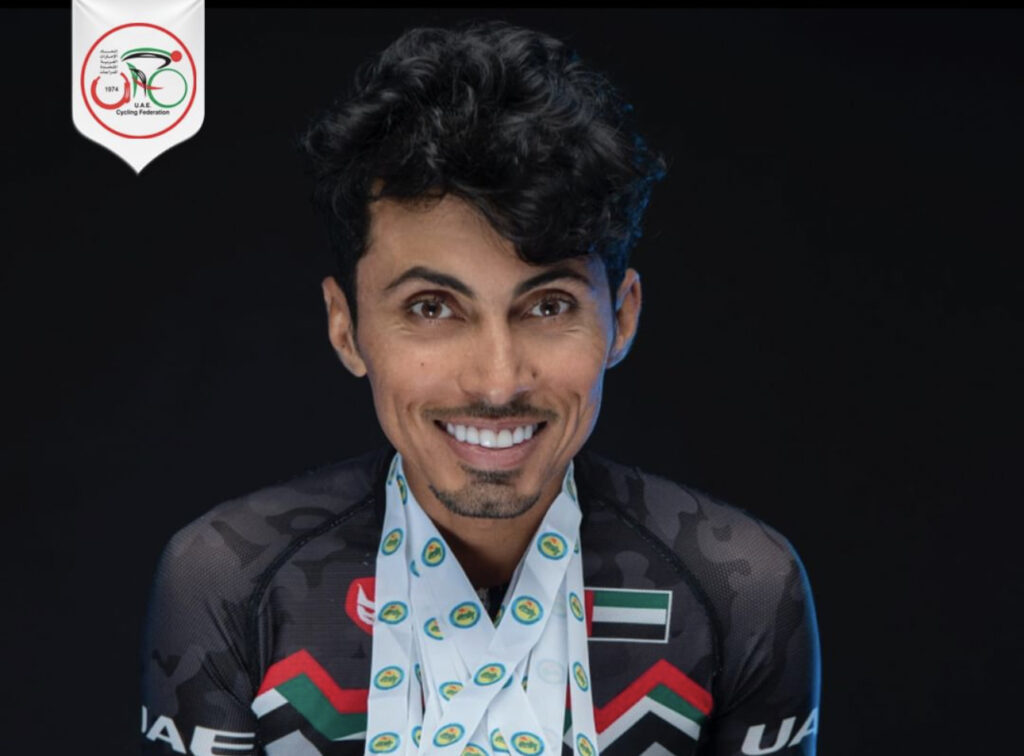
Youssef Mirza, the national cycling team player, expressed his happiness at achieving two gold medals in the “team time trial” race after an absence of years, as well as the “individual time trial” race within the Arab Cycling Championship competitions held in Sharjah with the participation of 17 Arab countries.
Mirza, who previously won the Asian gold medal, won the gold medal during the race in which 16 players participated, including Saif Mayouf, the national team player, as well as the gold medal in the “team against the clock” with the elite riders of the UAE team.
Mirza said – in statements to the Emirates News Agency, WAM – that the competition for the individual and team time trial title was not easy, with the presence of elite riders from the participating Arab teams, indicating that the great support and backing of colleagues was one of the reasons that led to this achievement. Achievement, especially the medal of the teams that have been absent from the national team for years.
He added: The gold medal in the individual race against the clock, as well as the teams, gave me a great incentive to complete the journey in the Arab Championship for mountain competitions, which is the most difficult and powerful, as it requires more training, effort and high morale in order to reach the desired goal.
On preparing for the 2024 Paris Olympics, Mirza said: “The preparations will begin with the beginning of the new year, through a special program in several countries, with the support of the National Olympic Committee, in order to realize the dream of qualifying for the Olympics, where the preparation will be with the participation of a group of my teammates, especially since Qualification for the Paris Olympics remains a top priority, indicating that there is a specific calendar that will be adhered to in order to continue collecting points, to ensure qualification and participation in the Paris Olympics.
Youssef Mirza thanked his teammates for their great support during the race, as well as the UAE Cycling Federation, which provides him and his colleagues with all means of support and care.
As the FIFA World Cup reaches its climactic end, one cannot help but reflect on what an extraordinary political event it has been. Those who argue that sport and politics should be decoupled will have found it hard watching politics as an ever-present from the day Qatar was awarded the event back in 2010 and at every single match since the tournament began on Nov. 20.
But perhaps one of the most fascinating and hopefully impactful thrills at the World Cup has been the rare opportunity to remind the world that, for all its troubles, fissures and rivalries, the peoples of the Arab world do have much in common and that football has highlighted that reality every day in Qatar.
Some might question these signs of togetherness among fellow Arabs. Yet there were copious examples where it shone. Three achievements stood out.
Firstly, for Morocco to beat Spain and then Portugal in the knockout rounds was exceptional, especially following their defeat of Belgium, the second-ranked side in the world, in the group stage. There was more than an element of delight in seeing a former colony defeating, in Spain, its one-time colonial master. Morocco will get the chance to overcome its other colonial power, France, in the semifinals on Wednesday. In fact, star player Achraf Hakimi was born in the poor suburbs of Madrid. Morocco were the only team in the quarterfinals not from Europe or South America. Few in the region were not cheering them on. A sense of collective pride emerged as a result of the North African country’s success in becoming the first Arab and African state to reach the semifinals.
One might have thought that, given the dire state of relations between Morocco and Algeria, that Algerians would have shied away from joining in the festivities. Evidence suggests otherwise. Algerians were out supporting Morocco as enthusiastically as anyone else in the region. A friend was in Paris and told me: “After one of the Morocco victories, there were lots of Algerian supporters and flags joining their Moroccan brothers and sisters in celebration.” The Algerian captain and superstar Riyad Mahrez was quick to praise the Atlas Lions’ achievements.
Secondly, Tunisia beating reigning world champions France in the group stage was also an unforgettable moment. This was the first time they had beaten European opposition in the World Cup. This was every bit as big a win as in 1982, when Algeria beat the mighty West Germany in their first ever World Cup game.
Third, the Saudi victory over Argentina was another huge milestone. In many ways, this ignited the World Cup for the Arab world.
A sense of pride has also broken out that many of the finest players in the world come from this region. Hakim Ziyech for Morocco is one. Mahrez and Mohammed Salah were not in Doha but are still at the top of the sport. Kylian Mbappe, a star of this tournament, has an Algerian mother.
The key players in the Arab teams largely play in Europe. This shows football at its best in terms of breaking down barriers. Fourteen out of the 26-man Morocco squad were born outside of the country, showing how the team relies on the Moroccan diaspora. This includes Ziyech, who opted not to play for the Netherlands. That points to one challenge that countries like Morocco face, as they lack the footballing infrastructure to develop and nurture enough talent at home.
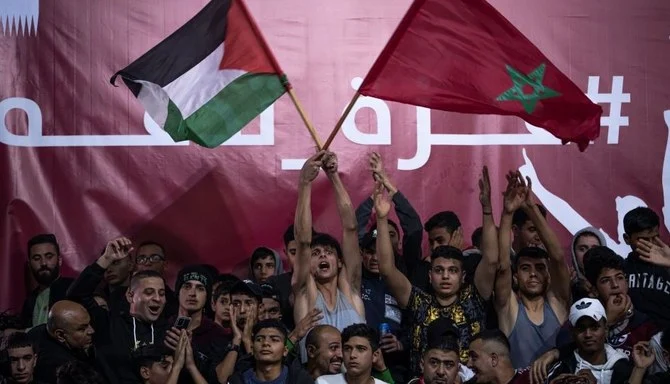
This World Cup has also often been about one country that is not there. At every single game featuring an Arab side, and plenty others beside, the Palestinian flag was there. It is a political symbol and a defiant message that the Arabs will not forget or ignore what is happening to the Palestinians in the diaspora and under occupation. As an even more brutally right-wing coalition is about to take power in Israel, this message should be carefully noted in the US and European capitals. Palestine still matters.
Israeli hasbaristas were also caught out. Having belittled and mocked those who claimed otherwise, they discovered that, despite the normalization deals, Arabs are not willing to gloss over Israel’s crimes and oppression. Time and time again, Israeli journalists, while trying to pretend everything was all lovely and wonderful with their newfound Arab friends, found that “free Palestine” was pushed back in their faces. Many locals snubbed their requests for interviews.
” A World Cup in the Arab world has brought some cheer to a region that has been hit hard by wars and other crises. “
Chris Doyle
Palestinian armbands and keffiyehs were being worn at nearly every match by huge numbers of fans. The sheer arrogance of believing that a state could oppress millions of people and that all would be peace and happiness was exposed as the nonsense it is. The Moroccan players had no hesitation in raising the Palestinian flag after their wins over Spain and Portugal.
Many Arabs also expressed admiration for the courage of the Iranian team after the players refused to sing their national anthem ahead of their opening match against England. This points to the widespread sympathy many Arabs feel toward Iranians, notably currently the women, who are struggling for their freedoms.
The Western media has been quick to point out all that was wrong with this World Cup. It is about time it also highlighted what has gone right. For all the criticisms of Qatar in the run-up to the cup over issues such as workers’ rights, one of the key elements of its bid has been fulfilled. Football in the region has been the winner. The atmosphere has been considerably warmer than many expected, with largely good-natured relations among fans of all countries. It seems that rival fans have not needed to be segregated, showing the festival-like atmosphere. Fan violence does not seem to have featured. The largest numbers of fans, of course, came from the Arab world, with Saudi Arabia providing the largest number from a single country.
Many outside the region were dismissive of the claims that football mattered in the Middle East. One leading commentator contemptuously told me, while on the BBC, that Qatar did not have a footballing heritage. Yet the region should never have been ignored. A World Cup in the Arab world has brought some cheer to a region that has been hit hard by wars and other crises, and whose peoples have not had much to celebrate in recent years.
Chris Doyle is director of the Council for Arab-British Understanding, in London. Twitter: @Doylech
Disclaimer: Views expressed by writers in this section are their own and do not necessarily reflect Arab News’ point of view
source/content: arabnews.com (headline edited)
_____________
Palestinians watch the World Cup quarterfinal between Morocco and Portugal in Gaza City, Saturday, Dec. 10, 2022. (AP Photo)
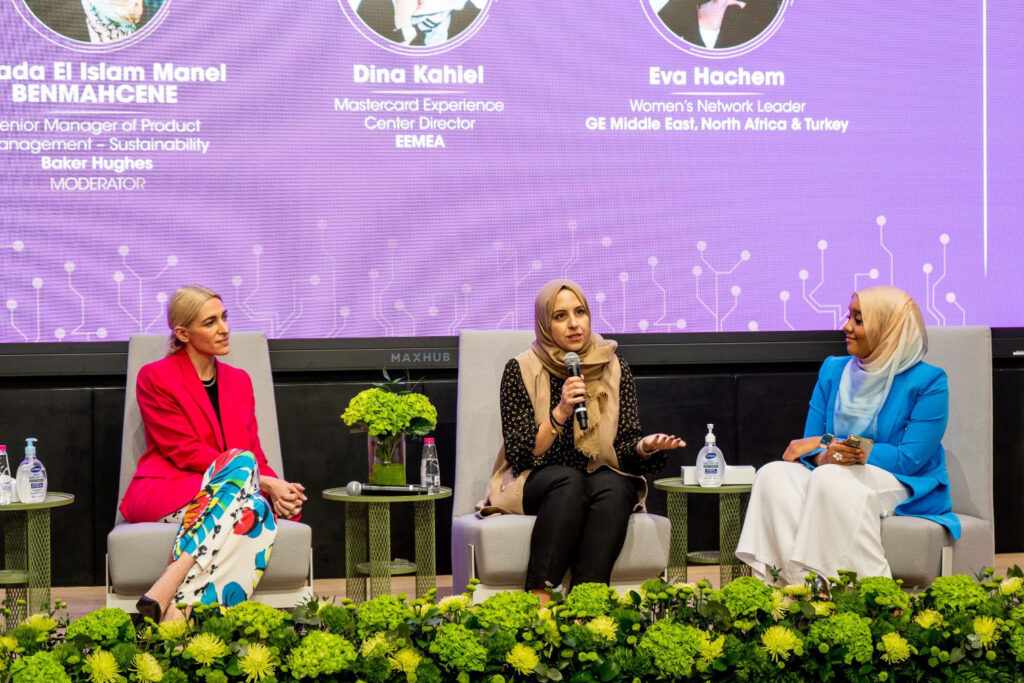
Ohood bint Khalfan Al Roumi, Minister of State for Government Development and The Future, honoured the winners of the Women in Tech MENA Awards, during a ceremony held in partnership between the Sharjah Research, Technology and Innovation Park (SRTIP) and Women in Tech.
The award, which is one of seven regional awards covering various areas of the globe, celebrates talented women from around the world who innovate, inspire and transform the technology sector.
Held under the theme, “Women in Green”, the event was attended by Hussain Al Mahmoudi, CEO of STRIP, and several leading experts, entrepreneurs and the award’s female nominees.
The awards were introduced by Ayumi Moore Aoki, Founder and CEO of Women in Tech, who affirmed the need to increase the presence of women in technology.
The eight winners were:
-The Uplifting Syrian Women Initiative in the Most Impactful Initiative Award;
-Fatma Atawna, CEO of Siraj in the Best Ally Award;
-Aida Kandil, CEO of MyTindy in the Start-up Award;
-Wesam Sarhan, Co-Founder of Colibri Care in the ID and E Disruptor’s Award;
-Mirna Arif, Country General Manager of Microsoft in the Global Leadership Award;
-Dr. Fatmah Boothman, Associate Professor at the King AbdulAziz University in the Lifetime Achievement Award;
-Amna Usman Choudhry, Financial Economist and Strategist for Blockchain at Metaverse and Web 3.0 in the Woman in Web3 Award
– Uditi Sharma, Founder and Executive Director in the Aspiring Teen Award.
Al Roumi highlighted the key role of women in shaping the future of technology, noting that the UAE has devoted significant attention to empowering women to actively engage in shaping the future of vital sectors, especially the technology sector.
She also highlighted the UAE’s pioneering experience in empowering Emirati women in technology, as they account for 56 percent of Emirati government university graduates in science, technology, engineering and mathematics (STEM).
Al Roumi added that the Women in Tech Award recognises women who lead the technology sector and inspires other women to actively participate in this vital sector, stressing that the partnership between the Sharjah Research, Technology and Innovation Park and Women in Tech is a leading model of global partnerships aimed at encouraging women to participate in various fields of technology.
She also congratulated the winners of the award’s eight categories and commended their achievements, which reflect the overall capacities of women and inspires other women to strive for excellence in the technology sector.
In his welcome address, Al Mahmoudi said, “Hosting the Women in Tech MENA Awards is a milestone moment for us, because it reflects our deep commitment to gender equity and women’s empowerment. We are happy to say that more than 50 percent of the SRTIP workforce are women, some holding senior positions in technology, engineering and labs. Our commitment is also evident in our scheme for women entrepreneurs at SRTIP, under which we grant them subsidies and special benefits.”
“To make the Women in Tech MENA Awards a memorable event, we have lined up high-profile speakers who will enhance the prestige of the event with their insights and shared experiences. The keynotes and panels will offer a rich harvest of ideas, which would go a long way in promoting women’s empowerment in the UAE and the region,” he added.
Panel discussions held before the presentation of the awards provided interesting insights into the role of women in technology. The panel on “Gender equity and climate change, an intersectional approach to sustainability” explored how women and other underserved groups are disproportionately impacted by the global climate crisis, and are uniquely positioned to help achieve sustainability. The panel’s participants were Nadia Mannell, General Partner at Seed South Capital; Geraldine Wessing, Chief Political Analyst at Shell; Cecelia Carlsward, Founding Partner at Violet Hill and Co, and Tatiana Abella, Founder and Managing Director of Goumbook FZE.
A second panel on “Driving inclusion through innovation” discussed how the MENA region is driving innovation while considering human diversity and building inclusive economies.
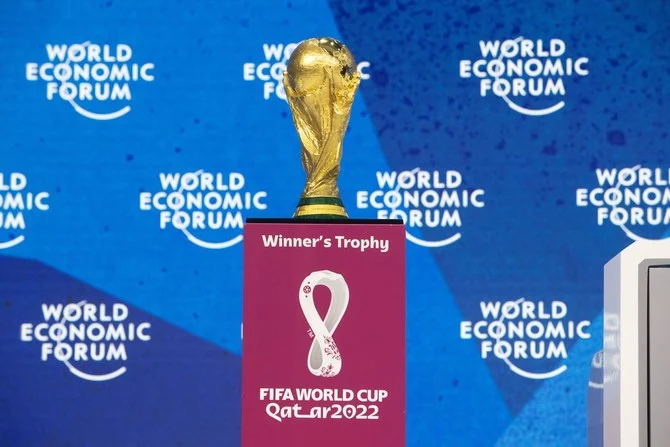
With the biggest show in football 24 hours away, Arab News takes a look at the 12-year journey to make Qatar 2022 happen.
The first FIFA World Cup to take place in the Arab world will kick off Sunday in Doha when the host nation take on Ecuador in the tournament’s opening match at Al-Bayt Stadium.
The journey from winning the nomination on Dec. 2, 2010 to the big kick off on Nov. 20, 2022 has not been without challenges and controversies, but for the teams and fans who have landed in Qatar, and for millions around the world, the moment of truth has arrived.
As in Russia four years ago, there will be four Arab nations taking part in the tournament. This time around they are Qatar, Saudi Arabia, Morocco and Tunisia.
Qatar and Saudi Arabia are among a record six Asian Football Confederation members taking part, along with Japan, South Korea, Iran and Australia.
Of the Arab nations, Qatar have an immediate chance to get three points on the board against Ecuador — arguably the easiest of their three matches in group A, which also includes the Netherlands and Senegal.
A win would leave the Asian champions requiring perhaps just a single point from their two other matches to become only the fourth Arab nation — after Morocco (1986), Saudi Arabia (1994), and Algeria (2014) — to reach the knockout stages of a World Cup.
Saudi Arabia have the toughest start of the Arab nations, taking on Argentina in their Group C opener, before facing Poland and Mexico in two matches that are only marginally less difficult.
A strong Morocco squad will have high hopes of causing an upset in Group F against Belgium Canada and Croatia, while Tunisia were dealt a tough hand when placed with champions France, Denmark and Canada in Group D.
While the Arab teams might struggle to progress beyond the group stages, it is a mission they should embrace. Players like Qatar’s Akram Afifi and Almoez Ali, Saudi’s Salem Al-Dawsari, and Tunisia’s Hannibal Mejbri could introduce themselves to a whole new audience.
Others, like Seville keeper Yasssine Bounou, and his Moroccan colleagues Achraf Hakimi of PSG and Hakim Ziyech of Chelsea are already familiar to audiences worldwide.
Standout matches for the Arab contingent will be Qatar’s showdown with the Netherlands on Nov. 29; Saudi’s second Group C fixture against Poland, which could provide their best chance of an upset; Tunisia’s clash with champions France; and Morocco’s final Group F match against Canada, potentially a match in which they could seal their progress to the round of 16 if they already have points on the board.
Elsewhere, there will be titanic clashes (Spain vs. Germany), international “derbies” (England vs. Wales), politically charged matches (Iran vs. USA) and revenge missions (Ghana vs. Uruguay)
Among the favorites for the trophy will be France and Brazil, both of whom have named fearsome squads, as well as Euro 2020 finalists England and South American champions Argentina.
The latter have become many people’s sentimental favorites, with a swell of emotion building behind Lionel Messi’s bid to end a glorious career with the trophy he craves the most.
Win it on Dec. 18, in what would be the Argentine maestro’s 1000th professional game, and the title of greatest footballer of all time will no longer be debated.
Messi’s rival for the title of greatest player of his generation, Cristiano Ronaldo, will also be playing in what is surely his last World Cup. And while things have not gone smoothly for the Portugal captain at Manchester United this season, his army of fans will no doubt be watching to see if he can pull one last rabbit out of the hat.
With Messi and Ronaldo walking into the sunset at the end of Qatar 2022, the position of world’s best player is up for grabs. The contender most likely to fill the void is Kylian Mbappe.
Already a world champion, the Frenchman has long been many people’s choice as the world’s “next” best player, and though he has continued to excel for club and country, the fact that he has remained at Paris Saint-Germain and, crucially, failed to land the coveted Champions League for them, means the jury is still out.
And then there is Neymar. This World Cup could well be the final chance for the Brazilian teammate of Messi and Mbappe at PSG to prove that he belongs among the greats after two World Cups plagued by injuries and underwhelming performances.
Other veterans including Ballon d’Or winner Karim Benzema, Uruguay’s Luis Suarez, Poland’s Robert Lewandowski and Croatia’s Luka Modric will also have the chance to bid their fans a fond farewell at the highest level.
Among a new generation of players to watch in Qatar are the likes of Brazil’s Vinicius Jr, Raphinha and Bruno Guimaraes; France’s Eduardo Camavinga and Aurelien Tchouameni; Uruguay’s Darwin Nunez; Germany’s Jamal Musiala; and the brilliant 19-year-old Spaniard Pedri.
The stage is set, the curtain rises on Sunday night.
source/content: arabnews.com (headline edited)
__________
The first FIFA World Cup to take place in the Arab world will kick off Sunday in Doha when the host nation take on Ecuador in the tournament’s opening match. (Reuters/File Photo)