Arabs & Arabian Records Aggregator. Chronicler. Milestones of the 25 Countries of the Arabic Speaking World (official / co-official). AGCC. MENA. Global. Ist's to Top 10's. Records. Read & Enjoy./ www.arabianrecords.org
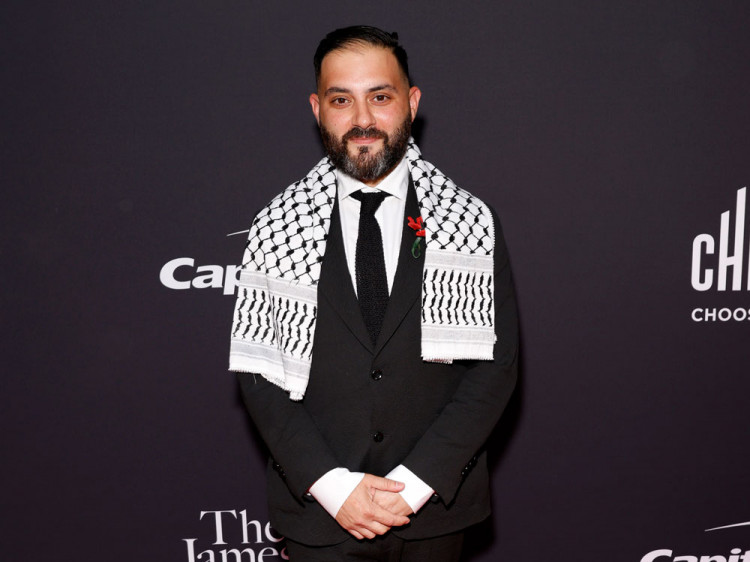
Palestinian chef Michael Rafidi has been honored with the James Beard Awards in Chicago, winning the title of Outstanding Chef 2024.
The culinary world is full of awards and accolades that honor talented chefs, and among them is the James Beard Awards. Often referred to as the “Oscars of the food world”, it is one of the highest honors in the industry. This year, Palestinian chef Michael Rafidi, the owner of Albi — a Michelin-starred restaurant in the capital of the United States, Washington, D.C. was titled winner under the category of Outstanding Chef.
Previously, Rafidi’s restaurant garnered a Michelin Star in 2022, an award that is only granted to restaurants that are able to present an exceptional dining experience using top-notch ingredients consistently. Rafidi’s food encapsulates the rich flavors of his Palestinian heritage, with each dish presenting remnants of his culture.
Chef Micheal Rafidi’s caption on his Instagram post, or speech as he called it included a poignant homage to his grandfather who was a chef in Washington for decades, and a big source of inspiration to delve into his restaurateur journey. “I accepted this award on the shoulders of my Palestinian ancestors, my grandparents and my mother. Through it all, they held onto their love of food, a taste of our lineage that told stories of love, resilience and hope,” stated Rafidi. He added, “As I grew in my career, I realized my Palestinian identity would become my purpose for the restaurants we would build, the menus we would create, and the food we would serve. Ending the caption with, “In case I wasn’t clear on stage. This award is dedicated to the people of Palestine.”
Regarding the win, Ayman, the Palestinian-Egyptian news anchor at MSNBC posted, “Now after last night’s James Beard Awards, Palestinian cuisine is not only recognized as part of the tapestry of America, it is celebrated among the very best cuisines in the world thanks to generations of Palestinians who are constantly pushing their food to new heights.”
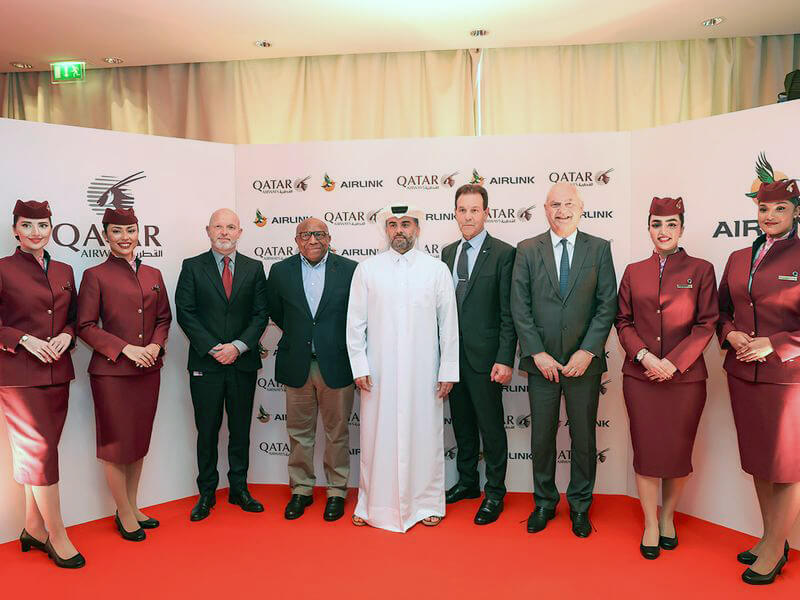
In a strategic move to expand its presence in Africa, Qatar Airways Group has announced the acquisition of a 25% stake in Airlink, a prominent regional carrier based in Southern Africa. This investment, revealed on August 20, 2024, aims to enhance the existing code-sharing partnership between the two airlines and bolster Qatar Airways’ growth strategy across the African continent.
Airlink, established in 1992, has a robust network covering more than 45 destinations in 15 African countries. With a fleet of over 65 jetliners, it serves various cities throughout Southern Africa, as well as destinations in Madagascar and St Helena Island.
The collaboration is expected to bring mutual benefits, including network expansion, increased capacity, and extended marketing reach. Airlink Chief Executive Rodger Foster highlighted the significance of the deal, saying, “Having Qatar Airways as an equity partner is a powerful endorsement of Airlink and echoes our faith in the markets we currently serve and plan to add to our network.”
The partnership will also align both carriers’ loyalty programs – Qatar Airways Privilege Club and Airlink Skybucks – offering enhanced benefits to customers.
Qatar Airways, which currently flies to 29 destinations in Africa, has been actively pursuing its Africa growth strategy since 2019. The airline has been expanding its presence on the continent, adding new destinations such as Abidjan, Abuja, Accra, Harare, Kano, Luanda, Lusaka, and Port Harcourt to its network, while also resuming services to Cairo and Alexandria.
This investment follows Qatar Airways’ previous strategic moves in Africa, including acquiring a 60% stake in a new multi-billion-dollar international airport being built near Kigali, Rwanda, in 2019.
As part of its broader expansion plans, Qatar Airways has also announced increased flight frequencies to popular tourism destinations. Starting October 27, the airline will add an eighth daily flight to London, bringing the total to 56 weekly flights. Additionally, it plans to increase services to Male (Maldives), Miami (US), and Tokyo (Japan) during the 2024-2025 winter season.
This latest acquisition underscores Qatar Airways’ commitment to strengthening its position in the African aviation market and capitalizing on the continent’s growth potential.
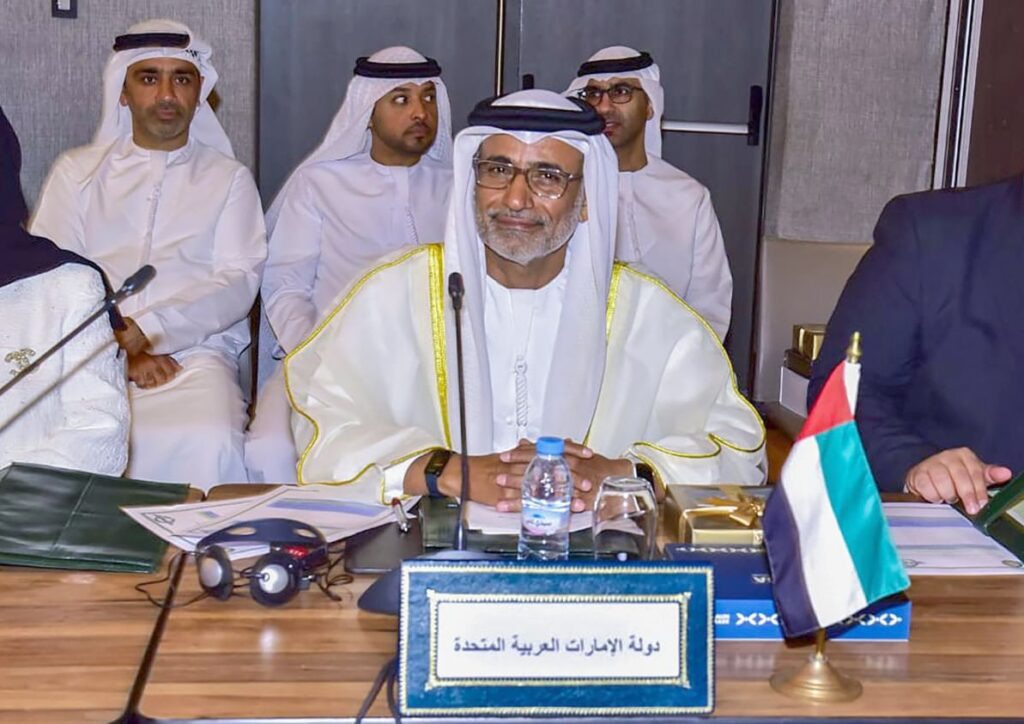
The United Arab Emirates, represented by the General Civil Aviation Authority, won re-election to the Executive Council of the Arab Civil Aviation Organization for a period of two years, by unanimous vote.
This came during the elections held during the organization’s General Assembly, which was held in Rabat, Morocco, on July 3 and 4.
His Excellency Abdullah bin Touq Al Marri, Minister of Economy and Chairman of the Board of Directors of the General Civil Aviation Authority, said : “Thanks to the directives of the wise leadership, the UAE is witnessing a new achievement added to the UAE civil aviation sector through its re-election to membership in the Executive Council of the Arab Civil Aviation Organization.”
He explained that this achievement is a confirmation of the strong and distinguished partnership that links the UAE with its brothers in the Arab countries, and an indicator of confidence in the strength and position of the civil aviation sector as a global aviation center.
His Excellency added: “There is no doubt that civil aviation is one of the strong files on the Arab cooperation agenda, which has achieved progress in a number of key files. The UAE is keen to support all efforts that would enhance and develop joint Arab action and advance it to more advanced levels that serve the future development visions of Arab countries and enhance the path of economic growth at the regional level.”
For his part, His Excellency Saif Mohammed Al Suwaidi, Director General of the General Civil Aviation Authority, expressed his pride and honor in achieving this accomplishment, which came as a result of the wise vision of the wise leadership and an affirmation of the country’s position as a major and distinguished driver in this sector at the Arab and international levels.
His Excellency explained that the UAE is committed to supporting all efforts aimed at enhancing joint Arab action, especially in the civil aviation sector. The country will continue to support the initiatives and efforts of the Arab Organization, and work with the elected Chairman of the Executive Council to support the strategic and administrative plans of the organization, in a way that achieves benefit and ensures a safe and sustainable future for the Arab aviation sector, enhances the weight and strength of the Arab Group in the International Civil Aviation Organization (ICAO), and contributes to raising the Arab civil aviation sector to a more advanced and prosperous position.
It is noteworthy that the Executive Council of the organization consists of nine members elected by the General Assembly from among the candidates of the member states of the organization for a period of two years, and is responsible for the decisions and recommendations of the organization.
Some of the specimens he has gathered are held in the British Museum in London,” Sara told Arab News.
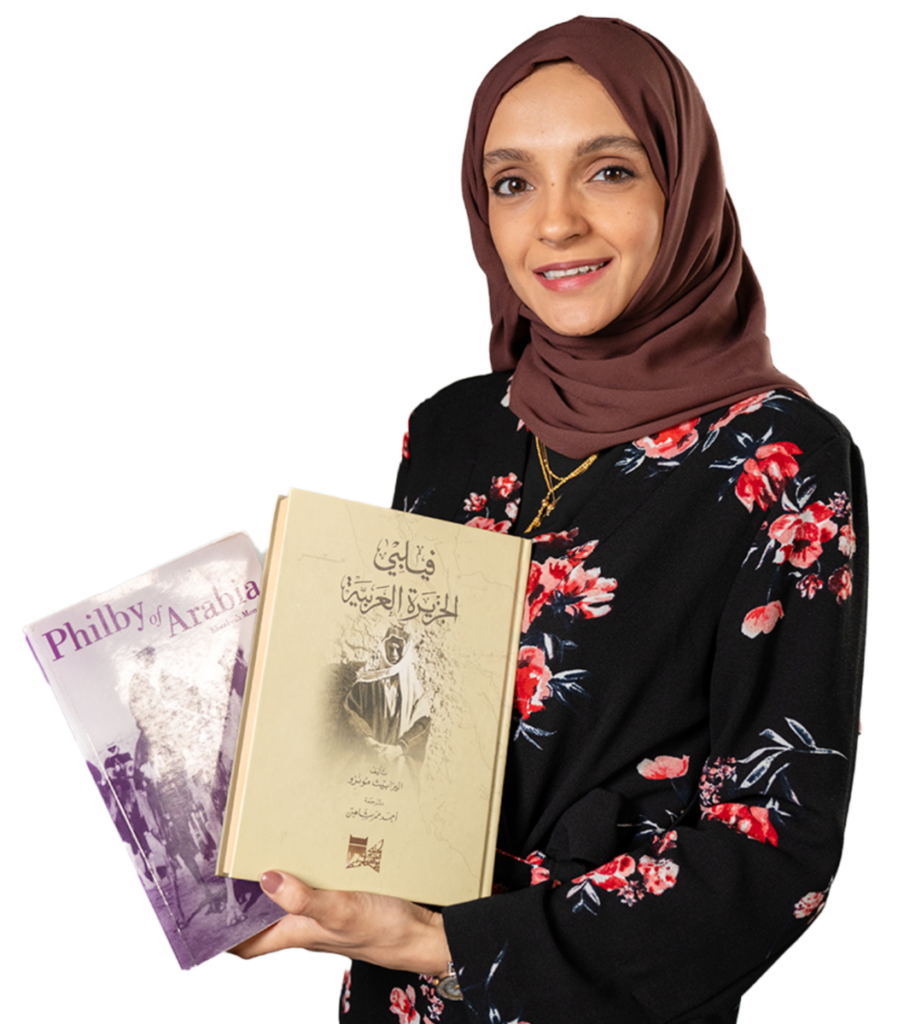
As the granddaughter of the renowned explorer Abdullah Philby, Dr. Sara Faris Abdullah Philby’s decision to pursue her medical education in Saudi Arabia echoes the pioneering spirit that defined her grandfather’s historic exploration of the Arabian Peninsula.
In honoring her family’s heritage, Sara follows in the footsteps of Sheikh Abdullah Philby, whose multifaceted contributions continue to inspire generations.
“My grandfather led a truly remarkable life,” Sara told Arab News. “From his legendary expeditions to his conversion to Islam, his influence extends far beyond our family.”
She said he has had a profound impact on her life: “Simply contemplating his image fills me with warmth and optimism. My grandfather, Abdullah, possessed a rare combination of traits — uniqueness, dedication, and punctuality — that set him apart. As an explorer and writer, he navigated uncharted territories with grace and determination, leaving an indelible mark on history.”
Who was Abdullah Philby?
Harry St. John Bridger Philby, an explorer and Arabist, received his education at Westminster School and Trinity College, Cambridge. After joining the Indian Civil Service, where he mastered several languages including Urdu, Punjabi, Baluchi, Persian, and Arabic, Philby was recruited to Basra in Mesopotamia (modern Iraq) in 1915 by Percy Cox. His service in Baghdad and Basra eventually led to a mission to meet Ibn Saud in Riyadh, a journey across Arabia for which he was awarded the Royal Geographical Society Founders Medal.
HIGHLIGHTS
• Harry St. John Bridger Philby, or Sheikh Abdullah, left behind a legacy as one of the greatest Arabian explorers.
• Over three decades, he embarked on extraordinary journeys, notably crossing the Empty Quarter in 1932, a feat that tested the limits of endurance.
• His granddaughter Dr. Sara Philby pursued her education in Alfaisal University in Riyadh. • After completing a bachelor’s degree in medicine and another in surgery, she was drawn to the intricate world of embryology.
From their first encounter, Philby was captivated by the magnetic personality of Ibn Saud, and the two formed a friendship that lasted 36 years. Despite his involvement in business and writing, Philby’s true passion lay in exploration. Over three decades, he embarked on extraordinary journeys, notably crossing the Empty Quarter in 1932, a feat that tested the limits of endurance.
Traveling by camel and later by Land Rover, Philby meticulously documented his expeditions, recording place names, temperatures, compass bearings, and more. His scholarly contributions earned him high honors from academic societies worldwide.
“He lived to witness a golden chapter in his life, marked by numerous creations of detailed maps, priceless books including unmatched details of his journeys, and contributions to several fields such as history, politics, and wildlife. Some of the specimens he has gathered are held in the British Museum in London,” Sara told Arab News.
As a trusted advisor to Ibn Saud, Philby’s insights and candid opinions were valued by the monarch. His conversion to Islam in 1930 further strengthened their bond, and Philby was bestowed the name Sheikh Abdullah.
In 1960, at the age of 75, Philby died during a visit to Beirut, leaving behind a legacy as one of the greatest Arabian explorers. He was buried in the Muslim graveyard at El-Bouchara, with his son Kim’s inscription on his grave marking his profound impact on exploration and scholarship.
For me, honoring my grandfather’s legacy is not merely a goal but a life purpose.
Dr. Sara Faris abdullah Philby, Alfaisal University graduate
“(He) left behind a spectacular life story and a loving family, led by my beloved uncle Khaled Philby and my beloved father Faris Philby, who would adore him for the rest of time,” Sara said.
His involvement in Arabia during World War I, his close relationship with Ibn Saud, and his pivotal role in the Arab Revolt and the creation of Saudi Arabia highlight his enduring influence on the region’s history and culture.
Sara explained that her grandfather’s legacy continues to influence her approach in life and her career in medicine: “His interests in exploration and travel might differ from my academic interests in medicine and clinical embryology. However, that doesn’t diminish his huge impact on my educational decisions.
“With his legacy as a beacon, I am motivated to continuously push myself to new heights, embracing challenges and opportunities for growth along the way,” she added. “His love for history, the desert, maps, and wildlife will forever capture my heart, despite my academic pathway heading somewhere different.”
Sara pursued her education in Alfaisal University in Riyadh. After completing a bachelor’s degree in medicine and another in surgery, she was drawn to the intricate world of embryology.
“My interest in this field stemmed from a personal fascination with reading books on embryology and reproductive sciences,” she noted. “Moreover, I was deeply inspired by the noble goals of this discipline, particularly in addressing infertility and assisting couples in starting families according to God’s will.”
Sara’s religious and cultural background plays a pivotal role in shaping her career aspirations. “As a Muslim, my faith serves as a guiding light,” she affirms. “Islam’s teachings emphasize compassion and kindness, influencing my academic pursuits. The profound references to embryology in the Holy Qur’an have deepened my interest in this field.
“The Holy Qur’an beautifully elucidates the stages of human embryonic development in multiple verses,” she noted. “This further solidified my conviction to pursue a career in clinical embryology and reproductive biology.”
Following her passion, this year Sara graduated from Alfaisal University with a master’s degree in biomedical sciences, specializing in clinical embryology and reproductive biology, achieving first honors.
Speaking about the enriching experience at the university, she said: “Alfaisal University has been an integral part of my life for many educationally fruitful years … I am hopeful for its continued success and prosperity in the future.”
Her journey through academia had its own challenges: “The rigorous demands of the field required unwavering commitment and patience. However, these experiences have shaped me into the person I am today, instilling in me a sense of resilience and determination.
“Embrace the journey, stay true to yourself, and remain dedicated to your goals,” she advises aspiring professionals. “Believe in your abilities and seize the opportunities that come your way.”
Balancing personal aspirations with her family’s legacy is a central theme for Sara. “I place great importance on aligning my personal aspirations with the expectations associated with my family’s legacy,” she explains. “By staying true to myself and honoring my family’s heritage, I find harmony in pursuing my goals.”
As she navigates the complexities of academia and embarks on her own path of exploration, Sara remains steadfast in her commitment to honoring the rich heritage passed down to her by her grandfather.
“For me, honoring my grandfather’s legacy is not merely a goal but a life purpose,” Sara said.
source/content: arabnews.com (headline edited)
_____________
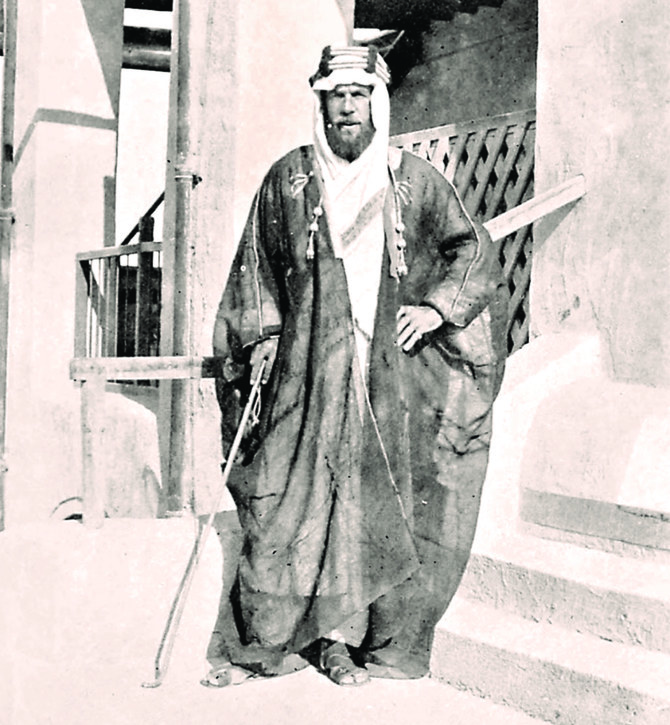
The British renowned explorer Abdullah Philby, or Philby of Arabia. / In honoring her family’s heritage, Sara Philby follows in the footsteps of Sheikh Abdullah Philby, whose multifaceted contributions continue to inspire generations. Supplied/AN photo by Abdulrhman Bin Shalhoub)
Dr. Sara Faris Abdullah Philby, Alfaisal University graduate
Sharjah Ruler collected 8,000 rare titles documenting French cultural history.
His Highness Sheikh Dr. Sultan bin Muhammad Al Qasimi, Member of the UAE Supreme Council and Ruler of Sharjah, is a leading Arab scholar and historian who has made contributions to documenting France’s cultural history from an Arab perspective.
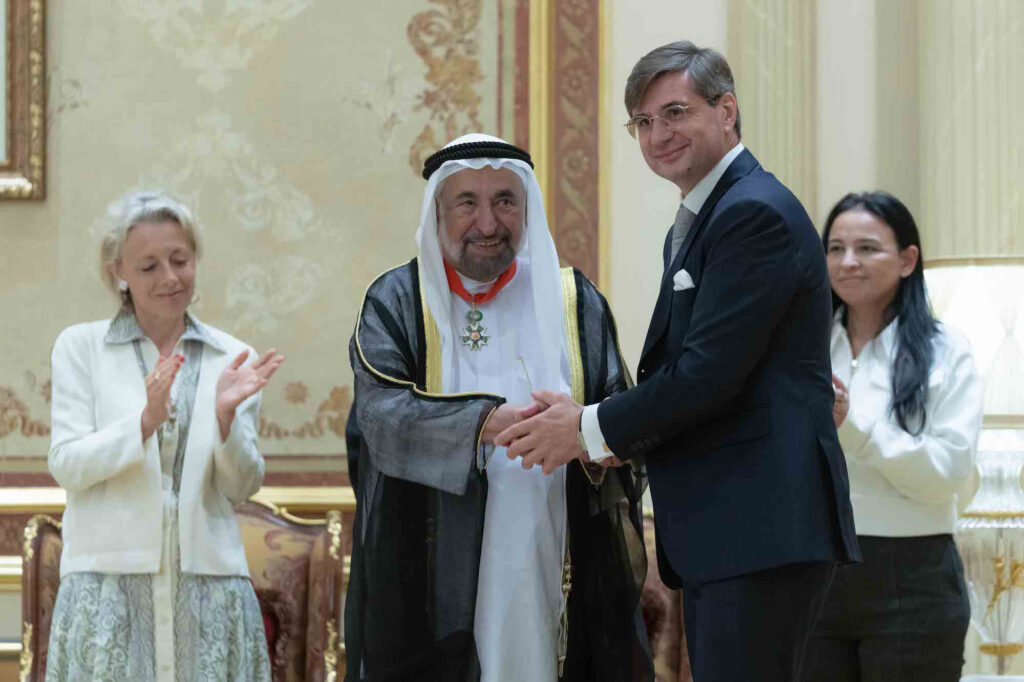
The historian has been recently conferred the title of The Legion of Honour, with the rank of Commander – one of the highest national honours in the Republic of France in recognition of his efforts to strengthen cooperation relations between the French Republic and Sharjah in a variety of fields, particularly culture. The honour was granted to the Sharjah Ruler by His Excellency Emmanuel Macron, the French President, and presented by Nicolas Niemtchinow, Ambassador of the French Republic to the UAE.
His Highness is currently developing the chapters of a comprehensive work, the first of which is titled ‘The Century of Lights.’ Set in the 18th century – the chapter focuses on the era that established the foundations of Western society and examines the pivotal role played by Denis Diderot, the founder of the Encyclopédie, in collaboration with D’Alembert, as well as the contributions of liberal philosophers of that century such as Jean-Jacques Rousseau and Voltaire.
The Arab historian navigates the remainder of the 18th and 19th centuries in the following two chapters, before penning the fourth chapter titled, ‘Controversial Issues on Globalisation and Cultural Exception’ detailing everything that had happened in relation to globalisation and France’s role in it.
“France, at the helm of the European Union, began vigorously defending the idea of cultural exception; it has prevailed. From my end, I will publish this book in Arabic to introduce all Arabs to French culture,” His Highness said.
“In 2003, the French Republic conferred the ‘Order of the French Republic for Arts and Letters,’ with the rank of ‘Knight Commander’ upon me. I saw this honour as a mandate to continue cultural giving, and I discussed the Republic of France’s pioneering role in intellectual enlightenment and civilised communication, as well as its contributions to the cultural field, translation, and literature, and the spread of the concepts of freedom and justice,” His Highness added.
From that day forward, the Ruler of Sharjah initiated the acquisition of available written records that document the cultural history of the French Republic, using the titles of books in the Egyptian Scientific Institute in Cairo. “I collected nearly 8,000 rare titles in French and decided to establish a scientific institute for those books in Sharjah, similar to the French and Egyptian Institute,” His Highness added, saying he donated his entire collection to the institute in Egypt after it was turned to ashes by a violent fire in December 2011.
The United Nations Educational, Scientific and Cultural Organization (Unesco) has recognised Oman’s rich cultural history by including two significant Omani cultural milestones in its list of anniversaries for 2024-2025. This recognition includes the 350th anniversary of the Jibreen Castle and the 150th death anniversary of renowned Omani historian and poet Humaid bin Mohammed bin Ruzaiq.
Since 1956, Unesco has been instrumental in commemorating historical events and eminent personalities of its member states, elevating their significance on a global platform. Such celebrations are pivotal in fostering international understanding, enhancing cultural exchanges and promoting peace.
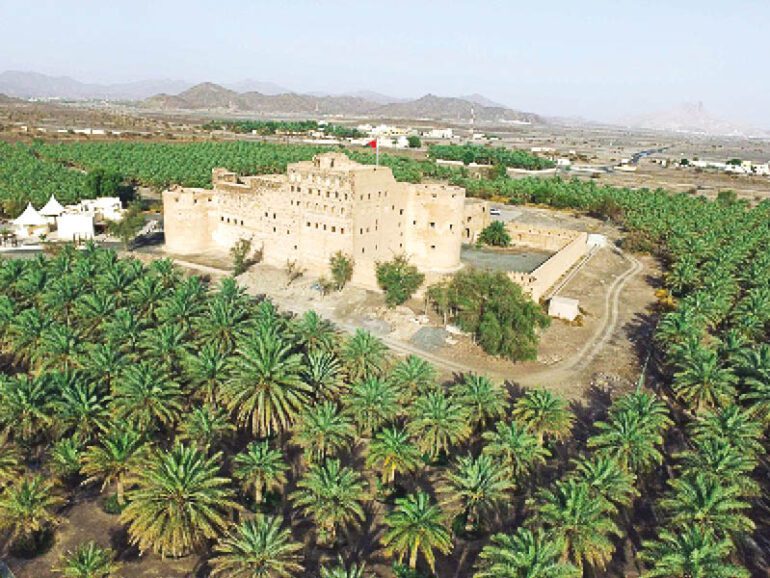
An architectural gem of the 17th century, Jibreen Castle marks its 350th anniversary of construction under the reign of Imam Belarab bin Sultan al Yarubi. Completed in 1675, the castle is a testament to Oman’s architectural prowess, built by the era’s finest craftsmen and architects. Beyond its architectural magnificence, Jibreen Castle was a centre of knowledge and learning, and served as a residence for the imam and the seat of his governance.
It flourished as an educational hub, attracting scholars and educators in various fields such as jurisprudence, literature, history, astronomy, mathematics, medicine and chemistry. It produced over 40 distinguished scholars and writers under Imam Belarab bin Sultan’s patronage.
In addition to Jibreen Castle, Unesco commemorates the 150th anniversary of the passing of the 19th century Omani historian Ruzaiq. His contributions were monumental in documenting the historical phase from the rise of the Al Busaid dynasty to the end of Sayyid Said bin Sultan’s reign in 1856. His works, characterised by neutrality and meticulous research, provide invaluable insights into the European presence in the Indian Ocean and the Arab region. Ruzaiq’s writings are not only historical records but also serve as critical references for contemporary researchers in Omani history.
The inclusion of these two elements takes the total number of Omani contributions to Unesco’s celebration programme to eight. The sultanate has successfully highlighted six other Omani figures in the past, including linguist Al Khalil bin Ahmed al Farahidi in 2005, pharmacist Rashid bin Omairah al Hashimi al Rustaqi in 2013, polymath Sheikh Nour al Din Abdullah bin Humaid al Salmi and physicist Abu Muhammad Abdullah bin Muhammad al Azdi, known as Ibn al Dhahabi, in 2015, poet Nasser bin Salem al Rawahi, also known as Abu Muslim al Bahlani, in 2019, and the famed navigator Ahmed bin Majid al Saadi in 2021.
Unesco’s recognition of Omani cultural heritage underscores the sultanate’s significant contributions to the global cultural landscape, celebrating the rich tapestry of its history and the enduring legacies of its eminent personalities.
The King Salman Park Foundation Board of Directors announced the completion of the Abu Bakr Al-Siddiq Tunnel, a significant milestone that promises to enhance traffic flow and reduce congestion in Riyadh.
This tunnel, the first to be completed since the initiation of the King Salman Park project in the third quarter of 2021, represents a critical component of the extensive development efforts led by King Salman Bin Abdulaziz and the Crown Prince, which were first announced on March 19, 2019.
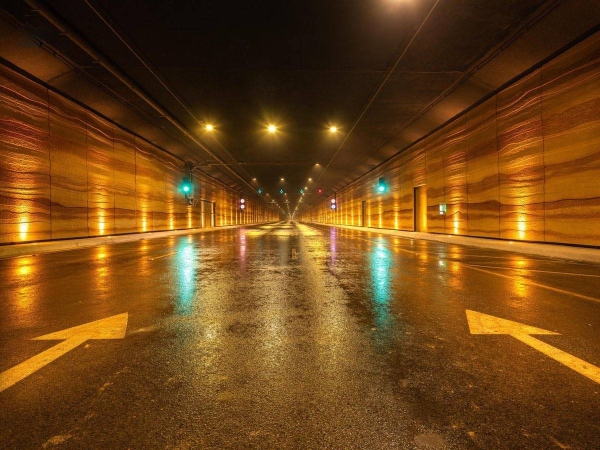
Spanning 2,430 meters from north to south beneath the expansive King Salman Park, the Abu Bakr Al-Siddiq Road Tunnel stands as one of the longest in the Middle East.
Its completion is a testament to the ambitious infrastructure development underway, including the construction of additional tunnels on Al-Oruba Road. Specifically, a new 1,590-meter tunnel will link with the existing 840-meter tunnel along Abu Bakr Al-Siddiq Road, creating a unified pathway designed to streamline vehicle movement.
Starting Thursday, Feb. 29, 2024, the tunnel will open to vehicles, offering three lanes in each direction and an emergency lane, all equipped with advanced traffic management and safety systems, including emergency services and evacuation routes.
The architectural design of the Abu Bakr Al-Siddiq Road Tunnel is inspired by the concept of Salmani architecture. It integrates seamlessly with the natural and geological aesthetics of Riyadh, featuring interior designs that mimic the city’s rock formations. The choice of sustainable materials and colors that complement the local environment underscores a commitment to ecological and aesthetic considerations.
King Salman Park, covering an area of over 16 square kilometers, is poised to significantly elevate Riyadh’s global stature, aiming to position the city among the world’s most liveable. The park will not only offer the largest green space in Riyadh but also an array of cultural, arts, entertainment, sports, recreational, commercial, and residential facilities. Highlights include the Royal Arts Complex, the Visitor Pavilion, and several museums, collectively redefining urban park experiences in the region.
By offering a diverse range of attractions and amenities, King Salman Park is set to become a pivotal destination for citizens, residents, and tourists alike, promising new lifestyle options that enhance the quality of life and offer memorable experiences.
Spanning 2,430 meters from north to south beneath the expansive King Salman Park, the Abu Bakr Al-Siddiq Road Tunnel stands as one of the longest in the Middle East.
As many as25,000 fragments of artifacts dating back the Islamic caliphates during the first two centuries of the Hijri Calendar, corresponding to the 7th to 8th centuries AD, have been discovered from the Jeddah Historic Area.
The announcement in this regard was made by the Jeddah Historic District Program (JHDP), in collaboration with the Saudi Heritage Commission. The archaeological discoveries were announced as part of the Historic Jeddah Revival Project, initiated by Crown Prince and Prime Minister Mohammed bin Salman..
According to a press release from the JHDP, the project of excavation started in January 2020 with exploratory studies and a geophysical survey. The goal was to unveil the historical significance of four key locations: Othman bin Affan Mosque, Al-Shona, a segment of the Northern Wall, and Al-Kidwah. This archaeological endeavor falls within the purview of the Jeddah Historic District Program. The project aims to preserve national antiquities and archaeological sites, uncover the rich history of the Kingdom, and promote Historic Jeddah as a cultural and tourist destination, in line with the Saudi Vision 2030.
According to the release, in November 2020, the archaeological survey and excavations yielded significant findings, including 11,405 pottery shards weighing 293 kg, 11,360 animal bones weighing 107 kg, 1,730 shells weighing 32 kg, 685 building materials weighing 87 kg, 187 glass artifacts weighing 5 kg, and 71 metal artifacts weighing 7 kg. The combined weight of these archaeological findings is 531 kg; and they constitute a valuable contribution to Saudi Arabia’s archaeological discoveries.
Archaeological investigation at Othman bin Affan Mosque revealed artifacts dating back the first two centuries AH and spanning different historical periods, notably, ebony pillars found near the Mihrab, analyzed and traced back to Ceylon (now Sri Lanka) Island in the Indian Ocean, which highlight the extensive trade connections of historic Jeddah.
According to the release, excavations at the same site also unveiled a collection of ceramic vessels and fragments, including high-quality porcelain. Some of the pieces are made in the Chinese province of Jiangxi and date back to the 16th-19th centuries AD, while older pottery fragments are from the Abbasid era.
The archaeological site at Al-Shona, dating back at least to the 19th century AD, has yielded numerous pottery shards, including porcelain and ceramic from Europe, Japan, and China, dating from the 19th to 20th centuries. Excavations at Al-Kidwah (Bab Makkah – Makkah gate) revealed parts of the Eastern Moat, which most likely date back to the late 18th century.
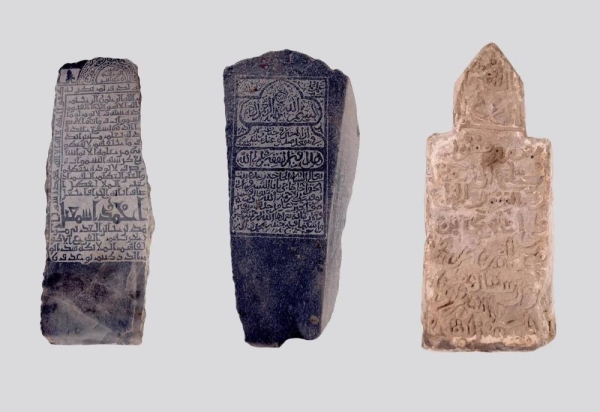
Tombstones made of Mangabi stone, marble, and granite were found at different locations within historic Jeddah. These tombstones contain inscriptions of names, epitaphs, and Qur’anic verses, dating back possibly to the 2nd and 3rd centuries AH. Specialists are currently studying them carefully.
The archaeological studies at the four historical sites involved excavations, radiocarbon analysis, soil analyses, geophysical surveys and scientific examination of artifacts. Samples of wood from 52 buildings were sent to international laboratories for identification and dating. Moreover, extensive international archival research led to the collection of over 984 historical documents, including maps and drawings of historic Jeddah. They are currently undergoing detailed study.
The Jeddah Historic District Program and the Heritage Commission collaborated to oversee the documentation, registration and preservation of archaeological artifacts found in Historic Jeddah. These discoveries were listed in the National Archaeological Register, and scientific databases were created to preserve the information related to the discovered artifacts.
The archaeological discoveries were announced as a part of the Historic Jeddah Revival Project, initiated by the Crown Prince and Prime Minister Mohammed bin Salman
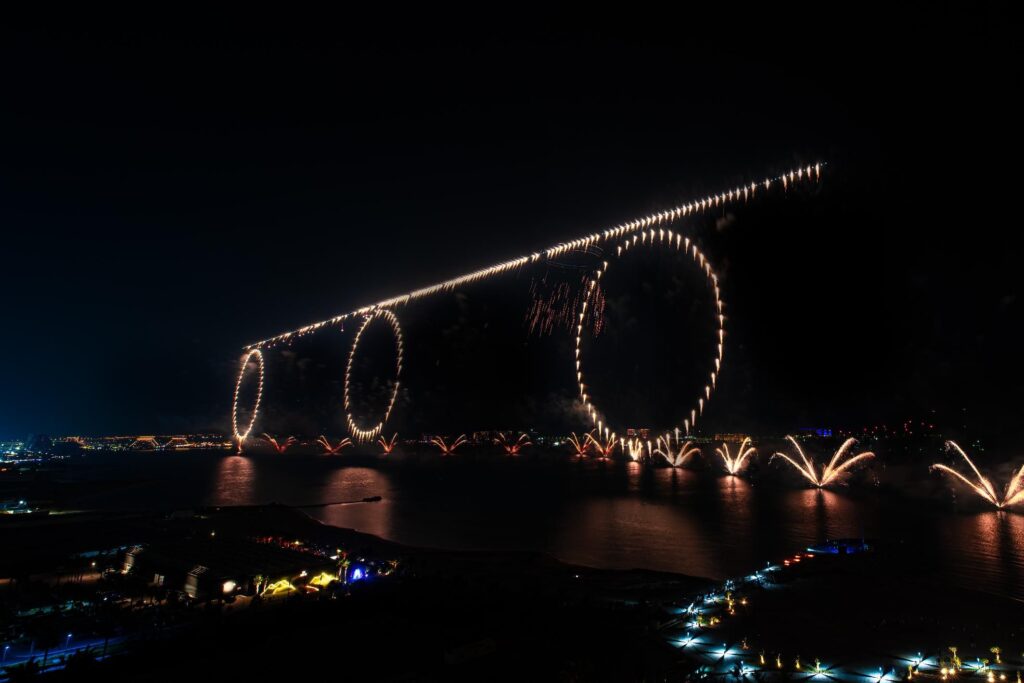
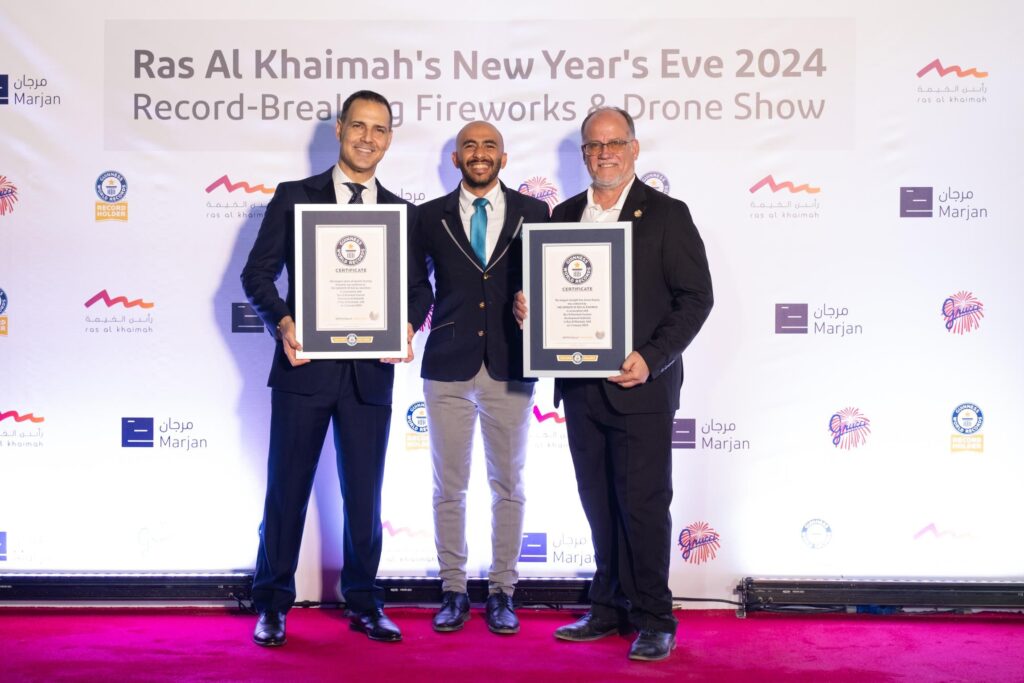
Ras Al Khaimah welcomed the New Year with yet another record-breaking eight-minute-long firework and drone display setting two new Guinness World Records titles in a stunning spectacle that lit up the skies along 4.5 km stretch of Ras Al Khaimah’s waterfront.
Already holding several Guinness World Records titles for its legendary fireworks New Year’s Eve shows, the Emirate has made history once again with a jaw-dropping show that broke the Guinness World Records titles for the ‘Longest chain of aquatic floating fireworks’ for a grand total of 5.8 km and the ‘Longest straight-line drones display’ for a total length of 2 km.
The mesmerising show featured groundbreaking techniques that have never been attempted before using a combination of 1,050 LED drones, a ‘carpet’ of aquatic floating fireworks and acrobatic pyro planes display inspired by Ras Al Khaimah’s natural wonders – the desert, the sea and the mountains – all choreographed to music specially composed for the celebration.
Raki Phillips, Chief Executive Officer of Ras Al Khaimah Tourism Development Authority, commented, “Breaking two more Guinness World Records titles has set the stage for an unforgettable night of celebration bringing together thousands of visitors and residents.”
“As we kick off the new year, 2023 has been an exceptional year for tourism in Ras Al Khaimah with numerous achievements and the highest ever annual number of visitors recorded, propelling the Nature Emirate further in attracting over 3 million annual visitors by 2030.”
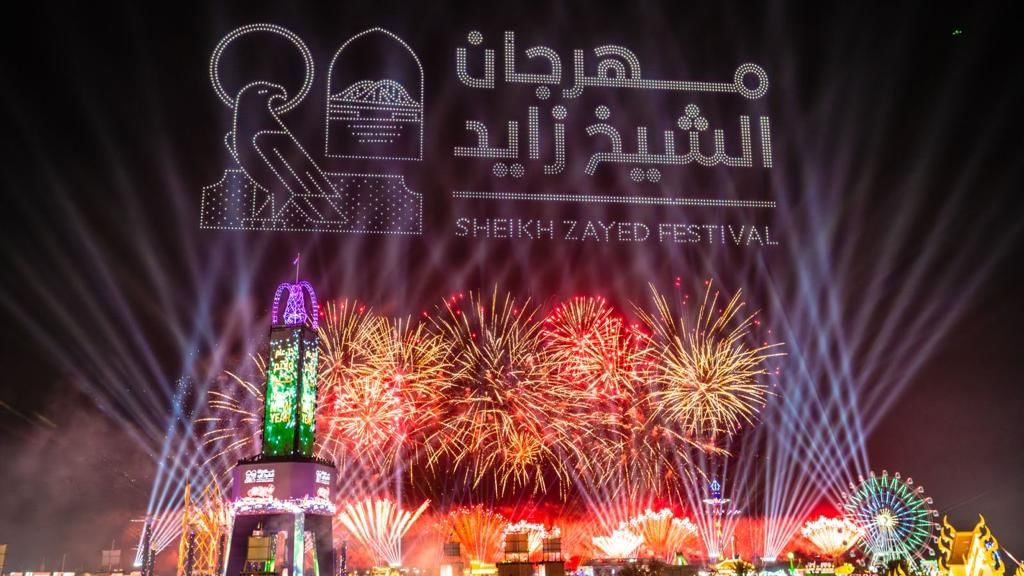
The Sheikh Zayed Festival in Abu Dhabi’s Al Wathba area celebrated New Year 2024 with exceptional shows and features, breaking 4 Guinness World Records. This included a spectacular fireworks display and a 60-minute drone show, along with international performances and programmes, creating a joyful and cultural atmosphere for visitors.
The Festival attracted a large international crowd to celebrate the New Year with events, activities, and performances. A 40-minute fireworks display broke 3 Guinness World Records, while over 5,000 drones created dazzling formations in the sky, setting another record for the largest aerial logo.
A unique laser show, a first in the region for these celebrations, captivated Festival visitors with vibrant colours and tranquil evening rhythms to mark the beginning of the New Year. Special shows took place at the Emirates Fountain, Glowing Towers Garden, and various pavilions, along with folklore performances from around the world.
The entire Festival grounds were bustling with visitors who came to experience the international celebrations, especially the Heritage Village which celebrated the New Year with Razfa and Ayalah dances, in addition to special entertainment events presented at the various pavilions. Children’s City joined the fun festivities with special activities for children, including plays and competitions at the children’s theatre, fun rides in Fun Fair City, the thrilling House of Horror, Al Forsan Sports Resort, and many other special features set to enrich visitors’ experience with a festive spirit in the early hours of the New Year.
Thousands of visitors gathered around the Emirates Fountain to enjoy the special performances, including Sparkling and Confetti shows, presented by authentic American, Mexican, and Ukrainian bands, in celebration of the New Year 2024.
The international pavilions featuring the countries participating this year welcomed a massive crowd from all over the world to enjoy the carnival shows and folklore performances. The International Civilisations Parade roamed through Festival grounds, infusing a unique spirit into the celebrations scattered across every corner of the Festival, giving thousands of bystanders the opportunity to witness the multicultural festivities in one place that brings together the civilisations of the world.
The Sheikh Zayed Festival offers new dining experiences from local and international restaurants, along with discounts and bonus surprises for shopping. The festival runs until March 9, 2024, with daily hours from 4 p.m. to midnight on weekdays and until 1 a.m. on weekends and public holidays, providing various events, activities, and competitions for all age groups.