Arabs & Arabian Records Aggregator. Chronicler. Milestones of the 25 Countries of the Arabic Speaking World (official / co-official). AGCC. MENA. Global. Ist's to Top 10's. Records. Read & Enjoy./ www.arabianrecords.org
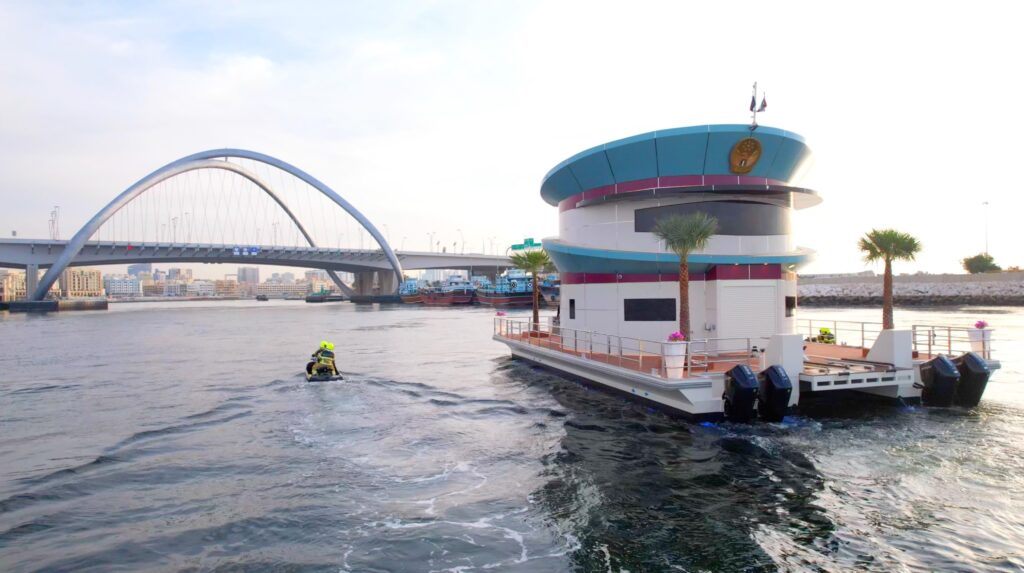
In a significant initiative that reinforces its leadership in safety infrastructure and innovation, Dubai Civil Defence has launched the world’s first sustainable mobile floating fire station.
The initiative reflects Dubai’s strategy to constantly enhance its fire and rescue services and raise environmental sustainability.
Engineered to provide high efficiency in safeguarding marine activities as well as enhanced coverage and swifter response times, the new mobile floating fire station is set to transform maritime emergency response mechanisms in Dubai. The first of its kind in the world to be sustainable and environmentally friendly, the floating structure is 70% more cost-effective than traditional marine fire stations.
Lieutenant General Expert Rashid Thani Al Matroushi, Director General of Dubai Civil Defense, said: “The deployment of the mobile floating fire station marks a significant step forward in our journey towards achieving global leadership in safety and security. The inauguration of this station not only demonstrates our dedication to generating innovative safety solutions but also aligns with our commitment to contributing to enhance Dubai’s overall infrastructure and services. A significant enhancement to our marine firefighting capabilities, this facility makes Dubai a frontrunner in reducing response times to maritime incidents, with a target response time of just four minutes.”
The launch of the floating station also increases the safety index in maritime navigation and water channels in Dubai with the use of innovative smart solutions, Al Matroushi added. The station’s strategic deployment will ensure comprehensive coverage across Dubai’s maritime and navigational zones that are crucial elements of the emirate’s geography, significantly enhancing Dubai’s responsiveness to accidents at sea, he noted.
Designed with sustainability at its core, the station embodies Dubai’s commitment to environmental conservation while maintaining the highest standards of safety and efficiency. With the capability to accommodate 16 individuals, the building stands out for its eco-friendly design. Operating as a mobile marine station, the floating structure eliminates the necessity for dedicated land space, resulting in both cost savings and a significant contribution to reducing carbon footprint and preserving green spaces. Additionally, the floating building showcases mobility with a notable speed of 11 miles per hour.
As Dubai continues to grow as a major hub for maritime trade and tourism, the floating fire station demonstrates the high priority the emirate’s leadership places on driving greater safety innovation and excellence. Through the implementation of innovative solutions and the latest technologies, Dubai Civil Defense continues to provide world-class fire and rescue services, contributing to Dubai’s vision of becoming a global leader in safety and security.
Egypt received on Wednesday a Guinness World Records’ certificate on Rod al-Farag Axis Bridge (Tahya Misr Bridge) passing over the Nile, for being the widest suspension bridge in the world at a width of 67.36 meters.
Guinness World Records website has not yet published news about the new Egyptian record-holder.
Regional Director for the Guinness World Records in the Middle East and North Africa region Talal Omar handed over the certificate to Mohamed Mohsen Salah, President and CEO of Arab Contractors company.
President Abdel Fatah El Sisi attended Wednesday the opening of Rod el Farag Axis Bridge, int the presence of Prime Minister Moustafa Madbouli, Presidential Adviser for National and Strategic Projects Sherif Ismail, Transport Minister Kamel el Wazir and a number of high-ranking state officials.
The Arab Contractors, a leading construction company in the Middle East and Africa, officially requested that Rod El-Farag Axis sets a record in the Guinness Book of World Records, said Ahmed Makled, chief executive manager of B Premium, the official partner of Guinness Records in Egypt.
Rod El-Farag Axis (TahyaMisr Bridge) links areas in northern and eastern Cairo with west Cairo. The Egyptian government said that the bridge, which aims to ease traffic and reduce commuting time, is the widest over a waterway.
Makled said that the relevant minimum limit set by Guinness is 65.235 meters, hoping that the bridge will meet other requirements and conditions set by Guinnessto become the world’s widest bridge, replacing Canada’s Port Mann Bridge, which was considered the world’s widest.
Port Mann, which has a width of 65 meters, was opened to traffic in 2012. California’s Bay Bridge was then opened in 2013, to replace Port Mann as the world’s widest. The aforementioned San Francisco-Oakland Bay Bridge has a width of over 78 meters.
Makled said that the TahyaMisr Bridge will seek to enter the Guinness World Records in the coming few days after it is officially inaugurated.
The construction of the flyover bridge is 100 percentcompleted, said Salah, the CEO of the Arab Contractors, adding that the bridge has been paved.
As many as 4,000 engineers, technicians and other workers have contributed to the construction of the bridge with a cost of LE 5 billion ($292.7 million), Salah said, adding that the second phase of the project costs LE 4 billion.
source/content: egypttoday.com (headline edited)
___________
The Arab Contractors officially requested that the Rod El-Farag Axis sets a record in the Guinness Book of World Records – Press photo
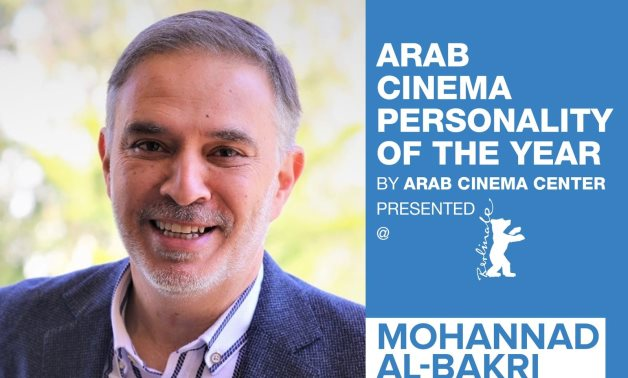
In recognition of his distinguished work in revitalizing and sustaining Jordanian and Arab cinema, the Arab Cinema Center (ACC) is bestowing its 5th Arab Cinema Personality of the Year Award to Mohannad Al-Bakri,the Managing Director of the Jordanian Royal Film Commission (RFC) during the 74th Berlin International Film Festival, which will run from February 15th to 25th.
The award, which coincides with the ACC’scelebration of its own 10th anniversary, is designed to honor and highlight prominent industry figures whosepersistent contributions have helped elevate the Arabfilm industry in the eyes of the international filmmaking community as a whole.
Al Bakri has been instrumental in rousing the country’s film industry from its slumber sinceassuming his position in 2009 through his development of the commission’s funding and training programs, as well as building local production capacity with the opening of Jordan’s first dedicated film studio complex. Under his guidance,Jordan has become a competitive and enticing destination for filmmakers through a combination of extraordinary landscapes, universally praised production services and its cost-effectiveness as ashooting location.
After starting out at the RFC in 2007 as a capacity-building manager, Al-Bakri quickly rose to the title ofmanaging director by 2009. Before that, he kickstarted his professional career at the Hashemite Fund for Human Development where he developed dynamic programs promoting the active role of youths in society.
In addition to his work for the RFC, he was also appointed as Regional Managing Director of Luminus Media – Jordan (SAE Institute) from 2012 until 2015 before joining New York University in Abu Dhabi as director of External Relations and Partnerships from2015 until 2019.
“We take immense pride in honoring Mohannad Al-Bakri, the Managing Director of the Jordanian Royal Film Commission (RFC) with the Arab CinemaPersonality of the Year Award. Since assuming his position, he has made enormous and noteworthy efforts to advance the Jordanian film industry,” saidAlaa Karkouti and Maher Diab — Co-founders ofArab Cinema Center — in a joint statement.
“This is evidenced by the outstanding successJordanian films have achieved so far both locally andinternationally, including INSHALLAH A BOY,which world premiered at Cannes’ 62nd Critics Week,winning two unprecedented awards in the history of Jordanian cinema,” they added.
Last year, the Arab Cinema Center gave its ArabCinema Personality of the Year Award to Mouhamad Keblawi the Founder and Head of Malmö Arab Film Festival in Sweden. Other recipients of the Award include Chiraz Latiri, former general director of theCentre National du Cinema et de l’Image, andrenowned producer and screenwriter Mohamed Hefzy— the Founder of Film Clinic. The inaugural award went to both Abdulhamid Juma and Masoud Amralla Al Ali, chairman and artistic director, respectively, ofthe now-shuttered Dubai International Film Festival.
Established by MAD Solutions, the ACC is a nonprofit organization registered in Berlin. The ACC provides networking opportunities with representatives ofcompanies and institutions involved in co-production,international sales and distribution, film festival,commercial exhibition and industry events.
The organization’s activities include hosting filmmarket stands, networking sessions, one-on-onemeetings, welcome parties, panel discussions andmeetings with international organizations and festivals. It also publishes the Arab Cinema Magazine, which itdistributes at leading international film festivals andmarkets.
A newsletter subscription is now available on theACC’s website, allowing users to obtain digital copies of the Arab Cinema Magazine, as well as news on theACC’s activities, notifications of application dates forgrants, festivals and offers from educational andtraining institutions, updates on Arab films participating at festivals, exclusive news on the Arab Cinema LAB, and highlights from the ACC’s partnersand their future projects.
Additionally, the ACC launched the Arab Cinema Directory in English on its website, the first time that users from both within and outside the Arab-speaking world have easy access to information on Arab cinemaall in one place.
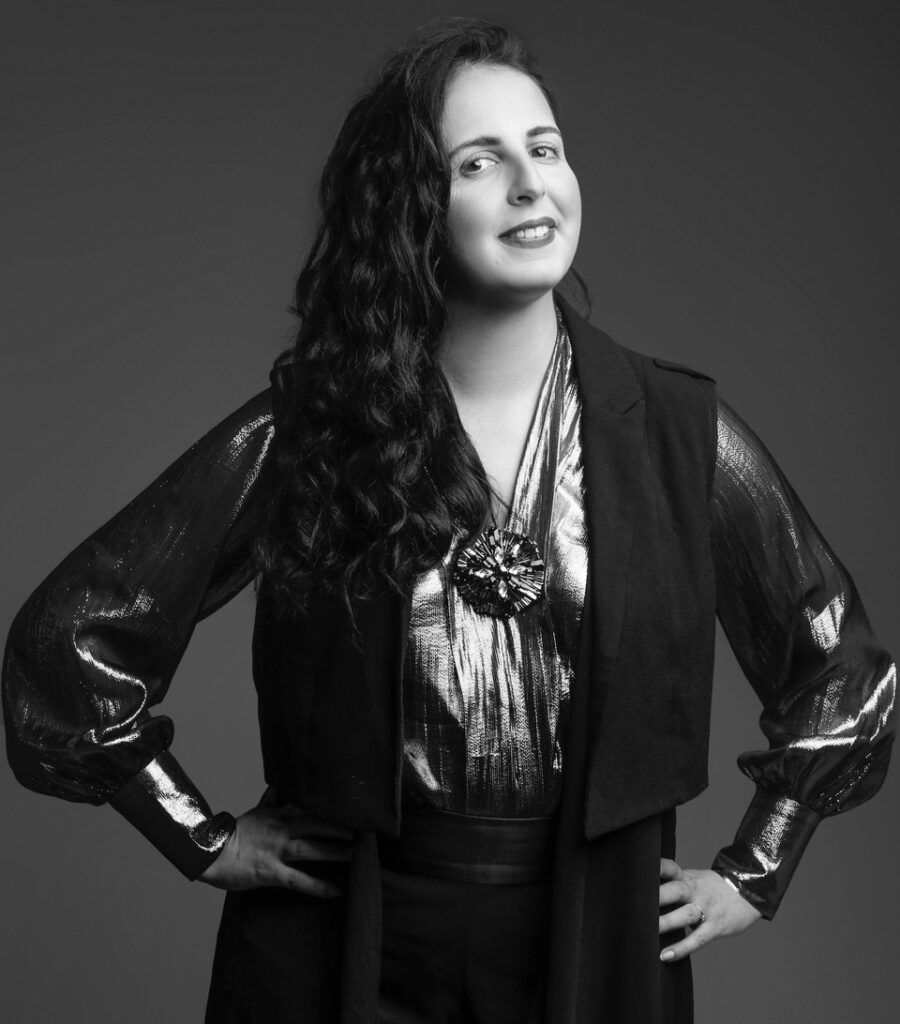
This January, Sara Chraibi, founder of Maison Sara Chraibi presented for the first time at Paris Haute Couture Week. The Moroccan designer greatly impressed critics with her collection which combines traditional Moroccan craftsmanship with modern elements and materials for a unique style that celebrates her heritage but also appeals to the contemporary woman.
After living in Paris and working as an architect for several years, Chraibi returned to her home country to establish her fashion brand. It was a major shift in cultures but she wanted to be in her homeland in order to find ways to embrace the traditional craftsmanship techniques and find new ways to express this as a form of contemporary luxury. Her designs are deeply rooted in traditions but also appeal to the wider world. This season Chraibi presented her Spring/Summer 2023 collection at Paris Fashion Week after being invited by the Fédération de la Haute Couture et de la Mode to showcase her designs to the world. Here we find out more about the experience and what we can expect to see from her brand moving forward.
Tell us a little about how your brand came to life.
I grew up in an environment of art and culture. As a child, I was introduced to sewing and embroidery by my mother. After my architectural studies in Rabat, I moved to Paris where I wrote a diploma (DEA) in “Philosophy and Theory of Architecture”. In Paris, my passion for fashion and couture is nourished by the vitality and creativity of the city. Alongside my job as an architect, I then began to draw, sew and embroider a multitude of couture pieces.
In 2012, I presented my first collection “Anatomic Architecture” during the final of a Competition organized by “Ateliers de Paris”. In the same year, I participated in Festimode Casablanca Fashion Week where the models paraded in front of the Casablanca cathedral. Greeted unanimously by the public and the press, these first appearances were the beginning of my professional retraining.
Congratulations on the Spring/Summer 2023 collection – tell us about this collection and how it came to life.
When I started working on this collection, I wanted to share several elements of my personal story, my influences and my sensitivity to the world. I had this idea of weaving a collection where each thread would represent part of the story: beginning with the architecture, the relationship to the structure of the garment, then there is the know-how, coming from a Moroccan textile tradition and the memory of the elegance of Moroccan women, there is this double culture that makes the originality of my point of view on fashion. I wanted to weave all this together and make it into a framework to tell a new reality.
This was your first time showing at such a level tell us about your experience being a guest member of the FMHC.
For me, Haute couture is a dream, a celebration of uniqueness and being part of it as a guest member is a milestone for my brand.
Can you tell us about some of the traditional techniques that you used in your designs and how you have evolved the techniques and craftsmanship to give them a modern twist?
With my work, I take patterns, shapes and ancient techniques from Morocco but I add a certain twist or reinvent them in a new way. For example, I used the “sfifa” weaving technique to create a fabric rather than using it as an ornament, as is done traditionally. I mixed raw materials from Morocco, and I used golden thread and silk fringe to build garments as a link between two cultures and realities. I see traditional craftsmanship both as an inspiration and a call to innovation.
How do your heritage and upbringing influence your work today?
My brand is built around the Moroccan art of living, my architectural background and my interest in couture know-how inspire it. My brand aesthetic evolves around the idea of subdued femininity. With a timeless approach to eveningwear, I merge the East and West through one-of-a-kind couture garments.
Tell us about your first memory of fashion.
I remember times before my mother had an important party, we would stroll from stall to stall in the markets in search of fabric and she would make dresses from scratch. I would sit next to her and watch her assemble the pieces of fabric one by one and sculpt the garment. At that time I started to collect fabric scraps to in turn sew something for my barbie doll. There was something magical about those moments. As I grew up, I remember my impatience to get dressed for these events; to put on a beautiful dress, to finally be part of the adult world, with all those sophisticated ladies, perfumed, richly adorned in silk and lace, with an appearance that made everyone’s heads turn. The women of Morocco are beautiful and sensual and wearing a caftan is an ancestral tradition, a ritual that is passed down from mother to daughter.
How do you think your background in architecture has influenced your designs and the way you put looks together?
I quickly realised that fashion and architecture could share the same vision. As an architect, I liked the modern period. In my clothing designs, I am influenced by modern architecture. All my attention goes to the purity of the lines, to the elegance and the lightness of the structure, it is a sort of quest for the essential.
What is the vision for your brand moving forward?
For me, succeeding in the world of fashion comprises several essential elements: commercial success, of course, but also and above all, success together as a team to share values and wealth, to ensure that each person in the company grows through their work. There is also a cultural success, where in addition to offering products, a brand manages to permanently establish its universe in the collective imagination. That’s all I want to achieve for my brand.
Who are some of the designers or brands that you admire?
Madeleine Vionnet, Jeanne Lanvin, and Elsa Schiaparelli, all made contemporary fashion history with a feminine point of view. I also admired Lee McQueen’s vision and Azzedine Alaia’s sharpness.
There are few brands from the Arab region that have managed to reach success on a global level – what is your opinion on this and what advice would you give to aspiring designers in the Middle East?
I wish that there are more and more brands with an Arab or oriental DNA on the international scene. Fashion is a great tool of soft power. Each new designer who launches in the region is responsible for spreading our culture to the rest of the world.
In this issue we are celebrating the month of Ramadan, what does this time mean to you and how will you be spending it this year?
Ramadan is one of my favourite times of the year. It’s time to reconnect with our faith. I like to spend it with my family and friends, to celebrate with pride and joy and I also like to share iftar with my non-Muslim friends.
What is next for you this year and for the rest of the year?
I’m working on the Maison Sara Chraibi Fall/Winter 2023 couture collection. I will also launch an e-commerce site later in the year.
What can you tell us about your brand in the Middle East and can we expect to see you here soon?
I plan to do some trunk shows in the Middle East over the coming months. The Middle East is an important market for my brand and It’s very important to establish long-term commercial partnerships there.
The UAE Ministry of Climate Change and Environment, in collaboration with the professional services organisation EY, French climate education NGO Climate Fresk, and over 1100 students from Aldar Education set two Guinness World Records.
These records were established for hosting the largest climate change awareness lesson and for having the highest number of nationalities attending a climate awareness lesson.
In association with Aldar Education, a leading education group in the UAE, and with the support of ADNEC, and the Department of Energy in Abu Dhabi, the record-creating attempt aligns with the focus of youth participation in climate negotiations at COP28, which will have the first Youth Climate Champion with a Ministerial role.
The enormous cohort of Aldar Education climate conscious students gathered at Abu Dhabi’s ADNEC Exhibition and Conference Centre to break the record, while discovering more about climate change, and what part they can play in mitigating its effects.
The group included students from 57 different nationalities, setting the record for most nationalities attending a climate change awareness lesson.
The attempt was launched by Mariam Bint Mohammed Almheiri, Minister of Climate Change & Environment, who said: “COP28 is set to be the most inclusive COP to date, and today we have made record-breaking history, while ensuring so many of our youth have a better understanding of the challenges, we all face.”
“Our aspiration is to transform the UAE into one of the most climate conscious nations on earth. To do that we need to ensure our youth not only understand the challenges and issues we collectively face, but how they can become more involved in our journey to climate neutrality.”
“After all, these students are not only affected by climate change, but they hold the power to shape the way our future society evolves to mitigate its impact and adapt to its effects.”
Sahar Cooper, Chief Executive Officer of Aldar Education, said: “We take immense pride in our students’ active participation in establishing a new world record in climate change awareness. We believe that education plays a pivotal role in nurturing environmentally conscious citizens and empowering them to drive positive change. Today’s youth are not just the leaders of the future; they are the changemakers of today. Their proactive engagement in addressing climate change underscores the critical role they play in accelerating global sustainability efforts. This milestone inspires us to push the boundaries of sustainability further and reinforces our mission to empower the next generation with the knowledge, passion, and responsibility to make a lasting impact on our planet.”
Anthony O’Sullivan, UAE Managing Partner, EY, added: “EY is incredibly proud to be a part of building climate change awareness focused on the very real challenges of climate change. In empowering this diverse group of youth with knowledge, they will play a crucial role in being environmental stewards for a sustainable world future.”
“The advocacy of youth inclusion at COP28 UAE will set the stage for today’s youth to be heard and take action to effect climate change policies as the global leaders of tomorrow.”
Climate Fresk founder, Cédric Ringenbach, said: “Climate change is a complex problem that affects us all, but it is still very badly understood by the general population.
“We don’t have much time, but by understanding the challenge we can take our response to the next level.
“Our ambition is to create a growing network of people who can pass on this quality climate education to reach a social tipping point that will help guide us to a low carbon world.”
Climate Fresk prompts participants to take constructive action to help tackle climate change.
The event concluded with the Department of Energy in Abu Dhabi providing all participants in the record-breaking attempt with an ‘Energy Kit’, which includes tips, advice and behaviour-nudging interventions to enable the students to take more sustainable actions.
As many as25,000 fragments of artifacts dating back the Islamic caliphates during the first two centuries of the Hijri Calendar, corresponding to the 7th to 8th centuries AD, have been discovered from the Jeddah Historic Area.
The announcement in this regard was made by the Jeddah Historic District Program (JHDP), in collaboration with the Saudi Heritage Commission. The archaeological discoveries were announced as part of the Historic Jeddah Revival Project, initiated by Crown Prince and Prime Minister Mohammed bin Salman..
According to a press release from the JHDP, the project of excavation started in January 2020 with exploratory studies and a geophysical survey. The goal was to unveil the historical significance of four key locations: Othman bin Affan Mosque, Al-Shona, a segment of the Northern Wall, and Al-Kidwah. This archaeological endeavor falls within the purview of the Jeddah Historic District Program. The project aims to preserve national antiquities and archaeological sites, uncover the rich history of the Kingdom, and promote Historic Jeddah as a cultural and tourist destination, in line with the Saudi Vision 2030.
According to the release, in November 2020, the archaeological survey and excavations yielded significant findings, including 11,405 pottery shards weighing 293 kg, 11,360 animal bones weighing 107 kg, 1,730 shells weighing 32 kg, 685 building materials weighing 87 kg, 187 glass artifacts weighing 5 kg, and 71 metal artifacts weighing 7 kg. The combined weight of these archaeological findings is 531 kg; and they constitute a valuable contribution to Saudi Arabia’s archaeological discoveries.
Archaeological investigation at Othman bin Affan Mosque revealed artifacts dating back the first two centuries AH and spanning different historical periods, notably, ebony pillars found near the Mihrab, analyzed and traced back to Ceylon (now Sri Lanka) Island in the Indian Ocean, which highlight the extensive trade connections of historic Jeddah.
According to the release, excavations at the same site also unveiled a collection of ceramic vessels and fragments, including high-quality porcelain. Some of the pieces are made in the Chinese province of Jiangxi and date back to the 16th-19th centuries AD, while older pottery fragments are from the Abbasid era.
The archaeological site at Al-Shona, dating back at least to the 19th century AD, has yielded numerous pottery shards, including porcelain and ceramic from Europe, Japan, and China, dating from the 19th to 20th centuries. Excavations at Al-Kidwah (Bab Makkah – Makkah gate) revealed parts of the Eastern Moat, which most likely date back to the late 18th century.
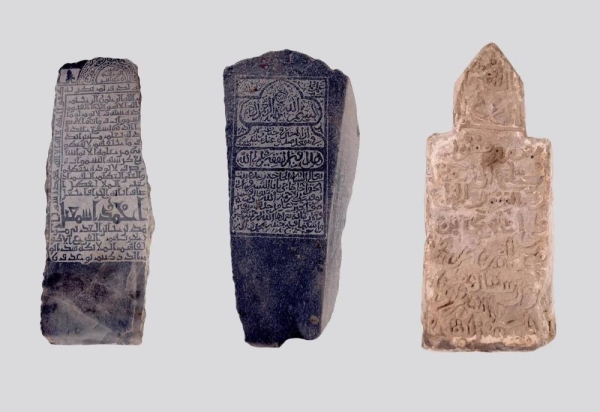
Tombstones made of Mangabi stone, marble, and granite were found at different locations within historic Jeddah. These tombstones contain inscriptions of names, epitaphs, and Qur’anic verses, dating back possibly to the 2nd and 3rd centuries AH. Specialists are currently studying them carefully.
The archaeological studies at the four historical sites involved excavations, radiocarbon analysis, soil analyses, geophysical surveys and scientific examination of artifacts. Samples of wood from 52 buildings were sent to international laboratories for identification and dating. Moreover, extensive international archival research led to the collection of over 984 historical documents, including maps and drawings of historic Jeddah. They are currently undergoing detailed study.
The Jeddah Historic District Program and the Heritage Commission collaborated to oversee the documentation, registration and preservation of archaeological artifacts found in Historic Jeddah. These discoveries were listed in the National Archaeological Register, and scientific databases were created to preserve the information related to the discovered artifacts.
The archaeological discoveries were announced as a part of the Historic Jeddah Revival Project, initiated by the Crown Prince and Prime Minister Mohammed bin Salman
Sheikh Nahyan bin Mubarak Al Nahyan, Minister of Tolerance and Coexistence and Chairman of the Board of Trustees of the Khalifa International Award for Date Palm and Agricultural Innovation, expressed his appreciation for the patronage and the support the Award continues to receive from His Highness Sheikh Mansour bin Zayed Al Nahyan, Vice President, Deputy Prime Minister, and Chairman of the Presidential Court. He also praised Sheikh Mansour’s contribution to the development of the date palm cultivation and production sector at the national, regional and international levels.
This is in addition to strengthening the UAE’s leading position through cooperation with date-producing countries and concerned regional and international organisations, where Sheikh Nahyan expressed his confidence in the efforts of the Award’s General Secretariat, which played an important role in building global partnerships to develop this sector.
Dr. Abdelouahhab Zaid, Secretary-General of the Khalifa International Award for Date Palm and Agricultural Innovation, announced the winners of the Award in its 16th session during his speech at the press conference held on Monday at the Emirates Palace Hotel, Abu Dhabi, in the presence of Dr. Helal Humaid Saed Al Kaabi, Member of the Award’s Board of Trustees, and Secretary-General of the Abu Dhabi Council for Quality and Conformity.
International Award Winners:
The award in the Distinguished Innovative Studies and Modern Technology category was won by Dr. Khaled Masmoudi – College of Agriculture and Veterinary Medicine (UAEU) for “Enzyme stabilization and thermotolerance function of the intrinsically disordered LEA2 proteins from date palm” and Dr. Ezzeldin Gadallah Hussein Ahmed – Agricultural Research Centre, Ministry of Agriculture and Land Reclamation (Egypt), for “Phoenix dactylifera in vitro culture and transformation of Thio-60 antifungal gene via chitosan nanoparticle”.
The award in the Pioneering Development and Productive Projects category was won by Dr. Lim Swee Hua Erin – HCT (Abu Dhabi), for “Sustainable Seeds: A Tale of Two Innovations” and AFRICA ORGANICS (Morocco), for the world’s largest organic date palm plantation (1200 ha) of farmland.
The award in the Pioneering and Sophisticated Innovations Serving the Agricultural Sector category was won by Dr. Yarub Kahtan Abdul Rahman Al Doruri – University of Sharjah for “Production of powder-activated carbon from natural resources” and VALORIZEN LLC, Research and Innovation Centre (Egypt) for “Scalable, Market Driven and Climate Positive Solutions of Date Palm Waste”.
The award in the Influential Figure in the Field of Date Palm and Agricultural Innovation category was won by Dr. Ramzy Abdelrahim Dessoky Aboaiana (Kingdom of Saudi Arabia) and Prof. Ibraheem Jaddoa Olelwi Al Juboori, PhD (Iraq) for “A qualitative leap and big steps”.
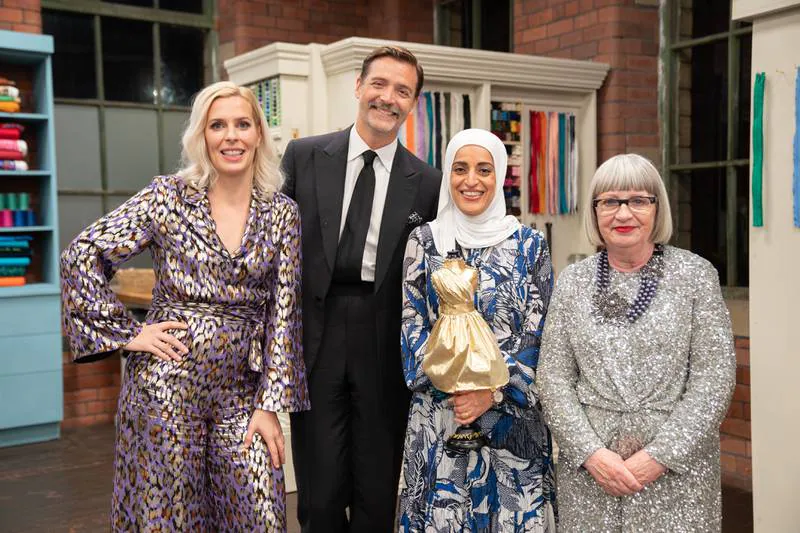
Handed-down skills won the medic crown of Great British Sewing Bee champion.
Head bent in concentration, tape measure slung around her neck, young Asmaa Al-Allak often knelt on the floor amid piles of colourful fabric even as rockets whistled above the family home in southern Iraq.
The seven-year-old would take in every detail of her mother and grandmother flicking through pages of their favourite fashion magazine and discussing the sewing patterns for each outfit featured in that month’s issue.
While the two women traced templates on to bolts of material, Asmaa mimicked them in miniature on remnants for arguably the best-dressed Sindy doll in war-torn Basra.
Four decades later, childhood memories like these compelled Al-Allak to become a contestant on The Great British Sewing Bee 2023, a reality TV show she won in an achievement that, for her, topped even attaining a medical degree.
“Creativity is in the genes,” she tells The National, laughing over a zoom call from Wales, where the consultant breast surgeon, now 47, lives with her engineer husband and children, Sophia, 20, and Jacob, eight.
“My grandmother taught me the basics of sewing, my mother built on those and the rest is self-taught.
“The first thing I remember making for myself was a green cotton pinny dress with a floral design. Terrible! My gran was the only one who was positive, saying: ‘My God, that’s so amazing.’ But that’s grandmothers for you.”
Mariam Al-Ethan didn’t live to see her granddaughter’s greatest triumph but photographs of her were pinned to a vision board for inspiration throughout the competition, and Al-Allak proudly wore a necklace inscribed with the word “Allah” that her grandmother bought for her in a gold souq.
Married at the age of 12, Mariam had long sewed clothes for her extended family before becoming a professional seamstress out of necessity during the prolonged armed conflict between Iran and Iraq in the 1980s.
“It was a really difficult time. Even though my grandad worked, he didn’t have enough to support the family,” says Al-Allak.
In spite, or perhaps because, of being illiterate, Mariam made determined efforts to send her seven children, including Asmaa’s mother Fatima, to university.
Fatima studied at the University of Basrah before undertaking a doctorate in physics at Cardiff University with her husband, Haider, soon after baby Asmaa arrived in 1976.
Initially, Asmaa and her brother Ammar, born two years later, were raised by their maternal grandmother but joined their parents for a few years when Fatima sent for them shortly before hostilities broke out. No longer able to stay in the UK after finishing her PhD, however, Fatima returned with the children to Iraq.
Haider feared his name might be included on the Baathist regime’s list of traitors and objectors and a longed-for reunion would not occur for another eight years.
The Al-Allak siblings were plunged into a war zone, frequently changing schools as they moved between Basra and their father’s relatives near Baghdad, whichever was deemed safest as Iranian troops fired mortars across the border.
When classes were disrupted for up to three months at a time, Asmaa sat transfixed for hours watching broadcasts of the devastation.
“I’ve seen [images of] dead bodies lying in the road,” she says in a flat voice. “If the Iraqi army had a good advancement or had won a battle, they would show pictures from the front on television.
“Even though they were supposed to be the enemy, for me, they were people who had died. My decision to study medicine came because of what I’d seen in Iraq.”
She became an expert in gauging the threat from rocket fire. If a whistle could be heard overhead, Al-Allak knew it was probably going to travel farther.
The ones that didn’t whistle were the more dangerous “because you didn’t know where they would land”.
Backbone of the family
While her mother worked as an assistant professor at the University of Basrah, Al-Allak inevitably grew close to her grandmother, ever the backbone of the family.
The detached house was surrounded on three sides by other homes, and Mariam declared the small kitchen, tucked away at the rear, to be the safest of all the rooms. There, the extended family retreated during the worst bombing campaigns, lying “like sardines” on two mattresses squeezed between the oven and fridge.
For Al-Allak, the rules and rhythms of sewing became a comforting reliability in a world of chaos and confusion: if she followed a pattern, cut fabric on the bias, respected the grain line and measured correctly, a satisfying outcome was guaranteed.
“The only thing that’s kept me going and balanced in life – especially in the past few years – has been sewing.
“It’s my escape, my way to forget about all the troubles in the world and at work. I don’t think I will ever stop.”
An opportunity arose for Al-Allak to rejoin her father after the Gulf War ended in 1991 when Haider was a British citizen working as a physics researcher at Durham University.
Fatima and the children had already endured one failed attempt to leave after Saddam Hussein invaded Kuwait the year before, packing their bags and waiting in Baghdad for two days before realising all flights had been cancelled.
This time, at Mariam’s behest, she wasn’t taking any chances. “We left everything behind and walked away. There was still food in the fridge and toys on the floor.”
Ripped from her roots
If Al-Allak was devastated at being ripped from her roots, worse came on hearing of the impact the sudden separation had on her grandmother, who sat weeping surrounded by their abandoned possessions.
“It broke her heart,” she says.
After a gruelling 24-hour bus journey to Jordan, the family waited a month for visas to Britain, arriving in the north-east of England in August.
Young Asmaa had forgotten most of the words picked up during her three-year stay as a toddler, and the other pupils at Framwellgate School showed no mercy, mocking her poor grasp of the language, using racist taunts, and pulling her hijab off.
She was pushed to breaking point, and it is clear that the recollections are still painful.
“I couldn’t wait to leave. I used to go home and cry. I said to my Mum: ‘I’m not going back to school. I just can’t do it any more.’”
But Al-Allak, one in a line of strong women, developed a methodical and meticulous means of getting by. “My five-year goals keep me going through life,” she says.
“For me to become a doctor, I knew I had to get good grades. I had to cope with the surrounding environment and not let it affect me.
“My mother was a rock. She told me to rise above it and sat with me with a dictionary trying to help but English wasn’t her first language either.”
Sheer determination earned Al-Allak a place at Cardiff University to study medicine, where for the first time in her teenage years she felt a sense of belonging.
Though she had seemingly left sewing behind in the ancestral home together with her beloved Sindy doll, her mother carried on, making surgical scrubs and other outfits for her on a Singer sewing machine bought at a car boot sale.
That old Singer has since been usurped by a newer model but still sits in Al-Allak’s office near the desk where lace and fancy packaging for the bespoke mastectomy bras she creates for her patients can be glimpsed. There, too, is the Sewing Bee award, and, on a mannequin, the dress described by the show’s judges as “spellbinding”, and “a feat of genius” and “clever engineering”.
Modelled in the final by her close friend and fellow doctor Pritti Aggarwal, it unfurled in a mesmerising transition from electric blue shift dress into shimmering emerald gown.
Al-Allak’s skill at overcoming obstacles such as this last of the 10 weeks of tough sewing challenges will, she hopes, increasingly be put to use to help breast-cancer patients recover physically and mentally, unencumbered by uncomfortable bras or incorrectly positioned inserts for prosthetics.
She plans to continue campaigning for greater consistency in patient provision, while developing the mastectomy lingerie into a viable venture.
“It’s one of the things I’m really passionate about,” she says. “On the NHS, you get a prosthetic to fit in your bra for free. Sometimes the company will also offer a free bra but not always, and the pocket might be on the wrong side.
“You’ll have darker-skinned women receiving a light-coloured prosthetic because there is no other option. Patients are offered different things in different parts of Wales.”
Al-Allak talks of how she employs the same knots during suturing in surgical procedures as those used in sewing but isn’t sure whether the medical skills inform her craft or vice versa; she is inclined to think probably both.
Certainly, her love of fashion dictates the choice of “work” shoes that add several inches to her 5ft 2in frame – red-soled patent leather stilettos only swapped for pink Crocs covered in butterflies in the operating theatre.
“Because I make all my clothes, my one guilty pleasure is Louboutins ,” she admits. “I bought my first pair when I became a consultant and I only buy one pair a year.”
That taste for the finer things in life earned Al-Allak the title of “Queen Asmaa” on The Great British Sewing Bee.
Alas, Sophia, heir-apparent, has yet to take up needle and thread in any way that her mother might describe, in her strong Welsh lilt, as “proper serious” but has found an outlet for her imagination as a fine arts student.
“I think it will happen at some point,” Al-Allak says, hopefully.
Young Jacob, however, expressed an interest in sewing at seven years old, the same age his mother started, and he helps with cutting, pinning and basic stitching.
“Look what he made!” Al-Allak says, gleefully waving a pattern weight stuffed with rice.
And so the rich seam of familial creativity runs on.