Arabs & Arabian Records Aggregator. Chronicler. Milestones of the 25 Countries of the Arabic Speaking World (official / co-official). AGCC. MENA. Global. Ist's to Top 10's. Records. Read & Enjoy./ www.arabianrecords.org
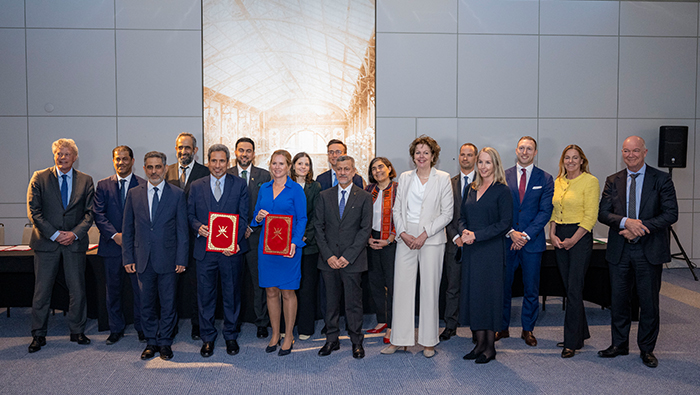
As part of the state visit of His Majesty Sultan Haitham bin Tarik to the Kingdom of the Netherlands, the Sultanate of Oman signed a historic Joint Development Agreement (JDA) to establish the world’s first commercial-scale liquid hydrogen corridor linking Oman to the Netherlands and Germany. The agreement marks a critical point in the global energy transition journey and brings Oman one step closer to becoming the leading hub for green hydrogen production and export.
The corridor will enable the export of RFNBO-compliant liquid hydrogen from Oman’s Port of Duqm to the Port of Amsterdam and key logistics hubs in Germany, including the Port of Duisburg, and onward to other European countries.
At the heart of this corridor is the world’s largest hydrogen liquefaction, storage, and export terminal to be established in the Port of Duqm. Hydrom, as the orchestrator of Oman’s green hydrogen sector, will ensure upstream production is aligned with national plans and that the project integrates seamlessly into Oman’s broader hydrogen infrastructure and policy framework. OQ, Oman’s energy transition enabler, leading the liquefaction infrastructure, will develop the hydrogen plant along with related storage and export facilities, contributing directly to the corridor’s supply capabilities and Oman’s national hydrogen targets. The centralised facility will draw from Duqm’s growing renewable hydrogen developments, leveraging the port’s strategic location as a global maritime hub and Special Economic Zone.
The centralised liquefaction plant will be supported by revolutionary maritime transportation vessels developed by ECOLOG to ship liquid hydrogen with zero boil-off, ensuring greater efficiency and reduced losses. On the European side, the corridor will be anchored by re-gasification import terminals in the Port of Amsterdam from which the hydrogen will distributed to industrial offtakers in the Netherlands and Germany via gas pipeline networks, rail connections, and barge distribution through the Dutch canal network.
“Today’s landmark signing demonstrates how Oman is turning its hydrogen ambitions into concrete projects aligned with global demand and national priorities,” said H.E. Eng. Salim bin Nasser Al Aufi, Minister of Energy and Minerals and Chairman of Hydrom. “While this corridor will enable the large-scale export of Omani hydrogen to Europe, its true value lies in how it supports our broader vision of an integrated sector that advances our national objectives. From industrial diversification and infrastructure development to job creation and capacity building, we are committed to building a future-ready sector that will position Oman at the center of green hydrogen global supply chain and deliver tangible economic value for the country.”
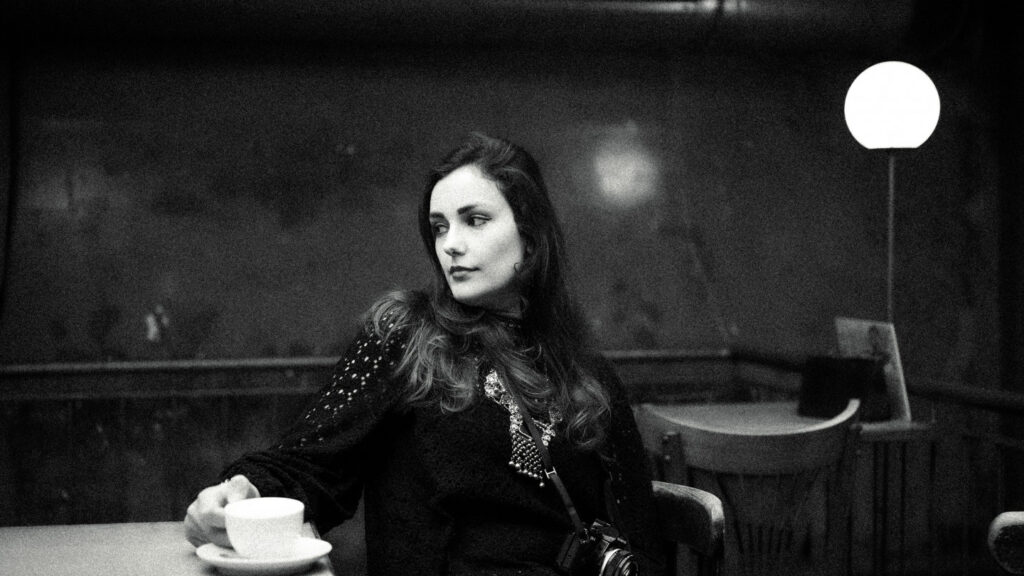
The New Arab sat down with Yemeni documentary photographer and storyteller Thana Faroq to discuss intentional photography, craft, and nurturing intimate narratives of displacement and resilience.
Thana Faroq is a Yemeni photographer and educator based in the Netherlands. Her photography projects, which have been supported by the Arab Documentary Fund and the Magnum Foundation among others, blend text, physicality, emotional density, and visual storytelling, to explore immigrant lives and the complexities of belonging and trauma.
The New Arab interviewed Thana Faroq on the occasion of her new book, How Shall We Greet the Sun, which follows a group of displaced young women including Faroq herself, as they negotiate their multilayered presence in the Netherlands.
“My work is mainly driven by current events and broader themes, such as intergenerational trauma and memory resilience in relation to migration and refugees”
The New Arab: You’ve completed several series and projects, including your new photo book, How Shall We Greet The Sun. How do your various projects communicate with one another?
Thana Faroq: At the core of all my work, including How Shall We Greet The Sun, lies an exploration of women’s resilience, adaptability, and the quest for belonging. These themes are the threads weaving my projects together, creating a continuous dialogue.
A consistent focus in my projects has been on the aftermath of pivotal events, particularly in migration. I’m drawn to understanding and portraying the lingering effects, the changes, and the adaptations that individuals and communities undergo in their post-disaster homes.
My projects often converse with each other, providing different facets of a broader narrative about migration, displacement, and the aftermath of these transformative events.
It is essential to explore these events not only in terms of their immediate impact but also in the ripples they create over time. How does our survival, resilience, loss, and search for identity and belonging look like? While my earlier works might have explored the immediacy of events, more recent ones, like How Shall We Greet The Sun, dive deeper into the lasting, often nuanced, emotions and memories that remain.
Do you feel that your work has evolved in terms of craft, technique, and vision? I saw that you have incorporated more poetry and written text recently.
Certainly. I spent my formative years in Yemen and from the age of seventeen, my educational journey took me across the globe, in Canada, the US, and the UK, which significantly broadened my perspectives.
It’s also crucial to acknowledge the life-altering events I’ve encountered: the war in Yemen, the subsequent move from my homeland, and the pursuit of asylum in the Netherlands. These profound experiences have shaped my life and continue to influence my understanding of the world.
This, in turn, has expanded my artistic vision. I’ve become more intentional about the themes I choose to explore and the stories I wish to tell.
Over the years, I’ve continually sought to refine my craft, exploring new techniques, tools, and mediums, especially sound and moving images. I love writing and it has become part of my creative journey and output.
I can’t label my written explorations as ‘poetry’ in the traditional sense, but I do have a deep affinity for playing with words, treating them as visual elements in their own right. I don’t view them merely as ‘texts’ but as visual companions to my images.
When paired with my visuals, these words offer an additional narrative layer, adding complexity and depth to the story I’m telling.
How do you approach storytelling in your work? Stories have a beginning, a middle, and an end, but using real-life subjects means that this linear, theoretical approach might prove restrictive.
I agree with you and I don’t personally stick to the classical structure of storytelling. All my stories are rooted in real-life experiences which means I will have to challenge this conventional approach of storytelling.
I ask myself very often: does a linear progression truly capture the essence of this experience, or is a non-linear narrative more authentic? And so my starting point might differ, I might start in the middle of a story with an emotional state that sets the tone for the narrative. My approach focuses on deep research and understanding. I immerse myself in the subject matter.
This helps me understand the nuances, the emotions, and the various perspectives that exist. Though all my projects exist in a final outlet (for example, a book) the creative process is never linear. I have a lot of responsibility to stay true to the essence of my subject’s experiences and sometimes this means breaking away from traditional structures or inventing new ones.
Also, storytelling isn’t just about the narrative; it extends beyond the mere sequence of events or plot points that make up a story. It’s about conveying experiences, emotions, and messages. For me, it’s about the use of texts, imagery, and symbolism to evoke feelings and provoke thought.
Though photography is my main medium, I include sensory elements, such as sounds and texts which can elevate the story and make it more immersive, especially in installation settings. This multilayer experience is powerful. I’m deeply intentional in my approach.
Before capturing or selecting an image, I reflect on its purpose: ‘What story am I conveying? How does this differentiate from the masses? What emotions or messages am I trying to evoke? This reflection ensures that my work carries depth and isn’t merely a fleeting visual in an endless scroll.
Are you looking for that person’s specific story in your photos or rather how they symbolise something bigger, larger than their own selves?
My work is mainly driven by current events and broader themes, such as intergenerationl trauma and memory resilience in relation to migration and refugees.
Every individual is a microcosm of the larger society they inhabit, and their stories, while personal, often resonate with universal themes. I work to make my images evoke shared experiences or emotions for a wider audience and, to a certain extent, the individual here becomes a symbol of something larger while ensuring that the individual’s story doesn’t get lost in symbolism.
Narratives that illustrate their character, resilience, culture, family ties, and personal history can help dismantle stereotypes and build a deeper understanding. This also means providing contextual cues within the composition. I write a lot during the process and these texts allow the viewers to draw connections between the personal and the universal.
“Photography, as I see it, is a shared endeavour from the research phase to execution. I prefer to refer to those I photograph as ‘collaborators’ involved every step of the way, valuing their insights and feedback. This often paves the way for deeper intimacy”
How do you nurture trust and intimacy with your subjects? Is there a story you chose not to tell?
My personal background plays a crucial role. As a woman refugee myself who has experienced the impacts of war and trauma first-hand, I share a common ground.
When I interact with my subjects, I approach them not just as a photographer, but as someone who has walked a mile in similar shoes. I don’t shy away from sharing my personal journey when appropriate, as I find that this openness can lead to mutual trust and safety.
Photography, as I see it, is a shared endeavour from the research phase to execution. I prefer to refer to those I photograph as ‘collaborators’ involved every step of the way, valuing their insights and feedback.
This often paves the way for deeper intimacy. Open communication and transparency are also pivotal. I make it a priority to be clear about how the photographs will be utilised, whether as an exhibition, a book, or any other medium, which helps bolster trust and comfort.
I approach each shoot with sensitivity, recognising and respecting the emotions and vulnerabilities of my collaborators. This journey of empathy, trust, and intimacy is complex and requires time, honesty, and sincerity.
There have been instances where I’ve chosen not to share certain stories out of respect for the privacy of those photographed.
For instance, in my recent book How Shall We Greet the Sun, there are many emotional transitions that migrant women undergo as they settle in a new place. Discussing these transitions isn’t always easy. I only choose to reveal such narratives when my collaborators are ready and confident to share them with the world.
For the young generation of aspiring artists in Yemen and elsewhere, could you share what helped launch your career and any advice you may have for others who can’t rely on institutional support and backing?
In my journey as an artist and photographer, I’ve come to understand a few key truths that I believe have been instrumental in shaping my career, especially in places like Yemen where institutional support might be sparse.
While talent is a gift, discipline and hard work are choices. Talent might get you started, but discipline will carry you through. It’s crucial to stay true to your artistic vision.
Instead of creating what you think others might want to see, focus on what you passionately believe needs to exist in the world. Also, the art world and photography, like any other field, constantly evolve.
Stay open-minded and eager to learn from others, peers, mentors, friends, and family… every interaction can offer a fresh perspective that can enrich your work.
Farah Abdessamad is a New York City-based essayist/critic, from France and Tunisia / Follow her on Twitter:@farashstlouis
From Egypt to the United States, the 22-year-old has cemented himself as one of the NFL’s most exciting young prospects.
22-year-old Egyptian national Ahmed Hassanein is making history after being the first Egyptian to ever be drafted in the National Football League (NFL). After serving as the anchor for Boise State’s defensive line, the Egyptian has just been drafted by the Detroit Lions in the sixth round over the weekend.
Hassanein came a long way before being one of the NFL’s most exciting young prospects. After moving from Egypt to Southern California seven years ago, during his sophomore year of high school, he worked his way into a starting spot at Boise State University, where he anchored their defensive line.
By his junior season, Hassanein ranked fifth in the FBS (Football Bowl Subdivision) with 12.5 sacks, racked up 53 total tackles including 16.5 for loss, and forced two fumbles. His standout performances earned him back-to-back first-team all-conference honours in 2023 and 2024, as well as captaincy in his senior year — achievements that caught the attention of NFL scouts.
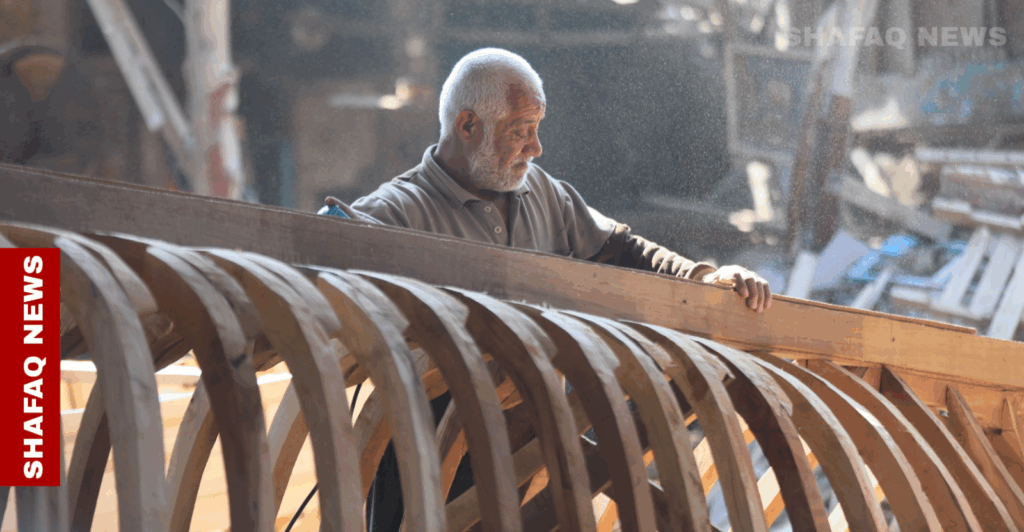
In the heart of ancient Kufa, where Iraqi tradition clings to the air like the scent of sawdust, one man stands against the tide of time.
Sayyed Nehma Hassan al-Fahham, better known as Abu Karrar, has turned a fading heritage into a living legacy, handcrafting wooden boats just as his father and grandfather did before him.
At over sixty, Abu Karrar moves with the ease of a man half his age, weaving between planks and tools in his modest workshop, tucked within the old city’s narrow, echoing streets.
Here, with calloused hands and steady resolve, he breathes life into vessels that glide through Iraq’s rivers and marshes—from the southern waters of Basra to the far edges of Tharthar.
Boats Born of Tradition
“We build for fishermen—and sometimes for fun,” he says with a quiet smile, gesturing toward a half-finished bellem tayara (fast boat), a large craft that takes over a month of meticulous work.
Each boat tells a different story: the Kad, Rika, Kad Abu al-Gharafa, and Kad Karufi serve different needs, while the smaller Jalaka, perfect for shallow waters, can be built in just a week. Prices stretch from 500,000 ($379.85) to 7 million dinars ($5,317.96), with specialized sea-going boats like the Maheela fetching up to 25 million ($18,992.73).
Blending Old Soul with New Strength
Abu Karrar’s tools may look old-fashioned, but his methods are a careful blend of past and present. He still uses traditional woods—jam, sidr, touth, and imported jawy—but the tar once used to seal hulls has given way to fiberglass, boosting durability and streamlining the process.
“We adapt where we need to,” he said, “but the spirit of the craft stays the same.”
Kufa’s Boats, Iraq’s Waters
What starts in Kufa doesn’t stay there. His boats travel—shipped to Basra, Maysan, Al-Nasiriyah, Al-Diwaniyah, Al-Kut, and beyond.
“We source wood locally or import it, depending on the order,” he explained. “Six-arm length, seven-arm, whatever the customer wants—we make it.”
Despite the pressures of modernization and faster transport, Abu Karrar and his brothers keep the flame of this ancient trade burning. Their boats aren’t just vessels—they’re floating memories, carved in wood, and launched into Iraq’s living waters.
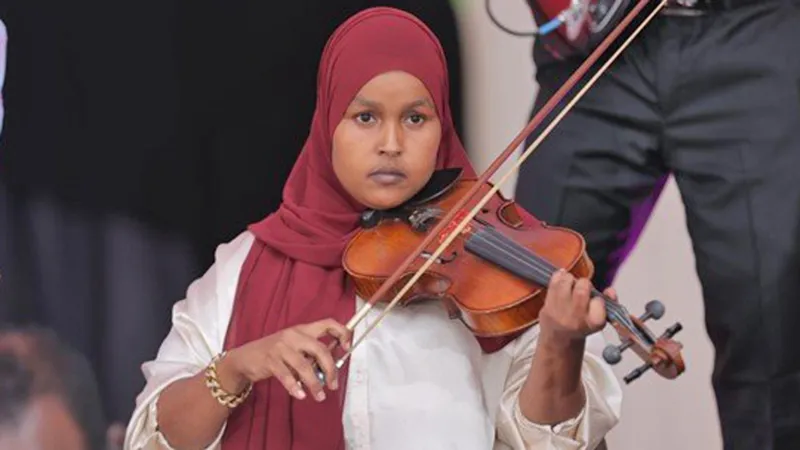
Born at the start of Somalia’s civil war, Maryan Ali Mohamed dreamt of one day performing live on stage.
She spent hours impersonating musicians on TV and always hoped to master an instrument.
In 2019, she picked up her first violin. Now, the 33-year-old is one of 40 musicians forming a Somali orchestra.
The East African country does not have an official national orchestra, but for the first time, an ensemble of musicians were brought together for a series of televised performances.
Men and women dressed in suits and satin were recorded harmoniously playing trumpets, drums and ouds – a traditional string instrument.
“I’ve never seen anything like it,” said Fadumo Hussien, a 70-year-old grandmother watching from her living room on the outskirts of the capital, Mogadishu.
“I remember bands playing growing up, but nothing like this,” she told the BBC.
The performances, organised by Mogadishu-based production company Astaan TV, aim to revive Somali music.
“We brought this orchestra together and gave them a space to rehearse,” said Mohamed Abdiwali, one of the event organisers.
“Now they can play classical Somali music,” he said.
The carefully crafted shows are then aired online and across local TV.
“The younger generation needs to start hearing our history,” he explained.
“Historically, we’ve had bands in Somalia, with a limited number of instruments,” explained Jama Musse Jama, director of the Hargeisa Cultural Centre.
Orchestras, with their larger size and classical focus, often have a greater emphasis on collaboration and synchronicity.
“You work together in harmony and build music in harmony,” said Dr Jama, noting the sounds of the Egyptian and Sudanese orchestras.
“It’s all about coming together,” he added.
Musicians were handpicked from across the country for this project, including both seasoned instrumentalists and emerging talents, like Ms Mohamed.
“I usually play on my own, or with just a few other people, but nothing on this scale,” she told the BBC.
The mother-of-two began violin lessons just a few years ago as part of a community programme in Mogadishu. She now practises using YouTube videos.
“I am so grateful to be here,” she said smiling.
Since the outbreak of civil war in 1991, Somalia has grappled with political instability and conflict. That’s had a knock-on effect on cultural institutions.
“Somali music hasn’t had a home for years,” said Dr Jama.
The National Theatre in Mogadishu, which opened its doors in 1967, was once a cultural melting pot for the city.
Spectators would gather inside the grand hall located in central Mogadishu to watch plays, musical performances and film festivals.
It quickly became the beating heart of the creative community.
“Beyond a physical building, musicians and artists must be encouraged to come together, share ideas and produce something tangible,” explained Dr Jama.
During the civil war it was fought over by rival militias and its roof even collapsed after being hit by mortars.
Across Somalia, cultural institutions and exports are now being revived, marked by the return of cinemas, art exhibitions and Somali TV shows.
The National Theatre reopened again in 2020 and now hosts a variety of events, including this year’s Mogadishu Book Fair.
In Somaliland’s capital Hargeisa, live music nights featuring traditional Somali music and food are on the rise, which Dr Jama says is vital for sharing the country’s rich culture through the generations.
“Somali music is not well archived,” he told the BBC.
“We don’t have musical notations, we perform and it dies there and remains only in the memory of the singer,” he said.
“That’s why a televised orchestra performance is so special,” he added.
“By documenting this, we’re creating something tangible that the next generation can see, understand and appreciate.
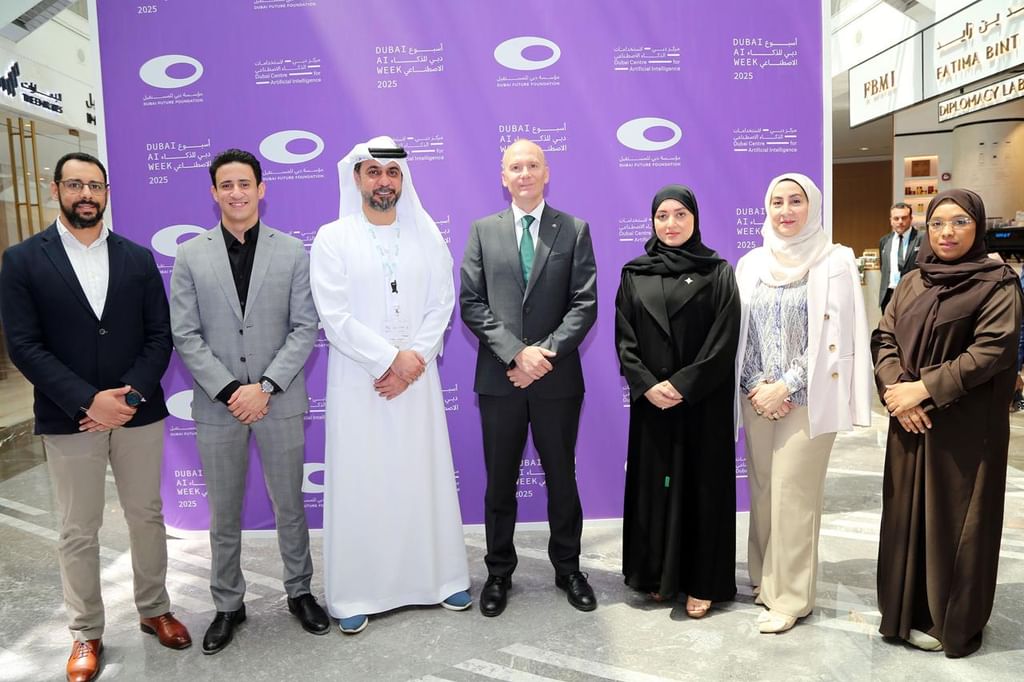
As part of its participation in Dubai AI Week, the Dubai Health Authority (DHA) has announced the implementation of the advanced Genesys AI-powered speech and text analytics system at its contact centre. With this step, DHA becomes the first government entity in the Middle East and the UAE to adopt this cutting-edge technology, reinforcing Dubai’s commitment to integrating advanced digital tools to elevate government service efficiency and responsiveness.
The newly deployed system enables DHA to automatically analyse and interpret human emotions and understand customer needs through voice and digital channels. This allows for immediate, personalised responses and data-driven solutions, aligning with Dubai’s strategic goals to accelerate the adoption of AI across public services.
Fatima Al Khaja, Chief Artificial Intelligence Officer at the Dubai Health Authority, highlighted that implementing the Genesys system reflects the Authority’s deep commitment to building a proactive, data-led customer experience management ecosystem. “Our goal is to place people at the centre of every healthcare service,” she said. “Through real-time interaction, sentiment analysis, and predictive tools, we can better understand expectations and meet them efficiently.”
Between January and March 2025, the system processed over 72000 digital and voice interactions, covering 96 topics across 55 queues available within the DHA Contact Center in Arabic and English, including custom interactions. According to Al Khaja, this enhanced the speed and accuracy of service delivery, raised overall satisfaction levels, and improved staff performance thanks to real-time monitoring, gamified motivation tools, and AI-guided training.
“The system has transformed the way we engage with our community,” Al Khaja added. “It provides deeper insights into actual needs, allowing us to continuously optimise services and embody Dubai’s innovation-first approach to excellence.”
Sebastien Ballerini, Vice President of Strategic Growth for Europe, the Middle East and Africa at Genesys, expressed his pride in collaborating with DHA to use AI in understanding and analysing human interactions. “DHA’s adoption of Genesys represents a strong vote of confidence in our capabilities and reaffirms its leadership in future-ready government solutions,” he said.
He noted that Genesys is the only contact centre provider in the UAE officially certified by the Dubai Electronic Security Center, and this partnership is a significant milestone in building a smart, personalised, data-driven service environment that sets new benchmarks for public sector customer experience.
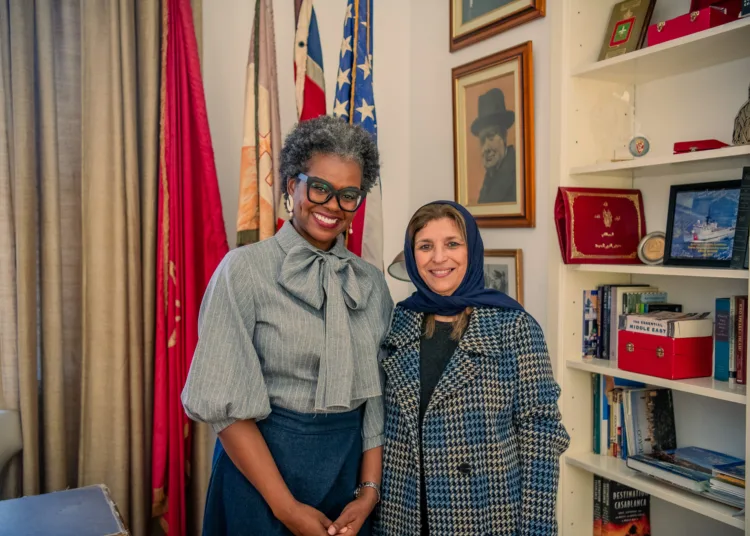
US Consul General in Casablanca, Marissa Scott, hosted a special reception to celebrate both Sougrati’s achievement and the strong partnership between Morocco and the US in the area of justice.
Moroccan judge Mina Sougrati has made history by becoming the first Arab woman to be elected President of the International Association of Women Judges (IAWJ). Her election took place on April 9 during the IAWJ’s biennial conference in Cape Town, South Africa.
Judge Sougrati’s new role is a “powerful recognition of her leadership, integrity, and commitment to the judiciary,” the US Consulate General in Casablanca said in a press release.
With over 15 years of experience, Sougrati has worked in Morocco’s administrative courts and has been a strong advocate for women’s rights, human rights, and judicial integrity.
In recognition of her achievement, US Consul General in Casablanca, Marissa Scott, hosted a special reception in her honor on April 22. The event also celebrated the strong partnership between Morocco and the US in the area of justice.
The statement recalled that the US government has supported Judge Sougrati’s work since 2016, when she joined a Moroccan women judges’ delegation at the IAWJ’s conference in Washington, D.C.
That experience led to the creation of the Union of Moroccan Women Judges (UMWJ), which Sougrati now leads. The UMWJ is now an important national branch of the IAWJ and works to promote women’s leadership in Morocco’s judicial system
Her election follows the success of the 2023 IAWJ conference held in Marrakech, which was the first in-person gathering since the COVID-19 pandemic. That event brought together more than 1,200 women judges from around the world, including 75 from Morocco and 75 from the US, and strengthened Morocco’s reputation as a regional hub for legal dialogue and reform.
The consulate added that Sougrati’s new leadership position and the ongoing work of the UMWJ reflect the close cooperation between Morocco and the US in justice and security matters.
“Judge Sougrati’s new leadership role underscores Morocco’s commitment to excellence in the judiciary. We look forward to continued collaboration in strengthening judicial institutions,” said Scott.
Meanwhile, Sougrati said that this honor belongs not only to her, “but to every Moroccan woman who has fought for justice, equality, and dignity in the courtroom and beyond.”
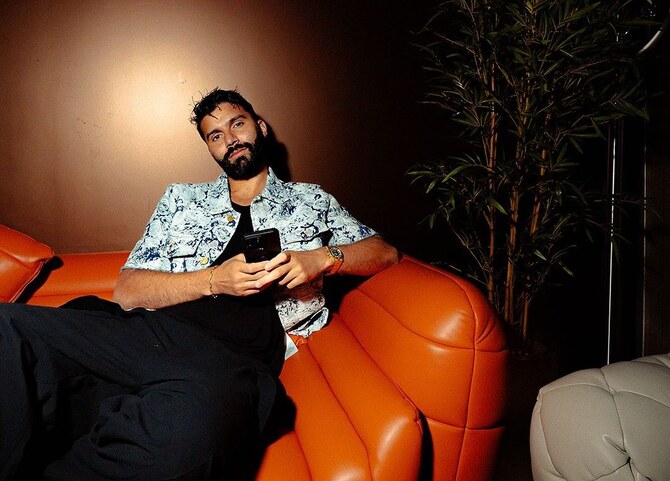
Dutch Moroccan DJ and record producer R3hab plans to return to Saudi Arabia before the end of the year, he told Arab News, hot on the heels of a busy six-month period during which he has hit the decks in Finland, China, Spain and beyond.
The DJ, who took to the stage at the E-Sports World Cup in Riyadh alongside Wiz Khalifa this summer, said in an interview with Arab News. “I’ve been to Riyadh many times, the energy of the city is unique. I really love performing in Saudi Arabia, the crowd energy is something else,” he said.
Asked if his Saudi fans will get to see him again soon, R3hab said: “All I can say is I’ll be back in Saudi before the end of the year and I can’t wait to play all the unreleased music I’ve been working on in the last months.”
R3hab’s love story with the Kingdom does not end there. He shot a music video for his track “Run Till Dark” at the historic city of AlUla.
“The ‘Run Till Dark’ shoot was exceptional. AlUla has so much history and we shot in some amazing locations. One that I won’t forget is Gharameel — this is a stunning desert reserve with beautiful natural stone pillars unlike anywhere else in the world. We were lucky to be the first film featuring this incredible site,” he said.
Last month, R3hab released two singles, each a collaborative effort.
On his track “Gozalo” with Deorro, he said: “It’s been 10 years since Deorro and I produced our hit ‘Flashlight.’ We thought it’s time to get in the studio together again and combine his Latin influence with my energetic vision.”
And on his more recent release, “All Night,” a collaboration with Sophie and the Giants, he praised the artist’s vocal talent and shed light on the track’s pop influences.
“Sophie’s voice stands out and I wanted to work with her on a record since I heard ‘Hypnotized.’ ‘All Night’ is a party anthem to keep us all dancing towards the end of the summer, it has a retro influence with a dance-pop touch.”
The second half of the year has been as busy as the first for the jet-setting producer with appearances at Dreambeach Festival (Spain), WKND Festival (Finland), Unseen Festival (Thailand), Smukfest (Denmark), Ministry of Sound (UK), Mysteryland (The Netherlands), EDC China and the Mega DJ Festival (South Korea).
“Touring can get very intense, so I take special care to recover, exercise and eat well on tour. The motivation is simple — the people. Connecting with the crowd every time I go on stage is a very rewarding feeling and my main drive,” he said.
source/content: arabnews.com (headline edited)
_____________
R3hab is a Dutch Moroccan DJ and record producer. (Instagram)
The winners and Cultural Personality of the Year will be honoured on April 28, in a ceremony organised in parallel with the 34th Abu Dhabi International Book Fair (ADIBF).
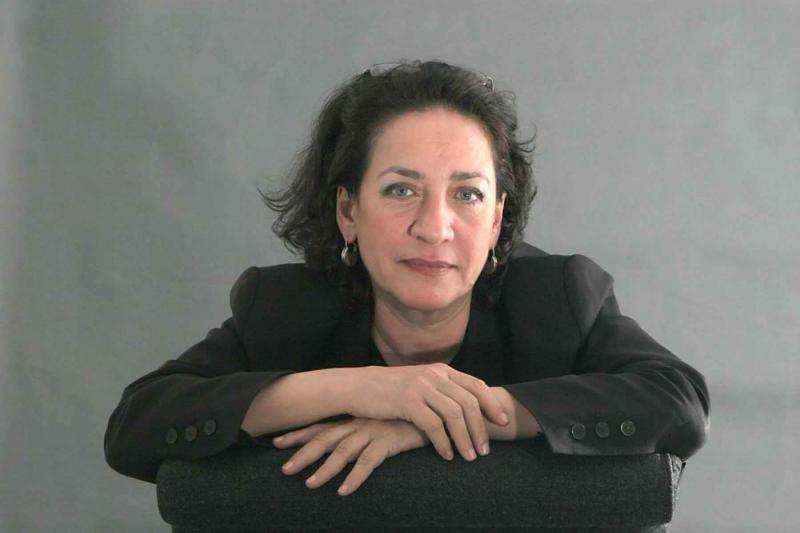
Lebanese-French author Hoda Barakat won the Sheikh Zayed Book Award (SZBA) in the Literature category for her novel Hind or the Most Beautiful Woman in the World, published by Dar Aladab in 2024.
The novel explores a new and contemporary idea, revolving around the female protagonist, who suffers from acromegaly.
With a reflective narrative voice, it investigates the life of people who live on the margins of society. Barakat examines the psychological and physical challenges these individuals face, exploring beauty standards in various cultures through complex characters and a rich, analytical, and human-centric voice.
The winners of SZBA along with the Cultural Personality of the Year for the 19th edition were announced after a meeting of the Board of Trustees, which discussed the final results of the thorough evaluation process led by the judging panels and the award’s Scientific Committee, based on the highest literary and cultural standards.
This year’s winners hail from seven countries around the world, including the UK, Italy, Japan, Lebanon, Iraq, Morocco and the UAE. The selection of the winners was based on objective, scientific criteria and rigorous governance upheld by the award.
Moroccan writer Latifa Labsir won the Children’s Literature category for her book The Phantom of Sabiba, released by Markaz Kitab in 2024.
The book addresses the topic of autism, using a sensitive voice that speaks to children and youth. Narrated from the perspective of the elder sister, telling the story of her autistic brother, the novel highlights the need for public awareness and a positive approach to autism, using a refined, artistic style that combines narrative aesthetic and a deep educational message.
In the Translation category, Marco Di Branco from Italy won for his translation of Orosius by Paulus Orosius from Arabic to English, published by Pisa University Press in 2024.
The publication is a notable scientific achievement that brings a classical work to life that had previously been translated from Latin to Arabic before being translated into English in a tone that makes it easier for readers, including Arabic readers, to understand.
The book includes the Arabic and English versions, offering a valuable reference to study Arab cultural exchange with other civilisations.
Said Laouadi from Morocco received the SZBA in the Literary and Art Criticism category for his book Food and Language: Cultural Excavations in Arab Heritage published in 2023 by Afrique Orient.
His work offers a critique of the complex relation between rhetoric and food in Arab heritage, analysing literary texts from poetry to proverbs and stories from a broad cultural perspective.
With its in-depth analysis and broad scope, his research enriches rhetorical studies with new, unconventional approaches.
The Contribution to the Development of Nations category saw Emirati Professor Mohammed Bechari win for his book The Right to Strive: Perspectives on Muslim Women’s Rights, issued in 2024 by Nahdet Misr Publishing.
The book provides a jurisprudential and foundational study of the concept of striving and effort in Islam, highlighting its ability to adapt to modern social developments. It reinforces involving women as equal partners in society, in a straightforward academic approach backed by credible sources, which makes it a notable addition to Arab and international libraries.
UK researcher Andrew Peacock won in the Arab Culture in Other Languages category for his book Arabic Literary Culture in Southeast Asia in the Seventeenth and Eighteenth Centuries, published by Brill in 2024.
The book offers a scientific study shedding light on the spread of Arabic language and culture in southeast Asia, and its relation to Sufi philosophy and the official discourses of rulers in that region. It opens up new areas of research into the impact of Arab culture beyond its traditional context, making it an invaluable source for researchers in this field.
In the Editing of Arabic Manuscripts category, the SZBA went to Rasheed Alkhayoun from Iraq/UK for his critical edition of the book News of Women, published by the King Faisal Centre for Research and Islamic Studies in 2024.
The book is a rare resource on the subject, featuring advanced scientific research where the editor exhibited a deep understanding of the text and its historicity. The book provides a valuable contribution to literary and historical studies, and is considered one of the first global collections of women’s works.
The 19th edition of the Sheikh Zayed Book Award honoured renowned Japanese author Haruki Murakami as the Cultural Personality of the Year, in recognition of his creative career and widespread literary influence, unbound by borders, impacting both Arab and Western cultures. His works are widely read and translated around the world, reflecting literature’s ability to bring differing cultures closer together.
Murakami is one of the most prominent and popular contemporary novelists, with millions of copies of his novels printed every year and translated into numerous languages, including Arabic. His literature is characterised by its universality, expressing human concerns that transcend cultural boundaries, with a unique blend of Japanese literature and international influences. His writings are renowned for their ability to explore issues of identity, belonging, and individual freedom in a distinctive narrative style that combines realism and fantasy.
The winners and Cultural Personality of the Year for the 19th edition of the Sheikh Zayed Book Award will be honoured on April 28, in a ceremony organised in parallel with the 34th Abu Dhabi International Book Fair (ADIBF).
The winner of the Cultural Personality of the Year award is presented with a gold medal, a certificate of appreciation, and a prize of AED1 million, while winners in the other categories receive a prize of AED750,000, along with gold medal and a certificate of appreciation, in honour of their outstanding creative and intellectual contributions.
The 19th edition of the SZBA, organised by the Abu Dhabi Arabic Language Centre, received a record-breaking number of submissions with more than 4,000 applications sent in from 75 countries, including 20 Arab nations. Five countries participated in the award for the first time this year, namely, Albania, Bolivia, Colombia, Trinidad and Tobago, and Mali.
The Sheikh Zayed Book Award is one of the most prominent independent literary and academic prizes; it adds notable value to the global cultural scene, supports publishing and translation, and honours creators, thinkers, and publishers for their accomplishments in research, writing, and translation. The award plays a key role in encouraging cultural diversity and building bridges between civilisations, driven by its vision to promote dialogue, openness, and knowledge exchange among nations.