JORDANIAN-AMERICAN :How Malek AlQadi – One Jordanian Architect Brought a Piece of Petra to California

Inspired by his childhood in Amman, Malek AlQadi’s latest project, ‘The Folly Mojave’, injects desert minimalism with sustainable luxury.

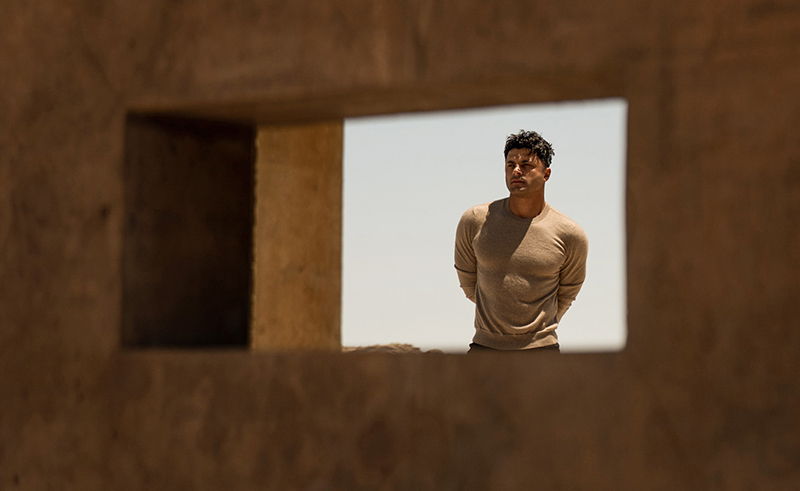
Born in Amman, Jordan, raised in Florida, and based in Los Angeles, Jordanian-American architect Malek AlQadi has dedicated his life to his follies. In architecture, a folly is a building that serves no purpose aside from aesthetics. But AlQadi’s follies? They are worlds unto themselves; portals to places only visited in daydreams and memories.

His first folly came about as part of his thesis project, during which he designed and executed a humble, fully self-sustaining stay in California’s Joshua Tree National Park. Though his design language has evolved over the years, his core principles remain the same: sustainability, minimalism, and a reconnection with nature, all rooted in a childhood spent marvelling at Jordan’s deserts.

In Jordan, ancient structures like Petra dominated his early experiences. In Florida, his exposure to contrasting environments shaped his understanding of space, structure and purpose. AlQadi’s obsession with follies finds its roots in his desire to push the boundaries of design. He’s not interested in the grandiosity of skyscrapers or the utility of commercial buildings. Instead, his work delves into the ethereal, focusing on creating spaces that encourage introspection, exploration and escape.

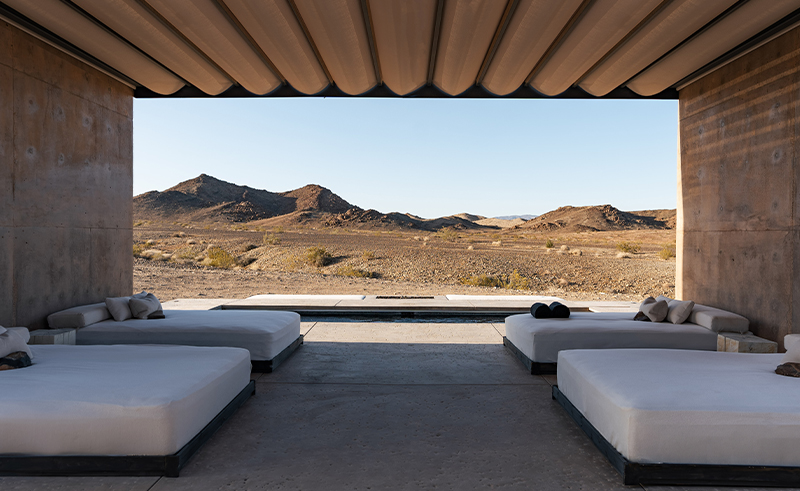
The Folly Mojave, a series of standalone suites dotted across 200 acres at the intersection of The Mojave National Preserve and Joshua Tree National Park, is AlQadi’s most recent and most ambitious project to date. The project is a retreat that blends into the arid environment while providing visitors with an isolated, immersive experience. “A lot of it was navigating childhood memories and connecting them with real-life scenarios and architectural elements, tying vastly different places in the world together, yet still grounded in similar principles and environments.” AlQadi tells SceneHome.

For AlQadi, the desert isn’t just a backdrop. It’s a critical component of the project, shaping the way the Folly Mojave interacts with the land. The retreat’s location in such an extreme environment is intentional; it encourages guests to detach from their everyday lives and engage more fully with their surroundings.

At first glance, the Folly Mojave may appear simple, but its simplicity belies the thoughtfulness of its design. The structure is fully off-grid, powered by solar energy, and equipped with self-sustaining water systems. The retreat is designed for minimal impact on the surrounding environment. Inside, the space is surprisingly open, with large windows that frame the vast desert views.

“A big part of the experience is having less light pollution and being able to see the stars at night. All of that fed into the idea of disconnection,” AlQadi explains. “It’s about having the luxury of time and space to relax and take in nature, which, at its core, is the ultimate healer.”

Malek AlQadi emphasises the “site-responsive” nature of his architectural philosophy. Unlike architects who adhere to a singular aesthetic, AlQadi’s approach is shaped by the environment he works within, adapting to the unique qualities of each location. “No two projects are ever the same,” he explains, yet there’s always a recognisable touch that connects his work. Symmetry, the use of natural materials, and a minimalist design language are core to his style, while he doesn’t shy away from incorporating brutalist elements when appropriate.

For AlQadi, creating spaces that resonate beyond the present – lasting decades or even centuries – is a key part of his architectural philosophy. “Guests often describe the experience as surreal, unique and unplugged,” AlQadi reflects. “Many mention feeling a deep connection while staying there. It’s rewarding to know that people from all walks of life have been able to share in that experience.”

source/content: cairoscene.com (headline edited)

______________
____________________________

AMERICAN / JORDANIAN
SAUDI-AMERICAN citizen Omar Yaghi among winners of 2025 Nobel Prize in Chemistry

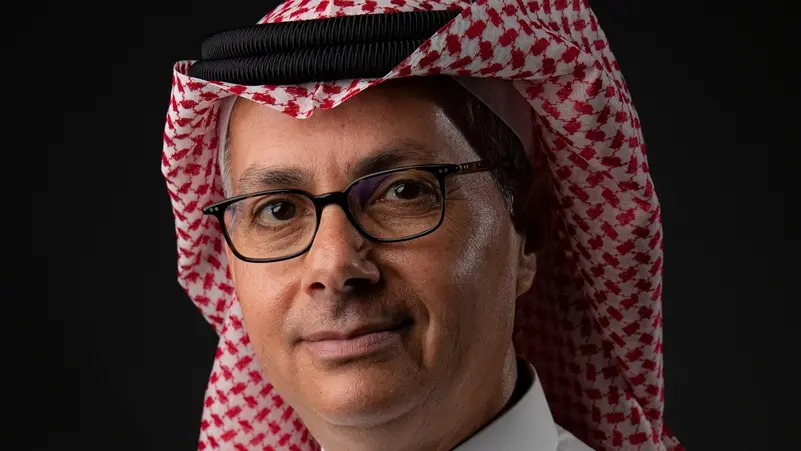
Saudi-American citizen Omar Yaghi, along with scientists Susumu Kitagawa and Richard Robson, has won the 2025 Nobel Prize in Chemistry “for the development of metal–organic frameworks”, the award-giving body said on Wednesday.

Born in Jordan to Palestinian parents, Yaghi was granted Saudi citizenship in 2021 through a royal approval that had been issued to grant Saudi citizenship to several prominent specialists from different fields.

The move was in line with the objectives of Saudi Vision 2030, including encouraging talented individuals to relocate to the Kingdom, localizing foreign investment, and “creating an appropriate social and investment environment,” according to a statement carried by the Saudi Press Agency at the time.

The more than a century-old prize is awarded by the Royal Swedish Academy of Sciences and the winners share 11 million Swedish crowns ($1.2 million), as well as the fame of winning arguably the world’s most prestigious science award.

“Through the development of metal-organic frameworks, the laureates have provided chemists with new opportunities for solving some of the challenges we face,” the award-giving body said in a statement.

The Chemistry Nobel was the third prize announced in this year’s crop of awards, in keeping with tradition, following those for medicine and physics announced earlier this week.

Established in the will of Swedish inventor and businessman Alfred Nobel, the prizes for achievements in science, literature and peace have been awarded since 1901, with a few interruptions mostly due to the world wars.

Nobel was himself a chemist and his developments in that field helped underpin the wealth he amassed from his invention of dynamite in the 19th century. The economics prize is a later addition funded by the Swedish central bank.

Sometimes overshadowed by more famous laureates in the fields of physics, literature and peace, the chemistry awards have still recognized many influential discoveries such as nuclear fission, DNA sequencing techniques, and yeast.

Last year’s chemistry award went to US scientists David Baker and John Jumper and Briton Demis Hassabis for work on decoding the structure of proteins and creating new ones, yielding advances in areas such as drug development.

($1 = 9.3436 Swedish crowns)

With Reuters

source/content: english.alarabiya.net (headline edited)

___________

Saudi-American citizen Omar Yaghi, along with scientists Susumu Kitagawa and Richard Robson, has won the 2025 Nobel Prize in Chemistry “for the development of metal–organic frameworks”, the award-giving body said on Wednesday. (X @SPAregions)

____________________________________________________

AMERICAN / SAUDI ARABIA / JORDAN / PALESTINE

JORDANIAN-AMERICAN: Farah Abu Adeela Crowned Miss Arab USA in Arizona Beauty Pageant

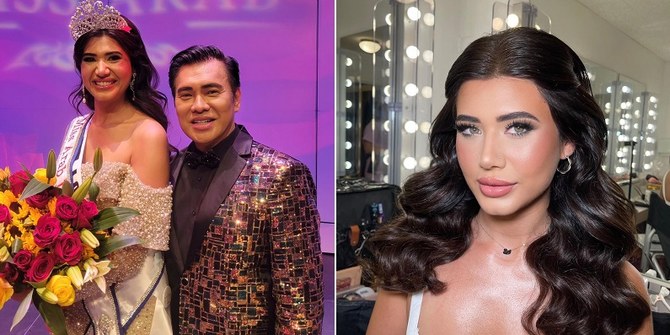
US Jordanian contestant Farah Abu Adeela from the state of Illinois was crowned Miss Arab USA at the beauty pageant’s finale in Arizona over the weekend.

The new Miss Arab USA, who is a model, takes over from 2022’s winner, Moroccan American Marwa Lahlou.

The annual pageant, which returned in 2022 after a two-year hiatus due to the COVID-19 pandemic, was held in Arizona this year. Produced by The Arab American Organization (AAO), the pageant is “founded on the basis of advancing the cause of young ladies of Arab descent,” according to its website.

The swimsuit category does not feature in the pageant, with the stated aim of organizers being to “select an honorable Arab young lady to represent our culture in the US and worldwide for one year.”

This year’s ceremony featured a performance by dance troupe Zeffa of Phoenix.

source/content: arabnews.com (headline edited)

____________

Farah Abu Adeela nabbed the coveted tiara at the 2023 Miss Arab USA pageant. (Instagram)

____________________________

AMERICAN / JORDANIAN