Arabs & Arabian Records Aggregator. Chronicler. Milestones of the 25 Countries of the Arabic Speaking World (official / co-official). AGCC. MENA. Global. Ist's to Top 10's. Records. Read & Enjoy./ www.arabianrecords.org
An innovative team from the Oman Dental College has successfully developed a dental filling using Omani Portland cement reinforced with carbon nanoplates, creating the first material that combines exceptional strength with complete biocompatibility for dental tissues. This breakthrough opens new horizons in global dental treatments.
Malak Khalifa Al Harthy, a member of the research team “Pulp49,” told Oman News Agency (ONA) that the innovation stemmed from observing how traditional fillings often lack a balance between “strength” and “biocompatibility.” This prompted the team to develop a new composite that achieves this challenging balance.
She explained that the composite is a dental filling made by integrating Omani cement with graphene sheets, resulting in a material with high mechanical efficiency and significant biocompatibility. This has led to clear and rapid restoration of surrounding dental tissues.
The development of the composite took approximately five years of research and experimentation, undergoing initial cell-level testing followed by animal trials in collaboration with the Mounted Police Command. It is now in the second phase of human trials, with preliminary results showing highly promising indicators.
Regarding the expected benefits of this composite in dentistry, she noted that it provides a cost-effective solution while enhancing the longevity and efficiency of dental treatments. This represents a major advancement in dental materials, offering improved outcomes for both patients and dentists.
Among its key advantages is high biocompatibility, as the integration of carbon nanoplates enhances the material’s positive interaction with biological tissues while reinforcing its mechanical properties. This makes it particularly suitable for complex and challenging dental applications.
Additionally, the composite supports tissue regeneration by mimicking an ideal environment for the rebuilding cells in surrounding dental tissues. This effect is attributed to the synergistic interaction between the carbon nanoplates’ properties and the calcium ion-based reaction of Portland cement with physiological body fluids.
The composite also exhibits superior sealing capabilities, with the increased volume and unique properties of the nanoplates enhancing its ability to fill gaps and voids, making it ideal for applications requiring tight seals or water resistance.
The innovation has been officially recognized, securing a patent in the Sultanate of Oman and international registration. The team is currently finalizing the last stages of development after receiving essential support from the Ministry of Higher Education, Research, and Innovation, paving the way for its introduction to local and eventually global markets.
Addressing the challenges faced during the project, she explained that the team encountered difficulties in achieving the ideal composition, requiring multiple rounds of testing, experimentation, and model adjustments before finalizing the approved formula.
She emphasized the substantial support received, with the Oman Dental College providing necessary resources and the ROP Mounted Police contributing to trials. She also acknowledged the direct support of Dr. Abu Bakr Qateeshat, Head of Graduate Studies, Research, and Development at the college, and Dr. Aida Al-Wahaibi, as well as the encouragement from family, which served as a major motivator in achieving this milestone.
Regarding her selection to represent Oman at the International Invention, Innovation, and Technology Exhibition (ITEX) in Malaysia in 2025, she described it as an opportunity to showcase Omani youth’s capabilities and their role in delivering innovative solutions that elevate Oman’s global standing, while also facilitating knowledge exchange with innovators worldwide.
In closing, Malak Khalifa Al-Harthy affirmed that Omani youth are capable of remarkable achievements when they believe in their ideas and channel their creativity toward serving society—especially when innovation is genuine, addresses real needs, and contributes to the nation’s progress. -ONA
Middle East’s second-largest ‘healthy city’ after Jeddah
15 other cities in Saudi Arabia included in WHO list
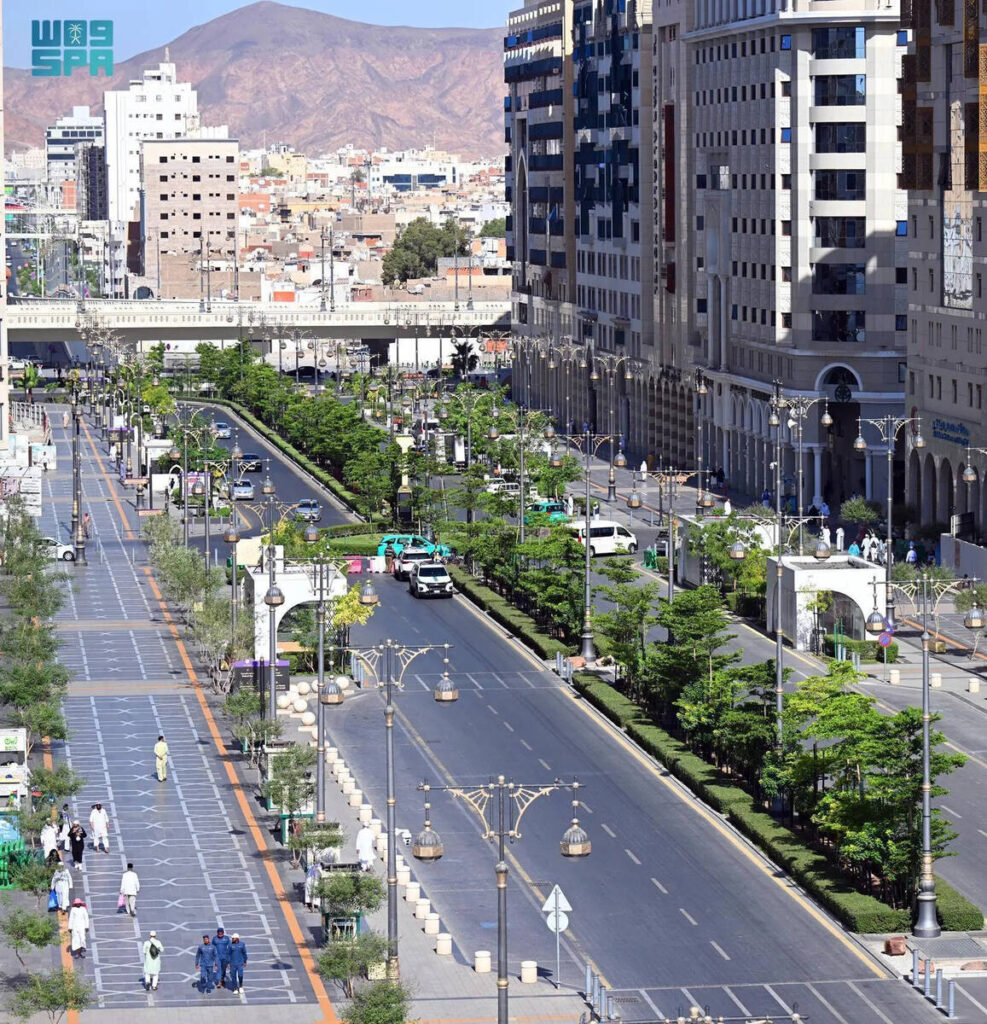
The World Health Organization has renewed its accreditation of Madinah as a “healthy city,” with Islam’s second-holiest location scoring an impressive 80 points, the Saudi Press Agency reported.
Prince Salman bin Sultan, governor of Madinah region, received the WHO accreditation certificate from Minister of Health Fahad AlJalajel during a ceremony on Thursday.
Prince Salman said Madinah’s renewed accreditation exemplifies the leadership’s dedication to enhancing quality of life for the Kingdom’s people in urban centers.
He emphasized Madinah’s ongoing transformation as a leading development model regionally and internationally, aligning with the Kingdom’s Vision 2030 goals.
Madinah has solidified its position as the second-largest healthy city in the Middle East, after Jeddah, the SPA reported.
To win the WHO’s nod, an entrant must meet 80 criteria, including parks, walking areas, and the promotion of health through primary care centers and schools.
The WHO has also recognized 14 other healthy cities in Saudi Arabia. These include Taif, Tabuk, Ad-Diriyah, Unaizah, Jalajel, Al-Mandaq, Al-Jumum, Riyadh Al-Khubra and Sharurah, according to Leaders MENA Magazine.
source/content: arabnews.com (headline edited)
______________
With the new accreditation, Madinah has solidified its position as the second-largest healthy city in the Middle East, next to Jeddah. (SPA photo)
Moroccan actress Nisrin Erradi will represent Morocco at the 10th edition of the Sotigui Awards.
The Academy of African and Diaspora Cinematic Arts announced the list of nominees, featuring Erradi as Morocco’s representative, for this prestigious celebration of African cinema, which takes place from November 12-15 in Ouagadougou, Burkina Faso.
Erradi competes alongside representatives from 19 other nations for the Sotigui d’Or, the ceremony’s top honor. Her nomination also puts her in contention for the 2025 African Public Sotigui Award.
Rising star of Moroccan cinema
Born on August 6, 1989, Erradi has built an impressive career in both Moroccan and international cinema, starting her performance in theater at age six and later studying at the High Institute of Theatrical Arts and Cultural Animation (ISADAC) in Rabat.
Erradi’s experience in ISADAC allowed her to discover her passion for cinematic storytelling through the works of American playwright Tennessee Williams.
The actress has earned recognition across multiple international film festivals.
Most recently, her role in “Everybody Loves Touda,” directed by Nabil Ayouch, earned her the “Artistic Expression” award at the 30th MedFilm Festival in Rome.
Erradi’s breakthrough came with notable performances in films including “Adam” in 2019, “Catch the Wind” in 2017, and “Jahilya” in 2018.
Her international acclaim extends beyond Europe. Erradi cemented her reputation as one of Morocco’s most promising cinematic talents by winning the Best Actress Award at the Durban International Film Festival in South Africa.
This year’s edition of Sotigui Awards focuses on the theme “African Cinema Facing the Challenges of Sexual Harassment: From Indignation to Action.” The theme demonstrates the ceremony’s commitment to addressing important social issues through the film industry.
Festival director Apolline Traoré said: “For the 10 years of the Sotigui Awards, there will be many surprises. We invite you in November to see the innovations. It will be something extraordinary.”
For Erradi, the nomination represents another milestone in a career that continues to bridge Moroccan and international cinema, reflecting the growing influence of North African talent on the global stage.
He played the Devil, challenged shame, and made Arab cinema speak. On his birthday, we revisit Youssef Wahbi – the man who dared to redefine the rules of the screen and stage.
Youssef Wahbi broke every mould – actor, director, and pioneer of Arabic cinema. On his birthday, we honour a legend who shaped generations of stage and screen.
Wahbi’s love for acting started when he first watched the Lebanese artist Salim Al-Qardahi’s troupe in Sohag. Since then, he started delivering monologues and performing theatrical acts at Al Ahly Club and at school. But at the time, acting was seen as shameful, and his father disapproved. Refusing to bend, Wahby fled to Italy and studied acting under the Italian actor Cantoni. He didn’t come back until after his father’s death in 1921 and used all his inheritance to establish a theatrical troupe named Ramses, which was also the name given to him during his stay in Europe.
In 1923, the troupe premiered with a successful play called ‘Al Magnoun’. But Wahby wasn’t done breaking ground. Later, in 1930, he established his film production company, Ramses Film, which produced the very first speaking film in the history of Arabic cinema, ‘Awlad El Zawat’. The movie was adapted from one of his successful plays, as he wrote the script and starred in the film.
Throughout his prolific career, Youssef Wahbi wrote, directed, or starred in over 300 theatrical plays and contributed to more than 60 films. Among this vast body of work, a few standout titles have become milestones in the history of Arabic drama and cinema…
Awlad El Zawat (1932)
‘Awlad El Zawat’ tells the story of Hamdi, who marries a French woman only to discover she’s cheating on him. In a powerful scene, he confronts her with the line: “You woman of all men… you garbage of history.” In a rare interview, Youssef Wahbi revealed that he insisted on making ‘Awlad El Zawat’ as the first Arabic-speaking film to defend the image of the East, after Western narratives described the region as barbaric and trivial, particularly during the trial of a woman who had murdered an Egyptian young man.
Safir Gohannam (1945)
‘Safir Gohannam’ follows Abd Elkhallak, a humble professor worn down by life’s hardships and became a bitter and resentful man. His shaky faith opens the door for the Devil (played by Youssef Wahbi) to lead him astray, tempting him with a false paradise to ruin his life, destroy his children, and tear his family apart. The film marks the first-ever portrayal of the Devil in Egyptian cinema.
Bayoumi Effendi (1949)
‘Bayoumi Effendi’ is considered one of Wahbi’s most powerful socially driven films, tackling the issue of children born out of wedlock. The film calls for compassion toward these individuals, emphasising that they should not be treated as criminals for a sin they did not commit.
Hayah Aw Mout (1954)
‘Hayah Aw Mout’ – one of the most famous films in Egyptian cinema – follows the story of a man who suffers a heart attack and sends his daughter to fetch his medicine, only for the pharmacist to realise he accidentally gave her poison. As the police, led by Wahbi’s character, race to save him, a dramatic city-wide radio broadcast becomes his only hope. This is the film that gave us the famous line: “لا تشرب الدواء الذي أرسلت بنتك لشرائه…الدواء فيه سم قاتل.” (“Do not drink the medicine your daughter was sent to fetch; the medicine contains deadly poison.”)
Esha’et Hob (1960)
‘Esha’et Hob’ is one of the most memorable comedy films in Egyptian cinema. Starring Omar El Sherif, Soad Hossny and Youssef Wahbi, it follows the story of Hussein, a shy young man in love with his cousin Samia, who prefers her charming cousin Lucy ‘Ibn Tante Fakeeha’. To help him win her heart, Hussein’s uncle Abdel Qader comes up with a clever plan: spread a rumour about a love story between Hussein and the famous actress Hind Rostom.
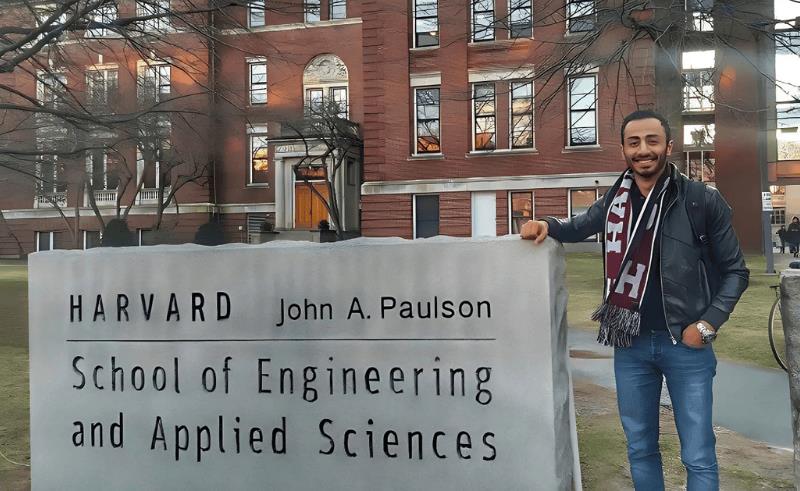
Egyptian physicist Kerolos Mousa played a role in a Harvard breakthrough using metasurfaces to control light at the photon level, which may pave the way for major advances in quantum technologies.
Kerolos Mousa, an Egyptian PhD student who hails from Minya, has contributed to a breakthrough in quantum physics at Harvard University, where a team of physicists developed a device capable of controlling the shape and path of individual photons with unprecedented precision.
The innovation is based on metasurface technology, engineered materials that can manipulate electromagnetic waves, and represents a major advancement in the way light is handled within miniature optical environments. Mousa led efforts to design the nanostructures critical to regulating photon behaviour.
The research, conducted at Harvard’s Applied Physics Lab and supported by leading US scientific institutions, was published in Nature, a top US science journal, and Science, a leading British publications. It was also featured on the university’s official channels.
The advancement is hoped to significantly impact fields such as quantum communication, quantum computing, and the development of next-generation smart optical devices.
Until last year, 17-year-old Victoria Miller admits she would have had to search online to learn where Algeria is , let alone describe the exploits of one of its most famous heroes.
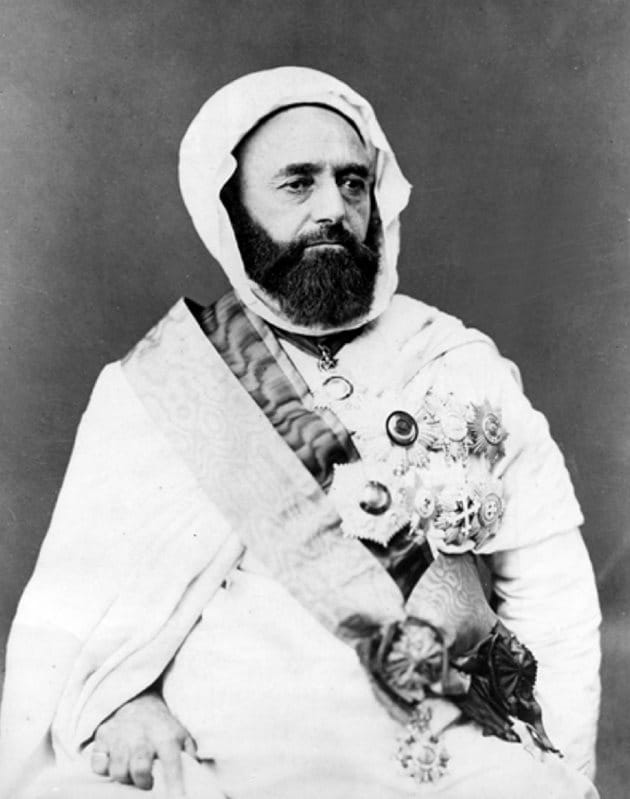
Pictorial Press / ALAMY / Abd el-Kader’s name lives on in Elkader, Iowa, pop. 1,300, the only US town named after an Arab.
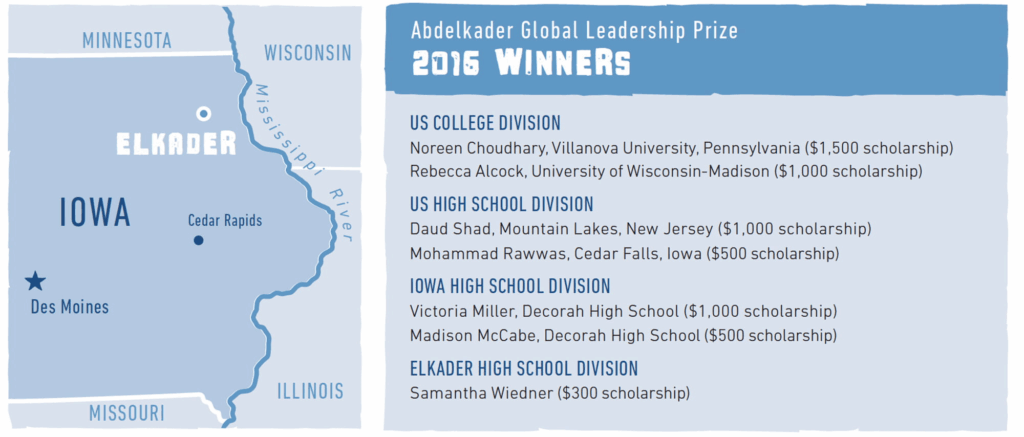
.“I was really taken by Amir Abd el-Kader’s character and how he handled the multiple challenges he faced, including when some of his own people didn’t believe in him,” says Miller, who lives in the northeastern Iowa town of Decorah. On September 19 she was recognized as one of seven winning essayists in the 2016 Abdelkader Global Leadership Prize.
After reading diplomat John W. Kiser’s biography, Commander of the Faithful: The Life and Times of Emir Abd el-Kader (Monkfish, 2008), for a class in human geography at Decorah High School, Miller now says she regards him as an international role model. Her new understandings, she adds, help her feel more comfortable talking to Muslims.
“Abd el-Kader’s legacy deserves to be remembered along with Nelson Mandela, Gandhi and Dr. Martin Luther King Jr.’s,” Miller enthuses, “because they were all pursuing the same dream: to reach peace.”
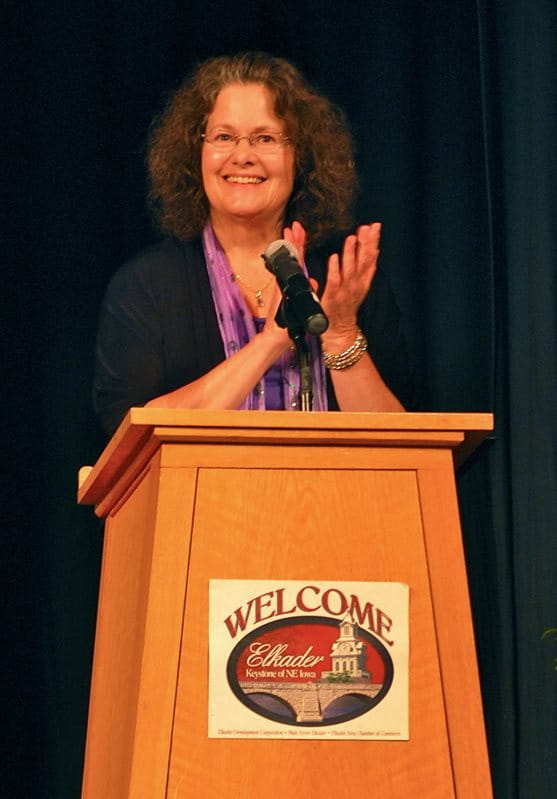
ABDELKADER EDUCATION PROJECT / Abdelkader Education Project co-founder and executive director Kathy Garms opened the group’s seventh annual forum on September 19 in Cedar Rapids. Students competed for scholar-ships in the Abdelkader Global Leadership Prize, and educators explored the legacy of Algerian freedom fighter and peacemaker Amir (Prince) Abd el-Kader.
Indeed, the Algerian prince (amir or emir in Arabic) united tribes in North Africa and fought for independence; later, during the 1860 Mount Lebanon civil war, he helped save thousands of Maronite Christians from massacre—an act for which President Abraham Lincoln lauded him. When the amir passed away in 1883, The New York Times eulogized him as “one of the few great men of the century. The nobility of his character won him the admiration of the world.”
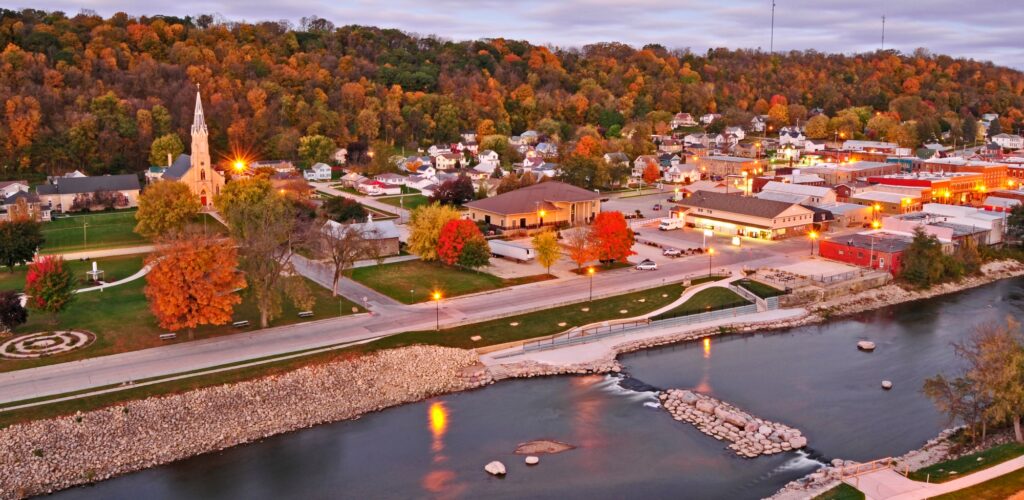
Even decades earlier, in 1846, so widely admired was he that Iowa farmers named their new town after him, and today Elkader, Iowa, is the only us town named for an Arab. Since 2008 it has been reviving his legacy, thanks largely to the eight-year-old nonprofit Abdelkader Education Project (aep).
Kathy Garms, executive director and cofounder with Kiser of the Elkader-based aep, furthers Miller’s sentiment, explaining that the story of the amir “inspires civility, tolerance and understanding” and offers “models of ethical leadership, moral courage and humanitarian conduct.” The aep, Garms continues, works to “shape the minds, hearts, values of the next generation.” And this is where aep’s Abdelkader Global Leadership Prize essay competition comes in.
John W. Kiser, author of Commander of the Faithful: The Life and Times of Emir Abd el-Kader, and forum participant said the students stereotypes have been challenged.
Its award ceremony was held this year about 130 kilometers south of Elkader in Cedar Rapids, where it was nearly cancelled due to rising floodwaters on the Cedar River. But the student writers and their families braved the threats of high water to meet Kiser as well as teachers and leaders of civil-society groups from around the country.
Kiser says he is pleased with the results so far.
“The students’ stereotypes about Muslims and Arabs have been challenged, and their minds opened to the diversity of the Muslim world,” he observes. As a role model, he says, Abd el-Kader “is a unifier … [whose] probing intellect, ethical courage, compassion, depth of knowledge … impress all who learn about him.”
And his advice to the winners was simple: “Treat others as they would want to be treated … and resist stereotyping.”
Garms affirms the broadening of students’ horizons. “We started this with an essay contest for students, but we’d like to expand our programs and create additional tools to reach a wider audience of police, military and businesses to promote better intercultural understanding,” she says.
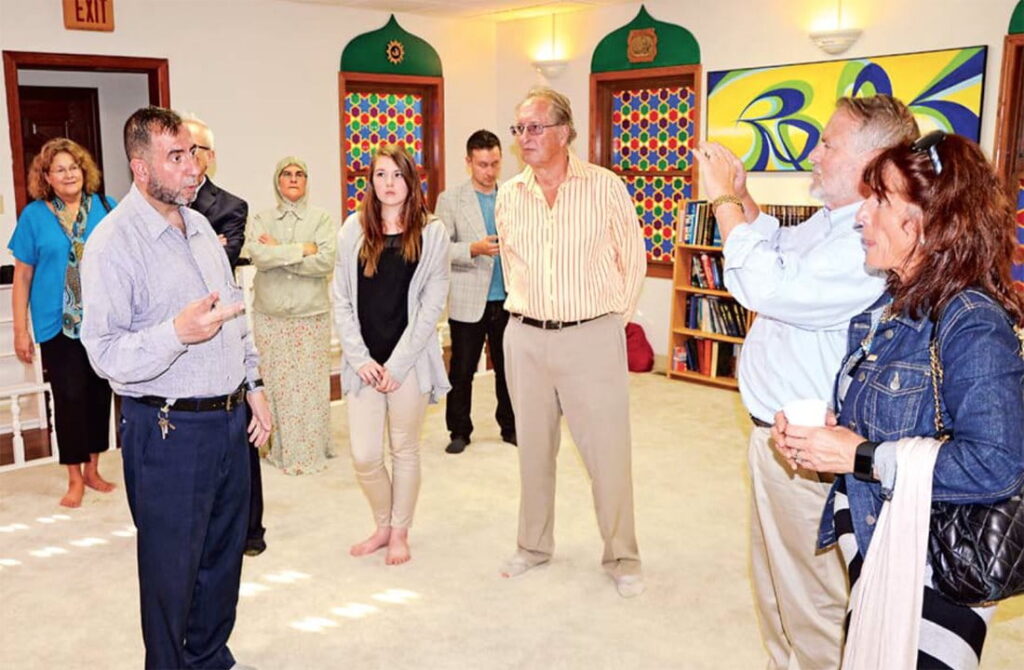
After the awards program, the winners and family members toured the Cedar Rapids Islamic Center and visited one of the city’s historic sites: the oldest standing mosque in the United States, built in 1934.
“Abd El-Kader’s legacy deserves to be remembered along with Nelson Mandela, Gandhi and Dr. Martin Luther King Jr’s because they were all pursuing the same dream : To Reach Peace
‘ – Victoria Miller, Iowa High School Division Winner’
Elkader Mayor Josh Pope hopes the aep inspires young people “to carry on the values of the amir.” In addition to hosting the aep, Elkader is a sister city to Mascara, in northwestern Algeria, where Abd el-Kader was born in 1808. Today Mascara’s population of 150,000 dwarfs Elkader’s 1,300 residents. “Abd el-Kader serves as a great example about how people of different cultures can live together in peace and understanding,” he says
In early September Pope traveled at the invitation of the Algerian government to speak at its own Emir Abd el-Kader Award ceremony, which recognized organizations in the Mediterranean region for work in economic cooperation and interfaith relations.
The interfaith aspect of Abd el-Kader’s life impresses Miller deeply.
“I’m a Christian, and I’ve had my own difficulties—though certainly on a different level—but I know it’s important to stay positive and hopeful,” she says.
Now, she wants to add study of comparative religions and “the psychology of how we learn and react to stereotypes” to her aspirations for a career in medicine.
“Victoria grew a lot in the process of reading about el-Kader and writing her essay,” says Miller’s mother, Yvette Powers, noting diplomatically that her daughter was not always supported by some members of her extended family.
“I believe people need to accept all races and creeds,” she declares. “I hope she was able to open some eyes.”
Brian Miller, Victoria’s father, says he and his daughter talked about the life of Abd el-Kader when she was writing her essay.
“It opened up quite a discussion,” he says. “I believe there are good Muslims and bad Muslims, just like all people.”
Forum attendees received a tour of the “Mother Mosque of America,” built in 1934 in Cedar Rapids, Iowa, by immigrants from what is now Syria and Lebanon. Although not the first mosque built in the US, it is the oldest standing mosque; its proximity to Elkader, 130 kilometers away, is coincidental.
Abd el-Kader, he says, “was a good guy,” adding that he hadn’t ever really thought much before about why the town was called “Elkader.”
National high school division winner Daud Shad lives far from Iowa, more than 1,600 kilometers east, in New Jersey. He says his elder brother encouraged him to read Kiser’s biography and enter the contest.
“I’d never heard of el-Kader, ‘the George Washington of Algeria,’” says the 17-year-old, whose parents were born in Pakistan. “There need to be more leaders on all sides like el-Kader because he embodied the best of religion and humanity.”
Samantha Wiedner, 18, grew up in Elkader, and she won the high school competition for her town.
“I knew Elkader was named after the emir, and I knew where Algeria was, but that was about it,” says Wiedner, now a freshman studying Russian and international relations at the University of Iowa.
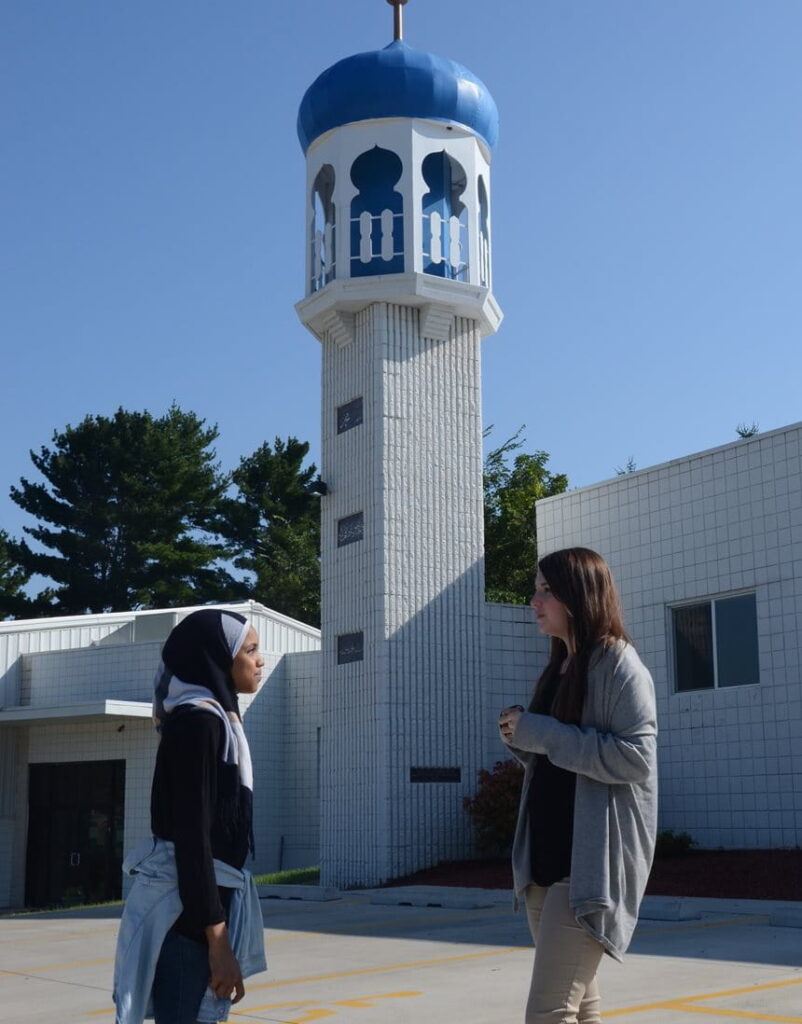
University of Iowa freshman and winner in the contest’s Elkader High School Division, Samantha Wiedner, right, talks with Jefferson High School tenth grader Lena Osman outside of the Islamic Center of Cedar Rapids. “Being intolerant to other cultures and religions isn’t going to get us anywhere,” Wiedner says. “Despite all our differences, we should be able to co-exist.”
She says she learned that “being intolerant to other cultures and religions isn’t going to get us anywhere. Despite all our differences, we should be able to coexist.”
Noureen Choudhary, 20 and a student at Villanova University, learned about the essay contest from her mother, who was born in Algeria.
“I first heard the name Abd el-Kader in a song popularized by Algerian musicians Khaled, Faudel and Rachid Taha,” says Choudhary, who was born and raised in Philadelphia. Though she was only four, she says the memorable tune and appealing lyrics made her wonder who it was about.
“My mother told me he was an Algerian hero,” she continues. “I now realize he is a figure widely heralded as an ideal Muslim, humanitarian, warrior, leader and source of Algerian national pride of the 19th century.”
Choudhary initially thought Abd el-Kader was “too obscure for Westerners to know about.” She was stunned to learn that a small town in Iowa was named for him, and that there is a group devoted to the study and promotion of his life and work.
“Not many people achieve great things like he did,” she says. “He practiced his faith in an exemplary manner.”
source/content: aramcoworld.com (headline edited) / Brian E. Clark
Groundbreaking procedure opens new horizons in circulatory support techniques for patients with complex cardiac conditions
Cardiac surgery team, led by Prof. Feras Khaliel, performed the operation through small incisions using remotely controlled high-precision robotic arms
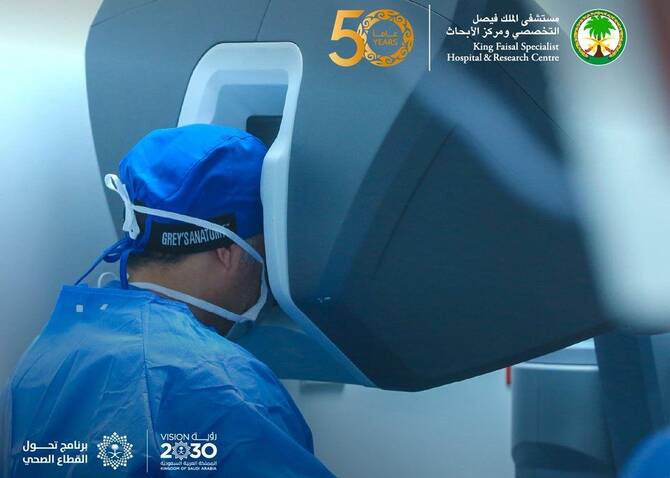
King Faisal Specialist Hospital and Research Centre in Riyadh has performed the world’s first implantation of two artificial pumps for biventricular support using robotic technology on a patient with advanced heart failure.
The groundbreaking procedure opens new horizons in circulatory support techniques for patients with complex cardiac conditions and marks a medical achievement that culminated in the patient’s recovery within a short period following the surgery.
The procedure represents a major advance in the treatment of bilateral heart failure, which was traditionally performed through full sternotomy, an approach associated with higher surgical risks and prolonged recovery.
However, the cardiac surgery team, led by Prof. Feras Khaliel, performed the operation through small incisions using remotely controlled high-precision robotic arms, resulting in reduced blood loss, lower risk of infection, and faster patient recovery.
The milestone reflects the integration of expertise across multiple departments at the hospital, including cardiac surgery, cardiology, anesthesia, critical care, biomedical engineering, and advanced life support.
The procedure was meticulously planned and benefited from 3D imaging technologies, real-time surgical navigation, and innovative solutions.
source/content: arabnews.com (headline edited)
_____________
KFSHRC has performed the world’s first implantation of two artificial pumps for biventricular support using robotic technology. (X/@KFSHRC)
EDGE, the world’s leading advanced technology and defence group, and 4iG Aerospace, the leading ICT, space and defence industries group in Hungary and the Western Balkans, have signed three Memoranda of Understanding (MoUs) to establish significant and wide-ranging industrial cooperation between the UAE and Hungary.
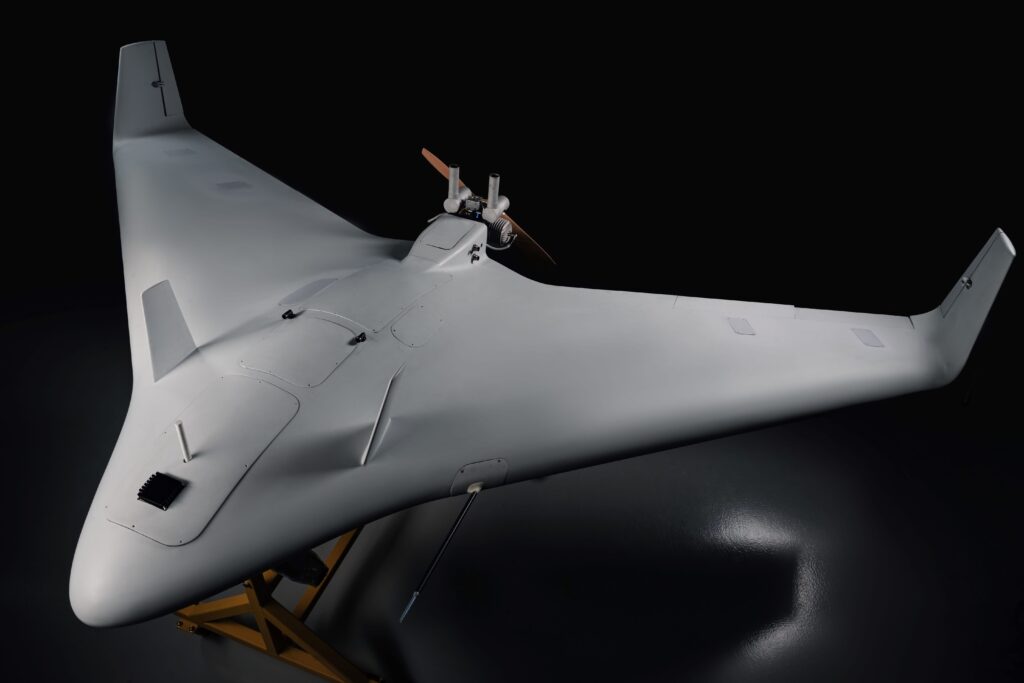
During a state visit by an official UAE delegation to Hungary, EDGE and 4iG signed three memoranda of understanding (MoUs) aimed at enabling a broad technology partnership for the joint development and marketing of advanced defense systems, including EDGE’s Skyknight air defense missile system, Shadow 25 and Shadow 50 cruise munitions, and Vega and Orion autonomous air traffic control solutions.
Hamad Al Marar, Managing Director and CEO of EDGE Group, said: “Our goal, through strengthening partnerships with partners like 4iG, is to help countries develop and adopt advanced sovereign defense technology and industrial capabilities. The global security landscape calls for renewal programs to leverage the latest autonomous technologies and counter rapidly evolving airborne threats. This collaboration enhances EDGE Group’s ability to continue delivering competitive, NATO-compliant, and export-ready solutions, in support of Hungary’s national objectives and as a gateway to deeper engagement across Europe and NATO member states.
For his part, 4iG CEO Istvan Šarhigyi said: “The agreements signed today represent a significant achievement in 4iG’s international efforts in the defense sector. By partnering with one of the world’s fastest-growing defense technology companies, we can develop systems with strong potential for success in European and African markets on a mutually beneficial basis. EDGE Group’s trust and openness provide Hungary with the opportunity to transform into a strategic player in the global defense innovation ecosystem.
Under the first agreement, the two companies will establish a broad technology partnership to jointly develop and explore cross-market opportunities for next-generation autonomous aerial systems (AAAS), counter-AAAS solutions, and space technologies in Central and Eastern Europe and Africa.
The agreement also covers the possibility of establishing a joint venture. The second agreement focuses on the potential development and production of the Sky Knight domestically deployable air defense missile system and the Shadow high-precision cruise munition series in Hungary.
The third and final agreement aims to provide EDGE’s Vega autonomous air traffic management and Orion drone swarm management systems to the European market, with the potential for joint development of air traffic control solutions. The MoU also includes an evaluation of the possibility of establishing a joint venture as a European development and sales center for the Vega and Orion systems.
The African literary world is celebrating as Sudanese author Leila Aboulela receives the 2025 PEN Pinter Prize. The announcement was made at English PEN’s summer party, where actors Khalid Abdalla and Amira Ghazalla brought Aboulela’s words to life with powerful readings from her work.
Aboulela will officially receive the award on October 10 at the British Library in London. At this ceremony, she will also reveal her choice for the PEN Pinter Writer of Courage award, an honor reserved for an author “active in defence of freedom of expression, often at great risk to their own safety and liberty.”
In a moving statement, Aboulela reflected on the significance of this recognition:
“This comes as a complete and utter surprise. Thank you English PEN and the judges for considering my work worthy of this award. I am honoured to win a prize established in memory of Harold Pinter, a great writer who continues to inspire so much loyalty and consistent high regard. For someone like me, a Muslim Sudanese immigrant who writes from a religious perspective probing the limits of secular tolerance, this recognition feels truly significant. It brings expansion and depth to the meaning of freedom of expression and whose stories get heard.”
This year’s judges include Ruth Borthwick (British arts administrator and literature executive), Mona Arshi FRSL (award-winning British poet and novelist), and Nadifa Mohamed FRSL (Somali-British novelist). Mohamed praised Aboulela’s work for its “commitment” to the “lives and decisions of Muslim women,” how she centers both their “struggles and pleasures with dignity.” She also noted the timeliness of such a work: “In a world seemingly on fire, and with immense suffering unmarked and little mourned in Sudan, Gaza, and beyond, her writing is a balm, a shelter, and an inspiration.”
Aboulela is a prominent voice in the global literary space for her celebration and examination of the lives of Muslim women. Her writing has been translated into 15 languages. She has published 11 books, with River Spirit, Lyrics Alley, and Translator gaining high critical acclaim. She is also know for being the inaugural winner of the Caine Prize for African Writing when it was launched in 2000, an award that would go on to define 21st century African fiction.
The PEN Pinter Prize, established in 2009, honors writers of outstanding literary merit who, in the spirit of Harold Pinter, cast an “unflinching, unswerving gaze upon the world” and display a “fierce intellectual determination to define the real truth of our lives and our societies.” Their work draws public attention to literature that engages with contemporary realities and injustices. Past African recipients include Chimamanda Ngozi Adichie (2018) and Tsitsi Dangaremgba (2021).
Congrats to Aboulela! This is a well-deserved win. Her work truly challenges the boundaries of whose stories are heard and brings a whole new meaning to the idea of freedom of expression in a way that makes sense for our time.
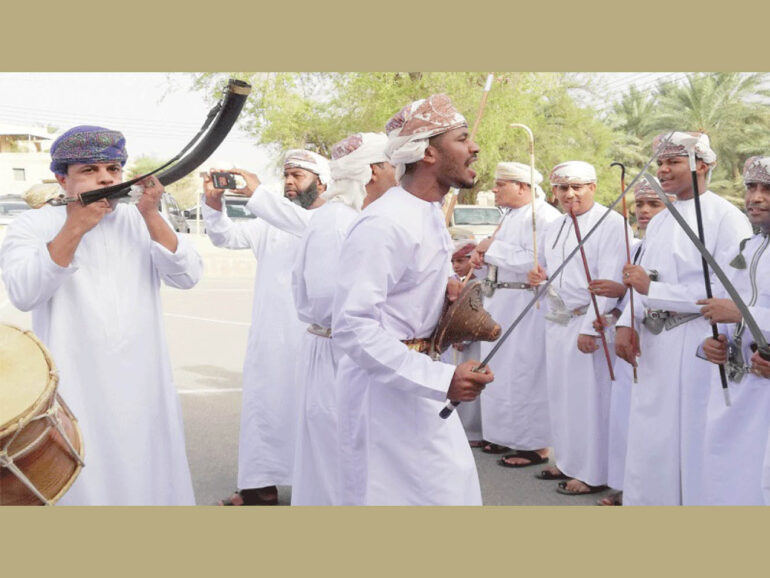
Ministry of Culture, Sports and Youth (MCSY) is intensifying efforts to document and publish the country’s oral history as part of a strategy to preserve intangible cultural heritage and reinforce national identity. The initiative aligns with Oman Vision 2040 and aims to promote Omani culture in global forums.
Fahd bin Mahmoud al Rahbi, Head of Oral History Department at the ministry’s Literary Forum, said the initiative reflects Oman’s commitment to protect its oral traditions and cultural expressions. These include stories, biographies, folk tales, customs, performing arts, traditional crafts and the knowledge systems associated with these.
“Oral history forms an integral part of Oman’s intangible cultural heritage. It is a crucial source of historical knowledge, especially in areas not captured by written records,” Rahbi said. “Our aim is to preserve this history through research, documentation and publication, as well as through public engagement and international cooperation.”
According to Rahbi, Oman’s geographical location has historically made it a crossroads of civilisations. This has contributed to the country’s rich and diverse cultural heritage. Several elements of Oman’s intangible heritage are already inscribed with Unesco, highlighting the global relevance of these preservation efforts.
Since 2006, MCSY has undertaken multiple field projects to record oral history across the governorates and wilayats. Local researchers have worked with elders, artisans and tradition bearers to document narratives, customs and knowledge passed down through generations.
The ministry has published several books as part of this initiative. Notable among these is Omani Traditional Musical Instruments, which documents the styles of Omani music, and Omani Traditional Musical Arts, a comprehensive reference on music and performance arts. Together, these publications offer a detailed record of Omani musical traditions.
Newer works include The Diving Craft in the Popular Traditions of the Batinah Coastal Community by Saeed Abdullah Mubarak al Farsi, which explores the oral traditions associated with coastal livelihoods, and The Craft of Tabsil in South Batinah by Wadha bint Mohammed al Shukaili, which chronicles the history and cultural significance of the palm-based food preservation craft.
MCSY has also supported research on frankincense traditions, culminating in the publication Frankincense and Cultural History, a collaborative project involving multiple Omani scholars.
Another recent work, Radio in the Interior of Oman, by Rana bint Nasser al Abri, explores the development of radio broadcasting in Dakhliyah from the 1940s to the 1980s, viewed through oral narratives. The Bahla Wall: The Wristband of Civilisation by Saeed bin Abdullah al Shaqsi examines the architectural and historical relevance of one of Oman’s iconic defensive structures.
“Preserving our oral history is not just about protecting the past,” Rahbi said. “It is about shaping national identity, supporting cultural diplomacy and preparing for a future that values heritage.”