Arabs & Arabian Records Aggregator. Chronicler. Milestones of the 25 Countries of the Arabic Speaking World (official / co-official). AGCC. MENA. Global. Ist's to Top 10's. Records. Read & Enjoy./ www.arabianrecords.org
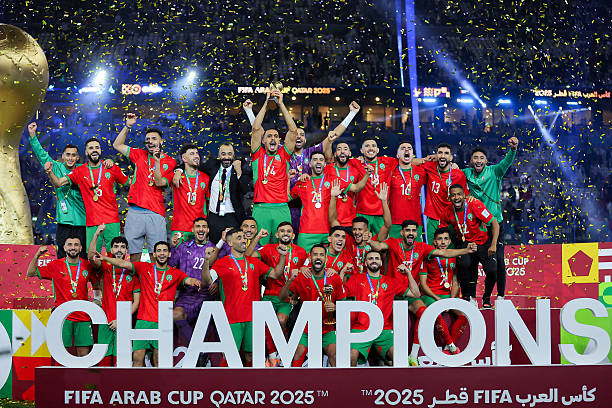
Morocco won the 11th edition of the FIFA Arab Cup with an action-packed 3–2 victory over Jordan in the final.
Exactly three years on from the unforgettable 2022 FIFA World Cup final, Lusail Stadium once again hosted the coronation of a champion. This time, it was the Arab world that came together in Qatar for the FIFA Arab Cup.
After 29 matches over 18 days, Morocco and Jordan were the last two teams left in contention for the title. The Atlas Lions had previously won the tournament in 2012, while Jordan were appearing in their first Arab Cup final, just a few years after losing the Asian Cup final at the same venue.
Before kick-off, there were concerns that the match would not go ahead at all. An unusually heavy downpour in Doha led to the suspension of the third-place match between the UAE and Saudi Arabia, raising doubts about the final. While several events were cancelled due to the weather, the showpiece match proceeded as planned.
Tens of thousands of fans braved thunderstorms to pack Lusail Stadium, and they were rewarded just minutes into the game. Oussama Tannane opened the scoring with a stunning long-range effort from inside Morocco’s own half, giving the Atlas Lions an early lead.
Jordan were unable to find an equaliser before the break, but tournament top scorer Ali Olwan levelled the match just two minutes into the second half with a powerful header. He then put Jordan ahead from the penalty spot in the 68th minute, setting up a dramatic finish.
Morocco’s pressure paid off late on when substitute Abderrazak Hamdallah turned the ball in from close range just three minutes before full time, sending the match into extra time. The veteran striker struck again in the 100th minute, restoring Morocco’s lead. This time, the Atlas Lions held firm to seal a memorable victory.
While the atmosphere of the World Cup was always going to be impossible to replicate, echoes of that tournament were felt throughout the Arab Cup. Fans travelled from across the region, filling stadiums, metro stations and fan zones to create a festival-like atmosphere.
There were memorable moments across the competition. Hosts Qatar endured a difficult campaign and exited at the group stage, while Palestine captured widespread admiration with their first-ever run to the knockout rounds. They pushed World Cup-bound Saudi Arabia to extra time in the quarter-finals before eventually bowing out.
Individual honours were also handed out following the final. Jordan’s Ali Olwan was awarded the Golden Boot, Morocco’s Mehdi Benabid received the Golden Glove, and Morocco’s Mohamed Rabie Hrimat was named Best Player of the tournament.
Attention will now turn to the future, with the FIFA Arab Cup set to return to Qatar for its next two editions in 2029 and 2033.
source/content: dohanews.co (headline edited)
____________
Morroco’s players celebrate with the trophy after winning the FIFA Arab Cup 2025 final football match between Jordan and Morocco at the Lusail Stadium Stadium, in Lusail on December 18, 2025. (Photo by Karim JAAFAR / AFP via Getty Images)
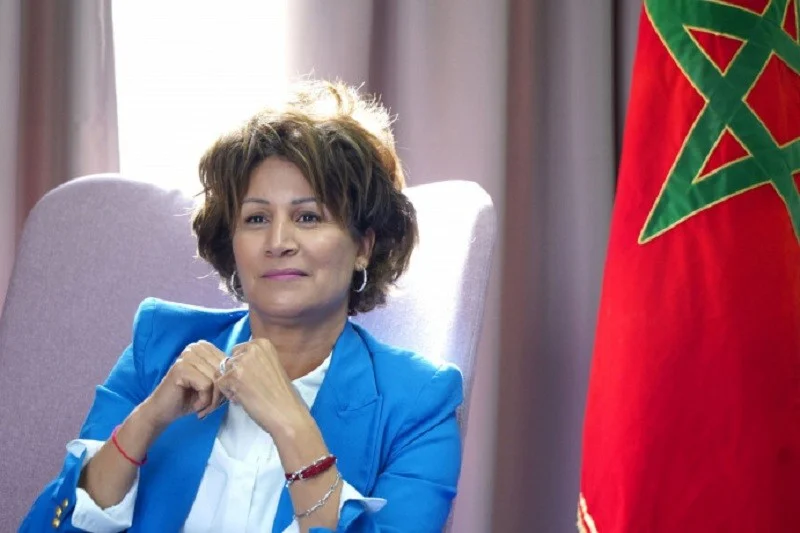
Nezha Bidouane has been granted a new four-year term on the governing board of the International Sport for All Federation (FISPT) following elections held during the organization’s general congress in central Italy.
The Moroccan sports official, who serves as President of the Royal Moroccan Federation for Sport for All, retained her seat as delegates from dozens of countries convened on January 24 and 25 to determine the federation’s future leadership.
Bidouane’s renewed mandate reinforces Morocco’s representation within global sports governance at a time when the country continues to expand its engagement on the international sports stage. Her role reflects sustained efforts to promote wider access to sport, emphasizing community participation and inclusivity beyond elite-level competition.
A former world-class athlete, Bidouane built a distinguished career in athletics, securing multiple international titles in the 400-meter hurdles and earning a bronze medal at the 2000 Sydney Olympic Games. She has since transitioned into sports administration, where she remains actively involved in advancing inclusive and developmental sporting initiatives worldwide.
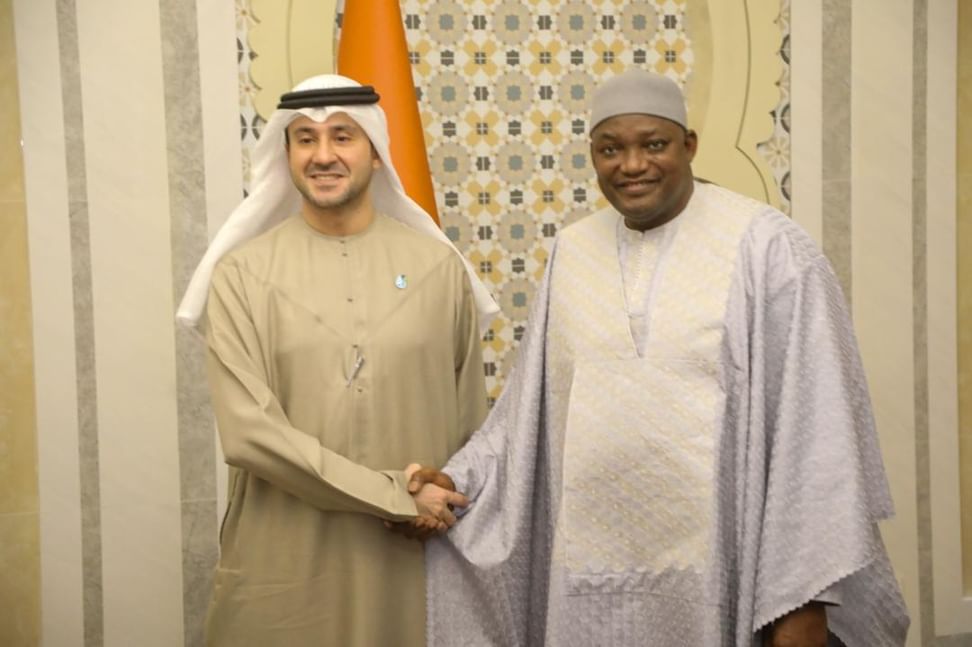
The African media organisation Financial Afrik, during the current edition of its annual conference hosted by the Gambian capital Banjul, selected Ali Alshimmari, Managing Director and CEO of the UAE-based company Global South Utilities, as a pioneer of Arab–African cooperation, as part of a list of 100 influential African figures in the fields of economy, investment, and development, in recognition of his role in supporting sustainable energy projects and promoting long-term investment across the African continent.
President Adama Barrow of The Gambia received Alshimmari and expressed his appreciation for the UAE’s support and investments in the continent.
This recognition marks the second of its kind that Alshimmari has received within a few months. In September, he was awarded the Officer of the National Order of Chad by Chadian President Mahamat Idriss Déby Itno, one of the country’s highest honors, making him the first foreign company CEO to receive this distinction from the Chadian president. The award recognised Alshimmari’s commitment to delivering the Noor Chad Solar Power Plant in record time.
Alshimmari has emerged as one of the UAE’s prominent young executives in the renewable energy sector. He previously held senior positions at Abu Dhabi National Energy Company (TAQA) and Masdar, and worked on cross-border renewable energy projects, before assuming leadership of Global South Utilities, a subsidiary of Resources Investment Group in Abu Dhabi.
Following the award ceremony, Alshimmari said, “In Africa, energy is neither a luxury nor a technical issue. When electricity reaches an African village, it is not just lighting, but life in motion. Schools operate, clinics remain open, and the economy moves. This is the Africa we are working for.”
Alshimmari recently stated during the Global South Utilities Forum, hosted as part of Abu Dhabi Sustainability Week, that, “In the Global South, sustainability is not a vision of the future-it is the price of delay, paid today,” adding that, “While much of the world debates sustainability in the Global South, the UAE is busy building it.”
The company is currently implementing several renewable energy projects in a number of African countries, including Madagascar, the Central African Republic, the Comoros Islands, and Chad, contributing to improving local production capacity and supporting economic stability.
Global South Utilities aims to reach a production capacity of 750 megawatts by 2027, having so far financed projects with a total capacity of nearly 400 megawatts, including projects implemented within the African continent.
Saudi Arabia won several Arab awards in medicine and nursing during the 63rd session of the Council of Arab Health Ministers, held recently in Tripoli, Libya, highlighting the Kingdom’s growing prominence in regional health excellence and the strength of its national health workforce.
The achievements reflect the rapid development of Saudi Arabia’s health sector and the high caliber of its medical and nursing professionals, who continue to contribute to innovation, enhanced health preparedness and the delivery of sustainable healthcare — in line with the objectives of the Health Sector Transformation Program under Saudi Vision 2030, said a statement issued on Thursday by the Saudi Ministry of Health.
As part of the Arab Doctors Award 2025 by the General Secretariat of the Arab League’s Social Affairs Sector, Dr. Ahmed bin Salem Bahammam, director of the Prince Naif Center for Health Research, received the award for excellence in scientific research and innovation.
Dr. Zuhair bin Yousef Al-Hlais, senior consultant in cardiac surgery at King Faisal Specialist Hospital, was honored with the award for excellence, leadership and professional medical impact.
For nursing, a Saudi team comprising Dr. Manal Saeed Banassr, Iman Mohammed Al-Shammari, Abdulrahman Abdullah Abu Khadaah, Jawharah Fahad Al-Harbi and Reem Mohammed Al-Humaidan won first place in the clinical practice category of the “Outstanding Work in Nursing and Midwifery” award for their project, the INS Model.
The innovative scheme focuses on strengthening surge capacity in intensive care units during disasters by enhancing nursing workforce readiness and increasing ICU capacity in times of crisis.
The model was developed during the COVID-19 pandemic.
In addition, Dr. Badriah Awad Al-Shehri, chief nursing executive at King Saud Medical City, jointly won the “Outstanding Work in Nursing and Midwifery” award with Egypt for the Nethathon Project, which aims to advance nursing education and training, enhance workforce competencies and improve the quality of health education outcomes.
The awards highlight Saudi Arabia’s leadership in medical innovation and professional excellence across the Arab region.
source/content: arabnews.com (headline edited)
______________
Saudi Arabia wins Arab awards in medicine and nursing at Arab Health Ministers’ Meet 2025. (Supplied)
Building Capacity in a Time of Digital Chaos: How Arabi Facts Hub Works with Media Students and Journalists to Rebuild Trust in Info.
Al-Fanar Media and Arabi Facts Hub, a nonprofit organisation that detects false Arabic content on the internet, are uniting to combat misinformation.
The two organisations have signed a protocol agreeing to exchange expertise and conduct training courses and research on confronting misinformation and disinformation in Arabic content on the internet.
This agreement is rooted in both parties’ belief in the importance of professional journalism, fostering a culture of fact-checking, and strengthening the abilities of journalists, researchers, and students in digital media, media literacy, and investigative journalism.
The protocol involves the two organisations running joint training programmes for journalists, researchers, and students; organising fact-checking meetings, seminars, and panel discussions at Arab universities; distributing educational material about media literacy, fact-checking, and open-source information; and combining to publish investigative reports.
Combating Misinformation
Mohammad El-Hawary, Al-Fanar Media’s executive director and editor-in-chief, said, “Al-Fanar Media’s strategy is built on coordinating efforts and establishing partnerships with Arab and international institutions to help Arab youth combat misinformation and rumours. We do this by producing training and educational material and organising events to try to create responsible content creators for traditional media and social media audiences.”
Al-Fanar Media’s efforts in this area have included joining the Unesco Alliance for Media and Information Literacy, offering media literacy training workshops for Arab university students in Egypt, Jordan, Morocco, and Saudi Arabia, and starting a Gen Z project that trains young content creators in professional journalism standards, particularly for social media.
The organisation also organises online discussions with experts and academics through its Al-Fanar Media Talks series.
El-Hawary added: “Our world today is extremely complex, yet highly interconnected in terms of shared destiny and risks. It requires flexibility, the exchange of expertise and best practices, and understanding specific societies when providing resources that let communities, often led by young people, tackle these common challenges in a responsible manner.
“We value our partnership with Arabi Facts Hub and are pleased that Al-Fanar Media’s platforms can be a window through which the Arab public—including young people, experts, academics, and others interested in Arab affairs—can access the professional output produced by the Arabi Facts Hub team.”
The collaboration with Arabi Facts Hub will include forming joint policies and fact-checking events. It is one of a series of new partnerships that Al-Fanar Media is planning to build on its reputation and increase its impact in the Arab world, El-Hawary said.
New Horizons in Media Literacy
Maha Salah El-Din, head of communications and partnerships at Arabi Facts Hub, also expressed her enthusiasm for the partnership with Al-Fanar Media, saying it opened new horizons for cooperation in media literacy to address the information disorder in the Arab region.
The training, academic, and editorial projects that the project plans will help journalism and fact-checking abilities in the Arab region, she said.
El-Hawary and El-Din both said they hoped that the cooperation would raise public awareness about misinformation and help curb its spread.
The formal cooperation agreement is valid for one year but will automatically renew as long as each party wishes to continue.
Al-Fanar Media is an independent news organisation that covers higher education, research, and culture in the Arab world. It seeks to provide accurate and balanced content in both Arabic and English about issues relevant to Arab higher education across the region and beyond.
Arabi Facts Hub is an independent platform that promotes a culture of fact-checking and combating misinformation in the Arab region through training, content production, support for investigative journalism, and building skills for journalists, researchers, and media students.
501 vehicles drive through the dunes of scenic Tuwaren.
Hail entered the Guinness World Records at the weekend after producing the largest-ever off-road production car convoy.
The previous record, some 449 vehicles in Australia, was smashed with 501 vehicles driving through the dunes of the scenic Tuwaren area, 42 km northwest of Hail and a location surrounded by the Aja Mountains.
A large number of people from various regions of the Kingdom, Gulf and Arab countries gathered to navigate an unpaved desert trail of 7 km, showcasing their spirit of adventure and the diversity of the region’s terrain.
The event was open to both seasoned off-road drivers and newcomers looking for a unique winter entertainment. This made it suitable for individuals, groups of friends, and families.
The convoy was accompanied by a variety of cultural and entertainment activities that contributed to enhancing the experience for visitors and participants.
Prince Abdulaziz bin Saad bin Abdulaziz, the governor of Hail Province and the chairman of the board of the Development Authority, thanked the Saudi leadership for supporting the development of the Kingdom’s regions. He also praised Hail’s youngsters for taking part in breaking the world record.
Omar Abdullah Al-Abdul-Jabbar, the CEO of Hail Region Development Authority, told Arab News that Hail’s entry into the Guinness World Records was a national achievement.
He said: “Hail’s achievement of this Guinness world record for organizing the largest off-road rally further solidifies its position as a leading destination for desert adventures and activities, and strengthens its presence on the local and regional tourism map.”
The event was organized by the Saudi Tourism Authority and Hail Region Development Authority, with sponsorship from the King Salman bin Abdulaziz Royal Reserve Development Authority, and Culture House.
In addition, 14 government entities supported the event, including the Principality of Hail Region, and the Saudi Automobile and Motorcycle Federation.
source/content: arabnews.com (headline edited)
______________
501 vehicles took part in an off-road drive in Hail over the weekend, smashing the previous world record. (Supplied)
A former Iraqi president, Barham Salih, 65, at the start of the year became the first former head of state to run the UNHCR.
Barham Salih has known torture and the wrenching loss of exile. Four decades after his own ordeal, he has taken the helm of the UN refugee agency as it grapples with a funding shortfall and ever-rising needs.
A former Iraqi president, Salih, 65, at the start of the year became the first former head of state to run the United Nations High Commission for Refugees (UNHCR).
“It is a profound moral and legal responsibility,” Salih said during his first trip in the new role, to Kakuma refugee camp in Kenya.
“I know the pain of losing a home, losing your friends,” he said.
The Kakuma refugee camp, which Salih visited on Sunday, is east Africa’s second largest, hosting roughly 300,000 people from South Sudan, Somalia, Uganda and Burundi. It has been in place since 1992.
The world “should not allow this to continue”, Salih said, praising a new initiative by Kenya to turn its camps into economic hubs.
“We should not only protect refugees … but also enable them to have more durable solutions,” he said, while adding, “The better way is to have peace established in their own countries … nowhere is nicer than home.”
The son of a judge and a women’s rights activist, Salih was born in 1960 in Sulaymaniyah, a stronghold of the Patriotic Union of Kurdistan (PUK), which sought self-determination for Iraq’s Kurds.
He went into exile in Iran in 1974, spending a year at a school for refugees. As a teenager in 1979, back in Iraq and already a member of the PUK, he was arrested twice by former President Saddam Hussein’s regime.
“I was released after 43 days after having suffered torture, electric shocks, beating,” he said.
Upon release, he still managed to rank among Iraq’s top three high school students, according to a former colleague, before fleeing with his family to Britain where he earned a degree in computer engineering and a doctorate.
Salih has “real experience of exile … He brings a personal perspective of displacement, which is very important,” Filippo Grandi, his predecessor at UNHCR, said last month.
Salih went on to a successful career in Iraqi Kurdistan and Iraq’s federal government after Saddam Hussein’s overthrow in 2003, holding the largely ceremonial role of president from 2018 to 2022.
Refugee numbers have doubled to 117 million in the past decade, the UNHCR said in June, but funding has dropped sharply, especially since Donald Trump returned to the White House.
UN Secretary-General Antonio Guterres recently praised Salih’s experience as a “crisis negotiator and architect of national reforms” at a time when the agency faces “very serious challenges”.
“We have had very serious budget cuts last year. A lot of staff have been reduced,” Salih said.
“But we have to understand, we have to adapt,” he said, calling for “more efficiency and accountability” while also insisting the international community meets its “legal and moral obligations to help”.
The decree for the first time grants Kurdish Syrians rights, including recognition of Kurdish identity as part of Syria’s national fabric
It designates Kurdish as a national language alongside Arabic and allows schools to teach it.
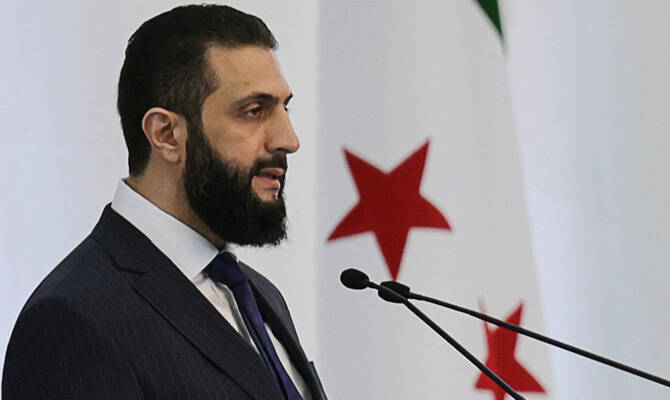
Syria’s President Ahmed Al-Sharaa issued a decree affirming the rights of the Kurdish Syrians, formally recognizing their language and restoring citizenship to all Kurdish Syrians, state news agency SANA reported on Friday.
Sharaa’s decree came after fierce clashes that broke out last week in the northern city of Aleppo, leaving at least 23 people dead, according to Syria’s health ministry, and forced more than 150,000 to flee the two Kurdish-run pockets of the city.
The clashes ended after Kurdish fighters withdrew.
The violence in Aleppo has deepened one of the main faultlines in Syria, where Al-Sharaa’s promise to unify the country under one leadership after 14 years of war has faced resistance from Kurdish forces wary of his Islamist-led government.
The decree for the first time grants Kurdish Syrians rights, including recognition of Kurdish identity as part of Syria’s national fabric. It designates Kurdish as a national language alongside Arabic and allows schools to teach it.
It also abolishes measures dating to a 1962 census in Hasaka province that stripped many Kurds of Syrian nationality, granting citizenship to all affected residents, including those previously registered as stateless.
The decree declares Nowruz, the spring and new year festival, a paid national holiday. It bans ethnic or linguistic discrimination, requires state institutions to adopt inclusive national messaging and sets penalties for incitement to ethnic strife.
The Syrian government and the Kurdish-led Syrian Democratic Forces (SDF), that controls the country’s northeast, have engaged in months of talks last year to integrate Kurdish-run military and civilian bodies into Syrian state institutions by the end of 2025, but there has been little progress.
source/content: arabnews.com (headline edited)
________________
Syria’s President Ahmed Al-Sharaa issued a decree affirming the rights of the Kurdish Syrians, formally recognizing their language and restoring citizenship to all Kurdish Syrians, state news agency SANA reported on Friday. (Reuters/File)
Ibn Khaldoun, in full Abou Zeid Abdelrahman Ibn Mohammed Ibn Khaldoun Al-Hadrami, was born in May 27, 1332, Tunis, Tunisia — died March 17, 1406, in Cairo, Egypt. He is the greatest Arab historian and social scientist. Ibn Khaldoun has been described as the founder of the modern disciplines of historiography, sociology, economics, and demography.
He who finds a new path is a pathfinder, even if the trail has to be found again by others; and he who walks far ahead of his contemporaries is a leader, even though centuries pass before he is recognized as such.
Ibn Khaldoun.
Who is Ibn Khaldoun?
Multiple sources, such as Niccolò Machiavelli of the Renaissance and the 19th-century European scholars widely acknowledged the significance of his achievements and considered Ibn Khaldoun to be one of the greatest philosophers of the Middle Ages.
He is actually the one who developed one of the earliest nonreligious philosophies of history, contained in his masterpiece, the Muqaddimah (“Introduction”). He also wrote a definitive history of Muslim North Africa.
The past resembles the future more than one drop of water resembles another. Ibn Khaldoun
The easiest method of acquiring the habit of scholarship is through acquiring the ability to express oneself clearly in discussing and disputing scholarly problems. This is what clarifies their import and makes them understandable. Some students spend most of their lives attending scholarly sessions. Still, one finds them silent. They do not talk and do not discuss matters. More than is necessary, they are concerned with memorizing. Thus, they do not obtain much of a habit in the practice of scholarship and scholarly instruction
Ibn Khaldoun.
Ibn Khaldoun — Early Life
Ibn-Khaldoun was born in Tunis, Tunisia in 1332; the house where he believed to have been born is in the Khaldounia, a quarter in Tunis that still stands almost unchanged and well-preserved.
In his autobiography, Ibn Khaldoun mentioned that the family claimed descent from Khaldoun, who was of South Arabian origin, and had come to Spain in the early years of the Arab conquest. The family then moved to Sevilla, played an important part in the civil wars of the 9th century, and was long considered among the three leading families of that city.
During the following 4 centuries, the Ibn-Khaldouns successively held high administrative and political positions under the Umayyad, Almoravid, and Almohad dynasties; other members of the family served in the army, and several were killed at wars, mostly at the Battle of Al-Zallaqah (1086), which temporarily halted the Christian reconquest of Spain. But the respite thus won proved short, and in 1248, just before the fall of Sevilla and Córdoba, the Ibn-Khaldouns and many of their countrymen judged it prudent to cross the Straits of Gibraltar and landed at Sabtah (now Ceuta, a Spanish exclave), on the northern coast of Morocco.
Ove there, the refugees that came in from Spain were of a much higher level of socio-economic status than the local North Africans, and the Khaldoun family was soon called to occupy the leading administrative positions in Tunis. The Ibn Khaldoun’s father also became an administrator and soldier but soon abandoned his career to devote himself to the study of theology, law, and letters. In Ibn Khaldoun’s words:
He was outstanding in his knowledge of Arabic and had an understanding of poetry in its different forms and I can well remember how the men of letters sought his opinion in matters of dispute and submitted their works to him.
Ibn Khaldoun.
In 1349, however, the Black Death struck Tunis and took away both his parents.
Ibn Khaldoun — Education & Career
Ibn Khaldoun gives a detailed recap of his education, listing the main books he read and describing the life and works of his teachers. He memorized the Quran, studied its principal commentaries, had a good grounding in Muslim law, familiarized himself with the masterpieces of Arabic literature, and acquired a clear style for writing fluent verse that was to serve him well in later life when addressing eulogistic or supplicatory poems to several rulers back then.
At age 20, when he was given a post at the court of Tunis, followed 3 years later by a secretaryship to the Sultan of Morocco in Fes. By then he got married. After two years of service, however, he was suspected of participation in a rebellion and was imprisoned. Released after nearly two years and promoted by a new ruler, he again fell into disfavor, decided to leave Morocco, and crossed over to Granada, for whose Muslim ruler he had done some service in Fes and whose prime minister, the brilliant writer Ibn al-Khaṭib, was a good friend. Ibn Khaldoun was then 32 years old.
The following year Ibn Khaldoun was sent to Sevilla, Spain to conclude a peace treaty with Pedro I of Castile. There he saw “the monuments of my ancestors.” Pedro “treated me with the utmost generosity, expressed his satisfaction at my presence and showed awareness of the preeminence of our ancestors in Sevilla.” Pedro even offered him a post in his service, promising to restore his ancestral estates, but Ibn Khaldoun politely declined. He gladly accepted the village that the sultan of Granada bestowed on him, however, and, feeling once more secure, brought over his family, whom he had left in safety in Constantine.
But, to quote him once more, “enemies and intriguers” turned the all-powerful prime minister, Ibn al-Khaṭib, against him and raised suspicions regarding his loyalty; it can be conjectured that the task of these enemies must have been greatly facilitated by the apparent jealousy between the two most brilliant Arab intellectuals of the age. Once more, Ibn Khaldoun found it necessary to take his leave, and he returned to Africa. The following 10 years saw him change employers and employment with disconcerting rapidity and move from Bejaïa to Tlemcen, Biskra, Fes, and once more to Granada, where he made an unsuccessful effort to save his old rival and friend, Ibn al-Khaṭib, from being killed by order of its ruler.
During this period Ibn Khaldoun served as prime minister and in several other administrative capacities, led a punitive expedition, was robbed and stripped by nomads, and spent some time “studying and teaching.” This extreme mobility is partly explained by the instability of the times. The Almohad Empire, which had embraced the whole of North Africa and Muslim Spain, had broken down in the middle of the 13th century, and the convulsive process from which Morocco, Algeria, and Tunisia were subsequently to emerge was under way; wars, rebellions, and intrigues were endemic, and no man’s life or employment was secure. But in Ibn Khaldoun’s case two additional factors might be suspected—a certain restlessness and a capacity to make enemies, which may account for his constant complaints about the “intriguers” who turned his employers against him.
The Muqaddimah of Ibn Khaldoun
In 1375, craving solitude from the exhausting business of politics, Ibn Khaldoun sought refugee in Algeria for about four years, “free from all preoccupations,” and wrote his massive masterpiece, the Muqaddimah, an introduction to history.
His original intention, which he subsequently achieved, was to write a universal history of the Arabs and Berbers, but before doing so he judged it necessary to discuss historical method, with the aim of providing the criteria necessary for distinguishing historical truth from error. This led him to formulate what the 20th-century English historian Arnold Toynbee has described as “a philosophy of history which is undoubtedly the greatest work of its kind that has ever yet been created by any mind in any time or place,” a statement that goes even beyond the earlier eulogy by Robert Flint:
As a theorist on history he had no equal in any age or country until Vico appeared, more than three hundred years later. Plato, Aristotle and Augustine were not his peers . . . .Robert Flint.
Ibn Khaldoun went even further with the Muqaddimah. His study of the nature of society and social change led him to evolve what he clearly saw was a new sciences, such as for example what he called “the science of culture” and which he defined thus:
This science . . . has its own subject, viz., human society, and its own problems, viz., the social transformations that succeed each other in the nature of society. Ibn Khaldoun.
Obviously, for Ibn Khaldoun, history was an endless cycle of flowering and decay, with no evolution or progress except for that from primitive to civilized society. But, in brief descriptions of his own age, which have not received as much attention as they deserve, he showed that he could both visualize the existence of sharp turning points in history and recognize that he was witnessing one of them: “When there is a general change of conditions . . . as if it were a new and repeated creation, a world brought into existence anew.” The main cause he gives for this great change is the Black Death, with its profound effect on Muslim society, but he was fully aware of the impact of the Mongol invasions, and he may also have been impressed by the development of Europe, the merchants and ships of which thronged the seaports of North Africa and some of the soldiers of which served as mercenaries in the Muslim armies.
Ibn Khaldoun’s Journey to Egypt
After have completed the first draft of the Muqaddimah, nostalgia for the more active world of politics, drew him back to seek city life. A severe illness finally convinced him to leave his refuge; he secured permission to return to Tunis, where he “engaged exclusively in scholarly work,” completing much of his history. But once more he aroused both the jealousy of a prominent scholar and the suspicion of the ruler, and in 1382, at age 50, he received permission to sail to Egypt, ostensibly for the purpose of performing the pilgrimage to Mecca.
After 40 days Ibn Khaldoun landed in Alexandria and shortly afterward was in Cairo, then, as now, by far the largest and most opulent city in the Arab world. Its impact on him was profound: “I saw the metropolis of the ear, the garden of the world, the gathering place of the nations . . . the palace of Islam, the seat of dominion . . . .” His curiosity about Cairo was evidently of long duration, for he quotes the replies several eminent North Africans had made to his enquiries on their return from that city, including: “He who has not seen it does not know the power of Islam.”
Within a few days “scholars thronged on me, seeking profit in spite of the scarcity of merchandise and would not accept my excuses, so I started teaching at Al-Azhar,” the famous Islamic university. Shortly afterward, the new Mamluk ruler of Egypt, Barquq, with whom he was to remain on good terms except for one or two brief periods of misunderstanding, appointed him to a professorship of jurisprudence at the Quamḥiyyah college and, within five months, made him chief judge of the Mālikī rite, one of the four recognized rites of Sunnite Islam. Barqūq also successfully interceded with the ruler of Tunis to allow Ibn Khaldoun’s family to rejoin him, but the ship carrying them foundered in the port of Alexandria, drowning all on board.
Significance
Ibn Khaldount did make a big impact and he was, as described by many sources, such as Niccolò Machiavelli of the Renaissance and the 19th-century European scholars, to be one of the greatest philosophers of the Middle Ages. Indeed, it is perhaps not too fanciful to attribute to Ibn Khaldun’s influence the remarkable revival of historical writing in 15th-century Egypt and North Africa.
Later, several distinguished 16th- and 17th-century Ottoman scholars and statesmen took a keen interest in Ibn Khaldoun’s work, and a partial translation of the Muqaddimah into Turkish was made in the 18th century. But it was only after the 1860s, when a complete French translation of the Muqaddimah appeared, that Ibn Khaldun found the worldwide audience his incomparable genius deserved.
His Highness Sheikh Mohammed bin Rashid Al Maktoum, Vice President, Prime Minister and Ruler of Dubai, honoured the six winners of the Great Arab Minds 2025 edition at the Museum of the Future in Dubai.
Great Arab Minds is the largest Arab initiative dedicated to celebrating outstanding Arab achievement, highlighting contributions to advance human civilisation, support the expansion of scientific and knowledge-based endeavours, and showcasing the creative impact of Arab talent across the region and globally.
His Highness affirmed that the Great Arab Minds initiative was designed to expand the horizons for established and emerging Arab talent, nurturing and investing in their potential; recognise Arab achievement across research, development, innovation, technology, culture, and architecture; and to reinforce a culture of pride and sustained support for Arab individuals who have inspired significant progress in key fields.
His Highness Sheikh Mohammed said, “Today, we honour Great Arab Minds in recognition of achievements that advance civilisation and build societies. From the Museum of the Future in Dubai, we reaffirm our support for Arab talent committed to innovation, creativity, and excellence.”
His Highness further said, “We congratulate the winners of the Great Arab Minds 2025: Professor Abbas El Gamal in the Engineering and Technology category, Dr. Nabil Seidah in the Medicine category, Professor Badi Hani in the Economics category, Professor Majed Chergui in the Natural Sciences category, Dr. Suad Amiry in the Architecture and Design category, and Professor Charbel Dagher in the Literature and Arts category. We encourage them to continue their journey of achievement and contribution, serving as true role models for younger generations in our region and around the world, inspiring them to shape a better future through science and knowledge.”
His Highness expressed his confidence in the ability of Arab talent to drive progress in scientific research, knowledge creation, and the cultural sector, supported by expertise, institutional support, and the ambition of young people across the region.
Focused on a better future
Sheikh Mohammed noted that the Great Arab Minds initiative will continue to highlight the achievements of Arab individuals who look to the future with optimism and pursue ambitions that recognise no limits.
The awards ceremony was attended by H.H. Sheikh Maktoum bin Mohammed bin Rashid Al Maktoum, First Deputy Ruler of Dubai, Deputy Prime Minister and Minister of Finance of the UAE; H.H. Sheikh Ahmed bin Mohammed bin Rashid Al Maktoum, Second Deputy Ruler of Dubai and Chairman of the Dubai Media Council; H.H. Sheikh Ahmed bin Saeed Al Maktoum, President of the Dubai Civil Aviation Authority, Chairman of Dubai Airports, and Chairman and Chief Executive of Emirates Airline and Group; His Highness Sheikh Mansoor bin Mohammed bin Rashid Al Maktoum, President of the UAE National Olympic Committee; H.H. Sheikha Latifa bint Mohammed bin Rashid Al Maktoum, Chairperson of the Dubai Culture and Arts Authority (Dubai Culture); and H.H. Sheikh Mohammed bin Rashid bin Mohammed bin Rashid.
Mohammed bin Abdullah Al Gergawi, Minister of Cabinet Affairs and Chair of the Higher Committee for the Great Arab Minds initiative, was among numerous ministers and senior officials in attendance along with scientists, academics and diplomats.
His Excellency Al Gergawi stated that the Great Arab Minds initiative launched by His Highness Sheikh Mohammed represents a profound recognition of Arab achievement across disciplines, and a significant strategic investment in empowering talent and encouraging renewed contributions to Arab intellectual and scientific progress.
He added that the Great Arab Minds initiative embodies Sheikh Mohammed’s vision to inspire confidence in Arab capabilities and motivate individuals to take an active role in shaping their societies and the future of a region that has long contributed to human civilisation through science, literature, thought, and architecture.
‘Powerful message’
He praised the achievements of the Great Arab Minds awardees across medicine, engineering, technology, sciences, architecture, arts, and literature, saying, “Your presence today on the Great Arab Minds 2025 platform at the Museum of the Future sends a powerful message to hundreds of millions of young people to pursue excellence, achievement, and leadership in research, innovation, creativity, and knowledge, and to help shape a brighter future for Arab and human civilisation.”
The award recognised one winner in each of its six categories: Medicine, Economics, Engineering and Technology, Natural Sciences, Architecture and Design, and Literature and Arts.
In Medicine, Dr. Nabil Seidah was honoured for his medical and research achievements in cardiovascular health and cholesterol regulation.
In Economics, Professor Badi Hani was awarded for his pioneering contributions to econometrics and the development of economic analysis tools, particularly in panel data analysis. His work enabled more accurate and in-depth analysis by combining data across multiple time periods and sources.
In Engineering and Technology, Professor Abbas El Gamal was awarded for his pioneering contributions to network information theory.
In Natural Sciences, Professor Majed Chergui was honoured for his contributions to understanding light-matter interactions, developing techniques and applications that enable the study of ultrafast molecular and material dynamics at the atomic level.
In Architecture and Design, Dr. Suad Amiry was honoured for her contributions to preserving Palestinian architectural heritage through documentation, restoration, and adaptive reuse of historical buildings.
In Literature and Arts, Professor Charbel Dagher was honoured for a body of work that constitutes a key reference in the study of Arab and Islamic arts, Arabic calligraphy, and modern visual arts.
Professor Abbas El Gamal said, “I extend my sincere gratitude to His Highness Sheikh Mohammed bin Rashid Al Maktoum for his vision in launching Great Arab Minds. Being honoured in this way is deeply meaningful to me.”
Professor Majed Chergui said, “I am Algerian of Syrian origin, born in Morocco and raised in Algeria and Lebanon. In this way, the Arab world comes together in who I am. For me personally, this award is not only the highest recognition of my achievements; it touches me deeply because it comes from an Arab country.”
Dr. Suad Amiry said, “In 1981, when I decided to live in the city of Ramallah, my aim was to study traditional architecture in rural Palestine. Ten years later, I founded the Riwaq Centre, which since then has been dedicated to documenting, restoring, and rehabilitating architectural heritage in Palestine. Winning this award is a great honour for me and for the Riwaq Centre.”
Professor Badi Hani said: “This award recognises not only my work, but also the people and places that shaped me, my family, my mentors, my city, and the Arab world that nurtured my earliest aspirations.”
Dr. Nabil Seidah said, “My father’s adage, that knowledge is something no one can ever take away from you, has been the principle that guided me throughout my journey. Your trust represents a powerful motivation for Arab scientists to serve as role models for future generations, and I pledge to continue serving science with the same passion that has always driven me.”
Professor Charbel Dagher said: “Commitment to the Arabic language has remained a defining hallmark of everything I have done: teaching, writing, and research, to the point that I live within Arabic itself. We cannot exist outside our language or our culture. Allow me to share this award with those who supported me, and my gratitude extends to everyone who has worked and continues to work to ensure that Arabic remains a living language of science, knowledge, and culture.”
The awardees were chosen by six high-level specialised committees, one for each category. Abdulla bin Touq Al Marri, Minister of Economy and Tourism, chaired the Economics Committee; Sarah Al Amiri, Minister of Education, chaired the Engineering and Technology Committee; Mohammed Ahmed Al Murr, Chairman of the Board of Directors of the Mohammed bin Rashid Al Maktoum Library Foundation, chaired the Literature and Arts Committee; Dr. Amer Sharif, Chief Executive Officer of Dubai Health and President of the Mohammed Bin Rashid University of Medicine and Health Sciences headed the Medicine Committee; Professor Sehamuddin Galadari, Senior Vice Provost-Research and Managing Director of the Research Institute at New York University Abu Dhabi chaired the Natural Sciences Committee; Professor Hashim Sarkis, Dean of the School of Architecture and Planning at the Massachusetts Institute of Technology chaired the Architecture and Design Committee.
In addition to the committee chairs, the specialised committees also included Essa Kazim, Governor of the Dubai International Financial Center; Dr Mohammed Madhi, Dean of the College of Business and Economics at UAE University; Dr Rabah Arezki, Chief Economist for the Middle East and North Africa (MENA) region at the World Bank and Senior Fellow at Harvard University’s John F. Kennedy School of Government; Ferid Belhaj, Fellow at the Policy Center for the New South; and Dr Jihad Azour, Director of the Middle East and Central Asia Department at the International Monetary Fund.
The committees also included Professor Ismael Al Hinti, President of Al Hussein Technical University; Adel Darwish, Regional Director of the International Telecommunication Union; Dr Ahmed Zayed, Director of the Bibliotheca Alexandria; His Excellency Dr. Alawi Alsheikh-Ali, Director General of Dubai Health Authority; Professor Elias Zerhouni, Professor Emeritus at Johns Hopkins University; Dr Noureddine Melikechi Dean of the Kennedy College of Sciences and Professor of Physics at the University of Massachusetts Lowell; Professor Nader Masmoudi, Professor at the Courant Institute of Mathematical Sciences at New York University Abu Dhabi; Dr Latifa Elouadrhiri Laboratory Directed Research Staff Scientist at the Thomas Jefferson National Accelerator Facility; and Professor Dr Jehane Ragai, Emeritus Professor of Chemistry at The American University in Cairo.
The specialised committees also included Dr Adrian Lahoud, Dean of the School of Architecture at the Royal College of Art; and Professor Ali Malkawi, Professor of Architectural Technology, Director of the Doctor of Design Studies Program, and Founding Director of the Harvard Center for Green Buildings and Cities.
The Nominations Committee included Huda Al Hashimi, Deputy Minister of Cabinet Affairs for Strategic Affairs; Chucrallah Haddad, Partner and Head of Advisory at KPMG Lower Gulf; Abdulsalam Haykal, President and Founder of Majarra Company; Ali Matar, Head of LinkedIn Middle East and North Africa and Emerging Markets in Africa and Europe; and Saeed Al Nazari, Secretary-General of the Great Arab Minds Initiative.
Widely known as the ‘Arab Nobel,’ the Great Arab Minds initiative recognises distinguished Arab achievement and highlights extraordinary contributions that reflect the region’s historic role in advancing knowledge and human progress globally. For a third consecutive edition, the initiative continues to strengthen its position as a platform for celebrating Arab creators and as a point of reference for promising Arab talent, by highlighting achievements that inspire young people and contribute to expanding Arab participation in global knowledge and civilisational advancement.