MENA COMMUNITIES IN NY, USA : ‘Niyū Yūrk’ exhibition explores MENA influence on the Big Apple , Oct 04 to Mar 08th 2026

Inside the first show dedicated to NYC’s Public Library’s Middle Eastern collections .

Outside The New York Public Library’s Stephen A. Schwarzman Building, the unmistakable scent of a halal food cart mingles with the sounds of various Arabic dialects, while two marble lions stand guard over Fifth Avenue. Inside, entire worlds are waiting to be discovered — including the often-overlooked stories of New York’s Middle Eastern and North African communities. 

“Niyū Yūrk: Middle Eastern and North African Lives in the City,” the first exhibition dedicated to the Library’s Middle Eastern collections, opened Oct. 4. It will remain on view in the Ispahani-Bartos Gallery until March 8. 

Curated by Hiba Abid, the exhibition contains around 60 objects — photos, books, periodicals and audio — dating from the 1850s to 2024. It centers specifically on the library’s own holdings, rather than attempting to tell a comprehensive history of MENA life in New York, Abid tells Arab News. 

Drawing from over a century of rare materials the exhibition uses tangible objects to express the intangible: memory, identity and immigrant culture.  

“It’s not a love letter. It’s a realistic letter,” Abid says, adding that these communities have long navigated complex questions of belonging, language, and preservation.  

“The communities, from the very beginning, were wondering, ‘Where should our kids go to school? If they go to the public New York schools, they would probably lose their language, but we want them to still know Arabic and be aware of our traditions and values,’” she said. 

The exhibition is divided into four chronological sections, designed to help guide visitors of all ages, from young children to seasoned scholars. 

The first section, “Roads to New York,” focuses on the earliest waves of immigration. One of the first featured figures is Hatchik Oscanyan — later known as Christopher Oscanyan — an Armenian man born in what is now Türkiye. He came to New York in the mid-19th century and sought to educate Americans about the complexity of the Ottoman Empire. He wrote plays and newspaper articles, as well as “The Sultan and His People,” a book that offers insight into the region’s diverse ethnic and religious makeup.  

The second section, “A Life in the City,” explores how immigrant communities began to form and thrive in New York, including in what was once known as Little Syria on Manhattan’s Lower West Side — an area that still exists today. They were entrepreneurs who opened restaurants, shops, and began publishing Arabic newspapers.

One of the most groundbreaking was Al-Hoda, founded by Naoum Antoun Mokarzel and his brother Salloum. “In the basement of Al-Hoda Press, they adapted the linotype machine from Latin characters to Arabic characters, which is very hard (because Arabic is) a cursive language,” Abid says. “By this technological innovation, he actually allowed other presses to form and to publish newspapers, periodicals, and books,” which then circulated throughout North and Latin America — and back to the Middle East. 

In other words, New York was instrumental in literally building the Arabic press and exporting news to the Middle East.  

Abid emphasizes how vital the library’s historical collections are to telling these stories.  

“The library has been collecting these materials since the late 19th century,” she says, adding that many of them have been digitized, enabling audiences to interact with them in a new way. 

The third section, “Impressions,” flips the gaze, revealing how Middle Eastern immigrants perceived New York and the US.  

“Many immigrant groups embraced American values… but many (Arabs) actually didn’t like New York and didn’t like American values and left after a few years here or after a few months.” The exhibit highlights these ambivalences and the tensions of assimilation. 

The final section, “In Our Own Skin,” is the most contemporary and, for Abid, the most personal. It includes raw, vulnerable stories that reflect racial identity, Islamophobia, and resistance. Among the most powerful pieces is the short documentary “In My Own Skin,” directed by Jennifer Jajeh and Nikki Byrd, which features interviews with five Arab women in New York, and was filmed just one month after the events of Sept. 11, 2001.  

“The interviews are absolutely amazing. Every time I talk about it, I have goosebumps,” Abid says. “The way they talk about it — it is still very relevant today, as if nothing changed much, except that we’re probably more powerful because we are aware of this and we know how to organize and to fight back. We have the vocabulary now, and the community.” 

That spirit of organization is embodied by Malikah, a grassroots collective founded by Rana Abdelhamid in 2010 as a self-defense class for Muslim women on Steinway Street in Queens. The movement has since expanded into a larger project of empowerment, healing, and solidarity — and is featured in the exhibit’s final section. The powerful sound of the athan, or call to prayer, has been important to this cultural shift. 

While images of the Statue of Liberty — based on an Egyptian woman — didn’t make the cut, but Abid stresses its significance on each guided tour. On this occasion, though, she wanted to focus the visitors on lesser-known gems. 

Having lived in New York for the past four years as a Tunisian immigrant who spent much of her life in France, Abid says she finds New York to be more diverse than anywhere else she has ever lived.  

“I live on Atlantic Avenue in the Syrian corner. The things I witnessed here and in Middle Eastern parts of New York, like Astoria, I could never see anywhere else — even Paris,” she says. “When you go to the exhibition, you actually think, ‘Damn! We actually did a lot. And we’re here, you know—we’re here. 

“It shows how New York was central to all of these struggles and how New York — thanks to its MENA community — was actually connected and aware. It puts New York on a global map, you know? I think New York is incredible terrain for this. It’s the space for it. That’s what this show is about, ultimately.”  

source/content: arabnews.com (headline edited)

______________
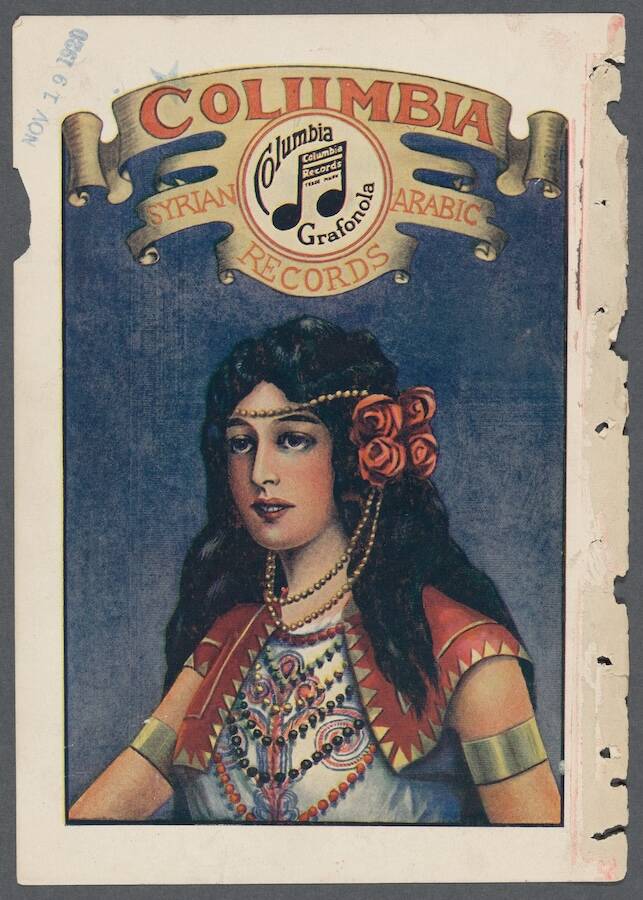
A poster from 1920 promoting Columbia Syrian Arabic Records — Columbia was one of the major American record labels to recognize the commercial potential of ethnic music markets in the US. (Courtesy of The New York Public Library)

Curator Hiba Abid. (Supplied)

___________________________________________

MIDDLE EAST & NORTH AFRICA / U.S.A
SYRIAN-AMERICANS: Refugee-Powered ‘NaTakallam’ Launches Professional Arabic Language Courses

  • New course offers four tracks specific to journalism, humanitarian work, health care and business
  • “Arabic for Professionals” carricula are proofed by Arabic academics from top universities

Six Syrian refugees in the US have crafted the “Arabic for Professionals” course launched on Wednesday by NaTakallam, a refugee-powered social enterprise that provides language learning, translation and interpretation services.

The course’s contents have been proofed by Arabic academics from top universities, such as the American University of Paris, according to a press release by NaTakallam.

Tailored for upper-intermediate and advanced Arabic students, “Arabic for Professionals” offers four tracks specific to journalism, humanitarian work, health care and business.

“The program is the outcome of conversations about common teaching challenges among NaTakallam language partners, especially when it comes to Arabic in practice,” said Carmela Francolino, NaTakallam’s talent and community manager.

“After defining the general profiles of our students and their needs, the necessity of structured courses for intermediate and advanced students was clear, as were the topics we needed to focus on,” she said.

Combining synchronous and asynchronous learning, “Arabic for Professionals” provides flexibility to fit busy schedules. The curricula are divided into several units, including exercises to reinforce each point and ten one-hour private lessons with an experienced tutor.

In addition to a focus on Modern Standard Arabic, a lingua franca used across the Arabic-speaking world, the one-on-one tutoring sessions offer students the opportunity to practice what they have learned in spoken dialects of Levantine Arabic.

Multiple pilot students have noted that the blended structure of the course provided an impetus for them to continue learning the language after their progress had stalled.

“For NaTakallam, whose core mission is to showcase the talents of displaced and conflict-affected people, it is especially meaningful that our language partners are not only teaching this curriculum but have created it in its entirety,” said Aline Sara, co-founder and CEO of NaTakallam.

Besides the new Arabic for Professionals program, NaTakallam offers an Integrated Arabic Curriculum, a 25-hour course that teaches Modern Standard Arabic and Levantine Arabic concomitantly, as well as one-on-one language tutoring in Arabic, Armenian, French, Kurdish, Persian, Russian, Spanish and Ukrainian.

source/content: arabnews.com (headline edited)

___________

_________________________

SYRIAN / AMERICANS

ARABS IN NEW YORK, USA: Tour guide dubs Little Syria ‘the best-kept secret in New York history’

Longtime scholar Linda Jacobs calls it “the best-kept secret in New York history.” She is talking about New York City’s forgotten Syrian enclave of immigrants (often referred to as Little Syria) that once thrived in the late 19th and early 20th centuries, forming the first Arab-speaking community in the US.

As part of an initiative supported by Lower Manhattan Cultural Council, Jacobs led in-person walking tours on Washington Street, the main hub of Little Syria, this summer. For Jacobs, it is a story that hits close to home.

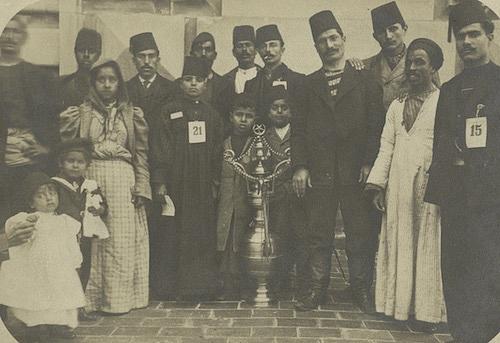
Just-landed Middle Eastern immigrants at Ellis Island, ca. 1905. (Supplied)

All four of her grandparents emmigrated from modern-day Lebanon in the late 1800s, moving to Washington Street. “I was just interested in doing my family genealogy, and more importantly, for me, understanding if the myths or stories we were told as children in our family matched the reality … Some made it, some didn’t,” she told Arab News.

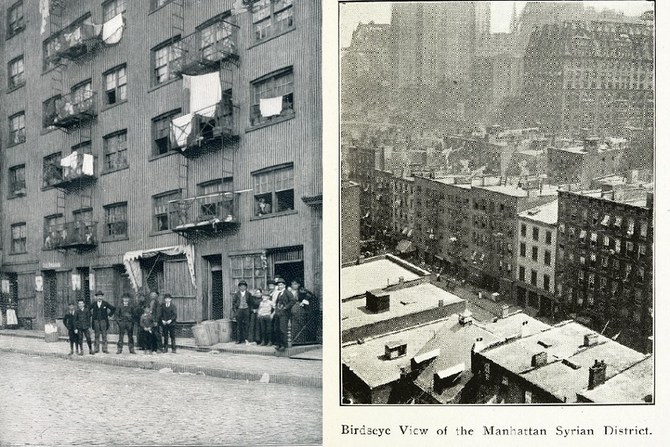
Aside from the presence of Arabs, Washington Street was home to other nationalities, including German and Irish families. It was an economic and cultural center, full of stores, cafes, and factories. It was not a bed of roses, though, according to Jacobs.

Built on landfill, Washington Street suffered from poor living conditions and a lack of clean air. Because the area was located near the tidal Hudson River, water would come up through the basements of tenement buildings.

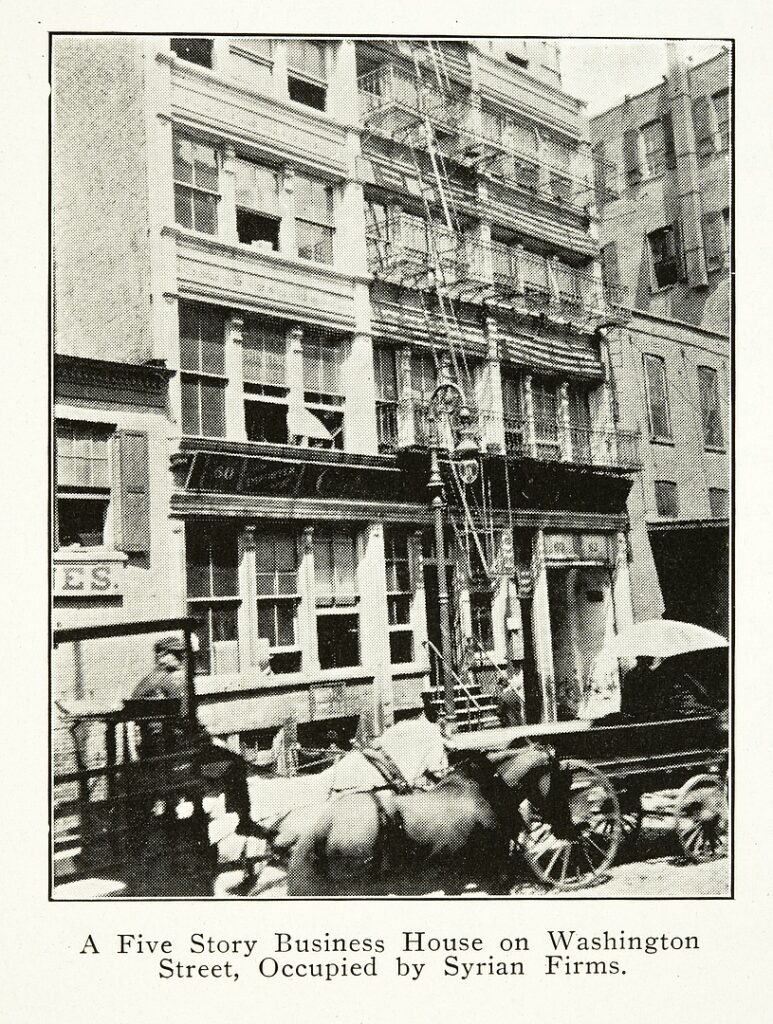
60-62 Washington Street, where dozens of Syrian-owned businesses were located, 1903. (Supplied)

To make matters worse, the rate of infant mortality, due to tuberculosis, was high. “It makes you cry, it’s really sad,” said Jacobs. “You can imagine that people did not want to remember this time of their lives, and I think that’s why my grandmother never talked about it. She never mentioned the word(s) ‘Washington Street’.”

A majority of the people referred to as Syrians who came to New York City most likely hailed from Lebanon, seeking better economic opportunities. Those who initially arrived were farmers and laborers, later followed by wealthier classes. The lucrative trade of peddling was a common profession amongst Syrians, who saved up money to open their own businesses and relocate to safer boroughs, such as Brooklyn.

By the 1940s, the Syrian community was non-existent on the street. The physical neighborhood was destroyed, making way for building the Brooklyn–Battery Tunnel. Today, Washington Street is a neglected area, where only three buildings, including the facade of St. George’s Melkite Church of the Syrian Community, have survived, but most lack landmark status granted by the city.

Conducting such walking tours around the area is important for Jacobs. “All were surprised because no one had any idea that this community existed,” she remarked. “It’s a mixed blessing, because in a way, it’s a real lesson to others to try and save their communities from total destruction. And on the other side, it’s very sad to have it all be gone.”

source/content: arabnews.com (headline edited)

____________

New York City’s forgotten Syrian enclave of immigrants (often referred to as Little Syria) thrived in the late 19th and early 20th centuries. (Supplied)

________________

ARABS IN USA

Hamse Warfa, the Highest-Ranking Somali Appointee in the Biden-Harris Administration, Washington

Hamse Warfa.

Hamse Warfa presently serving as Deputy Commissioner for Workforce Development, in the Minnesota Department of Employment and Economic Development (MEED) is leaving for a position in the Biden administration.

As a senior advisor in the U.S. State Department, Hamse will play a role in promoting democracy abroad and addressing refugee resettlement.

Hamse first came to the U.S. from Somalia when he was a teenager in 1994. He studied political science and organizational management, and built a career in both the public and private sector.

In 2014, he published his autobiography, America Here I Come: A Somali Refugee’s Quest for Hope.

As a Bush Fellow in 2016, Hamse founded BanQu, a blockchain service to provide access to credit and bank services for refugees. He also founded a consulting group to address poverty and economic opportunities for marginalized people.

__________

pix: hiraan.com

__________________________

AMERICAN / SOMALIA

Farida Zahran: US based, Award-Winning Egyptian Filmmaker

Farida Zahran. Writer. Director

Festivals & Awards:

  • SXSW 2019 (World Premiere), Palm Springs ShortFest 2019, HollyShorts 2019, Hamptons 2019, Ajyal Film Festival 2019
  • Winner of Best Live-Action Short 15 Minutes and Under at Palm Springs International ShortFest (Oscar-qualifying), IFP Student Film Showcase
  • NYU 2021 Purple List for her screenplay The Leftover Ladies
  • Vimeo Staff Pick for Youth, she is no stranger to the film and TV industry.

Education:

  • Bachelors Degree – NorthWestern University, Doha, Qatar
  • MFA – Film. NYU Tisch School of Arts

www.faridazahran.com

____________

Zahran receives the 2019 Best Live-Action Short Award at the Palm Springs International ShortFest. / pix: egyptianstreets.com

______________________

EGYPT