BRITISH / LEBANESE: Central Bank of Ireland, Governor Gabriel Makhlouf confronts crisis with the perspective of a well-travelled man

With a Lebanese name and a Cairo birthplace in the background, Gabriel Makhlouf is steering Ireland’s financial recovery.

As governor of the Central Bank of Ireland, Gabriel Makhlouf is much preoccupied by the issue of resilience in a small, open economy challenged by a year of pandemic.

Mr Makhlouf’s own peripatetic life has shown him how precious an asset the quality of adaptability is at a time of change, be it in a person or for a national economic system.

Upheaval and the Makhloufs on the move could be a theme stretching back to when his father’s side of the family travelled across the Mediterranean from their Lebanese homeland to Cyprus.

When the island was part of the Empire, the family became British subjects and Makhlouf Snr ended up working at the embassy in Cairo after the Second World War.

It was in that palatial building near the Nile that he fell for a Greek-Armenian woman whose forebears had fled the historical turmoil of Izmir in 1922. Her family moved to Athens where she has come full circle to live today.

Mr Makhlouf was talking to The National at a time when Ireland’s strict national Level 5 lockdown is both defining his job and providing a perspective on the decades of movement and upheaval that have brought him to where he is now.

At a conference last week, the governor spoke of how the outlook had deteriorated in 2021 with the renewed lockdown. The short-term need to bolster the economy coincided with structural changes from technological innovation and climate policies. Ireland suffered a 7.1 per cent slump in domestic demand last year but is expected to see a 2.9 per cent increase in 2021.

Unemployment is predicted to reach 9.3 per cent this year and for an economy with a high level of property-focused debt, ensuring that households are supported is a priority. Mr Makhlouf points out that growth is not the same as having the capacity to recover quickly.

“We cannot anticipate every type of shock but we can build resilience,” he said in his keynote address. “Resilience is what has prevented the financial system repeating its previous failure. Resilience is what has protected households, businesses and communities against the worst of the damage from the shock of the pandemic.

“Economic resilience is what helps communities to manage the disruption caused by change and to manage the economic transitions we are living in right now.”

In providing leadership during financial strife, it is perhaps a boon to have some sense of dislocation. He describes his mother’s family as refugees. His parents met in a milieu that was the product of worlds with roots as far back as the Phoenicians, ancient Greeks, Romans and Egyptians. And yet the people of Mr Makhlouf’s parents’ generation made their choices and moved to build new lives.

“My mother, who was born in Athens, had spent most of her life outside of Greece, but when my dad retired she came back,” he recalls. “My dad moved on and lived all over the world and settled in Greece at the end, before he passed away.”

Mr Makhlouf was born in Egypt but left at the age of three when his father joined the United Nations and moved to the Congo. Makhlouf pere’s time as an international diplomat exposed the young Gabriel to many cultures.

“My first language was French, because my parents’ mutual tongue was French,” he says. “So I learned English when I was about seven when we went to Bangladesh, and when we got to the Pacific we lived in Samoa.

“I went to school in Samoa. My parents then decided they ought to send me to boarding school if I was going to get a proper education and not one that changed every few years.”

Travelling during the school holidays from the school in England was a regular odyssey in itself. “The trip to get to Samoa and back to England involved stopping in Los Angeles, Honolulu and Pago Pago, an American territory pronounced ‘Pango Pango’,” he recalls.

“But then they moved to the Philippines, they moved to Fiji, they were in Ethiopia and they were in Thailand. So, you know, my brother and I got used to this life.”

It is a puzzle, then, to establish the appeal to the young Mr Makhlouf of embarking on a career as a Whitehall civil servant. He explains it as following his father’s footsteps in to the bureaucracy. Certainly, the career path was more about determination and making opportunities than wanderlust.

“I don’t think I joined the civil service for stability, to be honest, but maybe somewhere deep inside me there might have been that,” he says. “I joined the civil service really for interest. I joined as a tax inspector at the beginning. And it was an interesting career option – it involved law, it involved accountancy and it gave early opportunity to manage.”

Fate intervened to resume the family’s roving tradition when Mr Makhlouf was headhunted in 2010 to run New Zealand’s finance ministry, the Treasury. There, he was responsible for developing a measure of well-being as a replacement for the traditional gross domestic product yardstick.

In one memorable allusion in a speech he compared the role of an economist to that of an artisan, challenged with weaving together different strands of evidence into a structured framework.

Before upping sticks to the southern hemisphere, Mr Makhlouf at one point worked directly with then-UK chancellor Gordon Brown, who became prime minister at the time of the global financial crisis in 2008.

Asked about his former boss and a recent warning that the world now faces another lost decade or perhaps even worse than after that crash, Mr Makhlouf acknowledges how bad it was last time around but disagreed on the dangers now.

“I think that there is one massive difference between the crisis in 2008 and today’s crisis,” he says. “Which is that the crisis in 2008 was a crisis of the financial system, the financial system basically collapsed.

“Today, the financial system is still standing, and it’s the financial system that’s playing a very important role in supporting businesses and households through the pandemic and hopefully into a recovery and out the other end.”

World leaders are proving to be different kinds of players, having recognised that this is an economic crisis caused by a health crisis. “Governments throughout the world have chosen to close down economies for the sake of people’s health. In some respects that is been planned. In comparison to what happened in 2008 where actually events completely overwhelmed us.”

So Mr Brown’s fears are too pessimistic? “A lot of the changes and challenges that are ahead of us, I think if we manage them, then I think they can be managed well,” he says.

Mr Makhlouf takes heart from the rapid adjustment of businesses to home-working and new patterns of demand. “Economies across the world and certainly in the industrialised world have adapted to the restrictions,” he says. “More businesses are set up for that and more consumers were ready and knew how to proceed.”

The scale of “technological adaptation” since he accepted the Irish job in 2019 is something he could well have guessed was just around the corner.

The governor has not been immune to the extraordinary pressures imposed by lockdowns. Even at the outset of the pandemic, the family’s far-flung ways isolated him in Athens just as the 2,000-strong staff of the central bank in Dublin were forced to work from home.

With his mother ill in hospital, Mr Makhlouf was on hand to help her recover. “Effectively, I carried on working like everyone else via laptops and iPads. It’s quite an extraordinary thing that we all seem to have got used to.”

History means that a British citizen running the Irish central bank will always be a talking point. The moment that the UK left the EU put Mr Makhlouf in an invidious spot.

First, there is migration of businesses and banking activity from the City of London to Dublin so that firms remain within the EU umbrella. Is this an opportunity?

“Overall, I think the impact of Brexit is negative. It’s negative for Ireland and for the UK and for the EU,” he says. “We’re most exposed as a country in the agricultural sector, in particular. The fact that there was, at the end of the day, a deal albeit a very slim deal was better than there being no deal.

“On financial services, we have seen post-referendum a move of business from London to Dublin,” he agrees. “I’m not sure I would necessarily call it an opportunity at all. I think from my perspective as a regulator this increases the need for us to manage and ensure the financial system works properly.”

With his son, brother and wife’s relatives living in London, the governor observes that the pandemic has played a greater role than Brexit in cutting off families and friends. But things are different.

“I feel sorry for someone like my son — his opportunities to work in 27 other countries have now been limited. So his generation has lost out,” he says. “Ireland and Irish people have got many connections in the UK, we recognise Brexit has happened but those connections haven’t disappeared, they haven’t been lost.”

As two movie-perfect countries on the periphery of continents with roughly similar populations, one wonders what the biggest change is for Mr Makhlouf in switching from New Zealand to Ireland.

There is the remoteness of the former compared with the latter’s position within the wealthy European market. But the answer, he feels, is the perspective on China. In New Zealand, much time was spent thinking about and visiting that part of east Asia. He himself went at least nine times.

“The role that Asia has been playing and will play in the 21st century usually dominated a lot of thinking. And what’s interesting coming back to Europe, and perhaps now it’s not surprising at one level, but it was noticeable how little of our time was spent thinking about Asia.”

For the well-travelled, there is the unchanging truth that proximity is often the most powerful force in geography.

source/content: thenationalnews.com (headline edited) (feb 18th, 2021)

______________
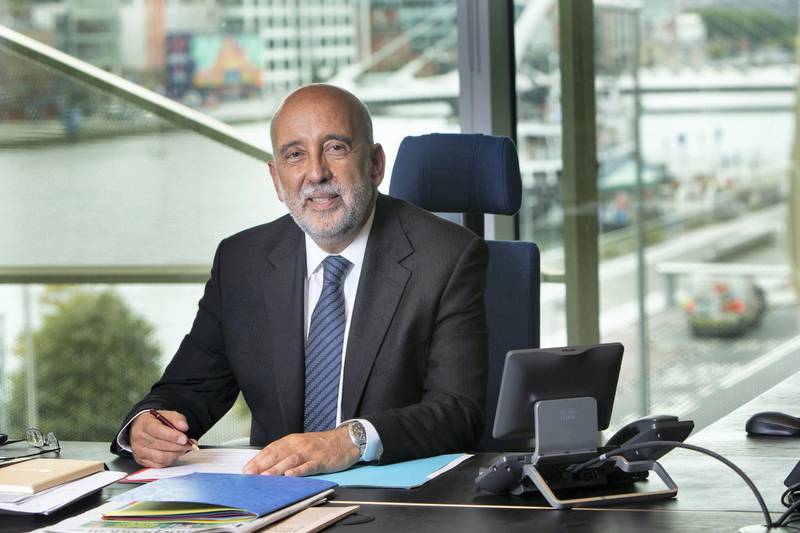
The lockdown both defines Gabriel Makhlouf’s job as Governor of the Irish central bank and provides a perspective on the decades of movement and upheaval that have brought him where he is today. Courtesy Central Bank of Ireland

_______________________

BRITISH / LEBANESE
BRITISH-LEBANESE: George Kanaan – The Beirut Grocer’s Son who became a Lion of London Banking

When the young George Kanaan wasn’t helping out in the family businesses, he was often to be found in a village classroom analysing the Shakespearean concepts of destiny and fate. His own was to take the helm of the Arab Bankers’ Association.

From the age of 8, the bell at the end of each school day sent George Kanaan wending purposefully through his ancient village in Mount Lebanon to pitch in at the family grocery store and builder’s merchants.

His father, Elias, spent the mornings running a wholesale business from the port before heading 20 kilometres south-east of Beirut to Souk El Gharb, where the young George would help to buy tobacco supplies or oversee the loading of bags filled with cement.

“To think I was a grocer’s son,” Mr Kanaan, now 76 and the chief executive of the Arab Bankers’ Association in London, tells The National.

It was an idyllic childhood that has left him full of memories of playing safely with his brothers, Pierre and Adel, on quiet streets in the shadows cast by the pine trees of the Aley district.

The cooler climes of the prosperous resort were popular with wealthy outsiders seeking respite from the humid countries of the Arabian Gulf – the kind of high society that Mr Kanaan would subsequently spend decades working for and with.

These days, accompanied by his second wife, Soulaf, he spends 60 per cent of the year at ABA’s head office in Mayfair, rubbing shoulders with the banking elite, and the rest reconnecting with his roots at the office in Beirut.

But ask him if he considers himself Lebanese or British, and he retorts: “I’m more English and Lebanese. I don’t like to say which one as I am equally part of both cultures and I like both completely.”

The dual curriculums at his secondary school, set up by western missionaries, focused heavily on discipline and English literature, which is how he came to study Macbethat the age of 15.

“There is no better way of identifying with a culture than identifying with one of its greatest literary figures,” Mr Kanaan says.

“To some extent, we lived with Shakespeare. We had to concentrate on one play, remember it by heart and be able to write analyses of concepts like destiny and fate. By the time we left school, we were seriously educated.”

He credits the influences of both parents for standing him in good stead in life. His mother, Rose, a French school teacher until she married, ensured that her three sons worked hard academically while his father encouraged their entrepreneurial skills.

So much so that when a professor at Harvard Business School asked his MBA students how to prepare a business bid, Mr Kanaan drew upon Elias’s success at winning an annual contract to supply the French army with food.

“When the professor called on me to open up the discussion, I told him how to do it. He looked at me completely stunned, then said: ‘First, what should we do with the rest of the 80 minutes, and second who told you this kind of stuff?”

Mr Kanaan read civil engineering at the American University of Beirut for four years, with his studies including summer internships in the mountains learning surveying work, and driving tractors and bulldozers.

He was awarded a fellowship to take a master’s in civil and environment engineering at Carnegie Mellon University in Pittsburgh, a city that shattered the idolised perceptions of the US built up by the Hollywood movies he watched as a child.

“If you turned on the taps in Pittsburgh, the water was yellow,” he recalls. “If you opened the window of the dormitory, you died of the smoke from the steelworks, and if you swam in the rivers you spent two weeks in hospital because the water was so polluted.”

Despite the disappointment, the course led to a job working at the think tank The Eno Centre for Transportation, which later netted him an invitation to Harvard Business School in 1973.

But his time at the prestigious institution coincided with a deterioration in his father’s health. When Mr Kanaan confided in his professor a desire to return to Beirut, the academic secured him a job at Citibank.

By then he was married to Catherine Sloane, an American he met during a French speaking class in 1970, and the mother of his now three grown-up children, Zizi, Elia and Danny.

With the move to Beirut imminent, Catherine went ahead to make preparations, arriving on the fateful day of April 13, 1975, when two sectarian incidents outside the Church of Notre Dame de la Delivrance – a drive-by shooting and a retaliatory bus attack – became the sparks that set off the civil war.

As the crisis deepened, the family instead relocated to Athens, where Citibank moved its regional base. But it meant that Mr Kanaan never had a chance to say goodbye to the father he had so admired.

“I discovered weeks later that he died. My family kept it from me because things were uncomfortable in the country and they did not want me to rush back.”

It has been difficult watching Lebanon and its many struggles since. The country is barely recognisable as the one of his youth when he used to read the parliamentary debates – published verbatim in the newspapers – to his father, whose eyesight was failing.

“He took great pleasure listening to me. I remember how intently and carefully he followed the minutes,” he says. “Lebanon at the time was a very thriving democracy.”

There is a deep belief within him that the country can be brought back from the brink but that would require, he says, a political coalescence before the economy can begin to be rescued.

He wishes he could be complimentary about Lebanon’s banking system. But what was once a jewel in the economic crown has been paralysed since a collapse in 2019, when strict withdrawal limits were imposed and transfers abroad banned after decades of unsustainable state spending and corruption.

“I always thought the Lebanese were really fine bankers,” he laments, “but fine bankers don’t end up in the mess Lebanon has.

“When I ran a bank, I thought I would rather die than see any of my depositors lose a penny and to think of the calamity that has befallen people who deposited money in Lebanese banks. The financial system is a catastrophe.”

His career took him to Riyadh, where he worked in the bank’s contracting division before the financial institution became Saudi American Bank, commonly known as Samba, by royal decree in 1980.

With Arab bankers increasingly in demand, he landed a job at the London arm of First Chicago, the US commercial bank, in 1984 as executive director in charge of the Middle East and North Africa region.

“We had a ball, coming to London,” he says. “It was a senior job that paid well so they put me and the family up in a Savoy suite for six weeks. That was a nice entry into the UK.”

The family moved into a three-storey, 7,000 sq ft upper maisonette off Sloane Square, a temporary solution while a search was under way for a permanent home.

“It had a grand staircase and a living room that could accommodate 100,” says Mr Kanaan.

“We were supposed to be there for about a year but we left 14 years later. We had a fantastic time living in one of the best addresses in London, with the children studying at American School of London.”

As ever, Mr Kanaan’s career was focused on the Arab world, and within three years he was back working for Citibank to build Samba’s presence in the UK capital.

By the time he left, five years later, he had established Samba Capital Management International, a portfolio management business “with $3.5bn of funds”.

Next came a stint with Saudi Arabia’s Prince Khalid bin Sultan bin Abdulaziz Al Saud, co-commander with General Norman Schwarzkopf of the allied forces during the first Gulf War.

As the chief executive of Makshaff, Mr Kanaan divided his time between Riyadh, Geneva and London, responsible for the prince’s personal affairs, staff, luxury homes around the world, private yacht and jet.

“Working in a job like that, I’m not exaggerating when I say I had breakfast on one flight, lunch on another and dinner on the third flight,” he says. “It was non-stop.”

The long hours took their toll on his first marriage, and thoughts turned to retirement at the age of 50 but it’s hard to conceive that giving up work altogether was ever a serious option.

There were dabblings in “failed” entrepreneurial ventures, such as a restaurant chain and a financial business in Cyprus, as well as a more successful mortgage brokerage company.

He spent much time indulging his passion for amassing a personal library of books connected to the Levant, Egypt and Iraq, with a preference for writings about the region by Europeans.

“I have a phenomenal collection – 1,000 books from the 1500s onwards – and some are so rare,” Mr Kanaan says.

Perhaps unsurprisingly for a former banker, another enthusiasm is for old paper money, the acquisition of which he equates to philately except that notes are larger than postage stamps and carry more historical information.

“I started in 1985, collecting anything Arabic, but it became too unwieldy. So I sold everything not from Lebanon, Syria and North Africa at an auction about 10 years ago. I made so much money, it’s a joke.”

Mr Kanaan’s return to the banking sector came in 2009, when asked to head the ABA as the world was dusting itself down from the global financial crisis.

The association was set up in 1975 when bankers running regional offices in Beirut flocked to London to escape the civil war. These Palestinians, Egyptians, Syrians and Iraqis brought with them regional expertise as well as contact books filled with the names of central bank governors, and oil and finance ministers.

“With that knowledge, they became the most sought-after people in the world because they had access to key people in the Arab region – which was not as accessible as it is now.

“Lunches at the association became really quite important, the place to meet if you wanted to do anything with the Arab world. There was a lot of business to be done because the price of oil had gone through the roof and the money was flowing like you would not believe.”

But things had begun to change by the time that Mr Kanaan was sitting on the board during his years at Samba. The term “Arab bankers” itself had become a thing of the past. The bankers were now British, American, Indian, Pakistani, whose careers concentrated on the Arab world.

When Mr Kanaan took the helm, the evolution went further as the ABA became a professional body connecting anyone with an interest in the Arab banking sector, not only Arab bankers themselves.

Now, the Arab Banker magazine has been revived, the website revamped, and membership expanded beyond Arab banks to include global institutions such as HSBC, BNY Mellon along with service providers like law firms, auditors and consultants.

The events calendar is still full but has pivoted to professional content about property, financial crime or trade finance with speakers from the Financial Conduct Authority or the Central Bank invited, while the social side burgeons with iftars, Christmas parties and gala dinners.

For the grocer’s son whose work ethic was first instilled as an 8-year-old, there seems little sign yet of Mr Kanaan putting his feet up.

“It’s a full-time job but this kind of work is fun,” he says. “The members are my friends, and I’ve been in this industry for more than 40 years, so why retire?”

source/content: thenationalnews.com (headline edited)

_____________

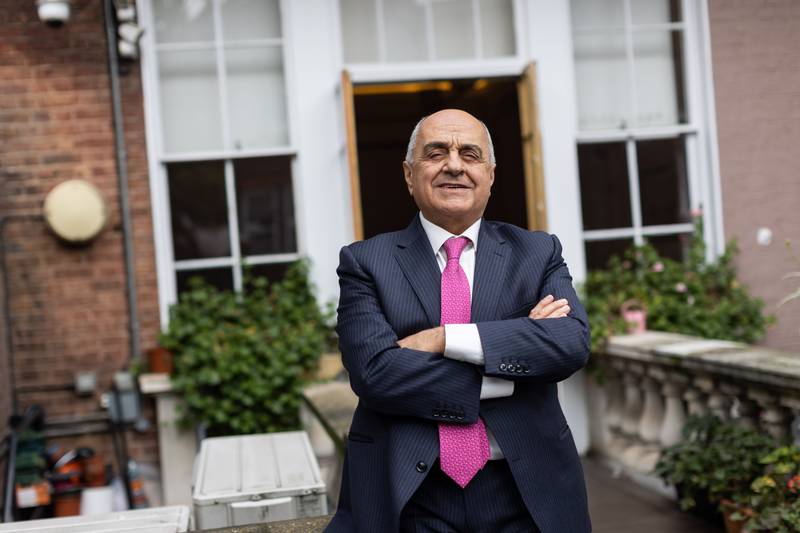
George Kanaan CEO of Arab Bankers association, photographed at his offices in central London by Mark Chilvers for The National.

______________________

BRITISH / LEBANON

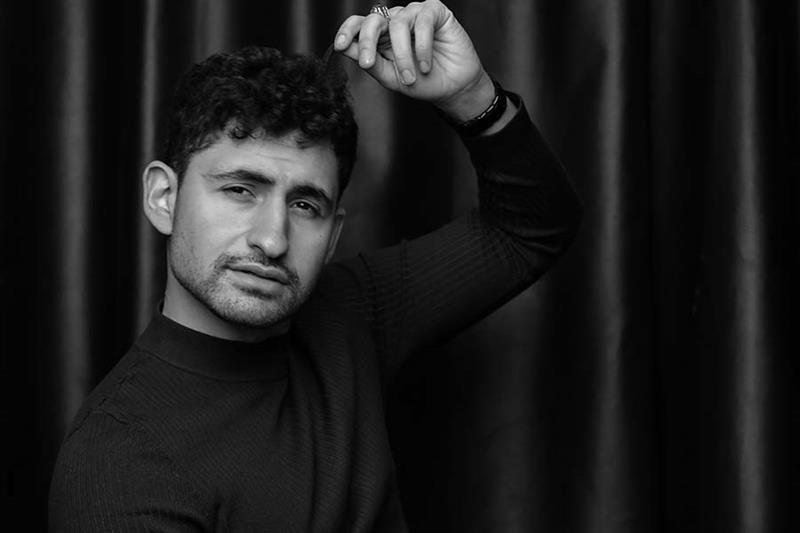
Egyptian Actor Amir El-Masry cast in Netflix’s The Crown

Egyptian actor Amir El-Masry was cast in the upcoming fifth season of Netflix’s historical drama The Crown, according to a PR representative on Wednesday.

El-Masry will portray the young Egyptian billionaire Mohamed Al-Fayed, Egyptian-born UK-based businessman, owner of Hôtel Ritz Paris and formerly Harrods department store and Fulham FC.

The cast of the fifth season also includes Egyptian-British actor Khalid Abdalla who has ben cast as Dodi Fayed , Mohamed Al-Fayed’s son and late Princess Diana’s boyfriend. Abdalla will play opposite Elizabeth Debicki as Diana.

Born in Cairo in 1990 and raised in London, El-Masry’s career kicked off with roles in Egyptian films, earning him Best Young Actor at the Egyptian Oscars in 2009.

Graduating from The London Academy of Music and Dramatic Art in 2013, Amir appeared in Jon Stewart’s debut feature Rosewater and various acclaimed TV series before his breakthrough role in The Night Manager (2016), followed by Lost in London (2017), The State (2017) and Age Before Beauty (2018).

Other notable credits include the critically acclaimed BAFTA nominated mini-series The State, a series regular role of Dante in the new BBC series Age Before Beauty and the lead in the first American-Saudi feature The Arabian Warrior.

Following the reign of Queen Elizabeth II, including political and romantic events that have shaped the twenty-first century, The Crown is considered one of the greatest series in the history of drama.

The series has won over 130 awards, including 21 Primetime Awards, of which seven were during the 73rd Primetime Emmy Awards in 2021, scooping awards of all categories. 

The first season of The Crown was released in November 2016. Its fifth season is scheduled for release in November 2022.

source/content: english.ahram.org.eg

____________

_______________________

BRITISH / EGYPTIAN

Syrian Cheesemaker Razan Al-Sous, Founder of Yorkshire Dama Cheese – Gains Royal Approval in the UK

Razan Al-Sous and her husband Raghid Sandouk fled Syria to start a new life in Yorkshire, leaving behind their dream of setting up their own pharmaceutical company but opening up a new entrepreneurial life in the city of Huddersfield.

With the simple idea of making halloumi-style cheese from cows’ milk and launching a best-selling range of Arabian flavoured cheeses, the innovative pair have won more than 30 awards for their product and gained royal approval from Princess Anne.

When they arrived in Yorkshire, Mr Sandouk’s brother let them run his chicken food outlet and it was there the first Yorkshire Dama Squeaky Cheese was created.

Now they have nine flavours in their range, from plain and chilli to black onion seed, rosemary and mint.

The couple recently won their latest award, for their black pepper squeaky cheese.

n 2017 the couple expanded to new premises and were given a royal seal of approval when Princess Anne officially opened their factory in Sowerby Bridge.

Now the couple have been invited to Buckingham Palace.

This month they won yet another award for their Middle Eastern style cheese, Nabulsi, which contains black onion seeds and has now become a bestseller in the UK.

www.yorkshiredamacheese.co.uk

source/content: thenationalnews.com

________

Syrian cheese maker Razan Al-Sous. / pix: Ashraf Helmi / The National

___________________

BRITISH / SYRIAN

Wafa Zaiane – TV News Anchor at BBC

Wafa Zaiane. BBC News Anchor. Reporter. Broadcaster

Hosts her own TV show Ana Shahid (Eye Witness)

First/s:

  • First Tunisian News Anchor to appear on the BBC since it began broadcasting more than 75 years ago.

______________

pix: youtube / showreel 2017

_______________________________

BRITISH / TUNISIANBRITISH

Majeda Khoury : Chef & Founder – Syrian Sunflower

Majeda Khoury. Chef. Syrian Human rights and Feminist activist.

Syrian migrant, one of her early decisions in London was to join a refugee cooking group run by social enterprise Migrateful. It brings together Londoners and refugees to learn recipes and share a meal.

She gives one or two classes a week, teaching simple but beautiful meals that can be reproduced at home

_____________

pix: anqacollective.org

_______________________________________

UNITED KINGDOM / SYRIAN-BRITISH

Asil Attar – First Female CEO of MENA Fashion Industry Leaders

Asil Attar. Global Fashion and Retail Industry Leader.

First Female CEO of Damas Jewellery (estb. 1907). Damas has a portfolio of over 40 international luxury brands and in-house brands. With 230 stores spread across GCC, it has secured a global trademark.

Asil Attar has worked with some of the world’s leading Department stores and most coveted Brands and Retail groups such as Harrods, Giorgio Armani Group, Coach, Karen Millen, Jigsaw and Majid Al Futtaim etc..

Asil was the CEO of Majid Al Futtaim Fashion, the licensee for Juicy Couture in the Middle East.

This has won her a number of accolades and recognition for her outstanding achievements.

Honours:

  • Forbes ME has placed her as one of the top 100 most Influential Arab Women, 2018 and Top 200 most powerful Arab Women, 2014.
  • Arabian Business awarded her Top Female CEO Kuwait, 2018 and top 100 powerful women, 2012.

www.asilattar.com

________________________

pix: asilattar.com

__________________________________________________________

UNITED KINGDOM / IRAQI-BRITISH / EUROPEAN ARAB

Nabil Nayal – Fashion Designer

Nabil El-Nayal (aka) Nabil Nayal. Fashion Designer.

Founder , ready-to-wear fashion brand ‘Nabil Nayal’

Education:

  • Ph.D : in Fashion, Manchester Metropolitan University, Fashion Institute
  • Masters – Royal College of Arts
  • B.A. (Hons) – Fashion, Manchester Metropolitan (2008)

Awards/ Honours :

  • Royal Society of Arts Award 2008
  • Graduate Fashion Week ‘Best Womenswear’ Award 2008
  • British Fashion Council MA Scholarship Award – for the Royal College of Arts 2008
  • Crown Paint 2009 (interior design competition)
  • Harrods Launches 2010
  • Fashion Fringe Semi-Finalist 2011
  • LVMH Prize shortlist 2015
  • LVMH Prize finalist 2017
  • BFC Fashion Trust Grant and Mentoring 2019

www.nabilnayal.com

______________

pix: buro247.me

_______________________________________________

UNITED KINGDOM / SYRIAN / BRITISH ARAB