ARAB World Institute Marks Youssef Chahine Centenary in Paris

A four-day programme in Paris revisits Youssef Chahine’s films and legacy through screenings and panel discussions.

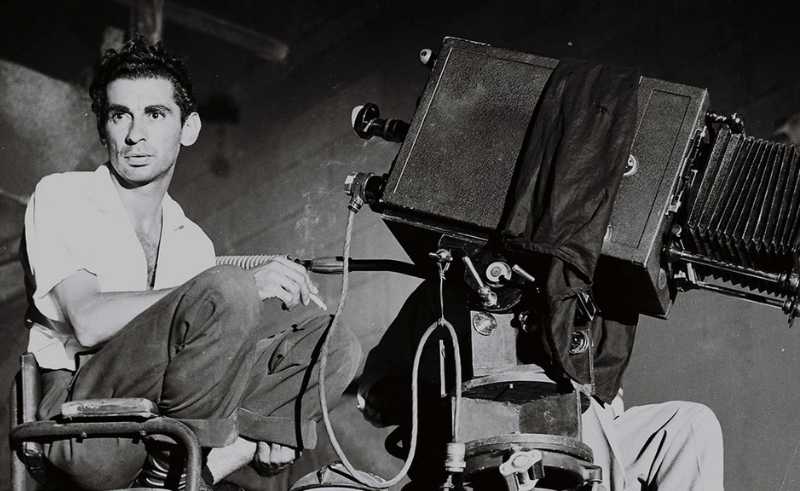
The Arab World Institute (IMA) in Paris is marking the centenary of Youssef Chahine with a four-day programme running from January 22nd to 25th, bringing together film screenings and critical discussions dedicated to his legacy.

Across 38 feature films produced between 1950 and 2007, Chahine moved fluidly between comedy and melodrama, historical epics and political allegories, musicals and autobiographical narratives – often blending multiple forms within a single work. Emerging during the golden age of Egyptian cinema in the 1950s, he remains one of the most influential figures in the country’s film history, shaping both its artistic language and its engagement with politics, identity, and society.

On Thursday, January 22nd, the programme opens at 7:00 PM with a panel, ‘Youssef Chahine: Portrait and Legacies’, featuring Yousry Nasrallah, Marianne Khoury, and Rashid Masharawi, moderated by Jean-Michel Frodon. The evening continues at 8:30 PM with a screening of ‘Life After Siham’ by Namir Abdel Messeeh.

Then, on Friday, January 23rd, the conversation shifts to ‘Youssef Chahine and the Power of Women’, with Sharon Hakim, Hind Meddeb, and Viviane Candas, moderated by Jean-Michel Frodon at 7:00 PM. At 8:00 PM, the night moves into screenings with Chahine’s ‘The Sixth Day’.

A double screening day begins with ‘Destiny’ at 4:30 PM, followed by ‘The Emigrant’ at 7:30 PM on Saturday, January 24th.

Sunday, January 25th will see the final day start at 3:00 PM with ‘Youssef Chahine and Me: Unpublished Testimonies & Encounters’, featuring Jack Lang, Abdallah Taïa, Houda Ibrahim, and Dominique Bax, moderated by Thierry Jousse. Screenings follow with ‘The Land’ at 4:00 PM, then ‘The Sparrow’ at 6:00 PM to close out the programme.

You can book all screenings and panels on the Arab World Institute website.

source/content: scenenow.com (headline edited)

_______________
__________

EGYPT

EGYPT : Youssef Wahbi: The Man Who Transformed Arabic Theatre & Cinema

He played the Devil, challenged shame, and made Arab cinema speak. On his birthday, we revisit Youssef Wahbi – the man who dared to redefine the rules of the screen and stage.

Youssef Wahbi broke every mould – actor, director, and pioneer of Arabic cinema. On his birthday, we honour a legend who shaped generations of stage and screen.

Wahbi’s love for acting started when he first watched the Lebanese artist Salim Al-Qardahi’s troupe in Sohag. Since then, he started delivering monologues and performing theatrical acts at Al Ahly Club and at school. But at the time, acting was seen as shameful, and his father disapproved. Refusing to bend, Wahby fled to Italy and studied acting under the Italian actor Cantoni. He didn’t come back until after his father’s death in 1921 and used all his inheritance to establish a theatrical troupe named Ramses, which was also the name given to him during his stay in Europe.

In 1923, the troupe premiered with a successful play called ‘Al Magnoun’. But Wahby wasn’t done breaking ground. Later, in 1930, he established his film production company, Ramses Film, which produced the very first speaking film in the history of Arabic cinema, ‘Awlad El Zawat’. The movie was adapted from one of his successful plays, as he wrote the script and starred in the film.

Throughout his prolific career, Youssef Wahbi wrote, directed, or starred in over 300 theatrical plays and contributed to more than 60 films. Among this vast body of work, a few standout titles have become milestones in the history of Arabic drama and cinema…

Awlad El Zawat (1932)

‘Awlad El Zawat’ tells the story of Hamdi, who marries a French woman only to discover she’s cheating on him. In a powerful scene, he confronts her with the line: “You woman of all men… you garbage of history.” In a rare interview, Youssef Wahbi revealed that he insisted on making ‘Awlad El Zawat’ as the first Arabic-speaking film to defend the image of the East, after Western narratives described the region as barbaric and trivial, particularly during the trial of a woman who had murdered an Egyptian young man.

Safir Gohannam (1945)

‘Safir Gohannam’ follows Abd Elkhallak, a humble professor worn down by life’s hardships and became a bitter and resentful man. His shaky faith opens the door for the Devil (played by Youssef Wahbi) to lead him astray, tempting him with a false paradise to ruin his life, destroy his children, and tear his family apart. The film marks the first-ever portrayal of the Devil in Egyptian cinema.

Bayoumi Effendi (1949)

‘Bayoumi Effendi’ is considered one of Wahbi’s most powerful socially driven films, tackling the issue of children born out of wedlock. The film calls for compassion toward these individuals, emphasising that they should not be treated as criminals for a sin they did not commit.

Hayah Aw Mout (1954)

‘Hayah Aw Mout’ – one of the most famous films in Egyptian cinema – follows the story of a man who suffers a heart attack and sends his daughter to fetch his medicine, only for the pharmacist to realise he accidentally gave her poison. As the police, led by Wahbi’s character, race to save him, a dramatic city-wide radio broadcast becomes his only hope. This is the film that gave us the famous line: “لا تشرب الدواء الذي أرسلت بنتك لشرائه…الدواء فيه سم قاتل.” (“Do not drink the medicine your daughter was sent to fetch;  the medicine contains deadly poison.”)

Esha’et Hob (1960)

‘Esha’et Hob’ is one of the most memorable comedy films in Egyptian cinema. Starring Omar El Sherif, Soad Hossny and Youssef Wahbi, it follows the story of Hussein, a shy young man in love with his cousin Samia, who prefers her charming cousin Lucy ‘Ibn Tante Fakeeha’. To help him win her heart, Hussein’s uncle Abdel Qader comes up with a clever plan: spread a rumour about a love story between Hussein and the famous actress Hind Rostom.

source/content: cairoscene.com (headline edited)

_____________

___________

EGYPT

EGYPTIAN Pavilion Beats 150 Countries to Win Award at 78th Cannes Film Festival

Egypt’s presence at Cannes Film Market wins top honour for design, programming, and industry engagement.

The Egyptian pavilion at Cannes Film Market, headed by a joint cooperation between El Gouna Film Festival, Cairo International Film Festival and the Egyptian Film Commission, has won the award for Best Pavilion Design Award during the 78th Cannes Film Festival.

Designed by cinematic set designer Shereen Farghal, and recognised over competing pavilions from 150 nations, the Egyptian pavilion was awarded for its design, curated programming, and strategic networking opportunities offered to Arab and international filmmakers.

“This award is a global recognition of the position Egyptian cinema occupies today, and of the continuous efforts we make to represent it in international contexts,” Hussein Fahmy, President of Cairo International Film Festival, said. “We made sure that the pavilion reflects the spirit of cooperation and openness to the world through a program full of dialogue, and cultural and artistic interaction, and represents a new step for Egypt’s presence in the global film industry.”

Held annually in parallel with the Cannes Film Festival, Marché du Film is a key space for co-productions, distribution deals, and film financing.

source/content: scenenow.com (headline edited)

_____________

__________

EGYPT