Arabs & Arabian Records Aggregator. Chronicler. Milestones of the 25 Countries of the Arabic Speaking World (official / co-official). AGCC. MENA. Global. Ist's to Top 10's. Records. Read & Enjoy./ www.arabianrecords.org
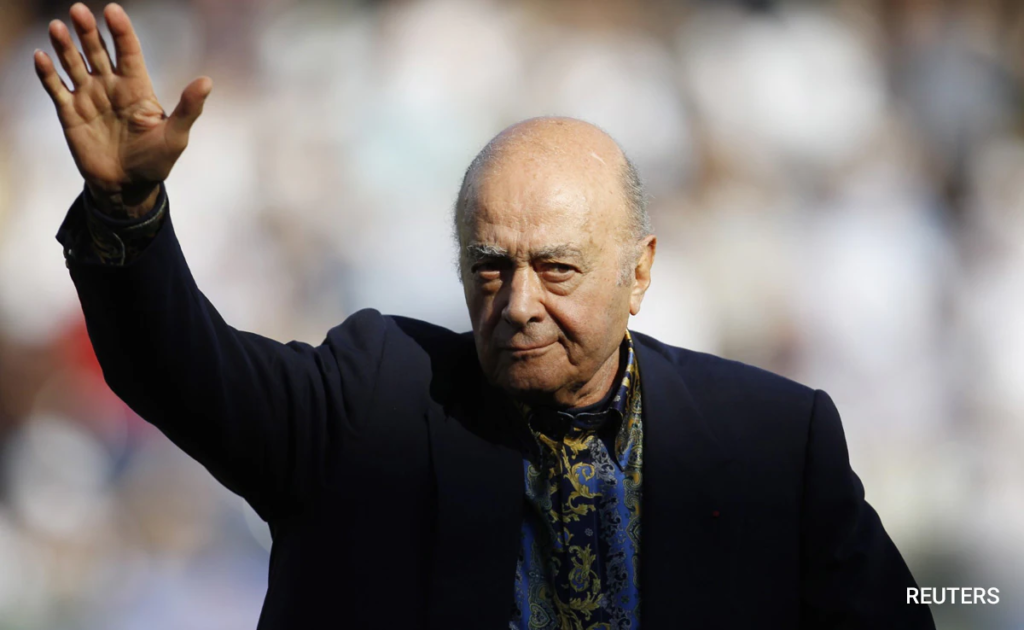
Mohamed Al-Fayed had waged a war of words with the British royal family after his son was killed in a car accident alongside Diana, Princess of Wales.
Mohamed Al-Fayed was an outspoken and successful Egyptian business tycoon. His death comes almost 26 years to the day after the car crash in Paris that killed his eldest son, Dodi, and Diana, Princess of Wales, on August 31, 1997.
Here are five points on the self-made billionaire:
1.Far from being the scion of a dynasty of cotton and shipping barons he made himself out to be, Fayed was the son of a poor Alexandrian schoolteacher who, after an early venture flogging lemonade, set out in business selling sewing machines.
2.He later had the good fortune to start working for the arms dealer Adnan Khashoggi, who recognised his business abilities and employed him in his furniture export business in Saudi Arabia. He became an advisor to the Sultan of Brunei in the mid-1960s and moved to Britain in the 1970s.
3.Fayed lived most of his life in Britain, where for decades he was never far from the headlines. But to his frustration, he was never granted UK citizenship or admitted into the upper echelons of British society.
4.The defining tragedy of Fayed’s life came in August 1997, when Dodi and Princess Diana died when a car driven by one of Fayed’s employees, chauffeur Henri Paul, crashed in a Paris road tunnel. For years afterwards, Fayed refused to accept that the deaths were the result of speeding and intoxication by Paul, who also died. The distraught Fayed accused the royal family of being behind the deaths and commissioned two memorials to the couple at Harrods.
5.According to Forbes list of the world’s billionaires, Fayed was worth $1.9 billion in November 2022. With a business empire encompassing shipping, property, banking, oil, retail, and construction, Fayed was also a philanthropist whose foundation helped children in the UK, Thailand, and Mongolia.
source/content: ndtv.com (headline edited)
_______________
Mohamed Al-Fayed was born in Alexandria and was the son of a schoolteacher.
Egypt’s Grand Mosque in the New Administrative Capital
According to the explanation, Egypt’s Grand Mosque obtained three international certificates from the Guinness World Records.
The first was for the largest pulpit in the world with a height of 16.6 meters, handcrafted from the finest types of wood.
The second and third were for the main chandelier of the mosque, being the heaviest chandelier in the world of 50 tons, and it being the largest chandelier with a diameter of 22 meters and four levels.
Egypt’s Islamic Cultural Center in the New Administrative Capital
Egypt’s Islamic Cultural Center in the New Administrative Capital is a great achievement and one of the most important projects established in the New Administrative Capital.
The Islamic Cultural Center was established in the new capital on an area of 15,000 square meters. It has a large place for services, as well as a group of spacious and multi-storey garages, with a capacity of about 4,000 cars.
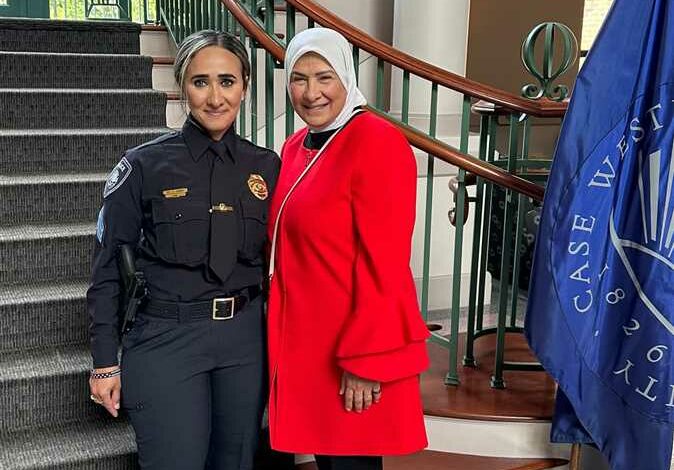
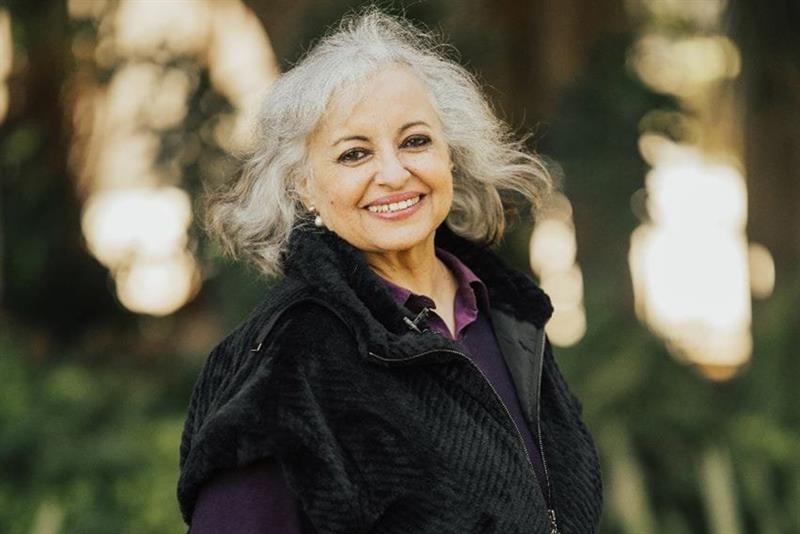
A few days ago, Egyptian-American Sarah Shendi took an important step by becoming the first Egyptian Muslim police sergeant to serve in the US police service, setting an example for others like her.
Ohio has approximately 3,200 officers. Shendi joined them as the first Arab Muslim woman to hold the position of sergeant.
She had previously served with the Copley Township Police, and Ohio Governor Mike DeWine appointed her as the first director of the law enforcement and employment office in the state of Egyptian-Muslim descent.
The decision was warmly welcomed by the Arab community in the US, which in turn suffered for decades from marginalization due to the terrorist attack of September 11.
Shendi’s new rank marks a step forward.
She was born in Saudi Arabia and lived between Saudi Arabia and Egypt until she reached the age of six, and her family moved to the US in 1991.
Q: Why did you choose to be a policewoman?
A: Since we moved to the US in 1991, I have always been fascinated by law enforcement here in this country, especially because it’s so different from anywhere else in the world. I also fell in love with the uniform, and I always wanted to help others.
From my point of view I think it is the best job on the planet.
Q: What are the biggest issues that you faced on your way to becoming a policewoman?
A: I have learned that your greatest enemy is yourself and what goes on in your mind. I wish I had believed earlier in my life in this wise saying, then I would not have wasted so much time, doubting my decision, or trying to please others.
This is the secret of happiness and success in life.
Q: How difficult is it to be a Muslim woman in Western society?
A: Being a Muslim woman is difficult anywhere whether in a Western or Middle Eastern society. Women face special and unique challenges. Everywhere we go. I like to say pressure is a privilege. I’ll take a good challenge any day of the week. I believe in leading by example and doing the right thing. The rest is up to God. Always be confident, wise, honest and honorable.
Q: Usually, Arabs living in a foreign country face an identity crisis – did you?
A: I don’t really have an identity crisis because I’ve been living here for almost 30 years, I feel at home here in the US, and when I go to Egypt I feel at home there too.
I just love being around good people, I preferred being in the Middle East when I went on vacation last October because I love seeing mosques everywhere and hearing the call to prayer when it’s time to pray.
But I can’t say I’ve had an identity crisis. I am who I am, no matter where I live.
Q: Being a policewoman is risky. How did your family deal with your decision?
A: My family has been supportive of anything I choose to do since day one. They may not have welcomed my decision at first, but they still supported me. Then they saw how good I am at my job, and how much of a difference I make to the lives of the people around me. They started to understand why I love what I do.
Thank God I have the most amazing family and they have been so supportive in all my good and bad days.
Q: Did your family make sure that you speak Arabic since you speak the language well?
A: I think speaking Arabic is very important. My dad wouldn’t let us speak English at home growing up here in the US. At the time I didn’t know why, and I used to get resentful sometimes, but now as an adult, and being in law enforcement, I appreciate it so much because it allowed me to help so many people.
Q: Are there Egyptian customs that you adhere to in your family?
A: Although we have lived in the US for more than 30 years, we adhere to many cultural practices and do our best with our religion. I am proud to be Egyptian, proud to be Muslim, and also proud to be American. I love Egyptian culture and the Islamic religion and in my opinion this is what makes me a good policewoman.
Q: Have you ever been to Egypt on a visit with family?
A: The last time I went to Egypt with my family was about ten years ago or more. My sister chose to have her wedding in Egypt and it was a wonderful time with my family. We haven’t traveled together as a family since then, but I do go on vacations sometimes.
Q: What do you like most when visiting Egypt?
A: I love being around people who speak my language and have the same religion as mine. I feel at home when I visit Egypt. I also love hearing and speaking Arabic, seeing nice and kind people everywhere you go, I also love Egyptian food and landscapes. I am very proud of Egypt because it is where my parents were born and raised and they are the real reason I am where I am now.
Q: Are there specific Egyptian foods that you like very much?
A: I love my mom’s cooking the most. I love beans a lot and I also love koshari. I think Egyptian food is the best middle eastern food there is, and of course my mom is the best cook in the world.
Q: Do you follow any dramas in Egypt or about Egypt?
A: I don’t watch any Egyptian TV. But I listen to Egyptian singers like Amr Diab and Tamer Hosni.
Q: From your experience, what advice you would like to give to women in general?
A: Be yourself, be confident, and don’t give in to the pure pressures around you. We are surrounded by so much fakery on social media, on TV and in the entertainment industry, everyone wants to tell you what to wear, what to eat and drink, and how you are supposed to look. I would never listen to any of that because it’s not real advice, and it’s not healthy.
You will never find happiness through others. True happiness comes from within, knowing you are good enough. I will tell everyone in general to always work with pure intentions.
Religion is also very important to me and I always tell young people not to miss prayers for any reason. We get the chance to talk to God at least five times a day and this is not something we should take for granted. It’s a privilege.
Edited translation from Al-Masry Al-Youm
source: http://www.egyptindependent.com / Egypt Independent / Home> Features-Interviews> Main Slider / b Al-Masry Al-Youm / June 05th, 2023
Mohamed Helmy led Berlin hospital department, faced persecution under Nazi racial laws
‘It’s unfathomable to me, this type of courage and integrity,’ says artist
An Egyptian doctor who saved a Jewish family in Germany during the Second World War is being celebrated with a Google Doodle, the BBC reported.
Mohamed Helmy was born in Sudan in 1901 to an Egyptian father and German mother. In 1922, he traveled to Germany to take up medicine, and later became the head of a urology department at a Berlin hospital.
Amid the growing persecution of non-Germans in the country, Helmy was arrested twice and prevented from marrying his German fiancee. He also lost his hospital position.
The Egyptian physician aided the family of one of his Jewish patients following the introduction of racial laws, at one point disguising a teenage girl, Anna Boros, in a headscarf, and calling her his niece.
Helmy’s courage was honored in the Google Doodle, which was launched by Berlin-based artist Noa Snir on what would have been the Egyptian’s 122nd birthday. It depicts Helmy, in his doctor’s clothing, sheltering a family with outstretched arms.
Snir said: “I think Helmy’s case is an especially interesting one as he himself suffered persecution due to his background and ethnicity, and that still didn’t stop him from helping as many people as he could. It’s unfathomable to me, this type of courage and integrity.”
Helmy and the Jewish girl he saved stayed in contact long after the war until his death in 1982.
He was posthumously given the Righteous Among the Nations award by Yad Vashem, Israel’s Holocaust memorial site, in 2013
source/content: arabnews.com (headline edited)
___________
Google Doodle honored Dr. Mod Helmy, an Egyptian-German medical doctor who risked his life to rescue Jewish people during the Holocaust. (Google)
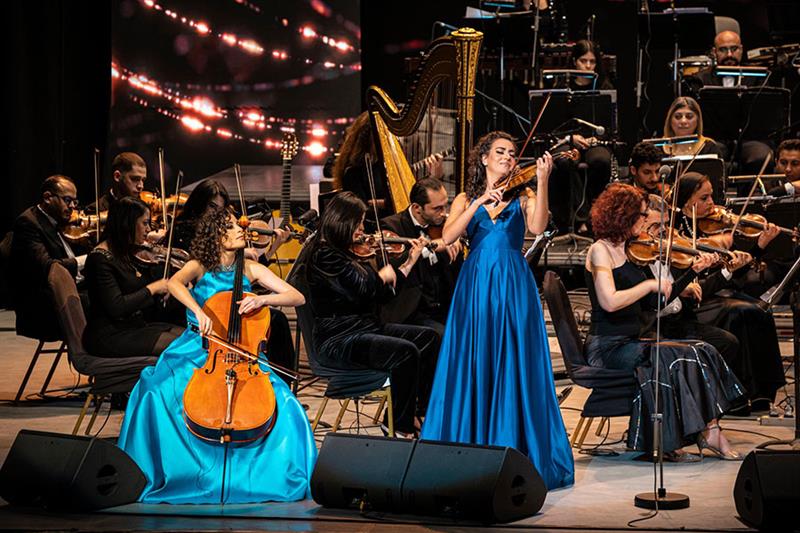
Egyptian-Scottish classical duo the Ayoub Sisters are scheduled to perform at King Charles III’s coronation in Edinburgh on Wednesday.
“We are delighted to share that we have been invited by HM King Charles III to perform at his coronation in Edinburgh next week,” wrote the Ayoub Sisters on Facebook on Saturday.
“The ceremony is part of Royal Week, with the King and Queen undertaking several engagements in Scotland, and will be broadcast live on BBC One. Tune in on Wednesday 5th July at 1:30pm to watch the celebration unfold,” they added.
The Ayoub Sisters have taken the international music scene by storm since their debut at the Royal Albert Hall in 2016. Laura Ayoub plays the violin – performing on an 1810 J. Gagliano – and Sarah Ayoub masters the cello. Both play the piano.
The internationally renowned duo were discovered by producer Mark Ronson.
Their young, albeit sparkling, career has led them to sign a contract with Decca Records, one of the UK’s biggest record labels playing at the BRITS and the BAFTAs. Their album topped the Official Classical Artist Albums Chart.
The duo explore many musical genres, starting from classical music to Scottish traditional repertoire, topping it with captivating arrangements of pop, funk, and world music.
Their virtuosity and creativity have taken them to many prestigious halls in the UK (the Royal Albert Hall, Royal Festival Hall, London Palladium) and the rest of Europe, the Middle East, and Asia.
Well-known Egyptian soprano Neveen Allouba will be awarded France’s Ordre des Arts et des Lettres in the grade of Chevalier (Knight) by France’s ambassador to Cairo next week.
Allouba’s award for exceptional achievements in the Egyptian music scene follows decades of work in the many aspects of the country’s cultural scene.
Born in 1955, she is among the best known personalities of the Egyptian music scene, with substantial influence outside the country.
Her career includes working with the Cairo Opera Company, where she has performed in countless operas. She has taught numerous young singers and both founded and directed many successful creative endeavours of the Fabrica musical theatre company.
As a young girl, Allouba had dreams of becoming an actress, but was not supported by her family. Instead, she turned to playing piano and singing, graduating from the Cairo Conservatory in 1978.
She was granted scholarships from the Deutscher Akademischer Austauschdienst (West German Cultural Exchange) and the Friedrich-Naumann Foundation to study opera performance and vocal pedagogy at the Hannover Hochschule fur Music and Theatre where she deepened her singing techniques and eventually obtained a doctorate in 1988.
During her decade-long stay in Germany, Allouba performed as soloist at the Detmold Opera. She also performed in other European operas and theatres and across the Arab world at that time. In 1985, she won the first prize in the female voice category of the competition for young opera singers in Berlin.
Upon her return to Egypt, the soprano became a soloist at the Cairo Opera Company, becoming the first female singer to perform in the newly opened Cairo Opera House. As her singing career progressed, Allouba coupled her performances with her teaching career at the Cairo Conservatory, Cairo Opera Development Centre, University of Alexandria and the American University in Cairo where she is an adjunct professor of voice. She also participated as a jury member in a number of singing competitions.
Some of her students went on to continue their education outside Egypt and thrived as internationally renowned singers.
These include Farrah El-Dibani, a mezzo soprano who performs at the Paris Opera; the Germany-based Rita Sebeih, the lead role of Jasmine in the Disney German production of Aladdin; Nesma Mahgoub, winner of the eighth season of the Star Academy Arab World; Fatma Said, a soprano who was the first Egyptian to join the Academy of Milan’s Teatro alla Scala before launching a big international career.
Fabrica chapter
In mid-2010, Allouba founded the Fabrica musical theatre company, through which she trains, develops and promotes new voices.
Fabrica’s pilot production of Mozart’s opera The Magic Flute in Egyptian Arabic was staged in collaboration with the Bibliotheca Alexandrina in 2011.
In 2013, the company premiered Les Miserables in Egyptian Arabic and even toured in the USA. It experienced an additional boost in popularity when it was promoted by the internationally famous Egyptian comedian Bassem Youssef.
This was only the beginning of many successes of Fabrica and its members. Its successes include performances of Brecht’s Threepenny Opera and adaptations of local shows including El-Leila El-Kebira by Salah Jaheen and Sayed Mekawy, in addition to rock, jazz and Disney concerts.
Fabrica also performed during the inaugural El Gouna Film Festival’s opening ceremony (2017), the SNL Bel Araby’s 50th episode celebration, the Egyptian Media and Production Company’s 20 year anniversary and the Intra-African Trade Fair (2018), among other events. Fabrica was brought to light again, as the company won the award for Best Music Video at the ninth annual MoziMotion festival, held in Hilversum, the Netherlands (October 2019) for Mercury Rising: A Queen Tribute, released in January 2019 (a few months after Bohemian Rhapsody was released in theatres).
Overdue recognition
Allouba’s portfolio and well-established position in the field combines many operatic appearances as well as an unconditional belief in the young generation and a natural – almost motherly – dedication to support and promote young talents, while offering to the Egyptian audiences valuable performances.
It’s worth mentioning that most recently, Allouba was appointed director of the new Arkan Theatre in Sheikh Zayed.
The award comes after Allouba’s decades of perseverance and work that often lacked sufficient limelight. It is an important recognition, if overdue, for an artist whose work has created a strong impact on many singers of more than one Egyptian generation.
The France’s Order of Arts and Letters will be awarded to Allouba during a ceremony held at the French Embassy in Cairo, in the first week of June.
Over the past years, a number of Egyptian figures have also been awarded the Knight of the Order of Arts and Letters in the grade of Chevalier.
They include Egyptian novelist and Nobel laureate Naguib Mahfouz, novelist and journalist Gamal El-Ghitani, visual artist and women’s activist Inji Aflatoun, novelist Alaa al-Aswany, theatre director Ahmed El Ettar , composer and conductor Hisham Gabr , producer and scriptwriter Mohamed Hefzy, mezzo soprano Farrah El-Dibany , artist Karima Mansour , among others.
Also the Tunisian-Egyptian actress Hend Sabry is among the recipients of the award in grade of the Commander.
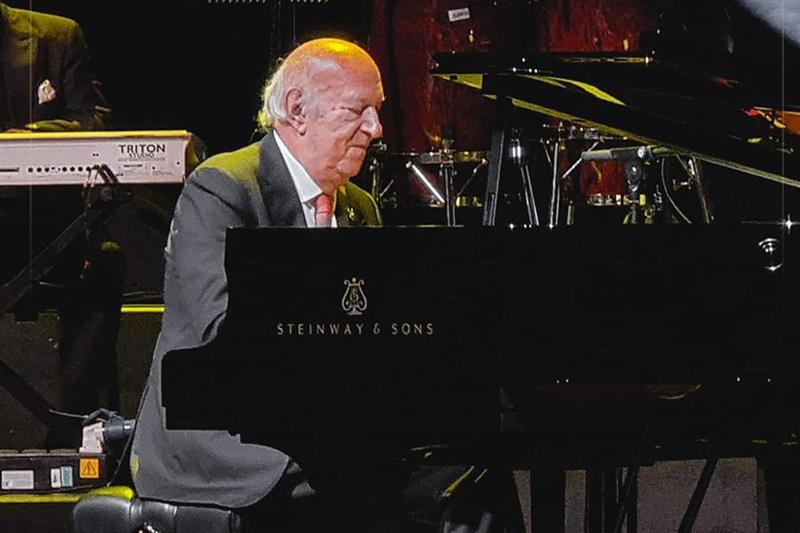
Egyptian acclaimed composer Omar Khairat has been selected as the Cultural Personality of the Year by the organizers of the UAE’s 17th edition of the Sheikh Zayed Book Award (SZBA).
Omar Khairat will be awarded “in honour of an illustrious, decades-long career of timeless musical creations that have contributed to shaping the collective cultural consciousness of the Arab region,” as stated by the SZBA’s official website.
“The SZBA’s Board of Trustees endorsed the Scientific Committee’s decision to choose Khairat as the Cultural Personality of the Year in recognition of his remarkable talent and artistic turnout, which has been tremendously popular in the Arab world and has been featured in musical introductions to films and many dramas.”
The SZBA is organized by the Abu Dhabi Arabic Language Centre (ALC); part of the Department of Culture and Tourism – Abu Dhabi (DCT Abu Dhabi).
Winners of this year’s SZBA also include Iraqi poet Ali Jaafar Alallaq; French author Mathieu Tillier; Algerian author Said Khatibi; Tunisian translator Chokri Al Saadi; Tunisian critic Jalila Al Tritarm, and Egyptian publishing house Dar ElAin.
Excellence and Innovation
Each year, the Cultural Personality of the Year award is given to “a prominent figure who has contributed to the advancement of Arabic culture and promoted peaceful coexistence.”
“This year, we are proud to select Omar Khairat, one of the most renowned and celebrated musicians in the Arab world,” stated Undersecretary of DCT Abu Dhabi Saood Abdulaziz Al Hosani.
“His constant striving for excellence and innovation has seen the artist make an incalculable impact on the music industry and the wider cultural landscape, as well as foster important cross-cultural dialogue. His passion reflects Abu Dhabi’s vision to nurture creativity and harness the power of the arts to build bridges and transcend borders,” he added.
Considerable Career
Born in 1947, the multi-awarded Omar Khairat is one of the top musicians of the Arab world with hundreds of memorized compositions in his repertoire.
Throughout his long successful career, he has written scores for numerous films and television series, including The Sixth Day (1984); The Terrorist (1993); Mafia (2002); Girl’s Love (2003); The Embassy in the Building (2005), and Deer’s Blood (2006), to name but a few.
His concerts are usually fully-booked weeks ahead of time with his wide fan base singing along and humming with compositions like Heya Di El-Hayah; Fi Hawid El Leil; Arabian Rhapsody; Fiha Haga Helwa; Eadam Mayet; El-Khawaga Abdel-Kader; Giran El-Hana; Saber; Arfa; Qadeyet Am Ahmed; Khali Balak Men Aklak, and other classic hits of time-honoured TV and films themes.
Among his upcoming performances is the 3rd of June’s large concert at the Sound and Light Theatre at the Pyramids and Sphinx site in Giza, where half of the tickets have already been sold-out.
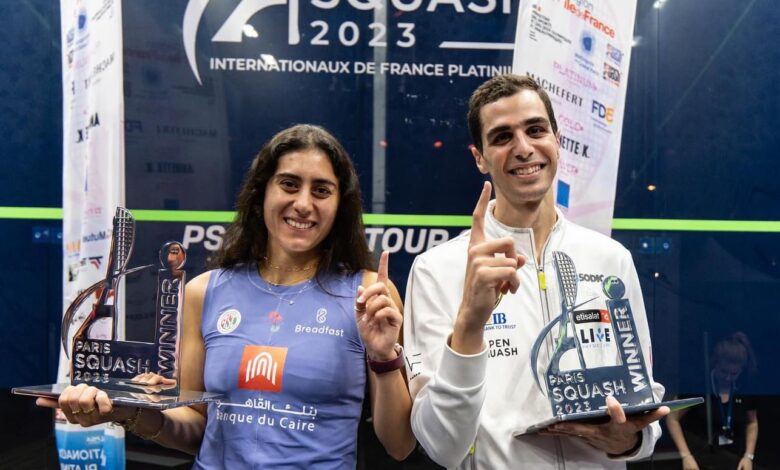
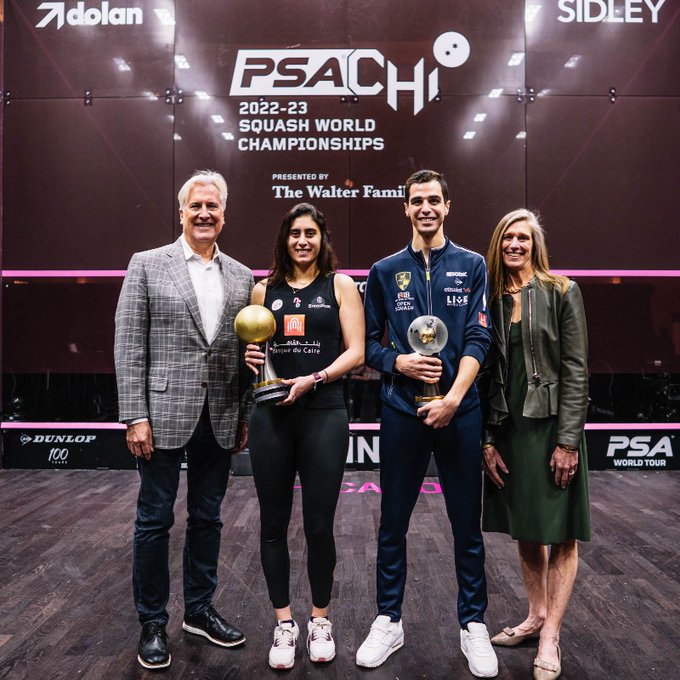
Egyptian duo Nour El Sherbini and Ali Farag retained their respective world titles in Chicago with straight-game wins over Nouran Gohar and Karim Abdel-Gawad early on Friday.
World No.1 Sherbini needed 38 minutes to beat Nouran Gohar 3-0 (11-6, 11-4, 12-10) and clinch her seventh World Championship title.
“I am over the moon to win my seventh World Championship,” El Sherbini was quoted as saying on PSA World Tour after the game.
The 27-year-old El Sherbini was in superb form in Chicago, winning her third World Championship title. She is now just one short of the current women’s record of eight, held by Malaysian legend Nicol David.
Her streak of five women’s World Championship titles in a row is matched only by David.
“It is huge and special for me and I cannot believe I did it, I am so happy,” the Egyptian squash star said.
I am happy that I am closer to Nicol’s [David] record. She is a legend and what she did was amazing and unbelievable,” El-Sherbini said, adding “I have always been looking up to her, so to put my name beside her is something special and huge for me.”
The men’s final saw World No.4 Ali Farag become the second Egyptian ever after Amr Shabana to win four men’s World Championship trophies.
The 31-year-old Farag needed 44 minutes to beat Karim Abdel Gawad 3-0 (12-10, 11-6, 11-6).
“The emotions are so raw, it is so hard to put it into words,” Farag said. “It is so special. No matter how many times you go through it, it is even more special than the time before. Especially against such a champion like Karim, I am super relieved and super happy,” he added.
“Two months ago, we played a practice match and we were limping, and the standard would not have even earned us a place in the World Championship, let alone the final. To come all the way through to reach the final is a very proud achievement for the two of us.”
Farag – like El Sherbini before him – has now won all three World Championships held in Chicago.
The PSA World Championships is the most prestigious tournament in squash, with $1,000,000 in total player compensation split equally between the male and female athletes.
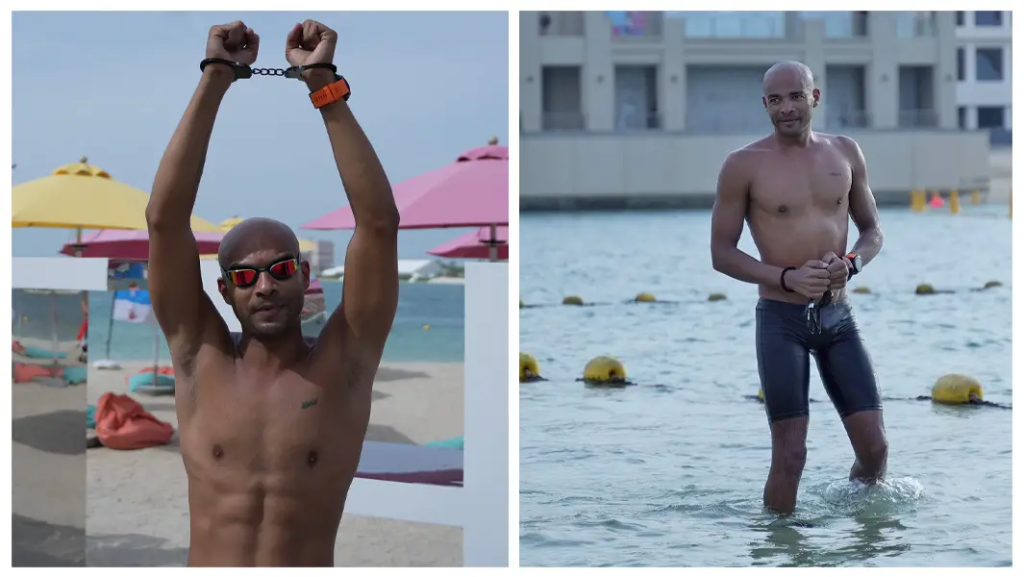
Shehab Allam, a swimmer and coach from Dubai, has broken the Guiness World Record for the longest swim wearing handcuffs by swimming over 11km (6.8 miles) continuously with the cuffs on.
With his swim, Allam broke the record previously held by American Ben Katzman, who set the old record by swimming 8.6km (5.3 miles) in a Virginia swimming pool in February 2022.
Notably, the 31 year-old Allam did not opt to complete his swim in a pool, instead using a marked area of approximately 164 yards in the Arabian Gulf, swimming laps between two buoys. During his attempt, he had an official with him to ensure his recorded distance was accurate.
According to Allam, he hit the 50 lap mark, surpassing the previous record, and made it his goal to hit 70 laps to surpass 11km. He told The National, “At 50 laps I realized I had gone past the record, so kept going. I hit the 10km mark and then felt good so kept on swimming until I had done 70 laps — so it was more than 11km in the end.”
“It feels amazing to be a Guinness Record holder, this is my biggest achievement — and was a longer swim than the Dubai Canal,” said Allam.
This was not Allam’s first attempt at a record-breaking swim, as he previously became the first person to ever swim the length of the 25km Dubai Canal back in 2020.
Of both of his swims, Allam said, “Being In the record books makes me feel like a superhero, and I want to stay there.” He plans to take an attempt at breaking the World Record for the furthest swim in handcuffs and leg chains next, which is currently held by Dolphin Ratheesh, who swam 10km wearing both devices back in November 2020.