Arabs & Arabian Records Aggregator. Chronicler. Milestones of the 25 Countries of the Arabic Speaking World (official / co-official). AGCC. MENA. Global. Ist's to Top 10's. Records. Read & Enjoy./ www.arabianrecords.org
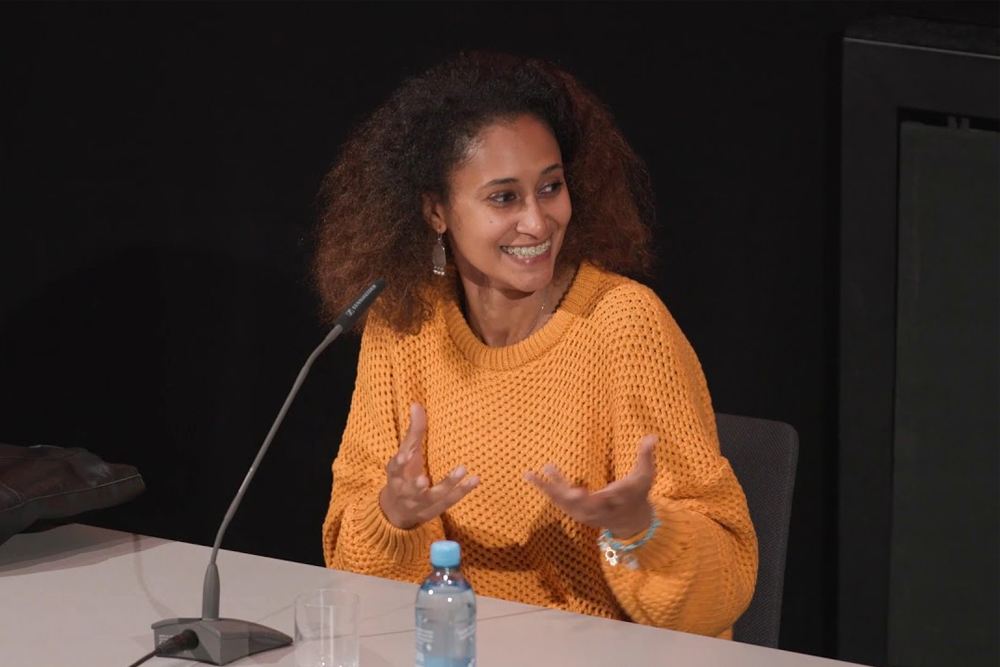
Born in Saudi Arabia and the daughter of a Sudanese father and Egyptian mother, Marwa Zein is a woman that truly embodies multiple identities, and for many it is this that perhaps shines through the most in her work. Even when it comes to her roles, that diversity and multiplicity are frontline and center. An award-winning director, scriptwriter, film producer, women’s rights activist, and founder of ORE Production, a Khartoum-based film production company, Zein is inspiring in every way.
Before setting off on a journey to become a filmmaker, Zein enrolled in Cairo University as a chemical engineering student to please her parents. While studying, she worked and saved up to have the means to leave her degree behind three years later, instead study cinema at the Academy of Arts in Cairo, Egypt in 2005. In 2009, she graduated with honors and moved to Germany to continue her film studies. Her graduation project, “A game,” was an official selection of more dozens of international festivals across the globe and was translated into five languages.
From her inspiring start into the world of film and her academic achievements, Zein moved on to bigger goals, nabbing awards for her short film “One Week, Two Days,” which premiered at the 2016 Dubai International Film Festival. In 2019, she was selected as one of the seven young filmmakers from across to attend the Cannes Film Festival 2019 by the International Emerging Film Talent Association (IEFTA).
Perhaps her most renowned recent work is “Khartoum Offside,” which was awarded Best Documentary for 2019 at the 15th Africa Movie Academy Awards AMAA 2019. The documentary tells the story of women footballers whose dream it is to play for Sudan at a Women’s World Cup hosted by their home country, revealing the challenging social, economic, and political situations they face and inspiring audiences with their tale.
Speaking to Women and Hollywood in 2019, Zein had some inspiring words of advice for other female filmmakers, saying, “There’s no competition. Everyone is unique, and we can’t tell the same story even we have the same idea. You are special, different, and inspiring, and you lead the way for the people coming after you.”
“Take care of your mental, physical, and financial situations. It’s a very challenging and demanding business, so don’t lose your soul in the process. Stay true to who you are, and you will reach the horizon,” she continued.
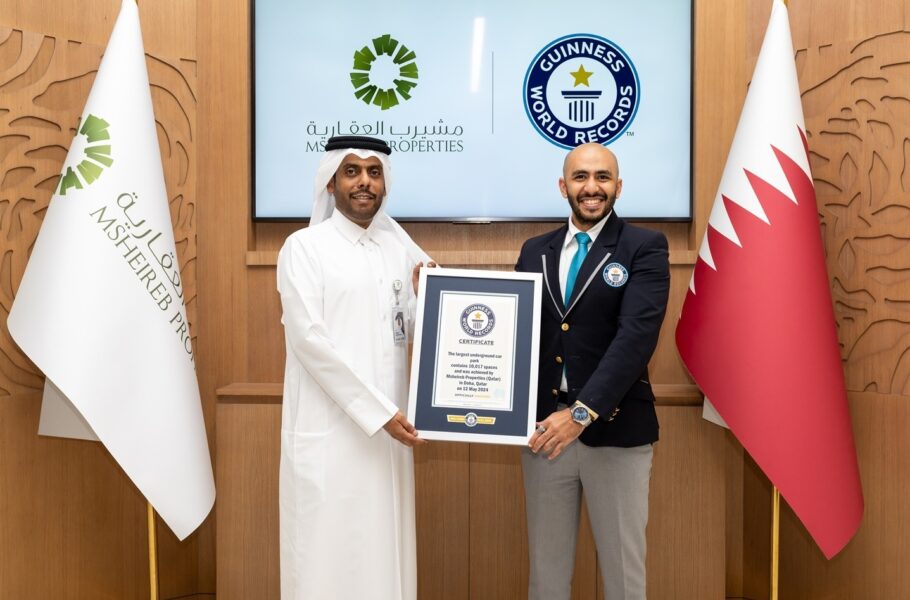
Msheireb Downtown Doha, Qatar’s pioneering sustainable and smart city district, has clinched the Guinness World Records™ title for the “Largest Underground Car Park” with a capacity of 10,017 spaces. The Guinness World Records™ recognition highlights the creative thinking that went into designing Msheireb Downtown Doha to create a sustainable urban district that sets a new benchmark for future smart city projects globally.
Msheireb Downtown Doha was designed for the human scale, which starts from the ground up. Locating car parking and building services underground has allowed the district to keep streets traffic-lite, enabling narrow, pedestrian-friendly walkways. This design improves connectivity across the wider city area, extending underground basements throughout the entire district.
“We wanted to reclaim outdoor spaces for the community by removing vehicles from the streets around Msheireb,” said Msheireb Properties CEO Eng. Ali Al Kuwari. “The Guinness World Records™ for the Largest Underground Car Park is a testament to our dedication to creating a sustainable and innovative city district that prioritizes the well-being of our community. By locating car parking and building services underground, we enabled architects to design attractive buildings with active façades on all sides.”
With an impressive capacity of 10,017 vehicles spread across six levels, Msheireb Downtown Doha’s underground parking system ensures ample space for residents, tenants, and visitors. The cutting-edge facility boasts an intelligent parking system that guides drivers to available spaces, making the parking experience seamless and hassle-free.
The underground parking system also had a significant impact on building design by removing the need for back service entrances which improved street quality and aesthetic cohesion.
As the flagship project of Msheireb Properties, Msheireb Downtown Doha has been designed to revive the historical downtown area with a new architectural language that is modern yet inspired by traditional Qatari heritage. The district incorporates the latest smart city technology and sustainability features, making it a model for future urban development’s worldwide.
Raafat Tawfik, Guinness World Records™ Official Adjudicator, commented, “We are thrilled to recognize Msheireb Downtown Doha for its outstanding achievement in creating the Largest Underground Car Park. This feat showcases the district’s commitment to innovation, sustainability, and enhancing the urban living experience.”
Msheireb Downtown Doha’s underground parking is just one of the many features that make the district a unique and attractive destination. With its pedestrian-friendly streets, diverse mix of residential, commercial, and retail offerings, and cultural attractions such as the Msheireb Museums, the district has become one of Qatar’s go-to destinations for residents and visitors alike.
The Lebanese Al-Riyad team won the 2024 Asian Basketball Champions League title after defeating the Shabab Al-Ahly team 122-96, in the final match that brought them together today, Saturday, at the Sheikh Saeed Bin Maktoum Hall in Dubai.
With this victory, the athletes qualified to represent the Asian continent in the Confederations Cup, which will be held in Singapore next September, while Shabab Al-Ahly won second place, and the Japanese Hiroshima Dragonflies team came in third place after defeating Iranian Shahrdari Gorgan 81-76 in the match that preceded the final.
Palestine’s first ever Olympian dies in Gaza from lack of treatment due to Israel’s war.
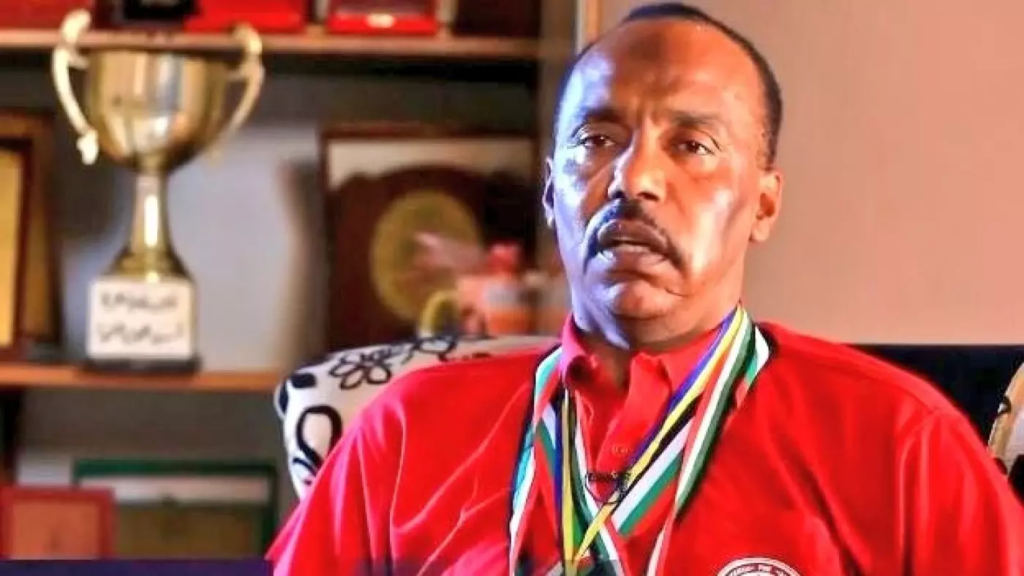
The first Palestinian athlete to participate in the Olympic games died on Wednesday at the Nuseirat refugee camp in Gaza as a result of kidney failure due to power outages and medical shortages as a result of the ongoing Israeli war and siege of the enclave.
Majed Abu Maraheel, who passed away at the age of 61, became the first athlete to be the flag bearer and represent Palestinians at the Olympic Games in Atlanta in 1996. Being a distance runner, he competed in the 10km race.
Since his breakthrough on the world stage, more than 20 Palestinian men and women have been able to compete at Olympic competitions.
“He was a Palestinian icon, and he will remain as such,” his brother told Paltoday TV after the funeral.
“We tried to evacuate him to Egypt but then the Rafah crossing was closed (by Israel), and his condition kept deteriorating.”
In his preparation for the Olympics, Abu Maraheel would often be seen on his daily runs from his home in Gaza to the Erez Crossing with Israel, which Israel closed in October after imposing a full blockade on the Strip. Last month, it was reopened for the first time since then.
He would often have to pass through that crossing for his job as a day labourer in Israel.
After participating in the Olympics, Abu Maraheel went on to become a coach for other Palestinian runners hoping to replicate his presence at the international competition.
He went on to coach Nader el-Masri, another Palestinian from Gaza who competed in the 2008 Olympic games in Beijing.
Abu Maraheel’s death highlights the grim fate of many Palestinians who are facing kidney failure in Gaza.
A report from the Euro-Med Human Rights Monitor in March found that there were between 1,000 to 1,500 patients in Gaza with kidney failure, and that they are facing a “slow death” because of “a lack of medical and therapeutic services, medications and other necessities”.
Since Israel’s war on Gaza began in October, Israeli forces have launched a full siege on the enclave. In addition to killing more than 37,000 Palestinians, they have repeatedly targeted and attacked Gaza’s hospitals and healthcare infrastructure.
A report late last month by the Washington Post said that only four of Gaza’s 36 hospitals have not been damaged by munitions or been raided by Israeli forces.
However, the lack of supplies in the area because of Israel’s blockade has further exacerbated the situation.
Israel denies blocking humanitarian aid into Gaza, though aid agencies say they are not able to get aid in because of Israeli restrictions.
Saudi Arabia’s economy witnessed growth of 1.4 percent in the first quarter of 2024 – higher than that seen across the G20 as a whole, according to new data.
The Organisation for Economic Co-operation and Development has released its latest gross domestic product report for the G20 countries, noting that the Kingdom bounced back from a contraction of 0.6 percent in the previous three-month period.
GDP in the G20 area grew by 0.9 percent quarter-on-quarter in the first quarter of 2024, slightly up from 0.7 percent in the previous quarter.
The economic performance of the G20 area was primarily driven by China and India, with Turkiye, Korea, and Indonesia also recording higher GDP growth than the G20 average.
Turkiye led with an increase of 2.4 percent, followed by India at 1.9 percent, China at 1.6 percent, Korea at 1.3 percent, and Indonesia at 1.2 percent.
The report highlighted that while Saudi Arabia experienced a significant recovery, other G20 countries faced varying economic conditions.
The US saw a slowdown, with GDP growth dropping to 0.3 percent in the first three months of the year from 0.8 percent in the previous quarter.
Japan’s economy contracted by 0.5 percent, and South Africa saw a contraction of 0.1 percent.
Conversely, Brazil, the UK, and Germany showed signs of recovery in the first quarter of 2024 after contractions over the previous three month period, with growth reaching 0.8 percent, 0.6 percent, and 0.2 percent, respectively.
Canada, Mexico, and the EU grew by 0.4 percent, 0.3 percent, and 0.3 percent, respectively, in the three months to the end of March, after zero growth in the final quarter of 2023.
Year-on-year, GDP in the G20 area grew by 3.3 percent in the first three months of the year, maintaining the same growth rate as the previous quarter.
Among G20 economies, India recorded the highest year-on-year growth rate at 8.4 percent in the first quarter of 2024, followed by Turkiye at 7.4 percent.
However, Saudi Arabia recorded the most significant year-on-year decline at a drop of 1.5 percent.
According to a separate report by the General Authority for Statistics released earlier in June, the Kingdom’s non-oil activities also rose by 0.9 percent in the first three months of this year compared to the previous quarter.
Additionally, non-oil activities increased by 3.4 percent year-on-year in the first quarter of 2024.
GASTAT further noted that Saudi Arabia’s GDP amounted to SR1.01 trillion ($270 billion) in the first quarter.
“Crude oil and natural gas activities achieved the highest contribution to GDP by 23.4 percent, followed by government activities at 15.8 percent, and then wholesale and retail trade, restaurants, and hotels activities with a contribution of 10.4 percent,” said GASTAT in the report.
Strengthening the non-oil private sector is crucial for Saudi Arabia, as the Kingdom is steadily diversifying its economy to reduce its decades-long dependence on oil.
The report further noted that government activities in Saudi Arabia rose by 2 percent year-on-year in the first quarter while declining by 1.1 percent on a quarter-on-quarter basis.
GASTAT added that the Kingdom’s oil activities increased by 1.7 percent in the first quarter compared to the previous quarter.
However, oil activities dipped by 11.2 percent year-on-year as Saudi Arabia reduced its crude production in line with the decision of the Organization of the Petroleum Exporting Countries and its allies, collectively known as OPEC+.
To maintain market stability, Saudi Arabia reduced its oil output by 500,000 barrels per day in April 2023, and this cut has now been extended until December 2024.
In April, the International Monetary Fund projected that Saudi Arabia’s economy would grow by 2.6 percent in 2024 and 6 percent in 2025.
In the same month, the World Bank also raised the growth prospects of the Kingdom’s economy to 5.9 percent in 2025, up from an earlier projection of 4.2 percent.
Furthermore, Saudi Arabia’s gross fixed capital formation surged to SR317.5 billion in the first quarter of 2024, marking a significant 7.9 percent increase compared to the same period last year.
According to a separate report by the Saudi Ministry of Investment released earlier this month, gross fixed capital formation expansion was driven by growth in both the government and non-government sectors.
GFCF, which represents the net increase in physical assets within an economy, plays a crucial role in gross domestic product as it reflects capital accumulation supporting future production capabilities and economic growth.
Of the total GFCF, the government sector contributed 7 percent, experiencing a robust growth rate of 18 percent. Meanwhile, the non-government sector, constituting 93 percent, also saw a substantial rise of 7.2 percent.
Saudi Arabia’s proactive efforts to attract foreign direct investment and bolster bilateral relations have significantly strengthened the Kingdom’s economic trajectory.
FDI serves as a pivotal catalyst for GFCF development, facilitating funding for investment projects and resource and knowledge transfer across borders, thereby fostering economic expansion and maturation.
Key initiatives such as the National Investment Strategy, the Regional Headquarters Program, and zero-income tax incentives for foreign entities play a vital role in advancing Vision 2030, which aims to diversify and expand the economy.
During this quarter, the Ministry of Investment issued 3,157 investment licenses, marking a 93 percent surge compared to the same period last year, excluding licenses issued under the anti-concealment law.
In its economic and investment monitor released in late May, the ministry revealed that the construction and manufacturing sector dominated with 47 percent of total permits, followed by vocational and educational activities, information and communication technology and accommodation and food services as well as wholesale and retail trade.
The real estate sector witnessed the most significant year-on-year growth, with a staggering 253.3 percent increase in investment licenses.
Furthermore, 127 international firms secured permits to relocate their regional headquarters to Saudi Arabia in the first quarter of 2024, reflecting a remarkable 477 percent year-on-year upsurge.
Leading corporations such as Google, Microsoft and Amazon as well as Northern Trust, Bechtel, IHG Hotels & Resorts, and Deloitte have established operations in the Kingdom under this program.
The report also highlights that Saudi Arabia processed 445 applications for investor visit visas during the first quarter of this year, enabling overseas businesspersons to explore opportunities in the country.
source/content: arabnews.com (headline edited)
___________
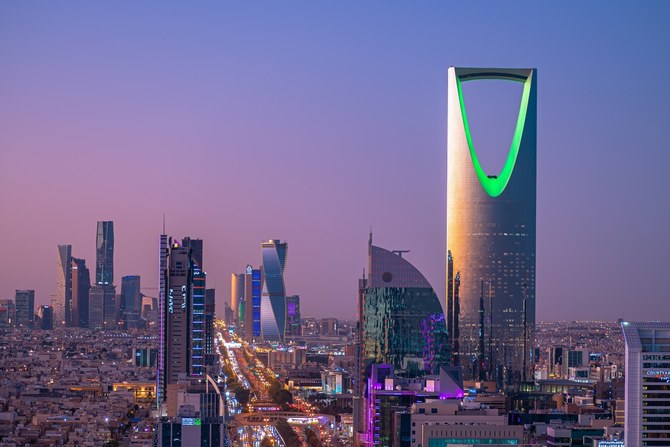
The report highlighted that while Saudi Arabia experienced a significant recovery, other G20 countries faced varying economic conditions. Shutterstock
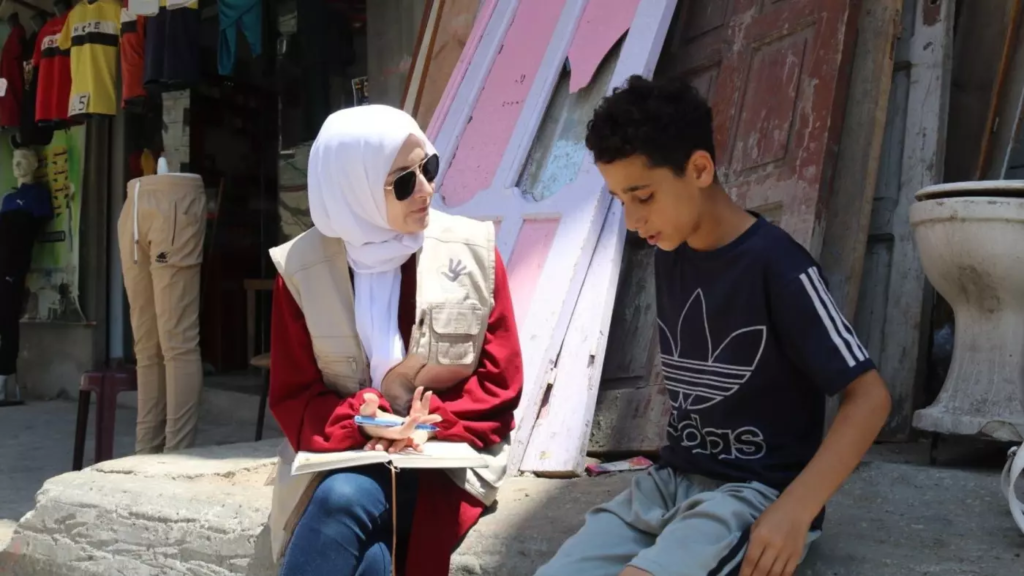
Recognition from the International Women’s Media Foundation honours Palestinian reporter’s ‘remarkable bravery in the pursuit of reporting’.
Palestinian freelance journalist Maha Hussaini has had her reporting for Middle East Eye on the ongoing Israeli war on Gaza recognised by the International Women’s Media Foundation (IWMF).
Hussaini was one of three recipients of the Courage in Journalism Awards , announced by the Washington-based foundation on Monday, which it says honours remarkable bravery in the pursuit of reporting.
Since the assault began in October, Hussaini has published dozens of stories, including a report uncovering Israeli field executions of Palestinians , which was used as evidence by South Africa at the International Court of Justice in the case accusing Israel of genocide.
Reacting to the award, Hussaini told MEE she was both happy and sad at recognition for her work.
“I am happy because it is another effort to recognise the work of Palestinian journalists and make them heard and seen,” she said. “But I am saddened because I know the cost of such recognition in a place where over 150 journalists have been killed over the course of eight months.”
The IWMF recognised Hussaini, who was a resident of Gaza City before the war, for working under strenuous circumstances during the conflict.
The Israeli attacks have posed daily threats to her life, forced her to move location multiple times and to live in desperate conditions, along with almost all of Gaza’s 2.3m Palestinian population.
At times Hussaini has been forced to work without access to electricity and internet during Israeli-imposed power outages. Her freedom of movement within Gaza, including access to her home, has also been restricted by the Israeli siege and checkpoints.
“Since the beginning of the Israeli war, it has become increasingly clear to me that journalists are targets for the Israeli army. Many of the journalists who have been killed while reporting were colleagues with whom I closely collaborated,” Hussaini told MEE.
She said that each morning she faced the possibility that she could be killed next, and quietly recited the Shahada, the Muslim declaration of faith often pronounced before death, each time she went out to report.
“I understand that my work carries immense risks, but I cannot say that I’m scared to be a journalist,” Hussaini added. “I have never felt hesitant to go to the field or cover any story. But I however worry that if I am killed, another voice would be silenced, another pen would be broken.”
Hussaini said she hoped that by winning the award, light would be shed on the work done by Palestinian journalists, especially when “many international media outlets choose to overlook their stories and reporting”.
She added that it was particularly important now as Israel bans international journalists from entering Gaza.
‘We need women’s voices in news media’
Hussaini won the award alongside Lauren Chooljian, a senior reporter and producer at American radio NHPR, and Monica Velásquez Villacís, an investigative journalist and presenter at Ecuadorian digital media outlet La Posta .
“We need women’s voices in news media to keep the press free and we need to fiercely protect women like Lauren, Maha, Mónica, and Shin to ensure that power is held to account and that equitable values survive,” said IWMF Executive Director Elisa Lees Munoz.
David Hearst, MEE’s Editor in Chief, said: “To live under conditions where there is no safe haven from drones and missiles for eight months is unbearable.
“But to report under conditions where you as a journalist are deliberately targeted, and where you witness your colleagues being killed, is a feat few other journalists can imagine. Maha deserves the highest award for her work.”
Lubna Masarwa, MEE’s Palestine and Israel bureau chief, said no words can describe how much Hussaini deserves recognition.
“Despite everything she endured – the bombs, displacement, and seeing her colleagues killed – Maha has remained resilient, professional and true to her mission of giving a voice to the Palestinian people,” Masarwa said.
The Israeli military has killed at least 150 journalists out of an estimated 37,000 Palestinians in Gaza since 7 October, according to local officials. The Committee to Protect Journalists (CPJ) has reported that it has been the deadliest period for journalists since the NGO began gathering data in 1992.
“It’s wonderful seeing Maha’s work, and by extension, that of Palestinian journalists in Gaza, being recognised by the world,” Masarwa added.
“But truly no amount of awards and words can begin to express how much she deserves recognition.”
Among Hussaini’s stories recognised by the IWMF is a report on the reality of women giving birth at home in Gaza and another featuring a girl who had to carry her paralysed six-year old brother for miles while fleeing bombing.
Hussaini’s decade as reporter
Hussaini began work as a freelance journalist in July 2014 during the Israeli offensive on Gaza, producing, preparing, and presenting reports on the conflict that resulted in the deaths of more than 2,200 Palestinians and around 60 Israelis.
She has been writing for MEE since 2018 and has covered hundreds of stories focusing on human rights and armed conflict.
In 2020, she won the Martin Adler Prize , awarded by the prestigious Rory Peck Trust, for her reporting for MEE from Gaza.
She was shortlisted for the 2023 Local Reporter Award granted by the Kurt Schork Memorial Fund.
Hussaini also works as the strategy director of the Geneva-based Euro-Mediterranean Human Rights Monitor .
IWMF’a Courage in Journalism Awards is given annually to women journalists who “are not going to step aside, cannot be silenced, and deserve to be recognised for their strength in the face of adversity”.
Shireen Abu Akleh, a renowned Palestinian-American journalist, posthumously won the award in 2023 after being shot and killed by Israeli forces a year earlier.
The women are part of an ascending community that has gained a higher profile after waves of recent immigration.
Six Arab women were honoured Saturday by their peers for their work in the community and in business.
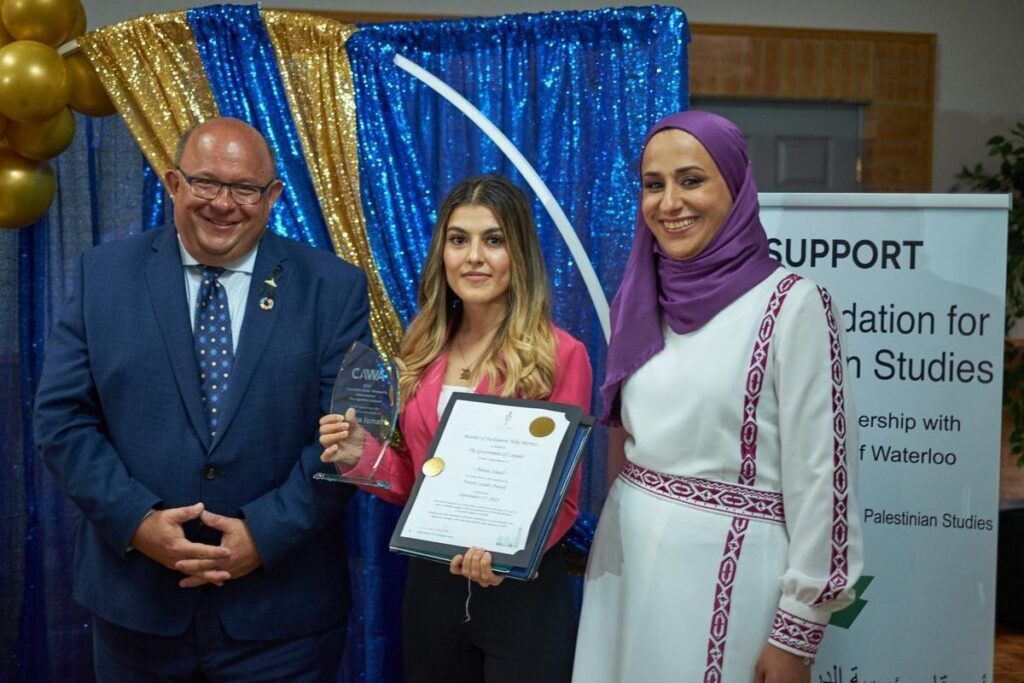
“It really is a great opportunity to educate people,” said Asma Al-wahsh, founder of the non-profit Canadian Arab Women’s Association. The association named six Women of the Year in part to challenge stereotypes that immigrant women do not contribute.
Noura Alkhiwled was celebrated for “rocking it on the work floor” as a woman in the workforce. Ansam Shafi was recognized for her community leadership.
Hiba Al Zaben has made a name for herself in a science-related field that is dominated by men. Bahiyye Ahram owns a business and is an exceptional entrepreneur.
Yasmin Haloubi was honoured for making a difference in Guelph. Amina Ismail is a future leader, recognized as an example of the next generation of Arab women.
These Arab women are part of an ascending Arab community that is gaining a higher profile after waves of recent immigration. The community was little known a generation ago, but is now big enough to hold its first Middle Eastern festival last month in Kitchener.
Arabic has surged to become the No. 3 foreign language spoken around dinner tables at home in this region, the 2021 census has found. It has surpassed German and trails Chinese languages and Punjabi.
Growth over a decade has been “really huge,” Al-wahsh said. She came to Canada in 2012 and sees this region as a magnet for Canadian Arabs who are relocating from other cities and provinces.
It’s the second time the women’s association has honoured women of the year. The ceremony was held in west Kitchener at the Portuguese Club.
From left: Kitchener Mayor Berry Vrbanovic, Amina Ismail (celebrated as a future leader), and Asma Al-wahsh, founder of the Canadian Arab Women’s Association .Peaceful Films
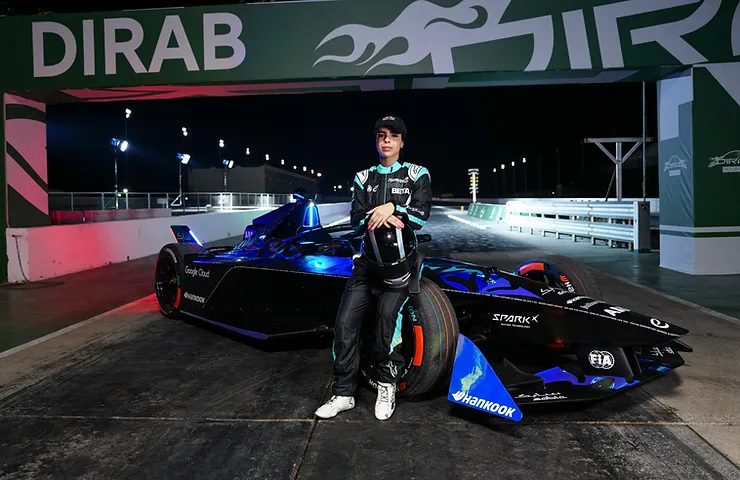
This January, Saudi racer Reem Al Aboud set a new acceleration benchmark for an FIA single-seater by reaching 0-60mph in 2.49 seconds in an ABB FIA Formula E GENBETA car. Ahead of International Women’s Day, we reflect on the implications of this achievement for motorsport.
Every Federation Internationale de l’Automobile-sanctioned single-seater championship race begins with a standing start. The lights at the starting line flash on, and flash off. Idle cars roar to life, accelerating through the straight and into the waiting corner.
How quickly these cars can accelerate depends on the series. F1 Academy goes from zero to 60mph in approximately 3.6 seconds. Formula 3 and Formula 2 manage in 3.1 and 2.9, respectively. Formula E’s GEN3 car takes 2.8. The current Formula 1 car takes 2.64.
But F1’s 2.64 seconds is no longer the benchmark. Now, Formula E’s newly developed GENBETA car holds the title — and with a woman in the cockpit.
Last July, Formula E unveiled its GENBETA prototype at the ExCeL London. While testing the car, World Champion Jake Hughes clinched a top speed of 218.71km/h, smashing the Guinness World Record for fastest speed indoors by more than 50km/h.
Having designated GENBETA as its development platform, Formula E sought to explore the model’s potential and performance further. The series set its sights on setting a second benchmark: the time an FIA single-seater takes to reach 0-60mph.
Yet in chasing after the F1 benchmark, Formula E was not content with breaking only technological and physical barriers. So, to honour its founding commitment to social progress, it added motorsport’s longstanding gender barrier as yet another to break.
Accordingly, Formula E tapped 23-year-old Saudi female racer Reem Al Aboud to take the GENBETA’s driver seat. The 2023 Saudi Toyota Ladies Cup Champion has partnered with the series since 2018, when she became the first Saudi woman to test a Formula E car.
Experienced in driving GEN2 and GEN3 cars — plus breaking barriers across karting, hillclimbing and autocross series — Reem was Formula E’s choice for a 2024 FIA Girls on Track Ambassador. Naturally, she was their choice for the GENBETA test as well.
And that choice certainly paid off. This January at Dirab Motor Park, Reem’s GENBETA car achieved 0-60mph in 2.49 seconds — besting F1’s by 0.15 seconds.
Of course, the technological aspect of the January test is remarkable. Behind GENBETA’s new benchmark is its front powertrain kit, which previous Formula E models (and other road electric vehicles) only use for energy harvesting. However, GENBETA also turns on this kit for greater traction during acceleration, using it to produce 536 horsepower that will launch the car into action. Instant torque allows for instant acceleration and thus a 2.49-second 0-60mph time.
What’s also remarkable is that a woman is the face of this test.
After all, motorsport’s gender barrier is cyclical. Doubt that female drivers can perform on par with their male counterparts dominates the sport. Doubtful investors shy away from funding young female drivers. Underfunded female drivers can’t enter, remain and progress through racing series. Series sorely lack female representation — when representation is what validates the reality that women can indeed perform. That lack of validation perpetuates the doubt about female drivers. And so, the cycle continues.
But Reem’s benchmark throws a wrench into this cycle by tackling the doubt head-on. She reaffirms that when women are given the time on track they are so often denied, they can excel. That when women are included in the conversation, they can contribute to the technological developments that push this sport forward. That when this sport values women, women can bring equal — if not more — value to the sport in turn.
As the face of this test, Reem represents the generations of women who have been denied from motorsport on the basis of their gender. Of women who challenge prejudice in cockpits, paddocks and audiences. Of girls who see Reem on their screens and wonder if they, too, can wrestle state-of-the-art cars at inhuman speeds.
Reem breaks the cycle by showing them that they can, and that they should.
In doing so, she and Formula E bring motorsport a step closer to a new era. One where women are no longer the exception, but the standard.
About 34 million years ago, in the Eocene period of the Paleogene (the period from 66 to 23 million years ago), and in a tropical-like environment with forests and swamps in what is today the Qatrani Desert in Egypt’s Fayoum Depression, a genus of rodents that was not known before, used to live.
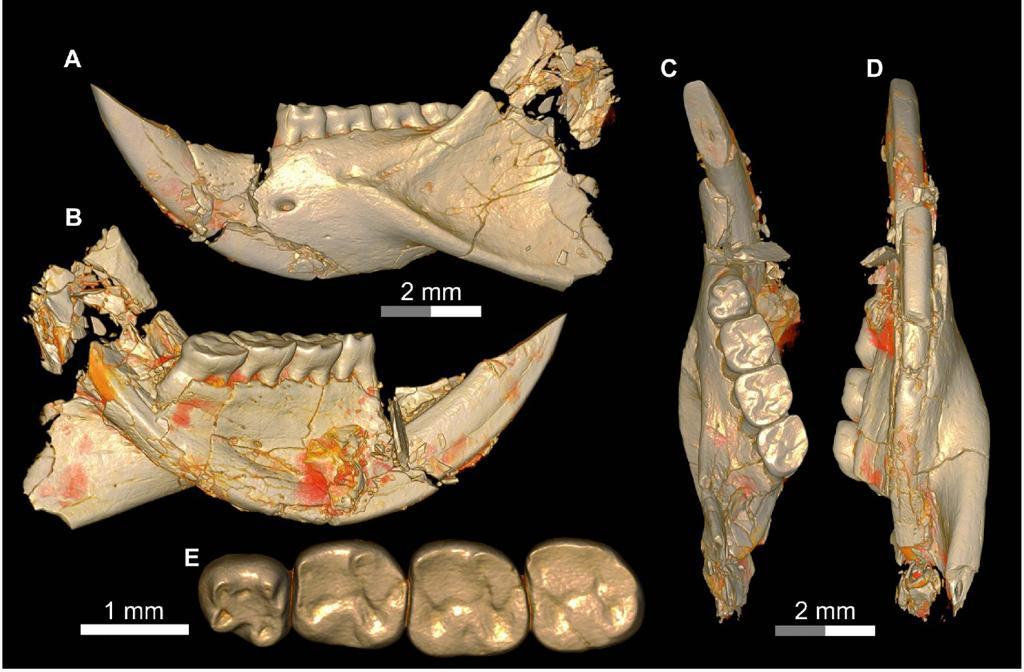
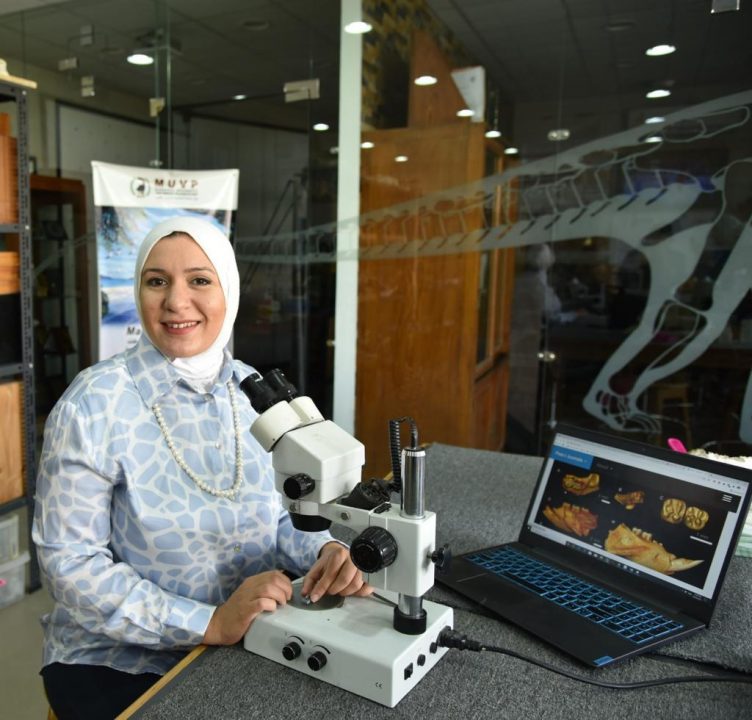
In a new study published in PeerJ, researcher Shorouk Al-Ashqar, a member of the “Sallam Lab” team specialised in vertebrate fossils at Mansoura University, studied two skulls and a large group of mandibles of fossils belong to the “Qatranimys Safroutus”.
“But it wasn’t easy; the samples were very small and very thin and adhered to the solid rocky clay, which made preparing the samples for study very difficult. We had to make accurate CT scans to be able to study them in a three-dimensional image,” said Hesham Sallam, the lead author of the study.
The newly discovered genus of rodents was called “Qatranimys Safroutus” which refers to the location of the discovery in the first word, whilst “safroutus” means too small in the Egyptian Arabic dialect.
The length of the molar of Qatranimys Safroutus was one millimetre, and its skull was about 1.5 centimetres long, and its weight did not exceed 45 grams.
Jebel Qatrani Formation is famous for its rich rodent assemblages from the Eocene–Oligocene deposits, which contributes to enhancing our understanding of the origin and paleobiogeography of what scientists call the “Hystricognathi” which are an infraorder of rodents, distinguished from other rodents by the bone structure of their skulls.
Al-Ashqar said that the samples used in the study showed clear differences in the morphological characteristics of the upper and lower teeth. And by comparing these samples with the discovered rodents from Afro-Arabia, it was clear that it belongs to a new genus that has never been discovered before.
“We did not only record a new genus and species, but we were able to record the first bones of the skull of a large group to which the discovery belongs, called the “Phiocricetomys”, she added.
Researchers from Mansoura University, the American University in Cairo, the Egyptian Environmental Affairs Agency, Duke University and the University of Salford participated in the study.
An awards ceremony hosted by the King Salman Global Academy for Arabic Language honored the top three teams in the event
Event aims to enhance the dictionary with innovative applications and new ideas
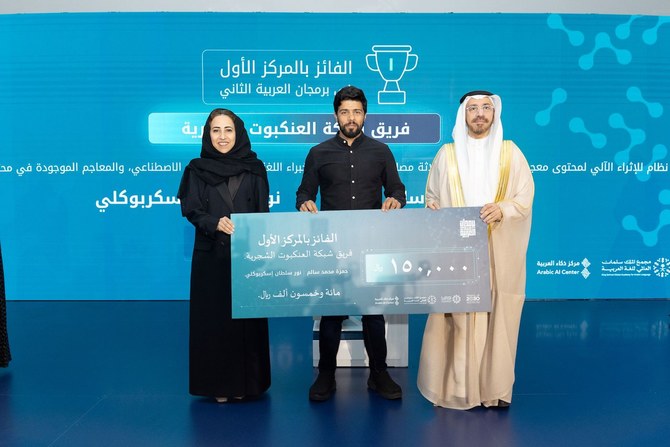
Russian team Spiderweb Network has won first place in the second Arabic Hackathon, scooping a prize of SR150,000 ($39,994) for their innovative idea.
Their project proposed an automatic enrichment system for the “Riyadh Dictionary” using three knowledge sources — the Arabic language expert community, artificial intelligence, and dictionaries found on the web.
An awards ceremony hosted by the King Salman Global Academy for Arabic Language honored the top three teams in the event, which aims to enhance the dictionary with innovative applications and new ideas.
This global technical challenge is aimed at individuals and organizations with technical and linguistic skills from all over the world. Teams develop innovative technical solutions and digital platforms for automatic Arabic language processing to enhance its status among the world’s living languages.
Second place went to the Pioneers of Intelligence, a joint Algerian-French team who received SR100,000. Their project focused on using AI to provide terms and definitions from specialized fields in a fast and effective way, with the possibility of creating specialized lexicons such as the “Riyadh Medical Dictionary.”
The Saudi-Egyptian Arabic Examples team took third place and a prize of SR50,000 with their idea for an AI system that provides appropriate examples for the meaning of each word.
The second edition of the challenge saw a total of 546 participants, 57 percent of whom were female and 43 percent male, representing 30 countries in 142 competing teams.
Abdullah Al-Washmi, Secretary-General of the King Salman Global Academy for Arabic Language, highlighted the establishment’s commitment to promoting the use of the Arabic language and launching supportive initiatives.
The closing ceremony was accompanied by activities such as an exhibition by the Arabic Intelligence Center, which was launched in April and specializes in automated Arabic language processing.
The center includes several initiatives, such as: the “Suwar” platform for digital dictionaries, “Falak” for digital corpora, and the Riyadh Dictionary for Contemporary Arabic Language.
Al-Washmi said the center represented a significant leap in the digital transformation of Arabic language services by developing technologies that aided its use, analysis, understanding, and production.
source/content: arabnews.com (headline edited)
__________
The Russian team won first place in the Arabic Hackathon challenge, which concluded in Riyadh on Thursday (June 6). / Russian team Spiderweb Network has won first place in the second Arabic Hackathon, scooping a prize of SR150,000 for their innovative idea. (KSGAFAL)