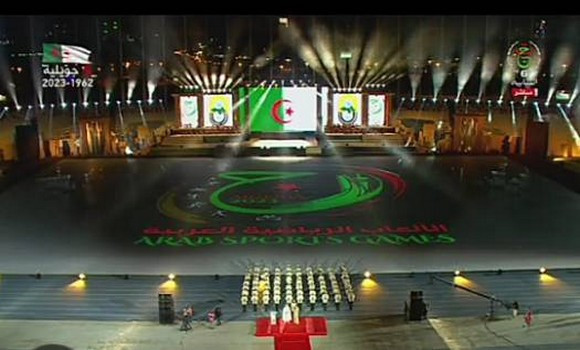
ALGERIA: ’15th Arab Sports Games 2023′ at Mohamed-Boudiaf Olympic Complex, Algiers with Participation of 22 Arab countries, July 05-15.

PM chairs opening ceremony of 15th Arab Sports Games.

On behalf of the President of the Republic, Abdelmadjid Tebboune, the Prime Minister, Aimene Benabderrahmane chaired the opening of the 15th Arab Sports Games organized by Algeria from on 5-15 July at Mohamed-Boudiaf Olympic Complex in Algiers, with the participation of nearly 2,000 athletes representing 22 Arab countries.

The opening ceremony of the 15th Arab Sports Games hosted by Algeria (July 5-15) started Wednesday in the Mohamed Boudiaf Olympic Complex in Algiers, in the presence of Prime Minister Aymen Benabderrahmane, members of government and guests from various countries and organizations.

source/content: aps.dz (headline edited)

____________

___________

ALGERIA

MAURITANIA: Fatimetou Mint Abdel Malick : Role Model for Africa’s Women

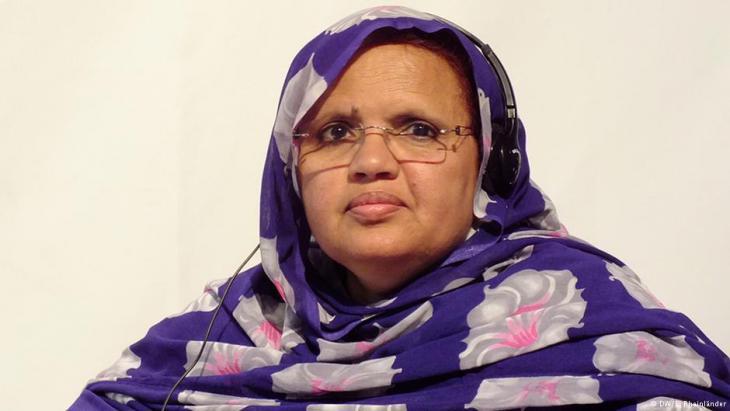
Fatimetou Mint Abdel Malick has been the mayor of a district of the Mauritanian capital Nouakchott for 14 years. She is living proof that women can make it to the top even in conservative Muslim societies. Elisa Rheinheimer introduces a courageous Mauritanian.

Fatimetou Mint Abdel Malick has a warm, maternal demeanour and a firm handshake. Keen eyes sparkle behind her glasses. A petite woman in a traditional flowing robe and a blue headscarf decorated with pink flowers, she doesn’t look like a politician in charge of a 60,000-strong community – at least not to Western eyes.

She is mayor of a district of the Mauritanian capital Nouakchott – and has been for 14 years. That makes her not only a pioneer in her own country, but also a role model for many African women. “I never actually wanted to go into politics,” she says with a laugh, “but I have a very social vein and it was a kind of calling. I wanted to change things in my city for the better.”

Now 57, she originally studied computer science in Belgium. It was during her time there that her eyes were opened to women’s opportunities. Years later, in 2001, she ran for mayor in a district in her home city of Nouakchott – and won at the first attempt. During her first period in office, she was still the only woman mayor in the country. “216 men – and me,” she says, her voice betraying well-earned pride.

Opening the door to politics for other women

In Tevragh-Zeina, the district of the capital of Nouakchott for which she is responsible, everyone knows her. She has achieved a great deal there, improving school education – particularly for girls – reforming the administration, reorganising refuse disposal and investing in infrastructure. Fatimetou Mint Abdel Malick wanted to build car parks, playgrounds and football pitches – and she did.

It sounds so easy when she talks about it now, but it certainly wasn’t quite that simple: “To begin with, I found the responsibility and the expectations people placed on my shoulders a burden,” she says. “After all, I had to be successful so as to open the door for other women and enable them to get into politics.”

She has had some success in this respect. There are now three other women mayors in Mauritania. She herself has never felt uncomfortable in her country’s male-dominated political arena. “Women have a very good status in our society,” she explains, “that made it easier for me.”

Development and religion hand in hand

And religion? What role does faith play in her life? Fatimetou Mint Abdel Malick looks rather perplexed, cocking her head in surprise as if she considers the question superfluous. “A very important one,” she says after a pause, “I am a Muslim.”

Development and religion, she says, are not mutually exclusive but belong together. She rejects the idea that Islam oppresses women and makes it hard for them to have a career of their own. In the Mauritanian religious tradition, she says, Islam virtually demands that women play an active role in society.

A mother of three grown children, Fatimetou Mint Abdel Malick is not only a local politician but also president of the Network for Locally Elected Women of Africa. She is invited to conferences and panel discussions all over the world, flying from one continent to the next. “Being up in the air is perfectly normal for me,” she says. Sometimes 24 hours are not enough to get everything done that she wants to do.

Raising awareness of environmental issues in Mauritania

One reason for that lack of time is that she also feels responsible for environmental protection and catastrophe management in her country. Mauritania has to deal with water shortages, sandstorms and desertification.

She organises workshops in schools, for instance, to raise awareness of environmental issues among children and young people. She has launched campaigns for the protection of dunes, planted date palms in the city with women’s groups, and called on local people to clean up the country’s beaches.

Her calm, relaxed demeanour is certainly part of her recipe for success. Fatimetou Mint Abdel Malick was recently re-elected for her third term in office, and has enough plans and projects in mind for the next 20 years. Mauritania is at No. 158 on the Human Development Index, close to the bottom of the ranking.

This hardworking mayor has a lot of work ahead of her. She currently has more than 3,000 fans on Facebook; in real life, there are no doubt many more than that.

source/content: en.qantara.de / Elisa Rheinheimer

____________

________________

MAURITANIA

EGYPTIAN-SCOTTISH Ayoub Sisters to Perform at King Charles’ Coronation in Edinburgh

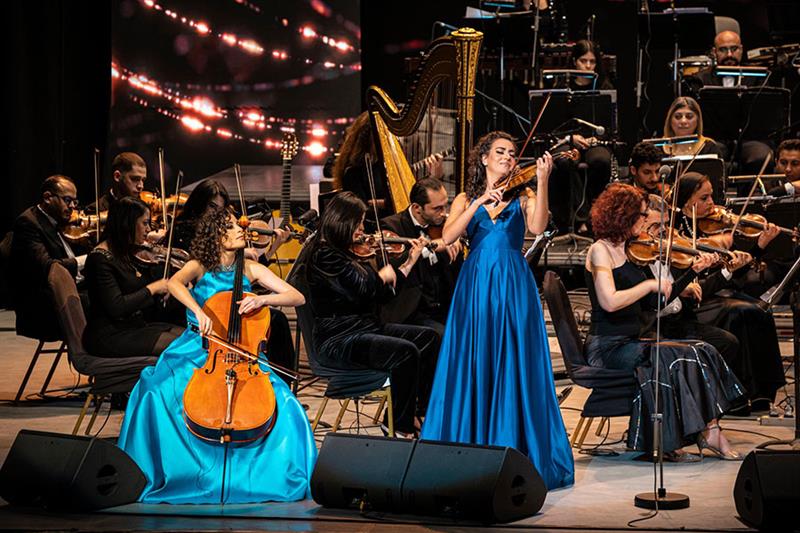
Egyptian-Scottish classical duo the Ayoub Sisters are scheduled to perform at King Charles III’s coronation in Edinburgh on Wednesday.

“We are delighted to share that we have been invited by HM King Charles III to perform at his coronation in Edinburgh next week,” wrote the Ayoub Sisters on Facebook on Saturday.

“The ceremony is part of Royal Week, with the King and Queen undertaking several engagements in Scotland, and will be broadcast live on BBC One. Tune in on Wednesday 5th July at 1:30pm to watch the celebration unfold,” they added.

The Ayoub Sisters have taken the international music scene by storm since their debut at the Royal Albert Hall in 2016. Laura Ayoub plays the violin – performing on an 1810 J. Gagliano – and Sarah Ayoub masters the cello. Both play the piano. 

The internationally renowned duo were discovered by producer Mark Ronson.

Their young, albeit sparkling, career has led them to sign a contract with Decca Records, one of the UK’s biggest record labels playing at the BRITS and the BAFTAs. Their album topped the Official Classical Artist Albums Chart.

The duo explore many musical genres, starting from classical music to Scottish traditional repertoire, topping it with captivating arrangements of pop, funk, and world music.

Their virtuosity and creativity have taken them to many prestigious halls in the UK (the Royal Albert Hall, Royal Festival Hall, London Palladium) and the rest of Europe, the Middle East, and Asia.

source/content: english.ahram.org.eg (headline edited)

____________

______________________

SCOTLAND / EGYPT

U.A.E: Abu Dhabi schoolgirl ‘Amna Al Mansouri’ Crowned ‘UAE Arab Reading Challenge’ Champion

Competition also had a new category this year for disabled pupils.

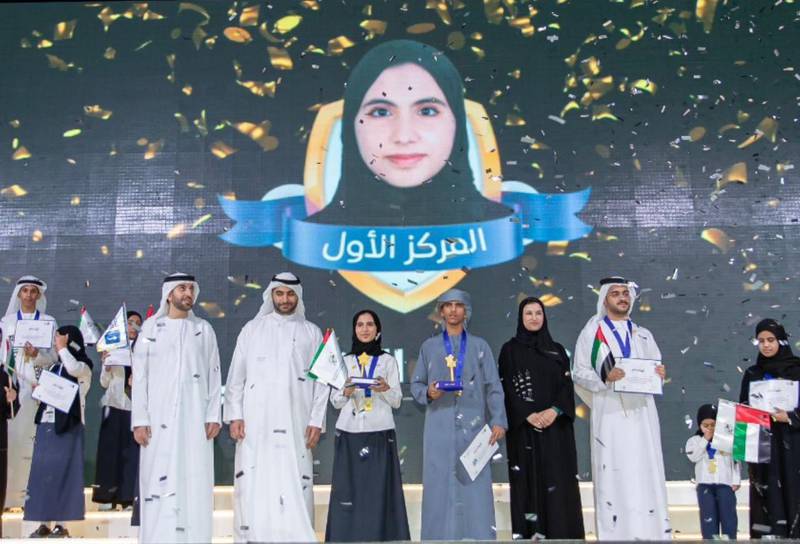
An Abu Dhabi pupil was crowned the winner of the UAE Arab Reading Challenge in Dubai on Friday.

Emirati schoolgirl Amna Al Mansouri, who read 128 books during the academic year, took top spot ahead of more than 500,000 pupils.

Sheikh Mohammed bin Rashid, Vice President and Ruler of Dubai, praised those who took part.

“Today, the UAE celebrated 514,000 students from state schools who participated in the Arab Reading Challenge – whose Arab and international participation reached 24.8 million students,” he said on Twitter.

“I congratulate Amna Mohammed Al Mansouri, and her family, for coming in first place. Amna read 128 books during the academic year.

“Two years ago, Amna lost the ability to walk, but that did not stop her. She soldiered ahead and sailed across the vast ocean of knowledge and literature. The challenge was the beginning of a life-changing experience.

“Today, Amna can walk once again, she has won the Reading Challenge and has authored two stories.

“She will represent the country in a few days at the International Physics Olympiad in Tokyo.”

Amna took the top prize ahead of Mohammed Al Hammadi and Iman Daoud.

The competition had a new category this year for disabled pupils. Emirati pupil, Ghareeb Al Yamahi, won first place, with Ghaya Zainallah coming in second place.

“I also congratulate the student Gharib Al Yamahi who won first place in the reading challenge in the category of people of determination,” Sheikh Mohammed said.

“Gharib is blind in sight but he is not a stranger in the path of achievement.

“Gharib read 130 books during the academic year in Braille. He is a writer of articles, a speaker and an inspiration to all of us. When a blind person reads 130 books, sighted people should review themselves.

“All the best to Gharib who, with his persistence and willpower, represents the saying that ‘nothing is impossible in the UAE’.”

The ceremony was attended by Sarah Al Amiri, Minister of State for Public Education and Advanced Technology.

Largest in the world

In May, Sheikh Mohammed  said the annual Arab Reading Challenge  had become the largest event of its kind in the world.

He said 24.8 million pupils from 46 countries had taken part in this year’s competition.

It was launched in 2015 to encourage a million young people to read at least 50 books in a year.

The challenge usually starts at the beginning of the academic year, around September, and continues until the end of the academic year.

The Arab Reading champion is selected based on the pupil’s ability to articulate general knowledge, critical thinking and communication skills, plus the diversity of books they have selected.

A Syrian schoolgirl who survived a deadly missile attack during the civil war in her country was crowned the Arab Reading Challenge Champion in November.

Sham Al Bakour, who was seven when she was named winner, was only six months old when her family’s car was struck during violence in Aleppo in December 2015.

Her father was killed while she and her mother survived the horrific attack.

She completed a remarkable journey from tragedy to triumph to win words of praise from Sheikh Mohammed.

The young literature lover read 70 books to win the competition.

When asked about what she would do with the Dh1 million ($270,000) prize money, she said she would give it to her mother.

source/content: thenationalnews.com (headline edited)

____________

The UAE Arab Reading Challenge prize ceremony was held in Dubai.

____________________________________________________

ARAB WORLD / UNITED ARAB EMIRATES (U.A.E)

U.A.E Ranks 7th Globally in Terms of Per Capita National Income

According to the World Bank, the UAE has maintained its place among the list of countries with the highest per capita income based on the Atlas method.

The UAE ranked seventh in the world in terms of per capita national income, according to the latest World Bank data.


The UAE’s per capita income increased by $10,781 from 2021 to $87,729 in July 2022, based on purchasing power parity in current international dollars.


The international dollar is a virtual currency that is used for evaluating the purchasing power of various countries.


It is based on the US dollar, but it has the same purchasing power as each country’s local currency.


According to the World Bank, the UAE has maintained its place among the list of countries with the highest per capita income based on the Atlas method while also using current US dollar prices.


Using the Atlas method, the World Bank breaks down the world’s economies into four income groups: low, lower middle, upper middle and high.


The categorizations are revised annually depending on the previous fiscal year’s per capita income.


The UAE’s per capita national income in current US dollars rose to $48,950 in 2022 from $43,460 in 2021, surpassing the pre-COVID-19 level of $46,210.


The Atlas method, which was developed in its current form in 1989, is used to express gross national income in US dollars.

source/content: arabnews.com (headline edited)

_____________

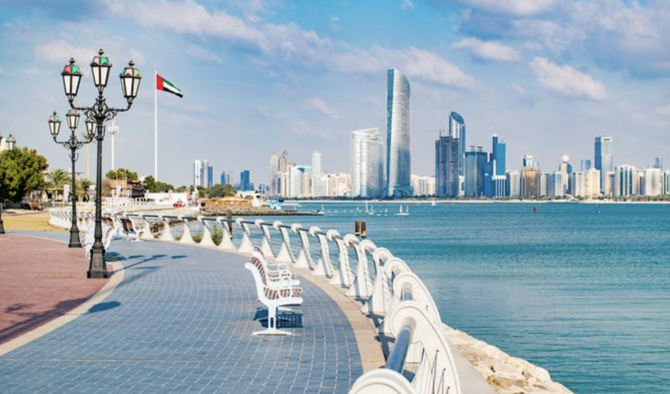
The UAE ranked seventh in the world in terms of per capita national income, according to the latest World Bank data. (Shutterstock/File Photo)

___________________________________

UNITED ARAB EMIRATES (U.A.E)

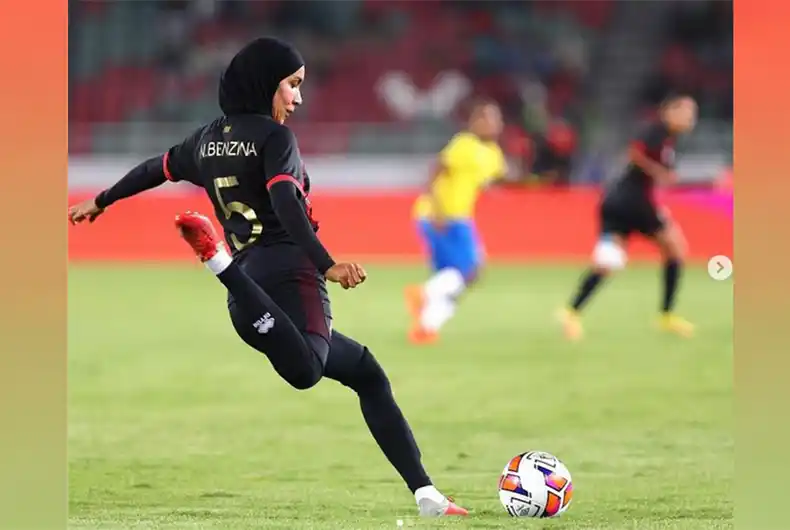
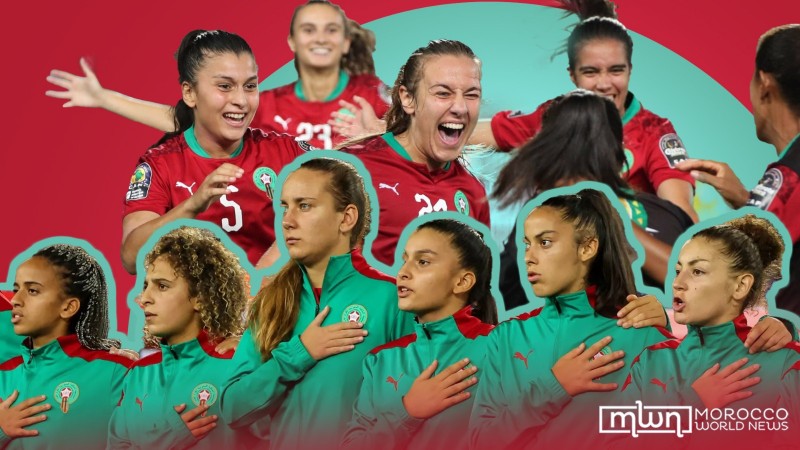
MOROCCO: First Arab Nation to Play a Wafcon Final : The Atlas Lionesses of Morocco

The Atlas Lionesses wrote a page in the history of Women’s football as they became the first Arab nation to play a Women’s Africa Cup of Nations final.

Morocco’s Women National Football (MWNF) team has been making headlines as their popularity has grown since last year’s Wafcon (Women’s Africa Cup of Nations) final, in July 2022.

Hosted by Morocco, the Wafcon tournament marked the rise of the Atlas Lionesses as they became the first Arab nation to play a final for this tournament, when they faced off against South Africa.

As they prepare for this year’s 2023 World Cup in Australia and New Zealand, it is worthwhile to look back on the MWNF team’s great accomplishment last year and what it means for the rest of the world.

The Atlas Lionesses’ Eye-Catching Adventure At Wafcon 2022

With Football having been traditionally viewed as a men’s game in the region, the MWNF team captured the hearts and imagination of girls and women from the Arab region as they achieved a milestone at the 2022 Wafcon.

Although South Africa ended up winning the title, the Atlas Lionesses gained recognition for their impressive skills and outstanding performances, securing the 7th rank in Africa and the 72nd place in the FIFA global ranking.

Before reaching the final, the MWNF team had beaten Botswana and Nigeria in two spectacular football matches, allowing them to secure a ticket to participate in the 2023 Women’s World Cup, which will take place in Australia and New Zealand.

Impressing many football personalities, the team’s remarkable performance also saw the rise of a number of star players in the team as Ghizlane Chebbak, Fatima Tagnaout, and Zineb Redouani were listed among the “best eleven” by the Confederation of African Football (CAF). 

In addition to that, Morocco’s captain Chebbak was named the best player of the 2022 Wafcon and received the “Woman of the Tournament” award following the match against South Africa.

Commenting on the Atlas Lionesses’ performance at last year’s Wafcon, MWNF coach Reynald Pedros expressed his eagerness to reach new heights with his team: “We will continue to work. This is just the beginning of a new adventure.”

Recognition by international media

Various local and regional news outlets put the spotlight on the MWNF team’s achievements, acknowledging their contribution to Morocco’s football development, alongside the Atlas Lions’ incredible performance at the last men’s World Cup.

For instance, International football’s governing body FIFA described the year of 2022 as “Morocco’s miracle year of continental and international success” and emphasized the women’s team’s role in paving the way for Moroccan football to become a leading global symbol.

For Africa News, women’s football may be at a turning point as its popularity is growing exponentially, proven by the attendance record of the final Wafcon match which counted around 50,000 supporters at the Prince Moulay-Abdellah Stadium in Rabat.
The article also acknowledged Morocco as “the first North African country to host the Women’s Africa Cup of Nations in the 24-year history of the continental competition.”

Earlier this week, the Atlas Lionesses headed to Australia ahead of the 2023 FIFA Women’s World Cup as the only representative of the Middle East and North Africa region in this prestigious global tournament.

source/content: moroccoworldnews.com (headline edited)

_____________

Morocco women football team

_____________

MOROCCO

SAUDI ARABIA Auditor Fehr Al-Jefri Becomes the First Arab to Win the William S. Smith Gold Award for Auditing

Fehr Al-Jefri, a member of the Saudi Institute of Internal Auditors, achieved the highest score in the William S. Smith Award for the Certified Internal Auditor program.

He earned the gold medal in a competition against candidates from the Philippines, China, and the US.

Al-Jefri is the first Arab to receive the highest award offered for auditing by the CIA, which consists gold, silver, bronze, and student levels. These awards are determined by individual performance in the core CIA exams.

The International Institute of Internal Auditors recognized and honored Al-Jefri for successfully completing all core exams within a year.

His accomplishment is a testament to the support provided by the Saudi leadership to individuals in various fields, the Saudi Press Agency reported on Tuesday.

According to the International Institute of Internal Auditors, this recognition signifies the role of Saudi Arabia in supporting the internal auditing profession and its practitioners. It highlights the “efforts made to help them overcome challenges, succeed in their professional work, and enhance work mechanisms.”

Abdullah Saleh Al-Shebeili, the CEO of the Saudi Institution of Internal Auditors, affirmed that the country’s achievements persist due to the steadfast support of the leadership toward the overall control system and, specifically, the internal audit profession. Al-Jafri’s victory serves as undeniable evidence of this sustained support.

Al-Jefri expressed his pride in receiving the award, considering it not only a personal accomplishment but recognition for his nation.

He also praised the role played by the Saudi Institution of Internal Auditors in bolstering the profession and advancing its practices.

Al-Jefri highlighted the institution’s efforts in organizing courses and seminars aimed at enhancing efficiency, improving performance quality, and strengthening oversight.

He also expressed his gratitude and appreciation to the institution for providing him with the necessary resources and support to achieve success. He emphasized that obtaining the CIA certificate signifies a high level of excellence in the profession and creates numerous opportunities for career advancement.

The William S. Smith Award, launched in 2010, catalyzes the advancement of the CIA program. It showcases participants’ commitment to addressing evolving challenges and equipping professionals with the necessary experience, credibility, knowledge, and competence to excel in the field and make a difference in various domains.

source/content: arabnews.com (headline edited)

__________

Fehr Al-Jefri, a member of the Saudi Institution of Internal Auditors, and the first Arab to receive the Gold William Smith Award for the CIA. (SPA)

__________________

SAUDI ARABIA

MOROCCAN Women shake up the world of Gnaoua Music

Young Moroccan women are bringing new and inclusive energy to the centuries-old art of Gnaoua, a spiritual musical repertoire traditionally reserved for men.

Also known as “tagnaouite”, it gained worldwide recognition after it was listed by UNESCO as intangible cultural heritage in 2019.

“Why shouldn’t women be part of this dynamic?” asked Asma Hamzaoui at the Gnaoua World Music Festival in Essaouira, a southern coastal city steeped in the musical tradition.

The 26-year-old Casablanca native is one of the first women to perform Gnaoua, which blends African rhythms with spiritual chants and poetry.

Her father, a Gnaoua master, initiated her into the artform at a young age.

“I’ve accompanied him to his evening gatherings since I was seven years old,” recounted the young woman, who in 2012 formed the group “Bnat Timbouktou”, or The Girls of Timbuktu.

“I gradually learned to play the guembri, a three-stringed lute made of camel skin. My father made sure that I learned as much as possible before I flew solo.”

The all-female ensemble wowed the festival-goers — with Hamzaoui on vocals and the guembri, and four musicians on qraqeb steel castanets.

They played alongside the Amazones d’Afrique, another all-female group, from Mali.

‘Feeds the spirit’

“It’s exceptional to have women playing Gnaoua music, which shouldn’t be reserved for men,” said Hamza Tahir, a member of the audience. “They bring fresh air into this music.”

Inspired by Bnat Timbouktou’s success, rising star Hind Ennaira developed her passion for tagnaouite in her hometown of Essaouira.

Its fortified citadel on the Atlantic coast is a breeding ground for the mystical musical tradition, in which religious hymns invoke ancestors and spirits.

Originally practised by enslaved people and dating back at least to the 16th century, Gnaoua has gone from being practised largely in private gatherings, where therapeutic rituals accompanied the music, to public events such as concerts and festivals.

“The city of Essaouira is the cradle of tagnaouite,” said Ennaira, who was taught to play the guembri by friends. “It is beautiful heritage that feeds the spirit. It is important for young people to value it.”

Ennaira put her own touch on the tradition by bringing in a guitarist and drummer to accompany the traditional ensemble.

“At first, there were some differences because they were not used to working with a woman,” she said. “But after some challenging exercises, they adapted to me and we became complementary.”

‘Jimi Hendrix’ style

Yousra Mansour — the front woman of the band Bab L’bluz (“The Blues Gate”), which fuses Gnaoua, rock and blues — also encountered challenges entering the music scene.

“There were two constraints for me: first, the fact that this field is usually reserved for men, but also how we interpret traditional music,” the musician told AFP.

“It is not very accepted or even tolerated by some of the stricter individuals.

“We replaced the bass with the guembri and the guitar with the awisha (a small guembri) and created a kind of ‘power trio’ in the style of Jimi Hendrix with reimagined traditional instruments,” explained Mansour.

The 32-year-old vocalist passionately defends women’s freedoms, saying that “as a woman, I have not had an easy life”.

“There was a lack of women in this field. When I see Asma Hamzaoui or Hind Ennaira, they are magnificent,” she said.

“It is not easy to evolve in a predominantly male universe, but we see changes emerging.”

source/content: english.ahram.org.eg (headline edited)

____________

Friends taught Moroccan Gnaoua artist Hind Ennaira to play the guembri, a three-stringed lute made of camel skin (Photo: AFP)

____________

MOROCCO

SYRIAN-AMERICANS: Refugee-Powered ‘NaTakallam’ Launches Professional Arabic Language Courses

  • New course offers four tracks specific to journalism, humanitarian work, health care and business
  • “Arabic for Professionals” carricula are proofed by Arabic academics from top universities

Six Syrian refugees in the US have crafted the “Arabic for Professionals” course launched on Wednesday by NaTakallam, a refugee-powered social enterprise that provides language learning, translation and interpretation services.

The course’s contents have been proofed by Arabic academics from top universities, such as the American University of Paris, according to a press release by NaTakallam.

Tailored for upper-intermediate and advanced Arabic students, “Arabic for Professionals” offers four tracks specific to journalism, humanitarian work, health care and business.

“The program is the outcome of conversations about common teaching challenges among NaTakallam language partners, especially when it comes to Arabic in practice,” said Carmela Francolino, NaTakallam’s talent and community manager.

“After defining the general profiles of our students and their needs, the necessity of structured courses for intermediate and advanced students was clear, as were the topics we needed to focus on,” she said.

Combining synchronous and asynchronous learning, “Arabic for Professionals” provides flexibility to fit busy schedules. The curricula are divided into several units, including exercises to reinforce each point and ten one-hour private lessons with an experienced tutor.

In addition to a focus on Modern Standard Arabic, a lingua franca used across the Arabic-speaking world, the one-on-one tutoring sessions offer students the opportunity to practice what they have learned in spoken dialects of Levantine Arabic.

Multiple pilot students have noted that the blended structure of the course provided an impetus for them to continue learning the language after their progress had stalled.

“For NaTakallam, whose core mission is to showcase the talents of displaced and conflict-affected people, it is especially meaningful that our language partners are not only teaching this curriculum but have created it in its entirety,” said Aline Sara, co-founder and CEO of NaTakallam.

Besides the new Arabic for Professionals program, NaTakallam offers an Integrated Arabic Curriculum, a 25-hour course that teaches Modern Standard Arabic and Levantine Arabic concomitantly, as well as one-on-one language tutoring in Arabic, Armenian, French, Kurdish, Persian, Russian, Spanish and Ukrainian.

source/content: arabnews.com (headline edited)

___________

_________________________

SYRIAN / AMERICANS

ARABS IN NEW YORK, USA: Tour guide dubs Little Syria ‘the best-kept secret in New York history’

Longtime scholar Linda Jacobs calls it “the best-kept secret in New York history.” She is talking about New York City’s forgotten Syrian enclave of immigrants (often referred to as Little Syria) that once thrived in the late 19th and early 20th centuries, forming the first Arab-speaking community in the US.

As part of an initiative supported by Lower Manhattan Cultural Council, Jacobs led in-person walking tours on Washington Street, the main hub of Little Syria, this summer. For Jacobs, it is a story that hits close to home.

Just-landed Middle Eastern immigrants at Ellis Island, ca. 1905. (Supplied)

All four of her grandparents emmigrated from modern-day Lebanon in the late 1800s, moving to Washington Street. “I was just interested in doing my family genealogy, and more importantly, for me, understanding if the myths or stories we were told as children in our family matched the reality … Some made it, some didn’t,” she told Arab News.

Aside from the presence of Arabs, Washington Street was home to other nationalities, including German and Irish families. It was an economic and cultural center, full of stores, cafes, and factories. It was not a bed of roses, though, according to Jacobs.

Built on landfill, Washington Street suffered from poor living conditions and a lack of clean air. Because the area was located near the tidal Hudson River, water would come up through the basements of tenement buildings.

60-62 Washington Street, where dozens of Syrian-owned businesses were located, 1903. (Supplied)

To make matters worse, the rate of infant mortality, due to tuberculosis, was high. “It makes you cry, it’s really sad,” said Jacobs. “You can imagine that people did not want to remember this time of their lives, and I think that’s why my grandmother never talked about it. She never mentioned the word(s) ‘Washington Street’.”

A majority of the people referred to as Syrians who came to New York City most likely hailed from Lebanon, seeking better economic opportunities. Those who initially arrived were farmers and laborers, later followed by wealthier classes. The lucrative trade of peddling was a common profession amongst Syrians, who saved up money to open their own businesses and relocate to safer boroughs, such as Brooklyn.

By the 1940s, the Syrian community was non-existent on the street. The physical neighborhood was destroyed, making way for building the Brooklyn–Battery Tunnel. Today, Washington Street is a neglected area, where only three buildings, including the facade of St. George’s Melkite Church of the Syrian Community, have survived, but most lack landmark status granted by the city.

Conducting such walking tours around the area is important for Jacobs. “All were surprised because no one had any idea that this community existed,” she remarked. “It’s a mixed blessing, because in a way, it’s a real lesson to others to try and save their communities from total destruction. And on the other side, it’s very sad to have it all be gone.”

source/content: arabnews.com (headline edited)

____________

New York City’s forgotten Syrian enclave of immigrants (often referred to as Little Syria) thrived in the late 19th and early 20th centuries. (Supplied)

________________

ARABS IN USA