ALGERIA / EGYPT / LEBANON / MOROCCO / PALESTINE / SYRIA / DUBAI, U.A.E : Mohammed bin Rashid honours winners of 2025 edition of Great Arab Minds initiative

His Highness Sheikh Mohammed bin Rashid Al Maktoum, Vice President, Prime Minister and Ruler of Dubai, honoured the six winners of the Great Arab Minds 2025 edition at the Museum of the Future in Dubai.

Great Arab Minds is the largest Arab initiative dedicated to celebrating outstanding Arab achievement, highlighting contributions to advance human civilisation, support the expansion of scientific and knowledge-based endeavours, and showcasing the creative impact of Arab talent across the region and globally.

His Highness affirmed that the Great Arab Minds initiative was designed to expand the horizons for established and emerging Arab talent, nurturing and investing in their potential; recognise Arab achievement across research, development, innovation, technology, culture, and architecture; and to reinforce a culture of pride and sustained support for Arab individuals who have inspired significant progress in key fields.

His Highness Sheikh Mohammed said, “Today, we honour Great Arab Minds in recognition of achievements that advance civilisation and build societies. From the Museum of the Future in Dubai, we reaffirm our support for Arab talent committed to innovation, creativity, and excellence.”

His Highness further said, “We congratulate the winners of the Great Arab Minds 2025: Professor Abbas El Gamal in the Engineering and Technology category, Dr. Nabil Seidah in the Medicine category, Professor Badi Hani in the Economics category, Professor Majed Chergui in the Natural Sciences category, Dr. Suad Amiry in the Architecture and Design category, and Professor Charbel Dagher in the Literature and Arts category. We encourage them to continue their journey of achievement and contribution, serving as true role models for younger generations in our region and around the world, inspiring them to shape a better future through science and knowledge.”

His Highness expressed his confidence in the ability of Arab talent to drive progress in scientific research, knowledge creation, and the cultural sector, supported by expertise, institutional support, and the ambition of young people across the region.

Focused on a better future

Sheikh Mohammed noted that the Great Arab Minds initiative will continue to highlight the achievements of Arab individuals who look to the future with optimism and pursue ambitions that recognise no limits.

The awards ceremony was attended by H.H. Sheikh Maktoum bin Mohammed bin Rashid Al Maktoum, First Deputy Ruler of Dubai, Deputy Prime Minister and Minister of Finance of the UAE; H.H. Sheikh Ahmed bin Mohammed bin Rashid Al Maktoum, Second Deputy Ruler of Dubai and Chairman of the Dubai Media Council; H.H. Sheikh Ahmed bin Saeed Al Maktoum, President of the Dubai Civil Aviation Authority, Chairman of Dubai Airports, and Chairman and Chief Executive of Emirates Airline and Group; His Highness Sheikh Mansoor bin Mohammed bin Rashid Al Maktoum, President of the UAE National Olympic Committee; H.H. Sheikha Latifa bint Mohammed bin Rashid Al Maktoum, Chairperson of the Dubai Culture and Arts Authority (Dubai Culture); and H.H. Sheikh Mohammed bin Rashid bin Mohammed bin Rashid.

Mohammed bin Abdullah Al Gergawi, Minister of Cabinet Affairs and Chair of the Higher Committee for the Great Arab Minds initiative, was among numerous ministers and senior officials in attendance along with scientists, academics and diplomats.

His Excellency Al Gergawi stated that the Great Arab Minds initiative launched by His Highness Sheikh Mohammed represents a profound recognition of Arab achievement across disciplines, and a significant strategic investment in empowering talent and encouraging renewed contributions to Arab intellectual and scientific progress.

He added that the Great Arab Minds initiative embodies Sheikh Mohammed’s vision to inspire confidence in Arab capabilities and motivate individuals to take an active role in shaping their societies and the future of a region that has long contributed to human civilisation through science, literature, thought, and architecture.

‘Powerful message’

He praised the achievements of the Great Arab Minds awardees across medicine, engineering, technology, sciences, architecture, arts, and literature, saying, “Your presence today on the Great Arab Minds 2025 platform at the Museum of the Future sends a powerful message to hundreds of millions of young people to pursue excellence, achievement, and leadership in research, innovation, creativity, and knowledge, and to help shape a brighter future for Arab and human civilisation.”

The award recognised one winner in each of its six categories: Medicine, Economics, Engineering and Technology, Natural Sciences, Architecture and Design, and Literature and Arts.

In Medicine, Dr. Nabil Seidah was honoured for his medical and research achievements in cardiovascular health and cholesterol regulation.

In Economics, Professor Badi Hani was awarded for his pioneering contributions to econometrics and the development of economic analysis tools, particularly in panel data analysis. His work enabled more accurate and in-depth analysis by combining data across multiple time periods and sources.

In Engineering and Technology, Professor Abbas El Gamal was awarded for his pioneering contributions to network information theory.

In Natural Sciences, Professor Majed Chergui was honoured for his contributions to understanding light-matter interactions, developing techniques and applications that enable the study of ultrafast molecular and material dynamics at the atomic level.

In Architecture and Design, Dr. Suad Amiry was honoured for her contributions to preserving Palestinian architectural heritage through documentation, restoration, and adaptive reuse of historical buildings.

In Literature and Arts, Professor Charbel Dagher was honoured for a body of work that constitutes a key reference in the study of Arab and Islamic arts, Arabic calligraphy, and modern visual arts.

Professor Abbas El Gamal said, “I extend my sincere gratitude to His Highness Sheikh Mohammed bin Rashid Al Maktoum for his vision in launching Great Arab Minds. Being honoured in this way is deeply meaningful to me.”

Professor Majed Chergui said, “I am Algerian of Syrian origin, born in Morocco and raised in Algeria and Lebanon. In this way, the Arab world comes together in who I am. For me personally, this award is not only the highest recognition of my achievements; it touches me deeply because it comes from an Arab country.”

Dr. Suad Amiry said, “In 1981, when I decided to live in the city of Ramallah, my aim was to study traditional architecture in rural Palestine. Ten years later, I founded the Riwaq Centre, which since then has been dedicated to documenting, restoring, and rehabilitating architectural heritage in Palestine. Winning this award is a great honour for me and for the Riwaq Centre.”

Professor Badi Hani said: “This award recognises not only my work, but also the people and places that shaped me, my family, my mentors, my city, and the Arab world that nurtured my earliest aspirations.”

Dr. Nabil Seidah said, “My father’s adage, that knowledge is something no one can ever take away from you, has been the principle that guided me throughout my journey. Your trust represents a powerful motivation for Arab scientists to serve as role models for future generations, and I pledge to continue serving science with the same passion that has always driven me.”

Professor Charbel Dagher said: “Commitment to the Arabic language has remained a defining hallmark of everything I have done: teaching, writing, and research, to the point that I live within Arabic itself. We cannot exist outside our language or our culture. Allow me to share this award with those who supported me, and my gratitude extends to everyone who has worked and continues to work to ensure that Arabic remains a living language of science, knowledge, and culture.”

The awardees were chosen by six high-level specialised committees, one for each category. Abdulla bin Touq Al Marri, Minister of Economy and Tourism, chaired the Economics Committee; Sarah Al Amiri, Minister of Education, chaired the Engineering and Technology Committee; Mohammed Ahmed Al Murr, Chairman of the Board of Directors of the Mohammed bin Rashid Al Maktoum Library Foundation, chaired the Literature and Arts Committee; Dr. Amer Sharif, Chief Executive Officer of Dubai Health and President of the Mohammed Bin Rashid University of Medicine and Health Sciences headed the Medicine Committee; Professor Sehamuddin Galadari, Senior Vice Provost-Research and Managing Director of the Research Institute at New York University Abu Dhabi chaired the Natural Sciences Committee; Professor Hashim Sarkis, Dean of the School of Architecture and Planning at the Massachusetts Institute of Technology chaired the Architecture and Design Committee.

In addition to the committee chairs, the specialised committees also included Essa Kazim, Governor of the Dubai International Financial Center; Dr Mohammed Madhi, Dean of the College of Business and Economics at UAE University; Dr Rabah Arezki, Chief Economist for the Middle East and North Africa (MENA) region at the World Bank and Senior Fellow at Harvard University’s John F. Kennedy School of Government; Ferid Belhaj, Fellow at the Policy Center for the New South; and Dr Jihad Azour, Director of the Middle East and Central Asia Department at the International Monetary Fund.

The committees also included Professor Ismael Al Hinti, President of Al Hussein Technical University; Adel Darwish, Regional Director of the International Telecommunication Union; Dr Ahmed Zayed, Director of the Bibliotheca Alexandria; His Excellency Dr. Alawi Alsheikh-Ali, Director General of Dubai Health Authority; Professor Elias Zerhouni, Professor Emeritus at Johns Hopkins University; Dr Noureddine Melikechi Dean of the Kennedy College of Sciences and Professor of Physics at the University of Massachusetts Lowell; Professor Nader Masmoudi, Professor at the Courant Institute of Mathematical Sciences at New York University Abu Dhabi; Dr Latifa Elouadrhiri Laboratory Directed Research Staff Scientist at the Thomas Jefferson National Accelerator Facility; and Professor Dr Jehane Ragai, Emeritus Professor of Chemistry at The American University in Cairo.

The specialised committees also included Dr Adrian Lahoud, Dean of the School of Architecture at the Royal College of Art; and Professor Ali Malkawi, Professor of Architectural Technology, Director of the Doctor of Design Studies Program, and Founding Director of the Harvard Center for Green Buildings and Cities.

The Nominations Committee included Huda Al Hashimi, Deputy Minister of Cabinet Affairs for Strategic Affairs; Chucrallah Haddad, Partner and Head of Advisory at KPMG Lower Gulf; Abdulsalam Haykal, President and Founder of Majarra Company; Ali Matar, Head of LinkedIn Middle East and North Africa and Emerging Markets in Africa and Europe; and Saeed Al Nazari, Secretary-General of the Great Arab Minds Initiative.

Widely known as the ‘Arab Nobel,’ the Great Arab Minds initiative recognises distinguished Arab achievement and highlights extraordinary contributions that reflect the region’s historic role in advancing knowledge and human progress globally. For a third consecutive edition, the initiative continues to strengthen its position as a platform for celebrating Arab creators and as a point of reference for promising Arab talent, by highlighting achievements that inspire young people and contribute to expanding Arab participation in global knowledge and civilisational advancement.

source/content: wam.ae (headline edited)

________________

__________________________________________________________________

ALGERIA / DUBAI, U.A.E / EGYPT / FRANCE/ LEBANON / MOROCCO / PALESTINE / SWITZERLAND / SYRIA / U.S.A


MOROCCO : Who is Hajar Alafifi: The Moroccan Global Leader Now Entrusted with OCP Africa

For OCP Africa, the approach is clear: deliver the right product with the right support and finance, then localize manufacturing where demand warrants it – a model already boosting margins and farm productivity.

With its eyes fixed on transforming African farming, OCP Africa has entrusted the leadership of its continental strategy to Hajar Alafifi, who assumes the role of CEO effective September 1. This strategic move brings home one of Morocco’s most accomplished international executives to spearhead the group’s ambitious continental vision.

Born and educated in Casablanca, Alafifi represents the pinnacle of Moroccan talent on the world stage. A graduate of ENCG Casablanca, she embarked on an impressive career trajectory that took her from initial positions at Unilever Morocco to increasingly significant roles across multiple continents.

Over her two-decade journey with the consumer goods giant, Alafifi steadily climbed the corporate ladder, holding key positions in London, the Netherlands, and South Africa before making her mark in Southeast Asia.

Her professional evolution included roles as Regional Brand Manager, Senior Global Brand Manager, Brand Development Director for Europe, and CMO for global brands including Sun, Domestos, and CIF, where she led billion-dollar brands across four continents.

A Moroccan executive with global impact, her international career reached its apex when she was appointed Chairperson and General Manager of Unilever Sri Lanka, becoming the first Moroccan to lead a major subsidiary of this size in the region.

Most recently, she served as GM for Southeast Asia and Indonesia Nutrition at Unilever, further broadening her expertise in emerging markets.

“This designation marks a new stage in the company’s development strategy on the continent,” said OCP Africa in its announcement, stressing the significance of bringing such accomplished talent to lead its African operations.

Leadership philosophy and recognition

Throughout her career, Alafifi has distinguished herself not merely through business results but through transformative leadership. In Sri Lanka, she implemented progressive workplace policies that achieved gender parity and introduced specialized leave provisions, while also launching campaigns against domestic violence.

Her management approach is built on three clear principles: deep cultural understanding to ensure products meet local consumer needs; rapid, responsive innovation; and authentic leadership characterized by clarity and composure, particularly during challenging circumstances.

This distinctive leadership style earned her the Global Leader of the Year Award, a prestigious international recognition celebrating the world’s most inspiring executives.

True to her collaborative philosophy, upon receiving this honor, she remarked, “This is not my success, it’s that of an entire team.”

Taking the helm at OCP Africa

The decision by Mostafa Terrab, President of OCP Group, to bring Alafifi back to Morocco represents a strategic bet on combining global expertise with deep African understanding.

She succeeds Mohamed Hettiti, who had been serving in an interim capacity, successfully maintaining operational continuity and advancing strategic initiatives during the transition period.

With her appointment, OCP Africa gains a leader who brings fresh perspective on emerging markets, having navigated complex economic environments, diverse consumer landscapes, and significant operational challenges while building trusted brands and resilient value chains.

Alafifi brings extensive experience from her tenure at a Fortune 500 international group, and the Board of Directors has expressed confidence that her proven track record in driving transformation projects in complex contexts, coupled with her commitment to sustainability and ESG principles, aligns perfectly with OCP Africa’s evolving vision and strategic priorities.

OCP Group: A global phosphate powerhouse with African ambitions

Alafifi joins OCP Africa at a pivotal moment in the parent company’s development. OCP Group, Morocco’s state-owned phosphate and fertilizer leader, has been delivering impressive financial results while simultaneously implementing ambitious sustainability initiatives.

In 2024, the Group reported revenues of MAD 96.99 billion (approximately US$9.76 billion) with a robust 40% EBITDA margin, representing substantial growth from 2023 as fertilizer sales increased and Triple Super Phosphate (TSP) exports surged by 48%. Fertilizers now comprise 69% of total revenue, showing the strategic importance of this segment.

The foundation of OCP’s global strength lies in its control of what is often cited as 68% of global phosphate rock reserves, providing long-term security of supply for Africa’s fertilizer needs.

This natural advantage underpins the Group’s ambitious “Green Investment Program” for 2023-2027, valued at approximately $12-13 billion, which aims to expand capacity while transitioning toward carbon-neutral operations by 2040.

Major milestones in this sustainability journey include the utilization of 63 million cubic meters of desalinated water in 2024 and the successful injection of the first green kilowatt-hour at Benguerir.

New capacity developments at Jorf Lasfar (sulfuric acid lines, +1 Mt DAP-equivalent unit) and a TSP hub coming online from 2025 position the Group to serve fast-growing African and global demand; in 2024 alone, TSP volumes rose 48% with notable uptake in India and Brazil.

OCP Africa: Transforming continental agriculture

As the dedicated African subsidiary of OCP Group, OCP Africa executes a distinct strategy centered on “localization”: establishing blending and production facilities close to farmers, developing country-specific product formulas, and providing services that reduce adoption risks for smallholders.

The subsidiary’s customization process begins with comprehensive soil mapping, followed by tailoring N-P-K and micronutrient balances to specific agricultural needs, and where feasible, implementing local production.

This approach has led to significant investments across the continent, including the acquisition and operation of blending facilities in Ethiopia and the development of blending units in Nigeria (Ogun, Kaduna, and Sokoto).

A memorandum of understanding and joint venture (MoU/JV) with the Nigeria Sovereign Investment Authority aims to develop an industrial platform for ammonia and fertilizers, while a state-backed complex in Akwa Ibom was announced at $1.5 billion, alongside approximately $43 million allocated for blending plants.

Similar country programs in Ghana, Ethiopia, and other nations are structured around value-chain partnerships with governments, agribusiness, and research organizations to scale the adoption of appropriate fertilizers for local soils.

Farmer services constitute the second pillar of OCP Africa’s strategy. Through the Agribooster program, the company delivers a comprehensive package of inputs (fertilizer, seed, crop protection), training, market off-take, and finance/insurance.

This initiative has reached approximately 600,000 smallholder farmers, achieving average yield increases of 33% across maize, rice, millet, and sorghum value chains.

Complementing this is the mobile “OCP School Lab,” which brings free on-site soil tests and training directly to remote villages, building farmer confidence and promoting proper application practices.

The impact has been measurable: independent reporting shows that in Nigeria, fertilizer use tripled with yields increasing by about 27% since 2016, while in Ethiopia, yields rose by approximately 37% while farmers’ fertilizer expenditure decreased by about one-fifth – demonstrating how customized recommendations can simultaneously enhance productivity and input efficiency.

Financing and strategic alliances form the third component of the strategy. In 2024, OCP launched an international bond roadshow (up to $2 billion) to fund its development plan and subsequently completed a $2 billion Eurobond, later expanding it by an additional $300 million. The Group also issued MAD-denominated bonds to support its capital expenditure program.

On the developmental finance front, OCP partnered with the International Finance Corporation (IFC) to establish an agri-finance platform targeting $800 million in blended capital by 2030 to scale resilient African food systems.

Energy partnerships further extend the decarbonization initiative: OCP and Fortescue announced a joint venture to develop green hydrogen/ammonia and fertilizers (with an R&D hub in Marrakesh), while a separate framework with Engie envisions multi-billion-euro investments in renewables, desalination, and green molecules for OCP’s Moroccan sites.

In West Africa, OCP Africa’s joint venture with Nigeria’s NSIA (within the Presidential Fertilizer Initiative) aims to localize ammonia/fertilizer value chains and improve input affordability at scale.

A forward-looking African strategy

Looking ahead, OCP’s African strategy aligns its industrial expansion directly with continental food-security goals.

The foundation of this approach is greener, more resilient infrastructure – solar phases nearing completion, water pipelines, and desalination to reduce dependence on hydrological conditions – while university-led soil-mapping and agronomy research (conducted through UM6P) extend the data layer into more than ten African countries.

For OCP Africa under Alafifi’s leadership, the path forward is clear: deliver the right product in the right place with appropriate support and financing, then localize manufacturing where demand warrants it. This model has already strengthened OCP Group’s margins while delivering measurable productivity gains for African farmers.

With Hajar Alafifi at the helm, OCP Africa gains not just an executive with global credentials, but a Moroccan leader who understands that performance metrics only matter when they translate to tangible social and environmental impact – a philosophy perfectly aligned with the continental ambitions of one of Africa’s most important agricultural enablers.

source/content: moroccoworldnews.com (headline edited)

_______________

_________________

MOROCCO

MOROCCO : Nisrin Erradi Represents Morocco at African Cinema’s Prestigious Sotigui Awards

Moroccan actress Nisrin Erradi will represent Morocco at the 10th edition of the Sotigui Awards.

The Academy of African and Diaspora Cinematic Arts announced the list of nominees, featuring Erradi as Morocco’s representative, for this prestigious celebration of African cinema, which takes place from November 12-15 in Ouagadougou, Burkina Faso.

Erradi competes alongside representatives from 19 other nations for the Sotigui d’Or, the ceremony’s top honor. Her nomination also puts her in contention for the 2025 African Public Sotigui Award.

Rising star of Moroccan cinema

Born on August 6, 1989, Erradi has built an impressive career in both Moroccan and international cinema, starting her performance in theater at age six and later studying at the High Institute of Theatrical Arts and Cultural Animation (ISADAC) in Rabat.

Erradi’s experience in ISADAC allowed her to discover her passion for cinematic storytelling through the works of American playwright Tennessee Williams.

The actress has earned recognition across multiple international film festivals.

Most recently, her role in “Everybody Loves Touda,” directed by Nabil Ayouch, earned her the “Artistic Expression” award at the 30th MedFilm Festival in Rome.

Erradi’s breakthrough came with notable performances in films including “Adam” in 2019, “Catch the Wind” in 2017, and “Jahilya” in 2018.

Her international acclaim extends beyond Europe. Erradi cemented her reputation as one of Morocco’s most promising cinematic talents by winning the Best Actress Award at the Durban International Film Festival in South Africa.

This year’s edition of Sotigui Awards focuses on the theme “African Cinema Facing the Challenges of Sexual Harassment: From Indignation to Action.” The theme demonstrates the ceremony’s commitment to addressing important social issues through the film industry.

Festival director Apolline Traoré said: “For the 10 years of the Sotigui Awards, there will be many surprises. We invite you in November to see the innovations. It will be something extraordinary.”

For Erradi, the nomination represents another milestone in a career that continues to bridge Moroccan and international cinema, reflecting the growing influence of North African talent on the global stage.

source/content: moroccoworldnews.com (headline edited)

_______________

______________

MOROCCO

MOROCCO : Mohammed bin Rashid crowns Ahmed Zainoun of Morocco as 5th edition’s leader of ‘Arab Hope Maker’

 His Highness Sheikh Mohammed bin Rashid Al Maktoum, Vice President, Prime Minister and Ruler of Dubai, in the presence of H.H. Sheikh Maktoum bin Mohammed bin Rashid Al Maktoum, First Deputy Ruler of Dubai, Deputy Prime Minister and Minister of Finance, crowned Ahmed Zainoun from Morocco as the top Arab Hope Maker.

Zainoun received a prize of AED1 million.

H.H. Sheikh Mohammed also directed that the two other finalists, Samar Nadeem from Egypt and Khadija Al-Qorti from Morocco, also be honoured with equivalent cash prizes of AED1 million, thus raising the total value of prizes presented with the Hope Makers awards to AED3 million.

Zainoun earned the top honours after receiving the highest number of votes during the closing ceremony of the 5th edition of the Hope Makers initiative, the largest of its kind in the Arab region dedicated to honouring people who make a difference to the lives of others.

Zainoun was recognised for his initiative to treat children with the disorder called Xeroderma Pigmentosum. Young patients suffering from the condition are also referred to as ‘Children of the Moon.’ The closing ceremony of the initiative was held at the Coca Cola Arena today and its broadcasts watched by tens of millions across the Arab world.

H.H. Sheikh Mohammed bin Rashid Al Maktoum said, “Hope Makers embody the true meaning of selfless giving, working tirelessly behind the scenes. They are inspiring role models, transforming lives without seeking recognition, leaving an enduring legacy of humanitarianism. The Arab world is rich in such examples of kindness and service. Recognising these initiatives is an acknowledgment of the values of generosity and compassion.”

Congratulating the winners and all participants, H.H. Sheikh Mohammed added, “Thousands of inspiring individuals across the Arab world joined this fifth edition of Arab Hope Makers. These philanthropists embody generosity and a commitment to positive change, serving as beacons of hope for a brighter future. The UAE remains dedicated to supporting hope and inspiring initiatives, serving as a champion of optimism in the Arab world.”

The closing ceremony was attended by H.H. Sheikh Ahmed bin Saeed Al Maktoum, President of the Dubai Civil Aviation Authority, Chairman of Dubai Airports, and Chairman and Chief Executive of Emirates Airline and Group; H.H. Sheikh Mansoor bin Mohammed bin Rashid Al Maktoum, Chairman of the Dubai Sports Council; and H.H. Sheikha Latifa bint Mohammed bin Rashid Al Maktoum, Chairperson of the Dubai Culture and Arts Authority (Dubai Culture).

The fifth edition of the Hope Makers initiative received over 26,000 nominations within a span of just one month. Each nomination was carefully reviewed according to the initiative’s criteria. Over the past five editions, the initiative has engaged more than 320,000 participants.

Mohammad bin Abdullah Al Gergawi, Minister of Cabinet Affairs, and Secretary-General of the Mohammed bin Rashid Al Maktoum Global Initiatives (MBRGI), stated that the Hope Makers initiative reflects the vision of H.H. Sheikh Mohammed bin Rashid Al Maktoum of fostering a culture of giving and encouraging humanitarians and volunteers to develop impactful projects that drive positive change and counter negativity across Arab communities.

Al Gergawi added, “Since its inception in 2017, Hope Makers has become a landmark initiative in the Arab world’s humanitarian landscape. It inspires positive competition, motivating individuals to serve their communities and develop innovative projects that address the needs of thousands, empowering them to rebuild their lives with hope and confidence in the future.”

Al Gergawi noted that receiving over 26,000 nominations in a single month for the fifth edition, with the vast majority of participants presenting innovative charitable projects, demonstrates the Arab world’s rich humanitarian spirit and its people’s capacity to create a brighter future.

Hosted by Neshan Der Haroutiounian and Asmahan Al Naqbi, the fifth edition’s closing ceremony featured several performances, including a musical operetta by Hammoud Al-Khader, Walid Al-Shami, Balqees, and Omar Al-Abdallat, which preceded the announcement of the Arab world’s top Hope Maker. Internationally renowned singer and music producer RedOne also performed at the ceremony.

At Dubai’s Coca-Cola Arena, attendees watched videos showcasing the journeys of the three finalists, highlighting their humanitarian work and the impact they made in the lives of those in need, including orphans, the sick, the elderly, and the homeless. The audience also heard inspiring stories from two Hope Makers from Tunisia and Mauritania.

Samar Nadeem, founder of the ‘Zahrat Masr’ shelter, dedicated her life to helping others. Raised with a strong sense of compassion, she began her journey in 2016 by assisting an elderly woman living in her building, helping facilitate for her basic necessities that she lacked.

After sharing the woman’s plight on Facebook and receiving an outpouring of support, Samar began receiving numerous requests for help from the public. She responded by aiding the homeless and placing them in shelters. In 2017, Samar founded ‘Zahrat Masr’ to provide safe housing for elderly homeless individuals, and today, the shelter houses dozens of people from across Egypt.

Ahmed Zainoun leads the ‘Moon Voice’ association, which supports children with Xeroderma Pigmentosum (XP). Also known as ‘Children of the Moon,’ young people with this rare genetic disorder are extremely sensitive to ultraviolet light, raising their risk of skin cancer.

Since there is no cure, protection through special creams and UV-protective clothing is crucial. Zainoun cares for 144 children with XP, raising funds to provide them with necessary medications and protective gear. Despite his efforts, some children have succumbed to the disease, motivating him to seek further support for Moon Voice to enable these children to live fulfilling lives and continue their education. Zainoun remains dedicated to his mission, hoping for greater community support to instill hope in young patients and to help them adapt to their condition and lead enriching lives.

Khadija al-Qorti has become a symbol of hope for cancer patients in Morocco, particularly women. Known affectionately as the ‘Mother of Morocco’s Patients,’ her journey began after losing both her husband and sister to cancer.

Turning personal tragedy into a mission for compassionate action, she opened the doors to her home in Rabat, providing free shelter, food, medicine, and emotional support to women battling the disease. With the help of donors, she later expanded her efforts by establishing the Jannat Association, a larger facility to continue her charitable work. Despite limited resources, Khadija has welcomed over 10,000 women from across Morocco since 2009, offering them a place to stay and daily meals for up to three weeks while they seek treatment.

Tunisian Hope Maker Karim Arfa builds and repairs bridges in his area using recycled materials. Inspired by the tragic drowning of a schoolgirl in 2019, he has proudly constructed over ten bridges around the town of El Mourouj to ensure safe passage over rivers and streams for locals. He also runs a small public works company and recycles old furniture to donate to those in need.

Mauritanian rapper Racine Dia, abandoned as a baby and raised by a loving family, now dedicates his life to rescuing orphaned and abandoned children. Inspired by his personal experience, he provides care, shelter, and a sense of belonging to dozens of children. To further his work, he founded the ‘Association for the Fight Against Child Abandonment,’ which, with the help of volunteers, provides a supportive environment for these children to thrive and integrate into society.

The Hope Makers initiative, operating under the Mohammed Bin Rashid Al Maktoum Global Initiatives, aims to highlight these unsung heroes – the men and women dedicating their time, effort, and resources to serving others, aiding those in need, and improving lives. It seeks to amplify their stories and projects through traditional and digital media, increasing their recognition within their communities and across the Arab world.

By showcasing these positive role models, particularly among youth, the initiative aims to inspire others towards constructive change and community development, celebrating them as true stars deserving of praise and recognition.

source/content: wam.ae (headline edited)

___________

_____________

MOROCCO

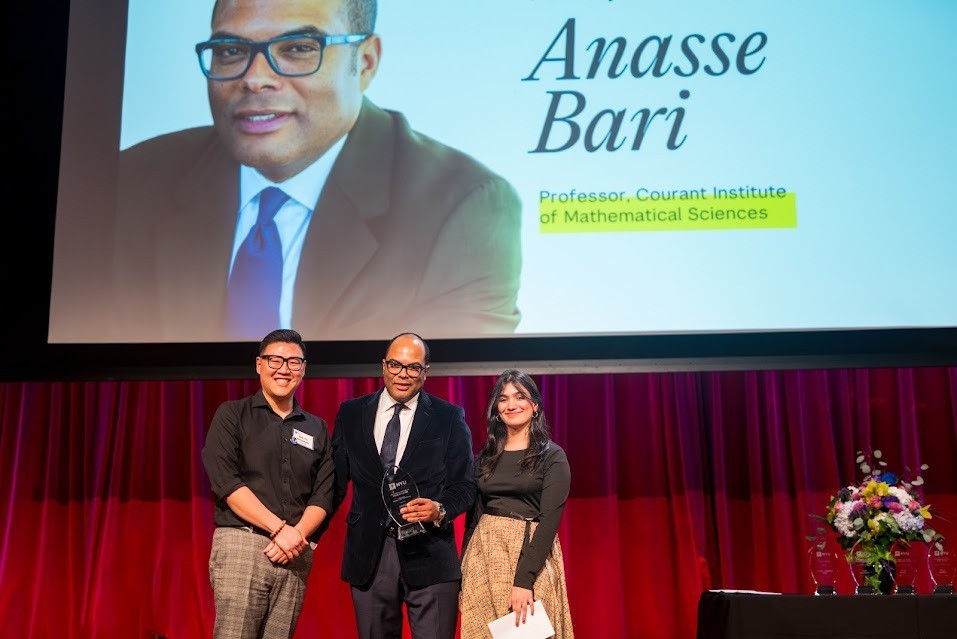
MOROCCAN Professor Anasse Bari Wins NYU’s Martin Luther King Faculty Award

Moroccan professor Anasse Bari has received the Dr. Martin Luther King. Jr. Faculty Award for 2025 at New York University (NYU).

The award recognizes faculty members whose work demonstrates leadership and commitment to justice and fairness, all values that the American civil rights icon Martin Luther King Jr. promoted.

Speaking to Morocco World News, Bari expressed his pride in receiving the award. “I dedicate this award to my fellow Moroccans,” he said.

According to NYU’s website, the award is given to professors whose research and work contribute to positive social change.

“The Dr. Martin Luther King, Jr. Faculty Award recognizes outstanding faculty who exemplify the spirit of Dr. Martin Luther King, Jr.’s scholarship, life, and justice work and who promote the principles and ethos of Dr. King’s extensive global contributions in their research, teaching, leadership, and/or community-building efforts,” the university said.

It added that the process of selecting the faculty awardees involves significant student involvement. This includes students taking part in various stages such as award development, nomination, selection, and recognition.

This means that students play a role in identifying and honoring faculty members who have made a meaningful impact within the classroom, on student research, co-curricular activities, and broader community engagement.

Professor Bari, who leads NYU’s Predictive Analytics and AI Research Lab, has been involved in developing AI tools for healthcare, climate change, misinformation, and pandemic preparedness. 

Professor Anasse Bari and his AI researcher at NYU, Sana Sajjad (right) and Dr. Hua-Yu Sebastian Cherng, NTU’s Vice Dean of Research and Equity (left)

During an award ceremony on Wednesday, Bari said this recognition highlights the importance of working to serve communities while holding onto values of fairness and justice.  

The Moroccan professor teaches over 700 students annually, with focus on ethical AI and mentoring research projects that apply AI to solve social issues.

“Every day in my classroom, I encourage my students to use the skills they have learned at New York University to serve the world,” Bari said, noting that his students are finding “new ways” to use AI and data science to improve the world.

He explained that his students are using AI to combat misinformation, create automated tutoring tools, assist doctors in pandemic prevention, develop cleaner energy sources, and build “ethical, fair, and privacy-preserving” AI solutions.

“The remarkable work of our NYU students embodies the spirit of service and justice that Dr. King envisioned. This award gives me the opportunity to express my gratitude to my students—not only for their incredible contributions but also for the lessons they have taught me,” Professor Bari concluded.

source/content: moroccoworldnews.com (headline edited)

_________

_____________

MOROCCO

MOROCCO : Introducing ‘Nabatlé’, Morocco’s First Locally Crafted Plant-Based Milk

Crafted by COPAG-Jaouda, this plant-based milk skips the gluten, lactose, preservatives, and added sugars, keeping things simple and natural.

For Moroccans looking to swap traditional dairy for a local plant-based option, the wait is over! 

COPAG-Jaouda, a household name in the country’s dairy industry, has introduced “Nabatlé”, Morocco’s first entirely homegrown plant-based milk. 

More than just a substitute, “Nabatlé” is set to revolutionize the country’s approach to food innovation.

It also answers a growing demand for healthier, natural choices while proving that local expertise can keep pace with evolving consumer palates. 

Plant-based milk for everyone

As more Moroccans explore healthier alternatives, COPAG-Jaouda is making sure “Nabatlé” is not just an option but an accessible and affordable choice.

This plant-based milk skips the gluten, lactose, preservatives, and added sugars, keeping things simple and natural. 

The cooperative says it delivers healthy fats, essential vitamins, and minerals while staying low in calories. 

Whether vegan, vegetarian, or just curious, consumers can choose from three different varieties to suit their taste: 

Almond: Naturally sugar-free with a light, smooth taste and no cholesterol.

Oat: Rich in fiber, minerals, and plant-based proteins.

Coconut: Creamy with a mild exotic flavor, offering a source of calcium and vitamins A and D3.

To set the record straight on plant-based milk, which is new territory for some Moroccans, COPAG-Jaouda is rolling out an awareness campaign to showcase the milk’s nutritional perks and discover how versatile and beneficial they can be.  

But “Nabatlé” is not just a dairy alternative. The company sees it as a symbol of Morocco’s ambition to create top-tier, competitive products that also care for the planet, all while staying eco-conscious.

What began in 1987 with 39 agricultural producers has grown into COPAG, Morocco’s largest cooperative. 

Now, with over 12,000 employees and support for 24,000 farmers, COPAG continues to shape the agricultural landscape, spanning citrus, fresh produce, dairy, and meat industries.

source/content: moroccoworldnews.com (headline edited)

___________

______________

MOROCCO

MOROCCO Adds Eight 8 Elements to Islamic World Heritage List

Morocco has a total of 54 registered intangible cultural heritage elements on the ISESCO list.

The Islamic Heritage Committee, part of the Islamic World Educational, Scientific, and Cultural Organization (ISESCO), has approved the inclusion of eight intangible cultural heritage elements on behalf of Morocco.

According to a statement by the Moroccan Ministry of Youth, Culture, and Communication, the newly added elements encompass the artistry of crafting bead jewelry, the weaving of Figuig’s hayek and burnous, traditional tanning techniques, Mata’s equestrian art, Safi pottery, Attalbi, Aouad d’Ait Baamrane songs and dances, and the traditional Ssig game.

This recognition celebrates Morocco’s rich tradition of skilled craftsmanship in the creation of bead jewelry.

The hayek and bernous are traditional Moroccan garments worn by women. They are especially worn in the country’s oriental region, notably in Figuig.

The traditional tanning process in Morocco, known as “Dbagha,” describes the centuries-old art of tanning animal hides, which has been practiced since the Almohad dynasty in the 12th century.

Meanwhile, Mata’s equestrian art showcases a blend of horsemanship and cultural expression.

Also on the list is the pottery tradition of the Moroccan coastal city of Safi, known for its intricate and colorful pottery art.

ISESCO also recognized Aouad d’Ait Baamrane’s songs and dances, which bring to life the rhythm and melodies of Amazigh culture.

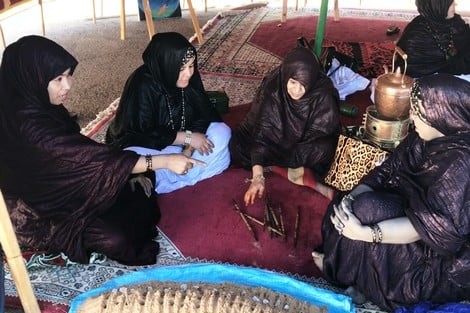
Meanwhile, the traditional Ssig game, which is widely popular in Morocco’s southern regions, is a key part of Morocco’s culture that has endured through time.

With this latest inclusion that took place in the ISESCO committee’s 11th meeting in Rabat, Morocco now leads Muslim countries. The North African country boasts a total of 54 registered intangible cultural heritage elements on the ISESCO list.

During the meeting, the Committee also elected a new executive board for a four-year term, with Saudi Arabia assuming the presidency, Jordan as vice president, and Senegal as the rapporteur.

source/content: moroccoworldnews.com (headline edited)

__________

Sahraoui women playing Ssig game

______________

MOROCCO

MOROCCAN Ilyas Hajri Wins World Quran Recitation Prize (Hafiz Category), BAHRAIN’s Mohamed Sameer Mohamed Mujahid (Tajweed Category) & YEMEN’s Ahmed Mohamed Saleh Ahmed ( Junior Reciter) , in 4th edition of ‘Bahrain Online Quran Recitation 2014

Moroccan reciters performed well at the competition and demonstrated exceptional talent and proficiency in Quranic recitation.

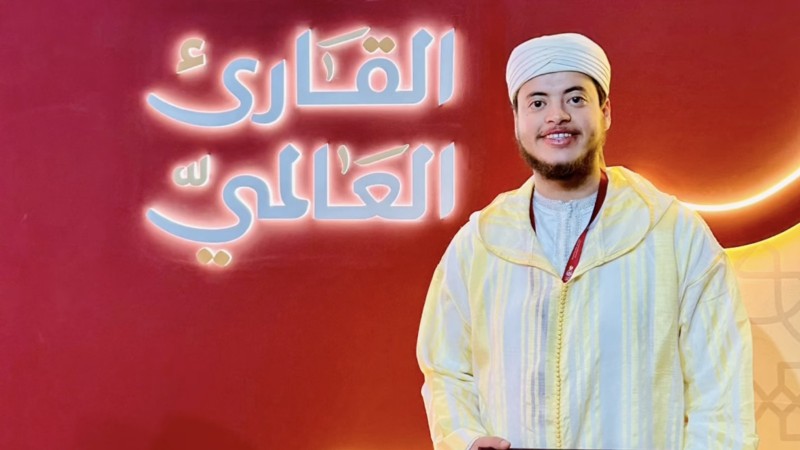
Moroccan Ilyas Hajri has clinched the title of World Quran Reader in the Hafiz category at the fourth edition of the Bahrain Online Quran Recitation Competition. 

The Moroccan Quran reciter won the prize for his exceptional proficiency in reciting the Holy Quran.

This win adds to a string of previous successes, as Hajri has consistently shown excellence in Quranic recitation competitions. Last year, he won first place in the International Quran memorization competition in Astana, Kazakhstan.

In addition to Hajri, Moroccan Yassine El Kazzini secured the second position in the same category. 

Meanwhile, Moroccans Abdelbasset Ourach and Mustapha Zahid claimed third places in the categories of memorized recitation (Tajweed) and melodious recitation (Murattal) respectively.

The finals of the competition were conducted in-person in Bahrain’s capital city Manama, where the top performers competed to secure their positions in various categories of Quranic recitation.

The competition brought together over 5,000 participants from 74 countries. 

Meanwhile, Mohamed Sameer Mohamed Mujahid from Bahrain was crowned the World Quran Reciter in the Tajweed category, while Ahmed Mohamed Saleh Ahmed from Yemen secured the same title in the category of junior reciters.

Organizers of the competition highlighted its mission to promote and celebrate the recitation and memorization of the Holy Quran.

It also aims to serve the Quranic tradition by providing a platform for individuals of all ages and nationalities to showcase their skills and proficiency in reciting the Quran.

Moroccans have built a strong reputation for their excellence in Quran recitation competitions, consistently shining on the global stage.

Last month, Moroccan Elias Al-Mahiawi won first place at the 20th International Quran Competition in Tanzania.

source/content: moroccoworldnews.com (headline edited)

_______

__________________________________

BAHRAIN / MOROCCO / YEMEN

ABU DHABI, U.AE./ ARAB WORLD: ’16th Khalifa International Award for Date Palm and Agricultural Innovation’ announces Winners

Sheikh Nahyan bin Mubarak Al Nahyan, Minister of Tolerance and Coexistence and Chairman of the Board of Trustees of the Khalifa International Award for Date Palm and Agricultural Innovation, expressed his appreciation for the patronage and the support the Award continues to receive from His Highness Sheikh Mansour bin Zayed Al Nahyan, Vice President, Deputy Prime Minister, and Chairman of the Presidential Court. He also praised Sheikh Mansour’s contribution to the development of the date palm cultivation and production sector at the national, regional and international levels.

This is in addition to strengthening the UAE’s leading position through cooperation with date-producing countries and concerned regional and international organisations, where Sheikh Nahyan expressed his confidence in the efforts of the Award’s General Secretariat, which played an important role in building global partnerships to develop this sector.

Dr. Abdelouahhab Zaid, Secretary-General of the Khalifa International Award for Date Palm and Agricultural Innovation, announced the winners of the Award in its 16th session during his speech at the press conference held on Monday at the Emirates Palace Hotel, Abu Dhabi, in the presence of Dr. Helal Humaid Saed Al Kaabi, Member of the Award’s Board of Trustees, and Secretary-General of the Abu Dhabi Council for Quality and Conformity.

International Award Winners:

The award in the Distinguished Innovative Studies and Modern Technology category was won by Dr. Khaled Masmoudi – College of Agriculture and Veterinary Medicine (UAEU) for “Enzyme stabilization and thermotolerance function of the intrinsically disordered LEA2 proteins from date palm” and Dr. Ezzeldin Gadallah Hussein Ahmed – Agricultural Research Centre, Ministry of Agriculture and Land Reclamation (Egypt), for “Phoenix dactylifera in vitro culture and transformation of Thio-60 antifungal gene via chitosan nanoparticle”.

The award in the Pioneering Development and Productive Projects category was won by Dr. Lim Swee Hua Erin – HCT (Abu Dhabi), for “Sustainable Seeds: A Tale of Two Innovations” and AFRICA ORGANICS (Morocco), for the world’s largest organic date palm plantation (1200 ha) of farmland.

The award in the Pioneering and Sophisticated Innovations Serving the Agricultural Sector category was won by Dr. Yarub Kahtan Abdul Rahman Al Doruri – University of Sharjah for “Production of powder-activated carbon from natural resources” and VALORIZEN LLC, Research and Innovation Centre (Egypt) for “Scalable, Market Driven and Climate Positive Solutions of Date Palm Waste”.

The award in the Influential Figure in the Field of Date Palm and Agricultural Innovation category was won by Dr. Ramzy Abdelrahim Dessoky Aboaiana (Kingdom of Saudi Arabia) and Prof. Ibraheem Jaddoa Olelwi Al Juboori, PhD (Iraq) for “A qualitative leap and big steps”.

source/content: wam.ae (headline edited)

__________

_______________________________________________________________________

EGYPT / IRAQ /MOROCCO / SAUDI ARABIA / UNITED ARAB EMIRATES (U.A.E)

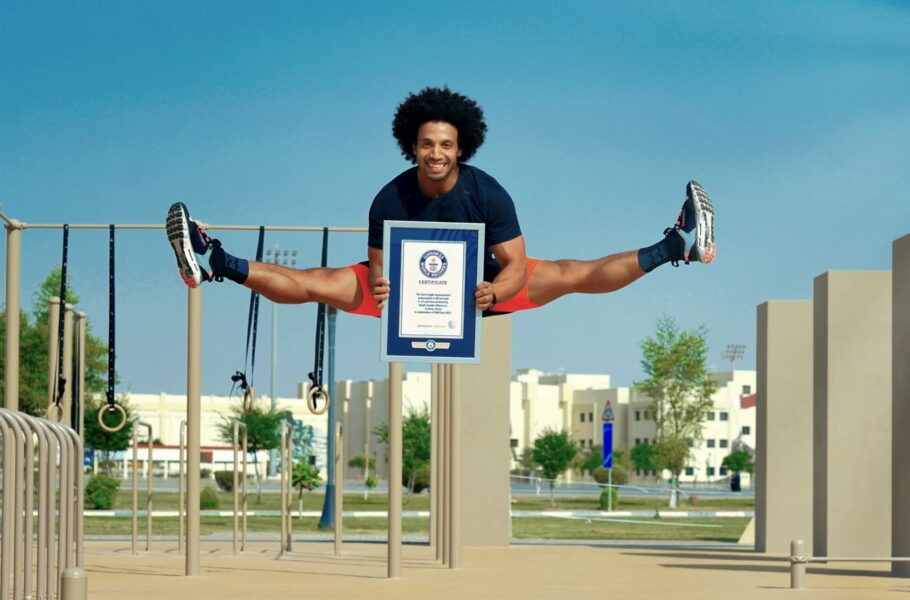
MOROCCO’s Qatar-based Gymnast Ayoub Touabe smashes never before attempted World Record on Guinness World Records Day

Doha-based experienced gymnast Ayoub Touabe smashed the Guinness World Records title for the Most single leg backwards somersaults in 30 seconds with 12, breaking a new, never-previously-attempted world record.

A somersault is a movement in gymnastics in which a person flips in a complete revolution along the ground or in the air bringing the feet over the head.

Ayoub is said to be among a few people globally who are able to do this movement on a consecutive basis on one leg. In fact, the movement puts a lot of pressure on a single leg plus the lower back, making it very challenging even for experienced gymnasts. Based in Doha, Qatar, Ayoub developed this skill during his 23-year career and managed to set a world record at the age of 32.

Ayoub started his journey by mimicking his father’s gymnastic moves at the age of almost 8 years young in 1998. He started professional training at a later age, but also got his degree at a medical institute. He suffered from multiple injuries during his training career. He said:

“I don’t think I spared any part of my body without some sort of an injury”.

“I managed to do my first somersault in 2009, but it took me another 18 months to do another one consecutively. By 2011, I uploaded a video on YouTube doing 10 consecutively. After thorough research, I realised there is no one globally who can do as many.”

Ayoub is currently training people to do gymnastics. His most experienced student has managed to do the first somersault. He adds:

“The moment you realise how to balance and work out your back flexibility and leg stability is when you know how to do it” he added “I am 5 ft 8 in tall and weigh 89kg, which makes somersaults physically very challenging.”

Ayoub’s goal now is to teach more people the value of doing sports, and stand against society’s resistance to sports:

“Throughout the years, I have been told multiple times to give up my sports career, and focus on my university degree, but I refused and today with a Guinness World Records title, I am glad I didn’t give up.”

First held in 2004 to mark Guinness World Records becoming the best-selling copyright book of all time, GWR Day has inspired some now iconic record-breaking achievements. Guinness World Records today celebrates the eighteenth annual GWR Day. Celebrating the theme of Super Skills, record-breaking hopefuls from across the globe have put on a jaw-dropping display of dedication, persistence and elite-level talent. This year over 1000 applications were received from aspiring record-breakers across the world, hoping to attempt records on GWR Day to secure their place in the next edition of the book. 

Source and cover image credit: Guinness World Records Press Release

source/content: iloveqatar.net (headline edited)

__________

____________

MOROCCO