Arabs & Arabian Records Aggregator. Chronicler. Milestones of the 25 Countries of the Arabic Speaking World (official / co-official). AGCC. MENA. Global. Ist's to Top 10's. Records. Read & Enjoy./ www.arabianrecords.org
Melliti, 23, plays a 17-year-old in a coming-of-age tale centred on a teenage Muslim girl in Paris who faces a struggle with her identity and religion.
French artist of Maghrebi descent Nadia Melliti won the best actress award at the Cannes film festival for her first-ever performance in a film, “The Little Sister” by Hafsia Herzi.
Melliti, 23, plays a 17-year-old in a coming-of-age tale centred on a teenage Muslim girl in Paris who faces a struggle with her identity and religion.
She beat Hollywood star Jennifer Lawrence in “Die My Love” by Lynne Ramsay, Japanese child revelation Yui Suzuki in “Renoir” by Chie Hayakawa and Elle Fanning in “Sentimental Value” by Joachim Trier.
“It’s a huge honour to be here tonight and to have been able to take part in this very beautiful project,” she said clutching her award on stage.
“I have such a feeling gushing through me right now. I can’t describe it but it’s really incredible,” she said as the director sobbed in the audience.
“Thank you Mum. I know you’re watching and I hope you are very proud and happy,” she said.
Melliti is a French student and amateur football player who was spotted in the street.
Before walking the red carpet for the premiere of Hafsia Herzi’s “The Little Sister”, she was preparing for exams.
In the coming-of-age tale, she plays 17-year-old Fatima, a Muslim girl in Paris struggling with her identity and religion as she explores her sexuality.
“I’ve never done any theatre or cinema,” she said.
But she said she immediately empathised with the character when she read the script, based on a partly autobiographical novel of the same name by French writer Fatima Daas.
“I identified hugely with Fatima, her surroundings and origins. My mother hails from an immigrant background,” she said.
“My roots are Algerian. I also have sisters.”
Melliti said she specifically related to the film’s theme of “emancipation” in the film.
“When I was younger I wanted to play football. I still do today,” said the actor. “I wanted to take up the sport, one people say is masculine and in which men are over-represented.
“And when I took that home, there was this emancipation, even if for Fatima it was different, more linked to her intellect and sexuality,” she added.
Melliti said she could not believe her luck when she was spotted by a casting agent in the street near a large shopping mall in central Paris.
“I was walking in the street and (she) called out to me,” she said.
At first “I thought she was a tourist and I wondered if my English would be up to scratch.”
Nadia Melliti, winner of the Best Actress award for her role in the film La petite dernière (The Little Sister), poses during a photocall after the closing ceremony of the 78th Cannes Film Festival in Cannes, France, May 24, 2025. REUTERS
His Highness Sheikh Mohammed bin Rashid Al Maktoum, Vice President, Prime Minister and Ruler of Dubai, honoured the six winners of the Great Arab Minds 2025 edition at the Museum of the Future in Dubai.
Great Arab Minds is the largest Arab initiative dedicated to celebrating outstanding Arab achievement, highlighting contributions to advance human civilisation, support the expansion of scientific and knowledge-based endeavours, and showcasing the creative impact of Arab talent across the region and globally.
His Highness affirmed that the Great Arab Minds initiative was designed to expand the horizons for established and emerging Arab talent, nurturing and investing in their potential; recognise Arab achievement across research, development, innovation, technology, culture, and architecture; and to reinforce a culture of pride and sustained support for Arab individuals who have inspired significant progress in key fields.
His Highness Sheikh Mohammed said, “Today, we honour Great Arab Minds in recognition of achievements that advance civilisation and build societies. From the Museum of the Future in Dubai, we reaffirm our support for Arab talent committed to innovation, creativity, and excellence.”
His Highness further said, “We congratulate the winners of the Great Arab Minds 2025: Professor Abbas El Gamal in the Engineering and Technology category, Dr. Nabil Seidah in the Medicine category, Professor Badi Hani in the Economics category, Professor Majed Chergui in the Natural Sciences category, Dr. Suad Amiry in the Architecture and Design category, and Professor Charbel Dagher in the Literature and Arts category. We encourage them to continue their journey of achievement and contribution, serving as true role models for younger generations in our region and around the world, inspiring them to shape a better future through science and knowledge.”
His Highness expressed his confidence in the ability of Arab talent to drive progress in scientific research, knowledge creation, and the cultural sector, supported by expertise, institutional support, and the ambition of young people across the region.
Focused on a better future
Sheikh Mohammed noted that the Great Arab Minds initiative will continue to highlight the achievements of Arab individuals who look to the future with optimism and pursue ambitions that recognise no limits.
The awards ceremony was attended by H.H. Sheikh Maktoum bin Mohammed bin Rashid Al Maktoum, First Deputy Ruler of Dubai, Deputy Prime Minister and Minister of Finance of the UAE; H.H. Sheikh Ahmed bin Mohammed bin Rashid Al Maktoum, Second Deputy Ruler of Dubai and Chairman of the Dubai Media Council; H.H. Sheikh Ahmed bin Saeed Al Maktoum, President of the Dubai Civil Aviation Authority, Chairman of Dubai Airports, and Chairman and Chief Executive of Emirates Airline and Group; His Highness Sheikh Mansoor bin Mohammed bin Rashid Al Maktoum, President of the UAE National Olympic Committee; H.H. Sheikha Latifa bint Mohammed bin Rashid Al Maktoum, Chairperson of the Dubai Culture and Arts Authority (Dubai Culture); and H.H. Sheikh Mohammed bin Rashid bin Mohammed bin Rashid.
Mohammed bin Abdullah Al Gergawi, Minister of Cabinet Affairs and Chair of the Higher Committee for the Great Arab Minds initiative, was among numerous ministers and senior officials in attendance along with scientists, academics and diplomats.
His Excellency Al Gergawi stated that the Great Arab Minds initiative launched by His Highness Sheikh Mohammed represents a profound recognition of Arab achievement across disciplines, and a significant strategic investment in empowering talent and encouraging renewed contributions to Arab intellectual and scientific progress.
He added that the Great Arab Minds initiative embodies Sheikh Mohammed’s vision to inspire confidence in Arab capabilities and motivate individuals to take an active role in shaping their societies and the future of a region that has long contributed to human civilisation through science, literature, thought, and architecture.
‘Powerful message’
He praised the achievements of the Great Arab Minds awardees across medicine, engineering, technology, sciences, architecture, arts, and literature, saying, “Your presence today on the Great Arab Minds 2025 platform at the Museum of the Future sends a powerful message to hundreds of millions of young people to pursue excellence, achievement, and leadership in research, innovation, creativity, and knowledge, and to help shape a brighter future for Arab and human civilisation.”
The award recognised one winner in each of its six categories: Medicine, Economics, Engineering and Technology, Natural Sciences, Architecture and Design, and Literature and Arts.
In Medicine, Dr. Nabil Seidah was honoured for his medical and research achievements in cardiovascular health and cholesterol regulation.
In Economics, Professor Badi Hani was awarded for his pioneering contributions to econometrics and the development of economic analysis tools, particularly in panel data analysis. His work enabled more accurate and in-depth analysis by combining data across multiple time periods and sources.
In Engineering and Technology, Professor Abbas El Gamal was awarded for his pioneering contributions to network information theory.
In Natural Sciences, Professor Majed Chergui was honoured for his contributions to understanding light-matter interactions, developing techniques and applications that enable the study of ultrafast molecular and material dynamics at the atomic level.
In Architecture and Design, Dr. Suad Amiry was honoured for her contributions to preserving Palestinian architectural heritage through documentation, restoration, and adaptive reuse of historical buildings.
In Literature and Arts, Professor Charbel Dagher was honoured for a body of work that constitutes a key reference in the study of Arab and Islamic arts, Arabic calligraphy, and modern visual arts.
Professor Abbas El Gamal said, “I extend my sincere gratitude to His Highness Sheikh Mohammed bin Rashid Al Maktoum for his vision in launching Great Arab Minds. Being honoured in this way is deeply meaningful to me.”
Professor Majed Chergui said, “I am Algerian of Syrian origin, born in Morocco and raised in Algeria and Lebanon. In this way, the Arab world comes together in who I am. For me personally, this award is not only the highest recognition of my achievements; it touches me deeply because it comes from an Arab country.”
Dr. Suad Amiry said, “In 1981, when I decided to live in the city of Ramallah, my aim was to study traditional architecture in rural Palestine. Ten years later, I founded the Riwaq Centre, which since then has been dedicated to documenting, restoring, and rehabilitating architectural heritage in Palestine. Winning this award is a great honour for me and for the Riwaq Centre.”
Professor Badi Hani said: “This award recognises not only my work, but also the people and places that shaped me, my family, my mentors, my city, and the Arab world that nurtured my earliest aspirations.”
Dr. Nabil Seidah said, “My father’s adage, that knowledge is something no one can ever take away from you, has been the principle that guided me throughout my journey. Your trust represents a powerful motivation for Arab scientists to serve as role models for future generations, and I pledge to continue serving science with the same passion that has always driven me.”
Professor Charbel Dagher said: “Commitment to the Arabic language has remained a defining hallmark of everything I have done: teaching, writing, and research, to the point that I live within Arabic itself. We cannot exist outside our language or our culture. Allow me to share this award with those who supported me, and my gratitude extends to everyone who has worked and continues to work to ensure that Arabic remains a living language of science, knowledge, and culture.”
The awardees were chosen by six high-level specialised committees, one for each category. Abdulla bin Touq Al Marri, Minister of Economy and Tourism, chaired the Economics Committee; Sarah Al Amiri, Minister of Education, chaired the Engineering and Technology Committee; Mohammed Ahmed Al Murr, Chairman of the Board of Directors of the Mohammed bin Rashid Al Maktoum Library Foundation, chaired the Literature and Arts Committee; Dr. Amer Sharif, Chief Executive Officer of Dubai Health and President of the Mohammed Bin Rashid University of Medicine and Health Sciences headed the Medicine Committee; Professor Sehamuddin Galadari, Senior Vice Provost-Research and Managing Director of the Research Institute at New York University Abu Dhabi chaired the Natural Sciences Committee; Professor Hashim Sarkis, Dean of the School of Architecture and Planning at the Massachusetts Institute of Technology chaired the Architecture and Design Committee.
In addition to the committee chairs, the specialised committees also included Essa Kazim, Governor of the Dubai International Financial Center; Dr Mohammed Madhi, Dean of the College of Business and Economics at UAE University; Dr Rabah Arezki, Chief Economist for the Middle East and North Africa (MENA) region at the World Bank and Senior Fellow at Harvard University’s John F. Kennedy School of Government; Ferid Belhaj, Fellow at the Policy Center for the New South; and Dr Jihad Azour, Director of the Middle East and Central Asia Department at the International Monetary Fund.
The committees also included Professor Ismael Al Hinti, President of Al Hussein Technical University; Adel Darwish, Regional Director of the International Telecommunication Union; Dr Ahmed Zayed, Director of the Bibliotheca Alexandria; His Excellency Dr. Alawi Alsheikh-Ali, Director General of Dubai Health Authority; Professor Elias Zerhouni, Professor Emeritus at Johns Hopkins University; Dr Noureddine Melikechi Dean of the Kennedy College of Sciences and Professor of Physics at the University of Massachusetts Lowell; Professor Nader Masmoudi, Professor at the Courant Institute of Mathematical Sciences at New York University Abu Dhabi; Dr Latifa Elouadrhiri Laboratory Directed Research Staff Scientist at the Thomas Jefferson National Accelerator Facility; and Professor Dr Jehane Ragai, Emeritus Professor of Chemistry at The American University in Cairo.
The specialised committees also included Dr Adrian Lahoud, Dean of the School of Architecture at the Royal College of Art; and Professor Ali Malkawi, Professor of Architectural Technology, Director of the Doctor of Design Studies Program, and Founding Director of the Harvard Center for Green Buildings and Cities.
The Nominations Committee included Huda Al Hashimi, Deputy Minister of Cabinet Affairs for Strategic Affairs; Chucrallah Haddad, Partner and Head of Advisory at KPMG Lower Gulf; Abdulsalam Haykal, President and Founder of Majarra Company; Ali Matar, Head of LinkedIn Middle East and North Africa and Emerging Markets in Africa and Europe; and Saeed Al Nazari, Secretary-General of the Great Arab Minds Initiative.
Widely known as the ‘Arab Nobel,’ the Great Arab Minds initiative recognises distinguished Arab achievement and highlights extraordinary contributions that reflect the region’s historic role in advancing knowledge and human progress globally. For a third consecutive edition, the initiative continues to strengthen its position as a platform for celebrating Arab creators and as a point of reference for promising Arab talent, by highlighting achievements that inspire young people and contribute to expanding Arab participation in global knowledge and civilisational advancement.
Algeria’s new law declares French colonial rule a crime, seeking accountability and reparations for the colonial past.
Algeria’s parliament has unanimously passed legislation declaring France’s colonisation of the country a crime.
On Wednesday, lawmakers stood in the chamber draped in scarves bearing the national colours, chanting “Long live Algeria” as they approved the bill.
Parliament also formally demanded an apology and reparations from Paris in a move that seeks to redress attempts to sweep the issue aside.
The law assigns France “legal responsibility for its colonial past in Algeria and the tragedies it caused”, placing historical accountability at the centre of the state’s legal framework.
While analysts say the law carries no enforceable international weight, its political impact is significant, signalling a rupture in how Algeria engages France over colonial memory.
Parliament Speaker Ibrahim Boughali said the legislation sent “a clear message, both internally and externally, that Algeria’s national memory is neither erasable nor negotiable”, according to the APS state news agency.
The text catalogues crimes of French colonial rule, including nuclear tests, extrajudicial killings, “physical and psychological torture” and the “systematic plundering of resources”.
It also asserts that “full and fair compensation for all material and moral damages caused by French colonisation is an inalienable right of the Algerian state and people”.
‘Crime against humanity’
France brutally ruled Algeria from 1830 to 1962 through a system marked by torture, enforced disappearances, massacres, economic exploitation, mass killings and large-scale deportations and marginalisation of the country’s indigenous Muslim population.
The war of independence between 1954 and 1962 alone left deep scars. Algeria puts the death toll at 1.5 million.
President Emmanuel Macron has previously described the colonisation of Algeria as a “crime against humanity” but has consistently refused to issue a formal apology. He reiterated that position in 2023, saying: “It’s not up to me to ask forgiveness.”
Last week, French Ministry for Europe and Foreign Affairs spokesperson Pascal Confavreux declined to comment on the parliamentary vote, saying he would not engage with “political debates taking place in foreign countries”.
Hosni Kitouni, a colonial history researcher at the University of Exeter, told the AFP news agency that the law has no binding effect on France but stressed that “its political and symbolic significance is important: it marks a rupture in the relationship with France in terms of memory”.
The vote comes amid a diplomatic crisis between the two countries. Algeria and France maintain ties through immigration in particular, but today’s vote comes amid friction in the relationship.
Tensions have been high for months since Paris recognised Morocco’s autonomy plan for resolving the Western Sahara conflict in July 2024. Western Sahara has witnessed armed rebellion since it was annexed by Morocco after the colonial power, Spain, left the territory in 1975.
Algeria supports the Sahrawi people’s right to self-determination in Western Sahara and backs the Polisario Front, which rejects Morocco’s autonomy proposal.
In April, the tensions escalated into a crisis after an Algerian diplomat was arrested along with two Algerian nationals in Paris. The diplomatic crisis came barely a week after Macron and Algeria’s President Abdelmadjid Tebboune expressed their commitment to revive dialogue.
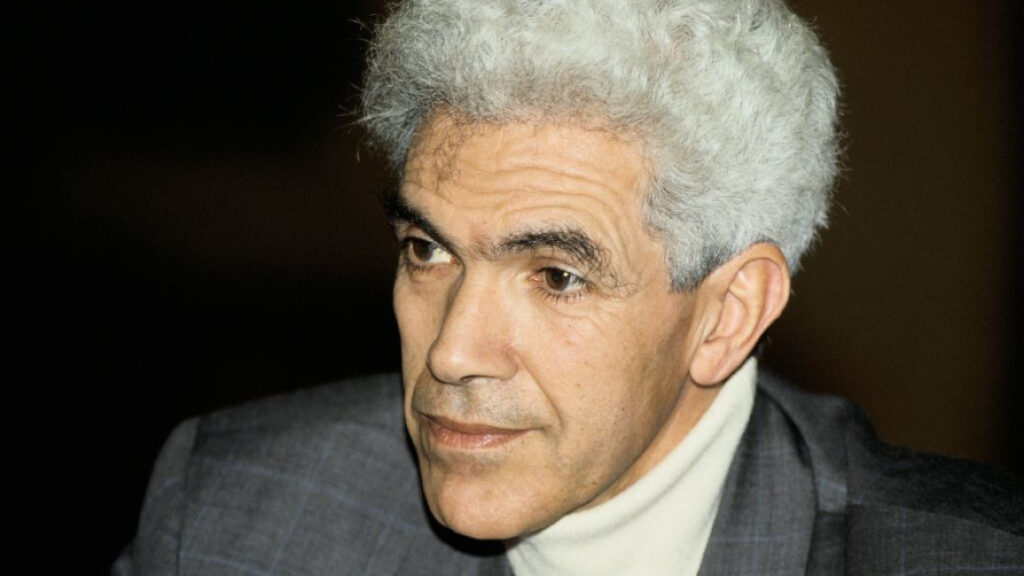
From challenging French colonial nostalgia to critiquing Algerian nationalism, revolutionary historian Mohamed Harbi served truth, writes Rachid Sekkai.
For those of us who live between Algeria and France, between family memory and official public archives, Mohamed Harbi was more than a name on a book spine, he defined our way of thinking. This is why I am so deeply saddened by his passing.
His death is certainly a real loss to the shared Franco–Algerian memory of the twentieth century—not the sentimental commemoration that comforts nations, but the difficult memory that forces them to mature.
But on a more personal note, I am disappointed that I was never able to meet the late, great historian whose contributions are immeasurable.
On the side of the oppressed
Harbi came from a milieu that was far more accommodating to French colonial rule. This collaboration was even viewed by many as respectable, including members of his own family who served in the French-established Algerian Assembly (1947–56). Nevertheless, Harbi chose to side with the colonised very early in his life.
Even when he was sent to France to study, Harbi commitment to standing with the oppressed remained, and he refused to join the ranks of the ‘integrated’ intelligentsia. He became active in the student networks linked to the National Liberation Front (FLN) and entered the revolution from the inside.
Later he worked close to the Provisional Government of the Algerian Republic (GPRA), specifically within the orbit of Krim Belkacem—one of the FLN leaders who signed the Evian Accords. Harbi was not a signatory, but he was close enough to those who had been to see what independence negotiations were going to look like: ideals constrained by strategy, unity tested by rivalry.
Following Algerian independence in 1962, he served during the Ben Bella era, persuaded—as many were—by the promise of social change. The 1965 coup marked a rupture, however; and Harbi paid the price for his criticism of the succeeding president of Algeria, Houari Boumediene. He was imprisoned and then put under house arrest, before escaping into exile in 1973.
Exile
Mohamed Harbi’s life in France is not a footnote. It is where he wrote the very work that led to his international recognition.
Renowned French historian Benjamin Stora recalled how surprised he was as a 25-year-old graduate student preparing a thesis on Messali Hadj, when he read Harbi’s first major book in 1975. For him, Harbi embodied an intellectual freedom rare in the memory of those who were so close to the historical events.
Harbi wasn’t an outside commentator, he was a former senior FLN figure in France who was close to the movement’s leadership and connected to the GPRA circle during independence negotiations. Yet, his sharpness and refusal to serve states in what he produced, always remained.
What makes Harbi’s work enduring is also the gaps it fills in terms of the memory of a colonised Algeria. Stora spoke to me about chapters that the late revolutionary’s writing covers, which break with cliché that include an entre-soi shaped by communal boundaries and religiosity, colonial segregation, inequality and racism.
In doing so, Harbi escaped the nostalgic racist colonial memory of French Algeria, and the monochrome official memory of an authoritarian nationalism indifferent to historical nuance.
Speaking truth to power
Reactions to Harbi’s death in Algeria were a mixed bag. In a notable official tribute, President Abdelmadjid Tebboune publicly described him as a mujahid and a “cultured historian.” He added that he was an exceptional man.
In reality, for Harbi and all those who respected him, official recognition serves no value.
As many, including Stora have noted, Harbi went further than many of his generation and positioning. He spoke truth to power, even foregrounding the role of violence in organisational construction in his work. He named the “war within the war” between rival nationalist currents, and honestly described internal struggles for power and legitimacy before and after 1962.
Similarly, he was brutally frank about the French Socialist Party, for example, which he told historian Martin Evans, was “enemy number one” because of the way parts of the French Left repressed Algerian nationalism on the ground.
Liberation could be both courageous and tragic—and Harbi refused to choose between those truths.
Algerians at home and abroad are caught between family pride versus public stigma, French labels versus Algerian injunctions, and silence versus shouting. Decades on since Algeria’s independence and dark decade of civil war, Harbi offers a third position within such a complex reality: fidelity without worship; critique without self-hate.
He showed us how to honour emancipation while still critiquing power, how to name violence without licensing new silence, and crucially, how to demand truth and reconciliation without pretending neutrality.
Mohamed Harbi punctured comforting stories wherever they lived, that is why he will forever serve as an example of what a historian should be.
He left us a library, but also a moral framework: history is not a temple, but a civic discipline. It demands rigour and patience with complexity, especially when communities prefer righteous simplifications.
There will be a ceremony honoring the winners held under the patronage of His Highness Prince Badr bin Abdullah bin Farhan, minister of culture
The King Salman Global Academy for the Arabic Language announced the names of the winners of its awards celebrating efforts to serve the language.
Mahmoud Al-Batal won an award for his work in teaching Arabic in the US, which included carrying out in-depth research into linguistics, much of which has been published in peer-reviewed studies.
The Saudi-based Manahij International Foundation received an award recognizing its development of educational materials and curricula for early years language learning and Arabic for non-native speakers.
Manahij was also highlighted for developing training packages for teachers, and praised for its “originality, methodology and innovation” in the field, the Saudi Press Agency reported.
Algerian Ahmed Khorssi was recognized with an award for his contributions to the language by developing more than 30 computer programs including tools for correcting pronunciation.
He has published more than 15 studies in peer-reviewed journals and international conferences.
King Abdulaziz City for Science and Technology won an award for developing systems including an audio database, an automatic speech recognition system in local dialects, and other advanced tools.
Ramzi Mounir Baalbaki, from Lebanon, won an award that recognized his academic career that has spanned four decades
Baalbaki has authored 12 books and more than 80 research papers in Arabic and English in peer-reviewed scientific journals.
Saad Abdel Aziz Maslouh, from Egypt, received an award recognizing a lifetime of academic achievements including the publication of 33 books and 29 research papers.
The Arabic Education Training Center for Gulf States, in the UAE, was awarded for developing evaluation tools and other educational content.
Mazen Abdulqader Mohammed Al-Mubarak, from Syria, won an award for his extensive scholarly work including the well-known book “Towards Linguistic Awareness.”
The National Coalition for Arabic Language in Morocco also received an award for promoting linguistic awareness in Moroccan society through lectures, seminars and intellectual forums.
There will be a ceremony honoring the winners held under the patronage of His Highness Prince Badr bin Abdullah bin Farhan, minister of culture and chairman of the board of trustees of the academy, next Sunday in Riyadh.
source/content: arabnews.com (headline edited)
_____________
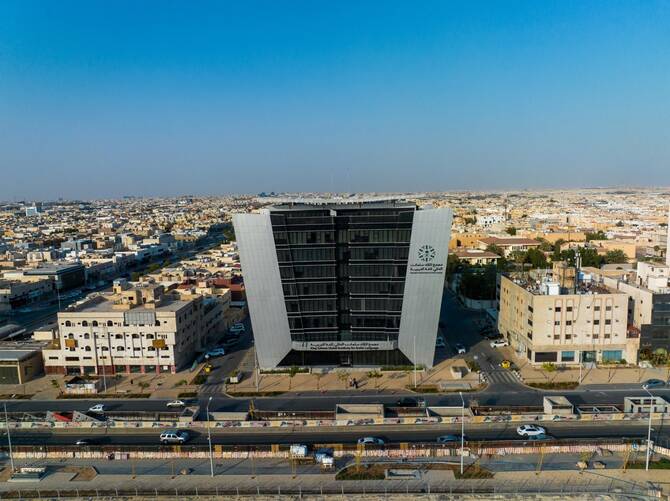
The King Salman Global Academy for the Arabic Language’s headquarters in Riyadh. (OIC)
Until last year, 17-year-old Victoria Miller admits she would have had to search online to learn where Algeria is , let alone describe the exploits of one of its most famous heroes.
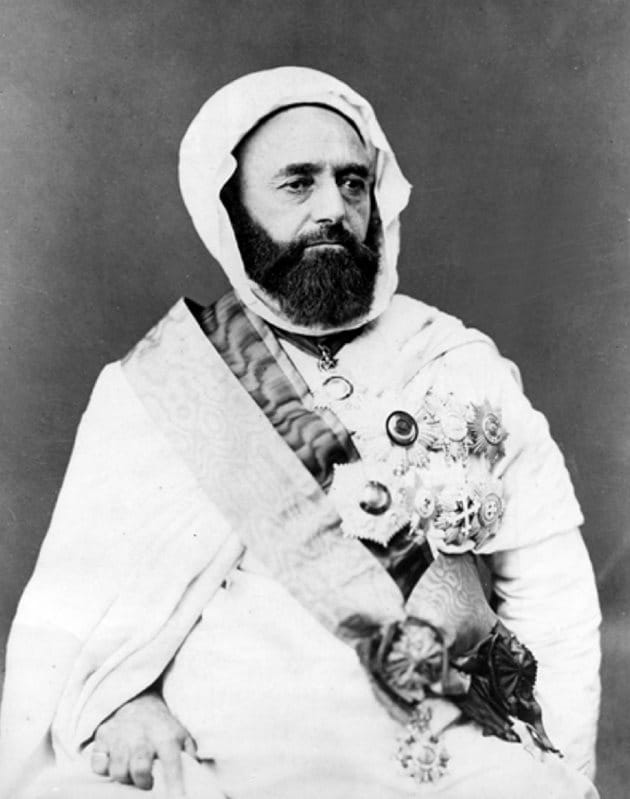
Pictorial Press / ALAMY / Abd el-Kader’s name lives on in Elkader, Iowa, pop. 1,300, the only US town named after an Arab.
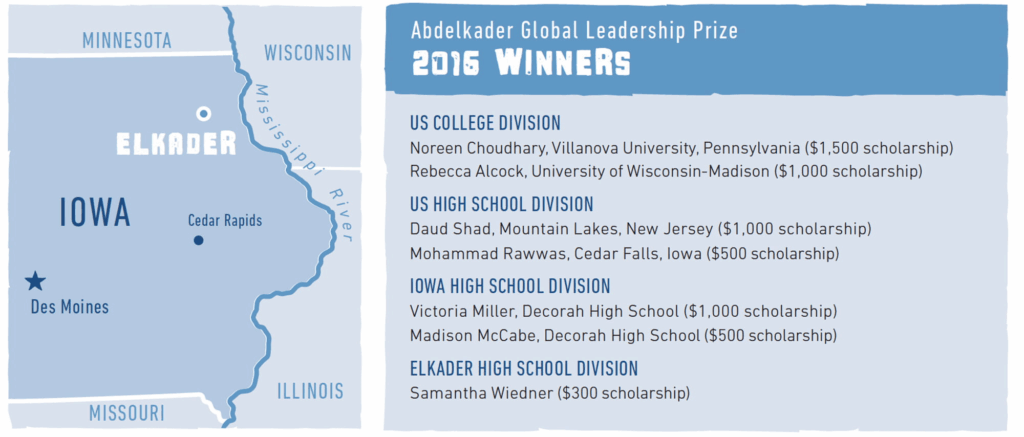
.“I was really taken by Amir Abd el-Kader’s character and how he handled the multiple challenges he faced, including when some of his own people didn’t believe in him,” says Miller, who lives in the northeastern Iowa town of Decorah. On September 19 she was recognized as one of seven winning essayists in the 2016 Abdelkader Global Leadership Prize.
After reading diplomat John W. Kiser’s biography, Commander of the Faithful: The Life and Times of Emir Abd el-Kader (Monkfish, 2008), for a class in human geography at Decorah High School, Miller now says she regards him as an international role model. Her new understandings, she adds, help her feel more comfortable talking to Muslims.
“Abd el-Kader’s legacy deserves to be remembered along with Nelson Mandela, Gandhi and Dr. Martin Luther King Jr.’s,” Miller enthuses, “because they were all pursuing the same dream: to reach peace.”
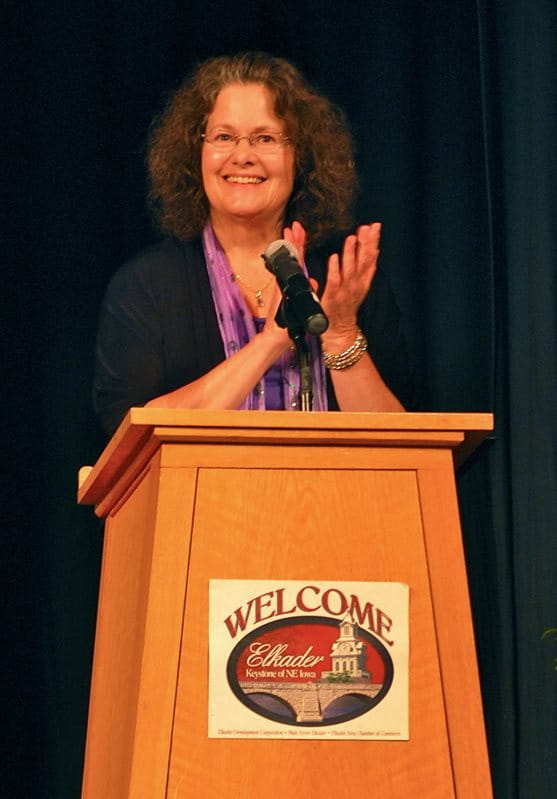
ABDELKADER EDUCATION PROJECT / Abdelkader Education Project co-founder and executive director Kathy Garms opened the group’s seventh annual forum on September 19 in Cedar Rapids. Students competed for scholar-ships in the Abdelkader Global Leadership Prize, and educators explored the legacy of Algerian freedom fighter and peacemaker Amir (Prince) Abd el-Kader.
Indeed, the Algerian prince (amir or emir in Arabic) united tribes in North Africa and fought for independence; later, during the 1860 Mount Lebanon civil war, he helped save thousands of Maronite Christians from massacre—an act for which President Abraham Lincoln lauded him. When the amir passed away in 1883, The New York Times eulogized him as “one of the few great men of the century. The nobility of his character won him the admiration of the world.”
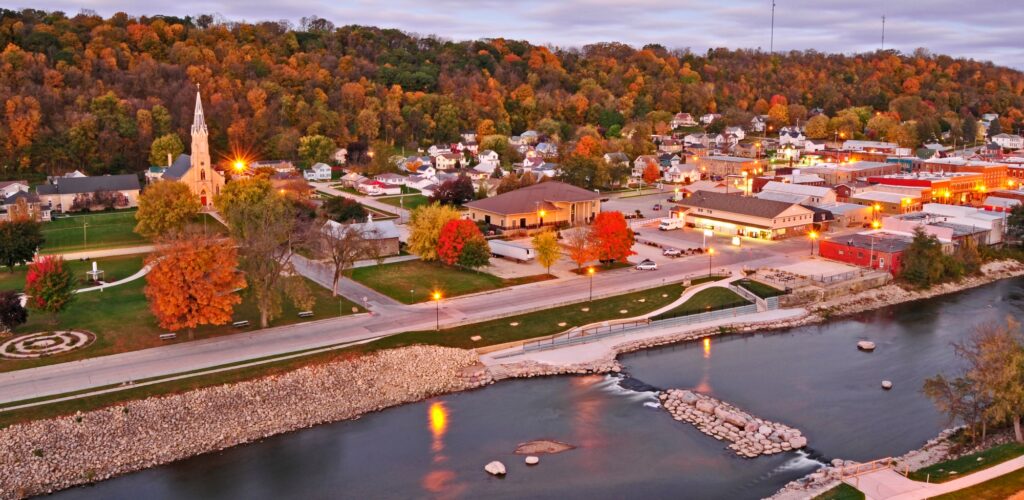
Even decades earlier, in 1846, so widely admired was he that Iowa farmers named their new town after him, and today Elkader, Iowa, is the only us town named for an Arab. Since 2008 it has been reviving his legacy, thanks largely to the eight-year-old nonprofit Abdelkader Education Project (aep).
Kathy Garms, executive director and cofounder with Kiser of the Elkader-based aep, furthers Miller’s sentiment, explaining that the story of the amir “inspires civility, tolerance and understanding” and offers “models of ethical leadership, moral courage and humanitarian conduct.” The aep, Garms continues, works to “shape the minds, hearts, values of the next generation.” And this is where aep’s Abdelkader Global Leadership Prize essay competition comes in.
John W. Kiser, author of Commander of the Faithful: The Life and Times of Emir Abd el-Kader, and forum participant said the students stereotypes have been challenged.
Its award ceremony was held this year about 130 kilometers south of Elkader in Cedar Rapids, where it was nearly cancelled due to rising floodwaters on the Cedar River. But the student writers and their families braved the threats of high water to meet Kiser as well as teachers and leaders of civil-society groups from around the country.
Kiser says he is pleased with the results so far.
“The students’ stereotypes about Muslims and Arabs have been challenged, and their minds opened to the diversity of the Muslim world,” he observes. As a role model, he says, Abd el-Kader “is a unifier … [whose] probing intellect, ethical courage, compassion, depth of knowledge … impress all who learn about him.”
And his advice to the winners was simple: “Treat others as they would want to be treated … and resist stereotyping.”
Garms affirms the broadening of students’ horizons. “We started this with an essay contest for students, but we’d like to expand our programs and create additional tools to reach a wider audience of police, military and businesses to promote better intercultural understanding,” she says.
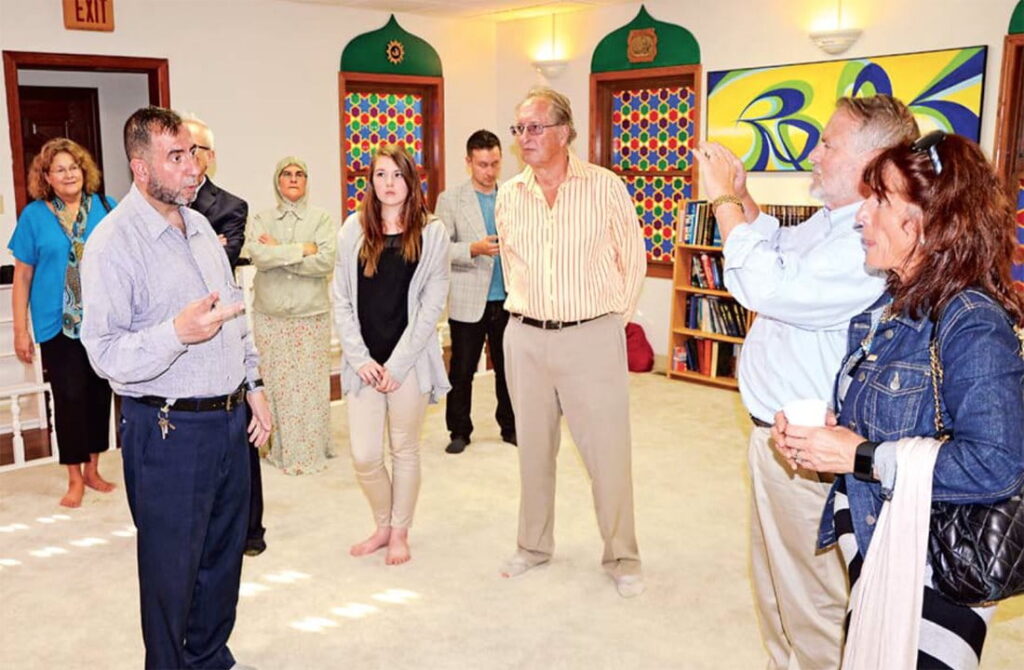
After the awards program, the winners and family members toured the Cedar Rapids Islamic Center and visited one of the city’s historic sites: the oldest standing mosque in the United States, built in 1934.
“Abd El-Kader’s legacy deserves to be remembered along with Nelson Mandela, Gandhi and Dr. Martin Luther King Jr’s because they were all pursuing the same dream : To Reach Peace
‘ – Victoria Miller, Iowa High School Division Winner’
Elkader Mayor Josh Pope hopes the aep inspires young people “to carry on the values of the amir.” In addition to hosting the aep, Elkader is a sister city to Mascara, in northwestern Algeria, where Abd el-Kader was born in 1808. Today Mascara’s population of 150,000 dwarfs Elkader’s 1,300 residents. “Abd el-Kader serves as a great example about how people of different cultures can live together in peace and understanding,” he says
In early September Pope traveled at the invitation of the Algerian government to speak at its own Emir Abd el-Kader Award ceremony, which recognized organizations in the Mediterranean region for work in economic cooperation and interfaith relations.
The interfaith aspect of Abd el-Kader’s life impresses Miller deeply.
“I’m a Christian, and I’ve had my own difficulties—though certainly on a different level—but I know it’s important to stay positive and hopeful,” she says.
Now, she wants to add study of comparative religions and “the psychology of how we learn and react to stereotypes” to her aspirations for a career in medicine.
“Victoria grew a lot in the process of reading about el-Kader and writing her essay,” says Miller’s mother, Yvette Powers, noting diplomatically that her daughter was not always supported by some members of her extended family.
“I believe people need to accept all races and creeds,” she declares. “I hope she was able to open some eyes.”
Brian Miller, Victoria’s father, says he and his daughter talked about the life of Abd el-Kader when she was writing her essay.
“It opened up quite a discussion,” he says. “I believe there are good Muslims and bad Muslims, just like all people.”
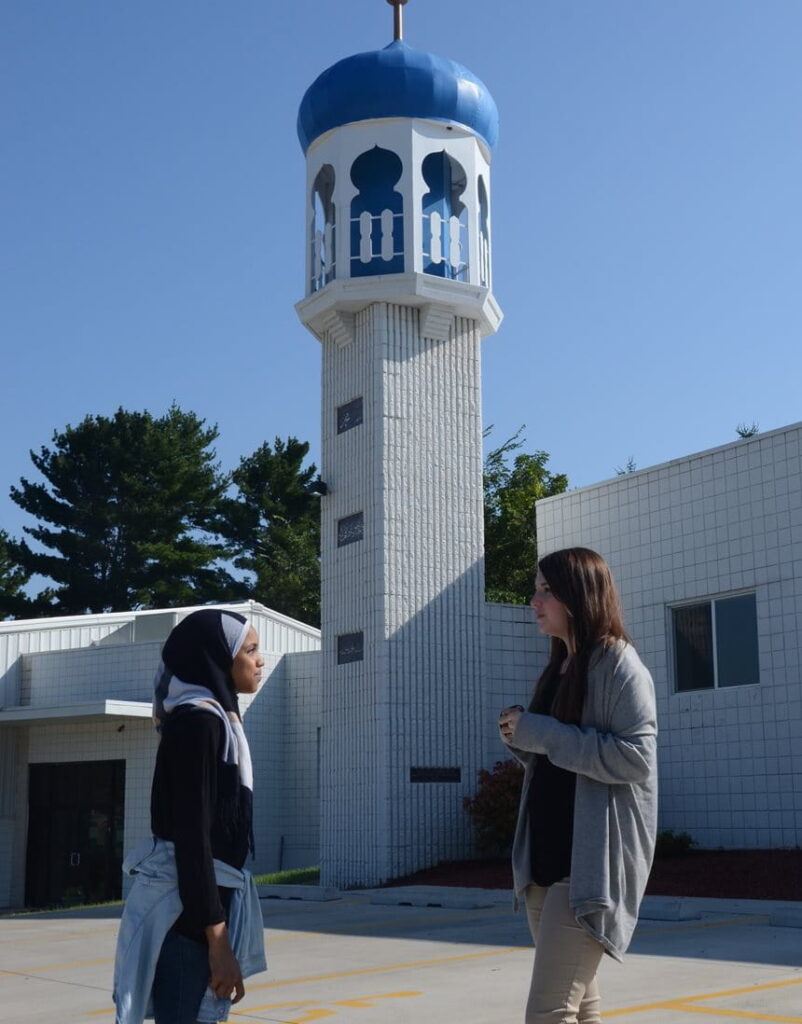
Forum attendees received a tour of the “Mother Mosque of America,” built in 1934 in Cedar Rapids, Iowa, by immigrants from what is now Syria and Lebanon. Although not the first mosque built in the US, it is the oldest standing mosque; its proximity to Elkader, 130 kilometers away, is coincidental.
Abd el-Kader, he says, “was a good guy,” adding that he hadn’t ever really thought much before about why the town was called “Elkader.”
National high school division winner Daud Shad lives far from Iowa, more than 1,600 kilometers east, in New Jersey. He says his elder brother encouraged him to read Kiser’s biography and enter the contest.
“I’d never heard of el-Kader, ‘the George Washington of Algeria,’” says the 17-year-old, whose parents were born in Pakistan. “There need to be more leaders on all sides like el-Kader because he embodied the best of religion and humanity.”
Samantha Wiedner, 18, grew up in Elkader, and she won the high school competition for her town.
“I knew Elkader was named after the emir, and I knew where Algeria was, but that was about it,” says Wiedner, now a freshman studying Russian and international relations at the University of Iowa.
University of Iowa freshman and winner in the contest’s Elkader High School Division, Samantha Wiedner, right, talks with Jefferson High School tenth grader Lena Osman outside of the Islamic Center of Cedar Rapids. “Being intolerant to other cultures and religions isn’t going to get us anywhere,” Wiedner says. “Despite all our differences, we should be able to co-exist.”
She says she learned that “being intolerant to other cultures and religions isn’t going to get us anywhere. Despite all our differences, we should be able to coexist.”
Noureen Choudhary, 20 and a student at Villanova University, learned about the essay contest from her mother, who was born in Algeria.
“I first heard the name Abd el-Kader in a song popularized by Algerian musicians Khaled, Faudel and Rachid Taha,” says Choudhary, who was born and raised in Philadelphia. Though she was only four, she says the memorable tune and appealing lyrics made her wonder who it was about.
“My mother told me he was an Algerian hero,” she continues. “I now realize he is a figure widely heralded as an ideal Muslim, humanitarian, warrior, leader and source of Algerian national pride of the 19th century.”
Choudhary initially thought Abd el-Kader was “too obscure for Westerners to know about.” She was stunned to learn that a small town in Iowa was named for him, and that there is a group devoted to the study and promotion of his life and work.
“Not many people achieve great things like he did,” she says. “He practiced his faith in an exemplary manner.”
source/content: aramcoworld.com (headline edited) / Brian E. Clark
NASA’s mapping of Mars now bears the names of three iconic Algerian national parks, Algerian physicist Noureddine Melikechi, a member of the US space agency’s largest Mars probe mission, has told AFP.
The Tassili n’Ajjer, Ghoufi and Djurdjura national parks have found their Martian namesakes after a proposition by Melikechi, which he sought as both a tribute to his native Algeria and a call to protect Earth.
“Our planet is fragile, and it’s a signal to the world that we really need to take care of our national parks, whether they are in Algeria or elsewhere,” the US-based scientist told AFP in a recent interview.
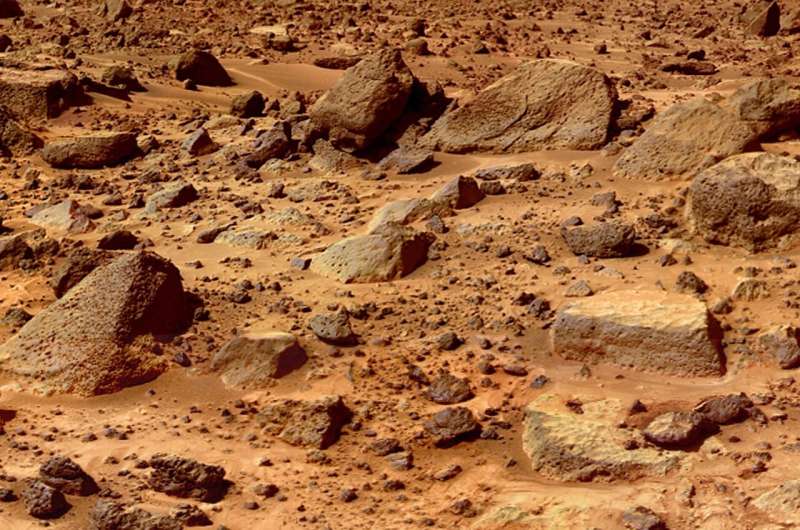
He said the visual resemblance between some of the Martian landscapes and the ones after which they were labeled was also a key reason for the naming.
“The first one that came to my mind was the Tassili n’Ajjer,” he said of the UNESCO-listed vast plateau in the Sahara Desert with prehistoric art dating back at least 12,000 years.
“Every time I see pictures of Mars, they remind me of Tassili n’Ajjer, and now every time I see Tassili n’Ajjer, it reminds me of Mars,” added Melikechi, who left Algeria in 1990 for the United States, where he now teaches at the University of Massachusetts Lowell.
The ancient art found in Tassili n’Ajjer depicts figures that can seem otherworldly, he said.
Some of the paintings show single-eyed and horned giants, among others which French archaeologist Henri Lhote dubbed as “great Martian” deities in his 1958 book, “The Search for the Tassili Frescoes”.
“Those paintings are a signature… a book of how people used to live,” said Melikechi.
“You see animals, but also figures that look like they came from somewhere else.”
‘Historic’
Melikechi’s second pick was the Ghoufi canyon in eastern Algeria, whose rocky desert landscape was the site of an ancient settlement off the Aures Mountains.
Now a UNESCO-listed site and a tourist attraction, it has cliffside dwellings carved in the mountain, a testament to human resilience in a place where survival can be adverse.
“Ghoufi gives you a sense that life can be hard, but you can manage to keep at it as you go,” Melikechi said.
“You can see that through those homes.”
The third site, Djurdjura, is a snowy mountain range some 140 kilometers (about 90 miles) east of the capital Algiers.
Comapred to Tassili or Ghoufi, it bears the least resemblance to Mars.
Melikechi said its pick stemmed of Djurdjura’s “reminder of the richness of natural habitats”.
He said the naming process came after Perseverence, NASA’s Mars rover exploring the Red Planet, made it into uncharted territory.
That area was then split into small quadrants, each needing a name.
“We were asked to propose names for specific quadrants,” he said.
“I suggested these three national parks, while others proposed names from parks worldwide. A team then reviewed and selected the final names.”
The announcement, made by NASA earlier this month, sparked celebrations among Algerians.
Algerian Culture Minister Zouhir Ballalou hailed it as a “historic and global recognition” of the North African country’s landscapes.
Melikechi said he hopes that it will attract more visitors as Algeria has been striving to promote tourism, especially in the Sahara region, with authorities promising to facilitate tourist visas.
Official figures said some 2.5 million tourists visited the country last year—its highest number of visitors in two decades.
“These places are a treasure that we as humans have inherited,” Melikechi said.
In a momentous acknowledgment of his pivotal contributions to the global entrepreneurial landscape, Yacine El-Mahdi Walid, Algeria’s Minister of Vocational Training and Apprenticeship, was named the “2024 Startup Ecosystem Star.” This honor was conferred by the International Chamber of Commerce and the renowned innovation organization “Mind the Bridge” during the ninth edition of the celebrated award ceremony.
Celebrating Leadership in Innovation
The accolade recognizes El-Mahdi Walid’s instrumental role in driving innovation and nurturing startup ecosystems not only in Algeria but across the African continent. The minister’s efforts have been hailed as transformative, positioning Algeria as a rising hub for technology and entrepreneurship.
In a statement on his official Facebook page, Minister El-Mahdi Walid expressed his gratitude, emphasizing the significance of the award in celebrating individuals who make substantial global impacts within startup ecosystems.
“This recognition,” he remarked, “although awarded individually, is truly a testament to the extraordinary efforts of my former team at the Ministry of Knowledge Economy, Startups, and Small Enterprises.”
A Visionary Path for Algerian Startups
Acknowledging the collaborative spirit behind the honor, the minister reaffirmed his confidence in Algeria’s continued trajectory towards innovation under the stewardship of his successor, Noureddine Ouadah. “I am certain,” he added, “that this outstanding work will persist and that Algeria’s startup ecosystem will rise to meet the aspirations and hopes of its people.”
A Global Celebration of Innovation
The 2024 Startup Ecosystem Star event is an annual celebration that recognizes individuals who have made an indelible mark on the global entrepreneurial landscape. By highlighting exceptional contributions, it inspires collaboration and innovation worldwide.
Beginning January 1, 2025, Algeria assumes the presidency of the United Nations Security Council for one month, marking a notable step in its diplomatic engagement. With its long-standing support for just causes in the Middle East and Africa, this presidency provides the country with a strategic opportunity to highlight crucial issues.
Clear Priorities for a Central Role As a non-permanent member of the Council for a year, Algeria is concentrating on major issues such as the situation in Palestine, the humanitarian crisis in Gaza, and security challenges in Africa, especially the fight against terrorism.
An open ministerial discussion on “The Situation in the Middle East, including the Palestinian Question” will bring together key international players, including UN Secretary-General Antonio Guterres.
Focus on Palestine: A Historic Priority The Palestinian issue, a cornerstone of Algeria’s diplomacy, is paramount to this presidency. Fifteen months after a deadly escalation in Gaza, Algeria reaffirms the need for an “immediate” and “permanent” ceasefire.
Algerian Ambassador to the UN, Amar Benjama, has been leading efforts since March 2024 to promote peace in the region. In parallel, Algeria is renewing its call for full Palestinian membership in the UN, aiming to realize the two-state solution and restore the legitimate rights of the Palestinian people.
Addressing Regional Crises In addition to Palestine, Algeria will focus on other major conflicts:
Syria: A session will address the political and humanitarian situation in this war-torn country. Yemen: UN Special Envoy Hans Grundberg will intervene to evaluate peace prospects and respond to the humanitarian emergency.
An African Priority: Fighting Terrorism On the African front, Algeria will convene a high-level meeting on counterterrorism, a growing threat to the stability of many states on the continent.
Ahmed Attaf, Minister of Foreign Affairs, will emphasise ways to strengthen international cooperation in addressing this scourge.
A Presidency Full of Hope Under the leadership of President Abdelmadjid Tebboune, Algeria aims to use this platform to promote peace, security, and justice in key regions.
With ambitious initiatives and active leadership, this presidency of the Security Council represents a unique opportunity for Algeria to defend the interests of Arab and African nations while consolidating its position on the global diplomatic stage.
His Highness Sheikh Mohammed bin Rashid Al Maktoum, Vice President, Prime Minister and Ruler of Dubai, has congratulated Professor Yacine Aït-Sahalia, Professor of Finance and Economics at Princeton University, for winning the Great Arab Minds Award in Economics for 2024.
His Highness Sheikh Mohammed praised Professor Yacine Aït-Sahalia for his pioneering contributions to financial econometrics, data measurement, and financial analysis. His work advanced the modelling of high-frequency financial data and continuous-time processes, enabling deeper understanding of variables.
His Highness Sheikh Mohammed said, “We congratulate the winner of the Great Arab Minds Award in Economics for 2024, Professor Yacine Aït-Sahalia from Algeria, Professor of Finance and Economics at Princeton University, who has made exceptional contributions by developing an advanced economic and financial metric to determine volatility levels and understand future patterns of market fluctuations. His work has enhanced financial market analysis, improved economic risk assessments, and increased the efficiency of financial and economic planning.
“We celebrate his achievement and take pride in all Arab minds who have inspired us with their creativity. We look forward to meeting them soon at the Great Arab Minds ceremony.”
Mohammad bin Abdullah Al Gergawi, Minister of Cabinet Affairs and Chairman of the Great Arab Minds Higher Committee, informed Professor Yacine Aït-Sahalia of his win via video call. Al Gergawi highlighted that the award reflects Sheikh Mohammed’s vision to celebrate and support exceptional Arab talent, highlight their achievements, and expand their effective cognitive and developmental impact in their specialisations to foster innovation and excellence across the Arab world.
“Your theories on econometrics and financial analysis have become a reference for numerous institutions, markets, economies, and governments. Your studies inspire a new generation of skilled economists, both in the Arab world and globally, and you are a source of pride for everyone in the Arab world,” Al Gergawi added.
Professor Aït-Sahalia developed high-frequency econometric methods to analyse financial data, estimate volatility, forecast market trends, and evaluate risk. His techniques for addressing microstructure noise and capturing market dynamics have provided essential tools for asset pricing and financial decision-making.
With over 80 academic studies and two books, Professor Aït-Sahalia’s research introduced innovative methods for analysing financial data, and enhancing economic planning.