TUNISIA : Ibn Khaldoun — The Greatest Tunisian Historian & Social Scientist

Ibn Khaldoun, in full Abou Zeid Abdelrahman Ibn Mohammed Ibn Khaldoun Al-Hadrami, was born in May 27, 1332, Tunis, Tunisia — died March 17, 1406, in Cairo, Egypt. He is the greatest Arab historian and social scientist. Ibn Khaldoun has been described as the founder of the modern disciplines of historiography, sociology, economics, and demography.

He who finds a new path is a pathfinder, even if the trail has to be found again by others; and he who walks far ahead of his contemporaries is a leader, even though centuries pass before he is recognized as such.

Ibn Khaldoun.

Who is Ibn Khaldoun?

Multiple sources, such as Niccolò Machiavelli of the Renaissance and the 19th-century European scholars widely acknowledged the significance of his achievements and considered Ibn Khaldoun to be one of the greatest philosophers of the Middle Ages.

He is actually the one who developed one of the earliest nonreligious philosophies of history, contained in his masterpiece, the Muqaddimah (“Introduction”). He also wrote a definitive history of Muslim North Africa.

The past resembles the future more than one drop of water resembles another. Ibn Khaldoun

The easiest method of acquiring the habit of scholarship is through acquiring the ability to express oneself clearly in discussing and disputing scholarly problems. This is what clarifies their import and makes them understandable. Some students spend most of their lives attending scholarly sessions. Still, one finds them silent. They do not talk and do not discuss matters. More than is necessary, they are concerned with memorizing. Thus, they do not obtain much of a habit in the practice of scholarship and scholarly instruction

Ibn Khaldoun.

Ibn Khaldoun — Early Life

Ibn-Khaldoun was born in Tunis, Tunisia in 1332; the house where he believed to have been born is in the Khaldounia, a quarter in Tunis that still stands almost unchanged and well-preserved.

In his autobiography, Ibn Khaldoun mentioned that the family claimed descent from Khaldoun, who was of South Arabian origin, and had come to Spain in the early years of the Arab conquest. The family then moved to Sevilla, played an important part in the civil wars of the 9th century, and was long considered among the three leading families of that city.

During the following 4 centuries, the Ibn-Khaldouns successively held high administrative and political positions under the Umayyad, Almoravid, and Almohad dynasties; other members of the family served in the army, and several were killed at wars, mostly at the Battle of Al-Zallaqah (1086), which temporarily halted the Christian reconquest of Spain. But the respite thus won proved short, and in 1248, just before the fall of Sevilla and Córdoba, the Ibn-Khaldouns and many of their countrymen judged it prudent to cross the Straits of Gibraltar and landed at Sabtah (now Ceuta, a Spanish exclave), on the northern coast of Morocco.

Ove there, the refugees that came in from Spain were of a much higher level of socio-economic status than the local North Africans, and the Khaldoun family was soon called to occupy the leading administrative positions in Tunis. The Ibn Khaldoun’s father also became an administrator and soldier but soon abandoned his career to devote himself to the study of theology, law, and letters. In Ibn Khaldoun’s words:

He was outstanding in his knowledge of Arabic and had an understanding of poetry in its different forms and I can well remember how the men of letters sought his opinion in matters of dispute and submitted their works to him.

Ibn Khaldoun.

In 1349, however, the Black Death struck Tunis and took away both his parents.

Ibn Khaldoun — Education & Career

Ibn Khaldoun gives a detailed recap of his education, listing the main books he read and describing the life and works of his teachers. He memorized the Quran, studied its principal commentaries, had a good grounding in Muslim law, familiarized himself with the masterpieces of Arabic literature, and acquired a clear style for writing fluent verse that was to serve him well in later life when addressing eulogistic or supplicatory poems to several rulers back then.

At age 20, when he was given a post at the court of Tunis, followed 3 years later by a secretaryship to the Sultan of Morocco in Fes. By then he got married. After two years of service, however, he was suspected of participation in a rebellion and was imprisoned. Released after nearly two years and promoted by a new ruler, he again fell into disfavor, decided to leave Morocco, and crossed over to Granada, for whose Muslim ruler he had done some service in Fes and whose prime minister, the brilliant writer Ibn al-Khaṭib, was a good friend. Ibn Khaldoun was then 32 years old.

The following year Ibn Khaldoun was sent to Sevilla, Spain to conclude a peace treaty with Pedro I of Castile. There he saw “the monuments of my ancestors.” Pedro “treated me with the utmost generosity, expressed his satisfaction at my presence and showed awareness of the preeminence of our ancestors in Sevilla.” Pedro even offered him a post in his service, promising to restore his ancestral estates, but Ibn Khaldoun politely declined. He gladly accepted the village that the sultan of Granada bestowed on him, however, and, feeling once more secure, brought over his family, whom he had left in safety in Constantine.

But, to quote him once more, “enemies and intriguers” turned the all-powerful prime minister, Ibn al-Khaṭib, against him and raised suspicions regarding his loyalty; it can be conjectured that the task of these enemies must have been greatly facilitated by the apparent jealousy between the two most brilliant Arab intellectuals of the age. Once more, Ibn Khaldoun found it necessary to take his leave, and he returned to Africa. The following 10 years saw him change employers and employment with disconcerting rapidity and move from Bejaïa to Tlemcen, Biskra, Fes, and once more to Granada, where he made an unsuccessful effort to save his old rival and friend, Ibn al-Khaṭib, from being killed by order of its ruler.

During this period Ibn Khaldoun served as prime minister and in several other administrative capacities, led a punitive expedition, was robbed and stripped by nomads, and spent some time “studying and teaching.” This extreme mobility is partly explained by the instability of the times. The Almohad Empire, which had embraced the whole of North Africa and Muslim Spain, had broken down in the middle of the 13th century, and the convulsive process from which Morocco, Algeria, and Tunisia were subsequently to emerge was under way; wars, rebellions, and intrigues were endemic, and no man’s life or employment was secure. But in Ibn Khaldoun’s case two additional factors might be suspected—a certain restlessness and a capacity to make enemies, which may account for his constant complaints about the “intriguers” who turned his employers against him.

The Muqaddimah of Ibn Khaldoun

In 1375, craving solitude from the exhausting business of politics, Ibn Khaldoun sought refugee in Algeria for about four years, “free from all preoccupations,” and wrote his massive masterpiece, the Muqaddimah, an introduction to history.

His original intention, which he subsequently achieved, was to write a universal history of the Arabs and Berbers, but before doing so he judged it necessary to discuss historical method, with the aim of providing the criteria necessary for distinguishing historical truth from error. This led him to formulate what the 20th-century English historian Arnold Toynbee has described as “a philosophy of history which is undoubtedly the greatest work of its kind that has ever yet been created by any mind in any time or place,” a statement that goes even beyond the earlier eulogy by Robert Flint:

As a theorist on history he had no equal in any age or country until Vico appeared, more than three hundred years later. Plato, Aristotle and Augustine were not his peers . . . .Robert Flint.

Ibn Khaldoun went even further with the Muqaddimah. His study of the nature of society and social change led him to evolve what he clearly saw was a new sciences, such as for example what he called “the science of culture” and which he defined thus:

This science . . . has its own subject, viz., human society, and its own problems, viz., the social transformations that succeed each other in the nature of society. Ibn Khaldoun.

Obviously, for Ibn Khaldoun, history was an endless cycle of flowering and decay, with no evolution or progress except for that from primitive to civilized society. But, in brief descriptions of his own age, which have not received as much attention as they deserve, he showed that he could both visualize the existence of sharp turning points in history and recognize that he was witnessing one of them: “When there is a general change of conditions . . . as if it were a new and repeated creation, a world brought into existence anew.” The main cause he gives for this great change is the Black Death, with its profound effect on Muslim society, but he was fully aware of the impact of the Mongol invasions, and he may also have been impressed by the development of Europe, the merchants and ships of which thronged the seaports of North Africa and some of the soldiers of which served as mercenaries in the Muslim armies.

Ibn Khaldoun’s Journey to Egypt

After have completed the first draft of the Muqaddimah, nostalgia for the more active world of politics, drew him back to seek city life. A severe illness finally convinced him to leave his refuge; he secured permission to return to Tunis, where he “engaged exclusively in scholarly work,” completing much of his history. But once more he aroused both the jealousy of a prominent scholar and the suspicion of the ruler, and in 1382, at age 50, he received permission to sail to Egypt, ostensibly for the purpose of performing the pilgrimage to Mecca.

After 40 days Ibn Khaldoun landed in Alexandria and shortly afterward was in Cairo, then, as now, by far the largest and most opulent city in the Arab world. Its impact on him was profound: “I saw the metropolis of the ear, the garden of the world, the gathering place of the nations . . . the palace of Islam, the seat of dominion . . . .” His curiosity about Cairo was evidently of long duration, for he quotes the replies several eminent North Africans had made to his enquiries on their return from that city, including: “He who has not seen it does not know the power of Islam.”

Within a few days “scholars thronged on me, seeking profit in spite of the scarcity of merchandise and would not accept my excuses, so I started teaching at Al-Azhar,” the famous Islamic university. Shortly afterward, the new Mamluk ruler of Egypt, Barquq, with whom he was to remain on good terms except for one or two brief periods of misunderstanding, appointed him to a professorship of jurisprudence at the Quamḥiyyah college and, within five months, made him chief judge of the Mālikī rite, one of the four recognized rites of Sunnite Islam. Barqūq also successfully interceded with the ruler of Tunis to allow Ibn Khaldoun’s family to rejoin him, but the ship carrying them foundered in the port of Alexandria, drowning all on board.

Significance

Ibn Khaldount did make a big impact and he was, as described by many sources, such as Niccolò Machiavelli of the Renaissance and the 19th-century European scholars, to be one of the greatest philosophers of the Middle Ages. Indeed, it is perhaps not too fanciful to attribute to Ibn Khaldun’s influence the remarkable revival of historical writing in 15th-century Egypt and North Africa.

Later, several distinguished 16th- and 17th-century Ottoman scholars and statesmen took a keen interest in Ibn Khaldoun’s work, and a partial translation of the Muqaddimah into Turkish was made in the 18th century. But it was only after the 1860s, when a complete French translation of the Muqaddimah appeared, that Ibn Khaldun found the worldwide audience his incomparable genius deserved.

source/content: carthagemagazine.com (headline edited)

_______________

Bust of Tunisian historian and social scientist Ibn Khaldoun in the entrance of the Kasbah of Bejaia, Algeria. Photo by Reda Kerbouche.

____________

TUNISIA

ALGERIA / EGYPT / LEBANON / MOROCCO / PALESTINE / SYRIA / DUBAI, U.A.E : Mohammed bin Rashid honours winners of 2025 edition of Great Arab Minds initiative

His Highness Sheikh Mohammed bin Rashid Al Maktoum, Vice President, Prime Minister and Ruler of Dubai, honoured the six winners of the Great Arab Minds 2025 edition at the Museum of the Future in Dubai.

Great Arab Minds is the largest Arab initiative dedicated to celebrating outstanding Arab achievement, highlighting contributions to advance human civilisation, support the expansion of scientific and knowledge-based endeavours, and showcasing the creative impact of Arab talent across the region and globally.

His Highness affirmed that the Great Arab Minds initiative was designed to expand the horizons for established and emerging Arab talent, nurturing and investing in their potential; recognise Arab achievement across research, development, innovation, technology, culture, and architecture; and to reinforce a culture of pride and sustained support for Arab individuals who have inspired significant progress in key fields.

His Highness Sheikh Mohammed said, “Today, we honour Great Arab Minds in recognition of achievements that advance civilisation and build societies. From the Museum of the Future in Dubai, we reaffirm our support for Arab talent committed to innovation, creativity, and excellence.”

His Highness further said, “We congratulate the winners of the Great Arab Minds 2025: Professor Abbas El Gamal in the Engineering and Technology category, Dr. Nabil Seidah in the Medicine category, Professor Badi Hani in the Economics category, Professor Majed Chergui in the Natural Sciences category, Dr. Suad Amiry in the Architecture and Design category, and Professor Charbel Dagher in the Literature and Arts category. We encourage them to continue their journey of achievement and contribution, serving as true role models for younger generations in our region and around the world, inspiring them to shape a better future through science and knowledge.”

His Highness expressed his confidence in the ability of Arab talent to drive progress in scientific research, knowledge creation, and the cultural sector, supported by expertise, institutional support, and the ambition of young people across the region.

Focused on a better future

Sheikh Mohammed noted that the Great Arab Minds initiative will continue to highlight the achievements of Arab individuals who look to the future with optimism and pursue ambitions that recognise no limits.

The awards ceremony was attended by H.H. Sheikh Maktoum bin Mohammed bin Rashid Al Maktoum, First Deputy Ruler of Dubai, Deputy Prime Minister and Minister of Finance of the UAE; H.H. Sheikh Ahmed bin Mohammed bin Rashid Al Maktoum, Second Deputy Ruler of Dubai and Chairman of the Dubai Media Council; H.H. Sheikh Ahmed bin Saeed Al Maktoum, President of the Dubai Civil Aviation Authority, Chairman of Dubai Airports, and Chairman and Chief Executive of Emirates Airline and Group; His Highness Sheikh Mansoor bin Mohammed bin Rashid Al Maktoum, President of the UAE National Olympic Committee; H.H. Sheikha Latifa bint Mohammed bin Rashid Al Maktoum, Chairperson of the Dubai Culture and Arts Authority (Dubai Culture); and H.H. Sheikh Mohammed bin Rashid bin Mohammed bin Rashid.

Mohammed bin Abdullah Al Gergawi, Minister of Cabinet Affairs and Chair of the Higher Committee for the Great Arab Minds initiative, was among numerous ministers and senior officials in attendance along with scientists, academics and diplomats.

His Excellency Al Gergawi stated that the Great Arab Minds initiative launched by His Highness Sheikh Mohammed represents a profound recognition of Arab achievement across disciplines, and a significant strategic investment in empowering talent and encouraging renewed contributions to Arab intellectual and scientific progress.

He added that the Great Arab Minds initiative embodies Sheikh Mohammed’s vision to inspire confidence in Arab capabilities and motivate individuals to take an active role in shaping their societies and the future of a region that has long contributed to human civilisation through science, literature, thought, and architecture.

‘Powerful message’

He praised the achievements of the Great Arab Minds awardees across medicine, engineering, technology, sciences, architecture, arts, and literature, saying, “Your presence today on the Great Arab Minds 2025 platform at the Museum of the Future sends a powerful message to hundreds of millions of young people to pursue excellence, achievement, and leadership in research, innovation, creativity, and knowledge, and to help shape a brighter future for Arab and human civilisation.”

The award recognised one winner in each of its six categories: Medicine, Economics, Engineering and Technology, Natural Sciences, Architecture and Design, and Literature and Arts.

In Medicine, Dr. Nabil Seidah was honoured for his medical and research achievements in cardiovascular health and cholesterol regulation.

In Economics, Professor Badi Hani was awarded for his pioneering contributions to econometrics and the development of economic analysis tools, particularly in panel data analysis. His work enabled more accurate and in-depth analysis by combining data across multiple time periods and sources.

In Engineering and Technology, Professor Abbas El Gamal was awarded for his pioneering contributions to network information theory.

In Natural Sciences, Professor Majed Chergui was honoured for his contributions to understanding light-matter interactions, developing techniques and applications that enable the study of ultrafast molecular and material dynamics at the atomic level.

In Architecture and Design, Dr. Suad Amiry was honoured for her contributions to preserving Palestinian architectural heritage through documentation, restoration, and adaptive reuse of historical buildings.

In Literature and Arts, Professor Charbel Dagher was honoured for a body of work that constitutes a key reference in the study of Arab and Islamic arts, Arabic calligraphy, and modern visual arts.

Professor Abbas El Gamal said, “I extend my sincere gratitude to His Highness Sheikh Mohammed bin Rashid Al Maktoum for his vision in launching Great Arab Minds. Being honoured in this way is deeply meaningful to me.”

Professor Majed Chergui said, “I am Algerian of Syrian origin, born in Morocco and raised in Algeria and Lebanon. In this way, the Arab world comes together in who I am. For me personally, this award is not only the highest recognition of my achievements; it touches me deeply because it comes from an Arab country.”

Dr. Suad Amiry said, “In 1981, when I decided to live in the city of Ramallah, my aim was to study traditional architecture in rural Palestine. Ten years later, I founded the Riwaq Centre, which since then has been dedicated to documenting, restoring, and rehabilitating architectural heritage in Palestine. Winning this award is a great honour for me and for the Riwaq Centre.”

Professor Badi Hani said: “This award recognises not only my work, but also the people and places that shaped me, my family, my mentors, my city, and the Arab world that nurtured my earliest aspirations.”

Dr. Nabil Seidah said, “My father’s adage, that knowledge is something no one can ever take away from you, has been the principle that guided me throughout my journey. Your trust represents a powerful motivation for Arab scientists to serve as role models for future generations, and I pledge to continue serving science with the same passion that has always driven me.”

Professor Charbel Dagher said: “Commitment to the Arabic language has remained a defining hallmark of everything I have done: teaching, writing, and research, to the point that I live within Arabic itself. We cannot exist outside our language or our culture. Allow me to share this award with those who supported me, and my gratitude extends to everyone who has worked and continues to work to ensure that Arabic remains a living language of science, knowledge, and culture.”

The awardees were chosen by six high-level specialised committees, one for each category. Abdulla bin Touq Al Marri, Minister of Economy and Tourism, chaired the Economics Committee; Sarah Al Amiri, Minister of Education, chaired the Engineering and Technology Committee; Mohammed Ahmed Al Murr, Chairman of the Board of Directors of the Mohammed bin Rashid Al Maktoum Library Foundation, chaired the Literature and Arts Committee; Dr. Amer Sharif, Chief Executive Officer of Dubai Health and President of the Mohammed Bin Rashid University of Medicine and Health Sciences headed the Medicine Committee; Professor Sehamuddin Galadari, Senior Vice Provost-Research and Managing Director of the Research Institute at New York University Abu Dhabi chaired the Natural Sciences Committee; Professor Hashim Sarkis, Dean of the School of Architecture and Planning at the Massachusetts Institute of Technology chaired the Architecture and Design Committee.

In addition to the committee chairs, the specialised committees also included Essa Kazim, Governor of the Dubai International Financial Center; Dr Mohammed Madhi, Dean of the College of Business and Economics at UAE University; Dr Rabah Arezki, Chief Economist for the Middle East and North Africa (MENA) region at the World Bank and Senior Fellow at Harvard University’s John F. Kennedy School of Government; Ferid Belhaj, Fellow at the Policy Center for the New South; and Dr Jihad Azour, Director of the Middle East and Central Asia Department at the International Monetary Fund.

The committees also included Professor Ismael Al Hinti, President of Al Hussein Technical University; Adel Darwish, Regional Director of the International Telecommunication Union; Dr Ahmed Zayed, Director of the Bibliotheca Alexandria; His Excellency Dr. Alawi Alsheikh-Ali, Director General of Dubai Health Authority; Professor Elias Zerhouni, Professor Emeritus at Johns Hopkins University; Dr Noureddine Melikechi Dean of the Kennedy College of Sciences and Professor of Physics at the University of Massachusetts Lowell; Professor Nader Masmoudi, Professor at the Courant Institute of Mathematical Sciences at New York University Abu Dhabi; Dr Latifa Elouadrhiri Laboratory Directed Research Staff Scientist at the Thomas Jefferson National Accelerator Facility; and Professor Dr Jehane Ragai, Emeritus Professor of Chemistry at The American University in Cairo.

The specialised committees also included Dr Adrian Lahoud, Dean of the School of Architecture at the Royal College of Art; and Professor Ali Malkawi, Professor of Architectural Technology, Director of the Doctor of Design Studies Program, and Founding Director of the Harvard Center for Green Buildings and Cities.

The Nominations Committee included Huda Al Hashimi, Deputy Minister of Cabinet Affairs for Strategic Affairs; Chucrallah Haddad, Partner and Head of Advisory at KPMG Lower Gulf; Abdulsalam Haykal, President and Founder of Majarra Company; Ali Matar, Head of LinkedIn Middle East and North Africa and Emerging Markets in Africa and Europe; and Saeed Al Nazari, Secretary-General of the Great Arab Minds Initiative.

Widely known as the ‘Arab Nobel,’ the Great Arab Minds initiative recognises distinguished Arab achievement and highlights extraordinary contributions that reflect the region’s historic role in advancing knowledge and human progress globally. For a third consecutive edition, the initiative continues to strengthen its position as a platform for celebrating Arab creators and as a point of reference for promising Arab talent, by highlighting achievements that inspire young people and contribute to expanding Arab participation in global knowledge and civilisational advancement.

source/content: wam.ae (headline edited)

________________

__________________________________________________________________

ALGERIA / DUBAI, U.A.E / EGYPT / FRANCE/ LEBANON / MOROCCO / PALESTINE / SWITZERLAND / SYRIA / U.S.A

SAUDI ARABIA : The King Salman Global Academy for the Arabic Language (KSGAAL) announces names of 2025 award winners for serving Arabic language

There will be a ceremony honoring the winners held under the patronage of His Highness Prince Badr bin Abdullah bin Farhan, minister of culture

The King Salman Global Academy for the Arabic Language announced the names of the winners of its awards celebrating efforts to serve the language.

Mahmoud Al-Batal won an award for his work in teaching Arabic in the US, which included carrying out in-depth research into linguistics, much of which has been published in peer-reviewed studies.

The Saudi-based Manahij International Foundation received an award recognizing its development of educational materials and curricula for early years language learning and Arabic for non-native speakers.

Manahij was also highlighted for developing training packages for teachers, and praised for its “originality, methodology and innovation” in the field, the Saudi Press Agency reported.

Algerian Ahmed Khorssi was recognized with an award for his contributions to the language by developing more than 30 computer programs including tools for correcting pronunciation.

He has published more than 15 studies in peer-reviewed journals and international conferences.

King Abdulaziz City for Science and Technology won an award for developing systems including an audio database, an automatic speech recognition system in local dialects, and other advanced tools.

Ramzi Mounir Baalbaki, from Lebanon, won an award that recognized his academic career that has spanned four decades

Baalbaki has authored 12 books and more than 80 research papers in Arabic and English in peer-reviewed scientific journals.

Saad Abdel Aziz Maslouh, from Egypt, received an award recognizing a lifetime of academic achievements including the publication of 33 books and 29 research papers.

The Arabic Education Training Center for Gulf States, in the UAE, was awarded for developing evaluation tools and other educational content.

Mazen Abdulqader Mohammed Al-Mubarak, from Syria, won an award for his extensive scholarly work including the well-known book “Towards Linguistic Awareness.”

The National Coalition for Arabic Language in Morocco also received an award for promoting linguistic awareness in Moroccan society through lectures, seminars and intellectual forums.

There will be a ceremony honoring the winners held under the patronage of His Highness Prince Badr bin Abdullah bin Farhan, minister of culture and chairman of the board of trustees of the academy, next Sunday in Riyadh.

source/content: arabnews.com (headline edited)

_____________

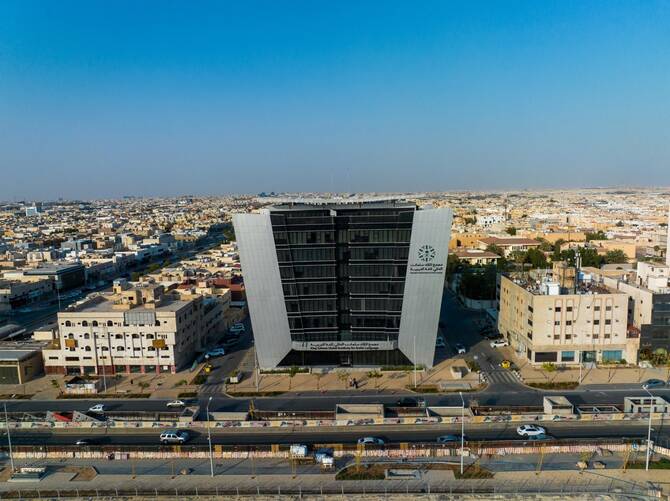
The King Salman Global Academy for the Arabic Language’s headquarters in Riyadh. (OIC)

______________________________________________________________

ALGERIA / EGYPT / LEBANON/ MOROCCO / SAUDI ARABIA / SYRIA / UAE

EGYPTIAN-BRITISH : Making history again! Egyptian heart surgeon Sir Magdi Yacoub innovates valves that grow naturally in body

Making history again! Egyptian heart surgeon Sir Magdi Yacoub innovates valves that grow naturally in body.

This pioneering innovation envisions the development of biological heart valves that can grow and be accommodated naturally within the human body. This opens the door to a new era in heart disease treatment. 

The prospect of heart valves naturally expanding within the body, a concept once confined to science fiction, is now on the brink of realization, thanks to the remarkable discovery spearheaded by renowned heart surgeon Professor Sir Magdi Yacoub.

While the initial study documenting this breakthrough was unveiled in Nature in 2023, recent media coverage has underscored its practical implications.

Esteemed publications like The Times have pinpointed this cutting-edge innovation’s profound impact on biomedical science and medical engineering. They have recognized it as a monumental leap in the realm of healthcare.

On Monday, Dr. Yacoub discussed the latest developments in this field with Egyptian talk show host Amr Adib.

He explained how his team has engineered temporary heart valve scaffolds composed of surgically implanted fibres into the body.

These scaffolds gradually disintegrate over time, leaving behind a living, fully functional valve crafted from the patient’s tissues, a testament to the marvels of modern medical ingenuity.

source/content: english.ahram.org.eg (headline edited)

______________

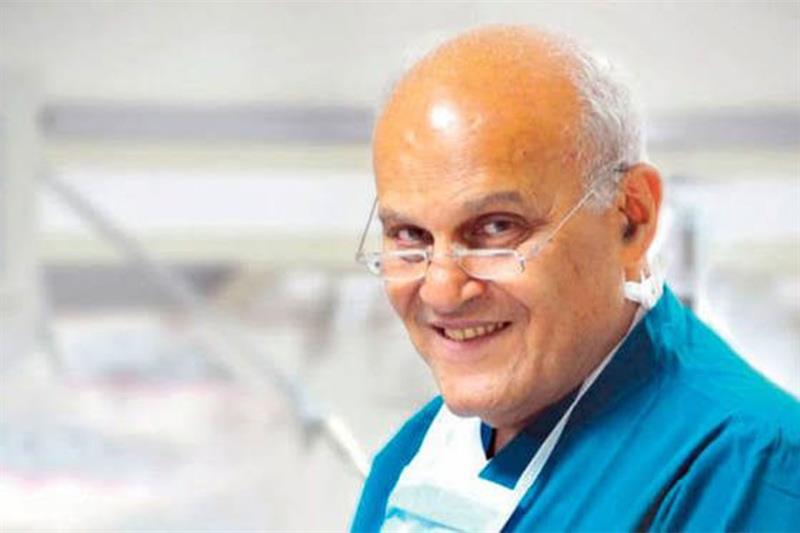
Sir Magdi Yacoub

_____________________________

EGYPT / UNITED KINGDOM