Arabs & Arabian Records Aggregator. Chronicler. Milestones of the 25 Countries of the Arabic Speaking World (official / co-official). AGCC. MENA. Global. Ist's to Top 10's. Records. Read & Enjoy./ www.arabianrecords.org
The Kingdom and the international police organization sign host country agreement.
Interpol is to establish an office in Saudi Arabia that will serve the Middle East and North Africa region.
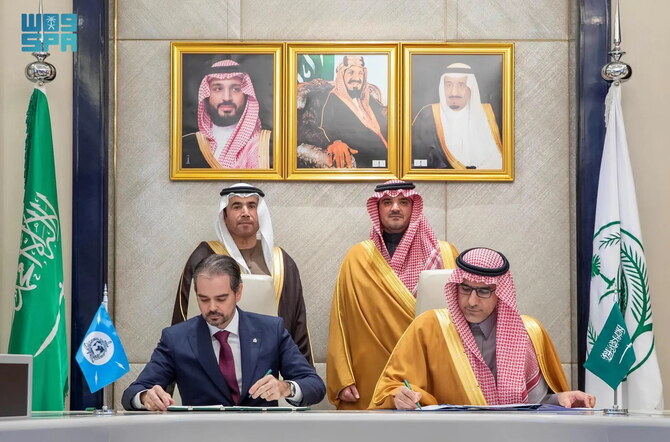
Hisham Al-Faleh, undersecretary at the Kingdom’s Ministry of Interior, and Jurgen Stock, secretary-general of the international police organization, signed a host country agreement on Wednesday.
Prince Abdulaziz bin Saud, the Saudi Minister of Interior, and Maj. Gen. Ahmed Naser Al-Raisi, the president of Interpol, also attended the signing ceremony, the Saudi Press Agency reported.
In addition, they discussed Interpol’s activities during a meeting that also included Nasser Al-Dawood, the deputy minister of interior; Brig. Gen. Abdulmalik Al-Saqeeh, the director general of Saudi Interpol; and other senior officials.
source/content: arabnews.com (headline edited)
____________
Hisham Al-Faleh, undersecretary at the Kingdom’s Ministry of Interior, and Jurgen Stock, secretary-general of the international police organization, signed a host country agreement. (SPA)
Launched in 2003 and with more than 186 countries participating, the prestigious WSAs are held biennially and recognize impactful digital initiatives.
The Saudi Ministry of Hajj and Umrah is the sole Saudi participant to win a 2024 World Summit Award in the Culture and Heritage category, thanks to its “Nusuk” platform.
The project competed against over 900 technical submissions from 160 countries.
Launched in 2003 and with more than 186 countries participating, the prestigious WSAs are held biennially and recognize impactful digital initiatives. They seek to bridge the global digital divide by honoring smart applications and creative online content. The WSAs are a key UN initiative, supported by the International Telecommunication Union.
The award reflects the Kingdom’s pioneering strategy in developing innovative technological solutions aimed at enhancing pilgrims’ experiences and highlighting cultural and heritage values.
FASTFACT
‘Nusuk’ is a suite of innovative technological solutions which facilitate the performance of pilgrimage rituals, address challenges and enhance operational efficiency.
It underlines the Saudi Ministry of Hajj and Umrah’s efforts to drive comprehensive digital transformation, in alignment with the goals of Saudi Vision 2030.
“Nusuk” is a suite of innovative technological solutions which facilitate the performance of pilgrimage rituals, address challenges and enhance operational efficiency.
It has already advanced significantly with the development of pioneering systems such as the Nusuk Card, Nusuk Masar and crowd management systems.
It also focuses on highlighting the Prophet’s biography and cultural landmarks in Makkah and Madinah, featuring more than 150 museums, monuments, restaurants, cafes and tourist destinations, among other notable sites that enrich the user’s experience.
Over 400 licensed guides are affiliated with the platform, offering customized excursions throughout the Kingdom to pilgrims.
The Ministry of Hajj and Umrah has said it is very proud of its achievement and reaffirmed its ongoing commitment to developing technological solutions that ensured the sustainability of the Hajj and Umrah sectors, facilitating easy access to smart services and ensuring a smooth and tranquil performance of the rituals.
source/content: arabnews.com (headline edited)
__________
nusuk application / Over 400 licensed guides are affiliated with the platform, offering customized excursions throughout the Kingdom to pilgrims. (Supplied)
KSU professors, Canadian and Japanese scientists achieving breakthroughs in cellular therapy and carbon nanotubes win coveted prize
Selection committees held meetings at King Faisal Prize headquarters to select winners in Islamic studies, Arabic language and literature, medicine, and science
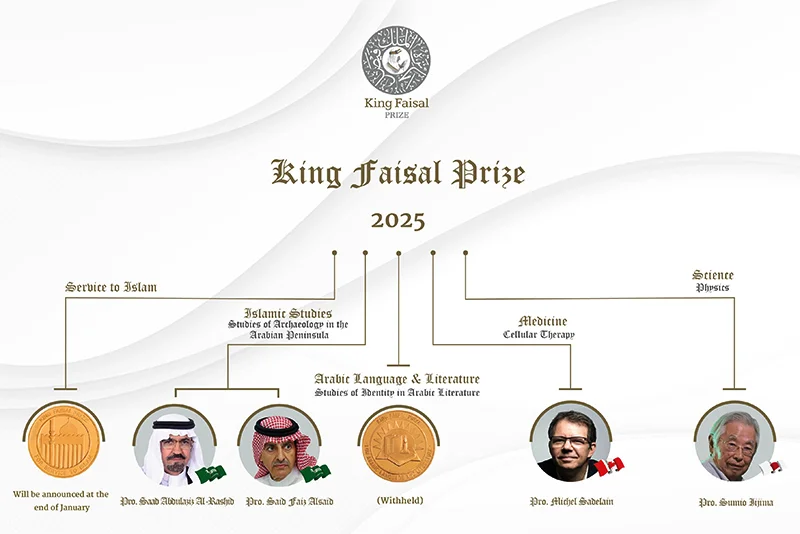
The King Faisal Prize 2025 laureates were announced at a ceremony in Riyadh on Wednesday night.
Two King Saud University professors, a Canadian scientist who achieved a breakthrough in cellular therapy and a Japanese scientist doing pioneering work in carbon nanotubes were winners of the most coveted prize in the Arab world.
Announcing the KFP 2025 winners, Dr. Abdulaziz Alsebail, secretary-general of the King Faisal Prize said: “The selection committees of the King Faisal Prize 2025, after meticulous deliberations that were held from Monday to Wednesday, have reached decisions for the prize’s four categories: Islamic studies, Arabic language and literature, medicine, and science. As for the fifth category, the King Faisal Prize for Service to Islam, the announcement will be made at the end of this month.”
The King Faisal Prize for Islamic Studies for 2025 (Topic: Studies of Archaeology in the Arabian Peninsula), was awarded jointly to Professor Saad Abdulaziz Alrashid and Professor Said Faiz Alsaid. Both are Saudi nationals and professors at King Saud University.
Alrashid was awarded the prize for his contribution to the study of Islamic archaeological sites and inscriptions of the Arabian Peninsula, which laid the scientific and methodological groundwork for scholars in this field. His work has enriched scientific knowledge about Islamic civilization and has become an empirical source for future generations of researchers.
Alsaid was awarded the prize for the originality of his scientific studies, which are based on rich literature and published in several languages. His adaptation of a comparative methodology in studies of inscriptions and ancient writings of the Arabian Peninsula has had a profound impact on understanding the history of the Arabian Peninsula’s civilizations before Islam. His studies are an important scientific reference for scholars of the history of the Arabian Peninsula and the ancient Near East.
The King Faisal Prize for Arabic Language and Literature (Topic: Studies of Identity in Arabic Literature), was withheld due to the nominated works not reaching the criteria for the prize.
The King Faisal Prize for Medicine (Topic: Cellular Therapy), has been awarded to Michel Sadelain (Canada), Stephen and Barbara Friedman chair and director, Center for Cell Engineering at Memorial Sloan Kettering Cancer Center.
Sadelain has been awarded the prize for his pioneering work in cellular therapy, and in particular for the genetic engineering of immune cells with “chimeric antigen receptors” (CAR-T). Dr. Sadelain led the team that designed and tested clinically effective and novel CAR-T agents for the treatment of blood cancers. His group identified CD19 as an effective CAR target and included a CD28 domain in the CAR construct, resulting in strikingly effective clinical responses. Dr. Sadelain continues to improve CAR-T cell efficacy by devising strategies to overcome treatment resistance. This approach also shows promise in the treatment of autoimmune diseases and solid tumors.
The King Faisal Prize for Science for this year was awarded in physics to Sumio Iijima, a professor at Meijo University, Japan.
Iijima has been awarded the prize for establishing the field of carbon nanotubes, following his pioneering discovery of carbon nanotubes using electron microscopy. This new class of one-dimensional carbon materials has had a powerful impact on fundamental solid-state physics and material science. His work has opened new avenues for developing wide-ranging, practical applications in nanotechnology, ranging from electronics to energy storage systems and biomedicine.
The General Secretariat of the King Faisal Prize commended the 2025 laureates and offered thanks to the distinguished members of the selection committees and the experts for their valued contributions.
The selection committees for the prize’s four categories — Islamic studies, Arabic language and literature, medicine, and science — convened at the prize’s headquarters from Monday to Wednesday.
The selection committees included prominent experts, scholars and specialists from 16 countries.
The KFP was established in 1977, and was awarded for the first time in 1979 in three categories — service to Islam, Islamic studies, and Arabic language and literature. Two additional categories were introduced in 1981 — medicine and science. The first medicine prize was awarded in 1982, and in science two years later.
Since 1979, the KFP in its different categories has awarded about 300 laureates to those who have made distinguished contributions to different sciences and causes. Each prize laureate is endowed with $200,000, a 24-carat gold medal weighing 200 grams, and a certificate inscribed with the laureate’s name and a summary of the work that qualified them for the prize.
The 10,000-square-meter facility features the latest marine technology.
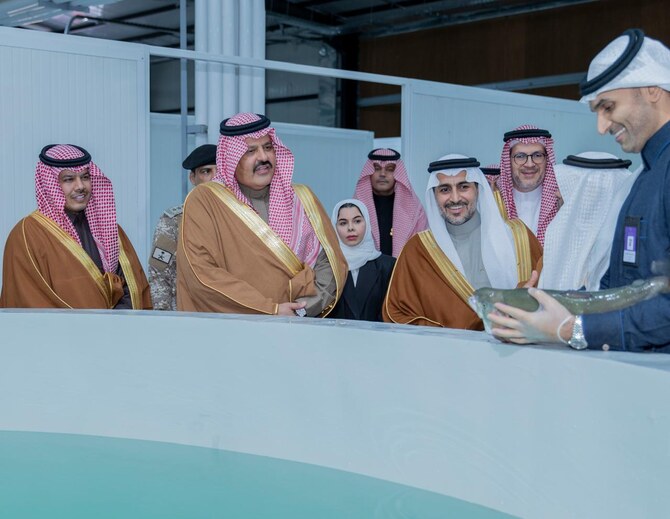
Prince Abdulaziz bin Saad bin Abdulaziz, the governor of Hail, inaugurated the Excellence Center for Salmon Production on Saturday, the largest facility of its kind in the Middle East.
A collaboration between the Ministry of Environment, Water, and Agriculture and King Abdulaziz University, the center aims to produce 100,000 tons of salmon annually, bolstering Saudi Arabia’s food security and aquaculture sector, the Saudi Press Agency reported.
The 10,000-square-meter facility features the latest marine technology, including recirculating aquaculture systems and aquaponics units, which integrate fish and vegetable production.
It is designed to reduce the Kingdom’s reliance on salmon imports, currently at 23,000 tons per year.
Prince Abdulaziz hailed the project as a cornerstone of Vision 2030, promoting sustainable development and economic diversification, while attending officials highlighted its potential to enhance innovation, create jobs, and serve as a model for sustainable aquaculture in the region, SPA added.
source/content: arabnews.com (headline edited)
_________
Prince Abdulaziz bin Saad bin Abdulaziz, the governor of Hail, inaugurated the Excellence Center for Salmon Production on Saturday, the largest facility of its kind in the Middle East. (SPA)
Saudi Food and Drug Authority says selection of Khalid Al-Zahrani by Codex Alimentarius Commission is a ‘milestone’ and ‘testament to our commitment to global food safety
Al-Zahrani has represented the Kingdom on several international committees, including at the World Trade Organization
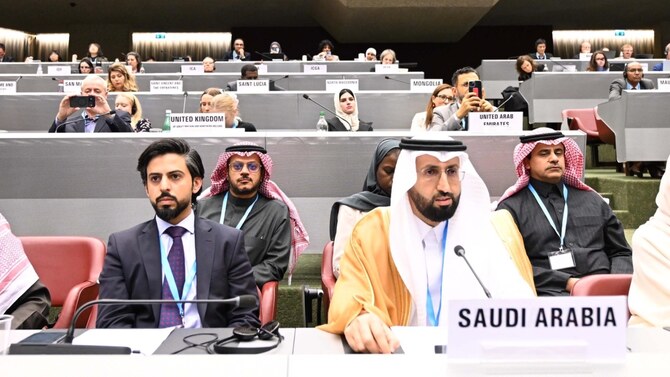
Saudi official Khalid Al-Zahrani was chosen on Wednesday to be vice chair of the Codex Alimentarius Commission, which sets the standards for the international food trade that are designed to ensure products are safe and protect consumer health.
Representatives of the Saudi Food and Drug Authority who were present for the vote at the commission’s 47th annual session in Geneva, Switzerland, congratulated Al-Zahrani on his election.
“This is a significant milestone for Saudi Arabia and a testament to our commitment to global food safety and standards,” said Hisham Aljadhey, the authority’s CEO.
“By assuming the role of vice chair of Codex, (Saudi Arabia) aims to further strengthen international collaboration, promote sustainable food practices and ensure the well-being of consumers worldwide.”
Al-Zahrani has served as the Codex chairperson for the Near East region since 2020 and was reelected to the position in 2023.
He also represented Saudi Arabia on several international committees, including the World Trade Organization’s Technical Barriers to Trade, the Gulf Cooperation Council Standardization Organization, and the International Organization for Standardization’s Food Products Committee.
He works closely with the Kingdom’s Food and Drug Authority, which aims to prioritize sustainability and enhance efficiency, inclusiveness and transparency within food systems. The authority was recognized in January by the World Health Organization as one of the first five countries in the world to eliminate the use of industrially produced trans fats in food, alongside Denmark, Lithuania, Poland and Thailand.
“Al-Zahrani’s election highlights the exceptional quality of Saudi staff at the SFDA and the authority’s efforts in food-safety legislation and oversight,” the authority said.
The Codex Alimentarius (Latin for “Food Code”) is a collection of internationally recognized standards, codes of practice, guidelines and other recommendations related to food production, labeling and safety, published by the UN’s Food and Agriculture Organization and the WHO.
source/content: arabnews.com (headline edited)
___________
Khalid Al-Zahrani and the CEO of the Saudi Food and Drug Authority, Hisham Aljadhey, during the vote at the Codex Alimentarius Commission in Geneva. (Supplied)
President of the Water Authority tells Local Content Forum 2024 in Riyadh the Kingdom aims to be a pioneer in desalination industry.
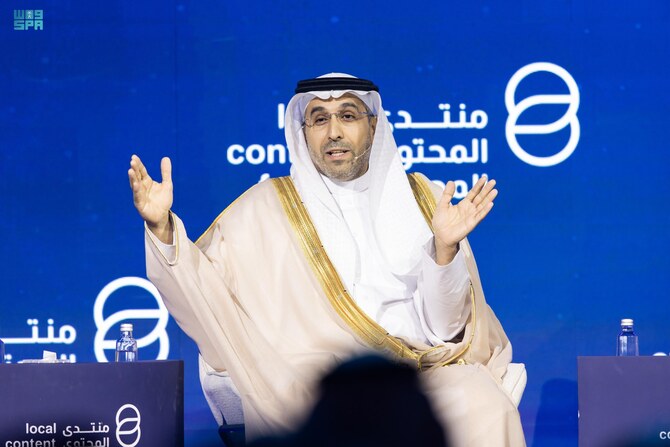
The volume of desalinated water produced by Saudi Arabia each day is equivalent to daily global oil production, the president of the Saudi Water Authority said on Thursday.
Speaking on day two of the three-day Local Content Forum 2024 in Riyadh, Abdullah Al-Abdulkarim said the Kingdom desalinates an estimated 15 million cubic meters of water daily. In 2023, global oil production amounted to nearly 15.3 million cubic meters a day, the Saudi Press Agency reported.
The nation’s water sector has undergone significant shifts in recent years as a result of critical issues such as climate change and growing demand for fresh water, he added, and there are “great opportunities for the Kingdom to become a pioneer” in the desalination industry.
The Water Authority is working tirelessly to support Saudi manufacturers and contractors and help them enter the desalination sector, Al-Abdulkarim said.
“Partnerships in the water sector start from research and innovation, and transforming them into new projects,” he added.
source/content: arabnews.com (headline edited)
__________
Abdullah Al-Abdulkarim, the President of the Saudi Water Authority, at the Local Content Forum held in Riyadh on Nov. 21, 2024 (SPA)
Then an ancient 14.5 kilometer-long wall was discovered at the site
When Al-Natah was built, cities were flourishing in the Levant region along the Mediterranean Sea from present-day Syria to Jordan
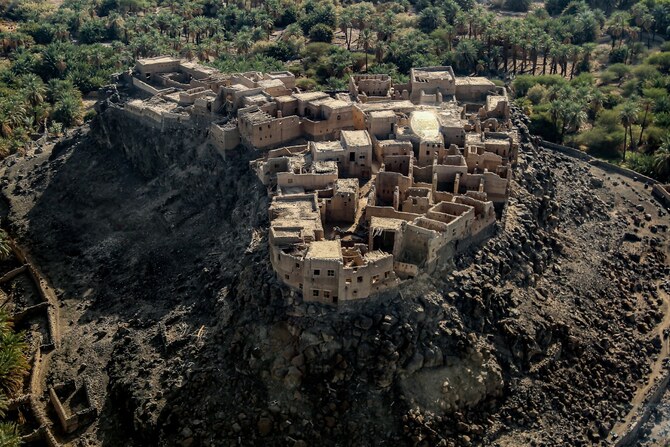
The discovery of a 4,000-year-old fortified town hidden in an oasis in modern-day Saudi Arabia reveals how life at the time was slowly changing from a nomadic to an urban existence, archaeologists said on Wednesday.
The remains of the town, dubbed Al-Natah, were long concealed by the walled oasis of Khaybar, a green and fertile speck surrounded by desert in the northwest of the Arabian Peninsula.
Then an ancient 14.5 kilometer-long wall was discovered at the site, according to research led by French archaeologist Guillaume Charloux published earlier this year.
For a new study published in the journal PLOS One, a French-Saudi team of researchers have provided “proof that these ramparts are organized around a habitat,” Charloux told AFP.
The large town, which was home to up to 500 residents, was built around 2,400 BC during the early Bronze Age, the researchers said.
It was abandoned around a thousand years later. “No one knows why,” Charloux said.
When Al-Natah was built, cities were flourishing in the Levant region along the Mediterranean Sea from present-day Syria to Jordan.
Northwest Arabia at the time was thought to have been barren desert, crossed by pastoral nomads and dotted with burial sites.
That was until 15 years ago, when archaeologists discovered ramparts dating back to the Bronze Age in the oasis of Tayma, to Khaybar’s north.
This “first essential discovery” led scientists to look closer at these oases, Charloux said.
Black volcanic rocks called basalt concealed the walls of Al-Natah so well that it “protected the site from illegal excavations,” Charloux said.
But observing the site from above revealed potential paths and the foundations of houses, suggesting where the archaeologists needed to dig. They discovered foundations “strong enough to easily support at least one- or two-story” homes, Charloux said, emphasising that there was much more work to be done to understand the site. But their preliminary findings paint a picture of a 2.6-hectare town with around 50 houses perched on a hill, equipped with a wall of its own.
Tombs inside a necropolis there contained metal weapons like axes and daggers as well as stones such as agate, indicating a relatively advanced society for so long ago. Pieces of pottery “suggest a relatively egalitarian society,” the study said. They are “very pretty but very simple ceramics,” added Charloux.
The size of the ramparts — which could reach around five meters (16 feet) high — suggests that Al-Natah was the seat of some kind of powerful local authority. These discoveries reveal a process of “slow urbanism” during the transition between nomadic and more settled village life, the study said.
For example, fortified oases could have been in contact with each other in an area still largely populated by pastoral nomadic groups. Such exchanges could have even laid the foundations for the “incense route” which saw spices, frankincense and myrrh traded from southern Arabia to the Mediterranean.
Al-Natah was still small compared to cities in Mesopotamia or Egypt during the period.
But in these vast expanses of desert, it appears there was “another path toward urbanization” than such city-states, one “more modest, much slower, and quite specific to the northwest of Arabia,” Charloux said.
source/content: arabnews.com (headline edited)
___________
This picture taken on December 12, 2022 shows an aerial view of an old fort in the Khaybar oasis in northwestern Saudi Arabia. Khaybar, best known for a 7th-century fierce battle between the Islam’s Prophet Mohamed and local Jewish tribes is remodelling itself as an upscale tourist draw in line with the kingdom’s rebranding efforts. Situated in an oasis amid a volcanic field north of Medina, it was once home to thousands of Jews, who were defeated in a decisive seventh-century battle with the Prophet’s army as Islam expanded across the Arabian peninsula. (Photo by Mohammad QASIM / AFP)
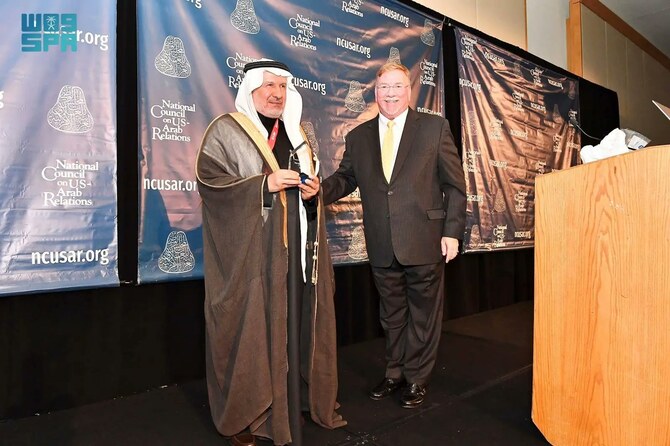
The Saudi aid agency KSrelief was honored with the Global Humanitarian Achievement Award by the National Council on US-Arab Relations, in recognition of relief efforts that have made a substantial impact in crisis regions around the world.
Delano Roosevelt, the council’s second president and CEO, presented the award to the supervisor general of KSrelief, Dr. Abdullah Al-Rabeeah, in Washington, the Saudi Press Agency reported.
Dr. Al-Rabeeah said the award is an international acknowledgement of Saudi Arabia’s leading role in relief efforts.
He underlined the Kingdom’s commitment to assisting people in need, supporting those affected by crises, and assisting refugees wherever possible.
He also affirmed that Saudi Arabia has consistently been a leader in charitable and humanitarian initiatives and is at the forefront of donor countries on regional and international fronts.
source/content: arabnews.com (headline edited)
______________
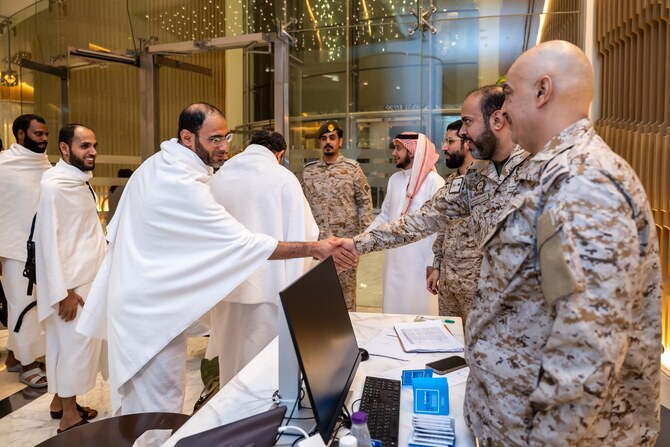
Delano Roosevelt, CEO of National Council on US-Arab Relations, presents the award to the supervisor general of KSrelief, Dr. Abdullah Al-Rabeeah, in Washington. (SPA)
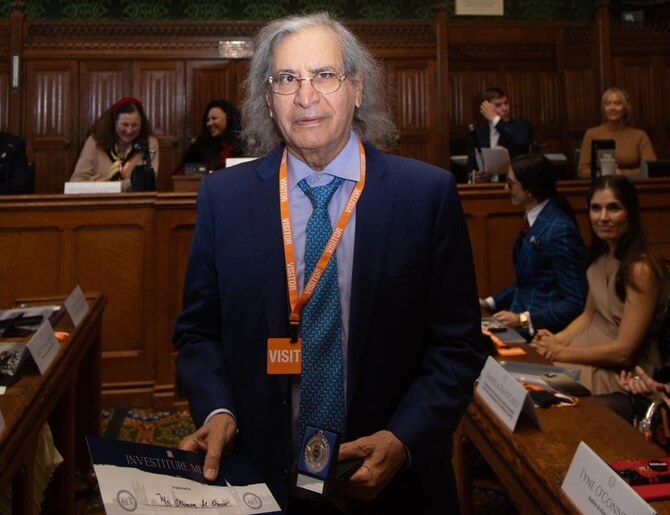
Othman Al Omeir was awarded the Legacy of Change Medal by the Parliamentary Society for Arts
Celebrated journalist and editor Othman Al Omeir was awarded the Legacy of Change Medal by the Parliamentary Society for Arts last week.
The ceremony, held in Committee Room 14, an esteemed space within the House of Parliament usually reserved for significant political announcements, acknowledged Al Omeir’s contributions to media and advocacy.
The assembly was organized by Rebeca Riofrio, chairwoman of the Parliamentary Society for Arts, and brought together leaders from the creative industries.
Among the distinguished guests was Minister for Victims and Violence Against Women and Girls Alex Davies-Jones, who delivered an impassioned speech underscoring the UK government’s commitment to addressing the issue of violence in the arts. Her speech highlighted the importance of advocacy for all artists, echoing the assembly’s overarching theme of resilience and protection within the creative sectors.
Other notable figures such as Joshua Kane and Marine Tanguy were also honored for their impactful contributions to arts and culture.
Born in Saudi Arabia and a British citizen for the past 40 years, Al Omeir has spent decades shaping the Arab world’s media.
He has been closely connected with the Parliamentary Society for the past five years and has long championed initiatives to protect creatives and uphold the integrity of journalism. His presence, alongside influential figures such as Minister Davies-Jones, Princess Katarina of Yugoslavia, Dame Tessy Antony de Nassau, and Lady Paris Smith, underscored his dedication to advancing a free and supportive media landscape.
As the founder of Elaph, the first independent Arabic e-newspaper, Al Omeir sought to break free from censorship and provide a space for liberal perspectives, promoting open dialogue on issues affecting the Arab region and beyond.
Nowadays, he serves as one of the advisers for the Parliament News Magazine, a publication that has gained recognition for addressing critical social issues since 2019.
In his ongoing work, Al Omeir uses his platforms to encourage the industry to work collectively to safeguard its talent, highlighting the pervasive challenges that creatives can face, such as violence and substance abuse.
Reflecting on the award, Al Omeir stated: “To receive this recognition in such a revered space as Committee Room 14 is deeply meaningful. Media is not just about information; it’s a powerful force for justice and societal progress. We must use this influence to protect those who bring creativity and truth into our world, ensuring they can express themselves without fear.”
source/content: arabnews.com (headline edited)
_________
Born in Saudi Arabia and a British citizen for the past 40 years, Al Omeir has spent decades shaping the Arab world’s media. (Supplied)
A Saudi has sent to the Guinness World Records what is believed to be the world’s largest stamps collection.
Reda Shaib, a philatelist, started the project two years ago in Al-Ahsa.
“Shaib’s collection contains 1.1 million different Saudi stamps,” Mohsin Hassan Al-Shaikh, adviser to the Saudi Philatelic and Numismatics Society (SPNS), said. The collection includes stamps issued since the Kingdom was founded, he said.
He said that Shaib took every opportunity to ask people he met to support the project, adding that It would be a matter of great pride for the Kingdom to enter into the Guinness World Records.
Part of Shaib’s collection was shown to visitors at the King Fahd Cultural Complex, where the Ministry of Culture and Information marked the Saudi National Day by organizing an exhibition of books and pictures about Saudi Arabia.
Al-Shaikh thanked Shaib for including SPNS members in his project, making them feel an increased sense of belonging to the organization.
He said that a US collector had earlier come up with a similar project consisting of 500,000 stamps.