Arabs & Arabian Records Aggregator. Chronicler. Milestones of the 25 Countries of the Arabic Speaking World (official / co-official). AGCC. MENA. Global. Ist's to Top 10's. Records. Read & Enjoy./ www.arabianrecords.org
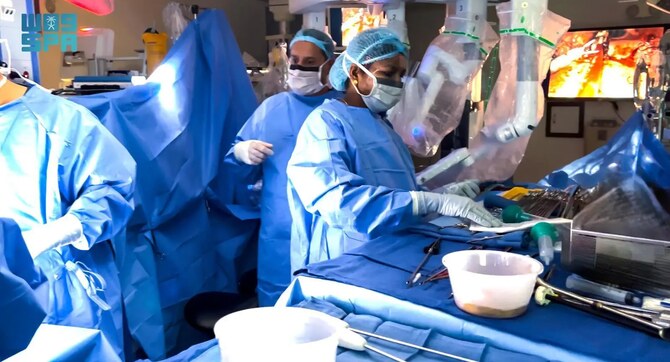
Saudi Arabia’s King Faisal Specialist Hospital and Research Center has performed the world’s first fully robotic heart transplant, Saudi Press Agency reported.
The two-and-a-half-hour operation was carried out on a 16-year-old patient suffering from end-stage heart failure.
A medical team led by Dr. Feras Khaliel, head of Cardiac Surgery and director of the Robotics and Minimally Invasive Surgery Program at KFSHRC, performed the operation after weeks of preparation.
The pioneering achievement, overcoming significant medical challenges associated with such procedures, reinforces Saudi Arabia’s leadership in healthcare, and highlights KFSHRC’s ability to innovate medical practices, SPA said.
The process began with detailed theoretical planning to ensure precision and minimize potential risks.
The team devised a surgical approach to access the heart and perform the transplant without opening the chest of the patient.
To ensure the effectiveness of this approach, the team practiced the procedure virtually seven times over three days before carrying out the operation.
The successful operation has been hailed as a significant development in heart transplant surgery, moving away from traditional chest-opening procedures that require long recovery periods, often lasting months.
Robotic technology allows for minimally invasive surgery, reducing pain, shortening recovery time, and minimizing the risk of complications. This significantly improves patients’ quality of life and accelerates recovery.
KFSHRC CEO Dr. Majid Al-Fayyad said that the successful operation marked another major advance in heart transplant surgery, first performed in the 1960s.
“The success of the world’s first robotic heart transplant marks a transformative leap, not only for our institution but also for Saudi Arabia’s journey toward global leadership in specialized medicine, in line with Saudi Vision 2030, which places innovation at the core of its efforts to improve quality of life,” he said.
“This remarkable achievement would not have been possible without the unwavering support of the Saudi leadership, who have prioritized the development of the healthcare sector, paving the way for a transformative leap in health care services, unlocking new possibilities to elevate the quality of life for patients both locally and globally,” he added.
The breakthrough aligns with KFSHRC’s commitment to medical innovation. As a leading training center in robotic organ transplant surgery, KFSHRC contributes to advancing the global understanding of minimally invasive organ transplants by collaborating with medical institutions worldwide to train their medical teams and achieve better outcomes, further elevating global medical practices.
source/content: arabnews.com (headline edited)
______________
Saudi hospital conducts world’s first fully robotic heart transplant. (SPA)
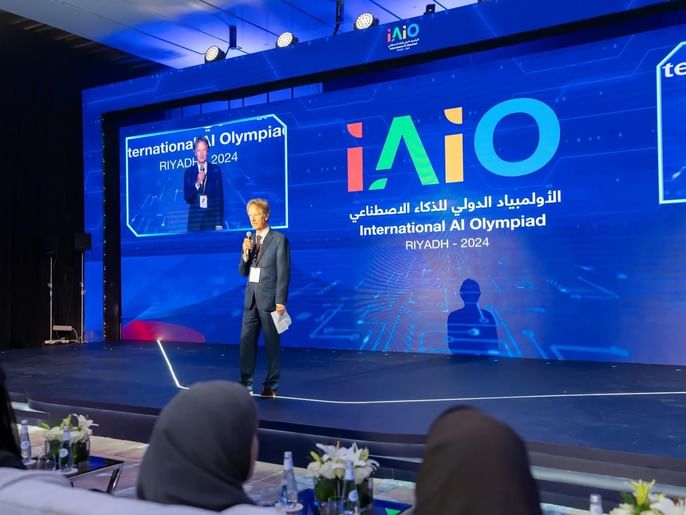
The first activities of the International Artificial Intelligence Olympiad (IAIO) began yesterday, Sunday, which is organized by the Kingdom of Saudi Arabia, represented by the Saudi Data and Artificial Intelligence Authority (SDAIA), for the first time in the world, in cooperation with the International Center for Research and Ethics in Artificial Intelligence (ICAIRE) and the International Research Center for Artificial Intelligence in Slovenia, and under the auspices of the United Nations Educational, Scientific and Cultural Organization (UNESCO), with the participation of more than 25 countries.
The Saudi Press Agency (SPA) reported that the Olympiad, which will continue until September 12, 2024, contributes to strengthening friendly international relations between technology and software experts and artificial intelligence teachers in various countries, drawing the attention of young people to these modern technologies, and encouraging other countries to organize similar competitions in the future.
The Olympiad aims to motivate participants to engage in active discussions to explore the various applications of artificial intelligence, and encourage exceptionally talented young people in this field, which is of increasing global interest.
It also contributes to enhancing the organization of artificial intelligence competitions for secondary school students, and motivating them to find smart solutions by designing algorithms based on learning, data structuring, and programming.
The Olympiad enables male and female students, artificial intelligence specialists, and influencers in the world to delve into the future landscape of artificial intelligence, keep pace with the rapid changes the world is witnessing in this field, and provide young cadres with modern technical skills
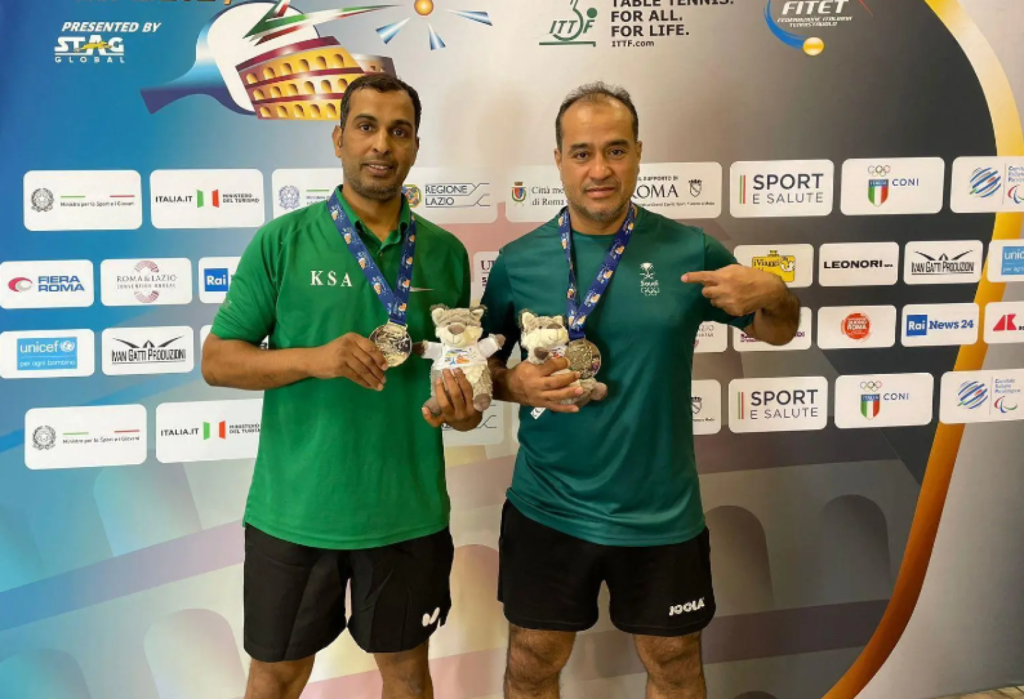
Saudi Arabia’s Majid Binsuaiger and Khalid Al-Harbi achieved a remarkable feat on Sunday by winning the silver medal in table tennis doubles at the ITTF World Masters Championships Rome 2024.
Competing in the 45-49 years age category, the Saudi duo showcased their skills and defeated teams from Sweden, Germany, and France on their way to the podium, SPA reported. Their exceptional performance earned them a well-deserved spot in the finals, where they secured the silver medal.
They narrowly finished behind the duo of Giovanni Maria from Italy and Cédric Merchez from Belgium, highlighting their strong performance throughout the championship.
Saudi Arabia’s Majid Binsuaiger and Khalid Al-Harbi win the silver medal in table tennis doubles at the ITTF World Masters Championships Rome 2024. SPA
Rafeef Ayedh Alshahrani wins gold for innovative tech; Dr. Najia Al-Zanbagi silver for her work in medical parasitology .
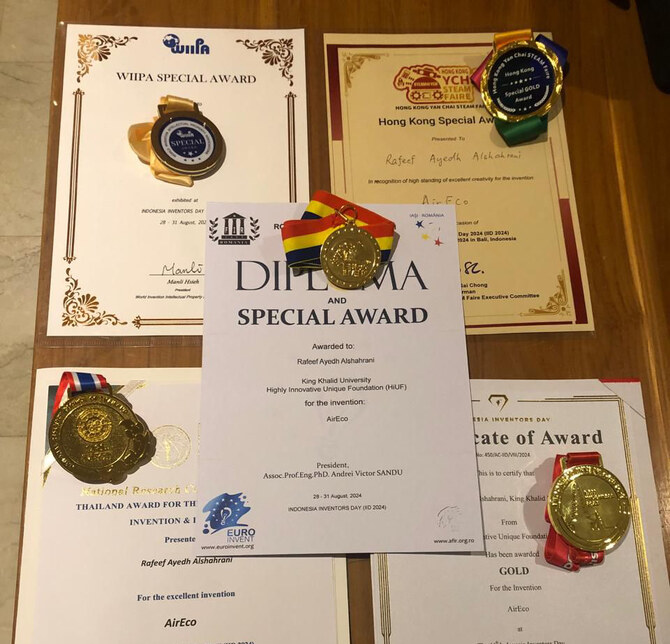
Two Saudi citizens were awarded prestigious medals for their groundbreaking work at the Indonesia Inventors Day 2024 exhibition, which was held from Aug. 28 to 31 in Bali, Indonesia.
Rafeef Ayedh Alshahrani, a researcher from King Khalid University, won a gold medal for her innovation “AirEco,” which has the ability to detect and locate living beings in hard-to-reach mountainous terrain, where search efforts are typically hindered by challenging conditions.
By integrating advanced detection technologies with artificial intelligence, the device provides crucial support to rescue teams. It not only identifies precise locations but also executes functions to assist in rescue operations once the target is located.
It is one of the projects backed by the university’s Agency for Business and Community Partnership, through the Entrepreneurship Center.
The project has also earned four prestigious awards from Taiwan, Romania, Hong Kong and Thailand.
Reflecting on her achievement, she described it as a truly unique and fulfilling experience. She expressed the joy of seeing the fruits of her hard work over the past days and months, stating that the greatest reward was the pride and recognition from those around her. “It’s an incredible feeling,” she said.
“This accomplishment has fueled my desire to see it implemented quickly and made widely available,” she added. “I sincerely hope that authorities and companies will adopt the project, provide support, and help manufacture it to the highest standards so it can fully achieve its purpose.”
When asked how such achievements can positively influence Saudi participation in international competitions, she said: “Accomplishments serve as a powerful driving force for young people, pushing them toward their ambitions and future goals.
“The Kingdom’s Vision 2030, in particular, has become a major source of motivation, inspiring all Saudis to think creatively and pursue their aspirations.
“Saudi achievements have now become a source of national pride, shifting perspectives on the significance of success and its far-reaching impact. These accomplishments are key drivers of development, progress and prosperity.
“Beyond boosting individual self-confidence, they foster a positive mindset in society, encouraging leadership, innovation and the creation of economic opportunities. The impact of success doesn’t stop with the individual; it resonates throughout the community.”
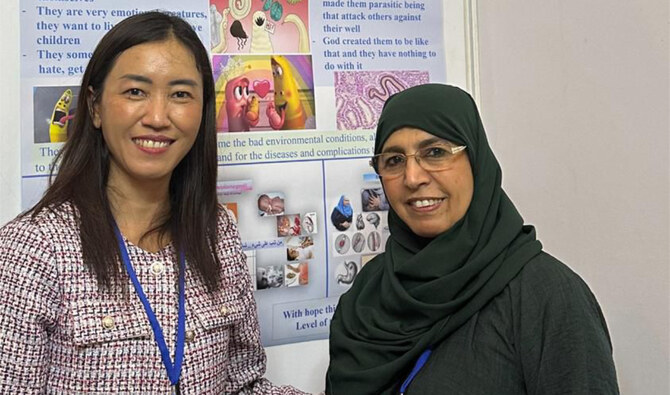
Dr. Najia Al-Zanbagi, headmaster of Highly Innovative Unique Foundation, also earned a silver medal at the Indonesia Inventors Day 2024 for her remarkable work in medical parasitology.
“My contribution was a personal achievement: I authored a book on medical parasitology, using engaging, narrative-driven stories to simplify the complex scientific content and make it easier for learners to distinguish between various parasites.
“I first introduced this approach while teaching at King Abdulaziz University, and it was incredibly well received by students, who found the subject much more enjoyable and accessible.”
She aid that the book, titled “Lisan Al-Hal,” has now been published and is now available in the market.
Dr. Majid Al-Aziman, director of the Entrepreneurship Center at King Khalid University, emphasized the university’s commitment to supporting innovators, raising awareness and redefining the concept of entrepreneurship.
The university also seeks to spotlight the success of projects incubated by the Entrepreneurship Center and actively contribute to creating new job opportunities.
source/content: arabnews.com (headline edited)
___________
Dr. Najia Al-Zanbagi (R), headmaster of Highly Innovative Unique Foundation, earned a silver medal at the Indonesia Inventors Day 2024 for her remarkable work in medical parasitology. (Supplied)
Rafeef Ayedh Alshahrani’s project has also earned four prestigious awards from Taiwan, Romania, Hong Kong and Thailand. (Supplied)
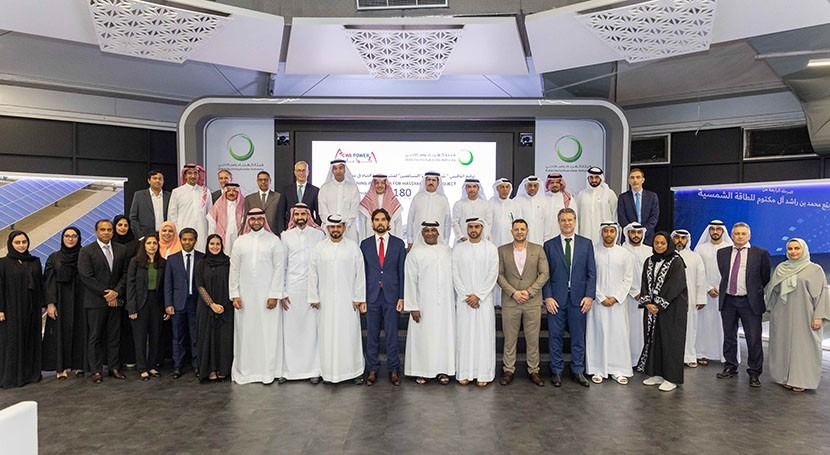
Dubai Electricity and Water Authority (DEWA), signed a 30-year water purchaser agreement with Saudi Arabia’s ACWA Power for phase 1 of the Hassyan sea water desalination project using solar power. The project is part of DEWA’s efforts to increase its water desalination capacity to 730 MIGD by 2030, from 490 MIGD at present. The project aligns with Dubai’s unparalleled economic growth and the Emirate’s thriving construction sector. This complements the Dubai 2040 Urban Master Plan, addresses the substantial population growth, and meets the steadily increasing demand for water in domestic, commercial, and other consumer sectors.
The agreement was signed by HE Saeed Mohammed Al Tayer, MD & CEO of DEWA; and Mr. Mohammad Abunayyan, Chairman and Founder of ACWA Power. Officials from both entities were present.
Last August, DEWA announced ACWA Power as the ‘Preferred Bidder’ for the construction and operation of the 180 Million Imperial Gallon per Day (MIGD) Sea Water Reverse Osmosis Hassyan Phase 1 Independent Water Producer (IWP) project, with an investment of AED 3.357 billion (USD 914 million). The allocated land area for the project is 252,300 square metres. DEWA achieved a world record by receiving the lowest bid of 0.36536 USD/m³ of desalinated water. This project is the largest of its kind in the world for water production based on Sea Water Reverse Osmosis (SWRO) technology using solar energy. It is DEWA’s first Independent Water Producer (IWP) model project. The water desalination capacity in Dubai is currently 490 MIGD. This capacity will increase to 670 MIGD in 2026 with the completion of this project.
Dubai Electricity and Water Authority (DEWA) signed a 30-year water purchaser agreement with Saudi Arabia’s ACWA Power for phase 1 of the Hassyan sea water desalination project using solar power
“We are pleased to sign the agreement with ACWA Power. This project supports the vision of His Highness Sheikh Mohammed bin Rashid Al Maktoum, Vice President and Prime Minister of the UAE and Ruler of Dubai, to enhance water supplies in Dubai from sustainable sources and achieve the Dubai Clean Energy Strategy 2050 and the Dubai Net Zero Carbon Emissions Strategy 2050 to provide 100% of Dubai’s total power capacity from clean energy sources by 2050. We are building water production plants based on Sea Water Reverse Osmosis (SWRO) technology which require less energy than Multi-Stage Flash distillation (MSF) plants, making it a more sustainable choice for water desalination. By 2030, DEWA aims to produce 100% of desalinated water by a mix of clean energy and waste heat,” said HE Saeed Mohammed Al Tayer, MD & CEO of DEWA.
HE Saeed Mohammed Al Tayer, MD & CEO of DEWA, said: “We ensure the continuation of the 100% availability of DEWA’s services according to the world’s highest levels of availability, reliability, and efficiency thanks to our state-of-the-art infrastructure and advanced technologies. This is based on innovation and sound scientific planning so that we contribute to making the UAE the world’s leading nation by its centennial in 2071.”
Mohammad A. Abunayyan, Chairman of the Board of Directors, ACWA Power, said: “This agreement between ACWA Power and DEWA is another example of the strong collaboration between ourselves and our valued partners in the United Arab Emirates. The Hassyan IWP will be the largest plant of its kind in the world, and we have set a new record for the lowest levelised water tariff. The plant will be highly efficient, desalinating water through reverse osmosis powered by solar energy. With our years of experience in the industry, ACWA Power has ambitious aims and we are proud of continually breaking records through innovation and using new technologies to enhance water security. With this project, we are reaffirming our commitment with our partners towards achieving the Dubai Clean Energy Strategy 2050.”
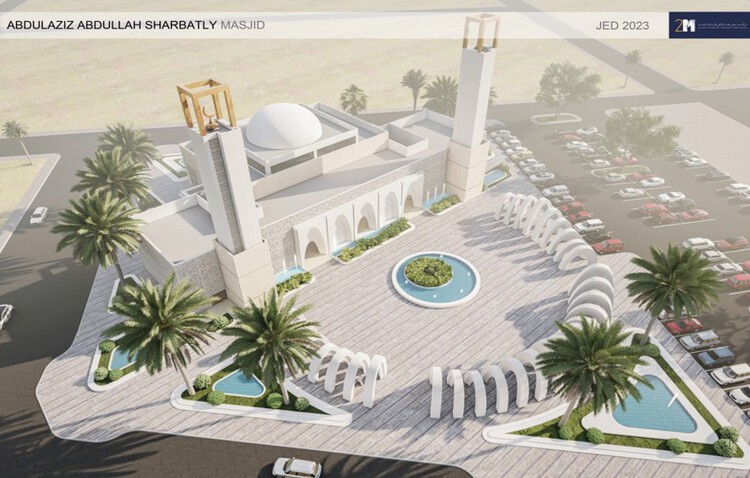
The Kingdom of Saudi Arabia is now home to the world’s first 3-D-printed mosque, spanning an area of 5,600 sqm. Located within the Al-Jawhara suburb of Jeddah, the mosque stands as a tribute to the late equestrian Abdulaziz Abdullah Sharbatly. The project by Forsan Real Estate utilizes cutting-edge 3D printing technology from Guanli.
The mosque’s construction was completed within six months and spearheaded by Wajnat Abdulwahed, the spouse of the late Abdulaziz Abdullah Sharbatly. Aimed at fostering serenity amongst worshipers while integrating natural light, the mosque also features distinctive minarets, creating a landmark within the neighborhood.
The inauguration of the mosque positions Saudi Arabia as a technological hub, surpassing the United Arab Emirates’ projected timeline for a similar endeavor. Dubai announced an initiative to construct the world’s first 3D-printed mosque last May. As a new and complex technique, the successful completion of the world’s 3D-printed religious infrastructure holds potential for the future of architecture and design.
The project has garnered global attention, showcasing the limitless possibilities of 3D printing technology in construction. In an interview with Arab News, Abdulwahed stressed the importance of “not losing the essence that mosques must embody, while also adhering to general conditions such as emphasizing the values of the King Salman Urban charter, the architectural details in the cultural heritage of Hejazi architecture and presenting them in a contemporary format.”
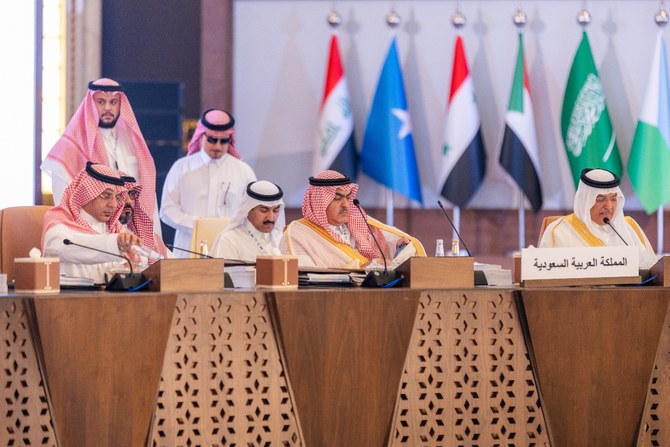
Saudi Arabia has assumed the presidency of the Executive Council of the Arab League Educational, Cultural and Scientific Organization until 2026.
The official announcement was made on Friday during the 27th session of the ALECSO, which was held in Jeddah under the presidency of Saudi Arabia. During the session, Iraq handed over the presidency to the Kingdom.
In a speech delivered on behalf of Minister of Culture Prince Badr bin Abdullah bin Farhan, Minister of Education and Chairman of the Saudi National Committee for Education, Culture and Science Yousef Al-Benyan welcomed the ministers and heads of national committees for education and science participating in the session.
Al-Benyan stressed the Kingdom’s humanitarian and fraternal support for the Gaza Strip within the framework of Arab cooperation and solidarity.
He affirmed Saudi Arabia’s support for Khalid Anan, the only Egyptian and Arab candidate for the position of director-general of the organization.
Al-Benyan concluded the speech by praising the efforts of Arab countries in supporting ALECSO, and building bridges of communication to achieve common regional goals.
Saudi Deputy Minister of Education Mohammed Al-Sudairi confirmed that holding the ALECSO meetings in Jeddah coincides with an increase in the role of Saudi national institutions to support the work of the organization.
He added that the number of Saudi initiatives exceeded 45, reflecting Saudi Arabia’s interest and belief in the importance of working with international organizations and its regional environment.
Iraqi Minister of Education Ibrahim Al-Jabouri, head of the 26th session, pointed out achievements made in the previous session, and various programs aimed at building bridges of cooperation between Arab culture and the rest of the world.
Director General of ALECSO Mohammed Ould Omar thanked King Salman and Crown Prince Mohammed bin Salman for hosting the event in Jeddah.
He presented the most prominent programs, initiatives, and projects implemented by the organization between the 26th and 27th sessions with international organizations, such as UNESCO, the work of the Arab Summit in Algeria, the Francophone Summit, the 13th Conference of Arab Ministers of Education in Rabat, and the International Conference on Adult Education, also held in Morocco.
At the end of the 27th session, ministers and heads of the Arab delegations agreed on the importance of supporting the Palestinian cause, condemning and denouncing the displacement that the Palestinian people, as well as the destruction of Palestinian antiquities.
They also addressed the importance of supporting culture, education, innovation, and science in the Arab world.
Saudi Arabia’s economy witnessed growth of 1.4 percent in the first quarter of 2024 – higher than that seen across the G20 as a whole, according to new data.
The Organisation for Economic Co-operation and Development has released its latest gross domestic product report for the G20 countries, noting that the Kingdom bounced back from a contraction of 0.6 percent in the previous three-month period.
GDP in the G20 area grew by 0.9 percent quarter-on-quarter in the first quarter of 2024, slightly up from 0.7 percent in the previous quarter.
The economic performance of the G20 area was primarily driven by China and India, with Turkiye, Korea, and Indonesia also recording higher GDP growth than the G20 average.
Turkiye led with an increase of 2.4 percent, followed by India at 1.9 percent, China at 1.6 percent, Korea at 1.3 percent, and Indonesia at 1.2 percent.
The report highlighted that while Saudi Arabia experienced a significant recovery, other G20 countries faced varying economic conditions.
The US saw a slowdown, with GDP growth dropping to 0.3 percent in the first three months of the year from 0.8 percent in the previous quarter.
Japan’s economy contracted by 0.5 percent, and South Africa saw a contraction of 0.1 percent.
Conversely, Brazil, the UK, and Germany showed signs of recovery in the first quarter of 2024 after contractions over the previous three month period, with growth reaching 0.8 percent, 0.6 percent, and 0.2 percent, respectively.
Canada, Mexico, and the EU grew by 0.4 percent, 0.3 percent, and 0.3 percent, respectively, in the three months to the end of March, after zero growth in the final quarter of 2023.
Year-on-year, GDP in the G20 area grew by 3.3 percent in the first three months of the year, maintaining the same growth rate as the previous quarter.
Among G20 economies, India recorded the highest year-on-year growth rate at 8.4 percent in the first quarter of 2024, followed by Turkiye at 7.4 percent.
However, Saudi Arabia recorded the most significant year-on-year decline at a drop of 1.5 percent.
According to a separate report by the General Authority for Statistics released earlier in June, the Kingdom’s non-oil activities also rose by 0.9 percent in the first three months of this year compared to the previous quarter.
Additionally, non-oil activities increased by 3.4 percent year-on-year in the first quarter of 2024.
GASTAT further noted that Saudi Arabia’s GDP amounted to SR1.01 trillion ($270 billion) in the first quarter.
“Crude oil and natural gas activities achieved the highest contribution to GDP by 23.4 percent, followed by government activities at 15.8 percent, and then wholesale and retail trade, restaurants, and hotels activities with a contribution of 10.4 percent,” said GASTAT in the report.
Strengthening the non-oil private sector is crucial for Saudi Arabia, as the Kingdom is steadily diversifying its economy to reduce its decades-long dependence on oil.
The report further noted that government activities in Saudi Arabia rose by 2 percent year-on-year in the first quarter while declining by 1.1 percent on a quarter-on-quarter basis.
GASTAT added that the Kingdom’s oil activities increased by 1.7 percent in the first quarter compared to the previous quarter.
However, oil activities dipped by 11.2 percent year-on-year as Saudi Arabia reduced its crude production in line with the decision of the Organization of the Petroleum Exporting Countries and its allies, collectively known as OPEC+.
To maintain market stability, Saudi Arabia reduced its oil output by 500,000 barrels per day in April 2023, and this cut has now been extended until December 2024.
In April, the International Monetary Fund projected that Saudi Arabia’s economy would grow by 2.6 percent in 2024 and 6 percent in 2025.
In the same month, the World Bank also raised the growth prospects of the Kingdom’s economy to 5.9 percent in 2025, up from an earlier projection of 4.2 percent.
Furthermore, Saudi Arabia’s gross fixed capital formation surged to SR317.5 billion in the first quarter of 2024, marking a significant 7.9 percent increase compared to the same period last year.
According to a separate report by the Saudi Ministry of Investment released earlier this month, gross fixed capital formation expansion was driven by growth in both the government and non-government sectors.
GFCF, which represents the net increase in physical assets within an economy, plays a crucial role in gross domestic product as it reflects capital accumulation supporting future production capabilities and economic growth.
Of the total GFCF, the government sector contributed 7 percent, experiencing a robust growth rate of 18 percent. Meanwhile, the non-government sector, constituting 93 percent, also saw a substantial rise of 7.2 percent.
Saudi Arabia’s proactive efforts to attract foreign direct investment and bolster bilateral relations have significantly strengthened the Kingdom’s economic trajectory.
FDI serves as a pivotal catalyst for GFCF development, facilitating funding for investment projects and resource and knowledge transfer across borders, thereby fostering economic expansion and maturation.
Key initiatives such as the National Investment Strategy, the Regional Headquarters Program, and zero-income tax incentives for foreign entities play a vital role in advancing Vision 2030, which aims to diversify and expand the economy.
During this quarter, the Ministry of Investment issued 3,157 investment licenses, marking a 93 percent surge compared to the same period last year, excluding licenses issued under the anti-concealment law.
In its economic and investment monitor released in late May, the ministry revealed that the construction and manufacturing sector dominated with 47 percent of total permits, followed by vocational and educational activities, information and communication technology and accommodation and food services as well as wholesale and retail trade.
The real estate sector witnessed the most significant year-on-year growth, with a staggering 253.3 percent increase in investment licenses.
Furthermore, 127 international firms secured permits to relocate their regional headquarters to Saudi Arabia in the first quarter of 2024, reflecting a remarkable 477 percent year-on-year upsurge.
Leading corporations such as Google, Microsoft and Amazon as well as Northern Trust, Bechtel, IHG Hotels & Resorts, and Deloitte have established operations in the Kingdom under this program.
The report also highlights that Saudi Arabia processed 445 applications for investor visit visas during the first quarter of this year, enabling overseas businesspersons to explore opportunities in the country.
source/content: arabnews.com (headline edited)
___________
The report highlighted that while Saudi Arabia experienced a significant recovery, other G20 countries faced varying economic conditions. Shutterstock
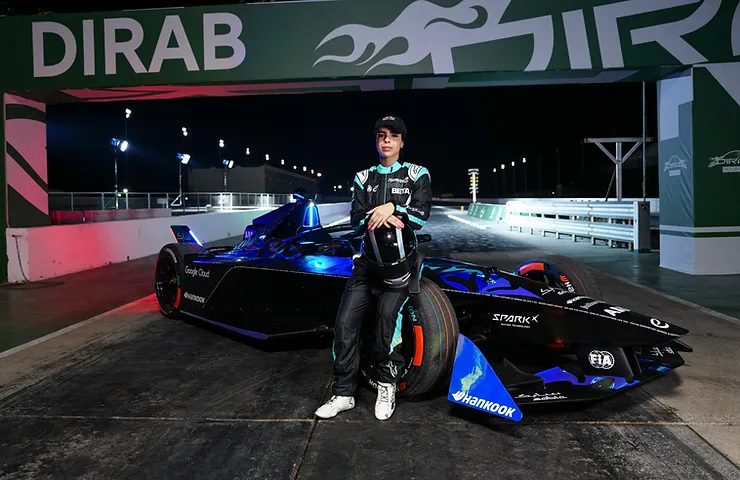
This January, Saudi racer Reem Al Aboud set a new acceleration benchmark for an FIA single-seater by reaching 0-60mph in 2.49 seconds in an ABB FIA Formula E GENBETA car. Ahead of International Women’s Day, we reflect on the implications of this achievement for motorsport.
Every Federation Internationale de l’Automobile-sanctioned single-seater championship race begins with a standing start. The lights at the starting line flash on, and flash off. Idle cars roar to life, accelerating through the straight and into the waiting corner.
How quickly these cars can accelerate depends on the series. F1 Academy goes from zero to 60mph in approximately 3.6 seconds. Formula 3 and Formula 2 manage in 3.1 and 2.9, respectively. Formula E’s GEN3 car takes 2.8. The current Formula 1 car takes 2.64.
But F1’s 2.64 seconds is no longer the benchmark. Now, Formula E’s newly developed GENBETA car holds the title — and with a woman in the cockpit.
Last July, Formula E unveiled its GENBETA prototype at the ExCeL London. While testing the car, World Champion Jake Hughes clinched a top speed of 218.71km/h, smashing the Guinness World Record for fastest speed indoors by more than 50km/h.
Having designated GENBETA as its development platform, Formula E sought to explore the model’s potential and performance further. The series set its sights on setting a second benchmark: the time an FIA single-seater takes to reach 0-60mph.
Yet in chasing after the F1 benchmark, Formula E was not content with breaking only technological and physical barriers. So, to honour its founding commitment to social progress, it added motorsport’s longstanding gender barrier as yet another to break.
Accordingly, Formula E tapped 23-year-old Saudi female racer Reem Al Aboud to take the GENBETA’s driver seat. The 2023 Saudi Toyota Ladies Cup Champion has partnered with the series since 2018, when she became the first Saudi woman to test a Formula E car.
Experienced in driving GEN2 and GEN3 cars — plus breaking barriers across karting, hillclimbing and autocross series — Reem was Formula E’s choice for a 2024 FIA Girls on Track Ambassador. Naturally, she was their choice for the GENBETA test as well.
And that choice certainly paid off. This January at Dirab Motor Park, Reem’s GENBETA car achieved 0-60mph in 2.49 seconds — besting F1’s by 0.15 seconds.
Of course, the technological aspect of the January test is remarkable. Behind GENBETA’s new benchmark is its front powertrain kit, which previous Formula E models (and other road electric vehicles) only use for energy harvesting. However, GENBETA also turns on this kit for greater traction during acceleration, using it to produce 536 horsepower that will launch the car into action. Instant torque allows for instant acceleration and thus a 2.49-second 0-60mph time.
What’s also remarkable is that a woman is the face of this test.
After all, motorsport’s gender barrier is cyclical. Doubt that female drivers can perform on par with their male counterparts dominates the sport. Doubtful investors shy away from funding young female drivers. Underfunded female drivers can’t enter, remain and progress through racing series. Series sorely lack female representation — when representation is what validates the reality that women can indeed perform. That lack of validation perpetuates the doubt about female drivers. And so, the cycle continues.
But Reem’s benchmark throws a wrench into this cycle by tackling the doubt head-on. She reaffirms that when women are given the time on track they are so often denied, they can excel. That when women are included in the conversation, they can contribute to the technological developments that push this sport forward. That when this sport values women, women can bring equal — if not more — value to the sport in turn.
As the face of this test, Reem represents the generations of women who have been denied from motorsport on the basis of their gender. Of women who challenge prejudice in cockpits, paddocks and audiences. Of girls who see Reem on their screens and wonder if they, too, can wrestle state-of-the-art cars at inhuman speeds.
Reem breaks the cycle by showing them that they can, and that they should.
In doing so, she and Formula E bring motorsport a step closer to a new era. One where women are no longer the exception, but the standard.
An awards ceremony hosted by the King Salman Global Academy for Arabic Language honored the top three teams in the event
Event aims to enhance the dictionary with innovative applications and new ideas
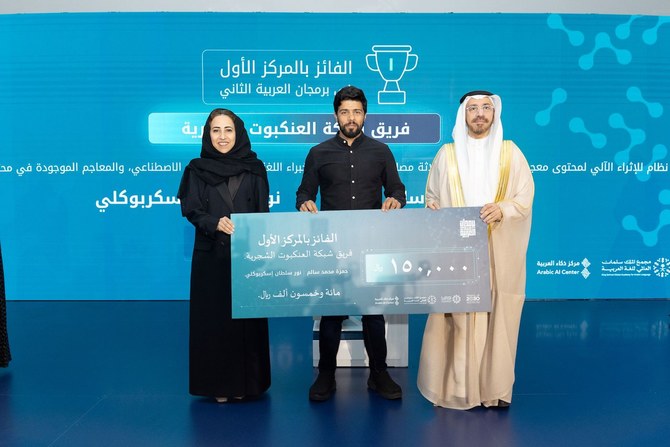
Russian team Spiderweb Network has won first place in the second Arabic Hackathon, scooping a prize of SR150,000 ($39,994) for their innovative idea.
Their project proposed an automatic enrichment system for the “Riyadh Dictionary” using three knowledge sources — the Arabic language expert community, artificial intelligence, and dictionaries found on the web.
An awards ceremony hosted by the King Salman Global Academy for Arabic Language honored the top three teams in the event, which aims to enhance the dictionary with innovative applications and new ideas.
This global technical challenge is aimed at individuals and organizations with technical and linguistic skills from all over the world. Teams develop innovative technical solutions and digital platforms for automatic Arabic language processing to enhance its status among the world’s living languages.
Second place went to the Pioneers of Intelligence, a joint Algerian-French team who received SR100,000. Their project focused on using AI to provide terms and definitions from specialized fields in a fast and effective way, with the possibility of creating specialized lexicons such as the “Riyadh Medical Dictionary.”
The Saudi-Egyptian Arabic Examples team took third place and a prize of SR50,000 with their idea for an AI system that provides appropriate examples for the meaning of each word.
The second edition of the challenge saw a total of 546 participants, 57 percent of whom were female and 43 percent male, representing 30 countries in 142 competing teams.
Abdullah Al-Washmi, Secretary-General of the King Salman Global Academy for Arabic Language, highlighted the establishment’s commitment to promoting the use of the Arabic language and launching supportive initiatives.
The closing ceremony was accompanied by activities such as an exhibition by the Arabic Intelligence Center, which was launched in April and specializes in automated Arabic language processing.
The center includes several initiatives, such as: the “Suwar” platform for digital dictionaries, “Falak” for digital corpora, and the Riyadh Dictionary for Contemporary Arabic Language.
Al-Washmi said the center represented a significant leap in the digital transformation of Arabic language services by developing technologies that aided its use, analysis, understanding, and production.
source/content: arabnews.com (headline edited)
__________
The Russian team won first place in the Arabic Hackathon challenge, which concluded in Riyadh on Thursday (June 6). / Russian team Spiderweb Network has won first place in the second Arabic Hackathon, scooping a prize of SR150,000 for their innovative idea. (KSGAFAL)