TUNISIA : Ibn Khaldoun — The Greatest Tunisian Historian & Social Scientist

Ibn Khaldoun, in full Abou Zeid Abdelrahman Ibn Mohammed Ibn Khaldoun Al-Hadrami, was born in May 27, 1332, Tunis, Tunisia — died March 17, 1406, in Cairo, Egypt. He is the greatest Arab historian and social scientist. Ibn Khaldoun has been described as the founder of the modern disciplines of historiography, sociology, economics, and demography.

He who finds a new path is a pathfinder, even if the trail has to be found again by others; and he who walks far ahead of his contemporaries is a leader, even though centuries pass before he is recognized as such.

Ibn Khaldoun.

Who is Ibn Khaldoun?

Multiple sources, such as Niccolò Machiavelli of the Renaissance and the 19th-century European scholars widely acknowledged the significance of his achievements and considered Ibn Khaldoun to be one of the greatest philosophers of the Middle Ages.

He is actually the one who developed one of the earliest nonreligious philosophies of history, contained in his masterpiece, the Muqaddimah (“Introduction”). He also wrote a definitive history of Muslim North Africa.

The past resembles the future more than one drop of water resembles another. Ibn Khaldoun

The easiest method of acquiring the habit of scholarship is through acquiring the ability to express oneself clearly in discussing and disputing scholarly problems. This is what clarifies their import and makes them understandable. Some students spend most of their lives attending scholarly sessions. Still, one finds them silent. They do not talk and do not discuss matters. More than is necessary, they are concerned with memorizing. Thus, they do not obtain much of a habit in the practice of scholarship and scholarly instruction

Ibn Khaldoun.

Ibn Khaldoun — Early Life

Ibn-Khaldoun was born in Tunis, Tunisia in 1332; the house where he believed to have been born is in the Khaldounia, a quarter in Tunis that still stands almost unchanged and well-preserved.

In his autobiography, Ibn Khaldoun mentioned that the family claimed descent from Khaldoun, who was of South Arabian origin, and had come to Spain in the early years of the Arab conquest. The family then moved to Sevilla, played an important part in the civil wars of the 9th century, and was long considered among the three leading families of that city.

During the following 4 centuries, the Ibn-Khaldouns successively held high administrative and political positions under the Umayyad, Almoravid, and Almohad dynasties; other members of the family served in the army, and several were killed at wars, mostly at the Battle of Al-Zallaqah (1086), which temporarily halted the Christian reconquest of Spain. But the respite thus won proved short, and in 1248, just before the fall of Sevilla and Córdoba, the Ibn-Khaldouns and many of their countrymen judged it prudent to cross the Straits of Gibraltar and landed at Sabtah (now Ceuta, a Spanish exclave), on the northern coast of Morocco.

Ove there, the refugees that came in from Spain were of a much higher level of socio-economic status than the local North Africans, and the Khaldoun family was soon called to occupy the leading administrative positions in Tunis. The Ibn Khaldoun’s father also became an administrator and soldier but soon abandoned his career to devote himself to the study of theology, law, and letters. In Ibn Khaldoun’s words:

He was outstanding in his knowledge of Arabic and had an understanding of poetry in its different forms and I can well remember how the men of letters sought his opinion in matters of dispute and submitted their works to him.

Ibn Khaldoun.

In 1349, however, the Black Death struck Tunis and took away both his parents.

Ibn Khaldoun — Education & Career

Ibn Khaldoun gives a detailed recap of his education, listing the main books he read and describing the life and works of his teachers. He memorized the Quran, studied its principal commentaries, had a good grounding in Muslim law, familiarized himself with the masterpieces of Arabic literature, and acquired a clear style for writing fluent verse that was to serve him well in later life when addressing eulogistic or supplicatory poems to several rulers back then.

At age 20, when he was given a post at the court of Tunis, followed 3 years later by a secretaryship to the Sultan of Morocco in Fes. By then he got married. After two years of service, however, he was suspected of participation in a rebellion and was imprisoned. Released after nearly two years and promoted by a new ruler, he again fell into disfavor, decided to leave Morocco, and crossed over to Granada, for whose Muslim ruler he had done some service in Fes and whose prime minister, the brilliant writer Ibn al-Khaṭib, was a good friend. Ibn Khaldoun was then 32 years old.

The following year Ibn Khaldoun was sent to Sevilla, Spain to conclude a peace treaty with Pedro I of Castile. There he saw “the monuments of my ancestors.” Pedro “treated me with the utmost generosity, expressed his satisfaction at my presence and showed awareness of the preeminence of our ancestors in Sevilla.” Pedro even offered him a post in his service, promising to restore his ancestral estates, but Ibn Khaldoun politely declined. He gladly accepted the village that the sultan of Granada bestowed on him, however, and, feeling once more secure, brought over his family, whom he had left in safety in Constantine.

But, to quote him once more, “enemies and intriguers” turned the all-powerful prime minister, Ibn al-Khaṭib, against him and raised suspicions regarding his loyalty; it can be conjectured that the task of these enemies must have been greatly facilitated by the apparent jealousy between the two most brilliant Arab intellectuals of the age. Once more, Ibn Khaldoun found it necessary to take his leave, and he returned to Africa. The following 10 years saw him change employers and employment with disconcerting rapidity and move from Bejaïa to Tlemcen, Biskra, Fes, and once more to Granada, where he made an unsuccessful effort to save his old rival and friend, Ibn al-Khaṭib, from being killed by order of its ruler.

During this period Ibn Khaldoun served as prime minister and in several other administrative capacities, led a punitive expedition, was robbed and stripped by nomads, and spent some time “studying and teaching.” This extreme mobility is partly explained by the instability of the times. The Almohad Empire, which had embraced the whole of North Africa and Muslim Spain, had broken down in the middle of the 13th century, and the convulsive process from which Morocco, Algeria, and Tunisia were subsequently to emerge was under way; wars, rebellions, and intrigues were endemic, and no man’s life or employment was secure. But in Ibn Khaldoun’s case two additional factors might be suspected—a certain restlessness and a capacity to make enemies, which may account for his constant complaints about the “intriguers” who turned his employers against him.

The Muqaddimah of Ibn Khaldoun

In 1375, craving solitude from the exhausting business of politics, Ibn Khaldoun sought refugee in Algeria for about four years, “free from all preoccupations,” and wrote his massive masterpiece, the Muqaddimah, an introduction to history.

His original intention, which he subsequently achieved, was to write a universal history of the Arabs and Berbers, but before doing so he judged it necessary to discuss historical method, with the aim of providing the criteria necessary for distinguishing historical truth from error. This led him to formulate what the 20th-century English historian Arnold Toynbee has described as “a philosophy of history which is undoubtedly the greatest work of its kind that has ever yet been created by any mind in any time or place,” a statement that goes even beyond the earlier eulogy by Robert Flint:

As a theorist on history he had no equal in any age or country until Vico appeared, more than three hundred years later. Plato, Aristotle and Augustine were not his peers . . . .Robert Flint.

Ibn Khaldoun went even further with the Muqaddimah. His study of the nature of society and social change led him to evolve what he clearly saw was a new sciences, such as for example what he called “the science of culture” and which he defined thus:

This science . . . has its own subject, viz., human society, and its own problems, viz., the social transformations that succeed each other in the nature of society. Ibn Khaldoun.

Obviously, for Ibn Khaldoun, history was an endless cycle of flowering and decay, with no evolution or progress except for that from primitive to civilized society. But, in brief descriptions of his own age, which have not received as much attention as they deserve, he showed that he could both visualize the existence of sharp turning points in history and recognize that he was witnessing one of them: “When there is a general change of conditions . . . as if it were a new and repeated creation, a world brought into existence anew.” The main cause he gives for this great change is the Black Death, with its profound effect on Muslim society, but he was fully aware of the impact of the Mongol invasions, and he may also have been impressed by the development of Europe, the merchants and ships of which thronged the seaports of North Africa and some of the soldiers of which served as mercenaries in the Muslim armies.

Ibn Khaldoun’s Journey to Egypt

After have completed the first draft of the Muqaddimah, nostalgia for the more active world of politics, drew him back to seek city life. A severe illness finally convinced him to leave his refuge; he secured permission to return to Tunis, where he “engaged exclusively in scholarly work,” completing much of his history. But once more he aroused both the jealousy of a prominent scholar and the suspicion of the ruler, and in 1382, at age 50, he received permission to sail to Egypt, ostensibly for the purpose of performing the pilgrimage to Mecca.

After 40 days Ibn Khaldoun landed in Alexandria and shortly afterward was in Cairo, then, as now, by far the largest and most opulent city in the Arab world. Its impact on him was profound: “I saw the metropolis of the ear, the garden of the world, the gathering place of the nations . . . the palace of Islam, the seat of dominion . . . .” His curiosity about Cairo was evidently of long duration, for he quotes the replies several eminent North Africans had made to his enquiries on their return from that city, including: “He who has not seen it does not know the power of Islam.”

Within a few days “scholars thronged on me, seeking profit in spite of the scarcity of merchandise and would not accept my excuses, so I started teaching at Al-Azhar,” the famous Islamic university. Shortly afterward, the new Mamluk ruler of Egypt, Barquq, with whom he was to remain on good terms except for one or two brief periods of misunderstanding, appointed him to a professorship of jurisprudence at the Quamḥiyyah college and, within five months, made him chief judge of the Mālikī rite, one of the four recognized rites of Sunnite Islam. Barqūq also successfully interceded with the ruler of Tunis to allow Ibn Khaldoun’s family to rejoin him, but the ship carrying them foundered in the port of Alexandria, drowning all on board.

Significance

Ibn Khaldount did make a big impact and he was, as described by many sources, such as Niccolò Machiavelli of the Renaissance and the 19th-century European scholars, to be one of the greatest philosophers of the Middle Ages. Indeed, it is perhaps not too fanciful to attribute to Ibn Khaldun’s influence the remarkable revival of historical writing in 15th-century Egypt and North Africa.

Later, several distinguished 16th- and 17th-century Ottoman scholars and statesmen took a keen interest in Ibn Khaldoun’s work, and a partial translation of the Muqaddimah into Turkish was made in the 18th century. But it was only after the 1860s, when a complete French translation of the Muqaddimah appeared, that Ibn Khaldun found the worldwide audience his incomparable genius deserved.

source/content: carthagemagazine.com (headline edited)

_______________

Bust of Tunisian historian and social scientist Ibn Khaldoun in the entrance of the Kasbah of Bejaia, Algeria. Photo by Reda Kerbouche.

____________

TUNISIA
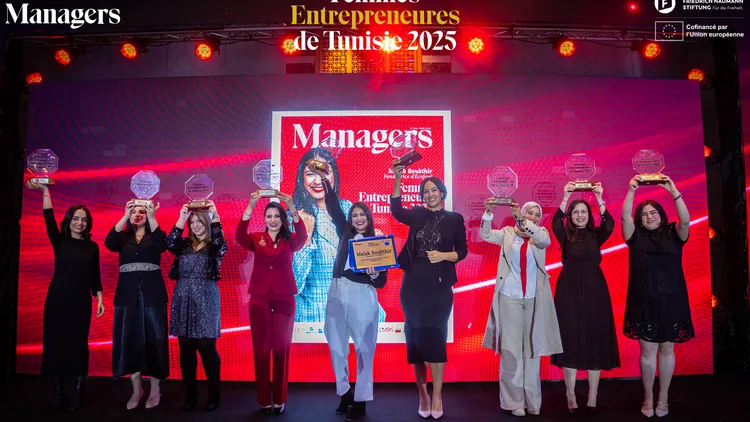
TUNISIAN Women Entrepreneurs Honored for Innovation and Impact at the 10th FET Awards

Tunisian Women Entrepreneurs Honored for Innovation and Impact at the 10th FET Awards

On February , 2025, the 10th edition of the Trophées de Femmes Entrepreneures de Tunisie (FET) honored nine outstanding Tunisian women entrepreneurs for their innovation, resilience, and the impact of their ventures. Organized by Managers magazine in collaboration with the Delegation of the European Union and the Friedrich Naumann Foundation for Freedom, the event brought together a distinguished audience, including ministers Asma Jabri (Family, Women, Children, and Seniors), Fatma Thabet Chiboub (Industry, Mines, and Energy), and Jihene Srioui (Financing and Partnerships, Ministry of Employment and Vocational Training).

In her opening speech, Sahar Mechri, Executive Director of Managers, emphasized that the FET Awards are more than a celebration, they are a validation of bold journeys and a source of inspiration for future generations of women leaders.

Spotlight on the 2025 Woman Entrepreneur of the Year

Malak Boukthir, founder of Ecofeed, was named Tunisian Woman Entrepreneur of the Year 2025 for her groundbreaking project that transforms crab waste into sustainable animal feed a powerful example of eco-innovation.

Other Honorees Included:

  • Teycyr Chtioui (Chkarty) – EU Inclusivity Award
  • Hadhami Rjiba (Relead) – UIB Tech Impact Award
  • Mejda Khaled (Agaruw) – BYD Sustainability Award
  • Sonia Amiri (Oléa Amiri) – CDC Agribusiness Award
  • Ibtihel Ben Hadj Mbarek (Herbalya Natural Care) – PGH Industrial Excellence Award
  • Asma Daoudi (Lihaf Home) – MAE Heritage Award
  • Imen Bakhti (La Seine) – Microcred Empowerment Award
  • Fatma Midani (Soul & Planet) – Meninx Marketplaces Award

Beyond Recognition: Support for Growth

Along with financial prizes from sponsors, the winners will benefit from a tailored mentorship program offered by the Club des Femmes Entrepreneures de Tunisie. Thanks to the support of the European Union Delegation, they will also receive personalized guidance through various EU-funded projects, including Adapt, Greenov’i, CQE (Qualitative Growth for Employment), Insadder, and Initiative Tunisie.

The FET Awards go beyond accolades, they celebrate a thriving community of women entrepreneurs driving Tunisia’s social and economic development. By highlighting their stories and successes, the event strengthens the spirit of sorority and underscores the transformative power of female entrepreneurship in Tunisia.

source/content: freiheit.org /Friedrich Naumann Foundation (headline edited)

______________

Tunisian Women Entrepreneurs Honored for Innovation and Impact at the 10th FET Awards

____________

TUNISIA

TUNISIA : IDRC-supported Tunisian scientist Emna Harigua wins top award for AI innovation in health

Tunisian scientist Emna Harigua receives national recognition for her AI-powered drug discovery platform.

Tunisian researcher Emna Harigua has been honoured with Tunisia’s 2025 Best Female Scientific Achievement Prize for her innovative drug discovery work powered by artificial intelligence (AI).

In recognition of women’s essential contributions to science and innovation, Harigua, who holds a doctorate in biomathematics, bioinformatics and computational biology, was awarded the prestigious prize by Tunisia’s Ministry of Family, Women, Children and Seniors as part of the celebrations for the country’s National Women’s Day, observed on August 13. Her achievements include leading research in AI-powered drug discovery through a national node in the Global South AI for Pandemic and Epidemic Preparedness and Response Network, a global initiative supported by IDRC and the United Kingdom’s Foreign, Commonwealth and Development Office. 

Harigua, a scientist at the Institut Pasteur de Tunis, Tunisia, and principal investigator of the BIND project (Bioinformatics and Artificial Intelligence for Infectious Diseases), is leading an AI-powered platform that accelerates research against some of the world’s most persistent infectious agents that pose health risks. 

Her research targets neglected tropical diseases such as leishmaniasis and malaria, combining bioinformatics, AI and experimental validation to shorten the drug discovery timeline and reduce costs. The BIND project has already identified nine novel anti-Leishmania drug candidates, with three now in pre-clinical validation. In addition, the team launched CidalsDB, an open-access AI platform for drug identification, marking a step forward in global efforts toward open science and collaborative health research.   

“This award is not just a personal milestone — it’s a recognition of the potential of African-led science to tackle global health challenges,” said Harigua. 

Beyond her lab, Harigua is a strong advocate for building Africa’s capacity in computer-aided drug discovery and ensuring that cutting-edge technologies serve the health needs of African communities. Her work — presented recently at the International Science Council during a workshop held in Nairobi, Kenya, on the impact of emerging technologies on science systems — underscores a vision where innovation, collaboration and inclusion drive the future of medical research. 

source/contents; idrc.crdi.ca (Intl Develop Research Centre, Canada) – (headline edited)

_______________

Fourat Thamine, Institut Pasteur Tunisia./

_______________

TUNISIA

TUNIS : From Ocean to Gulf: Heritage Music of The Arab World – Music and Culture in Tunis (Dawn of 20th Century to Independence)

‘From Ocean to Gulf: Heritage Music of the Arab World’ is a series by Ahram Online, in partnership with the AMAR Foundation (Foundation for Arab Music Archiving and Research). In this article, we present the music of the city of Tunis from the dawn of the 20th century till the years of independence.

After featuring the Sultana of Tarab Musicthe Prince of Arabic Violinthe Master of Buzuq, Hajja Zeinab El Mansouria, the rich music of  Happy Yemen (8th Century BC-19th Century AD), Happy Yemen in the 20th Century, and Songs of Satire; the history of Tunisian music in the 20th century emerges as a complex blend of Ottoman, African, European, and Arab Middle Eastern influences—shaping the country’s rich contemporary cultural identity in music and beyond.

Many Tunisians rightly endorse this multi-cultural identity. Its variations are reflected across Tunisia’s different regions, echoing the visionary observations of the great Arab historian Ibn Khaldoun (1332–1406), himself born in the country centuries ago.

This multilayered landscape of cultural expressions is associated with social and religious practices and at different instances combines music, dances and classical and colloquial poetry.

Furthermore, it is geographically configured by the plains, the Atlas mountains, and the Mediterranean sea, and forms a continuity beyond political borders with Libya to the southeast, Algeria to the west, and sub-Saharan Africa to the south.

‘A living mosaic’

To Tunisian singer Ghalia Ben Ali, Tunisian music is a living mosaic shaped by centuries of cultural blending and conquests, yet always anchored in the people’s voices.

“I was inspired by the Amazigh music of South Tunisia, for it’s alive. When I was young, helping my mother do house chores, we used to sing. Young girls would create new wedding songs or songs about our daily lives; there were no newspapers or films to talk about this, “she said.

Moufadhel Adhoum, a Tunisian composer and oud player, showcases the diverse music of Tunis City, as well as the North, Mid, and South of Tunisia:

Ma’luf music is of Andalusian origins. As for Mezwed music, it incorporates a bagpipe-type instrument that shares the same name as the genre, accompanied by a darbuka or similar percussion instruments. However, El Kef Governorate, in northwestern Tunisia, bordering Algeria, has its own repertoire of songs inspired by the region’s customs and traditions, as well as the slopes of the Atlas range.

In the South, El Forja music consists of songs associated with weddings and occasions, whereas Stambeli represents an African dimension of Tunisian spiritual music. As for the Sufi practices, they include El-Ziyara music, chants that accompany visits to Shrines.

However, Shaabi music is a blend of Berber (Amazigh), Arabic, and African, influenced by the region’s natural setting, the desert and camel rhythms. It expresses sentiments about love and historic events. Instrumental genres are also present in Tunisia and feature instruments such as oud, rababa, and nai.  

Crossroads
 

Tunisia has consistently been positioned at the “crossroads of the Islamic and European worlds” throughout various historical periods, as noted by historian Kenneth J. Perkins.

In the latter part of the 19th century, these dynamics paved the way for the interaction of the dominant political, economic and military forces at that time, namely Ottoman rule and European powers.

Under the leadership of the Husainid dynasty (1705-1957), Western-inspired reforms based on the Ottoman Tanzimat were introduced during the Ottoman administration. 

Additionally, cultural connections were enhanced with countries such as France, Great Britain, and Italy, alongside other Ottoman states and the Maghreb on a different level.

Colonial cultural dominance

In 1837, a military music academy was founded in Bardo, west of Tunis city, which was succeeded by a symphonic orchestra in 1872.

Communities from these nations living in Tunisia introduced their cultures.

They initiated a significant cultural shift in local music practices, shaped by these nations’ various traditions, which later gained another layer with the establishment of a French protectorate over Tunisia in 1881.

New legislation was implemented to restrict traditional musical traditions among Tunisians, favouring and prioritising the European communities in Tunisia, according to researcher Alla El Kahla. 

Francophone culture became a defining force in Tunisian society, with the capital developing into a cosmopolitan centre that saw the establishment of key institutions, including the National Archives (1874), the National Library (1885), and a network of museums across the country.

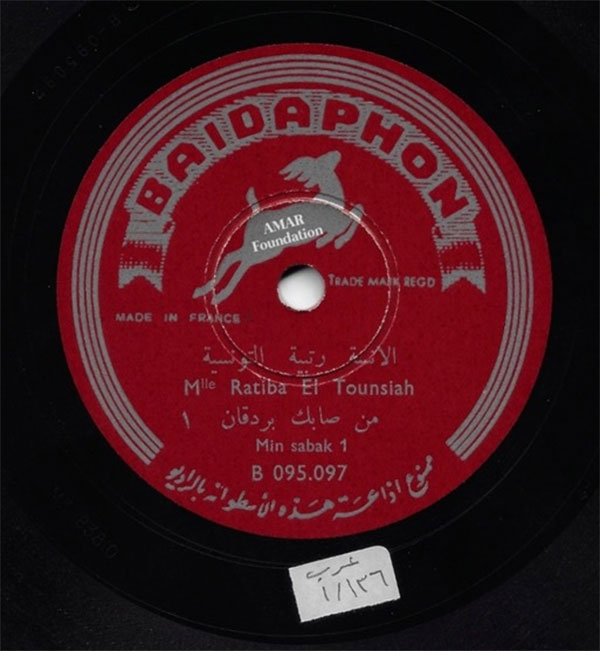
Simultaneously, traditional regional arts faced scrutiny regarding their worth, societal standing, and performance settings, as noted by the researcher Ruth Davis. Meanwhile, commercial recording began in Tunisia in 1904, coinciding with its development in Europe, where European brands dominated the market ahead of local or Arab brand names such as Baidaphon.

The foreign brands consisted of Pathé (France), Gramophone (England) through its French brand Zonophone, and Odéon’s French subsidiary (Germany). More about these record companies is available through AMAR’s podcasts and Bernard Moussali’s book, Le Congrès du Caire de 1932 (edited by J. Lambert: chap IV). Local record labels followed in 1930, such as Bembarophone.

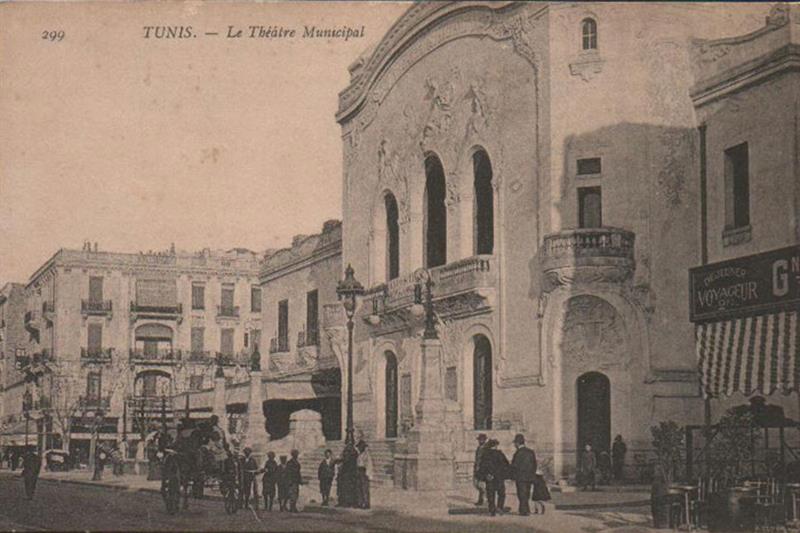
A music school rooted in European traditions was founded in 1897, which subsequently became the Conservatoire National de Tunis after the nation gained independence in 1956. The musical life witnessed the emergence of orchestras and venues such as café halls and theatres that hosted European musicians, dancers, and actors performing mainly for foreign audiences. These performances eventually attracted Tunisian artists and audiences to music and theatre.

The Egyptian influence
 

The emergence of theatre groups from Egypt, including the Egyptian Comedy (Al-Comedia Al-Masryia), the Egyptian Troupe (Al-JawqAl-Maṣri) directed by Suleiman El-Qardahi, and Ibrahim Higazi’s troupe (1908 and 1909), came a few years later. Additionally, the Salama Higazi troupe introduced musical theatre to the Tunisian theatre scene in 1913.

These initial encounters sparked the foundational growth of Tunisian theatre. They brought the Arabic language and themes drawn from Arab history and heritage to established spaces that European traditions of music, opera, and theatre had previously dominated. Cultural exchanges from Egypt to Tunisia included screenings of early Egyptian cinema and visits by rising stars such as the Naguib Rihani Troupe (1933), followed two years later by a solo tour from his collaborator Badia Masabni with leading vocalist Nadra.

Other prominent figures, including George Abiad, Zaki Talimat, and Youssef Wehbe, also performed in Tunisia, as documented by Dr. Sayyid Ali Ismael in his study of Tunisian-Egyptian theatrical ties (1889–1962).

The author of the study traces these encounters back to the 1889 Paris Expo, when troupes from Egypt, Tunisia, Algeria, and Morocco shared the stage within the curated “Cairo Street” venue and presented their folk arts. The credit goes to these international expos for the oldest recordings of Tunisian music, notably the 1900 Paris Expo.

It was not long before a Tunisian-Egyptian troupe (Sodq Al-Ekhaa) was created in 1909, subsequently substituted by two Tunisian troupes, Literary Pride (Al-Shahama Al-Adabiyya) and Literary Arts (Al-Adāb), respectively in 1910 and 1911.

Other troupes followed their track across the country. While Al-Adāb expressed opposition to France, Al-Shahama Al-Adabiyya put forth no political agenda. One of the pioneering female names in theatre and music was Habiba Msika (1903-1930), who rapidly rose to stardom in theatres and café halls. Musicians integrated Western and Egyptian elements and practices, with the socio-cultural and political centrality of Egypt at that time.

Egyptian reference points sustained until different perceptions of authenticity grew in succeeding decades, as indicated by the researcher Salvatore Morra, who worked closely on the concepts of authenticity and modernisation in Tunisia.

Revival initiatives looked critically at possible local and regional relevant contexts of Tunisian heritage and identity beyond Egyptian aesthetic idioms and Western influences. Furthermore, the scholar Anas Ghrab points out three mechanisms that significantly transformed the musical aesthetics of traditional Tunisian art music. These include a rise in the number of musicians, the implementation of notation, and the incorporation of new instruments.

source/content: english.ahram.org.eg (headline edited)

___________

____________

TUNIS

TUNISIA : From waste to wealth: How this Tunisian startup is turning olive residue into clean energy

Entrepreneur Yassine Khelifi is hoping to redirect agricultural waste into alternative energy sources to help ease the burden in Tunisia.

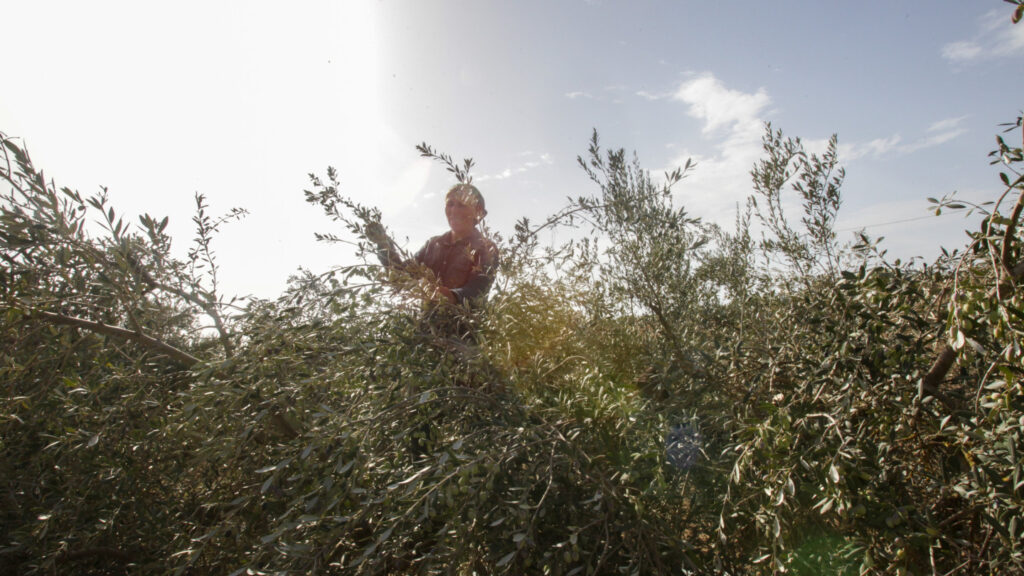
In a northern Tunisian olive grove, Yassine Khelifi’s small workshop hums as a large machine turns olive waste into a valuable energy source in a country heavily reliant on imported fuel.

Holding a handful of compacted olive residue — a thick paste left over from oil extraction — Khelifi said: “This is what we need today. How can we turn something worthless into wealth?”

For generations, rural households in Tunisia have burned olive waste for cooking and heating or used it as animal feed.

The International Olive Council estimated Tunisia will be the world’s third-largest olive oil producer in 2024-2025, with an expected yield of 340,000 tonnes. The waste generated by the oil extraction is staggering.

Khelifi, an engineer who grew up in a family of farmers, founded Bioheat in 2022 to tackle the issue. He recalled watching workers in olive mills use the olive residue as fuel.

“I always wondered how this material could burn for so long without going out,” he said. “That’s when I asked myself: ‘Why not turn it into energy?'”

Beyond profit, Khelifi hopes his startup helps “reduce the use of firewood as the country faces deforestation and climate change”.

Employees transport truckloads of olive waste at his workshop, stacking it high before feeding it into the processing machines.

The material is then compacted into cylindrical briquettes and left to dry for a month under the sun and in greenhouses before being packaged and sold.

The soul of olives 

Khelifi began developing his idea in 2018 after he travelled across Europe searching for a machine to turn the olive paste into long-burning fuel.

Unable to find the right technology, he returned to Tunisia and spent four years experimenting with various motors and mechanical parts.

By 2021, he had developed a machine that produced briquettes with just eight percent moisture.

He said this amount significantly reduces carbon emissions compared to firewood, which requires months of drying and often retains more than double the amount of moisture.

Bioheat found a market among Tunisian restaurants, guesthouses, and schools in underdeveloped regions, where winter temperatures at times drop below freezing.

But the majority of its production — about 60 percent — is set for exports to France and Canada, Khelifi said.

The company now employs 10 people and is targeting production of 600 tonnes of briquettes in 2025, he added.

Selim Sahli, 40, who runs a guesthouse, said he replaced traditional firewood with Khelifi’s briquettes for heating and cooking.

“It’s an eco-friendly and cost-effective alternative,” he said. “It’s clean, easy to use, and has reduced my heating costs by a third.”

Mohamed Harrar, the owner of a pizza shop on the outskirts of Tunis, praised the briquettes for reducing smoke emissions, which he said previously irritated his neighbours.

“Besides, this waste carries the soul of Tunisian olives and gives the pizza a special flavour,” he added.

‘Protect the environment’ 

Given Tunisia’s significant olive oil production, waste byproducts pose both a challenge and an opportunity.

Noureddine Nasr, an agricultural and rural development expert, said around 600,000 tonnes of olive waste is produced annually.

“Harnessing this waste can protect the environment, create jobs, and generate wealth,” he said.

Nasr believes repurposing olive waste could also help alleviate Tunisia’s heavy dependence on imported fuel.

The country imports more than 60 percent of its energy needs, a reliance that widens its trade deficit and strains government subsidies, according to a 2023 World Bank report.

Fuel and gas shortages are common during winter, particularly in Tunisia’s northwestern provinces, where households struggle to keep warm.

Redirecting agricultural waste into alternative energy sources could ease this burden.

Yet for entrepreneurs like Khelifi, launching a startup in Tunisia is fraught with challenges.

“The biggest hurdle was funding,” he said, lamenting high-interest bank loans. “It felt like walking on a road full of potholes.”

But now his goal is “to leave my mark as a key player in Tunisia’s transition to clean energy”, he added. “And hopefully, the world’s, too.”

Climate-induced droughts drying up MENA’s olive oil production

A report on climate change by the World Meteorological Organization had found that “the warming has been more rapid in Africa than the global average,” adding that “increased temperature has contributed to a 34% reduction in agricultural productivity growth in Africa since 1961,” a greater drop “than any other region in the world.”

In an ominous note, the report also observed that “the warming trend for North Africa, around 0.41 °C/decade between 1991 and 2021, was higher than the warming trend for all the other African sub-regions.”

Heat waves pose a serious risk to the production of olive oil in North Africa, which accounts for much of the world’s supply. According top provisional data from the IOC, Morocco produced 160,000 metric tons of olive oil between October 1, 2020, and September 30, 2021, making that country the world’s fifth-biggest producer.

Tunisia, the world’s sixth-largest producer during that period, recorded 140,000 metric tons. Algeria and Egypt together had 100,000 metric tons.

With climate change becoming a more persistent aspect of everyday life, the consequences for olive oil look set to grow worse.

The Tunisian National Observatory for Agriculture predicts that Tunisia’s production of olive oil may drop 35 percent from its 1981-2010 average by 2050 and 70 percent from that average by the turn of the century. Production in Algeria, Egypt, Libya, and Morocco seems unlikely to fare much better in the face of global warming.​​​​​​​

source/content: newarab.com (headline edited)

___________

_____________

TUNISIA

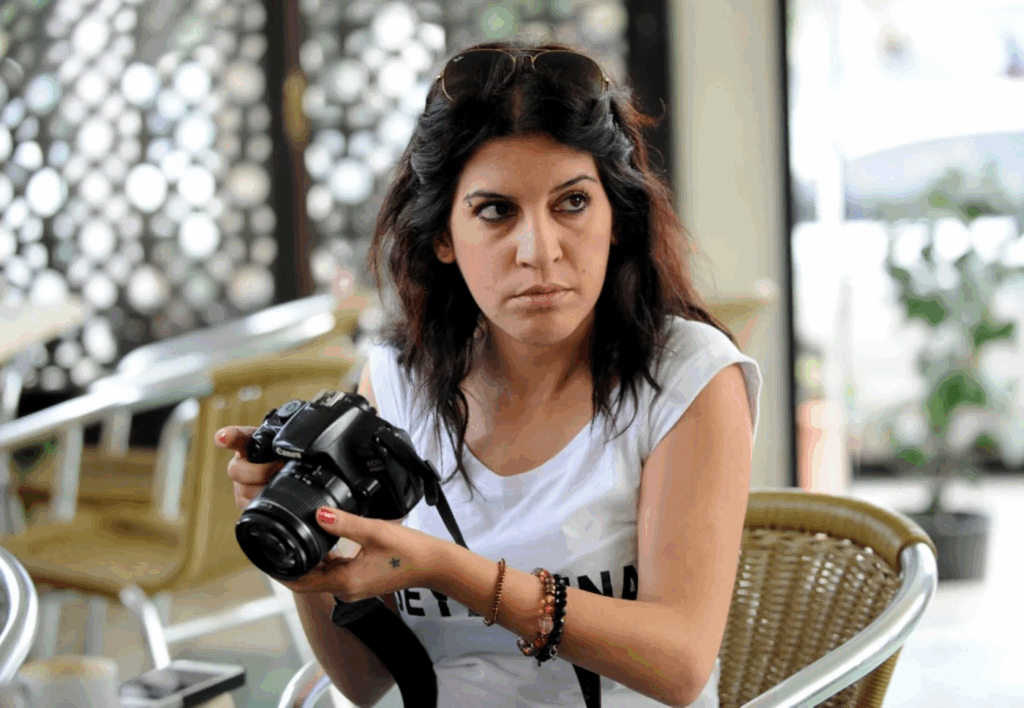
TUNISIA : Hero of Tunisia’s 2011 revolution Lina Ben Mhenni dies at 36

Nobel Peace Prize nominee was an internationally recognised human rights activist who documented abuses under Ben Ali.

Tributes are pouring in after prominent Tunisian human rights activist and blogger Lina Ben Mhenni, one of the heroes of the 2011 revolution, died in the early hours of Monday from a chronic illness.

The 36-year-old was an English teacher at the University of Tunis. Her father and fellow activist, Sadok Ben Mhenni, was a political prisoner under Habib Bourguiba and one of the founders of the Tunisian branch of rights group Amnesty International.

Her final blog post was published on Sunday morning, in which she took aim at a spat-turned-fracas between MPs in parliament, asking Tunisians to remember their political past and learn from it.

A cyber-dissident, Ben Mhenni became well known for her  “A Tunisian Girl” blog and using her real name at great personal risk, documenting human rights abuses under Zine El Abidine Ben Ali. In response, Ben Ali’s government banned her blog in 2007.

But in the 2011 uprising that toppled the longtime autocrat, Ben Mhenni began blogging once again, becoming a vital source of information through her documentation in English, French and Arabic of the violent crackdown on protesters by police, particularly in Sidi Bouzid, Regueb and Kasserine. 

Her blog soon gained international recognition. In 2011, she was nominated for a Nobel Peace Prize and received the Best Blog Award at the Deutsche Welle Global Media Forum in Germany’s Bonn.

“I had to ensure that the voices of these people and their families be heard so that they hadn’t died in vain,” she said speaking at the time.

In 2013, following the assassinations of leftist politicians Chokri Belaid and Mohamed Brahmi, she was informed by authorities of being “number 1 on a kill list” drawn up by hardline groups.

Despite her ailing health and being in need of a kidney transplant, in recent years Ben Mhenni participated in many panels and cultural events, most recently at the Arab Women Literature Festival, and she campaigned for Tunisia’s youth and a reading initiative  in Tunisian prisons.

Tunisia’s culture ministry expressed “great sorrow” at Ben Mhenni’s death. 

source/content: middleeasteye.net (headline edited)

_____________

Activist and blogger Lina Ben Mhenni documented police violence during the 2011 revolution (AFP)

___________

TUNISIA

TUNISIAN-ITALIAN : The visual art of Monia Ben Hamouda on show in Tunis

By the Italian Embassy and the IIC.

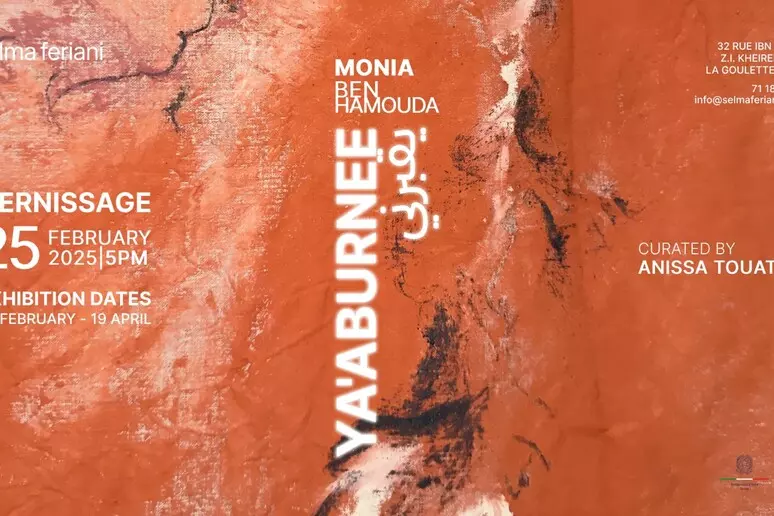
From 26 February next, Monia Ben Hamouda’s exhibition entitled ‘Ya’aburnee’, curated by Anissa Touati, will be open to the public at the Selma Feriani Gallery in Tunis in partnership with the Italian Embassy and the Italian Cultural Institute of Tunis.


 The exhibition by the Italian-Tunisian artist, who won the prestigious MAXXI BVLGARI PRIZE 2024 last December, takes its name from the Arabic concept that translates as “you bury me”, reflecting the altruistic desire for a loved one to outlive himself.

Love and sacrifice, omnipresent in the exhibition, explore the complex ideas of language, history and understanding through an installation spanning three floors of the gallery, combining painting, sculpture and sound works, blurring our relationship with space.

Ben Hamouda aims to capture the distinctive soundscape of Arab countries, emphasising how these sounds shape cultural identity and perception.

source/content: ansabrasil.com.br

____________

______________________
ITALIAN / TUNISIAN

TUNISIAN change maker Khadija Jallouli, invents a sustainable vehicle

Khadija Jallouli, a young Tunisian entrepreneur with a disability, has called for redoubling international efforts aimed at integrating people with disabilities and involving them in decisions related to finding solutions to the challenges they face.

She is the co-founder and CEO of HawKar, a start-up specialising in manufacturing electric vehicules for people with disabilities with the aim of improving their lives by providing convenient, accessible and sustainable mobility solutions.

Ms. Jalouli spoked about her experience from the podium in the iconic General Assembly Hall at the opening session of the activities of the 17th session of the Conference of States Parties to the Convention on the Rights of Persons with Disabilities (COSP17), which began on Tuesday and continues until June 13, under the theme Rethinking disability inclusion in the current international juncture and ahead of the Summit of the Future, which is taking place at UN Headquarters in September.

In an interview with UN News, Ms. Jallouli said she is participating in COSP17 to shed light on the challenges facing people in motion and how to find solutions to them to create a more inclusive world as well as to inspire participants to take action to find solutions and involve everyone.

Watch her story below:

source/content: news.un.org /UN News (headline edited)

_____________

UN Photo/Loey Felipe / Khadija Jallouli, a youth representative from Tunisia, addresses the Conference of States Parties (COSP17).

____________

TUNISIA

TUNISIAN-CANADIAN: Dr Myriam Khalfallah, Fisheries Scientist – University of British Columbia (UBC) Alum pushing for truly global fisheries science

When Dr. Myriam Khalfallah arrived in Vancouver from Tunisia in 2013, she had just earned a bachelor’s degree as an agronomic engineer specializing in fisheries and environment at the National Agronomic Institute of Tunisia (INAT), the University of Carthage. She visited UBC in hopes of meeting Dr. Daniel Pauly, the internationally recognized fisheries scientist—Dr. Khalfallah had used his methods during her engineering practicum work and wanted to meet one of her research inspirations.

The two met, speaking in French, one of Dr. Pauly’s native tongues, before switching to English. He then asked if Dr. Khalfallah mastered scientific Arabic, as Tunisian universities and research institutions are usually French speaking. She did. It turned out that Dr. Pauly needed someone who spoke all three languages to collect fisheries data from Arabic-speaking countries. Dr. Khalfallah landed the job.

“That was the start of the whole thing,” she recalls. “Daniel said, if you do well on this project, maybe I’ll take you as a student. I went back to Tunisia and applied for a work permit and my whole life changed.”

Similarly to most economically developing countries, fisheries data from North Africa, the southern Mediterranean, and the Arabian Peninsula is not always accessible to the international scientific community, notably due to language barriers, publication costs, and funding. Data does exist, but finding it and leveraging it for research takes language skills and to a certain extent a strong personal network. Dr. Khalfallah had both. Her work went well and Dr. Pauly accepted her as a graduate student.

But there was a problem. During her undergraduate studies in Tunisia, a revolution was ignited against the country’s dictatorship. Dr. Khalfallah had been the elected student representative and ombudsperson at her university.

“Tunisia was living under a strict dictatorship at the time,” Myriam says. “We had no right to speak up. The internet was almost fully censored, as were most of the media. Journalists were jailed. It was really awful”.

“I was involved with the demonstrations and doing my best to defend student and human rights. Some professors didn’t understand the role of the student representative and ombudsperson. When I told my professors about the changes that the students wanted, some thought that I was individually calling for change. Obviously, there can be retaliation—when I applied to UBC, my relationships back home made it difficult for me to get into another university.”

Due to her low grades, notably due to the revolution, UBC rejected Dr. Khalfallah’s initial application to graduate school. So Dr. Pauly stepped in.

“Daniel wrote letters for me, as did the dean of my previous university, and a few Tunisian professors, telling UBC they should give me a chance because what happened in Tunisia made things very difficult for everyone.”

The letters of support had the desired effect. Dr. Khalfallah began work on her Master’s of Science degree at UBC’s Institute for Resources, Environment and Sustainability, where she carried on reconstructing fisheries catch data from Arabic-speaking countries, estimating the amount of unreported catch—fish that are caught and not officially accounted for by official statistics.

“Methods used in Western countries aren’t always applicable in the rest of the world,” Dr. Khalfallah notes. “But now there are increasingly newer methods, such as those we use at our research unit, the Sea Around Us , that makes the most of data that is usually overlooked. An interesting part of this work involves collaborating with scientists from all over the world and bridging the gap between data-rich and data-poor regions.”

As her research progressed, she and Dr. Pauly realized that her initial plan—a 17-nation study—was too big for a master’s thesis. So Dr. Khalfallah applied to fast track her research directly to a PhD which required good grades, publications, and strong references.

She defended her thesis on March 26, 2020—the second week of the COVID lockdown when UBC shifted all defenses to Zoom for the first time—and graduated with a PhD in Natural Resource Management and Environmental Studies. After graduation Dr. Khalfallah followed through with post doctorate research, also at UBC, working online to unravel the effects of foreign fishing fleets and aquaculture on West African fisheries.

“Like many scientists then, I was unable to get funding to extend my postdoc as a lot of science funding was going towards medical research and stopping COVID” she says. “Some friends of mine who knew the author Margaret Atwood kindly told her about my postdoc and asked if she knew of anyone who could fund my research. And she offered to do it! She was amazing.”

Dr. Khalfallah currently works with the NGO FHI360 as a marine climate change specialist on the project Sharing Underutilized Resources with Fishers and Farmers (SURF). This project supports Tunisia’s efforts to adapt fisheries and agriculture to climate change and is one of the first of its kind in North Africa to be funded by the U.S. Department of State.

“Climate change is impacting North Africa at a very fast pace,” she says. “Water is getting scarcer by the day. Fishes are moving from the Red Sea to the Mediterranean, replacing native species. In some regions there are almost no fish anymore because overfishing, climate change, and pollution are a very bad combination.”

“I’m trying to either find other, sustainable livelihoods for artisanal fishers, or find a way for them to fish sustainably. Whatever happens in North Africa due to climate change will happen in the rest of the world at certain points. If we can find a way to help them adapt in one way or another, then those ways could potentially be applied in other places where the climate situation deteriorates.”

Dr. Khalfallah recently became a Canadian citizen and lives in Vancouver when not travelling for work. She was recently selected to be one of the alumni representatives of the Faculty of Science at the 2023 Fall Graduation ceremony, 10 years after she first set foot in Canada and UBC.

“I was quite surprised and honored by the invitation and it was an amazing experience.”

For those who have moved here recently and are starting their research career, she has some advice:

“International students have the stress of surviving, often alone, in new foreign environments, all while successfully completing their studies and research; and sometimes it is very difficult to see the light at the end of the tunnel. But I want to say that the light is there. Be persistent and ask for help when needed. Great things are achieved in small steps. Think about just doing one step at a time, and when you look back, you’ll see that you have actually achieved a lot without even realizing it!”

source/content: science.ubc.ca (headline edited)

____________

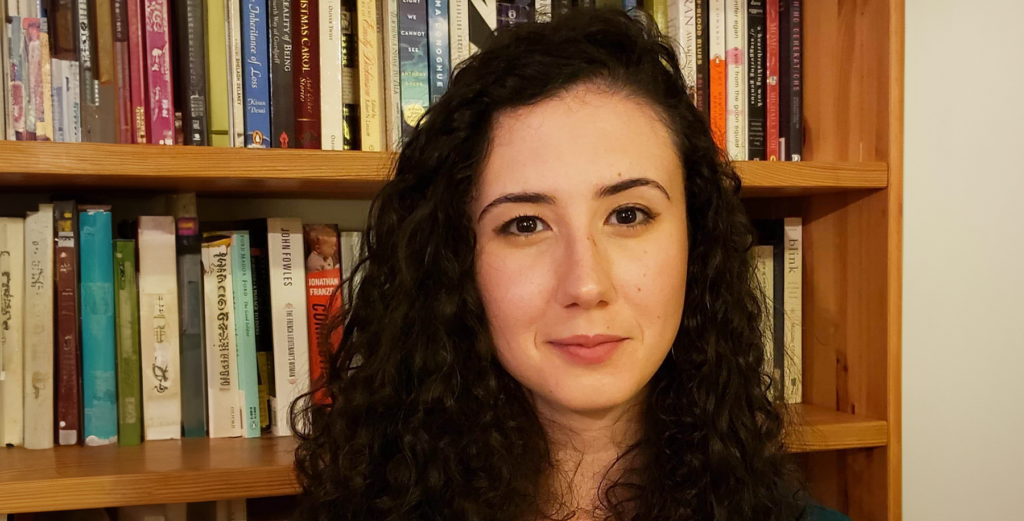
Myriam Khalfallah, PhD 2020

__________________________

CANADIAN / TUNISIAN

TUNISIAN Nadia Selmi – Food Heroes archive of FAO

“I believe in the power of women. The seaweed farm is run by women, and women represent 80 to 90 percent of all staff in administration, the labs and research.”

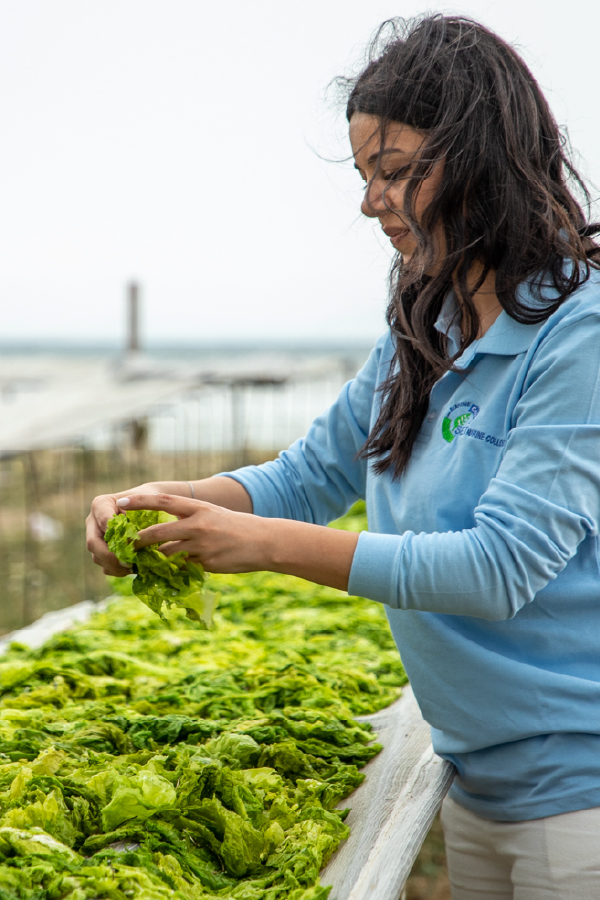
For most people, the word ‘engineer’ doesn’t immediately bring up images of food, and even fewer will think of seaweed. And yet, that’s exactly the niche where Nadia Selmi is pioneering new uses for an oft-overlooked marine resource. 

Today, she is the commercial director of SELT Marine, a Tunisian seaweed company that employs more than 100 women in producing nutritious seaweed powder that can be made into vegetable gelatin for dairy, sweets and vegan products

“I believe in the power of women,” says Nadia. “The seaweed farm is run by women, and women represent 80 to 90 percent of all staff in our administration, the labs and research.”

Many of the women working on the seaweed farm come from vulnerable rural communities and have found a new kind of job in the growing sector. 

And the potential that the sector holds for food security and food system transformation is significant. Using just 0.03 percent of our oceans’ surface, seaweed could add up to 10 percent to the world’s food supply. Importantly, seaweed tends to be rich in vitamins and fibres and low in calories, making it a great addition to a healthy diet.

Beyond the food industry, seaweed powder is already used in many pharmaceutical and cosmetics products. And more recently, it is being transformed into biodegradable bottles and bags.

But that’s not the only way seaweed can contribute to a better environment.

Increasingly, scientists and policy makers are also seeing its potential as a “nature-based solution” to mitigate climate change and support ecosystem services. For example, if seaweed production keeps growing at the current rate, it could absorb 135 million tonnes of carbon dioxide per year by 2050, and 30 percent of all the nitrogen entering the oceans from land-based pollution.

Nadia, who started out as a researcher in the company’s lab, is now championing the uptake of Tunisian seaweed by building partnerships with businesses around the world and working with research institutions to get even more goodness out of the aquatic greens.

FAO supports innovators like Nadia through its General Fisheries Commission for the Mediterranean, which promotes seaweed aquaculture as a way to boost sustainable growth, marine conservation, and livelihoods in the Mediterranean and the Black Sea.

source/content: fao.org (headline edited)

_____________

___________

TUNISIA