Arabs & Arabian Records Aggregator. Chronicler. Milestones of the 25 Countries of the Arabic Speaking World (official / co-official). AGCC. MENA. Global. Ist's to Top 10's. Records. Read & Enjoy./ www.arabianrecords.org
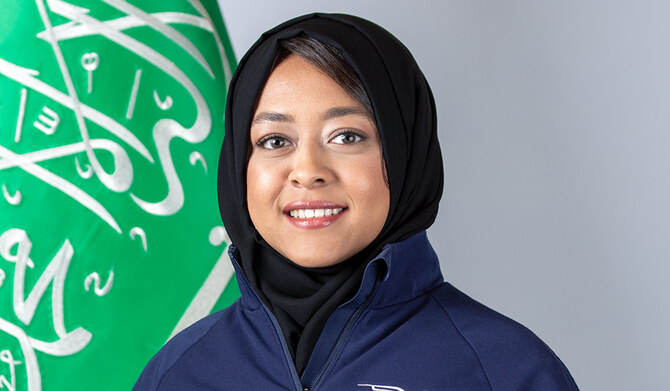
Saudi Rayyanah Barnawi was part of the Axiom Mission 2 that launched from Cape Canaveral in Florida on May 21, 2023.
The first female Arab astronaut has had her pioneering spaceflight recognized by Guinness World Records, the organization announced on Monday.
Saudi Rayyanah Barnawi was part of the Axiom Mission 2 that launched from Cape Canaveral in Florida on May 21, 2023. She was accompanied by fellow Saudi Ali Al-Qarni aboard a craft bound for the International Space Station.
In her first message she said: “This trip does not represent me alone, but rather the entire Arab world and all Saudis. We are living a dream that once seemed impossible but has become reality.”
Al-Qarni and Barnawi — the first Arab woman to orbit Earth — returned on May 31 after an eight-day stay at the ISS. During their time there they carried out 14 research projects on microgravity, three of which were kite experiments involving 12,000 school students from 47 locations across the Kingdom, conducted via satellite.
During her mission, part of the Saudi Astronaut Program, Barnawi completed several groundbreaking experiments that included studying the response of immune cells and how microgravity affects biological processes.
Barnawi has spent her career advancing scientific knowledge, particularly in the field of cancer stem cells. She worked at King Faisal Specialist Hospital & Research Centre and holds a bachelor’s degree in genetic engineering and tissue development from the University of Otago in Dunedin, New Zealand. She also has a master’s degree in biomedical sciences from Alfaisal University in Riyadh.
Barnawi’s personal journey reflects her strong ties to both Saudi Arabia and her Sudanese heritage.
Her world record-breaking achievement follows in the footsteps of the Kingdom’s Prince Sultan bin Salman who, in 1985, became the first Arab to go into space.
The works consist of 19 volumes, encompassing the writings of the historian as well as his summaries and correspondences, shedding light on his time.
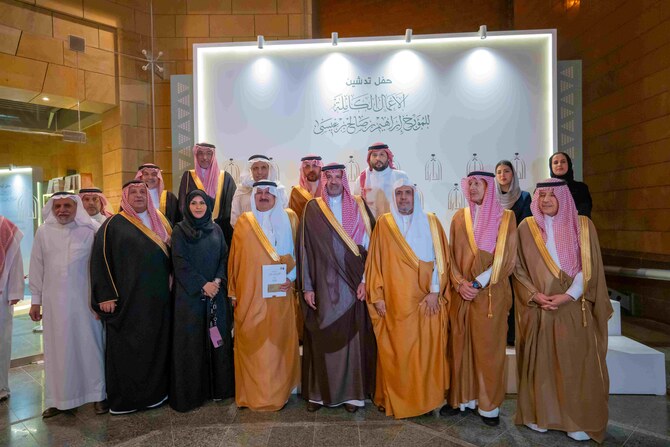
Prince Faisal bin Salman, chairman of the board of directors of the King Abdulaziz Foundation for Research and Archives, inaugurated the launch ceremony of the complete works of Saudi historian Ibrahim bin Saleh bin Issa on Wednesday at Darah headquarters.
These works consist of 19 volumes, encompassing the writings of the historian as well as his summaries and correspondences, shedding light on his time.
Speaking on behalf of his family Dr. Mohammed bin Abdulkarim Al-Issa, secretary-general of the Muslim World League, expressed the family’s gratitude and appreciation to Darah (the foundation) for this honor, which celebrates their ancestor’s scholarly legacy.
He said that the publication documents the historian’s long academic journey, characterized by precision and objectivity in various scientific fields.
He also expressed the family’s pride that this work will serve as an important reference for researchers and those interested in Saudi history and culture.
Furthermore, he praised the tremendous efforts made by Darah in realizing this monumental project, noting that this recognition reflects the significance of knowledge in strengthening national identity.
The work on the project took several years and went through numerous stages, involving a team of about 20 people, said Dr. Fahd Al-Samari, secretary-general of Darah.
Al-Samari told Arab News: “The project followed a clear methodology, where we gathered as much of the heritage of historian Ibrahim bin Issa as possible and conducted a thorough investigation.”
Given the project’s scale and the diversity of fields covered, which include religious, historical, linguistic and geographical arts, several specialized committees were formed for the project, including the supervisory committee, the text editing and verification committee, and the manuscript and document collection committee, Al-Samari added.
Bin Issa relied on more than 700 sources for his work, including 570 manuscripts and documents from across the Kingdom, while the remaining sources were distributed between Kuwait, Egypt, Iraq, and the US.
Bin Issa was born in 1854 in Ushaiger town, 200 kilometers northwest of Riyadh, and lived for about 71 years. He was a scholar, historian and genealogist, and one of the most prominent historians of the Najd region.
Al-Samari pointed out that Darah was established to fulfill a noble mission, which is to serve the history of Saudi Arabia, its geography, and its intellectual literature, as well as to collect various historical sources, including documents related to the Kingdom, classify them, and enrich the historical library with scientific research.
Darah has devoted special attention to the prominent figures of the Kingdom, honoring their rights, highlighting achievements, celebrating contributions, appreciating efforts, and acknowledging their glory.
“Since establishment, Saudi Arabia has sought to make knowledge the foundation for building the state. Under the leadership of King Salman and Crown Prince Mohammed bin Salman, the Kingdom has witnessed a comprehensive renaissance in all fields, with the most significant being in the areas of national heritage,” Al-Samari concluded.
source/content: arabnews.com (headline edited)
_________
Prince Faisal bin Salman, Chairman of the Board of Directors of Darah, is seen in a group photo with several descendants of historian Ibn Issa on Wednesday evening in Riyadh.
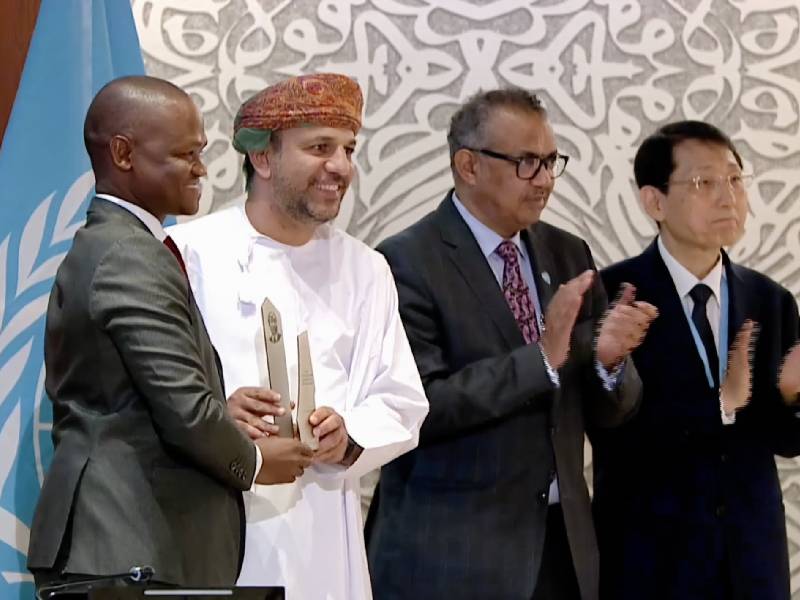
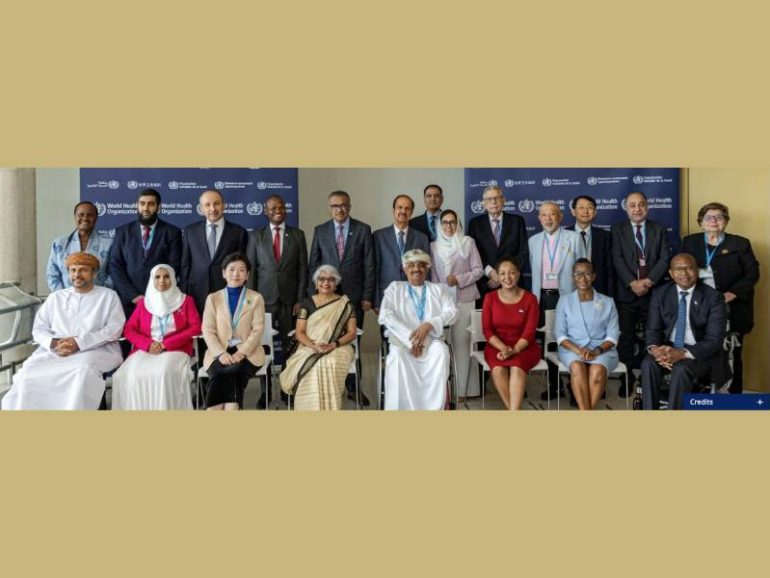
Eight medical professionals from around the world were feted for their unique roles and contributions to public health in their countries and the world at a special ceremony during the 77th World Health Assembly in Geneva on Friday.
Of the eight, four recipients are from the Eastern Mediterranean Region of which three are from Oman, a first for a country in the region.
Dr Bader bin Saif al Rawahi
The Dr Lee Jong-wook Memorial Prize for Public Health 2024 was presented to Dr Bader bin Saif al Rawahi, who leads a major public health programme as Director of Communicable Diseases and Control, and manager of the Expanded Programme on Immunisation at Ministry of Health (MoH).
Dr Rawahi has made considerable effort to leave no one behind in the immunisation programme, including migrants, displaced populations and underprivileged people.
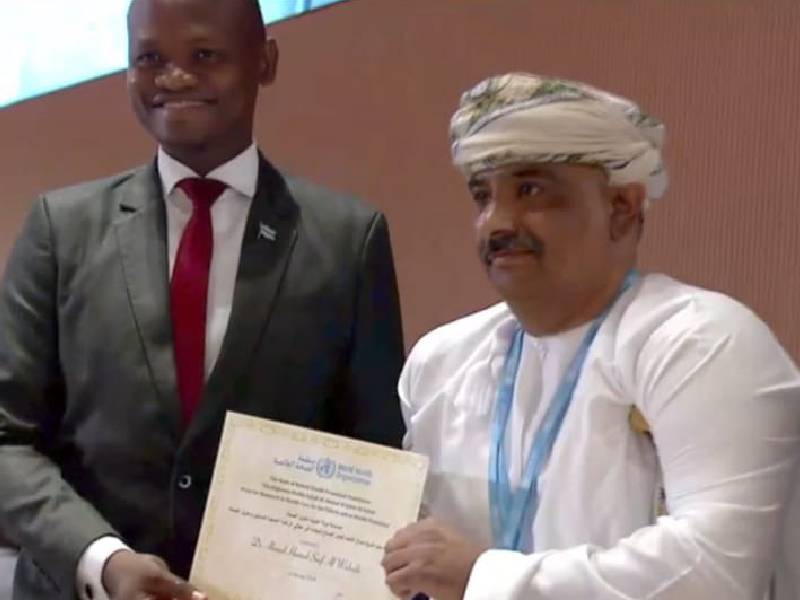
Dr Ahmed Hamed Saif al Wahaibi, head of Elderly Care Section in Primary Health Care Department of MoH, and the Chinese Geriatrics Society, China, were jointly awarded the Sheikh Sabah al Ahmad al Jaber al Sabah Prize for Research in Health Care for the Elderly and in Health Promotion.
Dr Ahmed Hamed Saif al Wahaibi
Dr Wahaibi is a family doctor who has made an important contribution to integrating high-quality care for older people within primary health care in Oman. He has also played a part in the development of a national programme for people aged 60 years and older that provides screening, assessment and early intervention as part of primary health care.
Dr Jamila Taiseer Yasser al Abri, a renowned obstetrician and gynaecologist with extensive experience and leadership in women’s health, currently Director of Department of Woman and Child Health, was honoured with the Ihsan Doğramacı Family Health Foundation Prize.
Dr Jamila has demonstrated significant leadership in teaching and managing national health programmes, including on breast cancer, mental health and autism spectrum disorders, besides other family health issues. She has played an important role in contributing to the strategic plans for women’s and children’s health as part of Oman’s long-term vision, Health Vision 2050.
Dr Jamila Taiseer Yasser al Abri
The United Arab Emirates Health Foundation Prize went to National Death Registry System, Saudi Arabia.
“I feel so proud to see four experts and institutions from the Eastern Mediterranean Region receive four of the eight highly valued WHO awards,” said Dr Hanan Balkhy, WHO Regional Director for the Eastern Mediterranean.
“This sends a strong message about how rich the region is in talented, distinguished and knowledgeable people. The awardees’ expertise and achievements, across different health fields, show that we have human assets who contribute to the improvement of regional and global health.
“Heartfelt congratulations and a big thank you to Saudi Arabia’s National Death Registry System and to Dr Rawahi, Dr Wahaibi and Dr Jamila from Oman. You have made us all very proud and filled us with hope and determination.”
The winners were awarded by Dr Edwin Dikoloti of Botswana, President of the 77th World Health Assembly, alongside high-level representatives of the foundations providing the public health awards and prizes and Dr Tedros Adhanom Ghebreyesus, Director General of WHO and administrator for the prizes.
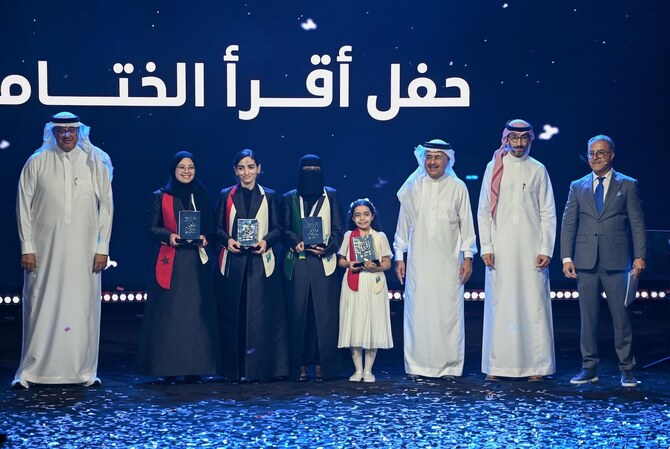
Boasting an attendance of 16,000 people, including Nobel laureates in literature, the King Abdulaziz Center for World Culture concluded its ninth annual Iqra competition on Saturday.
Amin Nasser, Saudi Aramco’s president and CEO, and other senior officials attended the two-day event in Dhahran.
Nobel literature laureates Abdulrazak Gurnah and Olga Tokarczuk were also present and offered insights during speaking sessions.
Visitors experienced a series of activities, culminating in the announcement of the competition’s winners.
Moroccan Meryem Bououd was awarded Reader of the Year, while 10-year-old Moroccan Fatima Kettani won the Promising Reader prize.
Iraqi Hira Karkhi secured the Text of the Year prize, while the Reading School award went to Tarbiyat Al-Ajial of the Private International School, Hafr Al-Batin, Saudi Arabia.
Saudi Safia Al-Ghubari claimed the People’s Reader award, while teacher Najla Ghazi Al-Suhaimi took home the Reading Ambassador prize.
Noura Al-Zamil, Ithra’s program director, spoke of the competition’s significant milestones since its inception in 2013.
Over nine editions Iqra has attracted more than 225,000 applicants and offered 48,000 hours of educational programming.
It has also engaged more than 600 speakers from 30 countries, bringing three Nobel Prize-winning authors to its stage.
Al-Zamil stressed Ithra’s continued efforts to innovate, introducing new elements like the Iqra Travels, Iqra Marathon, and Kitabiya Exhibit, to foster a reading culture among Arab youngsters.
The closing event featured cultural sessions, including a talk by Tokarczuk, who discussed literature as a tool for bridging languages and cultures.
Discussing the future, Tokarczuk expressed both optimism and caution, adding: “I embrace modern tools like ChatGPT but remain concerned about their potential misuse.”
Gurnah, reflecting on his roots, said: “Zanzibar will always be my true homeland, despite my long absence.”
source/content: arabnews.com (headline edited)
_____________
Boasting an attendance of 16,000 people, the King Abdulaziz Center for World Culture concluded its ninth annual Iqra competition on Saturday. (Supplied)
Appointment made during UAC’s 135th session, being held in Doha.
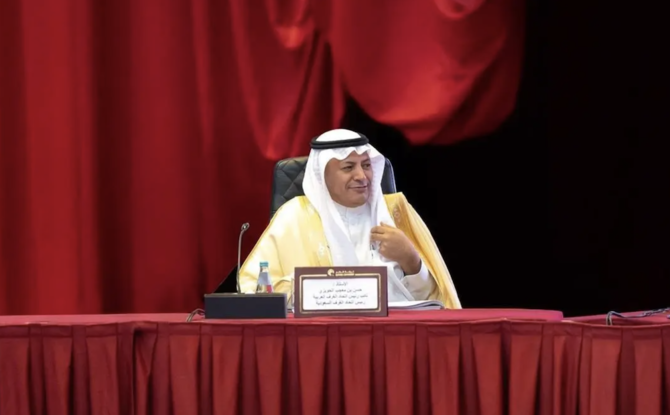
The Union of Arab Chambers appointed Hassan bin Moejeb Al-Huwaizi, President of the Federation of Saudi Chambers, as its first Vice President, Saudi Press Agency reported on Sunday.
The appointment was made during the UAC’s 135th session, which is being held in Doha.
In addition to his new role, Al-Huwaizi holds several prominent positions, including VP of the Federation of GCC Chambers, and president of the Abha Chamber, SPA added.
He thanked the Union of Arab Chambers for its confidence in his abilities, and Al-Huwaizi emphasized the need to strengthen intra-Arab trade.
Currently, intra-Arab trade constitutes just 13.8 percent of the total foreign trade of Arab countries, a figure he described as modest compared to other regional economic blocs.
Al-Huwaizi urged for intensified efforts to eliminate regulatory, customs, and procedural barriers that hinder trade among Arab nations.
source/content: arabnews.com (headline edited)
___________
The Union of Arab Chambers appointed Hassan bin Moejeb Al-Huwaizi, President of the Federation of Saudi Chambers, as its first Vice President. (SPA)
Lack of historical resources means that there is some debate over which club is officially the oldest in the nation.
Football is such an integral part of culture in the Kingdom that the history of the game in the country dates back to the era before the formation of the modern Saudi state.
However, a lack of historical resources means that there is some debate over which club is officially the oldest in the nation.
Al-Wehda in Makkah is one that claims to be the first. Though the club acknowledges it was officially registered in its current form in 1946, its official website quotes historian Mohammed Ghazali as saying it was originally founded under the name Al-Hizb in 1916.
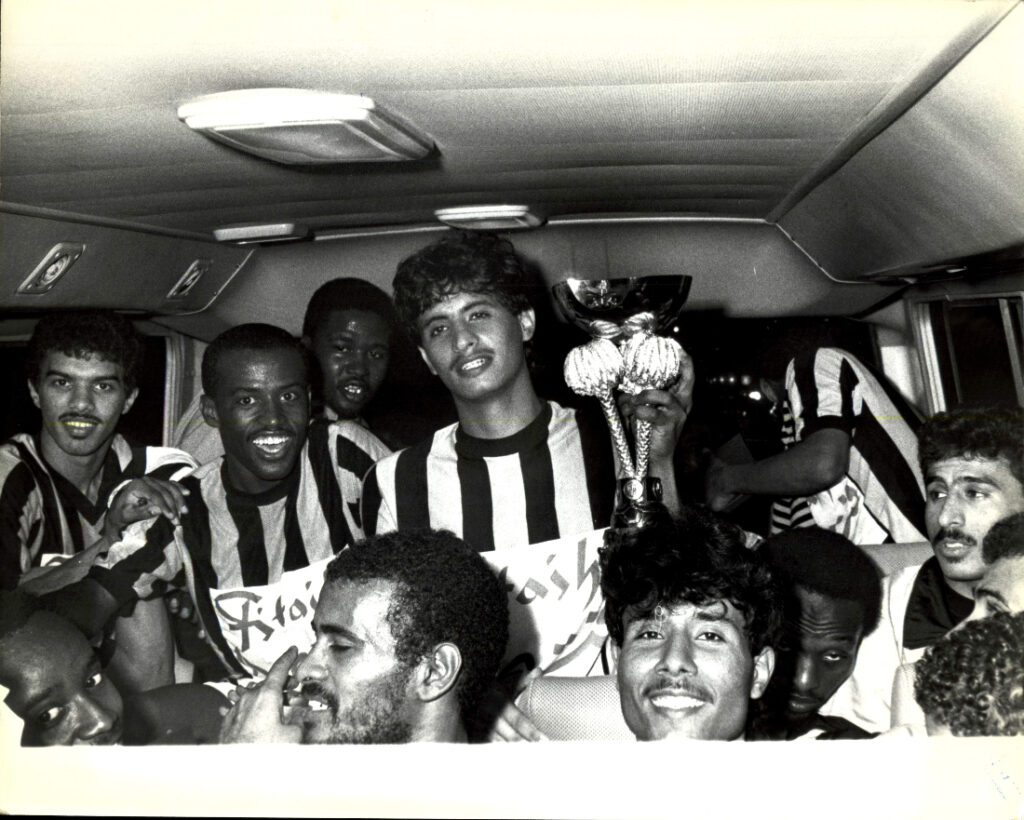
Jeddah side Al-Ittihad believes it is the Kingdom’s oldest club, however, with an official founding date of Dec. 26, 1927, almost five years before the unification in September 1932 that created the modern Saudi state.
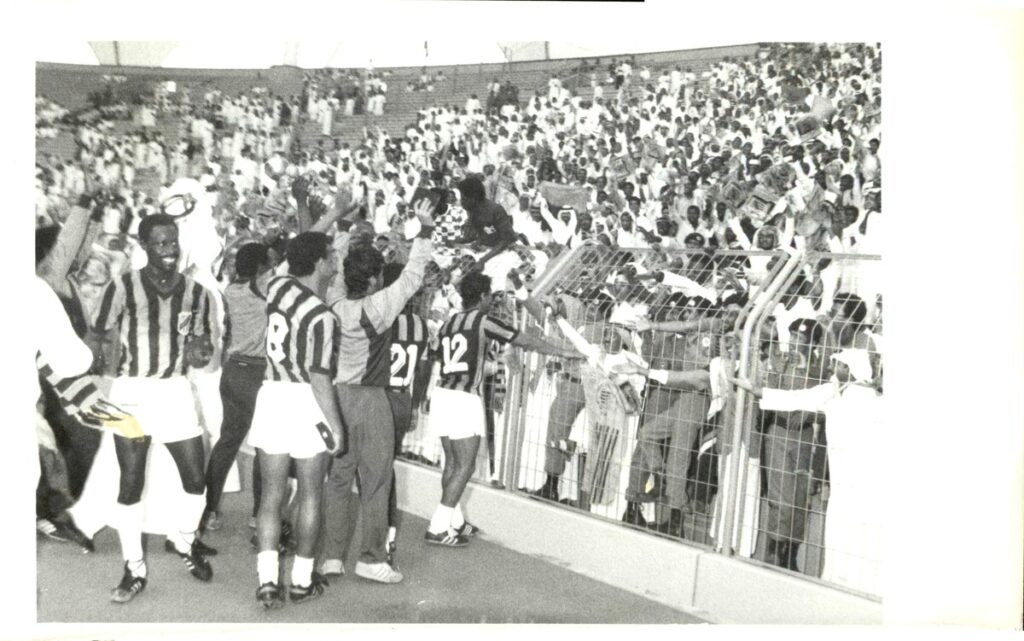
Al Ittihad. Photo: Arab News Archive / Al-Ittihad believes it is the Kingdom’s oldest club. (Photo: Arab News Archive)
Given such uncertainty about the exact origins of the game in the country, in 2023 the Saudi Arabian Football Federation launched the Saudi Football History Documentation Project.
Saudi historians and international experts nominated by FIFA are working to research and record a definitive, agreed-upon history of football in the Kingdom.
The committee announced on Sept. 16 the completion of the first phase of the project, finding that the national team played a total of 92 matches and the clubs played more than 7,000 matches between 1902 and 1982.
But much of Saudi Arabia’s footballing history is clear.
Al-Ahli club, for example, is another one of the Kingdom’s oldest clubs, having been founded in 1937. Other early organizations include Al-Ettifaq (1945), Al-Shabab (1947), Al-Riyadh (1953), Al-Nassr (1955), and Al-Hilal (1957).
The SAFF was established in 1956 as the governing body for the sport in the country. That same year, the Kingdom gained international football recognition when it joined FIFA, allowing local teams to participate in global competitions.
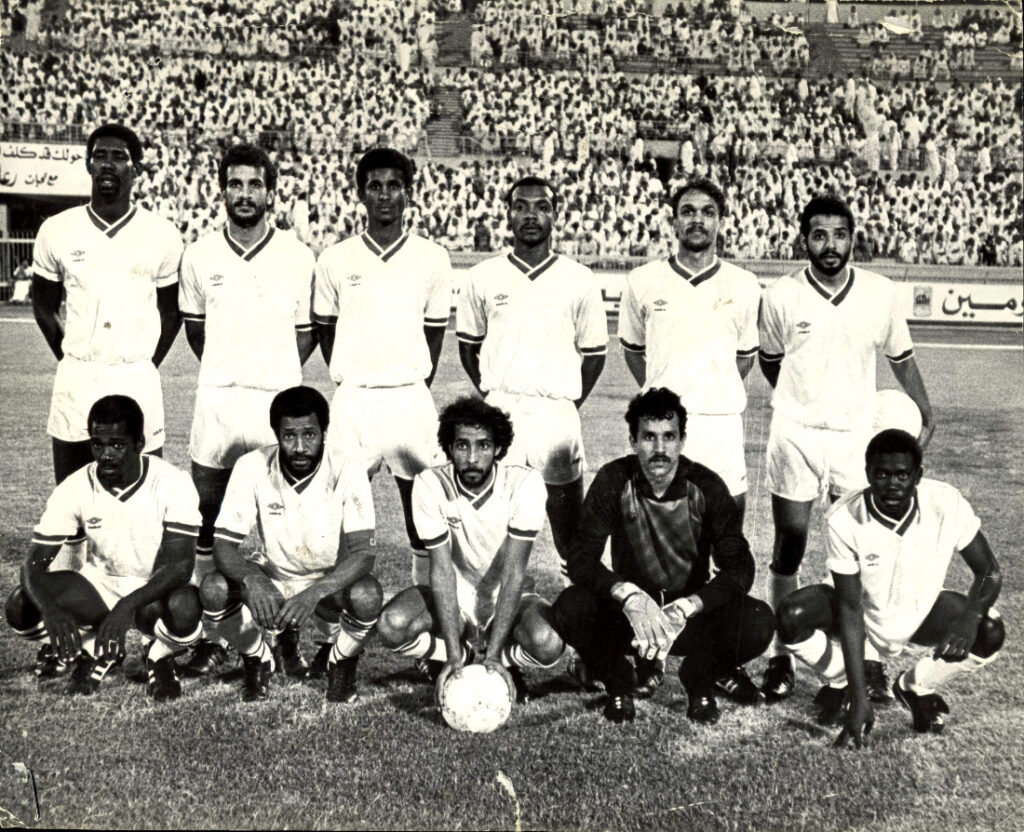
Al Ahli. Photo: Arab News Archive / Al-Ahli club is another one of the Kingdom’s oldest clubs, having been founded in 1937. (Photo: Arab News Archive)
In 1957, the Kingdom’s national team played its first competitive international match, a game against Lebanon in Beirut that ended in a 1-1 draw.
While there have been domestic national leagues in Saudi Arabia since the 1970s, the Saudi Pro League was not established in its current form until 2008.
In 1984, the Saudi national team won the AFC Asian Cup for the first time, with Majed Abdullah and Shaye Al-Nafisah claiming the goals in a 2-0 win over China in the final. The Kingdom retained the trophy four years later.
Saudi Arabia made their debut at the FIFA World Cup in 1994, which was held in the US, and reached the round of 16. Their success continued when they were once again crowned Asian Cup champions in 1996.
In more recent years, the Kingdom has continued to make strides in football, including the introduction of the first domestic women’s league in 2020, followed by the SAFF Women’s Cup in 2023.
Fuad Anwar is a former member of the Saudi national team who began his career in 1991 with Al-Shabab. He is perhaps best remembered for his performances during the 1994 World Cup, in which he scored two goals that helped the Saudis qualify for the knock-out stage. He also participated at the 2000 FIFA Club World Cup with Al-Nassr.
He told Arab News that three football clubs in particular shaped the football scene in the Kingdom.
Al Ittihad. Photo: Arab News Archive / Al-Ittihad believes it is the Kingdom’s oldest club. (Photo: Arab News Archive)
“There was a cultural shift in sports because of Al-Ahli, Al-Ittihad and Al-Wehda,” Anwar said. “The world became more accepting of Saudi Arabia and the region to be a part of the football scene … football culture became relevant in every part of the country, from Riyadh and beyond.”
Anwar highlighted in particular the efforts of Prince Khaled Al-Faisal, Prince Abdullah Al-Faisal, and Prince Faisal bin Fahad to create a successful foundation for sports culture in the Kingdom.
Prince Khaled Al-Faisal played an instrumental role in the development of football in the region, having come up with the idea of launching a tournament for the Arabian Gulf in the late 1960s. Prince Abdullah, meanwhile, served as co-founder and chairperson of Al-Ahli, and Prince Faisal held a number of positions with domestic and regional sporting organizations.
Ahmed Eid Al-Harbi, a former Al-Ahli player who now chairs the SAFF’s board of directors, highlighted Prince Abdullah’s significant role in the development of Saudi football and sport in general.
He told Arab News the prince devoted much of his time to the development of youth to benefit the future of sport not only in the Kingdom but in the wider Gulf and Arab world, and on the continental and international stages.
“He didn’t merely adopt the club (Al-Ahli) for the sake of exercising a sport or achieving trophies, he spoke of the club as a university established to nurture and spotlight sports talents, giving them the attention and care they deserve,” said Anwar.
Nader Al-Sahleh, 61, a Saudi from the Eastern Province, told Arab News that he has witnessed the evolution of football in the Kingdom through the years, all the way back to the 1970s when, as a child, he played the game with neighbors and schoolmates in parks and fields.
“Those were beautiful, irreplaceable days filled with challenges, such as participating in neighborhood football leagues and Ramadan tournaments,” he said.
“These experiences impacted my life, introduced me to friends I still cherish today and created wonderful memories that I wish could return.”
Football in the Kingdom has evolve tremendously over the years, Al-Sahleh said, and “as a result, Saudi teams now compete to win, as seen in our victories in the Asian Cup and our dominance in Asian football.”
He added: “Crown Prince Mohammed bin Salman has stated his ambition to make the Saudi League one of the top 10 leagues in the world, which is a testament to the development of Saudi football.
“Currently, Saudi Arabia is constructing massive stadiums to host the Asian Cup and even the FIFA World Cup. This is just a brief overview of the progress of Saudi football, and we are grateful to our government, led by the (king) and the crown prince, for their continued support. May our sports continue to advance and prosper.”
source/content: arabnews.com (headline edited)
______________
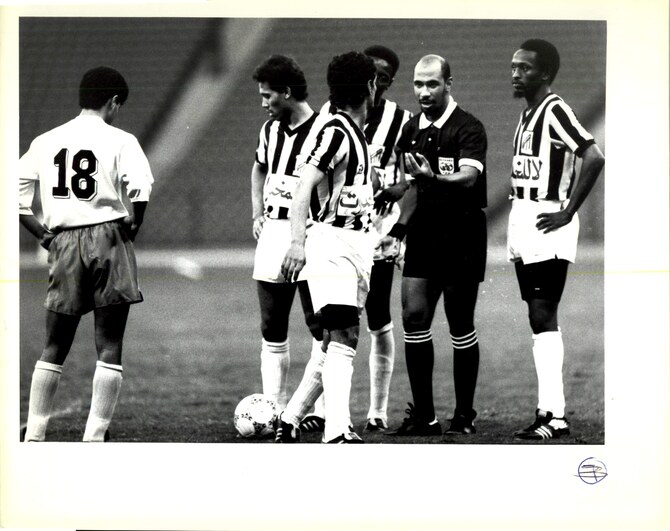
Saudi historians and international experts nominated by FIFA are working to research and record a definitive, agreed-upon history of football in the Kingdom. Photo: Arab News Archive
Safeya Binzagr helped bridge the cultural link between Japan and Saudi Arabia.
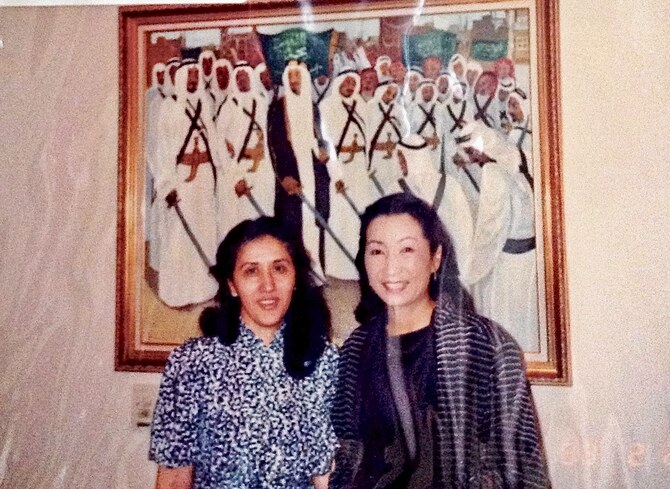
Katakura Kunio, the former Japanese ambassador to Egypt, Iraq, and the UAE, has paid tribute to Safeya Binzagr, who passed away last week, emphasizing the profound impact of her contributions to enhancing Japan’s cultural ties with Saudi Arabia.
Binzagr, known as the “mother” of Saudi Arabia’s fine art movement and a symbol of Vision 2030, helped bridge the cultural link between Japan and Saudi Arabia and was the aunt of current Saudi Ambassador to Japan Dr. Ghazi Faisal Binzagr.
Katakura, chairman of Japan’s Foundation for Desert Culture, fondly recalled Safeya’s “warm and encouraging nature” toward him and his late wife, Motoko.
“Her support was instrumental in Motoko’s cultural anthropological fieldwork in Wadi Fatima,” he said. “She always welcomed the foundation’s follow-up missions with open arms, fostering a deep and personal connection with us.”
Katakura said Binzagr was not only a gifted artist whose work inspired many but also a cherished friend and mentor. Her passion for creativity and dedication to her paintings left an indelible mark, and her artistic legacy will continue to inspire future generations.
Ambassador Binzagr commented: “Building a cultural bridge is the core for creating a distinguished future between two countries and I strive, as an ambassador, to support this because it creates an opportunity for common interests to rise to a common outlook and mutually supportive values.
“The mission carried out by my late aunt will continue (in) the making of a new era. She was one of the pillars that paved the way for this through her dedication to building and promoting the culture of the arts for future generations. The Kingdom considers her the mother of the cultural heritage of creative fine arts.”
The ambassador said there are ongoing efforts to further collaboration between Japan’s Foundation for Desert Culture and prominent foundations in the Kingdom to build upon the cultural ties between the two countries.
source/content: arabnews.com (headline edited)
__________
Late Safeya Binzagr and Professor Katakura. (National Museum of Ethnology, Japan & Kanakawa Foundation)
Rawan Amir, 28, along with twin brothers Amaar and Baraa, 23, as well as Muaaz, 17, are siblings in a wider family of seven doctors.
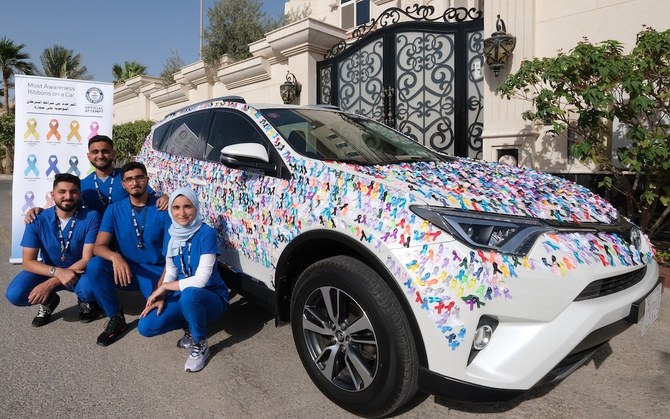
Four siblings who are all doctors, or training to become doctors, from Saudi Arabia have broken the Guinness World Records title for the most awareness ribbons on a car with 5,637 ribbons, it was announced this week.
The ribbons featured 16 different colors, representing major types of cancers as the initiative is aimed at encouraging people to take up early screening.
Rawan Amir, 28, along with twin brothers Amaar and Baraa, 23, as well as Muaaz, 17, are siblings in a wider family of seven doctors.
The parents along with another sister are also doctors in different fields. The family lost their grandfather to colon cancer, and their grandmother to ovarian cancer.
Speaking to Guinness World Records Amaar Amir said: “If we managed to educate at least one person, then there is a possibility that we save a life, which is the greatest deal for us as doctors and medical students.”
He continued: “Medical students see a lot suffering in this area. Cancer affects lots of people’s lives, and different type of cancers are possible in different ages. The earlier someone know about it the better. This makes a big difference for survivals.”
The four siblings grew up in a well-educated environment. The parents used to buy books, especially biology ones, and allow their children to read them from an early age.
According to Amaar, the medical curriculum is very strong in Saudi Arabia, so most of the family studied in the Kingdom, with some continuing their majors in the US.
Amaar and Baraa are senior medical students, while Rawan is a Cardiology Fellow. Their brother Muaaz is high school graduate who has applied to medical school. Their elder sister is also an Endocrinology Fellow, while their mother is Chief of Pathology, and finally their father is Consultant Nephrologist.
Living in Dhahran in the Eastern Province of Saudi Arabia, the team used their family car, Toyota Rav 4, for the attempt. They have also used 56,370 centimeters of ribbons, and 21,385 cm of double-sided tape, all cut individually by hand to create 10cm ribbons, and placed on the car.
The family’s work and study schedules are usually busy, so they decided to do something special and bring benefit to the community. In ribbons and tape, they have used six times the height of The Great Pyramid of Giza, all placed on a single SUV family vehicle.
“We wanted to apply to break a Guinness World Records title because it is the gold standard in providing a platform for talented people and unique achievements. We know that our Nobel cause will reach thousands and potentially millions around the world by obtaining this prestigious certificate,” Amaar added.
source/content: arabnews.com (headline edited)
____________
The ribbons featured 16 different colors, representing major types of cancers as the initiative is aimed at encouraging people to take up early screening. (GWR)
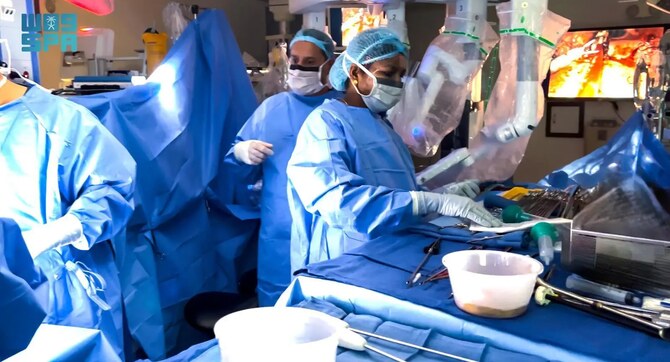
Saudi Arabia’s King Faisal Specialist Hospital and Research Center has performed the world’s first fully robotic heart transplant, Saudi Press Agency reported.
The two-and-a-half-hour operation was carried out on a 16-year-old patient suffering from end-stage heart failure.
A medical team led by Dr. Feras Khaliel, head of Cardiac Surgery and director of the Robotics and Minimally Invasive Surgery Program at KFSHRC, performed the operation after weeks of preparation.
The pioneering achievement, overcoming significant medical challenges associated with such procedures, reinforces Saudi Arabia’s leadership in healthcare, and highlights KFSHRC’s ability to innovate medical practices, SPA said.
The process began with detailed theoretical planning to ensure precision and minimize potential risks.
The team devised a surgical approach to access the heart and perform the transplant without opening the chest of the patient.
To ensure the effectiveness of this approach, the team practiced the procedure virtually seven times over three days before carrying out the operation.
The successful operation has been hailed as a significant development in heart transplant surgery, moving away from traditional chest-opening procedures that require long recovery periods, often lasting months.
Robotic technology allows for minimally invasive surgery, reducing pain, shortening recovery time, and minimizing the risk of complications. This significantly improves patients’ quality of life and accelerates recovery.
KFSHRC CEO Dr. Majid Al-Fayyad said that the successful operation marked another major advance in heart transplant surgery, first performed in the 1960s.
“The success of the world’s first robotic heart transplant marks a transformative leap, not only for our institution but also for Saudi Arabia’s journey toward global leadership in specialized medicine, in line with Saudi Vision 2030, which places innovation at the core of its efforts to improve quality of life,” he said.
“This remarkable achievement would not have been possible without the unwavering support of the Saudi leadership, who have prioritized the development of the healthcare sector, paving the way for a transformative leap in health care services, unlocking new possibilities to elevate the quality of life for patients both locally and globally,” he added.
The breakthrough aligns with KFSHRC’s commitment to medical innovation. As a leading training center in robotic organ transplant surgery, KFSHRC contributes to advancing the global understanding of minimally invasive organ transplants by collaborating with medical institutions worldwide to train their medical teams and achieve better outcomes, further elevating global medical practices.
source/content: arabnews.com (headline edited)
______________
Saudi hospital conducts world’s first fully robotic heart transplant. (SPA)
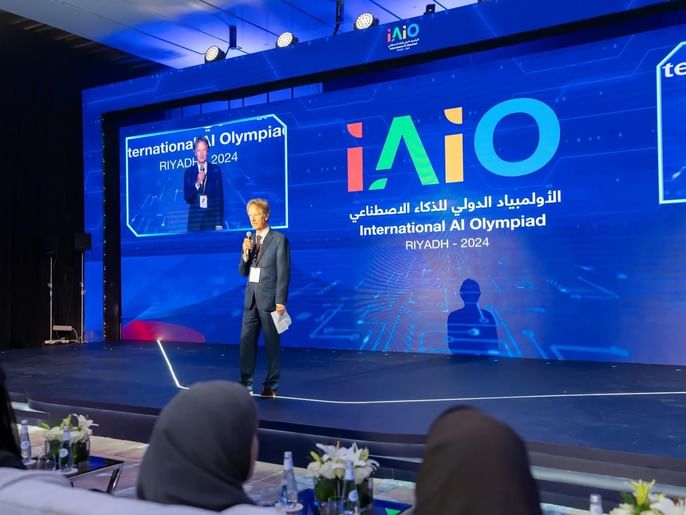
The first activities of the International Artificial Intelligence Olympiad (IAIO) began yesterday, Sunday, which is organized by the Kingdom of Saudi Arabia, represented by the Saudi Data and Artificial Intelligence Authority (SDAIA), for the first time in the world, in cooperation with the International Center for Research and Ethics in Artificial Intelligence (ICAIRE) and the International Research Center for Artificial Intelligence in Slovenia, and under the auspices of the United Nations Educational, Scientific and Cultural Organization (UNESCO), with the participation of more than 25 countries.
The Saudi Press Agency (SPA) reported that the Olympiad, which will continue until September 12, 2024, contributes to strengthening friendly international relations between technology and software experts and artificial intelligence teachers in various countries, drawing the attention of young people to these modern technologies, and encouraging other countries to organize similar competitions in the future.
The Olympiad aims to motivate participants to engage in active discussions to explore the various applications of artificial intelligence, and encourage exceptionally talented young people in this field, which is of increasing global interest.
It also contributes to enhancing the organization of artificial intelligence competitions for secondary school students, and motivating them to find smart solutions by designing algorithms based on learning, data structuring, and programming.
The Olympiad enables male and female students, artificial intelligence specialists, and influencers in the world to delve into the future landscape of artificial intelligence, keep pace with the rapid changes the world is witnessing in this field, and provide young cadres with modern technical skills