Arabs & Arabian Records Aggregator. Chronicler. Milestones of the 25 Countries of the Arabic Speaking World (official / co-official). AGCC. MENA. Global. Ist's to Top 10's. Records. Read & Enjoy./ www.arabianrecords.org
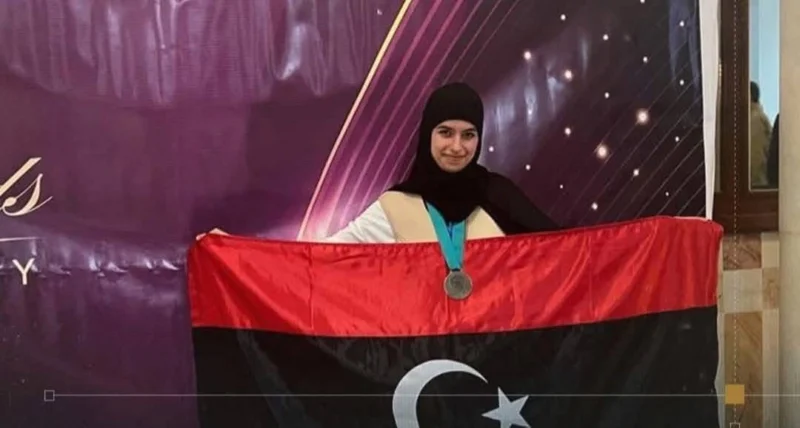
A young Libyan scientist has secured a bronze medal at the International Festival of Science and Technology (I-FEST) 2025 in Tunisia after developing a patented natural antibiotic.
Halima Al-Khazali, 18, from Bayda, claimed third place among 800 international competitors for her invention of an antibiotic derived from wormwood and other herbs. Her achievement adds to Libya’s growing reputation in scientific innovation.
The breakthrough came after five months of rigorous research into a traditional Libyan remedy for dental infections, culminating in Al-Khazali obtaining a patent for her discovery.
This latest success follows her previous gold medal at the Bosnia and Herzegovina Science Olympiad (BOSEPO) 2025, where she finished first among 300 participants.
Al-Khazali’s accomplishments highlight both her exceptional scientific talent and Libya’s potential contributions to global scientific research, making her an inspirational figure for young people across Libya and the broader Arab world.
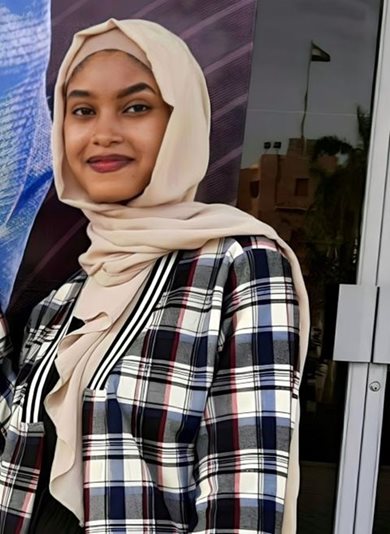
Sara Albagir Abdalla Mohammed is many things—a student, a scientist, an ASM Young Ambassador—but, above all, she is unstoppable. Amid ongoing socio-political upheaval and conflict in her home of Sudan, she is determined to advance her own microbiology journey and ensure others can do the same.
“The challenges I’ve faced have ultimately shaped me into a more resilient and adaptable microbiologist,” Albagir Abdalla Mohammed said. “These experiences have strengthened my commitment to making science accessible to those in resource-limited settings and finding innovative ways to promote scientific development, even in the face of adversity.”
Her penchant for tackling scientific challenges predates her academic activities. As a child, Albagir Aballa Mohammed wanted to find treatments for “untreatable” diseases, though it was during her high school biology classes—where she learned about the intricate complexities of the human body—that her interest in health sciences blossomed. She took that interest and ran with it, going on to pursue a degree in medical laboratory sciences at the University of Khartoum.
Albagir Abdalla Mohammed began her college career by diving head-first into disciplines ranging from hematology to clinical chemistry, though medical microbiology and immunology really drew her in. “I became particularly interested in how such tiny beings [i.e., microbes] could have massive impacts on global health systems. This contrast between the micro and the macro fueled my desire to understand how microbiology could contribute to solving some of the world’s most pressing problems,” she shared. Her experience training in laboratories at Ibn Sina Specialized Hospital—one of Sudan’s largest hospitals for liver diseases, including those caused by microbes like hepatitis B virus—solidified her decision to specialize in medical microbiology.
But, as certain as Albagir Abdalla Mohammed was about her chosen educational path, external circumstances have made the road difficult to navigate. The Sudanese December Revolution shut down the education system in Sudan for almost 2 years; the COVID-19 pandemic tacked on another year. Then, in April 2023, as Albagir Abdalla Mohammed neared the end of earning her degree, conflict broke out in her home of Khartoum, Sudan’s capital. The conflict has displaced over 10 million people, with Albagir Abdalla Mohammed—who was forced to relocate to a rural area—among them.
“Over the past year and a half, I’ve faced ongoing disruption, displacement and uncertainty,” she shared. “This was an especially difficult time, as I was so close to completing my education and reaching my long-awaited goal of graduation. My academic journey, originally planned to take 4 years, [has] stretched into over 6 due to these repeated interruptions.”
Yet, for each obstacle thrown in her path, Albagir Abdalla Mohammed has found ways to continue her scientific development. “I refused to let my educational journey come to a complete halt. I have continued learning, even under challenging conditions with poor internet connectivity in the rural area I’m in,” she said, noting that she has completed various online programs and specializations in public health, epidemiology and data analytics.
What’s striking about Albagir Abdalla Mohammed is that she is not just concerned about her own scientific advancement. She is also invested in the future of countless scientists facing similar circumstances. When universities in war-affected regions of Sudan closed, she watched as her peers lost hope and disengaged from their academic paths. For Albagir Abdalla Mohammed, this was a call to action. “I was determined to keep microbiology alive in Sudan, even amid these challenges.”
Fueled by this determination, she founded MicroGen, an online initiative aimed at empowering early-career microbiologists in Sudan through career guidance, professional development and capacity-building opportunities. Now with a community of 5,000 students and professionals from over 50 Sudanese universities and institutions, MicroGen has hosted informational sessions about various microbiology career paths, highlighting connections between the diverse scientists, disciplines and roles spanning the microbial sciences.
Such interconnectivity has been foundational to Albagir Abdalla Mohammed’s efforts. She considers a strong network of peers and collaborators instrumental for navigating obstacles and creating new opportunities, and credits the ASM Young Ambassador program, with its vast global community of scientists, with helping her build that network. As Young Ambassador to Sudan (an appointment she considers one of the most pivotal moments of her career), Albagir Abdalla Mohammed has focused on leveraging her platform to “increase the engagement of Sudanese microbiologists within ASM and promote its mission of advancing the microbial sciences.”
To say she has been successful in this mission is an understatement. A free online Bioinformatics Workshop she organized in the summer of 2024 attracted a whopping 1,144 participants—over 700 from Sudan and the rest from 32 other countries—and resulted in 865 new ASM members. Albagir Abdalla Mohammed designed the workshop to meet the needs of Sudanese microbiologists who are unable to conduct lab-based research. “By focusing on in silico research, participants were empowered to use computational tools to simulate biological processes, analyze large datasets and conduct meaningful research without the need for fully equipped laboratories,” she said.
Feedback from the event, where participants learned everything from how to analyze microbial genomes, to the ins and outs of bioinformatic data interpretation, was overwhelmingly positive. One participant from Sudan wrote that the workshop was “comprehensive and nicely delivered, even with the war running in the background,” adding that they no longer “feel really stuck, nor [that] the world is steps ahead of me.”
For her part, Albagir Abdalla Mohammed learned that “with the right approach, it is possible to sustain research momentum even in the most difficult circumstances, and that the scientific spirit of curiosity and perseverance can thrive in adversity.”
In many ways, she embodies this spirit of curiosity and perseverance. This is evident not just from her work with MicroGen and the ASM Young Ambassador program, but also from other endeavors. Case in point: Albagir Abdalla Mohammed was behind the effort that led to a collaboration between the non-profit organizations HealthGoes Global and Partners for World Health . The partnership resulted in the shipment of over $340,000 worth of essential medical supplies to aid Sudan’s overwrought health care system. She was also recently appointed a Champion for the Microbiological Society in the U.K. and is currently organizing Sudan’s first national symposium on antimicrobial resistance (AMR), aimed at fostering collaboration among Sudanese microbiologists and health care professionals to address the AMR crisis.
The throughline here? Albagir Abdalla Mohammed is a force, a passionate science advocate. She may be early in her career, but that hasn’t stopped her from taking on leadership roles to enact change. She encourages other future and early-career scientists to adopt a similar outlook.
“Never underestimate your abilities and know that leadership isn’t confined to titles or seniority; it’s about how you contribute, collaborate and support others, regardless of your career stage,” she said. “Often, early-career scientists feel they need to wait for a certain level of experience or recognition before stepping into leadership roles, but that’s not the case. Leadership comes from taking initiative, sharing your ideas and offering guidance—even as a student or young professional.”
Still, while showing initiative as a young scientist is crucial for advancement, Albagir Abdalla Mohammed acknowledged barriers that can slow forward motion. She pointed specifically to the limited number of mentorship and training opportunities for undergraduates like her, as many are geared toward graduate students and advanced professionals. Investments in these advanced scientists is imperative, she noted, but such focus means young scientists at formative stages of their development can get left behind. This is felt strongly in countries like Sudan, where political instability and conflict can extend an undergraduate degree to 6-8 years.
“These delays hinder access to mentorship and resources, and the lack of available opportunities further reinforces these existing barriers, leaving talented students behind and limiting their ability to participate in the global scientific community,” Albagir Abdalla Mohammed explained. “Addressing this gap is essential to fostering a truly inclusive STEM field. Empowering undergraduates, particularly those from underrepresented regions, will not only cultivate diverse talent, but also enrich the global scientific dialogue with fresh perspectives and ideas,” all of which are paramount for propelling science forward to solve big problems.
To that end, Albagir Abdalla Mohammed, who is Sudanese, Muslim, identifies as African and speaks Arabic as her native language, considers diversity in all its forms the cornerstone of innovation. She advised scientists at every career stage to view their background as an asset, not a limitation, highlighting that all the pieces that make her who she is have inspired her work. “My faith emphasizes the values of compassion, community and social responsibility, motivating me to uplift marginalized voices and create inclusive spaces where everyone has the opportunity to contribute and thrive,” she shared.
It doesn’t take much to see that Albagir Abdalla Mohammed is a bright light—and the future of microbiology is brighter because of her. Wherever her path takes her next, one thing is certain: she won’t give up. And she encourages other young scientists not to give up either. “The journey in science will likely present challenges, including systemic barriers, limited resources or unexpected disruptions. In those moments, persistence and resilience are key. Let the obstacles you face shape you into a stronger, more adaptable version of yourself.”
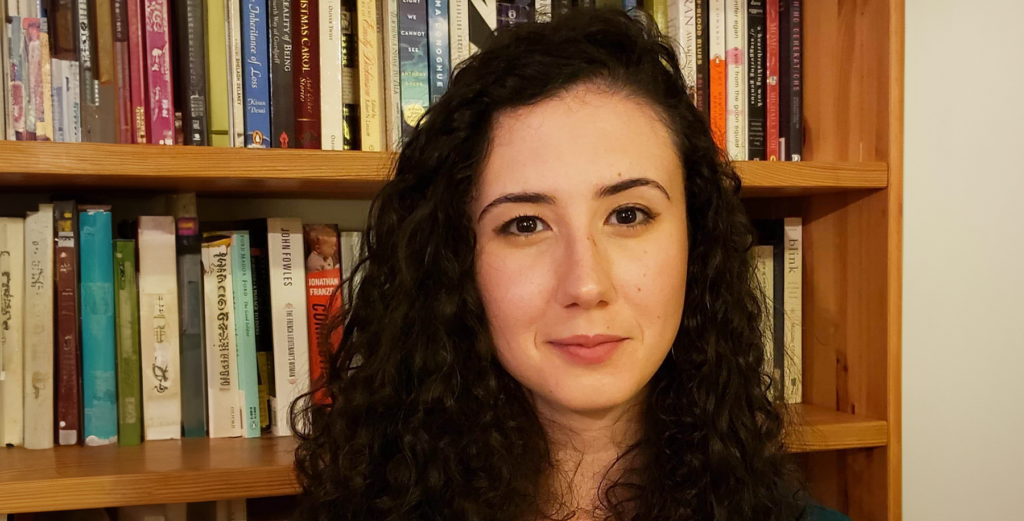
When Dr. Myriam Khalfallah arrived in Vancouver from Tunisia in 2013, she had just earned a bachelor’s degree as an agronomic engineer specializing in fisheries and environment at the National Agronomic Institute of Tunisia (INAT), the University of Carthage. She visited UBC in hopes of meeting Dr. Daniel Pauly, the internationally recognized fisheries scientist—Dr. Khalfallah had used his methods during her engineering practicum work and wanted to meet one of her research inspirations.
The two met, speaking in French, one of Dr. Pauly’s native tongues, before switching to English. He then asked if Dr. Khalfallah mastered scientific Arabic, as Tunisian universities and research institutions are usually French speaking. She did. It turned out that Dr. Pauly needed someone who spoke all three languages to collect fisheries data from Arabic-speaking countries. Dr. Khalfallah landed the job.
“That was the start of the whole thing,” she recalls. “Daniel said, if you do well on this project, maybe I’ll take you as a student. I went back to Tunisia and applied for a work permit and my whole life changed.”
Similarly to most economically developing countries, fisheries data from North Africa, the southern Mediterranean, and the Arabian Peninsula is not always accessible to the international scientific community, notably due to language barriers, publication costs, and funding. Data does exist, but finding it and leveraging it for research takes language skills and to a certain extent a strong personal network. Dr. Khalfallah had both. Her work went well and Dr. Pauly accepted her as a graduate student.
But there was a problem. During her undergraduate studies in Tunisia, a revolution was ignited against the country’s dictatorship. Dr. Khalfallah had been the elected student representative and ombudsperson at her university.
“Tunisia was living under a strict dictatorship at the time,” Myriam says. “We had no right to speak up. The internet was almost fully censored, as were most of the media. Journalists were jailed. It was really awful”.
“I was involved with the demonstrations and doing my best to defend student and human rights. Some professors didn’t understand the role of the student representative and ombudsperson. When I told my professors about the changes that the students wanted, some thought that I was individually calling for change. Obviously, there can be retaliation—when I applied to UBC, my relationships back home made it difficult for me to get into another university.”
Due to her low grades, notably due to the revolution, UBC rejected Dr. Khalfallah’s initial application to graduate school. So Dr. Pauly stepped in.
“Daniel wrote letters for me, as did the dean of my previous university, and a few Tunisian professors, telling UBC they should give me a chance because what happened in Tunisia made things very difficult for everyone.”
The letters of support had the desired effect. Dr. Khalfallah began work on her Master’s of Science degree at UBC’s Institute for Resources, Environment and Sustainability, where she carried on reconstructing fisheries catch data from Arabic-speaking countries, estimating the amount of unreported catch—fish that are caught and not officially accounted for by official statistics.
“Methods used in Western countries aren’t always applicable in the rest of the world,” Dr. Khalfallah notes. “But now there are increasingly newer methods, such as those we use at our research unit, the Sea Around Us , that makes the most of data that is usually overlooked. An interesting part of this work involves collaborating with scientists from all over the world and bridging the gap between data-rich and data-poor regions.”
As her research progressed, she and Dr. Pauly realized that her initial plan—a 17-nation study—was too big for a master’s thesis. So Dr. Khalfallah applied to fast track her research directly to a PhD which required good grades, publications, and strong references.
She defended her thesis on March 26, 2020—the second week of the COVID lockdown when UBC shifted all defenses to Zoom for the first time—and graduated with a PhD in Natural Resource Management and Environmental Studies. After graduation Dr. Khalfallah followed through with post doctorate research, also at UBC, working online to unravel the effects of foreign fishing fleets and aquaculture on West African fisheries.
“Like many scientists then, I was unable to get funding to extend my postdoc as a lot of science funding was going towards medical research and stopping COVID” she says. “Some friends of mine who knew the author Margaret Atwood kindly told her about my postdoc and asked if she knew of anyone who could fund my research. And she offered to do it! She was amazing.”
Dr. Khalfallah currently works with the NGO FHI360 as a marine climate change specialist on the project Sharing Underutilized Resources with Fishers and Farmers (SURF). This project supports Tunisia’s efforts to adapt fisheries and agriculture to climate change and is one of the first of its kind in North Africa to be funded by the U.S. Department of State.
“Climate change is impacting North Africa at a very fast pace,” she says. “Water is getting scarcer by the day. Fishes are moving from the Red Sea to the Mediterranean, replacing native species. In some regions there are almost no fish anymore because overfishing, climate change, and pollution are a very bad combination.”
“I’m trying to either find other, sustainable livelihoods for artisanal fishers, or find a way for them to fish sustainably. Whatever happens in North Africa due to climate change will happen in the rest of the world at certain points. If we can find a way to help them adapt in one way or another, then those ways could potentially be applied in other places where the climate situation deteriorates.”
Dr. Khalfallah recently became a Canadian citizen and lives in Vancouver when not travelling for work. She was recently selected to be one of the alumni representatives of the Faculty of Science at the 2023 Fall Graduation ceremony, 10 years after she first set foot in Canada and UBC.
“I was quite surprised and honored by the invitation and it was an amazing experience.”
For those who have moved here recently and are starting their research career, she has some advice:
“International students have the stress of surviving, often alone, in new foreign environments, all while successfully completing their studies and research; and sometimes it is very difficult to see the light at the end of the tunnel. But I want to say that the light is there. Be persistent and ask for help when needed. Great things are achieved in small steps. Think about just doing one step at a time, and when you look back, you’ll see that you have actually achieved a lot without even realizing it!”
Trailblazing Jordanian-British research fellow reveals that her prescription for success requires dispensing – but only with tradition.
Most Damascene moments are dramatic by definition but few occur, as Atheer Awad’s did, on an actual road that leads to the Syrian capital.
Her own turning point came when the vehicle she was travelling in with her family to register for university in Amman blew a tyre, hit an electricity pole and flipped several times.
The accident meant that Awad ended up in hospital and missed the window to sign up to study medicine. By the time she was discharged, the only degree option still open to her was pharmacy.
Though bitterly disappointed at the time, she has come to believe that there were greater forces at work on the day of the crash on Jordan Street.
“Let’s just say we put our car to the test,” Awad tells The National. “It was a complete wreck. We are lucky to be alive.
“But it wasn’t meant to be that I should study medicine. I took the car accident as a sign that the future held better things for me.”
As a result, she was steered into an unexpected career in which the eventualresearch fellow at University College London would amass numerous accolades: the Journal of Clinical Medicine‘s 2021 PhD Thesis award; an appearance on the Forbes 30 Under 30 list for Europe; reaching the finals in the Women of the Future awards 2022 in the science category; named as an International Pharmaceutical Federation FIPWise Rising Star for 2022 as well as one of the top 15 outstanding innovators under the age of 35 by the MIT Technology Review.
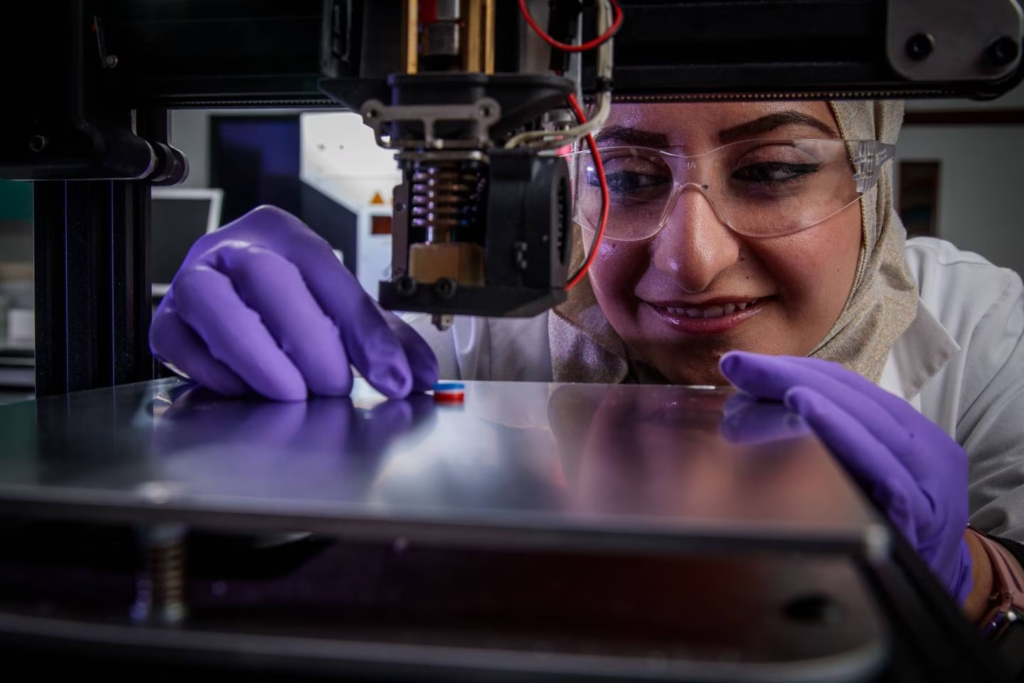
Her groundbreaking research is paving the way towards the creation of personalised medication that can be 3D-printed in patients’ homes via smartphone — a potentially transformative innovation for those who find it hard to gain access to health care or don’t suit a one-size-fits-all service.
Born in Abu Dhabi and raised in Dubai by Jordanian parents, her hand was always first in the air in class when volunteers were sought to dissect animals at Al Mawakeb School in Garhoud.
It was an early display of Awad’s enthusiasm for the sciences, particularly biology, and a prelude to her ambition of becoming a heart surgeon.
“I was so determined to make a difference and medicine is one of those industries that has a greater impact when it comes to changing people’s lives,” she says.
“There is never a boring day with science because every day is a new learning experience.
“You come across things that you haven’t discovered before or create new stuff by just playing around with things in the lab and mixing them together. It’s that sort of curiosity that motivates me.”
Back then, holidays were regularly spent visiting Jordan — trips that Awad still makes annually to catch up with extended family, go to weddings and indulge a soft spot for the local food.
“I love those traditional connections,” she says, “and still follow as many of these practices as I can, wherever I am.
“My faith helps a lot. But it isn’t easy trying to keep a balance between sticking to faith and being able to live in a foreign country.”
Moving to England wasn’t as daunting as it might have been without the unwavering support of her parents and four older siblings — a pharmacist, a consultant with whom she lived until recently, an IT specialist and a doctor.
“It is rare for all of us to be in the same country at the same time,” she says, laughing. “We travel between the three countries and there is always at least one of us living in each of the three. That makes it interesting for my parents, who get to travel everywhere.”
Awad herself, now 29, is a keen traveller and has put on her bucket list the wish to visit every country in Europe before turning her sights to other continents.
She fell in love with Turkey after a trip to Cappadocia, the semi-arid central region known for its “fairy chimney” rock formations, and particularly enjoys explorations on foot.
London, however, holds a special place in her heart, where there is, she points out, a big Jordanian community.
“I have a lot of friends I consider my second family. They’re a mixture of scientists, people outside work, and others with Jordanian or Arab heritage. That keeps me connected to my roots and it is one of the beauties of London — it’s international.”
But she calls Dubai home and makes many happy returns to Living Legends, a newly developed 14 million-square-foot community on the outskirts of the city where her parents still live.
Part of the appeal of the emirate, it should be said, is the chance to hit the luxury shops. Dior and Prada are favourites — her handbag collection alone extends to “about 40 or 50 … I’ve lost count” — and the Swarovski-encrusted mobile phone she takes everywhere is a particularly prized purchase.
Invariably, though, one of the first stops is to fill up on luqaimat, known as awama in the Levant. She has sampled the sugary doughnuts wherever she finds them but maintains that the ones whipped up for as long as Awad can remember by her mum, Hanan Swais, “are the best”.
They were an abiding taste of a childhood in which the extroverted Awad, left to explore her own interests by her father, Jamal, an electronics retailer, and Hanan, a homemaker, played the piano exuberantly if not with any notable proficiency and went on Scouting expeditions.
There was never an expectation that she would follow in the footsteps of any of her siblings but the desire to pursue medicine was strong nonetheless.
“It wasn’t until we were discharged from hospital [after the car accident] that I realised I had missed the deadline,” she says. “There was no going back in time. I just thought: ‘What’s the next best option?’
“That’s why I always say I did not choose pharmacy — it chose me.”
Despite a reluctant start, Awad’s enthusiasm grew throughout a five-year degree at the private Applied Science University in Amman as she gained insight into the extent of what pharmacists could actually do.
“I started looking at pharmacy as having a bigger impact than I had previously thought,” she says.
“People sometimes look at pharmacists as if they are beneath or less important than doctors when, in fact, they do most of the work behind the scenes.”
Little by little, with the consolidation of hours of satisfying sessions spent researching in laboratories or learning about the differences in the properties of various drugs, it dawned on Awad that she had stumbled across her calling.
Which is not to say that she appreciated being treated as little more than a saleswoman while doing work experience in a community pharmacy during the degree course.
“People assume that the pharmacist just takes the prescription and gets the medication without doing anything else,” she says. “There is a misconception.”
The experience hardened Awad’s resolve to focus on research rather than the direct, community-facing side of the profession.
After graduation in 2015, she embarked on a master’s in pharmaceutics and drug design at UCL, where she learnt about 3D printing during an end-of-year project with her professor, Abdul Basit.
She was inspired to keep working with the Basit Research Group within the School of Pharmacy to undertake a doctorate specialising in using the drug-delivery technology in the manufacture of medicines.
“I’ve always been interested in technology so it grabbed my interest immediately,” says Awad, who is still a research fellow with the group.
Weekends when she is not working are spent dining with friends, indulging her obsession for Harry Potter — “I’ve watched all the films multiple times” — and baking. Coffee cake is her speciality and made a well-received appearance at her professor’s 50th birthday.
“I do like experimenting with baking and cooking. I think there are similarities between baking and science.”
She doesn’t rule out applying to appear on The Great British Bake Off television show but, for now, Awad’s ambitions are confined to the lab.
“I want to make a change,” she says. “I don’t want 3D printing to stay a theory. I want to see it being implemented and taken up by healthcare agencies.”
Most recently, Awad has been printing tablets with Braille and moon patterns on their surfaces for visually impaired patients, or changing their shape, size and colour so that children or those with limited capacity find them easier to take. She has also been researching how to combine several medications into a single pill.
One of her team’s successes has been in creating tablets that can be swallowed without water. Manufactured in partnership with pharmaceutical 3D-printing specialist FabRx by melting powder particles with a laser beam and using heat, the porous product dissolves on the tongue.
She talks about how 3D printing allows alterations of a fraction of a milligram, making medication much more tailored and precise than the standard variety available off the shelf.
“Every person is different and our bodies do not react the same,” Awad says. “The requirements when it comes to medication differ, and sometimes they differ within the same person, depending on the disease progression.
“We can also take patients’ preferences into consideration. That’s important when it comes to children or elderly patients. Often children refuse to take medicine because they don’t like the taste, the shape isn’t appealing or the pill might be too big.”
While 3D printing for customised pharmaceuticals has yet to be introduced commercially in the UK, Awad’s UCL team has managed to convert a smartphone into an on-demand 3D drug printer with an app that could be used in remote GP surgeries and even at home.
“We’re not far from the industry adopting 3D printing, probably in the next two to five years,” she says. “Approval will have to be on a medication-by-medication basis because each medicine could behave differently to the same technology, depending on its properties, and the 3D-printing technologies themselves differ.”
Awad’s passion for her work is tangible. The British-American analytics company Clarivate clearly thought so when last month listing her on its influential Highly Cited 2022. It was a remarkable achievement for such a young scientist to appear among fewer than 0.1 per cent of the world’s researchers across 21 fields.
Such recognition is welcome but, she says, the many “titles are more of an assurance that I am on the right track and that my work is important”.
“That’s the driving force to keep me moving forward and become even more ambitious to try new things,” she says.
One of her guiding principles is that researchers should be brave and adopt different approaches because even the most “ridiculous” ideas can be turned into brilliant inventions or innovations.
As she has been known to opine, not all scientific breakthroughs happen through planned research: “Sometimes, you come across things by accident.”
Given the route into her career in pharmaceuticals, it could be said that Awad started very much as she meant to continue.
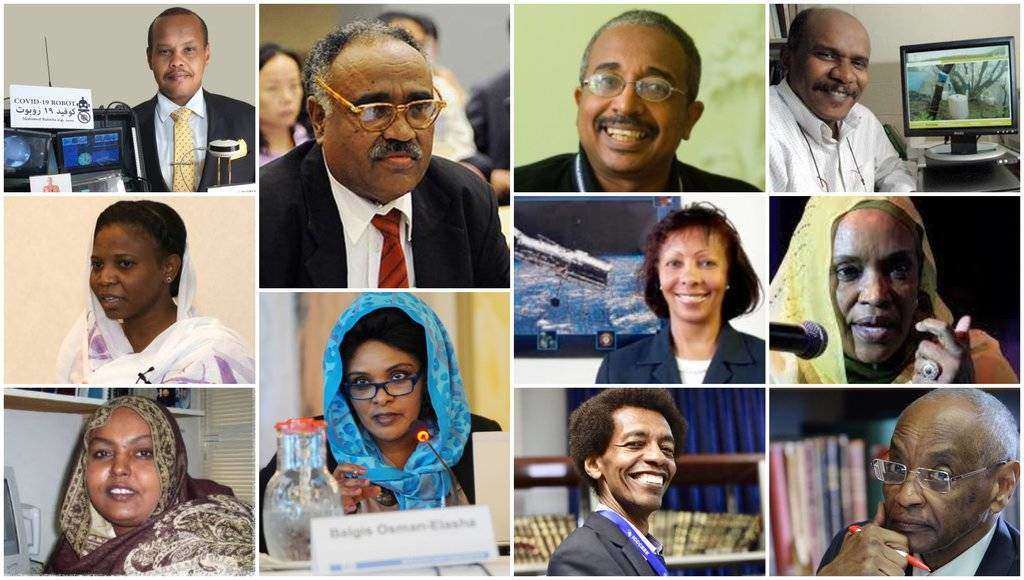
Scientists play one of the most significant roles in our world, most importantly today as we deal with a pandemic that has taken the lives of more than 300,000 people. Throughout history, there have been many accomplished and inspiring Sudanese scientists who have changed our understanding of the world around us with their research, discoveries and tangible impact.
Here are some internationally acclaimed Sudanese scientists in Sudan and across the world that you should know about:
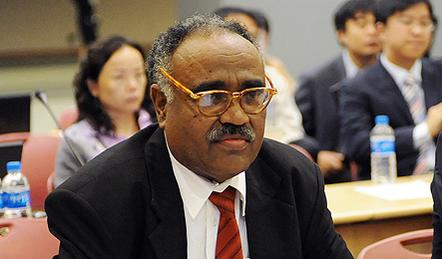
Ismail Abdel Rahim El Gizouli
Image source: Ismail El Gizouli
Ismail Abdel Rahim El Gizouli is an energy and environment specialist. He was member of the bureau of the Intergovernmental Panel on Climate Change (IPCC) from 2002 to 2008 and was re-elected for another term from 2008 to 2015. He then acted as interim chairman of the IPCC in 2015. In addition, he was the vice-chair of the Facilitative Branch of the Compliance Committee of the UNFCCC from 2005 to 2007 and was the Chair of the Facilitative Branch and Co-Chair of the Compliance Committee of UNFCCC from 2007 to 2009.
He received a Bachelor of Science in Mathematic and Physics from the University of Khartoum in 1971 and a Master of Science in Operation Research & Statistics from the University of Aston in Birmingham, UK in 1980.
El Gizouli worked as a freelancer and conducted many consultancies for the African Development Bank, World Bank, UNEP, FAO and African Energy Policy Research Network (AFREPRN). In 1998, he joined The Higher Council for Environment and Natural Resources in Sudan as a consultant on all UNDP-Government joint climate change projects.
He has participated in many international, regional and national conferences, meetings and symposiums in industry planning, sustainable development, energy, environment and climate change. In addition, he published many papers and is one of four authors of two energy-related books published by ZED Books England. He also contributed as Review Editor to many IPCC Reports including Safeguarding the Ozone Layer and the Global Climate System, Carbon Dioxide Capture and Storage (Main Report and Technical Summary), Working Group III contribution to the Fourth Assessment Report (Mitigation of Climate Change) and Fourth Assessment Synthesis Report.
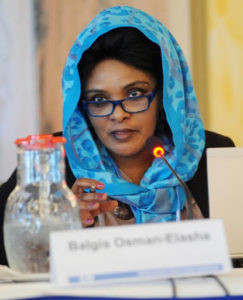
Dr Balgis Osman Elasha
Dr Balgis Osman-Elashais senior scientist at the forefront of global research on climate change. She has been a climate change expert at the Compliance and Safeguards Division at the African Development Bank (AfDB) since 2009. She holds a PhD in Forestry Science, a master’s degree in Environmental Science, and a Bachelor of Science with honour in Forestry and Agricultural Science. She has more than 17 years of experience in the field of climate change with a special focus on vulnerability and adaptation assessment related to African countries and the Middle East, emphasising the human dimension of global environmental changes.
Dr Osman-Elasha has reviewed a number of scientific papers to Elsevier and other highly reputable journals as well as a guest editor to a number of scientific publications. Before joining the African Development Bank, she was a senior researcher at the Higher Council for Environment and Natural Resources (HCENR)-Sudan. Her research focuses on vulnerability and adaptation assessment in drought-prone in Africa.
Dr Osman-Elasha is the winner of the UNEP Champions of the Earth Award for outstanding environmentalists and the winner of Lead Authors-Nobel Peace Prize. She is also a member of the International Panel on Climate Change (IPCC).
Professor Elfatih Eltahir
Professor Elfatih Eltahir is the Breene M Kerr Professor of Hydrology and Climate at Massachusetts Institute of Technology (MIT) with a focus on sustainable development in Africa. Elfatih earned a Bachelor of Science in civil engineering from the University of Khartoum, a Master of Science in hydrology from the National University of Ireland, and a Master of Science in meteorology and a Doctor of Science (Sc.D) in Hydroclimatology from MIT.
Professor Eltahir received the US Presidential Early Career Award in 1997. He is an elected fellow of the American Geophysical Union, and a member of the Sudanese National Academy of Science. He is a member of the Scientific Council of the International Center of Theoretical Physics in Trieste, Italy. In 1999, Professor Eltahir received the Kuwait Prize in Applied Sciences for his work on Climate Change, making him the youngest person to receive this prestigious prize, offered to scientists from Arab countries. In 2017, Professor Eltahir received the Hydrologic Sciences Award from the American Geophysical Union.
Dr Hiba Salah-Eldin Mohamed
Image source: iend.org
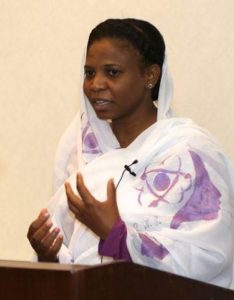
Dr Hiba Salah-Eldin Mohamed is a molecular biologist at the University of Khartoum. She studied zoology at the university, earning a bachelor’s degree in 1993, followed by a master’s degree in 1998. She then received her PhD from the University of Cambridge Institute for Medical Research (CIMR) in Cambridge, the UK in 2002. Her doctoral research, “The Role of Host Genetics in Susceptibility to Kala-azar in Sudan”, was under the supervision of Jenefer Blackwell, a well-known Professor of Molecular Parasitology. Mohamed remained at the CIMR as a postdoctoral fellow. She, along with Professor Blackwell, were later awarded the Wellcome Trust Research Development Award (2004-2007). She then moved back to Sudan and joined the University of Khartoum to be a professor in the Department of Molecular Biology.
Mohamed was awarded the 2007 Royal Society Pfizer Award for her research on understanding the genetics of kala-azar, which is also known as Visceral Leishmaniasis (VL). In 2010, Mohamed was appointed a Fellow of the Global Young Academy.
Dr Abdel Rahman’s breakthrough in growing sugar cane method involved taking cells from plant leaves, shoots or roots and growing them in a liquid culture to produce artificial seeds able to germinate. Her results and patented techniques garnered global attention and attracted interest from huge research and production companies across the world. The breakthrough led to cheaper and more productive cultivation in developing countries.
Dr Abdel Rahman passed away in 2015 at the age 59 in the UK after a fight against cancer.
Professor Mohamed H A Hassan
Image source: TWAS
Professor Mohamed H A Hassan is co-chair of the InterAcademy Partnership (IAP), a global network of science academies, and Chairman of the Council of the United Nations University (UNU).
He received his higher education in the UK from Newcastle University and University of Oxford. After obtaining his Doctor of Philosophy in Mathematics from the University of Oxford, he returned to Sudan to lecture at the University of Khartoum. He later became the Dean of the School of Mathematical Sciences at the university.
Professor Hassan has published several articles in Theoretical Plasma Physics and Fusion Energy; Wind Erosion, Dust and Sand Transport in Dry Lands; and Science and Technology in the Developing World.
He was the founding Executive Director of The World Academy of Sciences (TWAS), President of the African Academy of Sciences, and Chairman of the Honorary Presidential Advisory Council for Science and Technology in Nigeria.
He also serves on a number of boards of international organisations worldwide, including Global Change System for Analysis, Research and Training (START) in the USA; Bibliotheca in Alexandrina in Egypt; the Council of Science and Technology in Society (STS) Forum in Japan; the International Science Programme in Sweden; the Science Initiative Group (SIG) in the USA; and the Centre for International Development (ZEF) in Germany. He is a member of several merit-based academies of science, including TWAS; the African Academy of Sciences; Islamic World Academy of Sciences; Academia Colombiana deCiencias Exactas, ísicas y Naturales; AcadémieRoyale des Sciences d’Outre-Mer, Belgium; Pakistan Academy of Sciences; Academy of Sciences of Lebanon; Cuban Academy of Sciences; and Academy of Sciences of South Africa.
Mohamed Osman Baloola
Image source: Mohamed Osman Baloola’s Facebook page
Engineer Mohammed Osman Baloola is a Sudanese scientist and inventor who was named among The World’s 500 Most influential Arabs in 2012 and 2013 for his work on diabetes ‘remote monitoring and control system for diabetes symptoms’. He has been a Teaching Assistant of Biomedical Engineering at the Ajman University of Science and Technology since 2010. Baloola won a science and innovation award at the Arabian Business Awards 2011 in Dubai. In addition, he won AED40,000 (USD11,000) during a Sharjah Television competition for his invention of a remote monitoring and control system for diabetes patients via mobile phone.
Baloola received a Bachelor of Science in Biomedical Engineering from Ajman University of Science and Technology in 2009. He later joined Ajman University as a Teaching Assistant in the faculty of Engineering.
Dr Muntaser Ibrahim
Image source: Research Gate
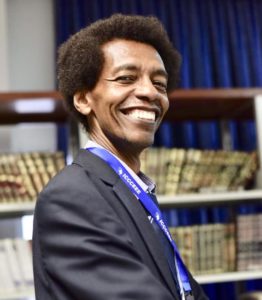
Dr Muntaseer Ibrahim is a Sudanese geneticist and professor of molecular biology at the University of Khartoum, where he leads its Institute of Endemic Diseases, a research and training centre on endemic diseases in the university. His research focuses on human genetic diversity in Africa. Dr Ibrahim is a founding member of the African Society of Human Genetics and co-founded the Sudanese National Academy of Science (SNAS). He is also a member of The World Academy of Sciences. He has co-authored more than 180 original peer-reviewed research publications, including work published in Science, Proceedings of the National Academy of Sciences, Nature, Nature Genetics, and other major journals.
Dr Nashwa Abo Alhassan Eassa
Image source: Picuki
Dr Nashwa Abo Alhassan Eassa is an assistant professor of physics at Al-Neelain University in Khartoum. She received a Bachelor of Science in physics from the University of Khartoum, a Master of Science in nanotechnology and materials physics from Sweden’s Linköping University, followed by a PhD from Nelson Mandela Metropolitan University (NMMU) in South Africa.
Dr Eassa founded the non-governmental organisation ‘Sudanese Women in Sciences’ and is a member of Organization for Women in Science for the Developing World’s South African Institute of Physics. In 2015, Dr Eassa won the Elsevier Foundation Award for Early Career Women Scientists in the Developing World. She has been a candidate as Arab Countries Vice-President for Organization for Women in Science for the Developing World.
Professor Widad Ibrahim Elmahboub
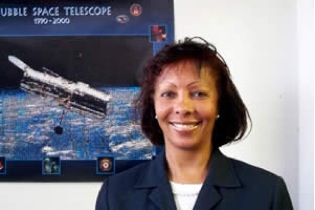
Professor Widad Ibrahim Elmahboub is a great scientist and astrophysicist. She has proved herself as a distinguished and competent scholar and scientist in her field. Having finished her college studies in applied mathematics and astrophysics in Sudan and Egypt, she was received a master’s degree in Engineering Physics by Wisconsin-Madison University, followed by a doctorate degree in astrophysical engineering.
Prof Elmahboub started her scientific career as a professor of astrophysics and remote sensing systems at Hampton University. Then she moved on to the research and analysis of planetary components at NASA with the main focus on enhancing the accuracy of satellite-based remote sensing imaging and data. Prof. Elmahboub has introduced a highly accurate computer-simulated mathematical model followed by the implementation of the algorithm and atmospheric correction method which enabled scientists and astrophysicists to obtain much more accurate and refined satellite images of Mars surface. Additionally, Prof Elmahboub has authored, co-authored and edited many articles in scientific journals and periodicals on remote sensing imaging technology, spectroscopy and simulated mathematical modelling.
Professor Sharief Babiker
Image source: ICCEEE’s Facebook page
Professor Sharief Babiker is a professor in the Electronics Department at the University of Khartoum and a Chairman of the world’s largest professional association dedicated to advancing technological innovation and excellence for the benefit of humanities ‘IEEE_sudan’ Subsection.
Prof Babiker received his bachelor’s degree in electrical and electronic engineering at the University of Khartoum, a master’s degree in telecommunications and information systems obtained in Essex University, the UK, followed by a nanoelectronics PhD degree at Glasgow University, Scotland. By the end of 2000, Prof Babiker was working on submicron semiconductor devices research at the Nanoelectronics Research Centre, University of Glasgow as well as on aerospace projects at Thales Avionics, the UK.
Two Saudi Women Asrar Damdam and Lama Al-Abdi recently won awards from the L’Oreal-UNESCO for Women in Science Middle East Regional Young Talents Program for their work.
Dr. Asrar Damdam, was honored in the Ph.D. students’ category for her role in the development of a pump meant to revolutionize the way a healthy heartbeat is regulated — combining medicine, electrical engineering and electro-physics.
Dr. Lama Al-Abdi in recognition of her research on chromatin — a substance within chromosomes consisting of DNA and protein — and the regulation of genes in relation to vision loss.
______________
pix: twitter ( L t R) Dr. Lama AlAbdi and Dr. Asrar Damdam