Arabs & Arabian Records Aggregator. Chronicler. Milestones of the 25 Countries of the Arabic Speaking World (official / co-official). AGCC. MENA. Global. Ist's to Top 10's. Records. Read & Enjoy./ www.arabianrecords.org
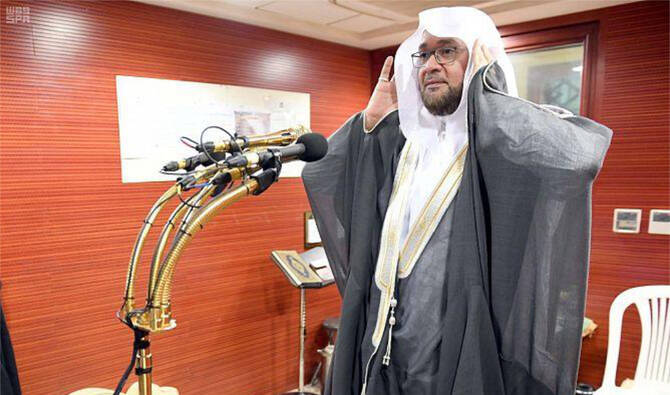
The King Abdulaziz Foundation for Research and Archives, known as Darah, has released a new book on the history of the adhan (call to prayer) and biographies of the muezzins of the Two Holy Mosques throughout the centuries.
The book was authored by Sheikh Dr. Saleh bin Abdullah bin Humaid, member of the Council of Senior Scholars and imam and preacher at the Grand Mosque.
It meticulously examines the adhan ritual in the Two Holy Mosques, covering its origins, virtues, and significance, the Saudi Press Agency reported.
The book is divided into three sections: the adhan’s history, biographies of 95 Grand Mosque muezzins, and 147 Prophet’s Mosque muezzins.
It presents biographies of muezzins who have issued the call to prayer from the time of Prophet Muhammad to the present, the SPA reported.
Drawing on credible historical sources and interviews, the author used a scientific approach to document the evolution of adhan tools and the relationship between the muezzin and the mosque.
The book also highlights the Saudi government’s support in selecting skilled muezzins and using advanced audio technology for local and global broadcasts.
This publication enriches the foundation’s collection, serving as a vital resource for researchers and those interested in the history of the Two Holy Mosques and Islamic rituals.
Egypt’s presence at Cannes Film Market wins top honour for design, programming, and industry engagement.
The Egyptian pavilion at Cannes Film Market, headed by a joint cooperation between El Gouna Film Festival, Cairo International Film Festival and the Egyptian Film Commission, has won the award for Best Pavilion Design Award during the 78th Cannes Film Festival.
Designed by cinematic set designer Shereen Farghal, and recognised over competing pavilions from 150 nations, the Egyptian pavilion was awarded for its design, curated programming, and strategic networking opportunities offered to Arab and international filmmakers.
“This award is a global recognition of the position Egyptian cinema occupies today, and of the continuous efforts we make to represent it in international contexts,” Hussein Fahmy, President of Cairo International Film Festival, said. “We made sure that the pavilion reflects the spirit of cooperation and openness to the world through a program full of dialogue, and cultural and artistic interaction, and represents a new step for Egypt’s presence in the global film industry.”
Held annually in parallel with the Cannes Film Festival, Marché du Film is a key space for co-productions, distribution deals, and film financing.
Trump described crown prince as “very great man like no other” and “greatest representative of his people”
Prince Mohammed said Kingdom looking at $600bn of investment opportunities, hoped this would raise to $1tn
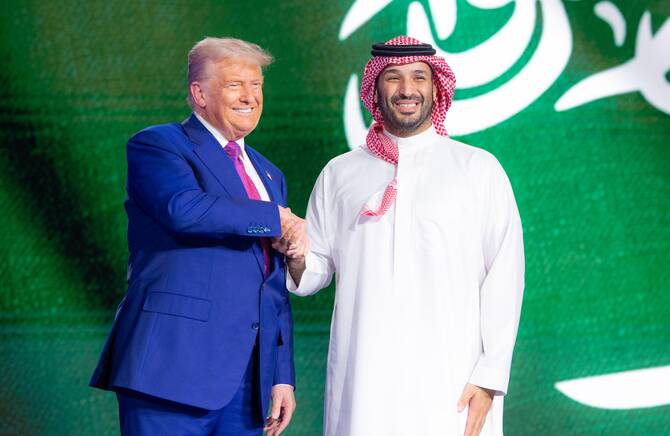
Saudi Arabia has signed deals with the US worth more than $300 billion, Crown Prince Mohammed bin Salman said at the Saudi-US Investment Forum in Riyadh on Tuesday.
During an address at the event, Prince Mohammed said the Kingdom was looking at $600 billion of investment opportunities, adding that he hoped this would raise to $1 trillion.
He noted that the US was among the largest partners of the Saudi Vision 2030 reform agenda, adding that joint investments were one of the most important pillars of the economic relationship between the two countries.
“The US is a major destination for the Public Investment Fund, accounting for approximately 40 percent of the fund’s global investments,” he said.
He also said that cooperation with Washington was not limited to economic cooperation, but also extended to “establishing peace in the region and the world.”
Also speaking at the event, US President Donald Trump praised the transformation underway in Saudi Arabia, as he attributed it to the leadership of King Salman and the crown prince.
Trump described the crown prince as a “very great man like no other” and “the greatest representative of his people,” and highlighted the role of Saudis in driving development in their own country and the region as a whole.
Trump pointed to Riyadh’s rise as a global business hub and noted that the Kingdom’s non-oil sector revenues had now surpassed those of the oil sector.
He said Saudi Arabia deserved praise for preserving its culture and tradition while also embracing its forward-looking, modern Vision 2030 reform agenda.
During his speech, Trump criticized the Biden administration for removing the Houthis from the US terrorist list, calling it a serious mistake.
He contrasted regional developments, stating: “Some (in the Gulf) have turned deserts into farms, while Iran has turned its farms into deserts,” and warned that if Iran rejected Washington’s outreach, the US would be forced to impose maximum pressure.
Condemning Hezbollah for destabilizing the region and looting Lebanon, Trump said: “The biggest and most destructive of these forces is the regime in Iran, which has caused unthinkable suffering in Syria, Lebanon, Gaza, Iraq, Yemen and beyond.”
He described Lebanon as a victim of Hezbollah and Iran and expressed a desire to help the country.
Trump also praised Saudi Arabia’s role in Russia-Ukraine peace talks and affirmed US support for the Kingdom, saying it has “a great future.”
Earlier on Tuesday, the two leaders signed a strategic economic partnership agreement in Riyadh, the first leg of Trump’s regional visit.
The partnership included the signing of Memorandums of Understanding in the energy, mining, and defense sectors.
Defense cooperation between the two countries centered on the modernization of the capabilities of the Saudi armed forces, along with an agreement between the Saudi Space Agency and NASA.
Other agreements included an MoU on mineral resources; an agreement with the Department of Justice; and cooperation on infectious diseases.
Trump arrived in Saudi Arabia Tuesday on what he called a “historic” tour of the Middle East that will mix urgent diplomacy on Gaza with huge business deals.
Saudi Crown Prince Mohammed bin Salman warmly greeted Trump as he stepped off Air Force One at King Khalid International Airport in the Saudi capital and kicked off his Middle East tour.
The two leaders then retreated to a grand hall at the Riyadh airport, where Trump and his aides were served traditional Arabic coffee by waiting attendants wearing ceremonial gun-belts.
Royal Saudi Air Force F-15s provided an honorary escort for Air Force One as it approached the kingdom’s capital. Trump and Prince Mohammed took part in a lunch at the Royal Court, gathering with guests and aides.
* With AFP and AP
source/content: arabnews.com (headline edited)
______________
Saudi Arabia has signed deals with the US worth more than $300 billion, Crown Prince Mohammed bin Salman said at the Saudi-US Investment Forum in Riyadh on Tuesday. (SPA)
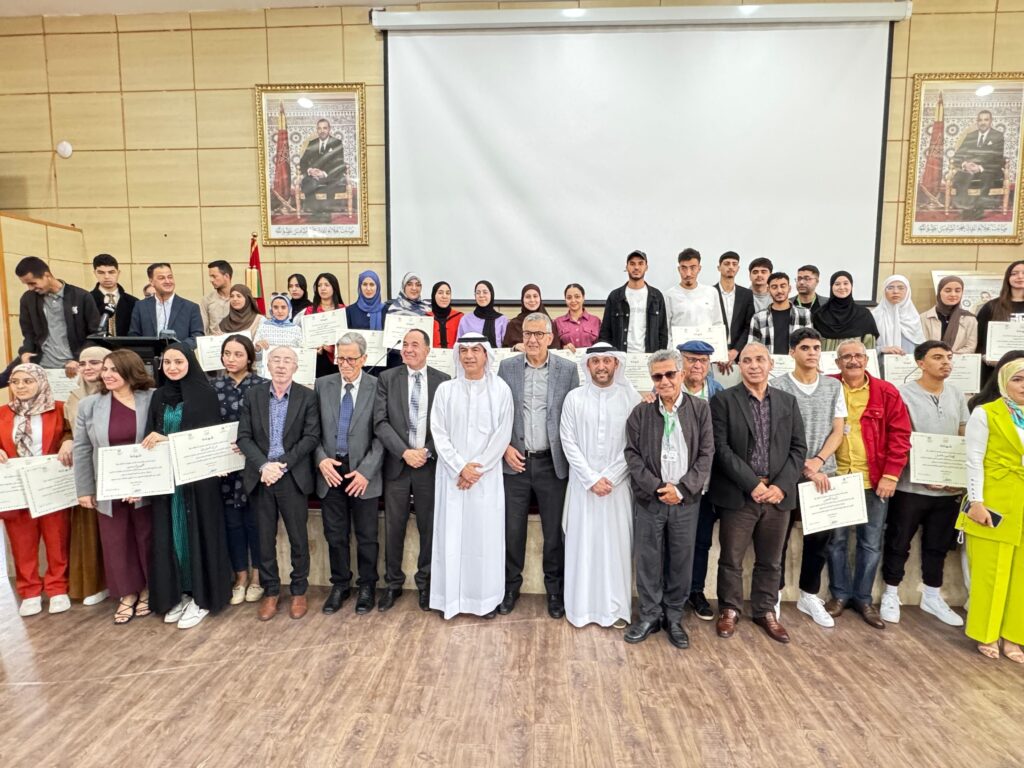
The Moroccan Poets Festival concluded its sixth edition after three days of illustrious writing and celebrating the word.
The closing ceremony was held at the National School of Crafts and Arts in Tetouan, in the presence of Abdullah bin Mohammed Al Owais, Chairman of Sharjah Department of Culture; Professor Mohammed Ibrahim Al Qaseer, Director of the Cultural Affairs Department at the Department; Rachid Al Mustafa, Head of the Cooperation Department in the Culture Sector at the Moroccan Ministry of Youth, Culture, and Communication; Dr. Youssef Al Fahri, President of the Higher School of Teachers in Martil; Mukhlis Al Sagheer, Director of the House of Poetry in Tetouan; and a large number of writers, intellectuals, and university students.
Al Sagheer pointed out that the Moroccan Poets Festival strives to innovate with each new edition, and to grow in poetry and cultural resonance in the Arab world. He highlighted that the sixth edition enjoyed a prominent official presence, alongside a public audience with a passion for poetry and art.
He explained that the House of Poetry in Tetouan, founded in 2016, affirms its tireless efforts to organise a distinguished seventh edition next year, to celebrate its tenth anniversary.
Participants in the Moroccan Poets Festival agreed that Sharjah has become a pioneering model in supporting Arab culture and actively contributing to shaping a new generation of Arab intellectuals. They emphasised that Sharjah’s cultural, intellectual, and cultural achievements over the past decades were not a coincidence, but rather the result of the broad cultural vision of His Highness Sheikh Dr. Sultan bin Mohammed Al Qasimi, Supreme Council Member and Ruler of Sharjah. His Highness believes that culture is the cornerstone of human and societal development.
Participants believe that Sharjah’s experience represents a model to be emulated, as it has not only supported cultural production but has also strived to create an integrated knowledge environment that attracts new generations and instils in them a love of reading, thinking, and criticism. They explained that many young Arabs who have benefited from Sharjah’s cultural experiences have now become prominent voices in the fields of literature, thought, and the arts.
The second day of the festival featured a critical symposium titled “Poetry and the Performing Arts”. The speakers emphasised that when poetry is recited on stage, or combined with movement or music, it transforms into a performance art. This is where what is known as “the poetics of performance” emerges, where poetry emerges from the page and is embodied through the body, voice, gaze, and silence. They noted that at this moment, literature intersects with the live arts, providing the recipient with a multi-sensory artistic experience.
Speakers emphasised the intersection of poetry and performance, where word meets movement, voice meets silence. This is when a magic called the poetics of the performing arts is born; where the poem becomes a vibrant body, and the scene becomes a visual poem that is read by the eye and felt by the heart.
The Moroccan Poets Festival has an exceptional section, bringing the audience together with visually impaired poets at the Taha Hussein Institute in Tetouan, in a poetic and humane moment where poetry met with a number of visually impaired creatives who drew inspiration from life’s features and, from its details, wove their vast worlds.
The festival saw the participation of more than 40 poets, poetesses, intellectuals, and artists amidst a festive atmosphere of poetry and its creators. It honoured 83 students in a poetry writing workshop organised by the House of Poetry in Tetouan, in collaboration with the Faculty of Arabic Language at the Higher Teachers’ School in Martil.
Eighteen students were also honoured in the regional competition for Arabic Language Pioneers, organised by the House of Poetry in collaboration with more than 37 secondary and middle school educational institutions.
In collaboration with Google Cloud, Media City Qatar’s initiative, ‘Qatar ArtBeat,’ united the nation’s voices to create a groundbreaking AI-generated artwork.
Qatar National Day marks the unification of the nation in 1878—a defining moment in its history. Celebrated annually on December 18, it is a day to honour Qatar’s rich heritage and look ahead to its boundless aspirations for the future.
At Media City Qatar, we asked ourselves: How can we celebrate this cherished tradition while embracing the innovations that shape tomorrow? How can we bridge the past and the future, merging tradition with technology, to unite our people in a shared celebration?
The answer was ‘Qatar ArtBeat’.
A groundbreaking activation in partnership with Google Cloud, this initiative brought together the collective voices of the nation to generate an AI artwork co-created by the nation. This innovative project marked a historic milestone, merging culture and technology in an unprecedented way.
‘Qatar ArtBeat’ not only captured the collective spirit of Qatar but also set a Guinness World Records™ for the “Most People Contributing to an AI-Generated Image,” with over 15,000 contributions, more than 5.4 million people reached, and in excess of 68,000 engagements from across the country. This milestone showcases the potential of technology to unify communities and amplify their voices on a scale never seen before.
Celebrating innovation and tradition
‘Qatar ArtBeat’ invited citizens and residents to share their reflections on what Qatar means to them between December 9 and December 17 through Media City Qatar’s social media channels.
Additionally, public conversations on various platforms were analysed, with responses processed by Google Cloud’s advanced AI technology—such as Vertex AI platform, Gemini models, and BigQuery data platforms. This cutting-edge process transformed sentiments found in social media comments and posts into a cohesive and breathtaking artwork co-created by the nation, for the nation.
The final masterpiece, unveiled on December 18, became a visual narrative of Qatar’s collective aspirations and creativity. The initiative perfectly symbolised the harmony between the nation’s traditions and modern innovation, showcasing how technology can preserve and celebrate cultural identity in meaningful ways.
By engaging communities across Qatar, the activation demonstrated how digital platforms can foster inclusivity, accessibility, and collaboration. This activation ensured that every voice contributed to the nation’s story, transforming individual reflections into a collective celebration of shared values and unity.
Pioneering the future of digital media
As a catalyst for next-generation media and technology, Media City Qatar connects media companies, entrepreneurs, innovators, and creative talents to shape the future of the industry.
Our focus spans gaming, news, digital and social media, media technologies, content localization, animation, broadcasters, production and post-production, and publishing. We take particular pride in fostering initiatives that celebrate Arabic-language content, uniting tradition with modern innovation.
By encouraging enterprises that specialise in the Arabic language or seek to expand into Qatar and the Middle East, Media City Qatar continues to champion the region’s voice on a global stage.
‘Qatar ArtBeat’ exemplified this mission, setting a new benchmark as the first-of-its-kind initiative in Qatar—and possibly worldwide—that achieved a new world record.
The project also highlighted the transformative potential of generative AI in storytelling and community engagement. By leveraging Google Cloud’s advanced technology, reflections were seamlessly transformed into art, reinforcing the significance of human input in creating impactful digital experiences.
A legacy for Qatar and beyond
As we look to the future, we imagine the children of today—tomorrow’s dreamers and innovators—continuing to celebrate the heritage of this great nation.
‘Qatar ArtBeat’ is a promise that Qatar’s story will be told in new and imaginative ways for generations to come. At Media City Qatar, where next is made, we are proud to help shape that future, blending tradition and technology to inspire the Qatar of tomorrow.
The award is in recognition of the professor’s efforts in scientific research, teaching, and online learning.
Moroccan scholar and researcher Younes Nafid received this week the Excellence Award in Online Learning from Naif Arab University for Security Sciences in Saudi Arabia.
He received the award on Thursday, recognizing his academic excellence and efforts in scientific research, teaching, and learning.
Nafid is a professor in the Department of Criminal Law at the College of Criminal Justice and Forensic Sciences in Riyadh. He also serves as an advisor for scientific research and innovation at the same university.
The Moroccan scholar authored various books and studies, and also supervised research projects and doctoral theses.
A PhD in Criminal Law and Forensic Sciences from Mohammed First University in Oujda, Nafid previously worked in Moroccan universities as a professor, including Cadi Ayyad University and Chouaib Doukkali University.
At the award ceremony, the Saudi university celebrated the Moroccan professor and his fellows, honoring the “outstanding efforts in the fields of scientific research, teaching, and online learning, in line with the university’s strategic vision to enhance the academic environment and support the Arab security system.”
In addition to Nafid, several Moroccan professors and teachers were honored on an international scale for their efforts, contributing to enhancing research, teaching, and learning.
In January, Messaoud Ariba, a Moroccan teacher, received an award at the Global Teacher Awards in New Delhi.
Ariba was the sole representative of both North Africa and the Arab world at large, earning recognition from thousands of applicants during the ceremony.
“For me, this is not just about personal achievement but about honoring the incredible work of all those shaping education in the country,” Ariba said.
In February, Moroccan professor Anasse Bari received the Dr. Martin Luther King Jr.Faculty Award for 2025 at New York University. The award recognizes leadership work and commitment to justice and fairness.
In a statement to Morocco World News, Bari said he dedicates the award to his fellow Moroccans.
“Every day in my classroom, I encourage my students to use the skills they have learned at New York University to serve the world,” Bari said, noting that his students are finding “new ways” to use AI and data science to improve the world.
The Kingdom of Bahrain’s Heatwave exhibition , curated by architect Andrea Faraguna has been announced as the winner of the Golden Lion for the Best National Participation at the 2025 Venice Architecture Biennale.
The winner has been selected by an international jury comprising of Swiss curator, critic, and art historian Hans Ulrich Obrist as jury chair, South African architect, lecturer, and curator Mpho Matsipa, and Italian curator Paola Antonelli .
The awards ceremony is broadcast live from the headquarters of the Biennale at Ca’Giustinian. The pavilion stands out for addressing the pressing issue of extreme heat through a site-specific installation that showcases passive cooling strategies rooted in Bahrain’s climatic realities and cultural context.
The design of the pavilion explores passive cooling using geothermal wells and solar chimneys connected via a thermo-hygrometric axis, which links underground conditions to outdoor air. In exhibition settings where excavation isn’t possible, mechanical ventilation mimics this system. The modular structure features a floor and cantilevered ceiling supported by a central column, adaptable for various urban environments. The project highlights low-impact, climate-responsive design for outdoor workspaces in hot climates, emphasizing environmental responsibility, social fairness, and innovative architectural solutions.
The Golden Lion for Lifetime Achievement and the Special Golden Lion for Lifetime Achievement in Memoriam have been previously announced to be awarded to American philosopher Donna Haraway and the late Italian architect and designer Italo Rota (1953–2024), respectively. Donna Haraway is participating via remote connection to highlight the wider implications of this edition’s biennale. “Intelligence is a word that bubbles with meaning of the power of discerning,” she declares. The Golden Lion in Memoriam is awarded in absentia to Italo Rota.
Two special mentions have been awarded to participants in the international exhibition. The first one goes to Alternative Urbanism: The Central Organized Markets of Lagos by Tosin Oshinowo, Oshinowo Studio. “This award is for the Global South,” Oshinowo declares in her acceptance speech. The second special mention for a project of a participant goes to Elephant Chapel by Boonserm Premthada.
For the national pavilions, a special mention is awarded to Opera Aperta, the Holy See’s Pavilion by Paul Tighe of the Department of Education and Culture of the Holy See. The project is a “construction site, an ongoing process, which everyone is invited to collaborate.” The pavilion is curated by Marina Otero Verzier, curator and researcher, and Giovanna Zabotti, artistic director of Fondaco Italia and former curator of the Venice Pavilion, in collaboration with the design studios Tatiana Bilbao Estudio of Mexico City and MAIO Architects of Barcelona.
The other special mention goes to the Pavilion of Great Britain: GBR: Geology of Britannic Repair, commissioned by Sevra Davis of the British Council and curated by Owen Hopkins, Kathryn Yusoff, Kabage Karanja, Stella Mutegi. The selected team of expositors comprises experts from the UK and Kenya, including Nairobi–based Cave _bureau, aiming to open up difficult conversations about interconnected relationships between the two countries, decolonization, and the embedded relationships to the ground.
Golden Lion for Best Participant in the exhibition Intelligens. Natural. Artificial. Collective
Golden Lion for Best Participant in the exhibition Intelligens. Natural. Artificial. Collective is awarded to Canal Café by Diller Scofidio + Renfro, Natural Systems Utilities, SODAI, Aaron Betsky, Davide Oldani. The installation is set up to use natural filtration systems to purify water from the city’s canals and make it info coffee that visitors of the Arsenale can enjoy.
Dr. Bashair Ibrahim is a symbol of hope, a testament to the strength of the human spirit, and a living example of perseverance.
Her story of overcoming disability is an inspiration to anyone who has faced adversity.
Ibrahim spoke to Arab News about how she navigated a challenging career, fueled by unwavering determination and a profound passion for healing.
“One of the most rewarding aspects of working as a pediatrician is the opportunity to care for children, especially at such a young age when they haven’t yet formed judgments or perceptions about disability,” Ibrahim said.
“I find that my connection with them is pure and genuine; they see me for who I am, not for any physical limitations. We build trust and warmth in a very natural way.”
Ibrahim’s journey, marked by both triumphs and systemic barriers, offers a vital perspective on inclusivity, accessibility, and the importance of challenging societal norms.
Her interest in medicine was sparked early, spending time around medical equipment due to mobility challenges.
“As a result of being in a car or using a wheelchair, I started to see a lot of machines, a lot of devices, X-rays, devices they use, needles,” she explained.
This ignited curiosity, leading her to explore the intricacies of the human body and medical science. This was not a deterrent; it fueled her path to healing.
“These experiences from a young age make one stronger,” she said.
Her fascination with science continued, and she began volunteering for lab activities — excelling in biology. This early experience combined with an interest in medical dramas solidified her career aspirations. The allure of understanding the human body and alleviating suffering proved irresistible.
“I liked the science itself,” she recalled. “I was learning more about humans, about how organs work, what diseases can come from that.”
Applying to medical school presented hurdles. Many universities lacked accessibility for individuals with mobility impairments.
She recounted a disheartening experience at one university where the main entrance was only accessible via a long staircase.
Despite finding an alternative route, the dean still denied her access citing concerns about opening hours.
This highlighted a frustrating reality: systemic biases can hinder progress, even when solutions exist.
Undeterred, Ibrahim sought admission to another private university. The director made a comment that stuck with her, asking: how would a patient treat a patient?
For Ibrahim, this dismissive remark is one example of societal biases surrounding people with disabilities in healthcare.
It underscored the need to challenge preconceived notions and recognize potential regardless of physical limitations.
“It never made sense then, it doesn’t make sense now,” she said, emphasizing the enduring impact of prejudice.
Despite these obstacles, Ibrahim remained committed. She specialized in pediatrics, driven by a deep-seated desire to positively impact children’s lives.
“What also makes this work deeply meaningful is the respect I often receive from families,” she explained.
“Many parents have told me they admire the way I’ve pursued a career in medicine despite the challenges that come with having a disability.
“Their appreciation reminds me that I’m not only helping their children medically, but also offering a visible example of resilience and determination.
“That mutual respect, and the human connection it fosters, is something I treasure deeply in my work.”
Ibrahim is acutely aware of misconceptions surrounding doctors with disabilities.
“One of the biggest misconceptions about doctors with disabilities is the stereotype that we are limited in our ability to practice medicine effectively,” she noted.
“I often notice surprise when families meet me for the first time, but I see that as a chance to challenge those assumptions through my work.”
She has adapted her approach to ensure her disability does not compromise care quality.
“I perform the full physical examination while seated, and I’ve adapted my approach to ensure that nothing is compromised in the quality of care I deliver.
“Over time, families come to see that my disability doesn’t define my capability.”
She believes that mentorship is crucial for aspiring medical professionals with disabilities, emphasizing the importance of role models who understand both the clinical demands and personal challenges they face.
Her message is clear: equal access, thoughtful accommodations and representation are essential, and her story is a testament to how people can overcome barriers and achieve their full potential.
source/content: arabnews.com (headline edited)
_____________
Dr. Bashair Ibrahim overcame prejudice and lack of accessibility to achieve career success. (Supplied)
Egyptian foil fencer Abdel-Rahman Tolba continued his impressive international trajectory by capturing the bronze medal at the Foil World Cup in Canada, held from 1-4 May.
Tolba’s journey to the podium was a standout performance, marked by a series of remarkable victories over several top-ranked opponents.
Tolba, from Al-Zohour Club, claimed the bronze after a narrow semi-final defeat to world No 9 Alexander Massialas of the US, falling by the slimmest of margins, 15-14, in a golden touch decider.
His campaign commenced in the Round of 64 with a confident 15-11 win over Brazil’s Guilherme Toledo, followed by a hard-fought 15-13 victory against Spain’s Mario Díaz in the Round of 32.
Tolba then produced one of the tournament’s most notable upsets in the Round of 16, dismantling Czech Republic’s Alexander Choupenitch, the Tokyo 2020 bronze medalist and world No 6, by a commanding 15-7 scoreline.
In the quarter-finals, he delivered another standout performance, overpowering American star Nick Itkin, the bronze medalist at the Paris 2024 Olympics and silver medalist at the 2023 World Championships in Milan, and currently ranked No 4 globally, with a decisive 15-9 victory.
Tolba’s semi-final clash with the experienced Massialas proved a thrilling contest, as both fencers exchanged points in a high-calibre bout. Ultimately, Massialas edged past Tolba in sudden death.
The latest medal adds to Tolba’s rapidly expanding list of accolades, including a bronze at the Grand Prix in Italy earlier this year, and a gold medal at the Junior World Championships in China last month.
* A version of this article appears in print in the 8 May, 2025 edition of Al-Ahram Weekly
NASA’s mapping of Mars now bears the names of three iconic Algerian national parks, Algerian physicist Noureddine Melikechi, a member of the US space agency’s largest Mars probe mission, has told AFP.
The Tassili n’Ajjer, Ghoufi and Djurdjura national parks have found their Martian namesakes after a proposition by Melikechi, which he sought as both a tribute to his native Algeria and a call to protect Earth.
“Our planet is fragile, and it’s a signal to the world that we really need to take care of our national parks, whether they are in Algeria or elsewhere,” the US-based scientist told AFP in a recent interview.
He said the visual resemblance between some of the Martian landscapes and the ones after which they were labeled was also a key reason for the naming.
“The first one that came to my mind was the Tassili n’Ajjer,” he said of the UNESCO-listed vast plateau in the Sahara Desert with prehistoric art dating back at least 12,000 years.
“Every time I see pictures of Mars, they remind me of Tassili n’Ajjer, and now every time I see Tassili n’Ajjer, it reminds me of Mars,” added Melikechi, who left Algeria in 1990 for the United States, where he now teaches at the University of Massachusetts Lowell.
The ancient art found in Tassili n’Ajjer depicts figures that can seem otherworldly, he said.
Some of the paintings show single-eyed and horned giants, among others which French archaeologist Henri Lhote dubbed as “great Martian” deities in his 1958 book, “The Search for the Tassili Frescoes”.
“Those paintings are a signature… a book of how people used to live,” said Melikechi.
“You see animals, but also figures that look like they came from somewhere else.”
‘Historic’
Melikechi’s second pick was the Ghoufi canyon in eastern Algeria, whose rocky desert landscape was the site of an ancient settlement off the Aures Mountains.
Now a UNESCO-listed site and a tourist attraction, it has cliffside dwellings carved in the mountain, a testament to human resilience in a place where survival can be adverse.
“Ghoufi gives you a sense that life can be hard, but you can manage to keep at it as you go,” Melikechi said.
“You can see that through those homes.”
The third site, Djurdjura, is a snowy mountain range some 140 kilometers (about 90 miles) east of the capital Algiers.
Comapred to Tassili or Ghoufi, it bears the least resemblance to Mars.
Melikechi said its pick stemmed of Djurdjura’s “reminder of the richness of natural habitats”.
He said the naming process came after Perseverence, NASA’s Mars rover exploring the Red Planet, made it into uncharted territory.
That area was then split into small quadrants, each needing a name.
“We were asked to propose names for specific quadrants,” he said.
“I suggested these three national parks, while others proposed names from parks worldwide. A team then reviewed and selected the final names.”
The announcement, made by NASA earlier this month, sparked celebrations among Algerians.
Algerian Culture Minister Zouhir Ballalou hailed it as a “historic and global recognition” of the North African country’s landscapes.
Melikechi said he hopes that it will attract more visitors as Algeria has been striving to promote tourism, especially in the Sahara region, with authorities promising to facilitate tourist visas.
Official figures said some 2.5 million tourists visited the country last year—its highest number of visitors in two decades.
“These places are a treasure that we as humans have inherited,” Melikechi said.