Arabs & Arabian Records Aggregator. Chronicler. Milestones of the 25 Countries of the Arabic Speaking World (official / co-official). AGCC. MENA. Global. Ist's to Top 10's. Records. Read & Enjoy./ www.arabianrecords.org
Many Sudanese are mourning the death of the famous poet and dramatist Hashim Siddig, who died in the United Arab Emirates (UAE) on Saturday morning. He was 77 years old. Siddig is not only famous for his epic poem on the 1964 revolution in Sudan, but also for his radio and television dramas.
His body was buried in Abu Dhabi, where he spent the last months of his life after he was forced to leave Sudan in September last year, because both his health deteriorated and the living conditions in Omdurman worsened due to the occupation of the paramilitary Rapid Support Forces (RSF) five months before.
Hashim Siddig was a creative, multi-talented poet. Millions of Sudanese knew his poems, in particular On a Strange Day, and Laugh, sang by famous musician Abu Araki El Bakheet, and other songs, sang by sang by the late very popular singer Sayed Khalifa. Many can recite large parts of “his immortal poetic epic” on the October 21 popular revolt against the military regime of Ibrahim Abboud in 1964.
Siddig was also an actor and playwright. His play Nabta Habibati [Napata, my love] caused a shift in the history of Sudanese theatre. He wrote pioneering contributions to radio drama, with series like Gatar El Ham [land of worries] and to television drama, in particular Teir El Shafag El Gharib [a strange twilight bird]. He also presented many radio and television programmes, the last of which was a series of reviews on world cinema.
Hashim Siddig taught generations of students at the Drama and Music College in Khartoum, after he graduated there himself in 1974 and studied acting at a British institution. He was persecuted and regularly detained during the military regimes of Jaafar Nimeiry (1969-1985) and Omar Al Bashir (1989-2019). His revolutionary poems circulated in opposition circles, especially his poem Gerentiya [rhinoceros] which left its mark on the history of the Sudanese’s struggle against military dictatorship.
Shukrallah Khalafallah, writer and television director, considers Hashim Siddig “a national and artistic symbol who represents the memory of a nation”. He told Radio Dabanga on Sunday that the people in Omdurman and in particular the Banat neighbourhood, where he lived, “are wearing a mourning dress today because Hashim Siddig represented the national radio, television, theatre, folk arts, acrobatics, film production, and the Artists Union for Omdurman.
“All of these ‘neighbourhoods’ have become orphans with the departure of Hashim Siddig – as he was a milestone in the history of many creative people. He taught them and learned from them things that cannot be obtained from books.”
Khalafallah recounts that a few days before the disastrous war broke out between the Sudanese army and the Rapid Support Forces (RSF), on April 15 last year, he went to see Siddig at his home, together with Abu Araki El Bakheet. “Despite his health conditions, he insisted on receiving us lying on his bed. We discussed new projects together, the most important of which was a project to document his career. The interview was supposed to be held on April 16 and would be presented as part of the Eid El Fitr [feast at the end of the fasting month of Ramadan] programme, but the war cut off everything.”
He said that Siddig’s last wish, to return to Omdurman, was not fulfilled. “His long journey from Banat to El Sawra [district in northern Omdurman], from there to Atbara, from Atbara to Port Sudan, and then to the UAE left a deep wound, making his return to Omdurman his first and last concern.”
In the holy city of Makkah, pilgrims visit Jabal Al-Nour, whose name means “Mountain of Light”.
As pilgrims complete the sacred rites of Hajj, many embark on a deeper spiritual journey by exploring historic Islamic sites across Saudi Arabia to connect with the roots of their faith.
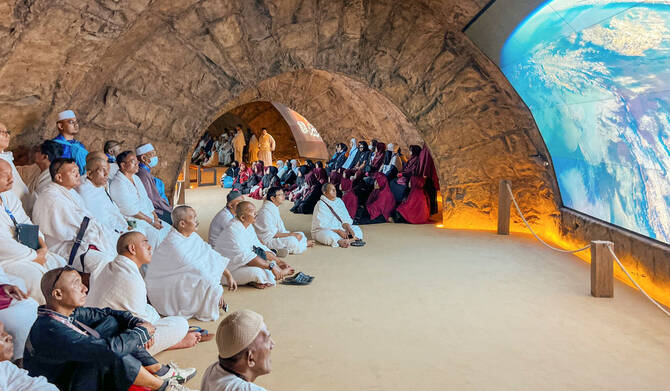
In the holy city of Makkah, pilgrims visit Jabal Al-Nour, whose name means “Mountain of Light.” At its peak lies the Cave of Hira, where the first verses of the Qur’an were revealed through the Angel Jibreel.
The mountain’s distinctive camel-hump shape makes it a striking landmark, especially with the nearby Hira Cultural District, where the Revelation Gallery offers pilgrims to learn the story of divine revelation and history.
Ahmed Khan, a private tour guide said: “There’s something unexplainable about standing where it all began. When I take pilgrims to Jabal al-Nour, many of them are moved to tears it’s not just a climb, but it’s a spiritual awakening.”
To the south lies Jabal Thawr, the mountain that cradled the Prophet and his companion Abu Bakr as-Siddiq in its cave during their migration to Madinah. The story of divine protection, where a spider’s web and a dove’s nest concealed their presence from their pursuers, resonates deeply with pilgrims.
Another frequently visited site is Jabal Abu Qubays, believed in some traditions to be the first mountain placed on Earth. As the closest peak to the Grand Mosque, it resonates with the early public da’wah and the great spiritual responsibility.
FAST FACTS
• Al-Qiblatain Mosque, where revelation changed the direction of prayer from Jerusalem to Makkah, remains a must-visit site for pilgrims.
• Programs like ‘Hala,’ launched by Al-Bait Guests Co., are curating journeys for pilgrims to explore with knowledgeable guides.
Nearby, the modest yet historically significant Al-Bay’ah Mosque marks the location of the Pledge of Aqabah, where the Ansar of Madinah pledged allegiance to the Prophet Muhammad.
Built during the Abbasid era, it symbolizes early Muslim unity and commitment to the new faith. A short distance away in Al-Hajun district is Jabal Al-Sayyidah, at the base of which lies the revered Al-Ma’la Cemetery, resting place of Khadijah, the Prophet’s beloved wife. Her grave remains a focal point of deep reverence.
“Pilgrims love visiting these places and it helps them to understand the sacrifices of the people who shaped Islam,” Khan added.
Madinah has its own timeless legacy. Al-Qiblatain Mosque, where revelation changed the direction of prayer from Jerusalem to Makkah and marked a defining shift in Muslim identity and remains a must-visit site for pilgrims.
Hussain Rauff, regional director of Madinah Hotels at Elaf Al-Taqwa, said: “We’re planning to organize guided tours across Madinah to help pilgrims explore the city’s rich Islamic heritage. It’s a meaningful way to extend their spiritual journey beyond the rituals of Hajj.”
Further west of the Prophet’s Mosque lies the cluster known as the Seven Mosques, each linked to events from the Battle of the Trench. Among them are Al-Fath Mosque and those named after figures such as Fatimah, Ali ibn Abi Talib, and Salman Al-Farsi. These mosques are rich in historical memory and serve as reminders of hardship during one of Islam’s critical battles.
Mount Uhud rises just north of Madinah city, its slopes reminds of the Battle of Uhud and the place where the Prophet’s uncle, Hamza ibn Abdul Muttalib, and 70 companions were martyred. Today, pilgrims pause at the Uhud Martyrs Cemetery indicating the modesty found in victory and the strength drawn from loss.
Equally powerful is a visit to Baqi’ Al-Gharqad Cemetery, the resting place of many of the Prophet’s family members and companions. Located near the Prophet’s Mosque, the cemetery has long served as a site for prayer and remembrance, offering pilgrims a moment of intimate connection with those who stood beside the Prophet during Islam’s formative years.
Beyond the holy cities, other destinations continue to attract pilgrims in search of spiritual enrichment. Northwest of Madinah lies Khaybar, the site of a pivotal military campaign that showcases both the strategic and ethical dimensions of the Prophet’s leadership. Its volcanic terrain and ancient fortifications tell stories etched in stone.
Fatima Al-Mutairi, a pilgrim from Kuwait: “I am planning to visit these places in Jeddah and Taif after my Hajj. I am planning to visit the Tomb of Hawa in Jeddah and in Taif, I look forward to visiting Masjid Abdullah ibn Abbas, to pay tribute to one of the great scholars whose work in Qur’anic interpretation and Hadith continues to inspire many seekers of knowledge.”
Recognizing the growing desire for such experiences, programs like “Hala,” launched by Al-Bait Guests Co., are curating immersive journeys for pilgrims to explore these sacred sites with knowledgeable guides and spiritual context.
Mohammed Al-Shahrani, experience officer in Hajj and Umrah sector said: “Our aim is to enrich the post-Hajj experience. We want pilgrims to understand that the journey of faith continues, and Saudi Arabia is opening its heritage for those who wish to walk in the footsteps of the Prophet.”
source/content: arabnews.com (headline edited)
______________
Beyond the holy cities, other sacred destinations continue to attract pilgrims in search of spiritual enrichment. (Supplied/File photo)
Global airlines are projected to record a net profit of $36 billion, with total industry revenue reaching $979 billion
Saudi Arabia and the UAE continue to bolster the industry as part of their economic diversification efforts
Middle East airlines are forecast to post the world’s highest net profit margin in 2025 of 8.7 percent, outpacing global peers, according to the latest industry report.
The forecast, released by the International Air Transport Association during its 81st Annual General Meeting in New Delhi, also projects that airlines operating in the Middle East will generate a net profit of $6.2 billion this year — slightly up from $6.1 billion in 2024. The region is also expected to earn $27.20 per passenger.
Globally, airlines are projected to record a net profit of $36 billion, with total industry revenue reaching $979 billion — below IATA’s earlier $1 trillion estimate, due in part to macroeconomic uncertainties and supply constraints.
The growth of the aviation sector in the Middle East reflects broader regional expansion, as countries such as Saudi Arabia and the UAE continue to bolster the industry as part of their economic diversification efforts.
Ilies is making a name for himself in the football landscape, especially with the Atlas Cubs.
Morocco’s rising star Ilies Belmokhtar has been named the best U17 youth player competing in France at the inaugural Golden Kid Awards.
Le Monde Du Foot reported that Belmokhtar is taking home a well-deserved recognition, rewarding his exceptional 2024-2025 season.
“For this inaugural edition, Ilies Belmokhtar truly shone. Gifted with genuine tactical maturity, he was one of the key architects of AS Monaco’s success in youth competitions this season,” the same source said.
Commenting on his new achievement, Belmokhtar commented that the award is a “great pride.”
“Especially to my parents, I hope they are proud of me,” he said .
The same sports-focused website recalled the triumphs the Atlas Cub has achieved with Morocco , including his U17 Africa Cup of Nations win in April.
The Golden Kid awards seek to recognize the best young developing players in France. The initiative is the fruit of L’Equipe journalist Loic Tanzi and streamer Isoline Almeida.
In May, Ilies Belmokhtar signed his first professional contract with AS Monaco.
Belmokhtar was born in Ivry-sur-Seine in 2008, and joined the AS Monaco Academy in 2023.
In April, the Atlas Cub was among the five players from the national U-17 team selected for the Best XI of the Under-17 AFCON in its 15th edition.
In addition to Belmokhtar, the players chosen for the Best XI include: goalkeeper Chouaib Bellaarouch, right-back Moncef Zekri, central defender Driss Aït Chiekh, and attacking midfielder Abdellah Ouazzane.
Morocco’s AFCON triumph came after a dramatic 0-0 draw against Mali in the final, followed by a 4-2 win in the penalty shootout, securing their spot in football history.
United Development Company (UDC), the master developer of The Pearl and Gewan Islands, has continued its global track record of accomplishments by securing three new Guinness World Records. This remarkable achievement further strengthens UDC’s position as one of the leading real estate developers in the region.
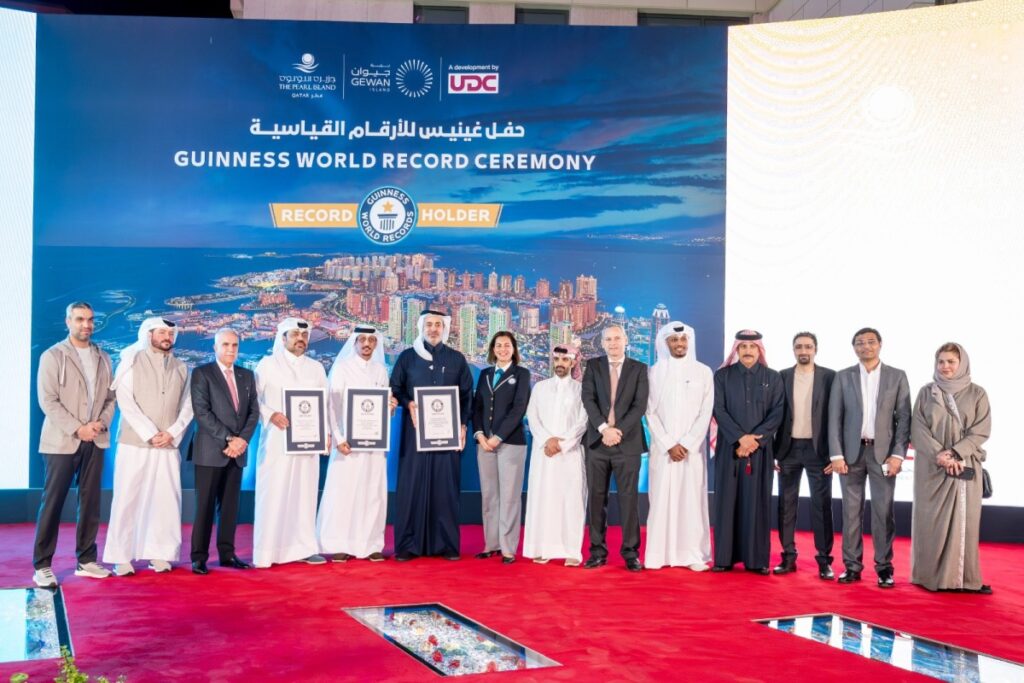
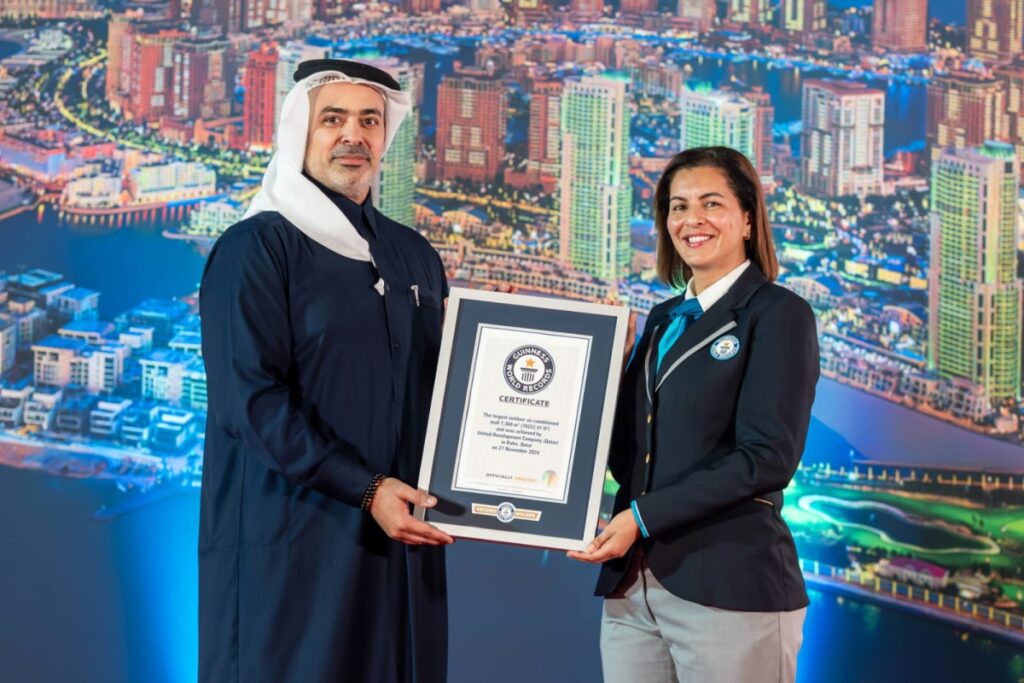
During an official ceremony, Yasser Salah Al-Jaidah, CEO of United Development Company, received the Guinness World Record certificates in recognition of these milestones, which include the largest outdoor air-conditioned shopping mall, Largest outdoor interactive lighting canopy, located on Gewan Island, and Largest pneumatic waste management network on the Pearl Island.
Largest outdoor air-conditioned mall
The Crystal Walk not only establishes itself as the largest outdoor air-conditioned mall with 7,360 square meters (79222.41 sq ft) but also impresses visitors with its exceptional design and amenities. A standout feature is the breathtaking crystal display, featuring over 10 tons of crystals and a 1000- meter crystal path, the longest in the world, creating a visually stunning environment that enhances the shopping experience.
Thanks to its state-of-the-art cooling technology, The Crystal Walk maintains a comfortable environment by achieving temperatures as low as 21- 23 degrees Celsius during the summer season. This ensures shoppers enjoy a pleasant and refreshing experience, regardless of the outdoor weather. Maintaining a consistently pleasant atmosphere, even during Qatar’s hot summers, is achieved through a cutting-edge district cooling system. This system offers significant advantages over traditional individual air conditioning units, Lower energy consumption directly translates to a smaller carbon footprint. The reduced reliance on individual air conditioning units minimizes greenhouse gas emissions, promoting a more environmentally friendly approach to retail development and Centralized cooling systems offer greater reliability than individual units. A centralized system is easier to monitor, maintain, and repair, leading to fewer disruptions and improved overall efficiency.
The 10 Crystal buildings were positioned in an oriented maximizing shading, providing a flow stream of airflow improving cooling while deploying a high-tech energy-efficient cooling system that conserves energy by at least 20% compared with conventional systems and this system mobilized a chilled water district cooling system that future reduce carbon emissions and footprint by at lowest 20 – 50% of the crystal walk.
With over 100 unique retail experiences that cater to a luxurious lifestyle, The Crystal Walk offers a diverse range of brands along with exquisite dining options. This combination of luxury and innovation transforms the mall into a comprehensive lifestyle destination, attracting a distinguished clientele.
Recently, The Crystal Walk has registered for the Global Sustainability Assessment System (GSAS) under the Green Ozone Rating for Design (GORD) certification. This commitment to sustainable design and construction is evident in features such as optimized building designs for energy efficiency and the incorporation of native landscaping and tropical landscaping with more than 13,000 tropical plants. This recognition highlights the mall’s dedication to environmental responsibility and efficiency.
The combination of luxurious offerings, innovative cooling solutions, and commitment to sustainability makes The Crystal Walk a pioneering destination for shoppers and a model for future developments in retail architecture.
Largest outdoor interactive lighting canopy
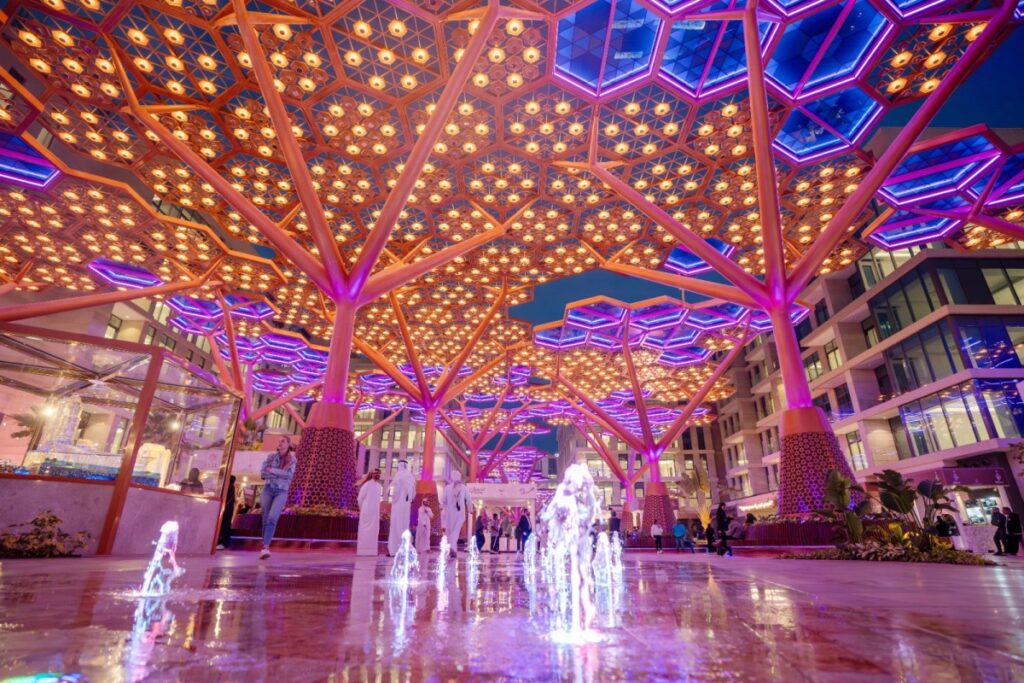
Beyond the cooling system, the Crystal Walk also boasts the world’s largest outdoor interactive lighting canopy, covering an impressive 3,689.55 square meters (39,713.98 square feet).
This architectural marvel seamlessly blends art and technology, providing functional shade during the day and transforming into a mesmerizing light display at night, enhancing the already captivating ambience at night. This record-breaking canopy utilizes state-of-the-art LED lighting technology, offering significant advantages over traditional lighting solutions:
l Energy Efficiency: The LEDs boast an energy savings of 20% – 50% compared to conventional lighting, contributing substantially to the overall sustainability goals of Gewan Island. This reduction in energy consumption translates to lower operating costs and a significantly reduced carbon footprint.
l Longevity: LEDs have a much longer lifespan than traditional lighting, minimizing maintenance requirements and reducing waste.
l Versatility and Control: The advanced LED system allows for dynamic and customizable lighting displays, offering unparalleled versatility in creating captivating visual effects.
The lighting canopy is more than just illumination; it’s an interactive spectacle. Over 1000 individual lighting points are meticulously coordinated, creating a mesmerizing array of colors, patterns, and effects. This sophisticated system integrates seamlessly with a state-of-the-art music system, synchronizing the light displays with music to create a truly immersive and unforgettable experience for visitors. The lighting choreography can be programmed to adapt to different events, moods, and times of day and interact with live music, ensuring a constantly evolving and engaging visual feast.
During the day, the canopy provides much-needed shade, enhancing the comfort of shoppers exploring the Crystal Walk’s unique retail experiences. This thoughtful design maximizes natural light while minimizing direct sunlight exposure. The combination of advanced cooling systems and intelligent shading strategies allows for a pleasant and comfortable outdoor shopping environment regardless of the climate.
This impressive interactive lighting canopy, alongside the other innovative features of the Crystal Walk, showcases UDC’s commitment to creating exceptional spaces where luxury, technology, and sustainability converge. It’s not just a retail destination, but a destination for experiencing technological innovation within a luxurious and environmentally responsible environment.
Largest pneumatic waste management network
Furthermore, the company achieved another global milestone with the largest pneumatic waste management network on The Pearl Island, utilizing an advanced Pneumatic system for efficient and sustainable waste collection. These innovative solutions reflect UDC’s commitment to smart environmental practices and sustainability, this system achieves fully operational 66 kilometers (41.01 miles) and more than 500 chute inlets.
The advanced pneumatic waste management system also brings a number of environmental and community benefits. It reduces vehicular movement, leading to a decrease in direct and indirect greenhouse gas emissions in the area. By minimizing traffic congestion around The Pearl Island, the system helps maintain better road service levels. The system is the first of its kind in the country since the island’s inception, with an expanded network and a recent extension to Gewan Island. Moreover, the system promotes a convenient, clean, and sustainable lifestyle, encouraging residents to maintain a clean community.
On Gewan Island, the new waste management system takes advantage of the opportunity to segregate waste at disposal sites through a dual chute system. This initiative engages the community in waste segregation and aims to increase participation in recycling efforts. Currently, the recycling rate stands at 36%, highlighting the company’s commitment to sustainable practices and its ongoing efforts to improve environmental impact.
Commenting on this achievement, Al-Jaidah said, “This accomplishment reflects our ambitious vision and commitment to developing world-class projects that incorporate advanced technologies and sustainability principles. We are incredibly proud to achieve these Guinness World Records and will continue to deliver exceptional developments that enhance the quality of life for residents and visitors to The Pearl and Gewan Islands. We look forward to reaching new milestones that strengthen our leadership in the real estate sector.”
This recognition adds to United Development Company’s impressive track record of global achievements, having received numerous prestigious awards and certificates across various fields. Notable among these are the Crystal Residence GSAS 3 stars design and build certification, Green Organization Awards, Best CSR Awards, Golden Globe Tiger Awards, and Abu Dhabi Maritime Awards. These awards highlight the company’s continuous commitment to innovation and sustainability, reinforcing its position as a leader in the real estate development sector.
UDC continues its pursuit of further global achievements by developing integrated real estate projects that adhere to the highest standards of quality and innovation. These projects further cement The Pearl and Gewan Islands as premier destinations in the region, attracting visitors and investors seeking exceptional residential and commercial environments.
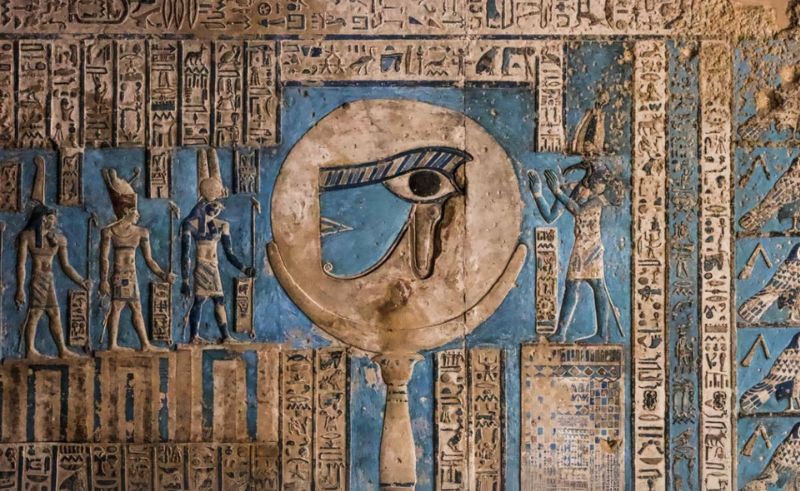
Researchers at Washington State University have revived Egyptian blue—the world’s first synthetic pigment.
A team of researchers from Washington State University, in collaboration with the Carnegie Museum of Natural History and the Smithsonian’s Museum Conservation Institute, has successfully recreated Egyptian blue, the oldest known synthetic pigment in the world. Originally developed over 5,000 years ago, the pigment was commonly used in ancient Egyptian art, tombs, and architecture.
The scientists tested 12 different methods to reproduce the pigment, adjusting materials and heating times to mirror ancient techniques. They discovered that a rich, vivid blue could be achieved even when only half of the mixture’s colour-bearing component was used—challenging previous assumptions about how the pigment was made. Small variations in temperature and ingredients also caused the colour to shift, from pale greens to intense blues and even greys.
Beyond its historic value, Egyptian blue has properties that make it relevant for modern technology. It absorbs visible light and emits infrared radiation, which can be applied in biomedical imaging, telecommunications, and anti-counterfeiting technologies.
The recreated pigment is now on display at the Carnegie Museum of Natural History in Pittsburgh.
Model & Lifestyle Influencer Nour Arida Joins Serena Williams in Audemars Piguet Campaign.
When Audemars Piguet picked the faces for its 150th anniversary campaign, it chose icons. Nour Arida was the only Arab woman among them.
In the world of luxury watchmaking, Arab women aren’t often on the moodboard. But this year, that changed.
For its 150th anniversary, Audemars Piguet didn’t just call in the usual faces – it summoned a lineup of global icons. Serena Williams. Winnie Harlow. Tamara Kalinic. And, for the first time ever, an Arab woman: Nour Arida.
Draped in AP’s legacy, the Lebanese model-slash-creative-slash-cultural force owned the frame.
“I always try to push boundaries,” Arida says, in what might be the understatement of the year. “It’s like being part of a real family, being part of the AP family.”
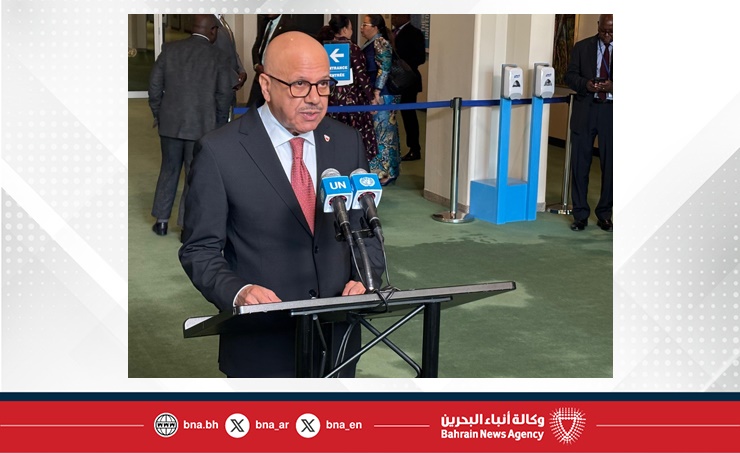
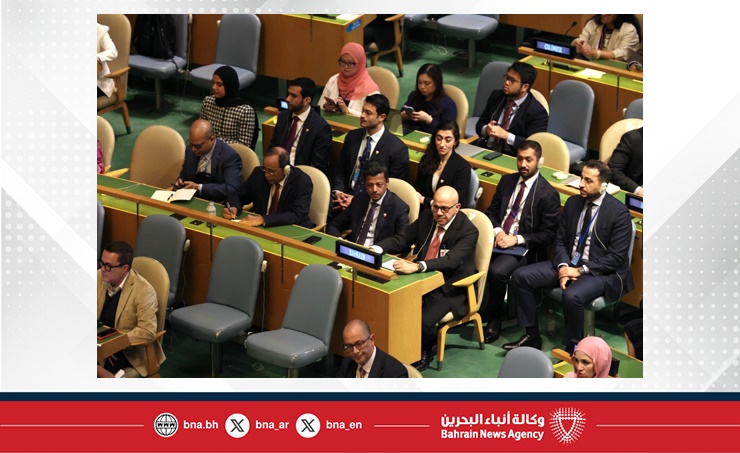
The Kingdom of Bahrain has secured a non-permanent seat on the United Nations Security Council for the 2026–2027 term, following a vote at the UN General Assembly in New York, where it received an overwhelming 186 out of 187 votes (99.5%).
Dr. Abdullatif bin Rashid Al Zayani, Minister of Foreign Affairs, congratulated His Majesty King Hamad bin Isa Al Khalifa, His Royal Highness Prince Salman bin Hamad Al Khalifa, the Crown Prince and Prime Minister, and the people of Bahrain on this achievement. He noted that the near-unanimous support is a testament to the leadership of His Majesty the King and HRH the Crown Prince and Prime Minister, and a clear recognition of global confidence in Bahrain’s foreign policy and its commitment to peace, cooperation, and international stability.
Dr. Al Zayani emphasised Bahrain’s dedication to upholding the UN Charter, promoting multilateralism, and engaging constructively with Security Council members to address global challenges.
He said that Bahrain’s approach during its Security Council term will be guided by its core values of dialogue, coexistence, mutual respect, and consensus building. He added Bahrain’s intention to serve as a voice for diplomacy, a bridge for understanding, and a champion of solutions that reflect the aspirations of peoples for a future of peace, stability, and prosperity.
Dr. Al Zayani also commended the Kingdom’s Permanent Mission to the UN, led by Ambassador Jamal Al Rowaiei, as well as all officials at the Ministry of Foreign Affairs and members of the Mission, for their dedicated work in the spirit of “Team Bahrain.” He commended their tangible efforts and outstanding diplomatic work that contributed to this significant milestone and expressed gratitude to UN member states for their support.
Bahrain’s election was met with congratulations from Arab and international delegates, who extended best wishes for a successful term on the Council.
Mrini was widely respected for his deep knowledge and commitment to cultural preservation.
Morocco is mourning the death of Abdelhak El Mrini, the country’s official royal historian and former spokesperson for the Royal Palace. He passed away on Monday evening at the age of 91, after a long career serving Moroccan history and culture.
El Mrini was born in Rabat in 1934. He memorized the entire Quran at a young age and even copied 60 parts of it by hand. Over the years, he became one of Morocco’s most respected literary and cultural figures.
He held several important roles during his life, including Director of Royal Protocol and Decorations. But he was best known for his role as the kingdom’s official historian, as well as his work in preserving Moroccan heritage.
El Mrini had an impressive academic journey. He received a diploma from the Institute of Higher Moroccan Studies in 1960, followed by a degree in literature from the Faculty of Arts in Rabat in 1962.
He later studied in France, where he earned an advanced diploma and a PhD from the Institute of Arab and Islamic Studies at the University of Strasbourg in 1973. He also obtained a State Doctorate in Literature from Sidi Mohamed Ben Abdellah University in Fez in 1989.
El Mrini was also a prolific author who left behind an important literary and historical legacy. Among his most well-known works is “The Moroccan Army Throughout History”, first published in 1968. The book went through several revised editions, with the sixth edition released in 2011 and translated into French in 2000.
He also wrote “Guide for Moroccan Women” in two parts (1993 and 2000), and “An Introduction to Modern Moroccan History” (1996), which covers the period from Sultan Hassan I to King Hassan II.
Other notable titles include “Tea in Moroccan Literature” (1999), “Mohammed V: Studies and Testimonies” (1988), and “The Hassaniyats” (three volumes published between 1975 and 1983), a collection of poems in praise of the late King Hassan II.
Throughout his life, El Mrini made significant contributions to the study and promotion of Moroccan history, and he was widely respected for his deep knowledge and commitment to cultural preservation.
‘From Ocean to Gulf: Heritage Music of the Arab World’ is a series by Ahram Online, in partnership with the AMAR Foundation (Foundation for Arab Music Archiving and Research). In this article, we explore the rich music legacy of Yemen.
‘From Ocean to Gulf: Heritage Music of the Arab World’ is a series by Ahram Online, in partnership with the AMAR Foundation (Foundation for Arab Music Archiving and Research).
In this article, we explore Yemen’s rich music legacy.
Music is a powerful force for healing and reconnecting us with our roots and shared humanity in a world of numerous challenges.
‘From Ocean to Gulf: Heritage Music of the Arab World’ is a new series by Ahram Online, in partnership with the AMAR Foundation (Foundation for Arab Music Archiving and Research). Focusing on the early years of recording in our region, which reflected a modern cosmopolitan repertoire and coincided with the Renaissance era that flourished in Egypt between the mid-19th Century and the 30s of the twentieth Century, this initiative aims to introduce our audience to the iconic figures of Arab music whose contributions have enriched our intangible cultural heritage and inspired generations worldwide.
Yemen, a country on the Arabian Peninsula, is one of the world’s most beautiful and historically rich nations.
Often referred to as Al-Yaman al-Sa‘īd (Happy Yemen), it has long served as a centre of discovery for travellers and a research subject for historians, social scientists, natural scientists, and others.
In the second episode on Yemen, we highlight the music scene from the beginning of the 20th Century to the present.
Music in 20th Century Yemen
The beginning of the 20th Century was difficult in Yemen because of the wars between the Zaydī imams and the Ottoman occupiers. During these wars, the artists swung between the Ottoman authority, which encouraged music, and the Zaydīn, who did not.
Thus, their social, religious, and political position was difficult, as described in the biography of Sa‘d ‘Abd al-Lāh, who, as an artist, was accused by Aden’s jurists and fundamentalists of contravening the religious system of drinking alcohol.
His ‘ūd playing was also subject to accusation. A beautiful legend tells how he faced these accusations and how, thanks to his art and his mastery of religious qaṣīda, he regained the respect of the imam by performing religious qaṣīda and even some religious prayers accompanied by the ‘ūd.
This allowed him to resume his art under the rule of Imam YaḥyaḤamīd al-Dīn. Yet his position remained complicated, and fundamentalists probably killed him in the early 20th Century. We do not have any recordings of him, but some of his numerous students do. Some remained in Sanaa and practised the art of singing.
Music scene in Aden
In contrast, others travelled to Aden, which was under English rule, including famous ‘Alī al-‘Aṭṭāb and MuḥammadẒāfir, who fled from the fundamentalist Zaydī rule and moved to Aden in their early 20s.
In the southern provinces, a vibrant group of artists emerged during the British occupation of Aden (1839 – 1967), with singing and music becoming widespread among Yemeni artists. Professor Muhammad Murshid Naji noted that Lahji singing before the era of Ahmed Fadhl al-Qumindan was influenced by the Sana’ani style. Lahji singers would perform Sana’ani songs, and the singer Hadi Sabit al-Nubi developed his oud-playing by drawing on the techniques of a northern artist whose name remains unrecorded.
Naji attributes the emergence of the first Lahji melody to the poet, composer, and singer Fadhl Mater, who was credited with inventing the initial melody set to the Lahji rhythm. This innovation led Hadi Sabit to sing in the Sana’ani style over one of Al-Qumandan’s poems. It is worth noting that instrumental music is not widespread in Yemen, where it exists under one form whose origin is said to be Turkish, called firtāsh: it is a muwaqqa section, yet it allows variation and improvisation by the artist.
Sanaa singing was divided into two parts: a part in Aden and a part in Sanaa, and the Aden part is the one we have recordings of. Their recordings date back to the late 30s, while those made in Sanaa started later than the 50s. The first recording made in Sanaa in Historical Yemen was made by German orientalist and music expert Hans Helfritz who visited Yemen in the late 1920s and early 1930s to study Yemeni Music in this fundamentalist religious atmosphere, which aroused the suspicion and caution of the pious and religious in particular, and he was accused of being a spy.
Upon the First World War outbreak, the German Odeon Records company had to stop its commercial and recording activities as Yemen was under English occupation. Local record companies started right away, including the major “Aden Crown Company” that took over from Odeon and resumed recording Sheikh ‘AlīAbū Bakr Bāsharāḥīl, as well as Sheikh Ṣalāḥ ‘Abd al-lāh al-‘Antarī and Sheikh Muḥammad al-Mās, who died in the 1950s. They had recorded with the Aden Crown Company in the 1940s.
In the 1920s and 1930s, Indian musical influences became prominent as numerous musical and theatre groups and films were introduced in Aden and Hadhramaut, which had long been under the administration of the British Viceroy of India. By the 1940s and 1950s, Yemeni musicians had adapted these influences to create an “Arabized” Indian style, in which tunes from Indian films were reinterpreted with texts set in classical Arabic rather than colloquial language.
The acclaimed artist Muhammad Juma Khan, known for his mastery of the Hadhrami style, became one of the foremost practitioners of this hybrid form. The distinctive features of Adeni singing developed during the twentieth Century due to the convergence of multiple Yemeni and foreign musical elements, especially from India. Though a large portion of Aden’s pre-independence population was of Indian origin, the evolution of Adeni song was notably influenced by Egyptian melodies, and some musicians even incorporated Western rhythms such as the waltz.
Yemen Radio
Imam YaḥyaḤamīd al-Dīn, who feared openness and foreign interference, forced the Turkish Ottomans out and defended the independence of Yemen, yet within conservative and fundamentalist restrictions. As a consequence, the Yemeni Radio was only launched in 1955. It was a reaction to the launching of the Ṣawt al-‘Arab Radio, which had started broadcasting from Cairo, notably liberalist political ideas. Imam Aḥmad, the son of Imam YaḥyaḤamīd al-Dīn, who took his reign in 1948, consulted with theologians who refused the launching of the Radio. Still, the Radio was launched, and only news was broadcast at first.
They also recorded Qāsim al-Akhṭash, a Yemeni artist in Sanaa. He recorded using reels that existed then, allowing a longer recording duration. Yet recordings were made in Aden before Sanaa Radio’s recordings. They were commercial recordings of Sheikh ‘AlīAbū Bakr Bāsharāḥīl made in the late 1930s, in 1939, by the Odeon.
Singing post 1962 Revolution
After the 1962 revolution, Sanaa singing prospered, yet without the qanbūs or ṭarab, but with the kabanj’ūd played by talented artists such as MuḥammadḤamūd al-Ḥārithī, Aḥmad al-Snaydār, and ‘Alī al-Ānisi among others who became famous and served the Sanaa song with the big ‘ūd and a style inspired a little from Egypt and Syria, while preserving the main form or style.
On the other hand, some other artists did not become famous in the 70s, 80s, and 90s. They are: Ḥasan al-‘Ajamī, Yaḥya al-Nūnū, ṣaḥn player Muḥammad al-Khamīsī, as well as Muḥammad ‘Ushaysh, and they all preserved the old style and preserved the ṭarab as well and revived the old style and methods, considering that many elements, such as the firtāsh and the muṭawwal, had been neglected by the other artists. They continued to play the ṭarab and the ṣaḥn.
Women singers in the public domain
This period also witnessed the rise of women singers. Traditionally, singing was by men, and emerging women performers challenged dominant societal norms. Among these names is Nabat Ahmed (b. 1955), who has appeared in the Yemeni music scene since the early 1970s. Other names presented in the recently published book entitled “Women’s Lyrical Voices in Yemen 1950-2000” by researcher Yahya Qassem Sahel include: Raja’ Basudan, Nabiha Azim, Mona Ali, Taqiya Al Taweelah, Fatima Bahdela and Fatima Mansour Al-Shatri (Habbaniyah).
The rise of the tape cassette
The tape cassette became a dominant and accessible music dissemination format in the 1970s. It also helped a wider circulation of songs within and outside Yemen—the evolution of music in Yemen in the 20th Century and the advent of recording somewhat settled things. Today, we know that, for example, a certain qaṣīda was sung to a particular melody by a specific artist in 1940, recorded by Odeon on a specific date. Still, we do not know how it was before the recording era. This is an essential characteristic of the oral heritage: it is not fixed and settled when transmitted from generation to generation. The sea flows from generation to generation with all its forms, types and variations.
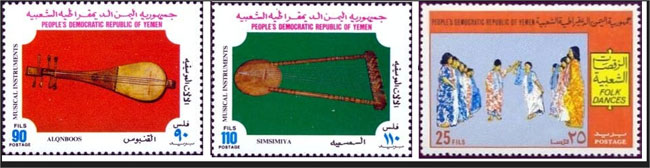
ūdvs Qumbus
The ‘ūd was not used in Yemen before Islam, yet there are indications of its existence there after Islam. Additionally, vocal forms such as the Sanaa singing, including ḥumaynī poetry, are a form of classical poetry influenced by the local colloquial language. It has existed in Yemen since the Medieval period (Middle Ages), i.e. at least since the 12th Century or the 13th Century during or after the Ayyubid dynasty.
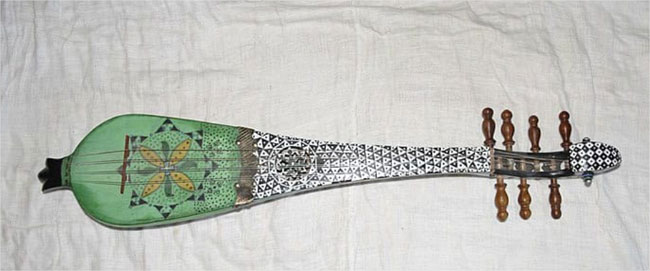
The ‘ūd used in Yemen until the beginning of the 20th Century was strangely not the ‘ūdkumaythrī known in the Arab culture since the drawings of Al-Ḥarīrī’s maqāmāt, or even the drawings of the Alhambra showing the ‘ūd with wooden cover. Instead, the Yemeni ‘ūd called ṭarab in Sanaa has a unique pre-Abbasid body covered with goatskin or sheepskin that produces a distinctive sound, maybe softer, that is difficult to describe, yet undeniably distinctive. It is thinner and smaller, and thus can be played standing up, which is very practical to accompany dancing.
Abū al-Ḥasan al-Ṭaḥḥān describes the ‘ūd in “Ḥāwī al-funūnwa-salwat al-maḥzūn” that dates back probably to the first half of the eleventh Century and is considered one of the most important and oldest references about ‘ūd making. He mentioned the ‘ūd that existed before his era, described it as having an animal skin cover, and detailed the contemporary ‘ūd with a wooden cover. Before that, he talked about the ‘ūd with the animal skin cover and called this ‘ūd “barbaṭ”. The name barbaṭ is derived from Persian and Arabic: “bar” means chest in Persian, and “baṭt” means duck in Arabic. Indeed, the shape of this ‘ūd from head to body resembles the shape of a duck’s chest.
Thus, the ‘ūd that reached the Arabian Peninsula and the Ḥijāz coming from Persia during the early Islamic era and the Umayyad era is the same that reached Yemen, settled there, and kept its shape with all the changes that affected the ‘ūd later on in the Arab Levant.
We do not know when it reached Yemen, yet there are indications that it existed there in the 13th Century along with the ‘ūdkumaythrī. So, both co-existed in the same place during the same periods, in Yemen but also in other regions of the Arab World, such as Andalusia and Morocco, where it still exists under a different shape, the rabāba played with a bow, whose shape is very similar to the ṭarab instrument, also called qanbūs in Yemen, a name probably derived from Turkish, since in the History of Turkish Music there is an instrument called kūbūz that probably was Arabized into qabūs then qanbūs.
Most theories in books on Arab music and the Arabic musical system until a late period presented the ‘ūd as the instrument onto which the theory could be applied. This also applies to Yemen. The Yemeni ‘ūd, i.e. the ṭarab or qanbūs, has four strings, unlike the oriental ‘ūd, which was known in the 20th Century and has five strings.
The four strings are similar to those of the oriental ‘ūd except for the fifth string, i.e. the first, the second, and the third strings are Do, Sol, Re, which is from the jawāb to the qarār. The qarār is the fourth string, but it is tuned to Do, not to La like the big ‘ūd. It is the jawāb of the first string. The three strings are double strings, and the upper is single. Considering these four strings, the Do can be a qarār to the rāstmaqām, and the third string can be a qarār to the bayyātīmaqām, and the third one, plucked, would be a Mi / sikāh.
The strings of the Yemeni ‘ūd have names: the first one is the ḥādhiq (energetic); the second one is the awsaṭ (as it is approximately in the middle), and the rakhīm. The beautiful name rakhīm came from some qaṣīda that tells about the ṣawtrakhīm (melodious voice) of the birds or the ‘ūd. The fourth string is called jarr or yatīm (orphan). The yatīm may be because it is a single string.
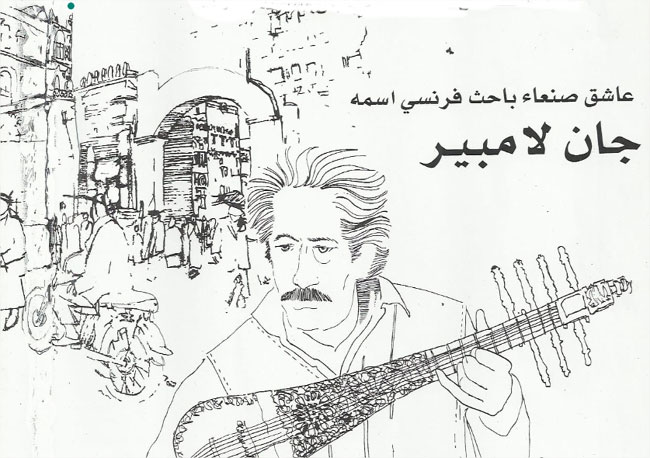
Jean Lambert – pioneer ethnomusicologist
Jean Lambert is a research professor in anthropology and musicology who has dedicated his life to the study, preservation, and dissemination of Yemeni music. He has been associated with the Musée de l’Homme in Paris since 1991 and is the director of the French Centre for Archaeology and Social Sciences in Sanaa (Yemen). Lambert was also the Director of the Centre for Research in Ethnomusicology (CREM-LESC, UMR 7186), CNRS, Université de Paris Ouest Nanterre.
Focusing on the Arab world, particularly in Yemen, the Arabian Peninsula and Lebanon, Jean Lambert’s works explore the relationships between local musical practices and global meanings of Arab-Islamic culture: performance context, ritual practices, mythological representations, and the formation of contemporary identities. His current research focuses on zajal in Lebanon and the 1932 Music Conference in Cairo. Dr Lambert has published several books, more than forty scientific articles, and thirty CDs of traditional music from Yemen, Saudi Arabia, Lebanon, Egypt, Iraq and North Africa. He is also a consulting and management board member of AMAR.
Lambert published his book “Ṭubb al-nufūsfī al-ghinā’ al-Ṣan‘ānīfī al-mujtama‘ al-Yamanī” (“The Medicine of the Soul: Music and Musicians among Urban Dwellers in Sanaa (Republic of Yemen)”) in 1997. He invited several artists to France to record CDs at the Institut du Monde Arabe and French Radio, among others. In his lifelong mission to archive/document the endangered Yemeni heritage, he collaborated with UNESCO in 2000 to inscribe the Sanaa heritage on the List of Intangible Cultural Heritage. He worked on supporting this art through a project that lasted from 2006 to 2009.
For More on Yemeni music, tune in to AMAR Podcasts: