ALGERIA declares France’s colonial rule a crime in new law – January 2026

Algeria’s new law declares French colonial rule a crime, seeking accountability and reparations for the colonial past.

Algeria’s parliament has unanimously passed legislation declaring France’s colonisation of the country a crime.

On Wednesday, lawmakers stood in the chamber draped in scarves bearing the national colours, chanting “Long live Algeria” as they approved the bill.

Parliament also formally demanded an apology and reparations from Paris in a move that seeks to redress attempts to sweep the issue aside.

The law assigns France “legal responsibility for its colonial past in Algeria and the tragedies it caused”, placing historical accountability at the centre of the state’s legal framework.

While analysts say the law carries no enforceable international weight, its political impact is significant, signalling a rupture in how Algeria engages France over colonial memory.

Parliament Speaker Ibrahim Boughali said the legislation sent “a clear message, both internally and externally, that Algeria’s national memory is neither erasable nor negotiable”, according to the APS state news agency.

The text catalogues crimes of French colonial rule, including nuclear tests, extrajudicial killings, “physical and psychological torture” and the “systematic plundering of resources”.

It also asserts that “full and fair compensation for all material and moral damages caused by French colonisation is an inalienable right of the Algerian state and people”.

‘Crime against humanity’

France brutally ruled Algeria from 1830 to 1962 through a system marked by torture, enforced disappearances, massacres, economic exploitation, mass killings and large-scale deportations and marginalisation of the country’s indigenous Muslim population.

The war of independence between 1954 and 1962 alone left deep scars. Algeria puts the death toll at 1.5 million.

President Emmanuel Macron has previously described the colonisation of Algeria as a “crime against humanity” but has consistently refused to issue a formal apology. He reiterated that position in 2023, saying: “It’s not up to me to ask forgiveness.”

Last week, French Ministry for Europe and Foreign Affairs spokesperson Pascal Confavreux declined to comment on the parliamentary vote, saying he would not engage with “political debates taking place in foreign countries”.

Hosni Kitouni, a colonial history researcher at the University of Exeter, told the AFP news agency that the law has no binding effect on France but stressed that “its political and symbolic significance is important: it marks a rupture in the relationship with France in terms of memory”.

The vote comes amid a diplomatic crisis between the two countries. Algeria and France maintain ties through immigration in particular, but today’s vote comes amid friction in the relationship.

Tensions have been high for months since Paris recognised Morocco’s autonomy plan for resolving the Western Sahara conflict in July 2024. Western Sahara has witnessed armed rebellion since it was annexed by Morocco after the colonial power, Spain, left the territory in 1975.

Algeria supports the Sahrawi people’s right to self-determination in Western Sahara and backs the Polisario Front, which rejects Morocco’s autonomy proposal.

In April, the tensions escalated into a crisis after an Algerian diplomat was arrested along with two Algerian nationals in Paris. The diplomatic crisis came barely a week after Macron and Algeria’s President Abdelmadjid Tebboune expressed their commitment to revive dialogue.

source/content: aljazeera.com (headline edited)

_______________

https://www.aljazeera.com/news/2025/12/24/algeria-declares-frances-colonial-rule-a-crime-in-new-law

French Empire: Civilising Mission

____________

ALGERIA
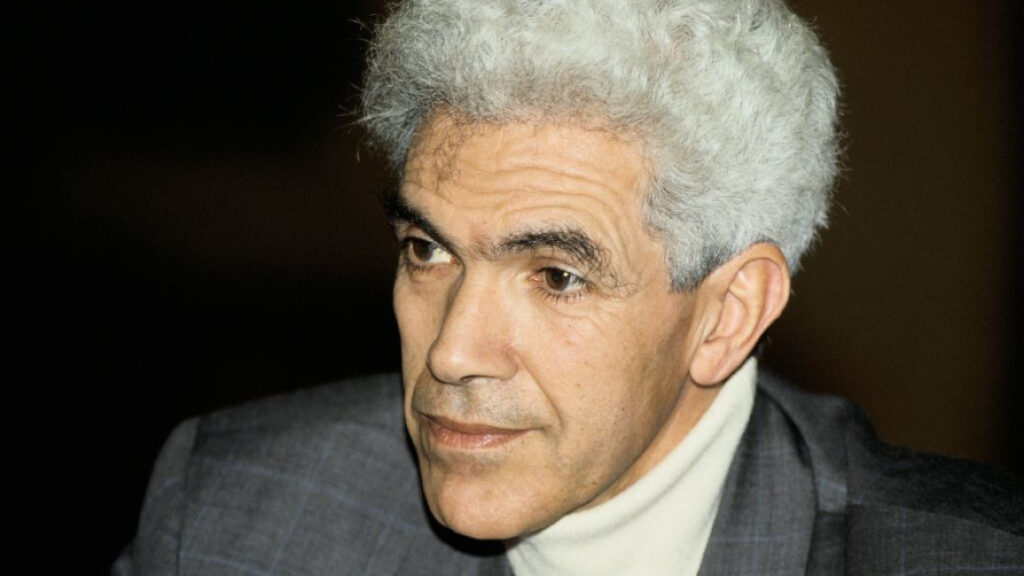
ALGERIA : Remembering Mohamed Harbi, Algeria’s ‘mujahid’ historian

From challenging French colonial nostalgia to critiquing Algerian nationalism, revolutionary historian Mohamed Harbi served truth, writes Rachid Sekkai.

For those of us who live between Algeria and France, between family memory and official public archives, Mohamed Harbi was more than a name on a book spine, he defined our way of thinking. This is why I am so deeply saddened by his passing.

His death is certainly a real loss to the shared Franco–Algerian memory of the twentieth century—not the sentimental commemoration that comforts nations, but the difficult memory that forces them to mature.

But on a more personal note, I am disappointed that I was never able to meet the late, great historian whose contributions are immeasurable.

On the side of the oppressed

Harbi came from a milieu that was far more accommodating to French colonial rule. This collaboration was even viewed by many as respectable, including members of his own family who served in the French-established Algerian Assembly (1947–56). Nevertheless, Harbi chose to side with the colonised very early in his life.

Even when he was sent to France to study, Harbi commitment to standing with the oppressed remained, and he refused to join the ranks of the ‘integrated’ intelligentsia. He became active in the student networks linked to the National Liberation Front (FLN) and entered the revolution from the inside.

Later he worked close to the Provisional Government of the Algerian Republic (GPRA), specifically within the orbit of Krim Belkacem—one of the FLN leaders who signed the Evian Accords. Harbi was not a signatory, but he was close enough to those who had been to see what independence negotiations were going to look like: ideals constrained by strategy, unity tested by rivalry.

Following Algerian independence in 1962, he served during the Ben Bella era, persuaded—as many were—by the promise of social change. The 1965 coup marked a rupture, however; and Harbi paid the price for his criticism of the succeeding president of Algeria, Houari Boumediene. He was imprisoned and then put under house arrest, before escaping into exile in 1973.

Exile

Mohamed Harbi’s life in France is not a footnote. It is where he wrote the very work that led to his international recognition.

Renowned French historian Benjamin Stora recalled how surprised he was as a 25-year-old graduate student preparing a thesis on Messali Hadj, when he read Harbi’s first major book in 1975. For him, Harbi embodied an intellectual freedom rare in the memory of those who were so close to the historical events.

Harbi wasn’t an outside commentator, he was a former senior FLN figure in France who was close to the movement’s leadership and connected to the GPRA circle during independence negotiations. Yet, his sharpness and refusal to serve states in what he produced, always remained.

What makes Harbi’s work enduring is also the gaps it fills in terms of the memory of a colonised Algeria. Stora spoke to me about chapters that the late revolutionary’s writing covers, which break with cliché that include an entre-soi shaped by communal boundaries and religiosity, colonial segregation, inequality and racism.

In doing so, Harbi escaped the nostalgic racist colonial memory of French Algeria, and the monochrome official memory of an authoritarian nationalism indifferent to historical nuance.

Speaking truth to power

Reactions to Harbi’s death in Algeria were a mixed bag. In a notable official tribute, President Abdelmadjid Tebboune publicly described him as a mujahid and a “cultured historian.” He added that he was an exceptional man.

In reality, for Harbi and all those who respected him, official recognition serves no value.

As many, including Stora have noted, Harbi went further than many of his generation and positioning. He spoke truth to power, even foregrounding the role of violence in organisational construction in his work. He named the “war within the war” between rival nationalist currents, and honestly described internal struggles for power and legitimacy before and after 1962.

Similarly, he was brutally frank about the French Socialist Party, for example, which he told historian Martin Evans, was “enemy number one” because of the way parts of the French Left repressed Algerian nationalism on the ground.

Liberation could be both courageous and tragic—and Harbi refused to choose between those truths.

Algerians at home and abroad are caught between family pride versus public stigma, French labels versus Algerian injunctions, and silence versus shouting. Decades on since Algeria’s independence and dark decade of civil war, Harbi offers a third position within such a complex reality: fidelity without worship; critique without self-hate.

He showed us how to honour emancipation while still critiquing power, how to name violence without licensing new silence, and crucially, how to demand truth and reconciliation without pretending neutrality.

Mohamed Harbi punctured comforting stories wherever they lived, that is why he will forever serve as an example of what a historian should be. 

He left us a library, but also a moral framework: history is not a temple, but a civic discipline. It demands rigour and patience with complexity, especially when communities prefer righteous simplifications.

source/content: newarab.com / Rashid Sekkai (headline edited)

______________

Harbi went further than many of his generation and positioning. He spoke truth to power, writes Rachid Sekkai. [GETTY]

______________

ALGERIA