Arabs & Arabian Records Aggregator. Chronicler. Milestones of the 25 Countries of the Arabic Speaking World (official / co-official). AGCC. MENA. Global. Ist's to Top 10's. Records. Read & Enjoy./ www.arabianrecords.org
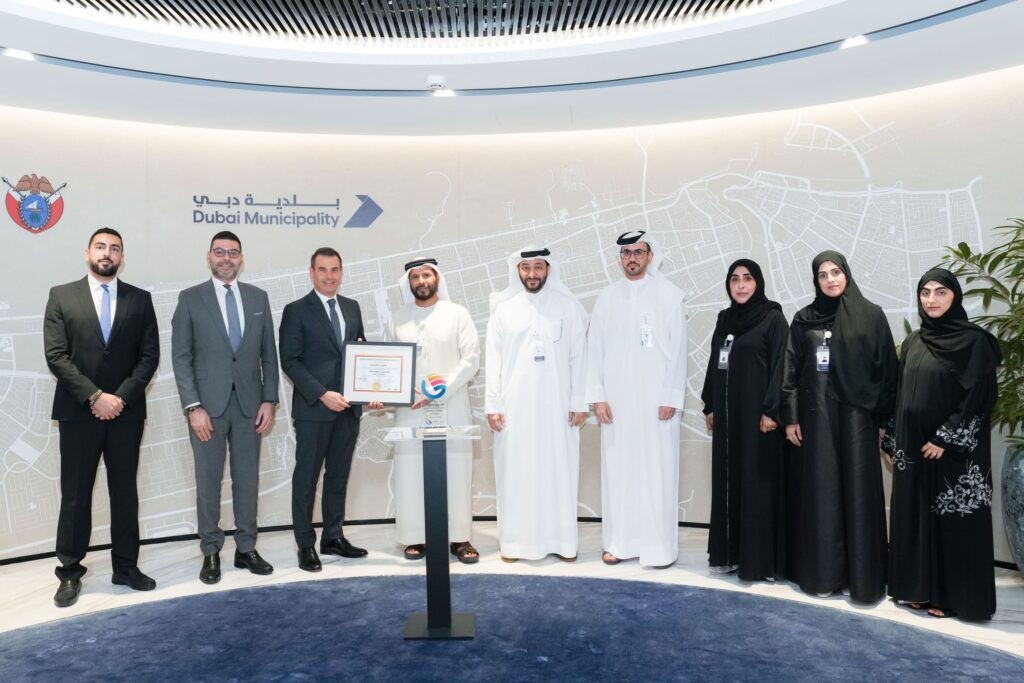
In a new milestone that reinforces Dubai’s position as a global centre for innovation, Dubai Municipality has received international accreditation from the Global Innovation Management Institute (GIMI) as the best innovative government entity in innovation leadership at Level 4 — the highest level within this category. With this achievement, Dubai Municipality becomes the first municipality in the world to attain this advanced level, underscoring the leadership and maturity of its integrated government innovation ecosystem embedded across its institutional framework.
This international accreditation reflects the significant progress made by Dubai Municipality in building a comprehensive and sustainable innovation ecosystem that adopts leading global practices in government innovation management and helps shape the future of municipal work. These efforts contribute to enhancing quality of life and further strengthening Dubai’s position as a global destination for living, working, and investment.
The global assessment was based on a range of pioneering initiatives and innovations that demonstrated the advanced maturity of institutional innovation within the Municipality. Its efforts stood out in aligning knowledge and innovation strategies with institutional priorities and digital transformation, as well as linking innovation with future foresight by analysing drivers of change and leveraging advanced technologies to strengthen future readiness. This was complemented by stronger governance frameworks, the development of an enabling regulatory environment for innovation, and the integration of the innovation lifecycle through a holistic methodology that ensures sustainability and enhances institutional value.
Nasser BuShehab, CEO of the Planning and Governance Sector at Dubai Municipality, said, “We are proud of this global accreditation, which reflects a deeply rooted institutional culture that views innovation as a continuous journey rather than a final destination. It also reflects the efforts of highly qualified teams that have transformed challenges into opportunities and demonstrated that governance and institutional innovation at Dubai Municipality are key drivers of quality of life across the emirate. This achievement crowns our efforts to build a comprehensive and sustainable innovation ecosystem that strengthens Dubai’s leadership as a global capital of innovation and a laboratory for ideas and future foresight.”
Dubai Municipality’s leadership has also been demonstrated through strengthening open partnerships and building an effective innovation network with the private sector to develop proactive solutions. The Municipality has implemented hackathons and innovation labs to generate smart solutions and innovative business models that address institutional challenges and opportunities. It has also introduced certifications and training programmes aimed at upskilling human capital and equipping employees with advanced innovation capabilities.
Reaffirming its commitment to embedding a culture of experimentation and learning, the Municipality has created a safe environment for innovative initiatives and projects while adopting advanced performance indicators to measure the return on innovation and ensure its sustainability and operational efficiency.
A record 3,428 billionaires, worth a combined $20.1 trillion – 4 trillion more than just one year ago – dominate this year’s Forbes list.
Morocco secured three spots on Forbes’ 40th annual World’s Billionaires List, released Tuesday. Othman Benjelloun, Aziz Akhannouch, and Anas Sefrioui represent the country on a list that reached a record 3,428 names. It is a mixed picture for the three – two held steady, while one saw his fortune shrink considerably.
Othman Benjelloun, 93, is the wealthiest Moroccan on the list. Forbes estimates his net worth at $1.7 billion, placing him 2,386th globally and 18th across Africa. He is the CEO of BMCE Bank of Africa, a financial institution with assets exceeding $12 billion and operations spanning West, Central, and East Africa.
His business empire extends well beyond banking. Through his holding company FinanceCom, which largely operates as O Capital Group, Benjelloun holds a stake in the Moroccan arm of French telecom firm Orange.
His father was a shareholder in RMA, a Moroccan insurance company, which Benjelloun later built into a leading insurer. In 2014, he launched a $500 million plan to construct the 55-story Mohammed VI Tower in Rabat, one of the tallest buildings in Africa.
FinanceCom is also part of a project to develop a multibillion-dollar tech city in Tangier, expected to host 200 Chinese companies. Benjelloun and his wife received the David Rockefeller Bridging Leadership Award in 2016 for building schools in rural Morocco.
A Casablanca resident with a diploma from the École Polytechnique de Lausanne, Benjelloun also co-owns Ranch Adarouch, one of Africa’s biggest cattle breeders.
Aziz Akhannouch, 65, follows with an estimated net worth of $1.6 billion. He ranks 2,481st globally and 19th in Africa. Akhannouch is the majority owner of Akwa Group, a multibillion-dollar conglomerate founded by his father and partner Ahmed Wakrim in 1932.
The group operates in petroleum, gas, and chemicals through publicly traded Afriquia Gaz and Maghreb Oxygene.
On the political front, he has served as Head of Government since September 2021. He holds an MBA from the Université de Sherbrooke and is based in Casablanca. His wife, Salwa Idrissi, runs her own company, operating franchises for Gap, Gucci, and Ralph Lauren in Morocco.
The picture is more difficult for Anas Sefrioui. The 68-year-old founder and CEO of listed homebuilder Groupe Addoha ends the year as the weakest performer among Morocco’s billionaires. His fortune dropped by $300 million after shares in Groupe Addoha fell more than 30%. Forbes now values him at $1.3 billion, ranking him 2,858th globally and 22nd in Africa.
He ties Nigeria’s Femi Otedola as the least wealthy billionaire on the continent’s list. Sefrioui built his fortune developing low-cost housing in Morocco, largely through government contracts. His daughter Kenza serves as the company’s deputy chairman.
Across Africa, Morocco ranks fourth in total billionaire count, behind South Africa with seven, Egypt with five, and Nigeria with four. The continent’s 23 billionaires collectively added $20.3 billion to their fortunes, bringing their combined wealth to $126.7 billion – up 21% from 2025.
Globally, the 2026 list broke records across every major metric. The total number of billionaires rose by 400 from last year to 3,428, the highest figure since the list launched in 1987. Their combined wealth hit $20.1 trillion, up $4 trillion year-on-year. The planet added more than one new billionaire every single day over the past 12 months.
Elon Musk leads the list for the second consecutive year, with an estimated fortune of $839 billion – the highest ever recorded for any individual. His wealth surged by roughly $497 billion over the past year, driven by Tesla’s rising valuation and SpaceX’s anticipated public listing in 2026. He is the first person to surpass the $800 billion mark.
Google cofounder Larry Page follows at $257 billion, with fellow cofounder Sergey Brin at $237 billion. Amazon’s Jeff Bezos ranks fourth at $224 billion, and Meta’s Mark Zuckerberg rounds out the top five at $222 billion.
A record 20 people now hold 12-figure fortunes – up from 15 last year and zero in 2017. The United States leads all nations with 989 billionaires, worth a combined $8.4 trillion. China, including Hong Kong, follows with 610, and India ranks third with 229.
Among the 390 newcomers this year are musician Dr. Dre, Beyoncé Knowles-Carter, tennis legend Roger Federer, and Berkshire Hathaway’s new CEO Greg Abel. At least 86 billionaires on the list owe their fortunes significantly to artificial intelligence.
For many Yemenis, America was a leap into the unknown. Some disguised themselves among passengers, others slipped into the dark confines of cargo holds, and all eventually found themselves funneled to a single destination: Ellis Island in New York Harbor.
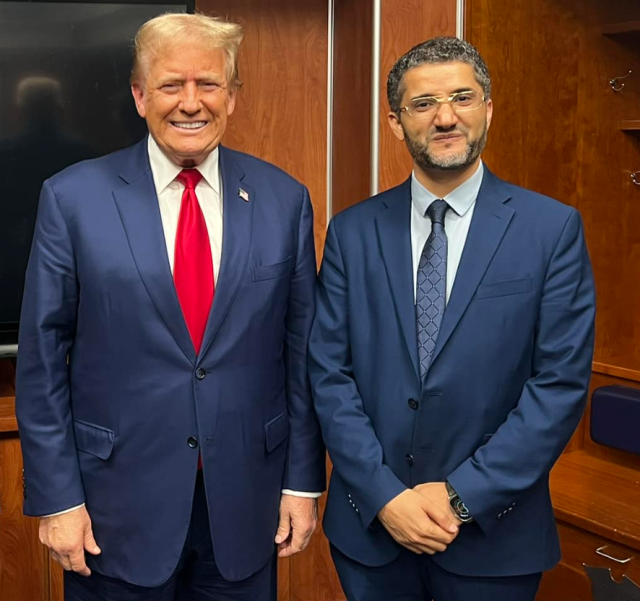
More than a century later, their descendants have carved out a visible political and economic presence in the United States. Just days ago, Amer Ghalib—the Yemeni-born mayor of Hamtramck, Michigan—sat at a table in the White House with senior officials, discussing issues that directly affect his community, including the travel ban imposed under President Donald Trump’s order last June that restricted entry from 12 countries, Yemen among them.
The mayor of Hammtram in Michigan Amir Ghaleb and US President Donald Trump
But how did the Yemeni story with America begin?
“In three waves of migration,” says Abdulsamad Al-Faqih, head of the Washington Center for Yemeni Studies, in an interview with Alhurra.
The roots of Yemeni migration, he explains, stretch back to the late nineteenth and early twentieth centuries. Two notable waves defined that early era: the first before World War II, and the second in its aftermath. Most of those migrants were men, drawn by work opportunities in ports and factories.
Al-Faqih, himself a Yemeni American whose father arrived in the early 1960s, says those pioneering journeys laid the foundation for the Yemeni presence in the United States that continues to grow today.
Yemeni wedding in the state of Michigan – (Photo by Ramzi Al –Adni)
For Yemeni American activist Sharifa Al-Banna, the story is personal. “My grandfather came here in 1898,” she recalls. Speaking on the sidelines of an advocacy gathering for the Yemeni community in Washington, she notes that one of her forebears entered New York by sea at the close of the nineteenth century.
A century later, a new chapter unfolded. After the outbreak of Yemen’s civil war in 2015, a large “third wave” of migration began—this time marked not by solitary men, but by entire families seeking safety and stability. Dr. Walid Mahdi, an assistant professor at the University of Oklahoma who specializes in Arab American cultural politics, calls it “the largest modern family exodus of Yemenis” to the United States.
Areas where most Yemeni Americans trace their roots (Alhurra)
Across eras and shifting circumstances, Yemeni migration to the United States was deeply rooted in rural life. The three waves drew heavily from villages far from the country’s urban centers—places like Al-Shaʿr, Baʿdan, and Al-ʿUwd in Ibb; Al-Arsh and Al-Reysh in Al-Bayda; Juban and Al-Shaʿib in Al-Dhaleʿ; and the Yafaʿ villages of Lahj.
Yemenis in front of the Capitol Building during the Yemeni Victory Day organized by the Washington Center for Yemeni Studies – September 2025 (Photo: Ezzat Wajdi)
But the question remains: where did the story truly begin?
Many accounts point to the sailors who set out from Aden. The precise moment when the first Yemenis reached American shores is unclear, but researcher Mary Bisharat—author of one of the earliest academic studies on Yemeni migration, published in 1975—suggested their arrival may have begun after the opening of the Suez Canal in the 1860s. “It is almost certain that a few of them had settled there before 1890,” she wrote.
By World War I, some Yemeni immigrants were already woven into the fabric of their new country. A number enlisted in the U.S. Army and gained citizenship through the Alien Naturalization Act of 1918, which allowed foreign soldiers to naturalize without completing the usual five years of residence. Arab migrants from the Levant, Italians, and others from Europe’s great migration waves also benefited from the law.
Closing the door with “1917” and “1924”
But the window opened by the “Naturalization Act” quickly closed with the Immigration Act of 1917, which created what became known as the “Asiatic Barred Zone” – a geographic area extending from the Arabian Peninsula through India and Southeast Asia to the Pacific islands – under which migrants from that zone were prohibited from entering the United States. The law also imposed a reading test on migrants coming from outside the zone to curb the influx of “uneducated” immigrants from Eastern and Southern Europe.
Then came the 1924 Johnson–Reed Act to tighten restrictions further by imposing strict national quotas, with a complete exclusion for anyone born within the “barred zone.” As a result, the arrival of new Yemenis became almost impossible, except for limited cases – explaining why most turned to irregular migration during the 1920s.
Ahmad Hassan and the “white race” – 1942
Even for those Yemenis who managed to reach the United States in the 1920s and afterward, the journey did not end at Ellis Island. Another obstacle awaited them in American courtrooms.
In 1942, a Detroit judge rejected the naturalization petition of Yemeni immigrant Ahmad Hassan. In his ruling, the judge described Hassan as “an Arab native of Yemen, of indisputably dark brown skin,” before posing the question at the heart of the case: did he qualify as a “white person” under U.S. law? The judge’s answer was stark: “The court concludes that he is not.”
Though the Hassan case was an exception rather than the norm, it underscored how race and religion became entangled with questions of belonging, in a legal system still shaped by the rigid classifications of the Asiatic Barred Zone. And the hurdles did not start at the courtroom door – many began long before, with the very act of deciding to set out for America.
An old passport belongs to an American immigrant of Yemeni origin, issued in 1936 (Al -Hurra)
How did they travel?
Before Yemen’s unification, there was no central authority issuing standardized passports. In the south, the landscape was fragmented among sultanates and sheikhdoms under British protection, each with limited powers – including the right to issue travel papers stamped with the ruler’s seal, which were accepted as official at the time.
In the north, the picture was different. Under Imam Yahya Hamid al-Din, who ruled the Mutawakkilite Kingdom from 1918 to 1948, migration was tightly restricted. Passports were difficult to obtain, and many northerners were blocked from leaving. The restrictions only fueled determination: increasing numbers looked to the south for a way out.
“The southern sultans used to grant passports to northerners,” explains Abdulsamad Al-Faqih. With those papers in hand, many would travel through the bustling port of Aden—under British control since 1839—before setting off toward faraway shores.
Aden, by then a major global hub for trade and refueling, offered both opportunity and temptation. Some Yemenis found work as sidewalk vendors, warehouse hands, or deck laborers. Others chose risk over routine: sneaking aboard merchant ships, persuading captains to take them on as sailors, or hiding among the cargo until the ocean carried them to a new world.
Unconventional migration routes
Aden was not the only gateway. Some Yemenis first set out for French-ruled Djibouti, then crossed the Red Sea and the Suez Canal to reach Europe—most often Marseille.
These colonial waystations provided opportunities to secure travel documents that could be used to sidestep restrictions and continue the journey, whether across the Atlantic or along more circuitous routes. Yet, as Dr. Walid Mahdi cautions, “what has been written about these journeys remains limited.”
How did Yemenis end up in Vietnam?
What few expected, when tracing the migration routes, was to find Yemenis in the heart of Saigon—today’s Ho Chi Minh City. In the mid-twentieth century, this distant city became an unlikely transit point on the long road to the United States.
How did they get there? During World War II and in the years that followed, many Yemenis found work in maritime trades and shipping within British and French corporate networks. Some ended up in the ports of French colonies in the Far East, including Saigon. By the 1950s and 1960s, as the American presence in Vietnam deepened, they shifted to jobs with U.S. companies or contractors supplying the U.S. military.
“These Yemenis found themselves part of the maritime network in which the United States invested heavily,” explains Dr. Walid Mahdi. “Many moved from working with British companies to American firms, directly or through suppliers contracted with the U.S. government to support shipments.”
In Saigon, they also discovered legal loopholes that created new openings for migration. Some used work papers or company ties to secure consular visas that bypassed the restrictions of the Asiatic Barred Zone. Others presented themselves as employees linked to the U.S. military or traveled with documents issued in French colonies. Through these channels, Saigon – unexpectedly – became a hidden crossing point on the Yemeni journey to America.
Aden, Michigan, and the Ford Motor Company
If Saigon became an unexpected waystation in the mid-twentieth century, the story’s more enduring chapter traces back to the port of Aden – where Ford’s factories in Detroit discovered a steady supply of Yemeni laborers.
At the time, Ford’s plants in Detroit were under mounting pressure from labor unions and frequent strikes. In search of alternatives, the company looked abroad—and Aden offered both accessibility and eager workers. “Ford sent ships to Aden to carry Yemeni workers to Detroit,” recalls Abdulsamad Al-Faqih. Dr. Walid Mahdi adds that Ford selected them deliberately “to escape union pressures and in search of cheaper labor.”
Research led by Dr. Amin Nweisser on the history of Yemeni migration estimates that between 1,000 and 1,500 Yemenis joined Ford’s workforce, particularly at the River Rouge complex. Their numbers grew rapidly, reaching around 8,000 by the 1970s—helped by the abolition of the quota system under the 1965 Immigration and Nationality Act, which lifted the ban on migrants from the so-called Asiatic Barred Zone.
Eid prayer in Dearborn in the 1970s
In Detroit, Dearborn, and Hamtramck, Yemeni immigrants built tight-knit communities anchored around mosques that became not only places of worship but also hubs of social life. From there, their presence spread: to Buffalo, where the steel mills offered work; to New York, where small grocery businesses became a Yemeni trademark; and by the 1960s and 1970s, to California, where agriculture drew families westward and laid the foundations of a lasting Yemeni presence.
“Despite living abroad, the community remained strongly attached to its roots in the homeland,” observes Dr. Amin Nweisser.
Immersed in the rhythms of American industrial life, Yemenis did more than create cohesive religious and social circles. They also entered the labor struggle itself—bringing their voices to the shop floors and the picket lines of America’s factories.
The Central Mosque of the city of Dearborn
In Detroit, Dearborn, and Hamtramck, Yemeni immigrants built tight-knit communities anchored around mosques that became not only places of worship but also hubs of social life. From there, their presence spread: to Buffalo, where the steel mills offered work; to New York, where small grocery businesses became a Yemeni trademark; and by the 1960s and 1970s, to California, where agriculture drew families westward and laid the foundations of a lasting Yemeni presence.
“Despite living abroad, the community remained strongly attached to its roots in the homeland,” observes Dr. Amin Nweisser.
Immersed in the rhythms of American industrial life, Yemenis did more than create cohesive religious and social circles. They also entered the labor struggle itself—bringing their voices to the shop floors and the picket lines of America’s factories.
Nagi Daifallah: A Yemeni at the Jeart of the American Labor Movement
In the early 1970s, a young Yemeni named Nagi Daifallah arrived in California in search of work. Like many others, he ended up in the grape fields of the San Joaquin Valley, where he endured meager pay, grueling hours under a relentless sun, and a complete absence of protections.
But Nagi refused to remain silent. He taught himself English and Spanish, rising quickly as a voice for Yemenis and Arabs within César Chávez’s United Farm Workers (UFW) movement. On the morning of August 15, 1973, he joined a peaceful demonstration in the city of Lamont. When police moved in to break up the protest, Nagi was struck on the head. He died soon after—at just 24 years old.
His death marked a turning point. Nagi Daifallah became the first Yemeni to give his life in America for the cause of workers’ rights, a name etched into the history of both the Yemeni diaspora and the broader struggle for dignity in America’s fields.
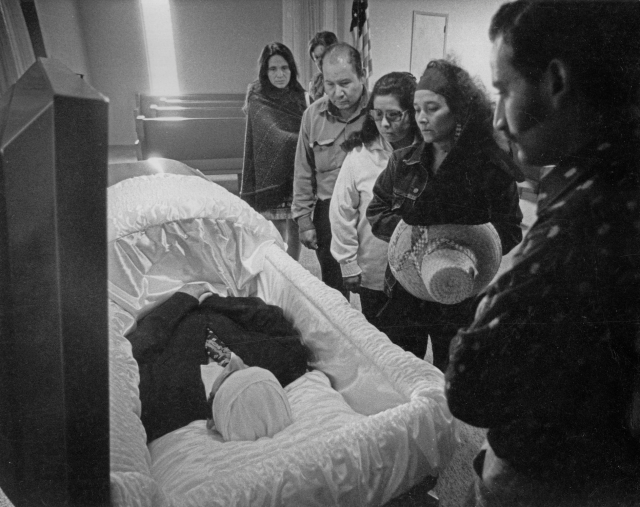
More than ten thousand people marched behind César Chávez and labor leader Dolores Huerta at Nagi Daifallah’s funeral, transforming it into a landmark moment in the history of America’s labor struggle. “Nagi’s story formed a new consciousness for the Yemeni community in America,” reflects Abdulsamad Al-Faqih.
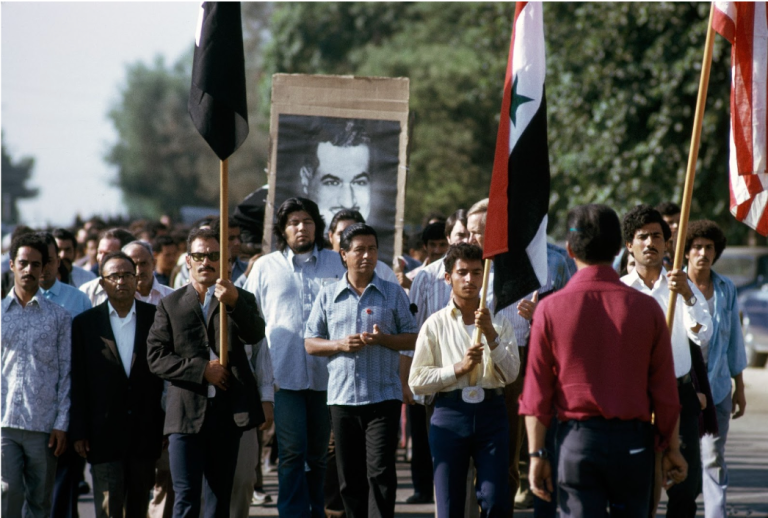
That consciousness has endured. More than five decades later, Nagi’s memory resurfaced when Yemeni shopkeepers in New York staged the 2017 bodega strike to protest the Trump administration’s travel ban. His photograph was carried high once again, a reminder that the struggle he embodied in the fields of California was far from over.
From factories and fields to strikes and union halls, it was perhaps inevitable that Yemeni American voices would one day reach the political arena. After decades defined by industrial labor, the community began to make itself heard at the ballot box.
In Michigan, Ibrahim Aiyash broke new ground as the first Yemeni American elected to the state House of Representatives. In Hamtramck, Amer Ghalib made history as the city’s first Yemeni American mayor—before being nominated to serve as U.S. ambassador to Kuwait.
“The war in Yemen after 2014 and the travel ban in 2017 led many Yemeni Americans to realize that going back was no longer possible,” says Dr. Walid Mahdi. “America had become a permanent homeland for them and their children.”
More than a century after sailors from Aden slipped aboard ships bound for unknown horizons, their descendants now help shape the political, economic, and cultural life of the United States. For Yemeni Americans, the journey has come full circle: America is home.
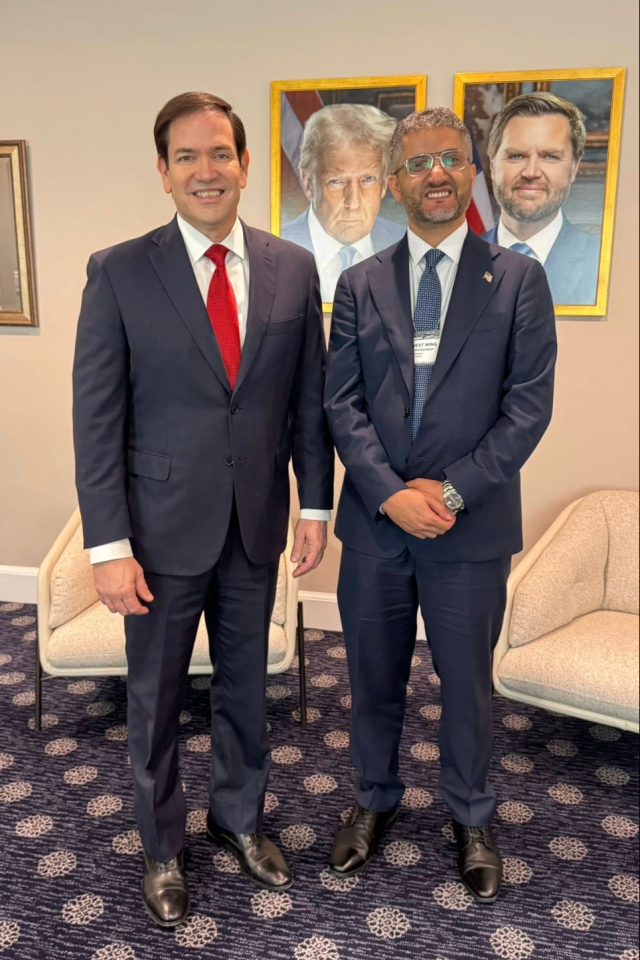
Amer Ghalib, the mayor of Hamtramck, recently at the White House with Secretary of State Marco Rubio
Amer Ghalib, the mayor of Hamtramck, recently sat at the White House with Secretary of State Marco Rubio and senior officials to press for financial support for his city—and to call for easing restrictions on Yemeni migration to the United States.
This moment reflects a broader shift: the steady rise of Yemeni American political activism. From the formation of advocacy committees that lobby the halls of Congress, to youth campaigning in local elections, the community’s presence on ballots has grown year after year.
Women, too, have stepped into the spotlight. Debbie Almontaser, a key figure in the 2017 bodega strike, went on to found the Yemeni American Merchants Association, while Samar Nasser has distinguished herself through wide-ranging humanitarian work.
Beyond politics and advocacy, Yemeni Americans have also made their mark in sports. Boxer Sadam Ali, who represented the United States at the 2008 Olympics, became the first Yemeni American to compete at that global stage—showing how far the journey has carried the community from its earliest days on Ellis Island.
American boxer of Yemeni descent Saddam Ali (Reuters)
In the most recent elections, the Yemeni community showed itself to be an influential player. In cities such as Hamtramck and Dearborn, a significant segment of Yemeni Americans rallied behind Donald Trump—an alignment reflected in district results where their votes proved decisive.
The experience underscored a turning point: Yemeni Americans are no longer a quiet presence on the sidelines, but a rising electoral force with the ability to shape outcomes in their local communities. The question now is whether this power will remain rooted in local politics—or grow into a broader influence on America’s national stage.