Built for socialite and philanthropist Doris Duke, once ‘the richest girl in the world’, the Shangri La houses over 4,000 artefacts from across the Islamic world.

Perched on the water’s edge in the middle of the Pacific Ocean is the unlikely home of centuries-old artefacts picked from among the bazaars of Egypt and the wider Muslim world: The Shangri La Museum of Islamic Art, Culture, and Design. When it opened to the public in 2002, the Shangri La was the only museum dedicated exclusively to Islamic art in the United States – but its story goes way back.
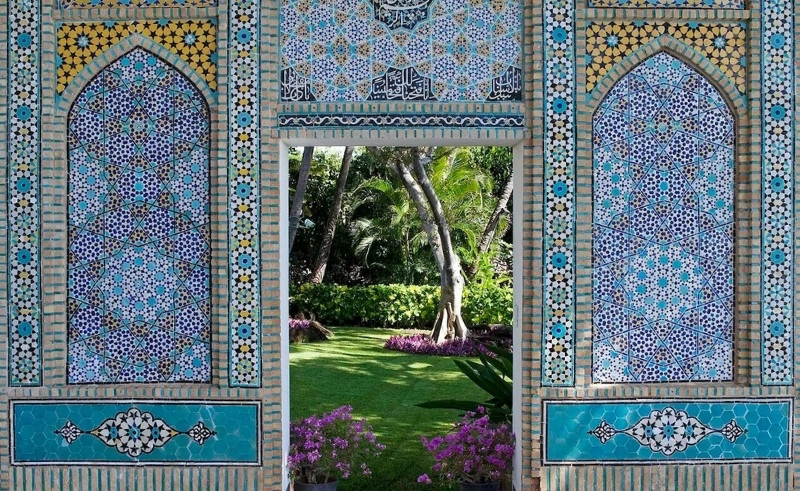
The Shangri La was built as the Hawaiian wintering spot of billionaire socialite and philanthropist Doris Duke, a woman who inherited her father’s tobacco fortune at the age of 12 (landing her the title of the richest girl in the world in the 1920s) and spent the rest of her life living by her own rules, whims, and passions. Among the many directions life took her in was working in a canteen for sailors in Egypt during World War II for a salary of USD 1 a year—and amassing one of the largest private collections of Islamic art in the world.
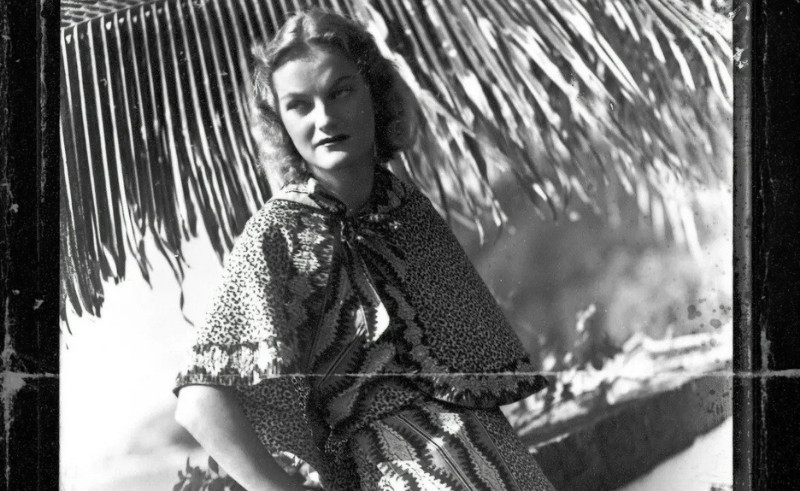
When Duke got married in 1935 (to a politician whose biography nearly a century later still lists among his achievements being the one-time husband of Doris Duke), the newlywed couple embarked on a honeymoon tour of the world. It was during this honeymoon that 22-year-old Duke was introduced to the art and architecture of the Islamic world. Travelling through North Africa and West and South Asia, Duke began purchasing the pieces she was drawn to, from textiles to metalwork, ceramics and wood carvings.
Duke’s honeymoon ended on the tropical shores of Hawaii. By that point, she had collected enough artworks and artefacts to fill entire rooms, and so she did what only a woman of her wealth could afford: she chose an empty spot in Hawaii and built a house for her art in a prime, oceanfront setting.
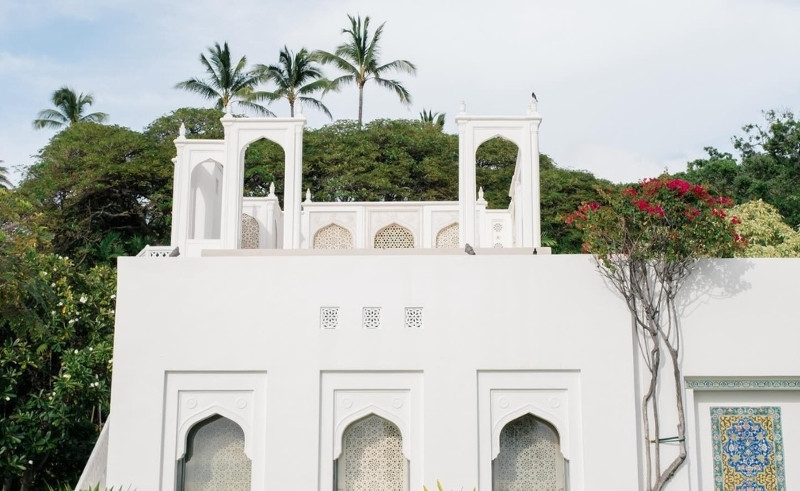
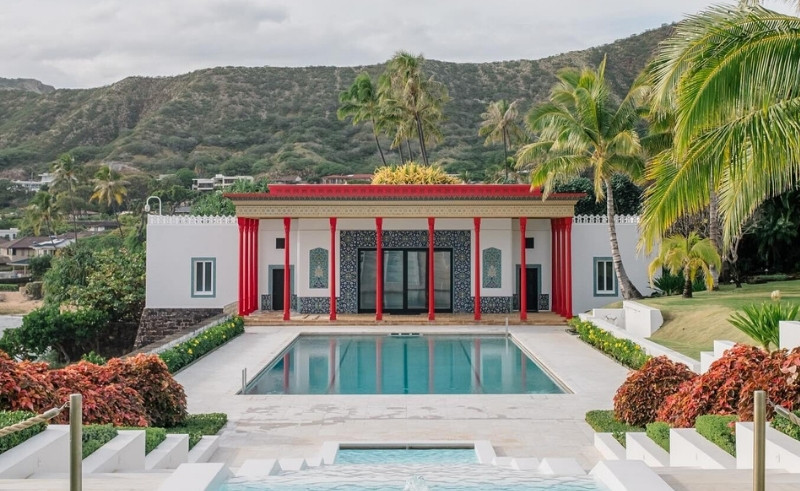
Located on a 20,000 square mettre lot of land, the Shangri La was built for Duke between 1935 and 1937 by Marion Sims Wyeth, a Gilded Age American architect who dabbled in everything from Art Deco and Mediterranean Revival to classical French and Georgian architecture. The home he built for Duke was a one-story residence with sprawling gardens and courtyards full of fountains, combining traditional Islamic motifs and design with modernist architecture.
It’s a paradoxical treasure: the tropical Pacific waters, the Polynesian cultural context of Hawaii, the jazz age decadence. On warm Hawaiian nights, partying between wooden wall panels inscribed with Persian poetry and dancing atop Moroccan ceramic tiles beneath the hot glow of metal lanterns, Duke’s guests at the Shangri La included the likes of Elvis Presley, Andy Warhol, First Lady Jackie Kennedy, and jazz legend Joe Castro.
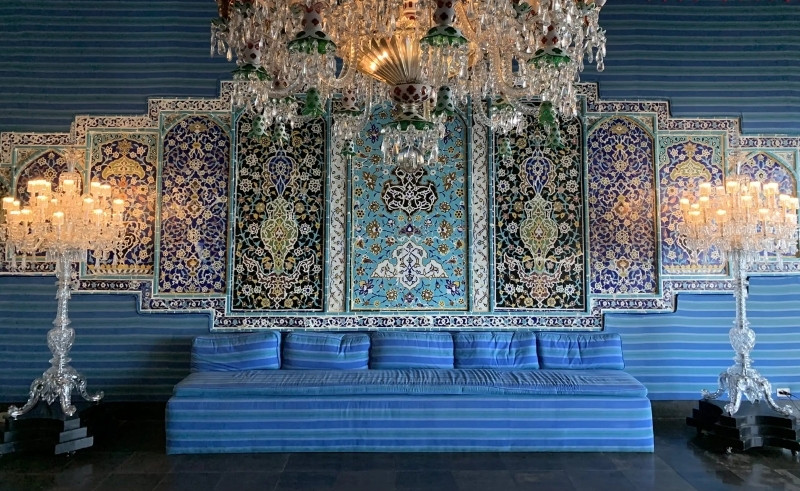
Guided by Duke’s vision in the subsequent decades, the property was transformed into an unlikely fusion of landscape, architecture, and history. Although Duke owned four other palatial homes across America, she dedicated the most creative energy to the Shangri La and added more than 4,000 artefacts to its collection throughout the rest of her life, including masterpieces from the medieval Islamic world.
As a private collector, Duke’s curatorial vision was also ahead of its time. She threaded hallways and rooms full of centuries-old artefacts with contemporary works by (at the time) living artists from the Middle East and Asia, creating a through-line between the past and present of Islamic artistic and cultural traditions.
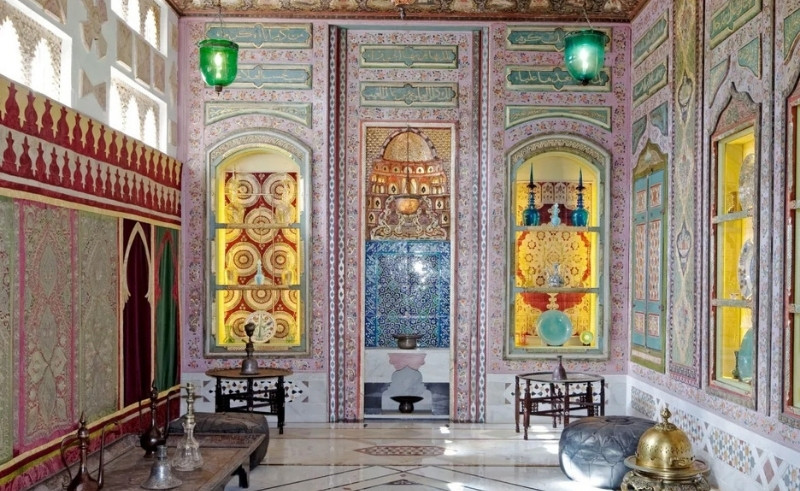
Before she died in 1993, Duke instructed that the home be turned into a museum, writing in her will that the space should be “available to scholars, students and others interested in the furtherance and preservation of Islamic art.” The Doris Duke Foundation took on this mission after her death, and in 2002, the Shangri La Museum of Islamic Art, Culture, and Design opened to the world. Today, the museum is accessible through weekly guided tours that begin at the Honolulu Museum of Art, with tickets released four times a year and selling out fast. The opening, which took place shortly after the events of 9/11, created a new way for American audiences to engage with Islam at a tenuous time for anything having to do with Islam in America.
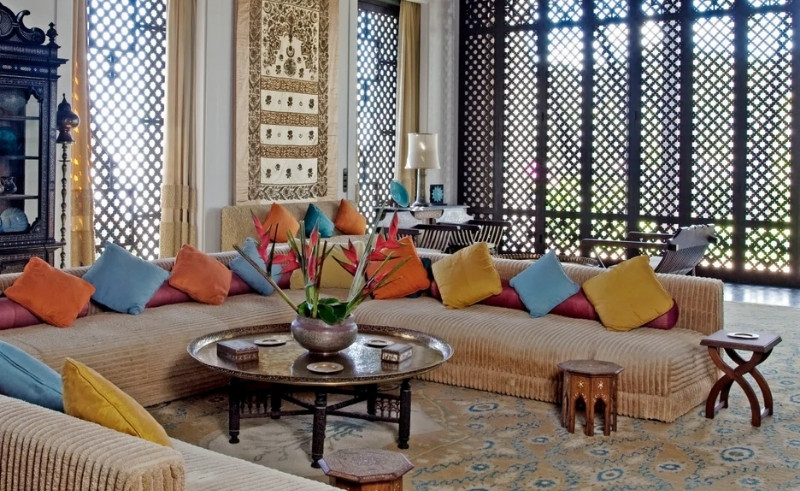
Design-wise, the Shangri La also stands as a relic of a bygone era: it deified aesthetics, and relegated meaning-making and cultural context as secondary. In Islamic art, Duke saw something aesthetically beautiful. She collected it and built for it a home to match its grandeur. There may be many issues inherent in her mode of art collection and design, not least among them accusations of Orientalism and appropriation, but Duke’s philanthropic mission goes beyond what many other private collectors have managed, by building a home worthy of the Islamic art it houses on the shores of the Pacific Ocean.
source/content: cairoscene.com
______________
________________
ISLAMIC ART
