MOROCCAN scholar Said Yaktine named Cultural Personality of Year at SIBF 2026

 The Sharjah Book Authority (SBA) has named Moroccan scholar Dr. Said Yaktine as Cultural Personality of the Year for the 45th Sharjah International Book Fair (SIBF 2026), recognising more than four decades of contributions to Arabic narratology and literary criticism.

Yaktine has advanced the study of classical and modern Arabic narrative, examining the novel, Arab storytelling traditions and the impact of digital technology on literature. His research also explores hypertext, digital literature and the changing ways knowledge is produced and received.

Ahmed bin Rakkad Al Ameri, CEO of SBA, said, “Dr. Said Yaktine has developed an extensive body of scholarship spanning several fields. His reference works have enriched Arabic narratology and literary criticism, advanced approaches to studying the novel and Arab narrative heritage, and explored digital texts and the changing nature of literature in the age of technology.”

“His selection as Cultural Personality of SIBF 2026 recognises the value of rigorous academic research and its lasting influence on future generations of scholars, writers and readers,” he added.

Al Ameri said this honour aligns with the vision of His Highness Sheikh Dr. Sultan bin Mohammed Al Qasimi, Supreme Council Member and Ruler of Sharjah, who has made recognising leading Arab cultural figures and their intellectual achievements central to the emirate’s cultural project, ensuring their contributions are recognised and introduced to new generations.

“Under the guidance of H.H. Sheikha Bodour bint Sultan Al Qasimi, Chairperson of SBA, we continue to strengthen the fair’s role in honouring these scholars and introducing audiences to their work, raising awareness of Arab cultural achievements and expanding their international reach,” he stated.

Commenting on the honour, Dr. Yaktine said, “I have participated in several editions of SIBF and witnessed its continued growth, with more publishers, a broader cultural programme, diverse creative and intellectual activities, improved workshops for children and young people, and consistently high standards of organisation and punctuality.”

He added, “The fair has also expanded its international reach, welcoming writers and researchers from around the world and featuring a different Arab or foreign country at each edition. Its growing appeal among visitors of all ages reflects its place in Sharjah’s year-round cultural activities, which have truly made the emirate a permanent capital of Arab culture.”

Born in Casablanca, Morocco, in 1955, Yaktine earned a postgraduate qualification in 1988 and a State Doctorate from Mohammed V University in Rabat in 1997. He began his career teaching at secondary schools before moving to Hassan II University in Casablanca and later Mohammed V University, where he became a professor.

From 1997 to 2004, he headed the Department of Arabic Language and Literature at the Faculty of Letters and Human Sciences in Rabat. He also coordinated research into Andalusian-Moroccan narrative heritage and served as a visiting professor at several Arab and European universities.

Yaktine’s critical approach emerged in the 1980s through his study of the Arabic novel, focusing on narrative time, the narrator, point of view and discourse. His early works contributed to Arab literary debates on modern critical methods and their application to literature.

He later expanded his research to Arab narrative heritage, particularly popular epics and traditional storytelling, exploring links between classical and modern narratives and approaches that account for Arabic literary traditions while engaging with international theories.

Yaktine expanded his research into digital and interactive literature, examining how hyperlinks and electronic media have changed the structure and reading of texts, and the challenges digital technology presents for literary criticism and cultural and educational institutions. In 2011, he was elected President of the Arab Internet Writers Union.

He has published more than 20 books on classical and modern Arabic narrative.

Yaktine has received several Arab literary and academic awards, including Morocco’s Grand Book Prize in 1989 and 1997, the Abdul Hameed Shoman Award for Young Arab Researchers in 1992, and the Arab Internet Writers Union Award in 2008.

He won the Sheikh Zayed Book Award in 2016 for ‘Al Fikr Al Adabi Al Arabi: Al Bunyat wa Al Ansaq’, followed by the 2022 Katara Prize for Arabic Novel in the Literary Studies category for ‘Al Sardiyat Al Tatbiqiya: Qira’at fi Sardiyat Al Riwaya Al Arabiya’, and the 2022 Kuwait Prize for the Advancement of Science in Narratology.

His selection as Cultural Personality of the Year recognises his contributions to Arabic literary criticism and his work connecting Arab narrative heritage with contemporary literary scholarship.

SIBF 2026 will bring together 2,673 publishers and exhibitors from 124 countries, with 1,500 cultural, creative and artistic events. The Sultanate of Oman will be the Guest of Honour.

source/content: wam.ae (headline edited)

_____________
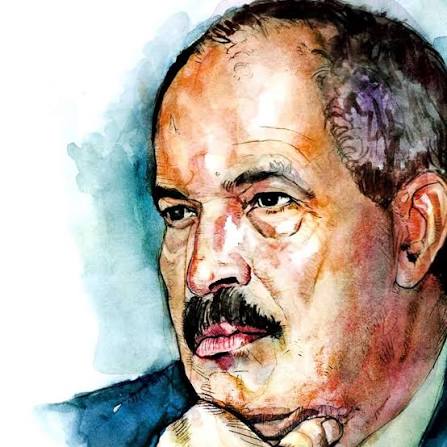
pix: facebook.com (@said.yaktine)

_______________________________

MOROCCO / SHARJAH, U.A.E.
PALESTINIAN-CHILEAN : Meet Tali Marjieh: Arab Fashion’s Next Rebel Designer

We caught up with Tali Marjieh between tour stops to talk about designing her sister Elyanna’s stage looks with no fashion training, and the gold-soaked vision behind her label, MARTAL.

Originally published on August 2nd, 2026.

As someone who’s spent years reporting on the region’s music scene, I’ve known about Elyanna since she first blew up. What always fascinated me wasn’t only her voice or her meteoric rise, it was her tour wardrobe.

Each performance feels like theatre. Meticulously styled yet emotionally raw, fusing choreography, visuals and music into one huge spectacle. Few Arab artists have nailed that alchemy. Elyanna has, shaping the kind of live performance standard Western pop icons like Taylor Swift and Beyoncé perfected long ago.

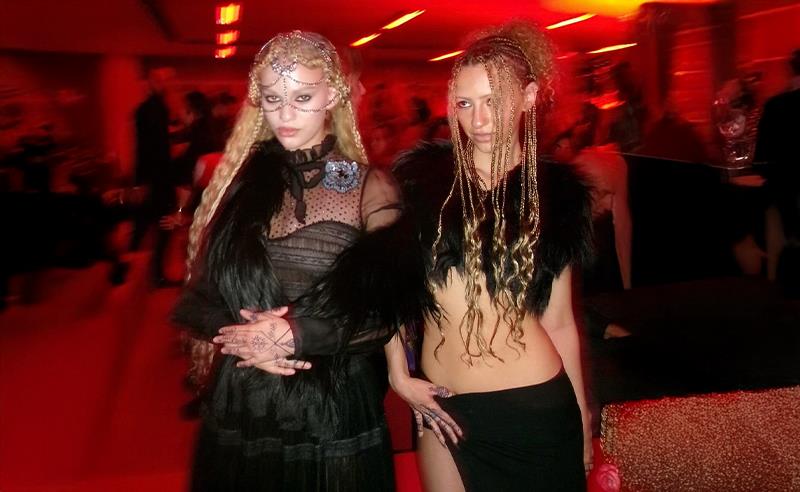
Her costumes are opulent and deeply symbolic, as you can see in the delicate lace and in the keffiyeh folded into a crown. Statement pieces that look as if they’ve been plucked from a couture house as much as a grandmother’s heirloom chest.

By pure coincidence, or obsessive stalking, sue me, I discovered that these looks aren’t helmed by designer conglomerates or pulled from showrooms. They’re imagined, stitched and perfected in a cramped LA studio and a local tailor’s shop by her sister and creative co-conspirator, Tali Marjieh.

Tali isn’t only the architect behind Elyanna’s looks. She has also been brewing that on-the-road sorcery into a label of her own, MARTAL: streamlined, rave-coded, minimal fabric, a bit rebellious, almost grungy, very much giving baddie vibes.

After months of following her chaotic studio Instagram stories, where she’d share her design process on the road, I finally reached out. Partly because I needed to unpack the duality at the heart of her work, how she pieces together such intricate, whimsical designs for her sister while running a label on the opposite end of the aesthetic spectrum, all without an army of craftsmen. Partly because my inner Devil Wears Prada alter ego wanted an excuse to live out my fashion journalist fantasy. Either way, I had to try.

When we speak, Tali is between tour stops with Elyanna, still finding time to check in and share snippets of life on the road. “I’ve been having the craziest months,” she tells me.

Her aesthetic for MARTAL could read like Arab futurism. The way I see it, it’s very brat-core, something I imagine Charli XCX and her entourage would wear. It’s stripped down, conceptually and literally, serve-maxxing silhouettes in bold fabrics and cuts, embellished with gold.

“There are a lot of limitations when it comes to performance wear. With MARTAL, I wanted to create ready-to-wear breezy pieces,” Tali told SceneStyled.

“It is about spicy Arab girls living abroad, looking for designs and colours that remind them of home, like gold.”

Gold runs through everything MARTAL does, and for Tali it isn’t decorative shorthand. It’s a token of her Arab roots, the element that turns up in weddings, dowries, household talismans and trinkets, reworked for a generation who grew up between cultures.

“The Arab heritage brings me so much inspiration, and its future gives me hope and motivation. They go hand in hand,” she says

For all the elaborateness of the designs, Tali’s path doesn’t follow the glossy arc of a traditional fashion designer. She didn’t study in Paris ateliers or climb the ranks at a luxury house. She built her craft out of necessity, to fill a gap.

When Elyanna first started performing, the team struggled to find pieces or a stylist who could understand her vision and actually represent her.

“We were put in a situation where we had to create her looks ourselves. I had zero knowledge about showrooms, stylists or brands at the time, so I went to a local fabric store near me, then to the tailor next door, and it all started from there.”

On tour, she handcrafts multiple ensembles, transforming Elyanna through a set of characters. Angel, warrior, baddie, all with an effortless flair that matches the emotional arc of the music onstage, in costumes that look deceptively designer to anyone who isn’t behind the scenes.

MARTAL isn’t a vanity project or an extension of Elyanna’s world. Tali wants it to work as a launching pad for emerging and often overlooked talent from the Arab diaspora, and on tour she’s always scouting young creatives and fashion students to collaborate with.

“The whole idea behind what we do is to open doors for designers, people in music and young creatives,” she says

She’s anti-gatekeeping to a fault, bringing people into her studio chaos, sharing patterns, workspace and production know-how, building an ecosystem that pushes Arab aesthetics into contemporary wardrobes rather than museum vitrines.

She has moved from backstage hero with no cape and ad-hoc tailor to a full designer and stylist steering looks for festival stages and sold-out shows in New York and at Wembley. It’s a rapid apprenticeship of a kind the global fashion industry rarely allows.

She still frames herself as a student, though. A business student, as she puts it, “touring with my sister and building my own brand along the way.”

“With such visibility comes a huge responsibility,” she says. For Tali, representing her Palestinian roots isn’t an aesthetic choice; it’s an inherent part of her conscience.

She recalls something Elyanna said to her right before she took the stage at Coachella, which still gets her through the overwhelming days.

“If I’m the first Arab to do something, it doesn’t mean it’s enough. It means we have to work extra hard to amplify the voice of our culture and our people.”

For all the praise the sisters get, the criticism comes too. “Some outfits, especially those built as a performance extension of a song, are controversial for others,” Tali says.

The ruptures are deliberate, meant to provoke conversation as much as admiration, and she’s unromantically pragmatic about the friction. “Most of Elyanna’s looks are controversial to others. We show a different perspective that some might relate to, and some simply don’t like or accept. But we’re fine with that.”

She brushes it off so nonchalantly I found myself quietly wondering whether she’s a Capricorn. It’s a posture that understands exactly how high the stakes get when fashion becomes a language of identity.

For now MARTAL is a young and mercurial empire in the making, a distillation of everything Tali has learned on the road. She wants people to be choosing it years from now, and to let it mean whatever they need it to mean.

“I’m still new with MARTAL, so I’ll let them choose the legacy and the feeling they want to take from it. But I do want them to understand that Arabs are maximalists when it comes to clothes, and we love it.”

source/content: cairoscene.com (headline edited)

_______________

__________________________

CHILEAN PALESTINIAN

QATAR’s Al-Kuwari elected to chair Arab Parliament foreign affairs committee

Qatar’s Al-Kuwari was elected to chair the Arab Parliament’s foreign affairs committee as Saudi Arabia secured the parliament’s presidency.

Qatar’s Shura Council member Mubarak bin Mohammed Al-Kuwari was elected chairman of the Arab Parliament’s Committee on Foreign Affairs, Political Affairs and National Security by acclamation during a procedural session in Cairo on Saturday.

The appointment aligns with Doha’s broader foreign policy agenda, which frequently centres on regional mediation and conflict resolution. Al-Kuwari, whose legislative background includes the Qatari-Arab Parliamentary Friendship Group, stated the result reflects regional backing for Qatar’s role in joint Arab action, emphasising the need for ongoing coordination among member states.

During the same session, Saudi Arabia’s Shura Council member Saad bin Sulaib Al-Otaibi was elected president of the Arab Parliament by acclamation. He succeeds the UAE’s Mohammed bin Ahmed Al-Yamahi for a two-year term.

Four deputy presidents were also elected to complete the leadership lineup from a pool of eight candidates. Representatives from Oman (Saeed bin Hamad bin Hilal Al-Saadi), Egypt (Hisham Al-Hosari), and Jordan (Ihsan Barakat) secured seats in the first round of voting. Libyan representative Abdulsalam Nasiyah won the fourth seat following a runoff vote against Hassan Al-Taher Al-Barghouthi.

The newly elected bureau held a closed meeting in Cairo on Saturday to prepare for the upcoming term. The parliament’s standing committees, including the Qatari-led foreign affairs committee and the Palestine committee, are scheduled to meet on Sunday, ahead of the first plenary session of the new ordinary session on Monday.

source/content: dohanews.co (headline edited)

_____________

___________

QATAR