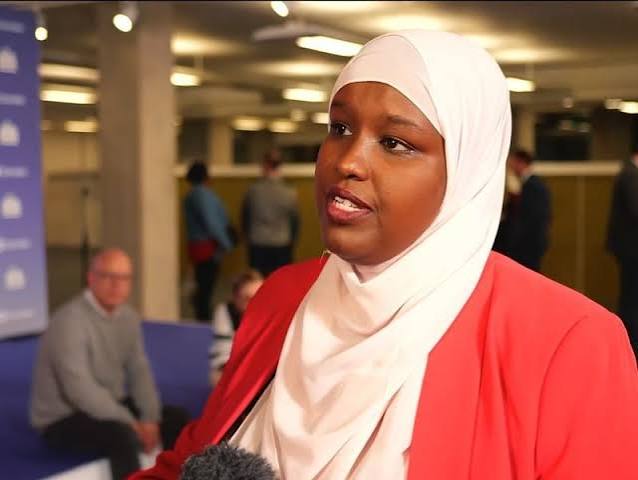
Sagal Abdi-Wali, a Somali-born refugee who arrived in Britain as a child, won the Holborn and St Pancras by-election on Friday, retaining the parliamentary seat vacated by former Prime Minister Keir Starmer for the Labour Party.
Abdi-Wali secured 12,292 votes, or 45.17 percent of the ballots cast, defeating Green Party leader Zack Polanski, who received 8,928 votes, or 32.82 percent. The margin of victory was 3,364 votes. Turnout stood at 38.76 percent, lower than the 2024 general election.
Top Three Candidates
| Candidate | Party | Votes | Share |
|---|---|---|---|
| Sagal Abdi-Wali | Labour | 12,292 | 45.17% |
| Zack Polanski | Green | 8,928 | 32.82% |
| Ewan Cameron | Conservative | 1,922 | 7.06% |
A Personal Journey from Refugee to Parliament
Abdi-Wali was born in Somalia and came to Britain in the early 1990s as a child refugee fleeing the civil war. She settled in Camden, north London, where she has lived for more than three decades.
In May 2026, she became the first Black woman to lead Camden Council, one of London’s most diverse boroughs. Before that, she served as Cabinet Member for Better Homes and helped lead Camden’s work toward achieving Borough of Sanctuary accreditation in 2024.
Speaking after her victory, Abdi-Wali said: “I hope this moment also says something about who gets to belong. For people who look like me, I hope they see themselves reflected in this place and know that their path too belongs here. This is Camden, and this is Britain.”
Her campaign focused on homelessness, opportunities for young people, and nationalising Thames Water. She told the BBC that voters were “looking for hope” and that her message resonated because people want to believe politics can improve their lives.
A Safe Labour Seat Faces Its Strongest Challenge
Labour has held Holborn and St Pancras continuously since the constituency was created in 1983. When Keir Starmer won the seat in 2024, he secured 49 percent of the vote. In this by-election, Labour’s share fell by four percentage points, while the Green Party tripled its vote share from 10 percent in 2024 to nearly 33 percent.
The result was seen as a test for Prime Minister Andy Burnham’s leadership of the Labour Party, particularly its ability to retain support among left-wing voters amid growing competition from the Greens.
The by-election was triggered by Starmer’s resignation from Parliament in September 2026, after he stepped down as prime minister in July following a series of political setbacks and the party’s poor showing in May’s local elections.
Significance for the Somali Diaspora
Abdi-Wali’s election is a milestone for Somali representation in Western politics. She becomes one of a small but growing number of Somali-born politicians elected to national legislatures in Europe and North America.
Her victory also drew attention to the Somali diaspora’s engagement with British politics. During the campaign, Reform UK’s home affairs spokesperson Zia Yusuf posted on social media questioning her Somali origin. Abdi-Wali responded that she was “less upset, more just a bit sad than disappointed” by such rhetoric, adding that “hope is not naive.”
In her victory speech, she said: “We cannot allow that work, built over generations, to be casually undone by those who seek to divide us. Winning not by making people afraid of each other, but by bringing people together.”
Her election comes amid a broader UK-Somalia relationship that spans security, development, and humanitarian cooperation. The UK has maintained a defence partnership with Somalia focused on military training, capacity building, and counterterrorism, as detailed in FTL Somalia’s coverage of UK-Somali defence talks. The British Embassy in Mogadishu, led by Ambassador Charles Nicholas King, has continued to engage with Somali leadership on security sector reform and support for the African Union Stabilization Mission in Somalia (AUSSOM).
Beyond security, the UK has been a significant partner in Somalia’s development and humanitarian sectors. The UK Minister for Africa, Baroness Jennifer Chapman, announced £6 million in humanitarian funding during a February 2026 visit to Mogadishu, targeting drought-affected communities [citation:9]. The UK has also supported education and health initiatives, including the Better Lives for Somali Women and Children programme, a £38 million partnership aimed at improving maternal and child health across six regions of Somalia.
Critical Note
Sagal Abdi-Wali’s election to the UK Parliament is a personal achievement and a notable moment for Somali representation abroad. Her path from child refugee to council leader to member of Parliament reflects the integration that the Somali diaspora has achieved in Britain over three decades, even as debates over immigration and belonging remain politically charged.
However, the result also reveals a shifting political landscape. Labour’s vote share fell by four points, and the Green Party’s surge from 10 percent to nearly 33 percent signals that the left-wing vote in Britain is fragmenting. Abdi-Wali won comfortably, but the trendline suggests that Labour’s hold on urban, progressive constituencies is loosening.
For the Somali diaspora, her election is symbolically significant, but representation in one constituency does not translate into policy influence on Somalia or on issues affecting Somali communities in Britain. The practical impact of her tenure will depend on her committee assignments, her willingness to advocate for diaspora concerns, and her ability to navigate a Parliament where the Labour Party faces internal divisions and external challenges. Her victory is a beginning, not a conclusion.
source/content: ftlsomalia.com (FTL) / (headline edited)
____________
________________________
BRITISH / SOMALIAN