Arabs & Arabian Records Aggregator. Chronicler. Milestones of the 25 Countries of the Arabic Speaking World (official / co-official). AGCC. MENA. Global. Ist's to Top 10's. Records. Read & Enjoy./ www.arabianrecords.org
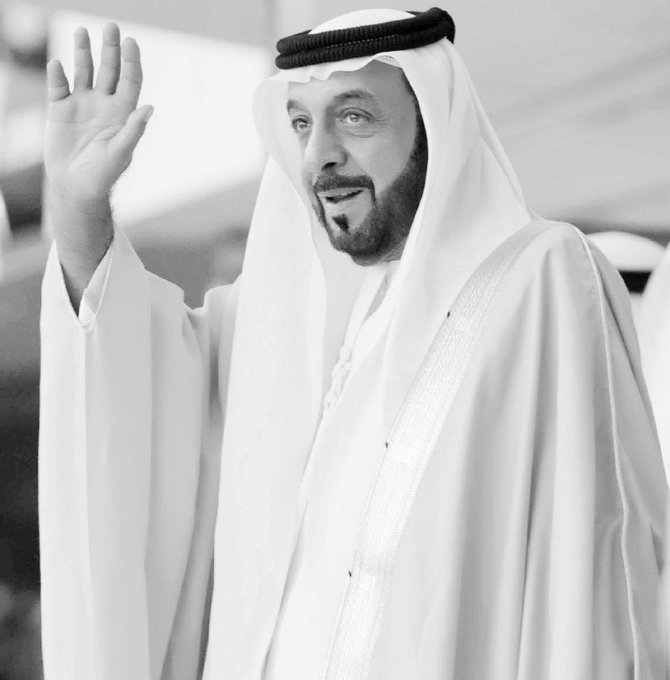
“While people are proud of their achievements, we are proud of being the children of Sheikh Zayed, and while people talk of their history, we speak of the history of giving that began with the formation of the UAE,” said the late His Highness Sheikh Khalifa bin Zayed Al Nahyan, epitomising the nations’s approach from the first day it was established to its phase of empowerment, ushering in the birth of a powerful and successful nation.
On 4th November, 2004, Sheikh Khalifa assumed power and, up until his passing, helped the country, whose track record of achievements spans nearly 35 years, progress from the foundation phase to the empowerment stage.
Over this short period, the UAE has topped international competitiveness indexes and has become the second-largest economy in the Arab region, despite its small area and population.
Moreover, the UAE is the first Arab and Islamic nation to reach the planet Mars and one among few countries with significant achievements in the space sector.
The UAE’s achievements during the empowerment phase are reflected on the lives of its people and business community, making it the dream destination of anyone seeking success, stability, and wellbeing.
After assuming power, the late Sheikh Khalifa launched the first strategic plan of the UAE Government to achieve balanced and sustainable development and ensure the wellbeing of UAE residents.
In 2009, he was re-elected as the President of the country, and thanks to his wise leadership, the UAE overcame the financial crises and political issues facing the region due to his active foreign policy, which also enhanced the regional and international stature of the country.
How did the UAE manage to accomplish significant achievements during the empowerment phase? The Emirates News Agency (WAM) monitors these milestones and challenges in the following report:
1. The Health Sector.
The UAE’s leadership has prioritised the health sector and increased public spending on the sector, amounting at times to seven percent of the federal budget.
This fact is highlighted by the spending on the sector in 2016, 2017, 2018, 2019 and 2020, which amounted to AED3.83 billion, AED4.2 billion, AED4.5 billion, AED4.4 billion and AED4.84 billion, respectively.
This policy also proved successful when the sector faced the coronavirus (COVID-19) pandemic, demonstrating a high level of efficiency supported by the many well-equipped public and private hospitals.
The sector’s efficiency was further supported by the country’s efforts to establish media cities, including Khalifa City in Abu Dhabi, Dubai Medical City and Sharjah City.
Coinciding with these achievements, most Emirati hospitals are internationally accredited, and the country has become a leading medical destination, underpinned by the rising number of hospitals, which increased from 16 in 1975 to 169 in 2020.
These hospitals are managed by highly qualified medical staff, numbering 8,995 in 2020 in the government sector and 17,136 in the private sector, compared to 792 doctors in 1975.
The number of nurses also reached 56,045 working in the government sector in 2020, increasing 252 percent compared to 1975.
The country has prioritised health insurance and provided it to citizens for free, in addition to comprehensive medical coverage for all segments of society, especially the elderly and people of determination.
In 2017, the UAE established the first cancer treatment centre utilising proton technology in the Middle East and Gulf Cooperation Council (GCC) region.
The Emirates was also one of the first countries to use robotics in the pharmaceutical sector.
Smart rooms were established to provide entertainment services to patients and link their medical files with hospitals to provide comprehensive and effective care.
The Ministry of Health and Prevention has been keen to integrate artificial intelligence (AI) in medical services, used in over 100 facilities nationwide.
The UAE ranks first in the world in the number of accredited facilities, and more than 85 percent of Emirati hospitals have international accreditation.
2. Education Sector.
The UAE’s spending on the health and education sectors underscores the leadership’s belief in the importance of these two sectors to achieving sustainable development, with spending from 2016 to 2020 accounting for between 20 percent and 22 percent respectively of the federal budget.
With the budget allocated to the national education sector standing at AED10.41 billion, AED10.46 billion, AED10.40 billion, AED10.2 billion and AED6.536 billion for 2016, 2017, 2018, 2019 and 2020, respectively, the average share of the federal budget is 15 percent.
The UAE believes that the education system is the driver of development and ensures the right to free education for all citizens. From 2012, education became mandatory for everyone over the age of six until secondary education, which was reinforced by issuing the Children’s Rights Law (Wadeema).
The UAE’s education strategy confirms the establishment of an educational system based on the skills of the 21st century. It aims to provide higher education that can compete with the world’s best universities.
The Mohammed bin Rashid Smart Learning Initiative, launched in 2012, is an ideal model covering all schools in the country and creates a new educational environment in schools that includes smart classes.
In 1973, the country had 110 schools with 40,000 students, while in 2007, the percentage of educated citizens reached 88.7 percent of the population.
The UAE Vision 2021 highlighted the need to advance education in the country to the highest in the world and adopt a smart system as a primary goal.
The vision also confirmed that the upcoming years would witness comprehensive transformations in learning and education, led by smart education.
The national education strategy aims to ensure equal education, maintain the quality and efficiency of institutional education, promote scientific research, encourage students to enrol in higher education, achieve innovation, and support smart education.
Subsequently, the National Strategy for Higher Education 2030 affirms the importance of improving the scientific and technical skills of students, to support the growth of the economy.
At the same time, the UAE has kept pace with the latest innovations in the health sector. The government has launched many initiatives that encourage innovation in general and innovation in the medical field in particular.
The UAE is one of the few countries that utilises medical robotics technology when conducting major surgeries.
President Khalifa bin Zayed passed away on Friday, May 13th, 2022
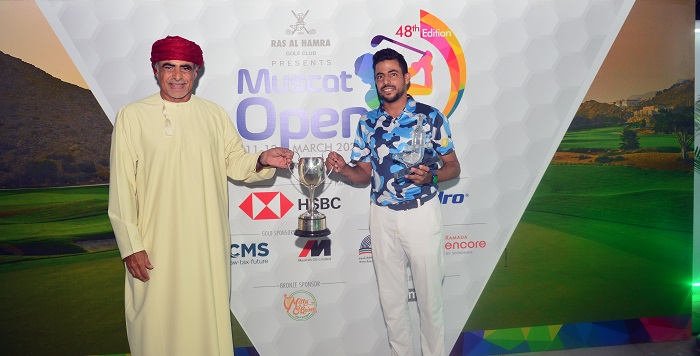
Local favourite Azaan Al Ruhmy became the champion of the 48th Muscat Open Golf Championship 2022.
Azaan set a new course record of 69 (-2 under par) on day 1, and then repeated this score on day 2, giving him a total score of 138 (-4 under par) and a victory by 10 shots from 2nd place Nasser Yaqoob (Awali Golf Club).
Another local favourite Badr Alaamri sealed third place with a score of 150. The leading junior in the gross category was Darsh Pawani with a score of 157.
It was a very proud moment as Azaan was presented with the trophy by. Dr. Mohammed bin Hamad Al Rumhy, the Minister of Energy and Minerals and the Chairman of the Board of Directors of Petroleum Development Oman.
This was for the 6th time Azaan has won this tournament and he commented afterwards, “this tournament is the most prestigious golf event in Oman, if I can pick one tournament to win in Oman then it would be the Muscat Open. It was my first two back to back rounds in the 60s. I wish to thank the sponsors, the organizing committee and my family for all of their support”.
The net prize this year went to Tore Solberg (134) who was closely followed by junior Ras Al Hamra golfer Juan Moreno (136) and Salim Al Harthy (138).
Ras Al Hamra Golf Club Captain, Simon Walker commented, “Congratulations to Azaan on winning this coveted championship for the 6th time. The course is in superb condition due to the tireless work from our team. We were delighted to welcome such a high caliber of golfers to the club; golf is thriving in Oman and visitors are always welcome to our club which is the only floodlit course in the country”.
The 2022 Muscat Open Golf Championship was organized at Ras Al Hamra Golf Club on the 11th and 12th of March.
There was a full field of 92 golfers from Oman and the GCC who competed for the longest-running amateur golf competition in Oman and the GCC.
Prize Winners :
1st Gross & Muscat Open Champion Azaan Al Rumhy -4 (138)
2nd Gross Nasser Yacoob +6
3rd Gross Badr Al Amri +8
Junior Best Gross DarshPawani +1
1st Nett Tore Solberg -8
2nd Nett Juan Moreno -6
3rd Nett Salim Al Harthy -4
Plate H.E. Rr Al Rumhy 70
Daily Prizes
Best Gross Day 1 Kieran Tumilty 76
Best Gross Day 2 Fahad Al Kitani 76
Best Nett Day 1 Simon Walker 68
Best Nett Day 2 Hussain Dad 70
source/content: timesofoman.com (edited)
__________
This was the 6th time Azaan has won this tournament
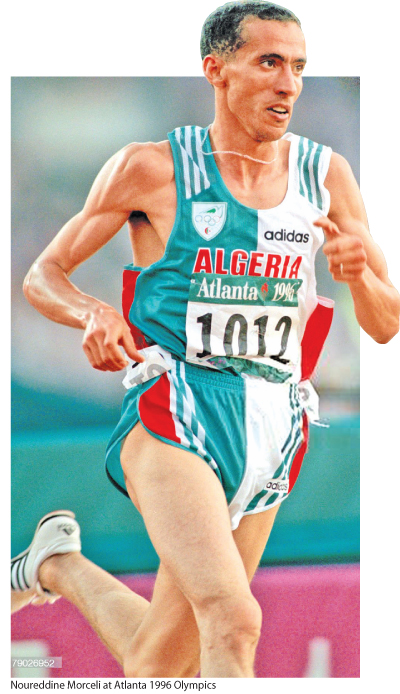
Noureddine Morceli is an Algerian middle-distance runner and a gold medalist in the 1500 metres at the Atlanta 1996 Summer Olympic Games. He won three straight gold medals at that distance at the World Championships. He also set world records in the 1500m, mile and the 3000 metres in the 1990s.
Morceli was twice the gold medalist in the mile at the 1994 and 1998 Goodwill Games, the Arab champion in the 1500m in 1988, the Millrose Games champion in the mile in 1992 and 1993, the 1500m winner at the 1994 IAAF World Cup, and the overall champion in the 1994 IAAF Grand Prix series. Besides, he was Algerian national champion in the 1500m in 1989.
In international competitions, middle-distance events include the 800 metres, the 1500 metres and the 3000 metres. In English-speaking countries, until the second half of the 20th century, the 880 yards and the mile were run as the equivalents of the 800 metres and the 1500 metres.
An early favourite among middle-distance races was the mile, which in the first half of the 20th century was run in times exceeding four minutes. Breaking the “four-minute barrier” was considered unlikely.
On May 6, 1954, however, the 25-year Roger Bannister of Great Britain set a record of 3:59.4 in a dual meet at Oxford. With increasingly controlled climatic and surface conditions and increasingly accurate timing devices, however, the record was lowered many times thereafter.
Birth and Career
Born on February 28, 1970 in Tenes, Noureddine Morceli attended Riverside Community College in Riverside, California, throughout his career, in winter, he would return there to enjoy the mild climate and train.
At the age of seven Morceli was inspired by his brother Abderrahmane, a world-class runner who finished fourth in the 1500 metres in the 1977 World Cup and represented Algeria at Moscow 1980 and at Los Angeles 1984Summer Olympic Games. Later, his brother would become Morceli’s coach.
In the early 1980s, Morceli came to idolize Said Aouita, a Moroccan who won the gold in the 5000 metres in the 1984 Summer Olympic Games. By age 17, Morceli had taken second place in the 1500 metres in the World Junior Championships.
Morceli rose to athletic prominence after winning the silver medal in the 1500m at the 1988 World Junior Championships in Sudbury, Canada, clocking 3:46.93. A year later, he enrolled at Riverside Community College in California, renowned for its coaching and track facilities. He spent two years there, at the end of which he had run the world’s fastest 1500 metres for 1990.
At the age of 20, he was ranked first in the world in the 1500 metres. In 1990, he moved up to senior class and set the season’s best mark of 3:37.87 in 1500m. He continued this dominance into 1991, when he broke the world indoor record for 1500m at Seville, Spain on February 28, setting a new mark of 3:34.16. Only nine days later, on the same track, he won the 1500m title at the 1991 World Indoor Championships with a time of 3:41.57.
Throughout the outdoor season 1991, Morceli remained undefeated over 1500m. At several Grand Prix meetings, he ran times around 3:31. At the World Championships in Tokyo, Japan, Morceli was already a clear favourite for the 1500m and he won the gold easily setting a new World Championships record of 3:32.84.
In the beginning of 1992, Morceli ran a new 1000m indoor world record of 2:15.26. There seemed to be no greater certainty for a gold medal at the Olympic Games in Barcelona later that year than Morceli. But prior to the Olympic Games Morceli lost unexpectedly to Gennaro di Napoli in Rome and David Kibet in Oslo. There were signs that he was not in the same shape as the year before.
However, in the Olympic semi-final he looked strong. The Olympic final was run at a woefully slow pace, with the field passing through the 800m mark in a slower time than in the women’s final. That was not the sort of pace to which Morceli had become accustomed, or that he was comfortable with, and when the frantic sprint for home began, he found himself unable to respond, eventually finishing a disappointing seventh clocking 3:41.70.
However, after just three days Morceli set a world season’s best in Monaco and a week later he broke his personal best to win in Zurich in 3:30.76. In September 1992, Morceli set a new 1500m world record of 3:28.86 in Rieti.
In 1993, Morceli narrowly missed his own world record when he won the Mediterranean Games in Narbonne in 3:29.20. By that time Morceli had set himself a new aim: to break Steve Cram’s eight-year-old record over the Mile. In Monaco, he narrowly missed the 3000m world record. There was even talk that he might skip the World Championships in order to concentrate fully on the world-record hunt. However, in the end he decided to take part.
At the 1993 World Championships in Stuttgart, Germany, the final of 1500m started at a relatively slow pace, but Morceli was always in complete control, sprinting away in the last lap to win easily and retain his world title with a time of 3:34.24. In the following weeks, he failed twice to set a new world record over the Mile in Berlin and Brussels. But just two days after the race in Brussels he astonished everyone by crushing the record with a time of 3:44.39.
In 1994, he set the new 3000m world record, clocking 7:25.11. He also experimented successfully with the 5000m. In Zurich, he out-sprinted the rest of the field to take the victory and also won the 5000m in Rieti, Italy. Morceli broke the 2000m world record in the following season, setting a new mark of 4:47.88.
Nine days later Morceli set the last world record of his magnificent career, when he lowered his own 1500m record to 3:27.37 in Nice. Only a few days after this he almost broke the record again when he triumphed in 3:27.52 in Monaco. He easily defended the 1500 m World Champion title in Gothenburg. Shortly after, Morceli tried to improve on his Mile record in Zurich but did not succeed.
World Records
Standing 172 cm and weighing 60 kg, he added the outdoor world record for the 1500 metres in 1992, the mile in 1993, and the 3000 metres in 1994. By the end of 1994, the Algerian track star’s accomplishments had reached even greater proportions. In August, after breaking the outdoor world record for 3,000 metres (7:25.11), he could claim five middle-distance world records, which also included (outdoor) the 1500 metres (3:28.86) and the mile (3:44.39) and (indoor) the 1,000 metres (2:15.26) and the 1500 metres (3:34.16).
Morceli was named Athlete of the Year by Track & Field News in 1993 and 1994 and by the International Athletic Foundation in 1994. In that two-year period, he lost only once, at 800 metres. As he set his sights on more records, most notably the 800-metre, 2000-metre, and 5000-metre events, his driving force was a deeply rooted dedication to bring glory to his country. A devout Muslim, during the sacred holy days of Ramadan he would fast from sunrise to sunset despite the rigours of training.
As Morceli looked forward to the 1995 season, sportswriters unabashedly proclaimed him the greatest runner in the world or even the greatest of all time. Perhaps his spirit was best exemplified by his winning performance in the 1994 Grand Prix. Racked with flu, weakened and hacking, he not only ran but left the field behind at the finish.
Morceli was soon tested by a new challenger, Moroccan Hicham El Guerrouj. Morceli bested El Guerrouj in the 1500 metres at the 1995 outdoor World Championships clocking 3:33.73; however, the 1500metres race at the 1996 Olympic Games in Atlanta the following year was considered one of the most dramatic contests in athletics history.
Morceli and El Guerrouj led the field with 400 metres to go when the young Moroccan tripped on his rival’s heel and fell to the ground, allowing Morceli to capture the gold medal in that event. At the Grand Prix final in Milan later that year, however, Morceli lost the 1500metres event for the first time in years to El Guerrouj. Morceli competed in subsequent events, including the 2000 Games in Sydney 2000 Olympic Games, before his eventual retirement.
Atlanta 1996 Summer Olympics
At the start of the 1996 season, Morceli set a world season’s best of 3:29.50. However, a new and serious opponent suddenly appeared on the scene, when Hicham El Guerrouj won in Hengelo in a time of 3:29.51.
The 1500m at 1996 Olympics was the 23rd appearance of the event and one of 12 athletics events to have been held at every Summer Olympics. All three medalists of the previous edition, Fermín Cacho of Spain, Rachid El Basir of Morocco, and Mohamed Suleiman of Qatar returned, along with seventh-place finisher Noureddine Morceli of Algeria and ninth-place finisher Graham Hood of Canada. Morceli had been favored in Barcelona, and was again a favorite in Atlanta; he had won the last three world championships and broken the world record twice.
Hicham El Guerrouj of Morocco was a rising star expected to challenge Morceli; he had come in second at the 1995 World Championships and would go on to win the next four and break the world record himself. Venuste Niyongabo of Burundi would have been another contender but chose not to enter in order to focus on the 5000 metres.
Burundi, Dominica, the Maldives, the Solomon Islands, and Ukraine each made their first appearance in the event. The United States made its 22nd appearance, most among all nations, having missed only the boycotted 1980 Games.
The competition was again three rounds (used previously in 1952 and since 1964). The “fastest loser” system introduced in 1964 was used for both the first round and semifinals. The 12-man semifinals and finals introduced in 1984 and used again in 1992 were followed.
There were five heats in the first round, each with 11 or 12 runners. The top four runners in each heat, along with the next four fastest overall, advanced to the semifinals. The 24 semifinalists were divided into two semifinals, each with 12 runners. The top five men in each semifinal, plus the next two fastest overall, advanced to the 12-man final.
At the time men’s 1500 metres took place at the 1996 Summer Olympic Games in Atlanta, Georgia, the standing world record was 3:27.37, established at Nice, France on July 12, 1995 by Noureddine Morceli. The Summer Olympic Games record belonged to Sebastian Coe of the Great Britain at 3:32.53 established in Los Angeles, United States on August 11, 1984.
There were 57 competitors from 37 nations. The maximum number of athletes per nation had been set at 3 since the 1930 Olympic Congress. The event took place on July 29, 31 and August 3. The event was won by Noureddine Morceli of Algeria. Fermín Cacho of Spain was unable to repeat as gold medalist, but took silver to become the fourth man to win two medals in the event.
At the 1996 Summer Olympic Games, Morceli was under enormous pressure. The final was run at an average pace when his main rival, Hicham El Guerrouj, fell down on the final lap. Morceli accelerated and crossed the line first ahead of the defending Olympic champion, Fermín Cacho.
Morceli had dominated the 1500 metres for five years, holding the world record and winning the previous three world championships. But Hicham El Guerrouj, from neighboring Morocco was the rising star, who had chased Morceli in the most recent world championships. This was expected to be the match race. While Morceli had led the semi-finals in close to Olympic Games record time, the final race was much slower and entirely strategic.
Approaching the bell at the end of the third lap, Morceli had moved into the lead with El Guerrouj sprinting up to his shoulder. Morceli held him off with El Guerrouj having to concede position and move in behind Morceli squeezing in front of defending champion, master tactician Fermin Cacho who was perfectly positioned directly behind Morceli. Two strides later, El Guerrouj tripped and fell.
Morceli took off sprinting at the same moment the rest of the field had to evade El Guerrouj’s body on the track. Cacho was forced to leap over the fallen El Guerrouj, almost stepping on him. Next in line Abdi Bile had to jump off the track to the infield. Morceli opened up 2 metres in the process, which he widened to 5 metres down the backstretch.
Cacho and Bile held that gap onto the final straight. Bile faded while Cacho held on until he could see it was futile to catch Morceli, jogging in for silver. Stephen Kipkorir led two other Kenyan teammates around Bile to take bronze. After quickly staggering to his feet, El Guerrouj chased the field but shocked and disheartened, he was unable to catch anybody.
At the end of 1996, Morceli suffered his first 1500m defeat in four years at the hands of El Guerrouj in Milan. In the 1997 World Championships at Athens, Morceli was fourth in 1500m with a time of 3:37.37 and in 1999 at Seville, he qualified for his fifth straight 1500m final at a World Championships, where he dropped out at the bell while well out of medal contention. Morceli’s last appearance at a major international championship was at the 2000 Olympic Games in Sydney where he could manage only the 24th position with a time of 4:00.78.
Ambassador of Sport
His Personal Best performances: 800 metres – 1:44.79; 1500 metres – 3:27.37 at Nice, France on July 12, 1995; Mile – 3:44.39 at Rieti, Italy on September 6, 1993; 3000 metres – 7:25.11 at Monte Carlo, Monaco on August 2, 1994; 5000 metres – 13:03.85.
In January 2020, he was appointed Secretary of State for Elite Sport, reporting to the Minister of Youth and Sports in the new government chosen by Algerian President Abdelmadjid Tebboune after the presidential election of December 2019. Morceli has no political affiliation to any party in Algeria and was chosen as an independent member in the first Djerad government.
Currently, Morceli serves as an ambassador of the sport by assisting with the International Olympic Commission, the African Games, as well as assisting the development of young track and field athletes in Algeria.
(The author is an Associate Professor, International Scholar, winner of Presidential Awards and multiple National Accolades for Academic pursuits. He possesses a PhD, MPhil and double MSc. His email is shemal1216@gmail.com)
Most of the migration occurred in the final decades of the 19th century and the first half of the 20th
Project of Holy Spirit University of Kaslik in Jounieh highlights individual journeys of the Arab pioneers
Sao Paulo, Brazil:
Although an estimated 18 million Latin Americans can trace their ancestry to the Arab region, little effort has been made to chronicle and conserve the writings, photographs and news clippings that document the history of their migration and settlement — until now.
Most of the Arabs who moved to Latin America did so in the final decades of the 19th century and the first half of the 20th, with the majority of them traveling from Syria and Lebanon in search of fortune and a fresh start far from the Ottoman Empire.
To collect and highlight the individual journeys of these Arab pioneers and their contribution to the New World, an archive dedicated to telling their stories has been created by the Holy Spirit University of Kaslik, also known as USEK, a private, not-for-profit Catholic university in Jounieh, Lebanon.
Inaugurated at the end of March this year, the collection currently includes about 200,000 pages from Arab newspapers and magazines, stacks of photographs, and other illuminating documents that help shed light on the diaspora’s presence in Latin America.
Brazilian-born Roberto Khatlab, director of USEK’s Latin American Studies and Cultures Center, or CECAL for short, conceived the project after spending several years working in the cultural department of the Brazilian embassy in Beirut and conducting independent research on Lebanese migration to Brazil.
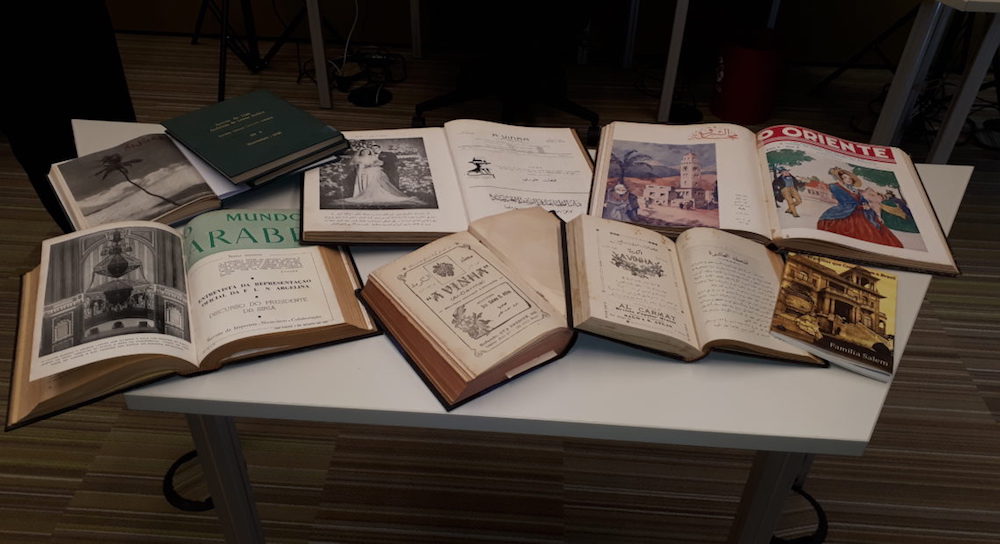
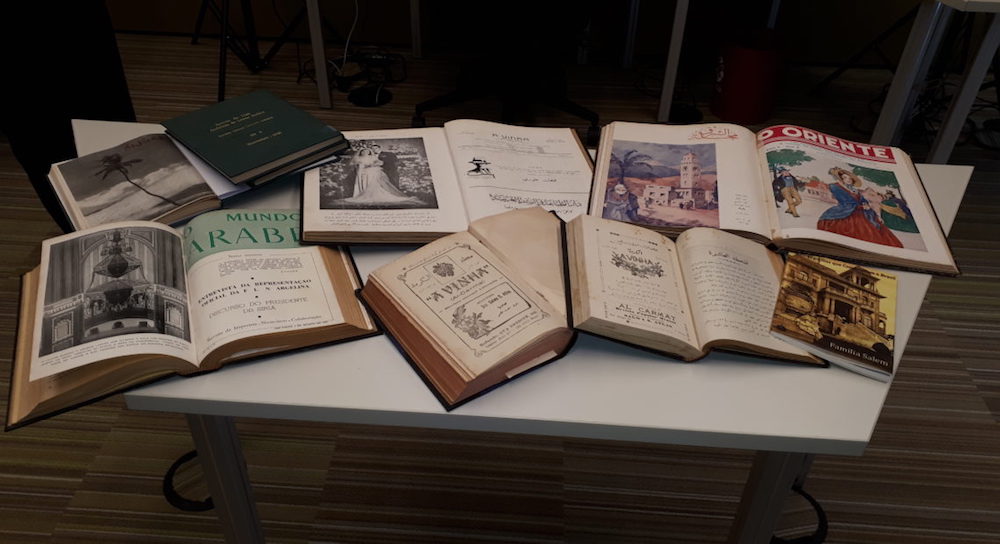
Some of the documents that have been digitized and now are part of USEK’s archive, including magazines Oriente and A Vinha. (Arab Brazilian Chamber of Commerce (CCAB) / USEK / Supplied)
“Over the years, I gathered lots of documents concerning that history,” he told Arab News.
During a trip to Latin America a few years ago, Khatlab realized a wealth of important historical material was at risk of being lost unless it could be properly collected and collated.
“Over time, such documents end up in the hands of grandchildren or great-grandchildren who do not speak Arabic and do not know what to do with them,” he said.
As a result, many people end up throwing away family collections or donating them to local libraries, which are not always equipped or qualified to adequately catalog them.
In addition, newspapers produced by early Arab immigrants were often printed on cheap, poor-quality paper that does not always stand the test of time, and so surviving copies can be extremely fragile.
“I have received 100-year-old newspapers which literally disintegrated as we tried to take them out of the envelope,” said Khatlab.
Syrian-Lebanese immigrants created the first Arabic-language Latin American newspaper, called Al-Fayha, in 1893 in the Brazilian city of Campinas.
In the local Portuguese language, its name was Mundo Largo, which translates as Wide World. As the author of several books about Brazil’s historical relationships with Lebanon and the wider Arab world, Khatlab recognizes the value of such historical documents for academic study and posterity.
“Under the Ottoman Empire, many intellectuals were not able to publish their ideas in the Arab world at the end of the 19th century,” said Khatlab. “In the nascent Arab press in countries like Brazil and Argentina, they found the space they needed.
“Many times, the articles published in the Arab press in Latin America by such thinkers were sent back to the Arab world and disseminated there in intellectual and political circles.”
Most of the early Arabic newspapers in Latin America were produced by Syrian or Lebanese migrants but there were also a number of Egyptian publications. Over the years, the Arab community launched newspapers that reflected a variety of viewpoints based around political ideologies, religious creeds, social clubs and the arts.
“Many poets and writers published works in the Latin American Arab press,” said Khatlab. “Some of them were renowned in the Arab world, while others disappeared. But their production and the ideas conveyed in their texts have great importance to Arabs, even now.”
The archive has attracted the support of institutions across Latin America that have connections to the Arab community and they have provided small teams who are helping to collect and digitize materials, using equipment donated by USEK.
_________________
IN NUMBERS
Estimated Arab population by country
Brazil: 7-12 million
Argentina: 4.5 million
Venezuela: 1.6 million
Mexico: 1.5 million
Colombia: 1.5 million
Chile: 800,000
Source: Atlantic Council
_____________________
One such institution is the Arab Brazilian Chamber of Commerce, or CCAB for short, which helped to collate full collections of magazines, including Revista Oriente (Orient Magazine), one of the most prominent publications produced by the Arab diaspora in Brazil during the 20th century.
“Different libraries and institutions had partial collections of Oriente,” Silvia Antibas, the director of CCAB’s cultural department, told Arab News. “Now, we managed to gather and digitize all of them for the first time.”
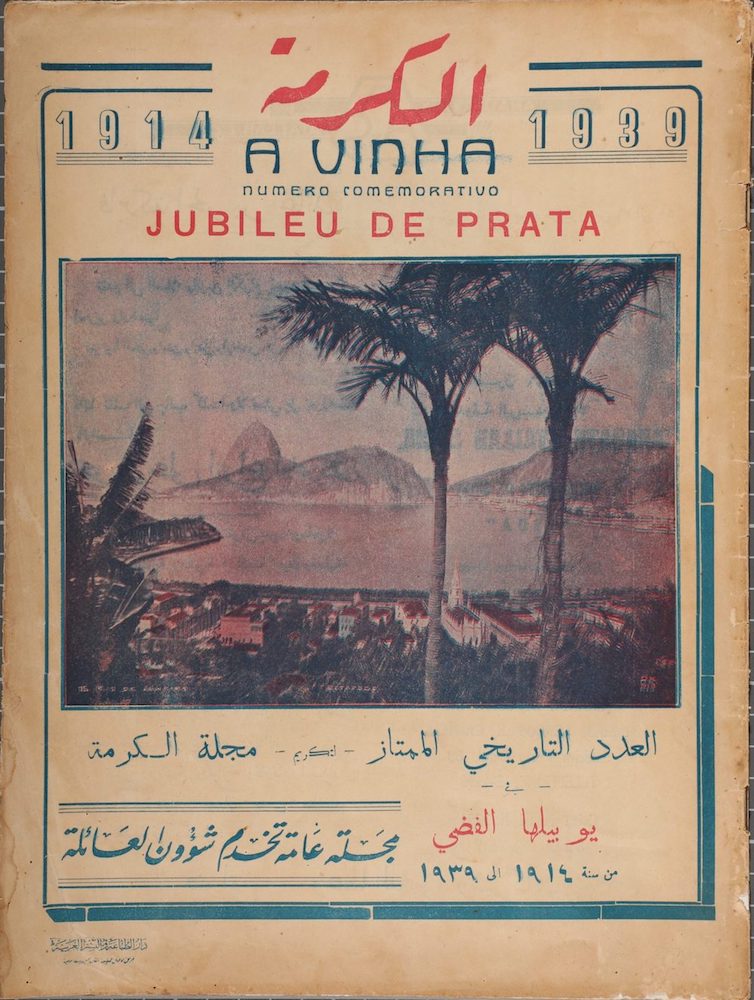
The Brazilian team also managed to assemble a collection of the magazine Al-Carmat, known in Portuguese as A Vinha (The Vineyard). It was edited for many years by a female Syrian-Brazilian author called Salwa Atlas.
The CCAB has also contributed to the archive an illuminating collection of photographs that provide a window on the social and domestic lives of the diaspora through the years.
“The pictures we collected show not only the community’s social events but also the architecture of houses, the fashion trends of those years, and how immigrants financially progressed and integrated into Brazilian society over time,” said Antibas.
The cover of one edition of A Vinha, published for years by Syrian-Brazilian intellectual Salwa Atlas, who was a pioneer among female intellectuals of the Syrian-Lebanese community in Brazil. (Clube Homs / USEK / Supplied)
The Jafet family — who ranked among the most illustrious families in Sao Paulo in the early 20th century — contributed a superb collection of photographs depicting the palatial homes built around that time by the city’s industrial bourgeoisie.
“Benjamin Jafet, my great-grandfather, came to Brazil in 1890 and worked as a ‘mascate’ (a word used in Brazil for an Arab door-to-door salesmen) for a few years in the countryside until he founded his first shop in downtown Sao Paulo,” Arthur Jafet, a 38-year-old lawyer and businessman, told Arab News.
Over the years, Benjamin and his brothers built one of Brazil’s greatest textile manufacturers and became wealthy leaders of the Lebanese community in the country.
As important philanthropists in Sao Paulo, the Jafets helped to fund not only Arab institutions such as the local Orthodox cathedral, the Syrian-Lebanese Hospital, and the Mount Lebanon Club, but also publications such as Revista Oriente.
“Their small palaces pointed to a rather European taste, with visible influences of the French neoclassical style but also oriental aspects,” said Jafet.
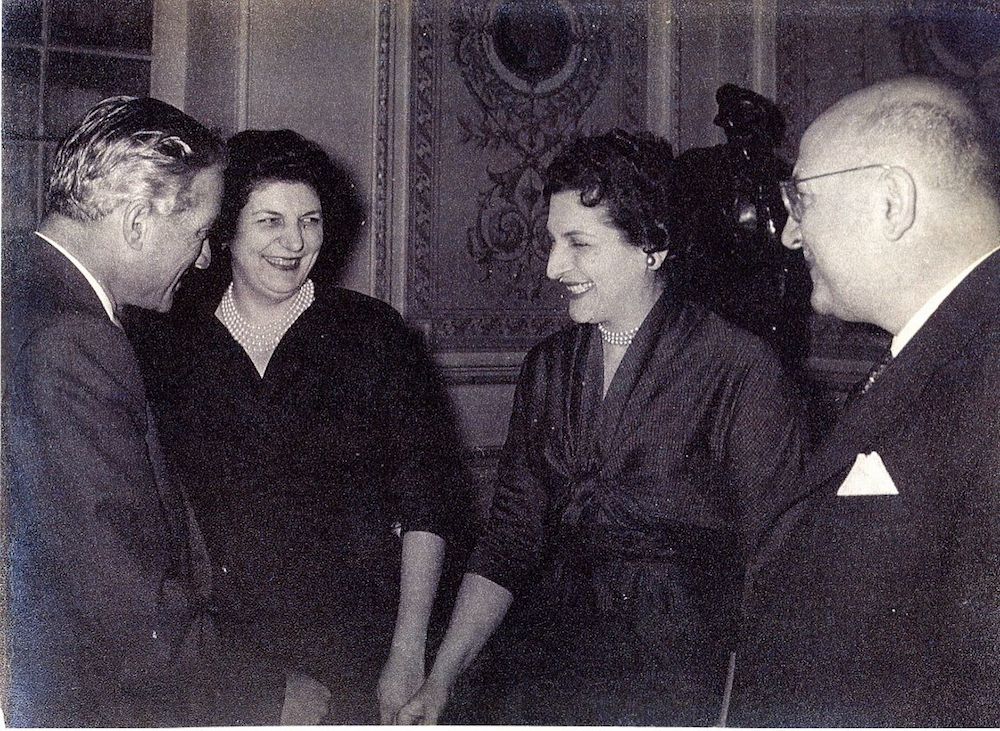
One of the photos in the collection shows Camille Chamoun, Lebanon’s president between 1952 and 1958, staying at one of the Jafet family’s opulent homes during a trip to Brazil.
As director of the Institute of Arab Culture in Sao Paulo and an adviser to the CCAB, Jafet is part of a new generation of Arab Latin Americans taking a renewed interest in their cultural origins.
Paulo Kehdi is the executive director of Chuf magazine, the in-house publication of the Mount Lebanon Club. He is among a number of Lebanese community leaders who launched Lebanity, a movement dedicated to encouraging Lebanese-Brazilians to rediscover their cultural roots.
“There has been a deliberate effort to reconnect Lebanese-Brazilians to their motherland, incentivizing them to obtain Lebanese citizenship, to visit the country and to help it during donation campaigns,” he told Arab News.
Lebanon’s President Camille Chamoun with members of the Jafet family in São Paulo. He visited Brazil in 1954 and stayed at one of the family’s palaces. (Arthur Jafet / Supplied)
The situation is similar in Argentina, which is home to an estimated 3 million people with Syrian or Lebanese roots.
For several years, Ninawa Daher, a journalist of Lebanese descent, hosted a TV show in the country devoted to reviving the interest among younger generations in their Lebanese origins. After her death in a car accident at the age of only 31 in 2011, her mother, Alicia, created the Ninawa Daher Foundation to continue her legacy, and it has partnered with USEK for the archive project.
“With Ninawa’s contacts, within a very short time we had already been able to obtain access to several wonderful collections of the community in Argentina,” Alicia Daher told Arab News.
The team has gathered stacks of newspapers, photographs and other rare materials, including two books written and autographed by renowned Lebanese-American writer, poet and visual artist Khalil Gibran.
“The Syrian and Lebanese people had a tremendous cultural impact in Argentina,” said Daher. “Now, more and more people and institutions are approaching us in order to offer materials about the immigration.”
In Beirut, meanwhile, Khatlab is hopeful the archive will continue to grow as the work on it expands to other Latin American countries and to include other types of documents, such as letters, film footage and even passenger manifests of the vessels that brought Arabs to the region.
Access to the archive is free and it is open to the general public.
source/content: arabnews.com
______________
Some of the documents that have been digitized and now are part of USEK’s archive, including magazines Oriente and A Vinha. (Arab Brazilian Chamber of Commerce (CCAB) / USEK / Supplied)
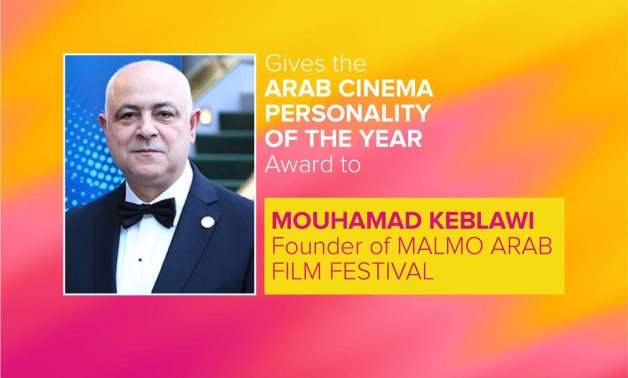
During the 72nd Berlin International Film Festival (Berlinale), Arab Cinema Center (ACC) granted Mouhamad Keblawi, Founder and Head of Malmö Arab Film Festival in Sweden, the Arab Cinema Personality of the year award.
This comes in recognition of his contribution and immense support to Arab Cinema through the festival, with an aim to promote Arab cinema in Sweden and Scandinavia.
Mohamed Keblawi is a Swedish-Palestinian director and producer, who has worked in television and documentary film production.
In 2011, he founded the Malmö Arab Film Festival in Sweden, which is set on encouraging Arab filmmakers to find more opportunities to tell their stories, and support Arab film projects.
The festival screened hundreds of Arab films since its establishment, including Oscar-nominated films; Director Naji Abu Nowar’s Jordanian film Theeb, Kaouther Ben Hania’s Tunisian film The Man Who Sold His Skin, and Palestinian short film The Present by Farah Nabulsi.
The festival also featured several award-winning Arab films that have been to numerous international festivals; Wajib by director Annemarie Jacir, EXT. Night by Ahmad Abdalla, A Son by Mehdi Barsaoui, Gaza Mon Amour by Arab and Tarzan Nasser, and Ali, the Goat and Ibrahim by Sherif Elbendary, among others.
Mohamed Keblawi also launched MAFF Market Forum as part of the festival with the aim of supporting Arab film projects and helping them come to light. During its latest edition, the Forum presented monetary prizes worth of $ 250,000. Ever since it was created, this annual prize supported almost 100 projects including Costa Brava, Lebanon by Mounia Akl, Beauty and the Dogs by Kaouther Ben Hania, Captains of Zaatari by Ali El Arabi, 200 Meters by Ameen Nayfeh,
Our River…Our Sky by Maysoon Pachachi, Communion by Nejib Belkadhi, Khartoum Offside by Marwa Zein, and Tiny Souls by Dina Naser.
Keblawi is also the founder of Arab Cinema in Sweden, a company that works on the distribution of Arab films in Sweden. These films include Mohamed Jabarah Al-Daradji’s Jordanian film The Journey, Sophie Boutros’ Lebanese film Solitaire, Mohamed Khan’s Egyptian film Factory Girl, and Khadija al-Salami’s Yemeni film I Am Nojoom, Age 10 and Divorced.
Most recently, Mohamed Keblawi received the City of Malmö’s Grant for Art and Culture for the year 2021. This is an annual grant allocated to twelve creators in the fields of music, theater, cinema and literature. From 2015 to 2017, he was a member of the documentary film nomination committee for the Guldbagge Awards, one that is considered as Sweden’s Oscars.“What Keblawi did by establishing a main venue for Arab cinema in Sweden, is certainly a first of its kind. Through which, thanks to his tireless efforts, he was able to develop a platform for filmmakers in Sweden and Europe, and so Arab filmmakers became quite familiar faces in Sweden. He was able to create an exceptional fan base for a festival that caters for Arab films in Europe. We are honored to grant him the prize, as he continues to expand his horizons each year, whether through the festival or through his distribution and production firms.” commented Alaa Karkouti and Maher Diab, the Co-founders of Arab Cinema Center.”The prize crowns many years of hard work to try to grant the Arab film a chance to be acknowledged in places that it has never been before,” Keblawi said after announcement of the prize. “Things like the release of an Arab picture in Swedish theaters or Sweden’s funding of an Arab film were fictitious at the beginning of the millennium, this is an achievement which I am proud of. I’d like to thank everyone who helped me reach my goal. I’d also like to thank the Arab Cinema Center for this award, which I’m very proud of.
The Arab Cinema Personality of The Year award is part of its strategy of promoting the Arab film industry internationally and supporting Arab filmmakers.
During the last years, Arab Cinema Center (ACC) presented the Arab Cinema Personality of The Year award to Chiraz Latiri, former Tunisian Minister of Cultural Affairs, Screenwriter and Producer Mohamed Hefzy, the President of the Cairo International Film Festival (CIFF), Abdulhamid Juma, Chairman of the Dubai International Film Festival (DIFF), and Masoud Amralla, Artistic Director of DIFF.
Arab Cinema Center (ACC), founded in 2015 by MAD Solutions, is a non-profit organization incorporated in Amsterdam. ACC also provides networking opportunities with representatives of companies and institutions specialized in co-production and international distribution, among others. ACC’s activities vary between film markets, stands,pavilions, networking sessions, one-on-one meetings bringing together Arab and foreign filmmakers, welcome parties, and meetings with international organizations and festivals.
Also, the activities include the issuance of Arab Cinema Magazine to be distributed at the leading international film festivals and markets. Furthermore, newsletter subscription is now available on ACC’s website, allowing users to obtain digital copies of Arab Cinema Magazine, as well as news on ACC’s activities, notifications of application dates for grants, festivals and offers from educational and training institutions, updates on Arab films participating at festivals, exclusive news on the Arab Cinema LAB, and highlights from ACC’s partners and their future projects.
Arab Cinema Center has launched the Arab Cinema Directory in English language on its website, which is a comprehensive cinema directory that provides multiple tools in one place for the first time in order to enhance easy access to information on cinema to film makers inside and outside the Arab world. It also aims to facilitate the connection between the Arab film and Filmmakers and the International market. It also helps International Filmmakers to easily identify the Arab Cinema Productions.
Forbes selected Mouna Abbassy and Sophia Alj for two of its prestigious rankings.
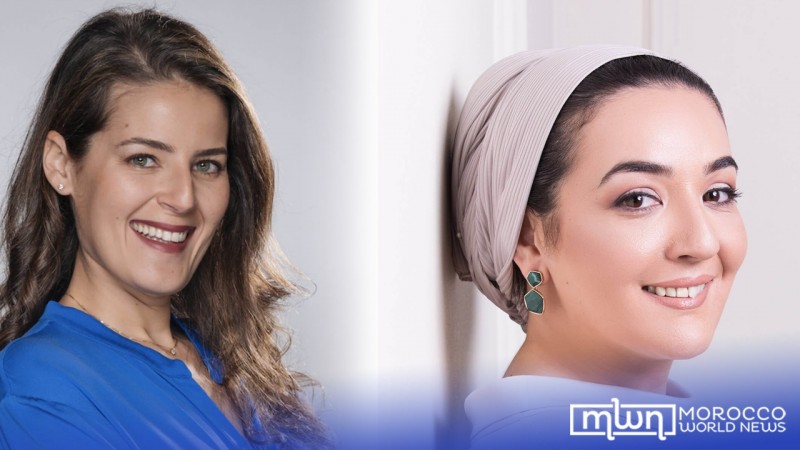
Forbes has featured two Moroccan businesswomen on its “30 Women Behind Middle Eastern Brands 2022” and “20 Women Behind Middle Eastern Tech Brands 2022” lists. The two successful, celebrated business leaders are the Founder of IZIL Mouna Abbassy and the co-Founder of Chari.co Sophia Alj.
This week, Forbes released the two lists simultaneously. The magazine’s list of “30 Women Behind Middle Eastern Brands” featured companies operating in six MENA countries, with the UAE hosting 13 of the successful businesses.
The list includes 18 nationalities in total, with Egyptian businesswomen topping the list with 11 entries, followed by Lebanese with 4 mentions.
The “20 Women Behind Middle Eastern Tech Brands” list highlighted the achievements of successful female founders and co-founders of tech platforms and apps. This year, 17 nationalities were represented in the list.
The 20 featured businesses operate in 13 sectors and are prominently based in the UAE (13), Egypt (2), and Saudi Arabia (2).
Mouna Abbassy
Moroccan businesswoman Mouna Abbassy ranked 10th in the “30 Women Behind Middle Eastern Brands 2022” list.
In 2012, Abbassy founded IZIL, an “all-natural skincare line.” The brand offers hair, skin, and body products, inspired by old Moroccan beauty recipes.
IZIL is based in the UAE with clients in Gulf countries, the US, and the UK. The brand’s e-commerce sales to the US and the UK markets recorded a 40% and 50% growth in 2021.
Last year, IZIL opened new offices in Dubai as it launched a Moroccan Hammam and Spa in the Dubai Mall. In terms of social media outreach, the brand currently counts 346K followers on Instagram and 136K followers on Facebook.
Sophia Alj
Sophia Alj ranked 8th in the “20 Women Behind Middle Eastern Tech Brands 2022” list.
She is the co-founder of Morocco’s popular e-shop and startup Chari.co, which she founded with her husband Ismael Belkhayat in 2020.
The Chari application connects retailers to fast-moving consumer goods (FMCG) companies.
In March, the startup acquired Axa Credit for $22 million. A year prior, Chari purchased Moroccan bookkeeping and credit platform Karny.ma which serves roughly 40,000 retailers. The startup concluded the deal after receiving $5 million in seed funding.
As it continues to expand into Francophone African markets, Chari.co has the potential to obtain unicorn status by reaching a valuation of $1 billion.
Egyptian film critic Ahmed Shawky was chosen last week to head the jury of the International Federation of Film Critics (FIPRESCI) competition at the 75th Cannes International Film Festival.
Though Egyptians have been part of the FIPRESCI jury panel competition in the past, this is the first time one will chair the panel.
Shawky will head a panel that includes a number of film critics from all across the world: Mariola Wiktor (Poland), Nathalie Chifflet (France), Emanuel Levy (USA), Simone Soranna (Italy), Jihane Bougrine (Morocco), Magali Van Reeth (France) Bidhan Rebeiro (Bangladesh) and Youssoufa Halidou Harouna (Niger).
Launched in the 1920s, the FIPRESCI committee is among the most influential film criticism committees internationally. The committee is responsible for awarding the best film at numerous festivals, including at Cannes since the festival’s launch in 1946.
The upcoming Cannes International Film Festival is scheduled to take place between 13 and 24 May 2022.
Shawky is an Egyptian film critic, programmer and screenwriting developer. He writes about film for numerous Egyptian and regional publications. He has also published six books about Egyptian cinema.
A FIPRESCI board member and the vice president of the African film critics’ federation (FAAC), Shawky is also as a programmer for many film festivals.
Shawky was appointed an acting artistic director of the Cairo International Film Festival in 2019, and a year later he was appointed its artistic director.
Shawky is also one of two Egyptian names to head the 75th festival’s juries, with the other being Yousry Nasrallah who will chair the Short Film Jury, a panel in charge of selecting one of nine films in competition for Short Film Palme d’Or.
Morocco’s telecom operator Maroc Telecom is the largest company in North Africa with a market valuation of $11.8.
13 Moroccan companies feature among North Africa’s top 20 biggest firms in terms of market capitalization, according to a report by African Business, a pan-African business-oriented business magazine.
Leading the charts is Maroc Telecom, Morocco’s leading telecommunication firm, with an $11.8 billion valuation.
Despite topping the list of North African companies, Maroc Telecom slipped from the list of the top 10 companies on the continental ranking. The Moroccan firm’s market capitalization fell from $13.5 billion to $11.8 billion between 2021 and 2022, according to a report by African Business.
Maroc Telecom ranked 13th in Africa, down from 8th in 2021, the report noted.
With a market capitalization of $10.3 billion, Attijariwafa Bank, Morocco’s largest bank, came in second place on the list of the top 20 largest companies in North Africa.
On the continental level, Attijariwafa Bank fell from the 15th to the 19th in 2022 even as its capital grew by $0.4 billion in the past year, reflecting strong growth in Africa’s business landscape.
Morocco’s Banque Centrale Populaire ranked as North Africa’s third-largest company; the Moroccan banking group was meanwhile ranked 32nd in Africa, with market capitalization having fallen from $5.652 billion to $5.622 billion in the past year.
LafargeHolcim Maroc construction group ranked fifth in the North African market and 39th in Africa. The group’s market capitalization stood at $4.623 billion, up from $4.167 billion in 2021
The final Moroccan bank to feature on the list of the top 20 largest companies in North Africa is Bank of Africa in 6th place in North Africa and 42nd across the entire continent. The banking group’s market capitalization in 2022 is valued at $4.238 billion, up from $3.563 billion a year before, the report indicates.
Other Moroccan companies featured in the regional ranking include construction materials manufacturer Ciments du Maroc and energy company TAQA Morocco. The two firms are respectively ranked 7th and 8th in the North African market.
Food manufacturer Cosumar Maroc is ranked as the ninth-largest company in North Africa and 61st in the whole of Africa. Meanwhile, Mining company Managem, and Morocco’s national port operator, Marsa Maroc, ranked in the 11th and 12th ranks respectively.
The final Moroccan companies to appear in the ranking in 13th, 15th, and 17th place are Wafa Assurance, Afriquia Gaz, and Total Maroc respectively.
source/content: moroccoworldnews.com (edited)
__________
13 Moroccan Groups Among North Africa’s Top 20 Companies
Liverpool forward Mohamed Salah has won the prestigious Football Writers’ Association (FWA) Footballer of the Year award for a second time, it was announced on Friday.
The 29-year-old enjoyed a vote share of 48% ahead of Manchester City midfielder Kevin de Bruyne and West Ham United’s Declan Rice to scoop the prize.
Elsewhere, Chelsea striker Sam Kerr also won the women’s Footballer of the Year award after another stellar campaign. The 28-year-old claimed the prize with 40% of the vote, beating Arsenal striker Vivianne Miedema and Manchester City’s Lauren Hemp.
FWA chair Carrie Brown said: “Both Mo and Sam have been outstanding this season, breaking records for both club and country. As well as their performances on the pitch, they are leaders and standard bearers of excellence at their clubs and respective leagues.
“The fact they have won by such convincing margins underlines just how impressive they have been this season which has been recognised by our members.”
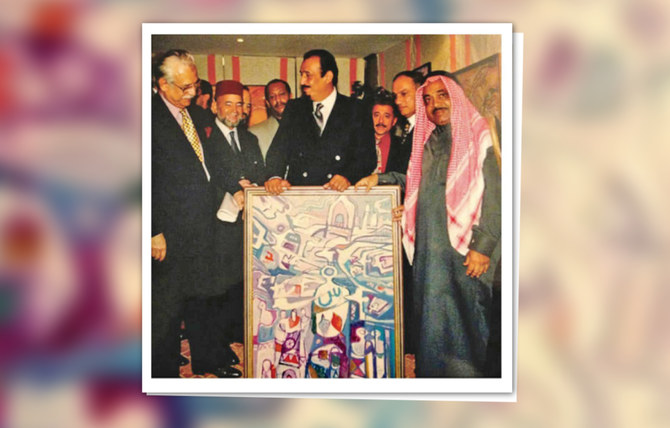
The life and legacy of the late Saudi artist and sculptor Abdulhalim Radwi have been saluted at a glittering tribute night in Jeddah.
Family, friends, colleagues, fellow artists, and leading figures from the art world gathered to honor the founder of Saudi modern art, who died in 2006 but continues to inspire artists today.
The event, hosted by the artist’s daughter Dr. Maha Radwi in collaboration with the Saudi Arabian Society for Culture and Arts, featured an exhibition and documentary film showcasing his life and career.
“While our hearts remain heavy over the passing of my father, his legacy lives on,” Radwi said. “One of the things that we’re trying to talk about is not just the wonderful pieces he made over his lifetime, but his humanity.”
Society president Mohammed Al-Subaih said: “Art was a big part of his life, and we wanted to memorialize his legacy as much as possible. He’s someone that deserves to be remembered because he is a significant figure in Saudi art history.”
Radwi was born in Makkah in 1939. His mother, a painter, nurtured his young talent and encouraged him to pursue art.
In the mid-1950s he won his first official painting competition while at high school, and in 1961 traveled to Rome to study fine arts. He returned to the Kingdom as an art teacher in Riyadh.
From 1968 to 1974 was director of the Jeddah center for fine arts, later overseeing the city’s culture and arts scene between 1980 and 1992.