Arabs & Arabian Records Aggregator. Chronicler. Milestones of the 25 Countries of the Arabic Speaking World (official / co-official). AGCC. MENA. Global. Ist's to Top 10's. Records. Read & Enjoy./ www.arabianrecords.org
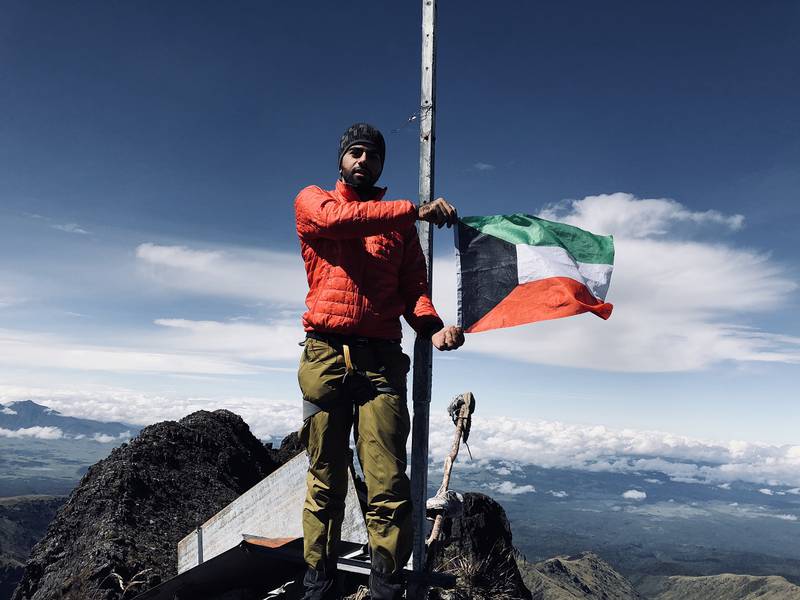
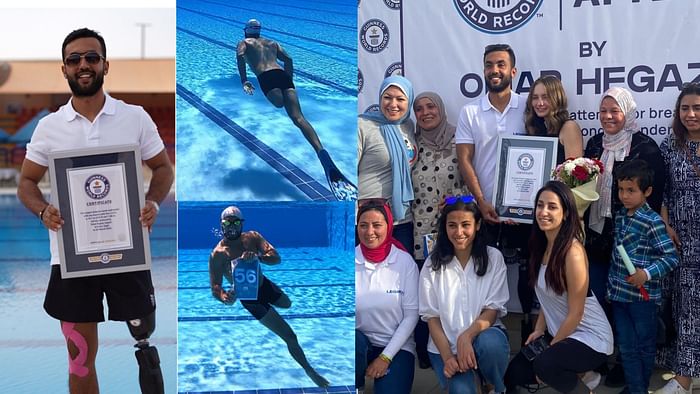
Ibrahim al Salatni has broken the Asian record for free diving, clocking a time of nine minutes and 13 seconds. The previous record of eight minutes and 45 seconds was held by a Chinese national.
Salatni’s record was set at a tournament organised in Egypt held under the umbrella of the Professional Association of Diving Instructors (PADI).
Salatni’s success follows intensive training over five years and he now aims to be among the top ten free divers in the world.
Speaking to Muscat Daily, he said, “The event was held exclusively for me over two days on December 27 to 28 to break the previous record. I’m so happy to break the previous record. I dedicate this achievement to my country.
“It was not easy to set this record. Ever since I began free diving as a hobby in 2014, my aim was to achieve a record for Oman, and now I have achieved that goal. I am looking for even more.”
He also holds the national, Arab and continental records in static apnea – holding breath under water – of eight minutes and seven seconds, and the national and GCC record in dynamic apnea (dynamic with fins and dynamic without fins), diving 150m underwater in one breath.
Free diving is practised without the use of any breathing apparatus. “You dive holding your breath to save oxygen.”
His future plans include participating in the World Free Diving Championship that will be held in Bulgaria in 2022 where he aims for a podium finish.
A Saudi sculptor who spent eight years carving the words of the Holy Qur’an onto 30 marble slabs hopes his feat will be recognized by Guinness World Records.
Husban bin Ahmad Al-Enizi’s passion for the art started 20 years ago after he developed an interest in the Arabic language.
He went on to sculpt a stone encyclopedia of basmalah (the opening part of the Qur’an) on blocks and granite sourced from his base in the Tabuk region.
Al-Enizi used Ottoman calligraphy to create his Qur’an sculpture on green marble slabs and said that the Tabuk region, in northwestern Saudi Arabia, with its many castles and palaces, had inspired artists down through the centuries.
The region has been home to the Thamud, Aramean, and Nabataean people, among other tribes, and archaeological sites show human presence dating back several centuries B.C.
Ancient inhabitants of the area produced ploughs, boats, and even houses by carving in wood and stone and Al-Enizi noted that the Saudi government had helped to keep sculpting and other traditional arts and crafts alive through the establishment of the Heritage Commission.
source/content: arabnews.com
______________
Husban bin Ahmad Al-Enizi used Ottoman calligraphy to create his Qur’an sculpture on green marble slabs. (SPA)
Moroccan-French animator Mounia Aram won the Cultural Innovator Award at the 2022 Black in Animation Awards Show.
The award testifies to Aram’s work in further developing animation media across the African continent while using experimental methods and concepts in her work to tell a unique story.
Aram received her award from a juried committee of professionals from Disney, Netflix, and Nickelodeon.
The Black in Animation Awards state “The Cultural Innovator Award is given to the person who has centered the voices of black people in animation in an innovative way as a content creator or influencer.”
Born in Casablanca and raised in France, Aram studied oriental languages at the National Institute for Oriental Languages and Civilizations (INALCO) in Paris before joining ShoPro Entertainment, a company specializing in Japanese animation-based in San Francisco.
The animation specialist founded the Mounia Aram Company in 2019, a distribution and production company specializing in animation and African culture. Aram has accumulated nearly 20 years of experience in the animation field.
Her work also consists of advising companies in their distribution and development strategies across the African continent as well as mentoring young African talents in animation.
In 2020, Aram was elected a member of the International Academy of Television Arts and Sciences in charge of the Emmy Awards. She also joined the Geena Davis Institute last year as Africa council chair.
The Sawiris Foundation for Social Development announced the winners of the 16th Sawiris Cultural Award.
This Edition is considered the largest in the history of the award in terms of the number of submitted works.
A total of 1263 literary works were submitted to various fields of the award.
This year, 12 young and established writers received awards for their distinguished work in the fields including novel, short story, screenplay, playwriting, and literary criticism.
Dr. Iman Yahya won the best novel award – under the established writers’ contest – for her novel ‘Al-Zawga Al-Mexicia’ (The Mexican Wife), published by Dar Al-Shorouk.
Meanwhile, the award for best short story collection, written by an established writer, went to Samir El-Fil for his collection ‘Autobis 77’ (Bus Line 77) that was published by the Egyptian General Book Authority.
The award for best novel written by a young writer went to Ahmed Al-Fakharany for his novel ‘Bayasat Al-Shawam’ published by Dar Al-Ain. The same novel also won the translation award, which was added to the award’s branches this year in an attempt to encourage contemporary literary excellence and introduce creative young writers to readers outside the borders of the Arab region.
As for second-place in the young writers’ novel contest, the award went to Ahmed Al-Morsi for his novel ‘What Remains of the Sun’ published by Dar Al-Bashir.
The first-place prize for best short story collection made by a young writer went to Gilan Al-Shamsi for her short story collection ‘As if the story is missing’ published by Al-Ain Publishing House.
In second-place, Muhammad Faraj won with his short story collection ‘Long Term Plans’ published by Dar Al-Ain.
Regarding the best screenplay award, established writer Samar Taher won for her screenplay of the movie ‘Al-Nazeel’ (The Inmate), while Paula Tadros Thabet won the young writers’ contest for his screenplay of ‘Abdullah’.
In the field of playwriting, the first-place award went to Faisal Rizk for his play ‘Hakawy Al-Aragouz’ (Tales of the puppet), while second-place went to Mina Bebbawy for his play ‘Bernatanya’.
As for the award for best submitted work in the field of literary criticism, it was awarded ex aequo to Sameh Fayez for his book ‘Stories about Reading’ published by the Egyptian-Lebanese House and to Professor Abdel-Nasser Hilal for his book ‘The Visual Turn – from Text to Speech” published by the Egyptian General Book Authority.
In order to encourage young writers, financial rewards are also granted for the shortlisted nominated work.
Granted in the novel contest: ‘Random Arrangements’ by Dunya Kamal Al-Qalash, ‘Ahmar Larang’ (Blood Oranges) by Charles Akl, and ‘Camelia’s Ghosts’ By Nora Naji.
With regard to the short story collection, the grants went to: ‘Sleep Thieves’ by Amjad Al-Sabban, ‘Visions of the Holy City’ by Omaima Subhy, and ‘A Report on Al-Refaeia’ by Muhammad Al-Fuly.
In the screenplay category: ‘The Ghazala who fled the schoolyard’ by Ahmed Ihab Abdel-Warith, ‘Where Did Shaker Abaza Go?’ by Mahmoud Hassan Abdel-Alim, ‘Hamlet’ by Al-Sayed Abdel-Nabi, ‘Kilo 35’ by Mahmoud Ahmed Abd-Rahman.
The Arab League Educational, Cultural and Scientific Organisation (ALECSO) member countries have unanimously chosen the UAE to head the Permanent Committee for Arab Culture.
Salma Al Darmaki, Secretary-General of the UAE National Commission for Education, Culture and Science, has been appointed to chair the Permanent Committee.
The decision comes after the 22nd edition of the Conference of Arab Culture Ministers, held in December 2021 at Expo 2020 Dubai. Al Darmaki is the second woman appointed to this position in ALECSO’s history.
The Permanent Committee for Arab Culture is responsible for coordinating the work of various ALECSO member states in cultural fields. The Standing Committee is also mandated to prepare for the Conference of Arab Ministers of Culture.
Al Darmaki has been an Assistant Under-Secretary for Knowledge and Cultural Policy at the Ministry of Culture and Youth since 2018. She has served as a Research Fellow at the United Nations Research Institute for Social Development from 2017 to 2018. She was a researcher at the Permanent Mission of the UAE to the United Nations in Switzerland from 2016 to 2017; an expert on Social Policy in the General Secretariat of the Executive Council in Abu Dhabi from 2011 and 2016, and a parliamentary researcher in the General Secretariat of the Federal National Council from 2009-2010. She also worked for the Abu Dhabi Government Restructuring Committee in 2008.
Al Darmaki holds a post-graduate degree in International Law from the University of London, a Master’s in Human Rights from the London School of Economics and Political Science in the United Kingdom, and a bachelor’s degree in International Studies from Zayed University in the UAE.
As Secretary-General of the UAE National Commission for Education, Culture and Science, Al Darmaki managed the campaign for securing a seat for the UAE on the UNESCO Executive Board from 2019 to 2023. She played a crucial role in the first decision submitted by the UAE to the Executive Council of UNESCO on “A Framework for Arts and Culture Education” and the passing of a resolution on the “Building on the International Year of Creative Economy for Sustainable Development through Consolidated Action”. Some of her other achievements include the declaration of World Futures Day by UNESCO as an annual international day after being proposed by the UAE. The UAE secured a seat in the intergovernmental committee of the 2005 Convention on the Protection and Promotion of the Diversity of Cultural Expressions.
Al Darmaki has been working with the national authorities to further the cause of cultural, educational and scientific endeavours, such as extending the registration of the falconry file for the fourth time in the UNESCO’s Representative List of the Intangible Cultural Heritage to become the largest file in the history of the organisation. She also manages the UAE partnership with UNESCO in the pioneering “Revive the Spirit of Mosul” initiative. In addition to supporting the nomination of Abu Dhabi as a Creative City for Music, she has helped make Abu Dhabi the third Emirate to join the UNESCO Creative Cities Network along with Dubai and Sharjah.
Hamse Warfa presently serving as Deputy Commissioner for Workforce Development, in the Minnesota Department of Employment and Economic Development (MEED) is leaving for a position in the Biden administration.
As a senior advisor in the U.S. State Department, Hamse will play a role in promoting democracy abroad and addressing refugee resettlement.
Hamse first came to the U.S. from Somalia when he was a teenager in 1994. He studied political science and organizational management, and built a career in both the public and private sector.
In 2014, he published his autobiography, America Here I Come: A Somali Refugee’s Quest for Hope.
As a Bush Fellow in 2016, Hamse founded BanQu, a blockchain service to provide access to credit and bank services for refugees. He also founded a consulting group to address poverty and economic opportunities for marginalized people.
Hannibal Mejbri was elected African revelation of the year by the magazine FootAfrica’s editorial staff
And this following over 469,00 votes.
“A rising star in African football, named after a Carthaginian hero destined for conquest, Hannibal Mejbri has developed several high-profile performances in the last twelve months, most notably reaching the final of the FIFA Arab Cup 2021 in his national jersey (lost 0-2 to Algeria),” the magazine continues.
Voting results:
Hannibal Mejbri (Tunisia / 18 years old): 55.64%
Adem Zorgane (Algeria / 21 years old): 35.88%
Edmond Tapsoba (Burkina Faso / 22 years old): 4.24%
Morocco has been continuously creating opportunities for women to integrate many fields and take the lead in positions that were once designed only for men.
Moroccan women are now represented in all fields, from sports and arts to politics and economics.
Indeed, the list is very long of inspiring, canonized Moroccan women whose bravery and infectious passion for social change remain central to the country’s history. For now, however, let’s just revel in the New Year spirit and celebrate the power of women in Morocco by looking back on the achievements of female Moroccan changemakers who made headlines in 2021.
Women in politics
This year, Moroccan politics welcomed seven new ministers in the Aziz Akhannouch government, making a third of the government’s representatives.
Nadia Fellah Alaoui, who is now the Minister of Economy and Finance, was the first woman to be appointed as the Minister of Tourism in the previous, Saadeddine El Othmani-led government.
Minister Delegate Ghita Mezzour has made a name for herself through her active engagement in Big Data, artificial intelligence (AI), and cybersecurity.
Other women at the forefront of government include: Fatima Zahra Ammor as Minister of Tourism and Handicraft, Fatima-Zahra Mansouri as Minister of Housing, Aouatif Hayar as Minister of Women, Family, and Social Integration, and Leila Benali as Minister of Energy Transition and Sustainable Development.
Nabila Rmili, who stepped down from her new position as Minister of Heath a few days after her appointment, retains her role as the first female mayor of Casablanca. Meanwhile, Asmaa Rhlalou, a journalist and the former deputy of the National Rally of Independents party (RNI) in the House of Representatives, and Fatima-Zahra Mansouri are the mayors of Rabat and Marrakech, respectively.
Moroccan women in science
Two Moroccan scientists and researchers at Mohammed V University, Rajaa Cherkaoui El Moursli and Farida Fassi, have made it to the list of top 50 scientists worldwide according to the international 2021 AD Scientific Index. They hold 33rd and 38th place respectively.
El Moursli, a professor of nuclear physics, holds the highest-ranking in Morocco, Africa, and the Arab League, while Fassi, a professor of physics at the Faculty of Sciences, follows closely in second-ranking across the regions.
In 2015, El Moursli received the L’Oreal-UNESCO Award for Women in Science for her contribution to proving the existence of the Higgs Boson. She is the first Moroccan woman to receive the prestigious award.
Professor Fassi contributed to the research of High Energy Physics, as well as to the Worldwide Large Hadron Collider (LHC) Computing Grid, which sets out to solve the problem of data storage for the LHC.
Moroccan women as global influencers
Sanae Lahlou was selected as a Young Global Leader in 2021 by The World Economic Forum (WEF).
She is now the director of consulting firm Mazars’ Africa Business Unit in Morocco. Lahlou works to connect African Small and Medium Enterprises (SMEs) and creative start-ups by expanding their growth opportunities and transforming them into African and global champions.
Another Moroccan to make the headlines for her activism and commitment to provide girls around the globe with proper education is Iman Hammam.
Super Model Hammam was the first to receive the She’s the First (STF) inaugural Powerhouse of the Year Award. She is also the ambassador of STF, an organization that sponsors girls’ education in developing nations.
First Moroccan woman as General Manager of Microsoft Morocco
In November 2021, Salima Amira was appointed General Manager of Microsoft Morocco.
With 17 years of experience as a leader in competitive environments, such as Inwi and IBM, Amira firmly established herself in a field historically dominated by men when she became the first woman to hold the position of General Manager of Microsoft Morocco. The Casablanca subsidiary was founded in 1993.
Amira graduated from the Mohammadia School of Engineers in 2003 and from the Ecole des Ponts ParisTech in 2010.
Moroccans as Most Powerful Businesswomen in the MENA region
In February 2021, Forbes magazine featured four Moroccan women in the Middle East’s Power Businesswomen 2021 list.
Nezha Hayat was the first Moroccan to appear on the list, ranking eighth in the list of 50. Hayat is the CEO of Morocco’s Capital Market Authority and the president of the Africa Middle East Regional Committee at the International Organization of Securities Commissions.
The founder and CEO of AKSAL Group, Salwa Idrissi Akhannouch ranked 19th. Married to the current Head of Government Aziz Akhannouch, Salwa is an accomplished businesswoman. Her company is engaged in social community work and implemented a social project to support cultural, educational, and health projects across Morocco.
Rita Maria Zniber, the chairman and CEO of Diana Holding, occupied the 33rd rank. With over 50 years of experience in the food and beverage industry, Zniber’s company scope mainly includes agriculture, olive growing, poultry farming, trade, and distribution.
She is also the founder of the Rita Zniber Foundation, a non-profit organization that supports abandoned children in Morocco.
The 36th ranking went to Miriem Bensalah Chaqroun, the director of Holmarcom Group and the CEO of Oulmes, the largest mineral water company in Morocco. In 2019, the Moroccan businesswoman was appointed by the United Nations’ Secretary-General to join the Global Investors for Sustainable Development (GISD) alliance.
Women in cinema and arts
The Moroccan artist Meriem Bennani was the first Moroccan in the history of the Paris Fashion Week to assume the artistic direction of the fashion show.
Bennani decorated the show space and operated the Miu Miu livestream through displaying artwork and a series of artistic interventions starring her own mother and highlighting a fine line between virtual and real life.
Born in 1988 in Morocco, Bennani attended Cooper Union College in New York where she studied visual arts.
During the lockdown last year, Bennani teamed up with documentary filmmaker Orian Barki to animate a series of videos posted on Instagram titled “2 Lizards.”
In September 2021, Morocco hosted the first female-only organized Short Film Festival in Marrakech. The event was co-organized by Moroccan artist Ramia Beladel and French national Thais Martin.
In her work, Beladel illustrates subjects of everyday life in a multi-layered way. Her aim is to make the viewer imagine and interpret her artwork without being hindered by the historical reality.
In another film accolade, in October 2021, Moroccan actress Sandia Tajeddine won the Best Actress award at the 2021 Jordan International Film Festival.
Born in 1994, the actress began her career in theater at seven years old in school plays and camps. She graduated from the Rabat-based Higher Institute of Dramatic Art and Cultural Activities in 2017 and has since played challenging roles in many films and series, such as “Banat El Assas,” “The Punch,” and “Yacout W Anbar.”
These are just a few examples of Moroccan women who made the headlines this year.
source/content: moroccoworldnews.com
______________
Significant Achievements by Moroccan Women in 202 / pix; moroccoworldnews.com
His Highness Sheikh Mohammed bin Rashid Al Maktoum , Vice President, Prime Minister and Ruler of Dubai, today launched the Great Arab Minds initiative. The initiative will be driven by and headquartered at the Museum of the Future, the Emirates’ new global scientific landmark.
Great Arab Minds is the Arab world’s largest movement designed to search for exceptional talents among Arab scientists, thinkers, and innovators across key fields, aiming to highlight and celebrate leading thinkers in the region and inspire young people with their example. It will work with regional and global partners to develop and maximise the positive impact of their ideas and work. The five-year initiative will focus on fields including physics and mathematics, software and data science, economics and higher education and research.
The initiative is backed by an AED100 million fund and will be administered from the Museum of the Future, with a committee of four Emirati Ministers who will develop a system to identify and highlight the extraordinary thinkers and talents that the initiative will support. The fund will support local and global partnerships in fostering research, development and innovation.
In a series of tweets, Sheikh Mohammed bin Rashid said, “Today we launch a new project to search for 1,000 Great Arab Minds in the fields of physics and mathematics, software and data science, economics and higher education and research. Great minds built Arab civilization – today I believe we have the talent to build a better world.”
He added, “We will accelerate the Emirates’ role as an incubator for fostering Arab and global talent. We built the Museum of the Future as a global hub for scientists, thinkers and innovators – it is the ideal headquarters for a fund to develop the potential of our region’s finest minds.”
The Committee leading Great Arab Minds is chaired by Mohammad Al Gergawi, President of the Museum of the Future, and the membership of Shamma bint Suhail Al Mazrouei, Minister of State for Youth Affairs; Sarah Al Amiri, Minister of State for Advanced Technology and Chairwoman of the UAE Space Agency; and Omar Al Olama, Minister of State for Artificial Intelligence, Digital Economy and Remote Work Applications.
More details about the Great Arab Minds project will be announced over coming weeks, including information about each of the paths as well as processes for nomination and registration.
Natasha Karam (aka) Natacha Karam. Film Actress. Hollywood Actress.
Born in Saudi Arabia to a Lebanese father and a Northern Irish mother, actress Natacha Karam is making a name for herself in Hollywood as a character on “9-1-1 Lone Star,” the latest series created by multiple Emmy and Golden Globe winning writer Ryan Murphy.
Born in Jeddah, Karam grew up between Saudi Arabia, Jordan, Bahrain and Dubai, where she began acting.
After moving to Los Angeles, her television career kicked off with small acting stints on “Homeland” and “Silent Witness,” before she was cast as Sergeant Jasmine “Jaz” Khan in the military action drama series “The Brave,” which ran for one season.
The 27-year-old acts alongside the likes of “Lord of the Rings” actress Liv Tyler and “Aladdin” star Mena Massoud, who plays her fiancé.
source/content: arabnews.com
___________
The drama follows the heroics and personal lives of firefighters and other emergency responders. (AFP) / arabnews.com