Arabs & Arabian Records Aggregator. Chronicler. Milestones of the 25 Countries of the Arabic Speaking World (official / co-official). AGCC. MENA. Global. Ist's to Top 10's. Records. Read & Enjoy./ www.arabianrecords.org
Combined fleet to total 1,029 aircraft across 79 countries
Acquisition adds 37 airline customers, expands into seven new countries
Deal expected to close in H2 2026, subject to regulatory approval
Dubai Aerospace Enterprise said on Thursday it will buy aircraft leasing firm Macquarie AirFinance for an enterprise value of about $7 billion, creating a combined fleet of 1,029 planes and one of the world’s biggest lessors.
The sale, which followed a competitive bidding process, underscores strong investor appetite for aircraft assets as Boeing and Airbus struggle to ramp up production to meet airline demand.
The global aircraft leasing market is dominated by AerCap Holdings N.V. and SMBC Aviation Capital, both based in Ireland.
The Macquarie AirFinance deal would lift DAE into the top tier, analysts said.
“(It) … fast tracks Dubai Aerospace Enterprise to the forefront of global aircraft leasing,” said Tim Waterer, chief market analyst at KCM Trade, adding that the deal also diversifies the Dubai state-owned lessor’s customer base and increases exposure to newer aircraft, even as supply constraints at major manufacturers persist.
The combined fleet will serve 191 airlines in 79 countries, with narrowbody jets accounting for about 70 percent of the portfolio, DAE said.
The acquisition, which adds 37 airline customers including carriers in seven countries where DAE has no presence, will be funded through a mix of debt and equity.
DAE CEO Firoz Tarapore said the deal would create a “bigger, stronger, more diversified and well-capitalized” company, adding that the combined entity’s scale would support more competitive pricing and a broader customer offering.
DAE is owned by the Investment Corporation of Dubai, the main investment arm for the government of the emirate. The company acquired Dublin-based AWAS, the world’s tenth biggest aircraft lessor, in 2017.
Macquarie AirFinance is owned by Australia’s diversified investment service provider Macquarie Group.
The deal has been approved by DAE’s board and is subject to regulatory approvals, DAE said in a statement.
It is expected to close in the second half of 2026.
Two films by Arab filmmakers won top prizes at the 76th edition of the Berlin International Film Festival, where filmmakers used their time on stage to advocate for a free Palestine.
Lebanese director Marie-Rose Osta, accepting the Golden Bear for best short film for “Someday, a child,” denounced Israeli bombings in her home country and what she described as a “collapse of international law” in the region.
“In reality children in Gaza, in all of Palestine, and in my Lebanon do not have superpowers to protect them from Israeli bombs,” she said. “No child should need superpowers to survive a genocide empowered by veto powers and the collapse of international law … If this Golden Bear means anything, let it mean that Lebanese and Palestinian children are not negotiable,” she said.
Abdallah Al-Khatib, winner of the best documentary prize for “Chronicles from a Siege,” brought a Palestinian flag on stage, and called out the German government for what he called its “complicity” in Israeli “genocide” in Gaza.
“We will remember everyone who stood with us, and we will remember everyone who stood against us, against our right to live with dignity, or those who chose to be silent. Free Palestine from now until the end of the world,” he said.
Opening the awards ceremony, Berlinale director Tricia Tuttle addressed the controversy surrounding this year’s festival, as artists called out Berlinale for not taking a stance on Palestine. She described this year’s festival as having “felt raw and fractured,” with many attendees arriving in Berlin “with grief and anger and urgency about the world that takes place outside the cinema walls.
“That grief, that anger and that urgency is real and belongs in our community. We hear you,” Tuttle said.
source/content : arabnews.com (headline edited)
________________
Lebanese director Marie-Rose Osta, accepting the Golden Bear for best short film for “Someday, a child.” (AFP)
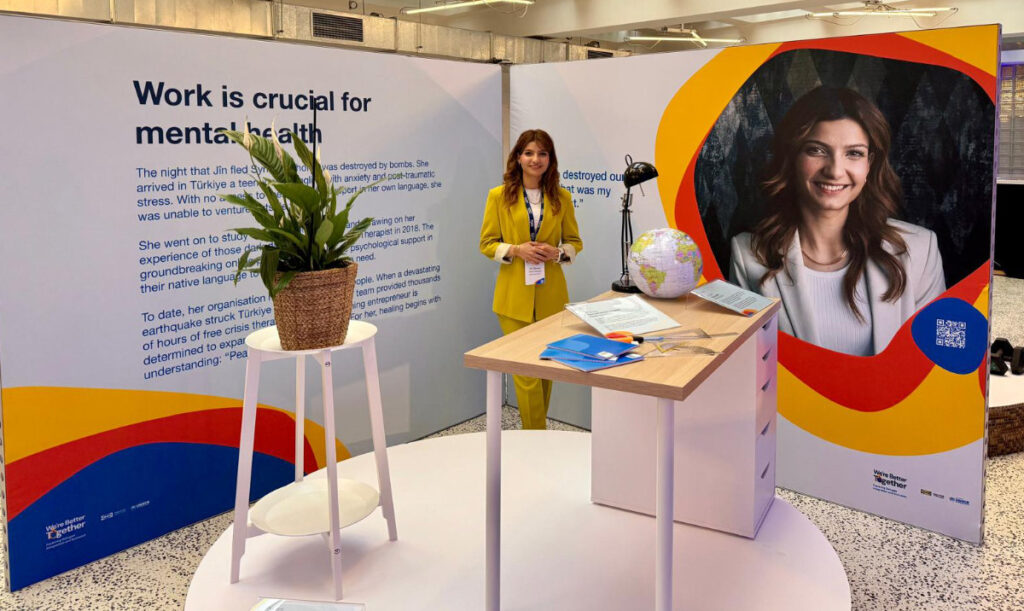
Jin Dawod created Peace Therapist to deliver anonymous, culturally sensitive therapy to refugees in four languages worldwide
Self-funded platform has provided 70,000 sessions across Turkiye, Syria and Europe, partnering with UN agencies after disasters
When Jin Dawod fled the Syrian civil war as a teenager and sought refuge in Turkiye, she carried with her the invisible weight of displacement — fear, uncertainty and isolation.
Years later that experience would shape Peace Therapist, a digital psychological support platform she founded in 2018 to provide accessible mental health care in four languages to refugees.
Dawod told Arab News that while adjusting to life in Turkiye, she realized there was little support available in Arabic for refugees struggling with their mental well-being.
During her second year studying computer engineering, she decided to build a solution: an online therapy platform connecting refugees with psychologists in their mother tongue.
“After the civil war in Syria and my personal experience with it, I found out most of the refugees don’t have space to feel, to express, to talk, or even to ask questions,” she told Arab News.
Since its launch, Dawod said the social enterprise has delivered more than 70,000 sessions across Turkiye, Syria and Europe, helping thousands begin the process of healing.
“I wanted to make a solution that is accessible, anonymous, and in the mother language for the people who are reaching out for help,” she said.
The need is stark. According to the World Health Organization, refugees and migrants exposed to adversity are at greater risk of depression, anxiety, post-traumatic stress disorder and psychoses, sometimes leading to suicide.
In some countries, psychoses are more prevalent among migrants, linked to cumulative social disadvantage throughout their journey.
The WHO reports that 22 percent of people who have experienced war or conflict in the previous decade will suffer from depression, anxiety, PTSD, bipolar disorder or schizophrenia.
Yet refugees and migrants often face barriers that limit both access to and acceptance of mental health services, including discrimination, language gaps and concerns over confidentiality.
Peace Therapist operates through three models. The first provides direct support to individuals, no matter where they are.
“Anyone anywhere can reach out to these therapists from anywhere in the world, if they are speaking the four languages that we are supporting we can give them psychological support and mental health services needed,” Dawod said.
The second model focuses on partnerships with organizations, including UN agencies and nonprofits. After the devastating Syria-Turkiye earthquake in 2023, Dawod shared a helpline on social media for those affected.
Within hours, she said, 200 requests for support poured in from refugees and Turkish nationals traumatized by the 7.8 magnitude quake and its aftershocks.
“We worked with ILO and we supported six survivors in Syria and Turkiye and we later matched them with job opportunities. Also, we worked with UNHCR and with the SPARK organization,” she said.
SPARK, an independent non-governmental organization, partners with UN agencies to help young people, women and refugees in fragile states access education, employment and entrepreneurship.
The third model — and, Dawod insists, the most important — is the social plan, which offers free sessions to refugees and disadvantaged groups.
“Our social plan is the heart of Peace Therapist,” Dawod said. “That is why Peace Therapist was born in the first place. And we don’t want to forget why it was born in the first place — to support refugees.”
Sustaining that free support is also the greatest challenge; the platform is self-funded.
“We don’t have a specific government or organization that is sponsoring Peace Therapist. We are independent and we are self-managing,” Dawod said, calling on the international community to collaborate and expand access to mental health services.
Her work has earned global recognition, including the 2024 UNHCR Nansen Refugee Award for Europe and the Youth Leadership and Innovation Award by the Global Forum on Migration and Development, bringing her to platforms such as the UN and the European Parliament.
“We are so happy to be recognized globally. We have many global awards like the Nansen Refugee Award and the UN Action Award … we are honored to have these amazing awards,” she said.
But the accolades are secondary.
“We want to always be there in the field and always be touching the people who are reaching out for us. Because the biggest award for us is the feedback that we are having from the people who are reaching out,” she said.
The UN reports that by the end of April 2025, around 122 million people were forcibly displaced worldwide — the highest level on record. UNHCR said that as of 2025, 1.2 million mental health consultations and psychosocial support services had been provided globally.
The WHO stresses that effective mental health care for displaced populations requires culturally sensitive, multidisciplinary approaches that integrate social support, legal assistance and community engagement.
Peace Therapist’s team now includes more than 150 psychologists from diverse cultural backgrounds.
“That is so important, to be able to support the people with the cultural, culturally sensitive services,” said Dawod. “We have psychologists from Lebanon, Iraq, Palestine, Syria, of course, Turkiye and many other Arab countries, and also international experts.”
The platform also uses artificial intelligence to match users with therapists based on their needs and the psychologist’s expertise.
“When we are providing psychological support, it’s really important to match with the right psychologist because it could be also harmful more than it can be useful when you are matched to the wrong person,” Dawod said.
For many refugees, stigma, racism and discrimination further delay seeking help, the WHO notes, worsening mental health outcomes.
“There is already a lot of stigma on mental health, and we don’t want people to lose the encouragement of having and asking for help,” Dawod added.
As displacement reaches record levels, digital platforms like Peace Therapist are increasingly viewed by humanitarian organizations as scalable solutions in conflict and post-conflict settings.
WHO’s Comprehensive Mental Health Action Plan 2013-2030 emphasizes promoting mental wellbeing and addressing disparities in access to care, particularly for refugees and migrants.
For Dawod, however, the mission remains deeply personal.
“Peace Therapist was born because of war, so our mission is always to build peace — inner peace and peace in the world. It all starts from inside of us.”
source/content: arabnews.com (headline edited)
___________
Jin Dawod, a refugee from Syria, created Peace Therapist to deliver online therapy to displaced people in four languages. (Supplied)
Regional Director for the Guinness World Records in the Middle East and North Africa region Ahmed Bakr Meklad said Bahr Al Baqr wastewater treatment plant has received a Guinness World Records’ certificate for being the largest water plant in the world with a capacity of 64.8 cubic meters per second along with the use of ozone in the wastewater treatment process.
Speaking to “Good Morning Egypt”, Meklad said the plant has been established with the highest and best international standards.
The plant was inspected by Guinness World Records team of judges over a period of one year during which data were exchanged to review the plant’s competitiveness with similar projects.
The cost of this massive project is LE20 billion, and its daily capacity is 5.6 million cubic meters to be used in the reclamation of 400 acres in Sinai, he said.
Considered one of Egypt’s most important projects, the plant treats more than 2 billion cubic meters of wastewater per year which will be used to irrigate 1,400 sq km of land in Sinai. It is located east of the Nile Delta in the town of Bahr El-Baqar, about 35 km south of Port Said.
The project is set to improve water security, provide jobs, support communities, and reduce pollution for decades to come.
The plant comprises the pumping building of the water intake – rapid mixing basins – slow mixing basins – sedimentation basins – filters with discs – ozone basins – chloride tanks, treated water, sludge condensing basins – mechanical drying buildings – solar units for sludge drying and an administrative area which includes (headquarter building – employers building – mosque – generators – workshops – chemicals – chloride – ozone) – interior roads networks and landscaping.
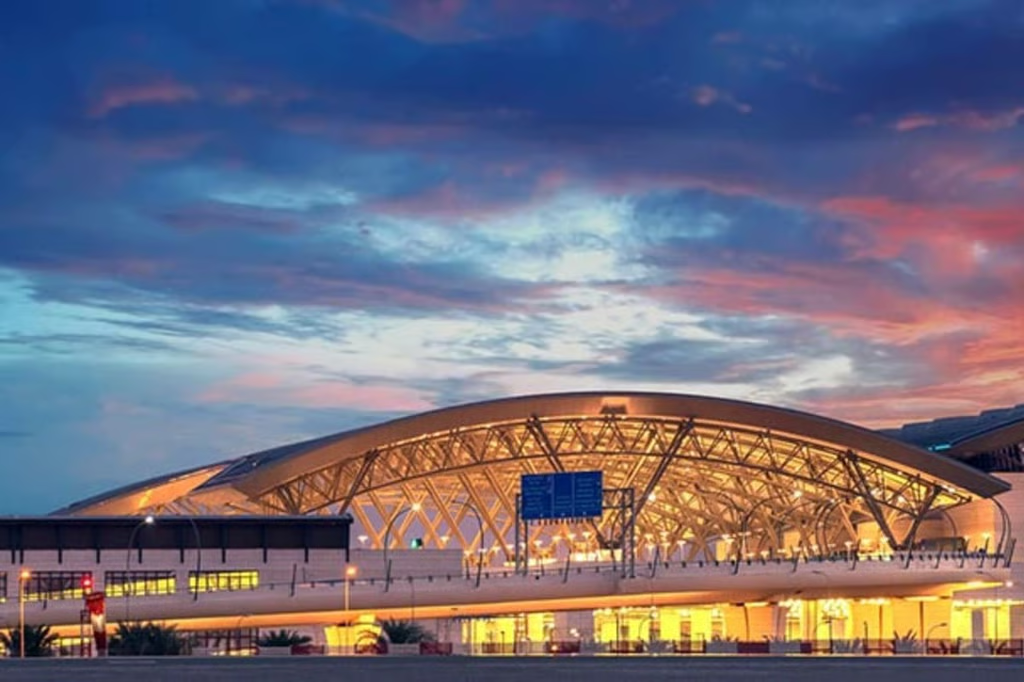
Partnership with Huawei enables fast, secure, and reliable connectivity for travelers across airports.
Oman Airports has set a global precedent by becoming the first airport operator worldwide to deploy Wi-Fi 7 technology across its facilities. The rollout of this next-generation wireless technology, implemented in partnership with Huawei, is now fully operational at Oman’s airports, including the flagship Muscat International Airport. This technological advancement promises travelers faster speeds, stronger security, ultra-reliable connectivity, and a seamless digital experience tailored to meet the needs of modern passengers.
Supporting high traffic at airports
Wi-Fi 7 represents a significant leap forward in wireless networking, offering up to five times the speed of its predecessor Wi-Fi 6E, with maximum theoretical speeds soaring from 9.6 Gbps to 46 Gbps. Moreover, Wi-Fi 7 enhances network capacity by supporting a dramatically larger number of simultaneous users, essential for busy airport environments where thousands of travelers and operational systems require stable and high-speed internet access concurrently.
At Muscat International Airport alone, Wi-Fi 7 supports connectivity for over 40,000 daily travelers. Deployment extends throughout departure halls, check-in counters, retail spaces, and dining areas, ensuring consistent quality connectivity for passengers and critical airport services alike. Passengers can now enjoy ultra-smooth streaming, rapid downloads, and reliable video calls, which greatly elevate comfort and convenience during their travels.
Importantly, this upgrade also benefits airport operations by enabling faster, more secure data transmission for essential systems such as biometric identification, e-gates, and identity verification platforms. These systems are crucial for Oman and the broader Gulf region, especially with the upcoming rollout of the Gulf Cooperation Council’s (GCC) ‘one-stop’ travel system—an initiative allowing citizens to complete immigration and security procedures at their departure airport, bypassing formalities at arrival destinations.
Enhancing operational efficiency
Oman Airports’ move to pioneer Wi-Fi 7 aligns with the country’s Vision 2040, which emphasizes smart infrastructure and world-class digital services. By adopting cutting-edge technology, Oman Airports is modernizing its services and demonstrating the Sultanate’s commitment to innovation in the aviation sector. This deployment not only improves passenger experience but also significantly boosts operational efficiency—a critical factor in sustaining high standards of airport management amidst growing travel demands.
Ahmed Al Amri, CEO of Oman Airports, remarked that the Wi-Fi 7 launch “is an important milestone in our journey to upgrade the passenger experience and enhance operational efficiency,” reaffirming Oman Airports’ commitment to innovation and positioning it as a leader in digital advancement.
The upgrade was achieved through a close partnership with Huawei, which provided its innovative Wi-Fi 7 solution. Huawei’s technology offers unprecedented bandwidth, low latency, and superior concurrency capabilities, ensuring that even during peak times, passengers and staff experience seamless connectivity. This is particularly important given the challenge of servicing tens of thousands of passengers daily, who increasingly rely on digital connectivity for everything from online check-ins to streaming entertainment and real-time communications.
Wi-Fi 7 devices can operate simultaneously across the 2.4 GHz, 5 GHz, and 6 GHz frequency bands, switching dynamically to optimize performance and minimize network congestion. This feature significantly reduces latency and enhances connection stability, which is vital in crowded airport zones and in supporting high-data-demand applications.
source/content: economymiddleeast.com / Middle East Economy (headline edited0
______________
The upgrade facilitates biometric systems, aiding smooth immigration processing for travelers in the region
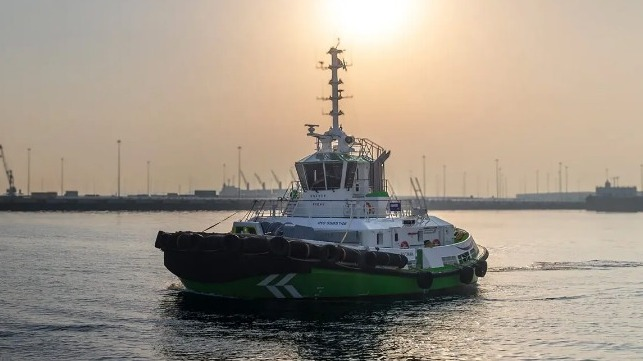
Fully electric tugs have quickly emerged from a novelty in the industry and now Damen Shipyards Group and its client SAFEEN Group, part of AD Ports Group’s Maritime & Shipping Cluster, have set a Guinness World Record as the Most Powerful Electric Tugboat. The vessel delivered earlier this year demonstrated what the companies are calling “unprecedented for a fully electric tug” and further the growth of this sector of the industry.
The record was set by measuring the bollard pull of Damen RSD-E Tug 2513 Bu Tinah, which achieved an average high peak pull of 78.2 tonnes. It is the first fully electric tug to operate in the Middle East and now has the unique distinction of the unique honor by a world-recognized body for record keeping. Launched in 1954 as a promotional idea for the Guinness Brewery, the Guinness Book of Records (today Guinness World Records) is an often-quoted source of data.
“This Guinness World Record achievement demonstrates that the transition to alternative energy does not come at the cost of performance,” said Captain Ammar Mubarak Al Shaiba, CEO – Maritime & Shipping Cluster, AD Ports Group. “We are very proud that the first electric tug in the Middle East is also making waves on a global level with this accolade and the fact that in parallel it is improving the sustainability of our operations alongside cost efficiencies in terms of overall fuel saving is extremely important.”
The record-breaking performance took place at Khalifa Port, AD Ports Group’s flagship facility where the tug is a key component of AD Ports Group’s Marine Services fleet and its electrification strategy.
The RSD-E Tug 2513 according to Damen is designed with a focus on sustainability. It offers zero emissions from tank to wake playing a significant role in reducing emissions.
The RSD-E Tug 2513 builds on the already efficient design of the diesel propulsion RSD Tug 2513. The spec sheet highlights a 320 gross ton tug with a length of 24.73 meters (81 feet). It is designed to operate at a speed of up to 12 knots and can be recharged in two hours.
The vessel can operate with a crew of just two or three persons or a maximum of up to sic and can be customized with options for oil and pollution control or fire fighting.
The electric version according to its spec sheet is very similar to the earlier diesel version which has a maximum bollard pull of 80 tonnes. It operates at a speed of 12.6 knots.
Damen has been at the forefront of electric tug development, including delivering the world’s first electric harbor tug, aptly named Sparky, in 2022 to Ports of Auckland. It won the prestigious “Tug of the Year” at the 2022 International Tug and Salvage Awards ceremony and pioneered the growing deployment of electric tugs in ports around the world.
source/content: maritime-executive.com
__________
Damen’s electric tug delivered to AD Ports set a new record for pull power for electric tugs (Damen) / Published Nov 12, 2024 7:44 PM by The Maritime Executive ________________________________________________
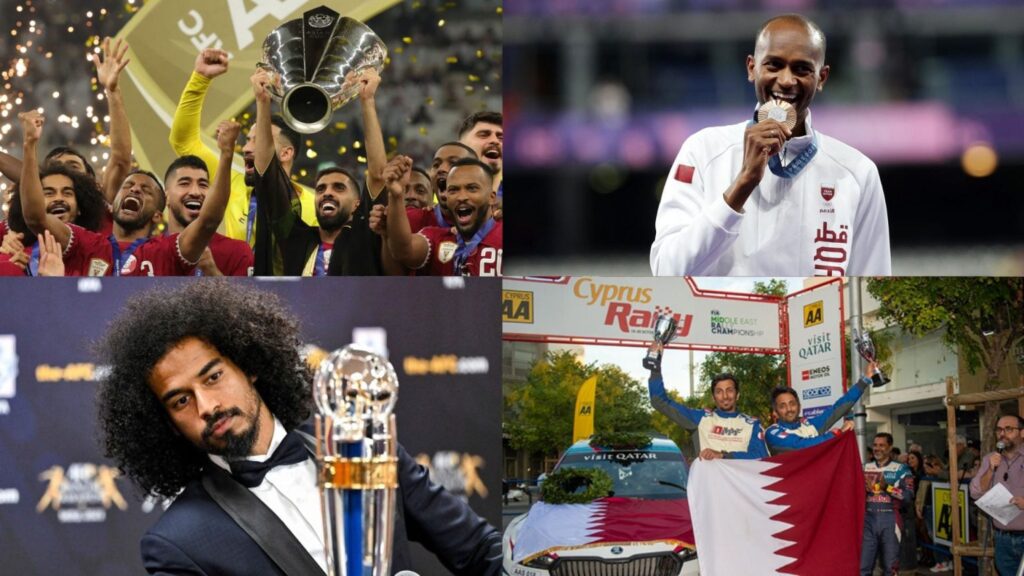
A year that started with a sporting success in the form of an Asian Cup win at home ended in mixed results.
Titles, goodbyes, the highs and low: 2024 was anything but a boring year for Qatari sports as the country continued hosting mega events, yet similarly took a few stumbles on the pitch.
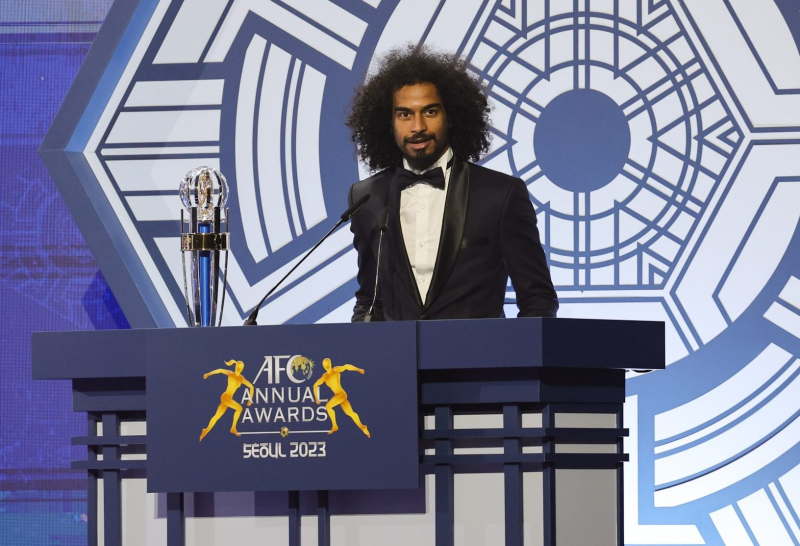
While the likes of Mutaz Barshim and Akram Afif dominated the headlines with their glories, the other side saw Qatari sides struggle to keep up their good form, whether in World Cup qualification or the Olympics.
Let’s take a look at some of the standout themes that defined Qatar’s 2024.
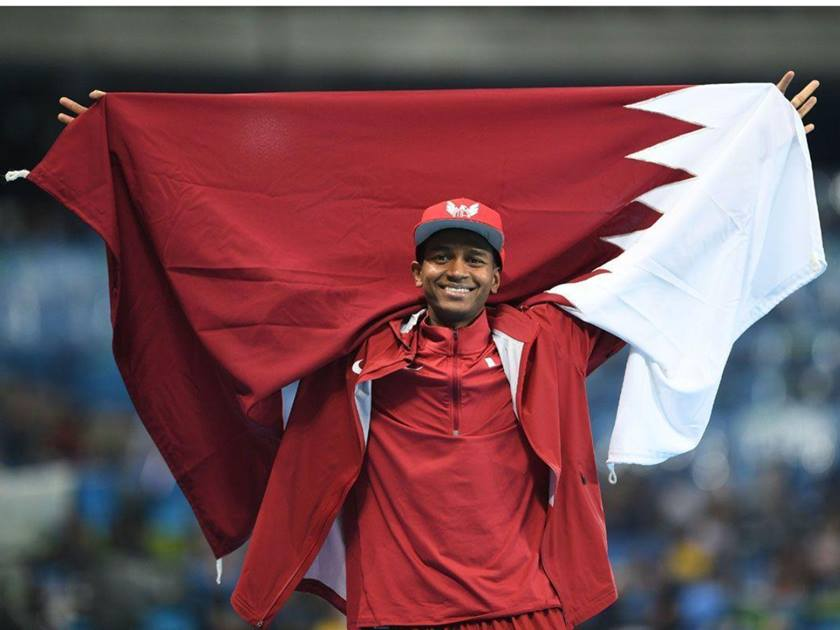
Barshim bags bronze in Paris Olympics 2024
Mutaz Barshim defied odds once again to win bronze at the Men’s high jump event, securing Qatar’s only medal of the Paris Olympics 2024.
While it was an underwhelming campaign for the Qatari contingent that had defied expectations to clinch two golds in Tokyo, Barshim’s win became a highlight. It was his fourth Olympic medal — a fitting end to a tournament that the high jumper had termed to be his last before the trip to Paris.
However, the 33-year-old multiple-time world champion hinted at the possibility of competing in the next Olympics, upon his return to Doha. “Never say never,” he said, in an exclusive chat with Doha News.
‘Sporting DNA : Mutaz Barshim keeps raising the bar and it all starts with his family
The year 2024 was also Aspire Academy’s 20th anniversary, which the country’s premier athletic scouting and training centre celebrated in style, hosting multiple seminars and events, such as the Aspire Global Summit as well as giving home to FIFA’s The Best Football Awards during its Gala Dinner in December.
Asian Cup triumph, Al-Haydos’ farewell and Afif’s ascent
The year ends in uncertainty for Qatar just like it started for Qatari football.
However, there were significant achievements in between. Much like the sport itself, it was a game of two halves for Qatari football — a perfect first half, followed by a tough second.
Qatar hosted and ultimately defended the Asian Cup crown in February as Akram Afif became the difference maker yet again. The tournament drew record attendance number as well as record engagement figures, underscoring yet another successful tournament in Qatar.
Al Annabi’s longstanding two-time Asian Cup-winning captain Hassan Al-Haydos retired from international football after the tournament, putting an end to the most capped Qatari career ever.
Qatar continued their good run under Bartolome Marquez Lopez at the World Cup Qualifiers thereafter, ending the second round unbeaten. The AFC U-23 Asian Cup was also hosted by the country in between, where Japan were crowned the champions.
It started going downhill with the loss against UAE at home with the start of the third round of the Asian Qualifiers to the FIFA World Cup 2026. While Afif clinched his second AFC Player of the Year title, Qatar’s hopes of making it to the tournament in North America hangs in balance with just two wins and three losses from the first six games. The team also crashed out of the group stages of the Arabian Gulf Cup following two draws and a defeat.
In the meantime, Qatar also hosted two of the Palestine national team’s qualifying games, the former of which in June saw Al Fida’i make it to the last round of World Cup Qualifiers for the first time in history with a 0-0 draw against Lebanon. Similarly, the Qatar U-20 team seamlessly qualified, at home, for the U-20 Asian Cup to be held in Saudi Arabia next year.
Qatar was also the home to FIFA’s new club competition, the Intercontinental Cup, which saw European champions Real Madrid win in Lusail Stadium. The Stadium 974 was put to use for the first time since the 2022 World Cup for two of the tournament’s matches.
A good year for racket sports
The Khalifa International Tennis and Squash Complex was a busy venue this year as it hosted multiple tournaments throughout the year, including the Qatar Open tennis event in February, the QTerminals Qatar Classic Squash event in September and October, followed by the World Padel Championship in November.
Russian player Karen Kachanov won the men’s Qatar Exxonmobil Open, while Polish Iga Swiatek claimed the women’s event held in February. Qatar Exxonmobil Open will now return as an ATP 500 event and was also voted the best ATP 250 event on calendar for 2024.
The QTerminals Qatar Classic saw Diego Elias and Nour Al-Sherbini come out on top of the men’s and women’s events, marking a thrilling end to the squash event.
Argentina’s men’s team and Spain’s women’s team maintained their dominance by lifting the World Championship in Padel, which saw some of the world’s finest compete in Doha.
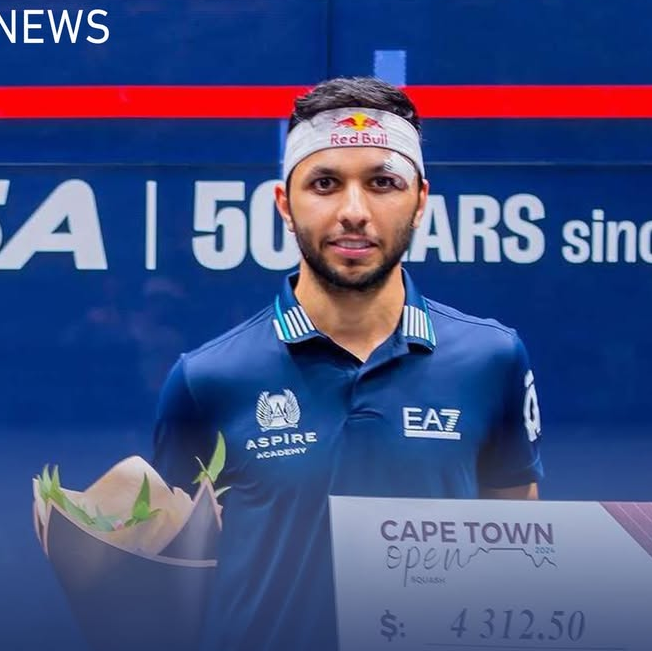
Qatar’s squash ace Abdullah Al-Tamimi capped the year off in style, winning the Cape Town Squash Open 2024 his first title away from Qatar since 2022.
Glory in motorsports and skydiving
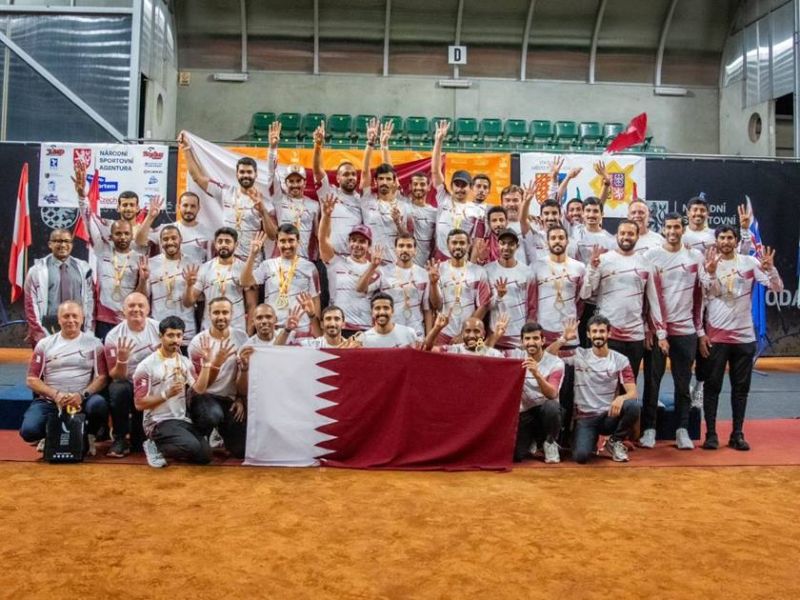
Qatar won four gold medals at the World Air Sports Federation (FAI)’s World Championships which was hosted by Czechia’s Prostejov in the first week of September.
Qatar won three golds in events across the Canopy Formation category and bagged solitary gold in male Style and Accuracy landing in the six-day tournament.
It was yet another year of glory for Qatari rally driver Nasser Al-Attiyah, who clinched his third FIA World Rally-Raid Championship (WR2C) in October after winning the 2024 Rallye du Maroc with his French co-driver Edouard Boulanger for the Dacia Sandriders.
Al-Attiyah’s decorated racing career now boasts seven Rallye Du Maroc titles, in addition to five wins in the Dakar Rally and 13 Middle East Rally wins.
What also stood out, however, was Abdulaziz Al-Kuwari’s victory in the Middle East Rally Championship as well as the Qatar Motor & Motorcycle Federation’s triumph in the Baja Middle East Teams Championship — all of whom were awarded in December at the annual FIA Awards.
Qatar also hosted the pinnacle of motorbike and motor racing, the MotoGP and the F1 Grand Prix – the latter of which saw record-breaking attendance at the Lusail International Circuit.
Defending champion Francesco Bagnaia won the MotoGP event held in March, whereas Max Verstappen rose against the odds to win his second Qatar Grand Prix on December 1, despite starting away from the front of the grid.
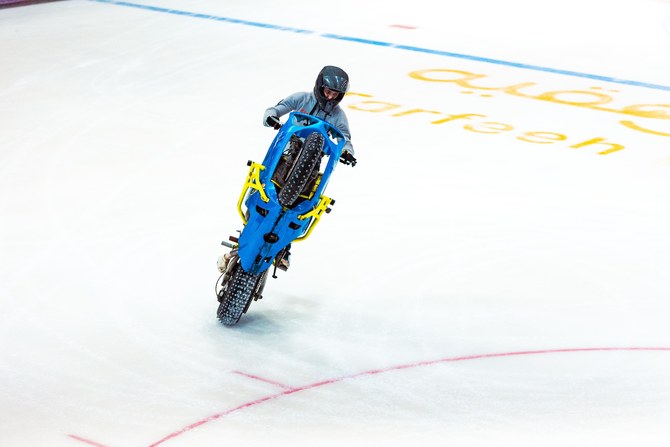
Riding on one wheel of his Kawasaki ZX-6R, he completed 14 circles in one minute.
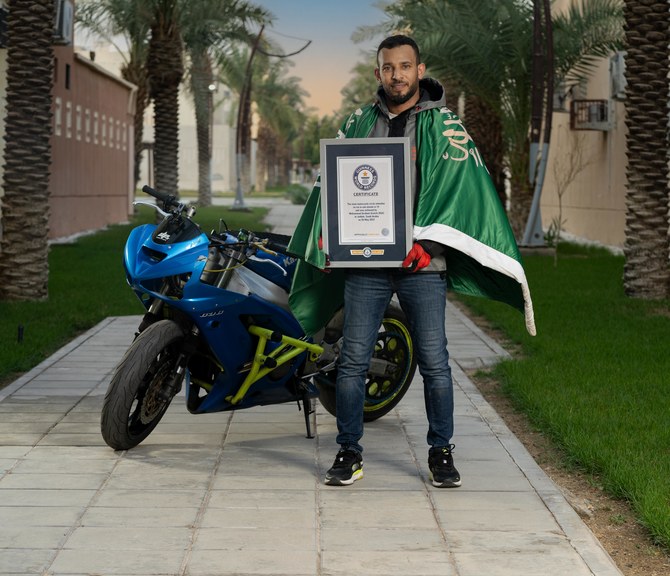
Saudi stunt rider Mohammed Ibrahim Scotch kept his cool to set a new world record for a motorcycle wheelie — on ice.
Riding on one wheel of his Kawasaki ZX-6R, he completed 14 circles in one minute, a feat that has earned him entry into the Guinness World Records 2023 edition.
Scotch, 39, told Arab News that he had been preparing for around two years for the record attempt, which took place at an ice hall in Jeddah.
He said: “I’m proud of achieving this new record because it carries the name of Saudi Arabia, my country. I didn’t break the record, but I achieved a new world record that no one had done before.
“In 2017, to deviate from the norm and at the same time to have fun, the idea stuck in my mind, and I tried it first in a skating rink in Makkah.
“(In 2022), after researching and communicating with officials (from Guinness World Records), they informed me that no one in the world had achieved this record, so I decided to do it.
“I began the journey of rebuilding the project from scratch after obtaining approval from Guinness World Records. I searched for a private ice rink to execute this experiment,” he added.
Scotch designed studded tires and worked out the variables for his motorbike.
“When I received the official email from Guinness World Records congratulating me as a new world record holder, I could not believe it or comprehend it.
“I read the email more than once, and I told my mother, my family, and all my friends who stood with me in obtaining this record, and their joy was unbelievable,” he said.
Scotch has been riding and doing stunts since the age of 16 and turned professional in 2013. He has participated in several international stunt competitions including in Bulgaria, Egypt, and the UAE.
At the beginning of last year, he became a certified trainer with the Saudi Automobile and Motorcycle Federation.
“I am glad that I could raise the name of Saudi Arabia to new levels with my latest achievement and my international appearances,” he added.
Scotch, whose achievements were recently acknowledged by the federation’s chairman, Prince Khalid bin Sultan Al-Abdullah Al-Faisal, aims to set more records.
source/content: arabnews.com (headline edited)
____________
Saudi stunt rider in Jeddah recently set new world record as he popped a wheelie on his motorcycle then drove in 14 circles on ice for one minute. (Supplied)
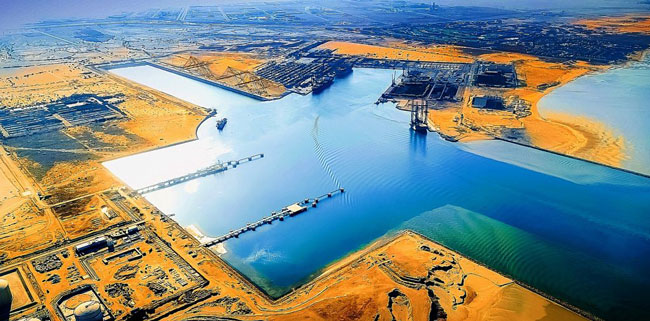
Egypt’s Ain Sokhna Port has been recognized by Guinness World Records as the deepest man-made port basin constructed on land, with a depth of 19 metres, the Ministry of Industry and Transport said on Monday.
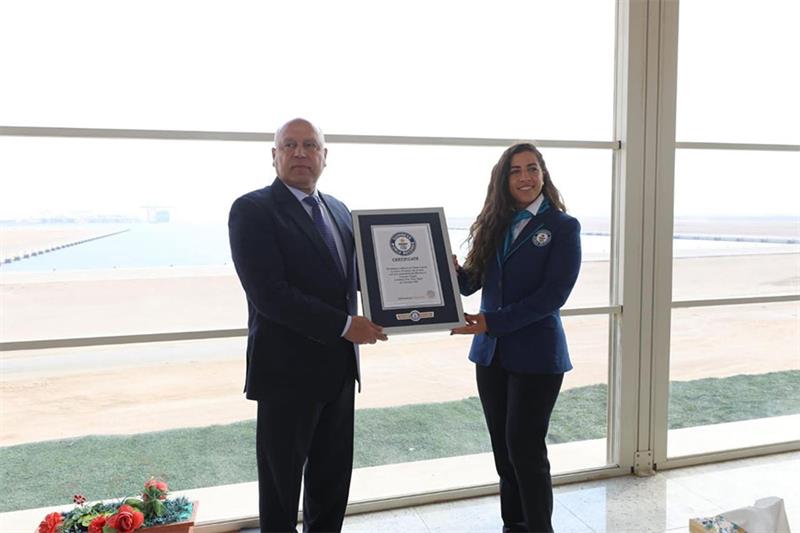
Deputy Prime Minister for Industrial Development and Minister of Industry and Transport Kamel Al-Wazir received the certificate, which the ministry said reflects recent expansion works at the Red Sea port, a key hub within the Suez Canal Economic Zone (SCZone).
Ain Sokhna is being developed as a major logistics and transit centre serving Egypt’s eastern coastline and the Gulf of Suez, with the government aiming to boost export and import flows and strengthen Egypt’s role in global supply chains.
The ministry said ongoing development plans include the excavation of five additional port basins, each with a depth of 19 metres, with a total excavation volume of 120 million cubic metres. Dredging operations are underway, with planned dredging volumes reduced from an initial 70 million cubic metres by 25 million cubic metres following technical reviews.
The port has also been linked to a multimodal transport network through a 30-kilometre internal railway system connecting it to national rail lines, road networks, dry ports, and logistics zones.
As part of Egypt’s Vision 2030 transport strategy, the ministry plans to construct 70 kilometres of new quays with depths ranging from 18 to 25 metres, bringing the total quay length across Egyptian seaports to more than 100 kilometres. The strategy also targets expanding the national maritime fleet to 40 vessels capable of transporting up to 25 million tonnes of cargo annually.
Egypt has stepped up investment in port infrastructure nationwide. At Alexandria Port, a second floating storage and regasification unit (FSRU), Energos Power, with a liquefied natural gas storage capacity of 174,000 cubic metres, has recently entered service under a lease agreement with US-based New Fortress Energy.
The Egyptian Holding Company for Maritime and Land Transport has also signed a memorandum of understanding with Abu Dhabi Ports Group to develop logistics areas at Alexandria Port, including storage, customs warehousing, and re-export services.
At Ain Sokhna and Dekheila ports, Egypt has partnered with global shipping and terminal operators —including CMA CGM, COSCO Shipping, and Hutchison Ports—in projects valued at $1.6 billion to build, operate, and manage container terminals. Dubai-based DP World is also operating three major projects at Ain Sokhna Port, with the first phase of its logistics zone completed earlier this year .
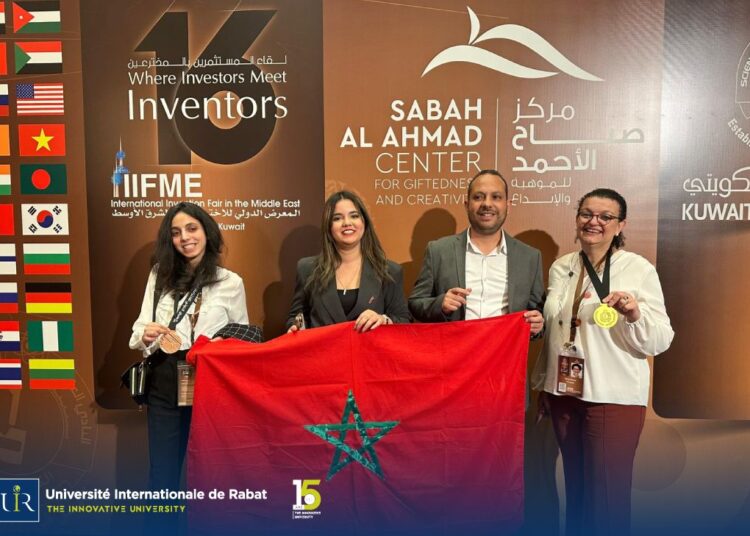
In addition to individual distinctions, UIR received an institutional Gold Medal in recognition of its academic excellence and strong commitment to innovation and research development.
The International University of Rabat (UIR) has once again gained international recognition after winning major awards at the International Fair in the Middle East
The event, held with the support of the World Intellectual Property Organization (WIPO) and the International Federation of Inventors’ Associations (IFIA), brought together innovators from around the world, highlighting cutting-edge research and technological advancements.
The fair highlighted two health-related innovations developed at UIR. The first received a Gold Medal for an innovative endodontic instrument designed by Professor Sonia Ghoul and Professor Abdelwahed Barkaoui from the university’s CRESS and LERMA laboratories.
The dental tool is designed to recover itself in case of fracture during a root canal procedure, a complication that can create serious challenges in dental practice. The innovation reduces risks for patients, lowers stress during procedures, and limits the need for invasive interventions by integrating a recovery mechanism directly into the instrument.
It introduces a new approach in endodontics by addressing potential technical failure as part of the solution itself, according to a statement from UIR.
The second award, a Bronze Medal, was granted to iRespire, a smart asthma monitoring system developed by Nouhaila Fraihi and Professor Ouassim Karrakchou at UIR’s TIC Lab.
The system relies on Edge AI technology to provide continuous and personalized monitoring for asthma patients. It combines a smart inhaler, an electronic stethoscope, environmental sensors, and a connected watch to analyze real-time physiological and environmental data.
Its goal is to predict asthma attacks before they occur and improve medical management through data-driven insights. The project represents a step toward more predictive and connected healthcare, UIR said.
In addition to these individual distinctions, UIR also received an institutional Gold Medal in recognition of its academic excellence and strong commitment to innovation and research development.
Founded in 2010, UIR has quickly positioned itself as one of Morocco’s leading higher education institutions. The university has strengthened its international reputation in recent years through global rankings and research achievements.
UIR entered the top 1,000 universities worldwide in the Times Higher Education World University Rankings and has ranked first nationally in the Impact Rankings, which measure universities’ contributions to the United Nations Sustainable Development Goals.
The university has also expanded its global academic partnerships, including a strategic collaboration with Mississippi State University in the United States to promote joint research and student exchange programs.
Meanwhile, its flagship Rabat Business School has earned international recognition in global management rankings, ranking 20th worldwide in the 2025 Financial Times Masters in Management (MiM) ranking.
The UIR’s leadership has celebrated the university’s achievement during its 15th anniversary in November, including the high employability rate of 93% one year after graduation.