Arabs & Arabian Records Aggregator. Chronicler. Milestones of the 25 Countries of the Arabic Speaking World (official / co-official). AGCC. MENA. Global. Ist's to Top 10's. Records. Read & Enjoy./ www.arabianrecords.org
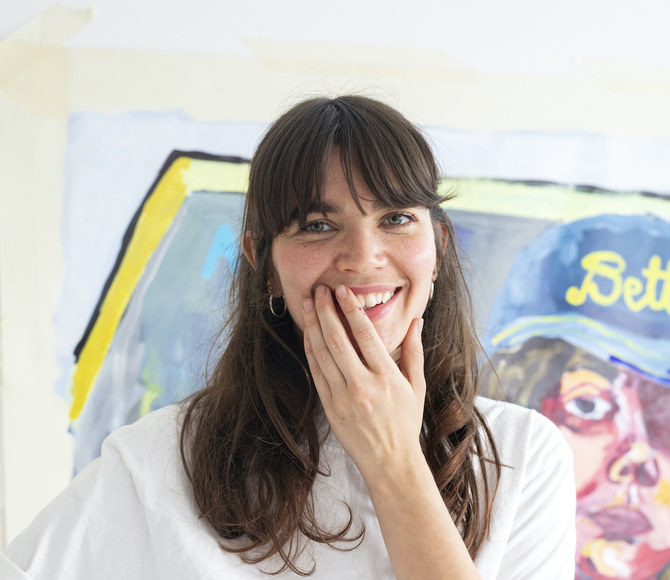
The Finnish-Tunisian painter discusses her vivid multilayered piece, completed under quarantine in Tunis.
This is a breakfast scene from last summer, when my friend Petra was visiting my studio in Tunisia — a place that is very significant to my work.
My representative and I usually think about the titles of my works and we started researching the name ‘Petra.’ It’s a town in Jordan and it used to once be a great metropolis. And I thought that’s such a good metaphor for what I’m feeling about the world now: We thought that our whole world was something so great, but then it can easily be shaken by a pandemic. When you look back at the history of great metropolises, they, in the end, have come to ruins.
To me, there’s also the personal way of thinking about this situation: you understand that something needs to break in order for something new to come out of it. The whole world is now in a situation where everybody’s plans are cancelled and they have to rethink things.
The ‘satellite image’ part represents the table, and its shapes can indicate that it kind of looks like Earth, as if it’s taken from above. I don’t really know why I love using bold and bright thick layers of color, but for me, color is always something that has so many nuances. And now that I can paint, and manipulate the colors and the shapes, there’s just something that’s magical about it.
The colors are happy ones, but sometimes the subjects are not necessarily. I don’t want to just create beautiful images. Personally, I need to have a story.
I can’t really paint if I’m not feeling good, but that doesn’t mean that I’m only painting happy things. With this particular painting I struggled a lot, because it looked good but I felt like it wasn’t ready.
So I kept changing some of the colors and shapes but then I had to end up changing everything. When it was finally ready, I just felt that all the pieces of the puzzle are complete and there’s not even a doubt about it. It was kind of like when you fall in love with someone; you just know.
source/content: arabnews.com (headline edited)
___________
Dora Dalila Cheffi is Tunisian-Finnish multimedia artist. (Supplied)
Saudi Arabia has approved a landmark law allowing foreigners to own property across the kingdom, including in the holy cities of Mecca and Medina.
Saudi Arabia has approved a landmark legal change that will, for the first time, allow foreign nationals to own property across the kingdom, including in the holy cities of Mecca and Medina, under specific conditions.
The cabinet decision, chaired by Crown Prince Mohammed bin Salman in Jeddah on Tuesday, marks a historic shift in real estate regulation and is part of broader reforms aimed at opening the economy and attracting foreign investment.
The new law is expected to take effect in January 2026, with executive regulations to be published in the coming months.
It grants foreigners the right to own property in designated areas, including key cities like Riyadh and Jeddah, and in limited zones within Mecca and Medina, though ownership in the holy cities will be restricted to Muslims and confined to major projects such as Masar Makkah.
Majid bin Abdullah Al-Hogail, Minister of Municipal and Rural Affairs and Housing, said the reform is an extension of real estate legislation “designed to grow the sector and encourage direct foreign investment”.
He added that it would increase supply by drawing international developers into the Saudi market.
Economic ambitions and market reaction
The announcement triggered a sharp rally in real estate stocks, with some development firms seeing gains of over six percent in the Saudi stock exchange.
Analysts expect the reform to be a turning point for the sector, unlocking new capital, increasing project quality, and helping balance demand and supply.
The new law aligns with Vision 2030, Saudi Arabia’s ambitious transformation plan, which includes major urban developments like NEOM and the Red Sea Project.
According to Knight Frank, the capital Riyadh is expected to reach 1.7 million housing units by 2030, up from 1.4 million at the end of 2024, driven by infrastructure expansion and population growth.
The housing market recorded transactions worth SR 60 billion ($16 billion) in the first quarter of 2025 alone, 65 percent of which were residential in a sign of strong demand even before the law was passed.
The new regulations include safeguards to protect Saudi citizens, with geographic and market controls built into the system.
Ownership in Mecca and Medina will be limited to Muslims and subject to project-specific conditions, while areas open to foreign ownership in Riyadh and Jeddah will be defined by the General Real Estate Authority.
Economic editor Khaled Al-Rabiah told Al Arabiya Business that the reform was not aimed at raising housing prices but at improving the quality and diversity of projects by attracting specialised foreign investment.
Link to premium residency and long-term plans
The legal reform may also lead to a review of the current premium residency ‘iqama’ scheme, which requires ownership of property worth at least SR 4 million ($1.1 million).
Easing that threshold could expand the pool of foreign buyers, especially among the kingdom’s large expatriate population.
While challenges remain, including limited mortgage options for foreigners and the early stage of off-plan sale models, observers say the law could spark a new phase of growth, making Saudi Arabia’s real estate market one of the most dynamic in the region.
The country is targeting the delivery of over one million new homes and hundreds of thousands of hotel rooms, retail spaces, and office units by 2030.
The General Real Estate Authority is expected to release the executive regulations on the government’s Public Consultation Platform for Laws and Regulations (Istitlaa) within 180 days.
source/content: newarab.com (headline edited)
____________
The law grants foreigners the right to own property in designated areas, including the capital Riyadh [Getty]
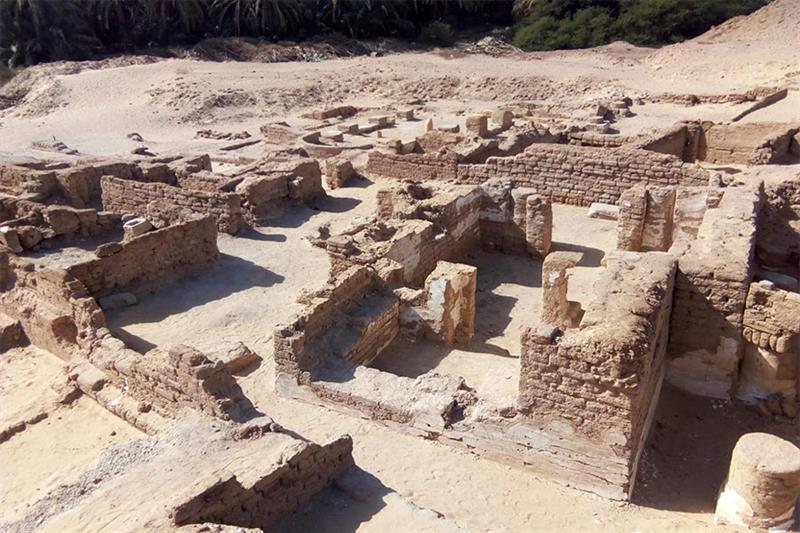
An Egyptian archaeological mission from the Supreme Council of Antiquities (SCA) has unveiled a significant discovery in the heart of the Western Desert of the remains of the central residential city of Kharga Oasis, dating back to the early Coptic period.
Located in the Ain al-Kharab archaeological site within the Islamic and Coptic archaeological zone, the city offers rare insight into Egypt’s transition from paganism to Christianity.
Among the findings are the ruins of residential structures, churches, and cemeteries, as well as a mural depicting Christ healing a sick person.
Minister of Tourism and Antiquities, Sherif Fathy, described the discovery as a testament to the depth and diversity of Egyptian civilisation during one of its most transformative periods. “This find enriches our understanding of religious transition in Egypt and highlights the values of tolerance and cultural diversity deeply rooted in our history,” he said. He reaffirmed the Ministry’s continued support for archaeological missions nationwide and commended the achievements of Egyptian teams working to enhance Egypt’s global standing as a cultural tourism destination.
“This discovery is considered as a valuable window into early Christian life in Egypt,” asserted Mohamed Ismail Khaled, Secretary-General of the SCA. He emphasised the importance of the find in shedding light on the beginnings of the Coptic era in Egypt. “Kharga Oasis played a key role as a religious and social hub throughout many historical periods, and this discovery further confirms its significance,” Khaled stated.
He explained that the unearthed structures include mudbrick homes with plastered walls, service areas equipped with daily-use ovens, and storage spaces containing large, fixed pottery jars once used for preserving food and grain. The mission also recovered ostraca, pottery fragments, glass and stone artefacts, burial remains, and a vivid mural illustrating Christ performing a healing miracle.
Seham Ismail, Director General of Antiquities in Kharga and head of the mission, revealed that the team also uncovered the remains of two churches. One is a large basilica-style church featuring a central hall flanked by two aisles, separated by rows of square columns, with service buildings lying to its south. The second church is smaller, rectangular in shape, with remnants of seven exterior columns and Coptic inscriptions still visible on its interior walls. Additional service structures were found on its western side.
Ismail added that findings from previous excavation seasons indicate that the site was used continuously across several historical eras. Roman-era buildings were later adapted for use during the early Coptic period and again in the Islamic era — a testament to the region’s long-standing role as a centre of life and continuity.
This latest discovery further cements Egypt’s Western Oases’ status as historical treasures and reinforces the country’s enduring significance in the region’s religious and cultural narrative.
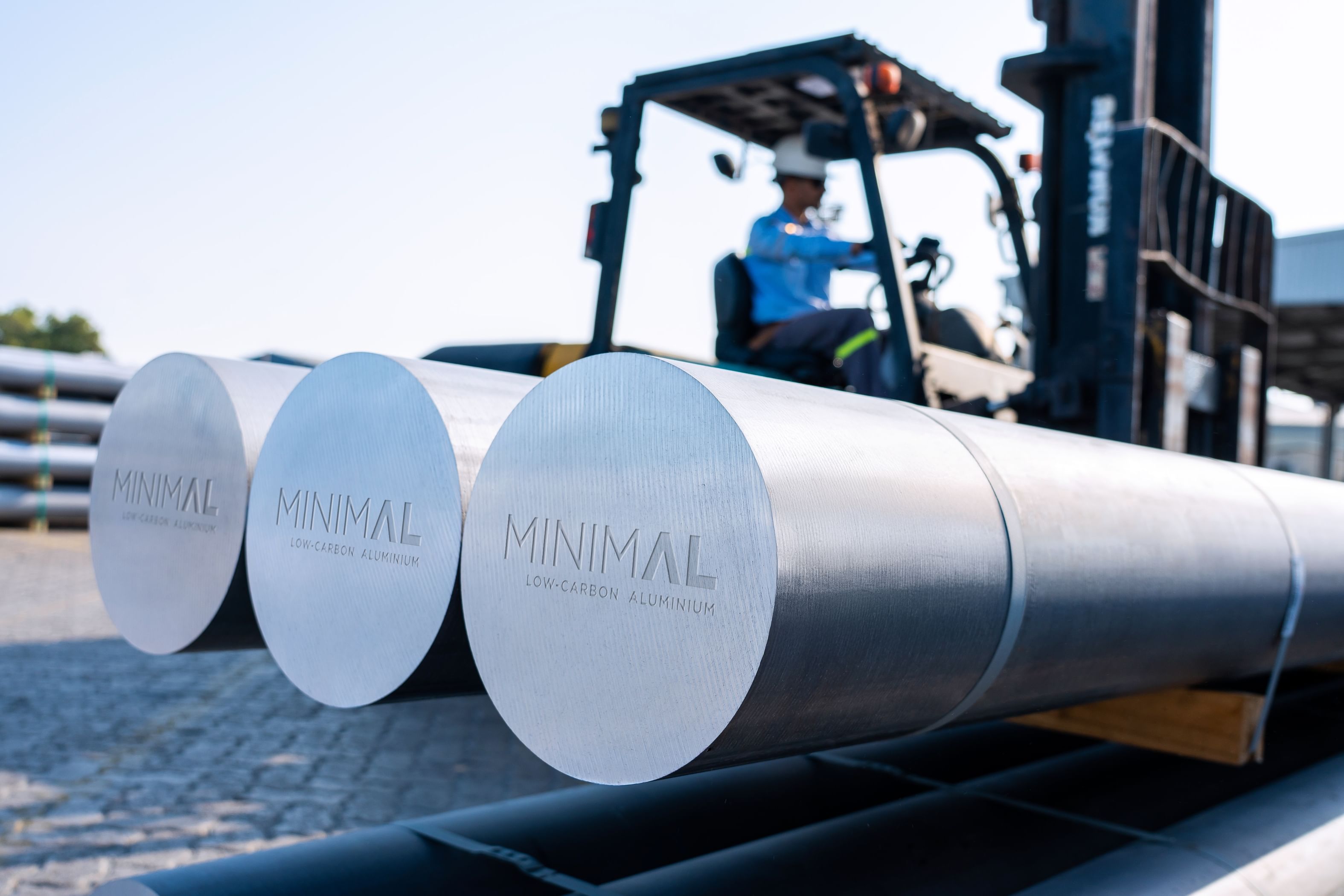
Emirates Global Aluminium (EGA) and the Emirates Nuclear Energy Company (ENEC) today announced the delivery of the first shipment of low-carbon aluminium produced in the UAE using electricity generated at the Barakah Nuclear Energy Plant.
Emirates Global Aluminium markets this low-carbon aluminium under the name Minimal. The metal will be supplied to Canex Aluminium Extrusion, a leading aluminium producer in Egypt. Canex will become the first customer to use Minimal aluminium to manufacture advanced products for infrastructure, solar energy, transportation and architectural applications.
This new product from Emirates Global Aluminium contributes to strengthening the UAE’s position as a reliable supplier of low-carbon industrial materials to global markets and expands the company’s portfolio of low-carbon metals available to local and international customers.
His Excellency Mohamed Al Hammadi, Managing Director and Chief Executive Officer of the Emirates Nuclear Energy Company (ENEC), said that this achievement highlights the pivotal role of nuclear energy in enhancing energy security in the UAE, in addition to supporting the country’s efforts to reduce carbon emissions in the industrial sector. He pointed out that the Barakah plants provide clean electricity around the clock to sectors that require large quantities of electricity, such as the aluminum industry, contributing to consolidating the foundations of a carbon-free economy and achieving long-term sustainable benefits.
For his part, Abdulnasser Bin Kalban, Chief Executive Officer of Emirates Global Aluminium, noted that demand for low-carbon aluminium is growing rapidly, with demand expected to triple by 2040. He emphasized the importance of consolidating the company’s position as a trusted partner in the future of sustainable industries through the Minimal product, supported by the UAE’s vision and strategic investment in nuclear energy.
For his part, Moatasem Daboul, General Manager of Kanex Aluminum Extrusion, affirmed their commitment to achieving sustainability at every stage of production, from raw materials to the final product. This approach embodies the company’s recycling model, by transforming waste into valuable products. He explained that by using Minimal Aluminum, the company is strengthening this path by reducing embedded emissions from the very beginning of operations.
Clean electricity is certified through the UAE’s Clean Energy Certificates program, using the International Renewable Energy Certification (I-REC) protocols to ensure traceability and reliability. Energy is supplied by the Emirates Water and Electricity Company (EWEC) via the national grid.
The Barakah nuclear energy plant produces 40 terawatt-hours of clean electricity annually, equivalent to approximately 25% of the UAE’s electricity needs and the total annual energy demand of Switzerland. The carbon-free electricity generated by the Barakah plant contributes to reducing 22.4 million tons of these emissions annually, equivalent to removing 4.6 million cars from the roads.
Emirates Global Aluminium is the world’s first company to produce aluminum using solar power, having produced 80,000 tonnes of CelestiAL aluminum in 2024. The company also produces recycled aluminum, marketed under the brand name RevivAL, at its plants in the United States and Germany. Emirates Global Aluminium is building the largest aluminum recycling plant in the country at Al Taweelah, with production expected to commence in the first half of 2026.
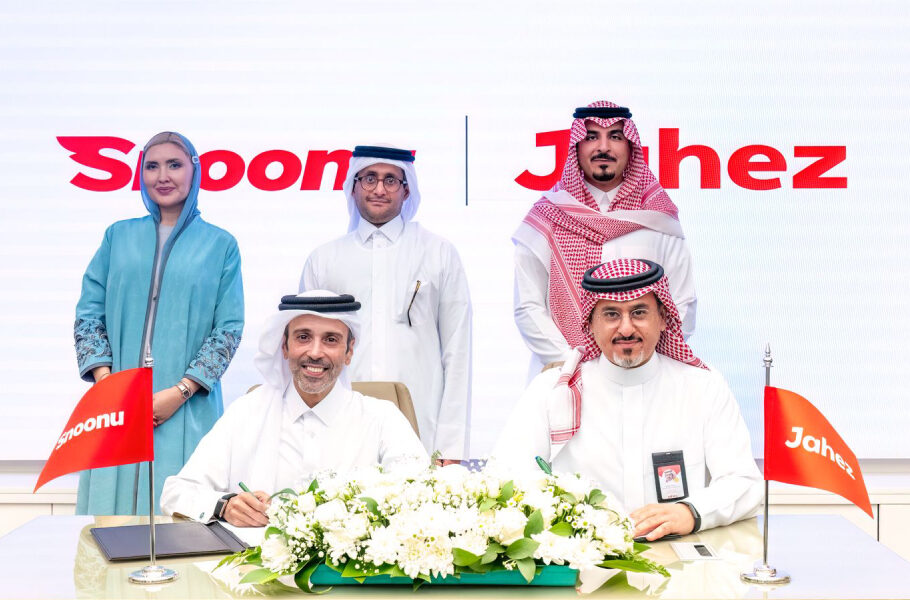
In a groundbreaking move, Qatar’s homegrown tech champion, Snoonu, has joined forces with Jahez Group, a leading integrated ecosystem of on-demand services in Saudi Arabia, setting the stage for a transformative journey in the Gulf’s digital landscape.
The deal sees Snoonu, Qatar’s fastest-growing technology company, valuing the company at over QR 1 billion, making Snoonu the first Qatari tech startup to cross this milestone. This supports its path to becoming Qatar’s first unicorn and establishing one of the most dynamic technology powerhouses in the GCC. This transaction represents a strong vote of confidence in Snoonu’s growth trajectory and will support the company in regional expansion and enhance innovation across its platforms.
“This transformative partnership with Jahez marks a defining moment in Snoonu’s journey,” said Hamad Al Hajri, Founder and CEO of Snoonu. “Together, we are creating a true regional technology champion built on shared values and a common vision for innovation, excellence, and sustainable growth. By joining forces, we are combining complementary strengths and deep market knowledge to set new benchmarks in the GCC’s digital economy. This partnership also reaffirms our unwavering commitment to Qatar, a thriving and dynamic market with immense potential, and supports Snoonu’s continued growth journey. Together, we will continue driving technological advancement, creating meaningful value to our users and merchants, and delivering exceptional experiences at scale.”
Key Highlights:
Empowering Local Innovation: The initiative accelerates Snoonu’s mission to deliver cutting-edge solutions, fostering local talent and attracting bright minds from around the world to contribute to Qatar’s growing tech ecosystem.
Boosting Qatar’s Digital Economy: The investment signifies a robust vote of confidence in Qatar’s digital infrastructure and its potential to lead in the tech arena.
Regional Synergy: Combining Snoonu’s dynamic approach with Jahez’s extensive experience creates a powerhouse poised to redefine the digital experience across the GCC.
This strategic transaction is more than a business deal; it’s a commitment to shaping a future where technology bridges communities, enhances lives, and positions Qatar at the forefront of digital transformation.
Since its launch in 2006, the Sheikh Zayed Book Award has established itself as one of the most prominent literary and cultural awards in the Arab world, and one of the most important international awards in terms of value and influence. This embodies the UAE’s vision of making culture a pillar of sustainable development and a tool for building bridges of dialogue and communication between civilizations.
The award, named after the late Sheikh Zayed bin Sultan Al Nahyan, may God rest his soul in peace, has transformed from a national initiative celebrating knowledge into a prestigious international platform that celebrates creativity and creative individuals, contributing to highlighting the civilized face of Arab culture on the global stage.
Over the course of nineteen years, the award has attracted more than 33,000 entries from nearly 80 countries, honoring 136 winners across ten categories covering diverse intellectual, literary, and cultural fields. These include children’s and young adult literature, young authors, translation, literature, arts and critical studies, manuscript editing, development and nation-building, Arab culture in other languages, and publishing and cultural technologies. The award also includes the “Cultural Personality of the Year” category, which recognizes distinguished contributions to the cultural field. The categories have contributed to strengthening the Arab presence on the international cultural map by honoring writers, thinkers, and publishers who have made a clear impact on the literary and intellectual scene and have contributed to consolidating the concepts of identity, openness, and diversity.
The award’s first cycle began in 2007 with 1,220 nominations. The title of “Cultural Personality of the Year” was awarded to British translator Dr. Denys Johnson-Davies, in recognition of his contribution to the translation of Arabic literature into English.
In the second edition in 2008, the award received 731 entries, and the “Cultural Personality of the Year” award went to former Moroccan Minister of Culture, Mohamed Benaissa.
The third edition in 2009 saw 621 entries, and the prize was won by Spaniard Pedro Martinez Montavez.
The fourth edition, in 2010, honored His Highness Sheikh Dr. Sultan bin Muhammad Al Qasimi, Member of the Supreme Council and Ruler of Sharjah, with the “Cultural Personality of the Year” award. The number of nominations at the time reached 693.
In its fifth edition in 2011, the award received 715 entries, and Chinese orientalist Zhong Jikun won in recognition of his scholarly career in service to the Arabic language.
In the sixth session in 2012, 560 nominations were submitted, and UNESCO won the award in recognition of its role in promoting cultural dialogue.
The seventh session in 2013 saw 1,262 nominations, and the title of “Cultural Personality of the Year” went to His Eminence the Grand Imam Dr. Ahmed El-Tayeb, Sheikh of Al-Azhar.
The eighth edition, in 2014, received 1,482 entries, and the award was presented to the late Saudi King Abdullah bin Abdulaziz Al Saud.
In 2015, the ninth edition registered 1,024 entries, and His Highness Sheikh Mohammed bin Rashid Al Maktoum, Vice President and Prime Minister of the UAE and Ruler of Dubai, may God protect him, won the “Cultural Personality of the Year” award.
In its tenth edition in 2016, the award received 1,169 entries from 33 countries, and French-Lebanese writer Amin Maalouf was named “Cultural Personality of the Year.”
In 2017, the eleventh edition received 1,175 entries from 54 countries, and the award was given to Moroccan thinker Dr. Abdullah Laroui.
The twelfth edition, in 2018, received 1,191 entries, and the “Cultural Personality of the Year” award went to the Arab World Institute in Paris.
In 2019, there were 1,500 nominations from 35 countries, and the award was awarded to academics Dr. Jaroslav Stetkevych and Dr. Susan Stetkevych.
The fourteenth edition in 2020 received 1,900 entries, with the late Palestinian poet and translator Dr. Salma Al-Khadra Al-Jayyousi winning. The fifteenth edition in 2021 saw 2,349 nominations, rising to more than 3,000 nominations from 55 countries in the sixteenth edition in 2022. The award was awarded to critic Dr. Abdullah Al-Ghadami.
The 17th edition, in 2023, received 3,151 nominations from 60 countries, with Egyptian musician Omar Khairat winning the Cultural Personality of the Year award. The 18th edition, in 2024, received 4,240 nominations from across various continents, with the award awarded to the Casa Árabe Foundation in Spain.
The 19th edition, in 2025, saw more than 4,000 nominations from 75 nationalities. The “Cultural Personality of the Year” award went to world-renowned Japanese novelist Haruki Murakami, in recognition of his cross-cultural literary contributions that have helped build bridges of dialogue between East and West.
The 19th edition alone saw the participation of 75 Arab and foreign countries, including five countries participating for the first time: Albania, Bolivia, Colombia, Trinidad and Tobago, and Mali. Egypt topped the list of participating countries, followed by Iraq, Morocco, and Saudi Arabia, while the United States, Britain, and France led the list of foreign countries.
In terms of branches, the Young Author branch came first with 1,034 entries (26%), followed by the Literature branch with 1,001 entries (25%), then the Children’s and Young Adult Literature branch with 439 entries (11%), followed by the Arts and Critical Studies, Development and State Building, Translation branch, Arabic Culture in Other Languages, Manuscript Verification, Publishing and Cultural Technologies, and Cultural Personality of the Year branches.
In 2013, the award established the “Arab Culture in Other Languages” category to honor works published in foreign languages about Arab culture.
In 2023, it launched the “Manuscript Verification” branch, which represents a qualitative addition to supporting heritage.
In 2018, the Translation Grant was launched. From 2019 to mid-2025, it contributed to the publication of 48 translations into 12 languages of prominent literary and intellectual works, such as “The Dinoraf,” “Autumn of Innocence,” and “In the Footsteps of Enayat Al-Zayyat.” These translations have received critical acclaim at international exhibitions and events.
Women’s participation increased significantly by 17% in just three editions, with female nominations rising from 1,042 in the seventeenth edition to 1,218 in the nineteenth. Female authors also won in multiple categories, and female names were included on judging panels and academic councils, further strengthening women’s presence in the cultural landscape.
At the international level, the award has organized more than 200 events in global cities such as Paris, Frankfurt, New York, Tokyo, New Delhi, Madrid, and London, in collaboration with publishing houses, universities, and research centers. It has also developed an advanced electronic platform for receiving nominations and judging, and published periodic reports that support transparency and enhance institutional performance.
The total value of the award is AED 7,750,000 and is granted across ten categories covering literature, translation, children’s literature, young authors, arts and critical studies, Arab culture in other languages, manuscript editing, development and nation-building, publishing and cultural technologies, and the Cultural Personality of the Year. The award is independent and impartial, rewarding excellence and supporting Arab and international creators. Today, nearly two decades after its launch, the Sheikh Zayed Book Award continues its journey as an incubator for creativity and a platform for Arab culture, embodying the UAE’s vision of building a sustainable cultural future.
Middle East’s second-largest ‘healthy city’ after Jeddah
15 other cities in Saudi Arabia included in WHO list
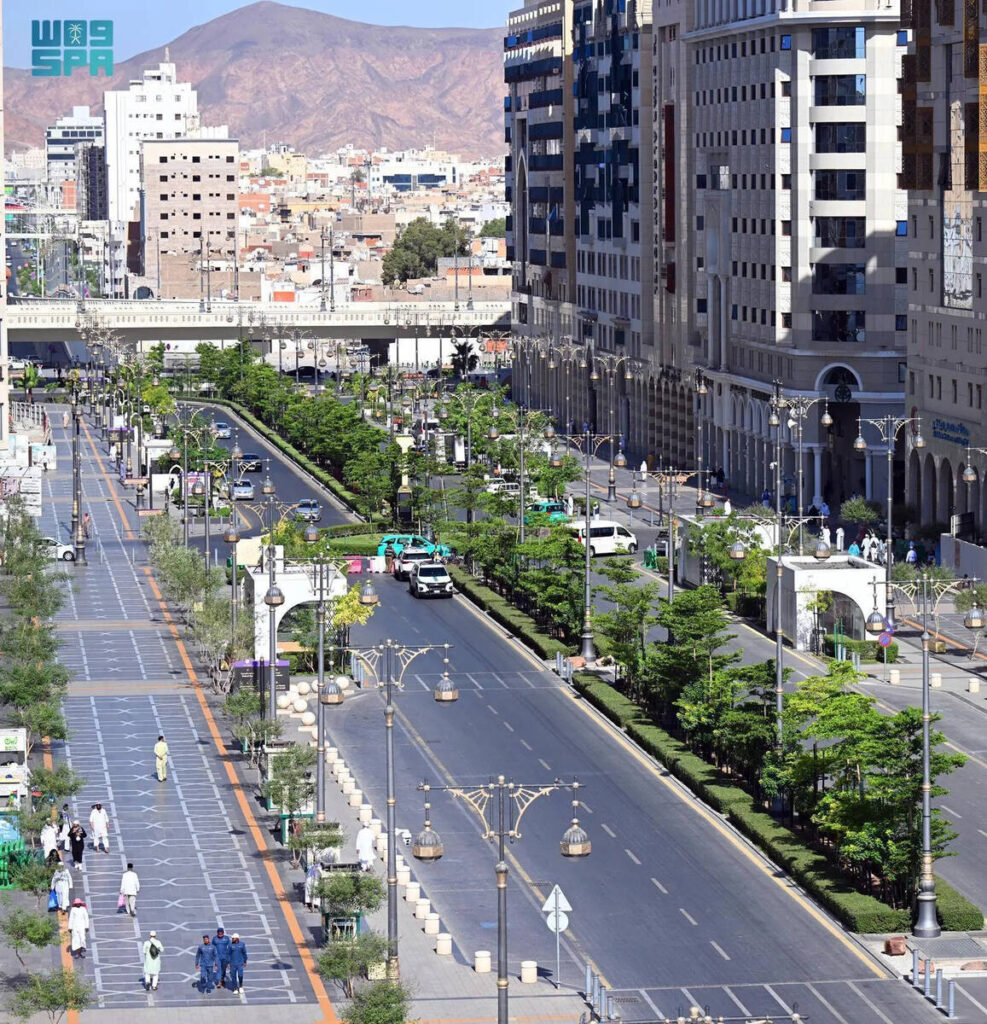
The World Health Organization has renewed its accreditation of Madinah as a “healthy city,” with Islam’s second-holiest location scoring an impressive 80 points, the Saudi Press Agency reported.
Prince Salman bin Sultan, governor of Madinah region, received the WHO accreditation certificate from Minister of Health Fahad AlJalajel during a ceremony on Thursday.
Prince Salman said Madinah’s renewed accreditation exemplifies the leadership’s dedication to enhancing quality of life for the Kingdom’s people in urban centers.
He emphasized Madinah’s ongoing transformation as a leading development model regionally and internationally, aligning with the Kingdom’s Vision 2030 goals.
Madinah has solidified its position as the second-largest healthy city in the Middle East, after Jeddah, the SPA reported.
To win the WHO’s nod, an entrant must meet 80 criteria, including parks, walking areas, and the promotion of health through primary care centers and schools.
The WHO has also recognized 14 other healthy cities in Saudi Arabia. These include Taif, Tabuk, Ad-Diriyah, Unaizah, Jalajel, Al-Mandaq, Al-Jumum, Riyadh Al-Khubra and Sharurah, according to Leaders MENA Magazine.
source/content: arabnews.com (headline edited)
______________
With the new accreditation, Madinah has solidified its position as the second-largest healthy city in the Middle East, next to Jeddah. (SPA photo)
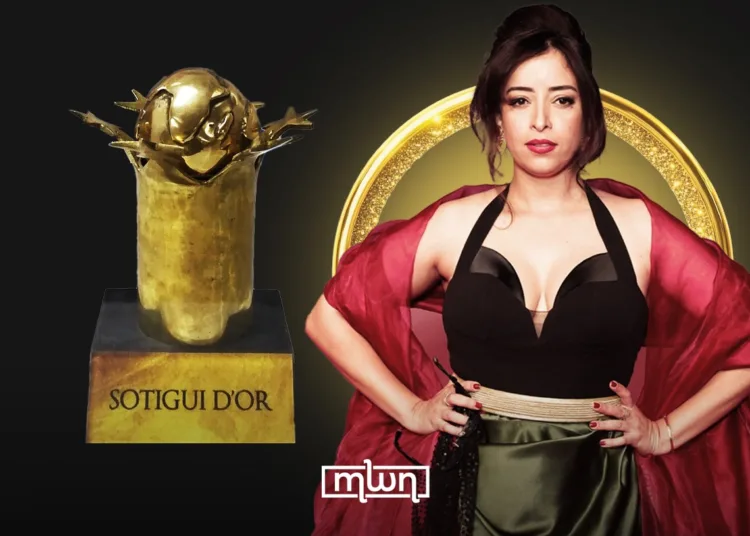
Moroccan actress Nisrin Erradi will represent Morocco at the 10th edition of the Sotigui Awards.
The Academy of African and Diaspora Cinematic Arts announced the list of nominees, featuring Erradi as Morocco’s representative, for this prestigious celebration of African cinema, which takes place from November 12-15 in Ouagadougou, Burkina Faso.
Erradi competes alongside representatives from 19 other nations for the Sotigui d’Or, the ceremony’s top honor. Her nomination also puts her in contention for the 2025 African Public Sotigui Award.
Rising star of Moroccan cinema
Born on August 6, 1989, Erradi has built an impressive career in both Moroccan and international cinema, starting her performance in theater at age six and later studying at the High Institute of Theatrical Arts and Cultural Animation (ISADAC) in Rabat.
Erradi’s experience in ISADAC allowed her to discover her passion for cinematic storytelling through the works of American playwright Tennessee Williams.
The actress has earned recognition across multiple international film festivals.
Most recently, her role in “Everybody Loves Touda,” directed by Nabil Ayouch, earned her the “Artistic Expression” award at the 30th MedFilm Festival in Rome.
Erradi’s breakthrough came with notable performances in films including “Adam” in 2019, “Catch the Wind” in 2017, and “Jahilya” in 2018.
Her international acclaim extends beyond Europe. Erradi cemented her reputation as one of Morocco’s most promising cinematic talents by winning the Best Actress Award at the Durban International Film Festival in South Africa.
This year’s edition of Sotigui Awards focuses on the theme “African Cinema Facing the Challenges of Sexual Harassment: From Indignation to Action.” The theme demonstrates the ceremony’s commitment to addressing important social issues through the film industry.
Festival director Apolline Traoré said: “For the 10 years of the Sotigui Awards, there will be many surprises. We invite you in November to see the innovations. It will be something extraordinary.”
For Erradi, the nomination represents another milestone in a career that continues to bridge Moroccan and international cinema, reflecting the growing influence of North African talent on the global stage.
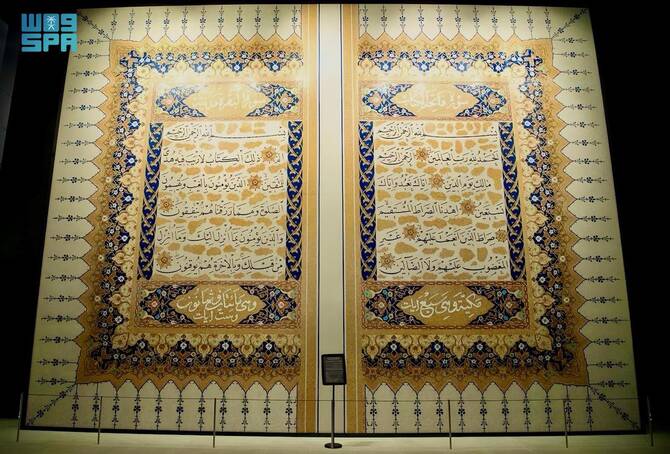
Artwork is based on an original Qur’an manuscript written by calligrapher Mustafa Dhul-Fiqar in 1656.
The Holy Qur’an Museum in the Hira Cultural District in Makkah features a mosaic panel of Surah Al-Fatiha and the beginning of Surah Al-Baqarah, spanning 76.67 sq. meters and composed of over a million porcelain mosaic pieces.
This artwork is based on an original Qur’an manuscript written by calligrapher Mustafa Dhul-Fiqar in 1656, preserved at the King Abdulaziz Complex for Endowment Libraries in Madinah.
As the first museum in Makkah dedicated solely to the Holy Qur’an and located near the historic Mount Hira, it serves as a cultural and civilizational beacon for the holy city, the Saudi Press Agency reported.
The museum houses a rich collection of rare artifacts and Qur’an manuscripts from various Islamic eras, showcasing diverse calligraphic styles throughout history.
It also features educational exhibits tracing the evolution of Qur’anic writing, along with modern interactive technologies that highlight the Qur’an’s profound significance.
Visual displays further illuminate the history of Qur’anic documentation through the ages. The museum also holds Guinness World Records for the largest Qur’an and the largest Qur’an stand.
______________
A mosaic panel of Surah Al-Fatiha and the beginning of Surah Al-Baqarah is made up of over a million porcelain pieces. (SPA)
He played the Devil, challenged shame, and made Arab cinema speak. On his birthday, we revisit Youssef Wahbi – the man who dared to redefine the rules of the screen and stage.
Youssef Wahbi broke every mould – actor, director, and pioneer of Arabic cinema. On his birthday, we honour a legend who shaped generations of stage and screen.
Wahbi’s love for acting started when he first watched the Lebanese artist Salim Al-Qardahi’s troupe in Sohag. Since then, he started delivering monologues and performing theatrical acts at Al Ahly Club and at school. But at the time, acting was seen as shameful, and his father disapproved. Refusing to bend, Wahby fled to Italy and studied acting under the Italian actor Cantoni. He didn’t come back until after his father’s death in 1921 and used all his inheritance to establish a theatrical troupe named Ramses, which was also the name given to him during his stay in Europe.
In 1923, the troupe premiered with a successful play called ‘Al Magnoun’. But Wahby wasn’t done breaking ground. Later, in 1930, he established his film production company, Ramses Film, which produced the very first speaking film in the history of Arabic cinema, ‘Awlad El Zawat’. The movie was adapted from one of his successful plays, as he wrote the script and starred in the film.
Throughout his prolific career, Youssef Wahbi wrote, directed, or starred in over 300 theatrical plays and contributed to more than 60 films. Among this vast body of work, a few standout titles have become milestones in the history of Arabic drama and cinema…
Awlad El Zawat (1932)
‘Awlad El Zawat’ tells the story of Hamdi, who marries a French woman only to discover she’s cheating on him. In a powerful scene, he confronts her with the line: “You woman of all men… you garbage of history.” In a rare interview, Youssef Wahbi revealed that he insisted on making ‘Awlad El Zawat’ as the first Arabic-speaking film to defend the image of the East, after Western narratives described the region as barbaric and trivial, particularly during the trial of a woman who had murdered an Egyptian young man.
Safir Gohannam (1945)
‘Safir Gohannam’ follows Abd Elkhallak, a humble professor worn down by life’s hardships and became a bitter and resentful man. His shaky faith opens the door for the Devil (played by Youssef Wahbi) to lead him astray, tempting him with a false paradise to ruin his life, destroy his children, and tear his family apart. The film marks the first-ever portrayal of the Devil in Egyptian cinema.
Bayoumi Effendi (1949)
‘Bayoumi Effendi’ is considered one of Wahbi’s most powerful socially driven films, tackling the issue of children born out of wedlock. The film calls for compassion toward these individuals, emphasising that they should not be treated as criminals for a sin they did not commit.
Hayah Aw Mout (1954)
‘Hayah Aw Mout’ – one of the most famous films in Egyptian cinema – follows the story of a man who suffers a heart attack and sends his daughter to fetch his medicine, only for the pharmacist to realise he accidentally gave her poison. As the police, led by Wahbi’s character, race to save him, a dramatic city-wide radio broadcast becomes his only hope. This is the film that gave us the famous line: “لا تشرب الدواء الذي أرسلت بنتك لشرائه…الدواء فيه سم قاتل.” (“Do not drink the medicine your daughter was sent to fetch; the medicine contains deadly poison.”)
Esha’et Hob (1960)
‘Esha’et Hob’ is one of the most memorable comedy films in Egyptian cinema. Starring Omar El Sherif, Soad Hossny and Youssef Wahbi, it follows the story of Hussein, a shy young man in love with his cousin Samia, who prefers her charming cousin Lucy ‘Ibn Tante Fakeeha’. To help him win her heart, Hussein’s uncle Abdel Qader comes up with a clever plan: spread a rumour about a love story between Hussein and the famous actress Hind Rostom.