HAJJ ON HORSEBACK : Three Spanish friends rewriting history to perform Hajj on horseback

Pilgrims recreating historic 8,000 km route used by Andalusian Muslims

Three friends rode on horseback from Spain to Saudi Arabia to perform the Hajj, reviving a pilgrimage route last used by Andalusian Muslims more than 500 years ago.

They reached Saudi Arabia’s Northern Borders region last week in time for Hajj after travelling through Spain, France, Italy, Slovenia, Croatia, Bosnia, Serbia, Turkiye, Syria and Jordan on a 8,000 km (4,970 miles) journey.

The three Spanish Muslims, Abdelkader Harkassi, Abdallah Hernandez and Tariq Rodriguez, are fulfilling a long-held ambition after embracing Islam 35 years ago.

The three riders are accompanied by Bouchaib Jadil, a construction master living in Spain, who is providing logistical support to the team by leading the way in a car.

It all started when Abdullah Hernandez reverted to Islam 35 years ago.

He told Arab News about how he felt grateful toward Allah for blessing him with guidance — Heidaya — and he promised to complete the Hajj pilgrimage the way his Andalusian ancestors did.

The team practiced for two years before setting off in October 2024 from Al-Monaster Mosque, south of Spain.

After crossing the border of Jordan on May 2, the three Spanish friends arrived in Qurayyat city in Al-Jawf Province, in northern Saudi Arabia on Friday after a remarkable seven-month horseback journey.

During their stop in Qurayyat, the pilgrims were hosted by the head of Al-Haditha Center, Mamdouh Al-Mutairi, who welcomed them to the Kingdom and wished them a pleasant stay and an acceptable and easy Hajj, meeting with students and supporters.

The pilgrims were received with a warm welcome from the residents of Qurayyat, who posed for memorable photos with them.

Hernandez told Arab News: “The team is very excited as we are getting closer to Makkah and Madinah. These holy cities are very special to us, and we have been dreaming of reaching them for a long time. Our hearts feel full of love and hope, and we are looking forward to this moment with deep respect and happiness.

“Through this journey we want to recover a historical Andalusian route from Spain to the Harram of Makkah. It is also a trip of challenges where every step is felt by us and the horses, but also is a journey for the soul,” he added.

One of the Hajj pilgrims, Harkassi, said they were happy to revive a lost tradition. He added that the team saved money and trained for several years for the journey.

He said: “We embarked on this journey with pure intentions to realize the Hajj.”

He added: “We are almost there, and hopefully, the rest of the journey will be easier.”

Their journey, spanning diverse landscapes and extreme weather conditions, is being shared with followers on social media.

“Crossing borders has been the biggest challenge. Some countries were more difficult to cross than others as horses are not considered a mode of transport anymore, but instead they need to be ‘imported’ into each country as livestock, but Alhamdulillah, we have managed to complete all the paperwork so far,” said Hernandez.

Their expedition, known as “Hajj on Horseback,” was warmly welcomed by Muslims and non-Muslims. Hernandez added: “We’ve been received with open arms everywhere we’ve gone — each country has somehow managed to be even more welcoming than the one before, MashAllah.

“Whether in Muslim or non-Muslim countries, people have shown incredible hospitality: Inviting us into their homes, sharing meals with us, listening to our stories and engaging in meaningful conversations about Islam.

“The warmth we’ve experienced in Muslim countries has been especially profound, reflecting the deep sense of unity within our Ummah. This beautiful spirit is clearly visible in our recent videos from Turkiye and Syria.”

The team set off with limited funds, but received support from local Muslims along the way to finance the costs of the unique journey.

source/content: arabnews.com (headline edited)

__________
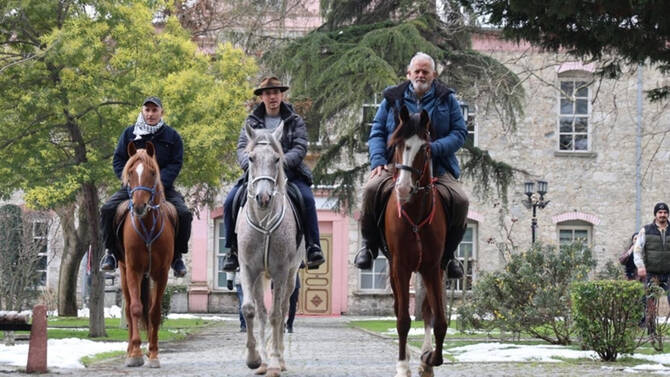
Abdelkader Harkassi, Abdallah Hernandez and Tariq Rodriguez are fulfilling a long-held ambition by completing a historic Hajj pilgrimage on horseback. (Supplied)

_______________________

HAJJ ON HORSEBACK
ABU DHABI (U.A.E) / EGYPT : AD Ports Group, Egypt’s Suez Canal Economic Zone sign agreement to develop KEZAD East Port Said Zone

AD Ports Group, and the General Authority for Suez Canal Economic Zone (SCZONE), the integrated investment destination for linking industry and global trade, today signed a 50-year renewable usufruct agreement, to develop and operate a 20 km2 industrial and logistics park near the Egyptian coastal city of Port Said on the Mediterranean Sea.

The East Port Said Industrial Zone provides an opportunity to turn a unique location on the Mediterranean Sea into a key hub for international trade and investments serving the East-West trade routes, right at the entrance of the Suez Canal.

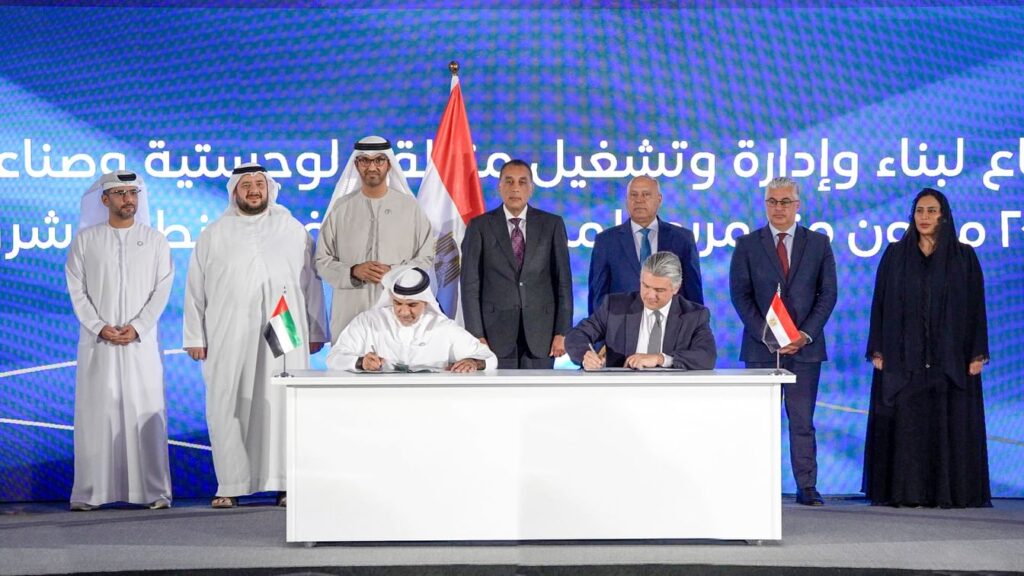
The agreement to develop KEZAD East Port Said Industrial and Logistics Zone was signed in Cairo, and witnessed by Egyptian Prime Minister, Dr. Mostafa Madbouly, in the presence of Dr Sultan Al Jaber, Minister of Industry and Advanced Technology, Mohamed Hassan Alsuwaidi, UAE Minister of Investment, Lieutenant General Engineer Kamel Al Wazir, Deputy Prime Minister for Industrial Affairs Egyptian Minister of Industry and Transport, Mariam Al Kaabi, Ambassador of the UAE to Egypt, Captain Mohamed Juma Al Shamisi, Managing Director and Group CEO of AD Ports Group and Mr. Waleid Gamal El-Dien, Chairman of SCZONE.

The agreement was signed by Ahmed Al Mutawa, Regional CEO of AD Ports Group, and Admiral Mohamed Ahmed Mahmoud, Vice Chairman of SCZONE for the Northern area.

AD Ports Group will develop, construct, finance, operate, and manage the industrial and logistics zone in phases, with a focus on phase 1 to start with, an area covering a total of 2.8 km2. An estimated total investment of $120 million will be allocated to market and technical studies as well as to phase 1 development over the next three years. Construction on the initial 2.8 km2 Phase 1 is expected to start by the end of this year.

The development of Phase 1 will be anchored by key potential clients and partners, including one of the region’s foremost construction and development groups, Hassan Allam Holding.

Captain Mohamed Juma Al Shamisi, Managing Director and Group CEO, AD Ports Group, said: “KEZAD East Port Said is a milestone that highlights the strong economic relations between the UAE and Egypt. In line with the vision of our wise leadership, this strategic cooperation is another sign of our Group’s growing focus on Egypt, where we continue to enhance and develop our integrated trade, transport, and industrial ecosystem, offering clients unparalleled end-to-end solutions and services. This infrastructure investment will provide a long-term source of economic growth for Egypt, while enhancing the Suez Canal role in promoting and supporting the East-West trade corridor.”

Waleid Gamal El Dien, Chairman of the Suez Canal Economic Zone, said: “The launch of this project in the East Port Said Industrial Zone represents an important strategic step that reaffirms the depth of the strong fraternal relations and the growing strategic partnership between the Arab Republic of Egypt and the United Arab Emirates, as well as the prominent position held by SCZONE as a pivotal global trade hub for industrial and logistics activities. This project enhances SCZONE’s ongoing efforts to support global supply chains by providing a competitive and integrated investment environment, underpinned by advanced infrastructure, and a unique geographic location, connecting three continents via one of the world’s most vital maritime routes.”

Gamal El Dien added: “Over the past few years, the SCZONE has become a cornerstone for the investment expansion plans of many leading regional and international companies, thanks to its integrated model of combining industrial zones and affiliated seaports. Among these is the KEZAD East Port Said Industrial and Logistics Zone, which seamlessly connects with East Port Said Port, a key strategic location on the Mediterranean Sea. The port features deep berths for large vessels, efficient operations, and excellent connectivity to advanced road and transportation networks. The expertise of a global organisation such as AD Ports Group will help SCZONE achieve its goals.”

Ahmed Al Mutawa, Regional CEO of AD Ports Group, said: “KEZAD East Port Said is being built to attract investments, promote industrial and logistics growth, create jobs, increase exports, develop skills, and facilitate technological transfer. It will complement AD Ports Group’s growing business ecosystem in Egypt, and capitalise the natural assets of the Suez Canal area for Egypt, while supporting the country’s manufacturing sector, and increasing the ease of doing business in Egypt as a preferred gateway to global markets.”

Admiral Mohamed Ahmed Mahmoud, Vice Chairman of SCZONE for the Northern area, said: “We are working on developing an integrated model that combines industry, maritime transport, and logistics services within a flexible and investment-friendly regulatory environment. East Port Said Industrial Zone stands at the heart of this model due to its strategic location at the northern entrance of the Suez Canal and its direct connection to the modern East Port Said Port, a key hub in global trade, consistently ranked among the top international ports thanks to its operational readiness and advanced capabilities. Furthermore, the integration with West Port Said Port enhances its readiness to offer comprehensive and attractive logistical solutions for investors. Therefore, this project represents a qualitative leap in the development of the northern part of SCZONE, not only in terms of the scale of anticipated investments but also in the advanced industrial and logistical activities to be implemented.”

In addition, AD Ports Group and Hassan Allam Holding, which is one of the Group’s development partners in Egypt, signed a memorandum of understanding (MoU) to develop and invest in the industrial zone and explore other projects.

AD Ports Group in December 2024 appointed Hassan Allam Construction, the construction arm of Hassan Allam Holding and one of the premier engineering and construction companies in the region, to build AD Ports Group’s new multipurpose cargo terminal in Safaga, on Egypt’s Red Sea coast.

The Group in 2023 obtained a concession from Egypt’s Red Sea Ports Authority (RSPA) to build and operate the USD 200 million Safaga multipurpose terminal project, which will be the first internationally operated multipurpose cargo terminal in Upper Egypt.

Since 2022, AD Ports Group has invested significantly in Egypt, acquiring Transmar, a regional shipping company, TCI, a port operator and stevedoring company, and in 2024, Safina B.V., a provider of maritime agency and cargo services. AD Ports Group has also secured long-term concessions to develop and operate three cruise terminals at the Red Sea ports of Safaga, Hurghada, and Sharm El Sheikh. In addition, AD Ports Group has initialled agreements for the right to develop and operate a cruise terminal and a Ro-Ro terminal in Ain Sokhna.

The East Port Said project aligns with long-standing ties between the UAE and Egypt, and the objectives of leadership in both countries to support the commercial and industrial sectors and attract high-quality investments. This project also supports the global trend of establishing regional manufacturing centres, thus shortening and sustaining global supply chains, and enhancing connectivity with major global markets.

AD Ports Group is an integrated trade, transport, logistics, and economic zones group with a presence in more than 50 countries. Based in Abu Dhabi, the Group has a maritime fleet of 247 vessels, 34 terminals, in addition to an economic and industrial land bank of over 550 km2, the largest integrated trade, logistics, and industrial business grouping of its kind in the Middle East. Furthermore, SCZONE offers unique investment potential, making it one of the most prominent destinations on the global investment map. It is supported by a strategic geographical location, advanced infrastructure, and modern ports connected to fully integrated industrial zones. These include four industrial zones, East Port Said Industrial Zone, East Ismailia Industrial Zone, Qantara West Industrial Zone, and Sokhna Industrial Zone, which are seamlessly integrated with six seaports: East Port Said, West Port Said, Al-Arish, Sokhna, Adabiya, and Al-Tor, covering a total area of 455 square kilometers. Over the past 33 months, SCZONE has successfully attracted 274 investment projects from around the world, either through direct agreements with it or via industrial developers, with a total investment value of $8.3 billion. These projects span a wide range of sectors, reflecting strong global investor confidence in SCZONE’s viability as a strategic platform for industry, exports, and logistics services.

source/content: wam.ae (headline edited)

___________

_______________________________

ABU DHABI (U.A.E) / EGYPT

PALESTINIAN : Remembering our grandmother, Nahil Bishara: The Palestinian artist and Renaissance woman who preserved her identity through creativity

In an interview with The New Arab, Nahil Bishara’s grandchildren speak about their grandmother’s artistic legacy and her role in preserving Palestinian identity.

History is full of remarkable yet forgotten women whose stories have yet to be told.

One such case is the late Palestinian artist and designer Nahil Bishara, an active and erudite woman who sought to preserve her Palestinian identity through endless creativity despite living through constant political instability in her homeland.

“Generally, artists at the time created art to sell, but she never created art to sell. She created art to anchor her Palestinianness”

Nearly three decades after Nahil Bishara’s passing, her grandchildren are ready to share her story with the world. 

“She was always up to something artistic,” the artist’s UAE-based grandson, Assad Bishara, told The New Arab.

“She was somebody who wanted to master any kind of artistic medium she could get onto her hands. Whatever she got her hands on, she created something out of it,” Assad added.

Echoing this sentiment is his sister, Talia Bishara, a public relations specialist in culture, who fondly remembers her grandmother as a woman of taste of the Sixties era. 

“She was an elegant woman, whose hair was styled in a chignon with a million pins,” recalled Talia.

“She wanted to project an image. Her persona in society was also very important. Generally, artists at the time created art to sell, but she never created art to sell. She created art to anchor her Palestinianness.”

From Ramallah to Jerusalem 

Nahil was born in Ramallah in 1919, shortly after the end of the First World War, and spent most of her life in Jerusalem, where she nurtured her artistic talent.

In 1940, at the age of 21, the artist married Dr Assad Bishara, a renowned gynaecologist who, as Talia claimed, “a whole generation of Palestinians were born under his hands.”

According to Talia, Dr Assad was open-minded and supportive of his wife’s dreams.

As Talia puts it, “Whenever I speak about my grandmother, I have to speak about my grandfather too. He was a larger-than-life person. He wasn’t the type that restricted her to staying at home and raising a family. She did those things, but on top of that, she was exploring her artistic talent and supporting her community of Palestinian women.”

Beyond her personal achievements, Nahil also lived through important political events of the twentieth century, including the Nakba — the mass displacement of Palestinians — which led to the Israeli occupation in 1948.

‘A force and an avant-gardiste’

During this period, Nahil was offered a rare opportunity to study in England, but she refused, choosing instead to remain in her country as an act of defiance.

A woman who made history, she became the first Arab and Palestinian to study art at the Bezalel School of Arts and Crafts in Jerusalem, which had been founded as a Jewish art institution in the early 1900s.

Interestingly, at the time, Nahil was one of the few Palestinian artists to formally study art. But her education didn’t stop there.

Always striving to expand her mind and skill set, she undertook a design course by correspondence with an American university in Washington, DC. Then, in the 1960s, Nahil found herself in the Italian city of Perugia, where she studied classical painting and ceramics.

Known for always being on the move, Talia shared, “All her life, my grandmother loved art. She was a force and an avant-gardiste. She wanted to be ahead of everyone in her time.”

‘She wanted to constantly create’

To this day, Nahil is remembered as a Renaissance woman.

The educated artist spoke four languages (including Italian and French), tried her hand at stitching, woodworking, and glassblowing, hosted cultured dinners, volunteered at refugee camps, and mastered interior decoration.

Her most significant project was decorating the interior of the Young Men’s Christian Association (YMCA) building in Jerusalem, which was later converted by the Israelis into a hotel called Aelia Capitolina. Today, the hotel is known as the Legacy Hotel.

“People were visiting Jerusalem from all over the world. I think she felt a responsibility to show the world a different image of Palestine”

By using locally sourced materials, Nahil designed its chandelier (made with Palestinian refugees), crafted wooden tables, and donated around 30 of her paintings to the establishment.

“I think she saw that there was power in creation, rather than focusing on destruction. She wanted to constantly create,” explained Talia.

“People were visiting Jerusalem from all over the world. I think she felt a responsibility to show the world a different image of Palestine.”

Another momentous event in Nahil’s career occurred in 1964 when she was commissioned by the Kingdom of Jordan to create a bust of Pope Paul VI in honour of his pilgrimage to Palestine. Today, the bust sits in the Vatican.

‘Capturing everything she could to preserve Palestine’ 

Exploring Nahil’s artistic legacy, she was known for creating religious landscapes, depictions of Palestinian refugees, and floral arrangements, the latter of which her husband particularly enjoyed.

“She was concerned with the preservation of identity because it was being erased” 

Her grandchildren believe that her art carries a strong message beneath the surface, with Assad sharing, “For her, it was about capturing everything she could to preserve Palestine. She was concerned with the preservation of identity because it was being erased.”

During The New Arab’s interview, Talia showed her grandmother’s artwork of female refugees, one of whom is holding a child, painted in 1948.

Talia explained that she was literally holding a piece of history in her hands, adding, “When I watch the news today, it’s like history is repeating itself,” referring to the ongoing bombardment in Gaza.

“A portion of our civil society has been cut off and turned into refugees who live in tents, and this was something that had to be captured,” commented Assad on the theme of displacement in Nahil’s art.

Celebrating a forgotten artist

In 1997, Nahil died of cancer, yet her memory remains alive in the hearts and minds of her family and friends.

Recently, the once-forgotten Nahil has slowly been re-entering the public sphere. Thanks to Talia, Nahil’s name now appears in Google searches, and some of her artworks have found homes in public cultural institutions, such as the Barjeel Art Foundation in the UAE and Dar El Nimer in Lebanon.

According to Talia, some museums have expressed interest in acquiring Nahil’s work since she became more vocal in sharing her grandmother’s story.

For Talia, this recognition has motivated her to one day publish a catalogue of Nahil’s artworks.

“My whole life I wanted to do something for her,” Talia said.

“I didn’t study art but I know its importance and can feel it. I started connecting with art people, but it wasn’t an easy journey. It fuelled me even more after the 7 October attacks,” she added. 

“Everyone should be interested in championing these names and putting them on the stage because you need the past… The past is your present. It’s our role to preserve it.”

source/content: newarab.com (headline edited)/Rawaa Talass

___________

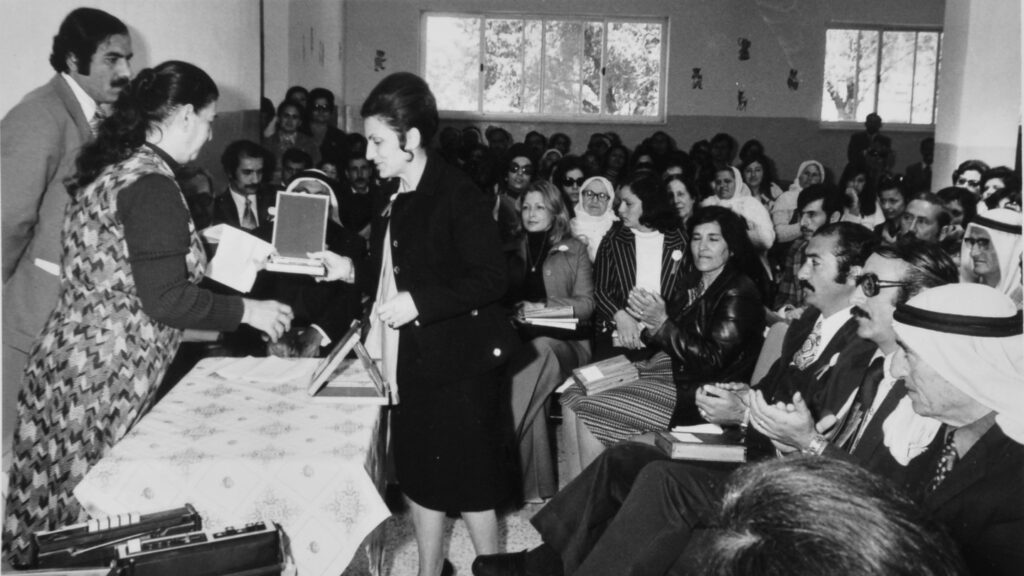
Nahil Bishara being honoured for volunteering work at Inaash Al Usra Association

_______________

PALESTINE

EGYPT : Angham 1st Egyptian female artist to perform at London’s Royal Albert Hall

Egyptian star Angham will perform at London’s Royal Albert Hall on 23 September, marking a significant cultural milestone as the first Egyptian female artist to grace the iconic stage.

Angham’s performance on this stage comes 58 years after the legendary Egyptian singer and musician Abdel Halim Hafez performed on it in 1967 and received one of the greatest ovations of his career.

The September performance will celebrate Angham’s extraordinary career, spanning over three decades.

Throughout her long artistic journey, Angham has become one of the most influential voices in the Arab world, captivating audiences across the Middle East and North Africa.

“With her powerful vocals, emotional depth, and rich discography, Angham continues to inspire generations and break new grounds in Arabic music as the true enduring voice of Egypt,” read a press release. 

Her legacy
 

Angham was born in 1972 to a family of artists. Her father, Mohamed Ali Soliman, was a composer, violinist, and singer. Her mother was the renowned artist Magda Abdel-Haleem.

She started her career alongside her father in the late 1980s before graduating from the Cairo Conservatory and embarking on her independent path.

Angham has released over 25 albums, including Fil Rokn El Baeed El Hady (In The Far Distant Corner, 1987), Awal Gawab (First Letter, 1988), Shokran (Thank You, 1989), Shayfak (I See You, 1992), Betheb Meen (Who Do You Love?, 1997), Bahibbik Wahashteeny (Loving You, I Miss You, 2005), Mahaddesh Yehasebni (Do not Judge Me, 2010), Ahlam Bareaa (Innocent Dreams, 2015), Rah Tezkerny (You Will Remember Me, 2018), Hala Khassa Geddan (Very Special Case, 2019), and Mazh (What?, 2020).

The star performs extensively in Egypt and across the Arab world. 

Royal Albert Hall
 

London’s Royal Albert Hall, one of the world’s most iconic concert venues, was opened in 1871 by Queen Victoria and named in memory of her husband, Prince Albert.

The hall is renowned for hosting a wide range of events, from classical concerts and opera to rock performances, sporting events, and the annual BBC Proms.

Among the top names that have graced the stage of this hall are Adele, The Beatles, Eric Clapton, Luciano Pavarotti, Diana Ross, cellist Yo-Yo Ma, pianists Lang Lang and Martha Argerich, and world-renowned orchestras conducted by Herbert von Karajan and Sir Simon Rattle.

The hall has also hosted high-profile events, such as Cirque du Soleil.

Its distinctive circular architecture and domed roof make it a landmark of Victorian design and a centrepiece of British cultural life.

Presale tickets for Angham’s concert will start from Wednesday, 30 April, followed by general sale on Friday, 2 May.  

source/content : english.ahram.org.eg (headline edited)

_____________

_________

EGYPT

OMAN signs historic agreement to establish world’s first Liquid Hydrogen Corridor to Europe

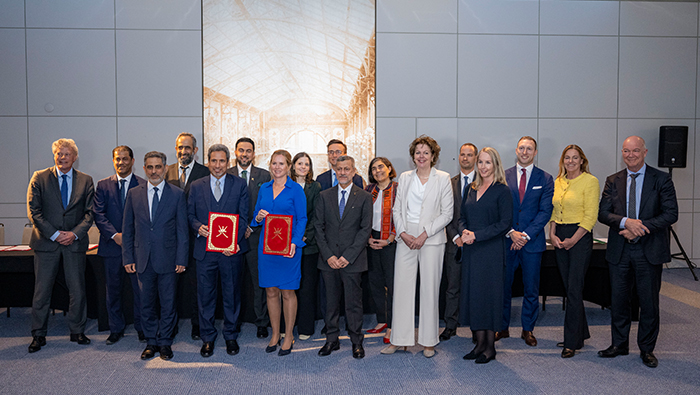
As part of the state visit of His Majesty Sultan Haitham bin Tarik to the Kingdom of the Netherlands, the Sultanate of Oman signed a historic Joint Development Agreement (JDA) to establish the world’s first commercial-scale liquid hydrogen corridor linking Oman to the Netherlands and Germany. The agreement marks a critical point in the global energy transition journey and brings Oman one step closer to becoming the leading hub for green hydrogen production and export.

The corridor will enable the export of RFNBO-compliant liquid hydrogen from Oman’s Port of Duqm to the Port of Amsterdam and key logistics hubs in Germany, including the Port of Duisburg, and onward to other European countries.

At the heart of this corridor is the world’s largest hydrogen liquefaction, storage, and export terminal to be established in the Port of Duqm. Hydrom, as the orchestrator of Oman’s green hydrogen sector, will ensure upstream production is aligned with national plans and that the project integrates seamlessly into Oman’s broader hydrogen infrastructure and policy framework. OQ, Oman’s energy transition enabler, leading the liquefaction infrastructure, will develop the hydrogen plant along with related storage and export facilities, contributing directly to the corridor’s supply capabilities and Oman’s national hydrogen targets. The centralised facility will draw from Duqm’s growing renewable hydrogen developments, leveraging the port’s strategic location as a global maritime hub and Special Economic Zone. 

The centralised liquefaction plant will be supported by revolutionary maritime transportation vessels developed by ECOLOG to ship liquid hydrogen with zero boil-off, ensuring greater efficiency and reduced losses. On the European side, the corridor will be anchored by re-gasification import terminals in the Port of Amsterdam from which the hydrogen will distributed to industrial offtakers in the Netherlands and Germany via gas pipeline networks, rail connections, and barge distribution through the Dutch canal network. 

 “Today’s landmark signing demonstrates how Oman is turning its hydrogen ambitions into concrete projects aligned with global demand and national priorities,” said H.E. Eng. Salim bin Nasser Al Aufi, Minister of Energy and Minerals and Chairman of Hydrom. “While this corridor will enable the large-scale export of Omani hydrogen to Europe, its true value lies in how it supports our broader vision of an integrated sector that advances our national objectives. From industrial diversification and infrastructure development to job creation and capacity building, we are committed to building a future-ready sector that will position Oman at the center of green hydrogen global supply chain and deliver tangible economic value for the country.”

source/content: timesofoman.com (headline edited)

___________

__________

OMAN

EGYPT : Ahmed Hassanein Becomes First Egyptian Ever Selected in NFL Draft

From Egypt to the United States, the 22-year-old has cemented himself as one of the NFL’s most exciting young prospects.

22-year-old Egyptian national Ahmed Hassanein is making history after being the first Egyptian to ever be drafted in the National Football League (NFL). After serving as the anchor for Boise State’s defensive line, the Egyptian has just been drafted by the Detroit Lions in the sixth round over the weekend. 

Hassanein came a long way before being one of the NFL’s most exciting young prospects. After moving from Egypt to Southern California seven years ago, during his sophomore year of high school, he worked his way into a starting spot at Boise State University, where he anchored their defensive line.

By his junior season, Hassanein ranked fifth in the FBS (Football Bowl Subdivision) with 12.5 sacks, racked up 53 total tackles including 16.5 for loss, and forced two fumbles. His standout performances earned him back-to-back first-team all-conference honours in 2023 and 2024, as well as captaincy in his senior year — achievements that caught the attention of NFL scouts.

source/content: cairoscene.com (headline edited)

_____________

_________

EGYPT

SAUDI ARABIA : Dr. Mahmoud Aljurf, First Non-US Physician Wins Weinberger Prize for Hematology and Stem Cell Research

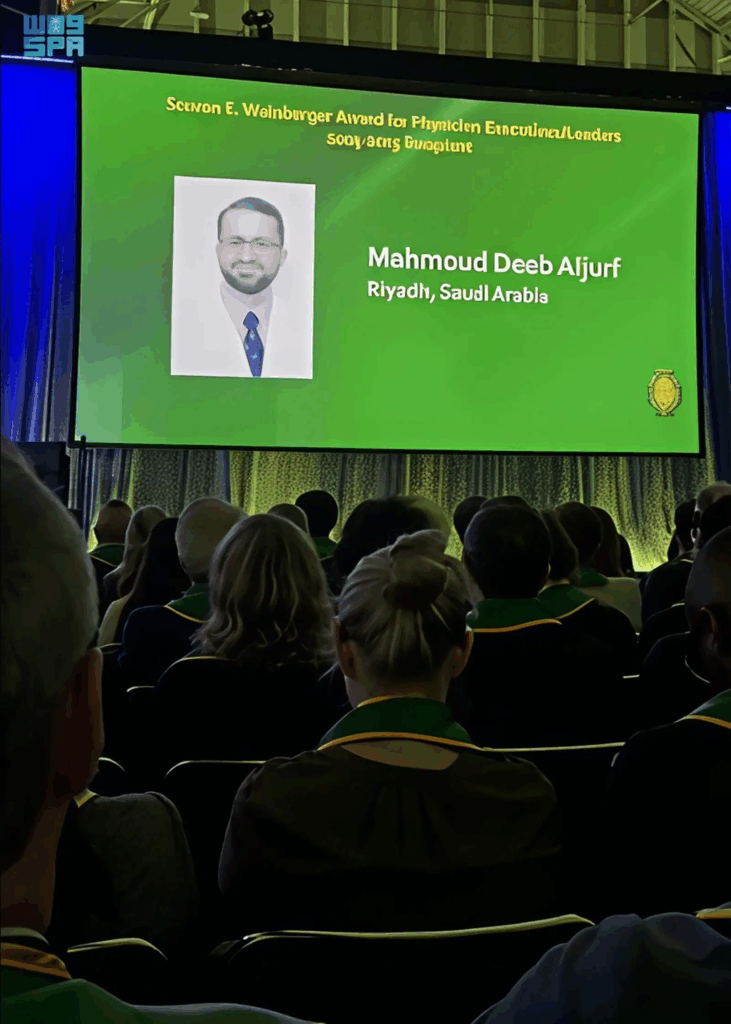
Director of the Adult Stem Cell Transplantation and Cellular Therapy Program at the King Faisal Specialist Hospital & Research Centre (KFSHRC) Dr. Mahmoud Aljurf, M.D., MACP, has been awarded the Steven E. Weinberger Award for Physician Executives/Leaders by the American College of Physicians (ACP), the largest medical specialty organization in the US.


According to a recent KFSHRC press release, ‏Dr. Aljurf is the first recipient from outside the United States, underscoring his global impact on hematopoietic stem cell transplantation and oncology. He was honored at the ACP Convocation Ceremony held at the Ernest N. Morial Convention Center in New Orleans, Louisiana, during ACP’s Internal Medicine Meeting 2025.


‏At KFSHRC, Dr. Aljurf has played a key role in developing one of the world’s largest and most recognized hematopoietic stem cell transplantation programs, significantly improving treatment options for patients with hematologic malignancies. His leadership has helped expand access to novel transplant therapies and elevate global standards in hematology and oncology.


‏In addition to his clinical contributions, Dr. Aljurf is widely recognized for his research and editorial leadership. He served as the editor-in-chief of the Annals of Saudi Medicine.

He was the founding editor-in-chief of the Elsevier Journal of Hematology/Oncology and Stem Cell Therapy.

Currently, He serves as an editorial board member of several high-impact field-related scientific journals, including his role on the international advisory board of The Lancet Hematology. He has published nearly 500 scientific contributions in high-impact journals. He has also served as the editor of five books, primarily focused on building units and programs for cancer care and hematopoietic stem cell transplantation.


His contribution to bone marrow, hematopoietic stem cell transplantation, and cellular therapy was recognized by his election as the Worldwide Network for Blood and Marrow Transplantation (WBMT) president in 2023. He is the founding member and scientific director of the Eastern Mediterranean Blood and Marrow Transplantation (EMBMT) Group, affiliated with the World Health Organization’s Eastern Mediterranean Regional Office (WHO/EMRO).


‏The release also highlighted that Dr. Aljurf was the recipient of several international awards, including the Florence A. Carter Leukemia Research Award of the American Medical Association (AMA) Education and Research Foundation, the Center for International Blood and Marrow Transplant Research (CIBMTR) Annual Distinguished Service Award, the King Hussein Cancer Foundation Lifetime Achievement Award, and the Lifetime Achievement Award from the Research Development and Innovation Authority (RDIA).

source/content: spa.gov.sa (headline edited)

______________

__________________

SAUDI ARABIA

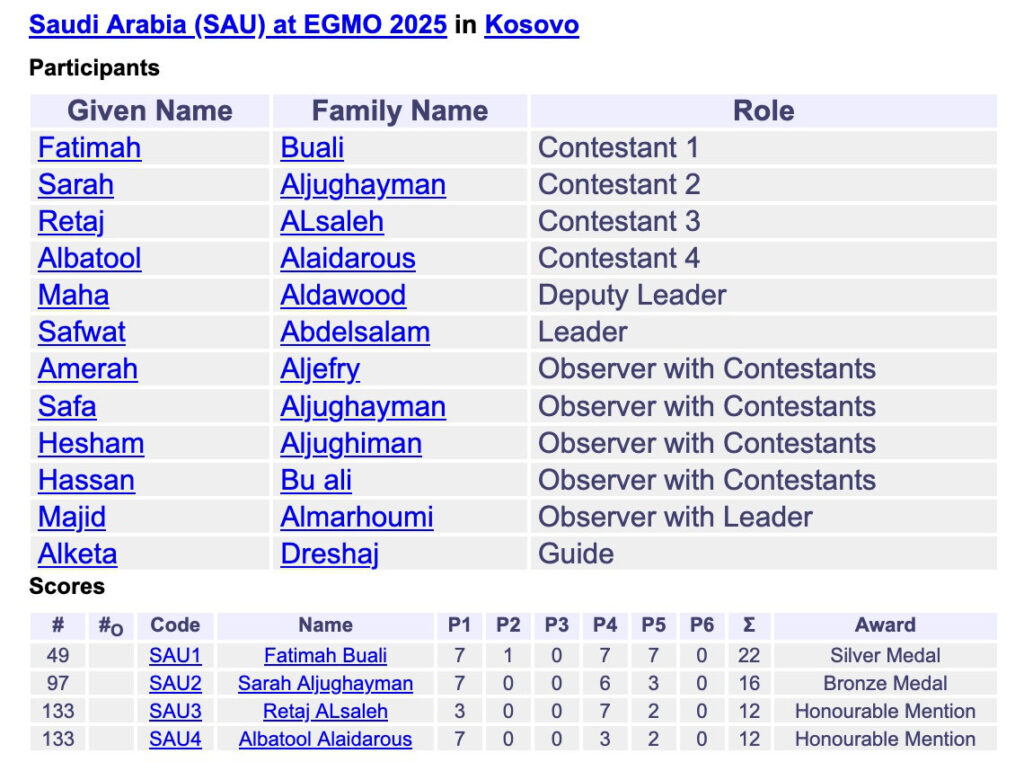
SAUDI students Fatimah Buali, Sarah Aljughayman, Retaj Alsaleh and Albatool Alaidarous – win 4 awards at European Girls’ Mathematical Olympiad

All 4 Saudi contestants won awards, including a silver medal and a bronze

This year’s competition was held in Pristina, Kosovo, on April 11-17

Saudi Arabia’s math team won four awards in the recently concluded 2025 European Girls’ Mathematical Olympiad (EGMO).

The April 11-17 competition, hosted this year in Pristina, Kosovo, featured 217 female students representing 56 countries.

All four Saudi contestants won awards, with Fatimah Buali capturing a silver medal, Sarah Aljughayman winning a bronze, and Retaj Alsaleh and Albatool Alaidarous    both garnering an honorable mention, according to the EGMO site. 

The latest score has raised the Kingdom’s medals tally in the annual competition to 36 awards, including 2 gold medals, 7 silver medals, 15 bronze medals, and 12 certificates of appreciation.

The Kingdom was represented by the King Abdulaziz and His Companions Foundation for Giftedness and Creativity (Mawhiba), which screens and prepares Saudi children in international scientific competitions and Olympiads.

Saudi Arabia is among the non-European countries that have regularly participated in annual EGMO event, which started in 2012. Among the other regular participants are Japan, China, Australia, Brazil and the United States.

(With SPA)

source/content: arabnews.com (headline edited)

__________

__________________

SAUDI ARABIA

PALESTINIAN Samar Abu Elouf Wins World Press Photo of the Year

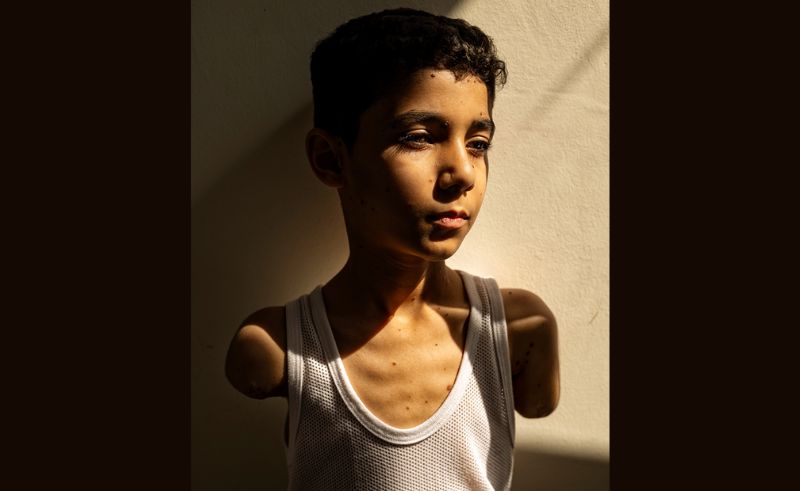
The award-winning image captures nine-year-old Mahmoud Ajjour, who lost both arms in an Israeli attack on Gaza, and is now learning to adapt to life in Qatar.

A photograph of nine-year-old Mahmoud Ajjour, a Palestinian child injured in an Israeli airstrike on Gaza City in March 2024, has been named World Press Photo of the Year by the World Press Photo Foundation. The image, taken by Palestinian photojournalist Samar Abu Elouf for The New York Times, offers a harrowing glimpse into the long-term impact of genocide on Palestinian children.

The photograph shows Mahmoud in a clinical setting in Doha, Qatar, where he was evacuated for medical care after losing one arm and suffering severe injuries to the other during an Israeli airstrike. The explosion struck after Mahmoud reportedly turned back to urge others to flee. Since undergoing treatment, he has begun to learn how to use his feet for basic tasks such as writing, playing games on his phone, and opening doors. He still requires support for daily activities such as eating and dressing. His aspiration, the photo caption notes, is simple: to receive prosthetic arms and live as any other child would.

The World Press Photo jury praised the image for its emotional weight and clarity, describing it as “a portrait that speaks to the long-term cost of war, the silences that perpetuate violence, and the role of journalism in exposing these realities.” The jury highlighted how the photo doesn’t flinch from documenting the physical toll of conflict while also humanising the statistics that often dominate war reporting.

The broader context of the photograph adds to its urgency. According to the United Nations Relief and Works Agency (UNRWA), by the end of 2024, Gaza had more child amputees per capita than any other place in the world. The World Health Organization (WHO) reported that by March 2025, over 7,000 injured Palestinians had been evacuated from Gaza for medical treatment, while more than 11,000 critically wounded individuals remained in the Strip, awaiting transfer. Qatar, which has developed its healthcare system in recent years, played a central role in facilitating these evacuations, alongside Egypt, Jordan, and Turkey.

The winning photo forms part of the annual World Press Photo Contest, which celebrates outstanding photojournalism and documentary photography from around the globe. Two other Arab photojournalists were recognised during the World Press Photo Contest: Palestinian photojournalist Ali Jadallah was recognized for his stark documentation of the aftermath of Israel’s invasion of Gaza, while Sudanese photographer, Mosab Abushama offers a jarring juxtaposition of violence and celebration with his photo of a groom at his wedding with a rifle in the background.

source/content: cairoscene.com (headline edited)

____________

______________

PALESTINE

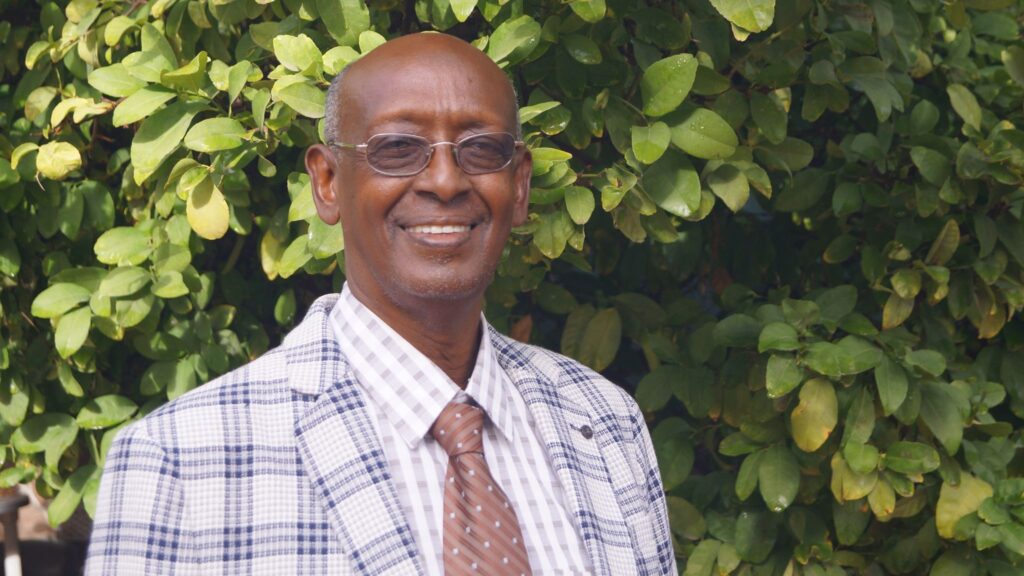
The SOMALI man Ahmed Ibrahim Awale who has a scorpion named after him

If you were going to have a creature named after you then a scorpion may not be your first choice, but Ahmed Ibrahim Awale believes the Pandinurus awalei will serve as an inspiration to budding Somali scientists.

The 66-year-old scientist from Somaliland has been honoured by the three researchers who discovered the new scorpion species in the region in recognition of his decades of work in conservation and environmental protection.

“Most of the species identified in Somalia and Somaliland are named after a place, a characteristic that a plant or animal may have or somebody from Europe or America,” he told the BBC in his lively voice on the line from his office in Hargeisa.

“But for many young people here, it will encourage them to know that this species is named after Awale – after all Awale is a Somali.” His pride in having this honour clearly shines through.

‘Large but not that lethal’

Since the 19th Century, researchers, mostly from Europe, have been exploring the rich ecology of the Somali region, but Mr Awale wants to add to the growing number of Somalis taking up zoology and botany.

The 15cm large-clawed scorpion that now carries his name was found in an arid landscape near Agabara village about 50km (30 miles) north of Hargeisa, the capital of the self-declared republic of Somaliland.

It is not as venomous as some of its smaller cousins as there is often an inverse relationship between the size of a scorpion’s claws and the power of its sting, Mr Awale explains.

But Pandinurus awalei is just one of 50 scorpion species that live in Somaliland, some of which are only found in the Somali region.

This fact gives a hint at its rich biodiversity. As well as a host of animal species, there are at least 3,000 species of plants that have been identified and more than 700 of them are endemic to the region – and that number is growing.

“Every year new discoveries are coming,” says Mr Awale, who himself found a new species of aloe in 2014.

“This articulates the message that all that is coming from Somaliland and the region is not that bleak. We always hear negative news and this marks a shift in the narrative that is different from the mainstream perception of piracy, extremism, famine and instability.”

True to his name – Awale means “the lucky one” in Somali – he made his own discovery by chance.

He was driving off-road “in the middle of nowhere” on one of his many field trips when he spotted huge clumps of more than 1,000 aloe plants.

“It was something I had never seen in my life,” he says and he went to investigate.

The plant was also a different colour to other aloes and though the local people knew it as dacar-cas (red aloe), they did not know how unusual it was.

After taking a sample and going through a lengthy research and verification process – which included searching the archive at London’s Royal Botanic Gardens and the East African Herbarium in Nairobi – it was proved last year that this was a new species. Mr Awale and his team of researchers named it Aloe sanguinalis (red aloe).

The discovery was the culmination of a lifetime’s passion that he partly puts down to where he grew up.

Born in 1954 in Adadlay, a village 95km east of Hargeisa, he lived near the Gaan Libah mountain, “which is one of the most beautiful places in Somaliland in terms of biodiversity”.

He came from a family of pastoralists, but his father, who ran a small shop in the village, paid for his education and in the end he studied agriculture and environmental science at the Somali National University in Mogadishu.

‘Extinction threat’

Mr Awale’s upbeat message about the biodiversity of Somaliland is tempered by a concern for its future.

Like everywhere else, species are under threat and some are dying out.

A combination of changes of land use for urban development, the clearing of forests for charcoal, the proliferation of invasive species and climate change are “pushing a number of species into extinction”.

For Mr Awale, this is not about prioritising the needs of the natural world over human need.

“Biodiversity is the web of life,” he says.

“We draw on that natural resource for our sustenance, for our medicine, our shelter. The richer the biodiversity, the richer our quality of life will be too.

“A declining biodiversity means that we are becoming poorer and that makes our survival problematic.

To push this message in Somaliland, in 1995 he helped set up Candlelight, an organisation aimed at creating a society that is aware of environmental concerns.

He has also written books and articles, and appears on the radio and TV to increase awareness about the issue.

Mr Awale says he has noticed some changes in government policy, but most importantly he has a growing number of young people engaged in the work.

Despite being recognised by having a scorpion named after him, the environmentalist knows that this is not his struggle alone.

“The Somalis have a proverb: ‘A single finger cannot wash a face.’

“In other words: It’s no use myself being prominent and well known, if I don’t have people supporting me.”

As for the lesson that the discovery of Pandinurus awalei teaches, he is convinced “that there are more species to be discovered… if the time and space allows there will be a lot of discoveries”

source/content: bbc.com/news (headline edited)

_____________

Ahmed Ibrahim Awale / Somaliland environmentalist

___________________________

SOMALIA / SOMALILAND