Arabs & Arabian Records Aggregator. Chronicler. Milestones of the 25 Countries of the Arabic Speaking World (official / co-official). AGCC. MENA. Global. Ist's to Top 10's. Records. Read & Enjoy./ www.arabianrecords.org
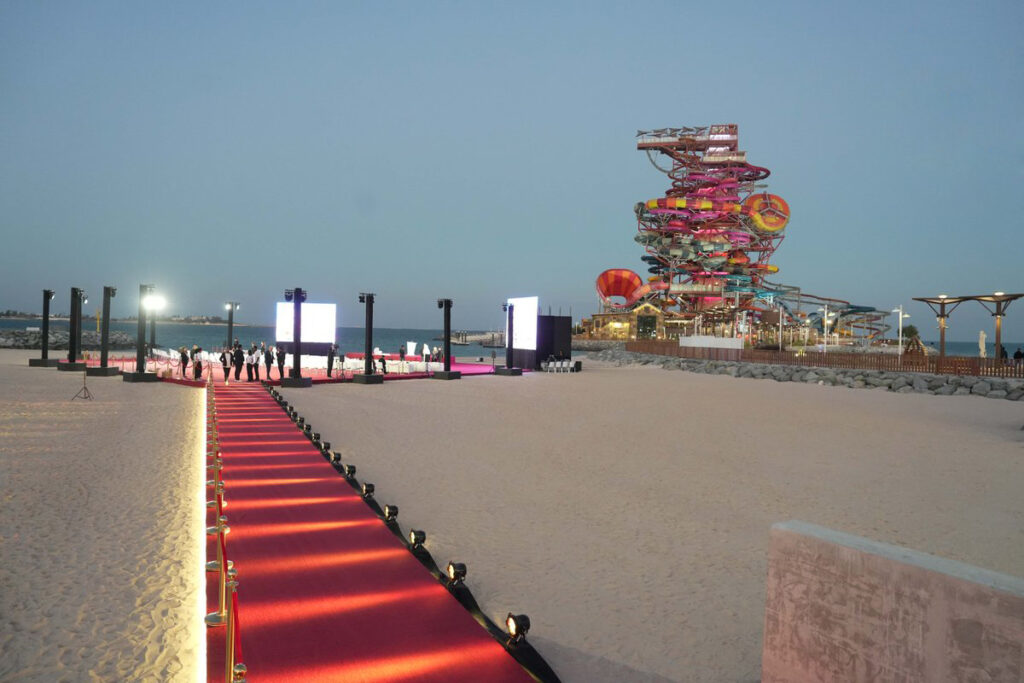
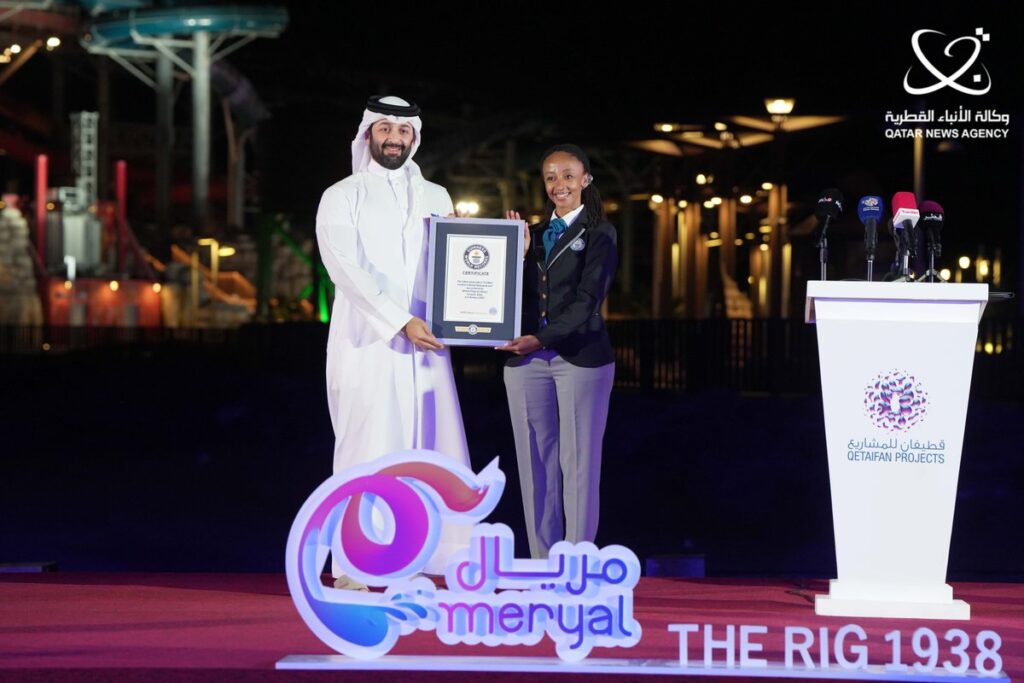
The ‘Rig 1938’ tower made two entries in the Guinness Book of Records, as the world tallest water slide tower with a height of 76.309 meters; and the first tower of its kind to have 12 water slides.
General Manager and Chairman of Qetaifan Projects Company, Sheikh Nasser bin Abdulrahman Al-Thani said in a press conference that the tower provides an exceptional experience that enhances Qatar’s position as a world class global tourist destination.
He added that the tower is not just an entertainment landmark, but a symbol that expresses Qatari culture and promotes creativity.
The tower, which is 85 meters high and includes 12 water slides, is an architectural masterpiece inspired by the history of oil and gas discovery in Qatar. It was designed according to the highest safety standards to be suitable for all age groups to enhance the visitor experience.
The tower is located in the heart of Meryal City, which extends over an area of 281 thousand square meters, and is one of the largest water parks in the region, with 36 innovative water games.
Meryal is part of Qetaifan Island North, which is an integrated tourism project extending over an area of 1.3 million square meters, and includes multiple facilities as well as residential, educational and health projects, making it a destination that combines authenticity and innovation.
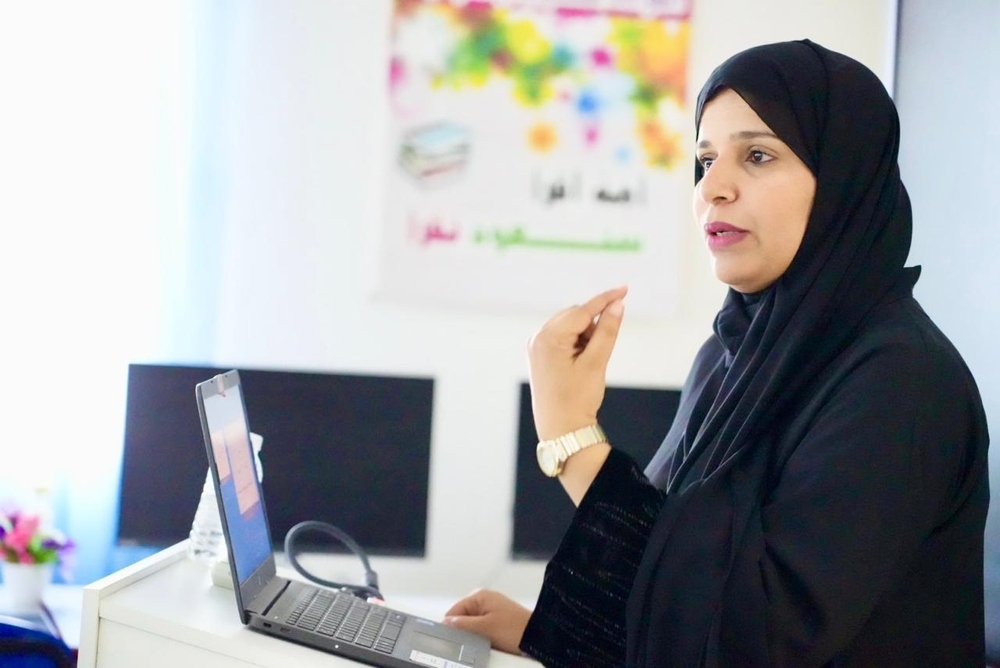
The Arab League Educational, Cultural and Scientific Organization (ALECSO) announced that Omani researcher Dr. Huda Mubarak Al Dai’ree won the “ALECSO Innovation Award for Young Researchers” due to her active role in promoting green economy.
The research that won the award was titled “Role of government school principals and teachers in endorsing green economy in education and activating it as one of the objectives of Oman Vision 2024.”
The award reflects ALECSO’s keenness on inspiring and supporting innovative Arab researchers who excel in the fields of technology and scientific applications. The award is an initiative undertaken by ALECSO to spread the culture of research and innovation among Arab youth.
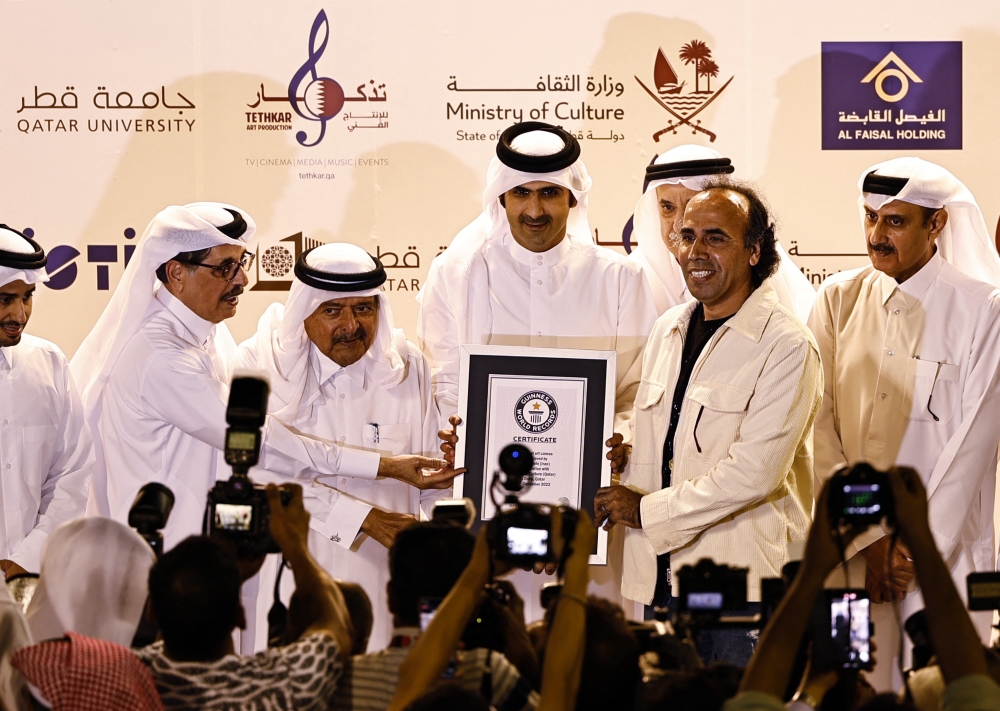
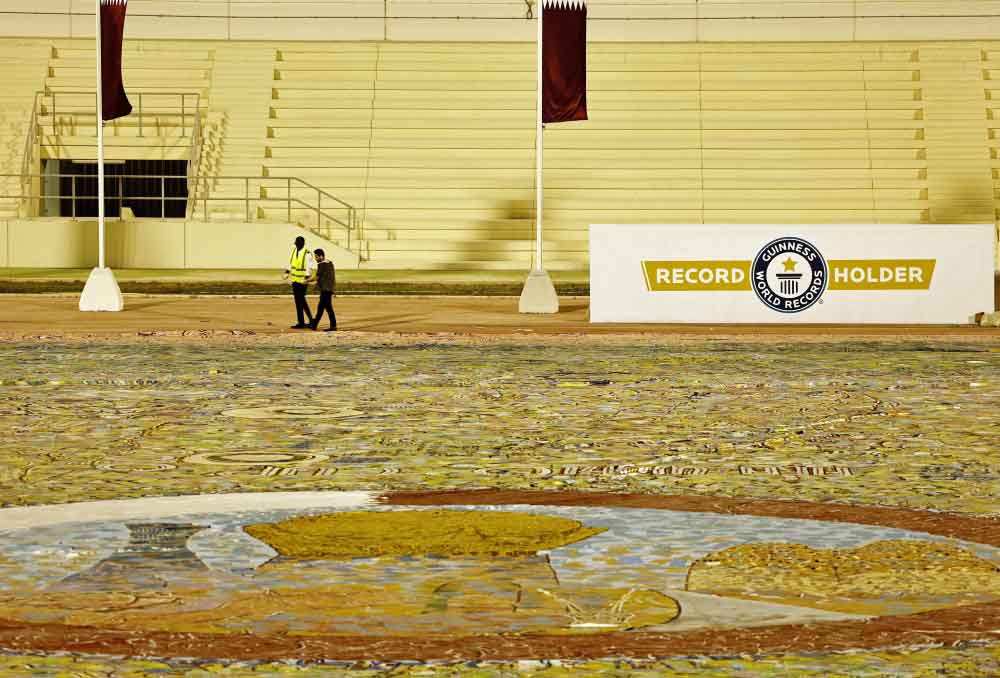
The Ministry of Culture unveiled the largest painting on canvas in the world by the artist Emad Al Salehi, at Qatar University yesterday.
The 9,652 sq metre artwork, equivalent to the size of a football field, is titled The Story of a Ball and was adjudged as the largest art canvas by the Guinness Book of Records officials.
The 9,652 sq metre artwork, equivalent to the size of a football field, is titled The Story of a Ball and was adjudged as the largest art canvas by the Guinness Book of Records officials.
The painting tells the history of the World Cup from its inception in 1930 until the World Cup 2022, which combines culture, history and sports and embodies the landmarks and icons of all the World Cup tournaments in Qatar.
The unveiling of the artwork comes at a time when the country is in the midst of the FIFA World Cup Qatar and as it readies to celebrate its National Day on December 18, 2022.
At the inaugural ceremony, a video was shown about the stages of completion of the huge artwork, after which the Guinness Book of Records certificate was handed over, marking its entry into the record book, in the presence of the Ministry of Culture officials and media.
Artist Emad Salehi receives Guinness World Record Award from the Minister of Culture, Sheikh Abdulrahman bin Hamad al Thani during the inauguration Reuters/Hamad I Mohammed
Artist Emad Salehi receives Guinness World Record Award from the Minister of Culture, Sheikh Abdulrahman bin Hamad al Thani during the inauguration Reuters/Hamad I Mohammed
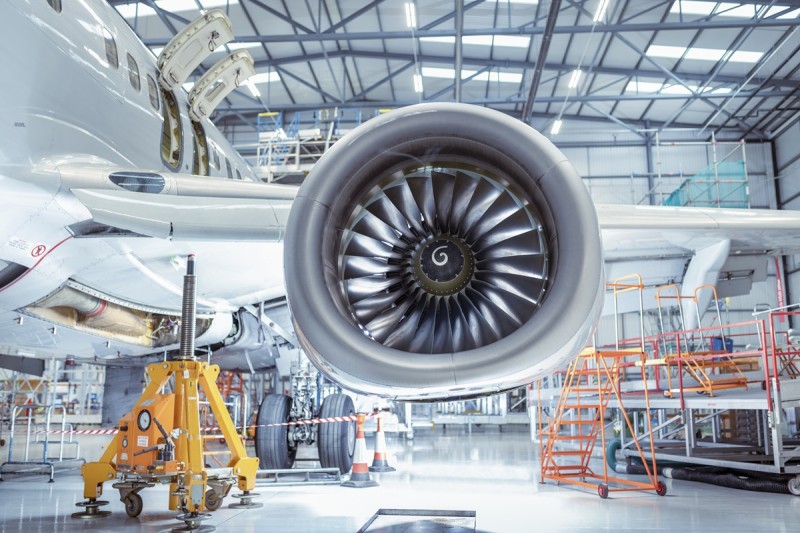
After just twenty years in aviation manufacturing, Morocco has outpaced all African nations to become the continent’s primary supplier of aircraft parts.
Morocco’s aviation manufacturing sector is concluding 2024 with unprecedented growth, as exports surged 17.3% to reach MAD 21.86 billion ($2.1 billion) in the first ten months, surpassing the entire previous year’s record of MAD 21.85 billion.
The North African country has solidified its position as Africa’s primary aviation equipment and spare parts manufacturer, ranking fifth globally among the most dynamic countries in the aviation sector, according to Afaf Saïdi, Director of Aviation, Railway, Naval Industries and Renewable Energies at the Ministry of Industry and Trade.
“Morocco has become the main source of equipment and spare parts at the African level after just twenty years of launching its first initiative in this sector,” Saïdi told the Moroccan News Agency. “This exceptional performance not only demonstrates the resilience of our national aviation industry but also reflects its ability to adapt to global market momentum.”
The sector currently employs 21,000 skilled workers across 142 companies, with a local integration rate exceeding 40%. Industry Minister Riyad Mzour announced in July that Morocco aims to double the sector’s employment by 2030.
This year marked several significant developments for Morocco’s aviation industry. The country hosted the Morocco Air Show 2024 in Marrakech, which facilitated new strategic partnerships with industry giants Boeing and Airbus.
A major milestone was the inauguration of Safran’s $300 million aircraft engine manufacturing facility in Casablanca, expected to create hundreds of jobs and facilitate advanced technology transfer.
‘Adopting a proactive approach’
Other major manufacturers including Bombardier, Stelia, and Aerospace have expanded their investments in the country through new facilities and expansions of existing sites. These initiatives aim to meet growing demand from major aviation companies for high-quality components while contributing to local economic growth.
The government has developed specialized industrial zones for aviation manufacturing, including the Midparc zone, which offers modern infrastructure, ready-to-use land, and tax incentives. The Tanger Med Port plays a pivotal role in supporting the sector’s growth through export operations.
“We are adopting a proactive approach to ensure our aviation industry aligns with rapid global developments,” Saïdi explained. “Innovation is at the core of our priorities, with special focus on environmentally friendly technologies and reducing carbon footprint, strengthening the kingdom’s position as a competitive and sustainable industrial platform.”
The sector’s growth in 2024 represents a significant improvement from 2023’s modest 2.4% increase in exports. This expansion is attributed to strong global demand and product diversification, encompassing spare parts and complete equipment for major aviation manufacturers.
Looking ahead, Morocco’s aviation sector is positioning itself for further expansion through new ecosystem development, implementation of more complex projects, and addressing challenges in digital transformation, decarbonization, and technological innovation, while leveraging the talents of young Moroccan professionals.
This recognition sheds light on a journey of empowering mothers and reshaping the narrative around motherhood in Egypt.
Onset of an idea
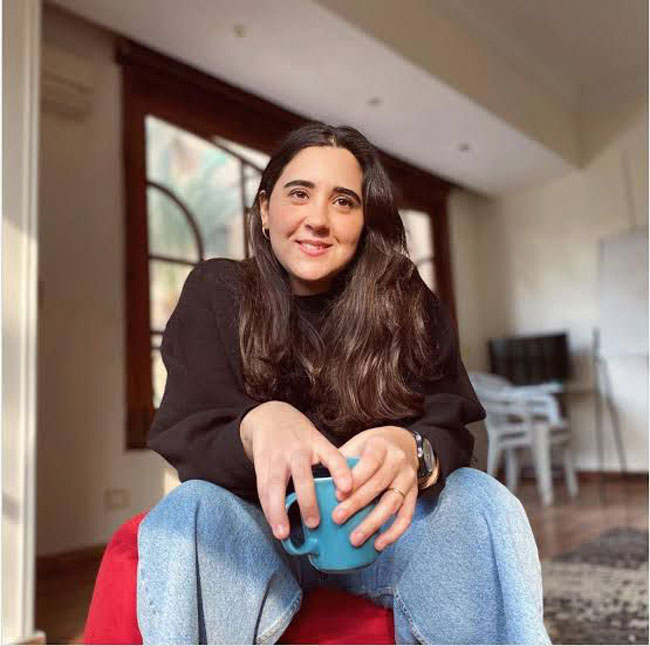
MotherBeing is an organization founded by Nour Emam to provide support, resources, and a sense of community for mothers across Egypt.
In a previous interview with Ahram Online , Emam recounted that during the birth of her daughter, she underwent a medically unnecessary C-section and was separated from her daughter for a while.
It was a challenging experience that left her feeling helpless. Following the birth, Emam suffered from postpartum depression and mild PTSD, which went undiagnosed for eight months.
In an attempt to help herself overcome that painful experience, she created MotherBeing, an educational platform focused on providing women with information on their bodies, sexual health, and the many misconceptions surrounding it.
However, before creating her platform in January 2020, Emam joined a five-month online doula training program from Canada, one of the hardest and longest in the field, followed by another training program in managing postpartum depression.
Emam decided to make it her mission to educate women about their cycles and reproductive health. Emam’s most crucial part was making this knowledge accessible in Arabic to every Arabic-speaking woman.
She is now a certified maternal support practitioner (doula) and certified relationship and sex educator.
Over the years, in addition to easily accessible online content, MotherBeing provided courses of female-only open discussions about women’s reproductive and sexual health issues.
Based on requests, course participants choose a topic related to womanhood each month. The courses provide scientific discussions of the issues.
Through MotherBeing, Nour has created a safe space where mothers can share their stories, seek advice, and form connections with one another.
Brave initiative
One of Nour Emam’s standout initiatives is donating hundreds of thousands of sanitary pads to women in Gaza in November 2023.
This initiative highlighted the medical challenges women face there.
Emam also provided free online consultations to all Palestinian women in need of medical advice regarding their reproductive health.
She remains committed to expanding the reach of MotherBeing and creating a more inclusive and supportive environment for mothers in Egypt.
Her vision for the future includes launching new initiatives, collaborating with like-minded organizations, and advocating for policies prioritizing maternal well-being.
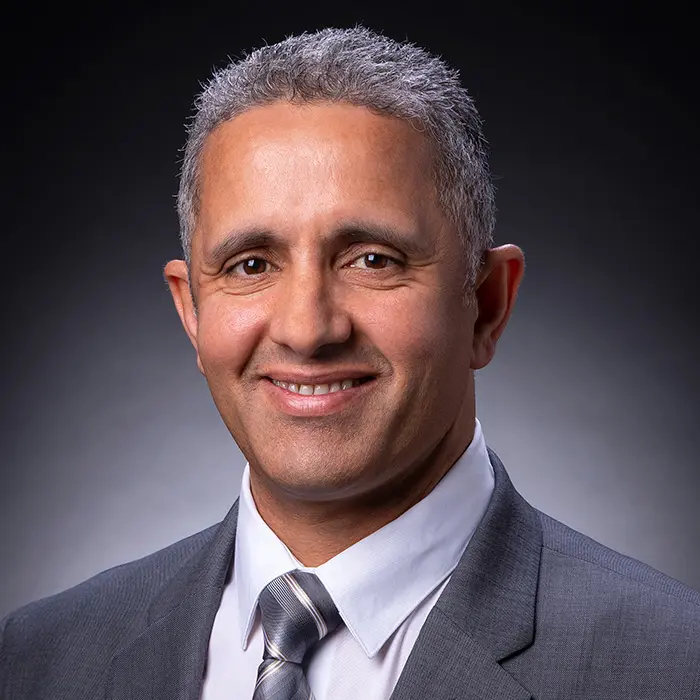
His Highness Sheikh Mohammed bin Rashid Al Maktoum, Vice President, Prime Minister and Ruler of Dubai, has congratulated Professor Yacine Aït-Sahalia, Professor of Finance and Economics at Princeton University, for winning the Great Arab Minds Award in Economics for 2024.
His Highness Sheikh Mohammed praised Professor Yacine Aït-Sahalia for his pioneering contributions to financial econometrics, data measurement, and financial analysis. His work advanced the modelling of high-frequency financial data and continuous-time processes, enabling deeper understanding of variables.
His Highness Sheikh Mohammed said, “We congratulate the winner of the Great Arab Minds Award in Economics for 2024, Professor Yacine Aït-Sahalia from Algeria, Professor of Finance and Economics at Princeton University, who has made exceptional contributions by developing an advanced economic and financial metric to determine volatility levels and understand future patterns of market fluctuations. His work has enhanced financial market analysis, improved economic risk assessments, and increased the efficiency of financial and economic planning.
“We celebrate his achievement and take pride in all Arab minds who have inspired us with their creativity. We look forward to meeting them soon at the Great Arab Minds ceremony.”
Mohammad bin Abdullah Al Gergawi, Minister of Cabinet Affairs and Chairman of the Great Arab Minds Higher Committee, informed Professor Yacine Aït-Sahalia of his win via video call. Al Gergawi highlighted that the award reflects Sheikh Mohammed’s vision to celebrate and support exceptional Arab talent, highlight their achievements, and expand their effective cognitive and developmental impact in their specialisations to foster innovation and excellence across the Arab world.
“Your theories on econometrics and financial analysis have become a reference for numerous institutions, markets, economies, and governments. Your studies inspire a new generation of skilled economists, both in the Arab world and globally, and you are a source of pride for everyone in the Arab world,” Al Gergawi added.
Professor Aït-Sahalia developed high-frequency econometric methods to analyse financial data, estimate volatility, forecast market trends, and evaluate risk. His techniques for addressing microstructure noise and capturing market dynamics have provided essential tools for asset pricing and financial decision-making.
With over 80 academic studies and two books, Professor Aït-Sahalia’s research introduced innovative methods for analysing financial data, and enhancing economic planning.
The 10,000-square-meter facility features the latest marine technology.
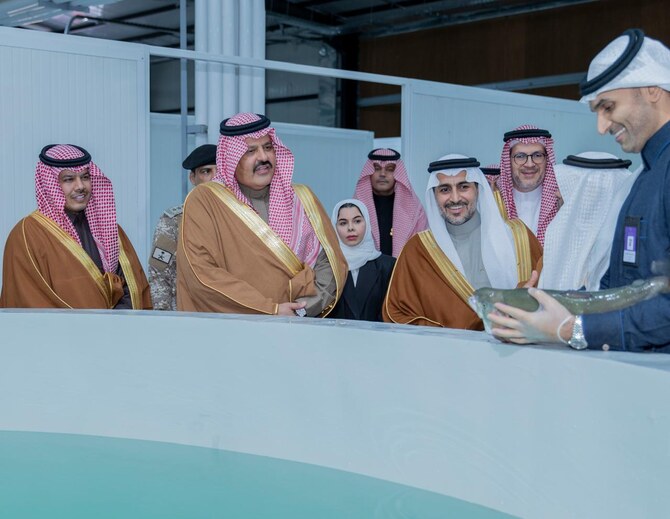
Prince Abdulaziz bin Saad bin Abdulaziz, the governor of Hail, inaugurated the Excellence Center for Salmon Production on Saturday, the largest facility of its kind in the Middle East.
A collaboration between the Ministry of Environment, Water, and Agriculture and King Abdulaziz University, the center aims to produce 100,000 tons of salmon annually, bolstering Saudi Arabia’s food security and aquaculture sector, the Saudi Press Agency reported.
The 10,000-square-meter facility features the latest marine technology, including recirculating aquaculture systems and aquaponics units, which integrate fish and vegetable production.
It is designed to reduce the Kingdom’s reliance on salmon imports, currently at 23,000 tons per year.
Prince Abdulaziz hailed the project as a cornerstone of Vision 2030, promoting sustainable development and economic diversification, while attending officials highlighted its potential to enhance innovation, create jobs, and serve as a model for sustainable aquaculture in the region, SPA added.
source/content: arabnews.com (headline edited)
_________
Prince Abdulaziz bin Saad bin Abdulaziz, the governor of Hail, inaugurated the Excellence Center for Salmon Production on Saturday, the largest facility of its kind in the Middle East. (SPA)
NASA’s Parker Solar Probe was expected to make history on Tuesday by flying into the sun’s outer atmosphere, with Tunisian astrophysicist Nour E. Rawafi playing a pivotal role in the mission. The goal of the mission is to help scientists learn more about Earth’s closest star.
With the spacecraft out of contact, it will be Friday before mission operators confirm its health following the close flyby.
Parker was on course to fly 3.8 million miles (6.1 million km) from the sun’s surface at 6:53 a.m. EST (1153 GMT). Moving at up to 430,000 mph (692,000 kph), the spacecraft will endure temperatures of up to 1,800 degrees Fahrenheit (982 degrees Celsius), NASA said on its website.
At the heart of this mission is Rawafi, a Tunisian astrophysicist and project scientist at Johns Hopkins Applied Physics Laboratory. Rawafi leads efforts to uncover the mysteries of the Sun, demonstrating how talent from Tunisia is shaping the frontiers of space exploration.
“Nour and his team are unlocking the mysteries of our star, from understanding solar storms that impact Earth to collecting revolutionary data that will fuel discoveries for decades,” the US Embassy in Tunis said in a Facebook post, celebrating the scientist. “This awe-inspiring mission reflects both the brilliance of human ingenuity and the vital role Tunisian talent plays in advancing scientific exploration on a global scale.”
Rawafi graduated from University of Tunis El Manar with a Master’s Degree in fundamental physics then received his Ph.D. from the University of Paris XI in Orsay, France.
The Tunisian scientist’s research spreads over a wide range of solar and heliospheric areas with an emphasis on the dynamic solar corona – the outermost layer of the sun’s atmosphere, visible during a solar eclipse as a glowing halo.
His primary contributions have been on the sun’s magnetic fields, which control many solar activities and influence space weather. He has also worked on coronal spectropolarimetry, a technique that helps understand the magnetic fields and physical properties of the sun’s outer atmosphere.
Before joining the Johns Hopkins Applied Physics Laboratory in 2008, he worked at the Max Planck Institute for Solar System Research in Germany and the National Solar Observatory in the US.
Rawafi is also a member of the American Geophysical Union and the American Astronomical Society/Solar Physics Division (SPD).
First probe pass in 2021
When the Parker Solar Probe first passed into the solar atmosphere in 2021 it found new details about the boundaries of the sun’s atmosphere and collected close-up images of coronal streamers, cusp-like structures seen during solar eclipses.
Since the spacecraft launched in 2018, the probe has been gradually circling closer towards the sun, using flybys of Venus to gravitationally pull it into a tighter orbit with the sun.
One instrument aboard the spacecraft captured visible light from Venus, giving scientists a new way to see through the planet’s thick clouds to the surface below, NASA said.
In this era of intolerance and cultural tension, the west needs to appreciate the fertile scholarship that flowered with Islam.
Watching the daily news stories of never-ending troubles, hardship, misery and violence across the Arab world and central Asia, it is not surprising that many in the west view the culture of these countries as backward, and their religion as at best conservative and often as violent and extremist.
I am on a mission to dismiss a crude and inaccurate historical hegemony and present the positive face of Islam. It has never been more timely or more resonant to explore the extent to which western cultural and scientific thought is indebted to the work, a thousand years ago, of Arab and Muslim thinkers.
What is remarkable, for instance, is that for over 700 years the international language of science was Arabic (which is why I describe it as “Arabic science”). More surprising, maybe, is the fact that one of the most fertile periods of scholarship and scientific progress in history would not have taken place without the spread of Islam across the Middle East, Persia, north Africa and Spain. I have no religious or political axe to grind. As the son of a Protestant Christian mother and a Shia Muslim father, I have nevertheless ended up without a religious bone in my body. However, having spent a happy and comfortable childhood in Iraq in the 60s and 70s, I confess to strong nostalgic motives for my fascination in the history of Arabic science.
If there is anything I truly believe, it is that progress through reason and rationality is a good thing – knowledge and enlightenment are always better than ignorance. I proudly share my worldview with one of the greatest rulers the Islamic world has ever seen: the ninth-century Abbasid caliph of Baghdad, Abu Ja’far Abdullah al-Ma’mun. Many in the west will know something of Ma’mun’s more illustrious father, Harun al-Rashid, the caliph who is a central character in so many of the stories of the Arabian Nights. But it was Ma’mun, who came to power in AD813, who was to truly launch the golden age of Arabic science. His lifelong thirst for knowledge was such an obsession that he was to create in Baghdad the greatest centre of learning the world has ever seen, known throughout history simply as Bayt al-Hikma: the House of Wisdom.
We read in most accounts of the history of science that the contribution of the ancient Greeks would not be matched until the European Renaissance and the arrival of the likes of Copernicus and Galileo in the 16th century. The 1,000-year period sandwiched between the two is dismissed as the dark ages. But the scientists and philosophers whom Ma’mun brought together, and whom he entrusted with his dreams of scholarship and wisdom, sparked a period of scientific achievement that was just as important as the Greeks or Renaissance, and we cannot simply project the European dark ages on to the rest of the world.
Of course some Islamic scholars are well known in the west. The Persian philosopher Avicenna – born in AD980 – is famous as the greatest physician of the middle ages. His Canon of Medicine was to remain the standard medical text in the Islamic world and across Europe until the 17th century, a period of more than 600 years. But Avicenna was also undoubtedly the greatest philosopher of Islam and one of the most important of all time. Avicenna’s work stands as the pinnacle of medieval philosophy.
But Avicenna was not the greatest scientist in Islam. For he did not have the encyclopedic mind or make the breadth of impact across so many fields as a less famous Persian who seems to have lived in his shadow: Abu Rayhan al-Biruni. Not only did Biruni make significant breakthroughs as a brilliant philosopher, mathematician and astronomer, but he also left his mark as a theologian, encyclopedist, linguist, historian, geographer, pharmacist and physician. He is also considered to be the father of geology and anthropology. The only other figure in history whose legacy rivals the scope of his scholarship would be Leonardo da Vinci. And yet Biruni is hardly known in the western world.
Many of the achievements of Arabic science often come as a surprise. For instance, while no one can doubt the genius of Copernicus and his heliocentric model of the solar system in heralding the age of modern astronomy, it is not commonly known that he relied on work carried out by Arab astronomers many centuries earlier. Many of his diagrams and calculations were taken from manuscripts of the 14th-century Syrian astronomer Ibn al-Shatir. Why is he never mentioned in our textbooks? Likewise, we are taught that English physician William Harvey was the first to correctly describe blood circulation in 1616. He was not. The first to give the correct description was the 13th-century Andalucian physician Ibn al-Nafees.
And we are reliably informed at school that Newton is the undisputed father of modern optics. School science books abound with his famous experiments with lenses and prisms, his study of the nature of light and its reflection, and the refraction and decomposition of light into the colours of the rainbow. But Newton stood on the shoulders of a giant who lived 700 years earlier. For without doubt one of the greatest of the Abbasid scientists was the Iraqi Ibn al-Haytham (born in AD965), who is regarded as the world’s first physicist and as the father of the modern scientific method – long before Renaissance scholars such as Bacon and Descartes.
But what surprises many even more is that a ninth-century Iraqi zoologist by the name of al-Jahith developed a rudimentary theory of natural selection a thousand years before Darwin. In his Book of Animals, Jahith speculates on how environmental factors can affect the characteristics of species, forcing them to adapt and then pass on those new traits to future generations.
Clearly, the scientific revolution of the Abbasids would not have taken place if not for Islam – in contrast to the spread of Christianity over the preceding centuries, which had nothing like the same effect in stimulating and encouraging original scientific thinking. The brand of Islam between the beginning of the ninth and the end of the 11th century was one that promoted a spirit of free thinking, tolerance and rationalism. The comfortable compatibility between science and religion in medieval Baghdad contrasts starkly with the contradictions and conflict between rational science and many religious faiths in the world today.
The golden age of Arabic science slowed down after the 11th century. Many have speculated on the reason for this. Some blame the Mongols’ destruction of Baghdad in 1258, others the change in attitude in Islamic theology towards science, and the lasting damage inflicted by religious conservatism upon the spirit of intellectual inquiry. But the real reason was simply the gradual fragmentation of the Abbasid empire and the indifference shown by weaker rulers towards science.
Why should this matter today? I would argue that, at a time of increased cultural and religious tensions , misunderstandings and intolerance, the west needs to see the Islamic world through new eyes. And, possibly more important, the Islamic world needs to see itself through new eyes and take pride in its rich and impressive heritage.
————-
by Jim Al-Khalili is a professor of physics at the University of Surrey; he is the 2007 recipient of the Royal Society’s Michael Faraday Prize and delivers the Faraday lecture at the Royal Society in London tonight.
source/content: theguardian.com (headline edited) / 2008 / Jim Al-Khalili
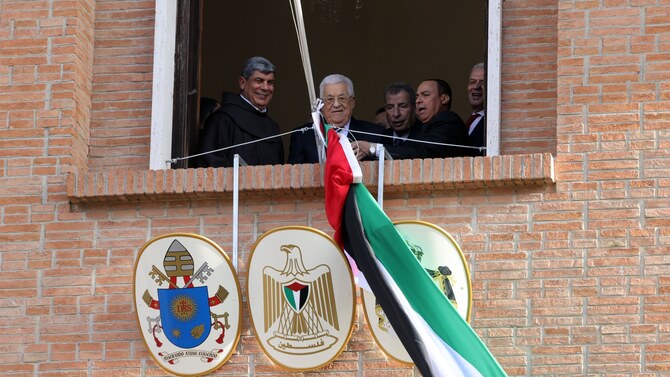
Palestinian President Mahmoud Abbas officially inaugurated the new building of Palestine’s Embassy in Vatican City on Thursday.
Abbas called on countries that have not yet recognized Palestine to do so, and to acknowledge the right of the Palestinian people to self-determination, the news and information agency WAFA reported.
After raising the Palestinian flag, Abbas spoke of efforts to gain full UN membership and achieve greater international recognition for Palestine.
The Vatican officially recognized the State of Palestine on May 13, 2015. On June 26 of the same year, the Vatican’s Holy See and the Palestinian Authority signed a comprehensive agreement for mutual recognition.
Armenia was the last country — the 149th — to recognize Palestine, on June 21, 2024. There are Palestinian embassies, consulates, and diplomatic missions in 110 countries.
The opening ceremony of the new embassy building was attended by several Palestinian Authority officials, including Ziad Abu Amr, the first deputy prime minister, and Issa Kassissieh, the Palestinian ambassador to the Vatican.
Earlier, Abbas had a private audience with Pope Francis and senior Vatican officials. He is also scheduled to meet Italian Prime Minister Giorgia Meloni and President Sergio Mattarella in Rome.
source/content: arabnews.com (headline edited)
_____________
Palestinian President Mahmoud Abbas officially inaugurated the new building of Palestine’s Embassy in Vatican City, Dec. 12 (WAFA)