MOROCCO: The First Moroccan Watchmaker Fouad Zrhari Embraces Arab, Moroccan Culture with Timeless Elegance

Besides his Elaqsa Watches and the newly launched Lion Watch, Fouad Zrhari unveiled plans to launch a third brand in 2024 that is entirely Moroccan.

 In the world of horology, where time is measured with precision and elegance is crafted into every tick of the clock, Moroccan watchmaker Fouad Zrhari managed to fuse passion and craftsmanship and create meticulously designed pieces.

In an interview with Morocco World News, Zrhari shared his journey, one that transformed his love for watchmaking into a brand that blends the artistry of Arabic calligraphy and Morocco’s rich heritage.

A Passion ignited by chance

Zrhari’s love for watchmaking began by chance, as he describes it as “just a coup de foudre,” love at first sight. 

It was the charm of timepieces that captured his heart and the idea of creating an instrument capable of measuring time, with its intricate mechanical diversity, was simply fascinating.

“The idea of creating an instrument that measures time fascinates me,” he said, adding that “the precision of tiny pieces fitting together one by one until they tell the time is just incredible.”

Like many young individuals searching for their path in life, Zrhari initially found himself at a crossroads. He stumbled upon an opportunity to attend a school for micro-mechanics, a choice that would become instrumental in shaping his destiny. 

Little did he know that this decision would later lay the foundation for his future world of watchmaking. “The effort I exerted during that time serves me well today in the world of watchmaking,” he underlined.

“The school of micro-mechanics brought me immense value because it shares many similarities with instruments of measurement and calculation” which are used in watchmaking, he explained.

With his newfound skills, Zrhari went on to work with prestigious names in the industry, including Franck Muller, Roger Dubuis, and Jaeger-LeCoultre, which became his training ground. He reminisced about those days when celebrities graced the workshops.

Within these workshops, Zrhari undertook various roles, each offering a unique perspective on the art of watchmaking. 

Through various roles and tasks, he learned the intricacies of the watchmaking process and emphasized the importance of the diverse trades within the industry. “This experience taught me about the entire process of watchmaking,” he said.

Turning a Dream into Reality 

Yet, the defining moment of Zrhari’s journey came when he decided to take a leap of faith. Despite the challenges and strict regulations of designing watches while employed in Switzerland, he chose to work discreetly from his own home.

It was a risk, but it was fueled by a dream. “I saw many Arab personalities visiting the workshops and ordering their own models,” Zrhari recalled. “I turned to my friend and asked, ‘Why don’t Arabs manufacture their own watches?’ I didn’t understand it. Even though it might not be easy, I felt we should at least try.”

The response he received was one of doubt and skepticism. “Impossible,” his friend responded as he laughed. “It’s very difficult to gain recognition, very difficult to sell, and very difficult to invest in, as it demands a significant amount of money and time,” his friend told him.

However, Zrhari embraced this skepticism as a challenge, one he was determined to overcome.

That’s when Zehari decided to craft timepieces that are more than mere instruments that tell time, but a reflection of his heritage and a celebration of Arab culture.

Championing Arab Heritage in Watchmaking

Zrhari has infused his watches with a distinctive signature that pays homage to his Moroccan origins. “Arabic calligraphy, whether subtly concealed or prominently displayed, and Indo-Arabic numerals adorning the dial are the hallmarks of my creations,” Zrhari proudly said. 

His watches stand as unique works of art, capturing the essence of his Moroccan roots.

These watches are not just timekeeping instruments; they are an embodiment of his identity, designed to be “recognizable from a distance,” Zrahri said.

What sets them apart further is their exclusivity. Zrhari’s watches are exceptionally limited in number, with the ultra-exclusive Elaqsa Watches, and the newly launched Lion Watch offering affordability to a wider audience. 

Zrhari’s promise of a third brand, entirely Moroccan, in 2024 hints at an exciting future, where Zrhari’s artistry and Moroccan heritage will shine brightly in the world of horology.

Today, Zrhari’s journey has evolved into a mission. His passion for watchmaking has become more than just a hobby, as it is now a driving force with a clear purpose. 

“There is a huge market and enthusiasm in this business,” Zrhari emphasized as he spoke of his ambition to establish a watchmaking training center in Morocco. This endeavor is not just about creating timepieces; it’s about creating added value for the African continent, he noted.

In addition, Zrahri conveyed an important message of perseverance and ambition to the youth. 

“Don’t give up, even when faced with difficulties,” Zrhari advised. “Failure is not a setback; it’s an opportunity to become even stronger.”

He encouraged young individuals to transform their passion into a profession, regardless of the field they choose. With faith and determination, success will eventually come their way, he concluded.

source/content: moroccoworldnews.com (headline edited)

____________
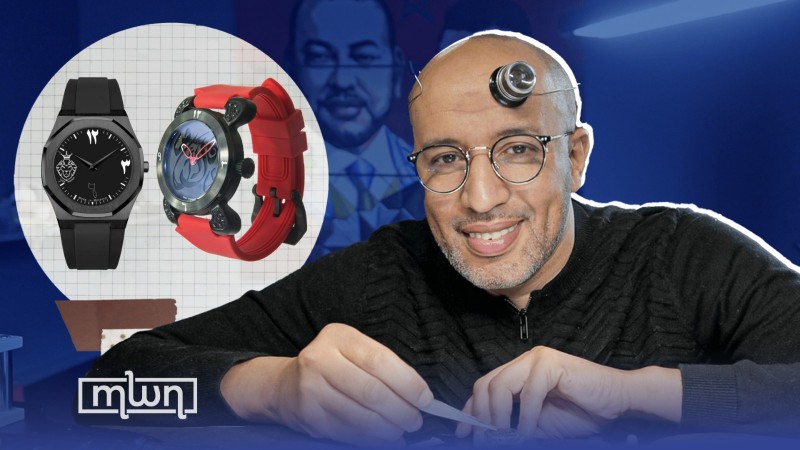
Moroccan watchmaker Fouad Zrhari and some of his deisgns

_____________

MOROCCO
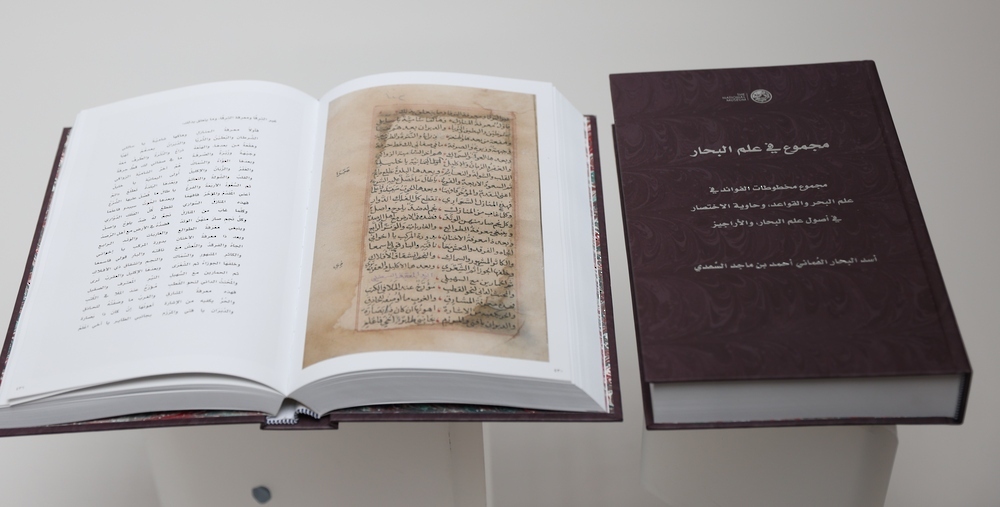
OMAN: National Museum issues Special edition for Omani Navigator Ahmed bin Majid Al Saadi

 The National Museum has issued a special edition titled ‘Collection in Marine Science.’

The issue documents the greatness of Omani navigator Ahmed bin Majid Al Saadi, reviving his marine prowess and navigational creativity.

The collection documents the origin of the manuscript titled “Kitab al-Fawa’id fi ‘Ilm al-Bahr wa al-Qawa’id” (Collection of Manuscripts of Benefits in the Science of the Sea and Rules, as well as the abbreviation container in the origins of marine science and Arajiz), which has been on loan from Al Assad National Library in the Syrian Arab Republic to the National Museum since 2019.

In the opening speech of the publication, Jamal Hassan al Moosawi, Secretary General of the National Museum, said, “The display of the original manuscript ‘Collection in the Science of the Seas’ by the author Ahmed bin Majid al Saadi at the National Museum is an affirmation of the Omani identity of this unique scientific and historical personality.

This display comes in the context of the existing cooperation between the National Museum and the Ministry of Culture of the Syrian Arab Republic as part of the cultural diplomacy pursued by the National Museum.”

source/content: muscatdaily.com (headline edited)

___________

________________

OMAN / SYRIA

EGYPT’s Tennis Superstar Mayar Sherif Wins Valencia Open, Breaks to World Top 35

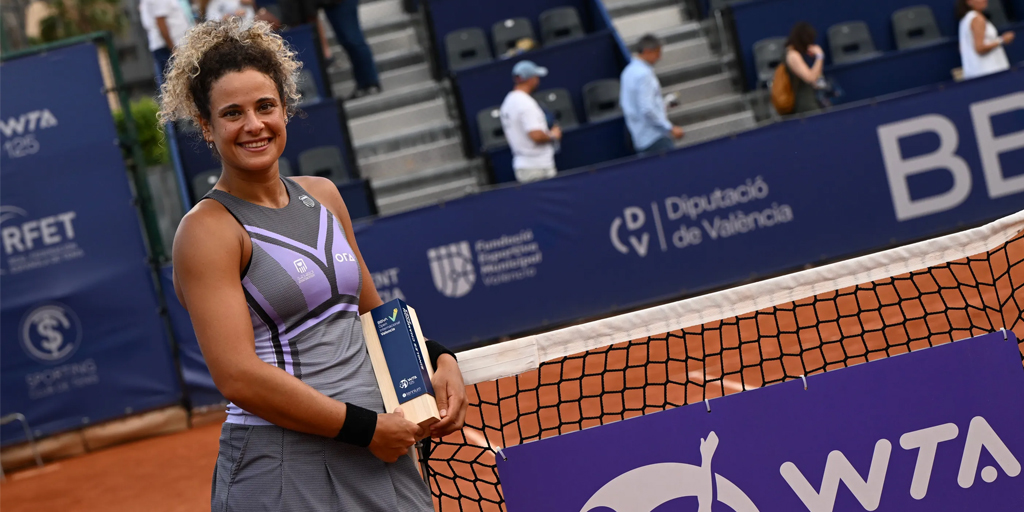
Egypt’s Mayar Sherif continued her dominant rise in the tennis world at the BBVA Open Internacional de Valencia in Spain, winning the Women’s Tennis Association (WTA) 125 title and leaping into the Top 35 world singles ranking for the first time.

This is also the tennis champion’s second consecutive WTA 125 title, having clinched the WTA 125 Makarska Open trophy in Croatia on 11 June.

Sherif enjoyed a winning streak throughout the tournament, eventually defeating Spain’s Marina Bassols Ribera 6-3, 6-3. With this victory, Sherif, now ranked 31st in the world, maintained her remarkable record in WTA 125 finals, extending it to 6-0.

“I came into this tournament with great momentum from Makarska, and I wanted to capitalize on it,” expressed Sherif after her dominant display. “Right from the beginning of the tournament, I felt very comfortable, and I believe that reflected in my straight-set victories throughout.”

With an astounding 9-place leap to 31st place in the singles world ranking, Sherif is now the highest-ranked Egyptian tennis player in history – surpassing the legendary Ismail El Shafei’s career-high of 34th place.

source/content: egyptianstreets.com (headline edited)

_____________

Image Credit: Women’s Tennis Association

_________

EGYPT

QATAR: National Orchid Flower of Singapore Named after Prime Minister of Qatar

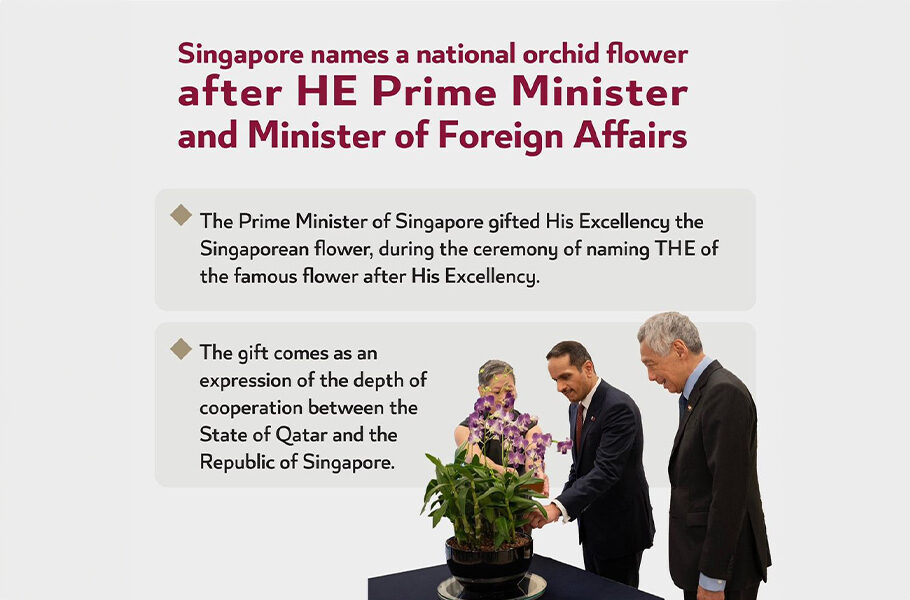
The Singaporean Prime Minister, Lee Hsien Loong, presented His Excellency the Prime Minister and Minister of Foreign Affairs, Mohammed bin Abdulrahman bin Jassim Al Thani, with a flower during the ceremony naming the famous flower after him, showcasing the strong collaboration between the State of Qatar and the Republic of Singapore.

whatsapp sharing button

H.E. the Prime Minister and Minister of Foreign Affairs, Mohammed bin Abdulrahman bin Jassim Al Thani, was honored at the 8th meeting of the high-level joint committee in Singapore.

Image Credit and Source: Ministry of Foreign Affairs Qatar (MOFA)

source/content: iloveqatar.net (headline edited)

__________

__________

QATAR

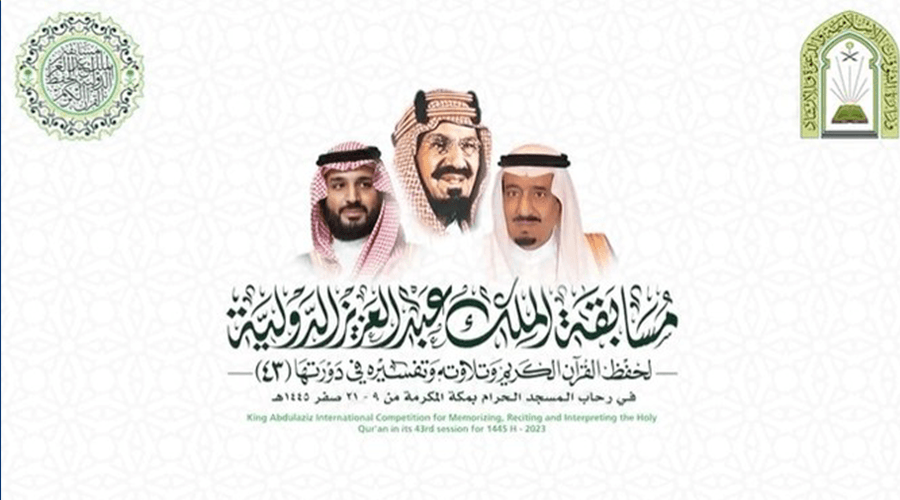
QURAN CONTEST in SAUDI ARABIA : Islamic Affairs Ministry Announces Winners of the ’43rd King Abdulaziz International Competition of Holy Quran 2023′. First Prize Winners in 4 Categories from Saudi Arabia, Somalia and Senegal

The Minister of Islamic Affairs, Call and Guidance, Sheikh Dr Abdullatif bin Abdulaziz Al Al-Sheikh has approved the results and names of the winners in the 43rd edition of King Abdulaziz International Competition for Memorization, Recitation and Interpretation of the Holy Qur’an.


The competition, held at the Grand Mosque, witnessed the participation of 166 contestants representing 117 countries, competing in all five categories of the competition, with the total prize amount for this edition reaching SAR4,000,000.


In the first category, Ayoub bin Abdulaziz Al-Wahibi from the Kingdom of Saudi Arabia secured first place and received a prize of SAR500,000. Saad bin Saadi Sleim from Algeria came in second place, earning SAR450,000, while Abu Al-Hasan Hassan Najm from Chad achieved the third position, receiving a prize of SAR400,000.


In the second category, Ammar bin Salem Al-Shahri from the Kingdom of Saudi Arabia claimed the first position and was awarded a prize of SAR300,000. Mohammed bin Adnan Al-Omari from Bahrain secured second place, receiving a prize of SAR275,000. The third position went to Abdulaziz bin Malik Atli from Syria, who received a prize of SAR250,000.


In the third category, the winners include Mohammed bin Ibrahim Mohammed from Somalia, who clinched first place and received a prize of SAR200,000. Second place went to Shuaib bin Mohammed Hassan from Sweden, who was awarded SAR190,000 while Faisal Ahmed from Bangladesh secured the third position, earning SAR180,000 Saudi Riyals, and Mohammed Mufid Al-Azza from Indonesia claimed the fourth spot and received SAR170,000. Siraj Al-Din Muammar Kandi from Libya rounded off the top five, receiving a prize of SAR160,000.


Regarding the fourth category, the winners are as follows: Mohammed Ghai from Senegal secured the top position, earning a prize of SAR150,000. Hatem Abdulhamid Falah from Libya claimed the second spot, receiving an award of SAR140,000 and Yassin Abdulrahman from Uganda achieved the third position, with a prize of SAR130,000. Mashfiqur Rahman from Bangladesh attained the fourth position and was granted SAR120,000 while rounding off the top five, Abdulkader Yousef Mohammed from Somalia received a prize of SAR110,000.


As for the fifth category, Elias Abdou from the country of Larionion secured the first position, earning a prize of SAR65,000 while the second place went to Ibrahim Shahbandari from India who was awarded SAR60,000. Marwan bin Shalal from the Netherlands achieved the third position, receiving SAR55,000 and Mustafa Sinnanovic from Bosnia and Herzegovina attained the fourth position and received SAR50,000. Lastly, Hassib Amrullah from North Macedonia took fifth place, earning a prize of SAR45,000.

–SPA

source/content: spa.gov.sa (headline edited)

______________

pix: ehajportal.com

____________________________________________________________________________

ALGERIA / BAHRAIN / CHAD / LIBYA / SAUDI ARABIA / SOMALIA / SYRIA

ERITREAN-SWEDISH Haisam Mohammed: Introducing the Swedish Fragrance brand UNIFORM Inspired by high-rise architecture

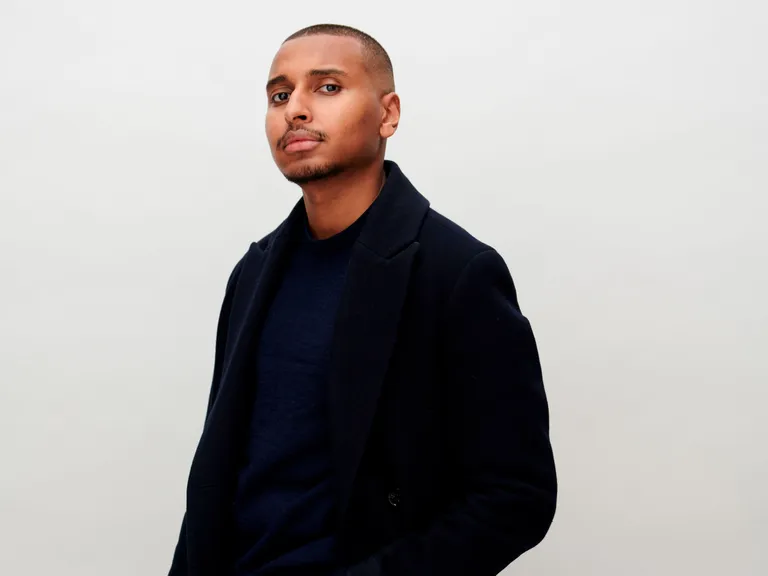
Founded in Sweden by emerging creative Haisam Mohammed, fragrance brand UNIFORM is gaining momentum internationally. Here, Mohammed walks us through his creative process.

Haisam Mohammed often found himself drawn to the stairwells of the Swedish high rise buildings he grew up in. It was in these meeting points between homes that the scents from the different households would cascade – from cooking, incense burning, and spices.

The son of immigrants who had escaped the conflict in Eritrea, Mohammed’s upbringing saw him surrounded by many different cultures – inspiring a passion for design, architecture and beauty.

Fast forward to 2018, and he would channel this inspiration into his independent fragrance brand, UNIFORM – a vegan, cruelty-free range of perfume oils produced in France.

Blending the minimalism of Scandinavian design with transportive scents drawn from around the world, the brand recently captured the attention of A-COLD-WALL* founder, Samuel Ross, who selected it to receive a grant from his foundation supporting Black-owned businesses.

We caught up with Mohammed to talk about developing the range, how the beauty industry can become more inclusive, and why the future of luxury is sustainable.

Wallpaper*: How did UNIFORM come about as a brand?

Haisam Mohammed: Throughout my life, I have always sought for new formats to express and communicate different cultural messages, but the one format that always stuck in the back of my head, was scents.

So UNIFORM began as a passion project. My interest in scents started in the stairwells of the high-rises in Sweden. Both the one I grew up in, and the ones that I visited throughout my upbringing. The smell of food cooking, incense being lit and spices being blended used to sip through the cracks of the doors of these families and accumulate in a special scent that I have had with me throughout my life. Hence the name UNIFORM.

Talk us through your three signature scents in the range.

Maghrib, which means sunset in Arabic, is our first creation. It was inspired by the experiences of watching the sunset from the rooftops of the high-rises during summer nights. It has cedarwood and tobacco in it, and is the scent that I most clearly recognize from my childhood home and, as I later came to realise, the homes of many more ethnic families as they were cooking, burning incense, and blending spices in their home.

Limbo is inspired by my personal experience of the conflicting emotions that I experienced while commuting between the city center and its outskirts where I live. You either feel like it is an escape or a refuge – therefore the name Limbo. It’s our most complicated scent, with a combination of rhubarb, hay, and sandalwood.

Cassis is inspired by the first-millisecond of scent you experience when disembarking a plane at a new destination, preferably in the south of France. It’s a fig-scent with elements of sandalwood and coconut.

What was your experience of growing up in Sweden?

My experience growing up was split between two places. A small town in the northern part of Sweden and Stockholm. There were kids from the diaspora in both places, and we managed to build our own culture, way of life, and language to communicate based on our parent’s heritage and the cultures we now resided in.

We were probably the first generation that grew up with the internet, so I managed to discover things within music, arts, and even food that the previous generation could only dream of. During this time I also understood the power of culture and that it sees no geographical borders. I began to understand that a person living 4000 miles away in a city like New York could still be interested in the same things I was.

How does this mix of cultures express itself in your scents?

Not only does the mix of culture express itself in our scents, but also the format that is presented in. Perfume oil is not as big of a deal in the West as it is in some parts of Africa and in Asia. I wanted to introduce the format to a new audience but I have great respect from where it came from. I discovered perfume oil from my father’s collection, which was made up of scents he bought from the mosque and carried with him at all time. 

How have architecture and design shaped the vision for UNIFORM?

They are a huge part of the vision. For our first installation display inside the department store NK, we commissioned the designer Simon Skinner to translate our brand into a physical art piece and the outcome became a structure inspired by the high-rises made out of limestone blocks.    

In an architectural sense, the brand stands on the idea of the stairwell, not only just being a place where you move between different levels but also a gathering location. A place where great conversations are taking place about everything from art to science to politics. 

In Sweden, a defunding of youth centers has been going on for years. Every winter when the youth centres were closed and we had nowhere to go, we always used a random stairwell as our meeting place/office/think centre until we got kicked out.

Redefining what luxury means is a key part of UNIFORM. Is this a shift you see happening in the world right now?

Definitely. In our case, we want to redefine what luxury must look like or where it comes from. In a standard measure, UNIFORM would not be considered luxury based on our background, where our story stems from, and how accessible we want our products to be. But luxury for us means high-quality products that are produced with a lot of care and attention to details. Luxury has nothing to do with heritage or who stands behind the brand.

The shift I see happening is that younger people’s aspiration has gone from wanting to buy luxury products to aspiring to buy sustainable products that they can show off. Sustainability is now the new luxury.

The packaging and design for the scents are very distinctive and minimal. How did you develop these?

UNIFORM was designed to be sleek and a product that you could carry around in your pocket or handbag at any time. It should be so convenient that you pick it up and apply a small amount throughout the day to feel your best. When it came to the bottle – the process was that it needed to be a statement piece to the degree that when you pull out the UNIFORM in public, everyone is intrigued. 

Because the bottle draws a lot of focus, I wanted to keep the packaging very minimal and just include the essential information. I enlisted the help of my friend Fredrika Larsson who designed the logo and helped with the packaging.

How do you think the beauty industry can be more representative? Do you feel that any progress is being made?

In two ways. Either we hire people who truly get the need for representation and are going to make a difference. Or we start our own brands like Fenty.

The beauty world has been getting better at showing diversity in front of the camera, but behind the camera there is a long way to go. Directors, photographers, make-up artists, and more important – clients still lack knowledge about why representation is important. I’m starting to think that people who do not work towards more representation, just don’t want to see improvement for under-represented groups. In this day and age, it is no longer about not knowing how to go about it. There is plenty of information online that only requires a Google search. For example, my friend created the platform Afripedia which is a curated database that connects clients and individuals with top African creatives around the world.

To be able to create innovation and further an industry you need more perspective. That is scientifically proven. You need to be open to listening and trying to understand people who don’t come from the same walks of life as you. Inclusivity should not be seen as goodwill or something charitable. It should be seen as a crucial part of an industry or a brand that wants to survive in the future.

You recently received a grant from Samuel Ross and A-Cold-Wall’s foundation to support Black-owned businesses – how do you plan to use this to develop the brand?

I am very grateful to Mr. Ross that he is using not only his platform but also his brand’s capital to inspire and uplift Black-owned businesses. That is admirable. As somebody who has financed this brand solely from my pocket, I plan to use the grant towards the expansion of UNIFORM to different parts of the world.

I said to Samuel that the plan is to pass it forward. My philosophy is that when somebody opens a door for you, you must do the same for the next person. This grant is no different. I plan to give back the same amount to the next creative entrepreneur that I meet in the near future.

What is coming next for UNIFORM? Do you have plans to develop the product range further?

We are excited for UNIFORM to be accessible in new markets and sharing our work with a lot more people across the globe. We are also looking forward to collaborating with cross-disciplinary artists to find ways to experience our perfumes in different contexts that will challenge their perception of scent.

INFORMATION
barbican.org.uk

source/content: wallpaper.com (headline edited)

___________

UNIFORM founder Haisam Mohammed / (Image credit: press)

________________________

SWEDISH / ERITREAN

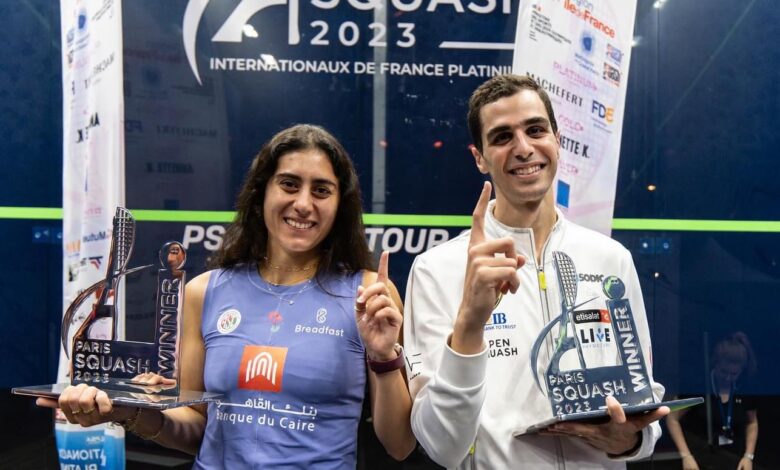
EGYPTIAN Squash duo Ali Farag and Nour al-Sherbini Win Paris Open 2023

Egyptian squash duo Ali Farag and Nour al-Sherbini won the Paris Open 2023, the first major tournament of the new squash season.

Sherbini defeated her compatriot Nouran Gohar, 3-1 while Wadi Degla player Ali Farag defeated Peruvian Diego Elias with the same result.

Sherbini now tops the world squash rankings after winning the title.

Elias had qualified for the final at the expense of English-Egyptian player Mohamed al-Shorbagy after winning three games.

Farag reached the final by defeating New Zealander Paul Coll by a score of 3-2.

Sherbini defeated England’s Georgina Kennedy, while Gohar qualified at the expense of US Amanda Sobhy.

source/content: egyptindependent.com (headline edited)

______________

__________

EGYPT

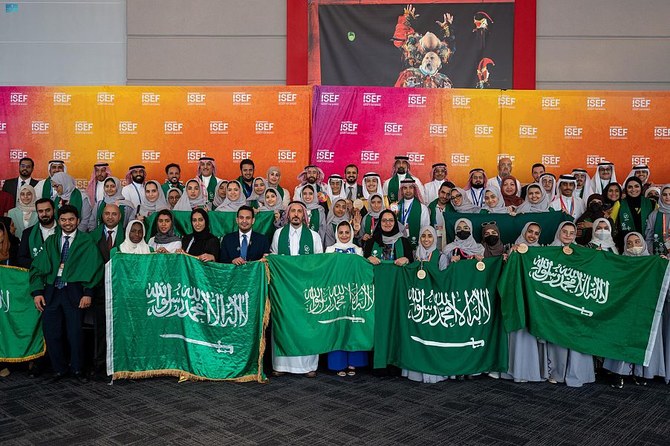
SAUDI ARABIA: Science and Engineering Team Wins 27 Awards

Saudi Arabia, represented by King Abdulaziz and His Companions Foundation for Giftedness and Creativity, or Mawhiba, and the ministry of education, has won 27 prizes — including 23 major and four special prizes — at the Regeneron International Science and Engineering Fair.

More than 1,800 gifted individuals from more than 70 countries participated in the ISEF event, which was held from May 13-19 in the US.

In the major awards, the Saudi team won two first-place prizes, seven second-place prizes, seven third-place prizes and seven fourth-place prizes.

Student Faisal Al-Muhaish won first-place in chemistry for his project titled “Metal-organic framework-based electrocatalyst for a highly efficient and low-cost seawater hydrogen production,” while student Mohammed Al-Arfaj won first prize in environmental engineering for his project titled “Using a contact liquid to capture CO2 found in fuel and air through a highly efficient and low-cost freezing method.”

Second-place prizes went to Taif Al-Hamdi in the field of energy, Latifa Al-Ghannam in energy, Lynn Al-Melhem in energy, Zahra Al-Shabr in biomedicine and health sciences, Fatima Al-Arfaj in chemistry, Wissam Al-Qurshi in biomedical engineering and Dima Marwahi in earth and environmental sciences.

Third-place prizes went to Ritaj Al-Sulami in energy, Fajr Al-Khulaifi in energy, Fares Al-Yami in transitional medicine, Lian Norolli in environmental engineering, Abeer Al-Youssef in materials science, as well as Lian Al-Maliki and Nour Al-Hamad in plant sciences.

Fourth-place prizes went to Maria Al-Qumsani in engineering technologies, Bandar Al-Barahim in robots and smart devices, Hanadi Arif in social and behavioral sciences, Maria Al-Ghamdi in environmental sciences, Tahani Ahmad in materials sciences, Dee Shujaa in earth and environmental sciences and Yazan Al-Fulaih in plant sciences.

This year’s achievements have increased the total number of prizes won by the Kingdom at ISEF to 133 — 92 major and 41 special prizes — since it began participating in 2007.

Amal bint Abdullah Al-Hazaa, secretary general of Mawhiba, congratulated King Salman and Crown Prince Mohammed bin Salman for this new national achievement, which was supported by the leadership. She also congratulated the ministry of education and the students, along with their families, schools and teachers.

Al-Hazaa commended the joint efforts by Mawhiba and the ministry of education, as well as their strategic partners, to continue achieving the objectives and initiatives of the Kingdom’s Vision 2030 by improving students’ capabilities in accordance with the latest scientific methods used for gifted individuals.

Al-Hazaa said that “the complementary partnership between Mawhiba and the ministry of education has contributed to the development of a creative environment, space and system for talented individuals and produced Saudi human capital models that are competent and able to innovate solutions to sustainable development-related problems, contributing to the prosperity of all of humanity.”

The Kingdom, represented by Mawhiba, also took part in ISEF 2023 as an official sponsor and presented 18 special prizes to the best projects participating in the energy category.

ISEF is considered the largest pre-university scientific research and innovation competition fair.

source/content: arabnews.com (headline edited)

___________

This year’s achievements have increased the total number of prizes won by the Kingdom at ISEF to 133 — 92 major and 41 special prizes — since it began participating in 2007.(SPA)

_________________

SAUDI ARABIA

BCI Middle East Awards 2023: Winners

We are excited to announce the winners of the 2023 edition of the BCI Middle East Awards.

The BCI Middle East Awards recognise the outstanding contributions of Business Continuity, Risk and Resilience professionals and organizations living and operating within the Middle East region.  All winners will be automatically shortlisted for the BCI Global Awards 2023, which will be held at BCI World Hybrid 2023. 

Most Original Exercise Programme:

Crisis Management and Business Continuity Team, ADNOC Offshore

Continuity and Resilience Professional (Private Sector):

Abdulla Mohammed Naqi MBCI

Continuity and Resilience Professional (Public Sector):

Khaled Hassan Abouzeid

Most Effective Recovery:

e& Group

Continuity and Resilience Newcomer:

Hassan Abdulameer Ali Yusuf

Continuity and Resilience Team:

Bank ABC

Continuity and Resilience Provider (Service/ Product):

AutoResilience by Ascent Technology Consulting

Continuity and Resilience Innovation:

Panda Crisis Communication Application

Continuity and Resilience Volunteer:

Glenn Fiel Fernandez CBCI

source/content: thebci.org (headline edited)

_____________

________________

MIDDLE EAST

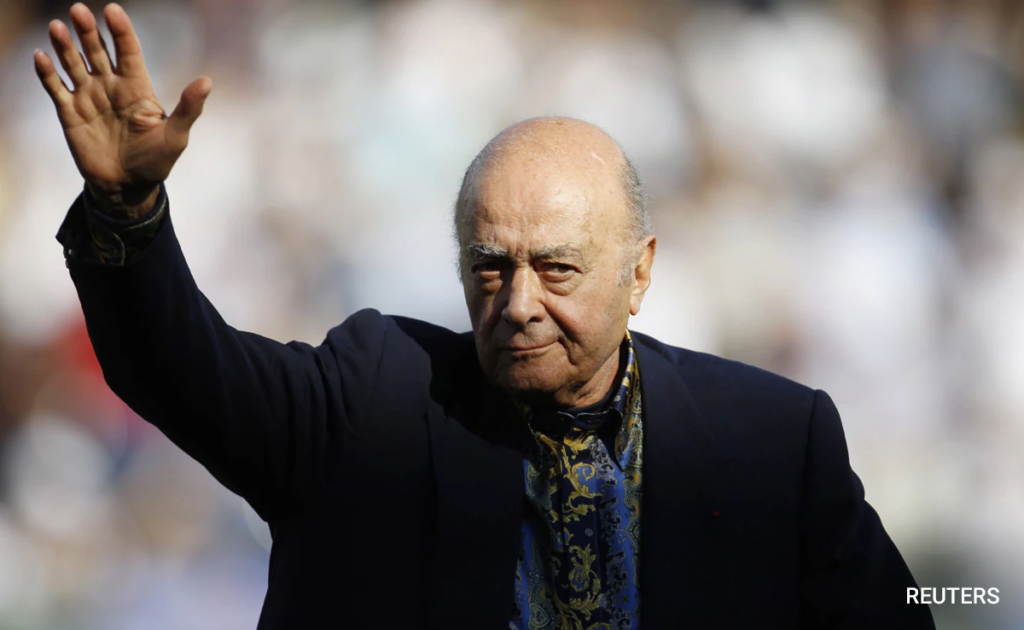
EGYPTIAN-BRITISH based: Businessman Tycoon Mohamed Al-Fayed, Ex-Harrods Owner and Fulham FC, Whose Son Dodi Al-Fayed Died With Princess Diana: 5 Points

Mohamed Al-Fayed had waged a war of words with the British royal family after his son was killed in a car accident alongside Diana, Princess of Wales.

Mohamed Al-Fayed was an outspoken and successful Egyptian business tycoon. His death comes almost 26 years to the day after the car crash in Paris that killed his eldest son, Dodi, and Diana, Princess of Wales, on August 31, 1997.

Here are five points on the self-made billionaire:

1.Far from being the scion of a dynasty of cotton and shipping barons he made himself out to be, Fayed was the son of a poor Alexandrian schoolteacher who, after an early venture flogging lemonade, set out in business selling sewing machines.

2.He later had the good fortune to start working for the arms dealer Adnan Khashoggi, who recognised his business abilities and employed him in his furniture export business in Saudi Arabia. He became an advisor to the Sultan of Brunei in the mid-1960s and moved to Britain in the 1970s.

3.Fayed lived most of his life in Britain, where for decades he was never far from the headlines. But to his frustration, he was never granted UK citizenship or admitted into the upper echelons of British society.

4.The defining tragedy of Fayed’s life came in August 1997, when Dodi and Princess Diana died when a car driven by one of Fayed’s employees, chauffeur Henri Paul, crashed in a Paris road tunnel. For years afterwards, Fayed refused to accept that the deaths were the result of speeding and intoxication by Paul, who also died. The distraught Fayed accused the royal family of being behind the deaths and commissioned two memorials to the couple at Harrods.

5.According to Forbes list of the world’s billionaires, Fayed was worth $1.9 billion in November 2022. With a business empire encompassing shipping, property, banking, oil, retail, and construction, Fayed was also a philanthropist whose foundation helped children in the UK, Thailand, and Mongolia.

source/content: ndtv.com (headline edited)

_______________

Mohamed Al-Fayed was born in Alexandria and was the son of a schoolteacher.

_______________________

EGYPTIAN / BRITISH