EGYPT: Mo Salah Breaks 02 long-standing Liverpool Records

A record-setting night sees the Egyptian striker secure his place in history.

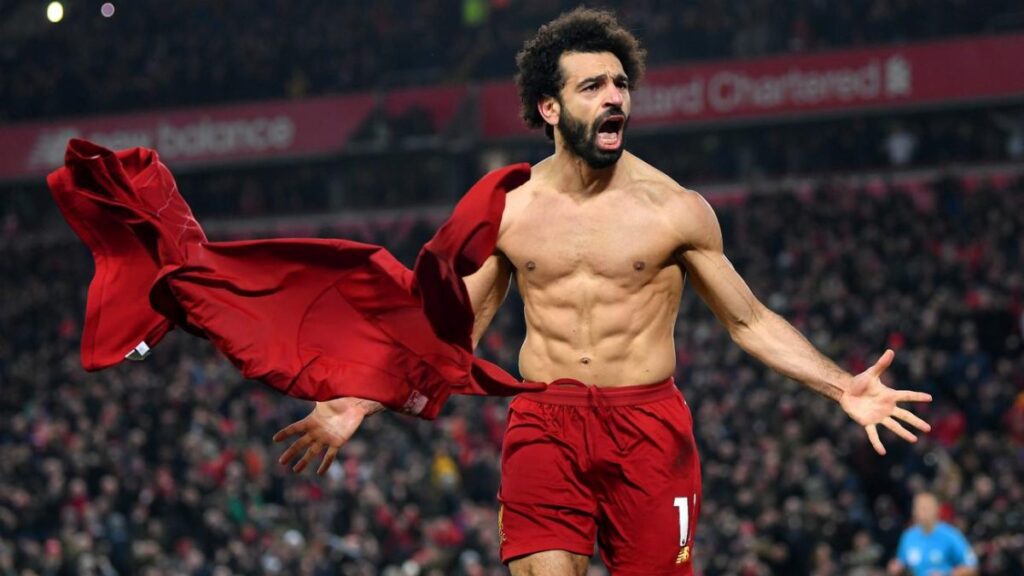
Mohamed Salah secured his place in Liverpool (and Premier League) history with a remarkable performance on a very special night as his side beat rivals Manchester United 7-0.

With two second half goals the talismanic Egyptian striker became Liverpool’s all-time top goalscorer English Premier League, with his 129th and 130th goals putting him on top of the list above club legends Robbie Fowler (128), Steven Gerrard (120) and Michael Owen (118).

“This record was in my mind since I came here, I think after my first year I was always chasing that record, so to break it today, against United, with that result, was unbelievable,” Mo Salah told Sky Sports after the game. “I’m going home to celebrate with the family, have a chamomile tea and sleep!”

However, the record was not the only one that Salah secured in the game, as his double also made him Liverpool’s leading scorer against United in the Premier League era, with 10 goals.

Manchester United is one of Liverpool’s biggest rivals – if not the biggest – and the scoreline was its largest ever victory against United in any competition.

“I have some good records at Liverpool. To be fair, as long as we achieve something with the team that’s the most important thing for me,” Mo Salah said to the Liverpool Echo.

“I’m so happy and proud to break records and win trophies in a team like Liverpool. I don’t want to be in a smaller team and I’m the only one breaking records and that’s it.”

source/content: esquireme.com / Matthew Priest (headline edited)

__________

_________

EGYPT

ARAB FEMALE SCIENTISTS: 2023 Welcomed The Research of 5 Visionary Arab Female Scientists

We were scouting impressive Arab female scientists and we realised that these visionaries need more spotlight.

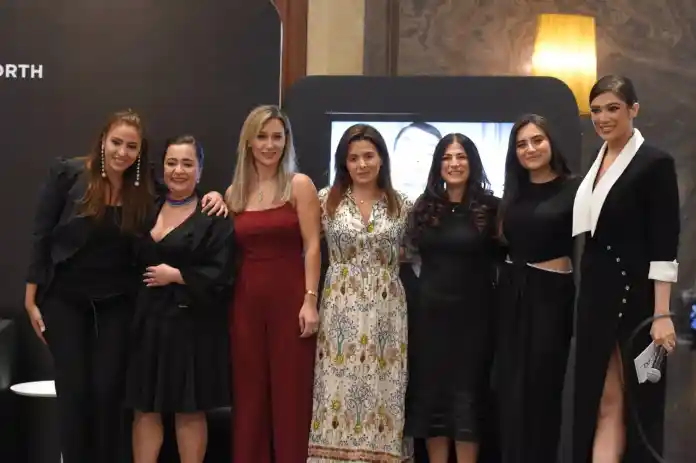
Earlier this year, The L’Oréal-UNESCO For Women in Science Middle East Regional Young Talents Program, now in its ninth year, recognized and supported five trailblazing women from the GCC region for their ground-breaking work in the fields of life sciences, physical sciences, mathematics, and computer science.

The regional program is part of the L’Oréal-UNESCO’s global For Women in Science initiative, in partnership with Khalifa University of Science and Technology. The outstanding researchers were awarded funds totaling EUR 76,000 to advance their creative work in the fields of science, technology, engineering, and mathematics (STEM).

Fostering and empowering upcoming female scientists and their ground-breaking research, particularly in the GCC region, where women scientists’ contributions are crucial to finding answers for pressing global issues including climate change, food shortages, pandemics, future technology, and cybersecurity.

The award winners stand for the most driven and ambitious women in the region who are unafraid to overcome obstacles in their quest to develop creative solutions to issues that have a social impact. They also serve as role models for young girls who are just beginning their careers in STEM.

 UAE has achieved significant progress in ensuring equality and representation in all spheres, from the educational system to the forefront of important scientific and technical achievements led by women, which has improved its competitiveness on the world stage.

About the Middle East Regional Young Talents:

  1. PhD student Hessa Ebrahim Ali Alfalahi (UAE): For her studies on the early identification and diagnosis of Parkinson’s disease and depression utilizing smartphone data gathered in the outdoors using revolutionary Artificial Intelligence (AI) algorithms.
  2. PhD student Ayesha Abdulla Alkhoori (UAE): For her work on the conversion of carbon dioxide (CO2) into clean fuel to reduce global warming and address the energy problem.
  3. Post-doctorate researcher Dr. Maha Zakariya Yahya Al-Riyami (Oman): for her investigation of somatic mutations in type 1 diabetes, which may open up new research directions in the study of autoimmune diseases.
  4. Post-doctorate researcher Dr. Raefa Abou Khouzam (UAE): For her research on examining innovative treatments to thwart the development and spread of pancreatic cancer.
  5. Post-doctorate researcher Dr. Fatiha M. Benslimane (Qatar): For her work on creating a quick, dependable, and affordable microbiological analysis procedure that would enable real-time diagnosis.

source/content: abouther.com (headline edited)

___________

_________________________

OMAN / QATAR / U.A.E

UAE holds the Highest Number of Guinness World Records followed by Saudi Arabia and Egypt across Mena

Dubai – Dubai is the also the most record-breaking city not just within the country but also across the Mena region.

The UAE is far ahead in achieving the Guinness World Records regionally as the country boasts 425 GWRs with 34 of them were achieved in 2020 alone.

Dubai is the also the most record-breaking city not just within the country but also across the Middle East and North Africa (Mena) region.

“The UAE is currently home to 425 Guinness World Records titles, making it the biggest record-breaking country in the Mena region… Dubai has the lion share of titles in the country with around 60 per cent of the overall number,” said Danny Hickson, senior events production manager at Guinness World Records Ltd in Dubai.

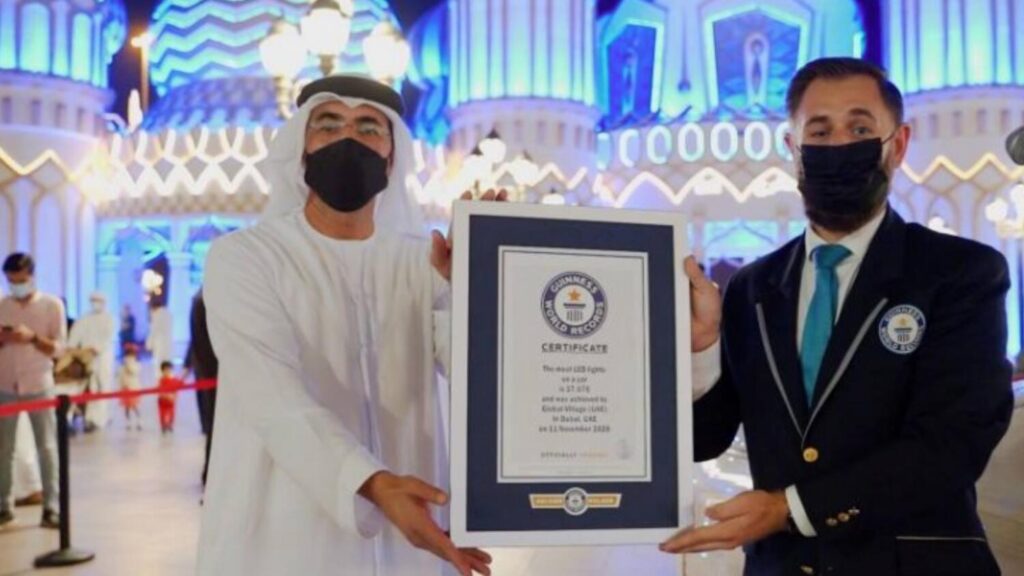
Global Village, a multicultural family entertainment destination, achieved two records in November alone. The first record was set by having the most LED lights ever on a car. The vehicle had 36,676 LED lights. The feat began two weeks ago as the park achieved the record for the most videos in a music medley video following the Rockin’1000 Season 25 opening concert.

Global Village aims to break 25 records this season as part of its Silver Jubilee anniversary celebrations.

Emirati shipbuilder Obaid Jumaa bin Majid Al Falasi also made it into the history by building the world’s largest dhow, a wooden Arabic boat, measuring 91.47-metre long and 20.41-metre wide. That is equal to the length and almost half the width of a standard American football field floating over the Indian Ocean.

Dubai’s Nakheel Mall, too, recently broke the record for the world’s largest fountain, measuring a whole 7,327 m2. The record breaking fountain named The Palm Fountain was designed a with tricks including colour and brightness controls.

The emirate is also home to the world’s tallest hotel – 75-storey Gevora Hotel, measuring 356.33 metres tall from the group level to the top.

Danny Hickson said Saudi Arabia comes second with 96 Guinness World Records titles, while Egypt is not far in the third place with 93 titles.

On September 23, Saudi Arabia achieved the Guinness World Record for the largest fireworks display in multiple cities as the display consisted of 962,168 fireworks.

“What’s brilliant about breaking world records with brands in the UAE is that there is almost a chance to do something different with the heritage. Brands and individuals think it is impossible to be break world records, but we believe everyone is amazing in his own way, and we are here to make their achievement Officially Amazing!,” said Hickson.

“We have seen the tallest house of cards build in 12 hours, sat on top of a washing machine, to demonstrate its reduced vibrations and noise levels; and an iconic car brand celebrated its 80th anniversary by breaking the record for the largest loop the loop in a car! Would we find amazing talents among Khaleej Times readers?,” concluded Hickson.

source/content: khaleejtimes.com (headline edited)

__________

___________________________________

UNITED ARAB EMIRATES (U.A.E)

ABU DHABI, U.A.E: NYUAD Researchers Create New Photographic Mars Map with Observations made by Emirates Mars Mission

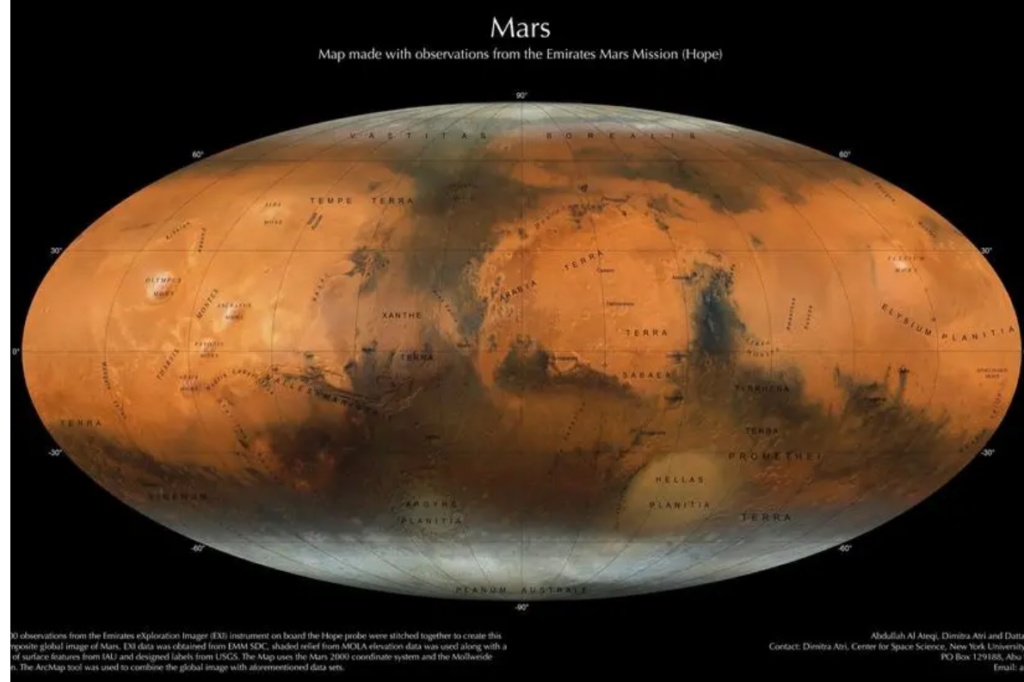
NYU Abu Dhabi (NYUAD) group leader and research scientist Dimitra Atri from the Centre for Space Science and his team have created a never-seen-before map of Mars, using images exclusively created from the Emirates Exploration Imager (EXI).

The EXI is a state-of-the-art imaging system on-board the Emirates Mars Mission (EMM), also known as Hope or Al-Amal, which is currently orbiting Mars. The global photographic map not only showcases new images of the Red Planet from the perspective of the Hope probe, but is a testament to the UAE’s huge advancements in the field of science, and will be a valuable resource to motivate young people to pursue careers in STEM (science, technology, engineering and mathematics) disciplines in the UAE.

The Mars Map combines more than 3,000 observations, produced by Hope’s onboard EXI instrument. Atri and his team created the colour composite map by stitching together the thousands of observations from the EXI instrument over the course of one Mars year (two Earth years).

Commenting on the project, Atri said, “We plan to make our map available to the entire planet, as part of the new and more advanced Atlas of Mars, which we have been working on, and will be available in both English and Arabic once published. The hope is that this accessibility will make it a great tool for researchers, and also students to learn more about Mars, and showcase the possibilities that the space sector in the UAE can offer.”

The Mars Map shows regions and features of the Red Planet in exceptional resolution, highlighting all its major features. For example, polar ice caps, mountains, volcanoes, remnants of ancient rivers, lakes, valleys, and impact craters are visible. Such highly detailed maps are an essential foundation upon which future scientific research on Mars can be built. The map will further allow scientists to learn about momentous shifts in climate that can fundamentally alter planets, which will provide insights that may be able to help us on Earth too.

“The complete Mars Map also brings the UAE and the Arab world another step closer to achieving EMM’s ambitious mission goal, to provide a complete global picture of the Martian climate,” Atri added.

“More than 30 previous spacecraft have only managed to capture a snapshot of the Mars weather, whilst EMM will follow the seasonal changes throughout a Martian year. The Hope probe is helping researchers to create this global image of the planet due to its strategic position. Hope circles Mars in an elliptical orbit that allows it to observe from much further away than any other spacecraft. This strategic position is helping researchers to create a global image of the planet,” he said.

EMM is the UAE and the Arab world’s first interplanetary mission commissioned by the country’s leaders in 2014. The spacecraft was launched from Japan on 20th July, 2020. Seven months later, on 9th February, 2021, the Hope probe entered Mars’ orbit.

source/content: wam.ae (headline edited)

____________

________________________________________________

ABU DHABI, UNITED ARAB EMIRATES (U.A.E)

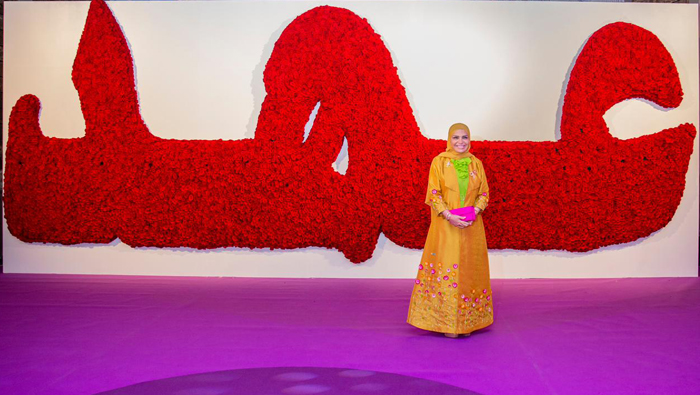
OMAN: A Unique Tribute to Lady Assayida Ahd Abdullah Hamed Al Busaidi and a New Guinness World Record for ‘A Word Written With the Largest Number of Flowers.

Paying tribute to Her Highness the Honourable Lady Assayida Ahd Abdullah Hamed Al Busaidi, Spouse of the Sultan of Oman, the Infrastructure, Technology, Industrial and Consumer Solutions cluster of Mohsin Haider Darwish LLC (MHD-ITICS), sponsored an event to set a new Guinness World Record for ‘A Word Written with the Largest Number of Flowers’.

The event was hosted by Lujaina Mohsin Darwish, Chairperson, MHD-ITICS. The mammoth task of assembling 12,000 roses, which spelt out the First Lady’s name, ‘Ahad’, began with fabrication work on 25 October and was successfully completed on 26 October.

It was then displayed at a grand event organised near the Snow Zone area, located on level two of the Mall of Oman. Official adjudicators from Guinness World Records were present to supervise, analyse and follow every step of the process. Adhering to all the stringent criteria, the masterpiece, once finished, stood 8.2 metres wide and 3 metres tall and proved to be a true work of art.

Ideated and conceptualised by Ms Naseem Abdullah Al Fadhli, MD, Integrated Benefits Projects and supported by Ms Haifa Balfaqih, Investment Programme Director – Nazdaher and GM, Strategic Planning and Technology, be’ah, the historic event witnessed the presence of some of the highly-esteemed guests including her excellencies, leading businesswomen and attendees from all over the country.

Receiving an overwhelming response from the audience, the new Guinness World Record further cements Oman’s position on the map as a country filled with unique initiatives and also as a nation raising an empowered generation of women.

Lujaina Mohsin Darwish said, “With the key message behind this initiative being especially close to our hearts, we are indeed delighted to set this new world record. It not only celebrates Omani women but is a tribute to Her Highness the Honourable Lady Assayida Ahad Abdullah Hamed Al Busaidi.

Her unwavering faith in the capabilities of the Omani women of today and continuous appreciation of their achievements have served as a constant motivation for all. It has ignited a zeal in every woman to break the glass ceiling and push the frontiers of women leadership.”

“Drawing inspiration from our leaders, MHD-ITICS will continue to act as a catalyst of change, encouraging women’s contribution to the Omani economy as well as participating and leading in their respective areas of influence and expertise. The strong Omani women have displayed courage, creativity, vision and accomplishment and will continue to play an instrumental role in driving transformation,” she added.

A keynote speech was delivered by Lujaina Mohsin Darwish, which was then followed by the much-awaited showcasing of the largest flower word. Another key highlight of the event was the large LED display wall with snippets and pictures of the First Lady of Oman. All attendees were gifted a branded scarf and were entertained with live music, a food and beverage counter and photo opportunities.

MHD-ITICS, under the guidance of Honourable Lujaina Mohsin Darwish, has achieved commendable growth in recent years. Moreover, the Company has been at the forefront of setting new benchmarks in the industry and supporting its women employees to assume various critical roles in the organisation.

source/content: timesofoman.com (headline edited)

____________

________

OMAN

ARAB – LATIN AMERICA: How Arab-Islamic migration, language and culture shaped modern Latin America 

  • Muslim conquest of the Iberian Peninsula left many influences, later taken to the continent by colonists
  • Some researchers believe 700-1,000 Portuguese words and about 4,000 in Spanish come from Arabic 

In recent years, a new generation of researchers has been examining the ancient Islamic roots of Latin American societies.

In the age of social media, such content is being disseminated among larger audiences, and many people in Latin America seem to be avidly interested.

“I began to read about the Moors when I was studying Arabic in Egypt,” said Mansour Peixoto, a Muslim convert from the Brazilian city of Recife who in 2014 founded the website Historia Islamica (Islamic History).

“I’d already learnt at that time about the Islamic influence on Portugal, but then I became interested in its direct and indirect impacts on Brazilian culture,” he told Arab News.

Between 711 and 1492, Arab-Berber rulers dominated parts of present-day Portugal, Spain and France, naming the region Al-Andalus.

An almost-800-year presence in the Iberian Peninsula left many influences that were brought to colonial Latin America.

After the Christian re-conquest, Islam was forbidden in Spain and Portugal. From then on, especially at the beginning of the 17th century, many Muslims — including people of European ancestry — were forced to move to North Africa, but many accepted to convert to Catholicism, some of whom remained secretly Muslim.

“Those people, especially the poor, were numerous among the Portuguese who came to colonize Brazil since the 16th century,” said Peixoto.

FAST FACTS

  • Between 711-1492, Arab-Berber rulers dominated parts of Portugal, Spain and France, naming the region Al-Andalus.
  • After the Christian re-conquest of Al-Andalus, Islam was forbidden in Spain and Portugal.
  • Some researchers believe that 700-1,000 Portuguese words come from Arabic.

Although his website deals with several Islamic themes, the history of Muslim Portuguese settlers — known as Mouriscos, or Moors — and their influence on Brazil is a frequent topic. “Many people don’t realize that we have customs in Brazil that come from the Islamic world,” said Peixoto.

Historia Islamica’s publications about the influence of Arabic on the Portuguese language are among the most shared by the website’s followers.

Some researchers believe that 700-1,000 Portuguese words come from Arabic, but recent studies suggest that the number of Arabisms could be much higher.

Several everyday words in Brazil have Arabic origins, such as alface (lettuce), almofada (cushion), acougue (butcher shop) and garrafa (bottle).

“Not to mention architectural terms that we still use today, like alicerce (foundation) and andaime (scaffolding),” said Peixoto.

“Iberian building methods were mostly Arab in the 16th century, and they were brought to the Americas.”

Islamic architectural influence in Latin America is one of the most noticeable cultural traits of Al-Andalus in the region, according to Hernan Taboada, an expert on the subject and a professor at the National Autonomous University of Mexico.

“That can be seen in the architectural style in New Spain, the viceroyalty that extended from the south of the present-day US to Central America,” he told Arab News.

Along with the Viceroyalty of Peru, in South America, that region probably concentrated most of the Moorish settlers in colonial Latin America, Taboada said.

Colonial-era churches in Mexico, from Veracruz on the Atlantic coast to Oaxaca in the south, exhibit evident Moorish artistic traits.

“They’re especially visible in the elements of decoration in those churches,” Taboada said. “Many temples in Mexico undoubtedly have Moorish style, which doesn’t mean they were necessarily built by Moors. In general, such elements were assimilated in Spain and transposed to Latin America.”

The presence of Muslims in New Spain and elsewhere in the region is not easy to verify, given that it was a clandestine presence.

This may be why the subject was ignored in academia for so long, although classical works of Latin American history mentioned it in the 19th and 20th centuries.

“The study of the Moorish presence was mostly resumed by Muslims and people of Arab origin. Those works showed that they weren’t as few in Latin America as was once supposed,” Taboada said.

Although Islam was forbidden, the Moors — like the Jews — largely enjoyed tolerance in the New World, though the Inquisition did act against them at times, he added.

Historian Ricardo Elia, cultural director of the Islamic Center of the Republic of Argentina, has since the 1980s been one of the pioneers in the study of the Moorish presence in the region of La Plata River.

“I discovered that the gauchos (the term used in Argentina, Uruguay and southern Brazil for legendary horsemen) are nothing less than Moors,” he told Arab News.

There is an ancient controversy regarding the etymological origin of that term in Argentina. Some scholars say it comes from a Quechuan word, but Elia and other researchers say it comes from chauch, a term with Arabic origins that means something like indomitable.

“In Valencia, Spain, the word chaucho was used to designate horsemen and pastors,” Elia said, adding that most of the crews of the Spanish ships that explored the Americas since the 15th century were composed of Moors, and that the first person to catch sight of the Americas was Rodrigo de Triana, a Moor.

“They needed to leave Spain so they came to the Americas. And they were good sailors.”

Over the centuries, Moors intermarried with other ethnic groups such as the Guarani indigenous people, but their cultural impact in the region is felt to this day.

Elia said empanadas, Argentina’s most typical pastry, have Andalusian origins, as does dulce de leche (caramelized milk).

The linguistic influence on the Spanish language is unquestionable. Elia estimates that there are about 4,000 Arabisms, most of them adopted in Spain.

“But in Argentina and Uruguay, the Moors also impacted our way of pronouncing the words,” he said.

Over the years, Elia has taught classes in universities in Argentina and Chile about the Moorish presence in South America.

“Unfortunately, the community of Lebanese and Syrian descent in Argentina has never shown much interest in such themes. Non-Arab Argentinians have always been the most curious about that,” said Elia, who comes from a Lebanese family.

He added that more and more people now want to learn about the first Muslim settlers in Latin America.

“In Morocco, an academic conference dealing especially with that topic was organized in 2021,” he said.

Peixoto said many people are “willing to discover more about their ancestry and the many questions not answered about it,” which is why a new generation of scholars has been researching the Moors of Latin America.

He plans to conduct an academic study about the Moors in Brazil, publish books on that topic and offer online classes.

“Our elite (in Brazil) likes to see itself as European, but we’re a combination of indigenous peoples, Africans, Europeans, and also Moors,” he said.

Peixoto thinks Muslims and Arabs made a decisive contribution to the formation of the Brazilian people, not only with the settlers from Al-Andalus, but also with the Africans brought as slaves, and the huge wave of Syrian and Lebanese immigrants who came to Brazil since the end of the 19th century.

“They transformed our way of being on many levels,” he said.

Taboada agreed, saying: “Eurocentric views are dominant among the Latin American elite. We have to emphasize that we have a multicultural origin.”

source/content: arabnews.com (headline edited)

__________

__________________________

ARAB – LATIN AMERICA

MOROCCO’s Khadija El Mardi Crowned Boxing World Champion, Winning Gold at the Women’s World Amateur Boxing Championships, New Delhi, India

Moroccan boxer Khadija El Mardi won the gold medal on Sunday in New Delhi, India, during the Women’s World Amateur Boxing Championships.

The national champion El Mardi, who competed in the heavyweight division (Over 81kgs), won the women’s world boxing championship by defeating the Kazakh Kungeibayeva Lazzat.

El Mardi has achieved a number of victories over the years, including the title of African champion in 2022, a victory at the African Games in Rabat in 2019, a silver medal at the World Championships in 2022, and this year’s Mohammed VI Trophy gold medal.

Born in Casablanca in 1991, El Mardi’s everlasting commitment and heroic efforts to achieve success have made her name stand out.

source/content: northafricapost.com (headline edited)

_____________

____________

MOROCCO

UAE’s Sheikha Fatima bint Hazza Honored at London’s Arab Woman Award

The UAE’s Sheikha Fatima bint Hazza was honored on Tuesday with the Arab Woman Award at a ceremony in London in recognition of her contributions to female empowerment in the region and her philanthropic efforts in various countries, Vogue Arabia reported.

Sheikha Fatima has been a strong supporter of cultural initiatives, particularly those involving the arts and sports. 

She has endorsed several programs aimed at boosting the cultural scene in the UAE and the region through her role as chairwoman of the board of directors of the Fatima bint Mubarak Ladies Sports Academy and the Fatima bint Hazza Cultural Foundation. 

Her other accomplishments include increasing access to education in Bangladesh, building schools in Kenya, and forming the Fatima bint Hazza Fund for Emirati women to pursue higher education abroad, Vogue Arabia reported.

She is “committed to enhancing the role of women in various ways, as she is a supporter of sports and arts, and we are honored to bestow her with the Achievement Award in Cultural Development,” the Arab London Foundation said.

The philanthropist has also helped broaden young people’s interest in fields such as art, literature, sustainability and community interaction, Vogue Arabia reported. 

The Fatima bint Hazza Cultural Foundation recently launched a series of short stories for young people focusing on culture, local identity and sustainability

Upon accepting her award, Sheikha Fatima praised Emirati leaders and their efforts to encourage women to pursue their dreams.

“Effective participation and making progress and positive change are the core values that we have been raised on,” she said. 

“I am proud to represent my country, the UAE, where women have not had to struggle to obtain their rights but have always been at the forefront since the establishment of the state.”

source/content: arabnews.com (headline edited)

______________

Sheikha Fatima bint Hazza was honored at the eighth edition of the Arab Women Awards in London. (WAM)

___________________________________

UNITED ARAB EMIRATES (U.A.E)

SAUDI ARABIAN Ministry Introduces 3 New Fonts to Celebrate Kingdom’s Culture

The fonts, celebrating the Kingdom’s culture, will be available free of charge.

The Ministry of Culture on Monday launched an initiative creating three new Saudi fonts.

The fonts, celebrating the Kingdom’s culture, will be available free of charge to individuals and organizations wishing to use them in design, artistic, and creative works, the Saudi Press Agency reported.

The Masmak font has been named after the historic Masmak Fortress, characterized by its durability and strong structure. The font has been described as clear and easy to read and was developed without reference to traditional calligraphy methods, the SPA said.

The second new font, Al-Naseeb, resembles handwritten notes, and has been recommended for use in headlines, texts, literary works, poetry, and children’s stories.

Watad, the third font, was inspired by the tent peg with its letters having curved corners. Its suggested use was for text relating to festivals and sporting events.

The Ministry of Culture launched the initiative in celebration of the Arabic language. In a statement, it said: “It is introducing a unique touch that gives a Saudi identity to Arabic fonts and celebrates Saudi heritage and cultural symbols.”

The fonts can be downloaded at https://engage.moc.gov.sa/fonts.

source/content: arabnews.com (headline edited)

____________

_________________

SAUDI ARABIA

ALGERIA: The Battle of Algiers: an iconic film whose message of hope still resonates today

Saadi Yacef, the Algerian revolutionary leader who fought for his country’s liberation from French colonial rule, died on 10 September 2021. Yacef is perhaps one of the better known of Algeria’s resistance fighters because of the role he played in the creation of the film The Battle of Algiers , directed by the renowned Italian film maker Gillo Pontecorvo.

The Battle of Algiers was filmed in 1965 as a co-production between an Italian creative team and the new Algerian FLN (Front de Libération Nationale) government, whose representative Yacef produced the film and stars as the character of Jaffar.

One of the most extraordinary films ever made, The Battle of Algiers is an emotionally devastating account of the anticolonial struggle of the Algerian people and a brutally candid exposé of the French colonial mindset. Many French people were unhappy with the representation of their army and country in the film. It was not officially censored in France , but the general public and all cinemas boycotted it. It was seen as anti-French propaganda.

In later years, the film was screened to groups classed as revolutionaries and terrorists, apparently becoming a “documentary guidebook” in the Palestinian struggle, and for organisations such as the Irish Republican Army and the Black Panthers, who examined its detailed representation of guerrilla tactics.

It was also shown in the Pentagon in 2003, in the middle of the Iraq War. US Counterterrorism experts Richard Clarke and Mike Sheehan suggest that the film showed how a country can win militarily, but still lose the battle for “hearts and minds”.

What relevance does The Battle of Algiers hold today, 55 years after it was first released?

The message of the film is ultimately one of hope: the oppressed multitude will eventually triumph because their cause is just. The images of revolutionary crowds in the film recall the jerky, grainy footage that has emerged from a wave of recent protests in the last decade, from the Black Lives Matter movement to Extinction Rebellion . Pontecorvo thrillingly captures the power and possibility of large gatherings of citizens, who come together to demand rights, putting their bodies at risk to create social and political change.

Additionally, the film refuses to condemn any of the agents in this conflict. As Pontecorvo has stated

in a war, even if from a historical standpoint, one side is proven right, and the other wrong, both do horrendous things when they are in battle.

A film of contrasts

Shot in black and white, the film is difficult to classify in terms of style. Its military action sequences and tactical montages remind us of films like Zero Dark Thirty and The Eye in the Sky; indeed, it is almost impossible to film a scene of politically-motivated torture without having The Battle of Algiers as an implicit or explicit point of reference.

The collective aspect of the film’s creation, and the socialist ideals that inspired it, link it to what’s called Third Cinema. This was a kind of revolutionary cinema, a cinema of the “Third World”, that was designed to overthrow the systems of colonialism and capitalism.

The Battle of Algiers is also an example of Italian neorealism, a major film movement coming out of mid-twentieth century Italy. The neorealists made films that opposed Mussolini’s fascist regime, and they focused on the hardships of the working class in Italy. Neorealism was a moral and aesthetic system: it brought art and politics together to expose the ills of society and bring about social change.

The Battle of Algiers was shot entirely on location in Algiers, and Colonel Mathieu was the only professional on set. Pontocorvo selected the other actors from the local population based on their faces and expressions.

Other elements of the neorealist style was the use of techniques that create a documentary aesthetic such as the hand-held camera. Pontecorvo also uses extracts from real-life FLN and police communiqués, letters, and title cards. And he used newsreel stock, which was cheaper, but also added to the sense of verisimilitude in the film.

Although he believed the Algerians cause to be just, Pontecorvo wanted to create a nuanced and fair account of the war. Therefore, he sets up a series of contrasts to reflect this opposition between French and Algerian. This is present in the original musical score by Ennio Morricone: while groups of French soldiers rampage through the Casbah to the sound of jaunty military drums and horns, a haunting flute theme accompanies sequences which feature Algerian civilians.

Contrast is also evident in the use of light and shadow: there are strong chiaroscuro effects, perhaps reflecting the themes of right and wrong in the film. Pontecorvo also uses shadow to highlight the covert operations of the Algerians: Ali La Pointe’s face is filmed with deep shadows, and the face of Colonel Mathieu is always brightly lit.

Space provides another important contrast in the film. Frantz Fanon, a famous theorist of the Algerian revolution, describes the colonial world as a world “cut in two” because of the stark divide between the coloniser and the colonised. In The Battle of Algiers, the wide boulevards of the European quarter are juxtaposed to the narrow, winding, labyrinthine alleyways of the Casbah. Space is also divided vertically and horizontally – the European quarter is flat, while the Casbah is steep and sloping.

This opposition of space highlights the gap between rich and poor, coloniser and colonised.

The question of bias

The biggest contrast in the film is of course between the French and Algerians. The embodiment of French and European values in the film is Colonel Mathieu. He is a suave figure, confident and controlled in army fatigues, stylish sunglasses and slick speech – he has more dialogue than other characters in the film. A number of critics have argued that Mathieu is far ‘too cool’, given that he is a practitioner and a proponent of torture.

Yet Colonel Mathieu is not depicted as an ogre: above all, he embodies reason. We see this in his statements about the use of torture, when he uses solid rhetorical devices to justify it. He says:

…do you think France should stay in Algeria? If you do, you have to accept the necessary consequences.

This is persuasive as a logical argument – if you want French Algeria, you have to accept the actions that result in this outcome – torture.

If Mathieu and the French have reason, what do the Algerians have?

Firstly, they have raw, visceral emotion and the power of the group. The victory at the end of the film is a victory of the masses, embodied in two figures – the martyr Ali La Pointe, the illiterate everyman who becomes a hero for the revolution, and the gyrating, anonymous Algerian women, whose gaze outwards to the future closes the film.

This takes me to the final point about what the Algerians have on their side – the power of historical right. We see this through Pontecorvo’s use of chronology – the narrative proceeds as a flashback, until we leap forward in time to the euphoria and mania of the end of the war and the triumph of the revolutionaries. Pontecorvo here glosses over the fact that the real Battle of Algiers was lost by the Algerians, and jumps into a future of eventual victory in the war.

This is how he views the process of history – the masses, with moral right on their side, will eventually win.

source/content: theconversation.com (headline edited)

___________

Yacef Saadi (R), military leader of the FLN National Liberation Front networks of the autonomous zone of Algiers, poses after being captured at the end of the “Battle of Algiers”. Photo by -/AFP via Getty Images

___________

ALGERIA