Arabs & Arabian Records Aggregator. Chronicler. Milestones of the 25 Countries of the Arabic Speaking World (official / co-official). AGCC. MENA. Global. Ist's to Top 10's. Records. Read & Enjoy./ www.arabianrecords.org
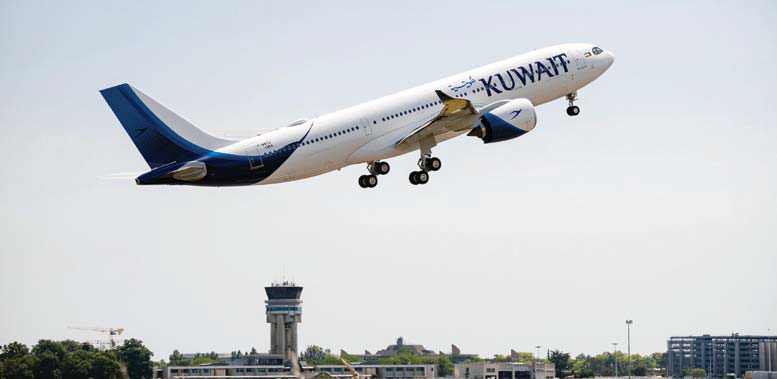
In line with the airline’s strategy to match capacity with demand, optimize performance with the best in on board experiences for its customers, Kuwait Airways launched its first inaugural flight to New York John F Kennedy Airport utilizing the Airbus A330neo and in setting the record for the longest flight flown by the A330-800 neo in 13 hours.
The award winning Airspace cabin is equipped with a two-class configuration comprising of 32 full flat business class seats and 203 economy class cabin seats on a 2-4-2 configuration. Thus offering passengers state of the art flying experience with more personal space, quietest cabin in its market and the latest generation of in-flight entertainment system and connectivity.
Sustainability From a sustainability and efficiency standpoint, the A330neo offers benefits to both the airline and the traveling public. With double-digit fuel savings and CO2 emissions compared to other aircraft in its category, the A330- 800 allows significantly lower operational cost and therefore competitive ticket pricing. Captain Ali Al Dukhan, Chairman Kuwait Airways said.
“This flight marks a new era in our strategy to right-fit the best of customer experiences while balancing cost efficiencies and sustainability in our operational decisions. The utilization of this aircraft’s long-range capability will also bring double-digit savings, which coincidentally means less harm to the environment, matching closely to our ESG goals. We are proud to take the next step forward in reaching the corporate strategy goals in reducing costs and enhancing marginal performance”.
Mikail Houari, President, Airbus Africa Middle East said: “We are proud that Kuwait Airways has chosen to deploy the A330-800 on John F Kennedy Airport, a key route for the airline. We are confident that the aircraft will provide passengers with exceptional flying experience while providing the airline with unbeatable economics, efficiency and environmental performance.
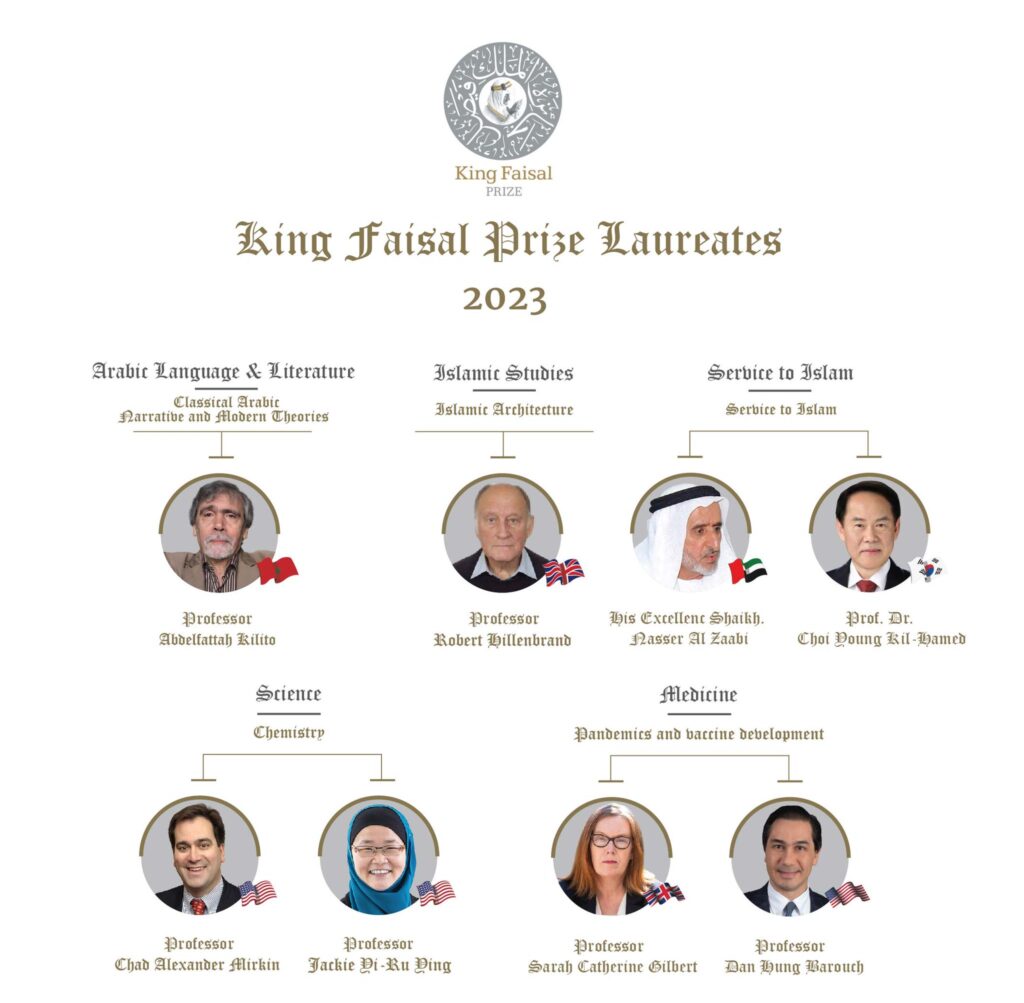
An Emirati, a Moroccan, a South Korean, two Brits and three Americans were honored with the King Faisal Prize 2023.
They served people and enriched humanity with their pioneering work so deserve to be honored and recognized for their distinguished efforts, the King Faisal Foundation said when honoring the winners of the King Faisal Prize 2023.
A glittering award ceremony was held in Riyadh on Monday under the patronage of King Salman, and on his behalf, Prince Faisal bin Bandar, governor of Riyadh Region, attended the ceremony for handing over the King Faisal Prize to the winners this year.
The annual awards are the most prestigious in the Muslim world and recognize outstanding achievement in services to Islam, Islamic studies, Arabic language and literature, medicine and science.
This year an Emirati, a Moroccan, a South Korean, two Brits and three Americans won the prestigious prize, which in its 45th session recognized COVID-19 vaccine developers, nanotechnology scientists and eminent figures in Arabic language and literature, Islamic studies, and service to Islam.
The prize for service to Islam was awarded jointly to Shaikh Nasser bin Abdullah of the UAE and Professor Choi Young Kil-Hamed from South Korea.
The prize for Islamic studies was awarded to Professor Robert Hillenbrand from the UK.
The prize for Arabic language and literature was awarded to Professor Abdelfattah Kilito of Morocco.
The prize for medicine was awarded jointly to Professor Dan Hung Barouch from the US and Professor Sarah Catherine Gilbert from the UK.
In his acceptance speech, Barouch said, “The Ad26 vaccine for COVID-19 demonstrated robust efficacy in humans, even after a single shot, and showed continued protection against virus variants that emerged. This vaccine has been rolled out across the world by the pharmaceutical company Johnson & Johnson, and over 200 million people have received this vaccine, particularly in the developing world.”
Gilbert said that she was “humbled to join the other 2023 laureates, and to follow-in the footsteps of the men and women whose work has been recognized by the foundation for more than four decades. This award is in recognition of my work to co-create a vaccine for COVID-19. A low-cost, accessible, efficacious vaccine that has now been used in more than 180 countries and is estimated to have saved more than six million lives by the start of 2022.”
The prize for science was awarded jointly to Professor Jackie Yi-Ru Ying and Professor Chad Alexander Mirkin, both from the US.
Ying’s research focuses on synthesis of advanced nano materials and systems, and their application in biomedicine, energy conversion and catalysis.
Her inventions have been used to solve challenges in different fields of medicine, chemistry and energy. Her development of stimuli-responsive polymeric nanoparticles led to a technology that can autoregulate the release of insulin, depending on the blood glucose levels in diabetic patients, without the need for external blood glucose monitoring.
“I am deeply honored to be receiving the King Faisal prize in science, especially as the first female recipient of this award,” she said in her acceptance speech.
This year two women scientists have been honored as winners of the King Faisal Prize for medicine and science categories.
The woman behind the Oxford–AstraZeneca COVID-19 vaccine, Professor Sarah Gilbert, the Saïd chair of vaccinology in the Nuffield department of Medicine at Oxford University, was honored with the medicine award.
The other woman scientist honored with the King Faisal Prize in science is Professor Jackie Yi-Ru Ying; the A-star senior fellow and director at NanoBio Lab, Agency for Science, Technology and Research. She is a professor at Massachusetts Institute of Technology, and was chosen for her work on the synthesis of advanced nanomaterials and systems, and their applications in catalysis, energy conversion and biomedicine.
The King Faisal Prize was established in 1977. The prize was granted for the first time in 1979 in three categories: Service to Islam, Islamic studies and Arabic language and literature. Two additional categories were introduced in 1981: Medicine and science. The first medicine prize was awarded in 1982, and in science two years later.
Since 1979, the King Faisal Prize in its different categories has awarded 290 laureates who have made distinguished contributions to different sciences and causes.
Each prize laureate is given $200,000 (SR750,000); a 24-carat gold medal weighing 200 grams, a certificate inscribed with the laureate’s name and a summary of their work that qualified them for the prize, and the certificate signed by chairman of the prize board, Prince Khalid Al-Faisal.
Morocco’s berry production is one of the country’s key contributors to the agricultural sector.
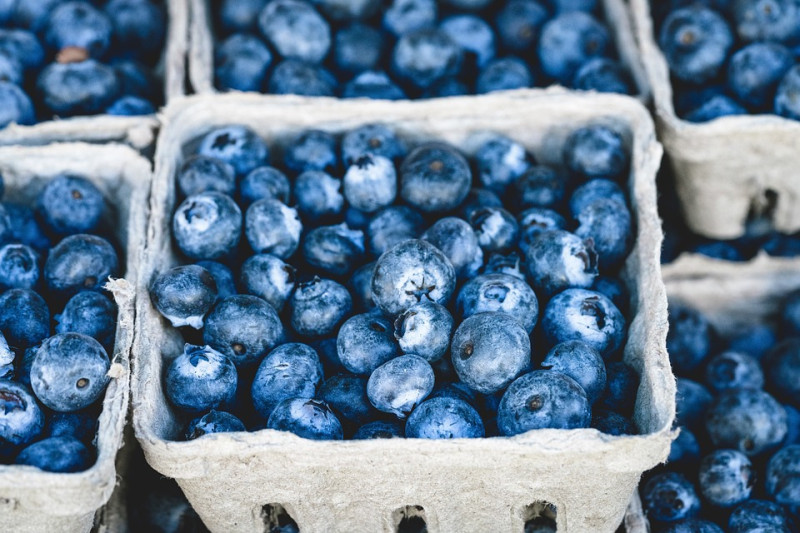
Morocco has outperformed the US becoming the fourth largest blueberry exporter in the world.
Data from East Fruit said that Morocco exported 53,000 tonnes of blueberries in 2022. Peru was the largest exporter of fresh blueberries last year, with 277,000 tonnes, followed by Chile (105,000 tonnes) and Spain (87,000).
Despite Morocco’s leading position in blueberry exports, the Netherlands exported more blueberries than the North African country in 11 months of last year, the same source said.
“It should be noted that the exports from the Netherlands in 11 months of last year were higher than that of Morocco, having amounted to 104 000 tonnes,” East Fruit reported.
Elaborating on the data, the news outlet said: “However, if we take into account the volume of re-exports, the real result of the Netherlands will be much lower since it imported 130 000 tonnes of fresh blueberries during this period.”
East Fruit also recalled that Morocco ranked seventh place among the largest exporters of cultivated blueberries in 2017.
Berry production in Morocco has contributed to the country’s agricultural sector significantly.
Morocco’s revenues from strawberry exports to the international market are estimated between $40 and $70 million annually.
According to previous data from East Fruit strawberry products are one of the top 10 most exported goods from Morocco.
According to estimates, Morocco exported 22,400 tonnes of fresh strawberries globally in 2022, representing an increase of 17% compared to a year earlier.
Countries like the UAE, Qatar were key buyers of Moroccan goods. In Europe, the US is one of Morocco’s strawberry importers. In 2022, the US imported almost half of Morocco’s strawberry export supply.
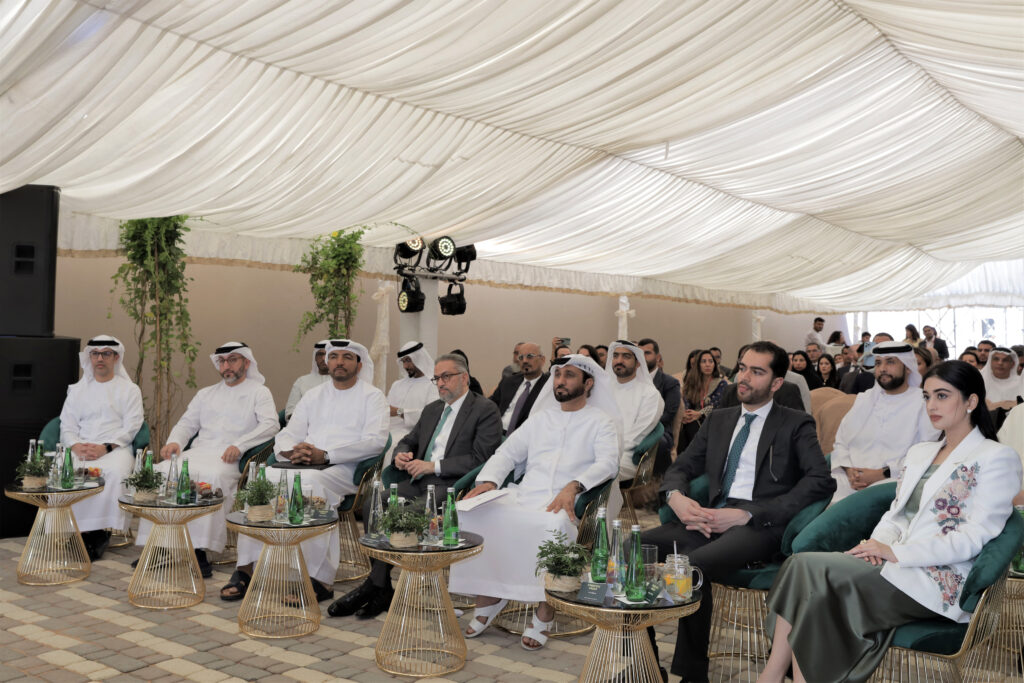
The IFFCO Group, one of the UAE’s largest producers of food products, has opened the first 100-percent plant-based meat factory in the region, in Dubai.
Located in the Dubai Industrial City, the THRYVE factory will catalyse the move towards a more sustainable and healthy food chain in the Middle East, actively supporting the United Nations’ Sustainable Development Goals and the UAE’s Vision 2051 initiative to bolster food security through diversity and innovation. The factory will provide nourishing, sustainable and healthy local plant-based meat products inspired by the unique flavours of Middle Eastern cuisine.
Mariam bint Mohammed Almheiri, Minister of Climate Change and the Environment, said, “The new 100-percent plant-based meat factory supports the UAE’s Food Security Strategy and our mandate to mitigate the impact of climate change. The opening of this innovative new facility also supports our efforts to protect the country’s ecosystems and enhance its food and water security and diversify our food sources. By fostering such robust research and development focused on producing innovative food products, we seek to raise the UAE’s ability to move up the global food industry value chain and achieve first place on the Global Food Security Index by 2051. The new factory represents a significant contribution to sustainability in the food supply chain.”
Hadi Badri, CEO of the Dubai Economic Development Corporation at Dubai’s Department of Economy and Tourism said, “The opening of this factory, which will pave the way for a dynamic new industry that will boost trade across the region, is a reflection of the UAE’s commitment to pioneer the use of innovative technologies to provide sustainable solutions to real world problems. It contributes to Dubai’s economic diversification journey in line with the goal of the Dubai Economic Agenda D33 to consolidate the emirate’s status as one of the top three global cities. The new facility is a testament to the pivotal role being played by Dubai in promoting the growth and evolution of environmentally sound practices that can alleviate the effects of climate change. By providing opportunities for private companies to invest in sustainable technologies, Dubai is accelerating the creation of a robust and resilient green economy.
“Such initiatives also reflect Dubai’s success in creating a fertile environment for new businesses and investors to thrive, and generating new job opportunities. Dubai and the UAE will continue to work with stakeholders and partners to remain at the forefront of innovation and economic sustainability, inspired by the ambition of our visionary leadership to create a better future for all.”
Saud Abu Alshawareb, Executive Vice President, Industrial Leasing, Dubai Industrial City, said, “DIC is an ideal location for initiatives like the IFFCO Group’s plant-based meat factory that underscore the importance of food security. The Dubai Industrial City is home to a growing number of Dubai-based food manufacturers who are leading the way in introducing innovative food products. This new enterprise adds value to the industry while strengthening our reputation as facilitators of a self-reliant food programme.”
The THRYVE plant-based venture, developed using cutting-edge food technology, contributes to at least three UN’s SDG’s: good health and well-being, responsible consumption and production, and climate action.
The only 100 percent plant-based meat factory in the Middle East, IFFCO’s THRYVE will leverage advanced food technologies to produce tasty, healthy, sustainable and culturally relevant food that meets the needs of the local consumer. In addition, IFFCO is working closely with the government to create regulatory standards for plant-based food products.
The global plant-based meat market was estimated to be worth US$7.9 billion in 2022, and is forecast to reach US$15.7 billion by 2027, according to a report from ResearchAndMarkets.com. The newly opened THRYVE factory will cater to 30 percent of the GCC population, stimulating the development of the market for local plant-based products. As per proprietary research, the GCC has the potential to be a future leader in developing food products for flexitarians, people whose diet is primarily vegetarian.
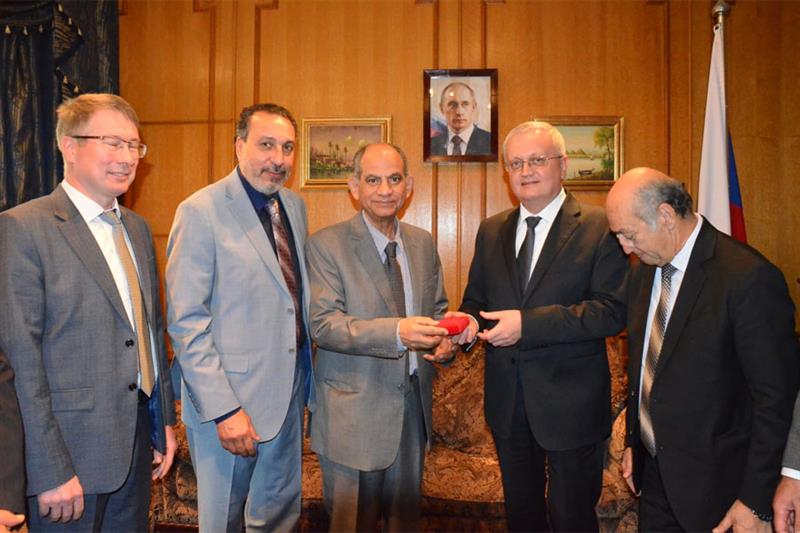
Russian ambassador to Egypt Georgiy Borisenko has awarded the Dostoyevsky Medal to Anwar Ibrahim – the under-secretary of the Ministry of Culture and former head of the ministry’s Foreign Cultural Relations Department – for his work in translating Russian literature into Arabic.
The honouring ceremony took place at the headquarters of the Russian Embassy in Cairo on 6 March. It was attended by a delegation from the Egyptian Association of Graduates of Russian and Soviet Universities headed by Sherif Gad.
Ambassador Borisenko expressed appreciation for Ibrahim’s efforts in translating classic and contemporary Russian literature into Arabic, thereby promoting Russian culture.
“The Arab reader is lucky when he reads translated Russian literature through creative translators like Anwar Ibrahim,” Borisenko said.
Borisenko wished Ibrahim continued success in his literary career, which he described as part of the soft power between Russia and the Arab peoples.
The Dostoyevsky Medal was established by the Russian Writers Union to be awarded to translators on the occasion of the 200th anniversary of the birth of the great Russian writer Fyodor Dostoyevsky, who is one of the most iconic writers of the Russian literary canon.
For his part, Ibrahim said that “this honour is a new birth for me, and I am extremely proud of receiving the Dostoyevsky Medal.”
Toghan, Secretary-General of the Association of Graduates, affirmed that the award for Ibrahim is a tribute to all graduates of the association, especially since Anwar is the first Arab to receive the prestigious medal.
Dostoyevsky, who was born in 1821 in Moscow and died in 1881 in St. Petersburg, gave up an engineering career early in order to write.
In 1849, he was arrested for belonging to a radical discussion group and was sentenced to be shot. He was reprieved at the last moment and sentenced to four years of hard labour in Siberia, where he developed epilepsy and experienced a deepening of his religious faith.
Dostoyevsky’s novels are especially concerned with faith, suffering, and the meaning of life; they are famous for their psychological depth and insight and their near-prophetic treatment of issues in philosophy and politics.
By the end of his life, he was acclaimed as one of his country’s greatest writers, and his works had a profound influence on 20th-century literature.
Building work on Saudi Aramco’s new $7 billion Shaheen petrochemical project in Ulsa, South Korea has officially begun after a groundbreaking ceremony involving the energy giant’s CEO.
Amin Nasser attended the inauguration event alongside South Korea’s president Yoon Suk Yeol and senior officials from both countries.
The Shaheen project, announced in November 2022, is being built by South Korean refiner S-OIL Corp., of which Aramco owns a more than 63 percent stake.
“We are deeply honored by the presence of His Excellency President Yoon at this historic groundbreaking ceremony,” said Nasser – also the Aramco President.
“Shaheen is among Aramco’s biggest international downstream investments, representing a significant and sizeable step forward in our liquids-to-chemicals expansion and another major milestone in further strengthening our presence in Korea,” he continued.
Shaheen is Saudi Aramco’s largest investment in South Korea and is expected to be among the biggest integrated steam crackers – a petrochemical process – in the world.
It is also the first large-scale commercial use of Aramco’s thermal crude-to-chemicals technology, which was developed in partnership with Lummus Technology, a leading licensor of proprietary petrochemicals.
The construction of the new plant will be completed by 2026 and will have a production capacity of up to 3.2 million tons per year, in addition to a facility for producing high-value polymers.
Aramco has established a solid relationship with South Korea, and has recently agreed to a $6 billion framework deal with the country’s export-import bank.
According to the deal, Eximbank can lend Saudi Aramco up to $6 billion, which can be used to fund South Korean enterprises involved in projects with the global energy firm, whereas the bank indicated that $1 billion is set aside for hydrogen and renewable energy projects.
Moreover, Aramco also inked a memorandum of understanding with South Korea’s Hoban Group last month to collaborate in building and manufacturing.
source/content: arabnews.com (headline edited)
___________
South Korea’s President Yoon (centre) with Aramco president Amin Nasser (Supplied)
Islamic cemetery in Najaf is often described as the world’s biggest.
The graveyard covers an area of 917 hectares, the equivalent of more than 1,700 football fields
There are no maps to guide visitors through the labyrinth, which is also listed as the world’s largest burial ground in the Guinness Book of World RecordsAn expanse of gravesThe shrine of Imam Ali at the cemetery
Almoqbel is the first Arab ambassador to the WTO to preside over the TPRB.
The World Trade Organization General Council has selected Saudi Arabia’s Ambassador to WTO Saqer Abdullah Almoqbel to chair its Trade Policy Review Body for 2023-2024.
Almoqbel is the first Arab ambassador to the WTO to preside over the TPRB.
The TPRB aims to facilitate the efficient operation of the multilateral trading system by increasing the transparency of WTO members’ trade policies. All members are subject to review every two to six years under the mechanism.
Periodically, the agency releases reports on the global economy, including detailed chapters examining the trade policies and practices of each member, as well as descriptions of the trade policymaking institutions and the macroeconomic environment.
Saudi Arabia’s new position at TPRB reinforces its leadership position within the WTO. In addition to being the organization coordinator for the Arab group, the Kingdom has chaired the Council for Trade in Services, the Council for Trade-Related Aspects of Intellectual Property Rights, the Working Group on Transfer of Technology, and the Committee for Balance of Payments Restrictions in previous years.
source/content: arabnews.com (headline edited)
____________
Saudi Arabia’s Ambassador to WTO Saqer Abdullah Almoqbel presents his credentials to Deputy Director-General Yi Xiaozhun in 2020. (WTO)
James Abourezk, 1st Arab American US senator, dies at 92.
James Abourezk, attorney and Democratic politician who served as a United States senator and United States representative from South Dakota and co-founder of the American-Arab Anti-Discrimination Committee(ADC), died today on his 92nd birthday.
He was born in Wood, South Dakota, the son of Lena (Mickel), a homemaker, and Charles Abourezk, an owner of two general stores. Both of his parents were Lebanese immigrants. He grew up near Wood on the Rosebud Reservation and has lived in South Dakota most of his life.
Abourezk represented South Dakota in the United States Senate from 1973 until 1979. He was the author of the Indian Child Welfare Act, passed by Congress in 1978 to try to preserve Indian families and tribal culture.
He was instrumental in the creation of both the American Indian Policy Review Commission and the Select Committee on Indian Affairs. He became chairman of the Indian Affairs Committee from its creation in 1977 to 1979.
Abourezk was elected in 1970 as a Democrat to the United States House of Representatives and served from 1971 to 1973. In 1972 he was elected to the U.S. Senate, where he served from 1973 to 1979.
Abourezk was an outspoken critic of Israel and U.S. foreign policy in the Middle East after touring the region and visiting his parents’ hometown in Lebanon as a senator. The position lost him many political allies, and he decided to retire from the Senate after a single term.
In 1980, Abourezk co-founded the American-Arab Anti-Discrimination Committee and traveled throughout the U.S. organizing Arab Americans in the wake of the “Abscam” debacle. Abscam was an FBI sting operation where agents dressed up as “oil-rich sheiks” in the late 1970s and early 1980s that led to the convictions of seven members of the United States Congress, among others, for bribery and corruption.
Abourezk’s marriages to Mary Ann Houlton and Margaret Bethea ended in divorce. In 1991, he married Sanaa Dieb, a restaurateur. They moved to Sioux Falls where she opened an award-winning Arab restaurant.
Survivors include his wife; children Charles Abourezk, Nikki Pipe On Head, and Paul Abourezk from his marriage to Houlton; daughter Alya Abourezk from his third marriage; a stepdaughter; and many grandchildren and great-grandchildren.
Warren David, president of Arab America and a former national president of the American-Arab Anti-Discrimination Committee said, “during a time when discourse regarding the negative portrayal of Arabs and the injustice faced by Palestinians were scarce, he (Abourezk) acted as a pioneer who instilled a sense of immediacy in the Arab American community–he was a trailblazer in that regard.”