TUNISIA: The 33rd International Carthage Film Festival: a breath of fresh air in trying times

Tunisia’s prestigious industry event enjoys another successful year, helping spread a love of culture across the country.

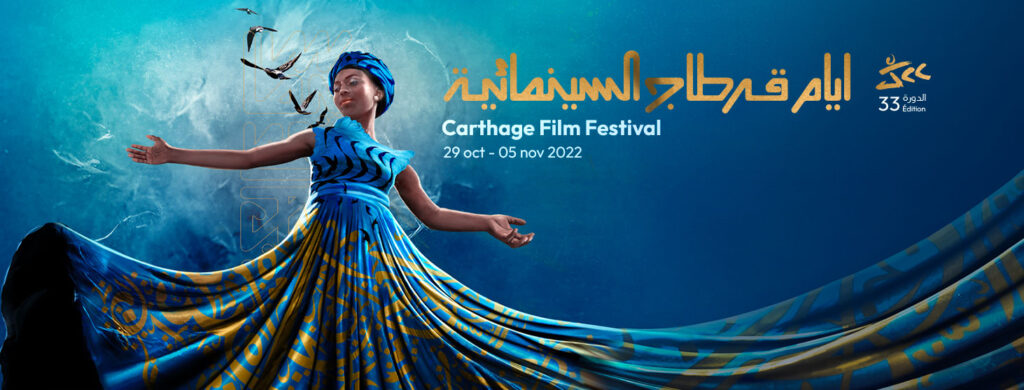
Another week of movie magic, street art and music has come to an end following the 33rd edition of the International Carthage Film Festival in Tunisia.

Titled “Hel Thneya”, which means “Open the Path” in Tunisian dialect, the festival once again cemented its status as a major cultural attraction for visitors of all ages, who flocked to cinemas and filled the streets en masse.

The festival, one of the eldest and most prestigious in the Mena region, ended on Sunday.

As is tradition, the capital Tunis was transformed into an open celebration of not only cinema but all forms of arts, with independent young painters getting the chance to show their artworks to the public for the first time and musicians performing every evening to audiences in the middle of Avenue Habib Bourguiba. For many, it was an opportunity to watch films that they don’t usually have the means or the opportunity to see.

Speaking outside the Theatre de Region Cinema, Downtown Tunis, Amina told The National she had been waiting for the festival to introduce her two children to the world of the cinema.

“As a family, we always discuss films together but we never find the time nor age-appropriate films to watch. This is a great opportunity to let them discover the big screen,” Amina said.

Amina’s daughter Ritej, who is in the sixth grade, was grinning with happiness as she prepared to enter the cinema hall. “I’m excited, I’m sure I’m going to enjoy this and tell my friends about it,” Ritej said.

Amina said that she often encourages her children to value the arts, with Ritej currently rehearsing for a school play, and she wishes there were more events like it in Tunisia.

This year’s International festival was an opportunity to revive the city. According to organisers, the festival aimed to showcase both new cinema productions and also timeless films that the younger generations needed to be introduced to.

This year, 72 countries participated with Saudi Arabia being the guest of honour and special emphasis placed on Palestinian and Spanish Cinema — a choice that organisers said highlighted the intersection between north and south, placing migration under an artistic lens.

The festival also paid tribute to Arab filmmakers, both living and dead, namely the Moroccan director Mohamed Abderrahmen Tazi and Egyptian director Daoud Abdel Sayed, as well as the late Algerian director Yamina Chouikh and late Tunisian director Kalthoum Bornaz.

“Through this 33rd edition, we continued to foster cultural decentralisation by bringing new sections to the festival and programming screenings in different parts of the country,” journalist and cinema critic Yosra Chikhaoui told The National.

“This year marks the first edition of JCC for kids. We are bringing more screenings as part of our “street cinema” section as well as continuing the special screenings for prisoners and members of the Tunisian army inside military bases,” Chikhaoui, who is a member of the festival’s media committee, added.

JCC in Prisons, now in its eighth year,is the fruit of a partnership between the Tunisian Ministries of Culture and Justice and the International Organisation Against Torture. This year, 12 films were showcased in three prison facilities, while juvenile detainees were transferred to Tunis for a special showcase in a cinema.

According to Ridha Behi, general director of this year’s festival, film screenings in prisons serve as a reminder of the right all people have to access and experience culture.

Awards, meanwhile, highlighted the multitude and variety on show, with a focus on filmmakers whose work depicts the struggles of their respective societies.

The Tanit d’Or award for best feature film was given to Tug of War, directed by Amil Shivji — marking the first time a film from Tanzania has won the award. Meanwhile, the Tanit d’Argent and Tanit de Bronze were respectively awarded to the films Under the Fig Trees by Erige Sehiri from Tunisia and Sharaf by Samir Nasr from Egypt

source/content: thenationalnews.com (headline edited)

___________
___________

TUNISIA
ABU DHABI, UNITED ARAB EMIRATES: ’17th edition Sheikh Zayed Book Award 2022″(SZBA) announces longlists for Literature, Children’s Literature, and Young Author Categories

The Sheikh Zayed Book Award (SZBA) of the Abu Dhabi Arabic Language Centre (ALC), part of the Department of Culture and Tourism – Abu Dhabi (DCT Abu Dhabi), has revealed the longlists for its 17th edition (2022/2023) in the Literature, Children’s Literature, and Young Author categories.

The announcement was made as the SZBA judging committees begin the evaluation process for all the longlisted entries.

The Young Author category saw 954 submissions this year, an increase of more than 8 percent from the 881 received last year. The Young Author recorded the highest growth in number of submissions among all categories, and now accounts for 30 percent of total nominations across all categories.

The Literature category received 688 submissions this year, ranking second in terms of submissions, while the Children’s Literature category saw 386 participations, up nearly 63 percent from the 236 submissions registered last year.

The Children’s Literature category received 12 submissions from nine Arab countries: UAE, Saudi Arabia, Egypt, Lebanon, Syria, Jordan, Bahrain, Kuwait, and Iraq. These included:

  1. “La Ahad Yal’ab Ma’ai” (No One Plays With Me) by Mohammed Alohaly from Saudi Arabia, issued by Al Hudhud Publishing and Distribution in 2022.
  2. “Lu’bat al-Nujoom” (The Star Game) by Afra Mahmood from the UAE, issued by Al Hudhud Publishing and Distribution in 2022.
  3. “Min al-Fajr ila al-Ghuroob maa’ Toyour Ghabat Alkharuwb” (From Dawn to Dusk with the Birds of the Carob Forest) by Flora Majdalawi from Jordan, issued by Majdalawi Masterpieces Books in 2022.
  4. “Mala Narah” (What We Don’t See) by Shaima Alwatani from Bahrain, issued by Afkar for Culture & Publishing in 2021.
  5. “Aba’at Abi” (My Father’s Gown) by Basemah Alwazzan from Kuwait, issued by National Council for Culture, Arts and Literature in 2022.
  6. “Jaddi wa al WhatsApp” (My Grandfather and WhatsApp) by Parween Habib from Bahrain, issued by Dar Al Saqi in 2022.
  7. “lastu Wahedan” (I Am Not Alone) by Rami Tawil from Syria, issued by Dar Al Saqi in 2021.
  8. “Rabieon Samet” (Silent Spring) by Razan Al Naeemy from Iraq, issued by Qindeel printing, publishing & distribution in 2022.
  9. “Abhathu an Shai’”(I Am Looking for Something) by Sahar Naja Mahfouz from Lebanon, issued by Dar Kiwi Stories in 2022.
  10. ” Einstein: Asrar Alkoutaa 99” (Einstein and the Secrets of the 99th Element) by Sharif Saleh from Egypt, issued by Wow for Publishing & Educational Services in 2022.
  11. “Rehla Dafeaa Molawana” (A Colourful Warm Journey) by Doha Jawad from Syria, issued by Dar Ashjar Publishing & Distribution in 2020.
  12. “Al Sorra Al Ajeebah” (The Wonder Bundle) by Nadia AlNajjar from the UAE, issued by Alfulk Translation & Publishing in 2022.

The longlist for the Young Author category ranged from theses to literary works and included 12 titles, submitted from eight Arab countries: Tunisia, Egypt, Algeria, UAE, Iraq, Oman, Lebanon, and Saudi Arabia. The works on the longlist are:

  1. “Madeeh Al Ikhtilaf: Derasat fi Falsafat Al Ketaba wa Siasat Alhawiya ” (Praise of Difference: Studies in the Philosophy of Writing and Identity Politics) by Mohamed Bekkaye from Algeria, issued by Al Rawafed Culture and Nadim Edition in 2022.
  2. “Al Khetab Al Kasasi fi Ayyam Al Arab fi Al Jahileya: Kiraah Tadawouleyah Hijajeyah (Narrative Discourse in the Days of Arabs in the Pre-Islamic Era: A Pragmatic and Argumentative Examination) by Dr. Abdessattar Al Jamai from Tunisia, issued by Dar Kunouz Al-Marefa Publishing & Distribution in 2021.
  3. “Al Badawi Al Abiad” (The White Nomad) by Mutaz Albader from Saudi Arabia, issued by Dar Al Tanweer Publishing & Printing in 2021.
  4. “Aroos Al Kamar, Hekayat Al Holm Al Afriki” (The Comoros Bride: An African Dream Tale) by Mohammad Tarazi from Lebanon, issued by Arab Scientific Publishers Inc. in 2021.
  5. “Al Wahl wa Al Noujoom” (Dirt and Stars) by Ahmad Lutfi from Egypt, issued by Aseer AlKotb in 2022.
  6. “Al Tajreeb fi Al Khetab Al Sheary Al Emarati Al Mouaaser” (Experimentation in Contemporary Emirati Poetic Discourse) by Dr. Hessa Abdulla Al Ketbi from the UAE, issued by Sharjah Department of Culture in 2021.
  7. “Haraket Alfadh Al Hadarh Al Arabieyah min Bayan Al Jahedh to Aked iben Abd Rabbeh” (The Movement of Words in the Arab Civilization: From the Statement of Al Jahiz to the Unique Contract of Ibn Abd Rabbeh) by Dr. Ali bin Hamad Al Riyami from the Sultanate of Oman, issued by Alaan Publishers & Distributors & The Omani Society for Writers & Literati in 2022.
  8. “Nehayat Al Sahra’a” (The End of the Desert) by Said Khatibi from Algeria, issued by Hachette Antoine / Nofal in 2022.
  9. “Fawka Jisr Al Joumhoureyah” (Over the Republic Bridge) by Shahid Alrawi from Iraq, issued by Dar Alhikma Publishing & Distribution in 2020.
  10. “Al Belad Al Tounnouseaya fi Oyoun Al Rahhalah Al Alman” (Tunisia in the Eyes of German Travelers (1535-1881 AD) by Dr. Atef Salem from Tunisia, issued by Editions Arabesques in 2021.
  11. “Naqd Al Naqd Wa Tajalleyatoh Fi Al Tourath Al Nakdi Wa Al Balaghi Al Arabi” (Criticism of Criticism and Its Manifestations in the Arabic Rhetoric and Critical Heritage) by Dr. Issam Benchellel from Algeria, issued by Difaf Publishing & El-lkhtilef Publishing in 2021.
  12. “Fareedah Wa Sedi Al Mathloum” (Farida and My Oppressed Master) by Heba Ahmad Hassab from Egypt, issued by Al Mahrousa Center for Publishing, Press Service, and Information in 2021.

As for the Literature category, 12 titles made it onto the longlist by novelists, writers and poets representing eight countries: Egypt, Morocco, Syria, Tunisia, Saudi Arabia, Lebanon, Sudan and Iraq. The titles are:

  1. “Almer: Akhtam Al Madeenah Al Fadelah: (Almer: Seals of the Utopian City) by Abdelillah Benarafa from Morocco, issued by Dar Al Adab Publishing & Distribution in 2022.
  2. “Hijab Al Saher” (A Magician’s Veil) by Ahmed Al Shahawi from Egypt, issued by Al-Dar Al-Masriah Al-Lubnaniah in 2022.
  3. “Aseer Nish: Rakan bin Falah bin Hethlain” (Prisoner of Nish: Rakan bin Falah bin Hethlain) by Ahmed Hamad AlSubait from Saudi Arabia, issued by United Takween Group Press, Publishing & Distribution in 2022.
  4. “Rasasa fi Al Raas” (A Bullet in the Head) by Ibrahim Issa from Egypt, issued by AlKarma Books in 2021.
  5. “Hourrass Al Houzn” (Guardians of Sadness) by Amir Tag Elsir from Sudan, issued by Hachette Antoine / Nofal in 2022.
  6. “Al-Qata’i: Thoulatheyat Ibn Tulun” (Al-Qata’i: Ibn Tulun’s Trilogy) by Reem Bassiouney from Egypt, issued by Nahdet Misr Publishing in 2022.
  7. “Abnaa Hura” (The Sons of Hura) by Abdelrahim Kamal from Egypt, issued by AlKarma Books in 2021.
  8. “Ifrah ya Qulbi” (Rejoice, My Heart) by Alawiya Sobh from Lebanon, issued by Dar Al Adab Publishing & Distribution in 2022.
  9. “Ila Ayn Ayyathouha Al Kaseedah” (Whereto, O Poem? An Autobiography) by Ali Jaafar Alallaq from Iraq, issued by Alaan Publishing in 2022.
  10. “Antakia Wa Molouk Al Khafaa” (Antioch and the Kings of Secrecy) by Lina Hawyan Alhasan from Syria, issued by Dar Al Tanweer Publishing & Distribution in 2021.
  11. “ Moujazafat Al Aref” (Knowledgeable Risk) (Poetic Work) by Mohammed Ibrahim Yaghob from Saudi Arabia, issued by Tashkeel Publishing & Distribution in 2022.
  12. “Kullo Aoushbaten Sawtouha wa Kullo Ghaimaten Kathalek” (To Every Grass Leave Its Sound, and to Every Cloud as Well) (Poetic Work) by Mohamed Ghozi from Tunisia, issued by Contraste Editions in 2022.

The Sheikh Zayed Book Award will soon be announcing the longlisted titles for the remaining categories in the 17th edition.

source/content: zayedaward.ae (headline edited)
____________

_________________________________________________

ABU DHABI, UNITED ARAB EMIRATES (U.A.E.)

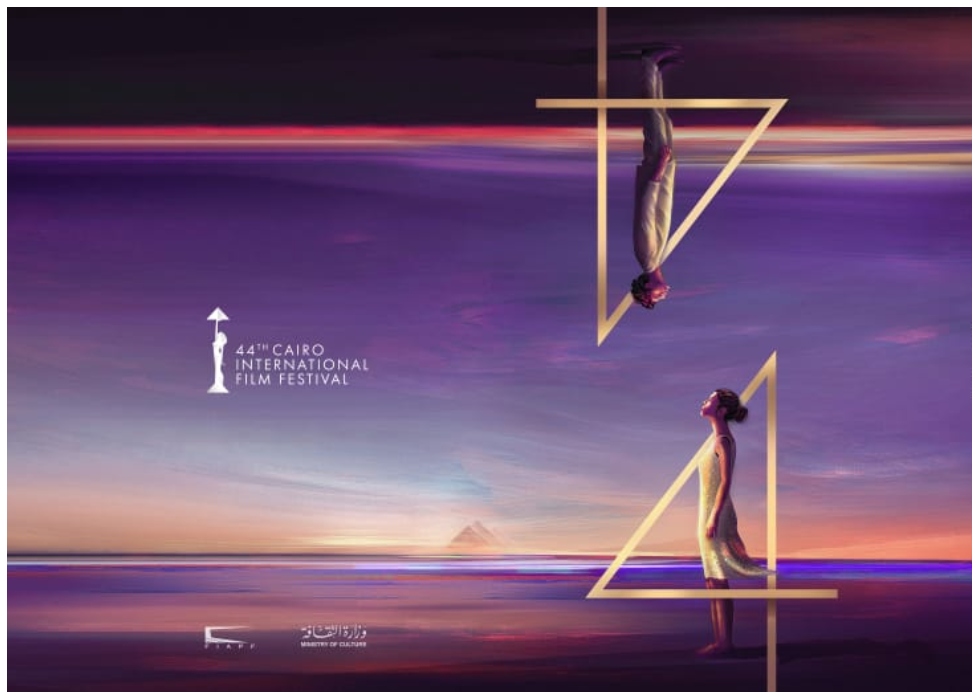
EGYPT: Award Winners of the ’44th Cairo International Film Festival 2022′ (CIFF), 13-22 November

The 44th CIFF’s closing ceremony took place on the stage of the Cairo Opera House on Tuesday evening.

Awards of the 44th Cairo International Film Festival are as follows:

International Competition

The Golden Pyramid Award
Alam by Firas Khoury (France, Tunisia, Palestine, Saudi Arabia, Qatar)

The Silver Pyramid Award, Special Jury Award, for Best Director
Love According to Dalva by Emmanuelle Nicot (Belgium, France)

The Bronze Pyramid Award For Best First or Second Feature
Bread and Salt by Damian Kocu (Poland)

Naguib Mahfouz Award For Best Screenplay
A Man (Japan), screenplay by Kosuke Mukai

Best Actor Award
Maher El Khair for his role in The Dame by (France, Lebanon, Sudan, Qatar, Germany, Serbia)

Best Actor Award
Mahmoud Bakry for his role in Alam (France, Tunisia, Palestine, Saudi Arabia, Qatar)

Best Actress Award
Zelda Samson for her role in Love According to Dalva (Belgium, France)

Henry Barakat Award for Best Artistic Contribution (Awarded to the Cinematographer)
19B, cinematography by Mostafa El Kashef (Egypt)

The Horizons of Arab Cinema Competition 

Saad Eldin Wahba Award for Best Arabic Film
Mother Valley by Carlos Chahine (France, Lebanon)

Salah Abu Seif Award 
Riverbed by Bassem Breche (Lebanon, Qatar)

Best Non-Fiction Film Award
Far From the Nile by Sherief Elkatsha (Egypt, USA)

Best Acting Performance Award
Carole Abood for her role in Riverbed ( Lebanon, Qatar)

Special Mention for Film
I’m Coming Home by Yassine Redissi (Tunisia)

Special Mention for Best Actress
Lyna Khoudri for her role in Houria (France, Belgium)

International Critics’ Week Competition 

Shadi Abdel Salam Award for Best Film
PAMFIR by Dmytro Sukholytkyy-Sobchuk (Ukraine, France, Poland, Chile, Luxembourg)

Fathy Farag Award
Joyland by Saim Sadiq (Pakistan)

Special Mention
Victim by Michal Blaško (Slovakia, Czech, Germany)

Short Film Competition

Youssef Chahine Award for Best Short Film
Rosemary A.D. (After Dad) by Ethan Barrett (USA)

The Special Jury Award
My Girlfriend by Kawthar Younis (Egypt)

Special Mention
One F*cking Wish by Piotr Jasiński (Czech)

Special Mention
Riverbed by Bassem Breche (Lebanon, Qatar)

CIFF Cash Awards

Best Arab Film Award (USD 10,000)
19B by Ahmad Abdalla, Produced by Mohamed Hefzy (Egypt)

Youssef Chahine Award for Best Short Film (EGP 10,000)
Rosemary A.D. by Ethan Barrett  (USA)

Youssef Cherif Rizkallah Award (Audience Award, USD 15,000)
Alam by Firas Khoury produced by Marie Pierre Macia, Claire Gadéa and distributed in Egypt by Mad-Solutions (France, Tunisia, Palestine, Saudi Arabia, Qatar)

source/content: english.ahram.org.eg (headline edited)

___________

__________

EGYPT

DUBAI, UNITED ARAB EMIRATES (U.A.E) : Sham Al Bakour, Syrian School Girl, 7, who survived horrors of civil war Crowned Champion of the ‘Arab Reading Challenge 2022’ at Dubai Opera House

Syrian girl, 7, who survived horrors of civil war crowned Arab Reading Challenge champion.

Sham Al Bakour named sixth winner of prestigious title at Dubai Opera House awards ceremony.

A Syrian schoolgirl who survived a deadly missile attack during the civil war in her country has been crowned Arab Reading Challenge champion in Dubai.

Sham Al Bakour, 7, was only six months old when her family’s car was struck during violence in Aleppo in December, 2015.

Her father was killed while she and her mother survived the horrific attack.

She has now completed a remarkable journey from tragedy to triumph to win words of praise from Sheikh Mohammed bin Rashid, Vice President and Ruler of Dubai.

In footage released by Dubai Media office, Sheikh Mohammed is seen speaking to Sham as she clutches her winner’s trophy at a ceremony at Dubai Opera House on Thursday.

Her success was met with warm applause by a large audience at the Downtown Dubai culture spot.

“She sustained injuries in the head and at the hospital doctors stitched them,” said Sham’s mother, Manal Matar, 33.

“I have been her support along with my family and her father’s family.

“I noticed she had a passion for memorising texts and Quran verses since she was less than three years old so I supported her.”

A young symbol of hope

She said that Sham has been an inspiration for the children in her family and school.

“Her cousins wait to see what she reads to learn from her.

“Her school mates will certainly be inspired. This challenge will help raise a generation that can rebuild Syria.

“Love of reading must start at a very young age.”

The young literature lover read 70 books to win a competition that attracted 22 million entrants from 44 countries.

When asked about what she would do with the Dh1 million prize money, she said she would give it to her mother.

“We haven’t thought of what to do with the money yet. The focus is on Sham, she is my investment for a better future,” Ms Mattar said.

Sham secured top spot ahead of Adam Al Qasimi from Tunisia in second, and Rashid Al Khateeb from Jordan, in third.

Reading is ‘food for soul and mind’

The young winner said reading offers an opportunity to transport yourself to new places with every turn of a page.

“I’m very happy to win and would like to invite all my friends and all young people to read. Reading is food for soul and mind,” Sham said.

“Reading takes you places, every story introduces you to different people and takes you to a new place.”

The youngster impressed judges with the confidence and clarity with which she expressed her ideas and opinions.

“It was a unanimous decision on Sham, who showed confidence,” said Lailah Al Obaidi, professor in Arabic language and literature at the University of Sharjah, and one of three judges.

“Sham will pave the way for the generation of the future because at this young age, she will be a motivation for more young readers in the Arab world.”

The annual winner is selected based on the pupil’s ability to articulate general knowledge, their critical thinking and communication skills, plus the diversity of books they have selected.

The Arab Reading Challenge was launched by Sheikh Mohammed in 2015 to encourage a million young people to read at least 50 books in a year.

Helping to shape young minds

Noor Aljbour, from Jordan, won Dh300,000, along with the title of Outstanding Supervisor, in recognition of her work guiding and motivating pupils through the challenges of the Covid-19 pandemic.

“The obstacles and the amount of work to prepare for this edition of the reading challenge were huge because its the first to happen after Covid-19,” Ms Aljbour said.

“Pupils returned to schools lacking the passion for reading, this meant that we needed to encourage pupils not only to read but to also pick up on their studies.”

Morocco’s Mukhtar Jasoulet school won the Dh1 million Best School award.

In the category for Arab pupils living in foreign countries, Nada Al Satri from Belgium was named the champion.

source/content: thenationalnews.com (headline edited)

________________

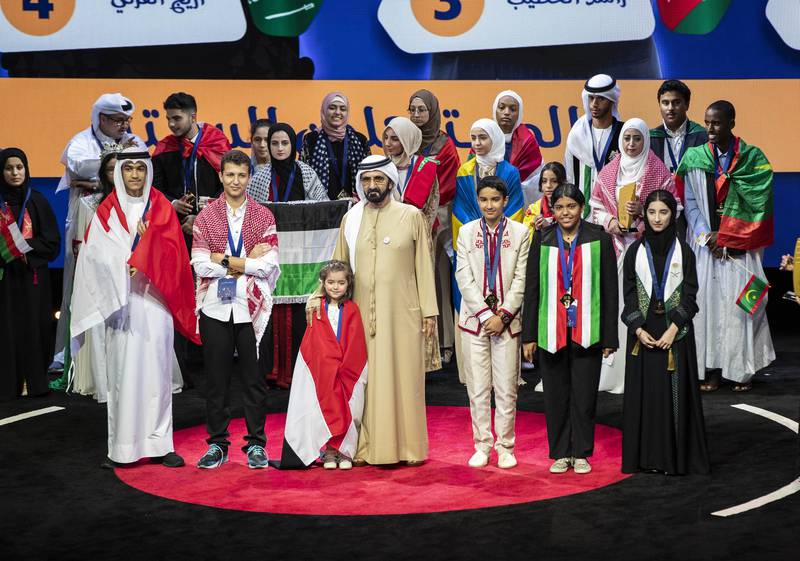
Sheikh Mohammed bin Rashid, Vice President and Ruler of Dubai, with the six finalists at the Arabic Reading competition at Dubai Opera. Left to right, Mohammed Jamil (Bahrain), Rashid Al Khateeb (Jordan), Sham Bakour (Syria), Adam al Qasimi (Tunisia), Ghala Al Enzi (Kuwait) and Areej Al Qarni (Saudi Arabia). All photos: Ruel Pableo for The National

___________________________________________________

DUBAI, UNITED ARAB EMIRATES (U.A.E) / SYRIA

EGYPT : The Digital Archive Preserving the Fading Art of Egyptian Typography

Two graphic designers decided to share their most inspirational street finds with everyone on the internet – and launched an online platform to let everyone else share as well.

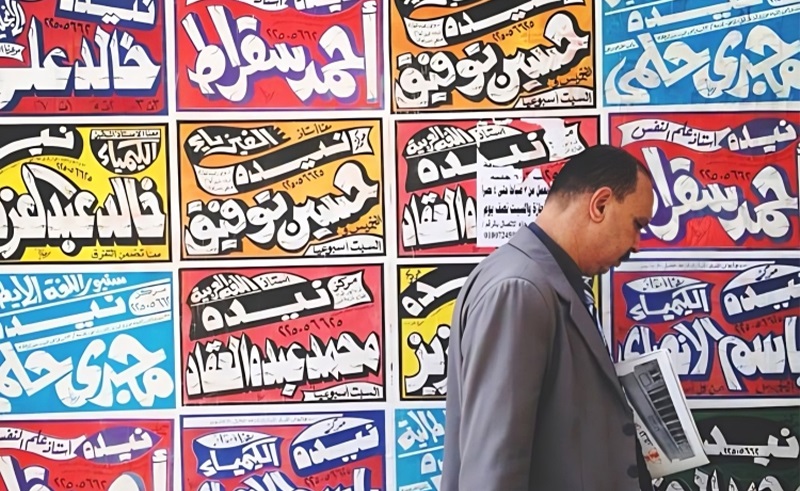
In Egypt, where there are streets and roads and passageways, there are signs and posters and billboards dating back decades and even centuries, each reflecting their own era of styles, tastes and contexts. It’s a beautiful mess of typography that often gets lost with time, and the Egyptian Type Archive was born to capture and encapsulate it for good.

The founders, Toka Assal and Abdo Mohamed, met online and bonded over their shared interest in street typography, drawing inspiration from their travels to cities across Egypt, from Aswan to Minya and Port Said. As graphic designers and type artists, they decided to share their most inspirational street finds with everyone on the internet – and launched an online platform to let everyone else share as well.

“When we started we didn’t even have a logo, we just used a picture I took of some text on a microbus that said ‘Semsem’ and ‘Semsema’,” Mohamed tells CairoScene. “We found out later that those were the names of the bus owners, a brother and sister. Although we know it’s not professionally designed, the text really looked like it was. But now everything is digital and fast-paced, so we’re losing the artistry and craftsmanship of typography and calligraphy.”

Exclusively focused on Arabic street typography in Egypt, the Egyptian Type Archive has amassed a loyal community on Instagram. They collectively document any text they stumble upon, from the quirky to the horrific to the beautiful, whether it’s an ancient sign on a vintage shop or an announcement sprayed on the walls of a local cafe.

“My favourite finds are food carts, their typography has a very distinct style embodying the essence of street art,” Asal shares. “It’s also very instinctual with the text written tackling hasad or rizq.” Here Asal refers to written prayers or phrases traditionally used to ward off the evil eye, or invite God’s blessing – a visual manifestation of deeply held beliefs and spirituality.

Mohamed and Asal’s view on what constitutes art or on the nature of street typography questions notions of ‘professionalism’, where they treat every sign and piece as a story on its own. Initially, they wanted to document the names of the calligraphers until they found that – more often than not – the text is created by commission, so the artists don’t normally sign their names under their work.

Although strangers in the street often regard them with confusion when they see them taking pictures of manhole covers or old movie posters, the founders believe their documentation serves a purpose to typographers, designers, and Egyptians at large. Through their work, and the work of their burgeoning community, they preserve a dying visual culture and ensure it survives to the next generation of Egyptian creators.

source/content: cairoscene.com (headline edited)

_________

_________

EGYPT

UNITED ARAB EMIRATES (U.A.E) : Sharjah Ruler Launches 19 New Volumes of the ‘Historical Dictionary of the Arabic Language’ taking the Completed Volumes to 36 Covering 9 Letters so far.

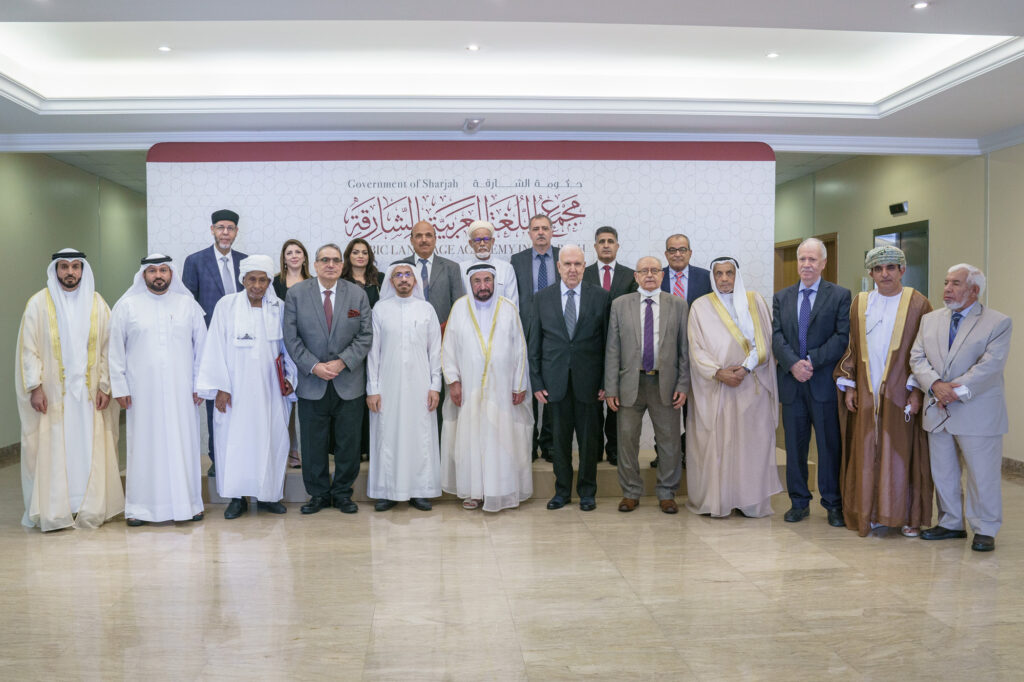
H.H. Dr. Sheikh Sultan bin Muhammad Al Qasimi, Supreme Council Member and Ruler of Sharjah, launched on Tuesday, 19 new volumes of the Historical Dictionary of the Arabic Language at the headquarters of the Arabic Language Academy in Sharjah.

The 19 new volumes of the Historical Dictionary of the Arabic Language cover four letters, bringing the total number of letters edited so far to 9, thus increasing the number of completed volumes of the project to 36.

The volumes of the Historical Dictionary of the Arabic Language were issued, directed and printed in Al Qasimi Publications in Sharjah.

Sharjah Ruler welcomed the attendance of members of the Academy from different countries, praising their great efforts in working on the historical dictionary, which is one of the valuable achievements that must be worked and built in order to spread, learn and teach the Arabic language.

His Highness announced an endowment to support these Academies in fulfilling their mission to the fullest, pointing to the importance of establishing private centres owned by the Academy.

Sheikh Sultan addressed the great efforts in supporting the learning of the Arabic language in Sharjah, pointing out to the vision and idea of establishing Al Qasimia University, which came as a culmination of His Highness’ efforts to support the Arabic language and Islam. “Here in Sharjah, we established Al Qasimia University, and this university is mine, and it graduates many students from Japan to the Americas,” he said.

The Ruler of Sharjah stressed the importance of preserving Arab traditions in any place and time of all members of society, because this is a part that integrates with speaking the Arabic language and shows belonging.

His Highness said, “We have worked to establish special institutions for the Arabic language, and we have established them with decrees and laws in order to preserve them, so as not to make them blown by the wind, and make the lovers of this language responsible for them.”

The Ruler of Sharjah concluded his speech by talking about the ancient history of Sharjah, as it was mentioned in the report of the leader sent by Alexander the Great when he came to Persia in the year 331 BC. M, pointing out that Sharjah and its people preserve the language, literature and poetry, highlighting their roles in supporting and spreading science and knowledge.

For their part, a number of attendees from the Academy expressed their appreciation to His Highness the Ruler of Sharjah for providing great support for the Arabic language.

The Sharjah Ruler launched the first 17 parts of the “Historical Dictionary of the Arabic Language” at the opening of the 40th edition of the Sharjah International Book Fair 2021. With the official launch of the dictionary’s website, people can search and read all the completed volumes.

source/content: wam.ae (headline edited)

__________________

______________________________________________

SHARJAH, UNITED ARAB EMIRATES (U.A.E.)

EGYPT/ EMIRATES/ LEBANON/ PALESTINE/ TUNISIA: 6 Arab Female Filmmakers to Keep an Eye On 

Read on for a list of regional female filmmakers who have been taking the industry by storm.

Farida Khelfa

Farida Khelfa is an Algerian-French documentary filmmaker. She is currently set to release a new film titled “From The Other Side of the Veil” that aims to dismantle misconceptions and stereotypes that often surround Arab women.

Kaouther Ben Hania

The Tunisian filmmaker made headlines in the film industry after her critically acclaimed movie “The Man Who Sold His Skin” was shortlisted for the Oscar’s Best International Feature Film award this year.

Ayten Amin

The Egyptian director has long chronicled the lives of women in modern Egypt. Her feature film “Souad” was selected for the cancelled 2020 Cannes Film Festival.

Danielle Arbid

Danielle Arbid is a Lebanese filmmaker. Her work has screened at numerous film festivals in France and the rest of the world, including New York, San Francisco, Tokyo and more.

Annemarie Jacir

The Palestinian filmmaker has written, produced and directed award-winning films such as “A Post Oslo History.” Her movie “Wajib” (2017) won her 18 international awards.

Nujoom Al-Ghanem

The Emirati filmmaker, writer and poet had to overcome societal stigma and family disapproval to make it. She defied the odds and produced films such as “Amal” (2011) and “Sounds of the Sea” (2015).

source/content: arabnews.com (headline edited)

__________

______________________________________________________________

EGYPT/ EMIRATES(U.A.E)/ LEBANON/ PALESTINE/ TUNISIA

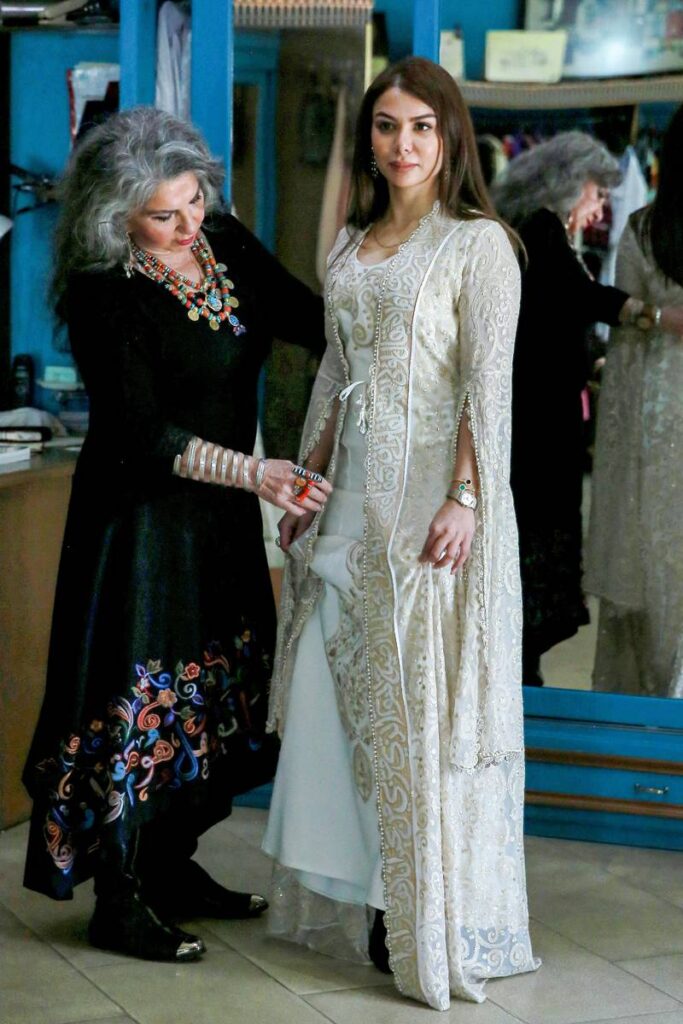
IRAQI-FRENCH-JORDANIAN: Fashion Designer Hana Sadiq uses Magic of Arabic Calligraphy to Adorn Creations

In a career spanning decades, Iraqi-born Sadiq has shown her creations worldwide and dressed the stars, but she remains rooted in the traditions of her homeland.

With verses from love poems and flowing calligraphy, Jordan-based fashion designer Hana Sadiq stitches a testament to the beauty of Arab women.

The artistic handwriting of Arabic script dominates her embroidered modern designs, with poetry or letters scattered in bright colours.

She uses various calligraphic styles, from the elaborate Diwani to the curving Thuluth and features on some of her outfits the lines of renowned Arab poets including Mahmoud Darwish and Nizar Qabbani.

“Arabic calligraphy is the most beautiful,” says Sadiq, 72, showing off her love of jewellery with strings of beads around her neck, dangling earrings, and unusual stone rings.

At her home workshop in downtown Amman, Sadiq notes that the earliest writing was born several millennia before Christ in what is now Iraq, arguing that it was a place “without which all the other civilisations would not have existed”.

Sadiq has split her time between Amman and Paris since 1982, having both French and Jordanian nationality as well as Iraqi citizenship.

‘How beautiful she is’

She has exhibited from Europe to the United States as well as the Middle East, returning home with an extensive collection of antique silver ornaments, along with thousands of pieces of Arab textiles and costumes.

Her kaftans, traditional robes, feature bright and stunning colours. They reflect the influence of her grandmother who wore a traditional Iraqi “Hashemite dress” and walked “elegantly like a peacock”.

The folk outfit is made of very thin fabric with wide sleeves and transparent sides, decorated with beautiful floral ornaments, golden or silver, on a black base. It was the favourite of Iraqi women in the 1950s and 60s.

Sadiq traces her interest in fashion to her childhood, when she would visit her grandfather’s textile shop in Baghdad.

She went on to design for celebrities and royals, including Jordan’s Queen Rania and Queen Noor. But whoever the client, her work has been guided by pride in the Arab woman’s femininity.

Unlike more revealing Western fashion, her designs envelope the woman’s body, “but it shows high femininity,” says Sadiq, who is also the author of a book, “Arab Costumes and Jewelry, a Legacy without Borders”.

She argues that Western clothes are not the best fit for the bodies of Arab women but have spread to the region anyway. “Unfortunately this is the result of globalisation,” she says.

“What matters to me, in all my work, is that the woman remains female and that a man is attracted to her as a female,” she adds. “Which means when a woman passes in front of him, he must notice and see how beautiful she is.”

source/content: thearabweekly.com (headline edited)

___________

Her kaftans, traditional robes, feature bright and stunning colours, reflecting the influence of her grandmother who wore a traditional Iraqi Hashemite dress and walked “elegantly like a peacock”.

____________________________

FRANCE / IRAQI / JORDAN

UNITED ARAB EMIRATES (U.A.E) : Abu Dhabi Arabic Language Centre (ALC) Launches Music Book Collection at Frankfurt Book Fair 2022

 The Abu Dhabi Arabic Language Centre (ALC) launched a series of music books at Frankfurt Book Fair 2022.

Consisting of a number of publications, the series is a notable addition to the ALC’s roster of publications and focusses on Emirati and Arab singing and music.

It includes biographies of artists Eid Al-Faraj and Ibrahim Jumaa written by author Ibrahim Al-Hashemi, a book on Umm Kulthum’s reasons for selecting the poems she sang, alongside a variety of other titles, including educational books.

The launch ceremony was attended by Dr. Ali bin Tamim, Chairman of the ALC, and Saeed Hamdan Al Tunaiji, Acting Executive Director of the ALC and Director of the Abu Dhabi International Book Fair (ADIBF), along with media representatives and book enthusiasts.

“The Abu Dhabi Arabic Language Centre continues to drive the advancement of the Arabic language and enrich the Arabic library with original titles in an effort to encourage creativity and support authors,” said Al Tunaiji. “The series of music books we have launched is a means to shed renewed light on music and singing in the region. For the first time, the series presents biographies of musical pioneers in the UAE, in addition to documenting traditional performing arts and exploring new perspectives on Arabic singing by experts.”

The series includes two books from the ‘Pioneers Among Us’ initiative, where poet and writer Ibrahim Al-Hashemi documents the life of Eid Al-Faraj, a singer, composer, and poet. The first biography of its kind for this artist, it chronicles Al-Faraj’s journey from birth through childhood, education, and various stages of his career until the present time, illustrated by a collection of photographs.

In the second book, Ibrahim Jumaa: The Etheric Melody of the Sea, Al-Hashemi presents the life and achievements of a pioneer of music and composition in the UAE, and documents the songs and poems he wrote, composed, and presented at festivals and special occasions. The publication features photographs from Jumaa’s life, showcasing the awards and honours he received during his career.

“This music book collection completes the book series we previously launched at the Abu Dhabi Arabic Language Centre,” added Al Tunaiji. “These works, wherein Emirati authors document the lives and professional careers of UAE musical pioneers, will greatly enrich the regional cultural scene and promote more in-depth research into the UAE’s musical heritage. The series offers a new perspective on Arab musical heritage, which is sure to spark new dialogue around it.”

The collection includes Dr. Hamad bin Sarai’s book Wahhabi Art: Kinetic and Verbal Performance from Emirati Folklore, which consists of field research documenting a form of folk performance art closely related to the agricultural environment, through interviews with people who practice the art form.

Meanwhile, the Encyclopaedia of Sung Poems, compiled by researcher Dr. Hammad Al Khatri, includes poems sung in the UAE, which are usually closer to popular taste and extend deep into the history of the community. The poems address phenomena and symbols from the surrounding environment and embody authentic Emirati vocabulary that expresses the culture of the people.

In the book Folk Songs for Children and Women in the United Arab Emirates, Dr. Fatima Al Mazrouei tries to remedy the lack of documentation of traditional folk songs, especially in the emirate of Abu Dhabi, where she collected many songs for her book which were never previously featured in published songbooks. The author also sought to collect children’s songs – often referred to as ‘Al-Ragousat’ in Abu Dhabi – in addition to songs about names, especially girls’ names.

Writing about the connection between Umm Kulthum and Arabic poetry, Dr. Ahmed Youssef Ali’s book Umm Kulthum: Poetry and Singing chronicles the legendary singer’s efforts to elevate Arabic song by performing the works of some of the greatest poets of her time and before. Umm Kulthum had a modest upbringing, only receiving religious education and being taught traditional culture, but her exceptional taste allowed her to select the poetic texts that would best serve her songs, sometimes rearranging the verses for the greatest effect.

Egyptian composer and researcher Hassan Zaki Shehata sheds light on four composers whose works have achieved tremendous success and fame in his book Rhythms of Light: A Musical Biography of Four of the Geniuses of Oriental Melody, where he analyses the works of Ahmed Sedqi, Abdel Azim Abdel Haq, Mahmoud Al Sharif, and Ali Ismail.

The collection also presents two books by composer and music researcher Muhammad Saeed Hegab. ‘The Flute: A Morsel of Cane with a Scent of Legends traces the history of the flute in an attempt to separate reality from the myths that were associated with the instrument in ancient times. The author lists the various forms of the flute and the phonetic differences between them, highlights the importance of the flute in different cultures, and explains how the instrument is manufactured and played. Meanwhile, Hegab’s The World of Bowed Instruments traces the history of string-based, bow-using instruments back to their beginnings and explores the evolution of the various families of bowed instruments. The book focusses on the instruments’ use in the musical traditions of the Arab region and similar traditions in neighbouring cultures, offering an overview of how they are made and played.

In Iraqi Musical Heritage and Civilisational Communication, Dr. Muhammad Hussein Kamer, a professor of sciences and musical theory and an expert in the al-gouza and Iraqi maqam instruments, explores the subjects of cultural communication, the connection between modern and traditional music, music education, and music learning in schools. The author discusses traditional Iraqi music, focussing on the al-gouza instrument, and offers detailed studies on the Iraqi maqam, its history, types, and characteristics.

Music researcher Bassam Abdel-Sattar’s educational book The Qanun Instrument includes an introduction to the oriental instrument and its components, highlights its role in the traditional school of music, details its musical range. The publication includes lessons and technical exercises for playing the instrument, as well as a practical guide directed at musicians who play the qanun or are looking to learn it.

The collection also features The Medium in the Rules and Theories of Arabic Music, a theoretical and applied study of the rules and theories of Arabic music, written by Egyptian author Ahmed Youssef Al-Taweel, Professor and Vice Dean of the Higher Institute of Arabic Music at the Academy of Arts.

The History of Music in Arabia and Andalusia, written by Julian Ribera and translated by Hussein Hassan, is being reprinted. The book highlights the role of the Muslims of Andalusia in preserving music and passing it down to later generations, where its legacy inspired numerous European musicians.

source/content: wam.ae (headline edited)

______________

________________________________________________

ABU DHABI, UNITED ARAB EMIRATES (U.A.E)

PALESTINE : 3 Palestinian Libraries in Jerusalem Preserve Heritage by Digitising Manuscripts

Three Palestinian libraries in East Jerusalem are involved in a project to index and restore manuscripts dating back hundreds of years, some to the 12th century.

The project involves the Khalidi Library, the Budeiri Family Library, and the Issaf Nashashibi Center for Culture and Literature.

Funded by the Aliph Foundation (International Alliance for the Protection of Heritage in Conflict Areas), the project aims to preserve  the manuscripts at a controlled temperature and humidity to preserve them from damage, while cataloguing them electronically for presentation on the Internet.

Khader Salameh, director of the Khalidi Library, told Al-Fanar Media that the manuscripts are part of the heritage and history of the Palestinian people. They tell the culture and customs of a wide range of people and reflect their lifestyles and ways of thinking, he said.

Biographies of Jerusalem Families

The bulk of the manuscripts and documents represent the biographies of families living in Jerusalem between 1896 and 1930 from newspapers, magazines and handwritten documents.

Salameh said the project aimed to link civil, personal, and family libraries in Jerusalem with each other to help researchers find manuscripts and archival documents. The three libraries embody “the collective history of the people of the city of Jerusalem,” he said.

The Khalidi Library was founded in 1900 and is the first Arab public library established by private initiative in Palestine. It is located in the Old City of Jerusalem and has resisted attempts to seize the property since 1967, thanks to the efforts of the Khalidi family in Jerusalem and abroad.

The bulk of the manuscripts and documents represent the biographies of families living in Jerusalem between 1896 and 1930 from newspapers, magazines and handwritten documents.

The preservation team is currently working on indexing these documents. They include papers describing the first prayers arranged for women inside the Dome of the Rock at Al-Aqsa Mosque in 1952, and older documents—including one about the tombs of three warrior princes who participated in the liberation of Jerusalem from the Crusaders during the 12th  and 13th centuries.

Lack of Appropriate Conditions

Doaa Qirsh, director of projects at the Issaf Nashahshibi Center, told Al-Fanar Media that the project’s documents and 500 manuscripts often relate to Jerusalem families, and particularly involve Islamic law and Arabic literature.

In Palestine and Jerusalem in particular, she said, there are thousands of ancient manuscripts in the collections of Islamic endowments or family libraries.

Qirsh, who is also the center’s librarian, said most of these manuscripts suffer from wear and tear and lack appropriate conditions for preservation.

“This has necessitated the establishment of several laboratories for restoration, the most important of which are the Manuscripts Restoration Center of the Islamic Endowments Department inside the Haram al-Sharif (Temple Mount), another in Abu Dis, in East Jerusalem, and a new laboratory in the Khalidi Library.”

According to Qirsh, coordination between the libraries will help them provide a cultural service to the Jerusalem public and researchers.

The Issaf Nashashibi Center’s library is the only Palestinian public library in East Jerusalem regularly open to the public, she said. Other libraries in the city are not permanently open because of lack of resources.

The Restoration Process

Rami Salameh, who is in charge of restoring the manuscripts, said they first had to be documented and examined to see if they needed restoration.

If they require restoration, the first stage is mechanical cleaning using soft brushes and special sponges. Some manuscripts also need washing with a solution of alcohol and water, carefully mixed so that the ink used in the manuscript does not dissolve. The final step is binding.

“We cannot restore all manuscripts because it takes time and financial support,” Rami Salameh said. “Therefore, we chose only 20 manuscripts to restore because of their relationship to the Holy City and the number of their papers.”

Salameh is carrying out this work in the Manuscript Restoration Laboratory at the Khalidi Library.  The limited budget means he cannot always employ additional professional restoration staff.

“There are thousands of manuscripts that need restoration to preserve them from extinction,” he said.

Documents in the Khalidi Library’s Collection

Shaima Al-Budairi, digital librarian at the Khalidi Library, told Al-Fanar Media that the paper in some manuscripts had degraded through being stored in damp places. Indexing and restoring them will protect them from further damage, she said.

‘Exceptional Importance’

Mufid Jalgoum, a professor of history at Al-Quds Open University, said the project was of “exceptional importance” because of the thousands of manuscripts the city holds.

Dozens of Jerusalem manuscripts were moved abroad after the Ottomans surrendered the city to Britain in 1917, Jalgoum said, and many more were taken  after the Palestinian Nakba in 1948. “Zionist groups stole, at that time, what the Palestinian families had of books and libraries,” he said.

“Preserving the remaining manuscripts requires a restoration strategy and financial support from cultural institutions, so that this heritage becomes available to researchers and scholars,” Jalgoum said. Libraries should assist in the restoration and preservation, and the work must be done to international standards, he added.

Cultural institutions should attach particular importance to the establishment of a museum of Palestinian manuscripts in Jerusalem, Jalgoum said.

Such a facility, he said, would protect against what he considered to be “an attempt to get rid of the written narrative as archaeological, historical, geographical and social evidence about the history of the Holy City.”

Related Reading

source/content: al-fanarmedia.org (headline edited)

_______________

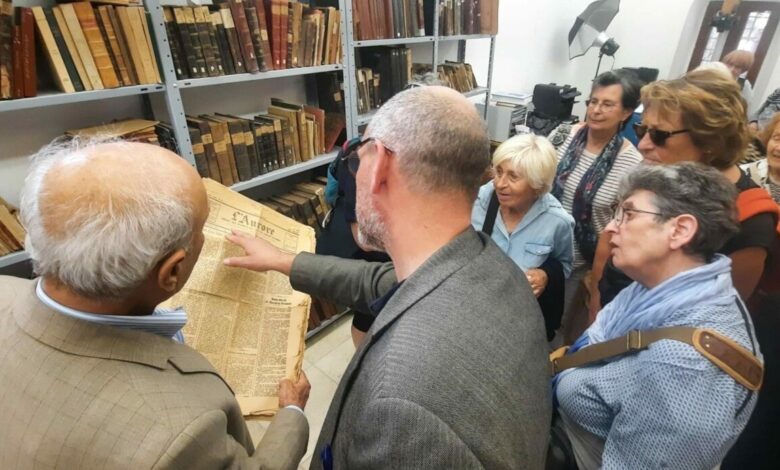
Three Palestinian libraries in East Jerusalem are involved in a project to index and restore documents that tell the stories of families living there more than a century ago. Above, a group of visitors in the Khalidi Library. (Photos via Facebook)

______________

PALESTINE