Arabs & Arabian Records Aggregator. Chronicler. Milestones of the 25 Countries of the Arabic Speaking World (official / co-official). AGCC. MENA. Global. Ist's to Top 10's. Records. Read & Enjoy./ www.arabianrecords.org
The films tell stories of hopes, dreams, and challenges from the Arab world.
Arab cinema is about to make waves as the 81st Venice Film Festival rolls out the red carpet.
Running from August 28 to September 7, this year’s Venice International Film Festival will feature 12 Arab films backed by the Doha Film Institute.
These movies will light up key sections of the festival, including Orrizonti and Orrizonti Shorts, and make waves at Critics Week, Giornate degli Autori, Final Cut, and the Venice Gap-Financing Market.
These selections showcase the rich diversity of the region, bringing unique stories from Egypt, Jordan, Lebanon, Morocco, Palestine, Tunisia, and Yemen into the spotlight.
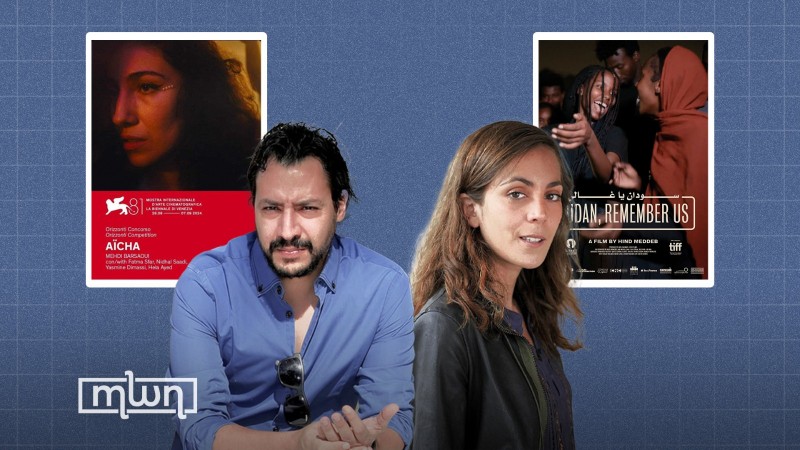
Highlights include “My Father’s Scent” by Mohamed Siam, featuring Egyptian star Ahmed Malek, “Aïcha” by Mehdi Barsaoui, and “Sudan, Remember Us” by Hind Meddeb, which offers a powerful portrayal of a generation’s fight for freedom through words, poems, and chants.
“We are proud to continue a successful festival season with a strong showcase of films by Arab talent at Venice,” stated Fatma Hassan Alremaihi, chief executive officer of the Doha Film Institute.
“Our mission is to support independent creators in cinema, and the compelling selection at Venice is a testament to our commitment to shed light on stories that transcend borders and present unique perspectives. We hope these films receive the acclaim and attention they deserve,” she added.
The 2024 Venice International Film Festival is set to showcase a diverse array of Arab cinema.
In the Orizzonti category, the festival will present “Aïcha” directed by Mehdi Barsaoui and “Happy Holidays” by Scandar Copti. The Orizzonti Shorts category will meanwhile include “Shadows” by Rand Beiruty.
“Sudan, Remember Us,” directed by Hind Meddeb, will be showcased in the Giornate degli Autori section. Critics’ Week will highlight “Perfumed with Mint” by Muhammed Hamdy.
The Final Cut section will present several notable films, including “Aisha Can’t Fly Away” by Morad Mostafa, “In This Darkness I See You” by Nadim Tabet, “My Father’s Scent” by Mohamed Siam, and “Those Who Watch Over” by Karima Saidi.
Finally, the Venice Gap-Financing Market will feature “Marie & Jolie” by Erige Sehiri, “The Station” by Sara Ishaq, and “Theft Of Fire” by Amer Shomali.
With a lineup that promises to dazzle and surprise, these films are set to turn heads and set new standards.
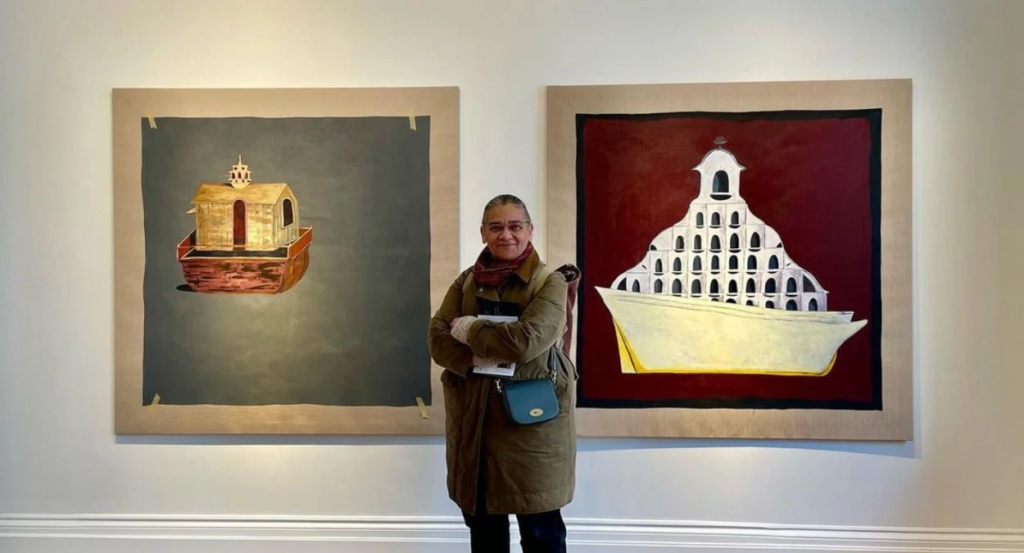
The artist, also a guest editor of ‘Bazaar Art’ praises communal creative practice and refutes the notion of the lone genius.
Some people imagine that making art, being a visual artist, is best accomplished and performed alone; I’m pretty certain they are wrong. My own experience has been exactly the opposite from the beginning.
I am an only child, the daughter of an English textile designer and a Comorian college lecturer; I was born in Zanzibar. As a little girl in the early 1960s, I played in the streets and back gardens of Maida Vale in London with two boys who lived nearby. Together we dug an enormous hole, without our parents’ knowledge or permission, to prepare for a swimming pool.
At school, in the art room, the teacher asked us to design the costumes and sets for Cyrano de Bergerac, a play in which it took two men, via poetry and letters, to court a young woman. As head girl, I joined others going out on strike to protest about democracy and freedom of speech.
At art college, which I hated almost as much as school, it was clear that the young women students were being educated to be assistants to the men. We outnumbered, out-lifted and outperformed them at every available opportunity. I learned that to succeed in theatre design you needed to be a team player—but not a woman.
As a waitress in Covent Garden in the mid-1970s, it was obvious that without the chefs, the washing-up staff and each other, we could never have survived the disdain, the flirting, and the exhaustion inflicted upon us by the customers.
The early days of organising, making and showing with other Black women artists in London were, for me, the real beginnings of my collaborative practice. We worked alongside each other in domestic studios and spoke frankly about funding and the need for studio space, as well as our doubts and fears for the future of our creative endeavours. Some women worked with each other on groundbreaking community print projects and then alongside me to make an exhibition happen. We functioned on the very outer edges of a pretty unfriendly art world for which we had huge expectation of change but an infinitesimal amount of experience as to how this could be done.
During the 40 years since those early showing days of the 1980s, my desire to work with others has grown stronger. Without the collaborative experience of working with a studio team; talking and testing, exchanging ideas, being challenged and having to rethink and compromise (in a good way), my work would be totally different: less daring, less exciting for me and more introspective (in a bad way).
There have been art historians who asked serious and intense questions about the process and curators who enabled me to be myself by taking care of me. Importantly, they dealt with the practicalities and the administrative complexities, so that the only thing I had to worry about was the making and developing or ‘how to push everything I could to the limit’.
Close friends—all artists—have in the past been invaluable partners in my work, constantly questioning, offering expertise or supporting a series of seemingly illogical projects with practical help, money, or by cooking comforting meals, making endless cups of tea or providing favourite biscuits.
During the years I spent preparing full-time art students for the challenging years ahead, which I knew would be filled with unexpected opportunities and inevitable setbacks, my advice to them was always to work with other artists who had different areas of expertise from themselves to make pop-up shows, workshops, group performance projects, homemade ’zines and moving-image productions. I tried to persuade them that it is impossible to do everything yourself, and that their own work would suffer, as would that of their fellow artists, unless they worked for an agreed common goal. Their paintings and films, installations and prints would be stronger, still individual, but part of a wider conversation.
Recently, I have learned how to listen more carefully to the sounds in my head and begun to understand how to make this real in my paintings and installations by working with Magda StawarskaBeavan, an artist who makes screen prints, paintings, and drawings as well as moving-image and sound-composition projects.
For a few years on and off we made screen prints, Magda leading and printing, then gradually worked on sound pieces—mostly hers and occasionally mine. As part of a recent show at Wiels contemporary art centre in Brussels called ‘Risquons-Tout’, we worked for several months during the fiercest lockdowns in the North West of England on an installation called ‘The Blue Grid Test’, combining a 25-metre blue painting on found objects with a six-channel sound work. We talked extensively about codes and patterns, language and love, colour and rhythm, and worked alongside each other, wandering in and out of her studio and mine. All the while, as we built layers of understanding and multiple connections through music and language using invented texts in French, English and Flemish, Magda developed a composition piece that wraps and envelops the audience. I painted a long thin line in many shades of blue. It became a room in which 64 global patterns on numerous items found neglected in cupboards, basements and on shelves in the house, spoke and sang in and out of harmony with the words and music. I felt this could be the beginning of a determination to add to our previous collaborations during the past 10 years by making real more experimental projects, in print and with sound, in between working on our own exhibitions.
If you can find someone who will listen to you as intently as you are prepared to listen to them, you have probably found the perfect collaborative partner. Be willing to say what you want and then have that idea bettered, and you may have the solution to creating artwork that really could make a difference.
This piece originally appeared in the November 2021 print edition of Harper’s Bazaar UK
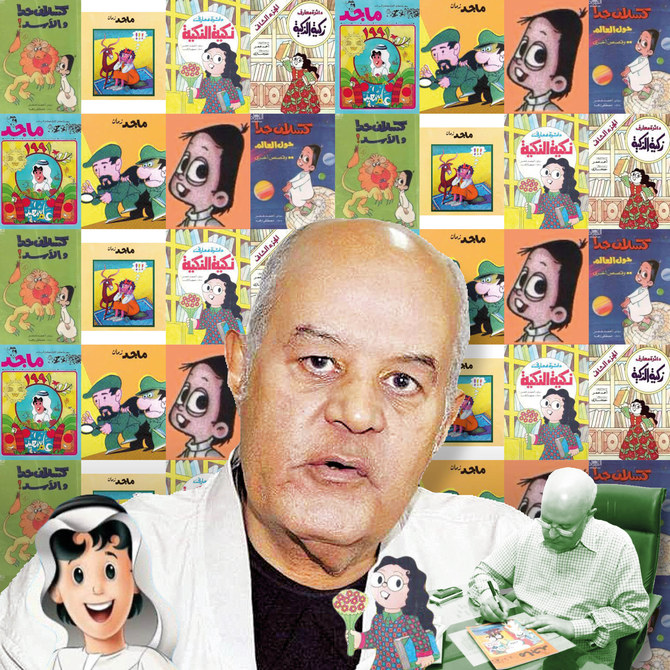
Omar created and launched Majid Magazine for children, and an array of adorable characters, in 1979.
Just as Walt Disney founded one of the world’s largest and most influential entertainment conglomerates, an Egyptian journalist is hailed as the “Walt Disney of the UAE” for his pivotal role in shaping the region’s media landscape with Majid Magazine.
For many Arab adults now in their 50s, the magazine and its beloved characters, like Majid, Kaslan Jiddan and Captain Khalfan, are cherished symbols of childhood joy. Yet, few recognize the creative genius behind these treasured memories: Ahmed Omar, who passed away on Aug. 9 at the age of 85.
His vision and storytelling prowess were crucial in shaping the magazine’s enduring legacy.
Born in Egypt in September 1939, Omar embarked on a lifelong journey with words and stories.
His passion for reading blossomed at a young age, and school and public libraries became his sanctuaries, where he delved into a world of diverse books and nurtured a profound love for literature.
Omar’s frequent visits to Cairo’s Azbakeya Book Market, where he discovered affordable secondhand books, helped him build a personal library filled with diverse titles. His extensive reading played a crucial role in shaping his vision and enriching his ideas, which later shone through in his literary works.
He read to build a deep reservoir of knowledge, with classical literature captivating him from an early age. Naguib Mahfouz’s novels, which delve into the intricacies of life in Egyptian neighborhoods, had a profound impact on him. Omar was also shaped by the works of renowned Egyptian writers like Yusuf Idris, Gamal El-Ghitani, Mohamed Hassanein Heikal and other prominent authors.
He began his professional career at the UAE’s Al-Etihad newspaper, where he was a founding member and contributed to laying its foundation. He later managed the local news section.
The most significant achievement of his career was establishing Majid Magazine for children and becoming its editor-in-chief in 1979. The idea for the magazine was born within Al-Etihad daily and eventually transformed into one of the most important children’s magazines in the Arab world.
Omar recognized the need for Arab children to have a publication that represented them, stimulated their imagination and nurtured their minds. Working alongside a talented team of journalists and illustrators, he turned the magazine into a platform for expressing the thoughts and emotions of Arab children through words and drawings.
Through his tireless efforts, Omar made the magazine a symbol of Arab childhood and a cherished part of the memories of successive generations.
He spent most of his time in the magazine’s offices, creating, planning, overseeing writers and content, and preparing issues. When a new issue was printed, he had several weeks’ worth of issues ready in advance.
The inaugural issue of the magazine was published on Feb. 28, 1979, with 5,000 free copies that quickly vanished from the shelves. Majid, a character representing human values rather than superpowers, struck a chord with children. Majid Magazine maintained a weekly publication schedule every Wednesday without fail, gaining significant popularity throughout the region.
Omar oversaw and managed the magazine with ultimate care and interest for almost 30 years. He provided guiding articles for children and wrote scripts for comic stories, enriching each issue with beloved characters such as Zaki the Clever and Captain Khalfan, among others.
His editorials in Majid Magazine served as weekly lessons for both children and adults, filled with educational messages and moral guidance. His contributions established him as an educational pioneer, as he dedicated his knowledge to serving the younger generation and imparting valuable lessons.
Through his deep understanding of the nuances and secrets of childhood, Omar succeeded in capturing the attention of children from across the Arab world. The magazine’s readership grew to hundreds of thousands of young readers.
The late journalist believed that nurturing a love of reading in children is a collective duty of families, schools and magazines alike. He famously remarked: “Instilling a reading habit early in life is crucial, as it is difficult to cultivate later on. Introducing a child to a magazine is not just about providing entertainment — it’s a crucial step toward nurturing a lifelong passion for reading.”
Since the inception of the magazine, Omar was dedicated to imbuing it with a distinctly Gulf Arab flavor, reflected in its content, stories and characters. He attracted leading children’s writers and cartoonists, ensuring the magazine resonated deeply with young readers across the Arab world by preserving the unique identity of Gulf children.
Notable characters such as Kaslan Jiddan, Fadooli, Abu Al-Dhurfaa, Zakiyah Al-Zakiyah, Shamsa and Dana, and Captain Khalfan and his assistant Fahman became beloved figures among the magazine’s young audience.
Omar emphasized that his magazine was designed to appeal to children growing up in a traditional environment, instilling religious values, cultural awareness and pride in their Arab heritage.
As a testimony to his magazine’s success, mail subscriptions to Majid flourished throughout the Arab World as fans eagerly awaited each issue every Wednesday. For decades, it managed to compete with translated comics magazines such as Mickey (licensed from Disney and translated in Egypt) and Little Lulu (licensed and translated in Lebanon).
Consequently, the magazine evolved alongside the UAE’s social progress and embraced digital advancements with a YouTube channel and a website, although critics would argue that it is nowhere as influential today — despite the additional reach provided by modern technology — as it once was in the 1990s and 1980s.
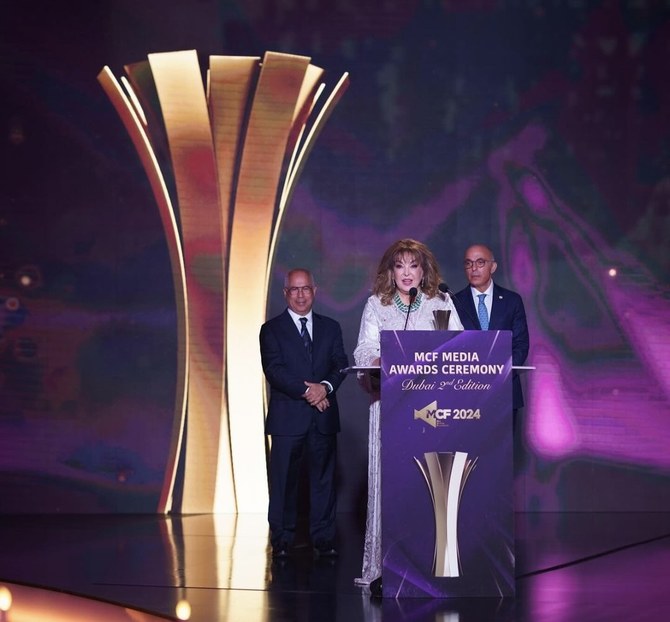
The MCF Awards ceremony was held on in Dubai, UAE, for the second year
Mamdouh Al-Muhaini, general manager of Al Arabiya and Al Hadath, received the Excellence in the Media Industry Award
Acclaimed international journalist and broadcaster Baria Alamuddin was celebrated at the May Chidiac Foundation Media Awards for her valuable contributions to the Arab world’s media industry.
Alamuddin, an Arab News columnist, editor of the Media Services Syndicate and former foreign editor of Al-Hayat newspaper, accepted the Antoine Choueiri Special Tribute for Lifetime Achievement during Tuesday’s ceremony.
Presenting the accolade were Pierre Choueiri, CEO and chairman of the leading media representation group in the Middle East, Choueiri Group, and Lebanon’s ambassador to the UAE, Fouad Chehab Dandan.
The annual MCF Awards, hosted by Dubai for the second year in a row, recognized the contributions of several other prominent figures in the Arab media industry.
Awards were presented by MCF President May Chidiac and other notable media personalities, including Lebanese journalist and writer Samir Atallah, CEO of International Media Investments and former CNN Commercial Worldwide president Rani Raad, and Beirut Institute founder and executive chairman Raghida Dergham.
Mamdouh Al-Muhaini, general manager of Al Arabiya and Al Hadath, accepted the Excellence in the Media Industry Award.
The Excellence in Media Award went to Nadim Koteich, general manager of Sky News Arabia, International Media Investments, to recognize his commitment to excellence and his impact on the media landscape over the past two decades.
Palestinian journalist Heba Akila, best known for her coverage of the Israeli onslaught on the Gaza Strip, was recognized for her Courage in Journalism.
Anas Bukhash, entrepreneur and podcast presenter of ABTalks, accepted the Content Development Award from award-winning international journalist Hadley Gamble and Bahraini business pioneer Akram Miknas, who heads Promoseven Holdings.
Award-winning investigative journalist and television host at France 2, Elise Lucet, received the Engaged Journalist Award, presented by Nobel laureate Ouidad Bouchamaoui and Lebanese Member of Parliament Ghassan Hasbani.
The Outstanding Media Performance Award was presented to American journalist and war reporter Ben Wedeman, CNN’s Beirut-based senior international correspondent.
Founded by journalist and former Lebanese Minister for Administrative Development May Chidiac, the foundation is a not-for-profit organization dedicated to research and development in the fields of media, international affairs, women’s rights, democracy and social welfare, among others, with the aim of establishing Lebanon as a proactive player in the Middle East and global economy.
source/content: arabnews.com (headline edited)
_____________
Alamuddin received the Antoine Choueiri Special Tribute for Lifetime Achievement at the MCF Awards ceremony in Dubai. (MCF/Instagram)
With shows that range from political stances to introspective research, Doha’s Mathaf: Arab Museum of Modern Art proves itself to be one of the most authoritative voices for Arab narratives and the Global South in art.
The first impressions viewers get when walking inside the space set up like a unitary installation by Algerian artist Kader Attia, are a big haunting archive, a disquieting museum storeroom. It’s called “The Repair from Occident to Extra-Occidental Cultures” at this particular museum in the Qatari capital. A number of cabinets on the perimeter of the room showcase objects from colonial times: photographs of French admirals and Arab royalty, plus memorabilia, knives, cutlery and weapons.
Pinned rather aggressively on the shelves with metal rods are books from 1800-1900, like La France d’Outre Mer, Occident Noir and The Age of Napoleon, alongside satirical illustrations from magazines. A particularly disturbing one depicts a naive white nurse taking care of wounded African soldiers, who are depicted with malicious grins on their faces. Whether it’s the representation of racist stereotypes, anthropological studies or orientalist perspectives, the selection of materials by Attia shows different aspects of the relationship between coloniser and colonised, and how models of thought carried on in both Western and non-Western cultures.
Among the more harrowing pieces in the installation are several heads sculpted in wood, reminiscent of African statuettes. The features of these faces are distorted, reminding the viewer of the cubist or expressionist effect, that Picasso, Bacon or more recently Marlene Dumas have largely employed in their work. Looking at the anatomy and war surgery books on the shelves — which explain how to reconstruct exploded faces damaged during WW1, and how to attach prostheses — it seems clear that the distortion in the faces references the war wounded. The artist is hinting at the process of repairing historical wounds and abuses by the West towards its colonies, something central to the postcolonial conversation.
The presence of books like Primitive Art and Psychoanalysis summarises one more aspect of the artwork: how the encounter with the “other” is sublimed and transformed in art, and the deep psychological underpinning which lies behind every form of orientalism.
It’s precisely the link between all these seemingly distant concepts that make Kader Attia’s installation so powerful.
The artist leaves it to the viewer to come to terms with that thick, inextricable matter where racist stereotypes, modernism, colonialism, tribal art, sexuality, anthropology, war, imagination and the subconscious meet in a dangerous mix.
The intention of the work, however, is clear. He is examining this magma with a critical eye, in order to move forward and heal the historical wounds from these power dynamics.
Attia’s work is just a small part of the large and rich collection at Mathaf, but it contains one of its most fundamental themes: the creation of an alternative to the non-Western narratives and discourses for history and art history. This seems to be the main mission that the museums in Qatar are highlighting. While in the Western world museums as institutions are increasingly losing their relevance, in the Global South — namely, the parts of the world previously excluded by a Western narrative — museums are fundamental parts in the development of their own art system. In fact, it’s up to these institutions to construct alternative narratives to the West’s by using museums as a central tool.
The permanent collection of Mathaf is a case in point. Offering an excellent survey of 20th and 21st century modern and contemporary art from the Arab world and the Middle East (which is tellingly called “West Asia”), it is highlighting the strong connections of local Qatari and Arab artists with the wider world in Africa, Asia and Europe.
The permanent collection has evolved from an initial donation of a thousand works collected over the past 25 years by Sheikh Hassan Bin Mohammed Bin Ali Al-Thani. Today, it’s continuing to grow, and hosts more than 9,000 artworks by pioneer Arab artists.
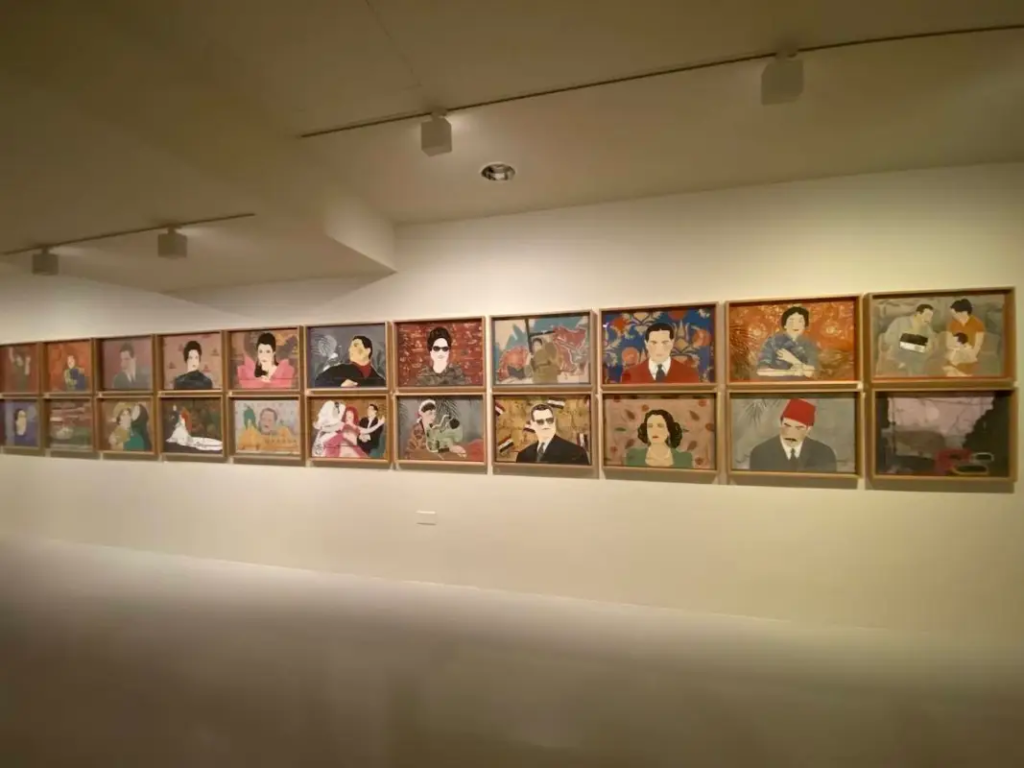
A particularly interesting section of this collection is dedicated to women artists, that has works like “Icons of the Nile” by Egyptian artist Chant Avessidian. This consists of a series of prints and paintings on cardboard representing, in a stylised way, Egyptian icons from modern times, including a number of iconic women.
At the moment, Mathaf is also hosting a temporary exhibition called “Arab Modernism”, which looks at how this current is being articulated in Arab countries, compared with its counterparts around the globe. In the show, we can see not only how Arab artists took visual elements, and techniques from the rich and diverse heritage of the Arab-Muslim world — particularly calligraphy and ornamentation — but also how they mused on the concept of Tajreed. The Arabic term for abstraction, in fact, also means “to strip away” and “purify”, referring to a process of revealing and clarifying through the artistic process itself.
In one room with ochre walls, we can observe how the calligraphic sign was declined to break the division between word and image, opening a space between calligraphy and geometric abstraction. We also find beautiful abstract patterns that intermingle in a big painting by Algerian artist Rachid Koraichi, which is almost tribal in its use of the calligraphic sign and the juxtaposition of primary colours. Etel Adnan, on the other hand, has a much smaller work, part poem, part drawing, where words on paper become abstract lines.
Palestinian Samia Halabi has one painting on show called “The Red One”, an exquisite juxtaposition of touches of colour, which are melodious and musical. Egyptian artist Mounir Canaan, meanwhile, plays on the cubist and modernist usage of pieces of cardboard and wood to create a vibrant image where different plans intersect, creating an effect which is at once aggressive and dynamic.
One of the most beautiful works in the show, though, is by Iraqi artist Hanaa Malallah.
“Secret of Fold Up Squares”, as the name suggests, consists of a series of folded pieces of canvas, burned at their centre. In one of these small squares, almost hidden in the canvas, is a piece of gold, a visually striking and highly evocative detail.
The show lets us observe how shared linguistic and cultural foundations in the Arab world generated a kind of abstraction in the region that stretches far beyond the Western definition of it, or as a simple reaction to academism and realism in art.
A smaller show, “Introspection as Resistance”, is collateral to the Abstraction exhibition. It is dedicated to the mathematical and geometrical work of Iraqi artist Mehdi Moutashar. He has been known as a poet of exactitude and rigour, and his work has been inspired by Abstraction, Minimalism, Op Art and the work of Klein – in its usage of his trademark blue – which is again blended with calligraphy and Arab ornamental patterns.
Overserving graphic motives on the hyper-white walls of the museum, brightly lit, the viewer gets the impression of being catapulted into a different dimension that doesn’t belong to this world, but to computer intelligence.
An early experimenter in geometric abstraction, Moutashar’s work brings mathematical precision and science into art. Looking at the mathematical principles of the universe is, for the artist, a form of introspection. It’s an introspection that bypasses individuals, to connect us with some sort of spiritual truth, a universal order. The artist exemplifies an incessant inquiry and a tireless resistance towards the disorder of the world.
In this sense, the show represents the perfect counterpoint of Kader Attia’s work. Where one acknowledges the impossibility of neatly separating history, imagination, wounding and the mending of wounds, Moutashar launches himself into a Sisyphean attempt to order the work through mathematics.
With these shows, Mathaf proves itself to be one of the most authoritative voices in the Gulf when it comes to speaking about Arab art and its original trajectory. A process of reparation – at least for the art – seems to be possible. One exhibition at a time.
The story of the company, which owns the catalog of the legendary singer Umm Kulthum, mirrors Egypt’s complex and troubled past.
Nestled at the heart of Egypt’s bustling capital lies a vibrant and enchanting district known as Wust el-Balad — in English, downtown Cairo. Suffused with a symphony of artistic expression and architectural marvels, its streets weave a splendid historical tapestry, seamlessly blending influences from various epochs. With each step, one can witness a captivating fusion of Islamic, European and Art Deco styles, monuments to the city’s diverse past.
Venturing deeper into the labyrinthine alleyways, one discovers hidden art studios, artisan workshops and sidewalk cafes, where the lingering aroma of fresh-brewed coffee welcomes writers and thinkers to gather, exchange ideas and fuel their creative endeavors. Even the residential streets, like Champollion Street, are alive with the hum of car mechanics, bakeries and miscellaneous workshops, interspersed with essential eateries such as the renowned Abou Tarek koshary joint.
Yet tucked away discreetly on a serene side street at the end of Champollion Street lies a hidden gem: Sawt el-Qahira (literally “the sound of Cairo,” self-identified in Latin characters as SonoCairo), a retail store belonging to the state-owned Egyptian record label that emerged as the most prominent music label in the Arab world from the 1960s to the 1980s, which has become a testament to the city’s forgotten cultural heritage.
The entrance to the store is unmistakable, adorned with a bright blue banner proudly displaying the iconic Sawt el-Qahira logo. Flanking the entrance are captivating photographs of Egypt’s legendary musicians, with the illustrious figure of Umm Kulthum, also known as Kawkab el-Sharq (Star of the East), taking center stage. As one steps inside, the store reveals a modest collection primarily dedicated to Umm Kulthum’s timeless music. Amid the shelves are CDs, DVDs, cassette tapes and a select few remastered vinyl records. While Umm Kulthum shines as the most prominent figure, the quaint space also pays homage to other luminaries from Egypt’s golden age of art and culture, including Mohammed Abdel Wahab, Abdel Halim Hafez, Sayed Darwish and many more.
But the relentless march of time has left its mark on Sawt el-Qahira. The store exudes an air of neglect, as if lost under shifting tides. Even though Sawt el-Qahira was the first Arab-owned record label in the Middle East and played a crucial role in empowering local artists and spreading Egyptian music across the Arab world, the once-vibrant space marks the absence of its storied past. Now all that remains are forlorn products of nostalgia, their presence veiled beneath a thin layer of dust. So how was it that Sawt el-Qahira managed to fade out of history? The story of the company’s troubled history and slow demise interweaves with that of the warring political agendas that transformed Egypt.
It begins in July 1952, when a group of Egyptian army officers known as “al-dubbat al-ahrar” — the Free Officers — removed King Farouk from power, with popular support from the masses. The coup d’etat, led by Gamal Abdel Nasser, ushered in a period of profound sociopolitical and economic change that included agrarian reforms, massive urbanization and an unprecedented industrialization drive that transformed Egypt from a colonized kingdom into a modern republic.
The new revolutionary government embraced an anti-imperialist agenda, which manifested through Arab nationalism and international nonalignment. In 1954, Nasser became prime minister of the new republic, and quickly began nationalizing key industries, starting with the British- and French-owned Suez Canal Company in 1956. By October 1961, Nasser had embarked on a major nationalization campaign that targeted, among other things, foreign-owned businesses, foreign trade, banking and large-scale industry. Among the lesser-known victims of Nasser’s nationalization drive was Egypt’s private sector record manufacturing company.
During the early to mid-1950s (the precise date is difficult to confirm, due to discrepancies) the Egyptian singer-songwriter Mohamed Fawzi founded Misrphon, a music production company intended to support his musical film work. At the time, Fawzi was one of the country’s seminal composers, having worked with such eminent singers as Shadia, Sabah and Leila Mourad. He was celebrated for the originality of his music, as well as his role in developing a modern Egyptian musical style. Fawzi was both prolific and patriotic, having produced Egyptian and Arab nationalist music (including a liberation song for Algeria that became that country’s national anthem following independence). His nationalism was even apparent in his choice of the name Misrphon — “Misr” is Arabic for Egypt, making his chosen name, effectively, the “sound of Egypt.”
At the time, there were very few music production facilities in Egypt, especially ones that were Egyptian-owned. Records were pressed in Europe before being imported to Egypt, an economically taxing process that increased shipping costs and raised retail prices significantly. Fawzi sought to eliminate this inequality in music production by building a modern, Arab-owned record factory in Egypt — the first of its kind in the Arab world and Africa. Fawzi then lured Egypt’s leading singers of the day to record at his facility by appealing to their nationalism and offering artists a share of royalties rather than a lump-sum payment. He managed to sign a number of important artists, including Shadia, Sabah and, most importantly, Umm Kulthum. By 1959, Fawzi had expanded his company to include a state-of-the-art recording studio and a retail outlet. He also rented his studios and factory to other music recording companies in the Arab world.
By 1960, Misrphon had begun to turn a profit. Adverts for the music production company were regularly published in magazines and periodicals, alerting readers that “Misrphon presents the most famous female and male singers performing their latest songs.” Fawzi had achieved his dream. He had established the Arab world’s first record factory and had brought the country’s top stars into his vision for Egypt’s musical future. He had cemented his status as a visionary and, having secured his musical legacy, dedicated himself to the continued growth of his beloved company.
Unbeknownst to him, in a matter of months, he would become the latest victim of Nasser’s growing political ambitions.
In 1961, Nasser issued a wide array of socialist decrees in his attempt to transform Egypt’s socioeconomic structure. One of his measures was Law 117, which nationalized the remaining banks and large-scale industry. Another was Law 118, which allowed the Egyptian government to assume partnership in certain companies and foundations.
Philips Orient, a Dutch manufacturing company that owned 50% of Fawzi’s Misrphon, was among the entities targeted by the Egyptian government. After nationalizing Philips Orient, the Egyptian government placed Misrphon under the administrative supervision of the Egyptian General Institution for Theater and Music. Though Fawzi still held 50% of Misrphon shares and, on paper, the position of managing partner with full administrative control and liability, he had effectively lost control of Misrphon. Even his personal villa, which contained a recording studio, was seized by the government.
Fawzi was offered the position of artistic advisor to the (de facto state-owned) Misrphon, which came with a small office and a modest salary for his labors. Understandably, he chose to turn down the offer. He eventually sold his remaining shares for a pittance to Sawt el-Qahira, the state-run company founded on the ashes of Misrphon in 1964.
Robbed of his company and passion, Fawzi fell into a depression and died from a rare disease in 1966, aged 48. He had produced what would be his final composition eight months earlier, a patriotic song titled “Umm el-Balad” (“Mother of the Country”).
In the meantime, Sawt el-Qahira continued to grow. Under the supervision of the Ministry of Culture, it established a second manufacturing company and began constructing gramophones to sell at a modest price to boost record sales. The company also expanded its operations to include a wider range of cultural, educational and religious recordings.
In its takeover of Misrphon, the Egyptian government had retained a significant catalog of recorded music, as well as contracts with important artists. This cultural capital played a pivotal role in Nasser’s strategy of using soft power to further Arab nationalism. Recognizing that Sawt el-Qahira provided him with cultural as well as economic resources, the president used the likes of Umm Kulthum — who happened to be under contract with Misrphon — to galvanize support for his nationalist agenda. Sawt el-Qahira even worked in tandem with Egyptian state radio to export Egyptian music and culture across the Arab world, and Nasser often broadcast his political speeches following Umm Kulthum’s performances.
Umm Kulthum was especially important to Sawt el-Qahira. Her contract with Misrphon, which included exclusive rights to her earlier works, essentially gave the state monopolistic control of one of Egypt’s most important cultural assets. In 1964, the same year that the Egyptian state assumed full control of Misrphon and transformed it into Sawt el-Qahira, Umm Kulthum and her longtime rival and fellow sensation Mohammed Abdel Wahab collaborated to release “Enta Omry” (“You Are My Life”) — a seminal song that helped establish Sawt el-Qahira and distracted from Nasser’s political failings and growing totalitarian policies.
As a symbol of pan-Arabism and source of Egyptian pride, exclusivity over Umm Kulthum’s oeuvre would remain Sawt el-Qahira’s greatest achievement. It would also be the source of long-standing litigation regarding the rights to her work, even after Nasser himself left the political scene.
Nasser’s sudden passing in September 1970, at the age of 52, marked the beginning of a turbulent period in Egypt’s history. Following Nasser’s death, his vice president Anwar Sadat assumed the presidency and embarked on a path that diverged from Nasser’s ideology.
Sadat’s rise to power brought about a new era characterized by a series of transformative policies and reforms. One of the most notable changes came in 1971, when Sadat launched the Corrective Revolution, purging prominent figures associated with Nasser’s regime. This marked a shift in leadership and a departure from Nasser’s populist approach. However, it was Sadat’s “Infitah” (Open Door) policies that had the most far-reaching implications for Egypt. The Infitah aimed to liberalize the economy, attract foreign investment and encourage private enterprise. It marked a significant departure from the socialist policies pursued by Nasser, as Sadat sought to integrate Egypt into the global economy and foster economic growth.
The Infitah resulted in the relaxation of state control over various sectors, the privatization of some industries and the encouragement of foreign investment. However, it also resulted in devastating socioeconomic disparities that widened the already significant wealth gap. It also decimated social welfare, public education and the health care sector. By the late 1970s, even Sawt el-Qahira was facing the challenges of a new market.
In 1973, the state-controlled company began manufacturing cassettes to meet the growing demand for a more convenient, portable and cost-effective way of listening to music. While Sawt el-Qahira had maintained monopolistic control of Egypt’s vinyl market — and thus the music industry as a whole — for more than a decade, Sadat’s Infitah policies meant that privately owned cassette companies were beginning to emerge within Egypt, flooding the market with products outside state control. What resulted was a significant shift in Egypt’s music scene, with the state no longer dominating the country’s cultural output. Nevertheless, the Egyptian government attempted to exert control in other areas, mainly through influencing what was considered permissible music.
“Glossy photographs, accompanying the Ministry of Information’s history of Sawt al-Qahira, show Egyptian employees working diligently in the company’s state-of-the-art facilities in Alexandria,” writes Andrew Simon in his acclaimed book, “Media of the Masses: Cassette Culture in Modern Egypt.” He adds: “Women manage master recordings, while men handle packaging, the creation of cassette cases, and the printing of cassette sleeves and posters. If examined together, these images convey a clear message. Sawt al-Qahira’s cassette division shared nothing in common with the so-called ‘companies’ blasted by critics for producing ‘vulgar’ tapes. For one, the label was not limited to a single room or a sidewalk kiosk. It operated out of not one, but two, well-lit, technologically advanced factories.”
In 1977, the Egyptian government issued a decree renaming Sawt el-Qahira Record Company to Sawt el-Qahira for Audio and Visuals — a change that emphasized the company’s shifting priorities. Within a matter of years, Sawt el-Qahira would stop manufacturing records entirely.
Unable to compete against the onslaught of private labels and bootleg tapes, Sawt el-Qahira traded in golden-age nostalgia and religious recitations, which had risen in popularity as Islamic conservatism took hold in Egypt during the 1970s and ’80s. This trend continued following Sadat’s assassination at the hands of an Islamist fundamentalist army officer in 1981 and throughout his successor Hosni Mubarak’s tenure as president.
Today, Sawt el-Qahira’s religious catalog continues to enjoy a prominent place on the company’s official website — a catalog that includes Quranic recitations and the teachings of the controversial Muslim scholar Metwali el-Sharawi. The company also produces an array of religious television programming, including popular Ramadan shows such as “Muhammad: The Prophet of God.”
Sawt el-Qahira’s website does not appear to have been updated in several years. The most recent post available on the site, dated 2021, consists of a news release announcing a significant legal victory for the company. The announcement highlights that Cairo’s Economic Court ruled in favor of Sawt el-Qahira, affirming its exclusive rights to Umm Kulthum’s catalog. This ruling came as a result of a highly publicized lawsuit initiated by the family of the late star.
While Sawt el-Qahira no longer resembled the vision of its late founder, it continued to maintain an iron grip over one of the country’s most lucrative assets.
Shortly before the COVID-19 pandemic overwhelmed the world, Egypt hosted the 51st Cairo International Book Fair. Amid the bustling maze of stalls stood a modest booth adorned with the distinctive Sawt el-Qahira banner, and within this unassuming space a myriad of products lay on display: dusty cassettes, CDs and a collection of religious teachings. Among the array of relics sat a cheaply constructed gramophone equipped with built-in USB and Bluetooth connections.
When asked about the strange display by a journalist in attendance, a Sawt el-Qahira official revealed that the products were nostalgic and were meant to be viewed as “antiques.” He also stressed that once the company’s remaining stock of cassettes runs out, it is unlikely they will ever produce more, since the machines that manufacture them no longer work.
While Sawt el-Qahira hoped to capitalize on its latest attempt at nostalgic marketing, its participation in the book fair ended up showcasing the hollowed remains of a decayed industrial giant.
As the vinyl spins and the echoes of history reverberate through the grooves, Sawt el-Qahira is a musical map of Egypt’s complex and troubled past. Founded by a visionary artist, the record label’s journey has been a reflection of the nation’s trajectory over the past few decades. From its roots as a passion project empowering Egyptian musicians, through its evolution into a tool for propaganda under state control, to its current role as a peddler of nostalgia and religious teachings, Sawt el-Qahira stands as a vivid reflection of the country’s leaders over the second half of the 20th century and the visions that each had for Egypt: a culturally and politically independent state, a socialist republic, a modern player on the international field. And now, perhaps, Sawt el-Qahira mirrors the Egyptian government: a military dictatorship that relies on a bygone era of Egyptian culture to legitimize its rule, while actively repressing expression and activities that lead to cultural production.
source/content: newlinesmag.com (headline edited) / Karim Zidan
_________
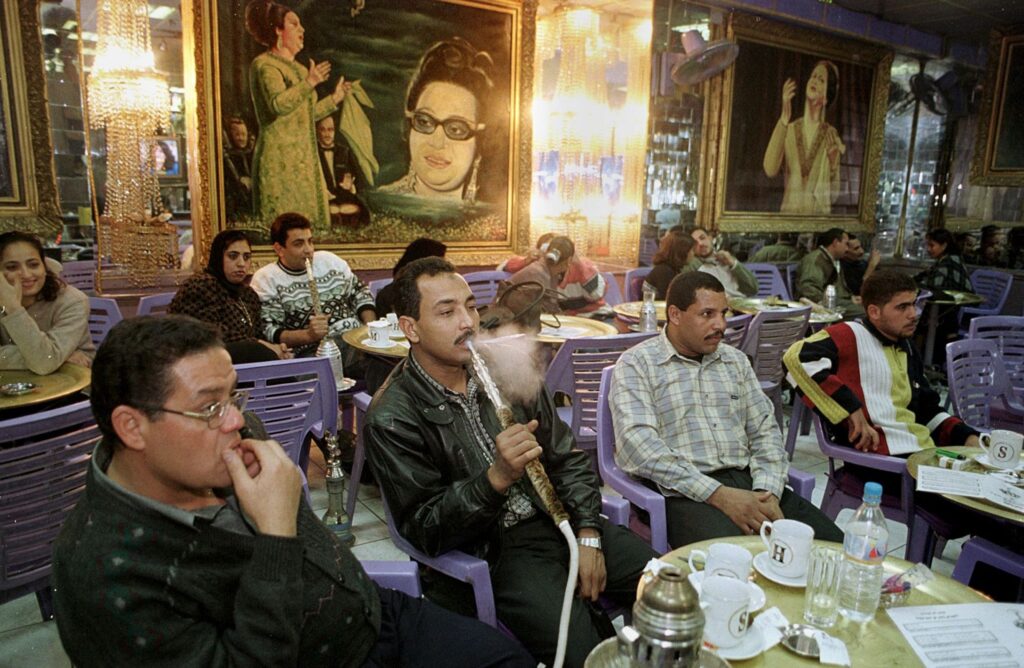
Egyptians watch the last episode of an Egyptian series on the life of the Arab world’s most famous singer Um Kalthoum 15 January at a coffee shop that bears the name “Kawkab al-Sharq,” one of many nicknames of the legendary Egyptian diva. Television stations across the Middle East have been broadcasting the series “Um Kalthoum,” sending sales of her songs soaring 25 years after her death. (Photo by MOHAMMED AL-SEHITI / AFP) (Photo by MOHAMMED AL-SEHITI/AFP via Getty Images)
– Four publications are part of The Arabic Language in the World series
– Publications aim to build bridges of communication with Arabic- speaking peoples around the world
The King Salman Global Academy for Arabic Language (KSGAAL) launched four new publications on Thursday.
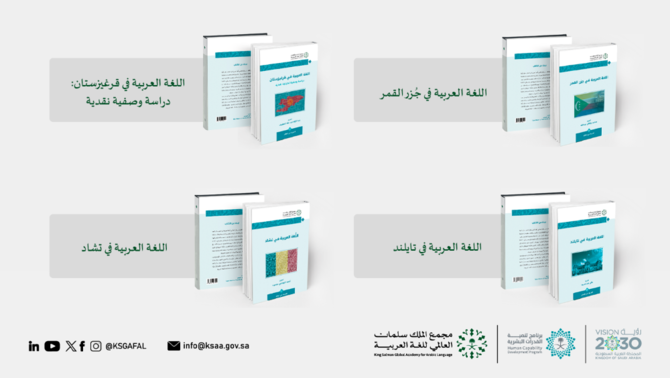
According to a statement, the four publications are part of The Arabic Language in the World series, and include the books: “The Arabic Language in Chad,” “The Arabic Language in Thailand,” “The Arabic language in Kyrgyzstan: A Critical Analytical Descriptive Study” and “The Arabic Language in the Comoros.”
The publications aim to build bridges of communication with Arabic-speaking peoples around the world.
Language researchers, academics, and institutions inside and outside the Kingdom can view the books on the KSGAAL website via: https://library.ksaa.gov.sa/index/view/78.
Dr. Abdullah Al-Washmi, secretary-general of KSGAAL, said the academy’s Specialized Global Research Track project includes a variety of disciplines and arts related to the Arabic language.
The Arabic Language in the World series seeks to deepen communication between institutions and individuals concerned with the language.
The program involves about 1,100 researchers from 76 countries around the world.
KSGAAL is tasked with supporting the Arabic language, enhancing its status, preserving its integrity in speech and writing, documenting its origins, methods, vocabulary and grammar, and facilitating learning inside and outside Saudi Arabia, Al-Washmi said.
source/content: arabnews.com (headline edited)
___________
The King Salman Global Academy for Arabic Language (KSGAAL) has launched four new publications. (Supplied)
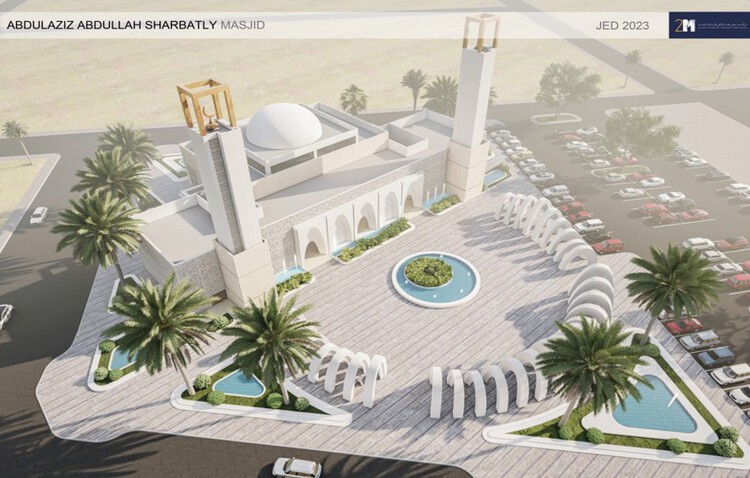
The Kingdom of Saudi Arabia is now home to the world’s first 3-D-printed mosque, spanning an area of 5,600 sqm. Located within the Al-Jawhara suburb of Jeddah, the mosque stands as a tribute to the late equestrian Abdulaziz Abdullah Sharbatly. The project by Forsan Real Estate utilizes cutting-edge 3D printing technology from Guanli.
The mosque’s construction was completed within six months and spearheaded by Wajnat Abdulwahed, the spouse of the late Abdulaziz Abdullah Sharbatly. Aimed at fostering serenity amongst worshipers while integrating natural light, the mosque also features distinctive minarets, creating a landmark within the neighborhood.
The inauguration of the mosque positions Saudi Arabia as a technological hub, surpassing the United Arab Emirates’ projected timeline for a similar endeavor. Dubai announced an initiative to construct the world’s first 3D-printed mosque last May. As a new and complex technique, the successful completion of the world’s 3D-printed religious infrastructure holds potential for the future of architecture and design.
The project has garnered global attention, showcasing the limitless possibilities of 3D printing technology in construction. In an interview with Arab News, Abdulwahed stressed the importance of “not losing the essence that mosques must embody, while also adhering to general conditions such as emphasizing the values of the King Salman Urban charter, the architectural details in the cultural heritage of Hejazi architecture and presenting them in a contemporary format.”
Iraqi American Zenovia Jafar was over the moon for “having made it” as she was crowned winner of the Miss Arab USA 2024 pageant in Arizona on Sunday.
“My experience with Miss Arab USA is one of the best experiences of my life. When I walked in, I had no idea what was going to happen, if I was even going to win. But most importantly, when I walked in, I will honestly say that winning was the only thing on my mind. I didn’t think about anything else,” Jafar told Arab News in an interview.
“But once I actually got there, I realized the friendships and the connections I’ve made with the people here is priceless and it is far more important than winning … I genuinely wanted to connect with every single person that I met, and I think that’s what helped me win Miss Arab USA. Because I focused more on genuine connection and doing what I need to do. And I was committed to just being myself,” she added.
When asked about her goals going forward, the Michigan resident said: “I’m going to be using my platform to raise awareness on issues regarding people who are … from underdeveloped communities, people who are in need. I’m going to be raising more money for charities. I’m here to serve Miss Arab USA and use my voice to amplify the voices of people who are not heard all over the world.”
Jafar’s family moved to the US — having escaped the war in Iraq and spent two years in Syria after — in the late 90s, when she was a toddler.
“When I moved here, I remember one thing that my mother told us is that we should never forget our roots and where we come from. My mother was committed to teaching us how to read and write and speak Arabic. And that is something that I am so grateful to my mother for because I can read Arabic, I can write Arabic, I can speak Arabic, I can understand many Arabic dialects. And I never let go of who I was and where my family came from. And I think that’s something that is so important when you grow up away from home, is to stay connected to who you are. Because at the end of the day, all you have is your roots,” she said.
When asked if she had any advice for young Arab American women, Jafar said: “I will say that as an Arab woman, it is very, very important to push your limits and always do things outside of your comfort zone because you will never grow as a person if you are stuck in your comfort zone. Always push yourself to be better.”
source/content: arabnews.com (headline edited)
________________
Iraqi American Zenovia Jafar (centre) was over the moon for “having made it” as she was crowned winner of the Miss Arab USA 2024 pageant in Arizona on Sunday. (Supplied)
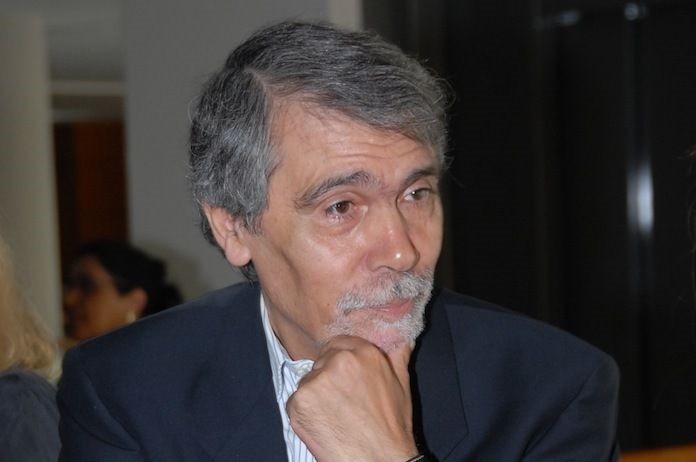
Kilito has won several accolades, with his most recent being the International Prize of King Faisal for Arabic Language and Literature in 2023.
The renowned Moroccan writer Abdelfattah Kilito has been awarded the 2024 Grand Prix de la Francophonie by the French Academy.
Since its establishment in 1986, the Grand Prix of the French Academy has been dedicated to acknowledging Francophone individuals whose impactful efforts, whether locally or globally, have greatly supported the maintenance and propagation of the French language.
The French Academy revealed its roster of 2024 honorees on Thursday evening, recognizing 67 individuals across diverse domains such as literature, poetry, criticism, philosophy, history, cinema, theater, and French music.
Born in 1945, Kilito is a professor emeritus in the French department at Mohammed V University in Rabat. He has also taught in Paris, Princeton, and Harvard.
He has authored numerous works in both Arabic and French, in addition to publishing studies and research in Moroccan and Arab journals and scientific reviews.
Kilito has been recognized with numerous accolades, most notably the 2023 International Prize of King Faisal for Arabic Language and Literature.
Among his other awards, Kilito has received the Great Moroccan Award in 1989, the Atlas Award in 1996, the French Academy Award in 1996, and the Sultan Al Owais Prize for Criticism and Literature Studies in 2006.
The Grand Prix represents a pinnacle of achievement in celebrating Kilito’s profound influence on the French language and culture, both in his homeland and on a global scale.
As his scholarly contributions and literary talent continue to resonate globally, this latest award is another resounding acknowledgement of Kilito’s enduring legacy and his dedication to advancing intercultural dialogue within the global francophone community.