Arabs & Arabian Records Aggregator. Chronicler. Milestones of the 25 Countries of the Arabic Speaking World (official / co-official). AGCC. MENA. Global. Ist's to Top 10's. Records. Read & Enjoy./ www.arabianrecords.org
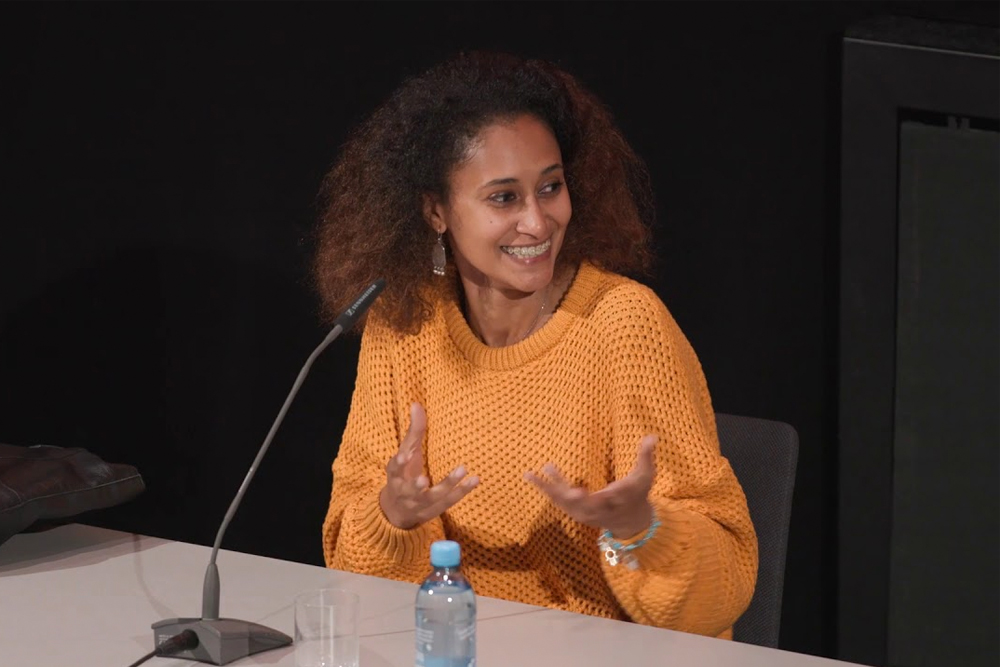
Born in Saudi Arabia and the daughter of a Sudanese father and Egyptian mother, Marwa Zein is a woman that truly embodies multiple identities, and for many it is this that perhaps shines through the most in her work. Even when it comes to her roles, that diversity and multiplicity are frontline and center. An award-winning director, scriptwriter, film producer, women’s rights activist, and founder of ORE Production, a Khartoum-based film production company, Zein is inspiring in every way.
Before setting off on a journey to become a filmmaker, Zein enrolled in Cairo University as a chemical engineering student to please her parents. While studying, she worked and saved up to have the means to leave her degree behind three years later, instead study cinema at the Academy of Arts in Cairo, Egypt in 2005. In 2009, she graduated with honors and moved to Germany to continue her film studies. Her graduation project, “A game,” was an official selection of more dozens of international festivals across the globe and was translated into five languages.
From her inspiring start into the world of film and her academic achievements, Zein moved on to bigger goals, nabbing awards for her short film “One Week, Two Days,” which premiered at the 2016 Dubai International Film Festival. In 2019, she was selected as one of the seven young filmmakers from across to attend the Cannes Film Festival 2019 by the International Emerging Film Talent Association (IEFTA).
Perhaps her most renowned recent work is “Khartoum Offside,” which was awarded Best Documentary for 2019 at the 15th Africa Movie Academy Awards AMAA 2019. The documentary tells the story of women footballers whose dream it is to play for Sudan at a Women’s World Cup hosted by their home country, revealing the challenging social, economic, and political situations they face and inspiring audiences with their tale.
Speaking to Women and Hollywood in 2019, Zein had some inspiring words of advice for other female filmmakers, saying, “There’s no competition. Everyone is unique, and we can’t tell the same story even we have the same idea. You are special, different, and inspiring, and you lead the way for the people coming after you.”
“Take care of your mental, physical, and financial situations. It’s a very challenging and demanding business, so don’t lose your soul in the process. Stay true to who you are, and you will reach the horizon,” she continued.
A fascinating new exhibit in Beirut is showcasing 108 original movie posters advertising Western films set in the Arab world.
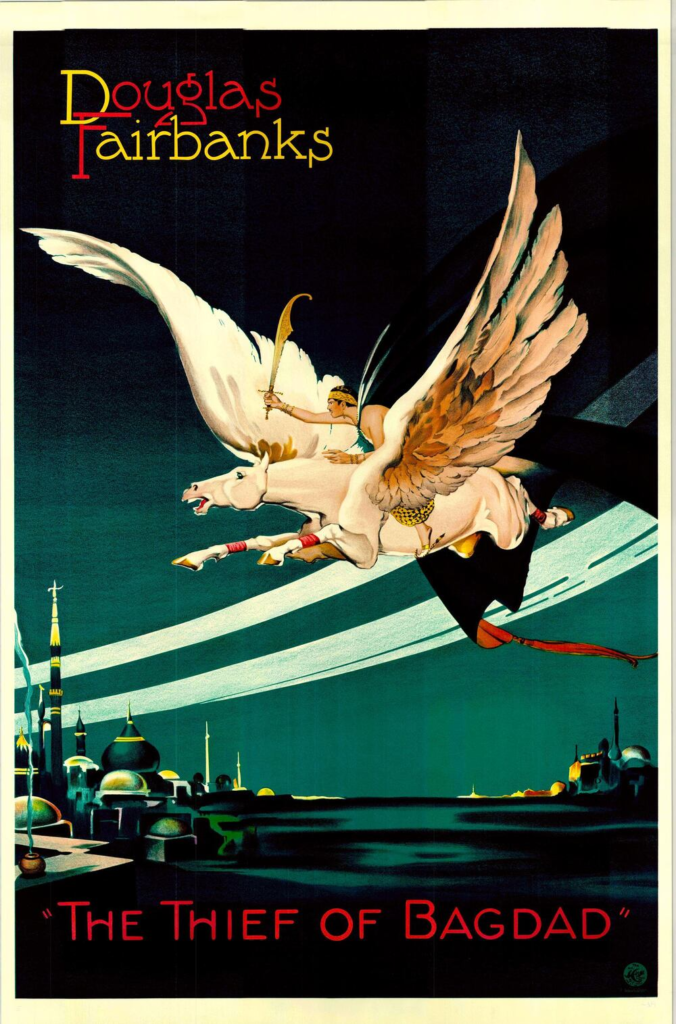
The original poster for the 1924 American film ‘Thief of Baghdad’. Courtesy Abboudi Abou Jaoude
The original poster for the 1924 American film Thief of Baghdad hangs on the wall of Dar El-Nimer for Arts and Culture in Beirut. Based on a story from One Thousand and One Nights, a collection of Middle Eastern folk tales, the film tells the story of a robber who pretends to be a prince after falling in love with a princess.
It features a young black-haired man flying through the night sky on a winged steed, above a city of domes and spires that looks more like Istanbul than the capital of Iraq. He clutches a gold scimitar with a wicked curved blade in one hand.
It is one of 10 posters, all advertising adaptations of the film in different languages. The silent swashbuckler was so popular that it was remade three times, in 1940, 1961 and 1978. The French poster for the 1940 version is particularly beautiful and lurid, featuring a procession of robed figures and elephants making their way through a marketplace in front of an orange palace. In the foreground, a boy in a large turban looks shiftily to one side as he bites into a piece of fruit, presumably stolen from a market stall. In the sky, another turbaned figure stands on a flying carpet.
The collection
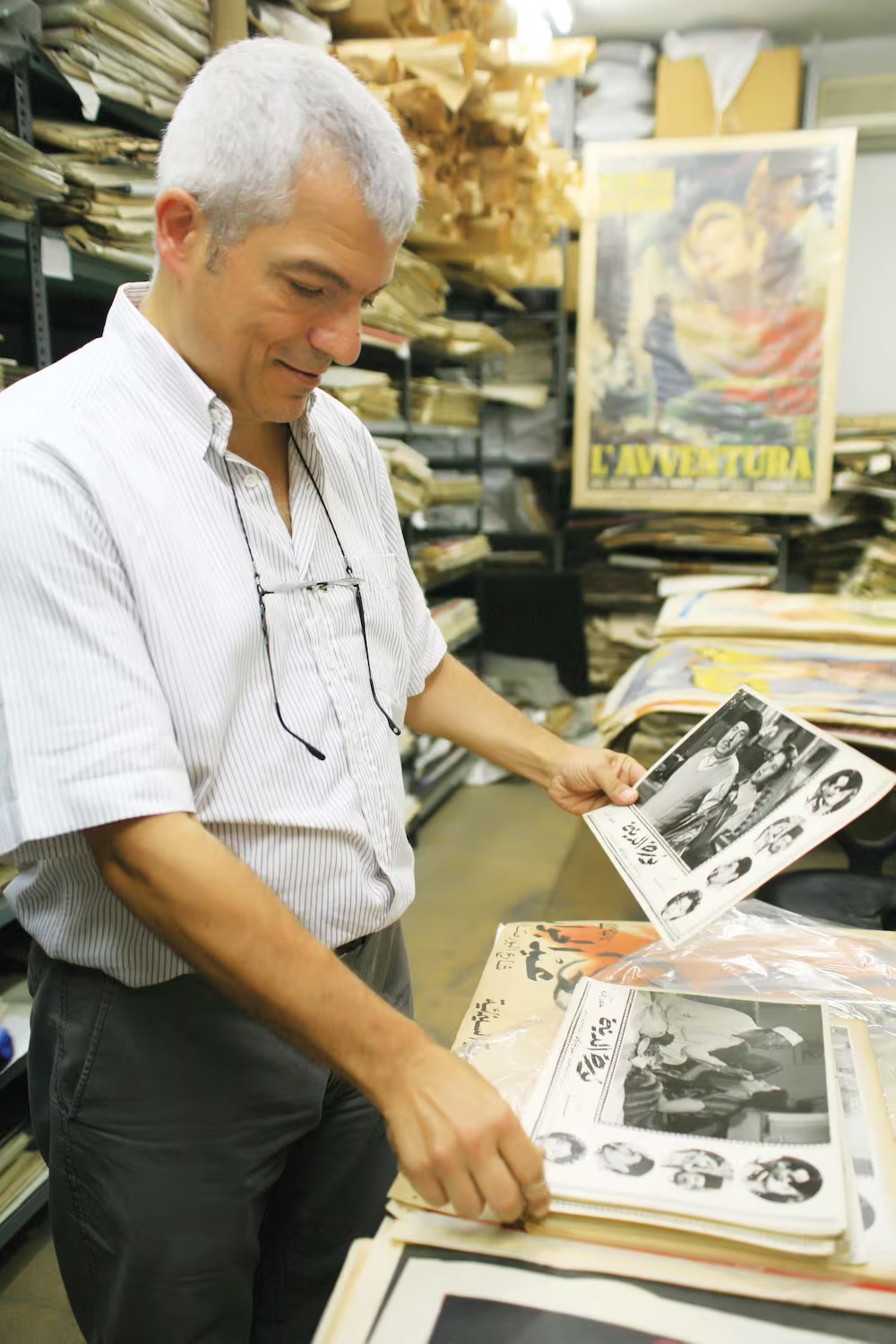
The pieces are part of a selection of 108 original posters advertising western films set in the Arab world and are on loan from private collector Abboudi Abou Jaoude, the curator of the show. “I have about 550 posters and about 300 pictures in my collection,” he says, strolling through the exhibition, which is organised by genres designated by neon signs. He stops frequently to point out a detail that makes him laugh or to delve into the facets of a particular film. “I started collecting because my favourite actors were Steve McQueen and Clint Eastwood,” he says. “Bullitt was the first poster I collected. Then For a Few Dollars More, a Spaghetti Western from Eastwood. But afterwards my interest changed and I started collecting foreign posters.”
Jaoude chose to name the exhibition Thief of Bagdad, not only because the film was so popular, but because it inspired so many others. “Baghdad is the most popular city at the beginning of the movies. There are around 55 films made in the 20th century with Baghdad in the name,” he says.
Most of them were shot in studios in America or Europe and bear no resemblance to reality. Thanks to the Orientalist fascination with One Thousand and One Nights, the Baghdad of these films is a place of total fantasy, filled with camels and elephants, flying carpets and genies, as well as heroes, villains and damsels waiting to be rescued or wooed.
The posters are hand-drawn in riotous colours and often show several different scenes. Many feature white actors playing Arab characters and reinforce Orientalist tropes such as dashing desert sheikhs and feisty dancing girls, or enslaved beauties who await rescue by a civilised foreign hero.
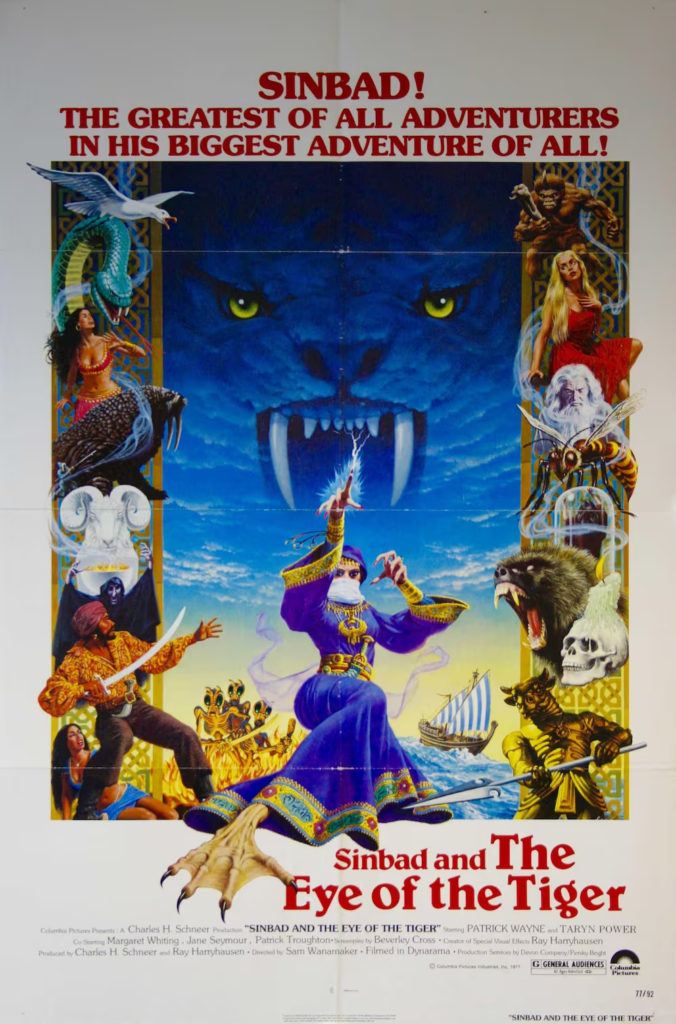
Like the Orientalist painters of the 19th century, the filmmakers and poster artists are fascinated by the idea of the harem. Many of the posters feature statuesque, white women posing evocatively. Others are simply bizarre. A 1977 poster for Sinbad and the Eye of the Tiger features a woman in a niqab and a bejewelled purple and gold robe, who shoots lightning from her hand as she kicks towards the viewer with a giant foot that resembles an eagle’s talon.
‘It’s about imagination’
Jaoude has divided the exhibition into four sections: love, fantasy, adventure and comedy. A fifth section features the posters of films shot on location in the Middle East. Beirut and Cairo were particularly popular filming locations in the 1960s and early 1970s, he explains, because shooting costs were low. That they were shot in the Arab world didn’t make the films – or their posters – any more accurate or realistic, however. Many of them are espionage themed and feature gun-toting spies and Soviet villains in Lebanon, running around the ruins of Baalbeck or fighting on top of the crusader castle in Saida.
The artists had sometimes not even seen the films they were advertising, so they based the posters on their own ideas about the Middle East, explains Jaoude. “It’s about imagination. They take the story from Arabian Nights. You can see in the posters that it’s a continuation of Orientalism,” he says.
Because viewers would not have a chance to see trailers for the films, the posters were intended to excite audiences and convince them the film was worth their time and money. “The shapes that shook a Harem Empire!” is the excited legend on the poster for the 1952 British film Babes in Bagdad, positioned beside images of fair-skinned women in belly dancer costumes and chains. The poster promises: “All its spectacle captured in exotic colour.”
An Italian poster for the 1961 adaptation of Thief of Bagdad advertises “The fantastic deeds … the incredible daring of the thief who defied an empire!” At the bottom of the poster, the artist lists a series of features that viewers can expect in the film: “Adventure! Trees that become monsters! Adventure! Flying horses soar! Adventure! The faceless fighters! Adventure! Army created by magic! Adventure! Gigantic killer crab! Adventure! Men turned into stone!”
Jaoude has spent decades building up his collection, visiting cinemas in Morocco, Syria, Egypt and across the region. “Whenever I visit these countries, most days I go to the old cinemas, the ones around the city, not in the centre, because they leave these posters in the theatres for re-issues,” he says. “Every five or six years they show the films again because people like these kinds of movies. After 20 years we find it funny, but at the time we found it very nice. People like the hero, the way he fights with the villain. It was popular.”
The films featured in the exhibition, which date from the 1920s to the 1970s, were intended to make money and entertain, rather than provide commentary on the Arab world. That changed after 1967 and the Arab-Israeli conflict, he says. “After 1967 there are many political movies about the Arabs, but before that I think it wasn’t political,” Jaoude explains.
“I think there are three eras. The first one is about imagination and the Arab world. In the second, there are many films with singing and dancing set in the Arab world and lots of films about the First and Second World Wars, set in Arab countries. After 1967, it changes. It’s the Arabs as villains.”
Despite their Orientalist attitudes, garish colours and an overabundance of cliches, the posters are often beautiful and always entertaining. For Jaoude, they are artefacts that are more important than the films they represent. “What stays in my mind is the posters. I forget the movies,” he says with a smile.
Thief of Baghdad is at Dar El-Nimer for Arts and Culture in Beirut
Bayt Ali Gana (“Ali Gana’s House” in Arabic) finally opened this year, and seeks to offer both retrospection and hope in the country.
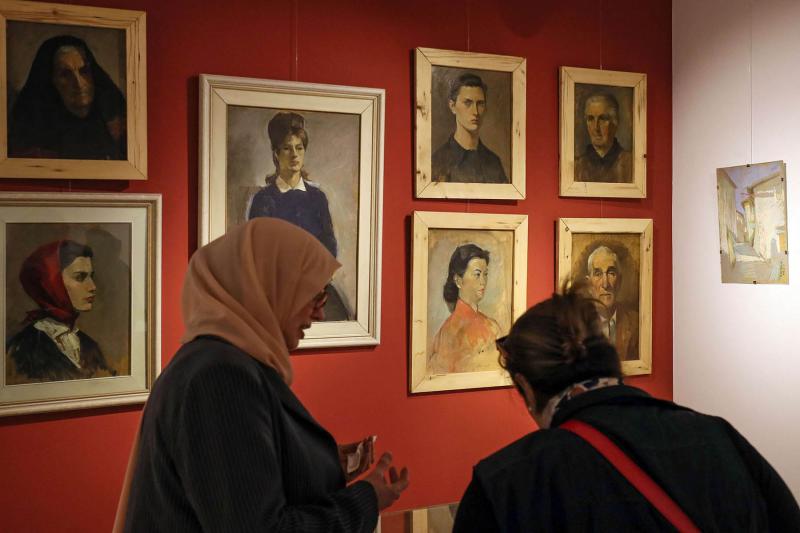
A seemingly ordinary villa in the heart of Tripoli holds a lifetime of works by the late Libyan artist Ali Gana, whose family has turned his house into a unique museum.
In the North African country still grappling with divisions and conflict after the fall of long-time dictator Muammar Gadhafi in 2011, “art comes last”, said Hadia Gana, the youngest of the artist’s four children.
A decade in the making and with the help of volunteers, she had transformed the classic-style Tripolitian villa her father had built, before dying in 2006 at age 70, into “the first and only museum of modern art in Libya”, Gana said.
Bayt Ali Gana (“Ali Gana’s House” in Arabic) finally opened this year, and seeks to offer both retrospection and hope in a country constantly threatened by violence and where arts and culture stand largely neglected.
“It is seen as something superfluous,” Gana said, adding that galleries in the war-torn country often focus solely on selling pieces rather than making art more accessible.
Once past a lush garden, visitors reach the museum’s permanent exhibition of paintings, sculptures and sketches by the masterful Ali Gana.
Other rooms include temporary exhibitions, and offer space for seminars and themed workshops.
Set on a wall, an old shipping container houses an artist residency for “curators and museologists” whose skills are scarce in Libya, said Hadia Gana.
Libyan artists had long been subject to censorship and self-censorship under Gadhafi’s four-decade rule, and “we couldn’t express ourselves on politics”, recalled Gana, 50, a ceramic artist.
Art “must not have barriers”, she said, proudly standing in the family-owned space for artistic freedom.
Bayt Ali Gana appears timeless, though the villa bears some signs of the unrest that followed the overthrow and death of Gadhafi.
A road sign riddled with bullets hangs from the gate that separates the museum from the private residence.
Mortar shells turned upside down sit among flowers in the garden, where visitors are offered cold drinks or Italian espressos in a setting that replicates Cafe Said, once owned by Ali Gana’s father in the old medina of Tripoli.
During the unrest that began in 2011, Hadia Gana said she feared “losing everything if a rocket hit the house”.
Then came the idea of creating a museum in the hopes of conserving her father’s precious works and archives.
Sporadic fighting, water or electricity cuts, and forced isolation due to the COVID-19 pandemic have piled challenges on the family’s mission, while the Ganas steered clear of state funding or investors to maintain the independence of their nascent institution.
Gradually, the house morphed into a cultural centre celebrating Ali Gana’s calling to “teach and educate through art”, said his daughter.
It “is not a mausoleum”, but a hub of creativity and education, she said.
Gana’s archives also document traditional crafts and trades, some of which have now completely disappeared.
After taking power in a 1969 coup, Gadhafi had imposed a ban on all private enterprise, and “for 40 years, crafts became an outlawed activity”, said the late artist’s oldest son Mehdi, who now lives in the Netherlands.
He said that in his lifetime, Ali Gana took on a mission to “build archives in order to link Libya’s past to a possible future”.
It is “the nature of the family” to preserve and share knowledge, said matriarch Janine Rabiau-Gana, 84.
Hadia Gana lamented that while museums should be educational spaces, “here in Libya, we don’t have that notion yet”.
She said she wanted to avoid “making it a museum where everything is transfixed”.
Instead, “I wanted something lively, almost playful, and above all a place that arouses curiosity in all its beauty.”
The award-winning international correspondent talks frontline reporting, wearing the hijab on television, and how her personal connection to the Middle East makes her a better storyteller
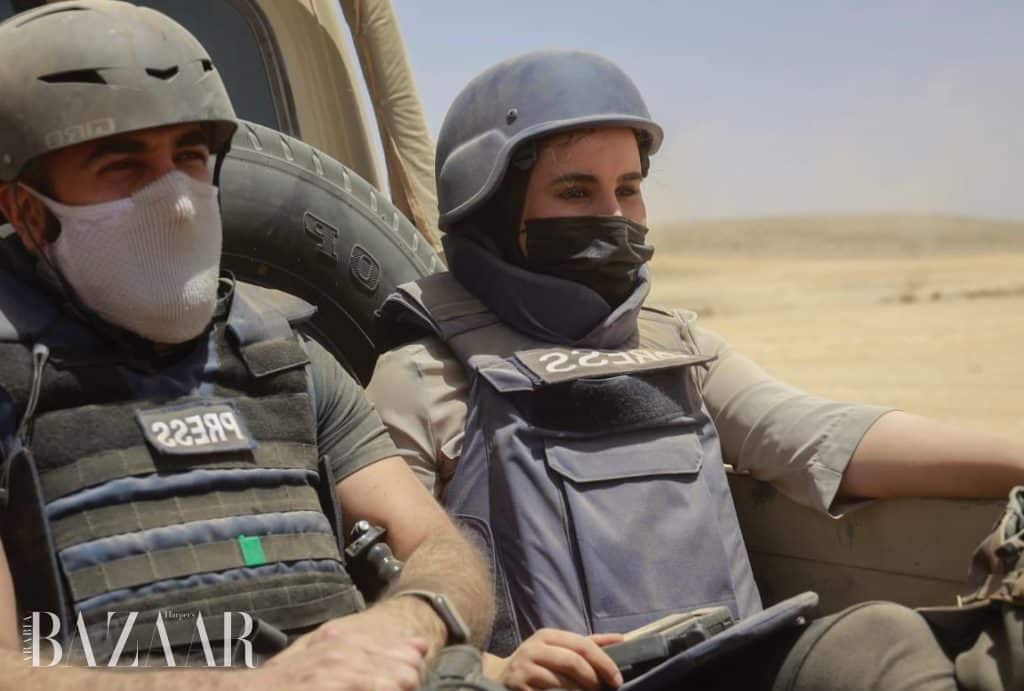
In Autumn 2019, when Turkey launched its incursion into northern Syria, 23-year-old Nada Bashir packed her camera and flew to northern Iraq to cover the story. At the time she was a freelance producer for CNN in London “pretty fed up of constantly being on the Downing Street shift and covering Brexit. I knew I wanted to be in the Middle East but wasn’t perhaps experienced enough,” she says. “So I decided to just go by myself… I felt very passionate about what was happening and I knew I wanted to be a part of it.”
It was a bold decision – both her first solo story and first solo trip to a hostile environment – but the risk paid off. Just five years later, she is an award-winning international correspondent who has reported from the frontlines of the conflict in Yemen and the devastating 2023 earthquake in Turkey.
Now 28, Nada is speaking from her home in West London. She flew in yesterday from Cyprus where she was covering aid ships heading to Gaza, and she will likely be dispatched again imminently although she doesn’t know when or where. She’ll pack a book and headphones but otherwise, “it’s all tech gear, medical kit and body armour”.
Unpredictable as this career may be, it is one that she has dreamt of since she was a teenager, watching the Arab Spring unfold: “We were all glued to the TV, seeing what was happening across the Middle East and back home. That was the moment for me when I was like, ‘actually this is what I want to do’.”
Back home is Libya from where Nada’s family originate, although her parents – her father was an aircraft engineer and her mother is a nursery teacher – left before she was born. “My dad was a pro-democracy activist,” she says. “He spent more than 30 years essentially in exile…It was something that we were all aware of, something that we talked about a lot.” It meant that growing up in Brighton, on England’s south coast, “the news was constantly on” but Nada never considered that she might one day be on screen herself. The middle of five siblings, she was “very shy” at school: “I vividly remember being forced to do a presentation, feeling like I was about to faint and going red in the face. I never ever would have pictured myself doing this.”
But after becoming involved in student TV while studying Politics and East European Studies at University College London, securing the internship at CNN and impressing her editors with her story from northern Iraq, an on camera career beckoned. “I spent so much of my childhood consuming news about what was happening at home and a lot of it coming from Western networks. There were a lot of things where you watched it and felt like the story of your people, your region, wasn’t being told fairly, properly or accurately,” she says. “Still there are times when I watch coverage and it’s frustrating because there’s a real lack of understanding around some of the cultural dynamics.
Being Arab isn’t essential to reporting on the Middle East, she says, but it does break down barriers: “Just being able to speak to people in their language, understanding their culture… Having that connection has made me a better storyteller.” The stories she tells are often difficult ones and they stay with her – the elderly Syrian refugee who lost his family in the Turkish earthquake, the 11-year-old Moroccan girl who guided her around a makeshift burial ground after the earthquake there last September, the Palestinian teenager detained without charge in the West Bank. Reporting on the war in Gaza has been particularly poignant: “Talking about the Palestinian cause is something that no Arab person hasn’t done. That is part of our cultural identity in a sense. That history is interlinked with all of the Middle East.”
Within the first week of war breaking out, Nada was in Jordan and Oman covering anti-war protests. Since then she has reported from Lebanon and Egypt but it is her time in the occupied West Bank – her first visit there – that has been most affecting. “That was a part of the story that we felt was being completely overlooked,” she says. “It’s not a new story. Palestinians in the West Bank have been marginalised, treated as second class citizens for decades”. She describes this reporting as “the most challenging” of her career to date, finding her objectivity over such a “polarising” story called into question. “There are so many assumptions about where your personal views might lie because of your cultural or religious background,” she says. “I am a visibly Muslim woman. My name is Arab. It’s very clear where I’m from…But with a story like this, it’s very difficult not to feel like your journalism is being undermined by assumptions of where you might stand.”
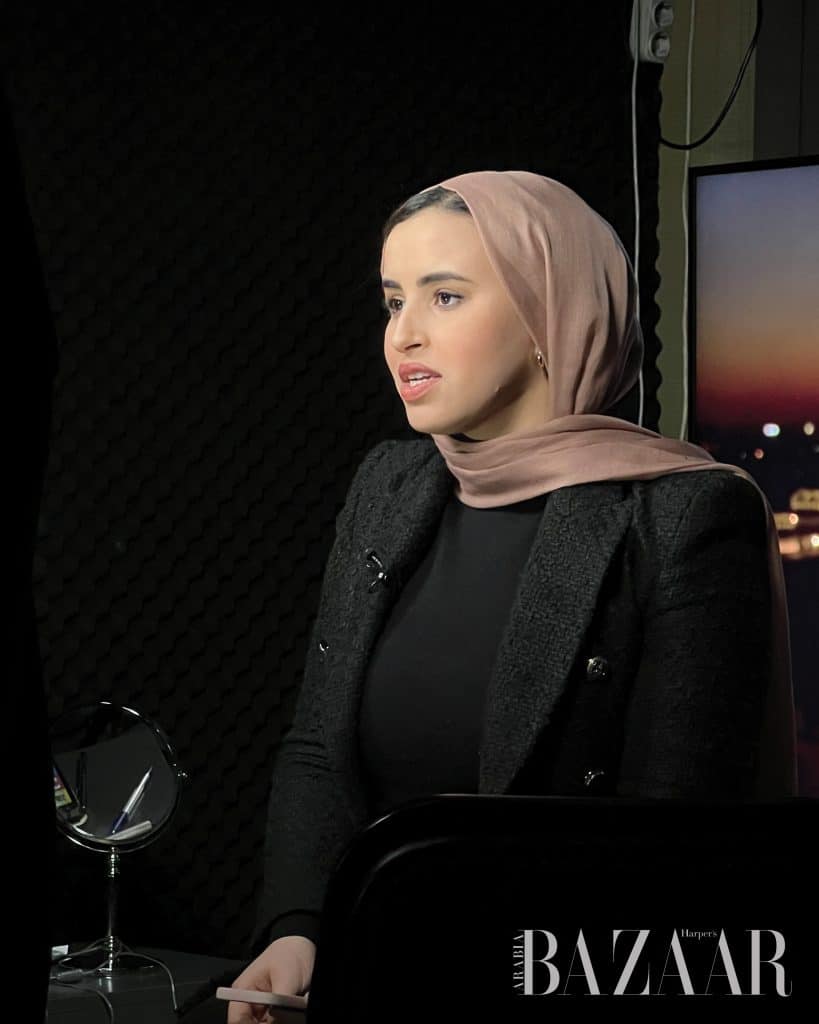
Many of those assumptions come from the fact that Nada wears the hijab. When she first started at CNN, she was “apprehensive at first – working for an American network and what that might mean in terms of how I fitted into that. Thankfully it’s never been an issue.” Being on air though, “has been slightly different”. Most difficult was reporting from London on the anti-regime protests in Iran. “For me, it’s a personal choice. You should have the freedom to choose whether you wear it…Covering the story was very important to me but I had a lot of backlash because a lot of people couldn’t understand how I could cover that, as somebody who chooses to wear the hijab, given that many women there were risking their lives and being persecuted for choosing not to.” On the flip side, she has also received “so many” messages from young hijab-wearing women who also aspire to be journalists: “I know that feeling because I felt like whenever I saw somebody wearing a hijab on TV.”
Today she feels like that when she sees the wider Arab diaspora experience represented, like in American comedy-drama, Ramy: “You feel the connection to it… It’s a blend of cultures and that is something that we identify with.” And when so much of her own work focuses on amplifying the voices of those suffering great hardship, she is grateful that there is increasingly space to celebrate the Arab world. “It’s sad because I think growing up, the only thing you’d really hear about the Middle East was war or conflict or political issues,” she says. “And there’s so much more to the region. There’s so much history, so much culture, so many people doing incredible things in different industries. It’s nice to see those aspects being showcased now, in magazines, in TV, in film, in music. To see that actually there’s a different side to the region, which has always been there. It just hasn’t really been given the platform.”
What Nada truly hopes is that when things improve in the Middle East, she will be there to report on it: “I can only hope that at some point there will be a positive change and I will get to cover that as well.” For now though, she has her bags packed, ready to head wherever the story takes her next: “It’s extraordinary; it’s a privilege and I wouldn’t change it for the world”.
Images Supplied / From Harper’s Bazaar Arabia’s May 2024 Issue
Al-Qasimi Hall at the Council of the Arabic Language in Mauritania hosted a scientific symposium entitled “Feature of verbal harmony in the construction of the Qur’anic surah: an authentic pause,” in which Dr. Muhammad Safi Al-Mustaghanemi, Secretary-General of the Arabic Language Academy in Sharjah, spoke via video communication technology, in the presence of Dr. Allah Al-Washmi, President of the King Salman International Academy for the Arabic Language, and an elite group of scholars, researchers and linguists, and it was moderated by Dr. Al-Bakai Abdel Malik, Secretary-General of the Council of the Arabic Language in Mauritania.
Dr. Khalil Al-Nahwi, Chairman of the Arabic Language Council, said that the Council recently launched the “Hadith Al-Tayef” program as part of its research and scientific initiatives with the aim of hosting an elite group of scholars and researchers through audio-visual communication technology from various parts of the world, and Dr. Ahmed Safi Al-Mustaghanemi was chosen, who represents the Arabic Language Academy in Sharjah – the Knowledge Edifice. The main partner of the Arab Linguistics Council, he will be the first guest to lecture in this pioneering scientific program.
Mosteghanemi highlighted the unique characteristics that distinguish the surahs of the Holy Qur’an, pointing to the wonderful harmony and precise linguistic organization that reflects unparalleled precision and miracle. He explained that each surah in the Holy Qur’an follows its own axis while adopting studied linguistic choices that are in harmony with this axis.
Al-Mustaghanemi provided illustrative examples from the Holy Qur’an, such as Surat Al-Naba’ and Surat Al-Nazi’at, to highlight these features, noting that linguistic harmony is not limited to the vocabulary of each surah and its focus, but extends to include the relationship between the conclusion of the surah and the opening of the surah that follows it, which is what the scholars of interpretation have confirmed in their previous studies, in addition to the connection between the surahs. Different types that share similar vocabulary, structures, or stories.
Some of the specimens he has gathered are held in the British Museum in London,” Sara told Arab News.
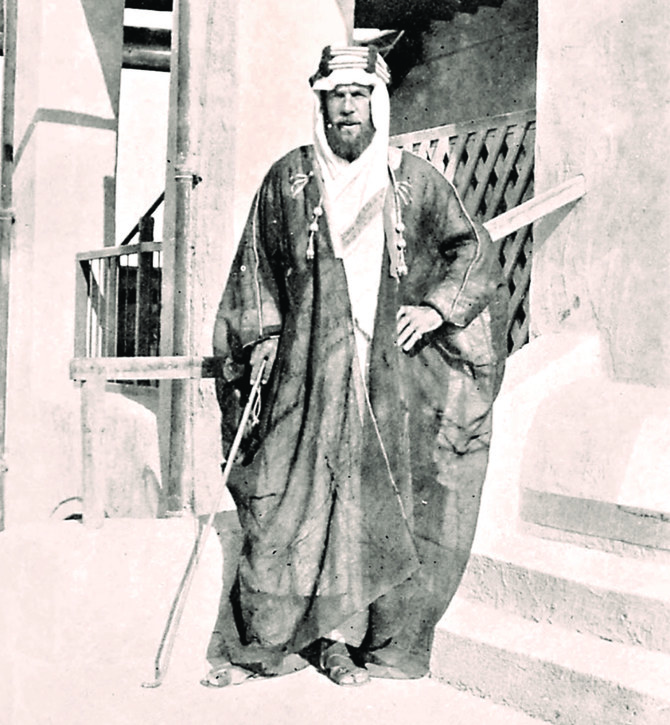
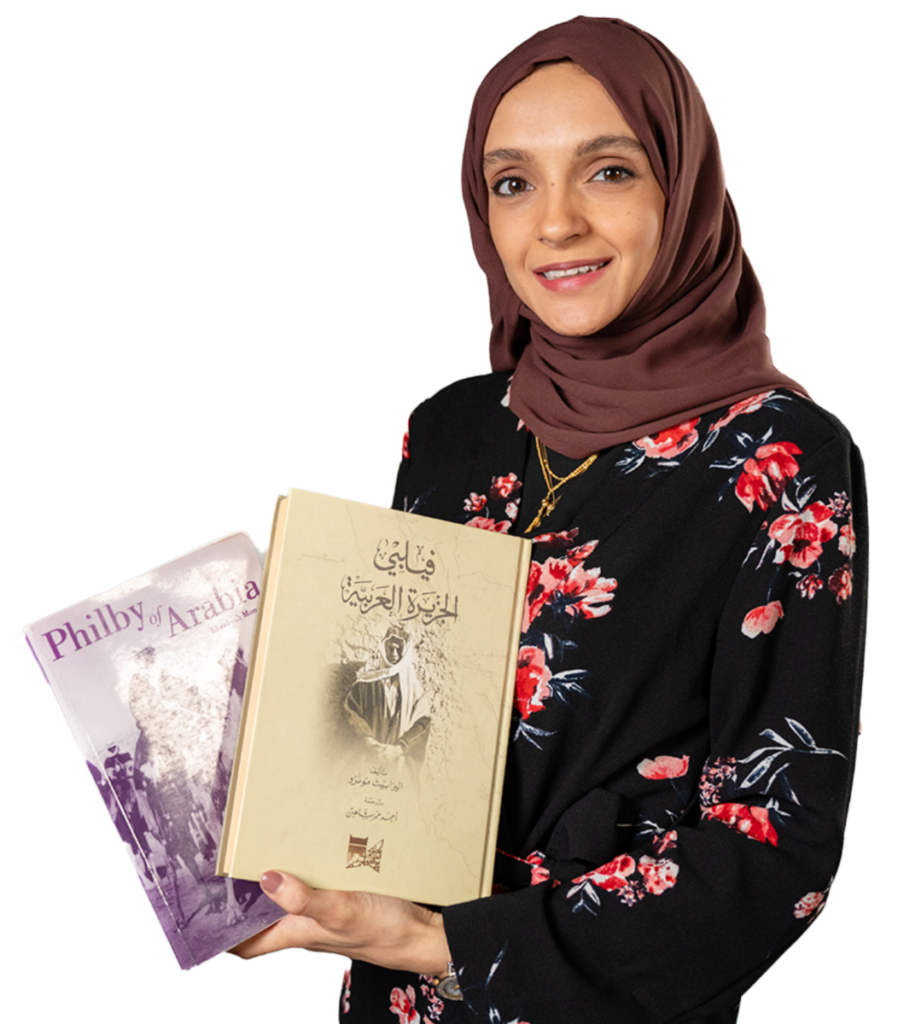
As the granddaughter of the renowned explorer Abdullah Philby, Dr. Sara Faris Abdullah Philby’s decision to pursue her medical education in Saudi Arabia echoes the pioneering spirit that defined her grandfather’s historic exploration of the Arabian Peninsula.
In honoring her family’s heritage, Sara follows in the footsteps of Sheikh Abdullah Philby, whose multifaceted contributions continue to inspire generations.
“My grandfather led a truly remarkable life,” Sara told Arab News. “From his legendary expeditions to his conversion to Islam, his influence extends far beyond our family.”
She said he has had a profound impact on her life: “Simply contemplating his image fills me with warmth and optimism. My grandfather, Abdullah, possessed a rare combination of traits — uniqueness, dedication, and punctuality — that set him apart. As an explorer and writer, he navigated uncharted territories with grace and determination, leaving an indelible mark on history.”
Who was Abdullah Philby?
Harry St. John Bridger Philby, an explorer and Arabist, received his education at Westminster School and Trinity College, Cambridge. After joining the Indian Civil Service, where he mastered several languages including Urdu, Punjabi, Baluchi, Persian, and Arabic, Philby was recruited to Basra in Mesopotamia (modern Iraq) in 1915 by Percy Cox. His service in Baghdad and Basra eventually led to a mission to meet Ibn Saud in Riyadh, a journey across Arabia for which he was awarded the Royal Geographical Society Founders Medal.
HIGHLIGHTS
• Harry St. John Bridger Philby, or Sheikh Abdullah, left behind a legacy as one of the greatest Arabian explorers.
• Over three decades, he embarked on extraordinary journeys, notably crossing the Empty Quarter in 1932, a feat that tested the limits of endurance.
• His granddaughter Dr. Sara Philby pursued her education in Alfaisal University in Riyadh. • After completing a bachelor’s degree in medicine and another in surgery, she was drawn to the intricate world of embryology.
From their first encounter, Philby was captivated by the magnetic personality of Ibn Saud, and the two formed a friendship that lasted 36 years. Despite his involvement in business and writing, Philby’s true passion lay in exploration. Over three decades, he embarked on extraordinary journeys, notably crossing the Empty Quarter in 1932, a feat that tested the limits of endurance.
Traveling by camel and later by Land Rover, Philby meticulously documented his expeditions, recording place names, temperatures, compass bearings, and more. His scholarly contributions earned him high honors from academic societies worldwide.
“He lived to witness a golden chapter in his life, marked by numerous creations of detailed maps, priceless books including unmatched details of his journeys, and contributions to several fields such as history, politics, and wildlife. Some of the specimens he has gathered are held in the British Museum in London,” Sara told Arab News.
As a trusted advisor to Ibn Saud, Philby’s insights and candid opinions were valued by the monarch. His conversion to Islam in 1930 further strengthened their bond, and Philby was bestowed the name Sheikh Abdullah.
In 1960, at the age of 75, Philby died during a visit to Beirut, leaving behind a legacy as one of the greatest Arabian explorers. He was buried in the Muslim graveyard at El-Bouchara, with his son Kim’s inscription on his grave marking his profound impact on exploration and scholarship.
For me, honoring my grandfather’s legacy is not merely a goal but a life purpose.
Dr. Sara Faris abdullah Philby, Alfaisal University graduate
“(He) left behind a spectacular life story and a loving family, led by my beloved uncle Khaled Philby and my beloved father Faris Philby, who would adore him for the rest of time,” Sara said.
His involvement in Arabia during World War I, his close relationship with Ibn Saud, and his pivotal role in the Arab Revolt and the creation of Saudi Arabia highlight his enduring influence on the region’s history and culture.
Sara explained that her grandfather’s legacy continues to influence her approach in life and her career in medicine: “His interests in exploration and travel might differ from my academic interests in medicine and clinical embryology. However, that doesn’t diminish his huge impact on my educational decisions.
“With his legacy as a beacon, I am motivated to continuously push myself to new heights, embracing challenges and opportunities for growth along the way,” she added. “His love for history, the desert, maps, and wildlife will forever capture my heart, despite my academic pathway heading somewhere different.”
Sara pursued her education in Alfaisal University in Riyadh. After completing a bachelor’s degree in medicine and another in surgery, she was drawn to the intricate world of embryology.
“My interest in this field stemmed from a personal fascination with reading books on embryology and reproductive sciences,” she noted. “Moreover, I was deeply inspired by the noble goals of this discipline, particularly in addressing infertility and assisting couples in starting families according to God’s will.”
Sara’s religious and cultural background plays a pivotal role in shaping her career aspirations. “As a Muslim, my faith serves as a guiding light,” she affirms. “Islam’s teachings emphasize compassion and kindness, influencing my academic pursuits. The profound references to embryology in the Holy Qur’an have deepened my interest in this field.
“The Holy Qur’an beautifully elucidates the stages of human embryonic development in multiple verses,” she noted. “This further solidified my conviction to pursue a career in clinical embryology and reproductive biology.”
Following her passion, this year Sara graduated from Alfaisal University with a master’s degree in biomedical sciences, specializing in clinical embryology and reproductive biology, achieving first honors.
Speaking about the enriching experience at the university, she said: “Alfaisal University has been an integral part of my life for many educationally fruitful years … I am hopeful for its continued success and prosperity in the future.”
Her journey through academia had its own challenges: “The rigorous demands of the field required unwavering commitment and patience. However, these experiences have shaped me into the person I am today, instilling in me a sense of resilience and determination.
“Embrace the journey, stay true to yourself, and remain dedicated to your goals,” she advises aspiring professionals. “Believe in your abilities and seize the opportunities that come your way.”
Balancing personal aspirations with her family’s legacy is a central theme for Sara. “I place great importance on aligning my personal aspirations with the expectations associated with my family’s legacy,” she explains. “By staying true to myself and honoring my family’s heritage, I find harmony in pursuing my goals.”
As she navigates the complexities of academia and embarks on her own path of exploration, Sara remains steadfast in her commitment to honoring the rich heritage passed down to her by her grandfather.
“For me, honoring my grandfather’s legacy is not merely a goal but a life purpose,” Sara said.
source/content: arabnews.com (headline edited)
_____________
The British renowned explorer Abdullah Philby, or Philby of Arabia. / In honoring her family’s heritage, Sara Philby follows in the footsteps of Sheikh Abdullah Philby, whose multifaceted contributions continue to inspire generations. Supplied/AN photo by Abdulrhman Bin Shalhoub)
Dr. Sara Faris Abdullah Philby, Alfaisal University graduate
Sharjah Ruler collected 8,000 rare titles documenting French cultural history.
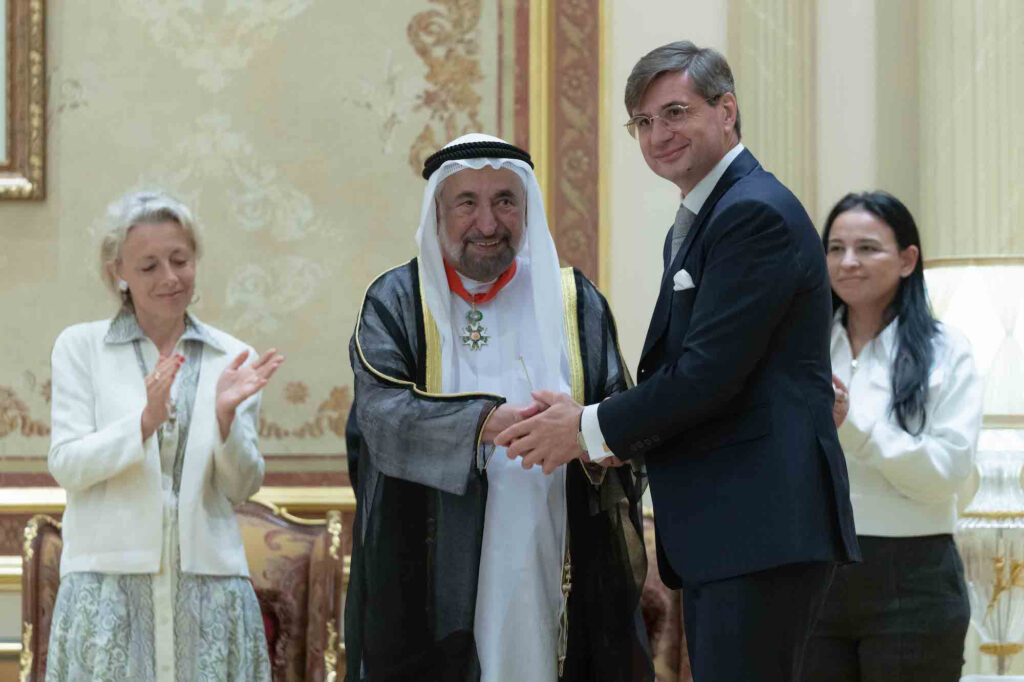
His Highness Sheikh Dr. Sultan bin Muhammad Al Qasimi, Member of the UAE Supreme Council and Ruler of Sharjah, is a leading Arab scholar and historian who has made contributions to documenting France’s cultural history from an Arab perspective.
The historian has been recently conferred the title of The Legion of Honour, with the rank of Commander – one of the highest national honours in the Republic of France in recognition of his efforts to strengthen cooperation relations between the French Republic and Sharjah in a variety of fields, particularly culture. The honour was granted to the Sharjah Ruler by His Excellency Emmanuel Macron, the French President, and presented by Nicolas Niemtchinow, Ambassador of the French Republic to the UAE.
His Highness is currently developing the chapters of a comprehensive work, the first of which is titled ‘The Century of Lights.’ Set in the 18th century – the chapter focuses on the era that established the foundations of Western society and examines the pivotal role played by Denis Diderot, the founder of the Encyclopédie, in collaboration with D’Alembert, as well as the contributions of liberal philosophers of that century such as Jean-Jacques Rousseau and Voltaire.
The Arab historian navigates the remainder of the 18th and 19th centuries in the following two chapters, before penning the fourth chapter titled, ‘Controversial Issues on Globalisation and Cultural Exception’ detailing everything that had happened in relation to globalisation and France’s role in it.
“France, at the helm of the European Union, began vigorously defending the idea of cultural exception; it has prevailed. From my end, I will publish this book in Arabic to introduce all Arabs to French culture,” His Highness said.
“In 2003, the French Republic conferred the ‘Order of the French Republic for Arts and Letters,’ with the rank of ‘Knight Commander’ upon me. I saw this honour as a mandate to continue cultural giving, and I discussed the Republic of France’s pioneering role in intellectual enlightenment and civilised communication, as well as its contributions to the cultural field, translation, and literature, and the spread of the concepts of freedom and justice,” His Highness added.
From that day forward, the Ruler of Sharjah initiated the acquisition of available written records that document the cultural history of the French Republic, using the titles of books in the Egyptian Scientific Institute in Cairo. “I collected nearly 8,000 rare titles in French and decided to establish a scientific institute for those books in Sharjah, similar to the French and Egyptian Institute,” His Highness added, saying he donated his entire collection to the institute in Egypt after it was turned to ashes by a violent fire in December 2011.
The opera was produced by the Saudi Theater and Performing Arts Commission.
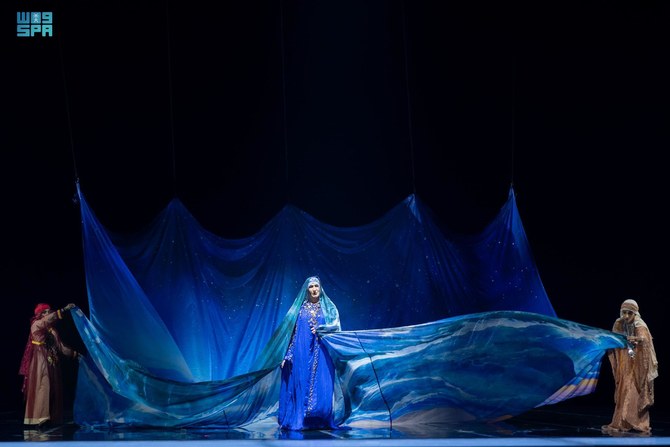
“Zarqa Al-Yamama,” the world’s first and largest grand opera in Arabic, made its debut at the King Fahad Cultural Center in Riyadh, taking the audience on a lyrical journey through one of the best-known folkloric tales in the Arabian Peninsula.
The opera was produced by the Saudi Theater and Performing Arts Commission, and will run until May 4, telling the story of the central character’s attempts to warn her Jadis tribe of an imminent invasion.
source/content: arabnews.com (headline edited)
_________
ـ “Zarqa Al-Yamama,” the world’s first and largest grand opera in Arabic, made its debut at the King Fahad Cultural Center in Riyadh. (SPA)9
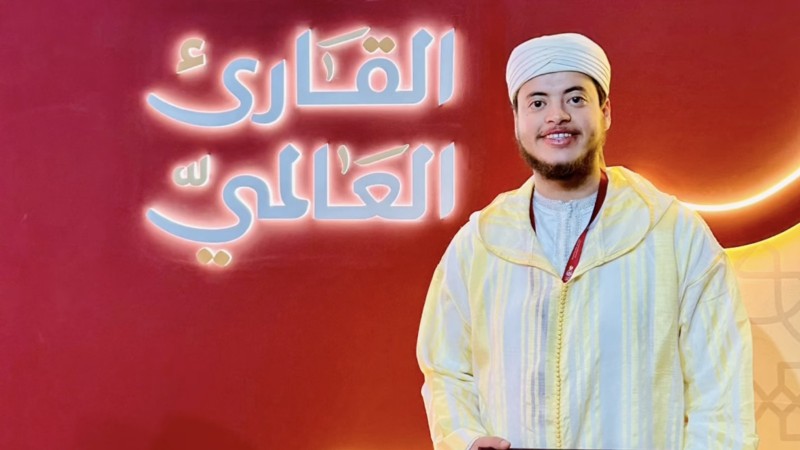
Moroccan reciters performed well at the competition and demonstrated exceptional talent and proficiency in Quranic recitation.
Moroccan Ilyas Hajri has clinched the title of World Quran Reader in the Hafiz category at the fourth edition of the Bahrain Online Quran Recitation Competition.
The Moroccan Quran reciter won the prize for his exceptional proficiency in reciting the Holy Quran.
This win adds to a string of previous successes, as Hajri has consistently shown excellence in Quranic recitation competitions. Last year, he won first place in the International Quran memorization competition in Astana, Kazakhstan.
In addition to Hajri, Moroccan Yassine El Kazzini secured the second position in the same category.
Meanwhile, Moroccans Abdelbasset Ourach and Mustapha Zahid claimed third places in the categories of memorized recitation (Tajweed) and melodious recitation (Murattal) respectively.
The finals of the competition were conducted in-person in Bahrain’s capital city Manama, where the top performers competed to secure their positions in various categories of Quranic recitation.
The competition brought together over 5,000 participants from 74 countries.
Meanwhile, Mohamed Sameer Mohamed Mujahid from Bahrain was crowned the World Quran Reciter in the Tajweed category, while Ahmed Mohamed Saleh Ahmed from Yemen secured the same title in the category of junior reciters.
Organizers of the competition highlighted its mission to promote and celebrate the recitation and memorization of the Holy Quran.
It also aims to serve the Quranic tradition by providing a platform for individuals of all ages and nationalities to showcase their skills and proficiency in reciting the Quran.
Moroccans have built a strong reputation for their excellence in Quran recitation competitions, consistently shining on the global stage.
Last month, Moroccan Elias Al-Mahiawi won first place at the 20th International Quran Competition in Tanzania.
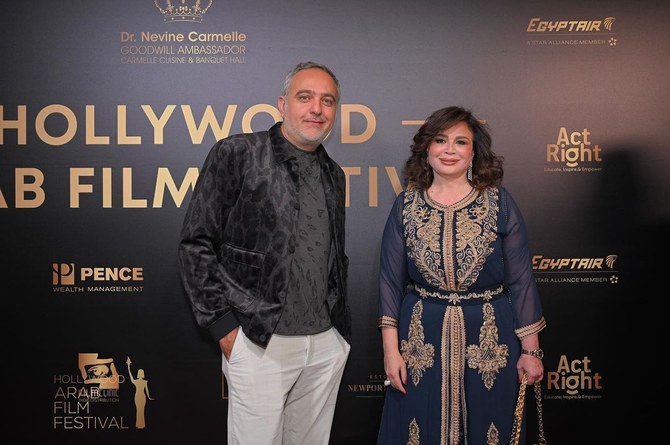
The third annual Hollywood Arab Film Festival began this week, bringing the best of 2024’s Arab cinema to Los Angeles and giving fans a chance to see the films in theaters as well as introducing a new audience to the Arab world’s top talent.
The event, which runs until April 21, was attended by a number of celebrity guests including Egyptian producer and screenwriter Mohamed Hefzy, Tunisian actor Dhaffer L’Abidine, renowned Egyptian star Elham Shahin and Egyptian producer Tarek El-Ganainy.
At the event, Hefty said: “Arab cinema really needs a platform to tell our stories and to show who we are, our identity, our hopes and dreams, our pains, and all the different social topics that are tackled in some of the films that are being presented are maybe more relevant today than ever. So I think it’s a great opportunity to have this dialogue.”
Hefzy’s film “Hajjan” was showing at the event. It is a Saudi Arabia-based film directed by Egyptian filmmaker Abu Bakr Shawky.
“Hajjan is a film about a young boy who got a very special connection to his camel, who has a brother who was a camel jockey and races,” Hefzy said. “And, one day when something really unexpected happens to his brother, and shatters his world, it forces him to step into his brother’s shoes and become a camel jockey, and so starts racing himself.”
The movie is a co-production between the Kingdom’s King Abdulaziz Center for World Culture, or Ithra, and Hefzy’s Film Clinic.
“It was a film made in Saudi Arabia with Saudi talents and actors with an Egyptian director, but with the Saudi co-writer and Saudi actors and shot mostly in Saudi Arabia,” Hefzy said. “So I think it’s, it was a great experience, and learned a lot about Saudi Arabia, learned a lot about the culture.”
The festival featured cinema from various Arab countries, presenting films from 16 different nations. Marlin Soliman, strategic planning director of HAFF, highlighted the inclusion of six feature films, ten short films and six student films.
Spanning five days, HAFF offered its audience a vibrant experience, including a red-carpet affair, panel discussions on filmmaking and diversity in Hollywood, and, of course, screenings of high-profile films.
The festival also saw several filmmakers singing the praises of Saudi Arabia’s expanding film industry.
L’Abidine, the writer and director of “To My Son,” said: “I’m thrilled to be back again with my second feature film ‘To My Son,’ a Saudi film… I think there is a great evolution of Saudi cinema that’s been happening in the last few years.”