Arabs & Arabian Records Aggregator. Chronicler. Milestones of the 25 Countries of the Arabic Speaking World (official / co-official). AGCC. MENA. Global. Ist's to Top 10's. Records. Read & Enjoy./ www.arabianrecords.org
‘Gaza: Doctors Under Attack’ won the current affairs category after being dropped by the BBC over impartiality concerns, and was later picked up by Channel 4
BBC reportedly broadcasted an edited version of the acceptance speech that removed remarks about Israel
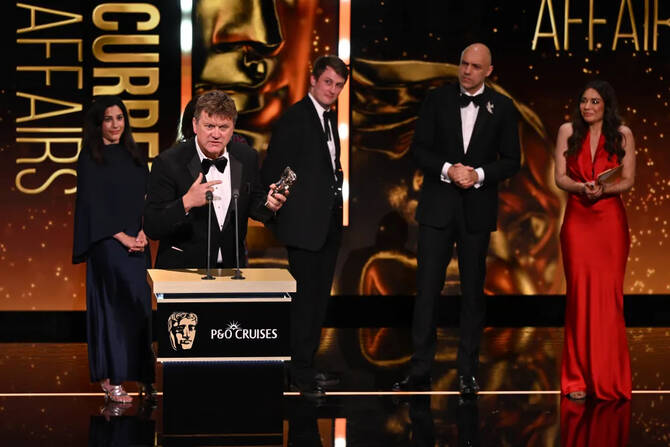
The filmmakers behind “Gaza: Doctors Under Attack” criticized the BBC over its decision to shelve the documentary during their acceptance speech at the BAFTA TV Awards on Sunday.
The film won in the current affairs category after being dropped by the BBC over impartiality concerns, and was later picked up by Channel 4.
Accepting the award, journalist and presenter Ramita Navai said that the film highlighted findings from an investigation into attacks on Gaza’s healthcare system.
“These are the findings of our investigation that the BBC paid for but refused to show,” she said. “But we refuse to be silenced and censored. We thank Channel 4 for showing this film.”
Navai said that more than 1,700 Palestinian doctors and healthcare workers had been killed and more than 400 detained during Israel’s war on Gaza.
She dedicated the award to Palestinian medical workers held in Israeli prisons.
Gaza: Doctors Under Attack wins a BAFTA Award
Executive Producer Ben de Pear, "Just a question for the BBC, given you that you dropped our film will you drop us from the BAFTA TV screening later on tonight?"
According to local reports, the BBC did not air Navai’s speech in full and instead broadcast an edited version that removed her remarks about Israel, reigniting criticism of the corporation’s handling of Gaza-related coverage.
The BAFTA awards are broadcast on BBC One after a two-hour delay.
The documentary, which features firsthand accounts from Palestinian health workers in Gaza, was honored at London’s Royal Festival Hall nearly a year after the BBC declined to air it.
Executive producer Ben de Pear also used the acceptance speech to thank Jaber Badwan and Osama Al-Ashi — the journalists behind the film — before addressing the BBC directly.
“Finally, just a question for the BBC: Given you dropped our film, will you drop us from the Bafta screening later tonight?”
The BBC commissioned the documentary from independent production company Basement Films more than a year ago, but delayed its release while reviewing another Gaza-related documentary, “Gaza: How to Survive a War Zone.”
It later said that it would not air “Gaza: Doctors Under Attack,” arguing that the film risked creating “a perception of partiality that would not meet the high standards that the public rightly expect of the BBC.” The broadcaster also said that impartiality remained “a core principle of BBC News.”
The film was later acquired and broadcast by Channel 4 in July.
source/content:arabnews.com (headline edited)
______________
The documentary, which features firsthand accounts from Palestinian health workers in Gaza, was honored at London’s Royal Festival Hall nearly a year after the BBC declined to air it. (Getty/File)
As country debates easing return of treasures, attention turns to regional pieces still held in its national collections.
French lawmakers are debating a new bill aimed at simplifying the return of colonial-era cultural objects to their countries of origin, drawing renewed attention to artefacts still held in France’s national collections, which number in the tens of thousands.
The draft legislation was unanimously approved by the Senate in January and now requires backing from the lower house, the Assemblee Nationale, before it can become a law.
While not all cases are at the same stage, these five objects from Algeria, Egypt and Jordan sit within that broader restitution debate, whether through formal state requests, public campaigns or long-standing calls for their return.
1. Baba Merzoug, Algeria
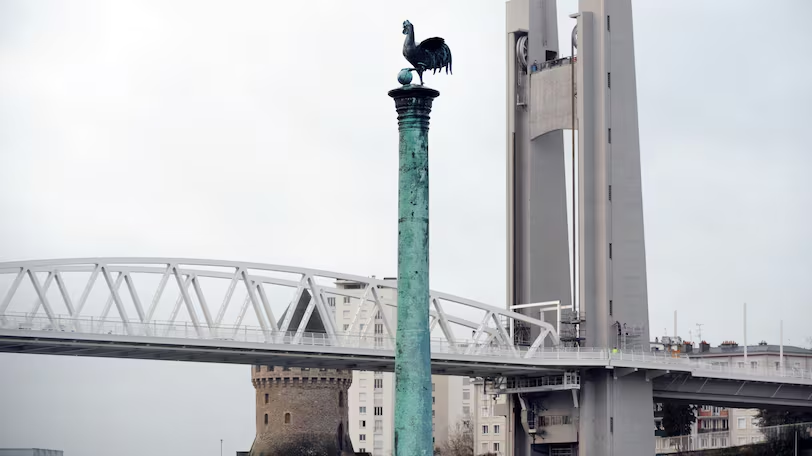
The 16th-century cannon known as Baba Merzoug at the Arsenal of Brest in western France. AFP
The 16th-century bronze cannon from the Ottoman era in Algiers is housed at the naval base in the French coastal city of Brest after being taken by French forces in 1830 following the capture of Algiers.
While seized as a spoil of war, the cannon remains a politically charged symbol of French colonial rule in Algeria. The Algerian government formally requested its return in 2012, and the cannon was explicitly cited during the April 2026 parliamentary debate over France’s proposed restitution framework.
2. Emir Abdelkader’s effects, Algeria
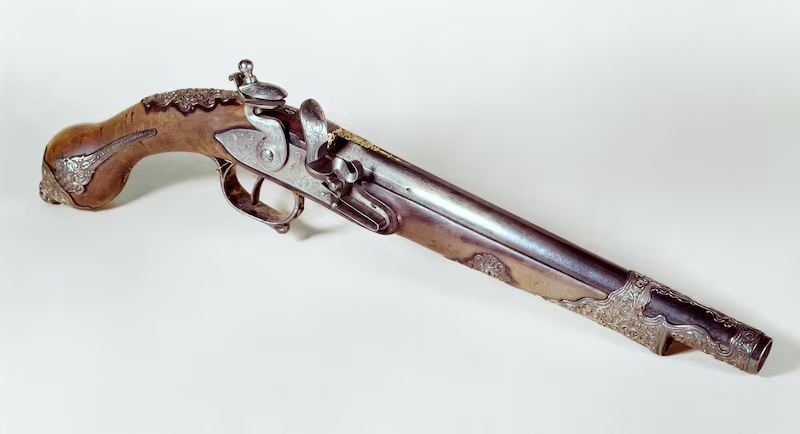
Rather than a single object, this refers to personal items associated with the 19th-century Algerian leader Emir Abdelkader, who led the resistance against French invasion before his surrender in 1847.
Held across French collections including at Musee de l Armee in Paris and Musee Conde in Chantilly, the objects include a steel sabre, pistol, ceremonial cloak and related belongings linked to Abdelkader’s life and leadership.
Algeria has included these effects on a formal restitution list submitted to French authorities in 2021, and they remain a sensitive part of the wider dispute over colonial-era holdings.
3. Dendera Zodiac, Egypt
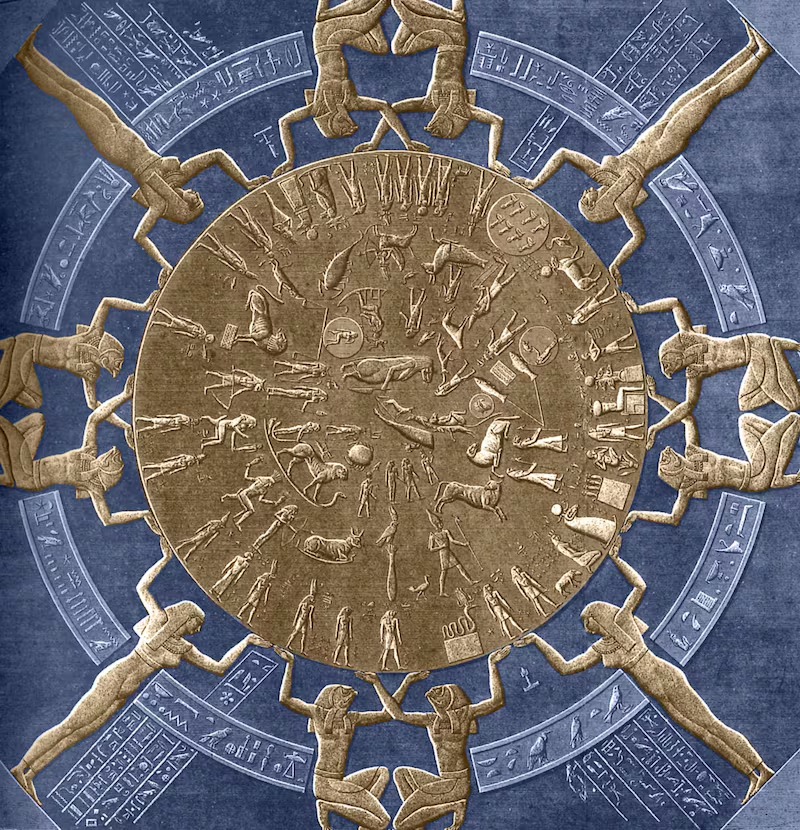
The Dendero Zodiac is an ancient bas-relief that formed part of the ceiling of the Temple of Hathor in Upper Egypt and is now held at the Louvre in Paris.
Removed in the early 19th century, it has been part of the Louvre collection since 1822 and has become one of the most recognisable Egyptian antiquities in a French museum.
While there is no verified formal Egyptian state request for its return, the object has been repeatedly cited in public repatriation campaigns, including those led by archaeologist and former antiquities minister Zahi Hawass.
4. Mesha Stele, Jordan
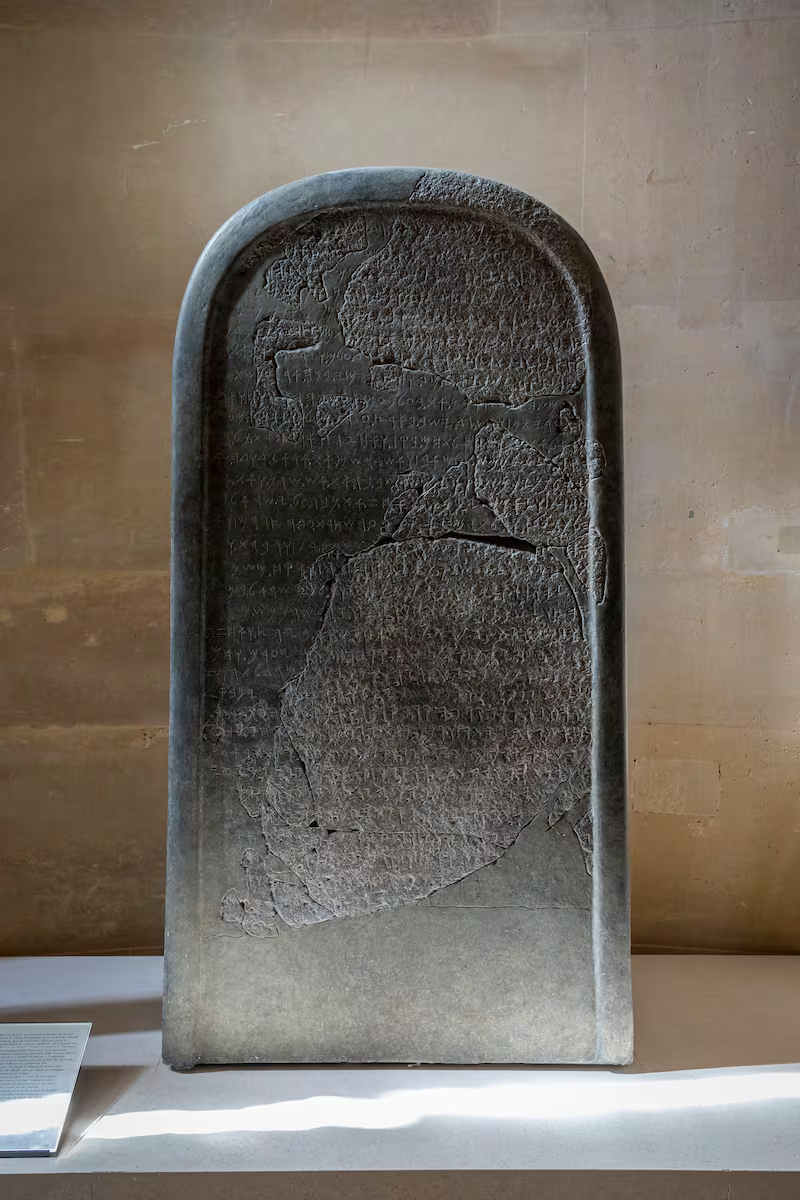
Also known as the Moabite Stone, the Mesha Stele is a 9th-century BC basalt monument from present-day Jordan and is considered one of the most important inscriptions from the ancient Levant.
Discovered in 1868 by the Anglican missionary Frederick Augustus Klein at Dhiban, it was later shattered by the Bani Hamida tribe over an ownership dispute, before the fragments were recovered and reassembled in France.
In June 2014, non-governmental Mesha Centre for Studies and Human Rights delivered an official request for the stele’s return to the French embassy in Amman.
The Jordan Times reported in 2015 that French ambassador Caroline Dumas discussed the request with representatives and said she would convey their public appeal to the French government. No formal response has been reported.
5. The Seated Scribe, Egypt
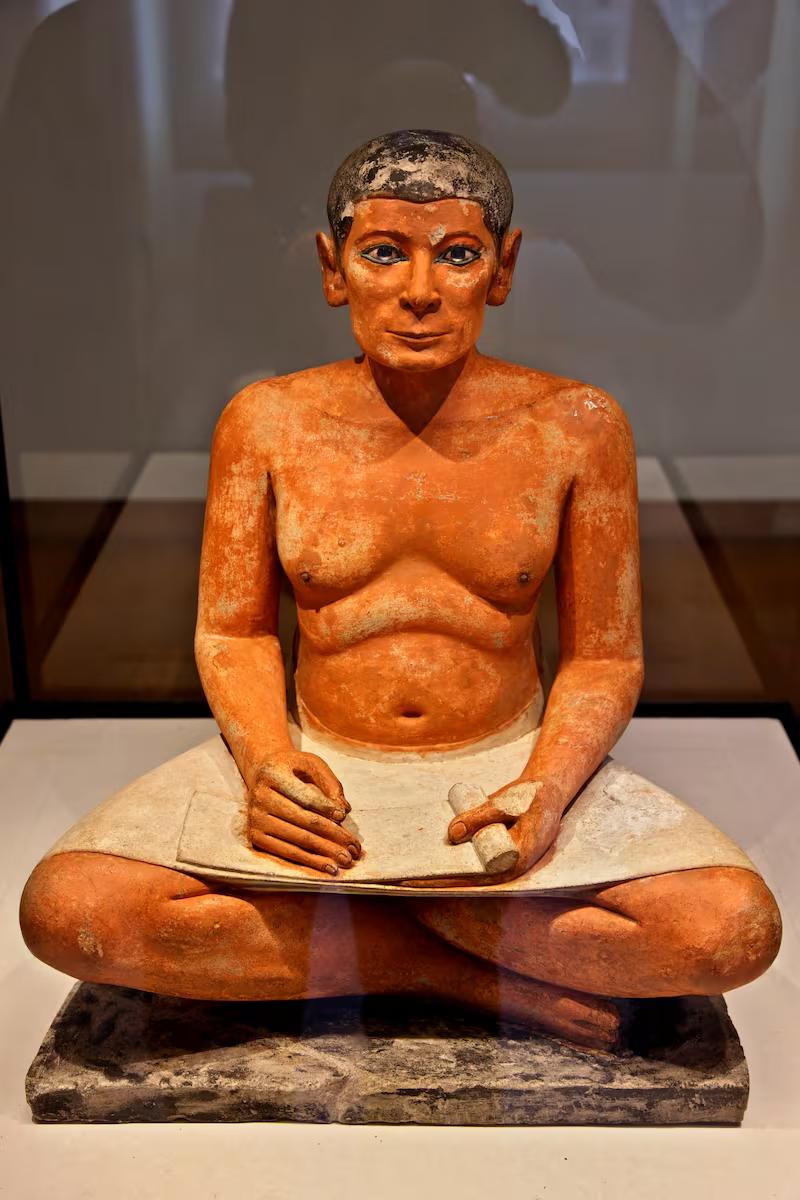
One of the Louvre’s most famous Egyptian works, the Seated Scribe is a painted limestone sculpture from the Old Kingdom, dating back to circa 2600BC-2350BC. It is famed for its striking realism and remarkably preserved features.
Found at Saqqara in the 19th century by the French archaeologist Auguste Mariette, it is among the most celebrated masterpieces of the Louvre’s Department of Egyptian Antiquities.
While the Egyptian government has not included the Seated Scribe on any formal restitution lists, it has appeared in broader public discussion in Egyptian cultural circles around the recovery of major artefacts held abroad.
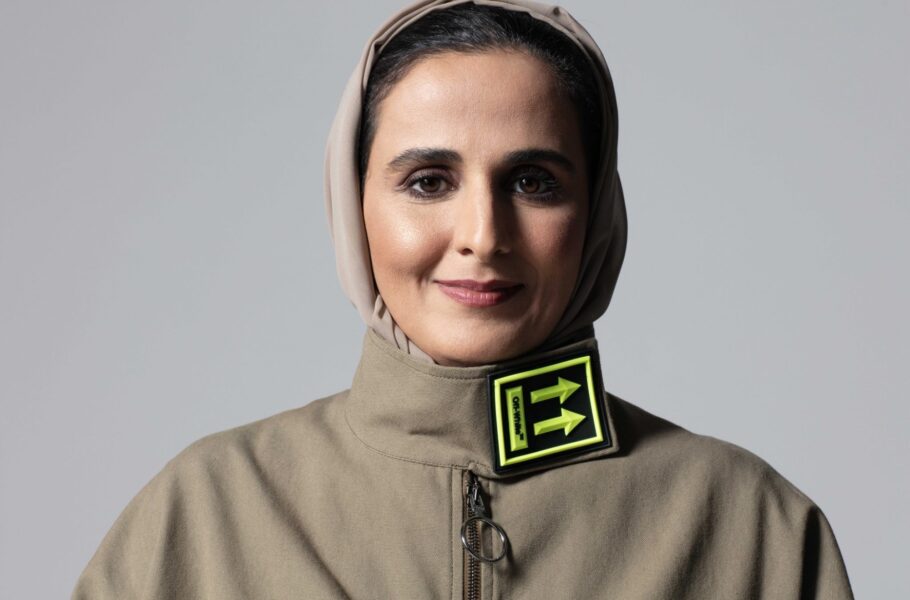
H.E. Sheikha Al Mayassa bint Hamad bin Khalifa Al Thani, Chairperson of Qatar Museums, has been ranked second globally in the 2025 ArtReview Power 100 list.
She first appeared on the Power 100 in 2011 at No. 90, quickly rising to No. 11 in 2012 before reaching the top position at No. 1 in 2013.
The Power 100 is compiled by a panel of around 30 individuals from across the globe, and from all parts of the artworld, who propose those people who have shaped the art that has emerged in their locality over the past year. The criteria for inclusion are that each person on the Power 100 has had an influence on the art being made and shown now; that they have been active in the last 12 months; and that their presence stretches beyond a local scene (while many act locally, the influence of that local action can reverberate internationally).
What emerges is a means of capturing an artworld that is not purely an economic system, or an aesthetic one, but a complex social system. Through this list, ArtReview gives a portrait of the network of relationships that shaped the art of 2025.
Abu Dhabi’s newest cultural landmark earns global recognition from TIME in 2026.
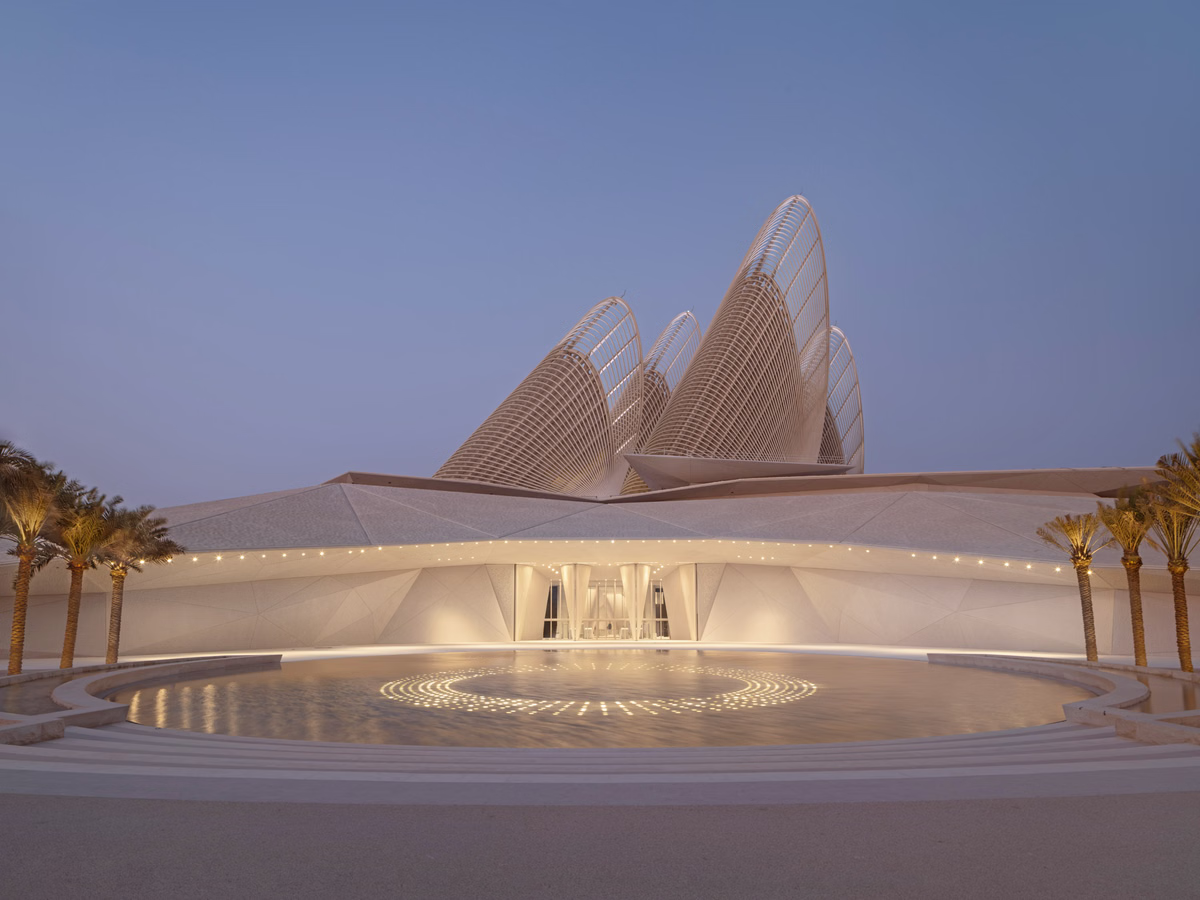
Abu Dhabi has added another standout to its cultural scene. The Zayed National Museum has been named one of TIME’s World’s Greatest Places for 2026, placing it among 100 destinations that offer something truly special for visitors.
Nestled within the growing Saadiyat Cultural District, the museum has quickly become a place people are curious about. It opened its doors in December 2025 and has since drawn attention for both its design and what it represents.
Rather than feeling like a traditional museum, it leans more towards a calm, reflective space where you can spend a few hours moving through stories of the UAE’s past.
Even before stepping inside, the building itself makes an impression. Designed by Norman Foster, the structure is inspired by the wings of a falcon in flight. The shape is striking but not over the top, and it ties back neatly to Emirati heritage.
Inside, the journey stretches back around 300,000 years, tracing human life in the region long before the country we know today. At the heart of it all is the story of Sheikh Zayed bin Sultan Al Nahyan, whose life and values shape much of what you see. The galleries are not overwhelming, which makes it easy to take your time and actually absorb what is on display.
Some pieces naturally draw more attention than others. The Abu Dhabi Pearl, believed to be one of the oldest natural pearls ever discovered, is one of those quiet highlights.
Another is the Blue Qur’an, known for its deep colour and fine detail, offering a glimpse into the artistic traditions of the Islamic world.
One of the more unexpected features is a full-scale reconstruction of an ancient Magan boat. It gives a sense of how people in this region once travelled and traded, long before modern borders existed. It is the kind of exhibit that makes history feel more real and less distant.
Places are selected through nominations from TIME’s international network of correspondents and contributors, as well as an open application process.
With several major institutions now based in the same district, it is becoming a place where visitors can easily spend a full day, or even more, exploring art, history and ideas.
For residents, it is another reason to take a closer look at what is on their doorstep. For travellers, it adds one more stop to an already evolving map of must see places in the region.
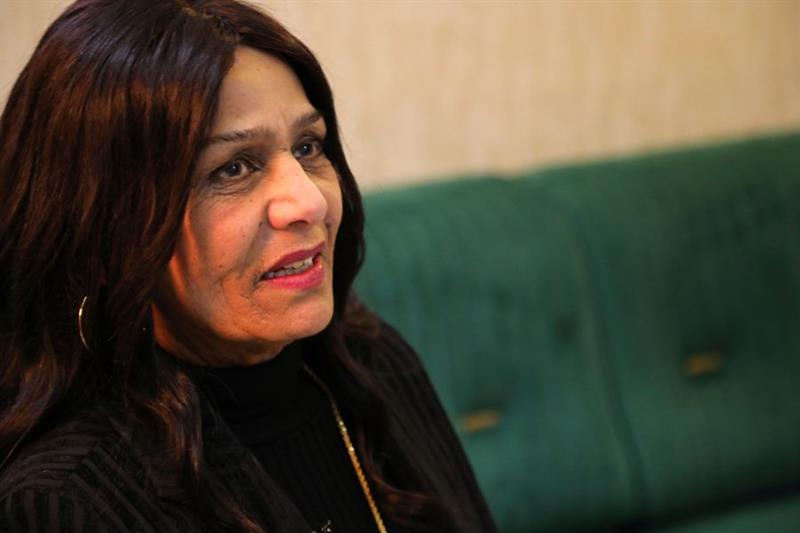
Seven days after the legendary Iraqi singer Sajida Obaid died, women sat wrapped in black veils and abayas, their faces wet at her family home in the northern city of Irbil. Some were family members and others were fans who had loved her for decades.
Bitter black coffee, the drink of Iraqi mourning, passed quietly from hand to hand. The music drifting in from outside filled the spaces between sobs.
Outside, men sat under a canvas tent in the street. A traditional band beat the daf as some of the men wiped their eyes. In Iraq, the seventh day marks a return, a final gathering before grief begins to thin into memory.
Obaid died on April 4 at the age of 68 after a battle with lung cancer. The news was overshadowed by the Iran war that had spilled over into neighboring Iraq. But for her fans, her death felt personal — the loss of a woman whose voice had given them, for a few hours at a time, something close to freedom.
A space for women to let loose
In Iraq, a woman moving through public life carries weight with her; eyes watching what she wears, how she moves, whether she is stepping too far outside the lines. So Obaid decided to hold parties only for women. Every staff member including the DJ, the waiters, the security, and the organizers was a woman. No phones were allowed to prevent photography. To protect the women in the room, their freedom stayed inside those walls.
Women who would never dream of dancing in front of male audience came. They dressed how they wanted and danced the way they had forgotten they could.
Virgin Jaji, 68, was one of them. While the Arab world traditionally begins its mornings with the dreamy songs of the Lebanese singer Fayrouz, Jaji said she has listened to Obaid every morning for years, in the car, at home, even at the gym. “Even my parrot only dances to Sajida Obaid’s music.
“In her women’s parties we danced like we had no cares in the world,” Jaji said, her eyes red from crying. “We felt free. Truly free.”
Mina Mohammed, 40, said, “The first time I heard about a women-only party by Sajida, I borrowed money from friends just to be in that hall. Her voice will always take me back to the best moments of my life.”
A quick rise to stardom
Obaid was born in Baghdad in 1957, the daughter of a Roma family. In Iraq, Roma people are known as “Kawliya,” a community long tied to music and performance, but also one that has lived for generations at the edge of society. Sajida began singing at 12, performing at parties to help her family pay the bills.
By her teenage years she was already a known name. Her voice was warm and commanding, rooted in the dance rhythms of the Kawliya and in the older, more tender Iraqi style known as mawal. By the 1980s, it had reached the most powerful and most dangerous men in Iraq.
Saddam Hussein’s security guards would pull her away mid-performance from other people’s weddings and bring her to sing. She performed at the weddings of Saddam’s children and at birthday parties for his sons and daughters. It was the complicated price of being a national star in an era of dictatorship. She traveled the world, performed at international festivals and sometimes played as many as seven shows a week.
Shrinking space for Iraqi women
But the women-only parties were always special to her, said her brother and manager, Aayed Awda.
“Those parties were something the women themselves asked for, including women from the most conservative families, because they wanted a place where they could dress freely, move freely, be themselves,” he said. “Sajida believed deeply in helping women and giving them that space.”
Obaid’s songs sometimes pushed social boundaries, like “Inkasarat al-Sheesha” (“the shisha broke”), about a woman who has lost her virginity and must now face her family. “What will I tell my mother?” the lyrics ask. In Iraq, that is not a light question. Obaid sang it with a full voice, without apology.
Many Iraqi women feel that the gains they had made in rights over the years are receding. Last year, Iraqi Parliament passed amendments to the country’s personal status law that opponents say would in effect legalize child marriage and erode women’s rights in matters like divorce and inheritance.
“Iraq feels like it’s moving backward, and the space for women’s freedom is shrinking,” said Mohammed, the fan who borrowed money to attend Obaid’s parties. She hopes that the carefree moments they brought can “be carried forward, even in small ways, like women-only DJ nights with her music.”
A quiet end
In her final months, the woman who had sung on stages across five continents lived quietly in Irbil, in the home of her elder brother’s family. She had no children. She had married twice and divorced twice. She rarely went out. She spent her days close to the people she loved and played with the children in the house.
“She was gentle and warm, and she never once caused harm to anyone,” said her niece Sahar Sabti, 38, who shared the home with her. “She took care of everyone around her.”
About four months before Obaid died, doctors found lung cancer, Sabti said. She still insisted on flying to Canada for a concert. But when she came home to receive her first chemo session, her body gave up.
She was hospitalized in Irbil, where she remained for more than two weeks before being sent home on oxygen. Her family took her to the hospital once more, and this time she didn’t come home.
Her brother recalled the 40 years they worked together, and their sibling bickering about the shade of her makeup, the cut and color of her dress, the theme of the next party.
“We disagreed on everything,” Awda said, his voice breaking. “And I miss every single one of those arguments.”
On the seventh day of mourning, as the drum outside finally fell silent and the women inside dried their faces, they spoke about Obaid the way people speak about someone who has stepped out of the room for a moment.
“For me and my friends, dancing and Sajida are the same word,” said Leila Botrus, 55. “She brought people together everywhere she went through joy, through music.”
Outside in the tent, the band played its last song of the evening. The coffee in the cups grew cold, but the women stayed a little longer together.
In that room, filled with women sitting close together, it felt as though Sajida had left behind exactly what she always gave them; a space of their own.
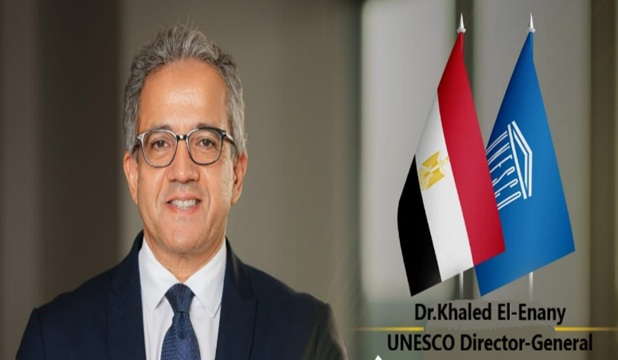
Egypt’s former Minister of Tourism and Antiquities, Dr. Khaled El-Enany, has been elected as the new Director-General of the United Nations Educational, Scientific and Cultural Organization (UNESCO), succeeding France’s Audrey Azoulay after securing a majority of votes in the organization’s Executive Board elections in Paris today, Monday, October 6, 2025, coinciding with the 52nd Anniversary of the Glorious October War Victory.
El-Enany won 55 votes against just two for his closest rival, Firmin Edouard Matoko of the Republic of Congo, the largest winning margin in UNESCO’s history.
His victory marks a historic moment as El-Enany becomes the first Arab and only the second African to lead the United Nations Educational, Scientific and Cultural Organization since its establishment in 1945.
During his acceptance speech, El-Enany said: “I have visited 65 countries in 30 months and one day. I have conducted an inclusive campaign engaging all member countries.”
He added “During my first 100 days, I promise to work with all member states to modernize UNESCO, without discrimination or personal agenda.”
In his speech following his election, El-Enany extended heartfelt thanks to his homeland, Egypt, for entrusting him with this mission, as well as to his Arab family and the Arab League for their steadfast support, and to the African continent and African Union, which had embraced and endorsed his candidacy on three occasions.
He said: “I stand before you with humility and a heart full of gratitude,” acknowledging the broad coalition of support that had propelled his historic victory.
He went on to express his appreciation to all countries that had backed his bid and placed their trust in him, asserting that their confidence in him was a gift that he would never take for granted.
He went on to express his appreciation to all countries that had backed his bid and placed their trust in him, asserting that their confidence in him was a gift that he would never take for granted.
Reflecting on his journey, El-Enany shared that over the past 30 months, his campaign had taken him to 65 countries across the world from the Pacific to the Caribbean and involved more than 400 meetings and dialogues that had helped shape his vision.
He described the experience as “the adventure of a lifetime”, expressing deep gratitude to his Egyptian team and colleagues who “stood by my side with passion and devotion to bring this dream to life.”
His message also carried a tone of unity and inclusivity. “I assure you that, if elected in November by the General Conference, I will serve all nations and peoples as a director-general for all, working together with you to build a UNESCO that is a true home for all humanity, a UNESCO for the People,” he said.
His remarks also paid tribute to the Egyptian team that had accompanied him throughout the 30-month long campaign to bring this project to life in “a dream in which we have deeply believed”.
El-Enany’s remarks were met with warm applause from the delegates gathered at UNESCO’s headquarters in Paris. Leading diplomats and prominent figures described the moment as both historic and deeply symbolic, not only for Egypt but also for the broader Arab and African communities that had rallied behind his candidacy.
About the elections
The elections for the position of Director-General of the United Nations Educational, Scientific and Cultural Organization (UNESCO) for the period 2025-2029 will begin on Monday, October 6, 2025. The elections are witnessing fierce competition between Egyptian candidates Dr. Khaled El-Enany, former Minister of Tourism and Antiquities, and Congolese Firmin Edouard Matoko, UNESCO’s Deputy Director-General for Africa and External Relations.
These elections are of great importance, as they determine who will lead this specialized UN agency, founded in 1945 and headquartered in Paris. Its mission is to promote shared human values by strengthening education, science, and culture, setting standards and tools, and developing knowledge to find solutions to some of the greatest challenges of our time. UNESCO also supports a world of greater equality and peace. UNESCO works with its 194 Member States on a range of issues, including protecting biodiversity, addressing artificial intelligence, promoting quality education, preserving human heritage, and ensuring access to reliable information.
All eyes are on who will succeed Frenchwoman Audrey Azoulay, who has served two terms as president of this organization since 2017. Azoulay’s primary goal is to contribute to peace and security by enhancing cooperation among countries in the fields of education and culture.
Two strong candidates are vying for this high-profile position: Congolese Firmin Edouard Matoko and Egyptian Khaled El-Enany. These elections are of utmost importance to Egypt, which is strongly supporting its candidate for the prestigious position. Previous Egyptian candidates include Ambassador Moushira Khattab in 2017, Minister of Culture Farouk Hosni in 2009, and former Director of the Bibliotheca Alexandrina Ismail Serageldin in 2001.
Egypt’s intensive efforts to support Dr. El-Enany
Egypt has intensified its efforts to garner support for Dr. El-Enany, both regionally and internationally, since the announcement of his candidacy. In April 2023, Prime Minister Dr. Mostafa Madbouly announced the Council’s endorsement of Dr. Khaled El-Enany, former Minister of Tourism and Antiquities, for the position of Director-General of UNESCO for the period 2025 to 2029, as Egypt’s candidate.
The League of Arab States adopted a summit-level resolution in May 2024 supporting and endorsing Dr. El-Enany’s candidacy as the only Arab candidate for the position. This marks the first time a candidate has received such broad Arab consensus. This reflects the aspirations of Arab countries for an effective role within the international organization and the importance of Arab leadership for UNESCO in the coming period.
Al-Anani also received the African Union’s endorsement in February 2024, July 2024, and July 2025, which confirms the official African alignment behind the Egyptian candidacy in appreciation of Al-Anani’s competence and ability and a reflection of the African continent’s confidence in Egypt to achieve the common aspirations of African countries.
Minister of Foreign Affairs, Migration, and Egyptian Expatriates Badr Abdelatty met on Sunday, 5th September, 2025, with the permanent representatives of Turkey, Brazil, Bangladesh, Japan, Qatar, Saudi Arabia, Luxembourg, and the UAE to the United Nations Educational, Scientific and Cultural Organization (UNESCO).
This meeting took place during his visit to Paris as part of the intensive efforts made to support Dr. Khaled El-Enany, Egypt’s candidate in the elections for the Director-General position, and to garner support from various countries.
El-Enany’s Biography
Khaled Ahmed El-Enany Ali Ezz, born in 1971, is a leading figure recognized for his expertise and commitment across diverse fields including teaching, scientific research, culture, tourism, management, public service, and international relations.
A former Egyptian Minister of Tourism and Antiquities, El-Enany currently holds the position of Professor of Egyptology at Helwan University, where he has been a faculty member for over thirty years. His teaching, focused on the civilization, archaeology, and epigraphy of Ancient Egypt, is not only taught in Egypt but also at prestigious international institutions. As a mentor, he has enabled thousands of students and researchers, both Egyptian and international, to benefit from his in-depth knowledge and vast experience. Through his conferences and scientific engagements across twenty countries, he has shared his expertise, enriched academic discourse and encouraged access to knowledge, while promoting intercultural dialogue. His proficiency in Arabic, French, and English demonstrates his communication skills, a key asset for fostering international cooperation. He has served as Vice Dean of the Faculty of Tourism and Hospitality, Director of the Open Learning Center, and Head of the Tour Guide Department. He holds a PhD in Egyptology from Paul-Valéry Montpellier 3 University (France), where he has been a visiting Professor on several occasions.
He directed the National Museum of Egyptian Civilization (2014-2016) and the Egyptian Museum in Cairo (2015-2016). From 2016 to 2022, he served as Minister of Antiquities and then Minister of Tourism and Antiquities of the Arab Republic of Egypt.
He is also a member of several international learned societies. In November 2024, he was appointed Special Ambassador for Cultural Tourism by the World Tourism Organization and, more recently, patron of the African World Heritage Fund. He holds several international distinctions. He speaks Arabic, French and English.
Achievements
El-Enany has wide-ranging academic, scientific, administrative, and executive experience in Egypt and abroad. Over the course of his career, he has developed a strong international network with governments, institutions, and organisations.
During his six-and-a-half-year tenure in government he supervised numerous major projects, boosting tourism and archaeology across Egypt. More than 20 museums, including the National Museum of Egyptian Civilisation (NMEC), developed in collaboration with UNESCO, were opened, and work on the Grand Egyptian Museum (GEM), one of the largest museums in the world, neared completion.
More than 50 restoration and development projects at archaeological sites were inaugurated, and more than 20 restoration projects of historical mosques, monasteries, and churches (including five locations on the Holy Family Trail), and the Eliahu Hanavi Synagogue in Alexandria, were opened.
He inaugurated five ground water-lowering projects at archaeological sites, and the number of archaeological missions, particularly Egyptian ones, increased significantly. He also secured the return of 7,000 smuggled artefacts from more than 20 countries.
El-Enany has played a key role in strengthening Egypt’s international relations through his cultural diplomacy skills, collaborating closely with many countries, academic institutions, and international organisations.
He oversaw the Pharaoh’s Golden Parade and Luxor: The Sphinx Avenue Parade and was instrumental in mitigating the repercussions of the Covid-19 pandemic and the Ukraine-Russia war on Egypt’s tourism sector.
Awards
Dr. Khaled El-Enany Anani has been decorated with several international honors. In 2025, France awarded him the insignia of the Chevalier de la Légion d’honneur, the official emblem awarded to recipients of France’s highest distinction for civil merit, and in 2015 he was awarded the French Order of Arts and Letters, naming him a Knight of the Order of Arts and Letters.
In 2020, he received the Order of Merit of the Republic of Poland, and in 2021 was awarded the Order of the Rising Sun by Japan. In September 2024, El-Enany received an honorary doctorate from the University of Paul-Valéry Montpellier 3 in France.
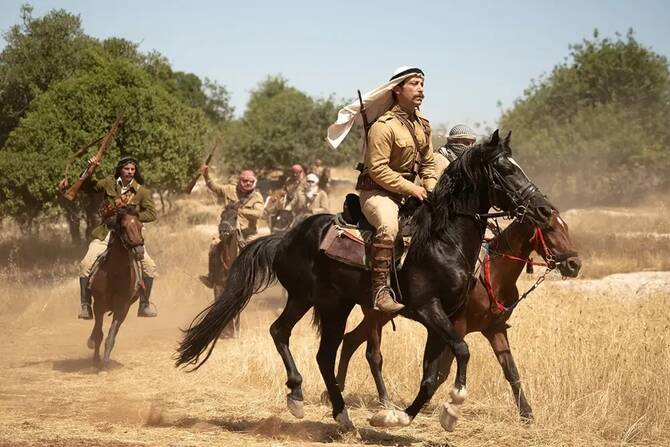
Annemarie Jacir’s award-winning film “Palestine 36” leads the nominations for the 10th Critics Awards For Arab Films, which were announced on Wednesday.
The annual prizes, organized by the Arab Cinema Center, have been voted on by a record 307 Arab and international critics from 75 countries this year, with the awards ceremony due to take place during the Cannes Film Festival on May 16.
“Palestine 36” has been nominated in six categories including best film, director and screenplay. It is followed by Maryam Touzani’s “Calle Malaga” with five nominations; Cherien Dabis’ “All That’s Left of You” with four; and “Yunan,” “My Father’s Scent,” and “Once Upon a Time in Gaza” with three each.
Kaouther Ben Hania’s Oscar-nominated “The Voice of Hind Rajab” garnered one nomination in the best director category.
“Palestine 36” is set during the 1936 Arab Revolt and follows five interconnected narratives as villages across Palestine confront British colonial rule.
With rising numbers of Jewish immigrants escaping antisemitism in Europe, and the Palestinian population uniting against Britain’s 30-year dominion, all sides spiral toward inevitable collision in a decisive moment for the British Empire and the future of the entire region.
“I hope people see themselves in the film,” she told Arab News in December last year. “I don’t want to teach anyone anything. There’s a lot of history in the film and there’s a lot of history that’s been erased. I hope that’s something that comes through.”
source/content: arabnews.com (headline edited)
______________
Annemarie Jacir’s award-winning film “Palestine 36” leads the nominations for the 10th Critics Awards For Arab Films, which were announced on Wednesday. (Supplied)
Landmark study bridges history and modern scholarship
Project highlights Kingdom’s preservation of Islamic heritage
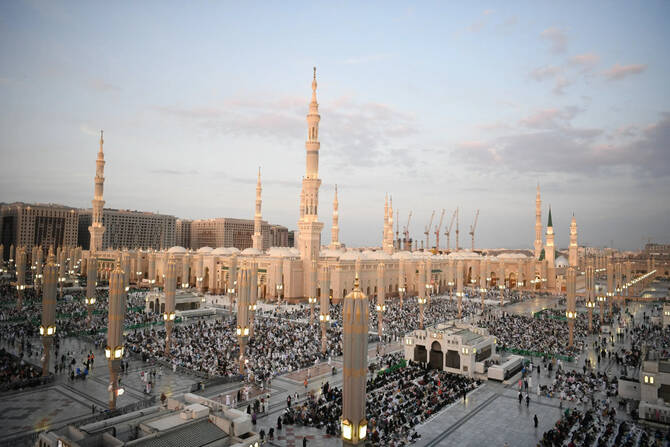
A new scholarly encyclopedia documenting the architectural evolution of the Prophet’s Mosque has emerged as a major reference work, charting the development of one of Islam’s most significant landmarks across centuries.
Published by the Al-Madinah al-Munawwarah Research and Studies Center, the project forms part of broader efforts to systematically record the mosque’s history and features through a rigorous academic framework enhanced by modern research tools, a review by the Saudi Press Agency (SPA) said.
The encyclopedia traces the mosque’s transformation from its foundation during the Prophetic era through successive expansions across Islamic history, culminating in large-scale Saudi-era developments that have expanded capacity while preserving its architectural and spiritual identity.
Beyond historical documentation, the work provides analytical insight into key structural elements — such as arcades, domes, and minarets — examining their functional and aesthetic evolution, alongside associated landmarks that underscore the mosque’s enduring religious and civilizational role.
The initiative reflects Saudi Arabia’s continued commitment to serving the Two Holy Mosques and safeguarding Islamic heritage through specialized knowledge projects, the review said.
By preserving and systematizing the architectural memory of the Prophet’s Mosque, the encyclopedia is expected to fill a critical gap in scholarly research, offering a valuable resource for academics, students, and those interested in the cultural and human dimensions embedded in the mosque’s design,
source/content: arabnews.com (headline edited)
_______________
General view of the Prophet’s Mosque in Madinah. (SPA file photo)
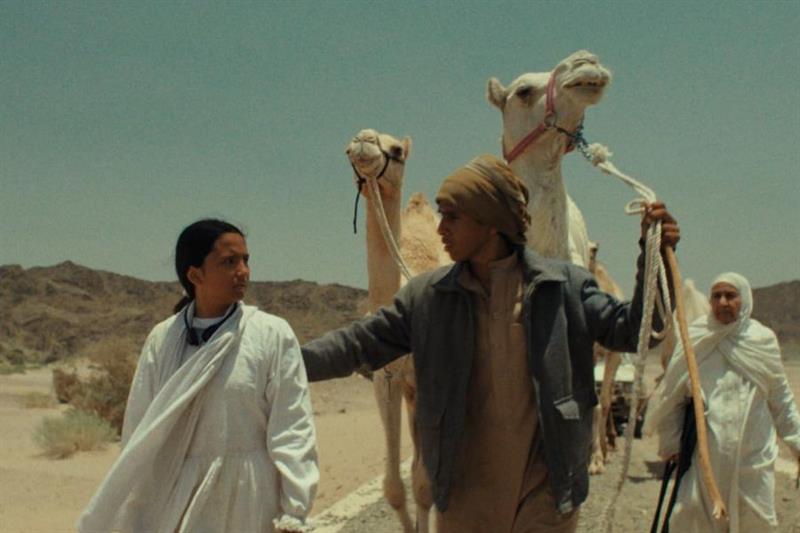
The 10th edition of the Aswan International Women Film Festival announced the winning films on 24 April, with the Saudi-led co-production Hijra taking the Best Film award, leading a diverse list of winners from across the globe.
Directed by Shahad Ameen, Hijra also earned Best Actor for Nawaf Al-Dhafiri.
Set against the vast desert landscape, Hijra follows a grandmother who embarks on a journey north in search of her missing teenage granddaughter, after the young girl disappears during a trip toward Mecca.
Blending elements of a road movie with a character-driven drama, Hijra explores themes of family, loss, and resilience, while offering a nuanced portrait of women’s lives across different generations in Saudi society.
The Jury Prize went to the Dutch film Treat Her Like a Lady written and directed by Paloma Aguilera Valdebenito, while The Condor Daughter (Bolivia/Peru/Uruguay) written and directed by Alvaro Olmos Torrico won Best Director.
Spain featured among the winners, with The Portuguese House (Una quinta portuguesa) by Avelina Prat receiving the Best Screenplay award.
In the short film competition, the French film We Had a Good Time won Best Short Film, while Randa Maroufi’s Al-Mina (Morocco/Italy/France/Qatar) also received the short film top award. Prior to its AIWFF success, Al-Mina scored Leitz Cine Discovery Prize at Cannes Film Festival.
Italian film The Kinepali Model took the Jury Prize, and Tunisian film Dunia scored the European Union Award.
Across parallel sections, An Unfinished Journey won Best Collective Film in the workshops competition, while A Lullaby After Sleep by Abdel Rahman Barakat took Best Film in the Films with Impact category. In the South Films competition, Distances by Liza Kamal secured first place.
Held from 20 to 25 in Aswan, the festival showcased 73 films from 34 countries, reaffirming its position as a key platform for cinema centered on women’s stories and perspectives.
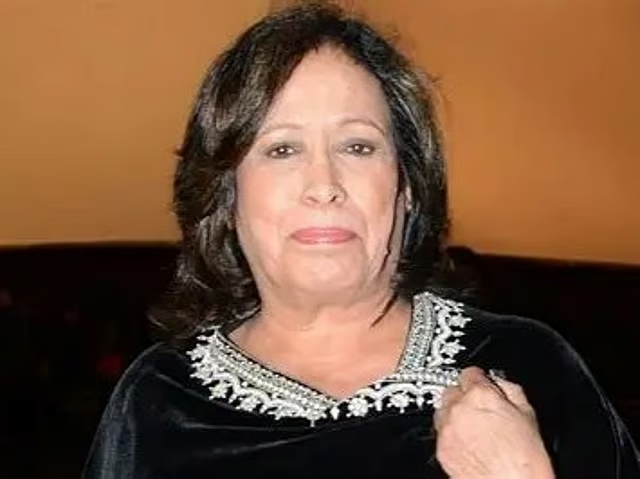
Iconic Kuwaiti actress Hayat Al Fahad, widely known as the “Lady of the Gulf Screen”, has died at the age of 78 after a prolonged illness, in a loss that has reverberated across the Arab artistic community.
The announcement was made on Tuesday via the official account of the Al Fahad Artistic Production Foundation, which paid tribute to her as a towering figure in Gulf drama whose legacy will endure for generations.
Al Fahad had faced recurring health complications in recent months, which kept her away from the screen. Sources close to the family said her condition deteriorated sharply in recent days, leading to her admission to intensive care before her death.
Over a career spanning more than five decades, Al Fahad was not only an actress but also a writer and producer, known for works that explored Gulf society with depth and candour.
Born in Kuwait in 1948, Al Fahad is regarded as one of the Arab world’s most influential television and stage figures. Her career spans acting, broadcasting, writing, and producing, with celebrated credits including the beloved television series Khalti Qumasha, Ruqiya wa Sabika, Jarh Al Zaman, and ‘Ndama Tu’Gany Al Zuho.
Despite advancing age, she remained active in Ramadan productions until her later years, delivering performances marked by experience and enduring passion.
Her death marks the end of a defining chapter in Gulf television, though her work will continue to resonate across the Arab world.