ALGERIA : Meet the Algerian Filmmakers Creating New Images of the Country

A new generation of talent is turning its lens towards intimate storytelling, with Africa’s largest nation as its backdrop.

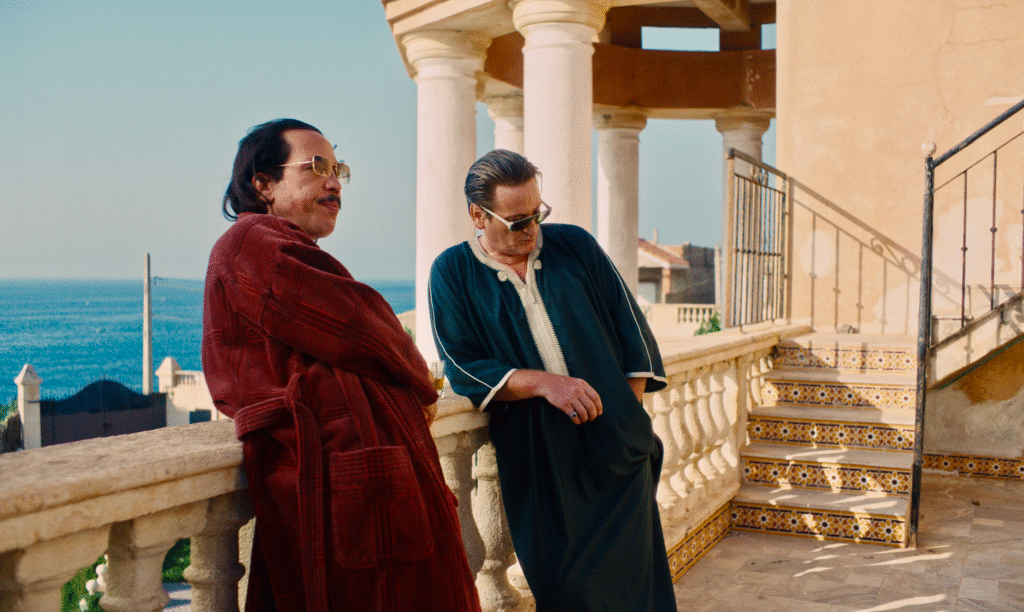
“Algeria is a visually unspoilt country,” says Mounia Meddour. Meddour is one of the nation’s most prominent contemporary filmmakers. Her debut film, Papicha (2019), set during the 1990s Algerian Black Decade with Algiers as its backdrop, was screened at the Cannes Film Festival’s Un Certain Regard, bringing her international recognition. Yet, she is right: very few images of Algeria exist within the cinematic landscape.

There are many reasons for this. The industry has long been at a standstill; visas are difficult to obtain and cultural policy remains lukewarm. Algerian landscapes and intimate stories struggle to travel beyond the country’s borders. For several years now, however, a new generation of filmmakers, cameras in hand, has been working to capture and create a contemporary visual archive of a nation longing for representation.

Algeria nonetheless has a rich cinematic history. In 1975, thirteen years after gaining independence from France, the young state won the Palme d’Or at the Cannes Film Festival for the historical fresco Chronicles of the Years of Fire, directed by Mohamed Lakhdar-Hamina — making Algeria the first, and still the only, African and Arab country to achieve this distinction. It is this legacy that leads the film critic Samir Ardjoum to speak of a paradox in Algerian cinema. 

“This symbolic prestige has not translated into industrial continuity,” he says. “Algerian cinema suffers from a lack of stable international distribution. Films circulate widely at festivals, but rarely in commercial circuits.”

Ardjoum explains that Algerian cinema originated as a cinema of nation-building. After 1962, the country invested heavily in films recounting the War of Independence and enshrining a heroic national memory, creating a shared narrative and collective imagery. Many films about the thawra (the Revolution, or Algerian War) were commissioned, with Mohamed Lakhdar-Hamina among the most prominent figures of this movement.

A more mainstream cinema emerged in the 1970s, but was largely forgotten due to poor archiving. The Black Decade of the 1990s brought the industry to a near halt, as it did many others. Since then, Algerian cinema has remained in a state of lethargy. As the filmmaker Malek Bensmaïl puts it: “It is both fragile and very lively. Yet there is a deep desire to create our own stories and not let others tell them for us.”

The act of image-making inevitably raises questions of funding and audience. “All too often, we oscillate between a foreign gaze that restricts us and a nostalgic form of self-aestheticisation akin to self-Orientalism,” argues Amira Louadah, director of The Ark.

For too long, Algeria has been shaped by Western-manufactured representations, beginning with France. “Between 1830 and 1962, during French colonisation, most images of the country — whether in painting, photography or film — were created from a Western perspective,” Louadah notes. In a colonial context, such representations served to criminalise, demean and demonise “Muslim Algerians”, the term used by the colonial administration for indigenous people. Even today, Ardjoum adds, “Algeria is often depicted through the lens of crisis, politics or its colonial past.”

With limited state funding, filmmakers increasingly turn to European backers who, Louadah says, can at times “dictate the stories they want to see from our region”. The result is a striking absence of visual documentation of everyday life. “How did families live? How were social relationships organised? How did people communicate? What did daily routines, household objects or lighting look like? How did people travel, in both rural and urban areas?” she asks.

This new generation hopes to fill that void. “It’s exhilarating to have this rare access to locations and footage,” says Yacine Medkour, co-founder of the Algiers-based production company 2Horloges. “At the same time, it’s a huge responsibility.”

“Our country lacks images produced from its own perspective,” Bensmaïl emphasises. By reclaiming their narratives, this new wave of filmmakers is creating “archives for the future, preserving fragments of memory to pass on to future generations”. Yet this comes with what Louadah calls “a cultural responsibility”. “We need to support a plurality of perspectives rather than a single, black-and-white approach. We should represent all viewpoints and social classes—not just central Algiers. The more diverse, the better. We must break free from monopolies over narrative and representation.” Ardjoum agrees: “It’s not about polishing the country’s image; it’s about expanding the range of representations.”

As part of this shift, many filmmakers are moving away from stories centred solely on the Algerian Revolution. “People are growing tired of heroic narratives,” Ardjoum observes. Bensmaïl, whose forthcoming film The Arab reimagines the unnamed protagonist of Albert Camus’s The Stranger through the testimony of his ageing brother, suggests that “his generation needed to ask questions”. “We are not abandoning the Revolution,” he says. “We are simply no longer treating it as a static icon.” Ardjoum describes this as a shift in political focus — from the grand historical narrative to the personal sphere. “By constantly glorifying the past, it becomes difficult to describe the present.”

Meddour’s Papicha follows Nedjma, a fashion student determined to stage a show during the Black Decade — a period the director herself experienced. Sofia Djama’s The Blessed (Les Bienheureux) centres on a couple, Amal and Samir, celebrating their twentieth wedding anniversary as they reflect on their shared past. Louadah’s documentary La Grosse Moula ou Li Michan explores Algeria’s linguistic history from a personal perspective. “There was a need to ground Algeria in the present, to tell stories that allow us to come to terms with our reality,” Meddour says. As Ardjoum notes, “Contemporary Algerian cinema is no longer solely a cinema of national narrative; it has become a cinema of the personal, of trauma, of urban life and of social tensions.”

To portray Algeria fully, however, filmmakers must look beyond the capital. “Our generation has tended to film what we know — often Algiers, which is inherently cinematic in its vitality,” says Djama, who is currently working on her next film, Jeudi moins quart. “But it would be a shame to limit ourselves. We need to look further afield.”

Progress remains constrained by financial and institutional challenges. “Over the past fifteen years, there has been real progress — more young filmmakers, more women, more films in festivals,” Bensmaïl notes. “But it is not yet enough.” Sustained national funding will be essential if this movement is to endure — allowing it to evolve from a fragile ecosystem of resourceful auteurs into a stable creative industry.

“If the films exist, we also need venues in which to show them,” Bensmaïl adds. Filmmakers are calling for a wider network of cinemas, alongside what Ardjoum describes as “an ambitious policy on archiving and international distribution”, supported by legal protections for creative freedom. “We have a wealth of talented individuals eager to write, produce and direct across genres,” Meddour says.

Medkour remains optimistic: “Algeria is the future of image-making.”

source/content: arabianbusiness.com (headline edited)

_______________

____________

ALGERIA
SYRIA : In Syria, Mural Sets New World Record

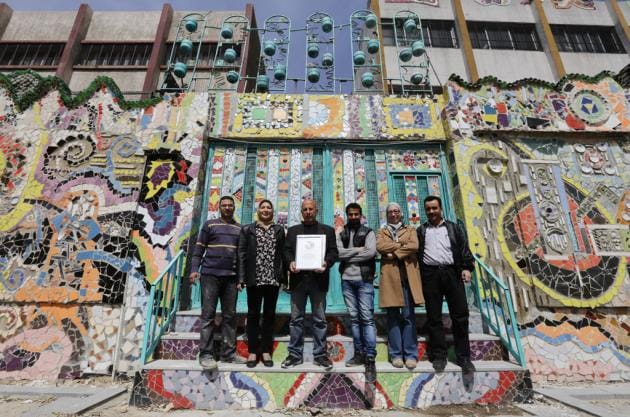
In Damascus, a mural made of recycled materials has just set a new world record. Syrian artist Moaffak Makhoul and a team of six compatriots began the project in October 2013 in an attempt to revive hope in their war torn home country. The mural spans 720 square meters (7,749.98 square feet) and set the Guinness record for the largest mural of recycled materials upon its completion in January, Art Daily reports.

The mural is located in Al Mazzeh, an upscale neighborhood in Damascus. It is composed of manufactured waste: colorful scraps from cars, bicycles, cooking utensils, pipes, soft drink cans, mirrors, and ceramics. Housewives also lent a hand, bringing personal objects or pieces of domestic waste from war zones.

Syria’s ongoing civil war has killed around 146,000 people, has forced millions to flee, and forced most of those who have stayed indoors. But the mural is bringing people back out onto the street, according to the report. Makhoul told the AFP he felt the need “to give something to [his] country, to make the Syrian people be known for their love of beauty, life and nature.”

source/content: news.artnet.com/ Artnet.com (headline edited0

_____________

Syrian artist Moaffak Makhoul and his team pose in Damascus with Guinness World Records award for the largest recycled material mural, March 31, 2014. The mural, seen behind them, measures 7,750 feet. Photo: Louai Beshara, courtesy Agence France-Presse.

___________

SYRIA

EGYPT : Al-Ahram Weekly’s editor-in-chief Ezzat Ibrahim wins Mustafa and Ali Amin’s Best Columnist Award

Prominent Egyptian journalist Ezzat Ibrahim, editor-in-chief of Al-Ahram Weekly and Ahram Online, has won the Best Columnist Award for 2025 at the Mustafa and Ali Amin Journalism Awards, the awards’ board of trustees announced on Monday.

Renowned journalist Mohamed Salmawy was named Journalist of the Year, while Mohamed El-Shamaa of Al-Akhbar newspaper received the Commitment Award, according to a statement from the awards foundation.

In the investigative journalism category, Amany Awad of Al-Mal newspaper won for her report titled “The Dark Side of the Smart Companion.”

Samar Ibrahim of Al-Shorouk newspaper received the Humanitarian Journalism Award for “Testimonies of Sexual Humiliation Victims by Rapid Support in Sudan.”

The Youth Award went to Ahmed Al-Ameer of Al-Watan newspaper for his piece “The Killer Light: The Journey of White Phosphorus from the Gap to the Bodies of Gaza Strip Residents.”

In visual journalism categories, Khaled Kamel of the Youm7 website won the Photojournalism Award for “A Mother’s Sacrifice for Her Children in the Rain,” while Maroula Magdy of the Al Arabiya Egypt website received the Video Journalism Award for “Mawlawiya Dance for Love and Peace.”

The awards also recognized student journalists. Jana Mohamed Hanfi won first place in the journalism department at Akhbar El-Youm Academy, while Mai Ahmed El-Sayed took first place in the journalism department at Cairo University’s Faculty of Mass Communication.

The winners were selected after impartial judging committees reviewed entries published during 2025, the foundation said.

Safia Mustafa Amin, chair of the awards’ board of trustees, said a ceremony will be held to honour the legacy of journalists Mustafa Amin and Ali Amin, during which the prizes will be presented to the winners.

source/content: english.ahram.org.eg (headline edited)

______________

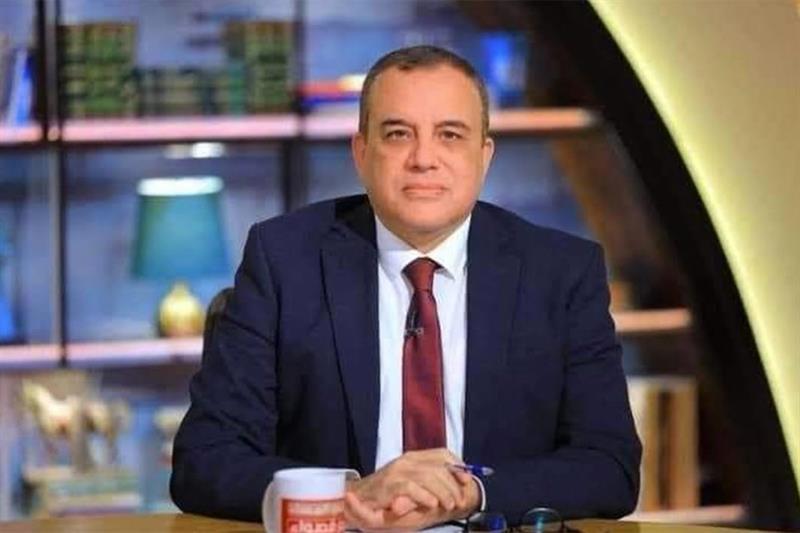
Al-Ahram Weekly Editor-in-chief Ezzat Ibrahim

___________

EGYPT

ALGERIAN-FRENCH : French-Algerian newcomer Nadia Melliti wins best actress award in Cannes

Melliti, 23, plays a 17-year-old in a coming-of-age tale centred on a teenage Muslim girl in Paris who faces a struggle with her identity and religion.

French artist of Maghrebi descent Nadia Melliti won the best actress award at the Cannes film festival for her first-ever performance in a film, “The Little Sister” by Hafsia Herzi.

Melliti, 23, plays a 17-year-old in a coming-of-age tale centred on a teenage Muslim girl in Paris who faces a struggle with her identity and religion.

She beat Hollywood star Jennifer Lawrence in “Die My Love” by Lynne Ramsay, Japanese child revelation Yui Suzuki in “Renoir” by Chie Hayakawa and Elle Fanning in “Sentimental Value” by Joachim Trier.

“It’s a huge honour to be here tonight and to have been able to take part in this very beautiful project,” she said clutching her award on stage.

“I have such a feeling gushing through me right now. I can’t describe it but it’s really incredible,” she said as the director sobbed in the audience.

“Thank you Mum. I know you’re watching and I hope you are very proud and happy,” she said.

Melliti is a French student and amateur football player who was spotted in the street.

Before walking the red carpet for the premiere of Hafsia Herzi’s “The Little Sister”, she was preparing for exams.

In the coming-of-age tale, she plays 17-year-old Fatima, a Muslim girl in Paris struggling with her identity and religion as she explores her sexuality.

“I’ve never done any theatre or cinema,” she said.

But she said she immediately empathised with the character when she read the script, based on a partly autobiographical novel of the same name by French writer Fatima Daas.

“I identified hugely with Fatima, her surroundings and origins. My mother hails from an immigrant background,” she said.

“My roots are Algerian. I also have sisters.”

Melliti said she specifically related to the film’s theme of “emancipation” in the film.

“When I was younger I wanted to play football. I still do today,” said the actor. “I wanted to take up the sport, one people say is masculine and in which men are over-represented.

“And when I took that home, there was this emancipation, even if for Fatima it was different, more linked to her intellect and sexuality,” she added.

Melliti said she could not believe her luck when she was spotted by a casting agent in the street near a large shopping mall in central Paris.

“I was walking in the street and (she) called out to me,” she said.

At first “I thought she was a tourist and I wondered if my English would be up to scratch.”

source/content: thearabweekly.com (headline edited)

______________

Nadia Melliti, winner of the Best Actress award for her role in the film La petite dernière (The Little Sister), poses during a photocall after the closing ceremony of the 78th Cannes Film Festival in Cannes, France, May 24, 2025. REUTERS

_______________________

FRENCH / ALGERIAN

SAUDI ARABIA : Makkah museum displays world’s largest Qur’an

The Holy Qur’an Museum at the Hira Cultural District in Makkah is showcasing a monumental handwritten copy of the Holy Qur’an, recognized as the largest Qur’an of its kind in the world.

The manuscript measures 312 cm by 220 cm and comprises 700 pages, earning the museum recognition from Guinness World Records for displaying the world’s largest Qur’an, the Saudi Press Agency reported.

The manuscript is a magnified reproduction of a historic Qur’an dating back to the 16th century, the SPA stated.

The original copy measures 45 cm by 30 cm, with the chapters written primarily in Thuluth script, while Surah Al-Fatiha was penned in Naskh, reflecting the refined artistic choices and calligraphic diversity of the era.

The Qur’an is a unique example of Arabic calligraphy, gilding and bookbinding, showcasing Islamic art through intricate decorations, sun-shaped motifs on the opening folio, and elaborately designed frontispiece and title pages that reflect a high level of artistic mastery.

The manuscript was endowed as a waqf in 1883. Its original version is currently preserved at the King Abdulaziz Complex for Endowment Libraries, serving as a lasting testament to Muslims’ enduring reverence for the Qur’an and the richness of Islamic arts across the centuries.

source/content: arabnews.com (headline edited)

BAHRAIN : Foreign Minister: Guinness World Records achievement reflects Bahrain’s model of coexistence

Dr. Abdullatif bin Rashid Al Zayani, Minister of Foreign Affairs and Chairman of the National Human Rights Committee, said that the Kingdom of Bahrain’s official inclusion in the Guinness World Records as the country with the highest density of places of worship for different religions represents international recognition of Bahrain’s established approach to religious tolerance, peaceful coexistence, and respect for human rights and religious, cultural, and civil freedoms.

The minister said that the achievement reflects the vision of His Majesty King Hamad bin Isa Al Khalifa and Bahrain’s national approach to coexistence, which is grounded in the rule of law, justice, and constitutional institutions, and supported by consistent government policies that have made tolerance and coexistence an integral part of national practice.

Dr. Al Zayani extended congratulations to His Majesty the King and to His Royal Highness Prince Salman bin Hamad Al Khalifa, the Crown Prince and Prime Minister, on the achievement, noting that it reflects Bahrain’s longstanding commitment to religious and cultural diversity.

The minister noted that the global achievement coincides with the international observance of the International Day of Peaceful Coexistence, adopted by the United Nations General Assembly following a Bahraini initiative, as well as with the national observance of the Year of Isa Al Kabeer. He said this alignment highlights Bahrain’s historical standing as a society rooted in religious and cultural coexistence, and its role in promoting dialogue and peace, drawing on a legacy shaped by the leadership of His Highness Isa Al Kabeer, founder of the modern Bahraini state, and carried forward under the current national approach led by His Majesty the King.

Dr. Al Zayani explained that Bahrain’s ranking in the Guinness World Records, with an average of 2.577 places of worship per square kilometre, reflects the Kingdom’s long-established practice of accommodating places of worship for different religions and denominations. These include mosques and “grand mosques” (congregational mosques), alongside churches, a Jewish synagogue, one of the oldest churches in the region, and a Hindu temple established in Manama more than two centuries ago.

He said that this diversity reflects social cohesion, equal citizenship, and respect for freedom of religion and belief, and represents a practical expression of Bahrain’s values of coexistence and peace.

The minister highlighted Bahrain’s efforts to share its experience in religious coexistence and dialogue at regional and international forums through initiatives launched under the leadership of His Majesty the King. These include the declaration on freedom of religion and belief, international conferences on intercultural dialogue, the King Hamad Award for Coexistence and Tolerance, and other initiatives aimed at serving humanity, empowering women and youth, and promoting a culture of peace. 

Dr. Al Zayani reiterated that the Kingdom of Bahrain, under the leadership of His Majesty the King and the directives of His Royal Highness the Crown Prince and Prime Minister, continues its human rights and development efforts, as well as its diplomatic and humanitarian role through its non-permanent membership of the United Nations Security Council, in support of regional and international peace, dialogue among religions and cultures, the National Human Rights Plan, and the Sustainable Development Goals.

source/content: bna.bh (headline edited)

______________

______________

BAHRAIN

ARAB World Institute Marks Youssef Chahine Centenary in Paris

A four-day programme in Paris revisits Youssef Chahine’s films and legacy through screenings and panel discussions.

The Arab World Institute (IMA) in Paris is marking the centenary of Youssef Chahine with a four-day programme running from January 22nd to 25th, bringing together film screenings and critical discussions dedicated to his legacy.

Across 38 feature films produced between 1950 and 2007, Chahine moved fluidly between comedy and melodrama, historical epics and political allegories, musicals and autobiographical narratives – often blending multiple forms within a single work. Emerging during the golden age of Egyptian cinema in the 1950s, he remains one of the most influential figures in the country’s film history, shaping both its artistic language and its engagement with politics, identity, and society.

On Thursday, January 22nd, the programme opens at 7:00 PM with a panel, ‘Youssef Chahine: Portrait and Legacies’, featuring Yousry Nasrallah, Marianne Khoury, and Rashid Masharawi, moderated by Jean-Michel Frodon. The evening continues at 8:30 PM with a screening of ‘Life After Siham’ by Namir Abdel Messeeh.

Then, on Friday, January 23rd, the conversation shifts to ‘Youssef Chahine and the Power of Women’, with Sharon Hakim, Hind Meddeb, and Viviane Candas, moderated by Jean-Michel Frodon at 7:00 PM. At 8:00 PM, the night moves into screenings with Chahine’s ‘The Sixth Day’.

A double screening day begins with ‘Destiny’ at 4:30 PM, followed by ‘The Emigrant’ at 7:30 PM on Saturday, January 24th.

Sunday, January 25th will see the final day start at 3:00 PM with ‘Youssef Chahine and Me: Unpublished Testimonies & Encounters’, featuring Jack Lang, Abdallah Taïa, Houda Ibrahim, and Dominique Bax, moderated by Thierry Jousse. Screenings follow with ‘The Land’ at 4:00 PM, then ‘The Sparrow’ at 6:00 PM to close out the programme.

You can book all screenings and panels on the Arab World Institute website.

source/content: scenenow.com (headline edited)

_______________

__________

EGYPT

SYRIA ’s Sharaa grants Kurdish Syrians citizenship, language rights for first time, SANA says

The decree for ⁠the first time grants Kurdish Syrians rights, including recognition of Kurdish identity as part of Syria’s national fabric

It designates Kurdish as a national language alongside Arabic and allows schools to teach it.

Syria’s President Ahmed Al-Sharaa issued a decree affirming the rights of the Kurdish Syrians, formally recognizing their language and restoring citizenship to all Kurdish Syrians, state news agency SANA reported on Friday.

Sharaa’s decree came after fierce clashes that broke out last week in the northern city of Aleppo, leaving at least 23 people dead, according to Syria’s health ministry, and forced more than 150,000 to flee the two Kurdish-run pockets of the city.

The clashes ended ⁠after Kurdish fighters withdrew.

The violence in Aleppo has deepened one of the main faultlines in Syria, where Al-Sharaa’s promise to unify the country under one leadership after 14 years of war has faced resistance from Kurdish forces wary of his Islamist-led government.

The decree for ⁠the first time grants Kurdish Syrians rights, including recognition of Kurdish identity as part of Syria’s national fabric. It designates Kurdish as a national language alongside Arabic and allows schools to teach it.

It also abolishes measures dating to a 1962 census in Hasaka province that stripped many Kurds of Syrian nationality, granting citizenship to all affected residents, including those previously registered as stateless.

The decree declares Nowruz, the ⁠spring and new year festival, a paid national holiday. It bans ethnic or linguistic discrimination, requires state institutions to adopt inclusive national messaging and sets penalties for incitement to ethnic strife.

The Syrian government and the Kurdish-led Syrian Democratic Forces (SDF), that controls the country’s northeast, have engaged in months of talks last year to integrate Kurdish-run military and civilian bodies into Syrian state institutions by the end of 2025, but there has been little progress.

source/content: arabnews.com (headline edited)

________________

Syria’s President Ahmed Al-Sharaa issued a decree affirming the rights of the Kurdish Syrians, formally recognizing their language and restoring citizenship to all Kurdish Syrians, state news agency SANA reported on Friday. (Reuters/File)

________________________

SYRIA / SYRIAN KURDS

EGYPT : SHARJAH, U.A.E : Sharjah Ruler honours Egyptian literary Mohamed Salmawy at 44th SIBF opening

His Highness Sheikh Dr Sultan bin Muhammad Al Qasimi, Ruler of Sharjah, inaugurated the 44th Sharjah International Book Fair on Wednesday, where he honoured Egyptian writer and playwright Mohamed Salmawy as the Cultural Personality of the Year.

The opening ceremony was attended by His Highness Sheikh Sultan bin Mohammed bin Sultan Al Qasimi, Crown Prince and Deputy Ruler of Sharjah, and Sheikha Bodour bint Sultan Al Qasimi, Chairperson of the Sharjah Book Authority (SBA).

In his keynote address, Sheikh Sultan welcomed guests and the delegation from Greece, this year’s Guest of Honour, noting that Sharjah is marking 100 years since the establishment of its first library, a milestone he said reflects the emirate’s enduring commitment to knowledge and culture.

During the ceremony, Sheikh Sultan honoured Egyptian writer and playwright Mohamed Salmawy, naming him the Cultural Personality of the Year in recognition of his distinguished literary career and contributions to Arab theatre, fiction, and cultural life.

In his acceptance speech, Salmawy expressed heartfelt gratitude, saying: “Sharjah honoured me and all Arab intellectuals when it first honoured the written word over four decades ago by founding this book fair as a celebration of thought and knowledge. It honoured us again when it built museums, hosted exhibitions and conferences to celebrate our heritage and contemporary arts. Sharjah chose to embrace culture and has rightfully become one of the most important beacons of cultural enlightenment in the Arab world.”

“Our gathering here at the Sharjah International Book Fair is a renewed call to continue along the path of faith in culture and ideas—through words and books. It is a call to believe in the unity of the Arab human spirit—from Egypt to the UAE, from Yemen to Morocco, from Syria to Somalia. This meeting reminds us of the role of the Arab intellectual—not as a mere observer of his time, but as an active, influential force responsible for lighting the way amid the darkness some would impose upon us,” he added.

The ceremony also saw the presentation of the Turjuman Award to Dr Ondřej Beránek for his Czech translation of The Mission of Ibn Fadlan, published by Academia Publishing House in the Czech Republic. Organized by the SBA, the AED 1.4 million prize is the world’s most valuable award for the translation of an original Arabic work into another language.

The Ruler of Sharjah also announced the completion of the first phase of the Comprehensive Arabic Encyclopedia of Sciences, Arts, and Humanities, which aims to document Arabic and Islamic sciences, literature, and the humanities, including biographies of scholars, philosophers, writers, linguists, poets, rulers, and thinkers from the dawn of Arab history through the Islamic civilization.

He said the team, working under the supervision of the Arabic Language Academy in Sharjah, has completed 44 volumes covering linguistic and religious sciences, with the second phase, focused on the humanities, expected to be finalized next year.

Representing Greece, Guest of Honour, Deputy Minister of Culture Jason Fotilas expressed deep gratitude to Sheikh Sultan, highlighting the centuries-old cultural ties between Greece and the Arab world and thanking Sharjah for choosing Greece for this year’s edition.

In a related event, the Egyptian General Book Organization (EGBO) will host a special book signing for Salmawy on 6 November at 4pm at its pavilion within the fair. Organized by Egypt’s Ministry of Culture, the event will honour one of the Arab world’s most distinguished literary figures and celebrate his lifetime achievements.

A distinguished gathering of Arab and Egyptian writers, intellectuals, and media figures will attend the ceremony, where Salmawy will sign several of his notable works published by EGBO, including The Fairy, Beyond the Moon, The Last Station, and his memoir My Journey, which chronicles his rich literary and cultural life.

source/content: english.ahram.org.eg (headline edited)

________________

__________________________

EGYPT / SHARJAH, U.A.E

JORDANIAN-AMERICAN :How Malek AlQadi – One Jordanian Architect Brought a Piece of Petra to California

Inspired by his childhood in Amman, Malek AlQadi’s latest project, ‘The Folly Mojave’, injects desert minimalism with sustainable luxury.

Born in Amman, Jordan, raised in Florida, and based in Los Angeles, Jordanian-American architect Malek AlQadi has dedicated his life to his follies. In architecture, a folly is a building that serves no purpose aside from aesthetics. But AlQadi’s follies? They are worlds unto themselves; portals to places only visited in daydreams and memories.

His first folly came about as part of his thesis project, during which he designed and executed a humble, fully self-sustaining stay in California’s Joshua Tree National Park. Though his design language has evolved over the years, his core principles remain the same: sustainability, minimalism, and a reconnection with nature, all rooted in a childhood spent marvelling at Jordan’s deserts.

In Jordan, ancient structures like Petra dominated his early experiences. In Florida, his exposure to contrasting environments shaped his understanding of space, structure and purpose. AlQadi’s obsession with follies finds its roots in his desire to push the boundaries of design. He’s not interested in the grandiosity of skyscrapers or the utility of commercial buildings. Instead, his work delves into the ethereal, focusing on creating spaces that encourage introspection, exploration and escape.

The Folly Mojave, a series of standalone suites dotted across 200 acres at the intersection of The Mojave National Preserve and Joshua Tree National Park, is AlQadi’s most recent and most ambitious project to date. The project is a retreat that blends into the arid environment while providing visitors with an isolated, immersive experience. “A lot of it was navigating childhood memories and connecting them with real-life scenarios and architectural elements, tying vastly different places in the world together, yet still grounded in similar principles and environments.” AlQadi tells SceneHome.

For AlQadi, the desert isn’t just a backdrop. It’s a critical component of the project, shaping the way the Folly Mojave interacts with the land. The retreat’s location in such an extreme environment is intentional; it encourages guests to detach from their everyday lives and engage more fully with their surroundings.

At first glance, the Folly Mojave may appear simple, but its simplicity belies the thoughtfulness of its design. The structure is fully off-grid, powered by solar energy, and equipped with self-sustaining water systems. The retreat is designed for minimal impact on the surrounding environment. Inside, the space is surprisingly open, with large windows that frame the vast desert views.

“A big part of the experience is having less light pollution and being able to see the stars at night. All of that fed into the idea of disconnection,” AlQadi explains. “It’s about having the luxury of time and space to relax and take in nature, which, at its core, is the ultimate healer.”

Malek AlQadi emphasises the “site-responsive” nature of his architectural philosophy. Unlike architects who adhere to a singular aesthetic, AlQadi’s approach is shaped by the environment he works within, adapting to the unique qualities of each location. “No two projects are ever the same,” he explains, yet there’s always a recognisable touch that connects his work. Symmetry, the use of natural materials, and a minimalist design language are core to his style, while he doesn’t shy away from incorporating brutalist elements when appropriate.

For AlQadi, creating spaces that resonate beyond the present – lasting decades or even centuries – is a key part of his architectural philosophy. “Guests often describe the experience as surreal, unique and unplugged,” AlQadi reflects. “Many mention feeling a deep connection while staying there. It’s rewarding to know that people from all walks of life have been able to share in that experience.”

source/content: cairoscene.com (headline edited)

______________

____________________________

AMERICAN / JORDANIAN