Arabs & Arabian Records Aggregator. Chronicler. Milestones of the 25 Countries of the Arabic Speaking World (official / co-official). AGCC. MENA. Global. Ist's to Top 10's. Records. Read & Enjoy./ www.arabianrecords.org
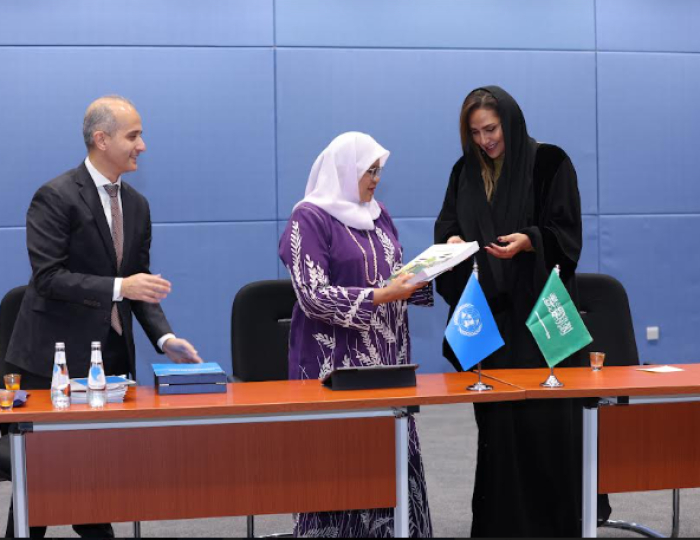
Her Royal Highness (HRH), Princess Lamia Bint Majed Al Saud, the Secretary General of Alwaleed Philanthropies, was reappointed as the UN-Habitat Goodwill Ambassador for the Arab region for a second term during a meeting held at the UN-Habitat premises in Riyadh.
As the first ever UN-Habitat Goodwill Ambassador for the Arab region appointed in 2020, HRH shed the light on key urban issues through her engagement with UN-Habitat activities and events, including the tenth session of the World Urban Forum 2020 and World Habitat Day Global Observance 2020.
HRH further advocated for topics, including Cities free from Violence against Women and Girls and COIVID-19 response in urban areas, as well as supported resource mobilization for a number of projects, targeting housing for the most vulnerable groups, COVID-19 response and climate action, spanning Iraq, Palestine, Sudan, Yemen, and Tunisia.
“I am greatly honoured to have been appointed for the second time as the UN-Habitat Regional Goodwill Ambassador for the Arab world. Our partnership with UN-Habitat will support our efforts to address issues around urbanization and its implications on societies, economies and environments. We promise to continue building bridges for a more compassionate, tolerant and accepting future along with our key partners.”
HRH signed her appointment letter in the presence of Maimunah Mohd Sharif, UN-Habitat Executive Director, Erfan Ali, UN-Habitat Regional Representative for the Arab States and Ayman El-Hefnawi, UN-Habitat Head of Office in Saudi Arabia.
“In the past three years during UN-Habitat’s cooperation with HRH Princess Lamia bint Majid Al Saud as UN-Habitat’s regional Goodwill Ambassador, HRH has shown the utmost commitment to the advocacy for the UN-Habitat mandate to realise more sustainable, resilient and inclusive cities,” Sharif commented.
UN-Habitat is keen on continuing the cooperation with HRH for the years 2022, 2023 and beyond in all relevant areas, including climate action, urban crisis response, housing and advocating the realization of better cities for all.
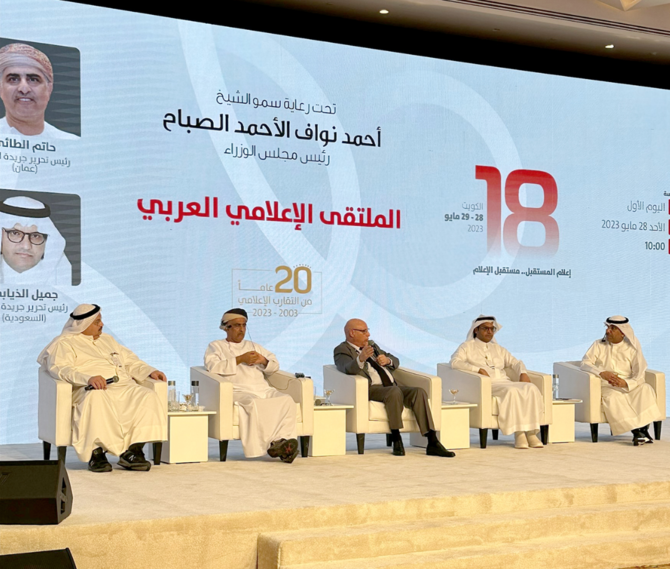
The 18th Arab Media Forum kicked off on Sunday in Kuwait under the patronage of Prime Minister Sheikh Ahmad Nawaf Al-Sabah.
The event focused on a range of issues pertaining to the future of media in the region, Kuwait News Agency reported.
During one of the sessions, Jameel Al-Thiyabi, editor-in-chief of Saudi newspaper Okaz stated that the rise of Artificial Intelligence would have an impact on media outlets all over the world, emphasizing the importance of keeping up with AI developments in media rather than falling behind.
The Arab League’s assistant secretary-general for media Ahmed Khattabi stressed the importance of addressing challenges within digital media, adding that improving media capacities should not overshadow topics of significant importance to the Arab world, particularly the Palestinian cause.
Meanwhile, Waleed Al-Jasim, editor-in-chief of Kuwaiti newspaper Al-Rai, said Arab media faced challenges surrounding media freedoms, adding that social media platforms allowed for more freedom of expression compared with mainstream media.
Hatim Al Taie, editor-in-chief of Omani newspaper Al-Roya, warned younger people working in the industry needed to prepare for the oncoming digital media transformation. He called on the Arab League to impose fees on international media companies, with the money used in funding media entities in the Arab region.
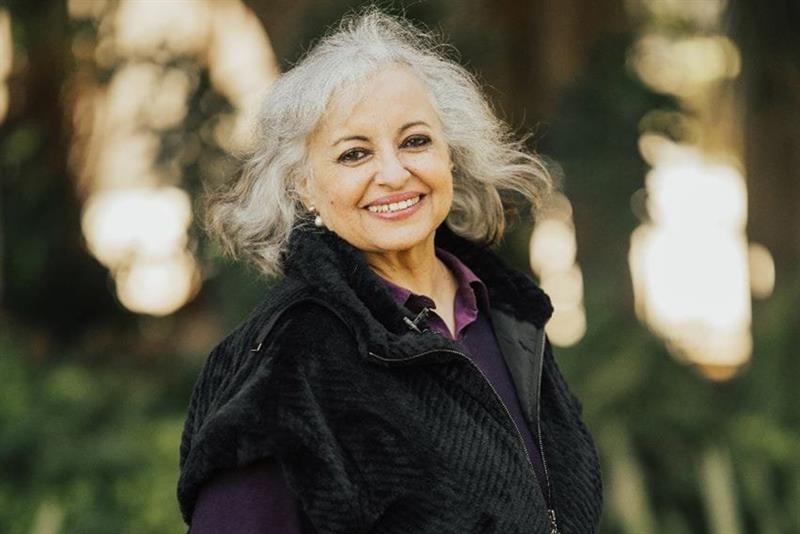
Well-known Egyptian soprano Neveen Allouba will be awarded France’s Ordre des Arts et des Lettres in the grade of Chevalier (Knight) by France’s ambassador to Cairo next week.
Allouba’s award for exceptional achievements in the Egyptian music scene follows decades of work in the many aspects of the country’s cultural scene.
Born in 1955, she is among the best known personalities of the Egyptian music scene, with substantial influence outside the country.
Her career includes working with the Cairo Opera Company, where she has performed in countless operas. She has taught numerous young singers and both founded and directed many successful creative endeavours of the Fabrica musical theatre company.
As a young girl, Allouba had dreams of becoming an actress, but was not supported by her family. Instead, she turned to playing piano and singing, graduating from the Cairo Conservatory in 1978.
She was granted scholarships from the Deutscher Akademischer Austauschdienst (West German Cultural Exchange) and the Friedrich-Naumann Foundation to study opera performance and vocal pedagogy at the Hannover Hochschule fur Music and Theatre where she deepened her singing techniques and eventually obtained a doctorate in 1988.
During her decade-long stay in Germany, Allouba performed as soloist at the Detmold Opera. She also performed in other European operas and theatres and across the Arab world at that time. In 1985, she won the first prize in the female voice category of the competition for young opera singers in Berlin.
Upon her return to Egypt, the soprano became a soloist at the Cairo Opera Company, becoming the first female singer to perform in the newly opened Cairo Opera House. As her singing career progressed, Allouba coupled her performances with her teaching career at the Cairo Conservatory, Cairo Opera Development Centre, University of Alexandria and the American University in Cairo where she is an adjunct professor of voice. She also participated as a jury member in a number of singing competitions.
Some of her students went on to continue their education outside Egypt and thrived as internationally renowned singers.
These include Farrah El-Dibani, a mezzo soprano who performs at the Paris Opera; the Germany-based Rita Sebeih, the lead role of Jasmine in the Disney German production of Aladdin; Nesma Mahgoub, winner of the eighth season of the Star Academy Arab World; Fatma Said, a soprano who was the first Egyptian to join the Academy of Milan’s Teatro alla Scala before launching a big international career.
Fabrica chapter
In mid-2010, Allouba founded the Fabrica musical theatre company, through which she trains, develops and promotes new voices.
Fabrica’s pilot production of Mozart’s opera The Magic Flute in Egyptian Arabic was staged in collaboration with the Bibliotheca Alexandrina in 2011.
In 2013, the company premiered Les Miserables in Egyptian Arabic and even toured in the USA. It experienced an additional boost in popularity when it was promoted by the internationally famous Egyptian comedian Bassem Youssef.
This was only the beginning of many successes of Fabrica and its members. Its successes include performances of Brecht’s Threepenny Opera and adaptations of local shows including El-Leila El-Kebira by Salah Jaheen and Sayed Mekawy, in addition to rock, jazz and Disney concerts.
Fabrica also performed during the inaugural El Gouna Film Festival’s opening ceremony (2017), the SNL Bel Araby’s 50th episode celebration, the Egyptian Media and Production Company’s 20 year anniversary and the Intra-African Trade Fair (2018), among other events. Fabrica was brought to light again, as the company won the award for Best Music Video at the ninth annual MoziMotion festival, held in Hilversum, the Netherlands (October 2019) for Mercury Rising: A Queen Tribute, released in January 2019 (a few months after Bohemian Rhapsody was released in theatres).
Overdue recognition
Allouba’s portfolio and well-established position in the field combines many operatic appearances as well as an unconditional belief in the young generation and a natural – almost motherly – dedication to support and promote young talents, while offering to the Egyptian audiences valuable performances.
It’s worth mentioning that most recently, Allouba was appointed director of the new Arkan Theatre in Sheikh Zayed.
The award comes after Allouba’s decades of perseverance and work that often lacked sufficient limelight. It is an important recognition, if overdue, for an artist whose work has created a strong impact on many singers of more than one Egyptian generation.
The France’s Order of Arts and Letters will be awarded to Allouba during a ceremony held at the French Embassy in Cairo, in the first week of June.
Over the past years, a number of Egyptian figures have also been awarded the Knight of the Order of Arts and Letters in the grade of Chevalier.
They include Egyptian novelist and Nobel laureate Naguib Mahfouz, novelist and journalist Gamal El-Ghitani, visual artist and women’s activist Inji Aflatoun, novelist Alaa al-Aswany, theatre director Ahmed El Ettar , composer and conductor Hisham Gabr , producer and scriptwriter Mohamed Hefzy, mezzo soprano Farrah El-Dibany , artist Karima Mansour , among others.
Also the Tunisian-Egyptian actress Hend Sabry is among the recipients of the award in grade of the Commander.
Founded by Egyptian filmmaker Hayat Aljowaily, ‘Kalam Aflam’ is spotlighting emerging Arab artists in Paris.
As Egyptian and Arab artists continue to explore new mediums and voices around the world, experimenting with themes rooted in their respective local identities, one Egyptian filmmaker in France found herself yearning for a community, and so she became a host for one. With a belief in the power of the collective, Hayat Aljowaily founded ‘Kalam Aflam’, a space for emerging Arab artists in Paris and beyond.
‘Kalam Aflam’ launched its first event this May at Point Ephemere, Paris, under the theme ‘Coming of Age’, which hosted a series of art installations, short films and musical performances centring around the same theme. “This is a project that I was dying to make happen for three years, and so the theme ‘Coming of Age’ felt very fitting for our first event,” Hayat Aljowaily tells CairoScene. “It – or we – are something that is ‘becoming’.”
Like many Arabs in the diaspora, Aljowaily can sometimes feel like her experience isn’t Western enough or Arab enough. Within the folds of ‘Kalam Aflam’, however, she looks to surround herself with artists who share in her experiences.
“As an Arab artist living abroad, one always feels like they’re in between. But when you’re part of a community of people who look like you or have similar experiences, it changes everything,” Aljowaily says. “It was so refreshing to be in a space where I’m not the only Arab woman, my friends had to look around within a sea of familiar faces to spot me.”
Through an upcoming series of public arts and cultural events, ‘Kalam Aflam’ offers up a space for self-expression and a blossoming creative narrative for those on the lookout for a home. Aljowaily and her partners, Palestinian communications specialist Abood Al Bakri and Lebanese art director Katja Kanaan, continue to open doors for emerging voices, carving out a space for themselves while spotlighting stories waiting to be told.
Egyptian acclaimed composer Omar Khairat has been selected as the Cultural Personality of the Year by the organizers of the UAE’s 17th edition of the Sheikh Zayed Book Award (SZBA).
Omar Khairat will be awarded “in honour of an illustrious, decades-long career of timeless musical creations that have contributed to shaping the collective cultural consciousness of the Arab region,” as stated by the SZBA’s official website.
“The SZBA’s Board of Trustees endorsed the Scientific Committee’s decision to choose Khairat as the Cultural Personality of the Year in recognition of his remarkable talent and artistic turnout, which has been tremendously popular in the Arab world and has been featured in musical introductions to films and many dramas.”
The SZBA is organized by the Abu Dhabi Arabic Language Centre (ALC); part of the Department of Culture and Tourism – Abu Dhabi (DCT Abu Dhabi).
Winners of this year’s SZBA also include Iraqi poet Ali Jaafar Alallaq; French author Mathieu Tillier; Algerian author Said Khatibi; Tunisian translator Chokri Al Saadi; Tunisian critic Jalila Al Tritarm, and Egyptian publishing house Dar ElAin.
Excellence and Innovation
Each year, the Cultural Personality of the Year award is given to “a prominent figure who has contributed to the advancement of Arabic culture and promoted peaceful coexistence.”
“This year, we are proud to select Omar Khairat, one of the most renowned and celebrated musicians in the Arab world,” stated Undersecretary of DCT Abu Dhabi Saood Abdulaziz Al Hosani.
“His constant striving for excellence and innovation has seen the artist make an incalculable impact on the music industry and the wider cultural landscape, as well as foster important cross-cultural dialogue. His passion reflects Abu Dhabi’s vision to nurture creativity and harness the power of the arts to build bridges and transcend borders,” he added.
Considerable Career
Born in 1947, the multi-awarded Omar Khairat is one of the top musicians of the Arab world with hundreds of memorized compositions in his repertoire.
Throughout his long successful career, he has written scores for numerous films and television series, including The Sixth Day (1984); The Terrorist (1993); Mafia (2002); Girl’s Love (2003); The Embassy in the Building (2005), and Deer’s Blood (2006), to name but a few.
His concerts are usually fully-booked weeks ahead of time with his wide fan base singing along and humming with compositions like Heya Di El-Hayah; Fi Hawid El Leil; Arabian Rhapsody; Fiha Haga Helwa; Eadam Mayet; El-Khawaga Abdel-Kader; Giran El-Hana; Saber; Arfa; Qadeyet Am Ahmed; Khali Balak Men Aklak, and other classic hits of time-honoured TV and films themes.
Among his upcoming performances is the 3rd of June’s large concert at the Sound and Light Theatre at the Pyramids and Sphinx site in Giza, where half of the tickets have already been sold-out.
Saudi Arabia’s King Abdulaziz Centre for World Culture (Ithra) on Wednesday announced the winner of the fifth Ithra Art Prize as Iraqi Finnish artist Adel Abidin.
Abidin’s proposal was a wall installation, called “ON,” that explores connection between history, memory and identity.
The artist won $100,000 for the piece.
“As I delve into the intangible aspects of history, I am confronted with the challenge of scarce reliable archival sources,” the artist wrote on Instagram. “This challenge is especially evident in the context of Arab history, where much remains shrouded in ambiguity, allowing for a broad range of interpretations and augmentations.”
“In my meticulous study of the Zanj Rebellion of 869 AD in southern Iraq, particularly in the city of Basra, I find a captivating example that exemplifies these themes,” he added.
Syrian American Mayor Khairullah says Biden should end ‘racism’ against Muslims and Arabs
‘I don’t think it is fair to make a documentary to show that Cleopatra was Black. This is changing history,’ says Egyptologist Zahi Hawass
The Ray Hanania Radio Show, a weekly program sponsored by Arab News, kicked off its third season on Thursday with an explosive episode last night. It featured as its first guest Syrian American Mayor Mohamed T. Khairullah, who was controversially banned from the White House Eid celebration.
During his appearance on the show, Khairullah slammed President Joe Biden, saying it is his responsibility to end the “racism” and “discrimination” against Muslims and Arabs that is a part of the system.
The Ray Hanania Radio Show, which first aired in October 2020 ahead of the US elections at the time, hosts a wide array of guests tackling crucial topics in the Arab world.
One such topic tackled this season is the recent Netflix docuseries controversy surrounding the casting of Adele James, a Black actress, as Cleopatra, whom historians agree was of Greek origin.
The furor came from Egyptians and other Arabs accusing the producers of the film of appropriating their culture. The Ray Hanania Radio Show thus hosted world-renowned Egyptologist Zahi Hawass who set the facts straight.
“Cleopatra was a Macedonian…I really think that the reason this film is shown now (is) because some people want to say that the origins of Ancient Egypt were Black,” he said on the show, adding, “I don’t think it is fair to make a documentary to show that Cleopatra was Black. This is changing history.”
Continuing with the topic of Arab representation in Hollywood was Arab News’ very own Editor-in-Chief Faisal J. Abbas.
On the show, Abbas cited Arab American writer and academic Jack Shaheen and his book “Reel Bad Arabs,” which says that, out of 1,000 films, Arabs were only presented or portrayed positively in 12 percent of them.
“As Arabs, we should not wait for Hollywood, and we should not wait for people with Orientalist agendas to tell our story. We should be the masters of our own destiny, we should be the masters of our own storytelling,” Abbas said.
“I’ll tell you one more thing before we conclude. Actions speak louder than words.”
The Ray Hanania Radio Show is broadcast live on WNZK AM 690 Radio in Greater Detroit and on WDMV AM 700 in Washington D.C. every Wednesday at 5pm EST / 12am KSA, also available on all Arab News podcast channels.
May Elghety, the talented Egyptian actress, has announced her upcoming role in Disney’s animated series “Kizazi Moto: Generation Fire”. This sci-fi series, inspired by Africa’s diverse cultures and histories, promises to bring viewers thrilling stories of advanced technology, aliens, spirits, and monsters from a uniquely African perspective.
Elghety, who has won critical acclaim for her performances in several TV series and films, took to Instagram to express her excitement and honor at being part of the project. The 24-year-old actress is currently filming for the British movie “Due Dating,” which is directed by Daniel Pacquette and written by Jade Asha.
Born to renowned TV presenters and writers Mohamed Elghety and Mona Barouma, May Elghety began her acting career as a child artist. Her outstanding performance in the controversial TV series “El-Kaserat” earned her the Best Upcoming Actress award at the Arab Drama Festival in 2013.
Since then, Elghety has starred in several successful productions, including “Clash” in 2016, “Taye’a” in 2018, and “Every Week Has A Friday” in 2020. Her most recent film, “MAMA,” premiered at the Cairo International Film Festival in 2022.
“Kizazi Moto: Generation Fire” is a 10-part anthology that promises to bring together rising animation talents from six African nations. The series features an impressive production team, with Oscar-winning director Peter Ramsey serving as executive producer and Cape Town-based animation house Triggerfish leading the studio. Egyptian director Ahmed Teilab has also joined the writing and directing team for the series.
The show is set to premiere on Disney+ this year and is sure to delight audiences with its captivating storytelling and stunning visuals. “Kizazi Moto: Generation Fire” is yet another feather in the cap of May Elghety, who continues to prove herself as one of the most talented and versatile actresses of her generation.
The director received a master’s degree in fine arts specializing in film production at the prestigious American Film Institute in Los Angeles
Hana Kazim’s short film ‘Makr’ screened at several genre festivals including Fantastic Fest in Texas and FrightFest in London
Director Hana Kazim founded Wiswas Productions, dubbed the first Arab horror-focused production company, in a bid to celebrate the power of the thrilling genre.
The Emirati auteur recently directed a Saudi Arabia-focused episode of STARZPLAY’s “Kaboos,” which is set in different eras and across countries in the MENA region, taking viewers on a journey through frightening urban legends from Saudi Arabia, Kuwait, Egypt and the UAE.
“I found that there’s a lot of interest in horror and a lot of stories to tell, and a lot of things you can say through horror,” Kazim told Arab News.
“I think some of the most courageous stories right now are being told through the mask of horror, mainly because horror can seem like to the mass audience as a spectacle, but in reality, horror has always been a champion of telling some deep truth about society, a huge commentary on society, and it’s almost like the most acceptable form of commentary in almost every region,” she added.
After receiving a master’s degree in fine arts specializing in film production at the prestigious American Film Institute in Los Angeles, Kazim returned to the region to hone her craft.
Kazim’s decision to launch her company came after the release of her short film “Makr,” which she wrote and directed in 2018. The movie, which gained more than half a million views online, screened at several genre festivals including Fantastic Fest in Texas and FrightFest in London. It was translated to Farsi, Korean and Japanese.
The director, who has worked as a film executive in the UAE since 2015 and has been involved in the production of several Arab films, including “Rashid & Rajab” (2019) and 2021 box office hit “Al-Kameen,” said that she believes horror, “for the most part, hasn’t been done well” in the region, because finding a perfect storyline in is a challenge in the genre.
“I think our audiences are still a little too critical of everything they see. They take everything a little bit more literally. So, having to break into horror is tough because you have to be somewhat near being realistic while at the same time balancing the scales of not being too aggressive or too judgmental,” Kazim said.
The director believes that the main reason horror as a genre has lagged in the region is because filmmakers are going for scares rather than meaning.
“I think Arab audiences are always looking for meaning in stories, be it a comedy, be it a drama — they’re looking for meaning more than just entertainment. And unfortunately, we, filmmakers, come from entertainment. So, we feel like making entertainment and we forget the idea of having meaning behind stories,” she added.
“I think the Middle East has the potential to be well known for its horror because we have so many untold stories, be it from folklore to real stories — there’s a huge timeline of horror films that we can make that could span around 20, 30 and 40 years.”
source/content: arabnews.com (headline edited)
____________
The Emirati auteur recently directed a Saudi Arabia-focused episode of STARZPLAY’s “Kaboos.” (Supplied)
Three recent titles on the life and history of the Copts reflect on elements of a complex story.
Mozakerat Aaela Masseihiya bein Ras Ghareb wal Qahera (Memoirs of a Christian family between Ras Ghareb and Cairo), by Elia Mahfouz Bashir, Cairo: Al-Arabi Publishing. pp. 196.
“At that time there was a [spontaneous] acceptance of the other; actually, the concept of this other was not really there – not as a fully defined concept any way”.
This is one of very few lines that evokes the “Christian” in the title of the pleasant-to-read 196-page text.
Elia Mahfouz Bashir, now a 65-year-old pathologist, recalls memories of his easy-going and uninhibited childhood in the Red Sea city of Ras Ghareb where his father worked for an oil company.
This is the interesting thing about the choice of the title. It offers a contrast to a sequel of articles where Bashir offers accounts from his time in this city in the late 1950s and early 1960s prior to the retirement of his father that forced the family away from its Red Sea haven to Cairo. Those are accounts of the city, the sea, playmates, school, family gatherings, comparisons between the Red Sea and the Mediterranean and so on.
So, for a while, the reader is left to wonder about the significance of the “Christian” reference. And this is exactly the point. In the childhood of Elia Mahfouz Bashir, his faith and that of his family was not an issue. It only comes up across when he refers to a trip to his maternal family in Upper Egypt where he was escorted by his mother to one of the moulids of the Coptic saints or when he talks about the prayers for healing that a priest performed for he and a playmate of his, who happened to be a Muslim.
As Bashir put it in one of the articles, both the mosque and the church of Ras Ghareb were part of a wider communal ownership. He is attributing this state of mind to the norms that prevailed during the rule of Gamal Abdel-Nasser when the focus was on Egyptian identity and not the affiliation of faith as it later became under the rule of Anwar Sadat.
Bashir had originally started sharing his reflections on his childhood in Ras Ghareb on Facebook before he decided to assemble the pieces into a book that stands as a testimony for his experience.
Abkareit Al-Massih: AlMaaraka AlMaghoula bein AlAqbat wa Al-Akkad – Watheiq Tarikheyah (The Genius of Jesus: The Unknown Battle Between Copts and Al-Akkad – archival documents), by Robert Al-Fares: Rawafd Publishing, 2023. pp. 172.
In line with his head-on and mince-no-words approach, Robert Al-Fares, journalist and author of several titles on Coptic social history, is putting out a book that addresses the strongly established but often averted conflict between the Christian and Muslim creeds over the nature of Jesus Christ. For Christians, Jesus is as divine as human, and as such there is no point in trying to argue his genius as Al-Akkad did in his book that came out in 1953, under the title of “The Genius of Jesus,” to the dismay of the Copts of Egypt and particularly that of the Coptic Church of Egypt. For Muslims, however, Jesus is a prophet just like any other prophet that God had sent prior to Muhammad.
In this 172-page book, El-Farres digs out the archival details of a confrontation that took place when the book was put out by Akhbar Al-Youm Publishing, at the end of a sequel that Al-Akkad dedicated to argue the genius of Prophet Muhammad and the four early rulers of the Muslim state that followed him.
Those include letters and remarks from Coptic commentators and clergy, including Father Sergius, the prominent preacher of 1919 Revolution, who was put under house arrest by the Free Officers regime “for worry over his public influence.”
He also included the remarks and views of Muslim scholars who defended or disagreed with Al-Akkad.
The book also includes the replies that Al-Akkad offered and the remarks he added to the second edition of the book that came out in 1958 under the new title of “The Life of Jesus.”
While zooming in on this particular account of Al-Akkad “The genius of Jesus”, Al-Fares is being open in his criticism of the attempt of some Coptic and Muslim figures to overlook this difference instead of simply accepting ‘the other’ – given that as much as for Muslims, Christ is just a prophet, for Christians, Muhammad is not a prophet.
“We just need to acknowledge that we have different creeds; this is the core of coexistence,” he wrote.
Nossous wa Kerat hawla tarikh Al-Qapt min Al-Qarn Al-Aasher Hattah Al-Qarn Al-Tassaeiaashr (Texts and Narratives on the History of Copts – From the 10thCentury to the 19thCentury), by Magdi Girgus: Al-Maraya Publishing, 2023. pp. 273.
This book is part of the ambitious and really interesting work of historian Magdi Girgis who has been digging out accounts on the history of Copts from the archives to assemble a comprehensive and solid narrative on the lives of Copts in Egypt under the Muslim rule. As Girgus put it in the introduction to his most recent 273-page volume, it is “a free stroll across the history of Copts [during 10 consecutive centuries] through the text of some archival documents.”
The selection of documents, Girgus writes, is designed to address some significant points of Coptic history, and that of Egypt. He notes that his purpose is not just to share and analyse the content of these documents but to put the accounts they address within the wider context of social and political contexts.
Throughout his 10 chapters, with documents and with narratives on the context of the documents, Girgus goes through some of the most interesting accounts of the history of Copts.
These accounts include history of the Coptic Church and the Arabisation of the language of the church.
They also include a history of the sources used to chronicle the Coptic history and the archiving of documents on the Coptic history.
He also examines the relation between Church and State and the Islamic judiciary system as well as relations between Coptic clergy and Coptic notables and the state.
Moreover, he also examines the role of Coptic clergy in the rural areas.
A most controversial part of this book might relate to the argument Girgus offers on the issue of Arabisation.
Traditionally, many Coptic intellectuals have often argued that this was the outcome of the pressure of the Arab rulers of Egypt.
However, according to Girgus, the ‘choice’ of the Coptic Church to adopt the Arabic language was not necessarily about the pressure from Arab rulers but rather about the ‘choice’ of the Church of Egypt to embrace a national line away from the influences of the Church of Rome.
It was also, he argued, about the wish of the clergy to go along with the notables who had been trying to go along with culture of the new rulers in so many ways, including the most peculiar practice of polygamy by some Coptic notables despite the fact that polygamy is strictly forbidden in Christianity.
Actually, the evolution of relations between Church and State is perhaps one of the best explained issues in this book.