Arabs & Arabian Records Aggregator. Chronicler. Milestones of the 25 Countries of the Arabic Speaking World (official / co-official). AGCC. MENA. Global. Ist's to Top 10's. Records. Read & Enjoy./ www.arabianrecords.org
UNESCO added Tunisia’s spicy and most famous national condiment Harissa to its list of intangible cultural heritage, saying it was part of the North African country’s identity.
UNESCO placed the Tunisian condiment Harissa to its list of intangible cultural heritage, citing its significance to the identity of the North African nation.
The cultural agency of the United Nations is meeting in Morocco to consider proposals for its list of Intangible Cultural Heritage, which strives to safeguard cultural traditions, practices, and knowledge.
It tweeted “Just inscribed on the #IntangibleHeritage List: Harissa, knowledge, skills, and culinary and social practices.”
Tunisia’s Spicy Harissa
Harissa is a paste made from sun-dried hot peppers, freshly prepared spices, and olive oil, which preserves and slightly tones down its intensity. It is served in nearly every restaurant in Tunisia and is also exported internationally.
The condiment is wonderfully spicy, smoky, and packed with rich, deep flavors. It’s also extremely versatile, as it pairs well with sandwiches, different dishes, and even plain olive oil.
Harissa is “an integral part of domestic provisioning and the everyday culinary and dietary traditions of Tunisian culture,” according to Tunisia’s application for the status. It is typically cooked by families and communities.
“Harissa is used as a condiment, an ingredient, and even as a dish in its own right, and is well-known throughout Tunisia, where it is consumed and manufactured, particularly in the regions where chilli peppers are farmed,” the source explained.
It is regarded as a distinguishing part of national culinary heritage and a role in social cohesiveness.
The 2003 Convention for the Safeguarding of the Intangible Cultural Legacy seeks to protect and increase awareness of the “intangible cultural heritage of the communities, groups, and individuals involved.”
UNESCO emphasizes that the list recognizes traditions, practices, and knowledge as “human treasures” that must be safeguarded.
Wednesday, the organization also recognized French baguettes, bringing the total number of goods on the list to over 530.
Award-winning Egyptian filmmaker Ayten Amin will be part of the GWFF Best First Feature Award’s three-person jury.
Award-winning Egyptian filmmaker Ayten Amin will be a part of the jury line-up during the Berlin Film Festival. Amin is the only Arab and Egyptian artist participating in the acclaimed festival’s jury, and will be one of three people on the panel for the GWFF Best First Feature Award, which was founded in 2006 to support emerging filmmakers.
Ayten Amin is best known for her feminist cinematic works, and for tackling controversial social issues through her storytelling. Her Egyptian series ‘Sabea Gar’ (2017), which she wrote and directed alongside Heba Youssry and Nadine Khan, was praised for its authentic representation of Egyptian family dynamics and its diverse, multidimensional female characters.
More recently, her feature film ‘Souad’ (2020), a coming-of-age story that explored womanhood, social media performance and suicide, won multiple awards and was part of the Cannes Film Festival’s official selection, as well as the Tribeca Film Festival’s International Competition. ‘Souad’ also won the best feature film award at IndieLisboa International Independent Film Festival, and was selected for Berlin Film Festival’s Panorama section.
Noor Riyadh owes much of its success to the insight and care of Crown Prince Mohammed bin Salman, which enabled the celebration to become the world’s largest in the field of light arts.
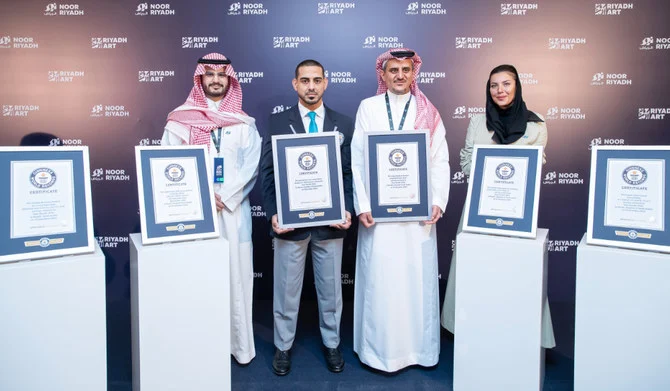
Noor Riyadh wrapped up its cultural and artistic events on Saturday, after setting six Guinness World Records, including for largest celebration of light arts.
The 17-day festival achieved five other records for the artwork titled “Pulse of Light” — longest distance covered for a light laser display, largest light laser display, highest and largest display on a building interface, and largest number of drones participating in a creative art show.
The installations were part of the annual festival of light and art featuring more than 190 works by 130 Saudi and international artists from more than 40 countries.
Noor Riyadh is the first such festival implemented under the auspices of Riyadh Art, the first public art initiative in the Kingdom. It aims to transform the capital into a “gallery without walls,” to beautify it and enhance the creative spirit among the population.
The festival, which opened on Nov. 3, has contributed to enriching the Kingdom’s cultural and artistic landscape by receiving more than 2.8 million visitors.
It presented 500 different events in 40 locations throughout the Saudi capital, including King Abdullah Park in the Malaz neighborhood, Alsafarat neighborhood, Diriyah Historical Town and King Abdullah Financial District.
Noor Riyadh owes much of its success to the insight and care of Crown Prince Mohammed bin Salman, which enabled the celebration to become the world’s largest in the field of light arts.
“This success would not have been possible without God’s grace,” said Prince Badr bin Abdullah bin Farhan, minister of culture, member of the board of directors of the Royal Commission for Riyadh City, and chairman of the steering committee of Riyadh Art.
“The achievements of the Noor Riyadh are a clear demonstration of the Kingdom’s commitment and continued efforts to support national and international talents and to embrace the greatest celebrations that contribute to placing the Kingdom at the forefront of the global art landscape,” Prince Badr added.
He emphasized the importance of continuing efforts to strengthen partnerships with all relevant parties in the future.
Noor Riyadh’s celebrations will be accompanied by an exhibition titled “From Rays to Passion,” which will be held in the Jax neighborhood and will run until Feb. 4, offering visitors an artistic journey of creative light transformation in the past and future, through the continuation of workshops and dialogues presented by elite artists and experts.
source/content: arabnews.com (headline edited)
__________
‘Noor Riyadh 2022,’ which lasted 17 days and ended on Saturday (November 19, 2022), achieved six Guinness World Records titles. More than 130 male and female artists from 40 countries took part in “Noor Al Riyadh,’ presenting more than 190 works of art. (Supplied)
The 12th edition of the Luxor African Film Festival (LAFF) kicked off on Saturday in the great southern Egyptian city of Luxor with the attendance of dozens of celebrities, filmmakers and critics.
Running until 10 February, the LAFF will host screenings of over 50 films from 31 countries participating in its various competitions and parallel programs, as well as a number of talks and seminars.
During the opening, the festival’s organisers honoured Egyptian actors Mohamed Ramadan and Hala Sedky, Egyptian composer Hesham Nazih, Senegalese director Mansour Sora Wade, and Mozambican producer Pedro Pimenta.
A number of late artists were also celebrated, including Egyptian actor Salah Mansour, Algerian actress Chafia Boudraa, and Tunisian actor Hichem Rostom.
LAFF will pay tribute to Senegalese cinema and its filmmakers, as Senegal is the country guest of honour for this edition.
Under the helm of the LAFF founder, scriptwriter Sayed Fouad, the festival is hosting 10 cinema workshops in different disciplines.
Many prominent African filmmakers and actors are members of the various juries.
With 12 films competing, the long narrative and documentary film jury committee comprises Senegalese director Mansour Sora Wade, Tunisian director Sonia Chamkhi, Moroccan actress Amal Ayouch, Egyptian screenwriter Abdel-Rahim Kamal, and Egyptian producer Mohamed Hefzy.
The slogan of LAFF’s 12th edition is ‘Cinema is the Quest of Immortality’. This slogan is reflected in the festival’s poster design by Mahmoud Ismail Abou Al-Enin, which depicts boats sailing towards the sun and to the Nile’s West bank of Luxor, where funerary temples and tombs are filled with inscriptions representing ancient beliefs in eternal life after death.
With Filmmaker Azza Elhosseiny as LAFF’s co-founder and executive director, star Mahmoud Hemeida continues as the honorary president in this edition.
Since its founding, the festival has aimed “to spread awareness about the importance of cinema in Africa and the world.”
In its eleventh edition, the LAFF screened 45 films from 35 countries in the competitive segments.
The LAFF is organised by the Independent Shabab Foundation with the support of the Egyptian ministries of culture, tourism and antiquities. LAFF also takes place in cooperation with Luxor governorate, the Film Syndicate, and numerous sponsors.
“Tears in my eyes as I listen to the last broadcast by BBC Arabic, closing down after 85 years. It meant so much to so many people here over the decades,” tweeted British journalist Jim Muir, Middle East correspondent for the BBC News, “Now the airwaves are dead. End of an era.”
BBC’s Arabic radio service officially ended its decades-long broadcast on Friday, leaving behind a legacy that many believe to be everlasting.
The station launched in early 1938 as the BBC Empire Service’s first foreign language radio broadcast.
“BBC Arabic will always be a beautiful picture from the good old days; its professionalism a great education and its stars exceptional mentors and examples to follow,” journalist Eyad Abu Chakra told Arab News.
He added that the radio station was his father’s favorite. “Despite his reservations on some of its political coverage and views, he always admired its professionalism, informative program, and high caliber presenters,” he added.
“I grew up admiring several names, whom I was later honored to meet and befriend after settling in London in the fall of 1978,” Abu Chakra continued, “the Bush House canteen was one of my favorite meeting places in the late 1970s. It took me short walks from my Asharq Al-Awsat office in Gough Square and, later, High Holborn, to Bush House, where I enjoyed the hospitality of the BBC giants of the day.”
“To name just a few of my BBC dearest friends, departed and alive, there were the greats Musa Beshuti, Akram Saleh, Hassan Al Karmi, Nadim Nasser & Madiha AlMadfa’i, Majed Serhan, Huda Al-Rasheed and many others.”
Many journalists and public figures took to Twitter to express grief and share fond memories of BBC’s Arabic radio station. Some believed the event marked a decline in the United Kingdom’s soft power while others recalled their days at the studios.
“It’s far beyond sad and painful to see BBC Arabic radio shutting down today,” wrote Egypt-based BBC Arabic correspondent Sally Nabil on Twitter.
“It’s incredibly difficult to describe how we feel!” She added.
Amal Mudallali, former permanent representative of Lebanon to the UN, said: “As someone who worked for the BBC Arabic, I do not understand the decision.
“It is the only thing people know and remember about Britania, as we call it, in the region for generations.”
The final words and signature statement of BBC Arabic radio presenter Mahmoud Almossallami, “Huna London” (This is London), seems to have brought tears to many eyes.
Almousallami’s daughter, Osha, wrote: “I grew up listening to my dad presenting on BBC Arabic, and now here he is, presenting the final hour of BBC Arabic before it’s closed and taken off the air.
“It really is the end of an era.”
The head of David Nott Foundation, Elly Nott, wrote: “Huna London no more,” hailing BBC Arabic radio for helping her to learn its language.
BBC News Lead Technical Operator Jack Mooney shared a footage showing the last moments as the Arabic news network went off the air, while sound producer Tome Roles wrote: “I’ll always treasure the magic of sitting in a tiny studio at 3 am in London, picturing the sun rising thousands of miles away, and wondering about the lives of those tuning in.”
“It’s a painful moment,” wrote photographer Ali Al-Baroodi.
“BBC Arabic was one of few windows to the world in the time of the economic blockade (in the) 1990s (and) ISIS occupation,” he added, “Iraq was under (a) huge blackout. My father used to stock batteries for his radio in prep for the tough times.”
BBC correspondent Emir Nader shared the last two minutes of the Arabic radio’s final broadcast and wrote: “Today is a tragic day for Arab media… One of many huge losses following cuts in BBC World Service’s budget.”
source/content: arabnews.com (headline edited)
___________
The online Arabic service will remain. (BBC/Sourced)
Egyptian actress May Elghety makes her international debut in the British romcom‘ Due Dating’ alongside Rowland Stirling.
Egyptian actress May Elghety is making her international debut in the upcoming British film ‘Due Dating’. The romantic comedy follows the hurdle-ridden relationship between a blogger, Cole (Rowland Stirling), and a lawyer, Persia (May Elghety).
The rising actress has starred in multiple films, including ‘Clash’ (2016), ‘Grand Hotel’ (2016), ‘Taye’a’ (2018), and ‘MAMA’ (2022) which premiered at the Cairo International Film Festival. She also made her mark on a number of series including ‘High School Girls’ (2020) and ‘Every Week Has A Friday’ (2020).
Her upcoming cinematic endeavour ‘Due Dating’ is currently being filmed in the UK. The movie is written by Jade Asha, directed by Daniel Pacquette and produced by London Independent Picture.
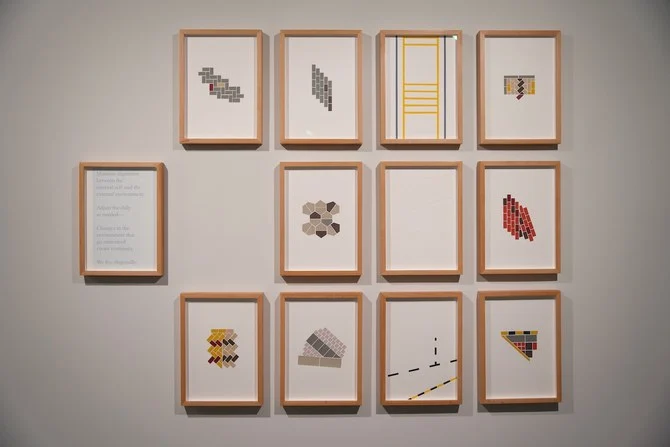
Artists from the Middle East are showcasing their work at an exhibition titled “Perceptible Rhythms/Alternative Temporalitie” in Washington, running until April 28.
Sarah Abu Abdallah
The Saudi artist’s “Fortitude” explores issues of obscurity and value, probing the social and cultural conditions of contemporary Saudi Arabia.
Artists from the Middle East are showcasing their work at an exhibition titled “Perceptible Rhythms/Alternative Temporalitie” in Washington, running until April 28.
The leading Iranian-born artist’s “Study for a Monument” presents bronze-cast reproductions of flora native to modern Iraq whose environment has been decimated by decades of political and ecological turmoil.
Jeddah’s inaugural Islamic Arts Biennale celebrates the legacy of Islamic art in a place close to Makkah, the fountainhead and cradle of Islam.
Saudi Arabia witnessed a historic moment with the opening of the inaugural Islamic Arts Biennale, which presented historic and contemporary works of Islamic art from around the world.
On the evening of Jan. 22, the Western Hajj Terminal at King Abdulaziz International Airport in Jeddah was filled with crowds of people waiting in eager anticipation. This was not the usual throng of pilgrims that use the terminal each year to travel to Makkah for the annual Hajj pilgrimage, but one awaiting the beginning of another voyage — a metaphorical one into the realm of Islamic art through the first-ever Islamic Arts Biennale hosted by the Kingdom.
The crowd gathered under the impressive canopies of the Hajj Terminal, designed by Skidmore, Owings & Merrill, which won the 1983 Aga Khan Award for Architecture.
The biennial event, which includes many newly-commissioned and never-before-seen works of art, marked a historic moment not just for Saudi Arabia and the Diriyah Biennale Foundation that staged the event, but for the legacy of Islamic art, which has witnessed hardly any large-scale international exhibitions since the 1976 World of Islam Festival in London.
Jeddah’s inaugural Islamic Arts Biennale celebrates the legacy of Islamic art in a place close to Makkah, the fountainhead and cradle of Islam, while forging a dialogue between the past, present and future through contemporary artworks by 60 established and emerging artists from Saudi Arabia and around the world, and with over 60 new commissions and 280 historical artifacts.
The effect is illuminating, mystical and enlightening in that this biennial, like its theme “Awwal Bait” which means “First House” in Arabic, celebrates the beauty and heritage of Islamic art in the birthplace of Islam.
“The Islamic Biennale, staged in this location at the Western Hajj Terminal, has meaning and anticipation for the future,” Saad Alrashid, a leading Saudi scholar, archaeologist and one of the curators of the event, told Arab News.
“Jeddah is the gate of the Haramain and has a deep history. There is an accumulation of strata of civilization in Saudi Arabia and throughout the ages this area was the crossroads of civilization between East and West and up to the North. Staging the Islamic Biennale here presents to the world the idea of connection between all Muslims and everybody that comes and goes from Saudi Arabia geographically, historically and politically.”
In the same vein, the theme “Awwal Bait” explores how the Holy Kaaba in Makkah and the Prophet’s Mosque in Madinah aim to inspire Muslims both culturally and metaphysically to explore their sense of belonging and ponder the definition of home.
“At its core, the Biennale is about giving contemporary objects a home by giving them a lineage and giving historic objects a home by giving them a future,” Sumayya Vally, artistic director of the Biennale, told Arab News.
“Seeing the Biennale come to life through the voices and perspectives of our artists has been profound,” she added. “Each of them has boldly and sensitively taken on the opportunity of this platform to contribute to an emerging discourse on Islamic arts that we hope will continue.”
Staging the Islamic Arts Biennale was the result of a global effort. More than 18 local and international institutions, including the General Presidency for the Affairs of the Two Holy Mosques, alongside artifacts loaned by other prestigious international institutions with an interest in Islamic Arts, such as Benaki Museum in Athens, the History of Science Museum at the University of Oxford, the Louvre in Paris and the Victoria and Albert Museum in London.
The Biennale was curated by a multi-disciplinary group of specialists, including Omniya Abdel Barr, an Egyptian architect and Barakat Trust Fellow at the V&A, and Julian Raby, director emeritus of the National Museum of Asian Art at the Smithsonian Institution in Washington, DC.
“It was challenging to find objects that have survived that were made in Makkah and Madinah,” said Abdel Barr to Arab News. “We searched within collections to see how we could create a conversation between historic objects while also keeping in mind the contemporary context and this was the most interesting part.”
Regionally, the Diriyah Biennale Foundation has secured loans for the exhibition from institutions such as the King Abdulaziz Library, the National Museum, King Faisal Center for Research and Islamic Studies and King Saud University — all in Riyadh — and Makkah’s Museum of Antiquities and Heritage, the General Presidency for the Affairs of the Two Holy Mosques and Umm Al-Qura University. From the wider region, works have been loaned from the Al-Sabah Collection and Dar Al-Athar Al-Islamiyyah in Kuwait, the Museum of Islamic Art, Cairo, and the Museum of Islamic Art, Doha, among others.
The viewing experience is mystical, like a pilgrimage in itself. It begins in darkness with American Lebanese artist Joseph Namy’s commission “Cosmic Breath” presenting recorded calls to prayer from countries around the world played together, working as if in unison with the installation across the room by Saudi artist Nora Alissa, titled “Epiphamania: The First Light,” which depicts various black and white shots of pilgrims around the Kaaba shot impressively from beneath her abaya. Nearby is an Islamic astrolabe that is positioned towards Makkah. The trio of works mark the first example in the carefully curated show, demonstrating the dialogue generated from historic and contemporary Islamic works of art.
The structure of the Biennale is divided into four galleries and two pavilions that house artworks regarding daily Islamic rituals and Hajj. These sections intend to evoke both personal and collective emotions about the spiritual life of Muslims around the world.
Large-scale, newly-commissioned works are found outside around the terminal’s expansive and evocative canopies, amid rays of sunlight and views of Jeddah that periodically include airplanes taking off high into the sky. The works outside communicate with nature and the Aga Khan award-winning architecture of the terminal itself.
Outside are also the pavilions of Makkah and Madinah, which present material from the Two Holy Mosques, Masjid Al-Haram and from the Hujra Al-Sharifa in Madinah. The focus here is on the initial journey that the Prophet Mohammad and his followers took from Makkah to Madinah to escape persecution. The objects on display, once again a mixture of historic and contemporary, shed light on the sense of universal belonging that ensues from the Muslim pilgrimage and journey home afterward.
Surrounding the pavilions are works by artists including Dima Srouji, Shahpour Pouyan, Moath Alofi, Reem Al-Faisal, Alia Farid, and Leen Ajlan.
Of note is Bricklab’s architectural installation “Air Pilgrims Accommodation 1958” inspired by Jeddah’s historic Hajj housing, which Vally describes as a site that “gathered people from all over the world to stay in one place — a place for cultural production and trade.”
“The idea emanating from the works outside is for them to generate invitations for gathering, for discussion and exchange,” Vally told Arab News.
This is reflected in Tanzanian artist Lubna Chowdhary’s “The Endless Iftar” which is a 40-meter-long table inspired by rituals of eating and gathering from around the world during Ramadan.
Also positioned outside is “My Place is the Placeless” by Iranian London-based artist Shahpour Pouyan, presenting three large-scale differently colored architectural domes that represent the three major traces in the artist’s DNA after he took a test that revealed his origins go beyond his native Iran to include Scandinavia, Central and South Asia, and the Middle East.
“It’s about human interconnectedness in an effort to break down ethnic labels and identities,” Pouyan explained to Arab News.
Like the other works on show, Pouyan’s work reflects not just on Islamic culture but on its universality, its ability to connect beyond the Middle East and offer a unifying force that goes beyond religion, nationality and culture.
As Alrashid states: “Islam is a communication of knowledge and culture.”
He added: “Since the 2030 Vision we sense that we are more welcoming just like the Makkans in the past welcomed visitors during Hajj.
“We are showing the whole world how they can enjoy Islamic art,” he said. “The Biennale is not just an exhibition or something from the past — it continues through culture, through integration with the multiculturalism of Muslims.”
Perhaps the most powerful theme of the exhibition is the idea of Islam and its art across the ages as a physical and metaphorical unifying element that continues to connect diverse cultures and people throughout the world. It is also a way, as Vally stressed to Arab News, “to define what it means to be Muslim from our own perspective, through our own art and culture to the rest of the world and to show how Islam has the power to unite us all, even non-Muslims, through its history, traditions and spiritual practices.”
source/content: arabnews.com (headline edited)
___________
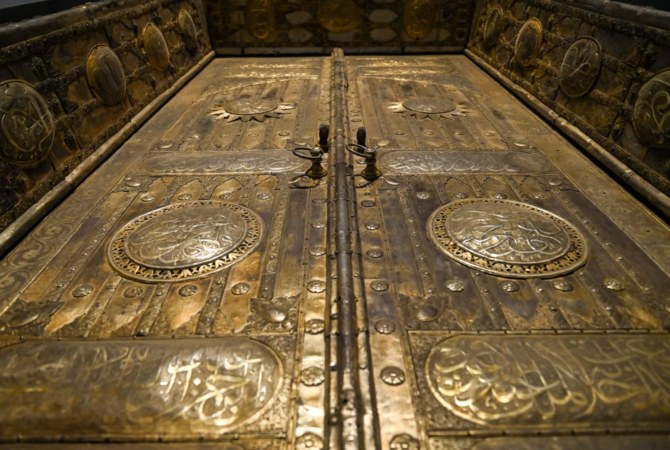
Ka’bah Door made by Shaikh Mahmoud Yousuf Badr for King Abdulaziz bin Abdulrahman Al Saud in 1947. (AN Photo by Ali Khamaj)
Unanimous vote ‘opens new chapter in Kingdom’s evolving history’.
Saudi Arabia will chair UNESCO’s World Heritage Committee following a unanimous decision at the organization’s headquarters in Paris.
The committee will be chaired by Princess Haifa bint Abdulaziz Al-Mogrin, the Kingdom’s permanent representative to UNESCO, and chairperson of the organization’s programs and external relations committee.
The Paris meeting also agreed that Saudi Arabia will host the committee’s 45th session, which will be held in Riyadh from Sept. 10-25.
The selection was approved during the 18th session of the World Heritage Committee, which was held in the presence of all member states of the committee.
Princess Haifa tweeted: “In completion of the Kingdom’s prominent role in supporting and preserving human heritage, I am proud today of accrediting Saudi Arabia as chairman of the UNESCO World Heritage Committee, and for hosting of the 45th session of the World Heritage Committee for the first time in September.”
The permanent delegation of the Kingdom to UNESCO tweeted: “Saudi Arabia is home to 6 millennial world heritage sites and 11 intangible heritage elements, Saudi Arabia will proudly host the 45th session of UNESCO’s World Heritage Committee in September— it’s a new chapter in our evolving history.”
The decision is the culmination of efforts led by the Kingdom in UNESCO, in light of unlimited support to the cultural sector by King Salman and Crown Prince Mohammed bin Salman, as well as the support and directives of Culture Minister Prince Badr bin Abdullah bin Farhan.
Princess Haifa praised the decision and said that it is simply the result of the Kingdom’s prominent role in supporting heritage, and its extended endeavors toward documenting human heritage alongside the member states of the committee, as well as achieving the goals of UNESCO in general, and the goals of the World Heritage Committee in particular.
The UNESCO World Heritage Committee, composed of representatives of 21 states elected by the General Assembly, examines the proposals of states wishing to place their sites on the World Heritage List, assists experts to report on the sites, and provides the final assessment of the decision of the proposed sites on the list.
The Kingdom has two other members of UNESCO’s main committees, as well as its membership in the World Heritage Committee: membership of the Executive Council and membership of the Intergovernmental Committee for the Safeguarding of the Intangible Cultural Heritage, which highlights the Kingdom’s role as a pivotal and international center of action in the organization’s decision-making.
source/content: arabnews.com (headline edited)
_________
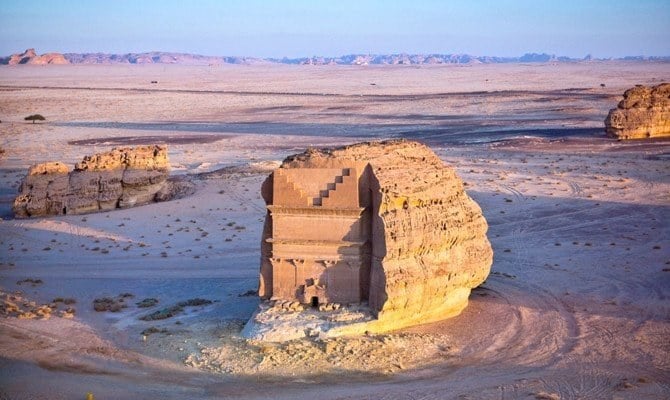
Madain Saleh became Saudi Arabia’s first UNESCO World Heritage Site in 2008. (SPA)
The opening of this year’s Cairo International Book Fair, set for 25 January, comes against a backdrop of a surge in the demand for historical and other non-fiction offerings, as well as uncertainty over an expected rise in prices.
Publishers have already announced an expected considerable hike in the price of books, no less than 50 percent for some titles and much more for others, which they attribute to the tripling in paper prices in less than six months due to the currency devaluation.
“We want to maximise our reach to as many readers with limited budgets as possible,” said Yehiya Fekri of Al-Maraya. Bigger publishers, including Al-Shorouk, Al-Massraiya Al-Lebananiya and Al-Karma, have promised very big discounts on as many titles as possible and special packages for titles that were put out for the book fairs of the past two years.
However, the pricing issue is no less controversial than that of genre. The domination of fiction during over 20 years, which allowed for many new novelists to make an imprint on the contemporary Egyptian and Arab literature scene, is being challenged.
This year, publishers say there is a growing interest in non-fiction, old and new titles alike.
Abdallah Sakr, director of publishing at Al-Mahroussa argued that the limited number of new titles of some branches of non-fiction, “particularly theory,” and the parallel interest of readers prompted his publishing house to gather, revise and reprint the three volumes of prominent 20th century intellectual Louis Awad, Tarikh alfekr almasry (“History of Egyptian Intellect”).
“Those are three big volumes that we worked on for three consecutive years as they were originally published by different publishers with some considerable intervals,” Sakr said.
Sherif Bakr, of Al-Arabi, said that there is a “definite interest in philosophy.” This is why, he added, Al-Arabi decided to publish Arabic translations of titles like Philosophy and Football and Socrates on Sneakers, which he expects to do very well in this year’s book fair.
“Non-fiction, in general, is making a strong come-back; I think we saw a glimpse of this last year with the first post COVID-19 book fair; but clearly this year our list of publications was designed to allow for a considerable number of non-fiction titles,” said Nora Rashad, director of publishing at Al-Massriya Al-Lebenaniya Publishing House.
They had embraced the domination of fiction over the past two decades. However, she added, this year more than last year, non-fiction is gaining ground. “I am not sure where this is coming from because there has always been some really interesting titles coming up in the non-fiction space but it might be a post pandemic thing with people looking for titles that offers some answers to questions they thought about during the pandemic,” she said.
For this year’s book fair, Al-Massriyah Al-Lebnaniyah is offering several non-fiction titles including Ezzat Al-Kamhawi’s Al-Tahi Yaktol Walkateb Yantaher (“The Cook Kills and the Author Commits Suicide”) which is a literary reflection on life and the works of prominent authors and the legacy of some important cooks.
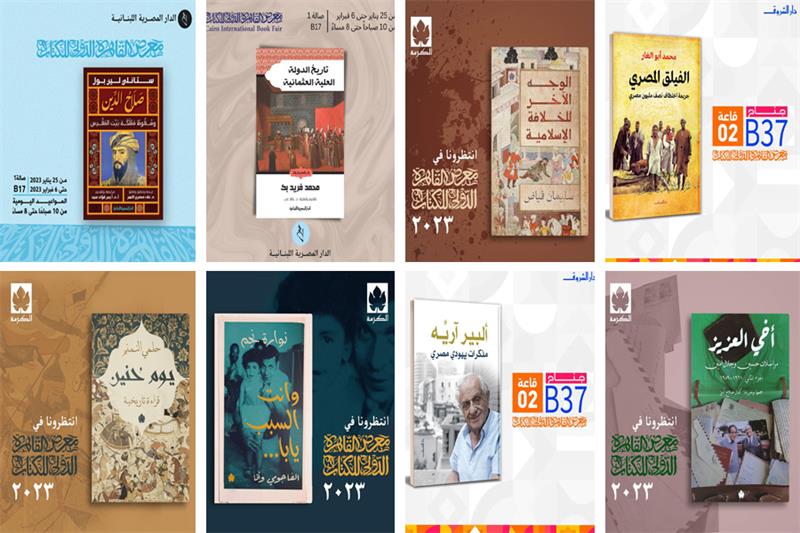
History is also getting a lot of attention this year. With an introduction from Khaled Azzab, a prominent researcher, Al-Massriyah Al-Lebenaniyah is putting out a new edition of Mohamed Farid’s late 19th century Tarikh Al-Dawla Alaliyah Alothmaniyah (“History of the Sublime Ottoman State”) and an Arabic translation of Stanley Lane Paul’s Saladin and the Fall of the Kingdom of Jerusalem.
However, this passion for history is not just a new development that goes hand-in-hand with this year’s renewed interest in non-fiction. According to several publishing houses, this desire for alternative narratives of history has been going on for well over a decade.
Al-Karma has been on with several reprints of history books. For this year, it is putting out a new edition of Souliman Fayyad’s Al-Wagh Al-Akhar Llkhelafa Al-Islamiyah (“The Other Face of Islamic Khalifat”) that challenges the dominant incomplete narratives of almost strictly prosperous Islamic rule to shed light on the images of coercion and discrimination that some faced under the rule of Muslim Khalifas. Another walk in the history lane comes from Al-Karma with Helmy Al-Namnam’s title Yaom Honein – Qiraa Tarikhiya (A History Take on the Battle of Honein). This books promises to be controversial as it addresses an often marginalised battle that Muslims, under Prophet Muhammad, had to go through in a preemptive tactic.
Al-Shorouk, which had previously dedicated an entire series to modern and contemporary history, is also coming in with the most recent title of Mohamed Aboul-Ghar’s Al-Filaq Al-Masry (“The Egyptian Legion”). Typical of the history volumes written by Aboul-Ghar, this book offers a lengthy research work that documents the forced conscription of Egyptian men from villages all across the country to work with the British army during World War I. It details the incredible socio-economic and political consequences that contributed to the start of the 1919 Revolution that called for the independence of Egypt from the British occupation. In a sense, this book could well be part of the rich set of volumes that Al-Shorouk has been putting out for four consecutive years in a bid to re-visit the 1919 Revolution.
Al-Maraya, too, is going to this year’s book fair with several history titles including Nossous Wakirat Hawl Tarikh Al-Capt from the 10th to the 19th centuries (“Texts and Narratives from the History of Copts: 10th to 19th Centuries”) by Magdi Girgus, who was just awarded a prize from the Swairas Culture Foundation for his book Al-Moalem Ibrahim Al-Gohary (“Master Ibrahim Al-Gohary”) on the life and history of one of the most controversial Coptic figures, which was put out last year by Al-Maraya.
Al-Arabi, for its part, is putting out a series of history books under the title of “Papers from History.” “This project is the labour of years of hard work and it includes some translated titles and some titles written in Arabic,” said Bakr. Of these papers there is Mozakerat Aila Massiyhiya bayn Al-Qahira waRas Ghareb (“Memoires of a Christian Family Between Cairo and Ras Ghareb”) by Iliyah Mahfouz Bashir. The book tracks the history of the family of a man who was born to a Christian family in the 1930s in Ras Gharb, next to the Red Sea, where the father was working for an oil company before he retired and dragged the entire family to Cairo.
Also in history, there is also a wide range of memoires, biographies and letter collections. Al-Karma is putting out part two of its massively successful book Akhi Al-Aziz – Morassalat Hussein and Galal 1961-1989 (“Dear Brother – Correspondence of Hussein and Galal Amin – 1961-1989”). Like the first volume that shared parts of letters exchanged by the Amin brothers, a prominent diplomat and intellectual and a prominent economist and writer, the second volume shares reflections on life, politics and culture that were included in letters that they sent to one another as they lived in Egypt and abroad.
Al-Karma is also putting two books that offers alternative narratives on the lives of two key figures of Egypt’s contemporary non-classic poetry: Salah Jahine, the celebrated figure of this year’s book fair, and Ahmed Fouad Nigm. Mona Kattan – Soura Shakhessiya Lezawgat Shaar (“Mona Katta – A portrait of the Spouse of a Poet”) introduces the second wife of Jahine in a narrative that sheds a lot of light on the prominent poet/cartoonist. Meanwhile, Wenta Al-Sabab ya Baba” (“It is All Because of You, Dad”) is the narrative of Nigm’s daughter Nawara, who shares reflections on the father-daughter relationship and the impact thereof on the life of the daughter.
Meawhile, Al-Shorouk is putting out what promises to be one of the most interesting titles of the book fair, Albert Arie -Mozkerat Yahoudi Masry (“Albert Arie – the Memoires of an Egyptian Jew”). The memoires of Arie, who passed away in the spring of last year at the age of 92, offers an incredible insight on the history of Egyptian Jewry in Egypt before and after the 1948 War, including the national affinity that some, including Arie himself, held to the country. It also offers an image of life in Egypt, specifically in Cairo, where Aries was born and lived all his life.
On Cairo, Al-Shorouk is also putting out its Wassat Albald – Maware Elhekayat (“Downtown – Beyond the Stories”), an essential collection of photos that documents the architectural splendor of Cairo. Meanwhile, Al-Ain is putting out Al-Qahera Waomranha (“The urban History of Cairo”) by Nezar Al-Sayyad, a prominent Egyptian-American architectural historian.
Novels with historical inspirations have also been quite fashionable for the past few years. Following a very successful first novel, Yaacoub (“Jacob”) with Al-Shorouk last year, Afifi is putting out his second take with the same publisher at a historical novel Salam Ala Ibrahim (“Peace Be on Abraham”). Like Jacob – which tells a history mixed with fiction in the life of a prominent but highly controversial Egyptian Coptic figure during the French Expedition – Peace Be on Abraham applies the same technique in recalling the history of Mohamed Ali’s son Ibrahim. For its part, Al-Maraya is offering Magued Wahib’s Alam Yahouzah (“The Pains of Judas”) that mixes fiction with history in the account of Judas Iscariot who betrayed Jesus.
Other fiction titles that are expected to get considerable attention at this year’s book fair include Ahmed Samir’s second novel Rassail Al-Ganna (“Letters of Heavens”), Mahmoud Abdel-Shakour’s Alwan Aghostos (“The Colours of August”) from Dawwen and Adel Essmat’s Ayyam Adiya (“Ordinary days”) from AlKotobKhan.
Classics still have a big space in the book fair. Al-Massriyah Al-Lebenaniyah is putting out more reprints of the titles by Ihssan Abdel-Koddous, who, according to Rashad, “did really very well in last year’s book fair.” Al-Diwan is also coming up with more of its Naguib Mahfouz editions, Al-Karma is on with its reprints of Khairy Shalaby and Al-Shorouk is on with its reprints of Tawfik Al-Hakim.
However, according to Bakr, the demand now is for very different types of fiction. So, he said, while novels recalling big political events or documenting certain historical eras or reflecting on personal experiences remain in demand, there is also “a firmly growing demand for criminal novels – including detective novels.” The fact that there is a bigger taste for translated books, “and for that matter better quality translations, allowed for many titles of this genre to be published to please the appetite of a considerable audience of readers in Egypt and elsewhere in the Arab world.”
Meanwhile, according to Sakr, comic books are also “picking up really well.”
“In the past five years Al-Mahroussa has put out over 40 titles that have been essentially very well received by young people – aging from 15 to 30, but also younger and older.” For the book fair this year, Sakr said, Al-Mahroussa is putting out three new comics, including Magdi Al-Shafai’s Al-Gassous Al-Engelizi (“The English Spy”) that depicts early elements of the revolt of Egyptians against British Occupation.
There are over 1,000 publishers who are taking part in this year’s book fair, including 44 publishers from Jordan, this year’s guest of honour.