Arabs & Arabian Records Aggregator. Chronicler. Milestones of the 25 Countries of the Arabic Speaking World (official / co-official). AGCC. MENA. Global. Ist's to Top 10's. Records. Read & Enjoy./ www.arabianrecords.org
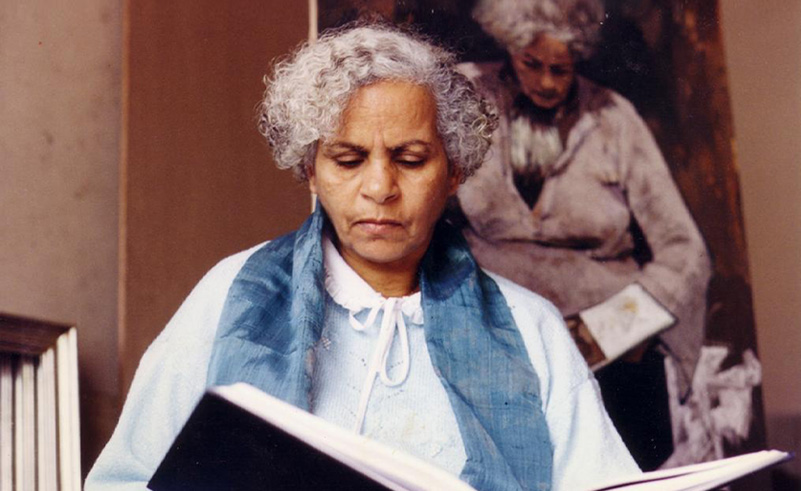
Elsayed’s family spent a year curating her works, as well as that of her husband El Dessouki Fahmi, from between 1960 and 1970.
When art becomes a family affair, each member with their own medium and distinct style, keeping legacies alive becomes a personal and collective mission, in which each of them pays tribute to loved ones while reviving a piece of modern art history. ‘Press Illustrations and Other Works’ is an exhibition in Zamalek’s Picasso Art Gallery that has been curated by graphic designer and filmmaker Alia Ibrahim and her father Ibrahim El Dessouki, who sought to honour the works of his late mother and father, painter and illustrator Attayat Elsayed and El Dessouki Fahmi.
Elsayed and Fahmi were both professional illustrators at the prominent Egyptian newspaper El Masa in the 1960s and 1970s, with Elsayed also contributing to Al Joumhouria newspaper. The family spent a year curating the exhibition, navigating the late painter’s extensive archive with a focus on her press illustrations.
“Our main objective was to exhibit the press illustrations, and then we added a selection of their paintings as well,” Alia Ibrahim tells CairoScene. “The process of finding the sketches for the illustrations, and copies of the newspapers they were published in was extremely difficult, and there are still countless sketches to be found and documented.”
Upon entering the gallery, visitors are met with two halls, one dedicated to Elsayed’s work and the other to Fahmi’s (which includes a portrait of Elsayed herself). Elsayed’s pieces reflect a progressive focus on the mundane, capturing movement through her intricate brush strokes. With the ‘Swing Machine’ and ‘Fan’ pieces – her granddaughter’s favourites – Elsayed spotlights the overlooked items and their constant flow in everyday life.
As an artist herself, Alia credits her late grandmother’s presence and talent to her ability to look at the world from a different perspective, with her abstract paintings becoming an inspiration and lens through which she views her own artistic endeavours. The exhibition is currently running at Zamalek’s Picasso Art Gallery until February 27th.
The fonts, celebrating the Kingdom’s culture, will be available free of charge.
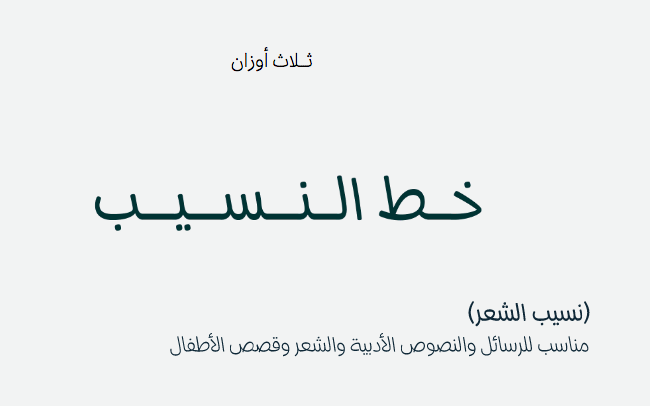
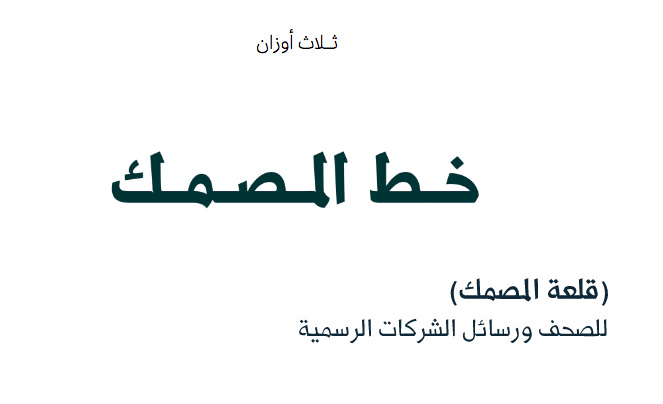
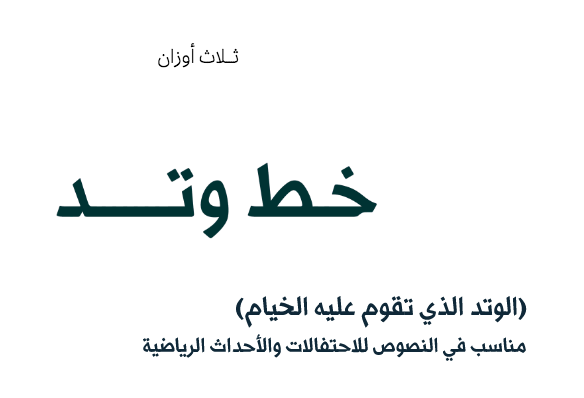
The Ministry of Culture on Monday launched an initiative creating three new Saudi fonts.
The fonts, celebrating the Kingdom’s culture, will be available free of charge to individuals and organizations wishing to use them in design, artistic, and creative works, the Saudi Press Agency reported.
The Masmak font has been named after the historic Masmak Fortress, characterized by its durability and strong structure. The font has been described as clear and easy to read and was developed without reference to traditional calligraphy methods, the SPA said.
The second new font, Al-Naseeb, resembles handwritten notes, and has been recommended for use in headlines, texts, literary works, poetry, and children’s stories.
Watad, the third font, was inspired by the tent peg with its letters having curved corners. Its suggested use was for text relating to festivals and sporting events.
The Ministry of Culture launched the initiative in celebration of the Arabic language. In a statement, it said: “It is introducing a unique touch that gives a Saudi identity to Arabic fonts and celebrates Saudi heritage and cultural symbols.”
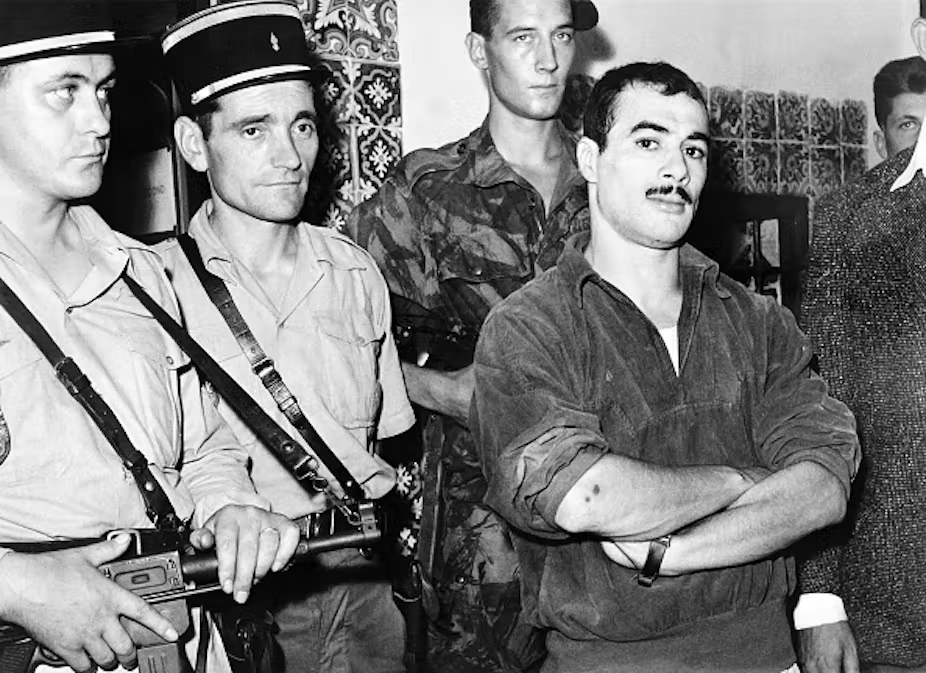
Saadi Yacef, the Algerian revolutionary leader who fought for his country’s liberation from French colonial rule, died on 10 September 2021. Yacef is perhaps one of the better known of Algeria’s resistance fighters because of the role he played in the creation of the film The Battle of Algiers , directed by the renowned Italian film maker Gillo Pontecorvo.
The Battle of Algiers was filmed in 1965 as a co-production between an Italian creative team and the new Algerian FLN (Front de Libération Nationale) government, whose representative Yacef produced the film and stars as the character of Jaffar.
One of the most extraordinary films ever made, The Battle of Algiers is an emotionally devastating account of the anticolonial struggle of the Algerian people and a brutally candid exposé of the French colonial mindset. Many French people were unhappy with the representation of their army and country in the film. It was not officially censored in France , but the general public and all cinemas boycotted it. It was seen as anti-French propaganda.
In later years, the film was screened to groups classed as revolutionaries and terrorists, apparently becoming a “documentary guidebook” in the Palestinian struggle, and for organisations such as the Irish Republican Army and the Black Panthers, who examined its detailed representation of guerrilla tactics.
It was also shown in the Pentagon in 2003, in the middle of the Iraq War. US Counterterrorism experts Richard Clarke and Mike Sheehan suggest that the film showed how a country can win militarily, but still lose the battle for “hearts and minds”.
What relevance does The Battle of Algiers hold today, 55 years after it was first released?
The message of the film is ultimately one of hope: the oppressed multitude will eventually triumph because their cause is just. The images of revolutionary crowds in the film recall the jerky, grainy footage that has emerged from a wave of recent protests in the last decade, from the Black Lives Matter movement to Extinction Rebellion . Pontecorvo thrillingly captures the power and possibility of large gatherings of citizens, who come together to demand rights, putting their bodies at risk to create social and political change.
Additionally, the film refuses to condemn any of the agents in this conflict. As Pontecorvo has stated
in a war, even if from a historical standpoint, one side is proven right, and the other wrong, both do horrendous things when they are in battle.
A film of contrasts
Shot in black and white, the film is difficult to classify in terms of style. Its military action sequences and tactical montages remind us of films like Zero Dark Thirty and The Eye in the Sky; indeed, it is almost impossible to film a scene of politically-motivated torture without having The Battle of Algiers as an implicit or explicit point of reference.
The collective aspect of the film’s creation, and the socialist ideals that inspired it, link it to what’s called Third Cinema. This was a kind of revolutionary cinema, a cinema of the “Third World”, that was designed to overthrow the systems of colonialism and capitalism.
The Battle of Algiers is also an example of Italian neorealism, a major film movement coming out of mid-twentieth century Italy. The neorealists made films that opposed Mussolini’s fascist regime, and they focused on the hardships of the working class in Italy. Neorealism was a moral and aesthetic system: it brought art and politics together to expose the ills of society and bring about social change.
The Battle of Algiers was shot entirely on location in Algiers, and Colonel Mathieu was the only professional on set. Pontocorvo selected the other actors from the local population based on their faces and expressions.
Other elements of the neorealist style was the use of techniques that create a documentary aesthetic such as the hand-held camera. Pontecorvo also uses extracts from real-life FLN and police communiqués, letters, and title cards. And he used newsreel stock, which was cheaper, but also added to the sense of verisimilitude in the film.
Although he believed the Algerians cause to be just, Pontecorvo wanted to create a nuanced and fair account of the war. Therefore, he sets up a series of contrasts to reflect this opposition between French and Algerian. This is present in the original musical score by Ennio Morricone: while groups of French soldiers rampage through the Casbah to the sound of jaunty military drums and horns, a haunting flute theme accompanies sequences which feature Algerian civilians.
Contrast is also evident in the use of light and shadow: there are strong chiaroscuro effects, perhaps reflecting the themes of right and wrong in the film. Pontecorvo also uses shadow to highlight the covert operations of the Algerians: Ali La Pointe’s face is filmed with deep shadows, and the face of Colonel Mathieu is always brightly lit.
Space provides another important contrast in the film. Frantz Fanon, a famous theorist of the Algerian revolution, describes the colonial world as a world “cut in two” because of the stark divide between the coloniser and the colonised. In The Battle of Algiers, the wide boulevards of the European quarter are juxtaposed to the narrow, winding, labyrinthine alleyways of the Casbah. Space is also divided vertically and horizontally – the European quarter is flat, while the Casbah is steep and sloping.
This opposition of space highlights the gap between rich and poor, coloniser and colonised.
The question of bias
The biggest contrast in the film is of course between the French and Algerians. The embodiment of French and European values in the film is Colonel Mathieu. He is a suave figure, confident and controlled in army fatigues, stylish sunglasses and slick speech – he has more dialogue than other characters in the film. A number of critics have argued that Mathieu is far ‘too cool’, given that he is a practitioner and a proponent of torture.
Yet Colonel Mathieu is not depicted as an ogre: above all, he embodies reason. We see this in his statements about the use of torture, when he uses solid rhetorical devices to justify it. He says:
…do you think France should stay in Algeria? If you do, you have to accept the necessary consequences.
This is persuasive as a logical argument – if you want French Algeria, you have to accept the actions that result in this outcome – torture.
If Mathieu and the French have reason, what do the Algerians have?
Firstly, they have raw, visceral emotion and the power of the group. The victory at the end of the film is a victory of the masses, embodied in two figures – the martyr Ali La Pointe, the illiterate everyman who becomes a hero for the revolution, and the gyrating, anonymous Algerian women, whose gaze outwards to the future closes the film.
This takes me to the final point about what the Algerians have on their side – the power of historical right. We see this through Pontecorvo’s use of chronology – the narrative proceeds as a flashback, until we leap forward in time to the euphoria and mania of the end of the war and the triumph of the revolutionaries. Pontecorvo here glosses over the fact that the real Battle of Algiers was lost by the Algerians, and jumps into a future of eventual victory in the war.
This is how he views the process of history – the masses, with moral right on their side, will eventually win.
Yacef Saadi (R), military leader of the FLN National Liberation Front networks of the autonomous zone of Algiers, poses after being captured at the end of the “Battle of Algiers”. Photo by -/AFP via Getty Images
Within the alienated and antagonist cultures inside Israel’s borders, Arabic and Hebrew—related, but mutually unintelligible languages—cross-fertilize each other.
“Translation” originally meant moving a body. Dead saints and live bishops, for instance, were translated from one place to another. Today, we mostly only use “translation” to mean words transported into other languages, where, unlike bodies, they often change completely.
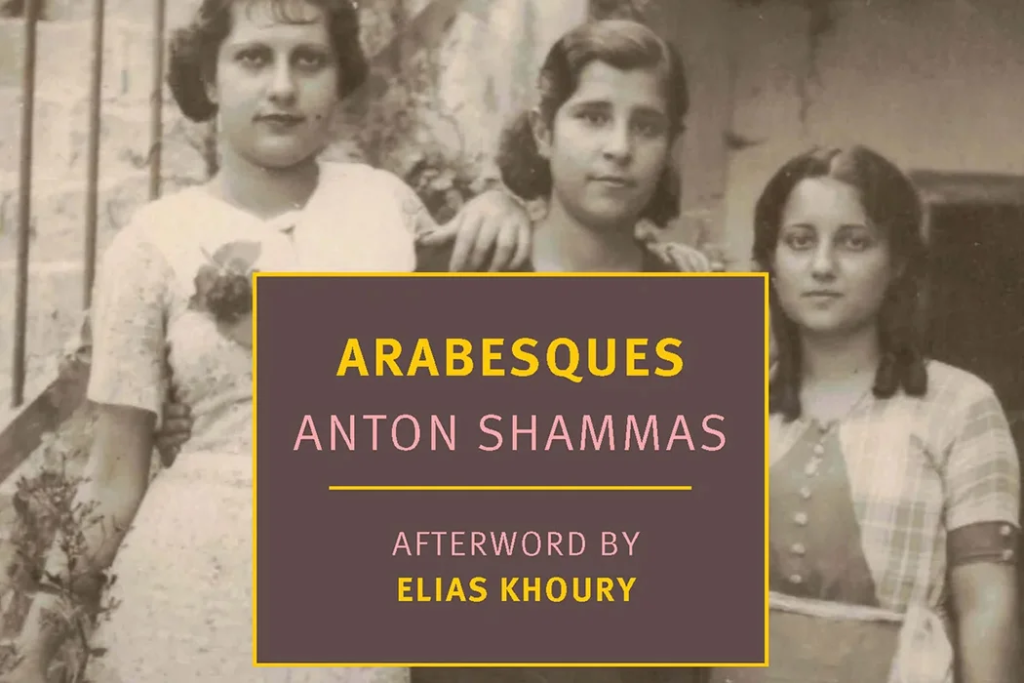
When Anton Shammas’s Arabesques was first published in 1986, it crossed a notable translational fault line. It wasn’t the first Hebrew-language book written by a Palestinian in Israel, but it became the most famous. The best-seller’s English translation made it to the New York Times’s seven best novels of the year in 1988, but it’s the Hebrew original that drew the attention of scholars Adel Shakour and Abdallah Tarabeih.
“Almost all Israeli Arabs have at least some Hebrew proficiency, and the language is taught in Arab schools,” they explain. “For Israel’s Arab citizens, Hebrew is the key to the dominant Jewish majority and most of its social, financial, and educational resources; it is therefore essential in the minority’s daily life.”
Modern Hebrew is the official language of Israel. The minority Palestinians have a complicated relationship to the majority’s language. Living in Israel means Hebrew is a necessity, but Palestinian identity is intimately connected to Arabic. The language of “Islamic liturgy and the Quran” has a high status among Israeli Palestinians, the majority of whom are Muslim.
“Israeli Jewish society appears to perceive Arab culture as inferior, less modern, and less sophisticated,” write Shakour and Tarabeih, an attitude that includes Arabic. Hebrew, meanwhile, is intimately connected to the identity of Israeli Jews, who in the larger Middle East are a language, religious, and ethnocultural minority.
The fraught relationship between a Jewish state and the non-Jews within it as well as surrounding it, language-wise, meant “Hebrew attained prominence in the non-Jewish literary sphere only in the 1980s, with the works of Anton Shammas, a Christian, and Naim Araidi, a Druze.” (The first Hebrew novel by an Arab, Atallah Mansur’s 1966 In A New Light, proved to be “a fleeting phenomenon.”)
In the press of linguistic intimacies in Israel, the two Semitic—related, but mutually unintelligible—languages cross-fertilize each other, even in the “mutually alienated cultures” found within the state’s borders.
Shakour and Trabeih note that Palestinian “Arabic has borrowed many Hebrew words and even sentences.” Meanwhile, Hebrew, which was revived and modernized in the nineteeth and twentieth centruries, has adopted words from Arabic, as well as a host of other languages including Aramaic, Yiddish, Ladino, Polish, Russian, English, and so on.
Shammas, a noted translator of Arabic into Hebrew (especially of Emile Habibi), is a conscious language bridge-builder between the two languages. Part of this language-bridging means he invents neologisms, new words, in Hebrew.
As Shakour and Tarbeih detail, “Shammas creates new verbal forms in Hebrew by deriving them from nouns along the lines of such derivation in Arabic.” Their first example adds another language to the mix: “the Arabic verb šaksbaranī derived from the noun Shakespeare leads him to use the same derivation in Hebrew.”
Such neologisms can make texts “more obscure” to native readers of a language who have never encountered the word before. Shammas does it to “give the work a highly authentic flavor” to the Arabic culture he wants to introduce to the Jewish Israeli audience.
Perhaps unsurprisingly, some partisans of both Arabic and Hebrew have criticized Shammas’s translations for daring to speak across antagonistic borders. Some Israeli Jews think only Jews can create Hebrew literature. For them, Hebrew is part of the Jewish national character, part of the Zionist project. Some Palestinians think he’s using the enemy’s language, putting a spin on the Italian saying “Traduttore, traditore.”
The saying, meaning “the translator is a traitor,” is usually meant to signify the compromises necessarily made to help language slip across borders into other words. Of course, both languages here, like most languages, are already infiltrated by each other, something language’s border guards never seem to accept.
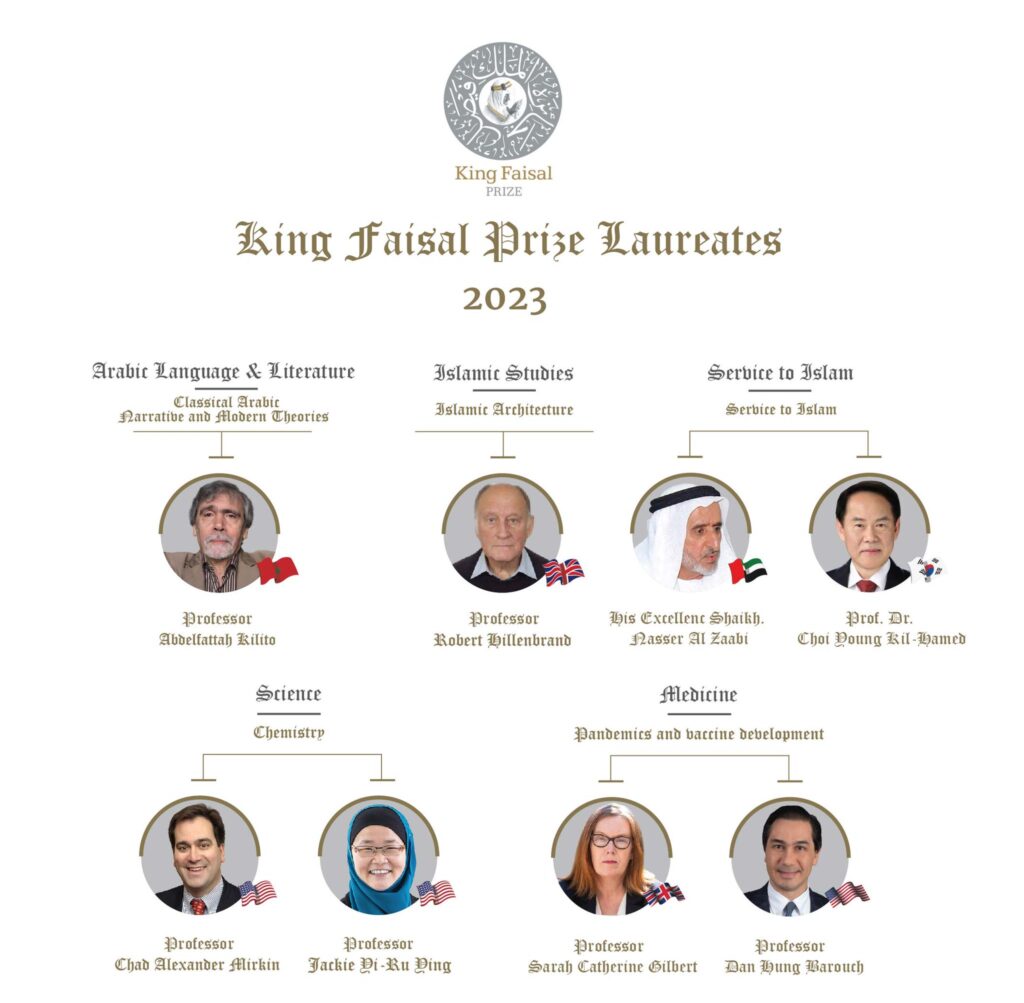
An Emirati, a Moroccan, a South Korean, two Brits and three Americans were honored with the King Faisal Prize 2023.
They served people and enriched humanity with their pioneering work so deserve to be honored and recognized for their distinguished efforts, the King Faisal Foundation said when honoring the winners of the King Faisal Prize 2023.
A glittering award ceremony was held in Riyadh on Monday under the patronage of King Salman, and on his behalf, Prince Faisal bin Bandar, governor of Riyadh Region, attended the ceremony for handing over the King Faisal Prize to the winners this year.
The annual awards are the most prestigious in the Muslim world and recognize outstanding achievement in services to Islam, Islamic studies, Arabic language and literature, medicine and science.
This year an Emirati, a Moroccan, a South Korean, two Brits and three Americans won the prestigious prize, which in its 45th session recognized COVID-19 vaccine developers, nanotechnology scientists and eminent figures in Arabic language and literature, Islamic studies, and service to Islam.
The prize for service to Islam was awarded jointly to Shaikh Nasser bin Abdullah of the UAE and Professor Choi Young Kil-Hamed from South Korea.
The prize for Islamic studies was awarded to Professor Robert Hillenbrand from the UK.
The prize for Arabic language and literature was awarded to Professor Abdelfattah Kilito of Morocco.
The prize for medicine was awarded jointly to Professor Dan Hung Barouch from the US and Professor Sarah Catherine Gilbert from the UK.
In his acceptance speech, Barouch said, “The Ad26 vaccine for COVID-19 demonstrated robust efficacy in humans, even after a single shot, and showed continued protection against virus variants that emerged. This vaccine has been rolled out across the world by the pharmaceutical company Johnson & Johnson, and over 200 million people have received this vaccine, particularly in the developing world.”
Gilbert said that she was “humbled to join the other 2023 laureates, and to follow-in the footsteps of the men and women whose work has been recognized by the foundation for more than four decades. This award is in recognition of my work to co-create a vaccine for COVID-19. A low-cost, accessible, efficacious vaccine that has now been used in more than 180 countries and is estimated to have saved more than six million lives by the start of 2022.”
The prize for science was awarded jointly to Professor Jackie Yi-Ru Ying and Professor Chad Alexander Mirkin, both from the US.
Ying’s research focuses on synthesis of advanced nano materials and systems, and their application in biomedicine, energy conversion and catalysis.
Her inventions have been used to solve challenges in different fields of medicine, chemistry and energy. Her development of stimuli-responsive polymeric nanoparticles led to a technology that can autoregulate the release of insulin, depending on the blood glucose levels in diabetic patients, without the need for external blood glucose monitoring.
“I am deeply honored to be receiving the King Faisal prize in science, especially as the first female recipient of this award,” she said in her acceptance speech.
This year two women scientists have been honored as winners of the King Faisal Prize for medicine and science categories.
The woman behind the Oxford–AstraZeneca COVID-19 vaccine, Professor Sarah Gilbert, the Saïd chair of vaccinology in the Nuffield department of Medicine at Oxford University, was honored with the medicine award.
The other woman scientist honored with the King Faisal Prize in science is Professor Jackie Yi-Ru Ying; the A-star senior fellow and director at NanoBio Lab, Agency for Science, Technology and Research. She is a professor at Massachusetts Institute of Technology, and was chosen for her work on the synthesis of advanced nanomaterials and systems, and their applications in catalysis, energy conversion and biomedicine.
The King Faisal Prize was established in 1977. The prize was granted for the first time in 1979 in three categories: Service to Islam, Islamic studies and Arabic language and literature. Two additional categories were introduced in 1981: Medicine and science. The first medicine prize was awarded in 1982, and in science two years later.
Since 1979, the King Faisal Prize in its different categories has awarded 290 laureates who have made distinguished contributions to different sciences and causes.
Each prize laureate is given $200,000 (SR750,000); a 24-carat gold medal weighing 200 grams, a certificate inscribed with the laureate’s name and a summary of their work that qualified them for the prize, and the certificate signed by chairman of the prize board, Prince Khalid Al-Faisal.
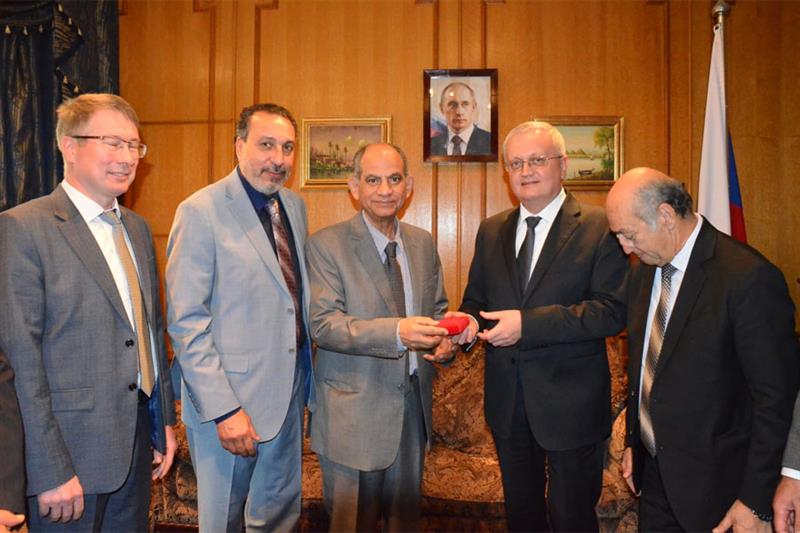
Russian ambassador to Egypt Georgiy Borisenko has awarded the Dostoyevsky Medal to Anwar Ibrahim – the under-secretary of the Ministry of Culture and former head of the ministry’s Foreign Cultural Relations Department – for his work in translating Russian literature into Arabic.
The honouring ceremony took place at the headquarters of the Russian Embassy in Cairo on 6 March. It was attended by a delegation from the Egyptian Association of Graduates of Russian and Soviet Universities headed by Sherif Gad.
Ambassador Borisenko expressed appreciation for Ibrahim’s efforts in translating classic and contemporary Russian literature into Arabic, thereby promoting Russian culture.
“The Arab reader is lucky when he reads translated Russian literature through creative translators like Anwar Ibrahim,” Borisenko said.
Borisenko wished Ibrahim continued success in his literary career, which he described as part of the soft power between Russia and the Arab peoples.
The Dostoyevsky Medal was established by the Russian Writers Union to be awarded to translators on the occasion of the 200th anniversary of the birth of the great Russian writer Fyodor Dostoyevsky, who is one of the most iconic writers of the Russian literary canon.
For his part, Ibrahim said that “this honour is a new birth for me, and I am extremely proud of receiving the Dostoyevsky Medal.”
Toghan, Secretary-General of the Association of Graduates, affirmed that the award for Ibrahim is a tribute to all graduates of the association, especially since Anwar is the first Arab to receive the prestigious medal.
Dostoyevsky, who was born in 1821 in Moscow and died in 1881 in St. Petersburg, gave up an engineering career early in order to write.
In 1849, he was arrested for belonging to a radical discussion group and was sentenced to be shot. He was reprieved at the last moment and sentenced to four years of hard labour in Siberia, where he developed epilepsy and experienced a deepening of his religious faith.
Dostoyevsky’s novels are especially concerned with faith, suffering, and the meaning of life; they are famous for their psychological depth and insight and their near-prophetic treatment of issues in philosophy and politics.
By the end of his life, he was acclaimed as one of his country’s greatest writers, and his works had a profound influence on 20th-century literature.
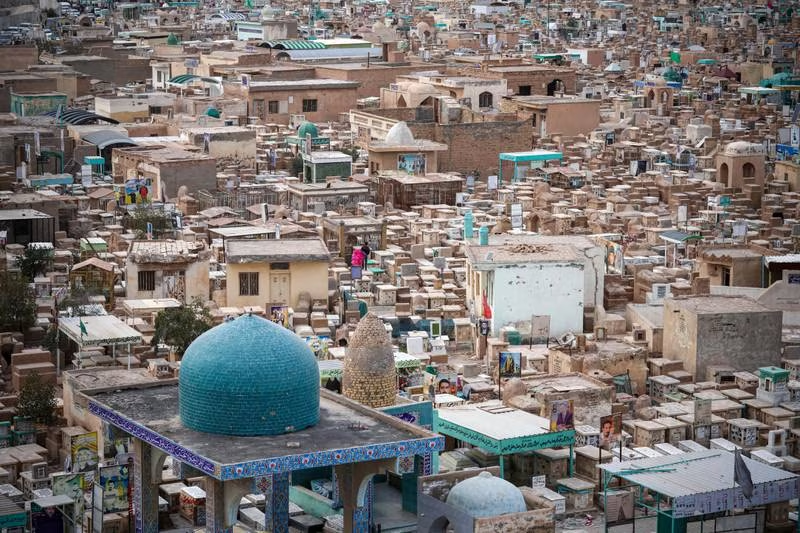
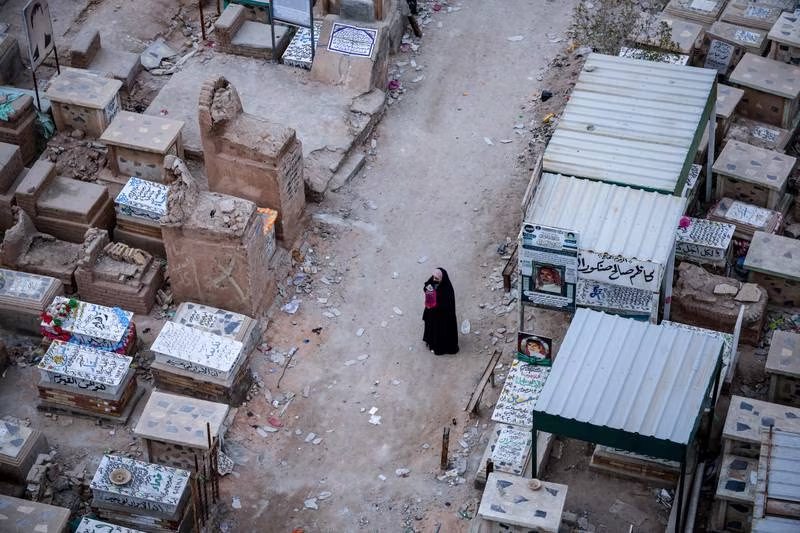
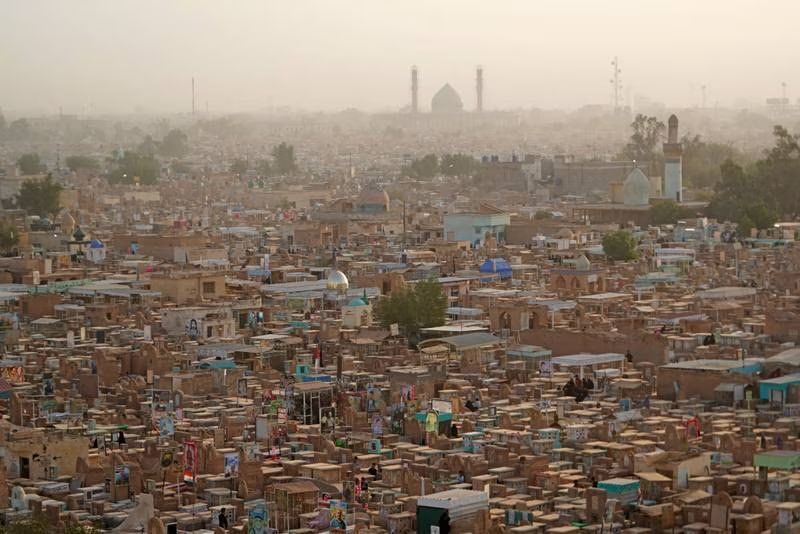
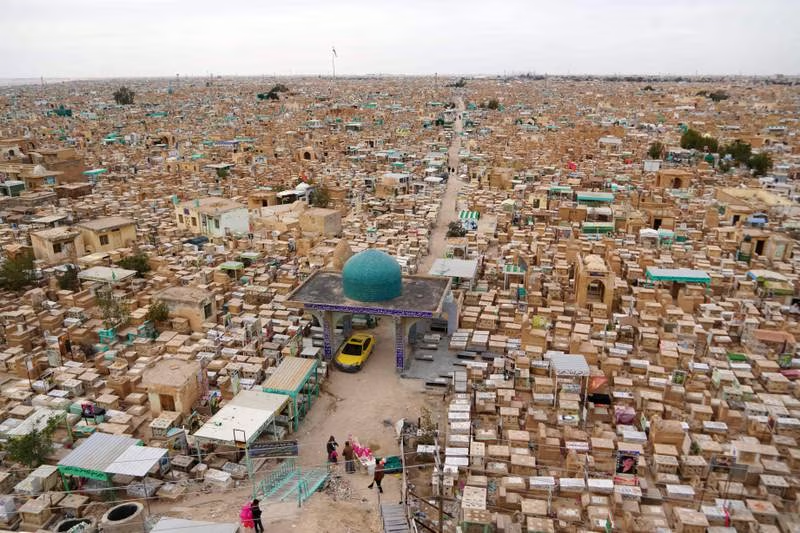
Islamic cemetery in Najaf is often described as the world’s biggest.
The graveyard covers an area of 917 hectares, the equivalent of more than 1,700 football fields
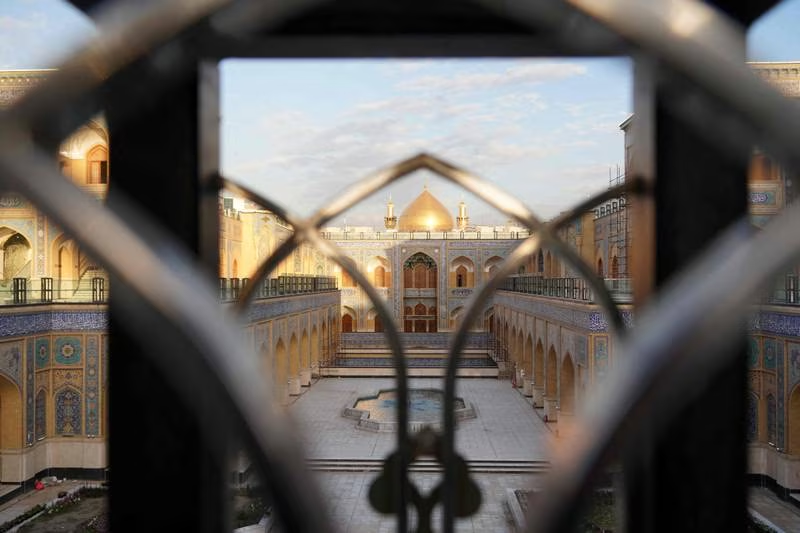
There are no maps to guide visitors through the labyrinth, which is also listed as the world’s largest burial ground in the Guinness Book of World RecordsAn expanse of gravesThe shrine of Imam Ali at the cemetery
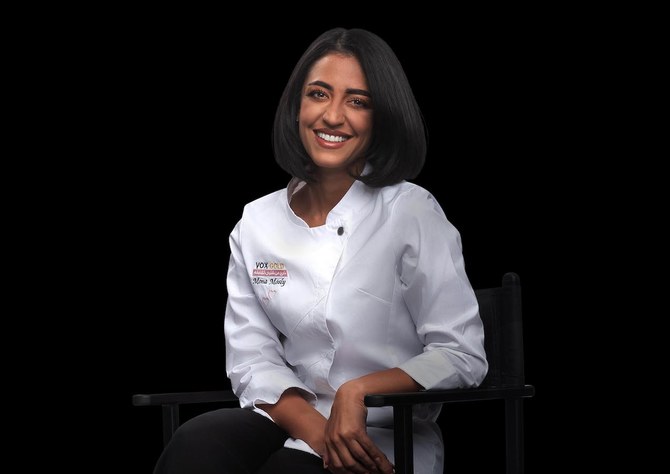
Known for her creative take on classic favorites, Saudi chef Mona Mosly is one of the region’s most recognizable celebrity chefs, renowned for her creative takes on classic favorites.
As well as being a judge on the Arabic-language version of talent show “Top Chef,” Mosly has extensive experience in culinary art, having trained professionally in Switzerland before attending the world-renowned Le Cordon Bleu in London and subsequently honing her craft at restaurants across the Middle East.
In January, Mosly joined forces with VOX Cinemas in Riyadh and Jeddah to curate an expanded menu that features more than 20 dishes, including kibbeh nachos and BBQ chicken bao, Armenian tabbouleh, dukka madani chicken burger, halva cookies with Syrian ice cream, Thai curry salmon and more.
“What I love about this is that (movies) bring people joy,” Mosly tells Arab News. “I believe that I can bring people joy with my food as well. And it’s all about happiness, right? So it’s a beautiful collaboration for me.”
When VOX first reached out, Mosly says, her first thought was to create a menu of cinema food, “with an Arabic or Saudi twist.”
She explains: “I believe that food has to be related to us. It could take us to a beautiful memory. It could remind us of flavors from our childhood and all that.”
One of her favorite dishes on the menu is the kibbeh nachos. “It’s basically kibbeh, but it looks like nachos. Instead of cheddar sauce, I used mohamara sauce, so it gives the same feeling,” she says. “I also love the fish and chips, because it has a very nice story behind it. I like food that can gather different cultures together.”
Here, Mosly takes a trip down memory lane to when she first started her career, and offers advice for amateur chefs.
Q: When you started out as a professional, what was the most-common mistake you made when preparing a dish?
A: When I was working for Leylaty ballroom in Jeddah, I once burned 80 kilos of morels — one of the most expensive mushrooms. But after that, morel became my favorite ingredient. In kitchens — or any job where you work with your hands — if you don’t make mistakes, you’ll never learn.
What’s your top tip for amateur chefs?
Be yourself. Food is all about who you are. You translate what you have within you to people.
What one ingredient can instantly improve any dish?
Garlic. Or onion. They are the essence of food.
When you go out to eat, do you find yourself critiquing the food?
After six years of ‘Top Chef,’ believe me, I don’t want to critique anything. I’m done critiquing. I go out to have fun. I’ve reached a place where I don’t want to critique, I just want to enjoy.
What’s the most-common mistake you find restaurants making?
What annoys me the most is when food doesn’t have a taste because the cook didn’t respect the ingredients. I don’t understand how you can end up cooking a dish that doesn’t taste of anything.
When you go out to eat, what’s your favorite cuisine?
It depends. My cheat meal will always be a burger. But if I want to give myself a treat, I’ll go for sushi — or Japanese cuisine anyway.
What customer behavior or request most annoys you?
When people like something, they don’t try other stuff. I find that sad, rather than annoying. Why did you like the first thing that you tried? Because you tried it. That’s why you have to try other things too.
What’s your favorite dish to cook and why?
I do enjoy things like rolling warak enab (stuffed vine leaves) or stuff that takes time, because I’m a very fast person. I do everything very quickly. So, I like things that calm me down like baking. I like having to wait.
As a head chef, what are you like in the kitchen? Are you laidback? Or a disciplinarian?
I believe that when you are loved, appreciated and respected, you can do wonders. So, that’s what I try to give to the people I work with. Really, I like to dance, I like to sing, I like to enjoy being with my team. But when something goes wrong, something goes wrong. So, sometimes, I do have to shout.
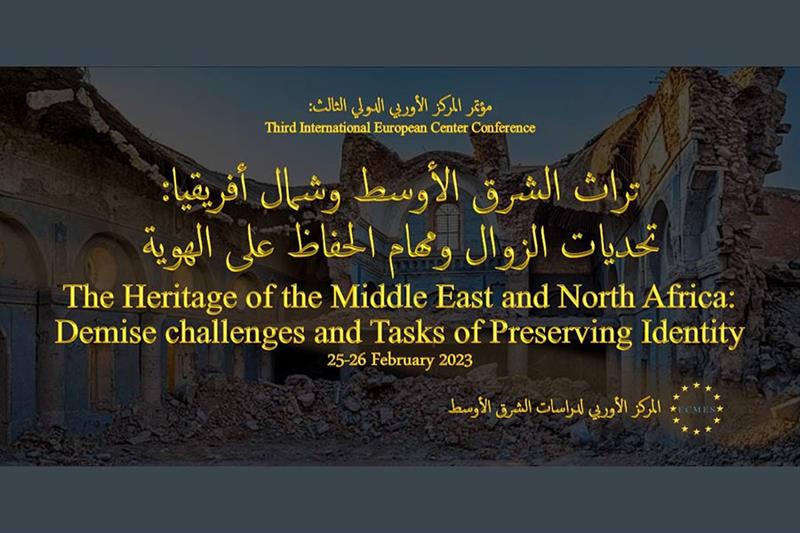
The European Centre for Middle East Studies, headquartered in Germany, is organising its third international scientific conference in Tunisia on 25-26 February.
The conference will be held under the title “The Heritage of the Middle East and North Africa: Demise Challenges and Tasks of Preserving Identity.”
Representatives of UNESCO, ICESCO and ALECSO organisations are set to attend the conference.
Sattar Jabbar Rahman, founder and CEO of the European Centre for Middle East Studies and head of the conference, told Ahram Online the conference is meant to not only shed light on heritage but also to find mechanisms to protect it.
He pointed out that heritage, in its tangible and intangible forms, is suffering from neglect. The responsibility of protecting heritage lies not only on the shoulders of official institutions concerned with culture and heritage, but also on organisations concerned with protecting heritage, activists, and research centres, including the European Centre for Middle East Studies, he added.
Rahman confirmed that the heritage of the Middle East and North Africa is under threat, which is why the conference devoted five axes to discuss ways to protect it. These axes are: the impact of struggles and armed conflicts on tangible heritage; the role of civil society and cultural institutions in protecting heritage; national and international legislation to protect heritage; digitisation in the service and preservation of cultural heritage; and the impact of urban expansion on heritage.
Armed conflicts have caused some of the worst disasters on the cultural, urban and architectural fronts, said Hala Asslan, an expert with the International Council on Monuments and Sites and UNESCO and vice chairman of the Scientific Committee at the conference.
Asslan told Ahram Online that several conflicts erupted during the first two decades of the third millennium, causing unprecedented destruction in the region and harming the cultural, architectural, and environmental heritage of several Arab countries, especially those located in the Middle East and North Africa (MENA) region, most notably in Iraq, Syria, Yemen, Lebanon, and Libya. Several sites registered on the World Heritage List were damaged, such as the ancient city of Aleppo, the archaeological site of Palmyra, and the villages of Forgotten Cities in northern Syria, she added.
Chokri Essifi, a researcher in historical and civilisational studies and coordinator of the Office of Academic Relations at the European Centre for Middle East Studies in Germany, told Ahram Online that the local heritage in the Middle East is exposed to several internal and external threats. The most prominent of these is the lack of maintenance, attention, and follow up, their inappropriate use in cultural and tourism development, and the lack of awareness of the importance of this heritage in building national cultural identity.
With regard to external influences on heritage, Essifi revealed that the rapid transformations that the world has been witnessing since the 1990s included a number of influences in the heritage of the Middle East.
The first of these is the continuous attempts to own this heritage. This is in addition to the increase in theft, especially during periods of wars and conflicts that weakened protection measures on heritage and cultural sites.
He stressed that despite the positive aspects of globalisation, the unilateral view in the field of culture and the growing imperialism and one-centric tendency have hindered the trend towards promoting constructive cultural pluralism that does not differentiate between cultures and identities.
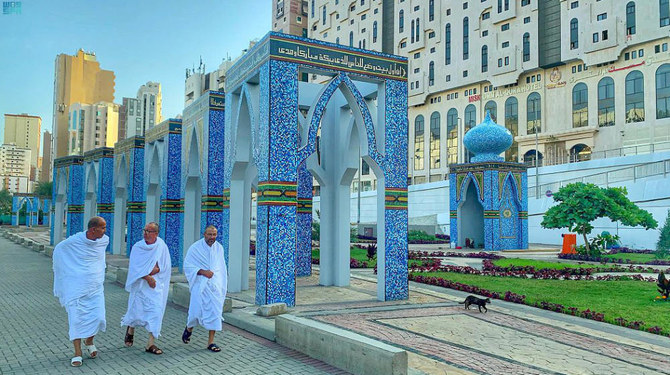
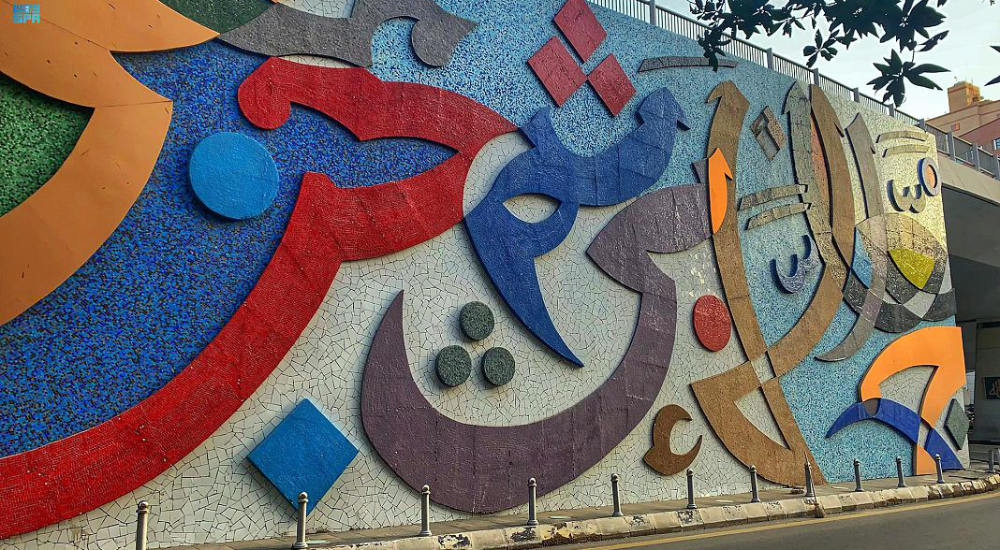
The world’s longest calligraphic mural has been installed on the road leading to Makkah’s Grand Mosque, in the latest beautification of the holy city.
The 75-meter mural, designed by artist Amal Felemban, joins a host of sculptures and installations already adorning Makkah in a project run by local authorities to boost its visual appeal and depict Saudi heritage and culture for pilgrims.
Felemban told Arab News that it was important to retain and promote the ancient art of mural painting, as it portrays Saudi culture and aesthetics and links the old world with the modern.
“In the modern era, they brighten up streets and cover some of the ugliness of the gray buildings,” she said, adding that murals and sculptures reflected the true spirit of the city.
“My mural tells the story of the urban heritage in the holy capital, as it received a wonderful echo of this authentic Hijazi art, and it is different from the rest of the murals near large mosques,” she said.
HIGHLIGHTS
• The Municipality of Makkah installed the longest calligraphic mural in the world on King Abdul Aziz Street, the road that leads to the Grand Mosque.
• Artist Amal Felemban shared that murals are one of the oldest forms of art that can beautify the streets and show local culture and heritage to pilgrims and visitors.
“Mine are not letters or poetic verses, but were rather inspired by the authentic urban culture of this country.
“Many pilgrims do not have a sufficient knowledge about Saudi Arabia, nor about our culture and civilization, so we need to show it through arts, murals and sculptures.”
Felemban said that the municipalities in all Saudi regions must pay great attention to this form of art, which reflects Saudi culture and attracts more tourists.
“Millions of visitors from all over the world will flock to our beloved Kingdom, which requires us to show our heritage and culture properly.”
My mural tells the story of urban heritage in the holy capital.
Amal Felemban, Artist
Artist Badr Al-Sulaimani said that the murals and sculptures in the holy city bring joy and pleasure to the hearts of pilgrims from all over the world.
He added that they helped highlight many creative artists from inside and outside the Kingdom in various competitions and bring a historical dimension to contemporary art.
“This proves the importance of employing arts and creating an attractive artistic environment, using all the techniques that contribute to providing a cultural and artistic dose for passers-by,” Al-Sulaimani said.
The Municipality of Makkah organizes competitions for painting murals and drawing Arabic calligraphy, which it describes as one of the most significant written and visual arts which is associated with the Holy Quran.
A team from Umm Al-Qura University’s Department of Visual Arts is also participating in improving the city’s landscape.
source/content: arabnews.com (headline edited)
_____________
The beautification of Makkah continues with new murals adorning street walls on the way to the Grand Mosque. (SPA photos)The murals feature Arabic calligraphy, a pillar of Islamic art. (SPA)